56) Which of the following is an example of a molecule that contains a coordinate covalent
bond?
A) H2O
B) NH4+1
C) NH3
D) CH4
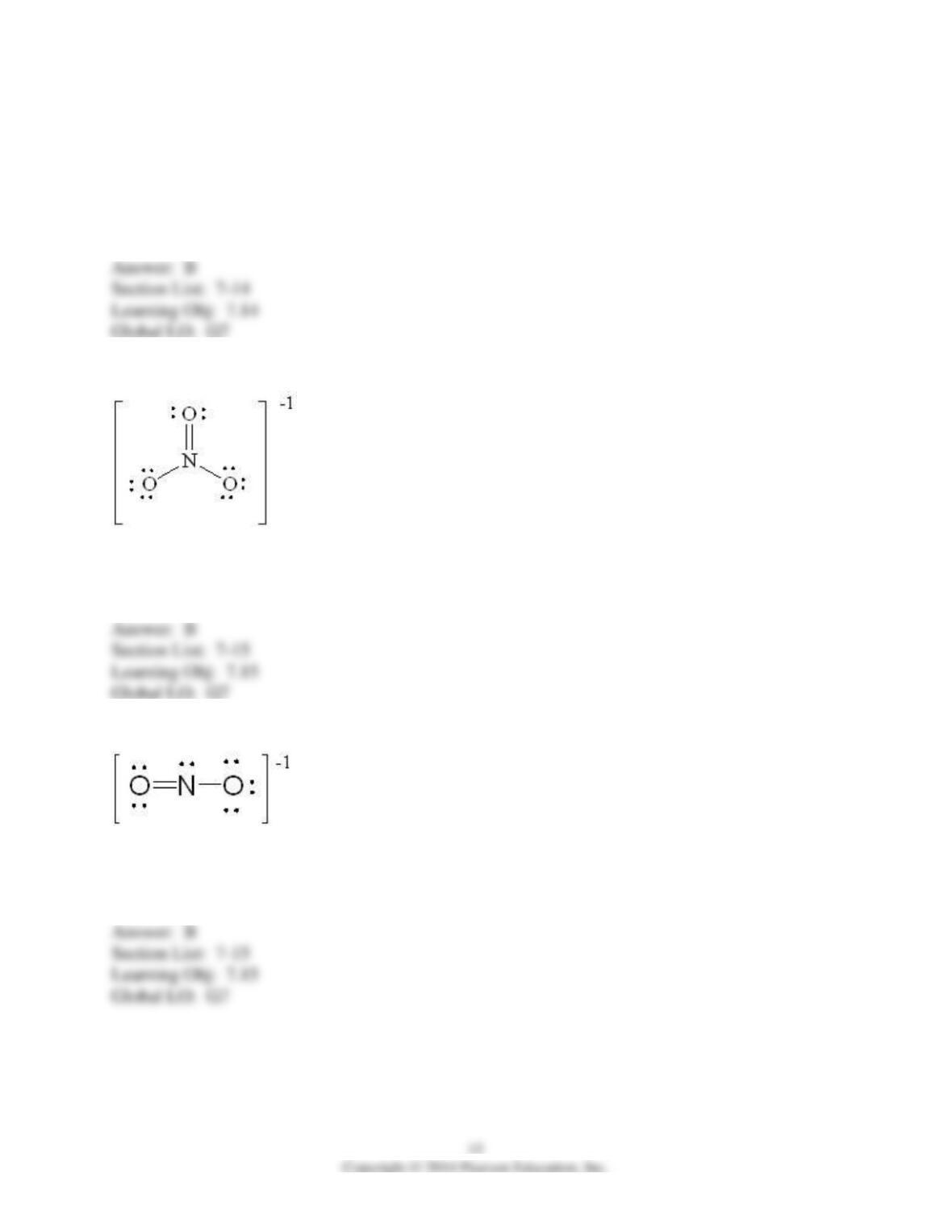
57) One of the resonance structures for the polyatomic ion NO3− is
How many other resonance structures are there for this ion?
A) 1
B) 2
C) 3
D) 4
58) The following represents one of the resonance structures for the nitrite ion, NO2−.
How many additional resonance structures can be drawn for NO2−?
A) 0
B) 1
C) 2
D) 3
59) How many resonance forms can be drawn for the CO3-2 ion?
A) 0
B) 1
C) 2
D) 3
60) The Lewis structure for the SO42− ion contains how many “bonding electrons”?
A) 2
B) 4
C) 8
D) 12
61) In the Lewis structure of HCN, how many nonbonding electron pairs are present?
A) 3
B) 4
C) 2
D) 1
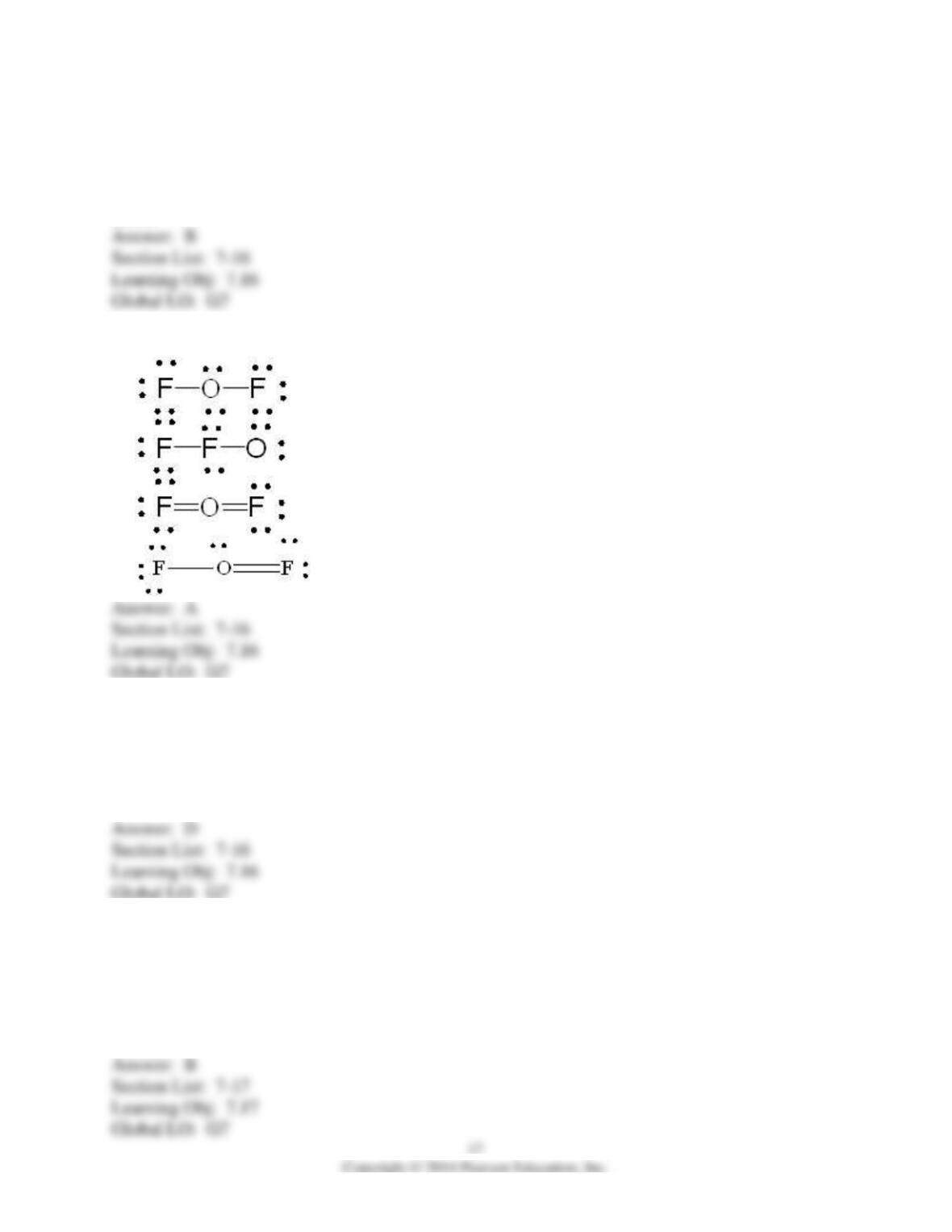
62) In the following Lewis symbol, X represents a period 3 nonmetal. Identify the
nonmetal.
A) aluminum
B) sulfur
C) chlorine
D) selenium
63) Calculate the total number of electrons in the Lewis structure for the PH4+ ion.
A) 9
B) 8
C) 10
D) 12
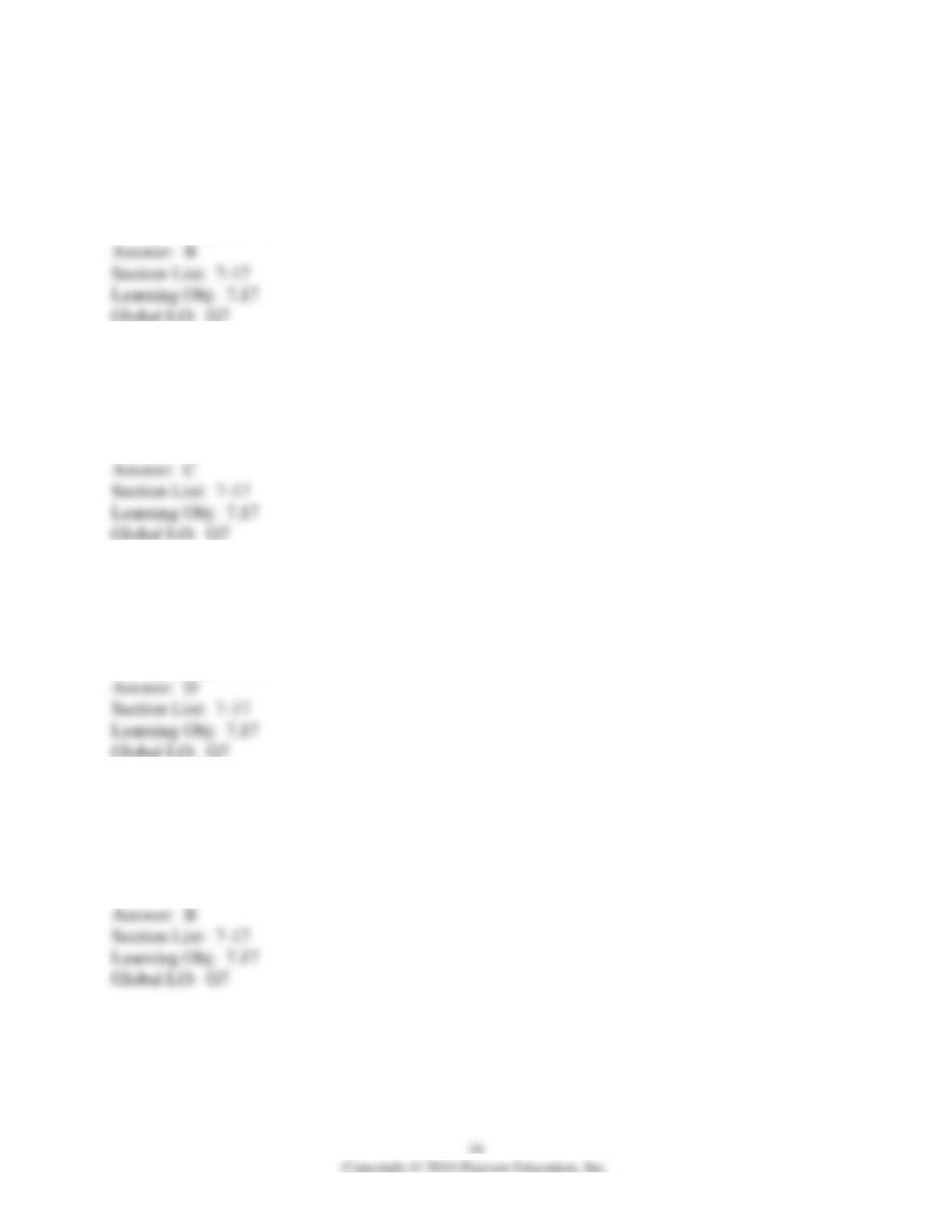
64) Which of the following is the correct Lewis structure for OF2?
A)
B)
C)
D)
65) Calculate the total number of electrons in the Lewis structure for the C2H3O2− ion.
A) 25
B) 32
C) 28
D) 24
66) The geometry associated with three pairs of bonded electrons and one pair of nonbonded
electrons about a central atom in a molecule is ________.
A) tetrahedral
B) trigonal pyramidal
C) trigonal planar
D) angular
67) The geometry of a molecule in which the central atom has 2 bonding electron pairs and 2
nonbonding electron pairs is ________.
A) linear
B) angular
C) trigonal planar
D) trigonal pyramidal
68) The molecular geometry of a Cl2CO molecule is ________.
A) linear
B) trigonal pyramidal
C) trigonal planar
D) tetrahedral
69) The molecular geometry of a NCl3 molecule is ________.
A) angular
B) trigonal planar
C) tetrahedral
D) trigonal pyramidal
70) Which one of the following molecules is tetrahedral in shape?
A) XeF4
B) CF4
C) BF3
D) NH3
71) What is the molecular geometry of PH3?
A) trigonal pyramidal
B) linear
C) tetrahedral
D) angular
72) What is the molecular geometry of CO2?
A) linear
B) trigonal planar
C) tetrahedral
D) angular
73) Which of the following pairs is incorrectly matched?
Formula Molecular Geometry
A) BF3 trigonal planar
B) CO2 linear
C) CBr4 tetrahedral
D) HCN trigonal planar
74) Which of the following pairs is incorrectly matched?
Formula Molecular Geometry
A) CCl4 tetrahedral
B) SO3 trigonal planar
C) CHCl3 tetrahedral
D) BeClF angular
75) Which of the following pairs is incorrectly matched?
Formula Molecular Geometry
A) PCl3 trigonal planar
B) Cl2CO trigonal planar
C) CH4 tetrahedral
D) OF2 bent
76) Electronegativity is a concept that is used to ________.
A) predict the polarity of a bond
B) decide how many electrons are involved in bonding
C) decide if double bonds are present in a molecule
D) formulate a statement of the octet rule
77) The ability of an atom to attract electrons to itself in a molecule is called ________.
A) electron affinity
B) electronegativity
C) ionization energy
D) paramagnetism
78) Which of the following sets of elements is arranged in order of increasing electronegativity?
A) Cl, S, Se, Te
B) F, B, O, Li
C) Br, Cl, S, P
D) Fr, Mg, Si, F
79) Which statement about electronegativity is incorrect?
A) Fluorine is the most electronegative atom of all the elements.
B) Metals generally have higher electronegativity values than nonmetals.
C) Within a row, electronegativity increases from left to right.
D) Within a group, electronegativity increases from bottom to top.
80) Which atom is the most electronegative?
A) Li
B) Cs
C) P
D) As
81) Which atom is the least electronegative?
A) F
B) Si
C) Rb
D) Ca
82) A bond where the electrons are shared unequally is called ________.
A) polar covalent
B) coordinate covalent
C) nonpolar)covalent
D) ionic
83) A bond where the electrons are shared equally is called ________:
A) polar covalent
B) coordinate covalent
C) nonpolar covalent
D) ionic
84) Which of the following pairs of elements would most likely form a polar covalent bond?
A) Se and Cl
B) Si and C
C) K and He
D) Ba and Ag
85) If the electronegativity difference between two elements X and Y is 0.2, the bond between
the two elements would be ________.
A) ionic
B) nonpolar covalent
C) polar covalent
D) coordinate covalent
86) Which of the following diatomic molecules contains the bond of greatest polarity?
A) P4
B) Cl-F
C) BrI
D) Te-F
87) Which of the following is the best notation for the bonding in the formula unit NaF?
A) d+ d−
Na-F
B) d−d+
Na-F
C) Na-F
D) Na+ F−
88) Which bond has the most covalent character?
A) O – F
B) Be – N
C) Cu – N
D) Li – Cl
89) Which of the following pairs is incorrectly matched?
Formula Bond Type
A) BBr3 nonpolar covalent
B) KCl ionic
C) IF nonpolar covalent
D) CuO ionic
90) Which of the following bonds is the most polar?
Element
H
C
N
O
F
Si
Cl
As
Br
I
Electronegativity
2.1
2.5
3.0
3.5
4.0
1.8
3.0
2.0
2.8
2.5
A) As-Cl
B) N-F
C) I-Br
D) O-Si
91) Which of the following pairs is incorrectly matched?
Formula Bond Type
A) MgS ionic
B) N2 nonpolar covalent
C) CH4 polar covalent
D) NF3 polar covalent
92) Which of the following is a nonpolar molecule containing polar bonds?
A) H – H
B) CH4
C) F – Be – F
D) It is not possible for a molecule to be nonpolar while containing polar bonds.
93) Which of the following statements concerning molecular polarity is incorrect?
A) All A-B molecules are polar.
B) All linear X-A-X molecules are nonpolar.
C) All angular A-B-C molecules are nonpolar.
D) All symmetrical AX4 molecules are nonpolar.
94) Which molecule is not a polar molecule?
A) HCN
B) CHCl3
C) NH3
D) BCl3
95) Which of the following pairs is incorrectly matched?
Formula Molecular polarity
A) HCN nonpolar
B) H2CO polar
C) SiF4 nonpolar
D) H2O polar
96) Which of the following pairs is incorrectly matched?
Formula Molecular polarity
A) BeF2 polar
B) H2O polar
C) BCl3 nonpolar
D) PF3 polar
97) Which of the following molecules is polar?
A) BeCl2
B) BF3
C) CBr4
D) NCl3
7.2 Short Answer
1) How many valence electrons do atoms with the following electron configurations have?
A) 1s22s22p63s23p64s23d104p4
B) 1s22s22p63s2
C) 1s22s22p63s23p64s1
D) 1s22s22p5
2) Determine the formula for the compound formed between the following pairs of elements
and/or ions.
A) Cs and P4
B) As and Cl2
C) OH− and Fe3+
D) O2 and F2
E) zinc and sulfur
F) Ni2+ and C2H3O2−
G) Ag+ and CO32−
3) Draw the Lewis symbols and use arrows to that illustrate the formation of Na2O.
4) Draw the Lewis structure for formic acid, HCOOH, (atoms arranged in the order given).
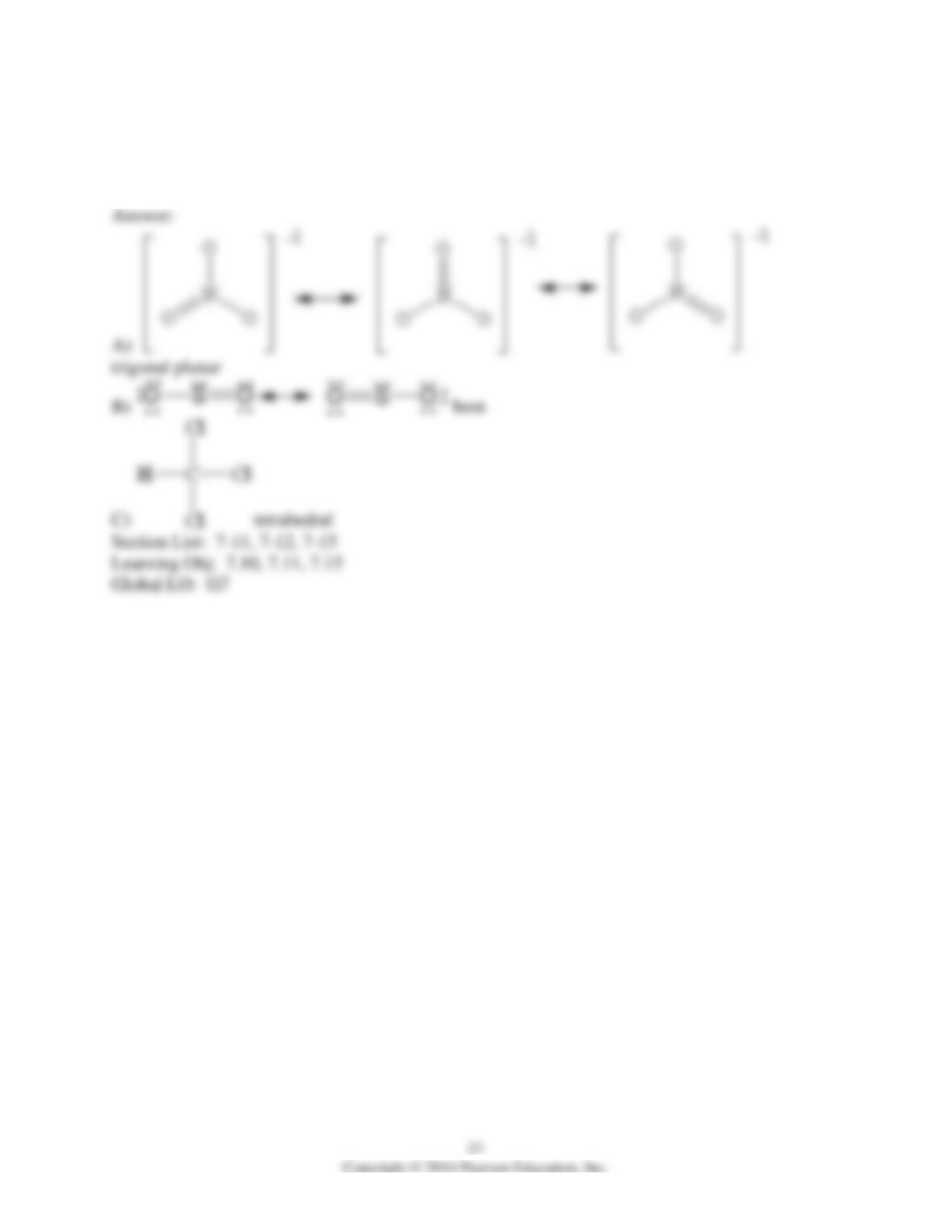
5) Draw the Lewis structures for the following compounds., including all possible resonance
structures. What is the molecular geometry of each compound?
A) NO3-1 B) SO2 C) CHCl3
6) Four hypothetical elements, W, X, Y and Z, have the following electronegativities and
periodic table positions:
Element
Electronegativity
Location in the Periodic Table
W
3.5
Group VIA
X
3.0
Group VIA
Y
2.0
Group IVA
Z
1.0
Group IA
I) The compound formed between W and Y would have
A) ionic bonds
B) polar covalent bonds
C) nonpolar covalent bonds
D) both ionic and polar covalent bonds
II) The compound formed between X and Z would have
A) ionic bonds
B) polar covalent bonds
C) nonpolar covalent bonds
D) both ionic and polar covalent bonds
III) The formula of the compound formed when W and Y react would be ________.
A) WY
B) W4Y
C) YW2
D) YW4
E) Y2W
IV) The formula of the compound formed when X and Z react would be ________.
A ZX
B) XZ
C) XZ2
D) Z2X
E) ZX3
V) How many valence electrons would there be in the Lewis structure for the compound
YW2?
A) 6
B) 10
C) 16
D) 22