35) What are the products from the combustion of 2-methyl-3-ethyloctane?
A) variety of small hydrocarbons
B) carbon monoxide, carbon trioxide and water
C) carbon dioxide and water
D) carbon monoxide and water
E) none of the above
36) The combustion of alkanes, alkenes and alkynes produces:
A) water and carbon.
B) oxygen and hydrogen.
C) carbon dioxide and hydrogen.
D) hydrogen and water.
E) carbon dioxide and water.
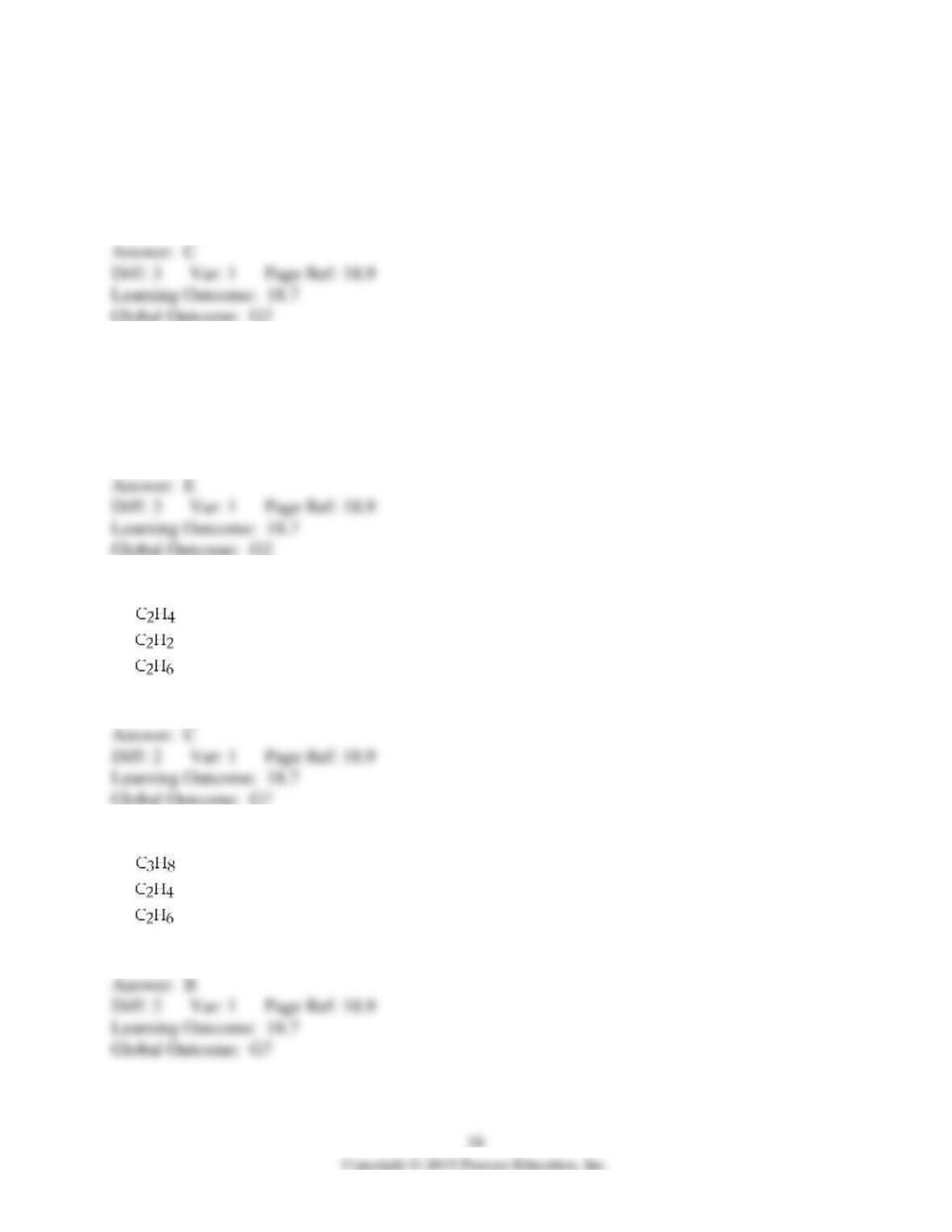
37) Which of the following compounds will undergo a substitution reaction?
A)
B)
C)
D) all of the above
E) none of the above
38) Which of the following compounds will undergo an addition reaction?
A)
B)
C)
D) all of the above
E) none of the above
17
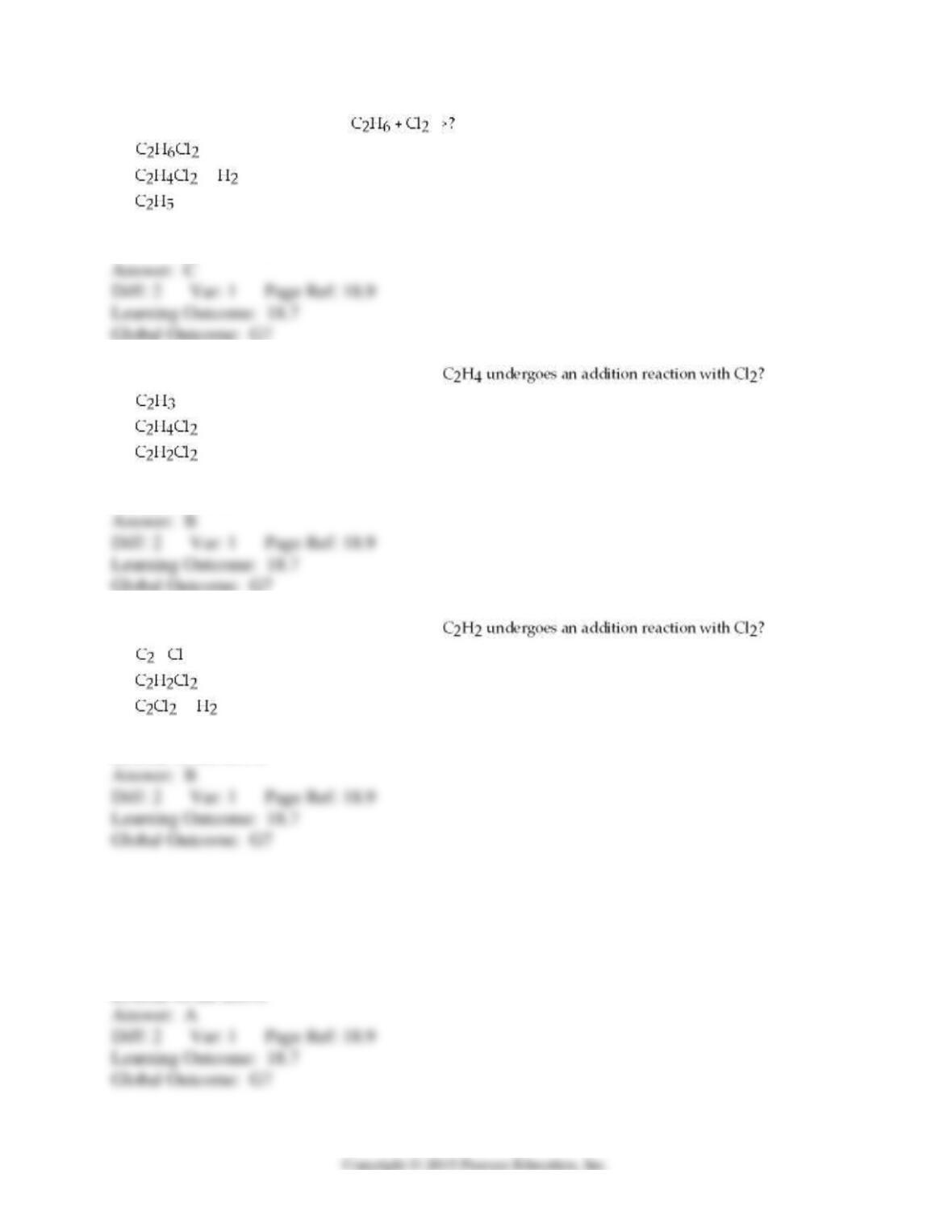
39) What are the product(s) of:
A)
B) +
C) Cl + HCl
D) all of the above
E) none of the above
40) What will be the major product(s) when
A) Cl
B)
C)
D) all of the above
E) none of the above
41) What will be the major product(s) when
A) H + HCl
B)
C) +
D) all of the above
E) none of the above
42) The reaction CH3CH3 + Br2 → CH3CH2Br + HBr would best be described as:
A) substitution.
B) combustion.
C) addition.
D) hydrogenation.
E) none of the above
43) The reaction CH2=CH2 + H2 → CH3CH3 would best be described as:
A) substitution.
B) combustion.
C) addition.
D) hydrogenation.
E) none of the above
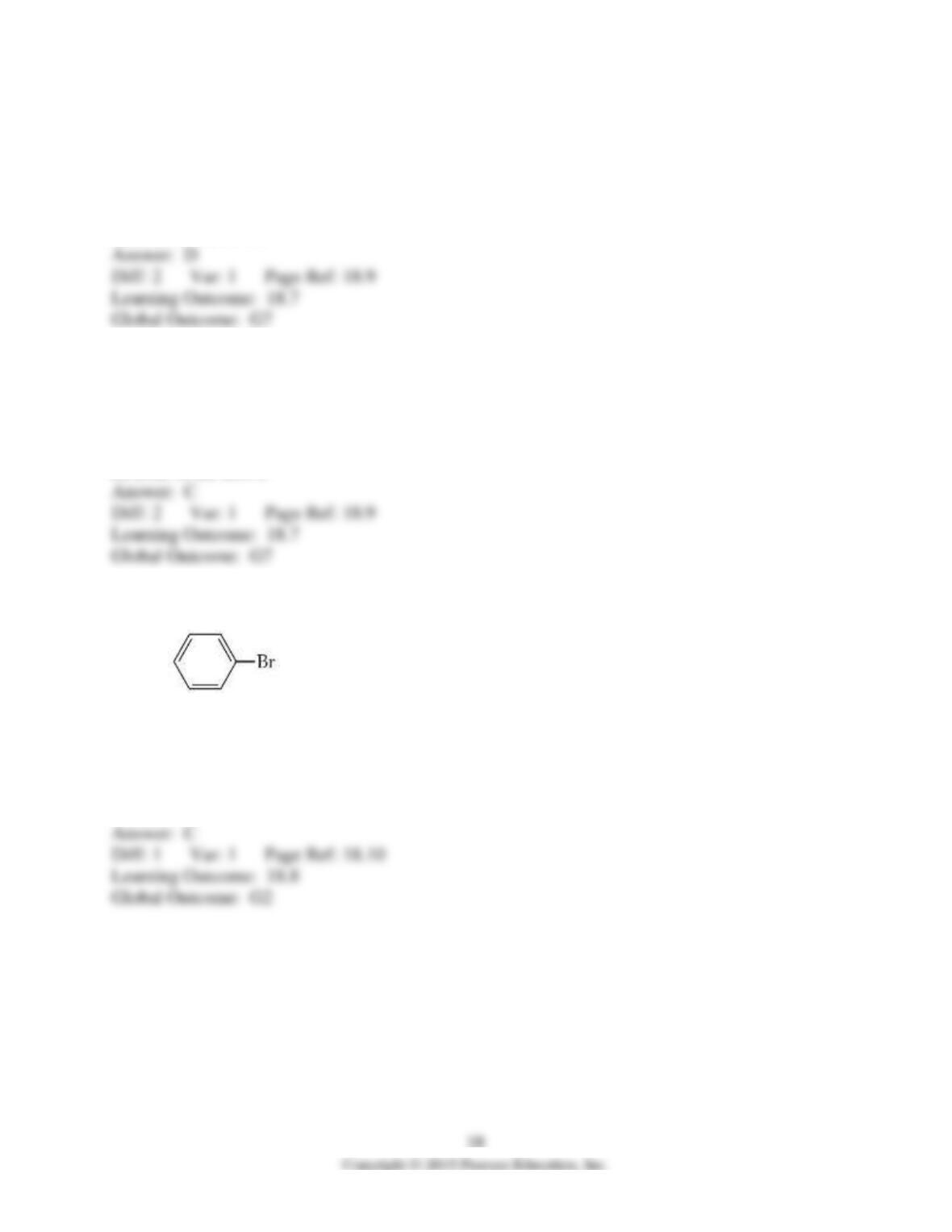
44) The reaction CH2=CH2 + Br2 → CHBrCHBr would best be described as:
A) substitution.
B) combustion.
C) addition.
D) hydrogenation.
E) none of the above
45) Name the aromatic compound shown below:
A) Phenyl bromide
B) Benzyl bromide
C) Bromobenzene
D) Phenol
E) none of the above
46) How many carbon atoms would be in the compound named chlorobenzene?
A) 1
B) 5
C) 6
D) 7
E) none of the above
47) In naming disubstituted benzenes, “1,2” substitution is also known as:
A) ortho substitution.
B) meta substitution.
C) para substitution.
D) isomer substitution.
E) none of the above
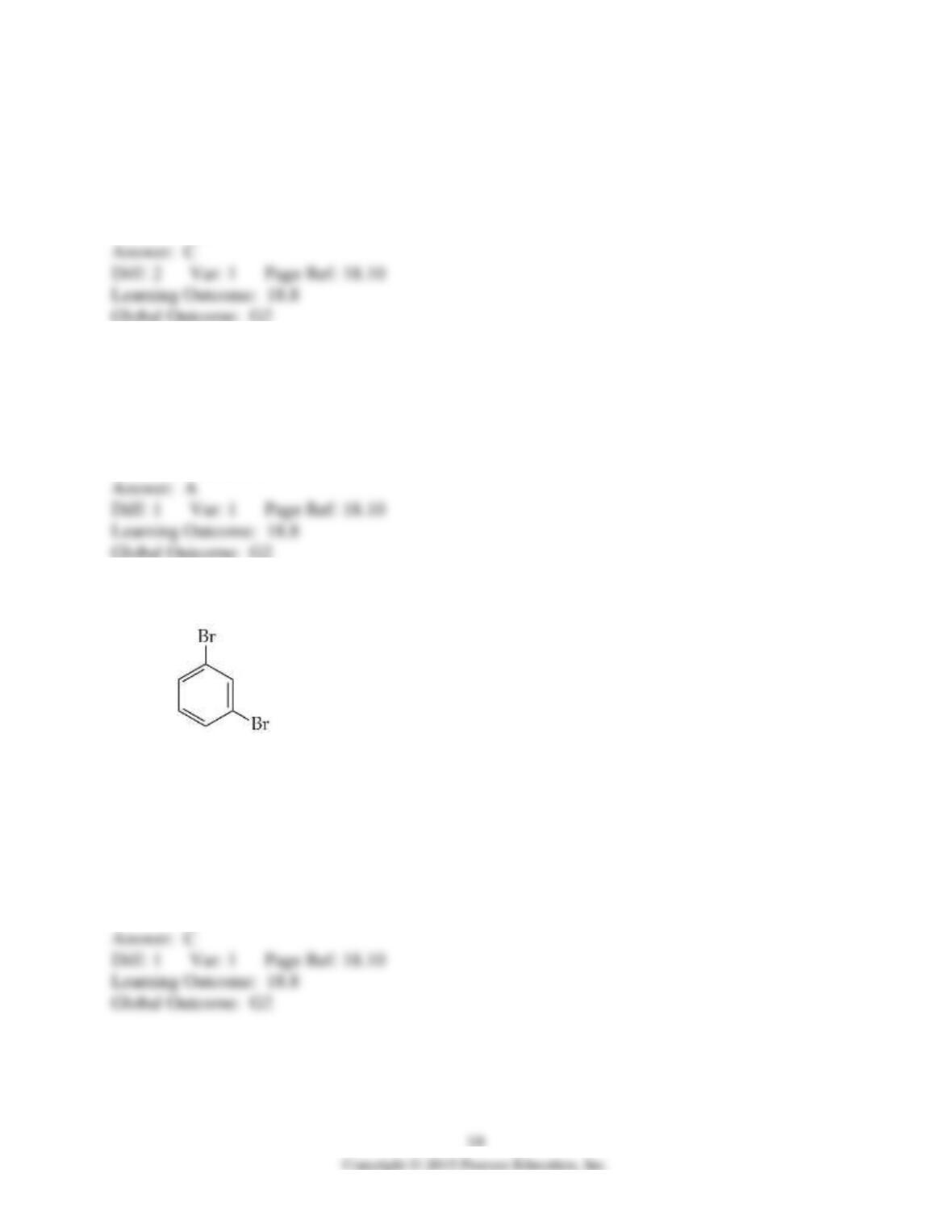
48) Which of the following are correct names for the compound shown in the figure?
1) 1,2-Dibromobenzene
2) 1,3-Dibromobenzene
3) m-Dibromobenzene
A) 1 and 2 only
B) 1 and 3 only
C) 2 and 3 only
D) All of 1, 2, and 3
E) None of 1, 2, and 3
49) Which of the following functional groups represents an alcohol?
A) R—
B) R —— R
C) R —— OH
D) R ——O R
E) none of the above
50) Which of the following functional groups represents an ester?
A) R—
B) R —— R
C) R —— OH
D) R —— O R
E) none of the above
51) Which of the following functional groups represents a ketone?
A) R—
B) R —— R
C) R —— OH
D) R —— O R
E) none of the above
52) Which of the following functional groups represents an aldehyde?
A) R—
B) R —— R
C) R —— OH
D) R —— O R
E) none of the above
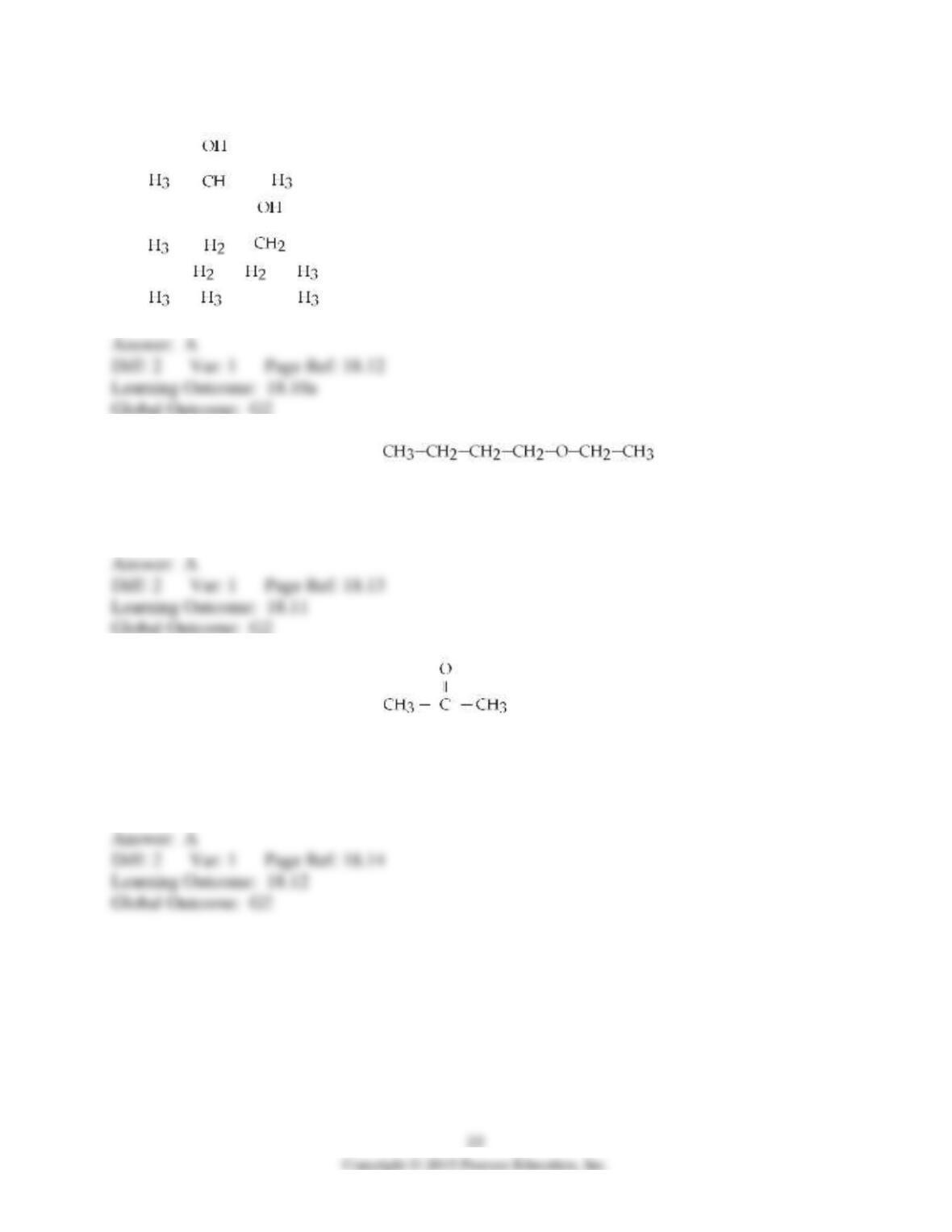
53) Which compound below represents isopropyl alcohol?
A) C — — C
B) C — C —
C) HO—C—C—C
D) C —C—OH—C
E) none of the above
54) Name the following compound:
A) butyl ethyl ether
B) hexyl ether
C) ethyl butylone
D) 2-hexone
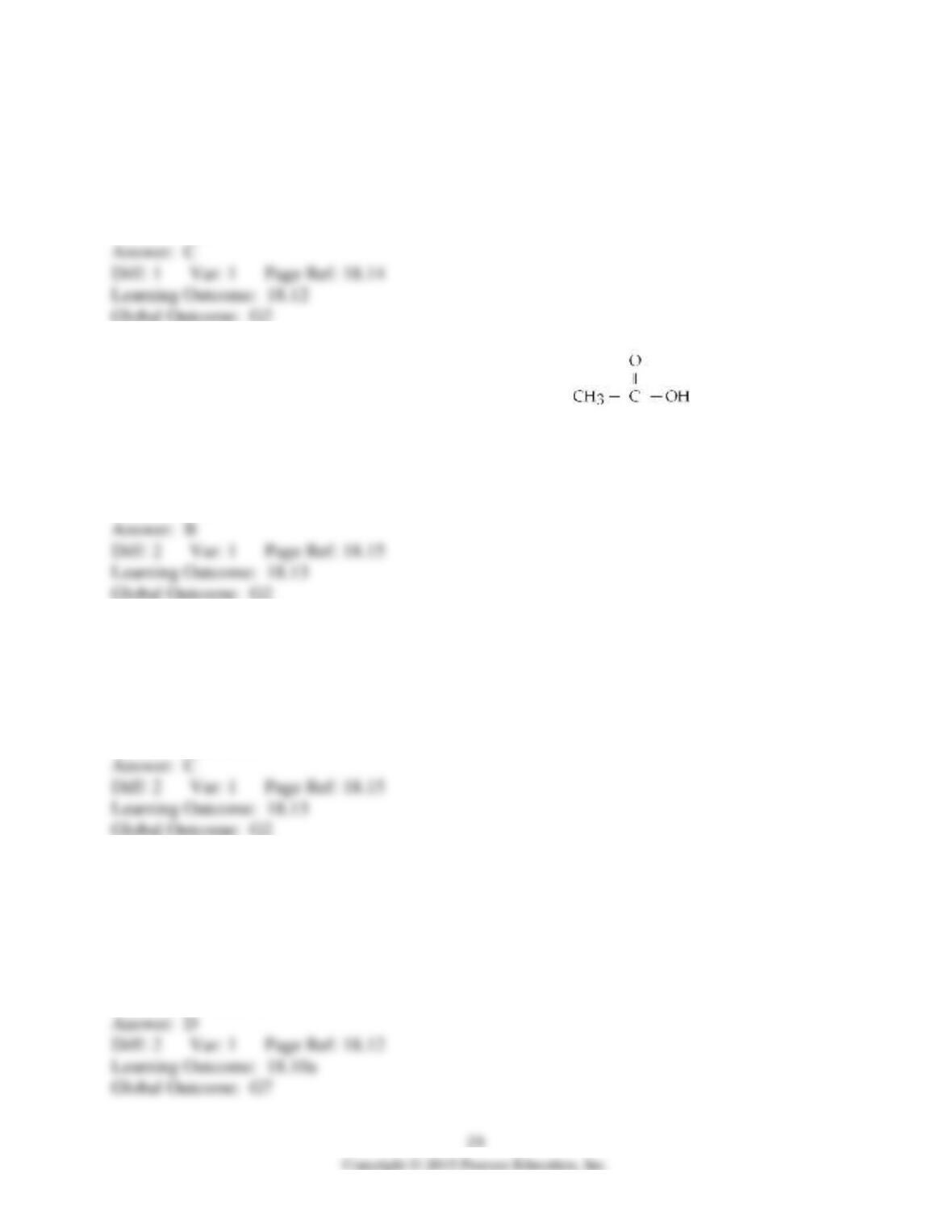
55) Name the following compound:
A) propanone
B) 2-methyl-2-ethanone
C) propanal
D) isopropanol
E) none of the above
56) A compound named “propanal” would be classified as an:
A) alcohol.
B) amine.
C) aldehyde.
D) ether.
E) none of the above
57) Provide the systematic name of the following compound:
A) ethanoate
B) ethanoic acid
C) ethanal
D) ethanone
E) none of the above
58) Ethyl propanoate is a(n):
A) ether.
B) carboxylic acid.
C) ester.
D) ketone.
E) none of the above
59) Which of the following terms could NOT be applied to the compound
CH2=CHCH2CH2OH?
A) unsaturated
B) an alcohol
C) an alkene
D) a carboxylic acid
E) none of the above
60) Amines are:
A) organic compounds containing nitrogen.
B) known for their awful odors.
C) named according to the hydrocarbon groups attached to nitrogen.
D) based on N with hydrogen groups being replaced by alkyl groups.
E) all of the above
61) Which of the following terms could NOT be applied to the compound:
CH3 — — — CH2 — NH2
A) saturated
B) amine
C) branched
D) all of these terms apply to this structure
E) none of the above
62) Which of the following is NOT considered a type of polymer?
A) addition polymer
B) condensation polymer
C) natural polymer
D) synthetic polymer
E) none of the above
63) Which of the following is an example of a polymer?
A) DNA
B) protein
C) nylon
D) plexiglass
E) all of the above
64) Which of the following statements is FALSE about polymers?
A) Several monomer units link together without eliminating any atom or group to form addition
polymers.
B) During condensation polymerization an atom or group is eliminated.
C) Copolymers contain more than one kind of monomer.
D) Nylon 6,6 and polyurethane are examples of copolymers.
E) none of the above.
18.3 Algorithmic Questions
1) How many total hydrogen atoms would be in a five carbon noncyclical alkane?
A) 10
B) 8
C) 5
D) 12
E) none of the above
2) The compound nonene would consist of how many carbon atoms?
A) zero
B) nine
C) one
D) seven
E) none of the above
3) The compound propyne would consist of how many carbon atoms and how many hydrogen
atoms?
A) 3C,4H
B) 2C,2H
C) 3C,2H
D) 3C,6H
E) none of the above
27
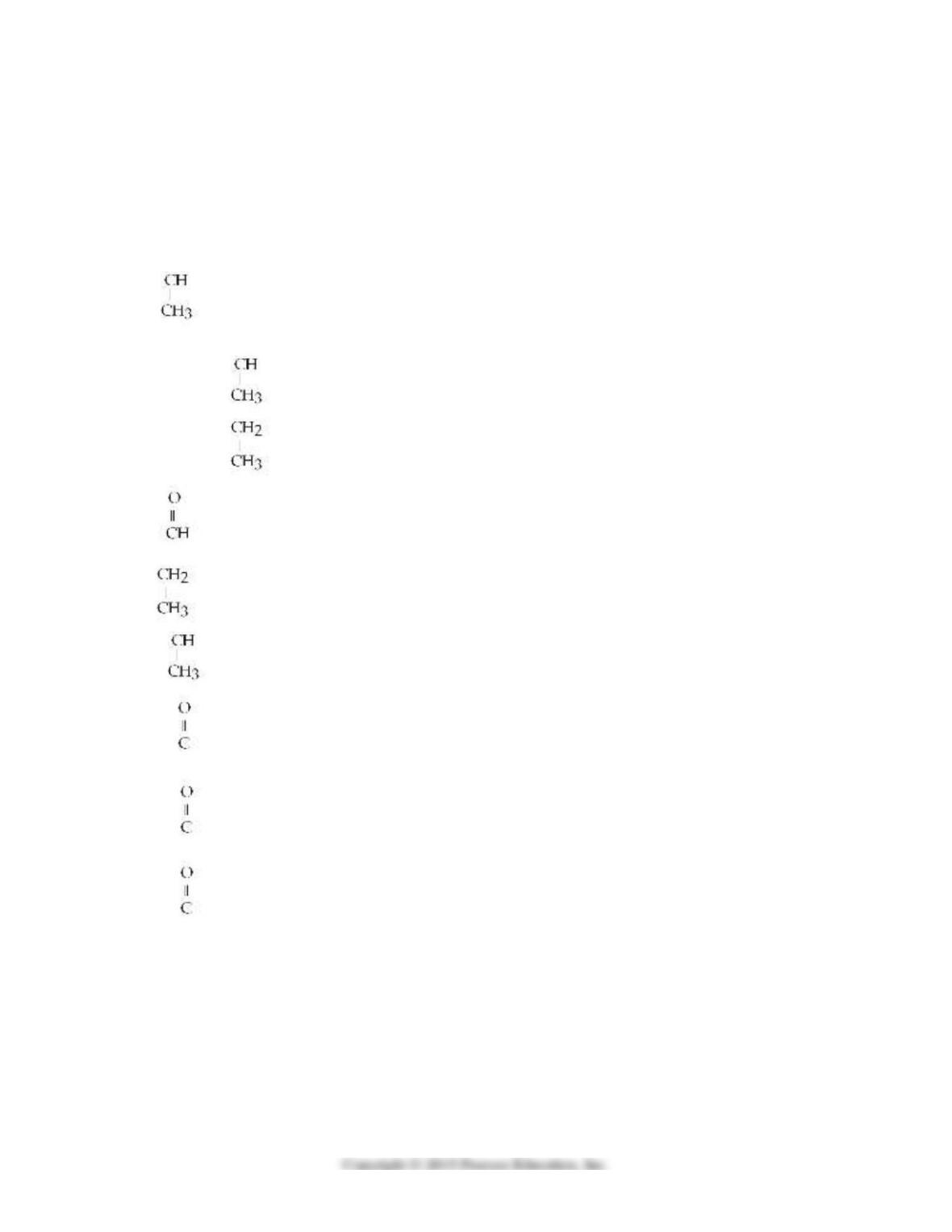
18.4 Matching Questions
Match the following:
A) —CH2CH2CH2CH3
B) R— OH
C) —CH2 — CH2 — CH3
D) — CH3
E) —— CH3
F) R — O — R’
G) — CH2 —— CH3
H) — CH2 —— CH3
I) R—
J) —— CH3
K) —— CH2— CH3
L) R —— R
M) —CH2 — CH3
N) R —— OH
O) R —— OR’
1) sec-butyl
Diff: 2 Var: 1 Page Ref: 18.4
Learning Outcome: 18.9
Global Outcome: G2

28
2) methyl
Diff: 2 Var: 1 Page Ref: 18.7
Learning Outcome:
Global Outcome: G2
3) ethyl
Diff: 2 Var: 1 Page Ref: 18.7
Learning Outcome: 18.9
Global Outcome: G2
4) propyl
Diff: 2 Var: 1 Page Ref: 18.7
Learning Outcome: 18.9
Global Outcome: G2
5) isopropyl
Diff: 2 Var: 1 Page Ref: 18.7
Learning Outcome: 18.9
Global Outcome: G2
6) butyl
Diff: 2 Var: 1 Page Ref: 18.7
Learning Outcome: 18.9
Global Outcome: G2
7) isobutyl
Diff: 2 Var: 1 Page Ref: 18.7
Learning Outcome: 18.9
Global Outcome: G2
8) alcohol
Diff: 2 Var: 1 Page Ref: 18.11
Learning Outcome: 18.9
Global Outcome: G2
9) ester
Diff: 2 Var: 1 Page Ref: 18.11
Learning Outcome: 18.9
Global Outcome: G2
10) aldehyde
Diff: 2 Var: 1 Page Ref: 18.11
Learning Outcome: 18.9
Global Outcome: G2
11) ketone
Diff: 2 Var: 1 Page Ref: 18.11
Learning Outcome: 18.9
Global Outcome: G2
12) carboxylic acid
Diff: 2 Var: 1 Page Ref: 18.11
Learning Outcome: 18.9
Global Outcome: G2