Chapter 15: Organic Compounds and the Atomic Properties of Carbon
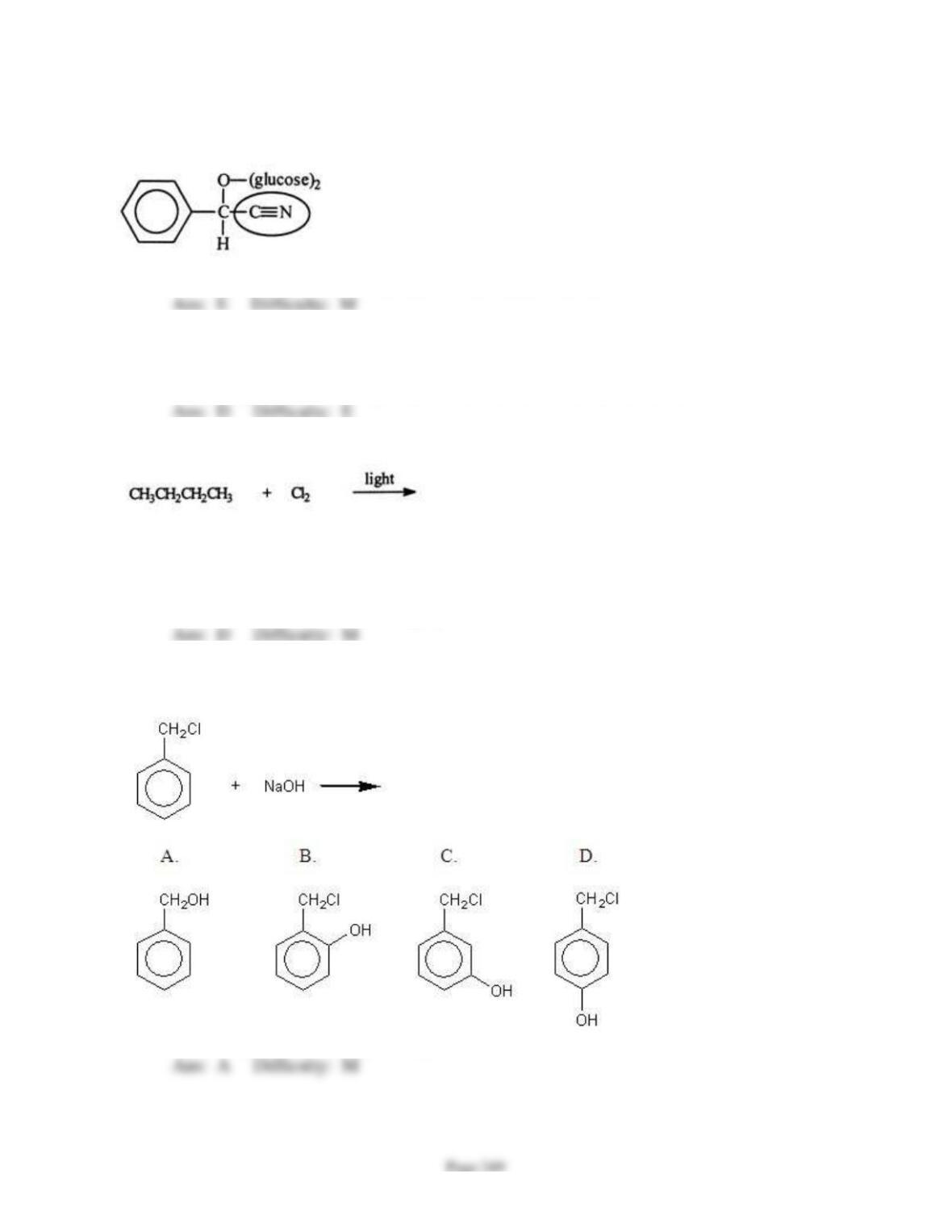
61. Amygdalin (Laetrile) was once touted for its potential anticancer activity. However, the
claims were never scientifically verified. Identify the functional group circled.
A) carbonite B) ether C) amide D) amine E) nitrile
62. Which one of the following classes of organic compound does not contain the carbonyl
(C=O) group?
A) aldehydes B) carboxylic acids C) ketones D) alcohols E) esters
63. Identify the principal organic product of the reaction between butane and chlorine.
A) CH3Cl
B) CH3CH2Cl
C) CH3CHClCH3
D) CH3CH2CHClCH3
E) None of the above is a major product of the reaction.
64. Identify the principal organic product when benzyl chloride reacts with aqueous sodium
hydroxide.
A) A B) B C) C D) D E) none of the above
Chapter 15: Organic Compounds and the Atomic Properties of Carbon
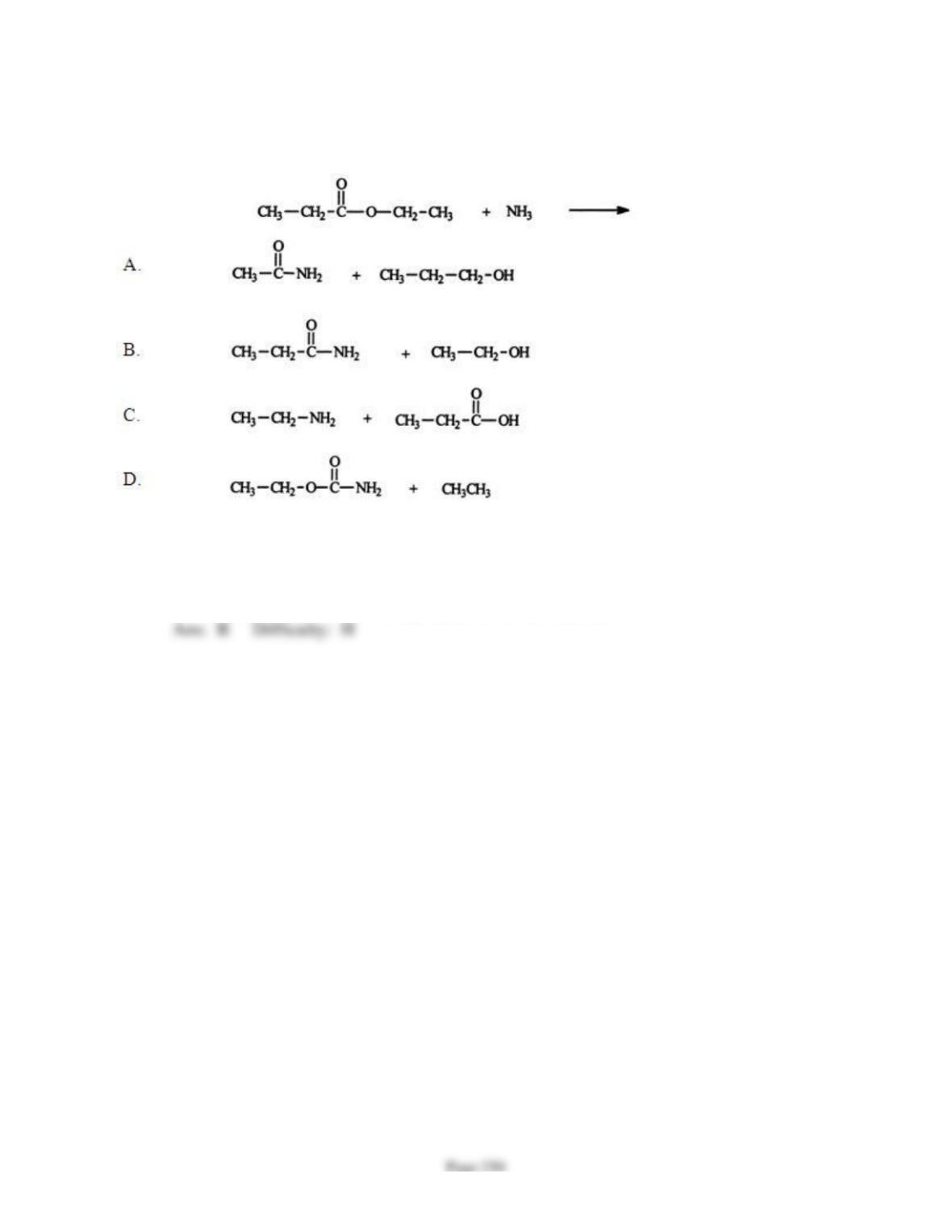
65. Identify the two principal products of the reaction between ammonia and ethyl
propionate.
A) A
B) B
C) C
D) D
E) None of the above is a major product of the reaction.
Chapter 15: Organic Compounds and the Atomic Properties of Carbon
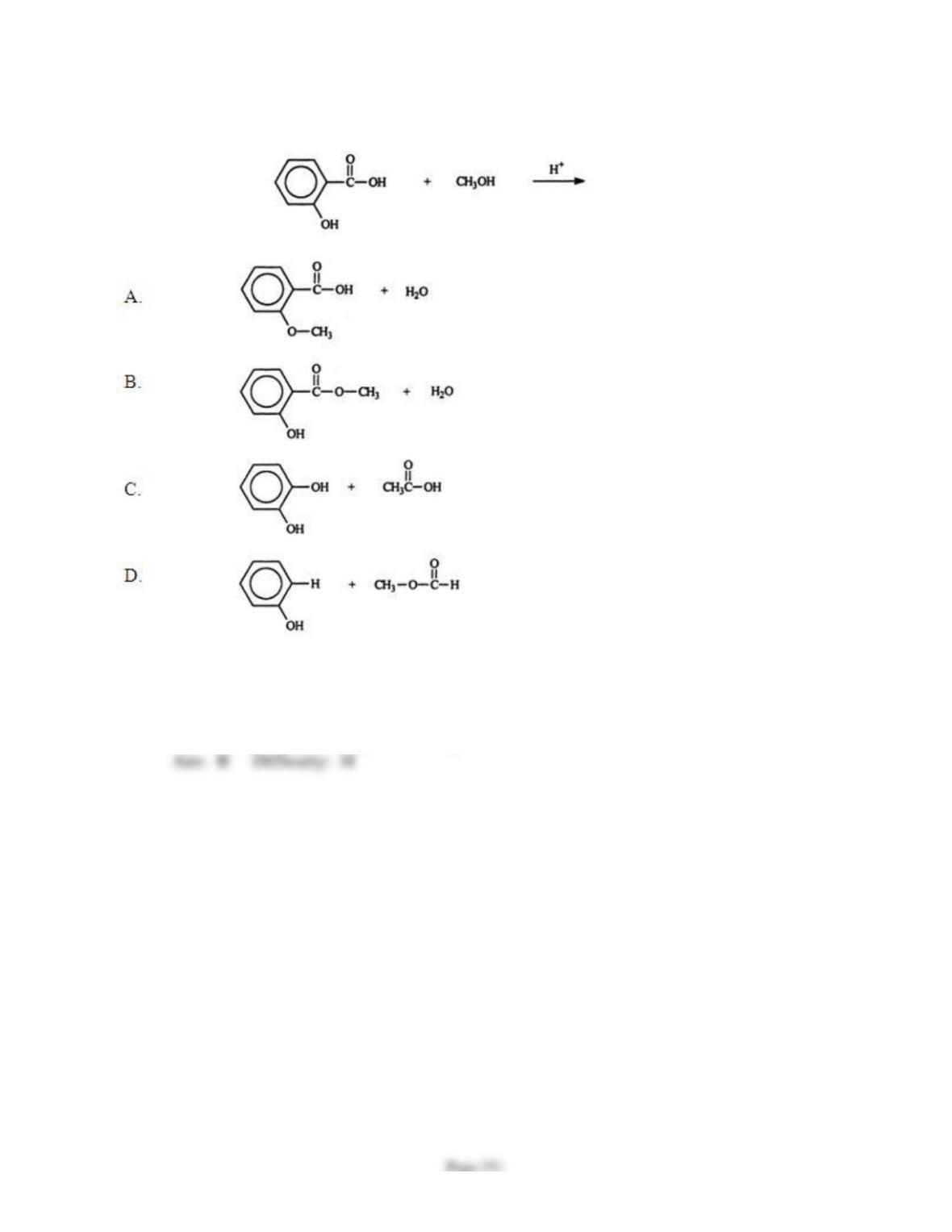
66. Identify the products of the following reaction.
A) A
B) B
C) C
D) D
E) None of the above pairs of compounds are formed in the reaction.
Chapter 15: Organic Compounds and the Atomic Properties of Carbon
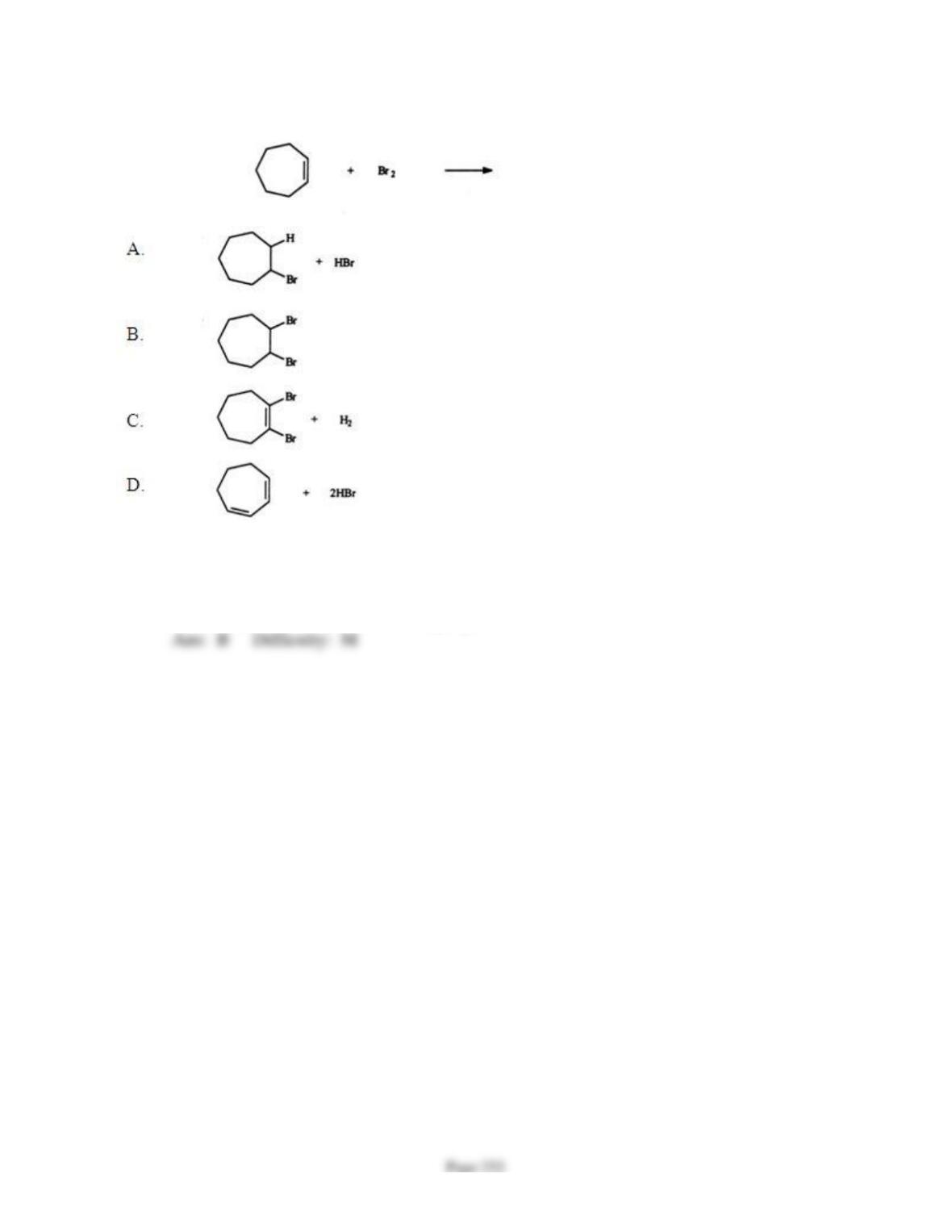
67. Identify the products for the reaction between cycloheptene and bromine.
A) A
B) B
C) C
D) D
E) None of the above are the major products of the reaction.
Chapter 15: Organic Compounds and the Atomic Properties of Carbon
68. Identify the products of the reaction of 3-octene with chlorine.
CH3CH2CH2CH2CH CHCH2CH3Cl2
+
A)
CH3CH2CH2CH2CH CHCH2CH3
Cl
Cl
B)
CH3CH2CH2CH2CH CHCH2CH3
Cl
Cl
Cl
Cl
C)
CH3CH2CH2CH2CH CHCH2CH3
Cl
H
D)
CH3CH2CH2CH2CH CHCH2CH3
ClCl
E)
CH3CH2CH2CH2CH2Cl CH3CH2CH2Cl
+
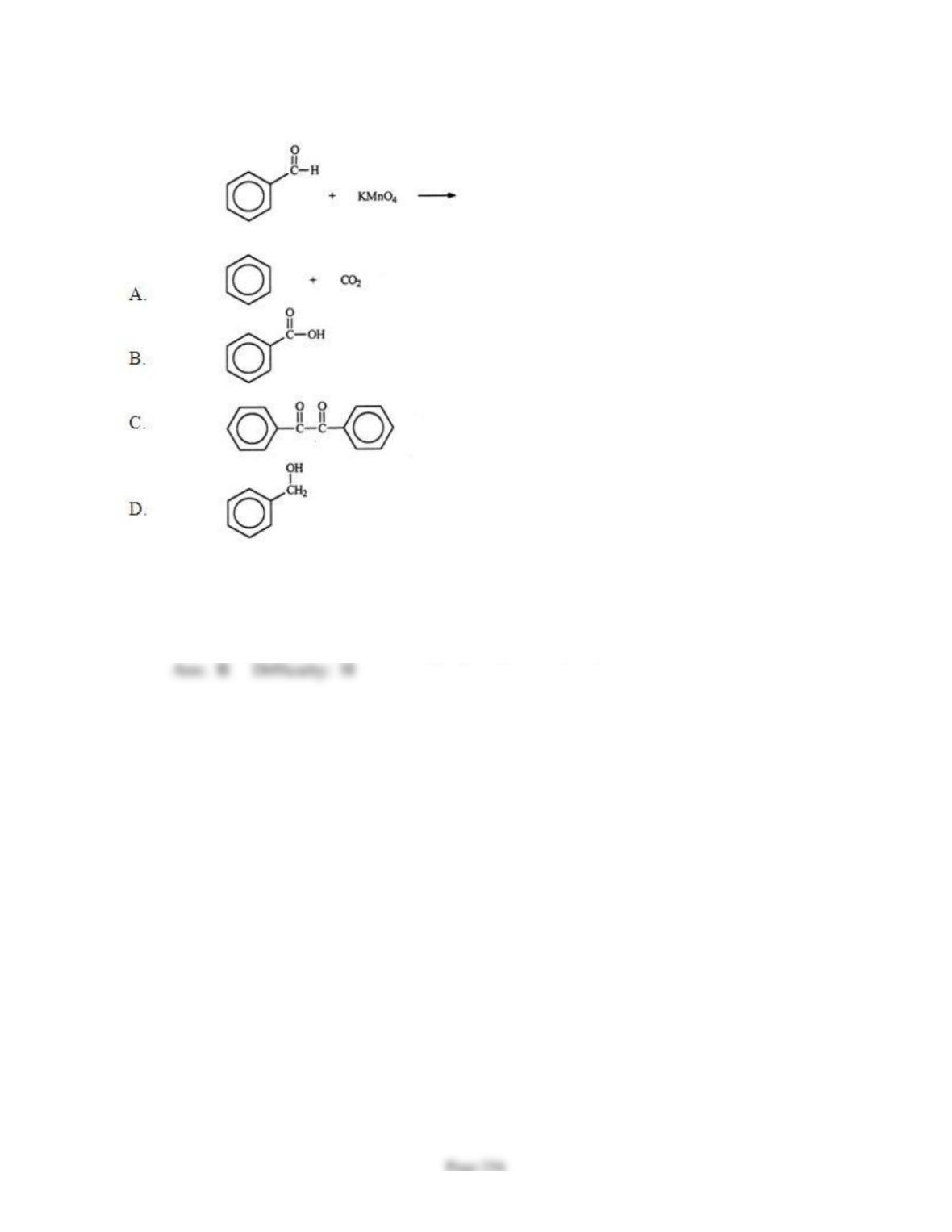
69. Identify the products of the reaction between 2-bromopentane and potassium ethoxide.
A) A
B) B
C) C
D) D
E) None of the above are the major products of the reaction.
Chapter 15: Organic Compounds and the Atomic Properties of Carbon
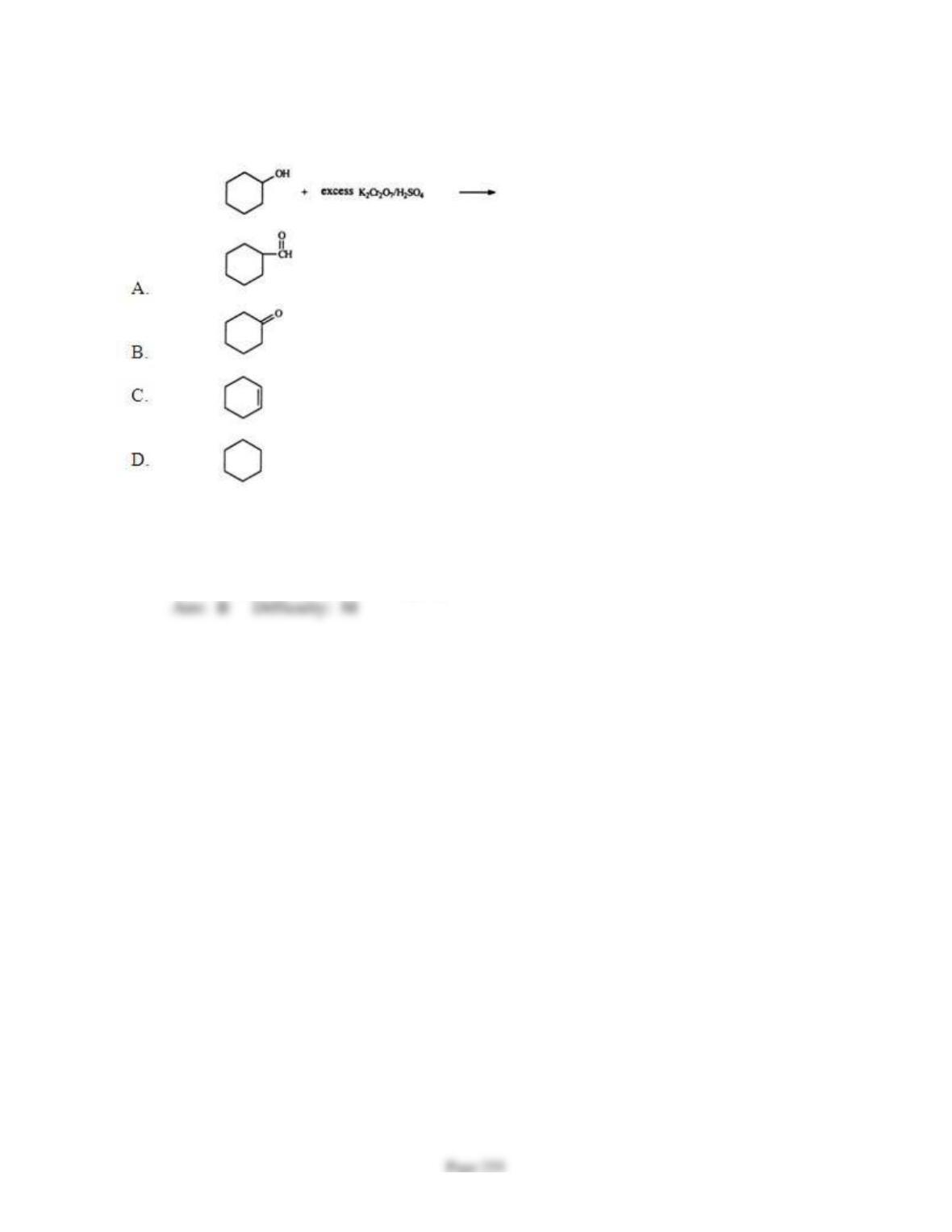
70. Identify the principal organic products for the following reaction.
A) A
B) B
C) C
D) D
E) None of the above are the major products of the reaction.
Chapter 15: Organic Compounds and the Atomic Properties of Carbon
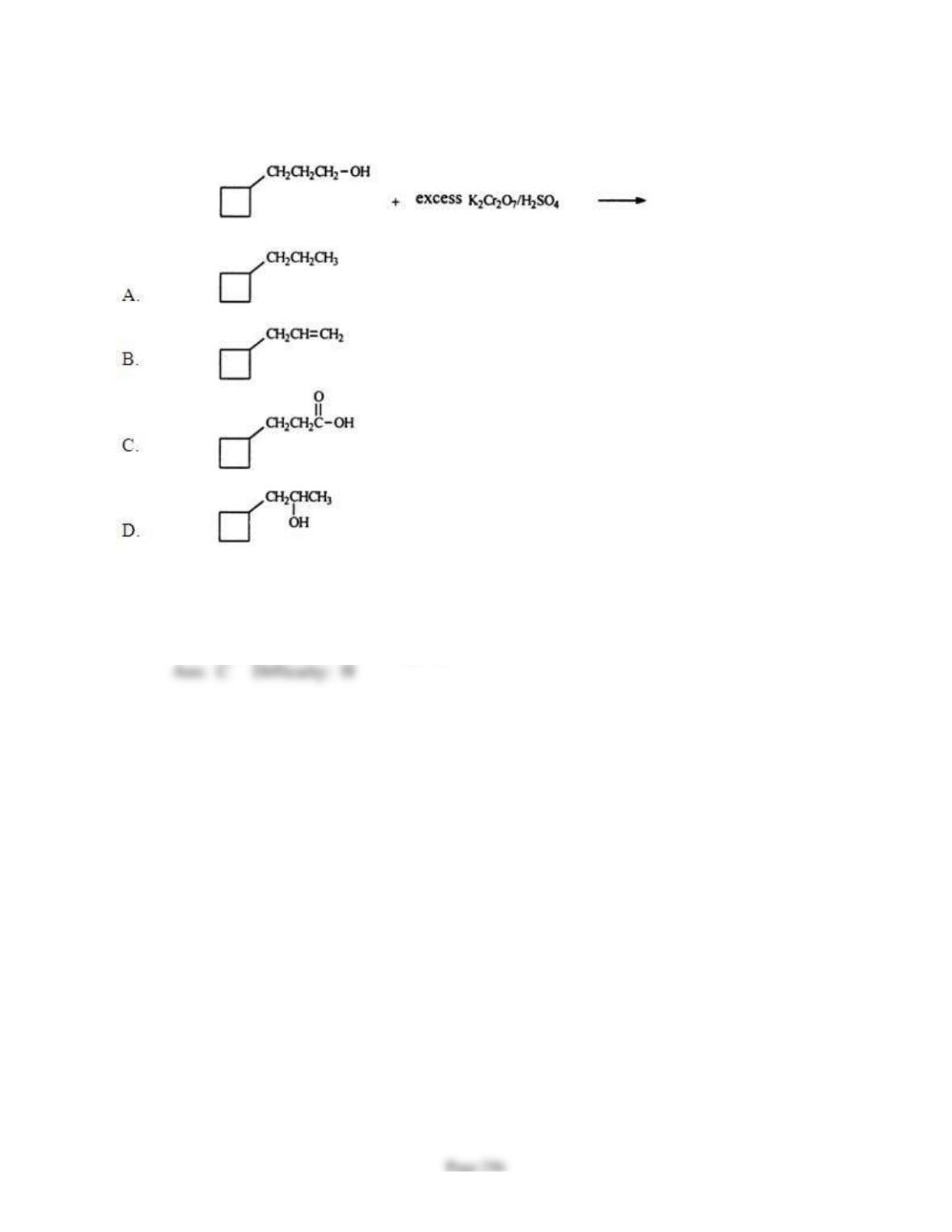
71. Identify the organic product when cyclohexanol reacts with excess potassium dichromate
in the presence of sulfuric acid.
A) A
B) B
C) C
D) D
E) None of the above is a major product of the reaction.
Chapter 15: Organic Compounds and the Atomic Properties of Carbon
72. Identify the organic product when 3-cylcobutyl-1-propanol reacts with excess potassium
dichromate in sulfuric acid.
A) A
B) B
C) C
D) D
E) None of the above is a major product of the reaction.
Chapter 15: Organic Compounds and the Atomic Properties of Carbon
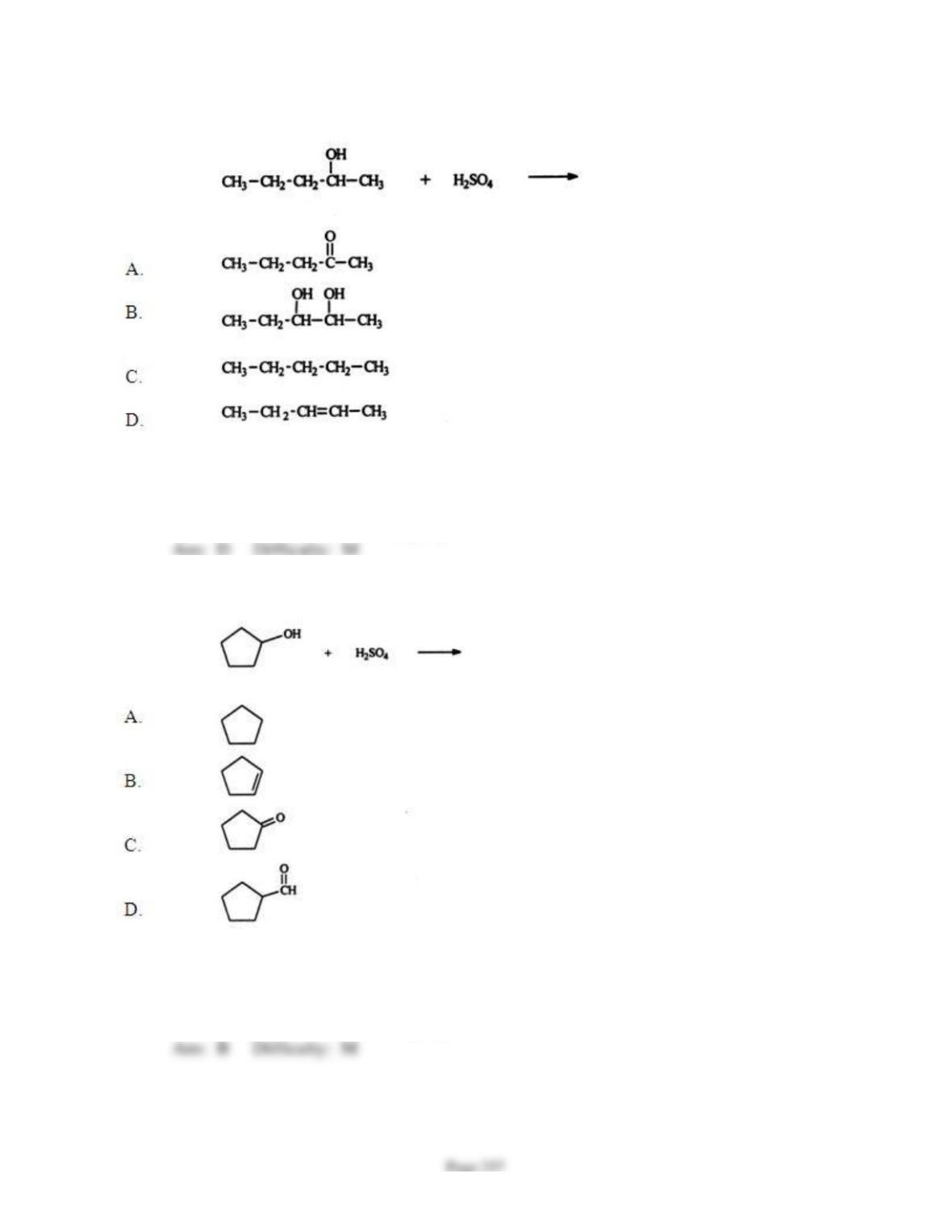
73. Identify the organic product for the reaction of 2-pentanol with sulfuric acid.
A) A
B) B
C) C
D) D
E) None of the above is a major product of the reaction.
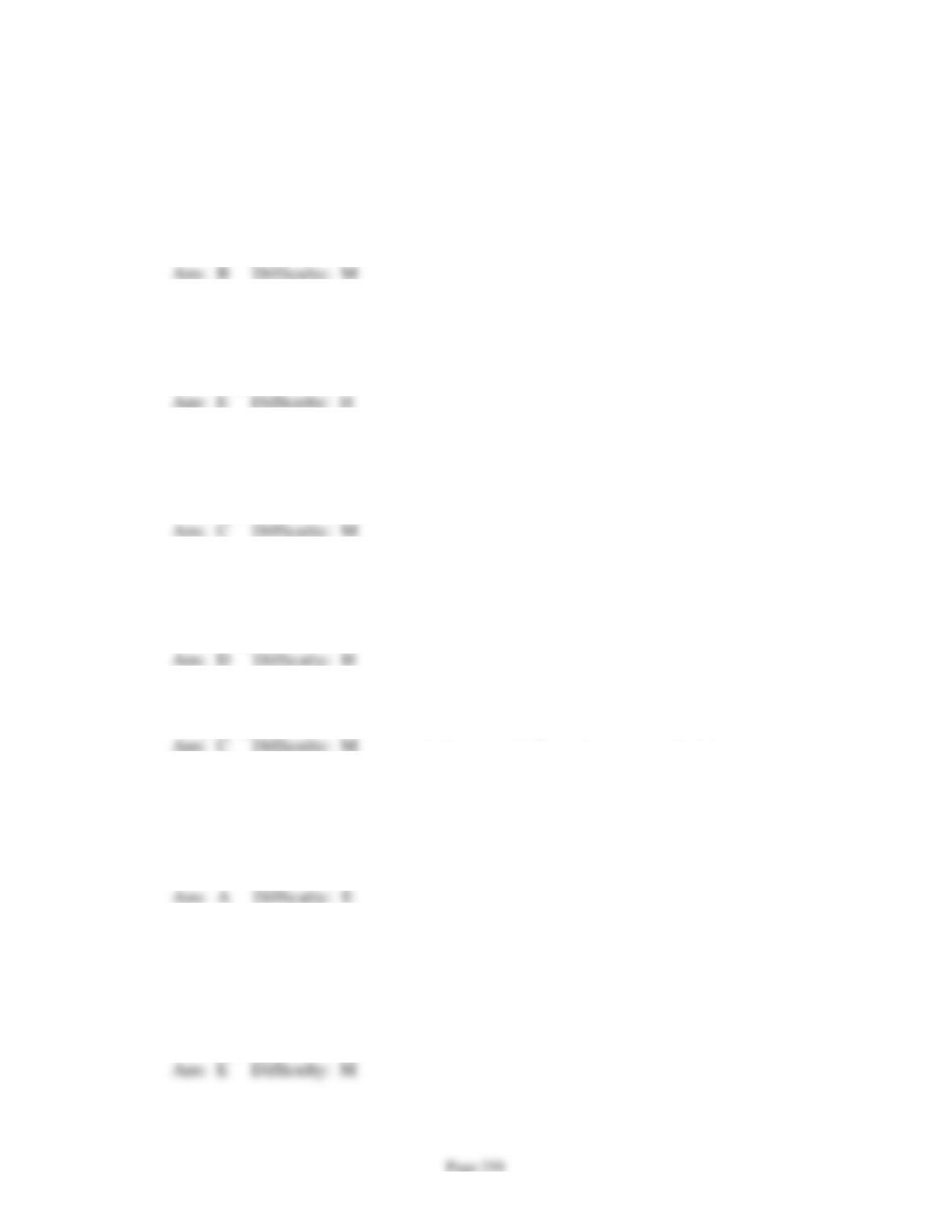
74. Identify the organic product when cyclopentanol reacts with sulfuric acid.
A) A
B) B
C) C
D) D
E) None of the above is a major product of the reaction.
Chapter 15: Organic Compounds and the Atomic Properties of Carbon
75. One characteristic of the monomers that form condensation polymers that is not common
in monomers which form addition polymers is
A) the presence of pi bonds.
B) the presence of two functional groups.
C) the presence of alkyl side chains.
D) the ability to form free radicals.
E) the presence of sulfur atoms.
76. Which of the following polymers is a condensation polymer?
A) polystyrene D) polypropylene
B) Teflon® E) Dacron®
C) polyvinylchloride
77. Nylon-type compounds are prepared by the reaction of
A) a diol with a diacid. D) an amine with a diacid.
B) an alcohol with a diacid. E) a diamine with an acid.
C) a diamine with a diacid.
78. Dacron is a ___________ compound and is produced by a __________ reaction.
A) polyamide; addition D) polyester; condensation
B) polyamide; condensation E) polyene; addition
C) polyester; addition
79. The most abundant organic chemical on earth is
A) glycogen. B) starch. C) cellulose. D) glucose. E) carbonate.
80. Each amino acid has two functional groups in common and one of 20 other groups
attached to the -carbon. The two functional groups are
A) carboxyl and amine. D) alcohol and amine.
B) ester and amine. E) carboxyl and peptide.
C) carboxyl and amide.
81. Helical and sheet-like segments in proteins arise from
A) disulfide bridges.
B) salt bridges.
C) crosslinking via covalent bonds.
D) dispersion forces within the protein’s interior.
E) hydrogen bonding.
Chapter 15: Organic Compounds and the Atomic Properties of Carbon
82. The protein amino acid sequence, the RNA base sequence, and the DNA base sequence
are interrelated. Which of the following descriptions is correct?
A) The RNA base sequence determines the DNA base sequence which, in turn,
determines the protein amino acid sequence.
B) The DNA base sequence determines the RNA base sequence which, in turn,
determines the protein amino acid sequence.
C) The DNA base sequence determines the protein amino acid sequence which, in
turn, determines the RNA base sequence.
D) The RNA base sequence determines the protein amino acid sequence which, in
turn, determines the DNA base sequence.
E) None of the above statements is correct.
83. Draw and name two non-alkenes with the formula C4H8.
84. Draw and name all stable molecules with the formula C5H12.
85. Draw and name four alkenes with the formula C4H8.
Chapter 15: Organic Compounds and the Atomic Properties of Carbon
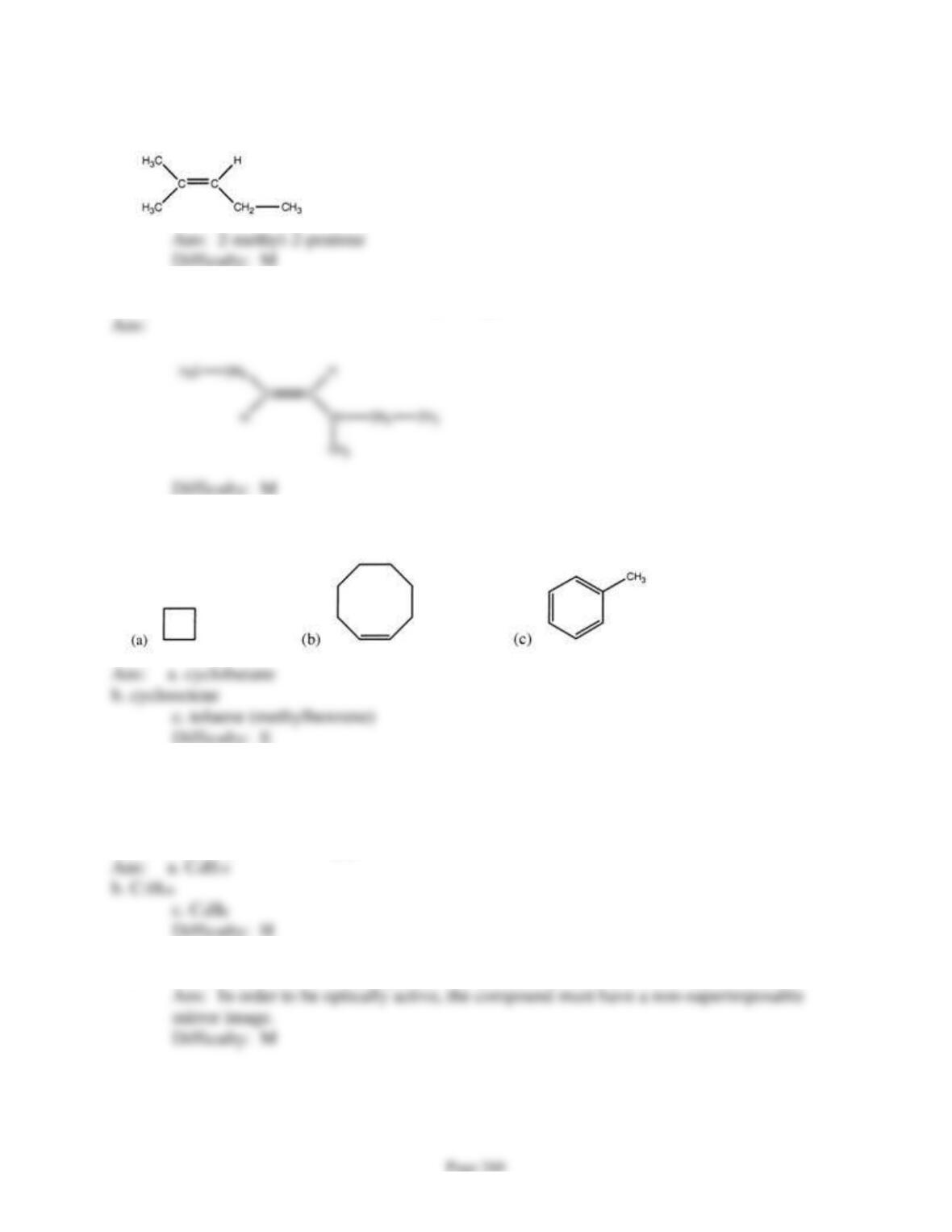
86. Name the compound with the molecular structure shown.
87. Draw the structure of trans-5-methyl-3-heptene.
88. Name the compounds:
89. What is the simplest molecular formula for
a. an alkane capable of having structural isomers?
b. an alkane capable of having optical isomers?
c. an alkene capable of having geometrical isomers?
90. In one sentence, what is the general requirement for a molecule to be optically active?
Chapter 15: Organic Compounds and the Atomic Properties of Carbon
91. a. Draw two different structures with the molecular formula C2H6O.
b. Name the functional group in each structure.
c. Which one will have the higher boiling point, and why?
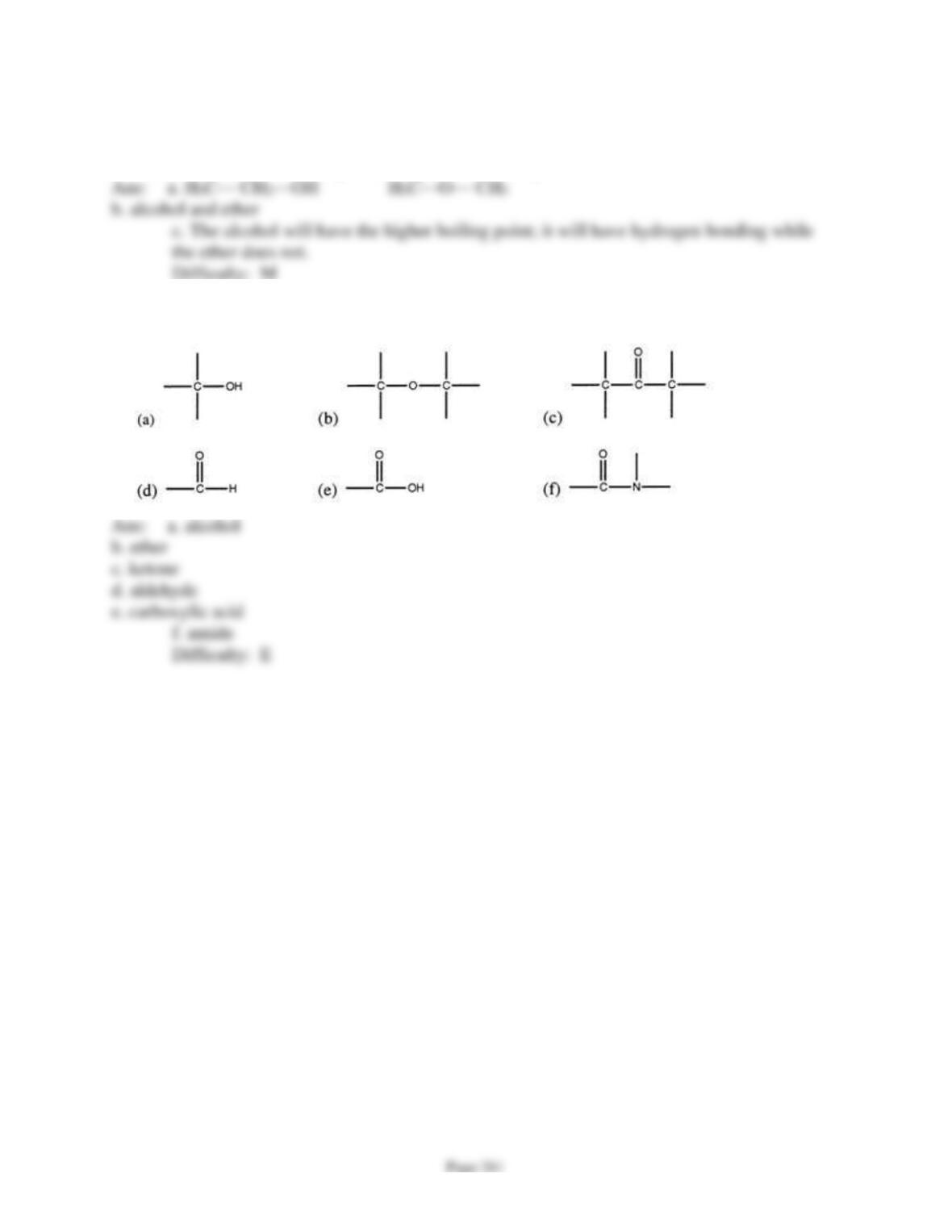
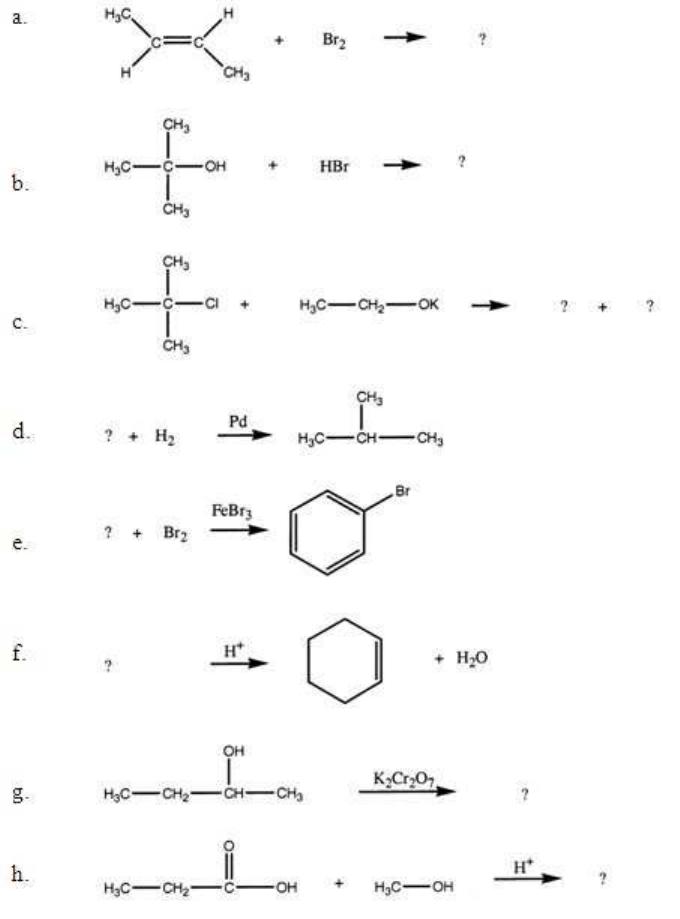
92. Name each of the following functional groups:
Chapter 15: Organic Compounds and the Atomic Properties of Carbon
Page 262
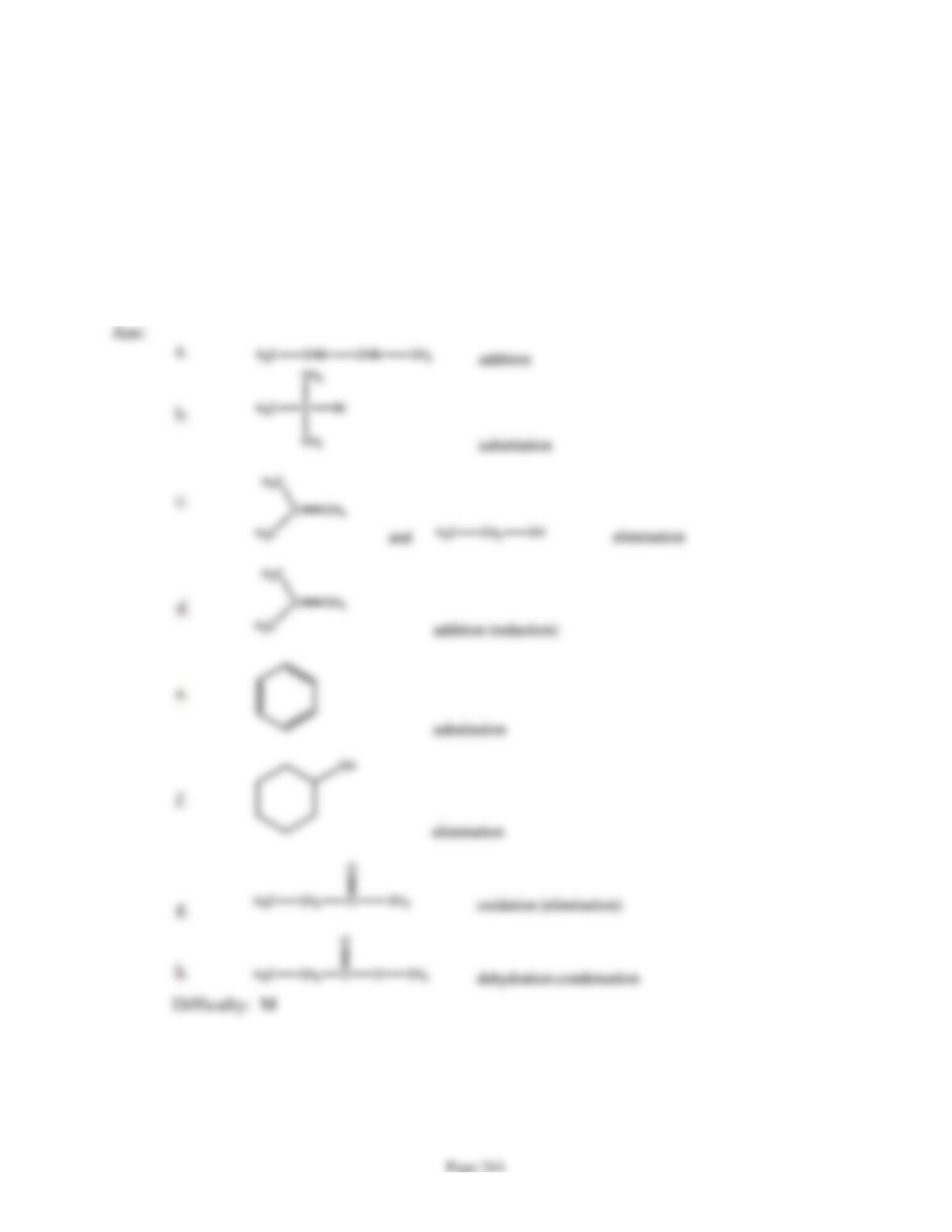
93. Write down the structure of the missing organic reactant or product(s) in the following
reactions, and name the type of reaction involved (inorganic products may also be formed):
Chapter 15: Organic Compounds and the Atomic Properties of Carbon
Chapter 15: Organic Compounds and the Atomic Properties of Carbon
94. Describe and contrast fibrous and globular proteins in terms of their amino acid
composition, their structure, and their function.
95. Explain how a disulfide bridge can arise a protein molecule.
96. Explain how a salt bridge can arise a protein molecule.
97. Name the three component parts of a nucleotide.
98. Explain what is meant by “complementary” in the context of DNA strands.
99. Given that each 3-base sequence in DNA is a “code word” for a particular amino acid,
how many different code words are possible using a 3-base sequence and the bases available in
DNA?
100. Because organic compounds are associated with living organisms, their properties are
governed by fundamentally different chemical principles from those of inorganic compounds.
Chapter 15: Organic Compounds and the Atomic Properties of Carbon
101. Ethane (C2H6) is much more reactive than disilane (Si2H6).
102. The carbon atoms in a molecule of cyclohexane lie in the same plane.
103. All the atoms in a molecule of benzene lie in the same plane.
104. Both alkenes and alkynes exhibit geometric (cis/trans) isomerism.
105. Because of delocalization, all the carbon-carbon bond lengths in 1,3-cyclopentadiene are
identical.
106. As a result of delocalization of the pi-electrons, all the carbon-carbon bonds in benzene
are identical.
107. A characteristic reaction of alkanes is addition.
108. A characteristic reaction of alkenes is addition.
109. A characteristic reaction of haloalkanes is substitution.
110. All alcohols are capable of hydrogen bonding.
111. All ketone molecules are capable of hydrogen bonding to other ketone molecules.
112. Carboxylic acids are weak acids.
113. Secondary amines have the general formula RNH2.
114. Esters can be formed by the dehydration-condensation of a carboxylic acid and an
alcohol.

Chapter 15: Organic Compounds and the Atomic Properties of Carbon
115. Addition polymers are mostly made from monomers with carbon-carbon double bonds.
116. Condensation polymers are formed by free radical addition reactions.
117. Both nylons and proteins are polyamides.
118. Amino acids in solution can undergo an internal acid-base reaction.
119. The backbone of protein molecules consists of repeating N–C–C–O units.