Introduction to Chemical Principles, 11e (Stoker)
Chapter 13 Solutions
13.1 Multiple Choice
1) In a solution, the solvent is ________.
A) the substance being dissolved
B) always a liquid
C) the substance present in the greatest amount
D) always water
2) In a solution, solutes ________.
A) must be liquids
B) can be liquids or gases
C) cannot be solids
D) can be solids, liquids or gases
3) A solution is always characterized by each of the following except one. The exception is
________.
A) homogeneity
B) variable composition
C) absence of settling
D) liquid state
4) In a mixture of 66 mL water, 75 mL ethyl alcohol, and 59 mL of acetone, the solvent is
________.
A) ethyl alcohol
B) water
C) acetone
D) acetone and ethyl alcohol
5) A crystal of solid NaCl is placed into an aqueous NaCl solution. No precipitate forms in the
bottom of the container. The final solution ________.
A) is super saturated
B) is unsaturated
C) is slightly saturated
D) might be saturated, or it might be unsaturated
6) A solution in which the rate of crystallization is equal to the rate of dissolution is ________.
A) unsaturated
B) saturated
C) supersaturated
D) dilute
7) A supersaturated solution ________.
A) contains as much solvent as it can hold
B) contains no double bonds
C) contains dissolved solute in equilibrium with undissolved solid
D) will rapidly precipitate if a seed crystal is added.
8) Which type of solution is described by the term miscible?
A) liquid/liquid
B) liquid/solid
C) liquid/gas
D) solid/solid
9) Water and methanol are two liquids which dissolve in each other. When the two are mixed
they form one layer. The liquids are ________.
A) miscible
B) immiscible
C) unsaturated
D) partially miscible
10) Which of the following interparticle attractions play a part in the formation of a solution?
A) solute-solute
B) solvent-solvent
C) solvent-solute
D) answers A, B, and C play a part
11) The rule “likes dissolve likes” is not adequate for predicting solubilities when the solute is
________.
A) a nonpolar gas
B) an ionic compound
C) a nonpolar liquid
D) a polar gas
12) Which type of compound is likely to dissolve in water?
A) one with hydrogen bonds
B) a salt
C) a highly polar compound
D) all are correct
13) Salts incorporating all but one of the following ions are usually soluble in water. Which ion
is the exception?
A) SO42−
B) C2H3O2−
C) PO43−
D) K+
14) In which of the following pairs of ionic compounds are both chemical species soluble in
water?
A) K2CO3 and FeCO3
B) Cu S and PbBr2
C) Be(NO3)2 and Be3(PO4)2
D) NH4F and Sr(OH)2
15) Which response includes all of the following compounds that are soluble in water, and no
others?
I. LiF II. PbCl2 III. NH4CH3COO IV. FeS
V. Mn(OH)2 VI. Cr(NO3)3 VII. CuCO3 VIII. Ni3(PO4)2
A) I, III, and VI
B) II, IV, V, and VII
C) III, IV, V, and VIII
D) I, II, V, and VIII
16) Which one of the following compounds is insoluble in water?
A) CuS
B) NaOH
C) FeCl3
D) NH4F
17) Which of the following is not soluble in water?
A) potassium sulfide
B) ammonium sulfate
C) iron (III) hydroxide
D) iron (III) nitrate
18) Which of the following percentage concentration units is most frequently used by chemists?
A) % (m/m)
B) % (m/v)
C) % (v/v)
D) % (v/m)
19) If the concentration of a KCl solution is 16.0% (m/v), then the mass of KCl in 26.0 mL of
solution is ________.
A) 61.5 grams
B) 32.6 grams
C) 4.16 grams
D) 9.84 grams
20) What is the concentration in mass-volume percent for 13.9 g CaF2 in 255 mL of solution?
A) 2.34%
B) 0.160%
C) 0.920%
D) 5.45%
21) What volume of a 8.50% (m/v) solution contains 50.0 grams of glucose?
A) 588 mL
B) 356 mL
C) 279 mL
D) 480 mL
22) What mass of water is needed to prepare 148 grams of 12.0% (m/m) KHCO3 solution?
A) 17.8 g
B) 9.65 g
C) 130 g
D) 125 g
23) If you had 75.0 mL of a 5.00%(m/v) NaOH solution, what mass of NaOH does it contain?
A) 5.00 g
B) 3.75 g
C) 6.67 g
D) 15.0 g
24) Calculate the mass percent of a solution prepared by dissolving 17.2 g of NaCl in 149 g of
water.
A) 10.4%
B) 11.5%
C) 0.103%
D) 8.65%
7
25) It is determined that 9.86 x 10⁻³ g of a contaminant is present in 4865 g of a particular
solution. What is the concentration of the contaminant in ppm (m/m)?
A) 5.73 ppm
B) 2.03 ppm
C) 3.20 ppm
D) 1.00 ppm
26) If a solution contains 6.8 ppm (m/v) of a solute, how many grams of that solute would be
present in a 25 mL sample of the solution?
A) 170 g
B) 1.7 x 10⁻⁵ g
C) 1.7 x 10⁻⁴ g
D) 0.0017 g
27) In which of the following pairs of concentrations are the two equivalent to each other?
A) 7 ppm (v/v) and 7000 ppb (v/v)
B) 7 ppb (v/v) and 7000 ppm (v/v)
C) 7% (v/v) and 7000 ppm (v/v)
D) 7% (v/v) and 7000 ppb (v/v)
28) The concentration of Cu2+ ions in a river water sample is found to be 3.26 micrograms of
Cu2+ ions per 0.250 kg of river water. Express the concentration of Cu2+ ions in ppb (m/m).
A) 13.0 ppb
B) 26.2 ppb
C) 4.66 ppb
D) 39.7 ppb
29) What mass of aluminum nitrate (in mg) is required to make 500.0 mL of a solution that
contains 23.3 ppm nitrate ions?
A) 9.90 mg
B) 13.3 mg
C) 11.6 mg
D) 3.88 mg
30) An aqueous solution contains 38.6 g NaCl per 755 mL of solution. This solution has a
concentration of ________.
A) 1.09 M
B) 2.41 M
C) 0.490 M
D) 0.875 M
31) A 0.360 M solution of KNO3 (formula mass = 101.11) which contains 125 grams of solute
would have a volume of ________.
A) 3.60 x 10³ mL
B) 3.43 x 10³ mL
C) 7.50 x 10³ mL
D) 1.25 x 10³ mL
32) A solution is made by dissolving 2.68 mole of KF in enough water to give a final volume of
1030 mL. What is the molarity of the solution?
A) 0.125 M
B) 0.800 M
C) 2.60 M
D) 1.52 M
33) Molarity could be used as a conversion factor between ________.
A) grams of solute and moles of solvent
B) moles of solute and volume of solution
C) grams of solute and volume of solution
D) moles of solute and kilograms of solute
34) How many grams of H3PO4 are needed to make 175 mL of a 0.175 M H3PO4 solution?
A) 0.786 g
B) 0.312 g
C) 5.02 g
D) 3.00 g
35) What is the molarity of KCl in sea water if sea water is 12.5% (m/m) and the density of sea
water is 1.06 g/mL?
A) 2.69 M
B) 0.854 M
C) 1.78 M
D) 17.1 M
36) What mass of KOH is needed to produce 22.0 mL of 0.576 M solution?
A) 0.423 g
B) 1.39 g
C) 0.711 g
D) 2.64 g
37) If 29.4 g of LiOH is dissolved in enough water to make 985 mL of solution, what is the
molarity of the LiOH solution?
A) 0.986 M
B) 0.478 M
C) 1.25 M
D) 2.19 M
38) What mass of CaCl2 is required to prepare 3.20 L of 0.850 M CaCl2 solution?
A) 302 g
B) 139 g
C) 101 g
D) 78.9 g
39) How many grams of FeSO4 are present in a 20.0 mL sample of a 0.500 M solution?
A) 65.8 g
B) 6.08 g
C) 1.52 g
D) 0.760 g
40) The density of a NaNO3 solution is 1.24 g/mL. What is the molarity of a 25.0% (m/m)
NaNO3 solution?
A) 3.65 M
B) 0.960 M
C) 8.23 M
D) 15.1 M
41) What is the molarity of a solution made by dissolving 25.00 g of NaCl in enough water to
make 625 mL of solution?
A) 0.308 M
B) 0.526 M
C) 0.479 M
D) 0.684 M
42) Calculate the volume (in L) of a solution that contains 3.12 moles of NaCl if the
concentration of this solution is 6.67 M NaCl.
A) 2.14 L
B) 20.8 L
C) 0.468 L
D) 0.208 L
43) When a 20.0 mL sample of a CuSO4 solution was dried, 0.967 g of copper (II) sulfate was
left behind. What was the molarity of the original solution?
A) 0.433 M
B) 0.303 M
C) 0.0484 M
D) 0.0207 M
44) What volume of 0.300 M Cu(OH)2 solution is needed to react with 500. mL of 0.100 M
H3PO4 solution?
3 Cu(OH)2 (aq) + 2H3PO4 (aq) Cu 3(PO4)2 (s) + 6 H2O (l)
A) 250. mL
B) 167 mL
C) 83.3 mL
D) 60.0 mL
45) 15.00 mL of 0.425 M H2SO4 solution is required to completely neutralize 23.9 mL of KOH
solution. What is the molarity of the KOH solution?
2 KOH(aq) + H2SO4(aq) K2SO4(aq) + 2 H2O (l)
A) 1.75 M
B) 0.988 M
C) 0.614 M
D) 0.533 M
46) What volume, in liters, of 0.150 M Ba(OH)2 solution is needed to react completely with
0.200 L of a 0.300 M HNO3 solution according to the equation:
Ba(OH)2 + 2HNO3 Ba(NO3)2 + 2H2O
A) 0.150 L Ba(OH)2
B) 0.200 L Ba(OH)2
C) 0.600 L Ba(OH)2
D) 0.250 L Ba(OH)2
47) How many grams of KCl (molar mass = 74.55 g) will be produced from the reaction of 50.0
mL of 0.300 M KOH with excess HCl?
KOH (aq) + HCl (aq) KCl (aq) + HCl (l)
A) 1.12 g
B) 4.65 g
C) 6.98 g
D) 9.31 g
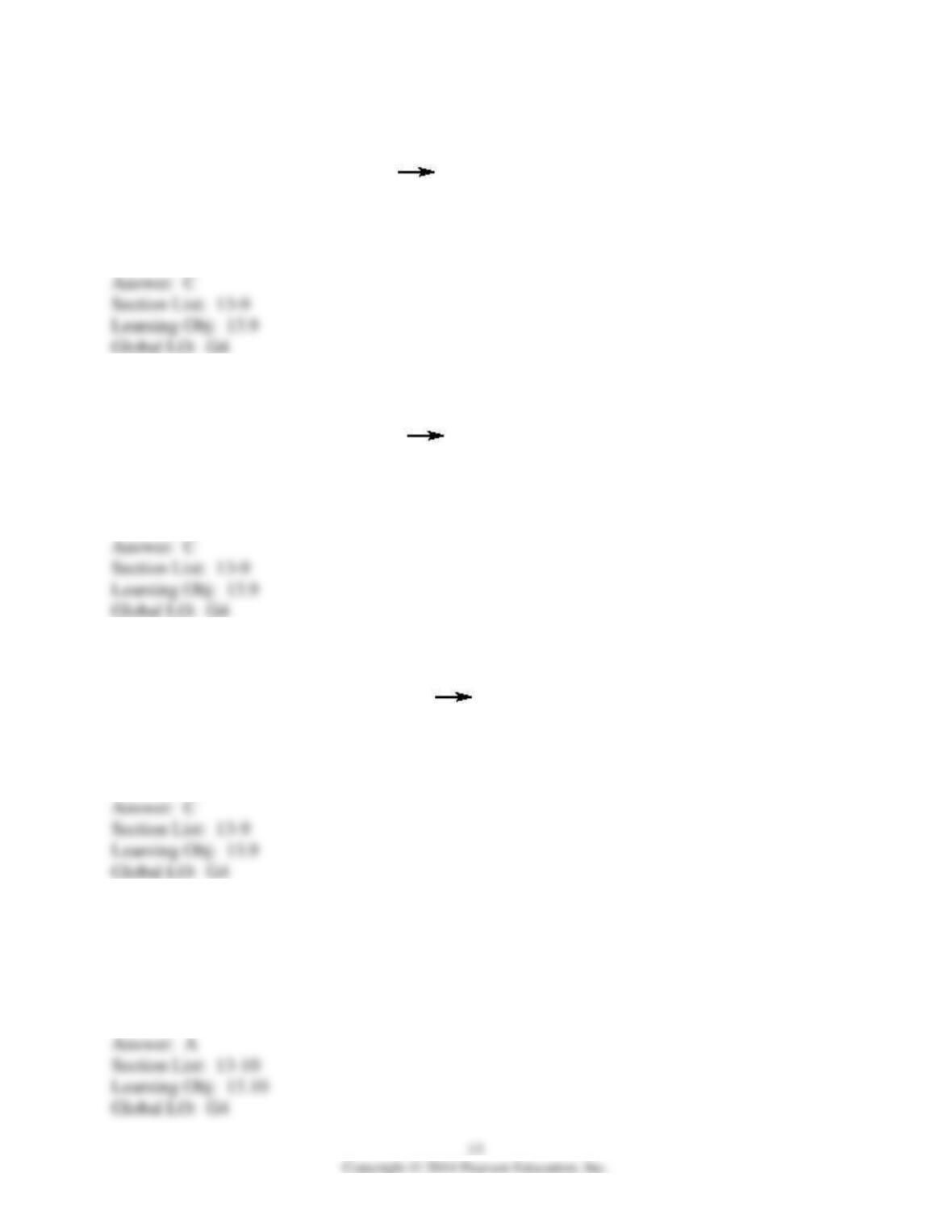
48) 16.24 mL of 0.325 M Ba(OH)2 solution is required to completely neutralize 26.58 mL of
HNO3 solution. What is the molarity of the nitric acid solution?
Ba(OH)2 (aq) + 2 HNO3 (aq) Ba(NO3)2 (aq) + 2 H2O (l)
A) 0.0993 M
B) 0.432 M
C) 0.397 M
D) 0.741 M
49) Calculate the grams of magnesium needed to completely react with 100.0 mL of 0.557 M
HClO4 solution, given the following reaction:
Mg (s) + 2 HClO4 (aq) Mg(ClO4)2 (aq) + H2 (g)
A) 1350 g
B) 675 g
C) 0.677 g
D) 2.70 g
50) Calculate the volume in mL of a 1.22 M Na2S solution needed to react with 2.75 g of AlBr3
in the following equation:
3 Na2S (aq) + 2 AlBr3 (aq) Al2S3 (s) + 6 NaBr (aq)
A) 0.0254 mL
B) 8.45 mL
C) 12.7 mL
D) 0.0127 mL
51) A student wishes to prepare 65.0 mL of 0.875 M HCl from 12.0 M HCl. What volume of the
12.0 M HCl should he/she start with?
A) 4.74 mL
B) 9.28 mL
C) 4.65 mL
D) 18.2 mL
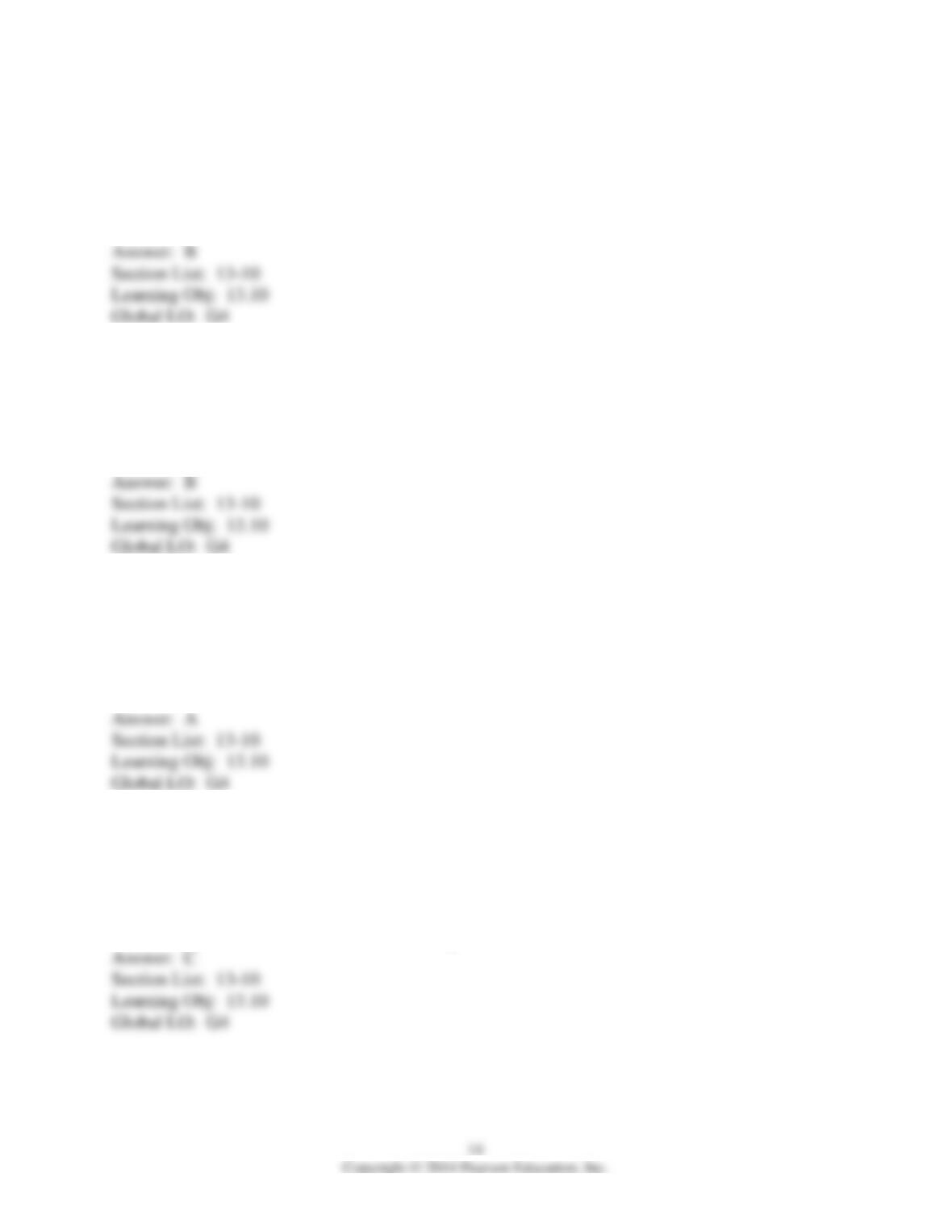
52) Calculate the volume (in mL) of a 2.75 M solution that must be used to make 1.25 L of a
0.150 M solution.
A) 0.0682 mL
B) 68.2 mL
C) 0.0330 mL
D) 33.0 mL
53) If 250. mL of 4.00 M CaBr2 is diluted to 1.60 L, the resulting solution contains ________.
A) 0.400 moles of CaBr2
B) 1.00 mole of CaBr2
C) 2.40 moles of CaBr2
D) 0.0500 moles of CaBr2
54) If 850. mL of 1.36 M NH4Cl is diluted to 4.50 L, the concentration of the resulting solution
is ________.
A) 0.257 M
B) 4.00 M
C) 0.200 M
D) 0.0356 M
55) To prepare 25 mL of 0.25 M MgCl2 solution from a 0.75 M MgCl2 stock solution, you
should mix ________.
A) 12 mL of stock solution mixed with enough water to make 25 mL
B) 8.3 mL of stock solution added to 25 mL water
C) 8.3 mL of stock solution mixed with enough water to make 25 mL
D) 9.6 mL of stock solution mixed with enough water to make 25 mL
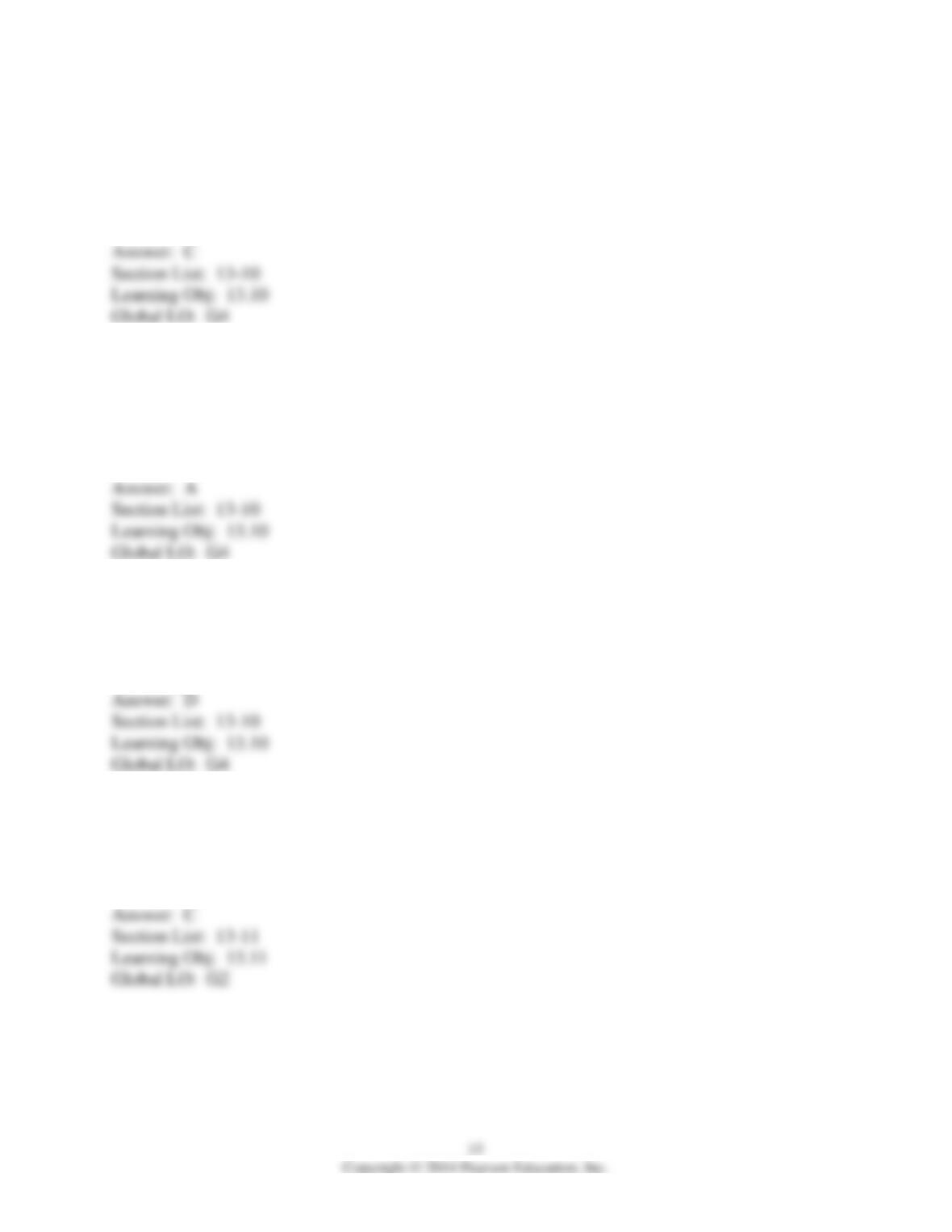
56) What volume of 8.25 M HCl solution must be diluted to prepare 2.40 L of 0.500 M HCl
solution?
A) 39.6 L
B) 438 mL
C) 145 mL
D) 0.256 L
57) If 50.0 mL of a 6.00 M HCl solution is diluted to 200. mL, what will be the new
concentration of the solution?
A) 1.50 M
B) 24.0 M
C) 2.10 M
D) 3.00 M
58) How many grams of solid KCl are needed to prepare 250. mL of a 0.125 M solution?
A) 9.32 g
B) 31.3 g
C) 15.6 g
D) 2.33 g
59) The molality concentration unit is defined in terms of a fixed ________.
A) mass of solution
B) volume of solution
C) mass of solvent
D) volume of solvent
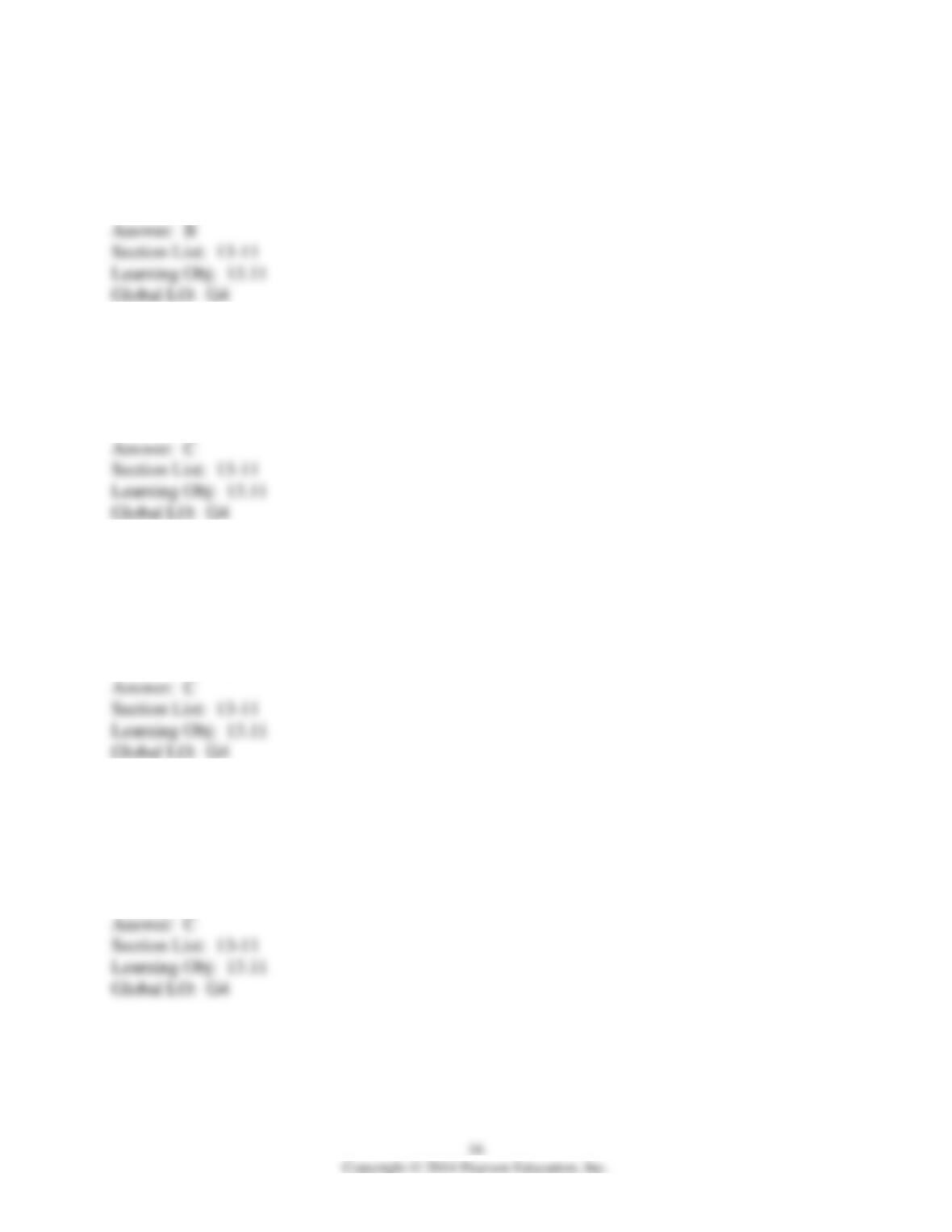
60) Which of the following gives the correct unit expression for molality?
A) moles of solute/liter of solution
B) moles of solute/kilogram of solvent
C) moles of solute/kilogram of solute
D) moles of solute/liter of solvent
61) What is the molality of a solution made by dissolving 16.84 g of NaF in 325 g of H2O?
A) 0.265 m
B) 0.0308 m
C) 1.23 m
D) 0.492 m
62) What is the molality of KBr in a solution made by dissolving 2.21 g of KBr in 897 g of
water?
A) 2.46 m
B) 0.0167 m
C) 0.0207 m
D) 2.07 x 10⁻⁵ m
63) Calculate the number of grams of HNO3 which must be added to 31.5 g of H2O to prepare a
0.950 m solution.
A) 1.26 g
B) 2.31 g
C) 1.89 g
D) 10.3 g
64) Calculate the molality of a solution prepared by dissolving 12.1 g of CH3OH in 475 g of
water.
A) 1.37 m
B) 0.796 m
C) 2.40 m
D) 0.458 m
65) Calculate the molarity of a 9.55 molal solution of methanol (CH3OH) whose density is 0.937
g/mL.
A) 6.86 M
B) 68.6 M
C) 0.146 M
D) 29.3 M
66) Which of the following concentrations is dependent on temperature?
A) molality
B) mass percent
C) molarity
D) mole fraction
67) A solution is made by dissolving 15.0 g of NH3 in 250 g of water. The density of the final
solution is 0.974 g/mL. Calculate the molarity of this solution.
A) 0.00353 M
B) 0.882 M
C) 60.0 M
D) 3.24 M
13.2 Short Answer
1) Predict the solubility of each solute-solvent combination by writing the word soluble or
insoluble in the blank space.
A) NO2 (a polar gas) in H2O ________
B) KCl in CCl4 (a liquid) ________
C) BaSO4 in H2O ________
D) LiF in H2O ________
E) C8H18 (a nonpolar liquid) in CCl4 ________
2) Saline I.V. solution is 0.92% (m/v) NaCl solution. If a patient is to receive 0.50 L of saline
solution, what mass of NaCl is the patient to receive?
3) A concentration 3.0 ppm (m/v) nitrogen dioxide in air may be lethal to humans. Would a
sample of air containing 1.9 10−3 g of NO2 per liter be lethal to humans?
4) What volume, in milliliters, of 0.655 M LiCl solution contains 19.6 g of LiCl?