Ch.0 ChapterP:Prerequisites:FundamentalConceptsofAlgebra
0.1 AlgebraicExpressions,MathematicalModels,andRealNumbers
1 EvaluateAlgebraicExpressions
MULTIPLECHOICE.Choosetheonealternativethatbestcompletesthestatementoranswersthequestion.
Evaluatethealgebraicexpressionforthegivenvalueorvaluesofthevariable(s).
1) 6x+7; x=3
A) 25 B) 36 C) 13 D) 11
2) 7x–6; x=–2
A) –20 B) 8 C) –8D)20
3) 4(x+8)+17; x=–15
A) –11 B) 11 C) 105 D) –71
4) 4x2+3y; x=9andy=5
A) 339 B) 1311 C) 1680 D) 127
5) (x+4y)2;x=3andy=4
A) 361 B) 19 C) 38 D) 49
6) 5+4(x–2)3;x=4
A) 37 B) 13 C) 72 D) –27
7) x2–4(x–y); x=8andy=3
A) 44 B) 29 C) 35 D) –84
8) 8(x–5)
2x+2;x=7
A) 1 B) 6 C) 2 D) –3
2
9) y–5x
7x+xy ;x=–2andy=4
A) –7
11 B) 3
11 C) 1 D) –8
11
2 UseMathematicalModels
MULTIPLECHOICE.Choosetheonealternativethatbestcompletesthestatementoranswersthequestion.
Solve.
1) TheformulaC=5
9(F–32)expressestherelationshipbetweenFahrenheittemperature,F,andCelsius
temperature,C.Usetheformulatoconvert59°FtoitsequivalenttemperatureontheCelsiusscale.
A) 15°C B) 3°C C) 51°C D) 49°C
Page1
2) Astoneisdroppedfromatowerthatis730feethigh.Theformulah=730–16t2describesthestoneʹsheight
abovetheground,h,infeet,tsecondsafteritwasdropped.Whatisthestoneʹsheight4secondsafteritis
released?
A) 474ft B) 484ft C) 449 ft D) 499 ft
3) Ifarockfallsfromaheightof100metersabovetheground,theheightH(inmeters)afterxsecondscanbe
approximatedusingtheformulaH=100–4.9x2.Whatistheheightoftherockafter4seconds?
A) 21.6m B) 1521.6 mC)
–284.16 m D) 80.4 m
4) Astherelativehumidityincreases,thetemperatureseemshigherthanitis.TheformulaT=0.109x+87.16
approximatestheapparenttemperatureforanactualtemperatureof95°F,wherexistherelativehumidity.
Whatistheapparenttemperature(tothenearestdegree)forarelativehumidityof10%?
A) 88°F B) 95°F C) 97°F D) 87°F
5) Thewinningtimes(inseconds)inaspeed–skatingeventformencanberepresentedbytheformula
T=46.36–0.091x,wherexrepresentstheyear,withx=0correspondingto1920.(Forexamplein1992,xwould
be1992–1920=72.)Accordingtotheformula,whatwasthewinningtimein1990?Roundtothenearest
hundredth.
A) 39.99sec B) 3238.83 sec C) 40.90 sec D) 41.81 sec
6) Itisestimatedthaty,thenumberofitemsofaparticularcommodity(inmillions)soldintheUnitedStatesin
yearx,wherexrepresentsthenumberofyearssince1990,isgivenbytheformulay=1.44x+4.88.Thatis,x=0
represents1990,x=1represents1991,andsoon.Accordingtotheformula,howmanyitemssoldin1997?
A) 14.96millions B) 4.88 millions C) 44.24 millions D) 16.40 millions
3 FindtheIntersectionofTwoSets
MULTIPLECHOICE.Choosetheonealternativethatbestcompletesthestatementoranswersthequestion.
Findtheintersectionofthetwosets.
1) {1
,
7
,
5
,
8}∩{5
,
11
,
1}
A) {1
,
5} B) {1} C) {1
,
5
,
8
,
7
,
11} D) ∅
2) {1
,
10
,
9}∩{5
,
11}
A) ∅B) {10
,
9} C) {1
,
5
,
9
,
10
,
11} D) {1
,
9}
3) {9
,
11
,
12
,
14}∩∅
A) ∅B) {9
,
11
,
12
,
14} C) {9
,
11} D) {12
,
14}
4 FindtheUnionofTwoSets
MULTIPLECHOICE.Choosetheonealternativethatbestcompletesthestatementoranswersthequestion.
Findtheunionofthetwosets.
1) {2
,
4
,
9
,
11}∪{2
,
4
,
13}
A) {2
,
4
,
9
,
11
,
13} B) {2
,
4} C) {9
,
11
,
13} D) ∅
2) {1
,
11}∪{1
,
5
,
9}
A) {1
,
5
,
9
,
11} B) {1} C) {5
,
9
,
11} D) ∅
3) {9
,
11
,
12
,
14}∪∅
A) {9
,
11
,
12
,
14} B) {9
,
11} C) {12
,
14} D) ∅
Page2

5 RecognizeSubsetsoftheRealNumbers
MULTIPLECHOICE.Choosetheonealternativethatbestcompletesthestatementoranswersthequestion.
ListallnumbersfromthegivensetBthataremembersofthegivenRealNumbersubset.
1) B={16,8,–13,0,0.9,16}Integers
A) 16,–13,0,16 B) 16
,
0C)16
,
–13
,
0D)16,0,16
2) B={3,5,–19,0,0.1,16}Wholenumbers
A) 3,0,16 B) 3
,
–19
,
0C)3,–19,0,16 D) 3
,
0
3) B={7,7,–21,0,0.1,4}Naturalnumbers
A) 7,4B) 7,0,4 C) 7
,
0D)7
4) B={9,7,–10,0,2
3,16,0.6,0.28}Rationalnumbers
A) 9,–10,0,2
3,16,0.28,0.6 B) 9,0,16
C) 7,16 D) 7,2
3,0.28
5) B={14,5,–11,0,1
2,25,0.8,0.44}Irrationalnumbers
A) 5 B) 5,0.8 C) 5,25,0.8 D) 5,25,0.44
6) B={15,5,0,7
8,9,–0.3,0.79,–24}Realnumbers
A) 15,5,0,7
8,9,–0.3,0.79,–24 B) 15,5,0,7
8,9,0.79
C) 15,5,7
8,9,–0.3,0.79,–24 D) 15,0,7
8,–0.3,0.79,–24
6 UseInequalitySymbols
MULTIPLECHOICE.Choosetheonealternativethatbestcompletesthestatementoranswersthequestion.
Determinewhetherthestatementistrueorfalse.
1) 17>25
A) False B) True
2) 18≥2
A) True B) False
3) –30<0
A) True B) False
4) 24<–24
A) False B) True
5) 18≤13
A) False B) True
Page3
6) –13≤15
A) True B) False
7) 23>14
A) True B) False
8) –7≥14
A) False B) True
9) –π≥–π
A) True B) False
10) π<3
A) False B) True
7 EvaluateAbsoluteValue
MULTIPLECHOICE.Choosetheonealternativethatbestcompletesthestatementoranswersthequestion.
Rewritetheexpressionwithoutabsolutevaluebars.
1) |16|
A) 16 B) –16 C) 32 D) 0
2) |–19|
A) 19 B) –19 C) 38 D) 0
3) –16
1
A) –16 B) 1 C) –1D)16
4) 17–7
A) 7–17 B) 17–7C)10 D)
–10
5) |3+(–11)|
A) 8 B) 14 C) –8D)
–14
6) –4––5
A) 1 B) 9 C) –1D)
–9
7) –6+–7
A) 13 B) 1 C) –1D)
–13
Evaluatetheexpressionforthegivenvaluesofxandy.
8) |x|
x+|y|
y;x=5andy=–3
A) 0 B) 2 C) 1 D) –1
8 UseAbsoluteValuetoExpressDistance
MULTIPLECHOICE.Choosetheonealternativethatbestcompletesthestatementoranswersthequestion.
Expressthedistancebetweenthegivennumbersusingabsolutevalue.Thenfindthedistancebyevaluatingtheabsolute
valueexpression.
1) 70and89
A) |70–89|=19 B) –|89 –70|= –19 C) |70 +89|=159 D) –|70 +89|= –159
Page4
2) –50and–9
A) |(–50)–(–9)|=41 B) |(–9)–(–50)|= –41
C) |(–9)+(–50)|=–59 D) |–(–50)+(–9)|=59
3) 88and–92
A) |88–(–92)|=180 B) |(–92)–88|= –180
C) |88+(–92)|=–4D)|
–88 +(–92)|=4
4) 31.6and2.5
A) |31.6–2.5|=29.1 B) |2.5 –31.6|= –29.1
C) |31.6+2.5|=34.1 D) |–31.6 +2.5|= –34.1
5) –27.4and16.3
A) |–27.4–16.3|=43.7 B) |16.3 +(–27.4)|=–43.7
C) |16.3–(–27.4)|=–11.1 D) |–27.4 +(–16.3)|=11.1
6) 25.7and33.2
A) |25.7–33.2|=7.5 B) |33.2 –25.7|= –7.5
C) |33.2+25.7|=58.9 D) –|25.7 +33.2|= –58.9
9 IdentifyPropertiesoftheRealNumbers
MULTIPLECHOICE.Choosetheonealternativethatbestcompletesthestatementoranswersthequestion.
Statethenameofthepropertyillustrated.
1) 8+(–3)=(–3)+8
A) Commutativepropertyofaddition
B) Associativepropertyofaddition
C) Distributivepropertyofmultiplicationoveraddition
D) Identitypropertyofaddition
2) 18·(3+9)=18·3+18·9
A) Distributivepropertyofmultiplicationoveraddition
B) Commutativepropertyofmultiplication
C) Associativepropertyofmultiplication
D) Commutativepropertyofaddition
3) 25+(8+13)=(25+8)+13
A) Associativepropertyofaddition
B) Commutativepropertyofaddition
C) Distributivepropertyofmultiplicationoveraddition
D) Identitypropertyofaddition
4) (3+4)+8=(4+3)+8
A) Commutativepropertyofaddition
B) Associativepropertyofaddition
C) Distributivepropertyofmultiplicationoveraddition
D) Inversepropertyofaddition
5) 1·(6·14)=1·(14·6)
A) Commutativepropertyofmultiplication
B) Associativepropertyofmultiplication
C) Distributivepropertyofmultiplicationoveraddition
D) Identitypropertyofmultiplication
Page5

6) (4+7)+(6+14)=(6+14)+(4+7)
A) Commutativepropertyofaddition
B) Associativepropertyofaddition
C) Distributivepropertyofmultiplicationoveraddition
D) Inversepropertyofaddition
7) 8·(17·7)=(17·7)·8
A) Commutativepropertyofmultiplication
B) Associativepropertyofmultiplication
C) Distributivepropertyofmultiplicationoveraddition
D) Identitypropertyofmultiplication
8) (7·17)·2=7·(17·2)
A) Associativepropertyofmultiplication
B) Commutativepropertyofmultiplication
C) Distributivepropertyofmultiplicationoveraddition
D) Identitypropertyofmultiplication
9) 4(x+7)=4x+4·7
A) Distributivepropertyofmultiplicationoveraddition
B) Commutativepropertyofmultiplication
C) Associativepropertyofmultiplication
D) Identitypropertyofmultiplication
10) 8(–8+5)=–64+40
A) Distributivepropertyofmultiplicationoveraddition
B) Associativepropertyofmultiplication
C) Associativepropertyofaddition
D) Commutativepropertyofmultiplication
11) –7(5+4)=–35+(–28)
A) Distributivepropertyofmultiplicationoveraddition
B) Associativepropertyofmultiplication
C) Associativepropertyofaddition
D) Commutativepropertyofmultiplication
12) 1
(x+3)(x+3)=1,x≠–3
A) Inversepropertyofmultiplication B) Inversepropertyofaddition
C) Commutativepropertyofmultiplication D) Identitypropertyofmultiplication
13) (x+3)+[–(x+3)]=0
A) Inversepropertyofaddition B) Inversepropertyofmultiplication
C) Commutativepropertyofaddition D) Identitypropertyofmultiplication
10 SimplifyAlgebraicExpressions
MULTIPLECHOICE.Choosetheonealternativethatbestcompletesthestatementoranswersthequestion.
Simplifythealgebraicexpression.
1) –5(3r+4)+10(9r+9)
A) 75r+70 B) –2r–1C)75r+4D)
–35r
Page6

2) (8z+11)–(4z–1)
A) 4z+12 B) 4z+10 C) 12z+12 D) 4z–12
3) –5(2x–9)–4x+7
A) –14x+52 B) 6x+52 C) 14x+52 D) –14x–38
Writethealgebraicexpressionwithoutparentheses.
4) –(4v)
A) –4v B) 4v C) –4–vD)4–v
5) –5(–4z)
A) 20z B) –20z C) 20 –5z D) 20+z
6) –(4x–2)
A) –4x+2B)4x–2C)
–4x–2D)8x
7) –(–6+4y)
A) 6–4y B) 6+4y C) –6+4y D) 24y
8) –(7z–4w+3y)
A) –7z+4w–3y B) –7z+4w+3y C) –7z–4w+3y D) –7z–4w–3y
9) 1
6(6x)+[(9x)+(–9x)]
A) x B) 19x C) –17x D) 1
0.2 ExponentsandScientificNotatio
n
1 UsetheProductRule
MULTIPLECHOICE.Choosetheonealternativethatbestcompletesthestatementoranswersthequestion.
Simplifytheexponentialexpression.
1) 33·39
A) 312 B) 327 C) 912 D) 927
2) y·y12
A) y13 B) 2y12 C) y12 D) 2y13
3) x9·x2
A) x11 B) x18 C) 11x D) 18x
4) (9x7)(–8x5)
A) –72x12 B) 72x12 C) –72x35 D) 72x35
5) (–4x2y)(–7x4y3)
A) 28x6y4B) –28x6y3C) –11x6y3D) 28x8y3
Page7

2 UsetheQuotientRule
MULTIPLECHOICE.Choosetheonealternativethatbestcompletesthestatementoranswersthequestion.
Simplifytheexponentialexpression.
1) 34
33
A) 3 B) 1
3C) 54 D) 4
3
2) x10
x4
A) x6B) x14 C) x–2D) 1
x6
3) x2
x5
A) 1
x3B) –x3C) x3D) –1
x3
4) 2x8
x5
A) 2x3B) 8x3C) 2x13 D) 6x
5) –36x8
4x3
A) –9x5B) x4C) x5D) –9x4
6) x12y11
x4y2
A) x8y9B) x7y8C) xy9D) x7y9
7) –18x7y8
6x2y5
A) –3x5y3B) x5y3C) –3x4y5D) –3x4y2
8) –56x3
8x8
A) –7
x5B) –7x5C) –7
x4D) –7x4
9) 54x12y10z5
9x7y4z4
A) 6x5y6zB)x
5y6zC)6x
4y5zD)6x
5y6
Page8
3 UsetheZero–ExponentRule
MULTIPLECHOICE.Choosetheonealternativethatbestcompletesthestatementoranswersthequestion.
Simplifytheexponentialexpression.
1) 100
A) 1 B) –1 C) 0 D) 10
2) (–9)0
A) 1 B) –1 C) 0 D) 9
3) –70
A) –1B)1 C)0 D)7
4) x10y0
A) x10 B) 1 C) 0 D) 1
x10
5) –6y0
A) –6 B) 1 C) 0 D) –5
6) (14b)0
A) 1 B) 0 C)
b
D) 14
7) 36x6y12
4x3y9
0
A) 1 B) x3y3C) 9x3y3D) 0
4 UsetheNegative–ExponentRule
MULTIPLECHOICE.Choosetheonealternativethatbestcompletesthestatementoranswersthequestion.
Simplifytheexponentialexpression.
1) 5–2
A) 1
25 B) –25 C) 25 D) 1
10
2) (–2)–4
A) 1
16 B) –16 C) 16 D) –1
16
3) –5–2
A) –1
25 B) –25 C) 25 D) 1
10
4) 3–3·3
A) 1
9B) 1
27 C) 9 D) 27
Page9

5) 33·3–4
A) 1
3B) –3 C) 2187 D) –1
3
6) x9·x–5
A) x4B) 1
x4C) –x4D) –1
x4
7) x–5·x2
A) 1
x3B) –x3C) x3D) –1
x3
8) x2y–4
A) x2
y4B) y4x2C) x2
y10 D) y10x2
9) 5x–2y9
A) 5y9
x2B) 5
x2y9C) y9
5x2D) 5x2
y9
10) x–6
x2
A) 1
x8B) 1
x12 C) 1
x4D) x8
11) x–3
y–2
A) y2
x3B) 1
x3y2C) x3y2D) x3
y2
12) x5y–7
z–8
A) x5z8
y7B) z8
x5y7C) y7
x5z8D) x5z7
y8
13) 8x3y10
4x2y–7
A) 2xy17 B) 8xy17 C) 2x5y17 D) 2xy3
5 UsethePowerRule
MULTIPLECHOICE.Choosetheonealternativethatbestcompletesthestatementoranswersthequestion.
Simplifytheexponentialexpression.
1) (32)4
A) 6561 B) 729 C) 24 D) 36
Page10

2) (23)–4
A) 1
4096 B) 1
128 C) –24 D) –32
3) (x5)6
A) x30 B) x11 C) 6x5D) 6x30
4) (x–5)7
A) 1
x35 B) –x35 C) –5x7D) –5x35
5) (x9)–6
A) 1
x54 B) –x54 C) –6x9D) –6x54
6) (x–3)–3
A) x9B) 1
x9C) 1
x6D) –x6
6 FindthePowerofaProduct
MULTIPLECHOICE.Choosetheonealternativethatbestcompletesthestatementoranswersthequestion.
Simplifytheexponentialexpression.
1) (5x)2
A) 25x2B) 10x C) 25x D) 10x2
2) (–3x)4
A) 81x4B) –12x C) 81x D) –12x4
3) (11x5)2
A) 121x10 B) 11x10 C) 121x5D) 11x7
4) (x7y)3
A) x21y3B) x21yC)x
10y4D) x10y
5) (–6x5y6)2
A) 36x10y12 B) –6x10y12 C) –36x10y12 D) 36x7y8
6) (8x7)–2
A) 1
64x14 B) 1
8x14 C) 64x14 D) 64
x14
7) (x–1y5)–3
A) x3
y15 B) x–4
y2C) 1
x3y15 D) y2
x–4
Page11
8) (3x–9y4z–3)–4
A) x36z12
81y16 B) y8
81x13z7C) x36z12
–12y–16 D) y8
–12x13z7
7 FindthePowerofaQuotient
MULTIPLECHOICE.Choosetheonealternativethatbestcompletesthestatementoranswersthequestion.
Simplifytheexponentialexpression.
1) x
7
2
A) x2
49 B) x3
343 C) x
7D) x2
7
2) –3
x
2
A) 9
x2B) –9
x2C) 9
xD) 3
x2
3) x3
2
4
A) x12
16 B) x12
2C) x7
16 D) x7
2
4) –2x
y
6
A) 64x6
y6B) 64x
y6C) –12x6
y6D) –12x
y
5) 3x3y2
z3
4
A) 81x12y8
z12 B) 3x12y8
z12 C) 81x7y6
z7D) 3x12y8
z7
6) –9x7y8
3x11y–2
3
A) –27y30
x12 B) 27y30
x12 C) –27y18
x12 D) –27
x12y30
7) x–4
y6
–
4
A) x16y24 B) x–8
y2C) 1
x16y24 D) y2
x–8
Page12
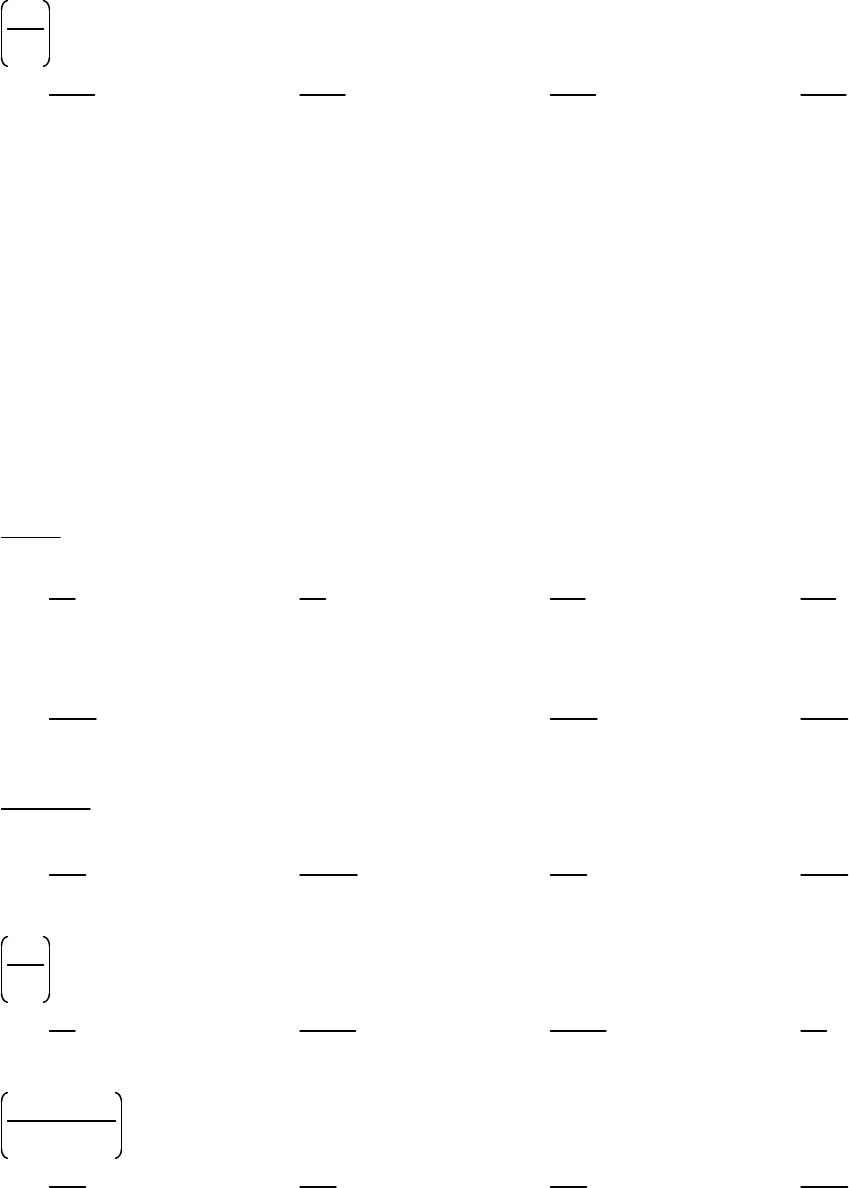
8) 3x3
y2
–
3
A) y6
27x9B) 27x9
y6C) 27y6
x9D) y2
27x9
8 SimplifyExponentialExpressions
MULTIPLECHOICE.Choosetheonealternativethatbestcompletesthestatementoranswersthequestion.
Simplifytheexponentialexpression.Assumethatvariablesrepresentnonzerorealnumbers.
1) 33·8
A) 216 B) 72 C) 13,824 D) 35
2) (–7)3
A) –343 B) 343 C) –21 D) 21
3) –54
A) –625 B) 20 C) 625 D) –20
4) (3x2)3
x15
A) 27
x9B) 3
x9C) 27
x10 D) 27
x21
5) (–4x4y–5)(2x–1y)
A) –8x3
y4B) –8x3y6C) –2x3
y4D) –8x5
y6
6) 2–8x–4y2
2–5x–7y4
A) x3
8y2B) 1
8x7y2C) 3x3
y2D) 8
x3y2
7) xy5
x3y
–
2
A) x4
y8B) 1
x5y11 C) 1
x8y12 D) y8
x4
8) 12x–5y–3z4
3xy–3z–4
–
1
A) x6
4z8B) x4
4z8C) 4x6
z8D) x6y6
4z8
Page13
9 UseScientificNotation
MULTIPLECHOICE.Choosetheonealternativethatbestcompletesthestatementoranswersthequestion.
Writethenumberindecimalnotationwithouttheuseofexponents.
1) 9×10⁻³
A) 0.009 B) 9000 C) 0.09 D) 900
2) 2×10³
A) 2000 B) 0.002 C) 20,000 D) 0.0002
3) 1.19×10⁷
A) 11,900,000 B) 119,000,000 C) 1,190,000 D) 83.3
4) 7.34×10⁻⁴
A) 0.000734 B) 0.00734 C) 0.0000734 D) –734
,
000
5) 2.714×10⁻⁶
A) 0.000002714 B) 0.00002714 C) 0.0000002714 D) –2
,
714
,
000
6) –7.84×10⁷
A) –78,400,000 B) –784,000,000 C) –7,840,000 D) 78,400,000
7) –7.1039×10⁵
A) –710,390 B) –7,103,900 C) –71,039 D) –355.195
Writethenumberinscientificnotation.
8) 7,781,440
A) 7.78144×10⁶B) 7.78144×10⁷C) 7.78144×10⁻⁶D) 7.78144×101
9) 36
,
000
A) 3.6×10⁴B) 3.6×10⁻⁴C) 3.6×10³D) 3.6×10⁻³
10) 52,000,000
A) 5.2×10⁷B) 5.2×10⁻⁷C) 5.2×10⁶D) 5.2×10⁻⁶
11) 8,546,930
A) 8.54693×10⁶B) 8.54693×10⁷C) 8.54693×10⁻⁶D) 8.54693×101
12) 0.000576
A) 5.76×10⁻⁴B) 5.76×10⁴C) 5.76×10⁻⁵D) 5.76×10⁻³
13) 0.00002686
A) 2.686×10⁻⁵B) 2.686×10⁵C) 2.686×10⁻⁴D) 2.686×10⁴
14) 0.000000041701
A) 4.1701×10⁻⁸B) 4.1701×10⁸C) 4.1701×10⁻⁷D) 4.1701×10⁻⁹
Performtheindicatedcomputation.Writetheanswerinscientificnotation.
15) (9×10⁻⁸)(2.1×10⁻⁷)
A) 1.89×10⁻¹⁴ B) 18.9×10⁻¹⁴ C) 189×10–15 D) 1.89×1056
Page14

16) (2×10⁵)(3.6×10⁸)
A) 7.2×10¹³ B) 7.2×10¹⁴ C) 72×1013 D) 7.2×1040
17) 10×10–8
2×10⁻³
A) 5×10⁻⁵B) 5×10–11 C) 10×10–5D) 10×10–11
18) 14.05×10⁷
5×10⁻⁸
A) 2.81×10¹⁵ B) 2.81×10⁻¹C) 5.62×10¹⁵ D) 5.62×10⁻¹
19) 8.37×10⁻³
3.1×10⁻⁸
A) 2.7×10⁵B) 2.7×10⁻¹¹ C) 5.4×10⁵D) 5.4×10⁻¹¹
20) 80,000,000,000
0.000004
A) 2×10¹⁶ B) 2×10¹⁵ C) 4×10¹⁶ D) 4×10¹⁵
21) 0.00016×0.0003
0.0008
A) 6×10⁻⁵B) 6×10⁵C) 48×106D) 48×10–6
Solve.Expresstheresultinscientificnotation.Ifnecessary,roundthedecimalfactortotwodecimalplaces.
22) Inastatewithapopulationof2,000,000 people,theaveragecitizenspends$6,000onhousingeachyear.What
isthetotalspentonhousingforthestate?
A) $1.2×10¹⁰ B) $1.2×10⁹C) $12×1011 D) $12×1010
23) Approximately4×103employeesofacertaincompanyaverage$30,000eachyearinsalary.Whatisthetotal
amountearnedbyalltheemployeesofthiscompanyperyear?
A) $1.2×10⁸B) $12×108C) $1.2×10⁹D) $12×109
0.3 RadicalsandRationalExponents
1 EvaluateSquareRoots
MULTIPLECHOICE.Choosetheonealternativethatbestcompletesthestatementoranswersthequestion.
Evaluatetheexpressionorindicatethattherootisnotarealnumber.
1) 49
A) 7 B) 2401 C) 1
49 D) Notarealnumber
2) –400
A) –20 B) 20 C) –200 D) Notarealnumber
3) –81
A) 9
81 B) 6561 C) 9 D) Notarealnumber
Page15

4) 144+25
A) 13 B) 17 C) 169 D) 119
5) 100–36
A) 8 B) 14 C) 64 D) 28
6) 144+25
A) 17 B) 13 C) 169 D) 119
2 SimplifyExpressionsoftheFormSqRt(a^2)
MULTIPLECHOICE.Choosetheonealternativethatbestcompletesthestatementoranswersthequestion.
Evaluatetheexpressionorindicatethattherootisnotarealnumber.
1) (4)2
A) 4 B) 256 C) 1
16 D) Notarealnumber
2) (–3)2
A) 3 B) 9 C) –3 D) Notarealnumber
3 UsetheProductRuletoSimplifySquareRoots
MULTIPLECHOICE.Choosetheonealternativethatbestcompletesthestatementoranswersthequestion.
Usetheproductruletosimplifytheexpression.
1) 72
A) 6 2 B) 2 6 C) 12 D) 8
2) 6
A) 6 B) 3 2 C) 2 3 D) 2
3) 325
A) 5 13 B) 325 C) 65 D) 25 13
4) 180x2
A) 6 x 5 B) 6 5x C) 180x D) 5x26
5) 486x2
A) 9 x 6 B) 9 6x2C) 9x26 D) 9 6
6) 14x·28x
A) 14 x 2 B) 14 2x C) 14x22 D) 14 2x2
7) 2x2·6x
A) 2 x 3x B) 2 x 3 C) 2x23x D) 2 x 3x2
Page16
Solvetheproblem.
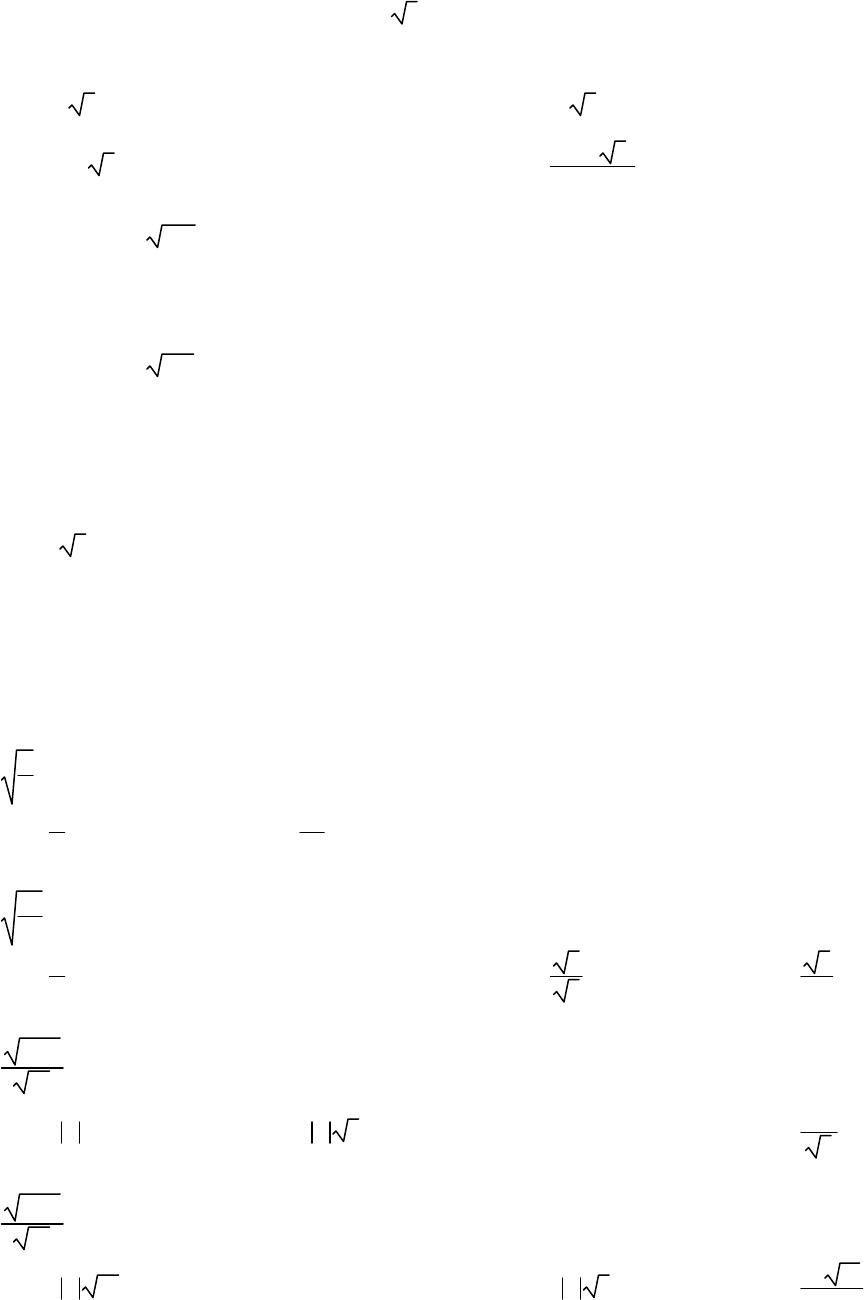
8) Racingcyclistsusethealgebraicexpression4x
todeterminethemaximumspeed,inmilesperhour,toturna
cornerofradiusx,infeet,withouttippingover.Findthemaximumspeedatwhichacyclistshouldtravel
aroundacornerofradius18feetwithouttippingover.Writetheanswerinsimplifiedradicalform.
A) 12 2milesperhour B) 16 2milesperhour
C) 16+2milesperhour D) 4(4+2)
xmilesperhour
9) Theformulav=2.5rmodelsthesafemaximumspeed,v,inmilesperhour,atwhichacarcantravelona
curvedroadwithradiusofcurvature,r,infeet.Ahighwaycrewmeasurestheradiusofcurvatureatanexit
rampas360feet.Whatisthemaximumsafespeed?
A) 30milesperhour B) 36milesperhour C) 35 milesperhour D) 27milesperhour
10) Theformulav=20Lcanbeusedtoestimatethespeedofacar,v,inmilesperhour,basedonthelength,L,in
feet,ofitsskidmarksuponsuddenbrakingonadryasphaltroad.Ifacarisinvolvedinanaccidentandits
skidmarksmeasure125feet,atwhatestimatedspeedwasthecartravelingwhenitapplieditsbrakesjustprior
totheaccident?
A) 50milesperhour B) 55milesperhour C) 45 milesperhour D) 60milesperhour
11) TheaverageheightofaboyintheUnitedStates,frombirththrough60months,canbemodeledby
y=2.9 x+20.1whereyistheaverageheight,ininches,ofboyswhoarexmonthsofage.Whatwouldbethe
expecteddifferenceinheightbetweenachild36monthsofageandachild25monthsofage?
A) 2.9inches B) 43.1 inches C) 17.4 inches D) 4.9 inches
4 UsetheQuotientRuletoSimplifySquareRoots
MULTIPLECHOICE.Choosetheonealternativethatbestcompletesthestatementoranswersthequestion.
Usethequotientruletosimplifytheexpression.
1) 1
4
A) 1
2B) 1
16 C) 2 D) 4
2) 9
16
A) 3
4B) 0 C) 3
4D) 3
4
3) 54x3
6x
A) 3 x B) 3 x 6 C) 6x2D) 3x2
6
4) 56x4
2x
A) 2 x 7x B) 56x3C) 2 x x D) x256
2
Page17
Solvetheproblem.
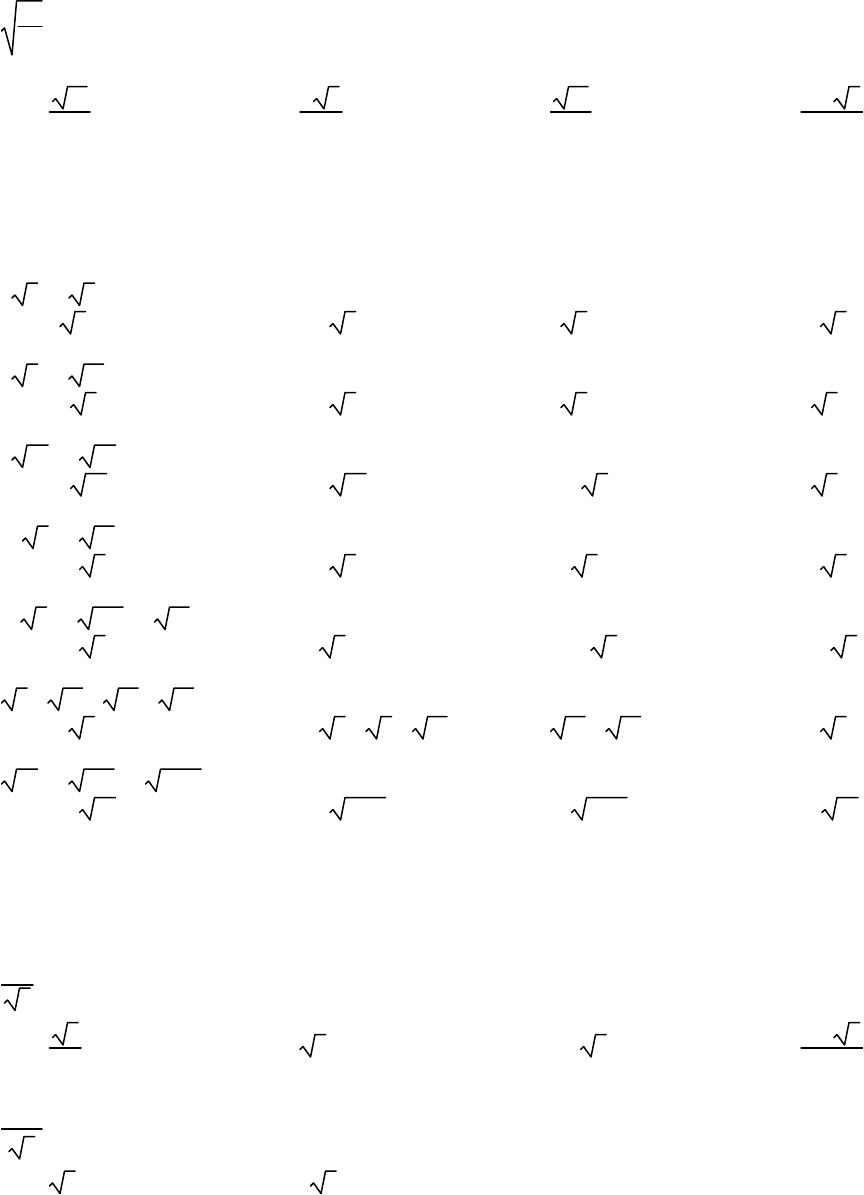
5) Thetime,inseconds,thatittakesanobjecttofalladistanced,infeet,isgivenbythealgebraicexpression
d
16 .Findhowlongitwilltakeaballdroppedfromthetopofabuilding83feettalltohittheground.Write
theanswerinsimplifiedradicalform.
A) 83
4seconds B) 92
4seconds C) 83
16 seconds D) 9+2
4seconds
5 AddandSubtractSquareRoots
MULTIPLECHOICE.Choosetheonealternativethatbestcompletesthestatementoranswersthequestion.
Addorsubtracttermswheneverpossible.
1) 8 2–42
A) 4 2 B) –32 4 C) 4 4 D) 12 2
2) 8 3–612
A) –43 B) –20 3 C) 2 3 D) 4 3
3) 3 3x–53x
A) –23x B) –15 6x C) –2x 6 D) 8 3
4) –42–518
A) –19 2 B) –11 2 C) –92 D) 19 2
5) 10 8–4 200–898
A) –76 2 B) 10 2 C) –136 2 D) 136 2
6) 9+72+64+98
A) 13 2+11 B) 13 2+9+64 C) 72+98+11 D) 85 2+11
7) 6x–224x–7 150x
A) –38 6x B) –38 180x C) –9 180x D) –96x
6 RationalizeDenominators
MULTIPLECHOICE.Choosetheonealternativethatbestcompletesthestatementoranswersthequestion.
Rationalizethedenominator.
1) 1
3
A) 3
3B) 3 C) 1+3 D) 1+3
3
2) 5
5
A) 5 B) 5 5 C) 5 D) 1
Page18
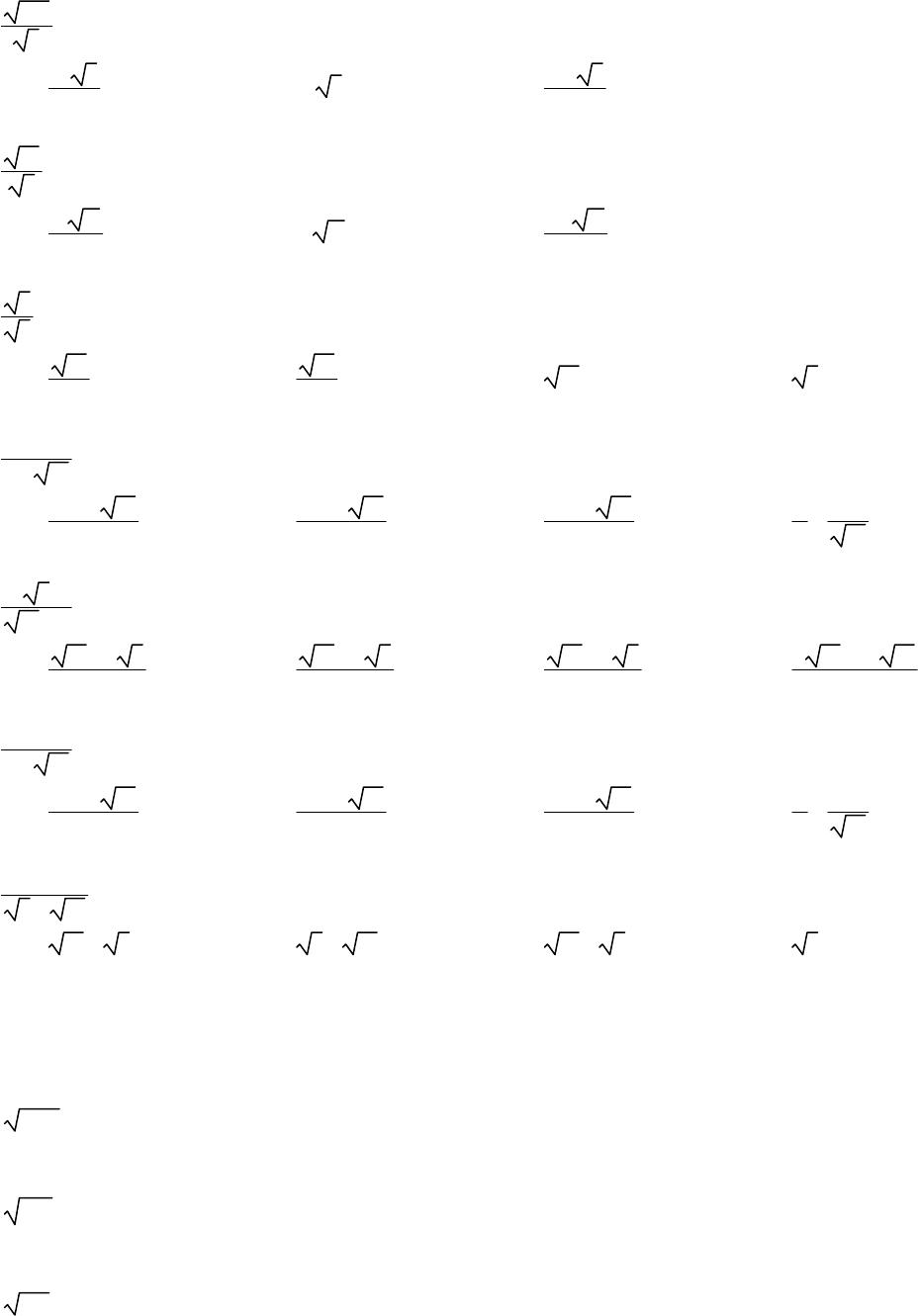
3) 144
7
A) 12 7
7B) 12 7 C) 144 7
7D) 61
4) 16
7
A) 47
7B) 4 7 C) 16 7
7D) 53
5) 7
3
A) 21
3B) 21
9C) 21 D) 7
6) 2
5–10
A) 10+210
15 B) 10–210
15 C) 10+210
5D) 2
5–2
10
7) 2
11+3
A) 22–32
2B) 22+32
2C) 22–32
14 D) 322
+11 33
2
8) 2
7–10
A) 14+210
39 B) 14–210
39 C) 14+210
3D) 2
7–2
10
9) 7
6+13
A) 13–6 B) 6–13 C) 13+6 D) 7
7 EvaluateandPerformOperationswithHigherRoots
MULTIPLECHOICE.Choosetheonealternativethatbestcompletesthestatementoranswersthequestion.
Evaluatetheradicalexpressionsorindicatethattherootisnotarealnumber.
1) 3–125
A) –5B)5 C)
–125 D) notarealnumber
2) 3(2)3
A) 2 B) –2 C) 8 D) notarealnumber
3) 4256
A) 4 B) –4 C) 256 D) notarealnumber
Page19
4) 4(–5)4
A) 5 B) –5 C) 625 D) notarealnumber
Simplifytheradicalexpression.
5) 3x7
A) x23x B) x 3x C) x23x2D) x 3x2
6) 310·325
A) 5 32 B) 3250 C) 5 310 D) 6250
Addorsubtracttermswheneverpossible.
7) 8 324+381
A) 19 33 B) 8 3105 C) 9 3105 D) 11 33
8) y 3128x–316xy3
A) 2y 32x B) 4y 32x–128 32xy3
C) (y+1) 318 D) y 3–14xy3
8 UnderstandandUseRationalExponents
MULTIPLECHOICE.Choosetheonealternativethatbestcompletesthestatementoranswersthequestion.
Evaluatetheexpressionwithoutusingacalculator.
1) 1001/2
A) 10 B) 20 C) 5 D) 40
2) 811/4
A) 3 B) 12 C) 36 D) 243
3) 644/3
A) 256 B) 4096 C) 1024 D) 16,384
4) 36–3/2
A) 1
216 B) –1
216 C) 216 D) –216
Simplifyusingpropertiesofexponents.
5) (6x2
/
3)(9x1
/
2)
A) 54x7
/
6B) 54x1
/
2C) 54x7
/
5D) 54x2
/
3
6) 70x3
/
2
10x2/3
A) 7x5
/
6B) 7x1
/
6C) 60x1
/
6D) 7x5
/
4
Page20
7) (81x8y4)1/2
A) 9x4y2B) 6561x16y4C) 9
2x4y2D) 81x4y2
Simplifybyreducingtheindexoftheradical.
8) 10 x6
A) 5x3B) x3C) 5x D) x
9) 825x2
A) 45x B) 5x C) 5 45x D) 1
625x
Solvetheproblem.
10) Thealgebraicexpression0.07d3/2describesthedurationofastorm,inhours,whosediameterisdmiles.Usea
calculatortodeterminethedurationofastormwithadiameterof15miles.Roundtothenearesthundredth.
A) 4.07hours B) 0.27 hours C) 58.09 hours D) 1.08 hours
0.4 Polynomials
1 UnderstandtheVocabularyofPolynomials
MULTIPLECHOICE.Choosetheonealternativethatbestcompletesthestatementoranswersthequestion.
Isthealgebraicexpressionapolynomial?Ifitis,writethepolynomialinstandardform.
1) 6x–1–4+6x
A) No B) Yes;6x+6x–1–4
2) 4x+7+2x2
A) Yes;2x2+4x+7B)No
3) 3x+8
x
A) No B) Yes;8
x+3
4) x2–x3+x4–9
A) Yes;x4–x3+x2–9B)No
Findthedegreeofthepolynomial.
5) 5x+19x8+1
A) degree8 B) degree9 C) degree5 D) degree19
6) –4x+8x6–5x5–21
A) degree6 B) degree4 C) degree8 D) degree5
7) 7x3–3x2–7x+3x4–5
A) degree4 B) degree3 C) degree7 D) degree2
Page21
8) x5–7x4y9+8xy–6x+2
A) degree13 B) degree5 C) degree20 D) degree–7
2 AddandSubtractPolynomials
MULTIPLECHOICE.Choosetheonealternativethatbestcompletesthestatementoranswersthequestion.
Performtheindicatedoperations.Writetheresultingpolynomialinstandardform.
1) (6x6+4x4–9x)+(3x6+4x4–6x)
A) 9x6+8x4–15x B) –6x6+10x4–2x C) 9x+8x6–15x4D) 2x11
2) (8x6–8x5–4x4–1)+(5x6–3x5+6x4+3)
A) 13x6–11x5+2x4+2B)13x
12–11x10+2x8+2
C) 4x30+2D)
–4x6–4x5+11x4–3
3) (–3x5–5x2+5)+(7x5+9x2+5)
A) 4x5+4x2+10 B) 4x5+12x2+0C)4x
5+4x2+0D)18x
7
4) (–3x8–5x7+4x6–3)+(6x8–9x7+2x6–6)
A) 3x8–14x7+6x6–9B)9x
8–4x7–2x6–3
C) 3x8–4x7–2x6–3D)9x
8–4x7–2x6–9
5) (8x7+9x6–8)–(2x7–6x6–16)
A) 6x7+15x6+8B)6x
7+11x6–24 C) 6x7+15x6–24 D) 29x13
6) (5x5+8x4–9x3+4)–(3x5+4x4–2x3–9)
A) 2x5+4x4–7x3+13 B) 8x5+12x4–11x3–5
C) 2x5+12x4–11x3–5D)8x
5+12x4–11x3+13
7) (9x7+17x6–4)–(6x7+10x6+16)
A) 3x7+7x6–20 B) 3x7+23x6+12 C) 3x7+7x6+12 D) –10x13
8) (2x2+4x+7)+(2x2+8x+8)–(5x+2)
A) 4x2+7x+13 B) 4x2+7x+17 C) 2x2+7x+13 D) 2x2+7x+17
3 MultiplyPolynomials
MULTIPLECHOICE.Choosetheonealternativethatbestcompletesthestatementoranswersthequestion.
Findtheproduct.
1) (x–6)(x2+6x+36)
A) x3–216 B) x3+216
C) x3–12x2–12x–216 D) x3+12x2+12x–216
2) (x–12)(x2+3x–6)
A) x3–9x2–42x+72 B) x3+15x2+30x–72
C) x3–9x2–30x–72 D) x3+15x2+42x+72
Page22
3) (x+11)(x2+5x–7)
A) x3+16x2+48x–77 B) x4+11x3+5x2+48x–77
C) x3+16x2+62x–77 D) x3+16x2+62x+77
4) (x+3)(8x2+4x+7)
A) 8x3+28x2+19x+21 B) 8x3+24x2+12x+21
C) 32x3+16x2+28x D) 96x4+8x3+84x2+21
5) (7x–1)(x2–5x+1)
A) 7x3–36x2+12x–1B)7x
3–34x2+2x–1
C) 7x3–35x2+7x+1D)7x
3+36x2–12x+1
4 UseFOILinPolynomialMultiplication
MULTIPLECHOICE.Choosetheonealternativethatbestcompletesthestatementoranswersthequestion.
Findtheproduct.
1) (x–9)(x+3)
A) x2–6x–27 B) x2–27x–6C)x
2–7x–27 D) x2–6x–6
2) (2x+1)(x–8)
A) 2x2–15x–8B)x
2–8x–15 C) 2x2–16x–8D)x
2–15x–16
3) (2x+9)(9x+11)
A) 18x2+103x+99 B) 11x2+103x+99 C) 18x2+103x+103 D) 11x2+103x+103
4) (5x2–1)(7x2+4)
A) 35x4+13x2–4B)12x
4+13x2–4C)35x
4+13x2+13 D) 35x2+13x–4
5) (7x3–6)(x2–2)
A) 7x5–14x3–6x2+12 B) 7x5–20x3+12
C) 7x5–20x2+12 D) 7x6–14x3–6x2+12
Solvetheproblem.
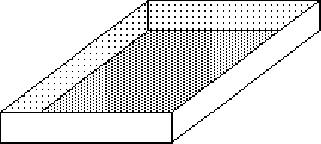
6) Writeapolynomialinstandardformthatrepresentsthevolumeoftheopenbox.
x
12–2x
4–2x
A) 4x3–32x2+48x B) 4x3+32x2+48x C) 4x2–32x+48 D) 2x3–32x2+48x
Page23
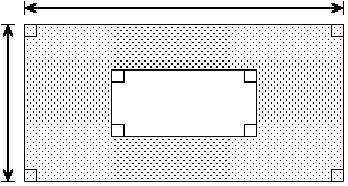
7) Writeapolynomialinstandardformthatrepresentstheareaoftheshadedregion.
x+9
x+4
x+3x+1
A) 7x+23 B) 17x+31 C) x2+22x+23 D) –7x–23
5 UseSpecialProductsinPolynomialMultiplication
MULTIPLECHOICE.Choosetheonealternativethatbestcompletesthestatementoranswersthequestion.
Findtheproduct.
1) (x+9)(x–9)
A) x2–81 B) x2–18 C) x2–18x–81 D) x2+18x–81
2) (8x+13)(8x–13)
A) 64x2–169 B) x2–169 C) 64x2–208x–169 D) 64x2+208x–169
3) (5+9x)(5–9x)
A) 25–81x2B) 25–90x–81x2C) 81x2–25 D) 25+90x–81x2
4) (5x2+8x)(5x2–8x)
A) 25x4–64x2B) 25x4–80x3–64x2C) 10x4–16x2D) 25x4+80x3–64x2
5) (1+x4)(1–x4)
A) 1–x8B) 2–x8C) 2–x16 D) 1–x16
6) (12–y4)(12+y4)
A) 144–y8B) 144–y16 C) 144–y4D) y8–144
7) (x+8)2
A) x2+16x+64 B) x2+64 C) 64x2+16x+64 D) x+64
8) (x–5)2
A) x2–10x+25 B) x2+25 C) 25x2–10x+25 D) x+25
9) (4x+11)2
A) 16x2+88x+121 B) 16x2+121 C) 4x2+88x+121 D) 4x2+121
10) (2x–7)2
A) 4x2–28x+49 B) 4x2+49 C) 2x2–28x+49 D) 2x2+49
11) (5x2+12)2
A) 25x4+120x2+144 B) 25x2+120x+144 C) 5x4+120x2+144 D) 25x4+144
Page24
12) (2x2–5)2
A) 4x4–20x2+25 B) 4x4+20x2+25 C) 4x4–20x2–25 D) 4x2–20x+25
13) (2+11x)2
A) 4+44x+121x2B) 4+121x2C) 4x2+44x+121 D) 4+44x+11x2
14) (3–5x)2
A) 9–30x+25x2B) 9+25x2C) 9x2–30x+25 D) 9–30x–25x2
15) (x–2)3
A) x3–6x2+12x–8B)x
3–2x2+8x–8C)x
3–6x2+8x–8D)x
3–6x2+6x–8
16) (5x+4)3
A) 125x3+300x2+240x+64 B) 125x3+300x2+300x+64
C) 25x6+20x3+4096 D) 25x2+40x+16
17) (3x–2)3
A) 27x3–54x2+36x–8B)27x
3–54x2+54x–8
C) 27x3+54x2+36x+8D)9x
2–12x+4
6 PerformOperationswithPolynomialsinSeveralVariables
MULTIPLECHOICE.Choosetheonealternativethatbestcompletesthestatementoranswersthequestion.
Performtheindicatedoperations.
1) (–4x2y–xy)+(7x2y+6xy)
A) 3x2y+5xy B) 11x2y+7xy C) 3x2y+7xy D) 11x2y+5xy
2) (4x2y–11xy+12)+(–3x2y+5xy–8)
A) x2y–6xy+4B)
–x2y–16xy+20 C) –6x3y2+4D)7x
2y+16xy+20
3) (11x4y2–9x2y2+12xy)+(5x4y2–4x2y2+2xy)
A) 16x4y2–13x2y2+14xy B) –13x4y2+16x2y2+14xy
C) 16x4y2+13x2y2+14xy D) 13x4y2–16x2y2+14xy
4) (x3+3xy–8y2)–(5x3+8xy+y2)
A) –4x3–5xy–9y2B) 6x3–5xy–9y2C) –4x3–5xy–7y2D) 4x3+5xy–7y2
5) (7x4+5xy–y3)–(x4+9xy+5y3)
A) 6x4–4xy–6y3B) 8x4+13xy+4y3C) 7x4–4xy–6y3D) 6x4–4xy–4y3
6) (9x4y2+5x3y+6y)–(11x4y2+10x3y+2y+4x)
A) –2x4y2–5x3y+4y–4x B) 20x4y2+15x3y+8y+4x
C) –2x4y2+5x3y+4y–4x D) –2x4y2–5x3y+4y+4x
Findtheproduct.
7) (x–7y)(x+4y)
A) x2–3xy–28y2B) x–3xy–28y C) x2–3xy–3y2D) x2–6xy–28y2
Page25
8) (x+4y)(4x–11y)
A) 4x2+5xy–44y2B) x2+5xy–44y2C) 4x2+5xy+5y2D) x2+5xy+5y2
9) (4xy–3)(8xy+7)
A) 32x2y2+4xy–21 B) 12x2y2+4xy–21 C) 32x2y2+4xy+4D)12x
2y2+4xy+4
10) (7x+9y)2
A) 49x2+126xy+81y2B) 49x2+81y2
C) 7x2+126xy+81y2D) 7x2+81y2
11) (9x–5y)2
A) 81x2–90xy+25y2B) 81x2+25y2C) 9x2–90xy+25y2D) 9x2+25y2
12) (x+y)(x2–xy+y2)
A) x3+y3B) x3–y3
C) x3+2x2y+2xy2+y3D) x3–2x2y–2xy2+y3
13) (x2y2+7)2
A) x4y4+14x2y2+49 B) x2y2+14xy+49 C) x4y4+7x2y2+49 D) x4y4+49
14) (7x+4y)(7x–4y)
A) 49x2–16y2B) 7x2–4y2C) 49x2–56xy–16y2D) 49x2+56xy–16y2
15) (7xy2–3y)(7xy2+3y)
A) 49x2y4–9y2B) 7x2y4–3y2
C) 49x2y4–42xy3–9y2D) 49x2y4+42xy3–9y2
0.5 FactoringPolynomials
1 FactorOuttheGreatestCommonFactorofaPolynomial
MULTIPLECHOICE.Choosetheonealternativethatbestcompletesthestatementoranswersthequestion.
Factoroutthegreatestcommonfactor.
1) 3x–27
A) 3(x–9) B) 3(x–27) C) 3x(x–9) D) 3x(–9)
2) 5x2–15x
A) 5x(x–3) B) x(5x–15) C) 5(x2–3x) D) 5x(x–3x)
3) 21x4–6x3+15x2
A) 3x2(7x2–2x+5) B) 3(7x4–2x3+5x2)C)x
2(21x2–6x+15) D) 3x(7x3–2x2+5x)
4) x(x+8)+9(x+8)
A) (x+8)(x+9) B) (x2+8x)+(9x+72)
C) 9x(x+8) D) 8x(x+9)
5) x(5x+4)+2(5x+4)
A) (5x+4)(x+2) B) (5x+4)(x–2) C) (5x+2)(x+4) D) 2x(5x+4)
Page26
6) x2(x–13)–(x–13)
A) (x–13)(x2–1) B) (x–13)(x2+1)
C) x2(x–13) D) (x3–13x2)–(x–13)
2 FactorbyGrouping
MULTIPLECHOICE.Choosetheonealternativethatbestcompletesthestatementoranswersthequestion.
Factorbygrouping.Assumeanyvariableexponentsrepresentwholenumbers.
1) x3–4x2–2x+8
A) (x–4)(x2–2) B) (x–2)(x2–4) C) (x+4)(x2+2) D) (x–4)(x–2)
2) x3+8x–5x2–40
A) (x–5)(x2+8) B) (x+5)(x2+8) C) (x–5)(x2–8) D) (x–5)(x+8)
3) 5x3–10x2+8x–16
A) (x–2)(5x2+8) B) (x+2)(5x2+8) C) (x–2)(5x2–8) D) (x–2)(5x+8)
3 FactorTrinomials
MULTIPLECHOICE.Choosetheonealternativethatbestcompletesthestatementoranswersthequestion.
Factorthetrinomial,orstatethatthetrinomialisprime.
1) x2–13x+42
A) (x–7)(x–6) B) (x+7)(x–6) C) (x+7)(x+1) D) prime
2) x2–6x+8
A) (x–2)(x–4) B) (x+2)(x–4) C) (x+2)(x+1) D) prime
3) x2–5x+6
A) (x–2)(x–3) B) (x+2)(x–3) C) (x+2)(x+1) D) prime
4) x2+5x–24
A) (x+8)(x–3) B) (x–8)(x+3) C) (x–8)(x+1) D) prime
5) x2–x–72
A) (x+8)(x–9) B) (x+9)(x–8) C) (x+1)(x–17) D) prime
6) x2–x–54
A) (x–54)(x+1) B) (x+6)(x–9) C) (x–6)(x+9) D) prime
7) 7x2+37x+36
A) (7x+9)(x+4) B) (7x+4)(x+9) C) (7x+9)(7x+4) D) prime
8) 3x2–14x+16
A) (3x–8)(x–2) B) 3(x–8)(x–2) C) (3x+2)(x–8) D) (3x–8)(3x+2)
9) 7x2–23x–20
A) (7x+5)(x–4) B) (7x–4)(x+5) C) (7x–5)(x+4) D) prime
10) 7x2+32x+15
A) (7x–3)(x+5) B) (7x+5)(x–3) C) (7x+3)(x–5) D) prime
Page27
11) 12x2+25x+12
A) (4x+3)(3x+4) B) (4x–3)(3x–4) C) (12x+3)(x+4) D) prime
12) 20x2–27x+9
A) (5x–3)(4x–3) B) (5x+3)(4x+3) C) (20x+3)(x+3) D) prime
13) 15x2+14x–8
A) (3x+4)(5x–2) B) (3x–4)(5x+2) C) (15x+4)(x–2) D) prime
14) x2–2xy–15y2
A) (x–5y)(x+3y) B) (x+5y)(x+3y) C) (x+5y)(x+y) D) prime
15) 6x2+7xy+y2
A) (6x+y)(x+y) B) (6x–y)(x–y) C) (6x+y)(x+6y) D) prime
16) 5x2–27xy–18y2
A) (5x+3y)(x–6y) B) (5x+6y)(x–3y) C) y(5x+3)(x–6) D) prime
17) 12x2+17xy+6y2
A) (3x+2y)(4x+3y) B) (3x–2y)(4x–3y) C) (12x+2y)(x+3y) D) prime
4 FactortheDifferenceofSquares
MULTIPLECHOICE.Choosetheonealternativethatbestcompletesthestatementoranswersthequestion.
Factorthedifferenceoftwosquares.
1) x2–100
A) (x+10)(x–10) B) (x+10)2C) (x–10)2D) prime
2) 4x2–81
A) (2x+9)(2x–9) B) (2x–9)2C) (2x+9)2D) prime
3) 49x2–36y2
A) (7x+6y)(7x–6y) B) (7x–6y)2C) (7x+6y)2D) prime
4) x4–1
A) (x2+1)(x+1)(x–1) B) (x2+1)(x2+1)
C) (x2–1)(x2–1) D) prime
5) (16x4–81)
A) (4x2+9)(2x+3)(2x–3) B) (4x2+9)(4x2–9)
C) (2x+3)2(2x–3)2D) (4x2+9)(4x2+9)
5 FactorPerfectSquareTrinomials
MULTIPLECHOICE.Choosetheonealternativethatbestcompletesthestatementoranswersthequestion.
Factortheperfectsquaretrinomial.
1) x2–14x+49
A) (x–7)2B) (x+7)2C) (x–7)(x+7) D) prime
Page28
2) x2–4x+16
A) (x–4)2B) (x+4)2C) (x+4)(x–4) D) prime
3) 100x2+20x+1
A) (10x+1)2B) (10x+1)(10x–1) C) (x+10)2D) prime
6 FactortheSumorDifferenceofTwoCubes
MULTIPLECHOICE.Choosetheonealternativethatbestcompletesthestatementoranswersthequestion.
Factorusingtheformulaforthesumordifferenceoftwocubes.
1) x3–125
A) (x–5)(x2+5x+25) B) (x+5)(x2–5x+25)
C) (x+125)(x2–1) D) prime
2) x3+125
A) (x+5)(x2–5x+25) B) (x–5)(x2+5x+25)
C) (x+5)(x2+25) D) prime
3) 64x3–1
A) (4x–1)(16x2+4x+1) B) (4x–1)(16x2+1)
C) (4x+1)(16x2–4x+1) D) prime
4) 8x3+1
A) (2x+1)(4x2–2x+1) B) (2x–1)(4x2+1)
C) (2x–1)(4x2+2x+1) D) prime
5) 125x3+27
A) (5x+3)(25x2–15x+9) B) (5x–3)(25x2+15x+9)
C) (5x+3)(25x2+15x+9) D) (5x+3)(25x2+9)
6) 125x3–27
A) (5x–3)(25x2+15x+9) B) (5x+3)(25x2–15x+9)
C) (5x–3)(25x2–15x+9) D) (5x–3)(25x2+9)
7 UseaGeneralStrategyforFactoringPolynomials
MULTIPLECHOICE.Choosetheonealternativethatbestcompletesthestatementoranswersthequestion.
Factorcompletely,orstatethatthepolynomialisprime.
1) 4x3–484x
A) 4x(x+11)(x–11) B) 4(x+11)(x2–11x) C) x(x+11)(4x–44) D) prime
2) 147x2–108
A) 3(7x+6)(7x–6) B) 3(7x–6)2C) 3(7x+6)2D) prime
3) 2x2–16x–18
A) 2(x+1)(x–9) B) (2x+2)(x–9) C) (x+1)(2x–18) D) 2(x2–8x–9)
Page29
4) 6x4–96
A) 6(x2+4)(x+2)(x–2) B) 6(x2+4)(x2–4)
C) 6(x+2)2(x–2)2D) prime
5) x3–4x2–9x+36
A) (x–4)(x+3)(x–3) B) (x+4)(x+3)(x–3) C) (x–4)(x–3)2D) prime
6) 4x2–4x–24
A) 4(x+2)(x–3) B) (4x+8)(x–3) C) prime D) 4(x–2)(x+3)
7) x3–64x
A) x(x+8)(x–8) B) (x2+8)(x–8) C) x(x–8)2D) prime
8) 25x3–25x
A) 25x(x+1)(x–1) B) x(x+5)(x–5) C) 25x(x2+1) D) 25x(x2–1)
9) x2+4
A) (x+2)(x–2) B) (x+2)2C) (x–2)2D) prime
10) 4x3–4
A) 4(x–1)(x2+x+1) B) 4(x+1)(x2–x+1) C) 4(x3–1) D) prime
11) 2x3+250
A) 2(x+5)(x2–5x+25) B) 2(x3+125)
C) 2(x+5)3D) prime
12) y5–81y
A) y(y2+9)(y+3)(y–3) B) y(y2+9)(y2+9)
C) y(y2–9)(y2–9) D) prime
13) 10x5–10x
A) 10x(x2+1)(x+1)(x–1) B) 10x(x2+1)(x2–1)
C) 10x(x4+1)(x2+1)(x+1)(x–1) D) prime
14) 48y4–27y2
A) 3y2(4y+3)(4y–3) B) 3y2(4y–3)2C) 3(4y2+3)(4y2–3) D) prime
15) 64x2–176x+121–81y2
A) (8x–11+9y)(8x–11–9y) B) (8x+11 +9y)(8x+11–9y)
C) (8x+11+9y)(8x–11–9y) D) prime
16) 4b2x–81y–81x+4b2y
A) (2
b
+9)(2
b
–9)(x+y) B) (2bx–9y)2
C) (2
b
x+9y)(2
b
x–9y) D) prime
17) x2y–36y+144–4x2
A) (y–4)(x+6)(x–6) B) (y–4)(x2+36) C) (y+4)(x+6)(x–6) D) prime
Page30
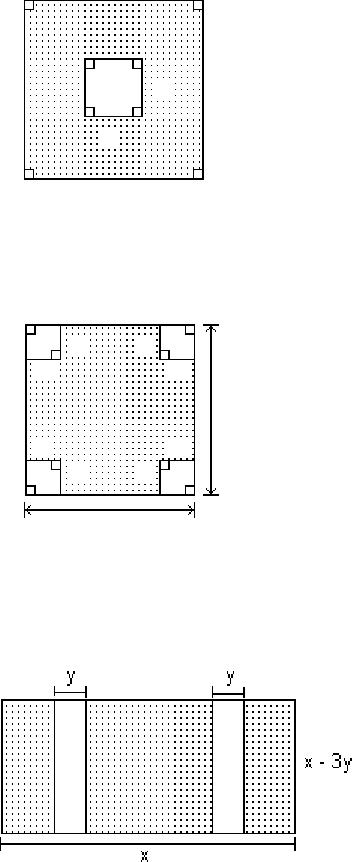
18) 2x3–18a2x+8x2+8x
A) 2x(x+2+3a)(x+2–3a) B) 2x(x+2+3a)(x–2–3a)
C) 2x(x+2+3a)(x–2+3a) D) prime
Solvetheproblem.
19) Adepartmentstoreishavingaclearancesale.Thepriceonatelevisionisreducedby32%.Thatsalepriceis
thenreducedbyanother32%.Ifxisthetelevisionʹsoriginalprice,thesalepricecanberepresentedby(x–
0.32x)–0.32(x–0.32x).Withthesetworeductions,atwhatpercentageoftheoriginalpriceisthetelevision
beingsold?Usethefactored,simplifiedformoftheexpressiontoanswerthequestion.
A) 46.24% B) 36% C) 64% D) 68%
20) Writeanexpressionfortheareaoftheshadedregionandexpressitinfactoredform.
7y
7
y
A) (y+7)(y–7) B) y2+49 C) (y+7)2D) (y–7)2
21) Writeanexpressionfortheareaoftheshadedregionandexpressitinfactoredform.
99
99
5y
99
99
5y
A) (5y+18)(5y–18) B) (5y+9)(5y–9) C) (5y–18)2D) (5y–9)2
22) Writeanexpressionfortheareaoftheshadedregionandexpressitinfactoredform.
A) (x–2y)(x–3y) B) (x–y)(x–3y) C) (x–5y)2D) 5(x–y)2
Page31
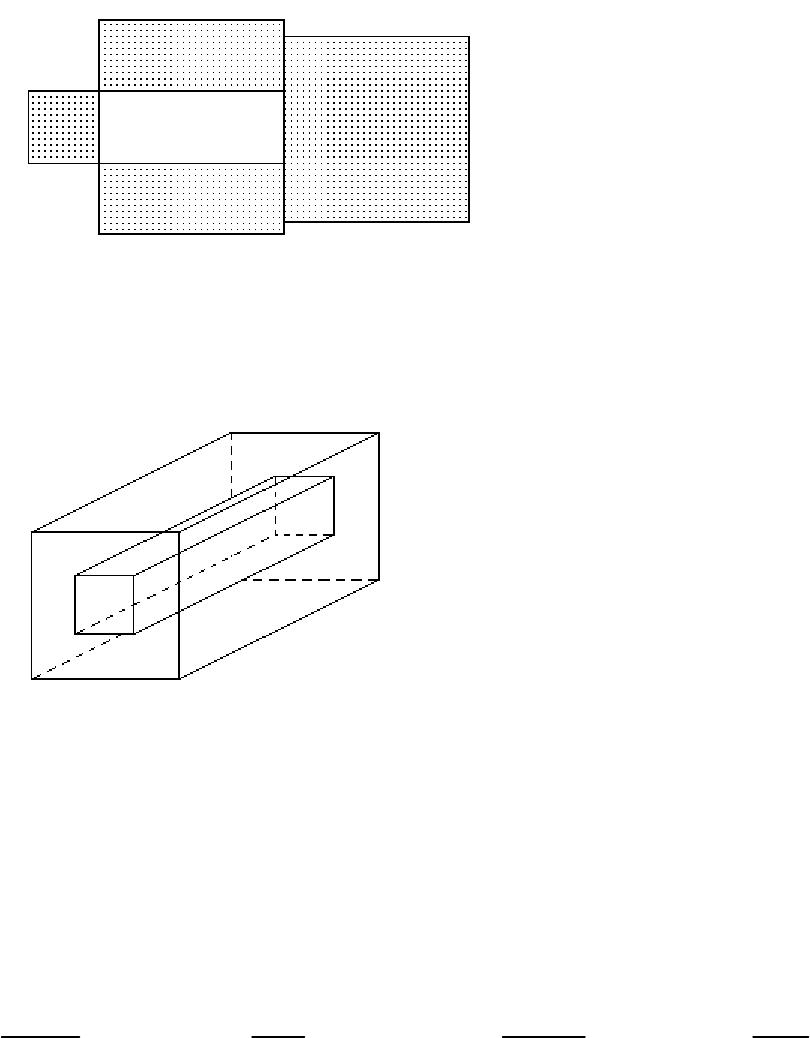
23) Writeanexpressionfortheareaoftheshadedregionandexpressitinfactoredform.
9y
9y
x
x9y
x
9y
A) (x+9y)2B) 9(x+y)2C) x2+18xy+81y2D) x2+9xy+81y2
24) Findtheformulaforthevolumeoftheregionoutsidethesmallerrectangularsolidandinsidethelarger
rectangularsolid.Expressthevolumeinfactoredform.
b
ab
4a
a
A) 4a(a+b)(a–b) B) 4a(a2+b2)C)(4a+b)(4a–b) D) 4a(a2–b2)
8 FactorAlgebraicExpressionsContainingFractionalandNegativeExponents
MULTIPLECHOICE.Choosetheonealternativethatbestcompletesthestatementoranswersthequestion.
Factorandsimplifythealgebraicexpression.
1) x6
/
7–x1/7
A) x1/7(x5
/
7–1) B) x6
/
7(1–x5
/
7)C)x
1/7(x6–1) D) x(x 5
/
7–1)
2) 7x–2
/
3+63x1/3
A) 7(9x+1)
x2/3 B) 9+x
7x1/3 C) 1+9x1/3
7x2/3 D) 1+7x
9x2/3
3) (x+7)1/4+(x+7)3/4
A) (x+7)1/4(1+(x+7)1/2)B)(x+7)1/2(1+(x+7)3/2)
C) (x+7)1/2((x+7)1/2+1) D) (x+7)1/2(1+(x+7)1/4)
4) (x+7)2/5–(x+7)12/5
A) (x+7)2/5(–x2–14x–48) B) (x+7)12/5((x+7)1/6–1)
C) (x+7)(–x2–14x+48) D) (x+7)((x+7)2/5–(x+7)12/5)
Page32

5) (x+9)–1/5+(x+9)–6/5
A) (x+10)
(x+9)6/5 B) (x+10)
(x+9)1/5
C) (x+9)6/5(x+10) D) (x+9)–1/5+(x+9)–6/5
6) (x+6)–1/3–(x+6)–2/3
A) (x+6)1/3–1
(x+6)2/3 B) (x+6)1/3–1
(x+6)1/3
C) x+5
(x+6)2/3 D) (x+6)–1/3–(x+6)–2/3
0.6 RationalExpressions
1 SpecifyNumbersThatMustBeExcludedfromtheDomainofaRationalExpression
MULTIPLECHOICE.Choosetheonealternativethatbestcompletesthestatementoranswersthequestion.
Findallnumbersthatmustbeexcludedfromthedomainoftherationalexpression.
1) 4
x–2
A) x≠2B)x≠–2C)x≠0D)x≠–4
2) 5
x+8
A) x≠–8B)x≠8C)x≠0D)x≠–5
3) x+8
x2–81
A) x≠9
,
x≠–9B)x≠81 C) x≠9D)x≠–8
4) x–4
x2–16
A) x≠4
,
x≠–4B)x≠16 C) x≠4D)x≠1
4
5) x–9
x2+13x+36
A) x≠–9
,
x≠–4B)x≠9
,
x≠4C)x≠0D)x≠9
6) x–7
x2+4x–21
A) x≠–7
,
x≠3B)x≠–3
,
x≠7C)x≠0D)x≠7
7) x+3
x2–7x+12
A) x≠4
,
x≠3B)x≠–4
,
x≠–3C)x≠0D)x≠–3
Page33

2 SimplifyRationalExpressions
MULTIPLECHOICE.Choosetheonealternativethatbestcompletesthestatementoranswersthequestion.
Simplifytherationalexpression.Findallnumbersthatmustbeexcludedfromthedomainofthesimplifiedrational
expression.
1) 2x+2
10x2+18x+8
A) 1
5x+4,x≠–4
5,x≠–1B)
2x+2
10x2+18x+8,x≠–4
5,x≠–1
C) 2x+5
5x+18 ,x≠–18
5D) 2x
5x+4,x≠–4
5
2) x2+6x+9
x2+12x+27
A) x+3
x+9,x≠–9,–3B)
6x+9
12x+27 ,x≠–9
4
C) 6x+1
12x+3,x≠–1
4D) –x2+6x+9
x2+12x+27 ,x≠–9,–3
3) 8x2–49x+6
x–6
A) 8x–1
,
x≠6B)
8x2–49x+6
x–6,x≠6
C) 8x2–50,norestrictionsonxD)
1
x–6,x≠6
Provideanappropriateresponse.
4) Therationalexpression120x
100–xdescribesthecost,inmillionsofdollars,toinoculatexpercentofthecurrent
populationofcattleagainstaparticularvirus.Choosewhichofthefollowingstatementsaretruewithregardto
thismathematicalmodel.
I. Theexpressionwillbeundefinedwhenx=100.
II. Thecostofinoculating90percentofcattleis900milliondollarsmorethanthecostofinoculating60
percentofcattle.
III. Thisexpressionwillcalculateinoculationcostsforanypopulationofcattle,nomatterwhatthesize.
A) OnlyIandIIaretrue. B) Allthreestatementsaretrue.
C) OnlyIandIIIaretrue. D) OnlyIIandIIIaretrue.
3 MultiplyRationalExpressions
MULTIPLECHOICE.Choosetheonealternativethatbestcompletesthestatementoranswersthequestion.
Multiplyordivideasindicated.
1) 5x
10x+5·6x+3
2
A) 3x
2B) 3
2C) 3x
10 D) x
2
Page34

2) 5x–5
x·4x2
8x–8
A) 5x
2B) 2
5x C) 20x3–20x2
8x2–8x D) 40x2+80x+40
4x3
3) 6x–2
2x–4·x–2
18x–6
A) 1
6B) 6 C) x–2
6(x+2) D) 1
3
4) x3+1
x3–x2+x
·9x
–45x–45
A) –1
5B) x+1
5(–x–1) C) –x3+1
5(x+1) D) –x2+1
5
5) x2+15x+56
x2+x–56
·x2–64
x2–x–56
A) x+8
x–7B) x–8
x+7C) x+7
x–8D) x–8
x–7
6) x2+14x+45
x2+18x+81
·x2+9x
x2+3x–10
A) x
x–2B) 1
x–2C) x(x+9)
x–2D) x
x2+18x+81
7) x2+5x+6
x2+7x+10
·x2+5x
x2+11x+24
A) x
x+8B) 1
x+8C) x2+5x
x+8D) x
x2+7x+10
8) x2+15x+54
x2+8x+12
·x2+5x+6
x2+12x+27
A) 1 B) 1
x+3C) x+2
x+3D) x+9
x+2
9) x2–19x+84
x2–12x+27
·x2–9x+18
x2–11x+28
A) (x–12)(x–6)
(x–9)(x–4) B) (x+12)(x+6)
(x+9)(x+4)
C) (x2–19x+84)(x2–9x+18)
(x2–12x+27)(x2–11x+28) D) (x–12)
(x–4)
Page35

4 DivideRationalExpressions
MULTIPLECHOICE.Choosetheonealternativethatbestcompletesthestatementoranswersthequestion.
Multiplyordivideasindicated.
1) 4x+8
15 ÷3x+6
6
A) 8
15 B) 2
15 C) 4x+8
45x D) 7x+14
21
2) 33x–33
10 ÷11x–11
30
A) 9 B) 363(x–1)2
300 C) 1
9D) 3(33x–33)
11x–11
3) (y–11)2
9÷9y–99
81
A) y–11 B) (y–11)3
81 C) 1
y–11 D) 9(y–11)2
9y–99
4) 1
x+2÷3
x2–4
A) x–2
3B) x+2
3C) x–2D)
3
x–2
5) (x+3)2
x–3÷x2–9
3x–9
A) 3(x+3)
x–3B) (x+3)2
(x–3)2C) (x+3)3
3(x–3) D) 6(x2+9)
x2–9
6) x2–24x+144
11x–132 ÷4x–48
44
A) 1 B) (x–12)2
121 C) x2–24x+144
(x–12)2D) 44
7) x2+8x+15
x2+9x+18
÷x2+5x
x2+10x+24
A) x+4
xB) x+4C)
x+4
x2+6x D) x
x2+9x+18
8) x2+11x+30
x2+15x+54
÷x2+5x
x2+3x–54
A) x–6
xB) x–6 C) x–6
x2+9x D) x
x2+15x+54
Page36

9) 4x2+3x–10
8x–72 ·x2–9x
16x2–25
÷7x+14
5x3
A) 5x4
56(4x+5) B) 56
5x4(4x+5) C) 5x3
56(4x+5) D) 7(x+2)2
40x2(4x+5)
5 AddandSubtractRationalExpressions
MULTIPLECHOICE.Choosetheonealternativethatbestcompletesthestatementoranswersthequestion.
Addorsubtractasindicated.
1) 3x+1
3x+4+3x+7
3x+4
A) 2 B) 1 C) 4x+5
3x+4D) 2
3x+4
2) x2–2x
x2+7x
+x2+x
x2+7x
A) 2x–1
x+7B) x–1
x+7C) 2x+1
x+7D) –1
x+7
3) x2–9x
x–6+18
x–6
A) x–3B)
x2–9x+18
x–6C) x+3D)x–6
4) 8x–3
x2–13x+40
+–5–7x
x2–13x+40
A) 1
x–5B) 1
x2–13x+40 C) 1
x–8D) x+8
x2–13x+40
5) x2–12
x2–3x–40
+2x–3
x2–3x–40
A) x–3
x–8B) (x–5)(x+3)
(x+5)(x–8) C) x+5
x–8D) x–3
x2–3x–40
6) 3x
x–8–24
x–8
A) 3 B) 1
3C) 3x D) 3x–24
x–16
7) x–8
x–3–2x+5
x–3
A) –x+13
x–3B) x–13
x–3C) x+13
x–3D) –x–13
x–3
Page37

8) 5x
x2–5x+6
–10
x2–5x+6
A) 5
x–3B) 5
x–2C) 5(x–2)
(x+2)(x–3) D) 5(x+2)
(x–2)(x–3)
9) 4x+2
x2+13x+40
–3x–6
x2+13x+40
A) 1
x+5B) 1
x2+13x+40 C) 1
x+8D) x–8
x2+13x+40
10) 2
x+9
x–7
A) 11x–14
x(x–7) B) 14x–11
x(x–7) C) 11x–14
x(7–x) D) 14x–11
x(7–x)
11) 2
x+3–6
x–3
A) –4x–24
(x+3)(x–3) B) –4x+12
(x+3)(x–3) C) –4
(x+3)(x–3) D) –4x+24
(x+3)(x–3)
12) 11
x–9+22
9–x
A) –11
x–9B) 33
x–9C) 11
x–9D) –33
x–9
13) 11
x–6–3
6–x
A) 14
x–6B) 8
x–6C) 84 –14x
(x–6)(6–x) D) 14
6–x
14) 2
x2–3x+2
+7
x2–1
A) 9x–12
(x–1)(x+1)(x–2) B) 9x–12
(x–1)(x–2) C) 12x–9
(x–1)(x+1)(x–2) D) 28x–12
(x–1)(x+1)(x–2)
15) x
x2–16
–5
x2+5x+4
A) x2–4x+20
(x–4)(x+4)(x+1) B) x2+4x+20
(x–4)(x+4)(x+1) C) x2–4x+20
(x–4)(x+4) D) x2–4
(x–4)(x+4)(x+1)
16) x+5
x2+11x+28
+2x+1
x2+10x+21
A) 3x2+17x+19
(x+7)(x+4)(x+3) B) 3x2+17x+19
(x–7)(x–4)(x–3)
C) 3x+6
2x2+21x+49 D) 3x+6
Page38

17) 4x
x+1+5
x–1–8
x2–1
A) 4x–3
x–1B) 4x–3
x+1C) x+1
x–1D) 4x
x–1
Solvetheproblem.
18) Doctorsusetherationalexpression
DA
A+12
todeterminethedosageofadrugprescribedforchildren.Inthisexpression,A=childʹsageandD=adult
dosage.Whatisthedifferenceinthechildʹsdosagefora12–year–oldchildanda4–year–oldchild?Expressthe
answerasasinglerationalexpressionintermsofD.
A) 1
4DB)
1
3DC)
1
2DD)
15
2D
19) Expresstheperimeterofthesquareasasinglerationalexpression.
9
x+4
A) 36
x+4B) 36
x+8C) 36
x+16 D) 9
x+16
20) Expresstheperimeteroftherectangleasasinglerationalexpression.
9
x–3
7
x
A) 32x–42
x(x–3) B) 16x–21
x(x–3) C) 32x–42
x(3–x) D) 16x–21
x(3–x)
Page39
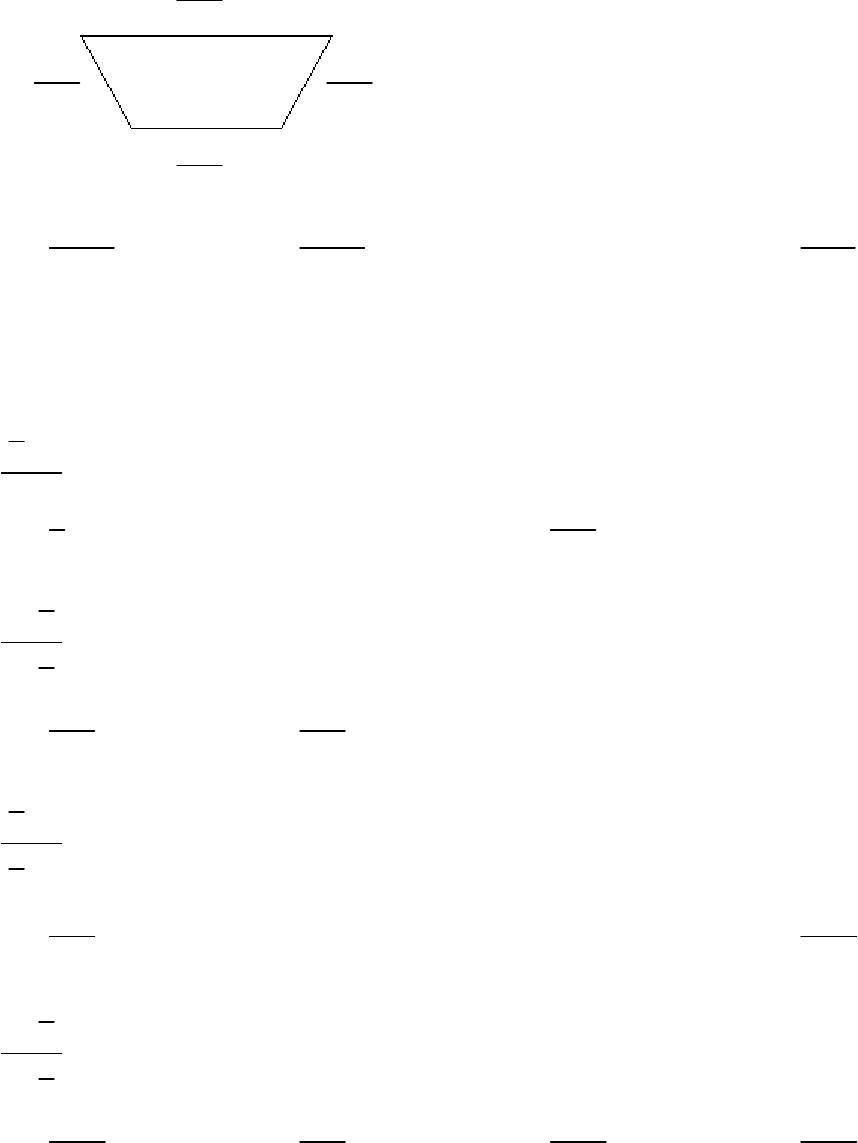
21) Expresstheperimeterofthetrapezoidasasinglerationalexpression.
x+5
x+3
2
x+3
2
x+3
x+2
x+3
A) 2x+11
x+3B) 4x+11
x+3C) x+8D)
x+11
x+3
6 SimplifyComplexRationalExpressions
MULTIPLECHOICE.Choosetheonealternativethatbestcompletesthestatementoranswersthequestion.
Simplifythecomplexrationalexpression.
1)
x
7–1
x–7
A) 1
7B) x–7C)
7
x–7D) –7
2)
1–3
x
1+3
x
A) x–3
x+3B) x+3
x–3C) x–3D)x+3
3)
8
x+1
8
x–1
A) 8+x
8–xB) 8 C) x2+8D)
x2
x2+8
4)
1–1
x
7+1
x
A) x–1
7x+1B) x–1
7x C) x+1
7x–1D) 7x+1
x–1
Page40

5)
4+2
x
x
4+1
8
A) 16
xB) x
16 C) 1 D) 16
6)
x–x
x+3
x+2
A) x
x+3B) x
x+2C) x2
x+3D) x
x–3
7)
x
x+6+1
27
x2–36
+1
A) 2x–12
x–3B) x–6
x–3C) 2x–12
x+3D) 2x+12
x+3
8)
10
5x–1–10
10
5x–1+10
A) 2–5x
5x B) 2+5x
5x C) 2–x
xD) 5x
2–5x
9)
1
x+2
3
x2–4
A) x–2
3B) x+2
3C) x–2D)
3
x–2
10)
49y2–36x2
xy
7
x–6
y
A) 6x+7y B) 7x+6y C) 6x+7y
xy D) xy
7x+6y
Page41
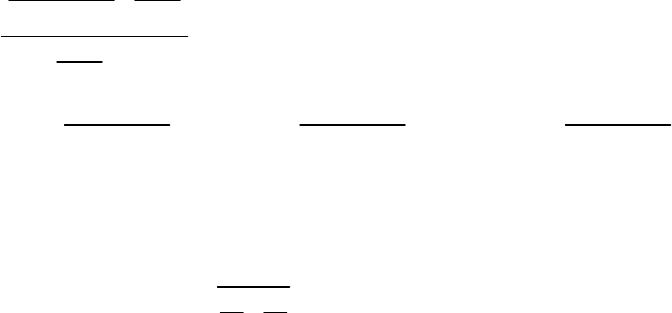
11)
4
x2–4x–32
–1
x–8
1
x+4+1
A) –x
x2–3x–40 B) x
x2–5x–40 C) –x
x2–4x–32 D) –1
Solvetheproblem.
12) Theaveragespeedonaround–tripcommutehavingaone–waydistancedisgivenbythecomplexrational
expression
2d
d
r1
+d
r2
,
inwhichr1andr2arethespeedsontheoutgoingandreturntrips,respectively.FredandMichaelbothdrove
tocampusaveraging35milesperhourandeachreturnedhomeonthesamerouteheusedgoingandaveraged
40milesperhour.Fredʹsone–wayroutewas5mileslongerthanMichaelʹs.Simplifythecomplexrational
expressionandanswerthequestion:HowdoesFredʹsoverallaveragespeedcomparewithMichaelʹs?
A) FredʹsaveragespeedisthesameasMichaelʹs.
B) FredʹsaveragespeedishigherthanMichaelʹs.
C) FredʹsaveragespeedislowerthanMichaelʹs.
D) Notenoughinformationisgiventoanswerthequestion.
Page42

Ch.0 ChapterP:Prerequisites:FundamentalConceptsofAlgebra
AnswerKey
0.1 AlgebraicExpressions,MathematicalModels,andRealNumbers
1 EvaluateAlgebraicExpressions
2 UseMathematicalModels
3 FindtheIntersectionofTwoSets
4 FindtheUnionofTwoSets
5 RecognizeSubsetsoftheRealNumbers
6 UseInequalitySymbols
7 EvaluateAbsoluteValue
Page43
8 UseAbsoluteValuetoExpressDistance
9 IdentifyPropertiesoftheRealNumbers
10 SimplifyAlgebraicExpressions
0.2 ExponentsandScientificNotatio
n
1 UsetheProductRule
2 UsetheQuotientRule
3 UsetheZero–ExponentRule
Page44

4 UsetheNegative–ExponentRule
5 UsethePowerRule
6 FindthePowerofaProduct
7 FindthePowerofaQuotient
8 SimplifyExponentialExpressions
9 UseScientificNotation
Page45
0.3 RadicalsandRationalExponents
1 EvaluateSquareRoots
2 SimplifyExpressionsoftheFormSqRt(a^2)
3 UsetheProductRuletoSimplifySquareRoots
4 UsetheQuotientRuletoSimplifySquareRoots
5 AddandSubtractSquareRoots
Page46

6 RationalizeDenominators
7 EvaluateandPerformOperationswithHigherRoots
8 UnderstandandUseRationalExponents
10) A
0.4 Polynomials
1 UnderstandtheVocabularyofPolynomials
2 AddandSubtractPolynomials
Page47

3 MultiplyPolynomials
4 UseFOILinPolynomialMultiplication
5 UseSpecialProductsinPolynomialMultiplication
6 PerformOperationswithPolynomialsinSeveralVariables
0.5 FactoringPolynomials
1 FactorOuttheGreatestCommonFactorofaPolynomial
Page48
2 FactorbyGrouping
3 FactorTrinomials
4 FactortheDifferenceofSquares
5 FactorPerfectSquareTrinomials
6 FactortheSumorDifferenceofTwoCubes
7 UseaGeneralStrategyforFactoringPolynomials
Page49

8 FactorAlgebraicExpressionsContainingFractionalandNegativeExponents
0.6 RationalExpressions
1 SpecifyNumbersThatMustBeExcludedfromtheDomainofaRationalExpression
2 SimplifyRationalExpressions
3 MultiplyRationalExpressions
4 DivideRationalExpressions
Page50

5 AddandSubtractRationalExpressions
6 SimplifyComplexRationalExpressions
Page51