Chapter 9—The Keynesian Model in Action
MULTIPLE CHOICE
1. Using the Keynesian aggregate expenditures model, which of the following is true?
a.
Macro equilibrium may occur at levels of real GDP other than full-employment real GDP.
b.
At any macro equilibrium, the actual rate of unemployment must equal the natural rate of
unemployment.
c.
If an economy is operating below full employment capacity, the Keynesian model
indicates that lower wage rates will automatically adjust the economy back to full
employment.
d.
All of these are correct.
2. According to the Keynesian aggregate expenditures model equilibrium and full employment:
a.
always occur at the same income level of real GDP.
b.
may differ, but there is an automatic mechanism that directs the economy toward full–
employment equilibrium.
c.
could never occur at the same level of real GDP.
d.
do not necessarily occur at the same level of real GDP.
3. In the Keynesian aggregate expenditures model, “aggregate expenditures” refer to:
a.
the amount of GDP that could be produced if unemployment were zero.
b.
the combined expenditures of consumers, businesses, governments, and foreigners (net
exports).
c.
the amount of demand for consumer goods that would arise if all citizens had all the
income they wanted.
d.
consumer spending measured in constant prices.
4. The four components of the aggregate expenditures model are:
a.
consumption, investment, inventories, and government purchases.
b.
consumption, planned investment, unplanned changes in inventory, and exports.
c.
consumption, investment, government purchases, and net exports.
d.
consumption, investment, exports, and imports.
5. Within the framework of the aggregate expenditures model, which of the following is true?
a.
When spending on goods and services exceeds the level business decision makers
anticipated, inventories will rise.
b.
Equilibrium will always occur at the full-employment level of output.
c.
A nation’s imports will decline as the nation’s disposable income increases.
d.
When spending on goods and services exceeds the level of aggregate output, inventories
will fall.
6. When the spending of consumers, businesses, government, and foreigners (net exports) is less than the
aggregate output level of the economy, the Keynesian model result is that:
a.
output will rise.
c.
prices will rise.
b.
output will fall.
d.
inventories will tend to decline.
7. Within the framework of the Keynesian model, if aggregate expenditures exceed aggregate output,
then:
a.
the inventories of firms would decline, and the firms would expand output in order to
restore their inventories to desired levels.
b.
the inventories of firms would increase, and the firms would reduce output until
inventories were cut back to the desired level.
c.
the current level of income would persist in the future.
d.
firms would reduce their investment, and the economy would fall into a recession.
8. In the Keynesian model, if aggregate expenditures exceed aggregate output and inventories of firms
fall, then the aggregate output and the business sector could be expected to:
a.
increase output.
c.
decrease investment.
b.
decrease output.
d.
hire fewer workers.
9. Within the Keynesian aggregate expenditures model, if the economy is below equilibrium, then there
will be:
a.
an increase the demand for goods and services.
b.
an increase in real GDP.
c.
lower interest rates, which will stimulate aggregate demand and keep the economy at full
employment.
d.
a lower price level, which will quickly guide the economy to full-employment
equilibrium.
10. Using the aggregate expenditures model, if aggregate expenditures (aggregate demand) is $10 trillion
and aggregate output is $10.3 trillion:
a.
businesses will accumulate inventories, and output will decline.
b.
real output will increase if the full-employment capacity of the economy is greater than
$10.3 trillion.
c.
inflation will be a problem if the full-employment capacity of the economy exceeds $10.3
trillion.
d.
both b and c are correct.
11. If consumption expenditures are $200 billion, total investment is $50 billion, government purchases
are $40 billion, exports are $45 billion, imports are $40 billion, aggregate expenditures must be:
a.
$275 billion.
c.
$320 billion.
b.
$295 billion.
d.
$395 billion.
12. Suppose consumers and business decision makers become more optimistic about the future, and
aggregate expenditures increase. The most likely result is that:
a.
real GDP and employment and income to decline.
b.
real GDP and employment rise.
c.
real GDP rises and employment falls.
d.
real GDP falls and employment rises.
13. Within the Keynesian aggregate expenditures model, which of the following autonomous changes
would decrease the equilibrium output?
a.
A decrease in investment spending.
c.
An increase in government spending.
b.
An increase in net exports.
d.
An increase in consumption expenditures
14. Within the Keynesian aggregate expenditure-output model, if an economy operates below full
employment:
a.
a reduction in wage rates and resource prices will soon restore full-employment
equilibrium.
b.
a reduction in the real interest rate will soon restore full-employment equilibrium.
c.
an increase in the real interest rate will soon restore full-employment equilibrium.
d.
the economy may remain below full employment unless aggregate expenditures increase.
15. The sum of consumption (C), investment (I), government spending (G), and net exports (X-M) is
called:
a.
autonomous spending.
c.
Keynesian income
b.
aggregate expenditures.
d.
wealth.
16. Using C to represent consumption, I to represent investment, G to represent government spending, S to
represent saving, X to represent exports, and M to represent imports, aggregate expenditures can be
represented by:
a.
C + I + G + (X + M).
c.
C + I + G + (X − M).
b.
(C − S) + G + (X − M).
d.
C + I + G + (X − M) − S.
17. In the aggregate expenditures model, equilibrium occurs if:
a.
aggregate expenditures (AE) are greater than GDP.
b.
aggregate expenditures (AE) are less than GDP.
c.
there is no unplanned inventory depletion or accumulation.
d.
consumption equals investment.
18. In the aggregate expenditures model, if aggregate expenditures (AE) are greater than GDP, then:
a.
inventory is depleted.
c.
inventory is unchanged.
b.
inventory is accumulated.
d.
employment decreases.
19. In the aggregate expenditures model, if aggregate expenditures (AE) are greater than GDP, then:
a.
inventory is accumulated.
c.
employment decreases.
b.
inventory is unchanged.
d.
employment increases.
20. In the aggregate expenditures model, if aggregate expenditures (AE) are greater than GDP, then:
a.
inventory is unchanged.
c.
employment decreases.
b.
inventory is accumulated.
d.
GDP increases.
21. In the aggregate expenditures model, if aggregate expenditures (AE) are less than GDP, then:
a.
inventory is depleted.
c.
inventory is unchanged.
b.
inventory is accumulated.
d.
employment increases.
22. In the aggregate expenditures model, if aggregate expenditures (AE) are less than GDP, then:
a.
inventory is depleted.
c.
employment decreases.
b.
inventory is unchanged.
d.
employment increases.
23. In the aggregate expenditures model, if aggregate expenditures (AE) are less than GDP, then:
a.
inventory is unchanged.
c.
employment increases.
b.
inventory is depleted.
d.
GDP decreases.
24. In the aggregate expenditures model, if an economy operates below equilibrium GDP, there will be:
a.
unplanned inventory depletion.
c.
a decrease in GDP.
b.
unplanned inventory accumulated.
d.
a decrease in employment.
25. In the aggregate expenditures model, if an economy operates above equilibrium GDP, there will be:
a.
unplanned inventory accumulation.
c.
an increase in GDP.
b.
unplanned inventory depletion.
d.
an increase in employment.
26. In the aggregate expenditures model, if an economy operates above equilibrium GDP, there will be:
a.
unplanned inventory depletion.
c.
an increase in employment.
b.
an increase in GDP.
d.
a decrease in GDP.
27. In the aggregate expenditures model, if an economy operates above equilibrium GDP, there will be:
a.
unplanned inventory depletion.
c.
a decrease in employment.
b.
an increase in GDP.
d.
an increase in employment.
28. In the aggregate expenditures model, if aggregate expenditures (AE) equal $6 trillion and GDP equals
$7 trillion, then:
a.
inventory depletion equals −$1 trillion.
c.
investment equals $1 trillion.
b.
inventory accumulation equals $1 trillion.
d.
investment equals −$1 trillion.
29. In the aggregate expenditures model, if aggregate expenditures (AE) equal $4 trillion and GDP equals
$3 trillion, then:
a.
inventory depletion equals −$1 trillion.
c.
investment equals −$1 trillion.
b.
inventory accumulation equals $1 trillion.
d.
investment equals $1 trillion.
30. Which one of the following are the components of aggregate expenditures?
a.
Household consumption, business investment, government spending for goods and
services, and net exports.
b.
Household consumption, business investment, government transfer payments, and net
exports.
c.
Household consumption, business investment, government spending for goods and
services, and exports.
d.
Household consumption, business investment, government spending for goods and
services, and saving.
e.
Household consumption, business inventories, government spending for goods and
services, and net exports.
Exhibit 9-1 GDP and consumption data
GDP
Consumption
Aggregate
Expenditures
Unplanned
inventory
$0
$0.5
1
1.0
2
1.5
3
2.0
4
2.5
5
3.0
6
3.5
7
4.0
8
4.5
31. As shown in Exhibit 9-1, if investment is $0.5 trillion, government spending is $1 trillion, and net
exports are −$0.5 trillion, then equilibrium GDP is:
a.
$2 trillion.
b.
$3 trillion.
c.
$4 trillion.
d.
$5 trillion.
e.
$6 trillion.
32. As shown in Exhibit 9-1, if equilibrium GDP is $5 trillion, then the total of investment, government
spending, and net exports is:
a.
$1 trillion.
b.
$2 trillion.
c.
$3 trillion.
d.
$4 trillion.
e.
$6 trillion.
33. As shown in Exhibit 9-1, if investment is $0.5 trillion, government spending is $1 trillion, net exports
are −$0.5 trillion, and GDP is $2 trillion, then:
a.
inventory depletion is −$1.5 trillion.
c.
inventory depletion is −$0.5 trillion.
b.
inventory accumulation is −$2.0 trillion.
d.
inventory accumulation is $0.5 trillion.
34. As shown in Exhibit 9-1, if investment is $0.5 trillion, government spending is $1 trillion, net exports
are −$0.5 trillion, and GDP is $7 trillion, then:
a.
inventory depletion is −$1.0 trillion.
c.
inventory depletion is −$2.0 trillion.
b.
inventory accumulation is $1.0 trillion.
d.
inventory accumulation is $2.0 trillion.
35. As shown in Exhibit 9-1, if investment is $0.5 trillion, government spending is $1 trillion, net exports
are −$0.5 trillion, and GDP is $2 trillion, then GDP will:
a.
remain unchanged.
b.
increase by $1 trillion.
c.
decrease by $1 trillion.
d.
increase by $2 trillion.
e.
decrease by $2 trillion.
36. As shown in Exhibit 9-1, if investment is $0.5 trillion, government spending is $1 trillion, net exports
are −$0.5 trillion, and GDP is $7 trillion, then GDP will:
a.
remain unchanged.
b.
increase by $2 trillion.
c.
decrease by $2 trillion.
d.
increase by $4 trillion.
e.
decrease by $4 trillion.
Exhibit 9-2 Keynesian aggregate-expenditures model
37. As shown in Exhibit 9-2, equilibrium GDP is:
a.
$1 trillion.
b.
$3 trillion.
c.
$5 trillion.
d.
$6 trillion.
e.
$7 trillion.
38. As shown in Exhibit 9-2, if GDP is $3 trillion, the economy experiences unplanned inventory:
a.
depletion of $1 trillion.
c.
accumulation of $1 trillion.
b.
depletion of $2 trillion.
d.
accumulation of $2 trillion.
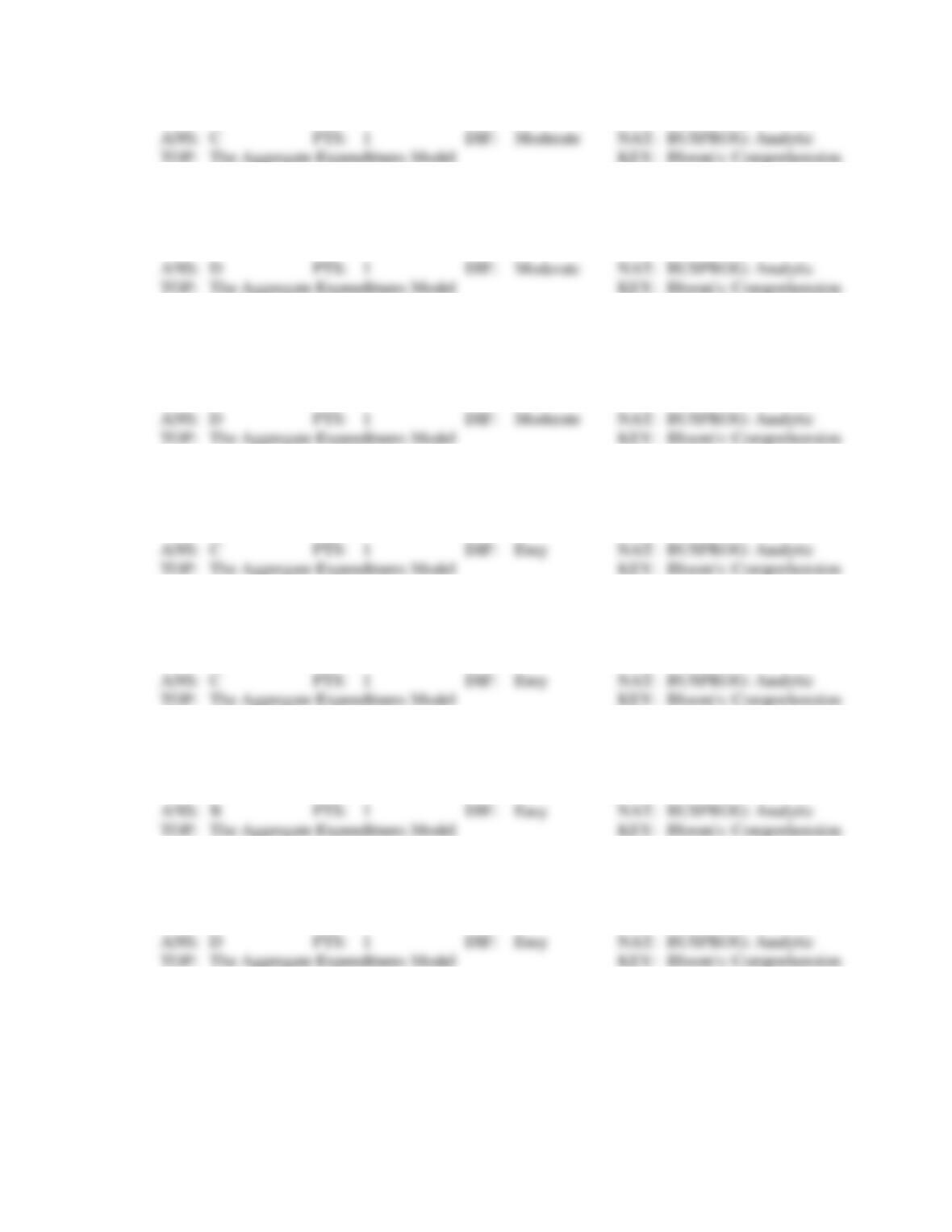
39. As shown in Exhibit 9-2, if GDP is $7 trillion, the economy experiences unplanned inventory:
a.
depletion of $1 trillion.
c.
accumulation of $1 trillion.
b.
depletion of $2 trillion.
d.
accumulation of $2 trillion.
40. In the aggregate expenditures model, if an economy operates above equilibrium GDP, there will be:
a.
unplanned inventory accumulation.
c.
a decrease in employment.
b.
a decrease in GDP.
d.
all of the above.
41. In the Keynesian model, investment, government spending, and net exports are treated as autonomous
expenditures, which means they are independent of:
a.
expectations.
c.
political processes.
b.
the price level.
d.
real GDP.
42. If aggregate expenditures exceed real GDP, then:
a.
employment falls.
c.
firms are depleting their inventories.
b.
the economy will have deflation.
d.
the money supply will increase.
43. According to the Keynesian model, an economy will have persistent, high unemployment if:
a.
the government runs a budget deficit.
c.
its total spending is too low.
b.
markets operate freely.
d.
firms make too many investments.
44. If a nation imports more than it exports, then its net exports are:
a.
positive.
c.
zero.
b.
negative.
d.
unstable.
45. At the equilibrium level of real GDP, total production equals total:
a.
saving.
c.
net exports.
b.
investment.
d.
spending.
46. If aggregate expenditures (AE) are less than aggregate output (real GDP), then firms will:
a.
have unplanned inventory accumulation.
b.
earn above-average profits.
c.
expand production and hire more workers.
d.
be raising their prices.
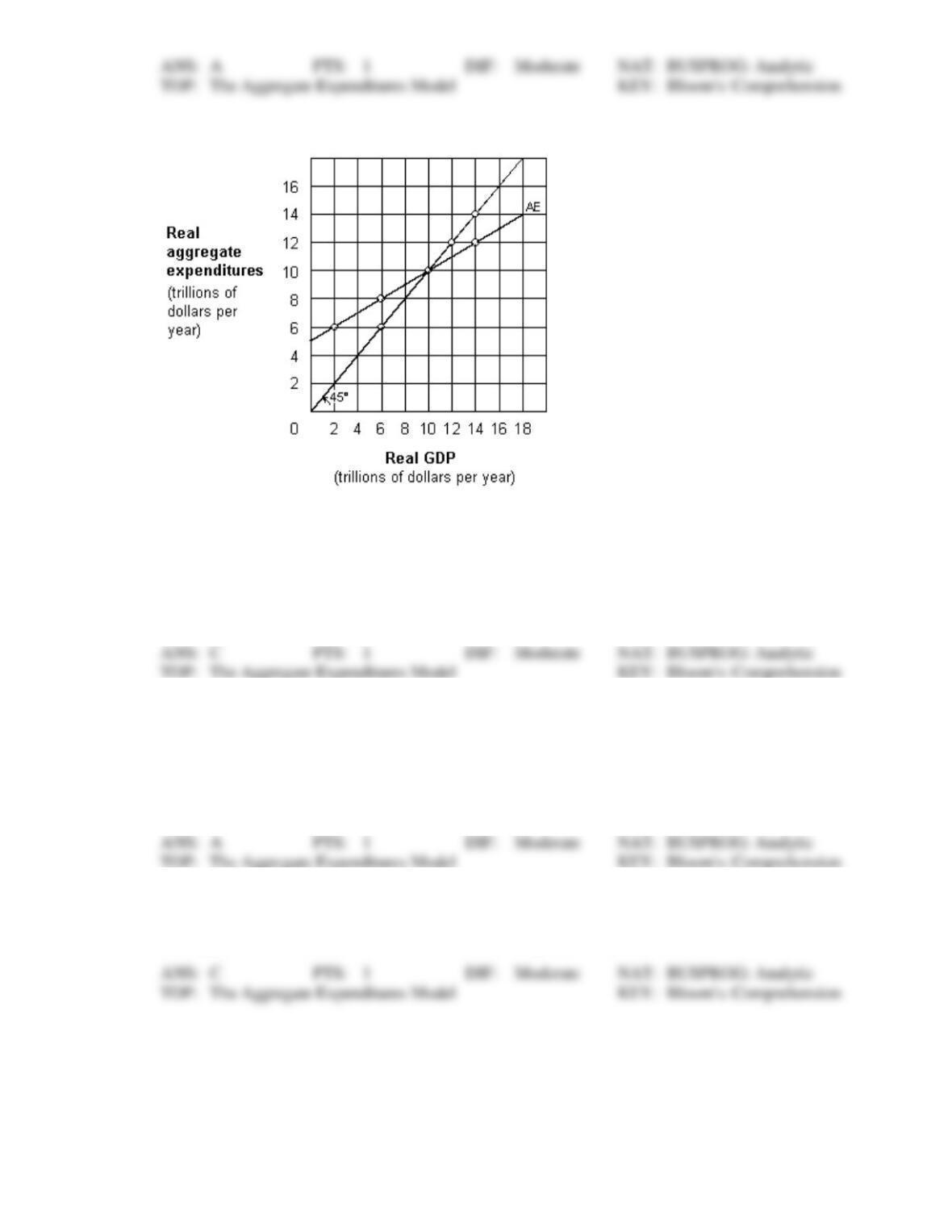
Exhibit 9-3 Keynesian aggregate-expenditures model
47. As shown in Exhibit 9-3, equilibrium GDP is:
a.
$2 trillion.
b.
$6 trillion.
c.
$10 trillion.
d.
$12 trillion.
e.
$14 trillion.
48. As shown in Exhibit 9-3, if GDP is $6 trillion, the economy experiences unplanned inventory:
a.
depletion of $2 trillion.
b.
depletion of $6 trillion.
c.
accumulation of $2 trillion.
d.
accumulation of $6 trillion.
e.
none of these.
49. As shown in Exhibit 9-3, if GDP is $14 trillion, the economy experiences unplanned inventory:
a.
accumulation of $12 trillion.
c.
accumulation of $2 trillion.
b.
depletion of $14 trillion.
d.
depletion of $4 trillion.
Exhibit 9-4 Keynesian aggregate expenditures model
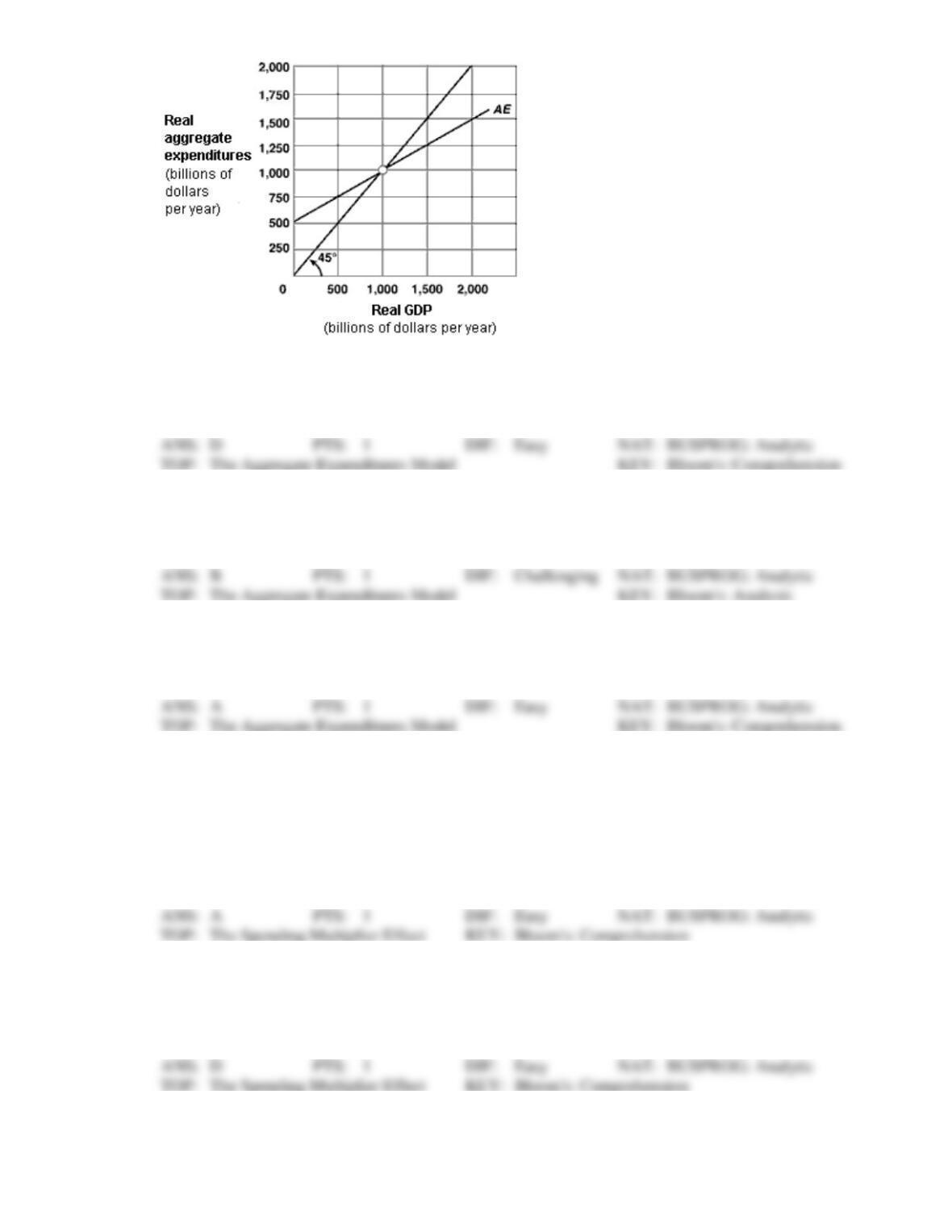
50. In Exhibit 9-4, equilibrium real GDP is:
a.
$500 billion.
c.
$900 billion.
b.
$800 billion.
d.
$1,000 billion.
51. At a real GDP of $500 billion in Exhibit 9-4, the economy experiences inventory:
a.
depletion of $100 billion.
c.
accumulation of $100 billion.
b.
depletion of $250 billion.
d.
accumulation of $250 billion.
52. When real GDP is $2,000 billion in Exhibit 9-4, the economy experiences inventory:
a.
accumulation of $500 billion.
c.
depletion of $700 billion.
b.
accumulation of $700 billion.
d.
depletion of $500 billion.
53. The spending multiplier indicates that:
a.
changes in investment, government, or consumption spending trigger much larger changes
in real GDP.
b.
an autonomous increase in saving will cause output to rise by a multiple of the additional
saving.
c.
a market economy will be more stable than classical economists thought.
d.
the marginal propensity to consume is greater than one.
54. Which of the following explains why a $100 billion reduction in consumption spending might
decrease equilibrium real GDP by more than $100 billion?
a.
Say’s law.
c.
Flexible resource prices.
b.
The quantity theory of money.
d.
The multiplier principle.
55. The impact of the multiplier effect is to:
a.
smooth out the up and down swings of the business cycle.
b.
promote price stability.
c.
magnify small changes in spending into much larger changes in real GDP.
d.
reduce the impact of an increase in investment on output and employment.
56. When an economy is operating well below its full-employment capacity and the marginal propensity
to consume is 0.75, a $10 billion increase in investment spending will cause the equilibrium output to
rise by:
a.
$5 billion.
c.
$20 billion.
b.
$10 billion.
d.
$40 billion.
57. Suppose that consumers become more pessimistic about the future and, as a result, reduce their
consumption by $10 billion. If the marginal propensity to consume is 0.80, how will this $10 billion
reduction in consumption affect the equilibrium level of real GDP?
a.
Real GDP will decrease by $8 billion.
c.
Real GDP will decrease by $40 billion.
b.
Real GDP will decrease by $10 billion.
d.
Real GDP will decrease by $50 billion.
58. Suppose business decision makers become more optimistic about the future and, as a result, increase
their investment spending by $20 billion. If the economy’s marginal propensity to consume is 0.75, the
equilibrium level of aggregate real GDP will increase by:
a.
$15 billion.
c.
$50 billion.
b.
$20 billion.
d.
$80 billion.
59. In the Keynesian model, the larger the marginal propensity to consume, the:
a.
larger the multiplier.
b.
larger the marginal propensity to save.
c.
higher the income level of the economy.
d.
smaller the change in income derived from a given change in government spending.
60. If the marginal propensity to consume (MPC) is 0.60, what is the expenditure multiplier?
a.
0.4.
c.
2.5.
b.
0.6.
d.
6.0.
61. Assume General Motors has decided to build an assembly plant in St. Louis. The plant will employ
1,000 full-time workers at an annual wage of $40,000 each. If the marginal propensity to consume in
St. Louis is 2/3, what change in income will result from operation of the plant for one year?
a.
$26.7 million.
c.
$80 million.
b.
$40 million.
d.
$120 million.
62. The ratio of the change in GDP to an initial change in aggregate expenditures (AE) is the:
a.
spending multiplier.
c.
marginal expenditure rate.
b.
permanent income rate.
d.
marginal propensity to consume.
63. The formula to compute the spending multiplier is:
a.
1 / (MPC + MPS).
c.
1 / (1 − MPS).
b.
1 / (1 − MPC).
d.
1 / (C + I).
64. As the marginal propensity to consume (MPC) decreases, the spending multiplier:
a.
increases.
c.
remains constant.
b.
decreases.
d.
becomes indefinable.
65. As the marginal propensity to consume (MPC) increases, the spending multiplier:
a.
increases.
c.
remains constant.
b.
decreases.
d.
becomes indefinable.
66. If the marginal propensity to consume (MPC) is 0.96, the value of the spending multiplier is:
a.
25.
c.
96.
b.
40.
d.
100.
67. If the marginal propensity to consume (MPC) is 0.80, the value of the spending multiplier is:
a.
2.
c.
8.
b.
5.
d.
10.
68. If the marginal propensity to consume (MPC) is 0.75, the value of the spending multiplier is:
a.
0.
c.
4.
b.
1.
d.
5.
69. If the marginal propensity to consume (MPC) is 0.50, the value of the spending multiplier is:
a.
5.
c.
2.
b.
1.
d.
5.
70. If the marginal propensity to save (MPS) is 0.10, the value of the spending multiplier is:
a.
1.
c.
10.
b.
9.
d.
90.
71. If the marginal propensity to save (MPS) is 0.25, the value of the spending multiplier is:
a.
1.
c.
4.
b.
2.
d.
9.
72. If the marginal propensity to save (MPS) is 0.50, the value of the spending multiplier is:
a.
1.
c.
4.
b.
2.
d.
9.
73. When households’ marginal propensity to consume (MPC) increases, the size of the spending
multiplier:
a.
also increases.
c.
remains unchanged.
b.
decreases.
d.
reacts unpredictably.
74. A $1 million increase in investment spending will raise equilibrium output (real GDP) by:
a.
less than $1 million.
c.
between $0.5 and $1.5 million.
b.
exactly $1 million.
d.
more than $1 million.
75. If the MPC equals 0.80 then:
a.
the MPS equals 1.20.
b.
the multiplier equals 0.20.
c.
the multiplier equals 1 divided by 0.80.
d.
the multiplier equals 5.
e.
none of these.
76. Mathematically, the value of the spending multiplier in terms of the marginal propensity to consume
(MPC) is given by the formula:
a.
MPC − 1.
c.
1 / MPC.
b.
(MPC −1) / MPC.
d.
1 / (1 − MPC).
77. The spending multiplier is defined as:
a.
the ratio of the change in equilibrium output to the initial change in spending.
b.
the change in initial spending divided by the change in personal income.
c.
1 / (marginal propensity to consume).
d.
1 / (1 − marginal propensity to save).
78. The effect of an increase in investment on real GDP will be greater, the larger the:
a.
MPC.
c.
MPS.
b.
APC.
d.
APS.
79. If the value of the marginal propensity to consume (MPC) is 0.90, the value of the spending multiplier
is:
a.
10.
c.
90.
b.
1.1.
d.
100.
80. If the marginal propensity to consume (MPC) is 0.90, a $100 increase in investment spending, other
things being equal, will cause an increase in equilibrium real GDP of:
a.
$90.
c.
$900.
b.
$100.
d.
$1,000.
81. If the marginal propensity to consume (MPC) is 0.75, a $50 decrease in government spending, other
things being equal, would cause equilibrium real GDP to:
a.
increase by $50.
c.
increase by $200.
b.
decrease by $50.
d.
decrease by $200.
82. If the economy spends 80 percent of any increase in real GDP, then an increase in investment of $1
billion would result ultimately in an increase in real GDP of:
a.
$0.
c.
$1.0 billion.
b.
$0.8 billion.
d.
$5.0 billion.
83. If an economy spends 90 percent of any increase in real GDP, then an increase in investment of $1
billion would result ultimately in an increase in real GDP of:
a.
$0.
c.
$1.0 billion.
b.
$0.9 billion.
d.
$10 billion.
84. In the aggregate expenditures model, assume that the MPC is 0.75. An increase in investment spending
of $6 billion would produce an ultimate increase in real GDP of:
a.
$0.25 billion.
c.
$12 billion.
b.
$0.75 billion.
d.
$24 billion.
85. Assume the marginal propensity to save is 0.10. Firms become optimistic and increase investment
spending by $10 billion. Other things being equal, real GDP will:
a.
increase by $1 billion.
c.
increase by $10 billion.
b.
not change.
d.
increase by $100 billion.
86. Assume the marginal propensity to consume is 0.96. Firms become pessimistic and decrease
investment spending by $100 billion. Other things equal, real GDP will:
a.
decrease by $100 billion.
c.
decrease by $96 billion.
b.
not change.
d.
decrease by $2,500 billion.
87. Suppose that John Maestro, the owner of a tennis shop in Evanston, Illinois, decides to purchase a new
machine that restrings tennis rackets in half the time it formerly took. The new technology costs
$1,000, and the MPC is 0.80. How much real GDP will be generated from John’s $1,000 initial
investment?
a.
$200
b.
$500
c.
$1,000
d.
$2,000
e.
$5,000
88. The spending multiplier is:
a.
1 / (1 − MPC).
c.
MPC.
b.
1 − MPC.
d.
MPC / (1 − MPC).
89. If $30 billion in new investment was added to the economy and MPC was 0.90, real GDP would
increase by:
a.
$30 billion.
b.
$90 billion.
c.
$100 billion.
d.
$210 billion.
e.
$300 billion.
90. Suppose equilibrium real GDP is currently at $800 billion and investment is $100 billion. If an
increase in the interest rate reduces investment from $100 billion to $75 billion, and the MPC is 0.8,
the new level of equilibrium real GDP will be:
a.
$500 billion.
b.
$600 billion.
c.
$675 billion.
d.
$775 billion.
e.
$800 billion.
91. Suppose real GDP is $800 billion when the MPC is 0.80, and people decide to increase their saving by
$30 billion. Before this change, the economy was in equilibrium with people intending to save $100
billion and producers intending to invest $100 billion. The new equilibrium level of real GDP is:
a.
$600 billion.
b.
$650 billion.
c.
$680 billion.
d.
$730 billion.
e.
$800 billion.
92. A $500 increase in investment will shift the aggregate expenditures curve up by:
a.
exactly $500 and will increase the equilibrium level of real GDP by exactly $500.
b.
exactly $500 and will increase the equilibrium level of real GDP by less than $500.
c.
exactly $500 and will increase the equilibrium level of real GDP by more than $500.
d.
more than $500 and will increase the equilibrium level of real GDP by more than $500.
e.
less than $500 and will increase the equilibrium level of real GDP by less than $500.
93. A $2,000 decrease in investment will shift the aggregate expenditures curve down by:
a.
exactly $2,000 and will decrease the equilibrium level of real GDP by exactly $2,000.
b.
exactly $2,000 and will decrease the equilibrium level of real GDP by less than $2,000.
c.
exactly $2,000 and will decrease the equilibrium level of real GDP by more than $2,000.
d.
less than $2,000 and will decrease the equilibrium level of real GDP by less than $2,000.
94. If the spending multiplier is equal to 5, then a $1 initial increase in investment spending will lead to a:
a.
5 percent decrease in real GDP.
b.
5 percent increase in real GDP.
c.
$5 decrease in real GDP.
d.
$5 increase in real GDP.
e.
0.05 percent increase in real GDP.
95. If the spending multiplier is equal to 4, then a $25 initial increase in investment spending will lead to
a:
a.
$25 increase in real GDP.
b.
$1 decrease in real GDP.
c.
$1 increase in real GDP.
d.
$100 decrease in real GDP.
e.
$100 increase in real GDP.
96. If the multiplier is 4, equilibrium real GDP is $600 billion, and investment is $25 billion, what will
happen if investment increases to $30 billion? Real GDP will:
a.
increase to $605 billion
b.
decrease to $595 billion
c.
increase to $620 billion
d.
increase to $624 billion
e.
decrease to $580 billion
97. If the multiplier is 3, equilibrium real GDP is $1,000 billion, and investment is $400 billion, what will
happen if investment decreases to $380 billion? Real GDP will:
a.
increase to $1,020 billion.
b.
increase to $1,060 billion.
c.
decrease to $980 billion.
d.
decrease to $940 billion.
e.
decrease to $970 billion.
98. If the MPC is 0.70, then the spending multiplier is equal to:
a.
0.70.
b.
0.30.
c.
0.14.
d.
3.33.
e.
5.
99. If an increase in investment of $50 causes an increase in real GDP of $250, the value of the spending
multiplier is:
a.
5.
b.
.20.
c.
.80.
d.
3.
e.
10.
100. When the MPC gets smaller, the spending multiplier:
a.
gets larger.
b.
gets smaller.
c.
stays the same.
d.
gets smaller at low real GDP, and larger at high real GDP.
e.
gets larger at low real GDP, and smaller at high real GDP.
101. If the MPC = .75, the spending multiplier is:
a.
4.
b.
5.
c.
1.33.
d.
1.20.
e.
.25.
102. If the MPC = .80, and investment rises from $100 to $150, real GDP will increase by:
a.
$50.
b.
$125.
c.
$20.
d.
$250.
e.
$200.
103. If the MPS = .25, and investment falls from $100 to $75, real GDP will decrease by:
a.
$25.
b.
$75.
c.
$150.
d.
$125.
e.
$100.
104. A change in real GDP divided by a change in investment is called the:
a.
spending multiplier.
b.
demand multiplier.
c.
equilibrium multiplier.
d.
investment multiplier.
e.
spending multiplier
105. If the MPC = 1, the spending multiplier is:
a.
infinite.
b.
zero.
c.
10.
d.
100.
e.
1.