9-101
169.
On January 1, 2018, Florida Investments purchases a condo for $400,000, paying $80,000
down and borrowing the remaining $320,000, signing a 6%, 30-year mortgage. Installment
payments of $1,918.56 are due at the end of each month, with the first payment due on
January 31, 2018.
Required:
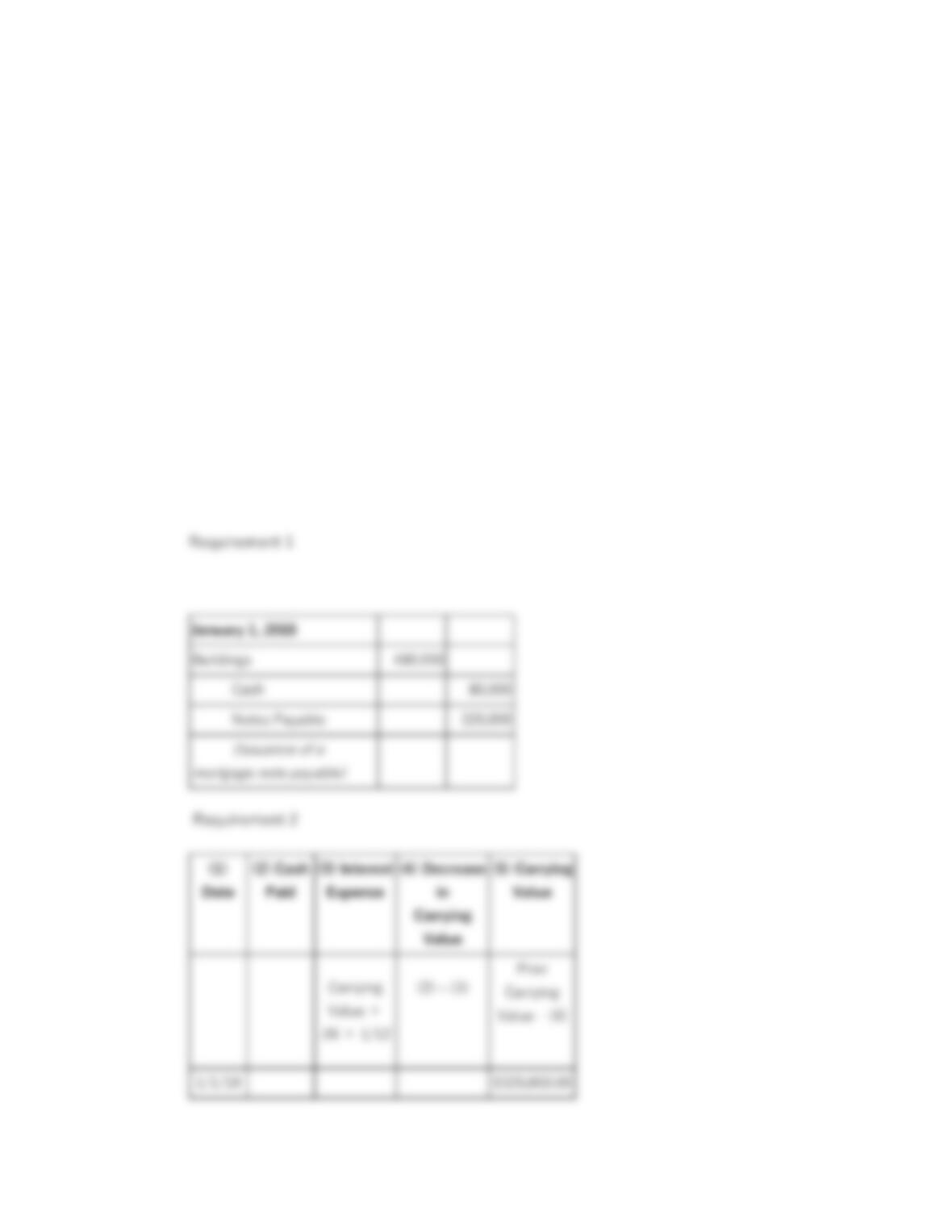
1. Record issuance of the mortgage installment note on January 1, 2018.
2. Complete the first three rows of an amortization schedule.
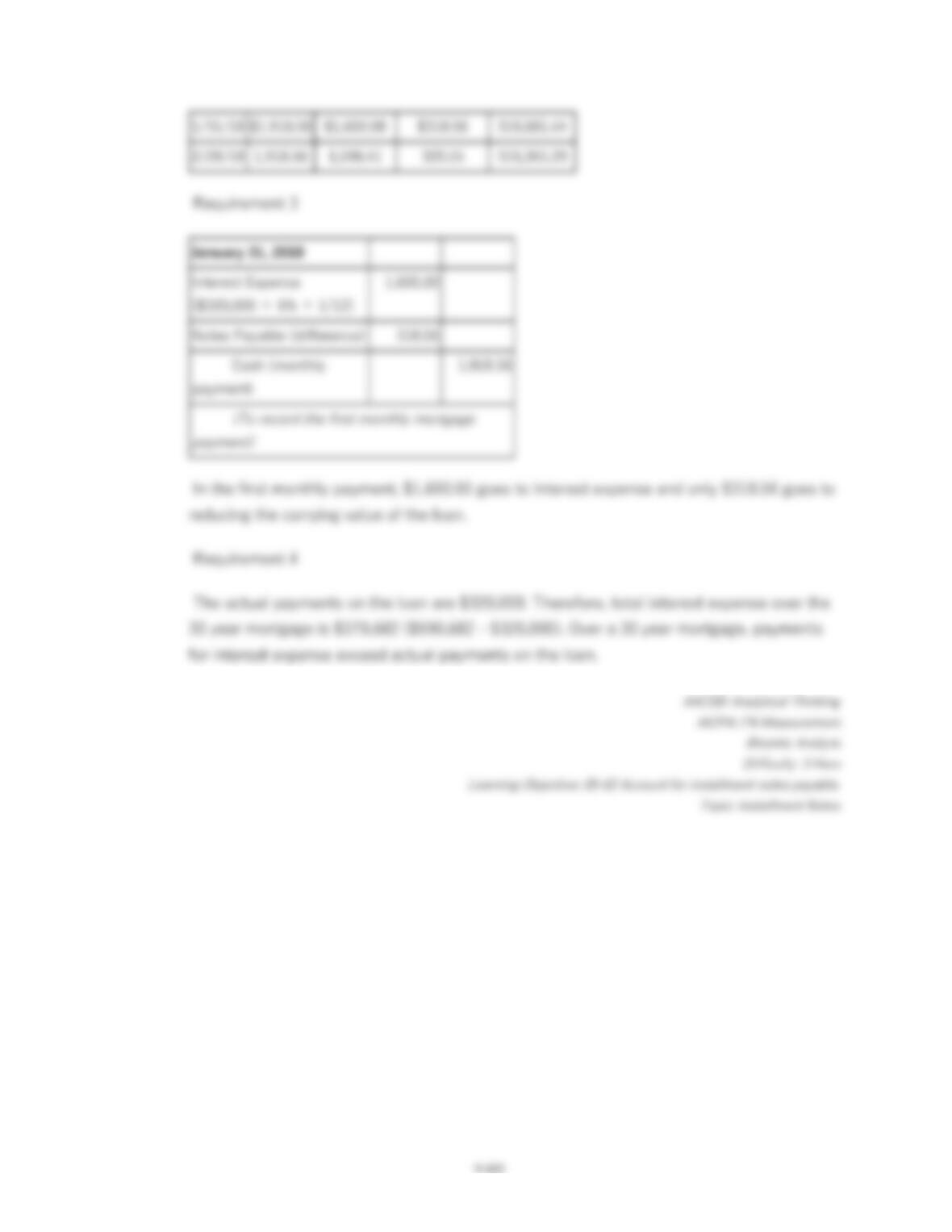
3. Record the first monthly mortgage payment on January 31, 2018. How much of the first
payment goes to interest expense and how much goes to reducing the carrying value of
the loan?
4. Total payments over the 30 years are $690,682 ($1,918.56 × 360 monthly payments).
How much of this is interest expense and how much is actual payment of the loan?
9-103
170.
Super Slides has $20 million in bonds payable. The bond indenture states that the debt to
equity ratio cannot exceed 2.0. Super Slide’s total assets are $90 million and its liabilities
other than the bonds payable are $40 million. The company is considering some additional
financing through leasing.
Required:
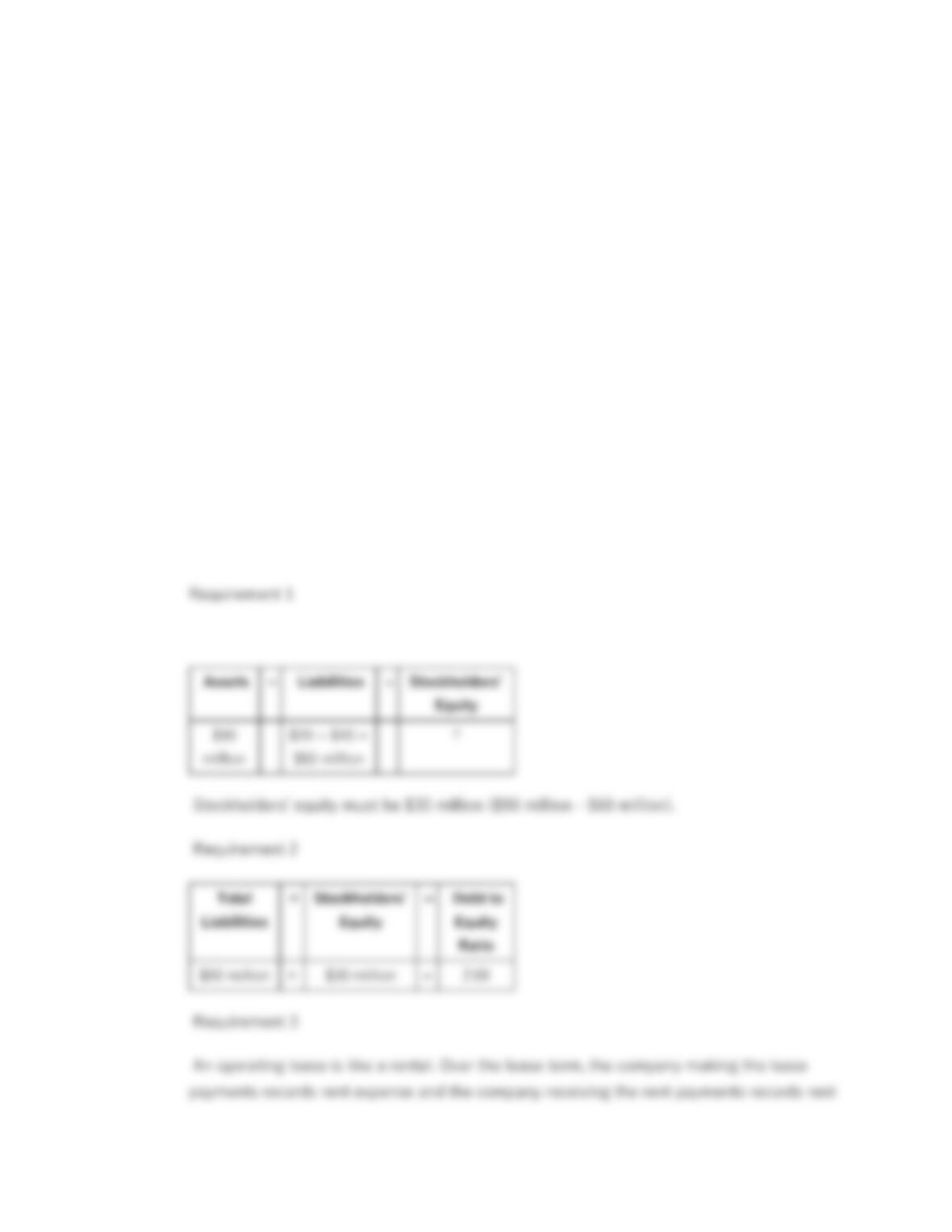
1. Calculate total stockholders’ equity using the balance sheet equation.
2. What is the debt to equity ratio?
3. Explain the difference between an operating and a capital lease.
4. The company enters a lease agreement requiring lease payments with a present value
of $2 million. Will this lease agreement affect the debt to equity ratio differently if the
lease is recorded as an operating lease or a capital lease?
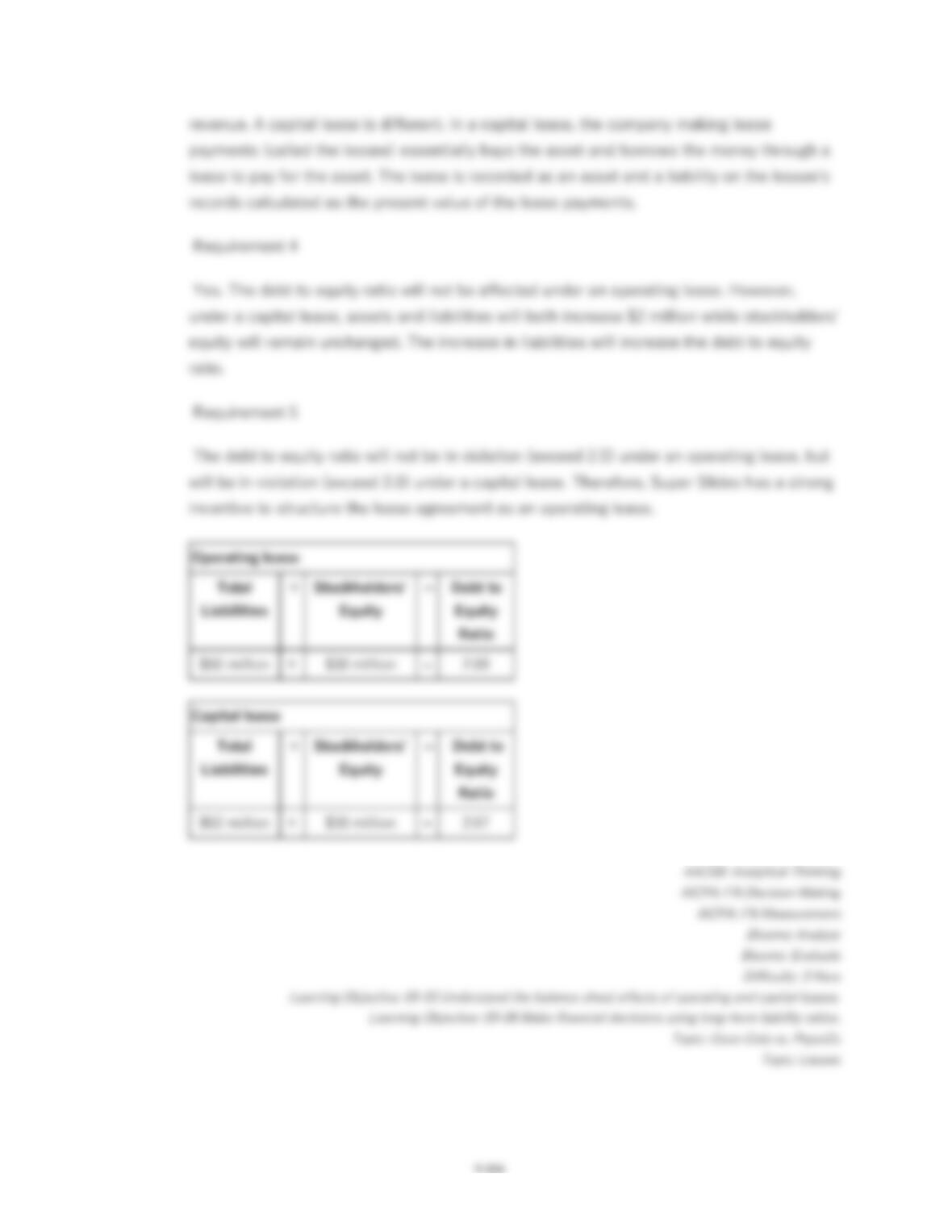
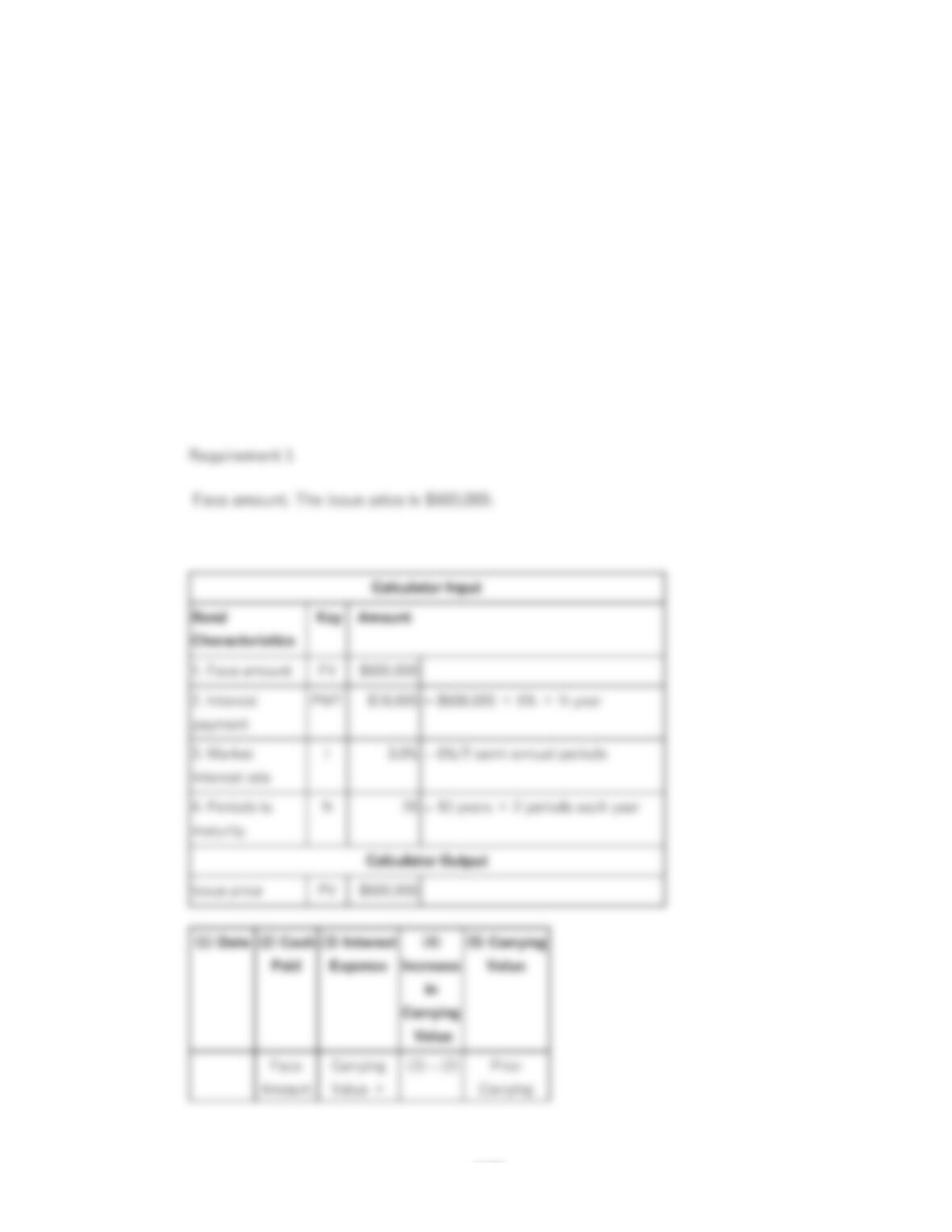
5. Will entering into the lease cause the debt to equity ratio to be in violation of the
contractual agreement in the bond indenture? Show your calculations (a) assuming an
operating lease and (b) assuming a capital lease.
9-105
171.
Lakeside Amusement Park issues $600,000 of 6% bonds, due in ten years, with interest
payable semi-annually on June 30 and December 31 each year.
Required:
Calculate the issue price of a bond and complete the first three rows of an amortization
schedule when:
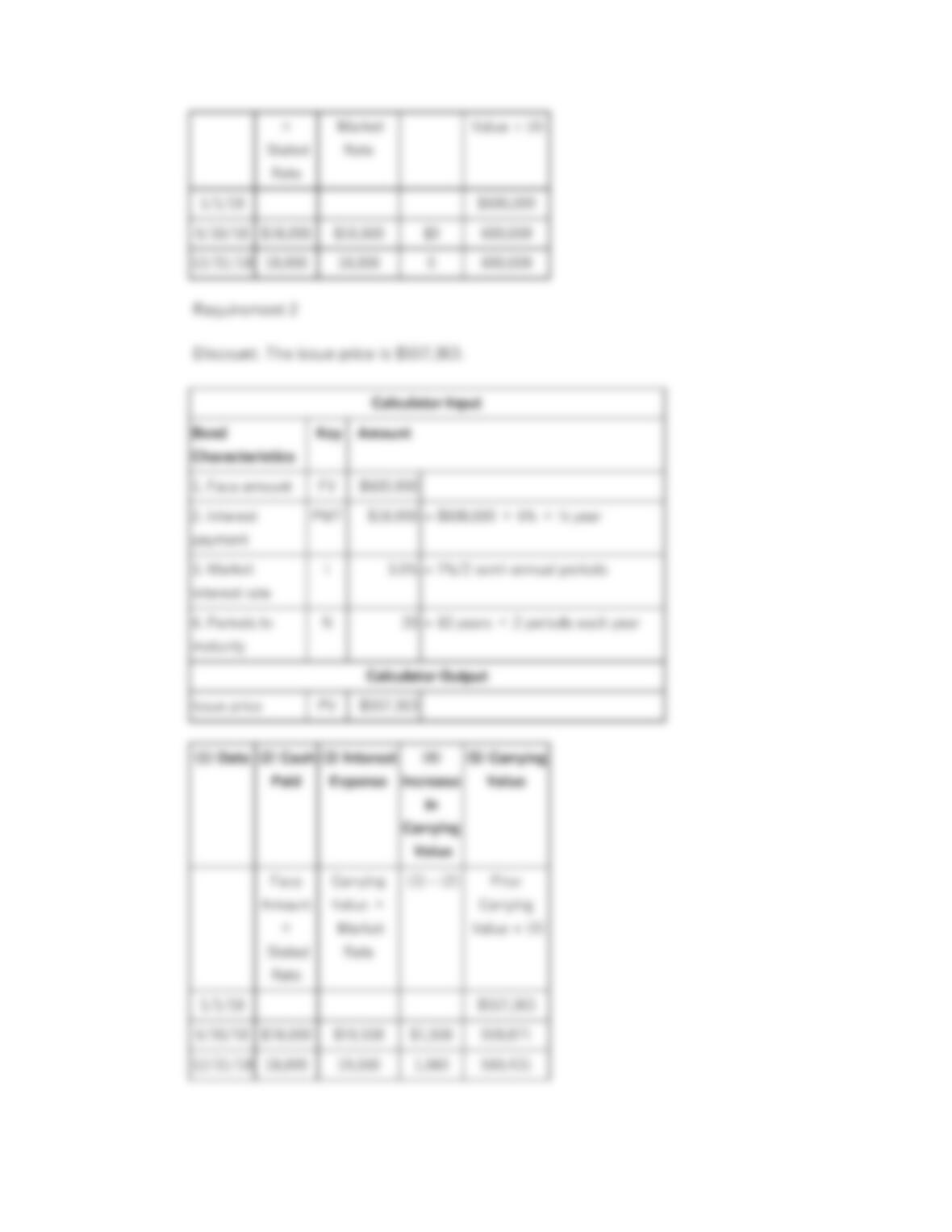
1. The market interest rate is 6% and the bonds issue at face amount.
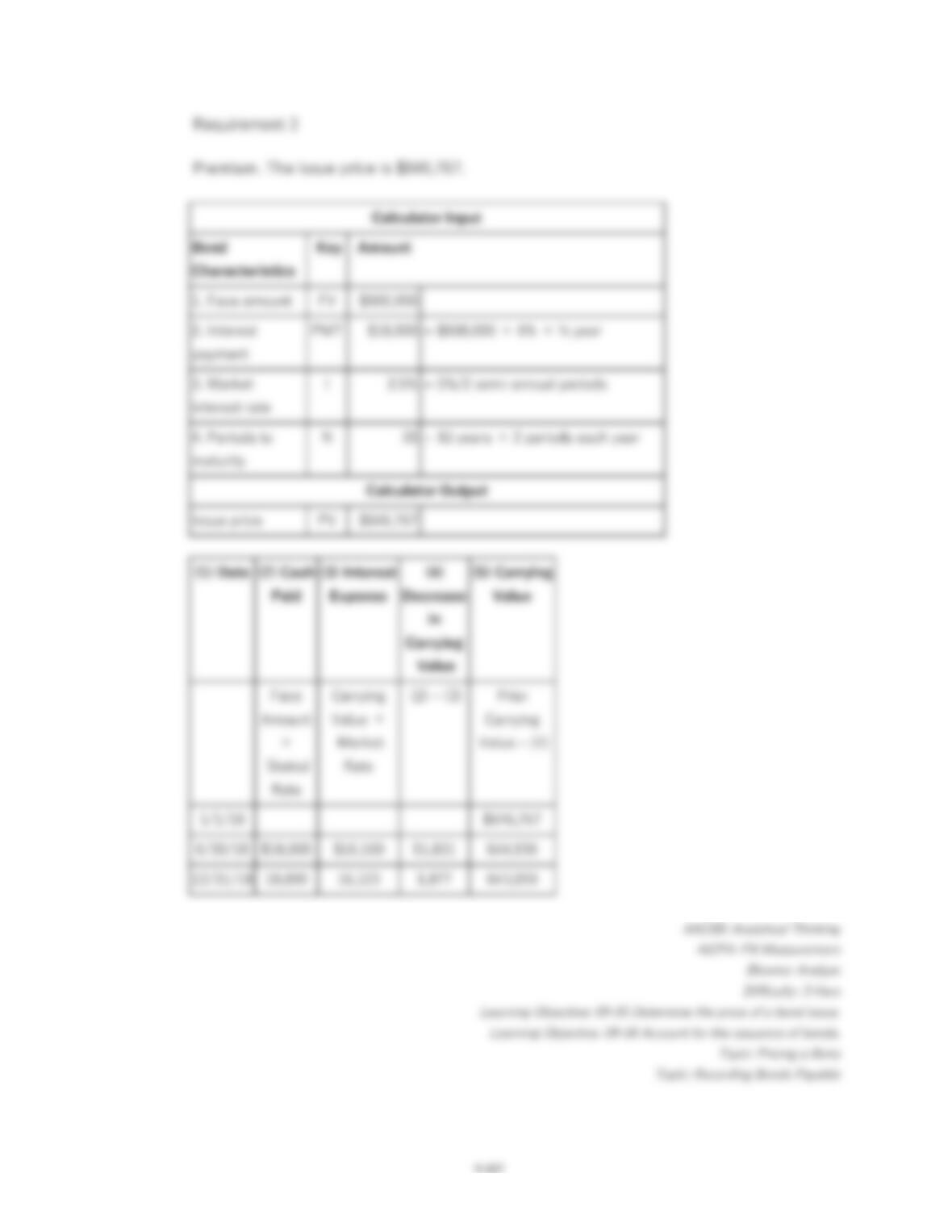
2. The market interest rate is 7% and the bonds issue at a discount.
3. The market interest rate is 5% and the bonds issue at a premium.
9-106
172.
Astro World issues $20 million in bonds on January 1, 2018 that pay interest semi-annually
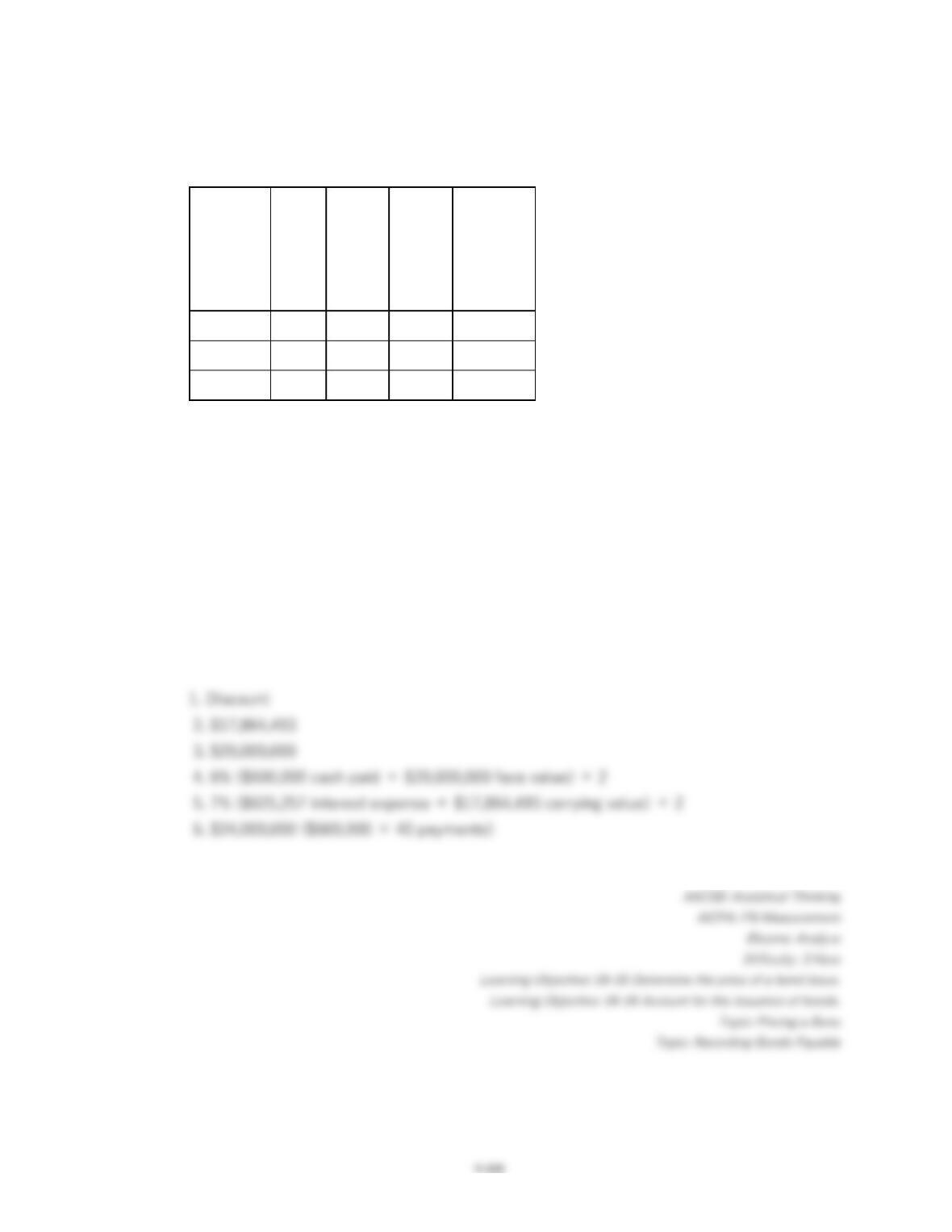
on June 30 and December 31. Portions of the bond amortization schedule appear below:
(1) Date
(2)
Cash
Paid
(3)
Interest
Expense
(4)
Increase
in
Carrying
Value
(5)
Carrying
Value
1/1/2018
$17,864,493
6/30/2018
600,000
625,257
25,257
17,889,750
12/31/2018
600,000
626,141
26,141
17,915,891
Required:
1. Were the bonds issued at face amount, a discount, or a premium?
2. What is the original issue price of the bonds?
3. What is the face amount of the bonds?
4. What is the stated annual interest rate?
5. What is the market annual interest rate?
6. What is the total cash paid for interest assuming the bonds mature in 20 years?
9-109
173.
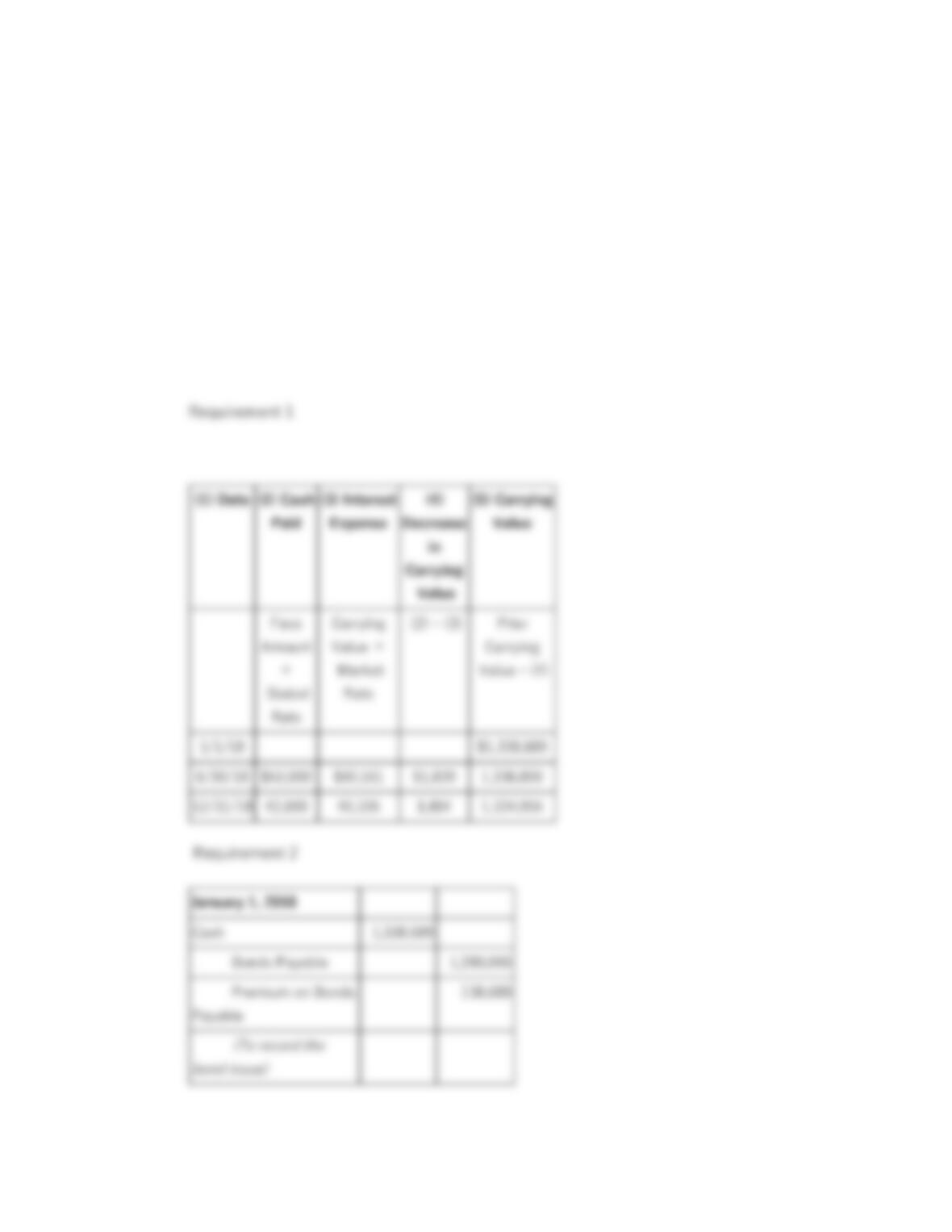
On January 1, 2018, Water Mania issues $1,000,000 of 6% bonds, due in ten years, with
interest payable semi-annually on June 30 and December 31 each year.
Required:
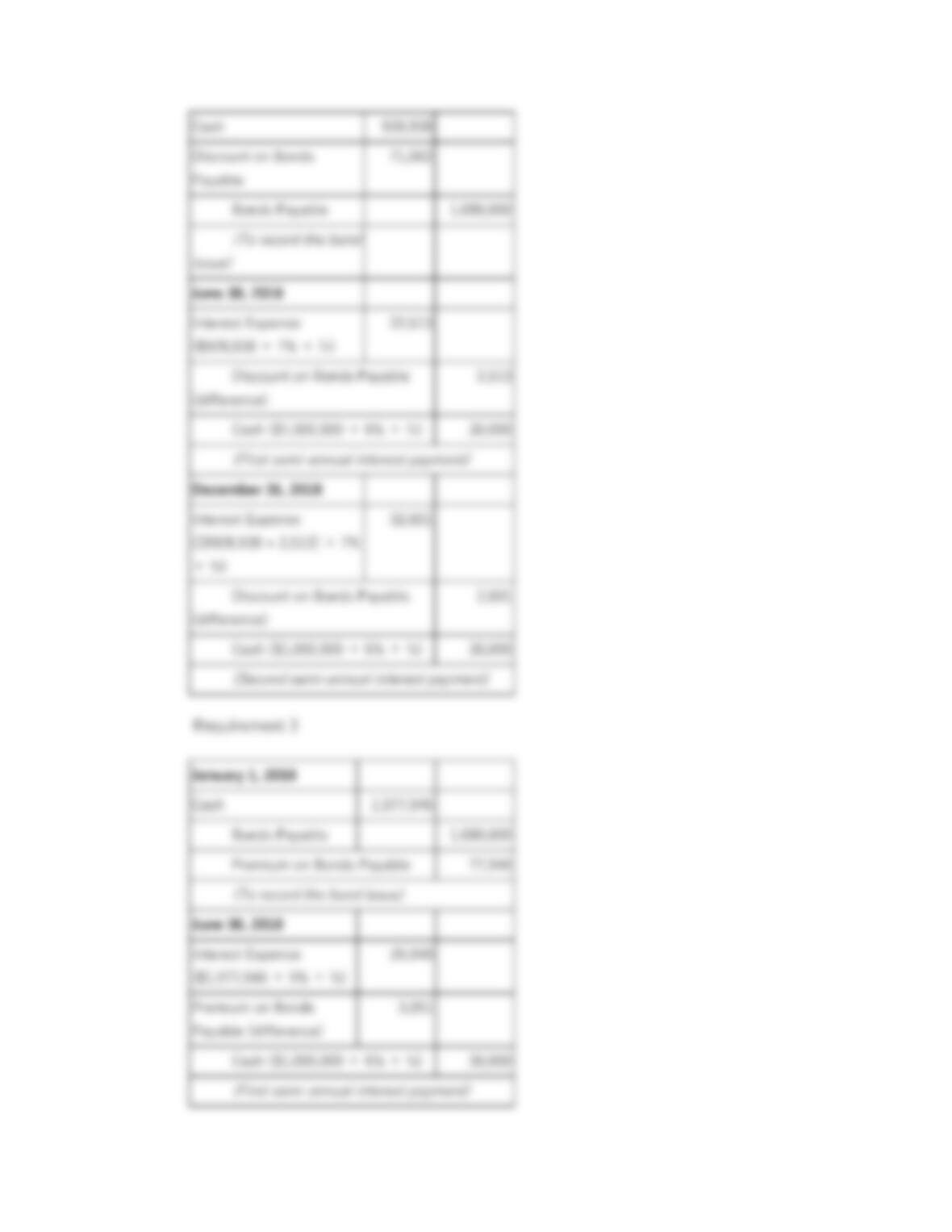
1. If the market interest rate is 6%, the bonds will issue at $1,000,000. Record the bond
issue on January 1, 2018, and the first two semi-annual interest payments on June 30,
2018, and December 31, 2018.
2. If the market interest rate is 7%, the bonds will issue at $928,938. Record the bond
issue on January 1, 2018, and the first two semi-annual interest payments on June 30,
2018, and December 31, 2018.
3. If the market interest rate is 5% the bonds will issue at $1,077,946. Record the bond
issue on January 1, 2018, and the first two semi-annual interest payments on June 30,
2018, and December 31, 2018.
9-110
9-112
174.
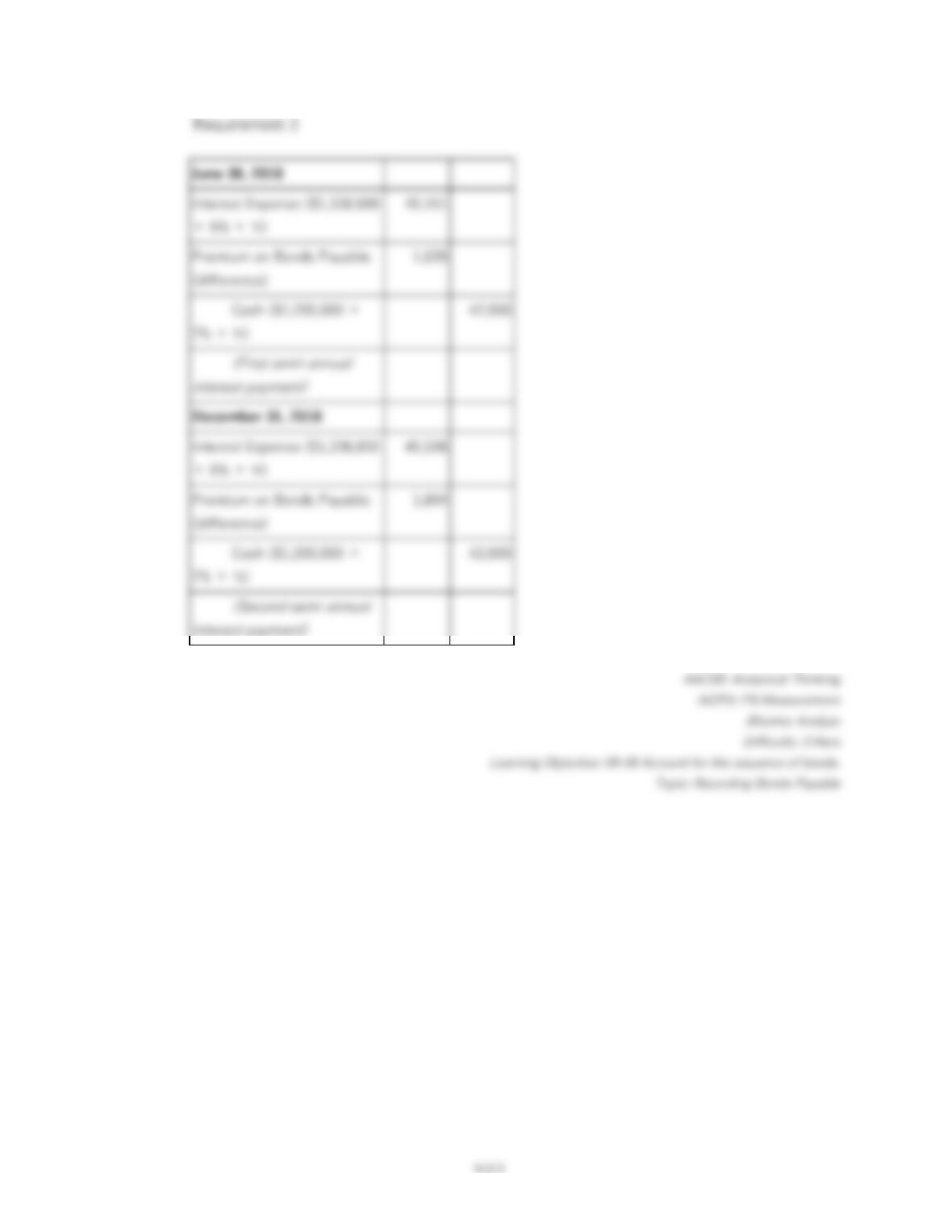
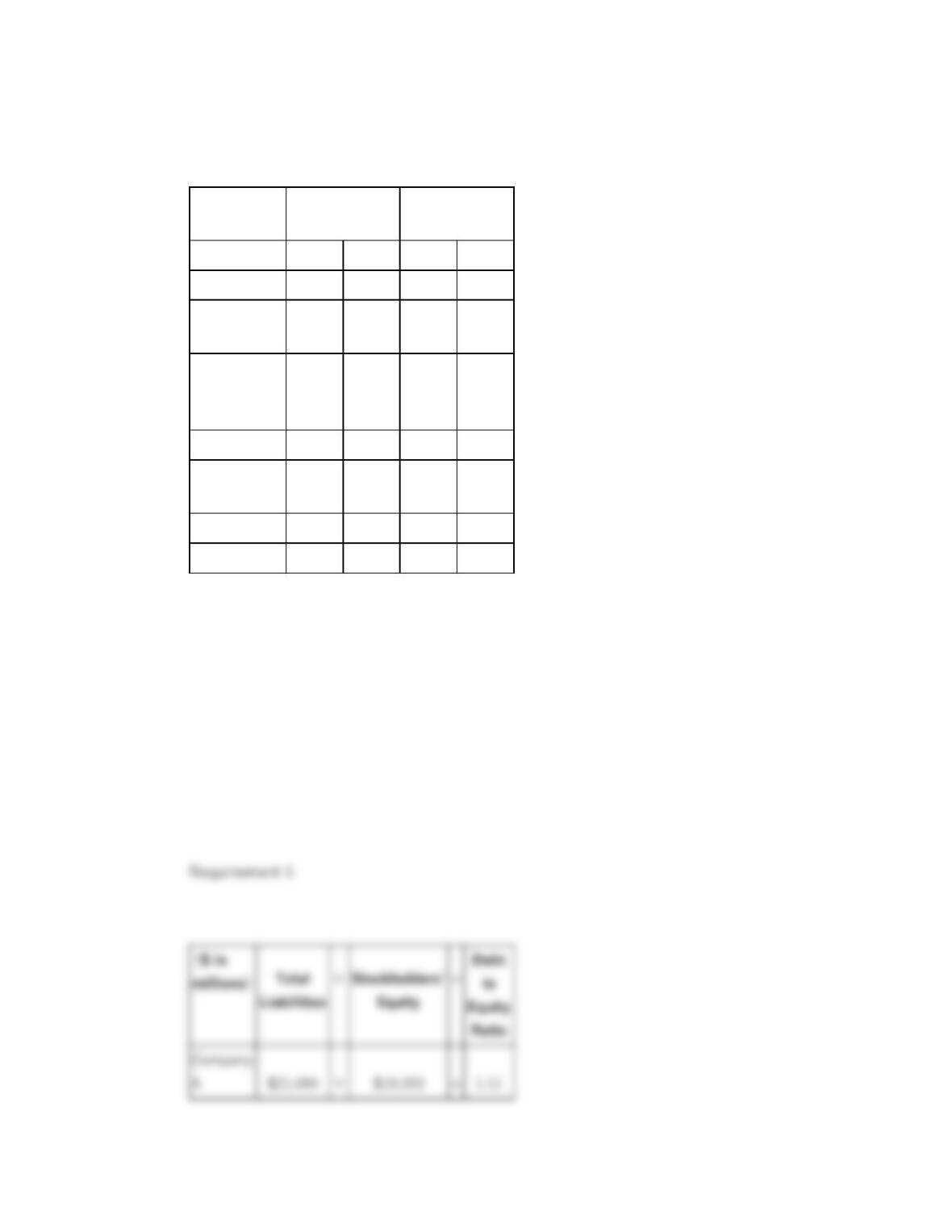
Aqua Zone issues $1.2 million, 7% bonds on January 1, 2018 that mature in twenty years.
The market interest rate for bonds of similar risk and maturity is 6% and the bonds issue
for $1,338,689. Interest is paid semi-annually on June 30 and December 31.
Required:
1. Complete the first three rows of an amortization schedule.
2. Record the issuance of the bonds on January 1, 2018.
3. Record the interest payments on June 30, 2018 and December 31, 2018.
9-114
175.
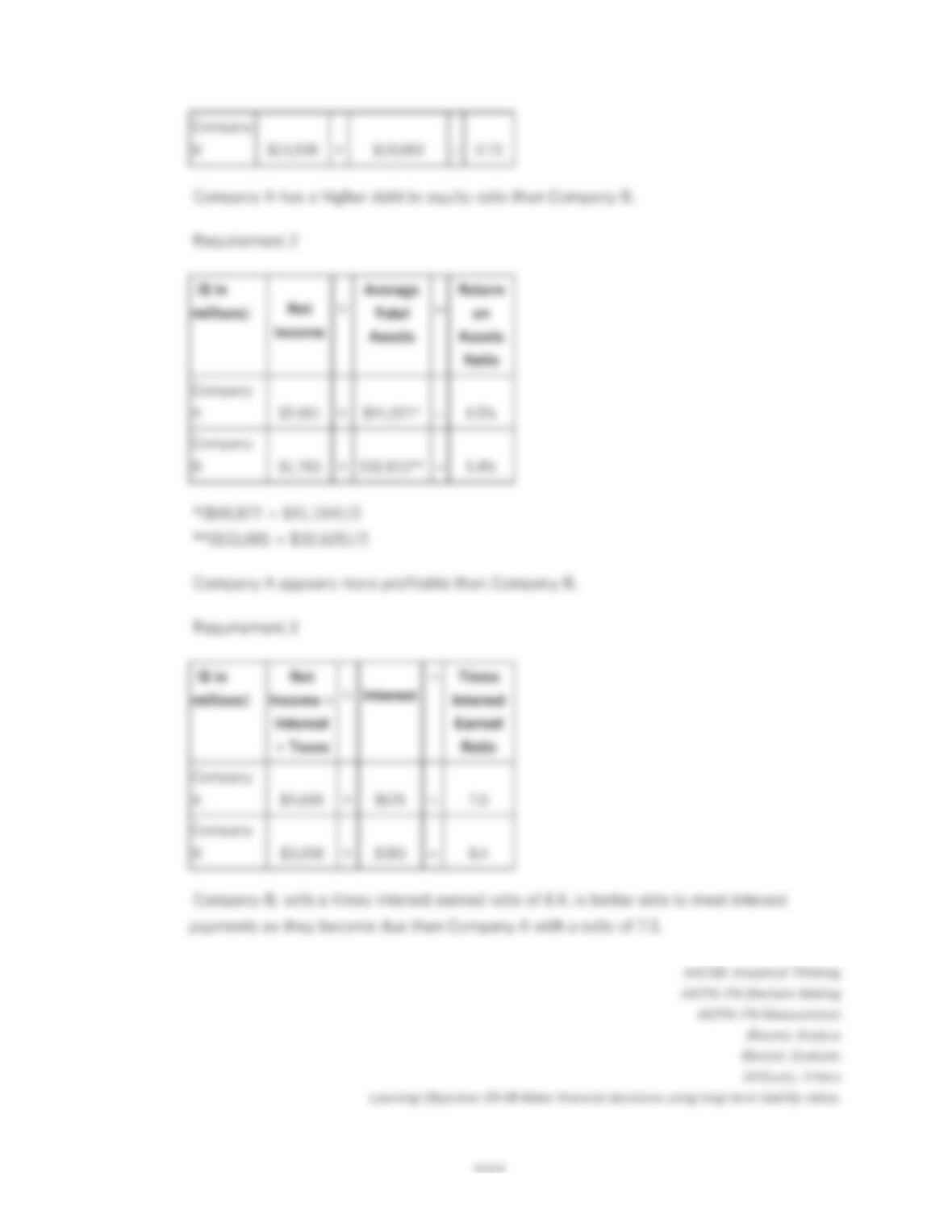
Selected financial data for two competitors in the construction supply industry are
provided as follows:
($ in
millions)
Company A
Company B
2018
2017
2018
2017
Total assets
$40,877
$41,164
$33,005
$32,625
Total
liabilities
21,484
23,387
13,936
14,570
Total
stockholders’
equity
$19,393
$17,777
$19,069
$18,055
Sales
$66,176
$47,220
Interest
expense
676
383
Tax expense
1,362
1,042
Net income
$2,661
$1,783
Required:
1. Calculate the debt to equity ratio for 2018 for both companies. Which company has the
higher ratio?
2. Calculate the return on assets for 2018 for both companies. Which company appears
more profitable?
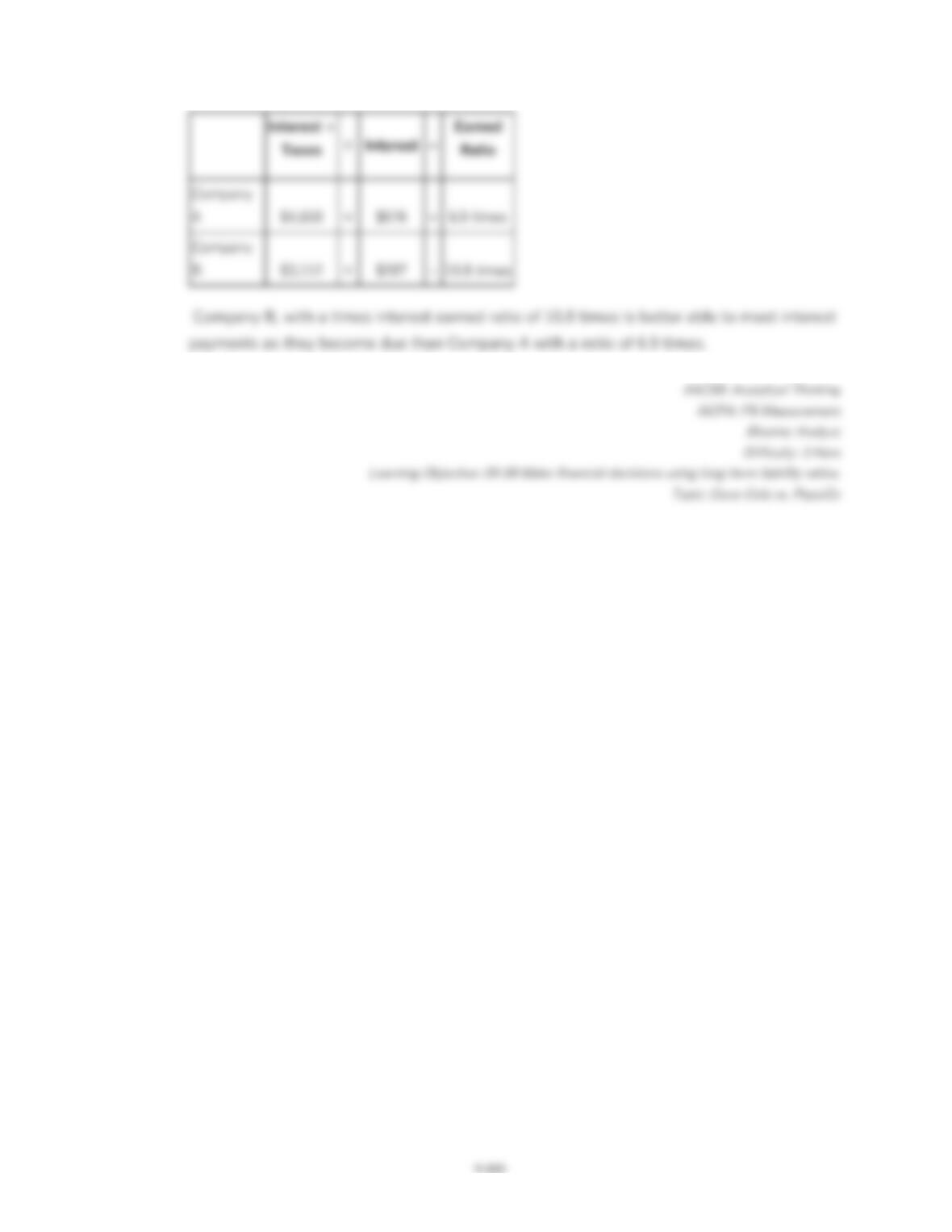
3. Calculate the times interest earned ratio for 2018 for both companies. Which company
is better able to meet interest payments as they become due?
176.
What is capital structure? Why would a company choose to borrow money rather than
issue additional stock?
177.
Why do some companies issue bonds rather than borrow money directly from a bank?
178.
Contrast the following types of bonds:
(a) Secured and unsecured.
(b) Term and serial.
(c) Callable and convertible.
179.
Explain how each of the columns in an amortization schedule is calculated, assuming the
bonds are issued at a discount. How is the amortization schedule different if bonds are
issued at a premium?
180.
What are the potential risks and rewards of carrying additional debt? How does additional
debt affect a company’s return to investors?