
Page 1
1.
Select the equation whose graph is the graph of
()y f x=
vertically stretched by a
factor of 8.
A)
0.3 ( )y f x=
B)
( ) 0.3y f x=−
C)
( 0.3)y f x=+
D)
( ) 0.3y f x=+
2.
Select the choice which best describes the graph of
0.2 ( )y f x=
.
A)
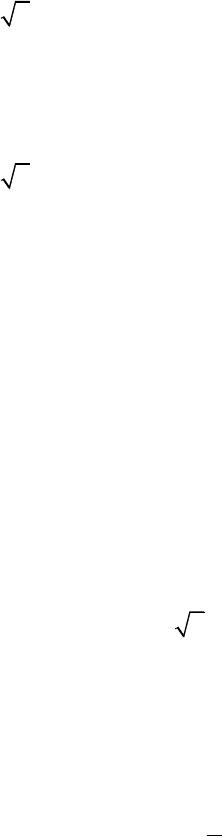
It is the graph of
()y f x=
shifted 8 units to the left.
B)
It is the graph of
()y f x=
vertically stretched by a factor of 8.
C)
It is the graph of
()y f x=
shifted 8 units down.
D)
It is the graph of
()y f x=
vertically stretched by a factor of 8 and reflected across
the x-axis.
3.
Select the equation whose graph is the graph of
()y f x=
vertically stretched by a
factor of
10
and reflected across the x-axis.
A)
10 ( )y f x=
B)
( ) 10y f x=−
C)
( 10)y f x=+
D)
10 ( )y f x= −
4.
Select the choice which best describes the graph of
4 ( )y f x= −
.
A)
It is the graph of
()y f x=
shifted 2 units to the right.
B)
It is the graph of
()y f x=
vertically stretched by a factor of 2.
C)
It is the graph of
()y f x=
shifted 2 units up.
D)
It is the graph of
()y f x=
vertically stretched by a factor of 2 and reflected across
the x-axis.
5.
Select the equation whose graph is the graph of
()y f x=
shifted 6 units up.
A)
–12 ( )y f x=
B)
( )+12y f x=
C)
( 12)y f x=+
D)
( ) –12y f x=
Page 2
6.
Select the choice which best describes the graph of
( )+5y f x=
.
A)
It is the graph of
()y f x=
shifted 6 units up.
B)
It is the graph of
()y f x=
vertically stretched by a factor of 6.
C)
It is the graph of
()y f x=
shifted 6 units to the right.
D)
It is the graph of
()y f x=
shifted 6 units down.
7.
Select the equation whose graph is the graph of
()y f x=
shifted 10 units to the right.
A)
2 ( )y f x=
B)
( +2)y f x=
C)
( ) 2y f x=+
D)
( – 2)y f x=
8.
Select the choice which best describes the graph of
( –10)y f x=
.
A)
It is the graph of
()y f x=
shifted 9 units to the right.
B)
It is the graph of
()y f x=
vertically stretched by a factor of 9.
C)
It is the graph of
()y f x=
shifted 9 units down.
D)
It is the graph of
()y f x=
shifted 9 units to the left.
9.
Select the equation whose graph is the graph of
()y f x=
reflected horizontally (across
the y-axis).
A)
0.4 ( )y f x=
B)
( ) 0.4y f x=−
C)
()y f x=−
D)
()y f x=−
10.
Select the choice which best describes the graph of
()y f x=−
.
A)
It is the graph of
()y f x=
reflected vertically (across the x-axis).
B)
It is the graph of
()y f x=
shifted 1 unit to the right.
C)
It is the graph of
()y f x=
shifted 1 unit down.
D)
It is the graph of
()y f x=
reflected horizontally (across the y-axis).
Page 3
11.
Transform the function
3
()f x x=
into a new function
()gx
by compressing
()fx
by
a factor of 0.3, reflecting across the x-axis, and then shifting the result down 8 units.
Find the equation of
()gx
.
12.
Transform the function
() x
f x e=
into a new function
()gx
by compressing
()fx
by
a factor of 0.9 and reflecting across the x-axis, and then shifting the result up 4 units.
Find the equation of
()gx
.
13.
Transform the function
()f x x=
into a new function
()gx
by shifting
()fx
horizontally 3 units to the left and then shifting the result down 6 units.
Find the equation of
()gx
.
14.
Transform the function
()f x x=
into a new function
()gx
by reflecting
()fx
horizontally (across the y-axis) and then shifting the result up 3 units.
Find the equation of
()gx
.
15.
Transform the function
() x
f x e=
into a new function
()gx
by shifting
()fx
horizontally 10 units to the right, reflecting the result across the x-axis, and then
shifting the result down 6 units.
Find the equation of
()gx
.
16.
Find the formula for
10 ( ) – 2y f x=−
where
3
()f x x=
.
17.
Find a formula for
( )
+8 – 6fx=
where
()f x x=
.
18.
Find a formula for
( )
+ 2 +5y f x=
where
() x
f x e=
.
19.
Find a formula for
( )
–8 – 9y f x=−
where
1
()fx x
=
.
Page 4
20.
Transform the function
() x
f x e=
into a new function
()gx
by reflecting horizontally
(across the y-axis), stretching
()fx
by a factor of 7 , and then shifting the result up 9
units.
Find the equation of
()gx
.
21.
Find a formula for
( )
– 7 + 9y f x=−
where
() x
f x e=
.
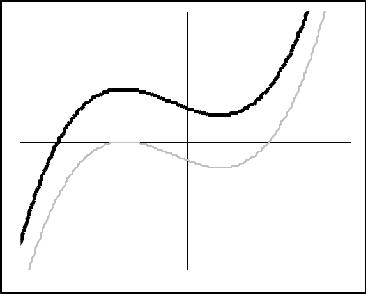
22.
If graph A is the graph of
()y f x=
, which of the following will yield graph B?
A)
5 ( )y f x=
B)
( 5)y f x=+
C)
( ) 5y f x=+
D)
()y f x=−
A
B
Page 5
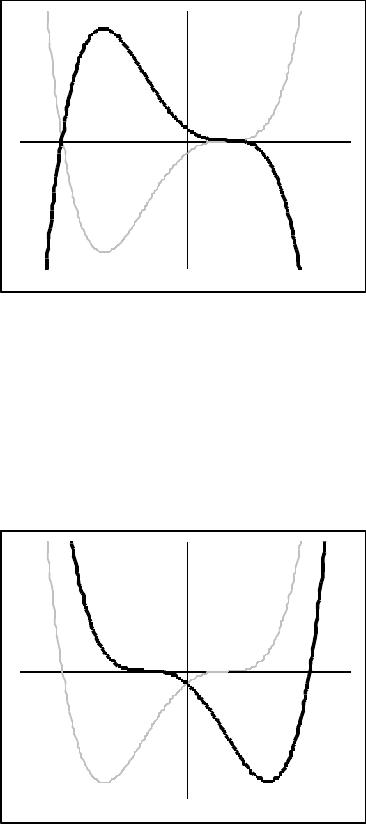
23.
If graph A is the graph of
()y f x=
, which of the following will yield graph B?
A)
6 ( )y f x=
B)
()y f x=−
C)
( 6)y f x=−
D)
()y f x=−
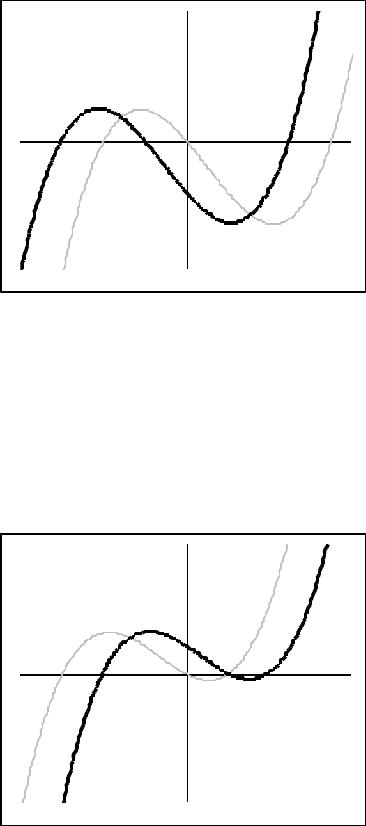
24.
If graph A is the graph of
()y f x=
, which of the following will yield graph B?
A)
5 ( )y f x=
B)
( 5)y f x=+
C)
()y f x=−
D)
()y f x=−
A
B
A
B
Page 6
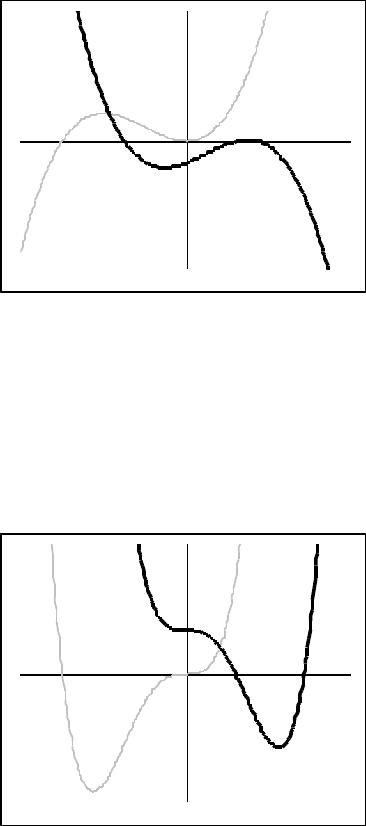
25.
If graph A is the graph of
()y f x=
, which of the following will yield graph B?
A)
4 ( )y f x=
B)
( 4)y f x=+
C)
( ) 4y f x=+
D)
( 4)y f x=−
26.
If graph A is the graph of
()y f x=
, which of the following will yield graph B?
A)
3 ( )y f x=
B)
( 3)y f x=+
C)
( ) 3y f x=+
D)
( 3)y f x=−
A
B
A
B
Page 7
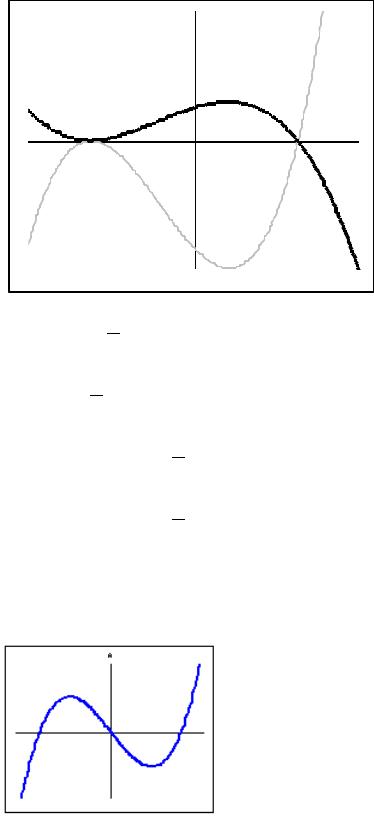
27.
If graph A is the graph of
()y f x=
, which of the following will yield graph B?
A)
( 5)y f x= − −
B)
( 5)yfx= − +
C)
( ) 5y f x= − +
D)
( ) 5y f x= − −
28.
If graph A is the graph of
()y f x=
, which of the following will yield graph B?
A)
( 6)y f x= − −
B)
( 6)yfx= − +
C)
( ) 6yfx= − +
D)
( ) 6y f x= − +
A
B
A
B
Page 8
29.
If graph A is the graph of
()y f x=
, which of the following will yield graph B?
A)
1()
5
y f x=−
B)
1()
5
y f x=−
C)
1
()
5
y f x= − +
D)
1
() 5
y f x= − +
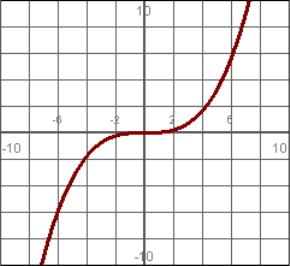
30.
Use the graph of
()y f x=
below to determine which statement is true.
A)
()fx
is not symmetric
B)
()fx
is symmetric about the origin
C)
()fx
is symmetric across the y-axis
D)
()fx
is symmetric across the x-axis
31.
Determine which statement is true for
2
( ) 3f x x=+
.
A)
()fx
is symmetric across the x-axis.
B)
()fx
is symmetric across the y-axis.
C)
()fx
is symmetric about the origin.
D)
()fx
is not symmetric.
A
B

Page 9
32.
Determine which statement is true for
2
3
()fx x
=
.
A)
()fx
is symmetric across the x-axis.
B)
()fx
is symmetric across the y-axis.
C)
()fx
is symmetric about the origin.
D)
()fx
is not symmetric.
33.
Determine which statement is true for
53
()f x x x=−
.
A)
()fx
is symmetric across the x-axis.
B)
()fx
is symmetric across the y-axis.
C)
()fx
is symmetric about the origin.
D)
()fx
is not symmetric.
34.
Determine which statement is true for
2
()fx x
=
.
A)
()fx
is symmetric across the x-axis.
B)
()fx
is symmetric across the y-axis.
C)
()fx
is symmetric about the origin.
D)
()fx
is not symmetric.
35.
Determine which statement is true for
6
()f x x x=−
.
A)
()fx
is symmetric across the x-axis.
B)
()fx
is symmetric across the y-axis.
C)
()fx
is symmetric about the origin.
D)
()fx
is not symmetric.
36.
Determine which statement is true for
1
() 12
fx x
=+
.
A)
()fx
is symmetric across the x-axis.
B)
()fx
is symmetric across the y-axis.
C)
()fx
is symmetric about the origin.
D)
()fx
is not symmetric.
Page 10
37.
Identify the function
13 3
( ) 4 – 7f x x x=
A)
Even
B)
Odd
C)
Neither
38.
Identify this graph as symmetrical about the x-axis, y-axis, or the origin.
A)
X-axis
B)
Origin
C)
Y-axis
D)
Neither
39.
Given the function
5
( ) 4 –1f x x=
, the function
5
( ) –4 –1g x x=
is created by
reflecting f(x) around the
A)
origin.
B)
Not a reflection
C)
y-axis.
D)
x-axis.
Page 11
Answer Key