105.
From 1950 to 2007, the average return in the stock market, as measured by the S&P 500,
was 13.2 percent and a standard deviation of 17 percent. Given this information, which of
the following statements is correct?
A.
With an average return this high, it is unlikely that an investor will lose money in the
stock market in the next year or two.
With a standard deviation this high, it is likely that an investor will lose money in some
Essay Questions
106.
You are a risk-averse investor with a low-risk portfolio of bonds. How is it possible that
adding some stocks (which are riskier than bonds) to the portfolio can lower the total risk
of the portfolio?
107.
Describe the diversification potential of two assets with a -0.7 correlation. What is the
potential if the correlation is +0.7?
108.
What does diversification do to the risk and return characteristics of a portfolio?
109.
What is the source of firm-specific risk? What is the source of market risk?
110.
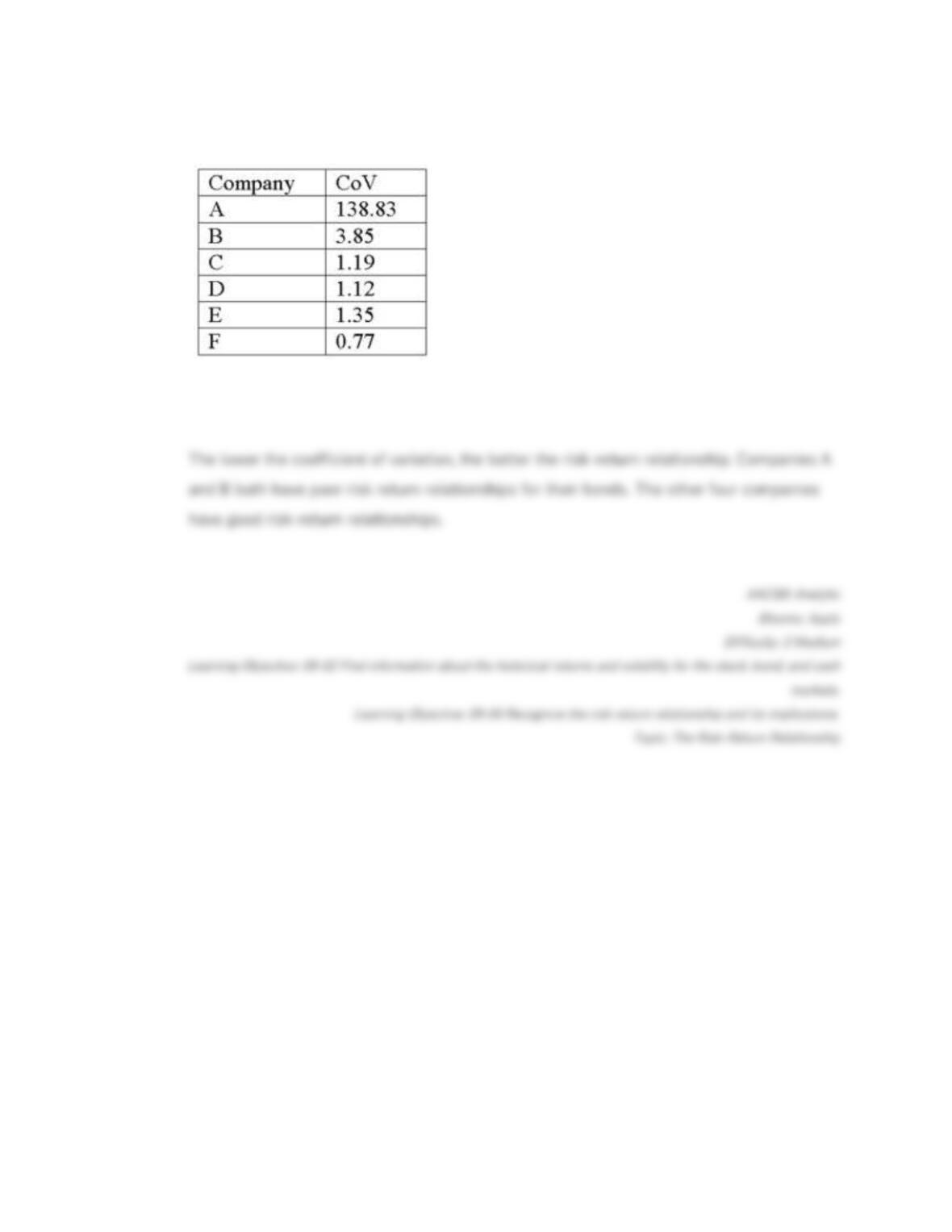
Risk versus Return in Bonds Assess the risk-return relationship of the following bonds:
111.
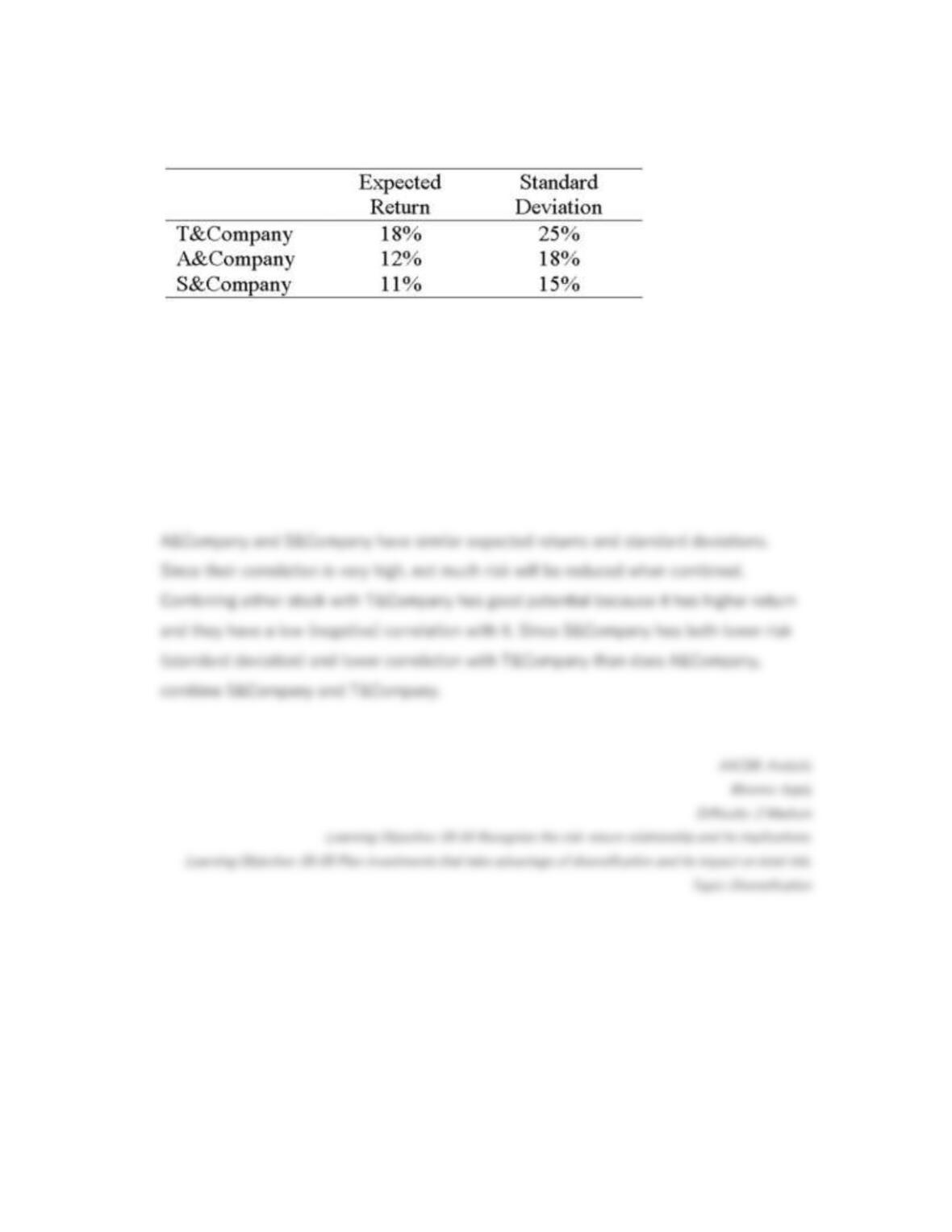
Diversifying Consider the characteristics of the following three stocks:
The correlation between T&Company and A&Company is -0.2. The correlation between
T&Company and S&Company is -0.21. The correlation between A&Company and
S&Company is 0.95. If you can pick only two stocks for your portfolio, which would you
pick? Why?
112.
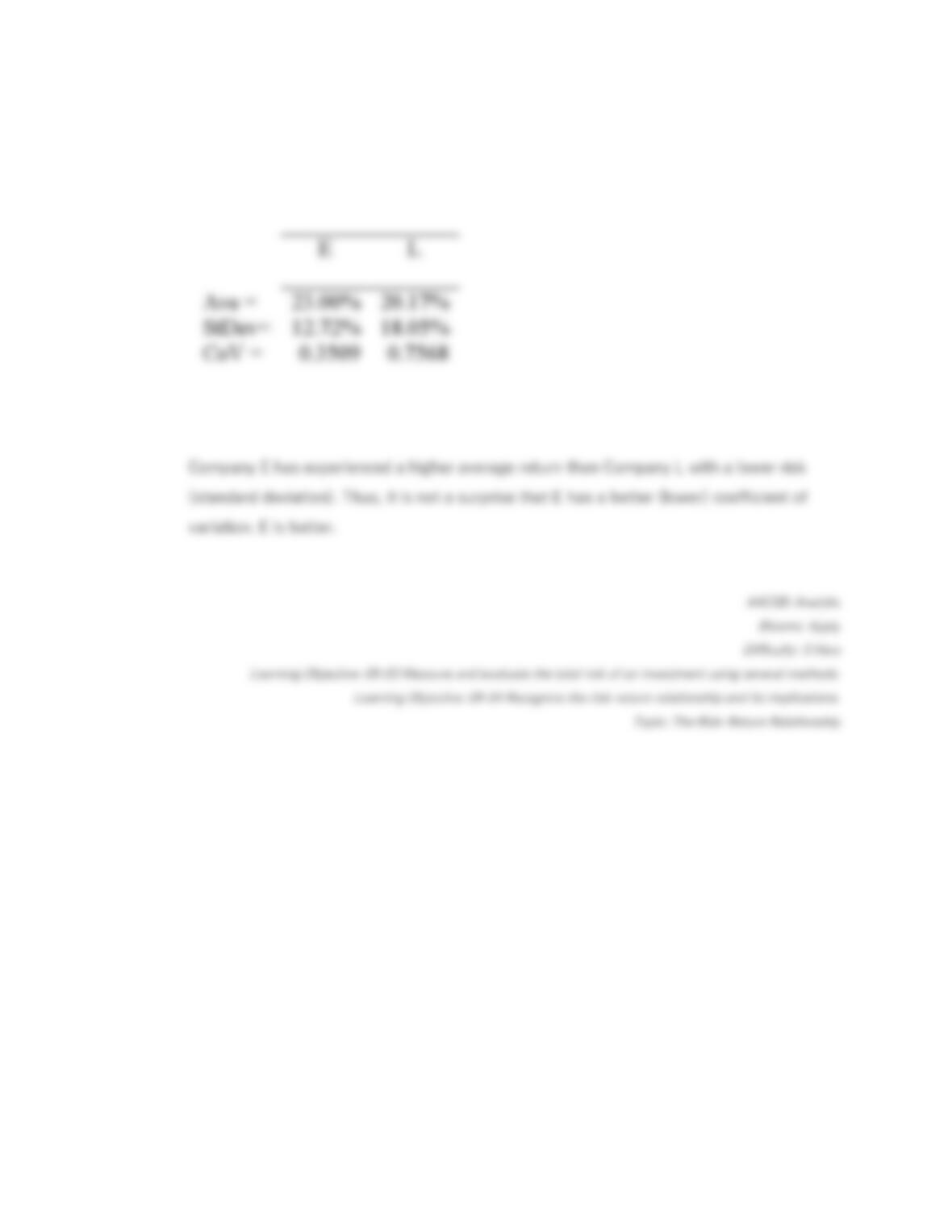
Risk, Return, and Their Relationship Consider the following annual average return,
standard deviation, and coefficient of variation for Companies E and L. Which stock
appears better? Why?
113.
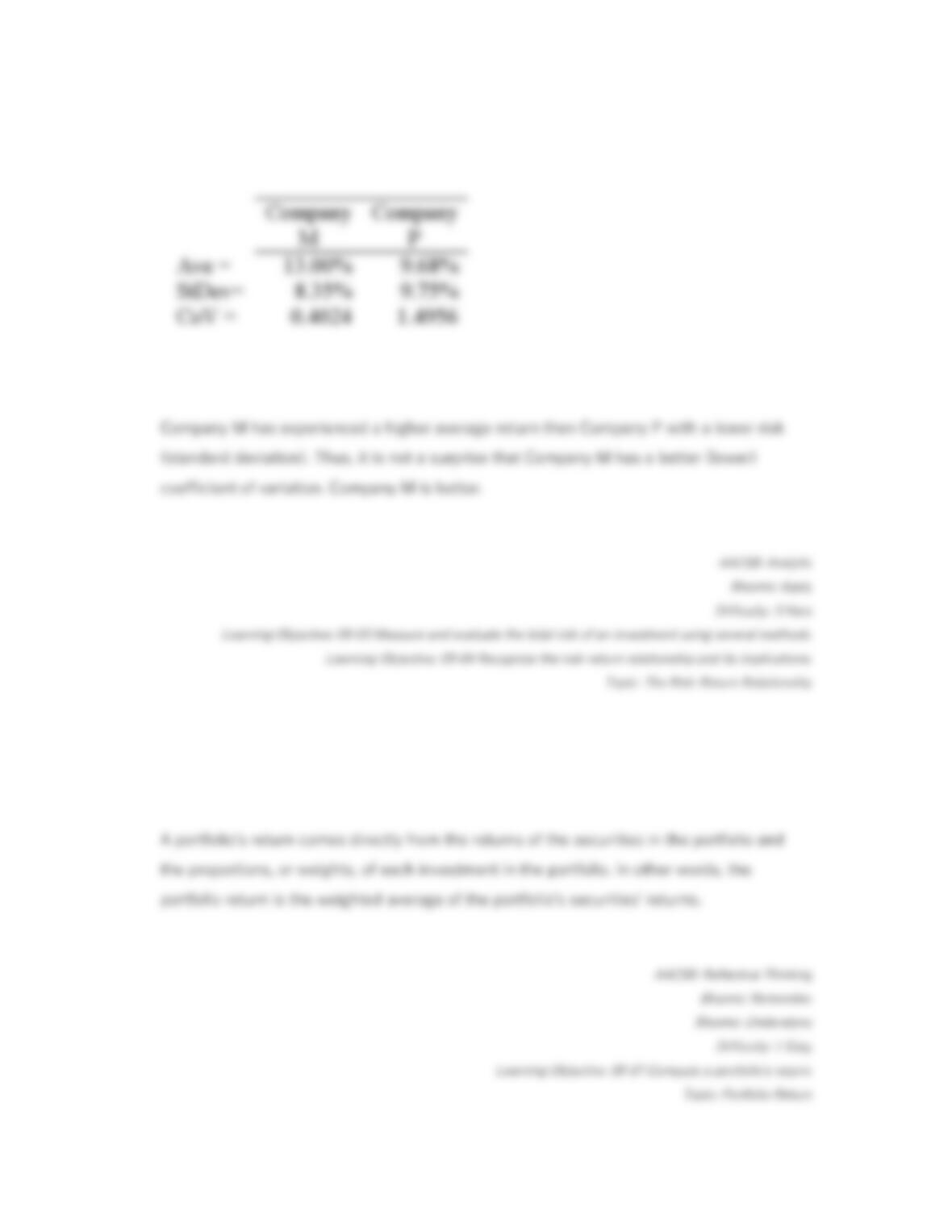
Risk, Return, and Their Relationship Consider the following stocks’ annual average
return, standard deviation, and coefficient of variation. Which stock appears better? Why?
114.
Explain how to compute a portfolio’s return.
115.
Define an efficient portfolio and an efficient frontier.
116.
Why is the percentage return a more useful measure than the dollar return?
117.
How do we define risk in this chapter and how do we measure it?
118.
Define diversifiable risk and contrast it with market risk.
119.
Identify and explain a common measure for risk-return relationship.