444 ♦ Chapter 9
5. Explain what is meant by the accounting term depreciation and discuss whether or not it measures
a market value change.
6. List three factors that need to be considered in determining depreciation expense and indicate
which factors lack precision and are only estimates, explain why.
7. Discuss how the straight-line method of depreciation differs from the units-of-product method.
8. Discuss how the straight-line method of depreciation differs from the declining-balance method.
Fixed Assets and Intangible Assets ♦ 445
9. Why would a company use an accelerated method for tax purposes and the straight-line method
for financial reporting?
10. Explain the relationship between the sale price and book value of an asset if a gain occurs on the
sale and how the gain would be classified in the financial statements.
11. Explain what is meant by the accounting term amortization.
12. Is goodwill amortized like other intangible assets? If not, explain why. Also, indicate when it is
written down.
446 ♦ Chapter 9
13. Define Goodwill and explain what it results from.
14. Explain what the “Fixed Asset Turnover Ratio” measures.
Fixed Assets and Intangible Assets ♦ 447
PROBLEM
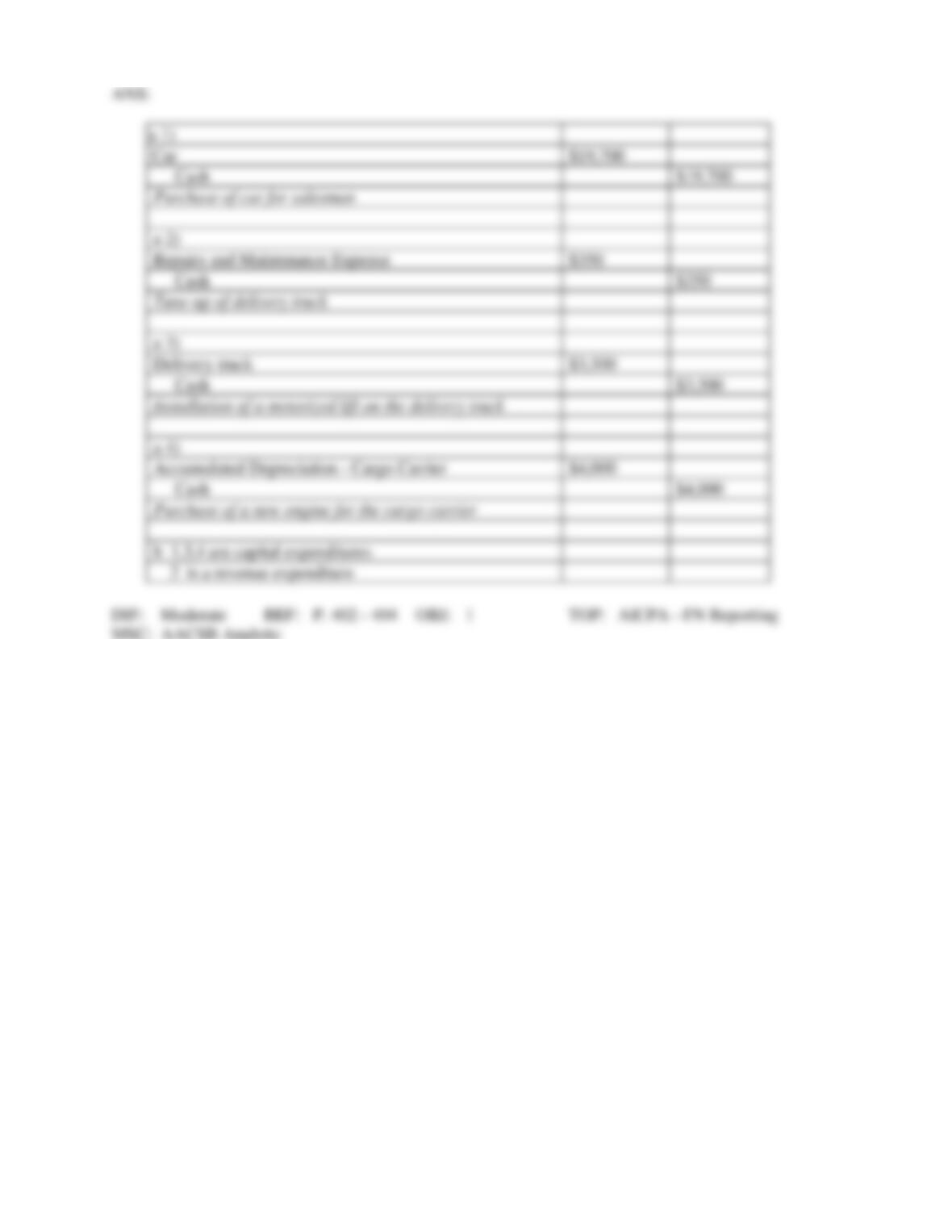
1. Taromina,Inc. has been undergoing some refurbishing activity. The newly hired accountant has
been having some trouble with preparing the journal entries for the following activities:
1) A new car for one of the salesmen was purchased for $18,000 purchase price in
cash. Sales tax of $1,080, a delivery charge of $500, and a licensing fee of $120
were also paid.
2) A tune-up of one of the delivery trucks costing $350 was paid for in cash.
3) The delivery truck was retrofitted with a motorized lift to assist in loading and
unloading of bulky and heavy items. The lift cost $3,000 and the installation $500
which were paid in cash.
4) A new engine is purchased for a cargo carrier that is near the end of its useful
life.The engine costs $4,000 in cash and has a useful life of 6 years.
a) Prepare the four journal entries.
b) State whether each of the following is a capital expenditure or a revenue expenditure.
General Journal
.a .
448 ♦ Chapter 9
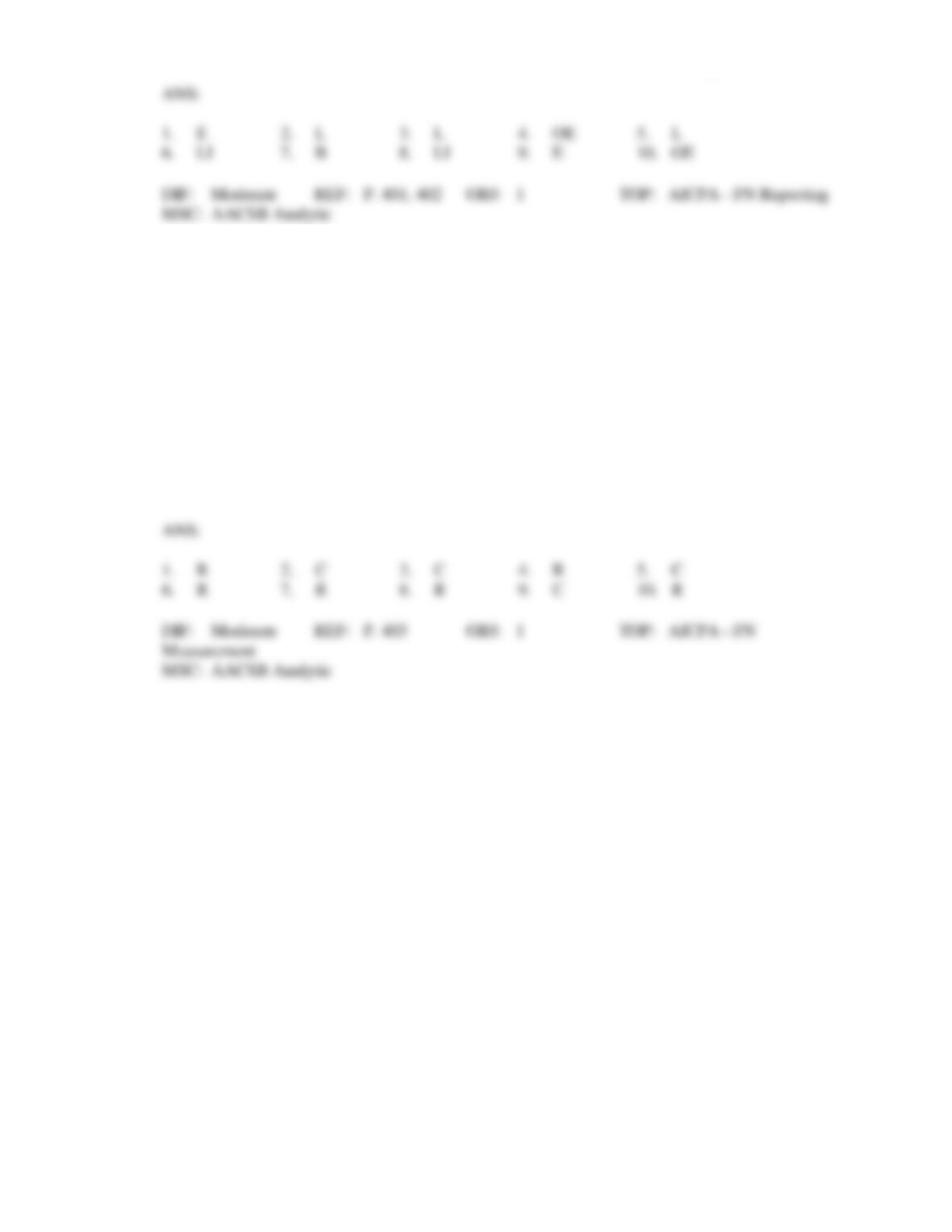
2. The following payments were made relative to Land, Land Improvements, Buildings, Equipment
and various expenses. Next to each number, place the appropriate letter to indicate how the
expenditure should be classified using the following classifications:
L = Land
LI = Land Improvements
B = Buildings
E = Equipment
OE = Operating Expenses
1.
Freight costs incurred on equipment purchased
2.
Delinquent property taxes on land purchased
3.
Old building demolition costs on acquired land
4.
Vandalism costs incurred during construction
5.
Legal costs incurred in the purchase of land
6.
Costs of paving a parking lot
7.
Special foundation costs
8.
Installation of flood lights around building
9.
Costs of overhauling machine motor
10.
Damage costs incurred when installing new equipment
Fixed Assets and Intangible Assets ♦ 449
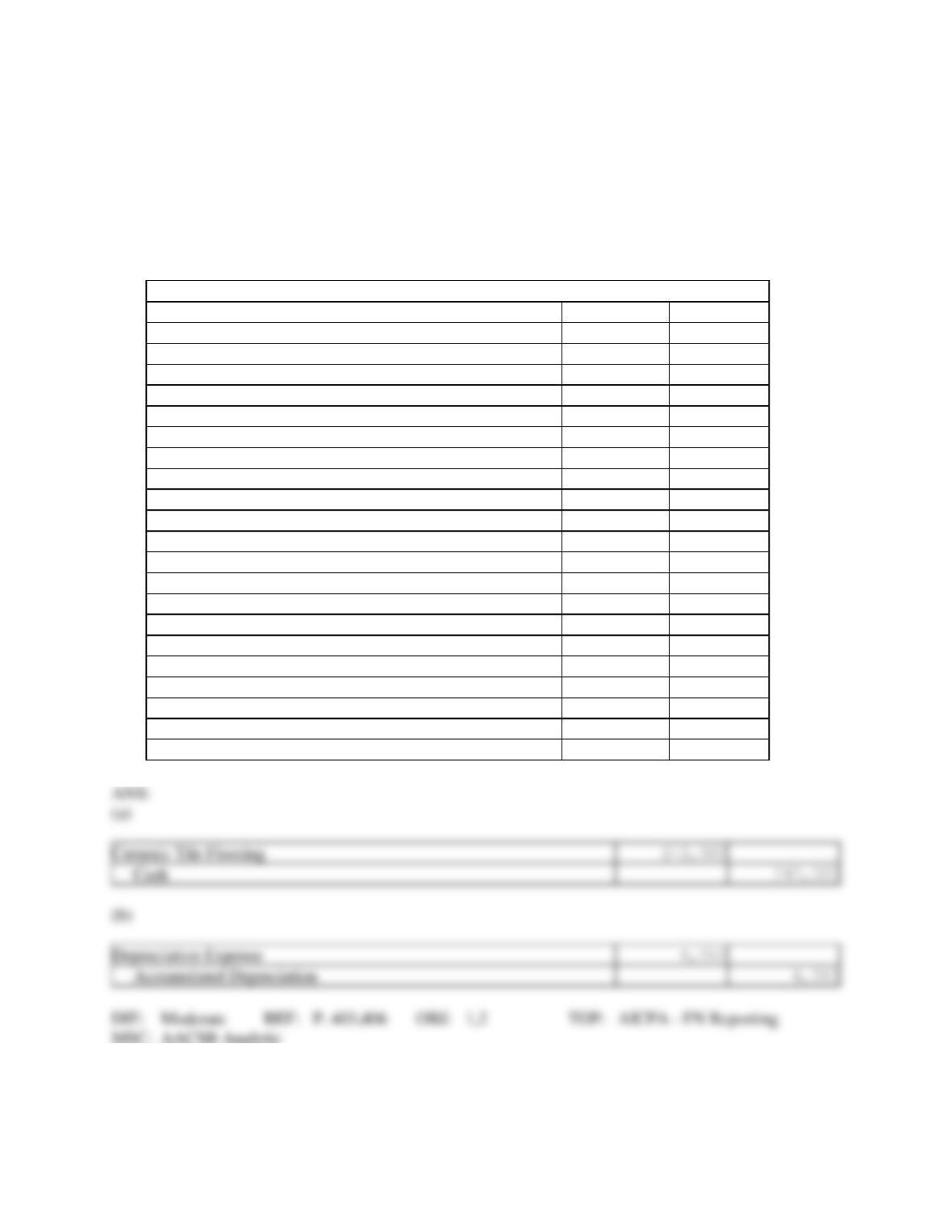
3. A company incurred the following costs related to its fleet of ten delivery trucks. Next to each
number, insert “C” for capital expenditure or “R” for revenue expenditure.
1.
Tire rotation on the entire fleet
2.
Overhauled the engine on two of the trucks
3.
Installed televisions in the sleeping compartments in all the trucks
4.
Battery replacement on half of the trucks
5.
Overhauled the transmission on several trucks
6.
Replaced brakes on half the fleet
7.
Drained and replaced radiator coolant on the entire fleet
8.
Changed the oil on the entire fleet
9.
Installed security systems on the entire fleet
10.
Replaced worn out shock absorbers on three of the trucks
1.
R
2.
C
3.
C
4.
R
5.
C
6.
R
7.
R
8.
R
9.
C
10.
R
1.
E
2.
L
3.
L
4.
5.
L
6.
7.
B
8.
9.
E
10.
450 ♦ Chapter 9
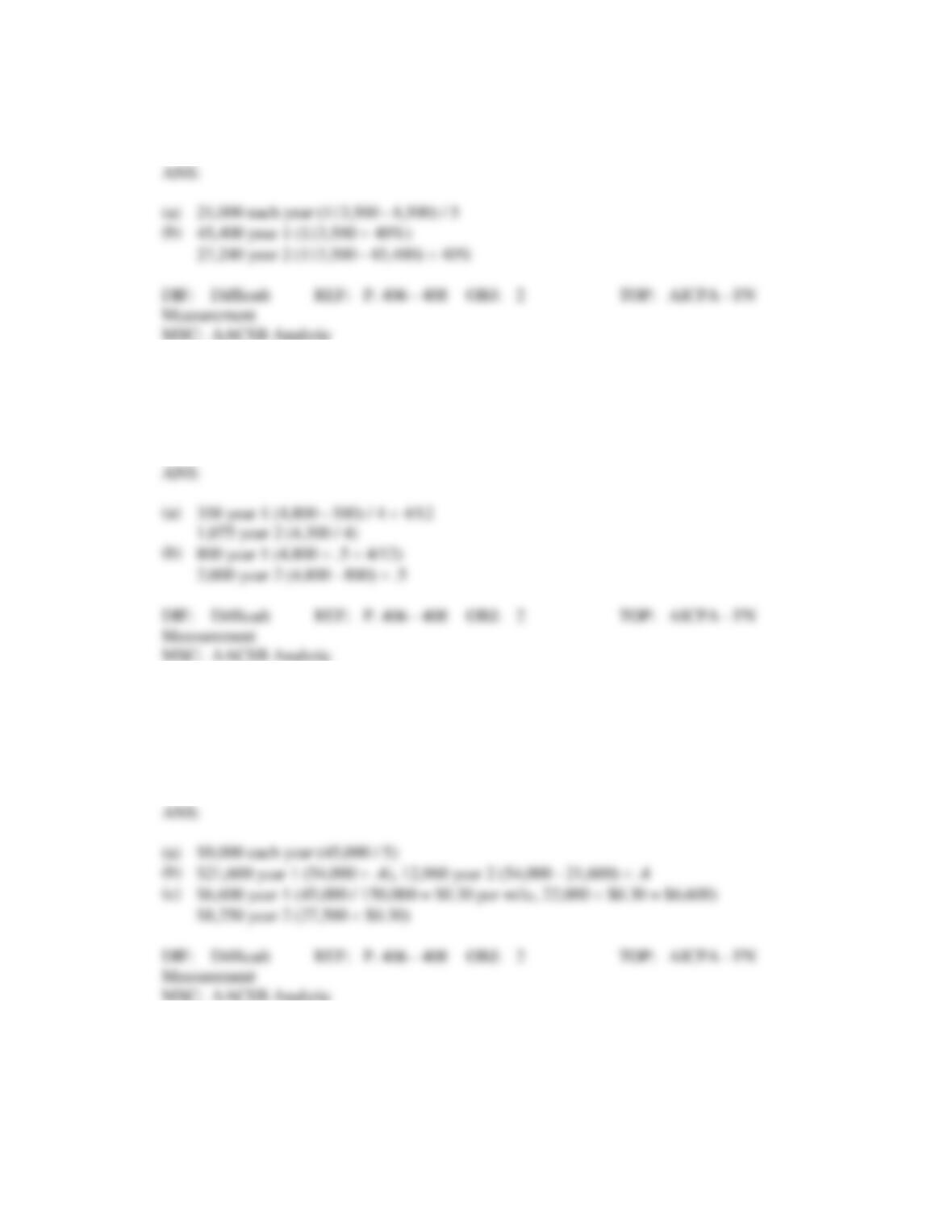
4. A grocery store replaced the ceramic tile throughout the store at a cost of $242,000. The old
flooring was removed during the first week of May at a cost of $13,000. The new ceramic tile was
installed by July 1 and its estimated useful life is 20 years.
(a)
Prepare the entry to record the cost of the replacement flooring.
(b)
Prepare the entry to record partial-year depreciation expense on December 31 using the straight-line
method.
General Journal
.a .
Ceramic Tile Flooring
Cash
Depreciation Expense
Accumulated Depreciation
Fixed Assets and Intangible Assets ♦ 451
5. A company acquired equipment at the beginning of the fiscal year for $113,500. It has a useful life
of 5 years and residual value of $8,500. Determine depreciation expense for each of the first two
years by the (a) straight line method and (b) declining-balance method.
6. A pressurized spray painter was purchased on September 1 of the fiscal year for $4,800. It has a
useful life of 4 years and a residual value of $500. Determine depreciation expense for the first
two years, assuming a fiscal year end of December 31 and using (a) the straight line method and
(b) the declining-balance method. (Round answers to nearest dollar.)
7. A company acquired a truck for $54,000 at the beginning of the fiscal year. It has a useful life of 5
years or 150,000 miles and residual value of $9,000. The truck was driven 22,000 miles in the first
year and 27,500 miles in the second year. Determine depreciation expense for each of the first two
years by the (a) straight-line method, (b) declining balance method, and (c) units of production
method.
452 ♦ Chapter 9
8. A machine with a cost of $64,000 has a useful life of 10 years, an estimated residual value of
$2,000 and is depreciated by the straight-line method. At the beginning of year 4, the remaining
useful life is estimated to be 3 years and the residual value is estimated to be $4,000.
(a)
What is the amount of depreciation for year 1?
(b)
What is the book value of the machine at end of year 3?
(c)
What is depreciation expense for year 4?
9. A company purchased a photocopy machine for $15,500. It has a useful life of 4 years or 725,000
copies and a residual value of $1,000. During the second year 118,000 copies were made.
Compute depreciation for the second year under each of the following methods: (a) straight-line,
(b) units-of-production, and (c) declining-balance.
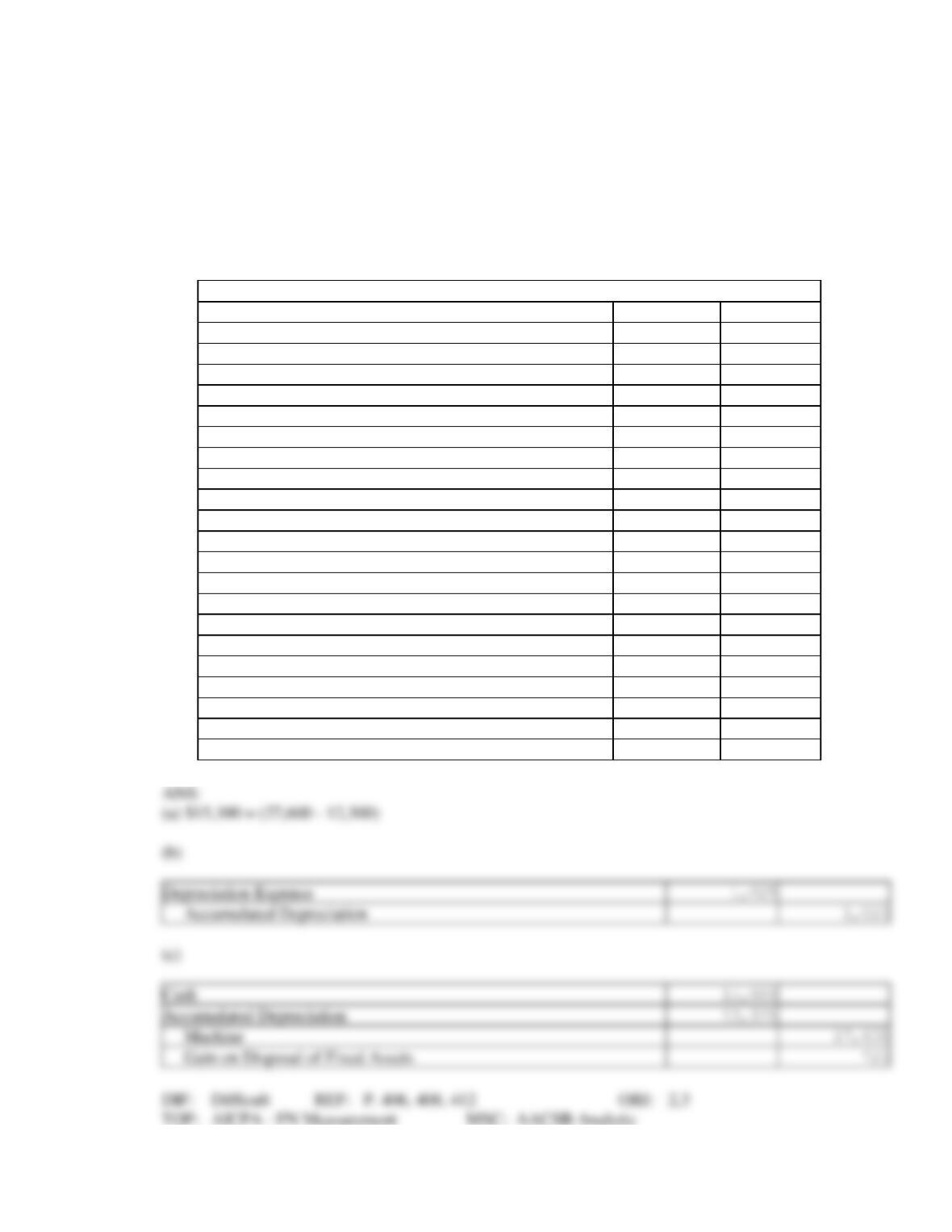
$3,625 (15,500 – 1,000) / 4
$2,360 (15,500 – 1,000) (118,000 / 725,000)
$3,875 (15,500 – 7,750) 50%
(a)
$6,200 = (64,000 – 2,000) / 10
$45,400 = 64,000 – (6,200 3)
(c)
$13,800 = (45,400 – 4,000) / 3
Fixed Assets and Intangible Assets ♦ 453
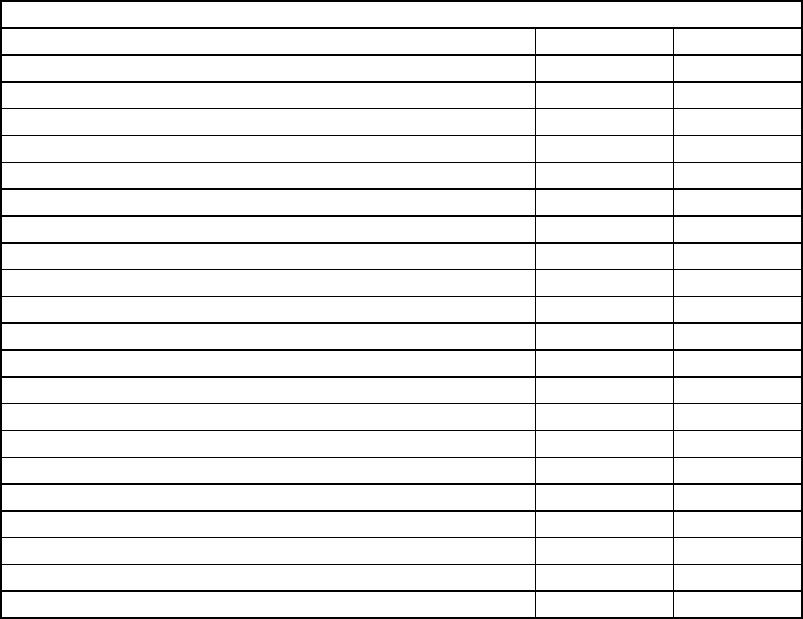
10. A machine with a useful life of 6 years and a residual value of $3,000 was purchased at the
beginning of year 1 for $27,600. The machine was sold for $15,000 on April 1 in year 4.
(a)
What was the book value of the equipment at the end of year 3 assuming the straight-line method of
depreciation is used?
(b)
Prepare the entry to record depreciation from January 1 to April 1 of year 4.
(c)
Prepare the entry to record the sale of the machine on April 1.
General Journal
.a .
Depreciation Expense
Accumulated Depreciation
Cash
Accumulated Depreciation
Machine
Gain on Disposal of Fixed Assets
454 ♦ Chapter 9
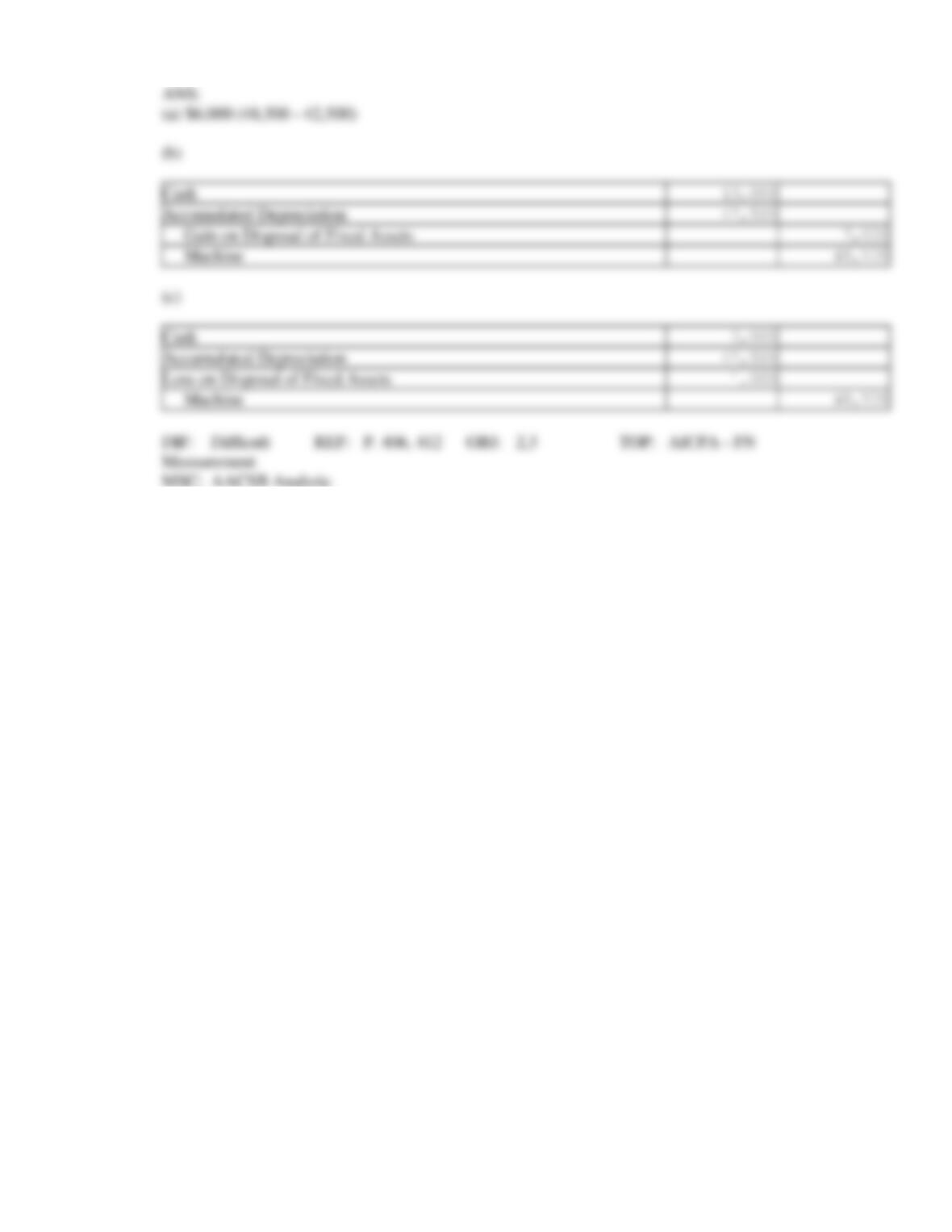
11. Equipment with a useful life of 5 years and a residual value of $6,000 was purchased on January 3,
2006 for $48,500. The machine was sold on January 5, 2011 for $13,000.
(a)
What is the book value of the machine on January 5, 2011 assuming straight-line depreciation is
used?
(b)
Prepare the entry to record the sale of the machine on January 5, 2011.
(c)
Prepare the entry to record the sale of the machine if it had been sold for $5,000 instead.
General Journal
.a .
Fixed Assets and Intangible Assets ♦ 455
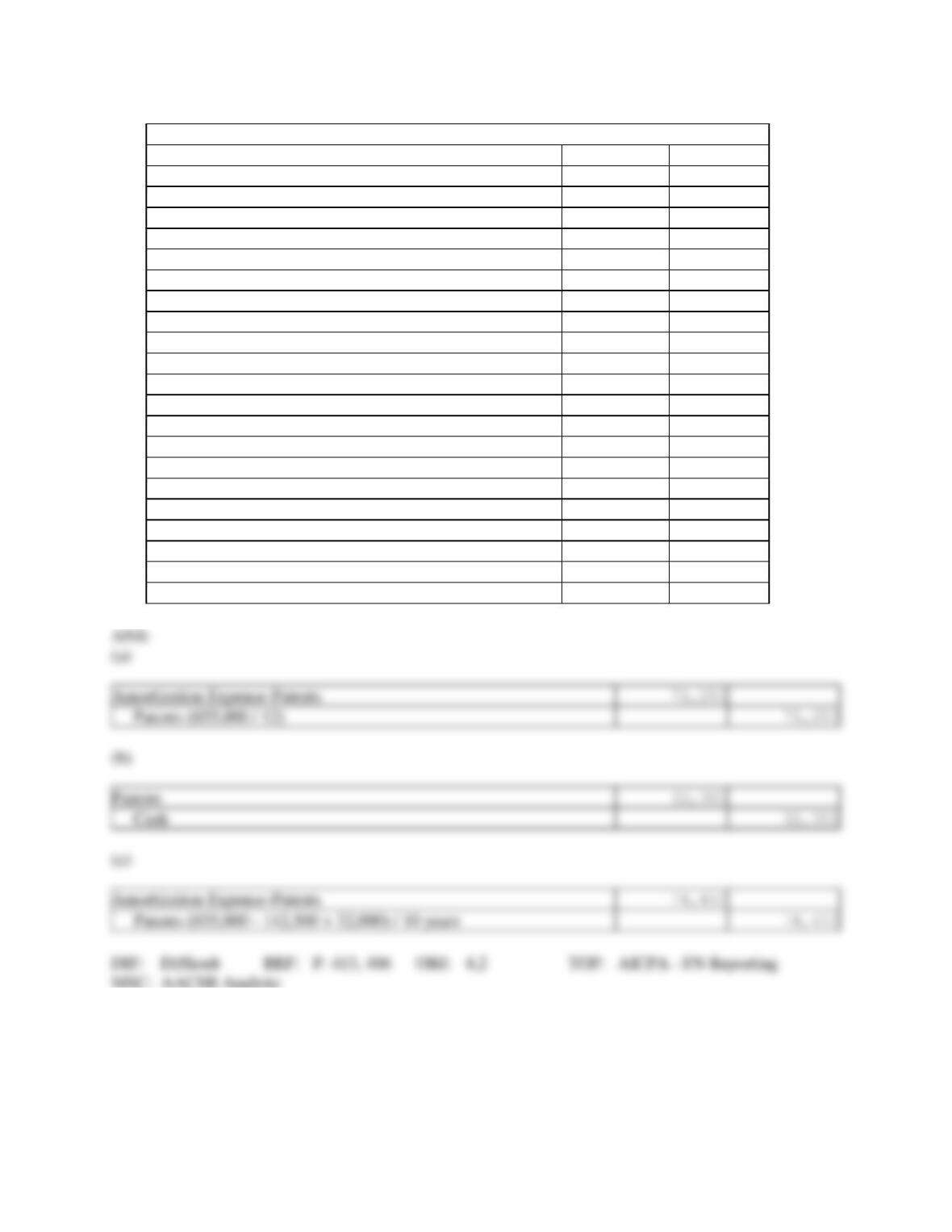
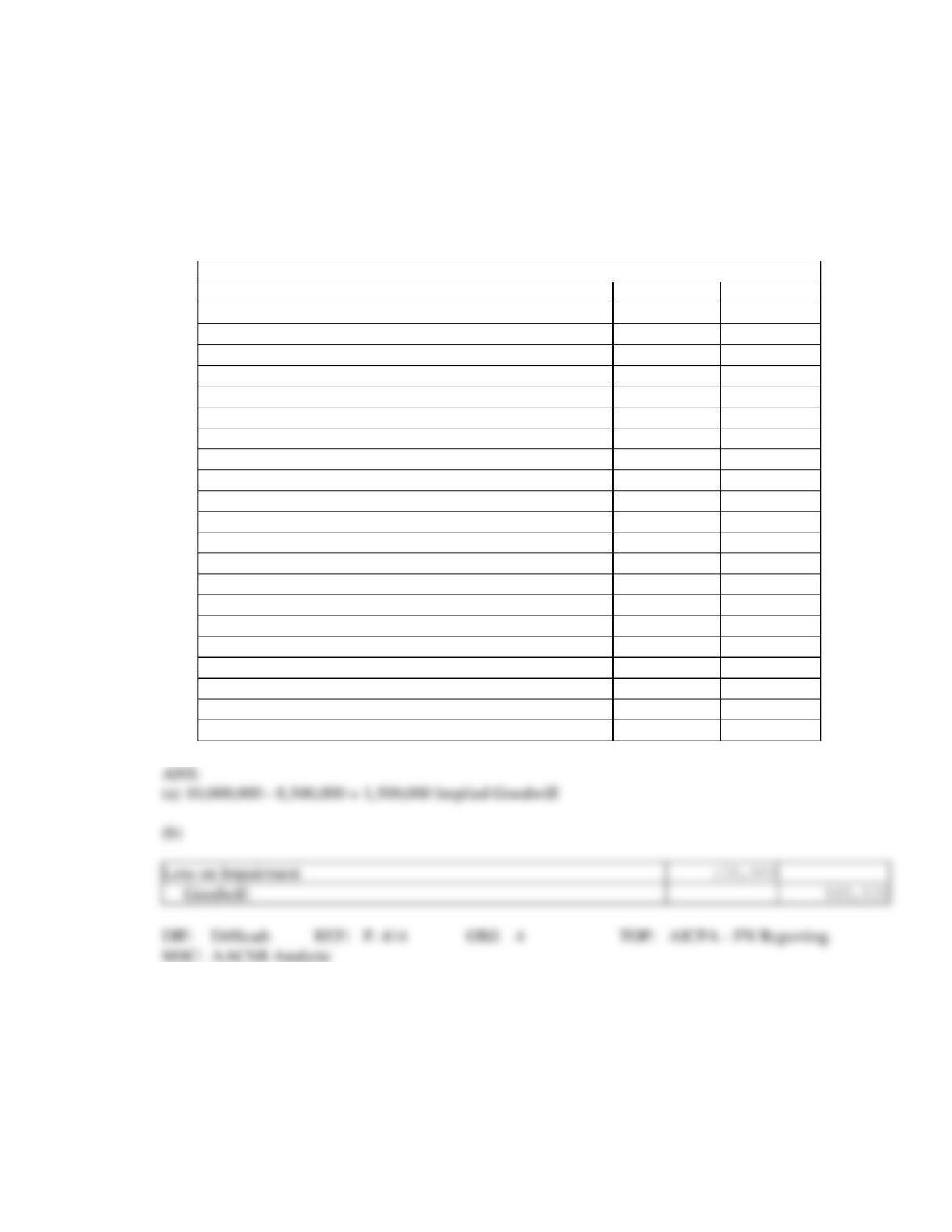
12. Patent rights were acquired on January 2, 2006 for $855,000. The remaining legal life is 15 years
and the estimated economic life is 12 years. On January 6, 2008, the company successfully
defended the patent in a lawsuit at a cost of $32,000.
(a)
Prepare the entry to record patent amortization for the year ended December 31, 2006.
(b)
Prepare the entry to record the legal costs incurred on January 6, 2008.
(c)
Prepare the entry to record patent amortization for the year ended December 31, 2008.
Cash
Accumulated Depreciation
Gain on Disposal of Fixed Assets
Machine
Cash
Accumulated Depreciation
Loss on Disposal of Fixed Assets
Machine
456 ♦ Chapter 9
General Journal
.a .
Fixed Assets and Intangible Assets ♦ 457
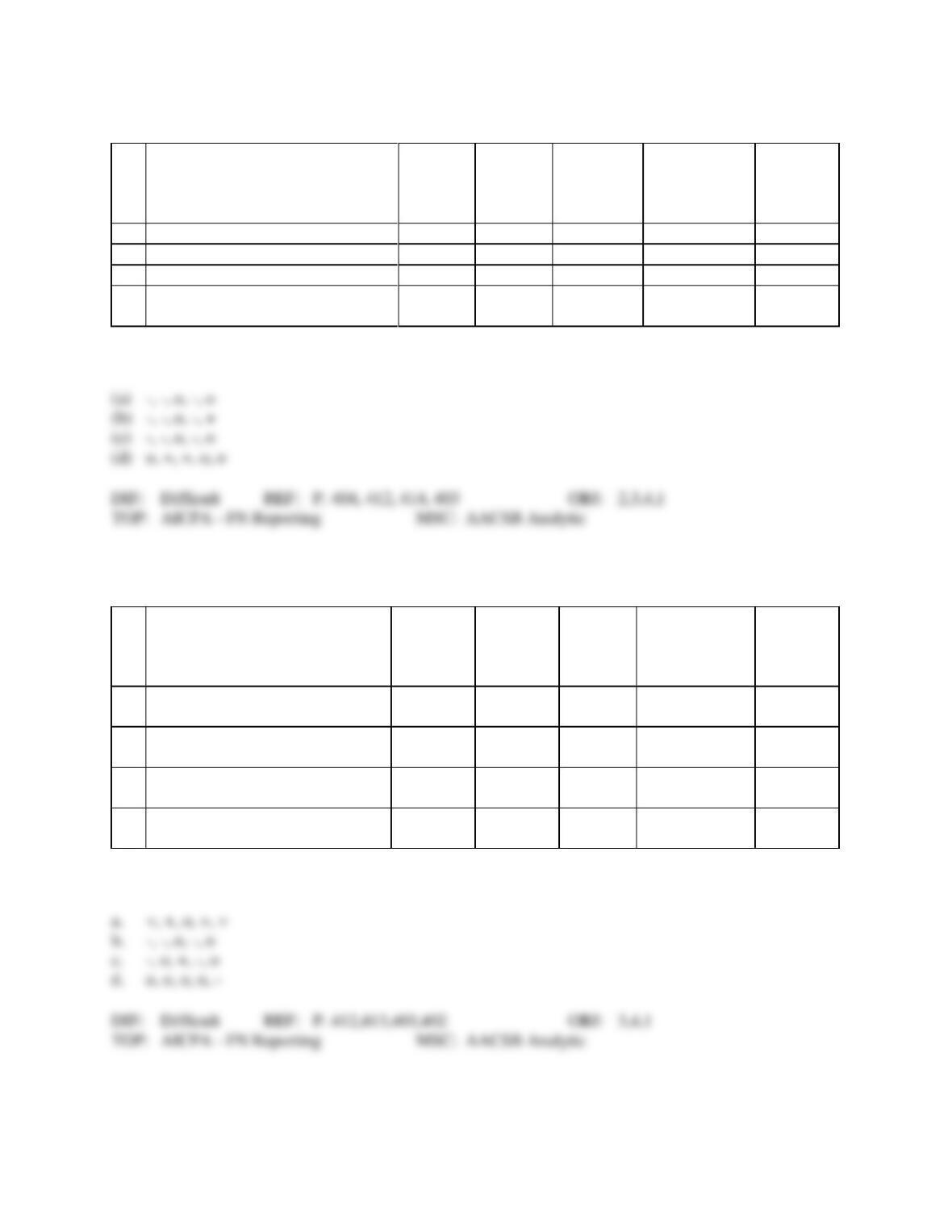
13. During 2006, Lexie, Inc. acquired Lena, Inc. for $10,000,000. The fair market value of the net
assets of Lena, Inc. was $8,500,000 on the date of purchase. During 2009, Lexie, Inc. determined
the goodwill resulting from the Lena acquisition was impaired and had a value of $1,000,000.
(a)
Determine the amount of goodwill implied during 2006.
(b)
Prepare the adjusting entry to record the impairment during 2009.
General Journal
.a .
Goodwill
458 ♦ Chapter 9
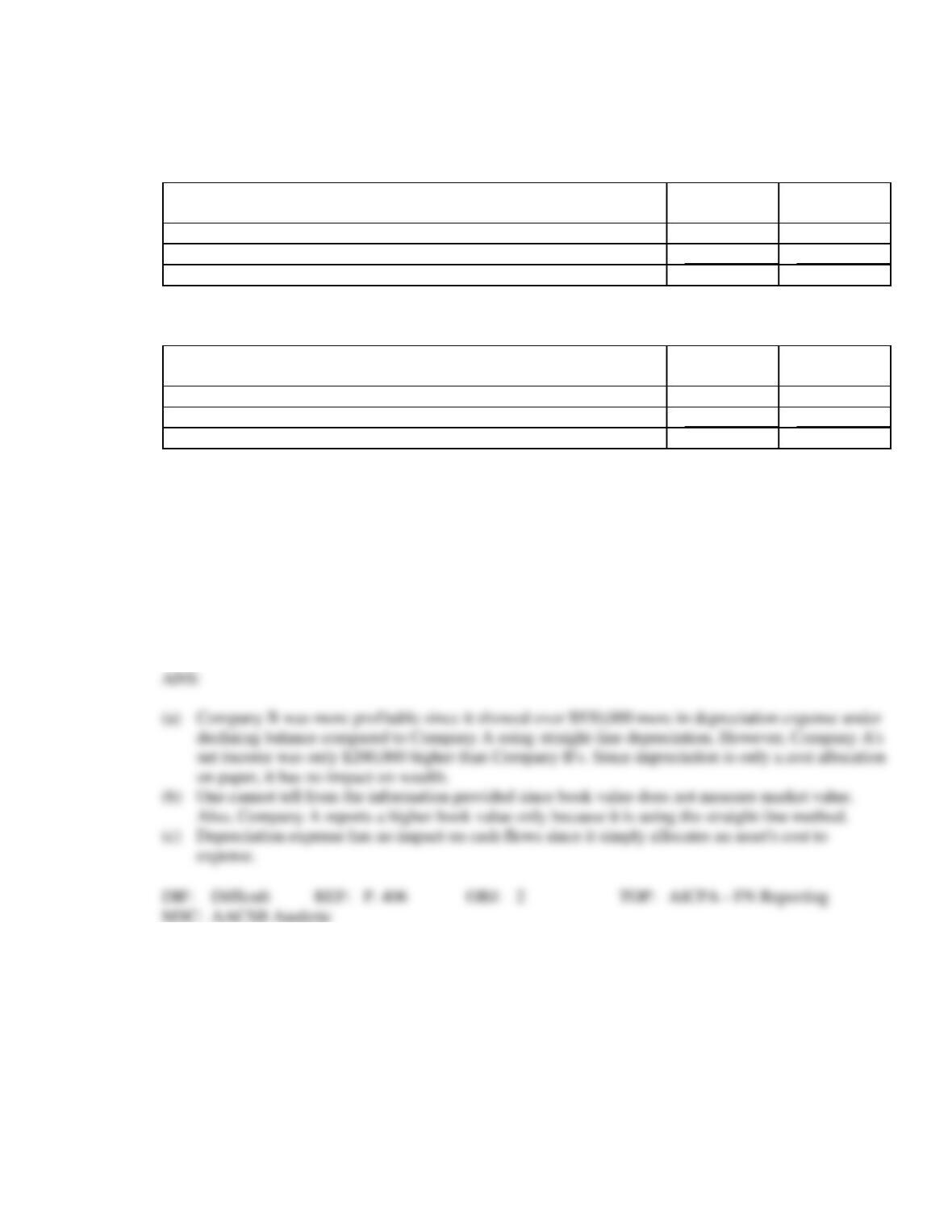
14. For each of the following items indicate whether the transactions listed below increased (+),
decreased (–) or had no effect (o) by inserting the appropriate symbol.
Net
Income
Assets
Liab.
Stockholders’
Equity
(retained
earnings)
Cash
Flows
(a)
Record depreciation expense
(b)
Sold equipment for cash at a loss
(c)
Record loss on impaired Goodwill
(d)
Recorded a capital expenditure and
issued a note payable
ANS:
15. For each of the following items indicate whether the transactions listed below increased (+),
decreased (–) or had no effect (o) by inserting the appropriate symbol.
Net
Income
Assets
Liab.
Stockholders’
Equity
(retained
earnings)
Cash
Flows
(a)
Sold equipment for cash at a gain
(b)
Recorded amortization expense on
patents
(c)
Recorded a revenue expenditure
incurred on account
(d)
Cash paid to remove old building
from land being prepared for use
ANS:
+, +, o, +, +
b.
-, -, o, -, o
-, o, +, -, o
(a)
-, -, o, -, o
(b)
-, -, o, -, +
(c)
-, -, o, -, o
(d)
o, +, +, o, o
Fixed Assets and Intangible Assets ♦ 459
CASE
1. Companies A and B operate in the same industry and report the following information in the
annual reports:
Company A
Current
Year
Prior
Year
Total Fixed Assets
$8,250,000
$7,940,000
Less Accumulated Depreciation
3,400,000
3,180,000
Book Value
$4,850,000
$4,760,000
Note excerpt: Depreciation expense for each year was $270,000 under the straight-line method.
Company B
Current
Year
Prior
Year
Total Fixed Assets
$9,150,000
$8,900,000
Less Accumulated Depreciation
6,500,000
5,400,000
Book Value
$2,650,000
$3,500,000
Note excerpt: Depreciation expense for the current year was $1,200,000 under the declining-
balance method.
Assume Company A had sales of $22 million and net income of $2.4 million and Company B had
sales of $23.5 million and net income of $2.2 million.
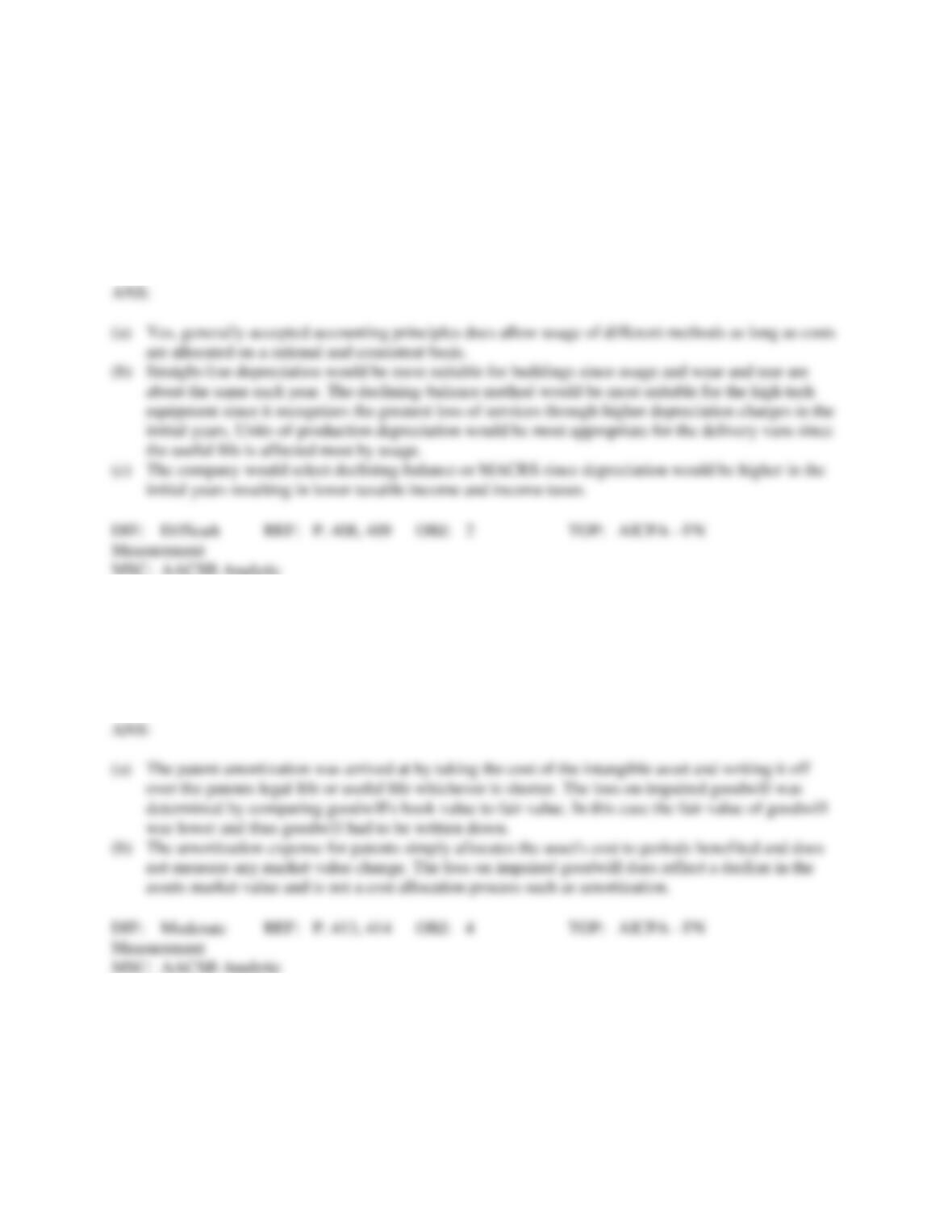
(a)
Which company was more profitable? Explain why.
(b)
Which company’s assets are worth more? Explain why.
(c)
How would the depreciation expense for each company affect cash flows? Explain.
expense.
460 ♦ Chapter 9
2. You have been hired by a high growth start-up company to assist in the determination of what
depreciation method to employ for financial reporting. The company’s fixed assets are equally
divided among buildings, high tech equipment (heavily used in the initial years) and a fleet of
delivery vans.
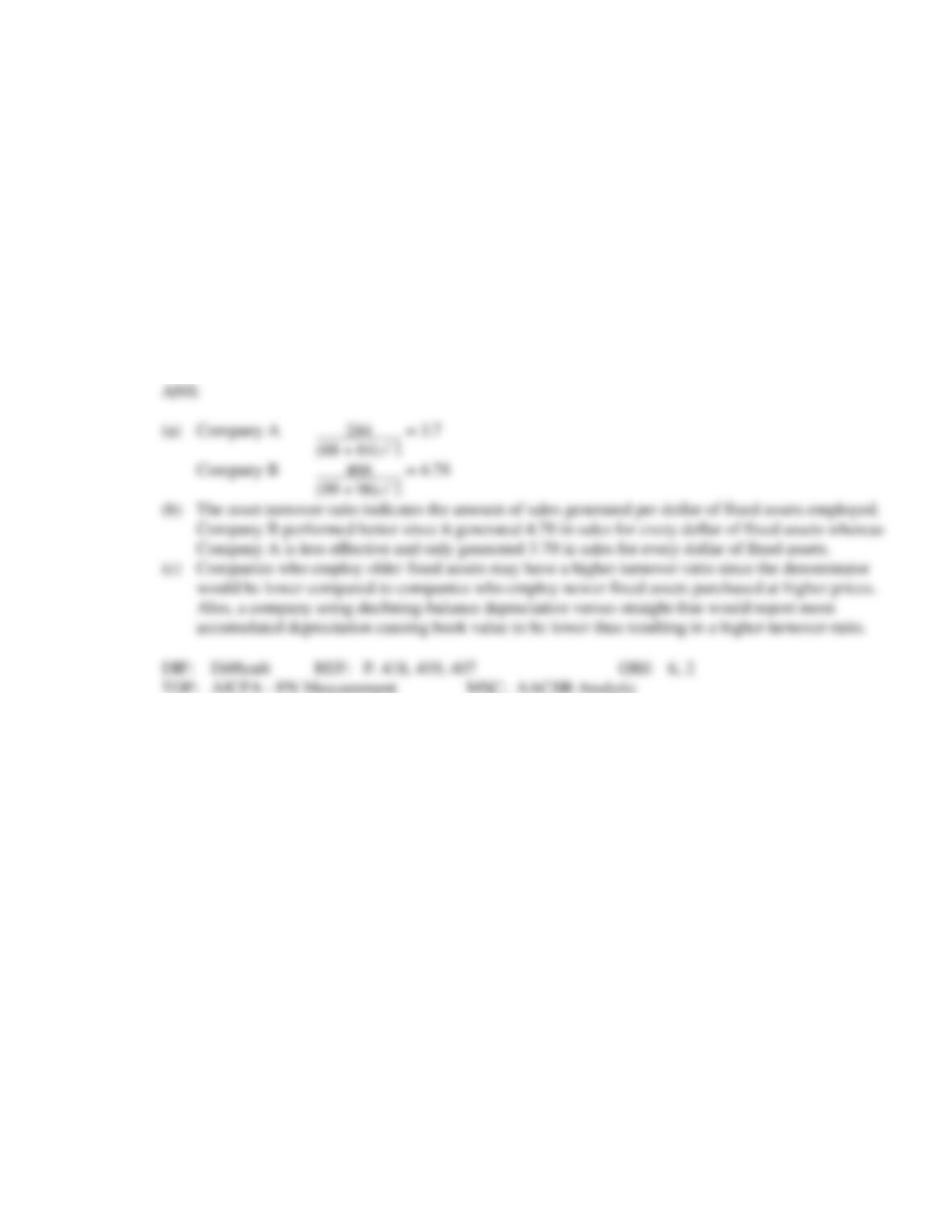
(a)
Can the company select different methods of depreciation for financial reporting, explain.
(b)
Explain to company management which method of depreciation would be suitable for each of the
three very different types of fixed assets the company employs. Also, state why.
(c)
Which method of depreciation would the company choose for taxes and explain why.
3. You are examining the financial statements of a company. You observe patent amortization
expense of $1.5 million and a loss on impairment of goodwill for $25 million.
(a)
Describe how the accountants arrived at these amounts.
(b)
Interpret any information content provided by these disclosures.
not measure any market value change. The loss on impaired goodwill does reflect a decline in the
(a)
Yes, generally accepted accounting principles does allow usage of different methods as long as costs
are allocated on a rational and consistent basis.
initial years. Units-of-production depreciation would be most appropriate for the delivery vans since
the useful life is affected most by usage.
(c)
The company would select declining-balance or MACRS since depreciation would be higher in the
initial years resulting in lower taxable income and income taxes.
Fixed Assets and Intangible Assets ♦ 461
4. You are examining selected data taken from the annual report of two competitors: (All amounts
are in millions)
Net
Sales
Fixed Assets
End of Year
Fixed Assets
Beginning of Year
Company A
$244
$68
$64
Company B
$466
$99
$96
(a)
Determine the fixed asset turnover ratio for each company. (Round your answer to two decimal
places.)
(b)
Discuss what this entry measures and indicate which company performed better.
(c)
Explain how someone could be misled by this ratio if one fails to consider the age of the fixed assets
and the depreciation method employed.
(a)
Company A
244 = 3.7
(68 + 64) / 2
Company B
466 = 4.78
(99 + 96) / 2
Company B performed better since it generated 4.78 in sales for every dollar of fixed assets whereas
Company A is less effective and only generated 3.70 in sales for every dollar of fixed assets.