425
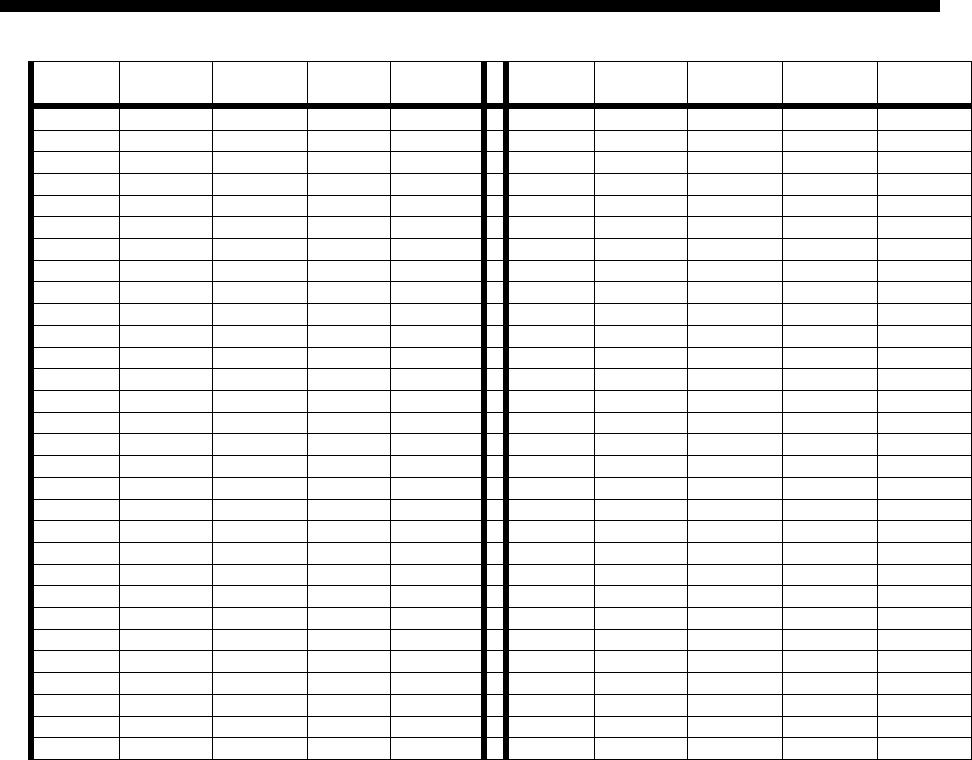
Chapter 9—Fixed Assets and Intangible Assets
Multiple
Choice
Learning
Goal(s)
Level of
Difficulty
AACSB
Tag
AICPA
Tag
Multiple
Choice
Learning
Goal(s)
Level of
Difficulty
AACSB
Tag
AICPA
Tag
1
1
Moderate
Analytic
Reporting
31
2
Easy
Analytic
Measure
2
1
Moderate
Analytic
Reporting
32
2
Moderate
Analytic
Measure
3
1
Easy
Analytic
Reporting
33
2
Difficult
Analytic
Measure
4
1
Easy
Analytic
Reporting
34
2
Difficult
Analytic
Measure
5
1
Easy
Analytic
Measure
35
2
Difficult
Analytic
Measure
6
1
Moderate
Analytic
Measure
36
2
Difficult
Analytic
Measure
7
1
Moderate
Analytic
Reporting
37
2
Difficult
Analytic
Measure
8
1
Moderate
Analytic
Reporting
38
2
Easy
Analytic
Measure
9
1
Moderate
Analytic
Measure
39
2
Moderate
Reflective
Reporting
10
1
Difficult
Analytic
Reporting
40
2
Moderate
Analytic
Reporting
11
1
Difficult
Analytic
Reporting
41
3
Difficult
Analytic
Reporting
12
1
Moderate
Analytic
Reporting
42
3
Difficult
Analytic
Reporting
13
1
Moderate
Analytic
Measure
43
3
Difficult
Analytic
Reporting
14
2
Easy
Analytic
Reporting
44
3
Moderate
Analytic
Reporting
15
2
Difficult
Analytic
Measure
45
3
Moderate
Analytic
Measure
16
2
Difficult
Analytic
Reporting
46
4
Moderate
Analytic
Reporting
17
2
Easy
Analytic
Reporting
47
3
Moderate
Analytic
Reporting
18
2
Easy
Analytic
Reporting
48
3
Moderate
Analytic
Reporting
19
2
Easy
Analytic
Reporting
49
4
Moderate
Analytic
Reporting
20
2
Difficult
Analytic
Reporting
50
4
Moderate
Analytic
Measure
21
2
Moderate
Analytic
Measure
51
4
Moderate
Analytic
Reporting
22
2
Moderate
Analytic
Measure
52
4
Moderate
Analytic
Measure
23
2
Difficult
Analytic
Measure
53
4
Easy
Analytic
Measure
24
2
Moderate
Analytic
Measure
54
4
Easy
Analytic
Reporting
25
2
Easy
Analytic
Measure
55
5
Moderate
Analytic
Reporting
26
2
Moderate
Analytic
Reporting
56
6
Moderate
Analytic
Measure
27
2
Easy
Analytic
Measure
57
6
Easy
Analytic
Measure
28
2
Moderate
Analytic
Measure
58
6
Easy
Analytic
Measure
29
2
Moderate
Analytic
Measure
59
6
Moderate
Analytic
Measure
30
2
Difficult
Analytic
Measure
60
6
Easy
Analytic
Measure
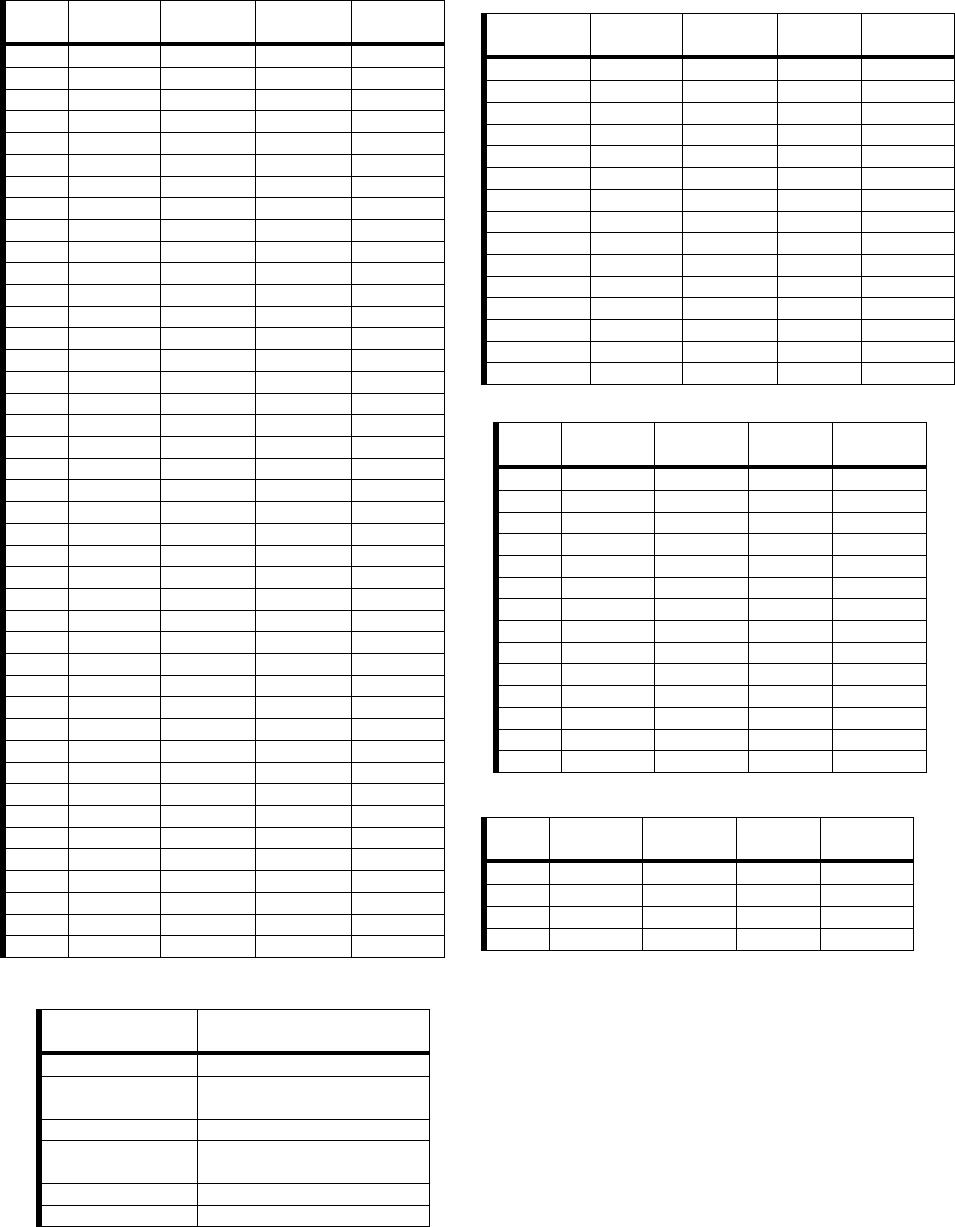
426 ♦ Chapter 9
True/
False
Learning
Goal(s)
Level of
Difficulty
AACSB
Tag
AICPA
Tag
1
1
Moderate
Analytic
Reporting
2
1
Moderate
Analytic
Reporting
3
1
Moderate
Analytic
Reporting
4
1
Moderate
Analytic
Measure
5
1
Moderate
Reflective
Industry
6
1
Moderate
Analytic
Reporting
7
1
Moderate
Analytic
Reporting
8
1
Moderate
Analytic
Reporting
9
1
Moderate
Analytic
Reporting
10
1
Moderate
Reflective
Reporting
11
1
Moderate
Analytic
Reporting
12
2
Moderate
Analytic
Reporting
13
2
Moderate
Analytic
Reporting
14
2
Moderate
Analytic
Reporting
15
2
Moderate
Analytic
Reporting
16
2
Moderate
Analytic
Reporting
17
2
Moderate
Analytic
Measure
18
2
Moderate
Analytic
Measure
19
2
Moderate
Analytic
Measure
20
2
Moderate
Analytic
Measure
21
2
Moderate
Analytic
Measure
22
2
Moderate
Analytic
Measure
23
2
Moderate
Analytic
Measure
24
2
Moderate
Analytic
Measure
25
2
Difficult
Analytic
Reporting
26
2
Moderate
Analytic
Measure
27
3
Moderate
Analytic
Measure
28
3
Moderate
Analytic
Measure
29
4
Moderate
Analytic
Measure
30
4
Moderate
Analytic
Measure
31
4
Moderate
Analytic
Measure
32
4
Moderate
Analytic
Measure
33
4
Moderate
Analytic
Measure
34
4
Moderate
Analytic
Measure
35
4
Moderate
Analytic
Measure
36
4
Easy
Analytic
Measure
37
5
Moderate
Analytic
Measure
38
5
Moderate
Analytic
Measure
39
6
Easy
Analytic
Measure
40
6
Easy
Analytic
Measure
41
6
Easy
Analytic
Measure
42
6
Moderate
Analytic
Measure
Problem(s)
Learning
Goal(s)
Level of
Difficulty
AACSB
Tag
AICPA
Tag
1
1
Moderate
Analytic
Reporting
2
1
Moderate
Analytic
Reporting
3
1
Moderate
Analytic
Measure
4
1,2
Moderate
Analytic
Reporting
5
2
Difficult
Analytic
Measure
6
2
Difficult
Analytic
Measure
7
2
Difficult
Analytic
Measure
8
2
Difficult
Analytic
Measure
9
2
Difficult
Analytic
Measure
10
2,3
Difficult
Analytic
Measure
11
2,3
Difficult
Analytic
Measure
12
4,2
Difficult
Analytic
Reporting
13
4
Difficult
Analytic
Reporting
14
1,2,3,4
Difficult
Analytic
Reporting
15
1,3,4
Difficult
Analytic
Reporting
Essay
Learning
Goal(s)
Level of
Difficulty
AACSB
Tag
AICPA
Tag
1
1,5
Moderate
Analytic
Reporting
2
2
Moderate
Analytic
Reporting
3
2
Easy
Analytic
Measure
4
2
Easy
Analytic
Measure
5
2
Moderate
Analytic
Measure
6
2
Easy
Analytic
Measure
7
2
Moderate
Analytic
Measure
8
2
Moderate
Analytic
Measure
9
2
Difficult
Analytic
Measure
10
3
Moderate
Analytic
Measure
11
4
Easy
Analytic
Measure
12
4
Moderate
Analytic
Measure
13
4
Moderate
Analytic
Measure
14
6
Moderate
Analytic
Measure
Cases
Learning
Goal(s)
Level of
Difficulty
AACSB
Tag
AICPA
Tag
1
2
Difficult
Analytic
Reporting
2
2
Difficult
Analytic
Measure
3
4
Moderate
Analytic
Measure
4
6,2
Difficult
Analytic
Measure
Difficulty Ratings
Guide:
Easy
Taken nearly verbatim
from the text
Moderate
Using different expression or
application of concept
Difficult
Several reasoning steps
Fixed Assets and Intangible Assets ♦ 427
MULTIPLE CHOICE
1. Which of the following is not a characteristic of fixed assets?
a.
they are owned and used by the business but not offered for sale as a part of normal
operations
b.
they are classified as investments
c.
they are tangible assets
d.
they are long-term or relatively permanent assets
2. Which of the following is NOT an example of a fixed asset?
a.
land
b.
furniture
c.
inventory
d.
tools
3. Other descriptive titles for fixed assets would include __________.
a.
Plant assets
b.
Property plant and equipment
c.
Other long-term assets
d.
Both a and b
4. A capital expenditure would appear on the __________.
a.
Income statement under operating expenses
b.
Balance sheet under fixed assets
c.
Balance sheet under current assets
d.
Income statement under other expenses
5. All amounts paid to get the asset in place and ready for use are referred to as __________.
a.
Capital expenditures
b.
Revenue expenditures
c.
Residual value
d.
Cost of an asset
428 ♦ Chapter 9
6. A company acquired some land for $80,000 to construct a new office complex. Legal fees paid
were $2,300, delinquent taxes assumed were $3,400 and $5,850 was paid to remove an old
building from which salvaged materials sold for $950. What is the cost basis for the land?
a.
$90,600
b.
$91,550
c.
$88,150
d.
$87,200
7. Which of the following expenditures would be included as a cost of an asset?
a.
Mistakes in installation
b.
Vandalism
c.
Delinquent property taxes
d.
Uninsured theft loss
8. Which of the following expenditures would NOT be included in the cost of an asset?
a.
Freight costs
b.
Vandalism
c.
Sales tax
d.
Costs of clearing land
9. The removal of an old building to make the land ready for its intended use is charged to
__________.
a.
Land
b.
Land improvements
c.
Buildings
d.
Operating expenses
10. If a capital expenditure is treated as a revenue expenditure then __________.
a.
Expenses are overstated and stockholders’ equity (retained earnings) is understated
b.
Expenses are overstated and assets are overstated
c.
Expenses are understated and stockholders’ equity (retained earnings) is overstated
d.
Net income is overstated and stockholders’ equity (retained earnings) is understated
11. If a revenue expenditure is treated as a capital expenditure __________.
a.
Expenses are overstated and stockholders’ equity (retained earnings) is understated
b.
Expenses are overstated and assets are overstated
c.
Expenses are understated and stockholders’ equity (retained earnings) is overstated
d.
Net income is overstated and stockholders’ equity (retained earnings) is understated
Fixed Assets and Intangible Assets ♦ 429
12. Which of the following would NOT qualify as a capital expenditure?
a.
Overhauled an engine
b.
Installed new carpet
c.
Replaced tires on company trucks
d.
Replaced the warehouse roof
13. Which of the following is NOT a revenue expenditure?
a.
Cost of overhauling an engine
b.
Major tune-up on company automobiles
c.
Major storm damage
d.
Repairs made to manufacturing equipment
14. What type of depreciation occurs when an asset can no longer provide services at the level
originally intended?
a.
Physical depreciation
b.
Market depreciation
c.
Cost depreciation
d.
Functional depreciation
15. The accounting term depreciation measures __________.
a.
An assets market value decline
b.
The amount of cash a company sets aside for asset replacement
c.
The amount of asset cost allocated to expense over periods benefited
d.
Anticipated losses if sold in the used market
16. Accumulated depreciation is __________.
a.
Cash reserved for asset replacement
b.
A liability account since it is credited
c.
A suspense equity account with a credit balance
d.
None of the above
17. All of the following terms are similar in meaning except __________.
a.
Residual value
b.
Scrap value
c.
Salvage value
d.
All the above are similar
430 ♦ Chapter 9
18. Depreciable cost equals __________.
a.
Cost less accumulated depreciation
b.
Book value less residual value
c.
Cost less residual value
d.
Market value less residual value
19. To measure depreciation, all of the following most be known except __________.
a.
Market value
b.
Residual value
c.
Initial cost
d.
Estimated life
20. Recording depreciation __________.
a.
Decreases net income and cash flows
b.
Decreases net income and has no effect on cash flows
c.
Decreases net income, assets and cash flows
d.
Decreases net income and has no effect on assets and cash flows
21. A machine was purchased for $45,000. It has a useful life of 6 years and a residual value of
$6,000. Under the straight-line method, what is annual depreciation expense?
a.
$7,500
b.
$15,000
c.
$3,750
d.
$6,500
22. On September 1, a machine with a useful life of 8 years and a residual value of $5,000 was
purchased for $47,000. What is depreciation expense in the year of purchase under straight-line
depreciation assuming a December 31 year end?
a.
$5,250
b.
$5,875
c.
$1,750
d.
$1,958
Fixed Assets and Intangible Assets ♦ 431
23. A company purchases a machine for $55,000 which has a useful life of 8 years and an estimated
residual value of $8,000. After three years of use, the remaining life is estimated to be three years
with a residual value of $5,000. What is depreciation expense in year four assuming straight-line
depreciation? (Round answer to the nearest dollar.)
a.
$6,250
b.
$8,333
c.
$10,792
d.
$12,458
24. A machine with a useful life of 8 years and a residual value of $4,000 was purchased for $27,000.
What is annual depreciation under the straight-line method?
a.
$3,375
b.
$6,750
c.
$2,875
d.
$5,750
25. Book value is defined as __________.
a.
Current market value less residual value
b.
Cost less residual value
c.
Current market value less accumulated depreciation
d.
Cost less accumulated depreciation
26. Which method of depreciation is used by most companies?
a.
Straight-line
b.
Units-of-production
c.
Declining balance
d.
All are used about equally
27. Which method of depreciation would most accurately match revenues and expenses if usage of the
asset varies considerable from one period to the next?
a.
Straight-line
b.
Units-of-production
c.
Declining balance
d.
Both b and c
432 ♦ Chapter 9
28. A truck was purchased for $35,500. It has a useful life of 5 years or 140,000 miles, and an
estimated residual value of $7,500. Assuming the truck was driven 31,000 miles during the first
year, what is depreciation expense under the units of production method?
a.
$5,600
b.
$7,861
c.
$1,240
d.
$6,200
29. On July 1, a machine with a useful life of 10,000 hours and a residual value of $2,000 was
purchased for $18,000. What is depreciation expense in the first year of purchase if the machine is
used 1,800 hours?
a.
$3,240
b.
$1,620
c.
$1,440
d.
$2,880
30. Equipment was purchased for $16,000. It has a useful life of 5 years and a residual value of
$2,000. What is depreciation expense for year one under the declining balance method, using
double the straight-line rate?
a.
$6,400
b.
$5,600
c.
$3,200
d.
$2,800
31. Which method of depreciation does NOT consider residual value in computing the normal
periodic depreciation?
a.
Straight-line
b.
Units-of-production
c.
Declining balance
d.
All the above use residual value
32. Which depreciation method displays a variable depreciation expense pattern, based on usage over
time?
a.
straight-line
b.
units-of-production
c.
declining balance
d.
percentage of sales
Fixed Assets and Intangible Assets ♦ 433
33. Equipment was purchased for $16,000. It has a useful life of 5 years and a residual value of
$2,000. What is depreciation expense for year two under the declining balance method, using
double the straight-line rate?
a.
$6,400
b.
$3,360
c.
$3,840
d.
$4,160
34. On April 1, a machine with a useful life of 4 years and a residual value of $12,000 was purchased
for $87,000. What is depreciation expense in the year of purchase under declining balance
depreciation assuming a December 31 year end?
a.
$32,625
b.
$28,125
c.
$43,500
d.
$37,500
35. On April 1, a machine with a useful life of 4 years and a residual value of $12,000 was purchased
for $87,000. What is depreciation expense for the second year under declining balance
depreciation assuming a December 31 year end?
a.
$21,750
b.
$18,750
c.
$27,187.50
d.
$23,437.50
36. A machine with a useful life of 10 years and a residual value of $2,000 was purchased for
$18,000. What is depreciation expense for the first year under the declining balance method?
a.
$1,800
b.
$1,600
c.
$3,600
d.
$3,200
37. A machine with a useful life of 10 years and a residual value of $2,000 was purchased for
$18,000. What is depreciation expense for the second year under the declining balance method?
a.
$1,620
b.
$2,880
c.
$2,560
d.
$2,960
434 ♦ Chapter 9
38. Which method of depreciation is more appropriate if the asset’s productivity is greater in the early
years?
a.
Straight-line
b.
Units-of-production
c.
Declining balance
d.
Both b and c
39. Accelerated depreciation is primarily used for __________.
a.
The financial statements of large companies
b.
The financial statements of small companies
c.
Income tax purposes
d.
Both financial reporting and income taxes by most companies
40. When a company revises an asset’s useful life and/or salvage value, which of the following is (are)
required?
a.
The change is recognized in the current and future years depreciation
b.
The change must be disclosed in the footnotes if material
c.
The change is recognized by restating prior years financial statements
d.
Both a and b
41. A fully depreciated asset must be __________.
a.
Removed from the books
b.
Kept on the books until sold
c.
Disclosed only in the notes to the financial statements
d.
Recognized on the income statement as a loss
42. When an asset is discarded that is fully depreciated,
a.
total assets are decreased.
b.
net income declines.
c.
the statement of cash flows is unaffected.
d.
depreciation expense increases.
43. When discarding an asset that is not fully depreciated,
a.
depreciation expense must be recorded prior to removing the asset from service.
b.
accumulated depreciation and asset values are equal.
c.
there is no effect on total assets.
d.
there is no effect on net income.
Fixed Assets and Intangible Assets ♦ 435
44. If a fixed asset is sold and the book value is greater than cash received, the company must
__________.
a.
Recognize a loss on the income statement under other expenses
b.
Recognize a loss on the income statement under operating expenses
c.
Recognize a gain on the income statement under other revenues
d.
Gains and losses are not to be recognized upon the sell of fixed assets
45. A gain is recorded on the sale of fixed assets when __________.
a.
The asset is sold for a price less than its book value
b.
The assets book value is less than the cash received
c.
A gain on sale is not permitted to be recognized
d.
Accumulated depreciation is less than the cash received
46. Intangible assets are used in operations but __________.
a.
Cannot be specifically identified
b.
Cannot be sold
c.
Lack physical substance
d.
Cannot be long-lived
47. A company sold a delivery truck for $18,000 cash. The truck cost $47,500 and had accumulated
depreciation of $36,000 as of the date of sale. The journal entry to record the sale would include a
__________.
a.
Credit to accumulated depreciation for $36,000
b.
Credit to delivery truck for $11,500
c.
Debit to a loss for $6,500
d.
Credit to a gain for $6,500
48. A company sold office furniture costing $16,500 with accumulated depreciation of $14,000 for
$3,200 cash. The journal entry to record the sale would include a __________.
a.
Debit to a gain for $700
b.
Debit to accumulated depreciation for $14,000
c.
Credit to office furniture for $2,500
d.
Credit to cash for $3,200
436 ♦ Chapter 9
49. A patent was purchased for $670,000 with a legal life of 20 years. Management estimates that the
patent has an 8 year economic life. The journal entry to record amortization would include a
__________.
a.
Debit to amortization expense for $33,500
b.
Debit to research and development expense for $670,000
c.
Credit to patent for $83,750
d.
Credit to accumulated amortization for $670,000
50. The cost of a patent should be amortized over __________.
a.
20 years
b.
Economic life
c.
20 years or economic life whichever is shorter
d.
Only amortized if an impairment occurs
51. If goodwill is impaired, the write down will __________.
a.
Decrease net income, assets and stockholders’ equity (retained earnings)
b.
Decrease net income and assets and have no effect on stockholders’ equity (retained
earnings)
c.
Decrease net income and increase assets and stockholders’ equity (retained earnings)
d.
Decrease net income and assets, but increase stockholders’ equity (retained earnings)
52. Goodwill is __________.
a.
Amortized similar to other intangibles
b.
Only written down if an impairment in value occurs
c.
Charged to expense immediately
d.
Amortized over 40 years or its economic life whichever is shorter
53. Goodwill is equal to the excess of purchase price of an acquired company over the total
__________.
a.
Book value of its assets
b.
Book value of its net assets
c.
Market value of its assets
d.
Market value of its net assets
Fixed Assets and Intangible Assets ♦ 437
54. Which of the following is NOT an intangible asset?
a.
Goodwill
b.
Trademark
c.
Copyrights
d.
Long-term receivable
55. Which of the following is NOT a fixed asset?
a.
Equipment
b.
Buildings
c.
Land
d.
all of these are correct are fixed assets
56. If a fixed asset is sold and the book value is less than cash received, the company must
__________.
a.
Recognize a loss on the income statement under other expenses
b.
Recognize a loss on the income statement under operating expenses
c.
Recognize a gain on the income statement under other revenues
d.
Gains and losses are not to be recognized upon the sell of fixed assets
57. Operation utilization of a fixed asset is determined by __________.
a.
Dividing the total fixed asset capacity by the used portion of the fixed asset
b.
Dividing the total fixed asset capacity by the estimated useful life of the asset
c.
Dividing the used portion of the fixed asset by the total fixed asset capacity
d.
None of the above
58. Which ratio would indicate how efficiently a business is using its fixed assets?
a.
Operational utilization
b.
Revenue per unit of fixed assets
c.
Fixed asset turnover ratio
d.
None of the above
438 ♦ Chapter 9
59. A company’s balance sheet discloses the following:
Year 2
Year 1
Fixed Assets
$897,000
$824,000
Less accumulated depreciation
$356,000
$307,000
$541,000
$517,000
The company reported revenue of $764,000 and depreciation expense of $49,000 in year 2.
Determine the asset turnover ratio for year 2. (Round answer to two decimal places.)
a.
1.41
b.
.85
c.
1.48
d.
1.44
60. Which of the following activities involving fixed assets and the statement of cash flows is NOT
true?
a.
depreciation expense must be added in the Operating activities section prepared using the
indirect method.
b.
gains and losses must be reversed in the Operating activities section prepared using the
indirect method.
c.
purchases of fixed assets are recorded as an inflow in the Investing activities section
d.
proceeds from the sale of assets is shown as a cash inflow in the investing activities
section
TRUE/FALSE
1. If a long-lived asset is NOT used for a productive purpose it should be classified under
Investments.
2. An item that is capitalized is long-lived and should be reported on the balance sheet under the
Capital account.
3. Long-lived assets that are held for resale should be listed on the balance sheet under Investments.
4. The cost of acquiring fixed assets include only the purchase price of the asset.
Fixed Assets and Intangible Assets ♦ 439
5. Companies that require large outlays of fixed assets to operate create barriers to competition.
6. A capital expenditure is classified on the income statement under operating expenses.
7. A current asset account must be debited for revenue expenditures since they only benefit the
current period.
8. An extraordinary repair is considered a capital expenditure because it extends the asset’s useful
life.
9. An extraordinary repair is recorded as an increase in the accumulated depreciation of the asset.
10. The misclassification of expenditures as capital expenditures instead of expenses has been a
vehicle for one of the largest alleged accounting frauds at WorldCom.
11. Revenue expenditures improve or extend the useful life of assets benefiting future periods..
12. Amortization refers to the systematic transfer of fixed assets to expense accounts.
13. Physical depreciation occurs when a fixed asset is no longer able to provide services at the level
for which it was intended.
440 ♦ Chapter 9
14. A cause of functional depreciation may be advances in technology.
15. The cash account is decreased as fixed assets are depreciated.
16. Residual value is only an estimate of the asset’s value at the end of its useful life and lacks any
exactness.
17. Purchases or removal of fixed assets during the first half of the month are treated as if the event
occurred on the first day of the month.
18. Large business are required to use straight-line depreciation according to generally accepted
accounting principles.
19. The straight line method is appropriate if usage of the asset is about the same each year.
20. The units-of-production method provides the same amount of depreciation for each year.
21. The units-of-production method is calculated by subtracting the estimated residual value from the
cost and then dividing by the estimated use.
22. The declining-balance method of depreciation is more appropriate if asset usage varies
considerably from year to year.
23. Residual value is ignored under declining balance depreciation except for the final year.
Fixed Assets and Intangible Assets ♦ 441
24. Declining balance and units of production methods are referred to as accelerated methods.
25. The Internal Revenue Code mandates that if a company uses the Modified Accelerated Cost
Recovery System for taxes, it must also use it for financial reporting.
26. When a company changes an asset’s useful life and/or residual value, it must go back and restate
prior years depreciation since an error was made.
27. If an asset is discarded a loss is recognized equal to the undepreciaqted portion of the discarded
asset.
28. If a company sells a fixed asset where the book value is greater than the cash received, a gain must
be recognized.
29. Amortization of an intangible asset results from the passage of time or decline in the usefulness of
the intangible asset.
30. Patent rights are granted for a period of 40 years.
31. Copyrights rights are granted for a period of 70 years beyond the author’s death.
32. Trademarks are granted by registration for a 10 year period with no renewal.
442 ♦ Chapter 9
33. Generally accepted accounting principles require that goodwill be recorded only if it can be
objectively determined.
34. Goodwill is amortized over 40 years because it has an indefinite life.
35. A loss from impaired good will must be recorded for all goodwill items.
36. Goodwill equals the purchase price of a company over the fair market value of its net assets.
37. Intangible assets are usually reported in a separate section immediately following Investments
section.
38. Each major class of fixed assets must be shown in the balance sheet or in the footnotes.
39. The closer the operational utilization ratio is to 100%, the more efficient the use of the fixed
assets.
40. Fixed assets place the firm at risk, since these assets must be used in order to have a financial
return.
41. The fixed asset turnover ratio measures the amount of revenue earned per dollar of fixed assets
employed.
Fixed Assets and Intangible Assets ♦ 443
42. The proceeds from purchase or sale of fixed assets are recorded in the operating activities of the
statement of cash flows.
ESSAY
1. What are fixed assets? How are they reported?
2. Distinguish capital expenditures from revenue expenditures and explain how each affects the
financial statements.
3. What are the two factors that cause a decline in a fixed assets service ability? Explain each.
4. Explain what is meant by residual value.