
Survey of Economics, 6e (O’Sullivan/Sheffrin/Perez)
Chapter 9 Market Failure: Imperfect Information, External Benefits, and External Costs
9.1 Adverse Selection for Buyers: The Lemons Problem
1) There exists asymmetric information in a market
A) if both sides of the market have the same information about the good.
B) only if buyers have better information about the good than sellers.
C) only if sellers have better information about the good than buyers.
D) if either buyers or sellers have better information than the other group.
2) If the seller knows more about the good than the buyer knows there exists
A) an externality.
B) asymmetric information.
C) moral hazard.
D) a public goods problem.
3) One assumption of the basic model of supply and demand is that
A) buyers and sellers have enough information to make informed choices.
B) buyers and sellers will benefit equally from a voluntary transaction.
C) sellers will always have more information than buyers.
D) buyers will always have more information than sellers.
4) Relative to a market with perfect information, in a market with imperfect information
A) some goods will be sold in small quantities or not at all.
B) more than the equilibrium quantity of goods will be sold.
C) the equilibrium quantity will be sold, but at a price higher than the equilibrium price.
D) the equilibrium quantity will be sold for the equilibrium price.
5) In markets with imperfect information
A) buyers and sellers will use resources to acquire information before making decisions.
B) buyers will use resources to acquire information before making a decision, but sellers do not
need to acquire additional information before making a decision.
C) sellers will use resources to acquire information before making a decision, but buyers do not
need to acquire additional information before making a decision.
D) neither buyers nor sellers will be able to acquire information in order to make decisions.
6) If in the market for used bikes only sellers can distinguish between good quality and bad
quality used bikes, then in that market there exists
A) perfect information.
B) asymmetric information.
C) public information.
D) duopoly information.
7) Asymmetric information exists in the market for used cars because
A) sellers have better information concerning the quality of used cars than buyers.
B) buyers have better information concerning the quality of used cars than sellers.
C) buyers and sellers have equal information concerning the quality of used cars.
D) it is impossible for buyers or sellers to determine the quality of used cars.
8) In some markets for used goods
A) the seller has more information than the buyer about the quality of the good.
B) the buyer has more information than the seller about the quality of the good.
C) low-quality used goods will be underpriced.
D) the quality of used goods sold in the market will typically rise over time.
9) Which one of the following is an example of asymmetric information?
A) A supermarket repackages packages of stale meat and sells them.
B) A homeowner knowingly sells a house that has hidden electrical problems.
C) A company hires an employee who has an addiction to sleeping pills.
D) all of the above
10) Which of the following is the LEAST likely example of asymmetric information?
A) King Solomon and two women who claim to be the mother of a baby
B) a job applicant and a prospective employer
C) an auto mechanic and a transient customer
D) a retailer of used books and prospective customers
11) Which of the following is the LEAST likely example of asymmetric information?
A) an insurance company and a client who just obtained a driver license
B) a seller of used cars and a prospective customer
C) a seller of fresh fruit and a buyer
D) a retailer of Music CDs and a buyer
12) A mixed market is one in which
A) consumers can be buyers and sellers and producers can be sellers and buyers.
B) there are different qualities of a good being sold in the market and there is imperfect
information about the quality of each good.
C) a seller of a good requires that the purchase of one good be tied to the purchase of another.
D) demand is positively sloped and supply is negatively sloped.
13) Suppose buyers in the used car market are willing to pay $4,000 for a plum (high-quality)
used car and $2,000 for a lemon (low-quality) used car. If buyers believe that 50% of the used
cars on the market are lemons (low quality), what would they be willing to pay for a used car?
A) $2000
B) $3000
C) $3500
D) $4000
14) Suppose buyers in the used car market are willing to pay $8,000 for a plum (high-quality)
used car and $3,000 for a lemon (low-quality) used car. If buyers believe that 20% of the used
cars on the market are lemons (low quality), what would they be willing to pay for a used car?
A) $7,000
B) $6,000
C) $5,000
D) $4,000
15) Suppose buyers in the used car market are willing to pay $5,000 for a plum (high-quality)
used car and $2,500 for a lemon (low-quality) used car. If buyers believe that 50% of the used
cars on the market are lemons (low quality), what would they be willing to pay for a used car?
A) $2500
B) $3000
C) $3750
D) $5000
16) Suppose buyers in the used car market are willing to pay $6,000 for a plum (high-quality)
used car and $3,000 for a lemon (low-quality) used car. If buyers believe that 75% of the used
cars on the market are lemons (low quality), what would they be willing to pay for a used car?
A) $4,250
B) $4,000
C) $3,750
D) $3,500
17) In equilibrium in a mixed market
A) the% of low quality goods on the market equals the buyers’ estimate of the% of low quality
goods on the market.
B) the% of low quality goods on the market equals the sellers’ estimate of the% of low quality
goods on the market.
C) 50% of the goods on the market are low quality and 50% are high quality.
D) all low quality goods have been driven out of the market.
18) If buyers believe that the percentage of high quality goods on the market is greater than the
actual percentage of high quality goods on the market
A) buyers will be willing to pay a price that is higher than the price they would pay with perfect
information.
B) the most that buyers will be willing to pay is less than the price they would pay with perfect
information.
C) sellers of low quality goods will be driven from the market.
D) the market will be in a short run equilibrium.
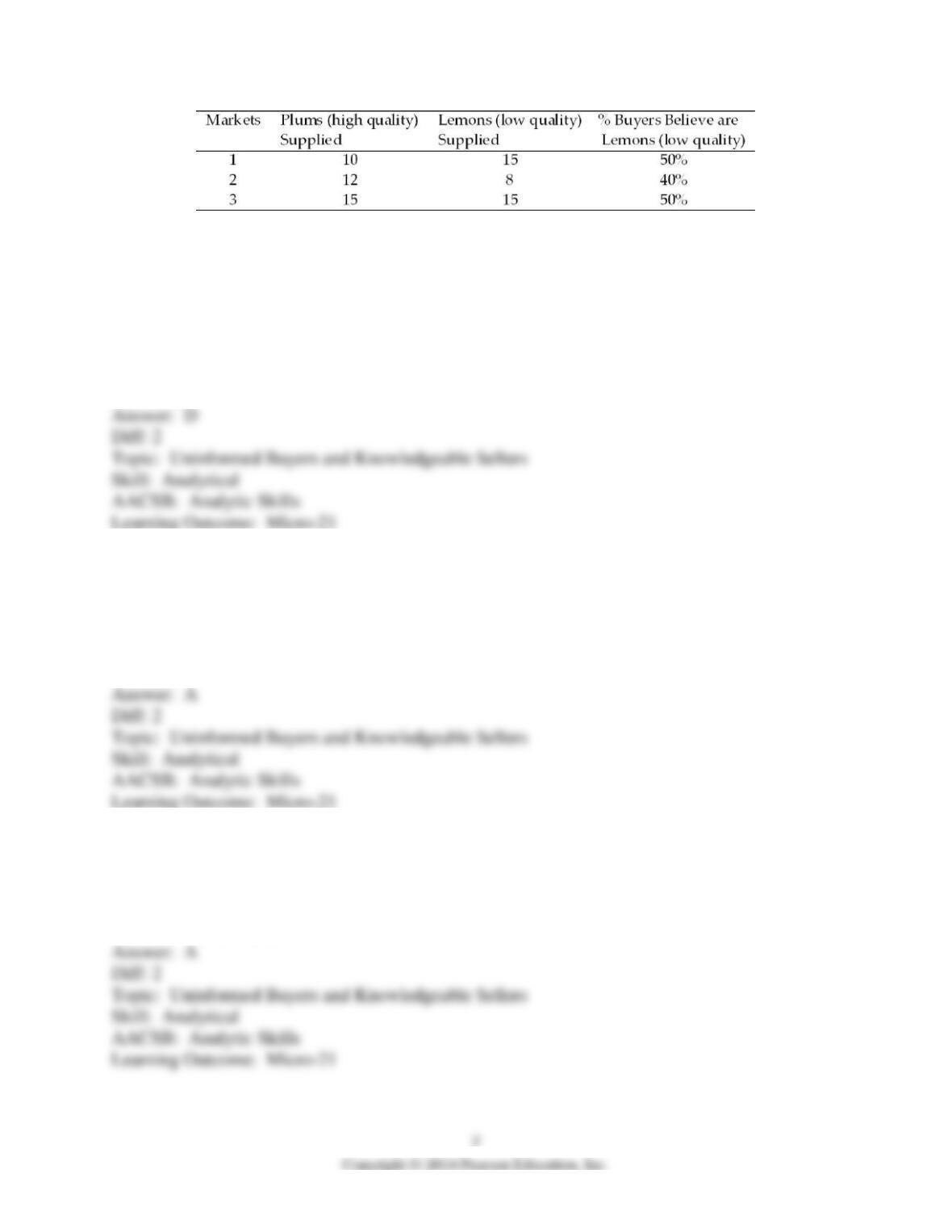
Table 9.1
19) Table 9.1 represents 3 markets for used computers. Which of the markets in Table 14.1 are in
equilibrium?
A) 1 only
B) 2 only
C) 3 only
D) 2 and 3
20) Table 9.1 represents 3 markets for used computers. Which of the markets in Table 14.1 in
equilibrium?
A) 1 only
B) 2 only
C) 3 only
D) 1 and 3
21) In Table 9.1, Market 1 would be in equilibrium if buyers believed lemons accounted for
A) 60% of the market.
B) 55% of the market.
C) 45% of the market.
D) 40% of the market.
22) Refer to Table 9.1. In which market do buyers underestimate the chance of getting a lemon?
A) 1 only
B) 2 only
C) 3 only
D) 1 and 3 only
Figure 9.1
23) Figure 9.1 represents the market for used bikes. Suppose buyers are willing to pay $200 for a
plum (high-quality) used bike and $50 for a lemon (low-quality) used bike. If buyers believe that
50% of the used bikes are lemons (low quality), how much will they be willing to pay for a used
bike?
A) $50
B) $80
C) $125
D) $200
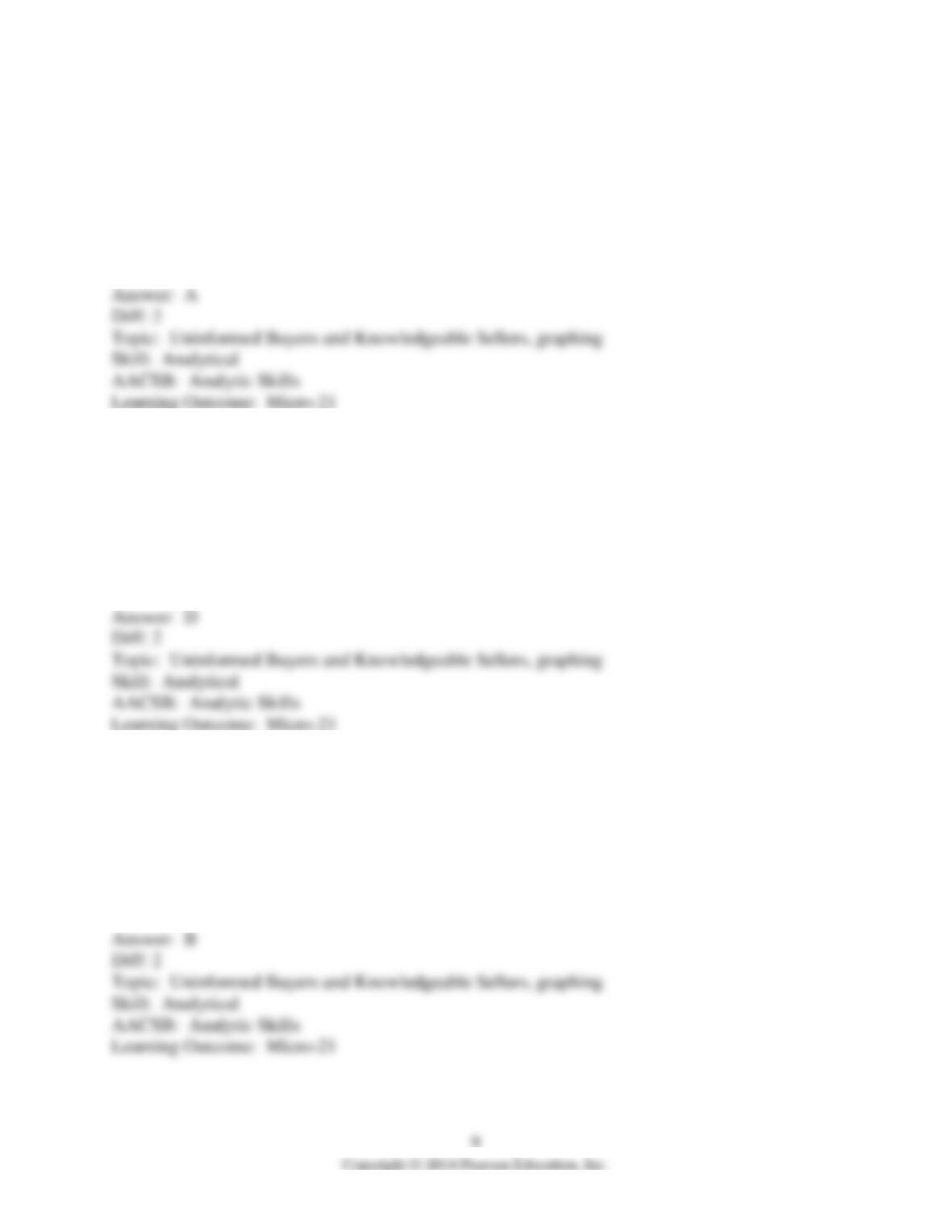
24) Figure 9.1 represents the market for used bikes. Suppose buyers are willing to pay $200 for a
plum (high-quality) used bike and $50 for a lemon (low-quality) used bike. If buyers believe that
50% of used bikes are lemons (low quality), how many plums (high quality) will be supplied by
sellers?
A) 8
B) 12
C) 16
D) 22
25) Figure 9.1 represents the market for used bikes. Suppose buyers are willing to pay $200 for a
plum (high-quality) used bike and $50 for a lemon (low-quality) used bike. If buyers believe that
50% of used bikes are lemons (low quality), how many lemons (low quality) will be supplied by
sellers?
A) 8
B) 12
C) 16
D) 22
26) Figure 9.1 represents the market for used bikes. Suppose buyers are willing to pay $200 for a
plum (high-quality) used bike and $50 for a lemon (low-quality) used bike. If buyers believe that
50% of used bikes in the market are lemons (low quality), what fraction of used bikes sold will
actually be lemons (low quality)?
A) 8/30
B) 22/30
C) 8/22
D) 30/30
27) Figure 9.1 represents the market for used bikes. Suppose buyers are willing to pay $200 for a
plum (high-quality) used bike and $50 for a lemon (low-quality) used bike. If buyers believe that
50% of used bikes in the market are lemons (low quality), what fraction of used bikes sold will
actually be plums (high quality)?
A) 8/30
B) 22/30
C) 8/22
D) 30/30
28) Figure 9.1 represents the market for used bikes. Suppose buyers are willing to pay $200 for a
plum (high-quality) used bike and $50 for a lemon (low-quality) used bike. If buyers have
pessimistic expectations about the used bikes in the market, what number of used bikes sold will
actually be lemons (low quality)?
A) 8
B) 12
C) 16
D) 22
29) Figure 9.1 represents the market for used bikes. Suppose buyers are willing to pay $200 for a
plum (high-quality) used bike and $50 for a lemon (low-quality) used bike. If buyers have
pessimistic expectations about the used bikes in the market, how many used plums (high-quality
used bikes) will be sold?
A) 0
B) 8
C) 12
D) 16
30) Figure 9.1 represents the market for used bikes. Suppose buyers are willing to pay $200 for a
plum (high-quality) used bike and $50 for a lemon (low-quality) used bike. Initially buyers
believe that 50% of used bikes in the market are lemons (low quality). Compared to the outcome
with neutral expectations, how many fewer bikes are sold in equilibrium?
A) 8
B) 12
C) 18
D) 22
Figure 9.2
31) Figure 9.2 represents the market for used cameras. Suppose buyers are willing to pay $125
for a plum (high-quality) used camera and $25 for a lemon (low-quality) used camera. If buyers
believe that 50% of the used cameras in the market are lemons (low quality), how much will pay
for a used camera?
A) $25
B) $50
C) $75
D) $125
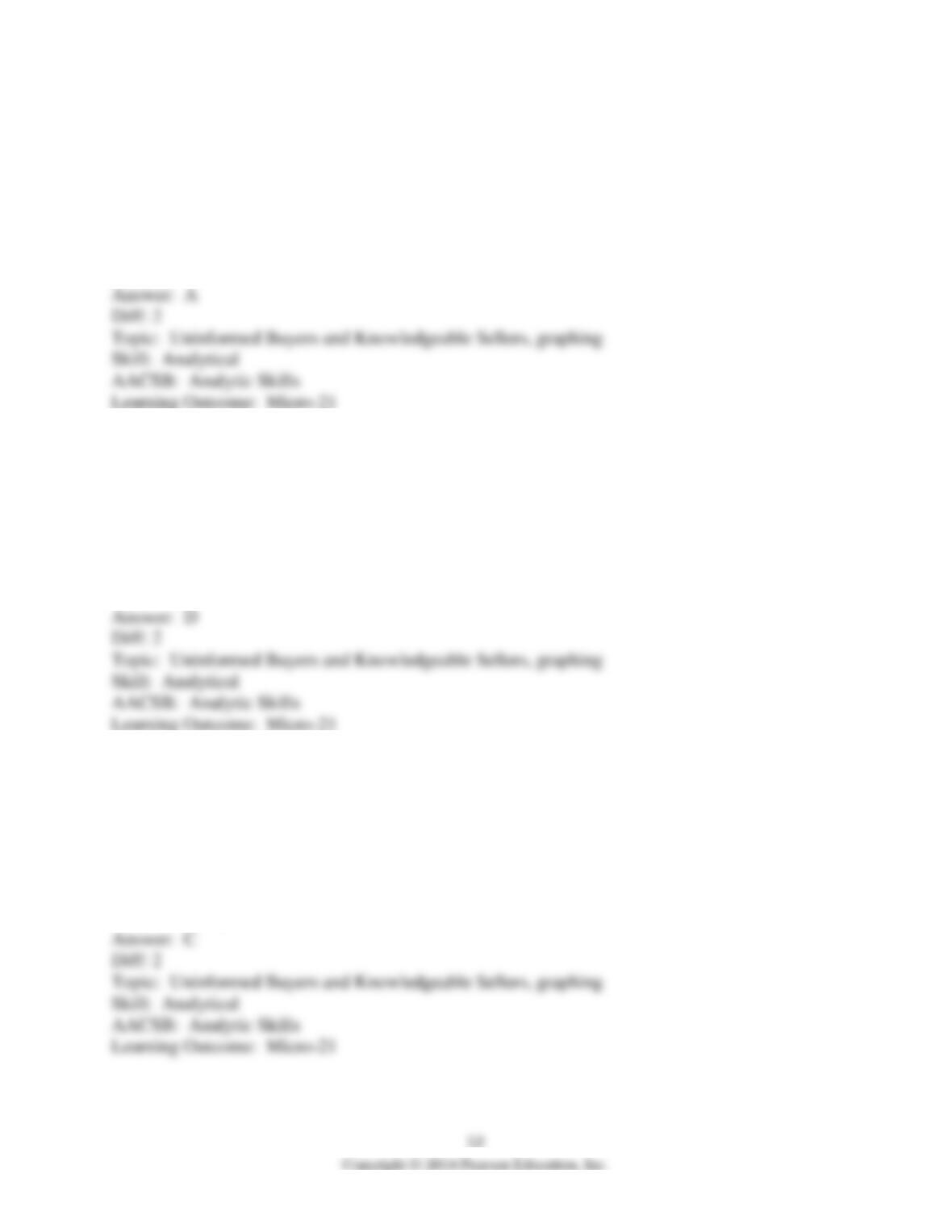
32) Figure 9.2 represents the market for used cameras. Suppose buyers are willing to pay $125
for a plum (high-quality) used camera and $25 for a lemon (low-quality) used camera. If buyers
believe that 50% of used cameras in the market are lemons (low quality), how many plums (high
quality) will be supplied by sellers?
A) 10
B) 15
C) 20
D) 25
33) Figure 9.2 represents the market for used cameras. Suppose buyers are willing to pay $125
for a plum (high-quality) used camera and $25 for a lemon (low-quality) used camera. If buyers
believe that 50% of used cameras in the market are lemons (low quality), how many lemons (low
quality) will be supplied by sellers?
A) 10
B) 15
C) 20
D) 25
34) Figure 9.2 represents the market for used cameras. Suppose buyers are willing to pay $125
for a plum (high-quality) used camera and $25 for a lemon (low-quality) used camera. If buyers
believe that 50% of used cameras in the market are lemons (low quality), what fraction of used
cameras sold will actually be lemons (low quality)?
A) 10/25
B) 10/35
C) 25/35
D) All of the cameras sold will be lemons.
35) Figure 9.2 represents the market for used cameras. Suppose buyers are willing to pay $125
for a plum (high-quality) used camera and $25 for a lemon (low-quality) used camera. If buyers
believe that 50% of used cameras in the market are lemons (low quality), what fraction of used
cameras sold will actually be plums (high quality)?
A) 10/25
B) 10/35
C) 25/35
D) None of the cameras sold will be plums.
36) Figure 9.2 represents the market for used cameras. Suppose buyers are willing to pay $125
for a plum (high-quality) used camera and $25 for a lemon (low-quality) used camera. If buyers
believe that all of the used cameras in the market are lemons (low quality), what number of used
cameras sold will actually be lemons (low quality)?
A) 10
B) 15
C) 20
D) 25
37) Figure 9.2 represents the market for used cameras. Suppose buyers are willing to pay $125
for a plum (high-quality) used camera and $25 for a lemon (low-quality) used camera. Initially
buyers believe that 50% of used cameras in the market are lemons (low quality). Compared to
the outcome with neutral expectations, how many fewer cameras are sold in equilibrium?
A) 10
B) 15
C) 20
D) 25
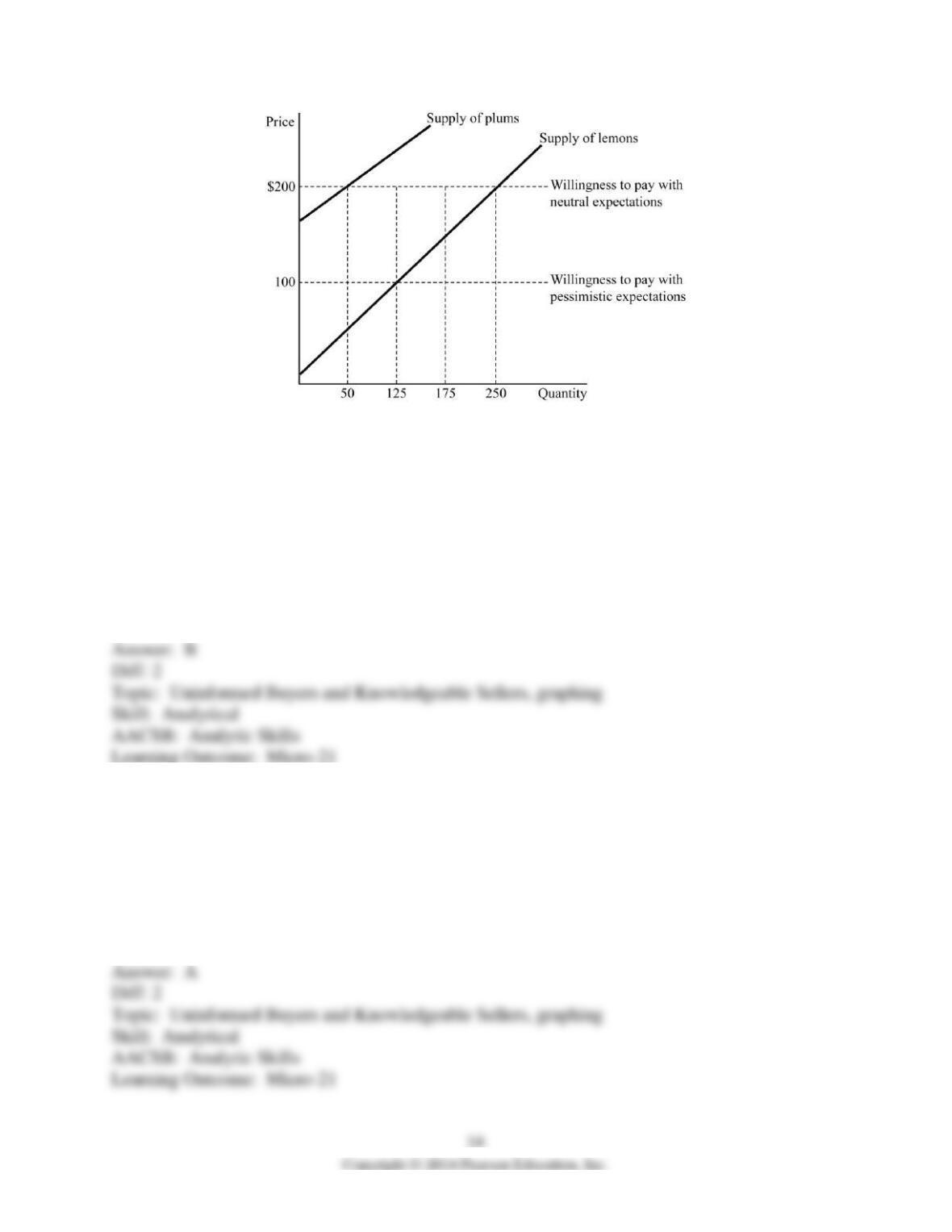
Figure 9.3
38) Figure 9.3 represents the market for used refrigerators. Suppose buyers are willing to pay
$300 for a plum (high-quality) used refrigerator and $100 for a lemon (low-quality) used
refrigerator. If buyers believe that 50% of the used refrigerators in the market are lemons (low
quality), how much will they be willing to pay for a used refrigerator?
A) $100
B) $200
C) $250
D) $300
39) Figure 9.3 represents the market for used refrigerators. Suppose buyers are willing to pay
$300 for a plum (high-quality) used refrigerator and $100 for a lemon (low-quality) used
refrigerator. If buyers believe that 50% of used refrigerators in the market are lemons (low
quality), how many plums (high quality) will be supplied by sellers?
A) 50
B) 125
C) 175
D) 250
40) Figure 9.3 represents the market for used refrigerators. Suppose buyers are willing to pay
$300 for a plum (high-quality) used refrigerator and $100 for a lemon (low-quality) used
refrigerator. If buyers believe that 50% of used refrigerators in the market are lemons (low
quality), how many lemons (low quality) will be supplied by sellers?
A) 50
B) 125
C) 175
D) 250
41) Figure 9.3 represents the market for used refrigerators. Suppose buyers are willing to pay
$300 for a plum (high-quality) used refrigerator and $100 for a lemon (low-quality) used
refrigerator. If buyers believe that 50% of used refrigerators in the market are lemons (low
quality), what fraction of used refrigerators sold will actually be lemons (low quality)?
A) 50/250
B) 50/300
C) 250/300
D) All of the refrigerators sold will be lemons.
42) Figure 9.3 represents the market for used refrigerators. Suppose buyers are willing to pay
$300 for a plum (high-quality) used refrigerator and $100 for a lemon (low-quality) used
refrigerator. If buyers believe that 50% of used refrigerators in the market are lemons (low
quality), what fraction of used refrigerators sold will actually be plums (high quality)?
A) 50/250
B) 50/300
C) 250/300
D) None of the refrigerators sold will be plums.
43) Figure 9.3 represents the market for used refrigerators. Suppose buyers are willing to pay
$300 for a plum (high-quality) used refrigerator and $100 for a lemon (low-quality) used
refrigerator. If buyers believe that all of the used refrigerators in the market are lemons (low
quality), what number of used refrigerators sold will actually be lemons (low quality)?
A) 50
B) 125
C) 175
D) 250
44) Figure 9.3 represents the market for used refrigerators. Suppose buyers are willing to pay
$300 for a plum (high-quality) used refrigerator and $100 for a lemon (low-quality) used
refrigerator. Initially buyers believe that 50% of used refrigerators in the market are lemons (low
quality). Compared to the outcome with neutral expectations, how many fewer refrigerators are
sold in equilibrium?
A) 50
B) 125
C) 175
D) 250
45) Figure 9.3 represents the market for used refrigerators. Suppose buyers are willing to pay
$300 for a plum (high-quality) used refrigerator and $100 for a lemon (low-quality) used
refrigerator. Compared to the situation when buyers have neutral expectations, if buyers believed
that fewer than 50% of used refrigerators are lemons (low-quality),
A) more plums (high-quality) used refrigerators would be on the market.
B) fewer plums (high-quality) used refrigerators would be on the market.
C) fewer lemons (low-quality) used refrigerators would be on the market.
D) the same total number of used refrigerators would be on the market, but more of them would
be plums (high-quality) used refrigerators.
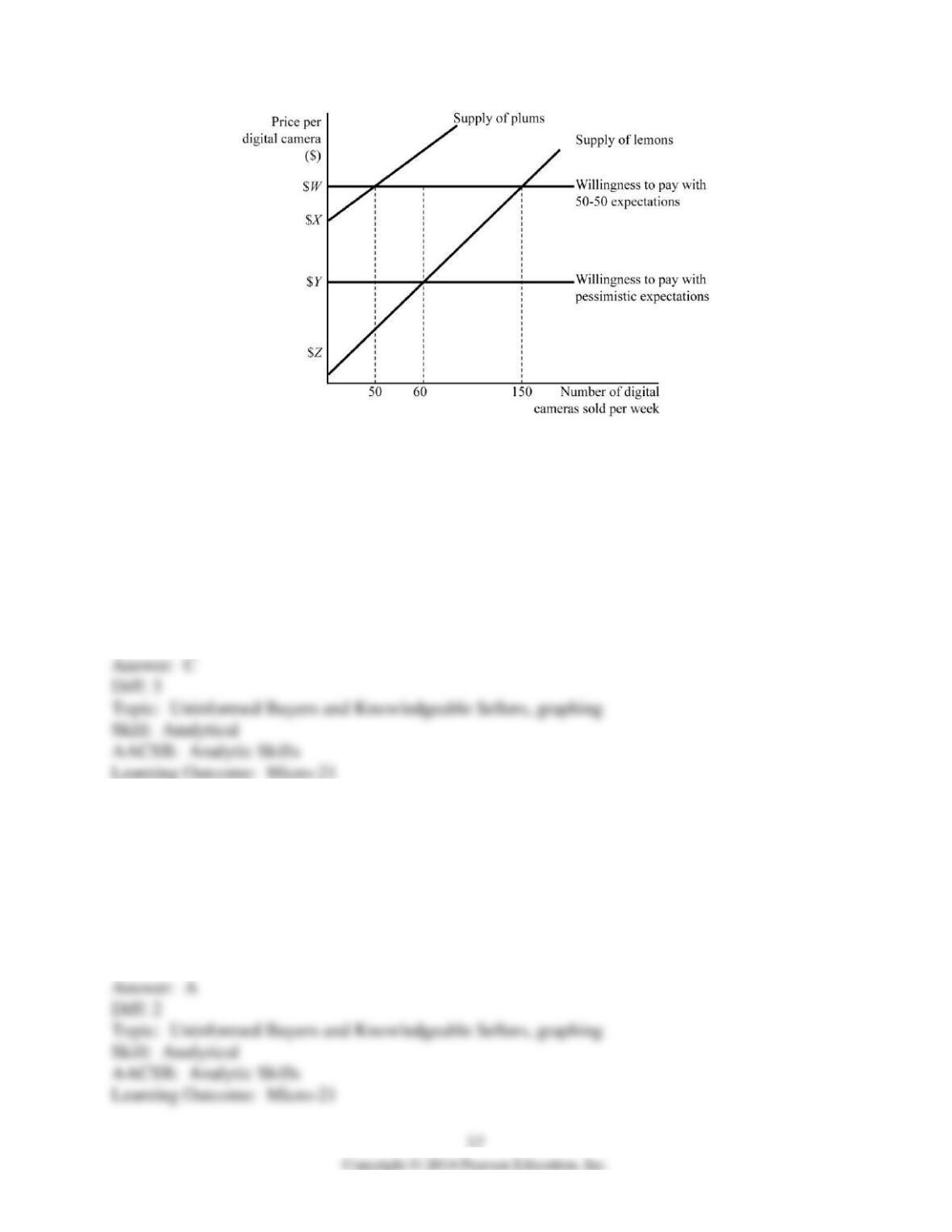
Figure 9.4
46) Figure 9.4 represents the market for used 12 megapixel digital cameras. Suppose buyers are
willing to pay $400 for a plum (high-quality) used digital camera and $200 for a lemon (low-
quality) used digital camera. If buyers believe that 50% of used digital cameras in the market are
lemons (low quality), what is consumers’ willingness to pay ($W)?
A) $100
B) $200
C) $300
D) $400
47) Figure 9.4 represents the market for used 12 megapixel digital cameras. Suppose buyers are
willing to pay $400 for a plum (high-quality) used digital camera and $200 for a lemon (low-
quality) used digital camera. If buyers believe that 50% of used digital cameras in the market are
lemons (low quality), how many plums will be supplied by sellers?
A) 50
B) 60
C) 150
D) 200
48) Figure 9.4 represents the market for used 12 megapixel digital cameras. Suppose buyers are
willing to pay $400 for a plum (high-quality) used digital camera and $200 for a lemon (low-
quality) used digital camera. If buyers believe that 50% of used digital cameras in the market are
lemons (low quality), how many lemons will be supplied by sellers?
A) 50
B) 60
C) 150
D) 200
49) Figure 9.4 represents the market for used 12 megapixel digital cameras. Suppose buyers are
willing to pay $400 for a plum (high-quality) used digital camera and $200 for a lemon (low-
quality) used digital camera. If buyers believe that 50% of used digital cameras in the market are
lemons (low quality), what% of used digital cameras sold will actually be lemons? (low-quality)?
A) 25%
B) 50%
C) 75%
D) 100%
50) Figure 9.4 represents the market for used 12 megapixel digital cameras. Suppose buyers are
willing to pay $400 for a plum (high-quality) used digital camera and $200 for a lemon (low-
quality) used digital camera. If buyers believe that all of used digital cameras in the market are
lemons (low quality), what number of used digital cameras sold will actually be lemons?
A) 50
B) 60
C) 110
D) 150
51) Figure 9.4 represents the market for used 12 megapixel digital cameras. Suppose buyers are
willing to pay $400 for a plum (high-quality) used digital camera and $200 for a lemon (low-
quality) used digital camera. Initially buyers believe that 50% of used digital cameras in the
market are lemons (low quality). Compared to the outcome with neutral expectations, how many
fewer digital cameras are sold in equilibrium?
A) 90
B) 110
C) 140
D) The number of cameras sold in equilibrium is the same as the outcome with neutral
expectations.
52) Figure 9.4 represents the market for used 12 megapixel digital cameras. Suppose buyers are
willing to pay $400 for a plum (high-quality) used digital camera and $200 for a lemon (low-
quality) used digital camera. At any price between $X and $Z,
A) only plums will be supplied.
B) only lemons will be supplied.
C) both plums and lemons will be supplied
D) neither plums nor lemons will be supplied.
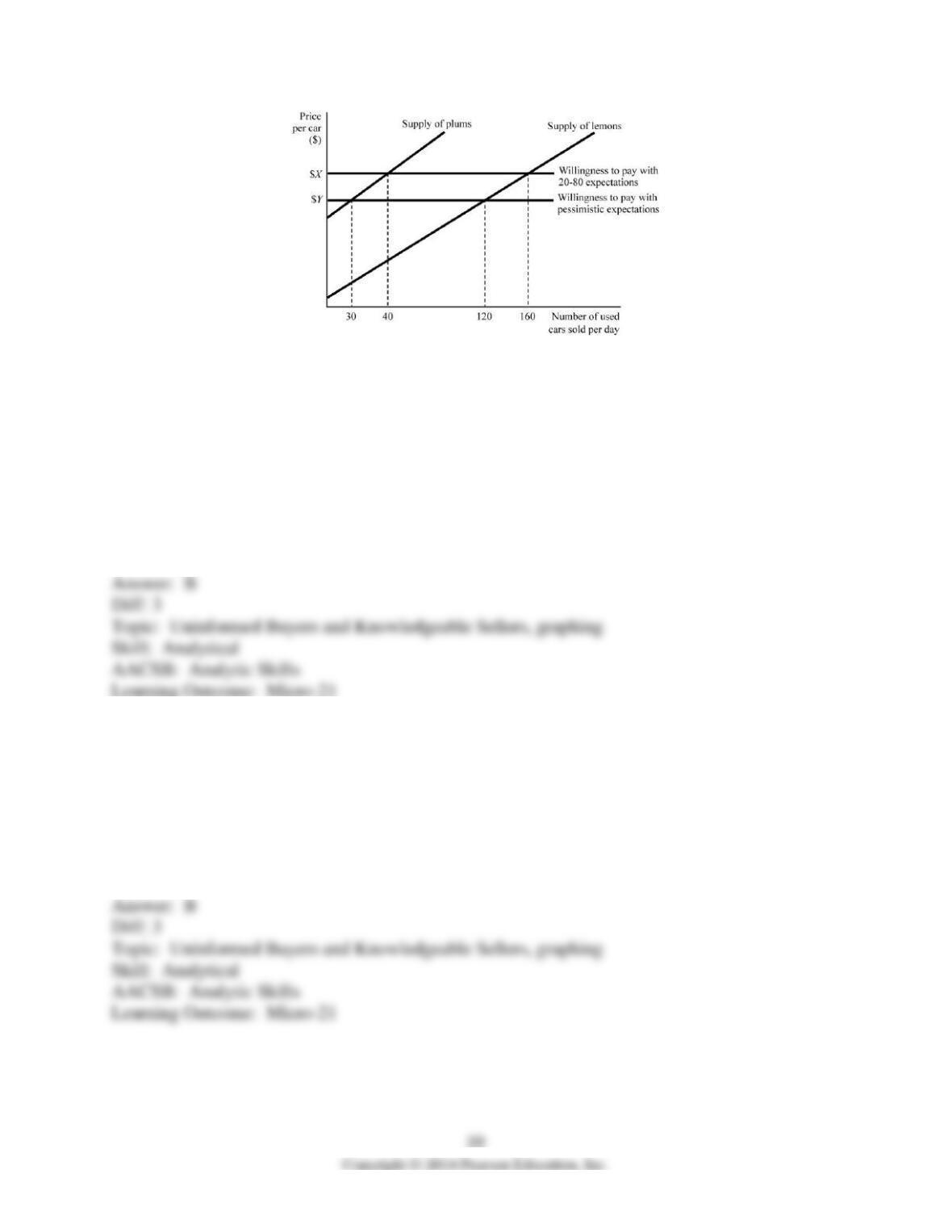
Figure 9.5
53) Figure 9.5 represents the market for used cars. Suppose buyers are willing to pay $5,000 for
a plum (high-quality) used car and $3,000 for a lemon (low-quality) used car. If buyers believe
that 80% of used cameras in the market are lemons (low quality), what is consumers’ willingness
to pay ($X)?
A) $5,000
B) $3,400
C) $3,000
D) $1,700
54) Figure 9.5 represents the market for used cars. Suppose buyers are willing to pay $5,000 for
a plum (high-quality) used car and $3,000 for a lemon (low-quality) used car. If buyers believe
that 80% of used cameras in the market are lemons (low quality), how many plums will be
supplied in the market?
A) 30
B) 40
C) 70
D) 120