Chapter 8: Operating Assets: Property, Plant, and Equipment, and Intangibles
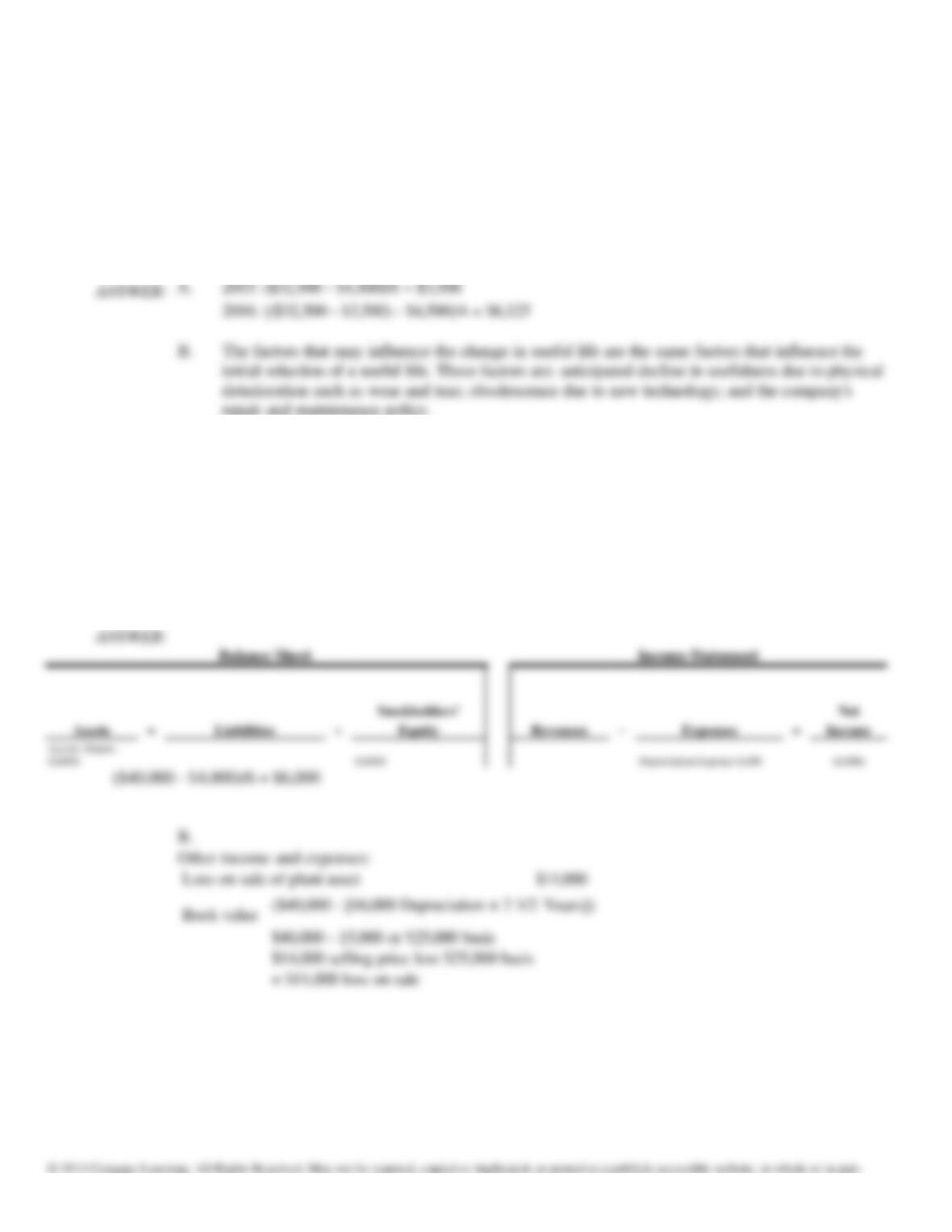
170. Foxrun, Inc. purchased a truck at the beginning of 2015 for $32,500. Foxrun decided to depreciate the truck over an
8-year period using the straight–line method, and estimated its residual value to be $4,500. At the beginning of 2016,
Foxrun determined that a 5-year life should have been used to depreciate the truck. The estimated residual value
was not affected by the revision in the asset’s life.
A. Determine the amounts to be recorded as depreciation expense for 2015 and 2016.
B. What factors may have influenced Foxrun to change the useful life?
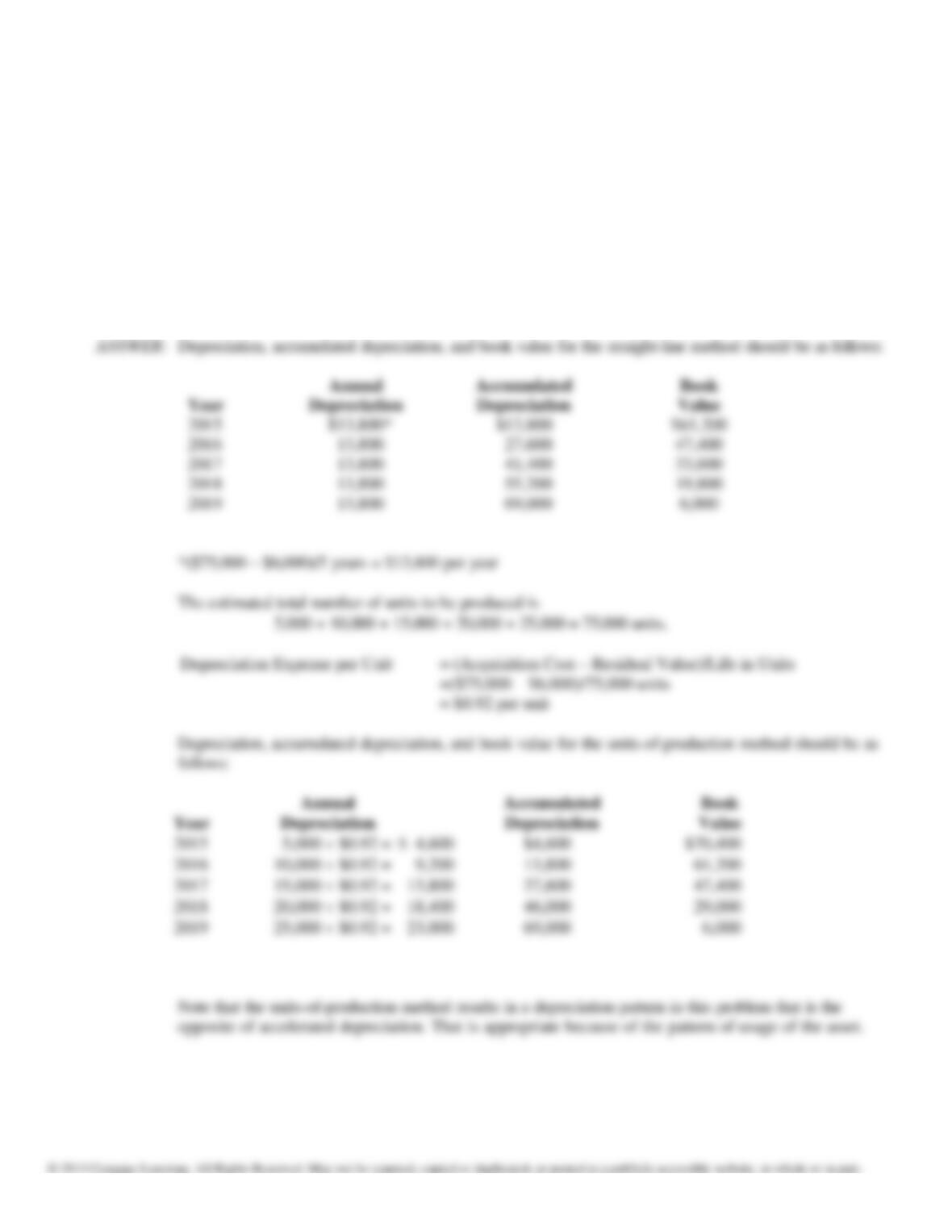
171. Craig Inc. purchased a truck on January 1, 2015 for $40,000. The truck had an estimated life of six years and an
estimated salvage value of $4,000. Craig uses the straight-line method to depreciate the asset. On July 1, 2017, the
truck was sold for $14,000 cash.
A. Determine the effect on the accounting equation upon recording the depreciation for 2015.
B. Show how the gain or loss on the sale of the asset would be reported on Craig Inc.’s income
statement.
Chapter 8: Operating Assets: Property, Plant, and Equipment, and Intangibles
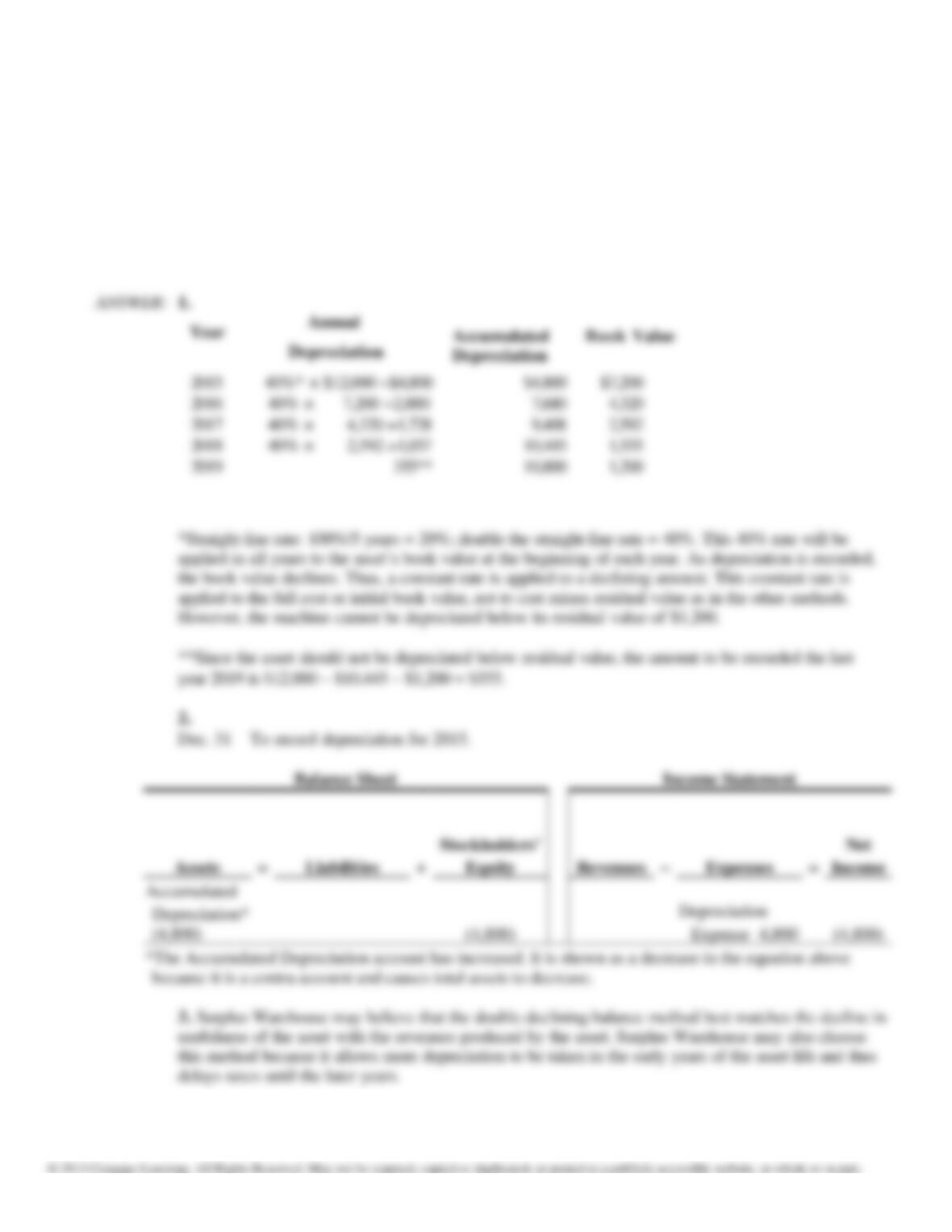
172. Assume that Alabama Company purchased factory equipment on January 1, 2015, for $75,000. The equipment has an
estimated life of five years and an estimated residual value of $6,000. Alabama’s accountant is considering whether
to use the straight-line or the units-of-production method to depreciate the asset. Because the company is beginning a
new production process, the equipment will be used to produce 5,000 units in 2015, but production subsequent to 2015
will increase by 5,000 units each year.
REQUIRED:
Calculate the depreciation expense, accumulated depreciation, and book value of the equipment under both methods
for each of the five years of its life. Would the units-of production method yield reasonable results in this situation?
Explain.
Chapter 8: Operating Assets: Property, Plant, and Equipment, and Intangibles
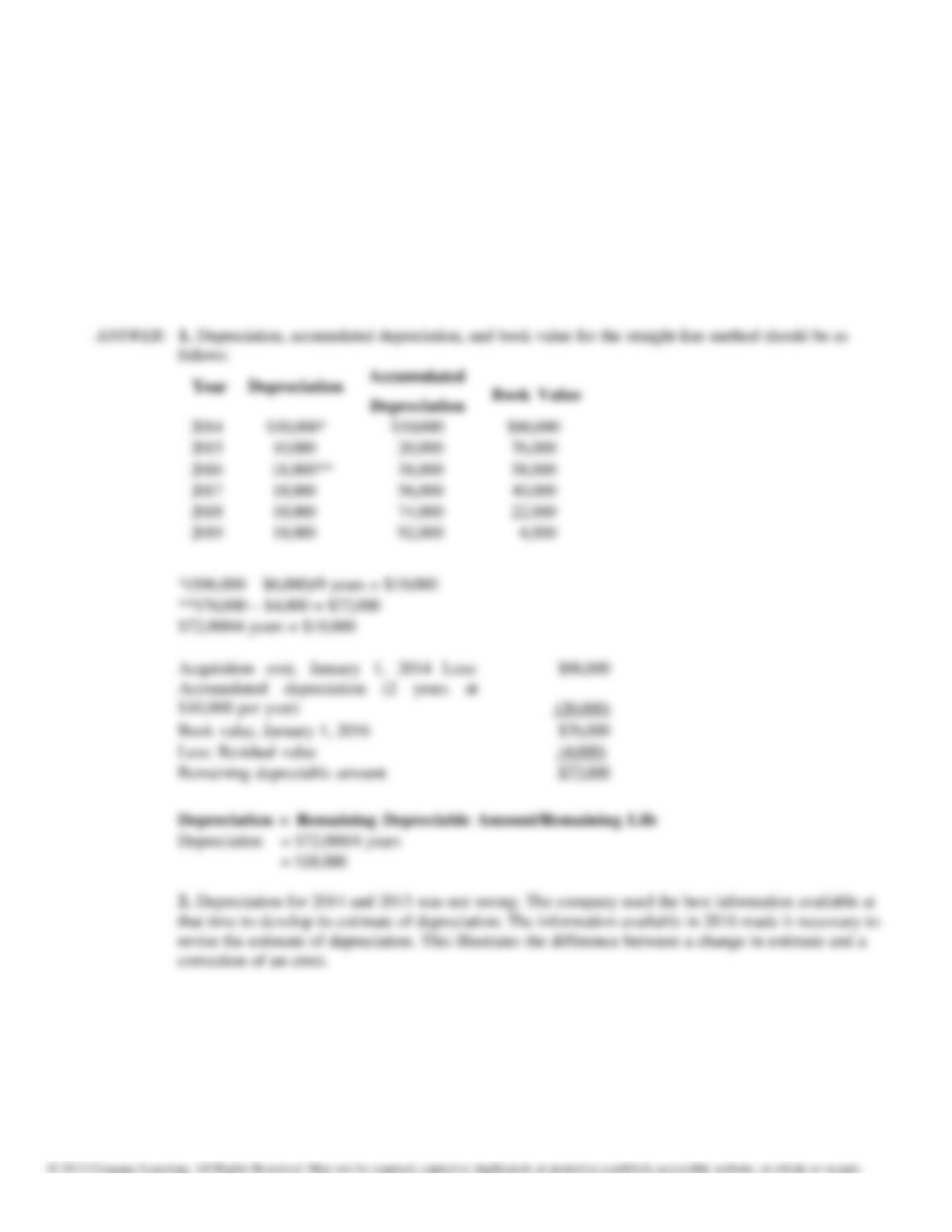
173. Surplus Warehouse purchased a forklift on January 1, 2015, for $12,000. The forklift is expected to last for five years
and have a residual value of $1,200. Surplus Warehouse uses the double-declining-balance method for depreciation.
REQUIRED:
1. Calculate the depreciation expense, accumulated depreciation, and book value for each year of the forklift’s life.
2. Identify the effect on the accounting equation for recording depreciation expense for 2015.
3. What factors may have influenced Surplus Warehouse to use the double-declining-balance method?
Chapter 8: Operating Assets: Property, Plant, and Equipment, and Intangibles
174. Assume that Banker Company purchased a new machine on January 1, 2014, for $96,000. The machine has an
estimated useful life of nine years and a residual value of $6,000. Banker has chosen to use the straight-line method
of depreciation. On January 1, 2016, Banker discovered that the machine would not be useful beyond December 31,
2019, and estimated its value at that time to be $4,000.
REQUIRED:
1. Calculate the depreciation expense, accumulated depreciation, and book value of the asset for each year 2014 to
2019.
2. Was the depreciation recorded in 2014 and 2015 wrong? If so, why was it not corrected?
Chapter 8: Operating Assets: Property, Plant, and Equipment, and Intangibles
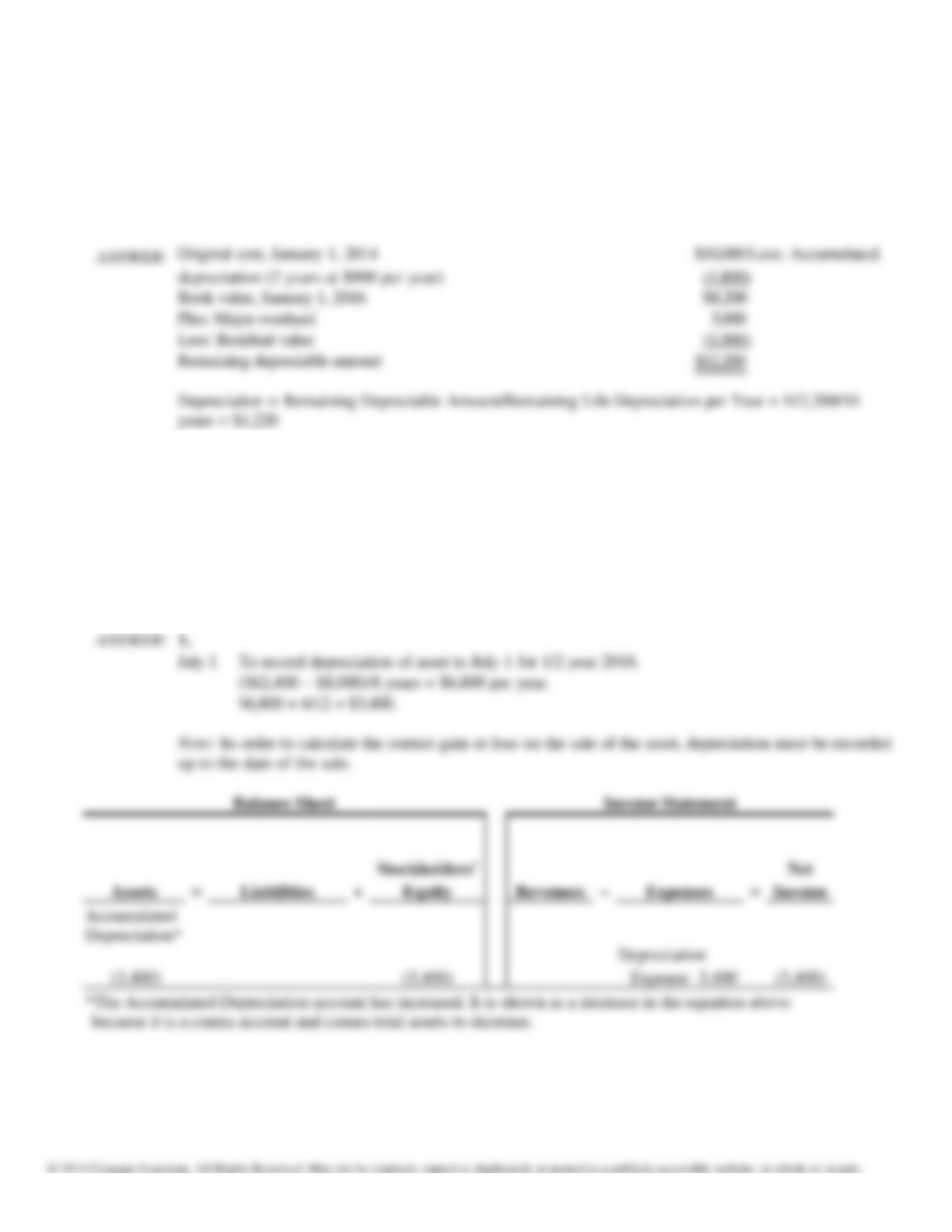
175. A company purchased an asset on January 1, 2014, for $10,000. The asset was expected to have a ten-year life and a
$1,000 salvage value. The company uses the straight-line method of depreciation. On January 1, 2016, the company
made a major repair to the asset of $5,000, extending its life. The asset is expected to last ten years from January 1,
2016.
Calculate the amount of depreciation for 2016.
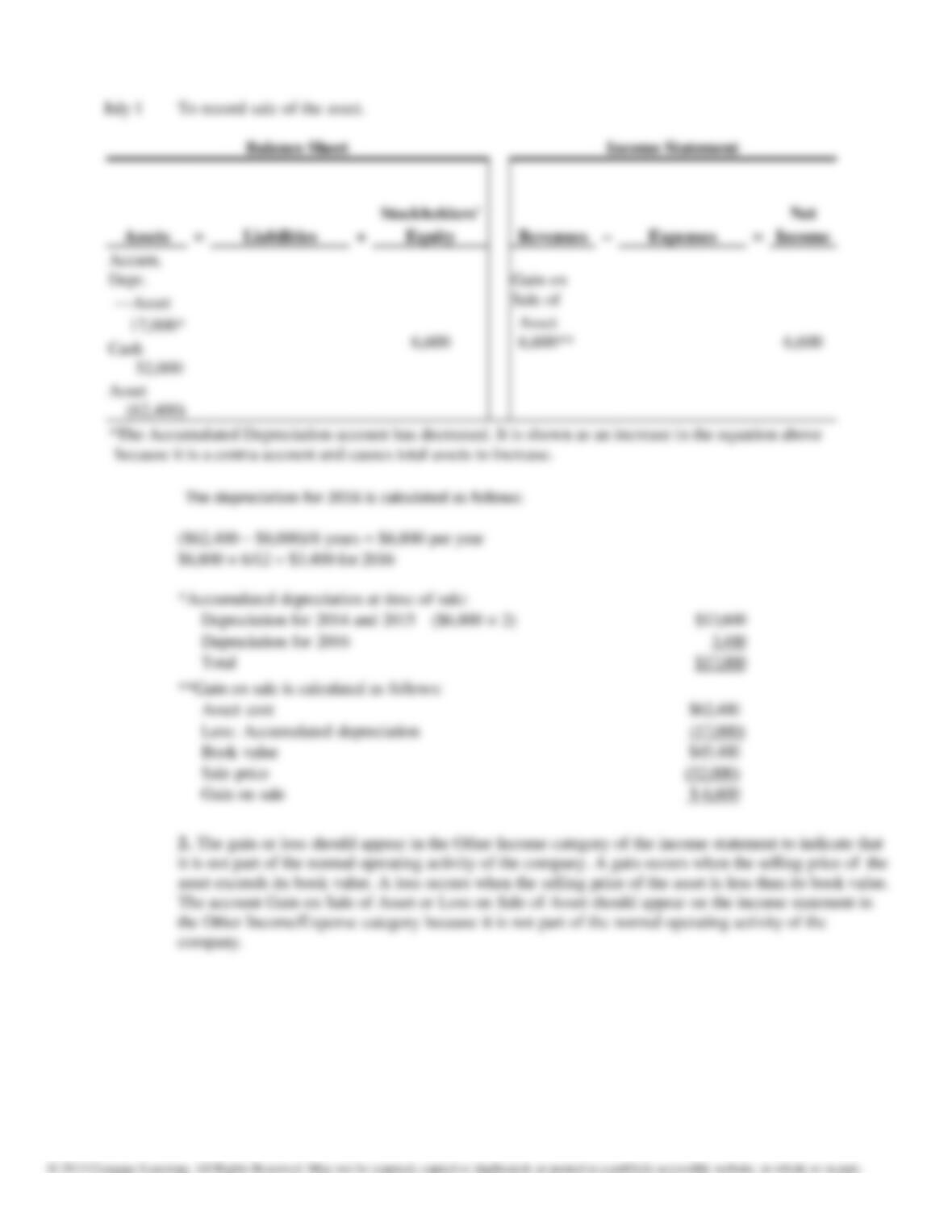
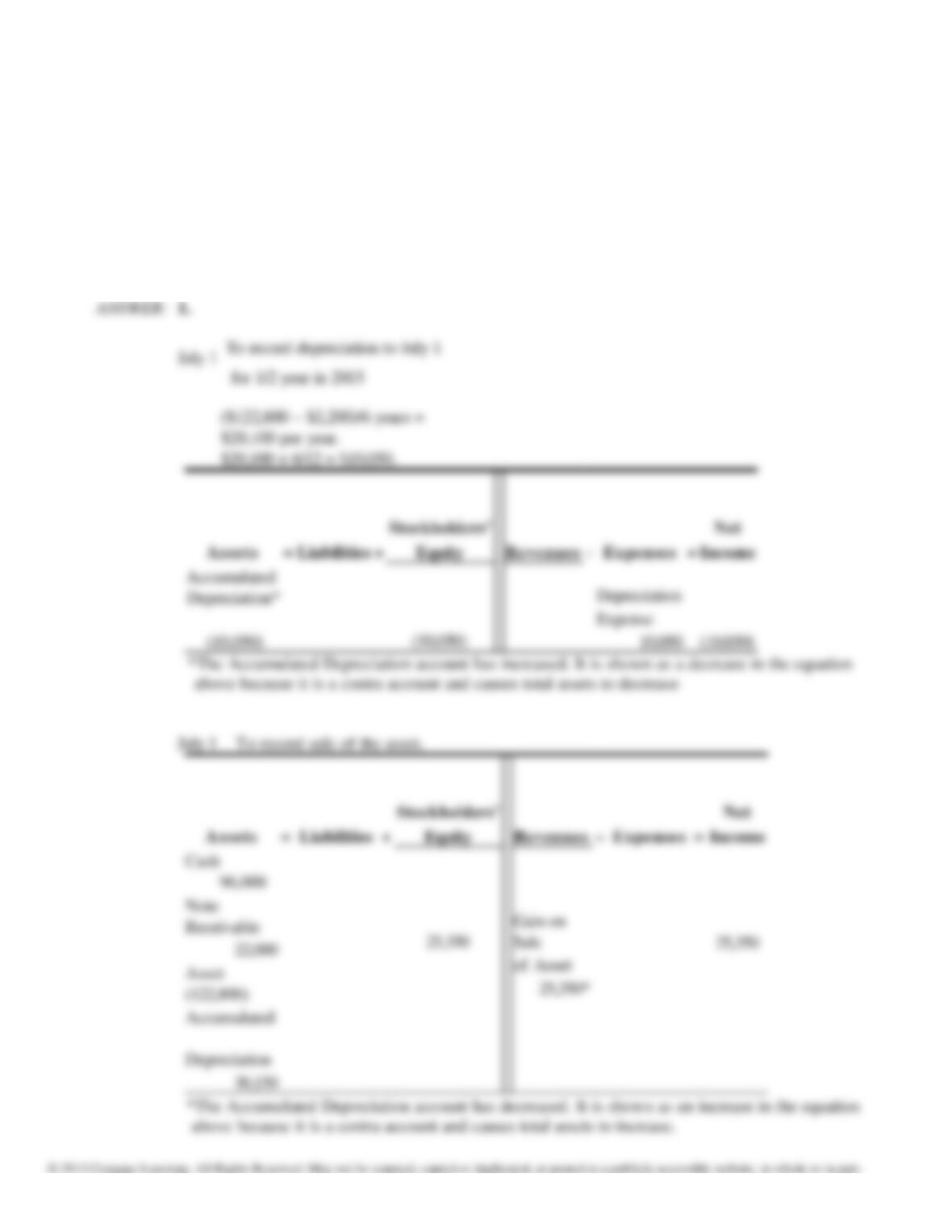
176. Assume that Rocket Company purchased an asset on January 1, 2014, for $62,400. The asset had an estimated life
of eight years and an estimated residual value of $8,000. The company used the straight-line method to depreciate the
asset. On July 1, 2016, the asset was sold for $52,000.
REQUIRED:
1. Identify the effects of the transactions to record depreciation for 2016 and all transactions necessary for the sale
of the asset.
2. How should the gain or loss on the sale of the asset be presented on the income statement?
Chapter 8: Operating Assets: Property, Plant, and Equipment, and Intangibles
Chapter 8: Operating Assets: Property, Plant, and Equipment, and Intangibles
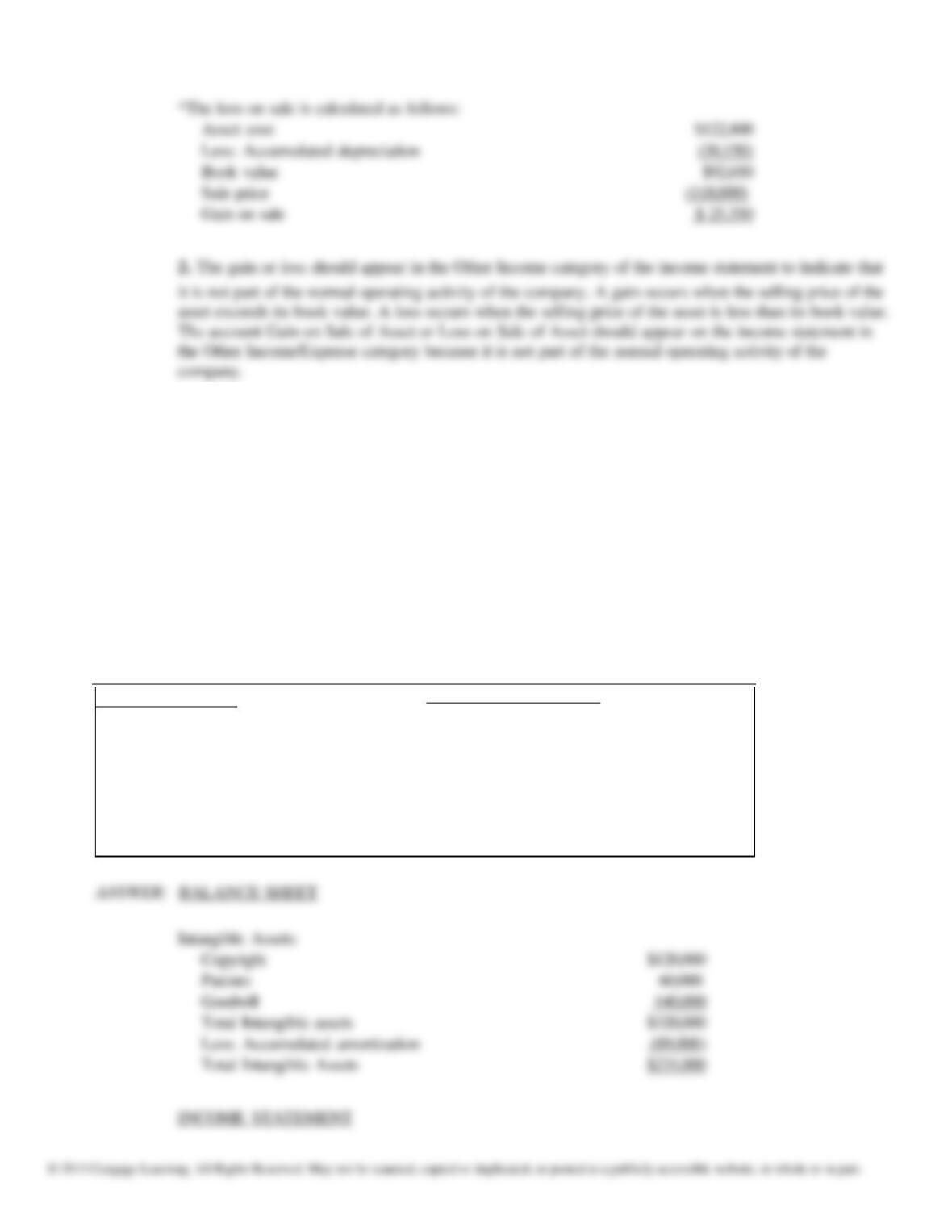
177. Assume that Halpern Company purchased an asset on January 1, 2014, for $122,800. The asset had an estimated life
of six years and an estimated residual value of $2,200. The company used the straight-line method to depreciate the
asset. Assume that Halpern Company sold the asset on July 1, 2015, and received $96,000 cash and a note for an
additional $22,000.
REQUIRED:
1. Identify the effects on the accounting equation of the transactions to record depreciation for 2015 and all
transactions necessary for the sale of the asset.
2. How should the gain or loss on the sale of the asset be presented on the income statement?
Intangible Assets:
Chapter 8: Operating Assets: Property, Plant, and Equipment, and Intangibles
Less: Accumulated depreciation
Book value
Sale price
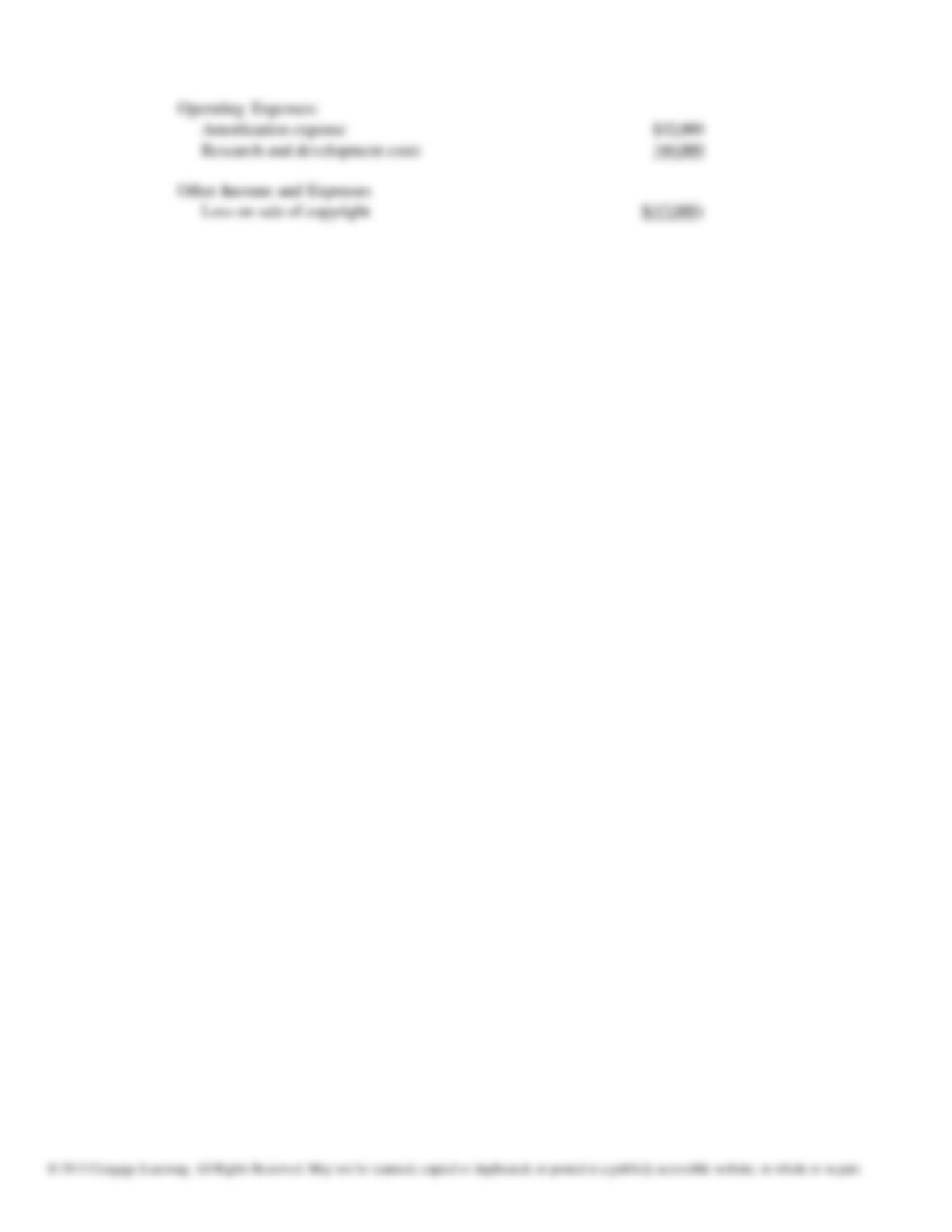
178. Below are several accounts and balances from the 2015 financial statements for Torrent, Inc. Prepare the intangible
asset section of the company’s balance sheet, as well as a partial income statement in the space provided below
using the accounts provided.
Amortization expense
$32,000
Amortization since inception
89,000
Loss on sale of copyright
12,000
Copyright
120,000
Patents
60,000
Land
80,000
Goodwill
140,000
Research and development costs
160,000
BALANCE SHEET INCOME STATEMENT
Chapter 8: Operating Assets: Property, Plant, and Equipment, and Intangibles
Chapter 8: Operating Assets: Property, Plant, and Equipment, and Intangibles
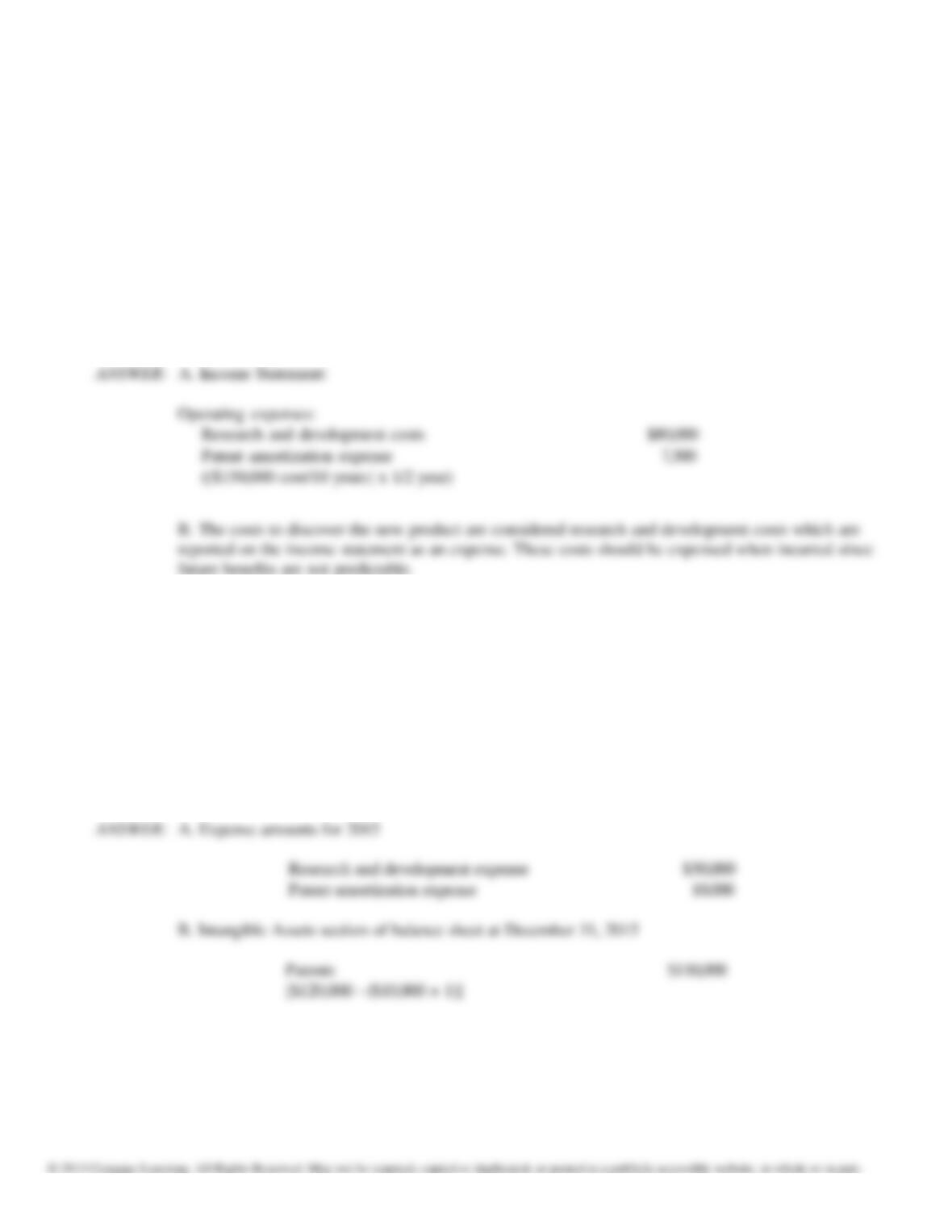
179. Given below are costs incurred by Bunker Company during 2014 and 2015. Bunker follows the policy of decreasing
the intangible asset account directly as amortized.
Research was conducted to discover a new product and costs of $200,000 in 2014 and $80,000 in 2015 were
incurred. After several months, a product was created and a patent secured for a cost of $150,000, effective as of
July 1, 2015. The company expects to have increased revenues of $500,000 over the next several years. The patent
is expected to be useful for the next 10 years.
A. Prepare a partial income statement for the year ended December 31, 2015.
B. How should the $80,000 cost incurred in 2015 be reported on the financial statements?
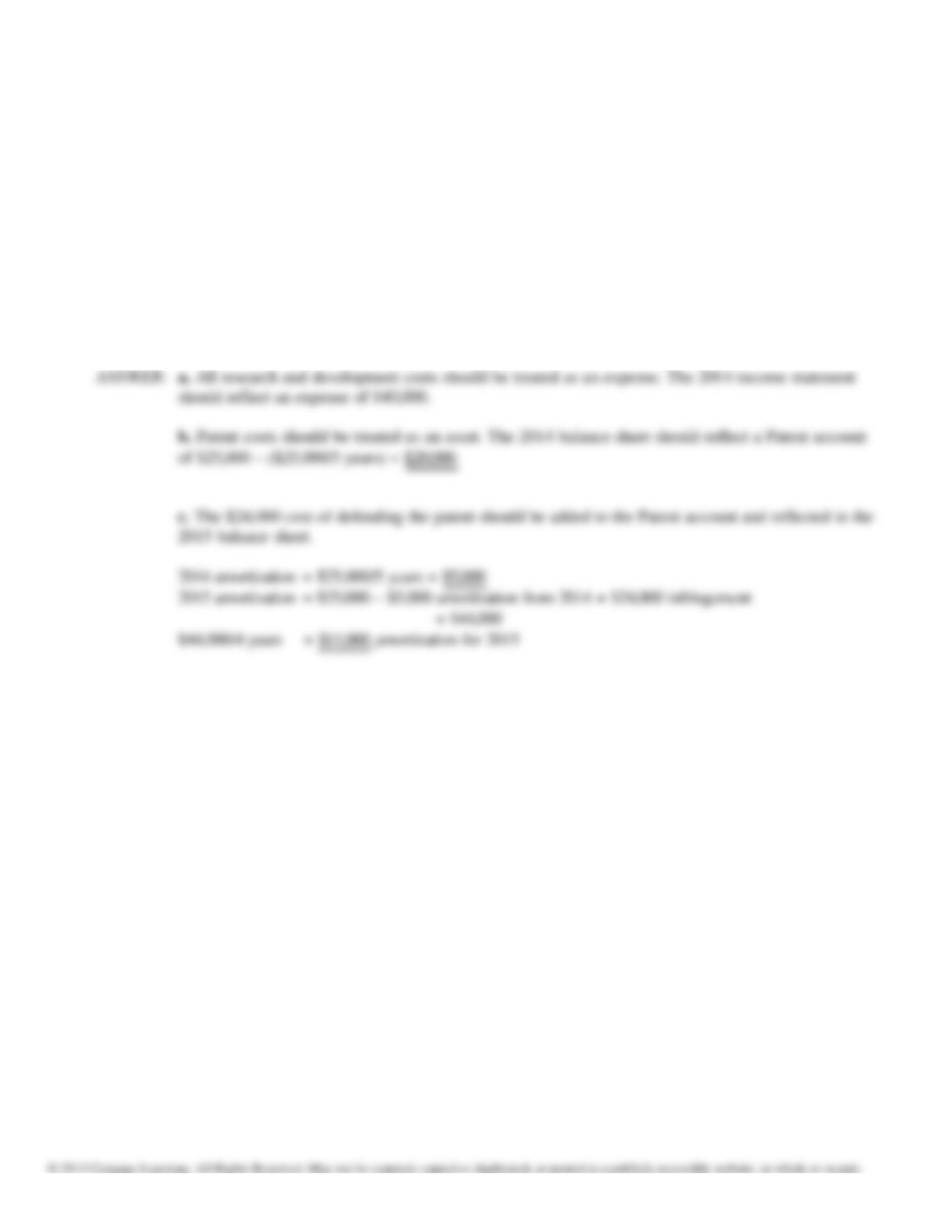
180. Wang Fitness Co. purchased a patent at the beginning of 2015 for $120,000. Economic benefits were expected for
only 12 years, but the patent’s legal life is 17 years. Also during 2015, the company incurred research and
development costs of $50,000.
A. Determine the following amounts:
1. Research and development expense for 2015
2. Patent amortization expense for 2015
B. Prepare the intangible assets section of the balance sheet at December 31, 2015.
Chapter 8: Operating Assets: Property, Plant, and Equipment, and Intangibles
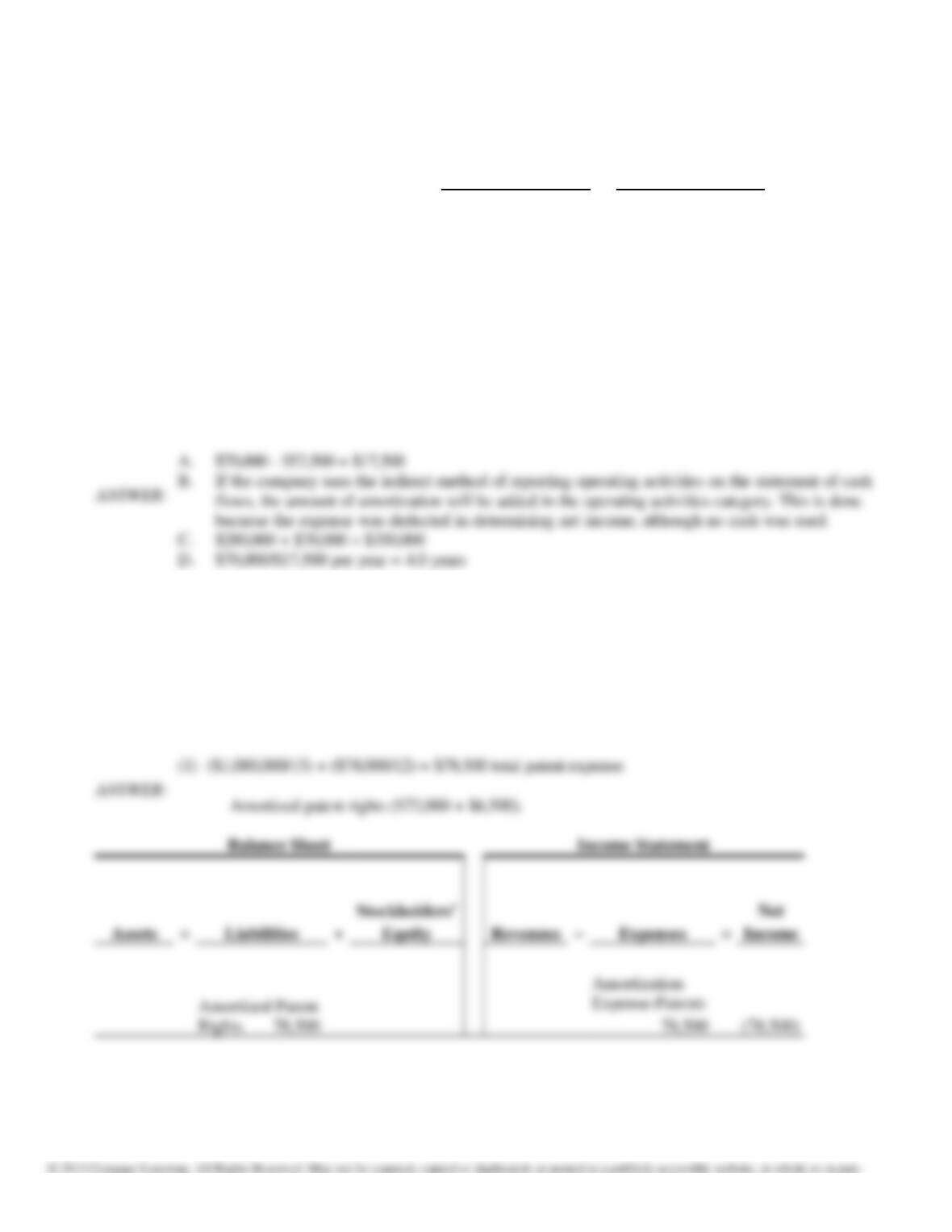
181. Glitch Company incurred the following costs during 2014 and 2015:
a. Research and development costing $40,000 was conducted on a new product to sell in future years. A product
was successfully developed, and a patent for it was granted during 2014. Glitch is unsure of the period benefited by
the research, but believes the product will result in increased sales over the next five years.
b. Legal costs and application fees of $25,000 for the 20-year patent were incurred on January 1, 2014.
c. A patent infringement suit was successfully defended at a cost of $24,000. Assume that all costs were incurred
on January 1, 2015.
REQUIRED:
Determine how the costs in (a) and (b) should be presented on Glitch’s financial statements as of December 31,
2014. Also determine the amount of amortization of intangible assets that Glitch should record in 2014 and 2015.
Chapter 8: Operating Assets: Property, Plant, and Equipment, and Intangibles
182. Several years ago, Laurel Company purchased a patent and has since been amortizing it on a straight-line basis over
its estimated useful life. The company’s comparative balance sheets contain the following items:
(In thousands)
December 31, 2015
December 31, 2014
Patent, less accumulated amortization of
$70,000 (2015) and $52,500 (2014)
$280,000
$297,500
A. How much amortization expense was recorded during 2015?
B. How is the amortization expense reported on the company’s statement of cash flows?
C. How much was the original cost of the patent?
D. How many years has the patent been amortized?
183. Racer Company acquired patent rights on January 1, 2013 for $1,080,000. The patent has a useful life equal to its
legal life of 15 years. On January 2, 2016, Racer successfully defended the patent in a lawsuit at a cost of $78,000.
REQUIRED:
(1) Determine the patent amortization expense for the current year ended December 31, 2016.
(2) Identify the accounting equation effects of the adjustment to recognize the amortization.
Chapter 8: Operating Assets: Property, Plant, and Equipment, and Intangibles
184. For each of the following intangible assets, indicate the amount of amortization expense that should be recorded for
the year 2014 and the amount of accumulated amortization on the balance sheet as of December 31, 2014.
Trademark
Patent
Copyright
Cost
$66,000
$75,000
$96,000
Date of Purchase
1/1/07
1/1/09
1/1/12
Useful life
Indefinite
10 years
20 years
Legal life
Undefined
20 years
50 years
Method
Straight-line
Straight-line
Straight-line
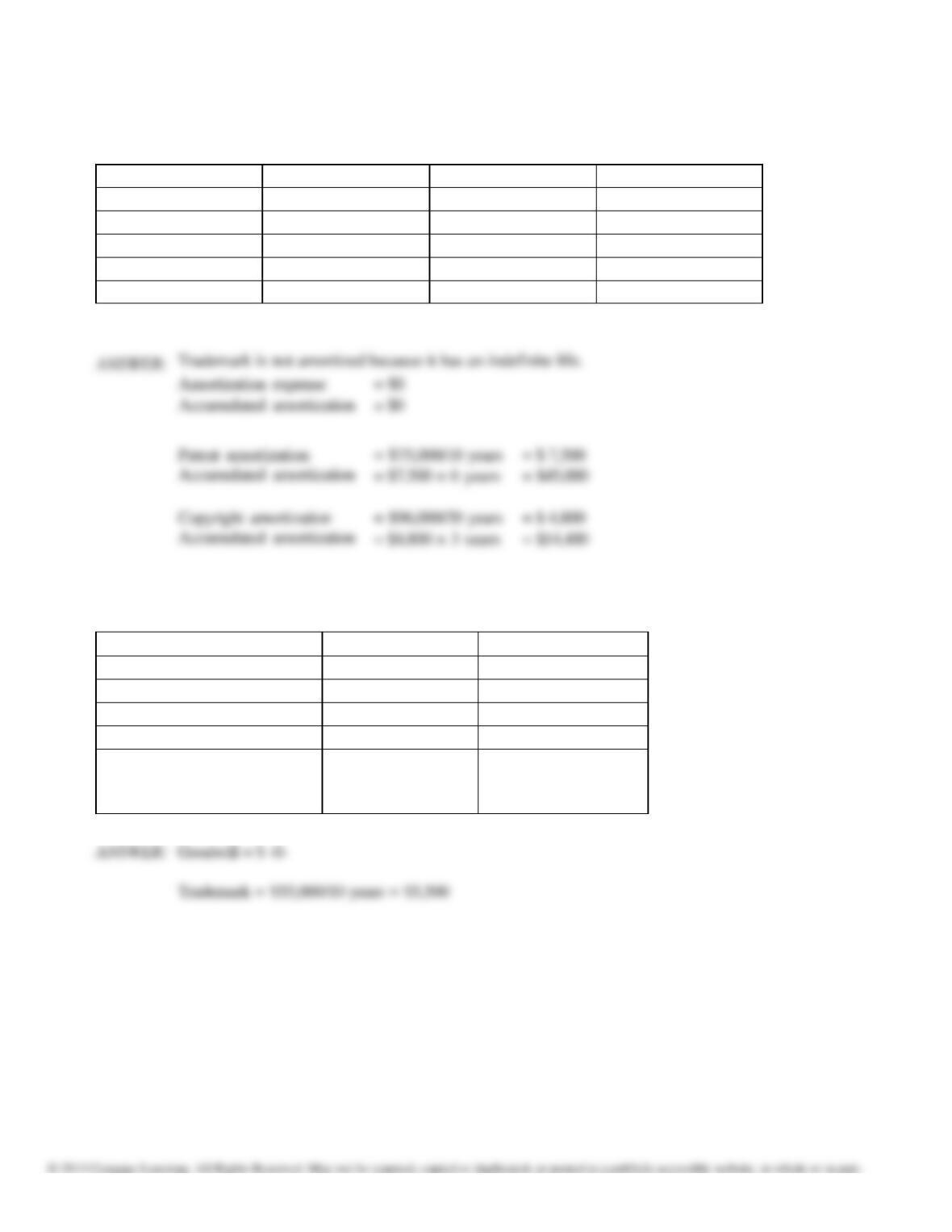
185. Fill in the table shown below indicating the period of time over which each intangible asset should be amortized, and
indicate the amount of amortization expense that should be reported for 2013.
Goodwill
Trademark
Cost
$80,000
$55,000
Date of purchase
June 30, 2013
January 1, 2013
Legal life
Forever
20 years
Useful life
60 years
10 years
2013 Amortization expense
Chapter 8: Operating Assets: Property, Plant, and Equipment, and Intangibles
Chapter 8: Operating Assets: Property, Plant, and Equipment, and Intangibles
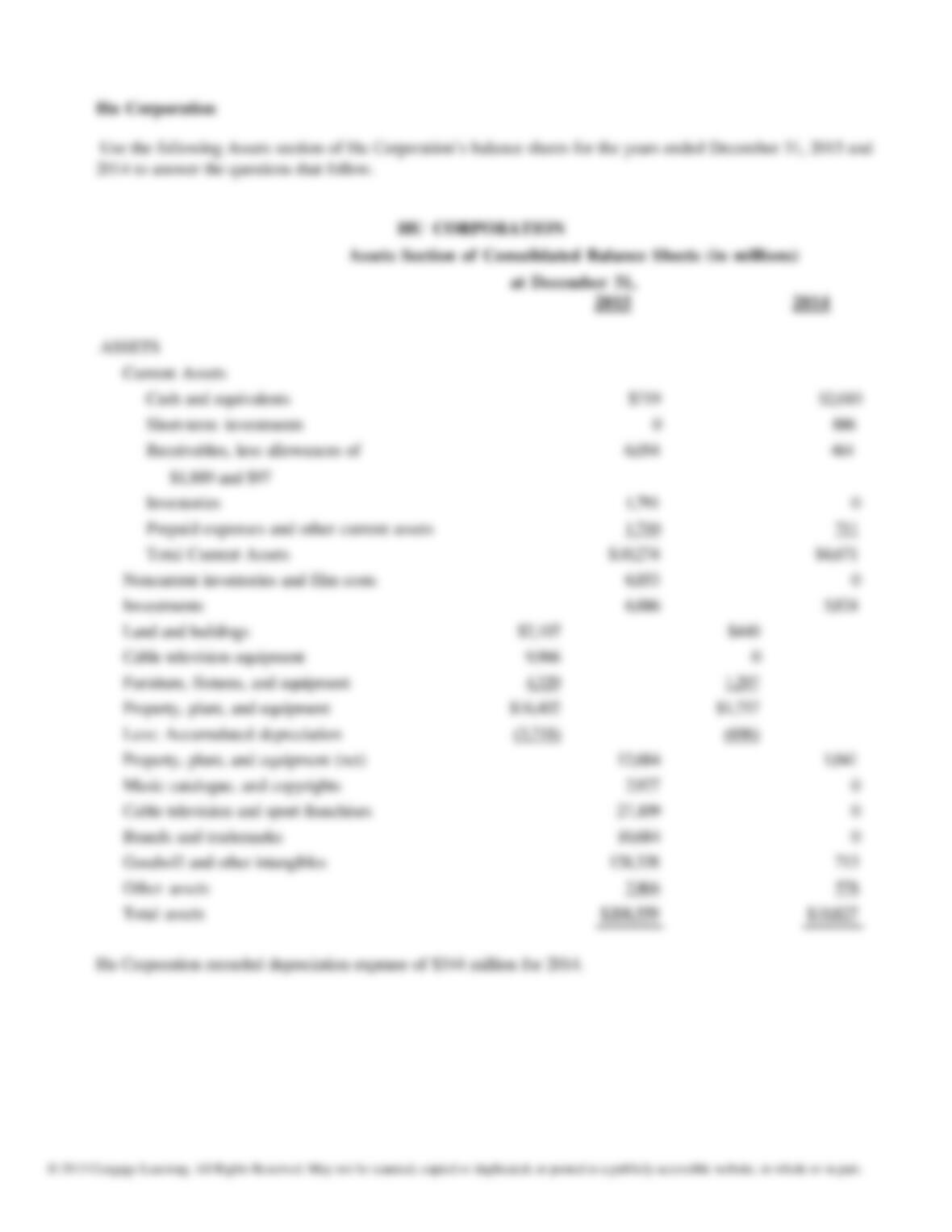
186. Refer to the information for Hu Corporation.
Required:
Calculate the following ratios for Hu for 2015.
A. Average life of property, plant, and equipment
B. Average age of property, plant, and equipment
C. What information do these ratios provide to investors and creditors?
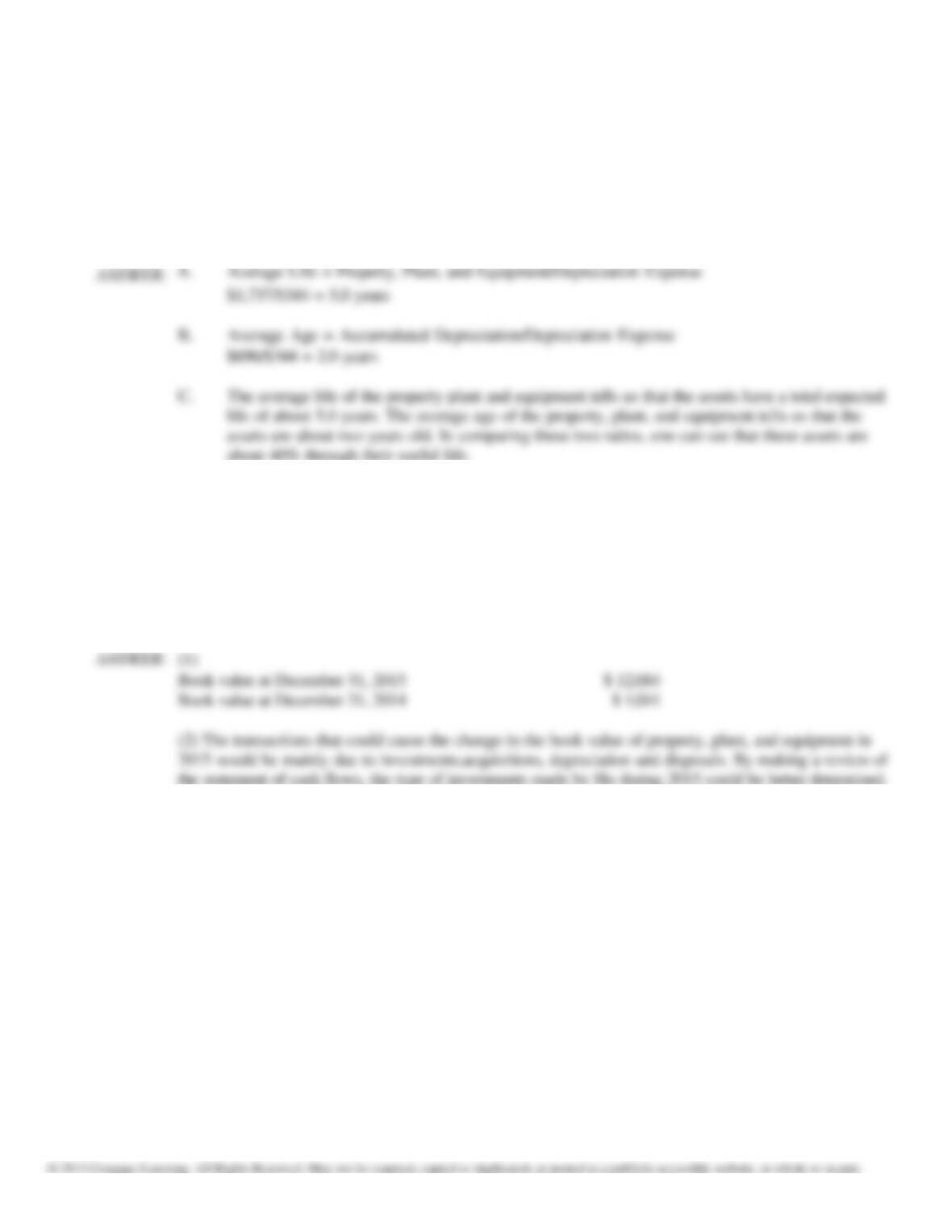
187. Refer to the information for Hu Corporation.
Required:
(1) Determine the book value of Hu’s property, plant and equipment at December 31, 2015 and 2014.
(2) What types of transaction(s) could have caused the change in book value of property, plant, and equipment during
2015?