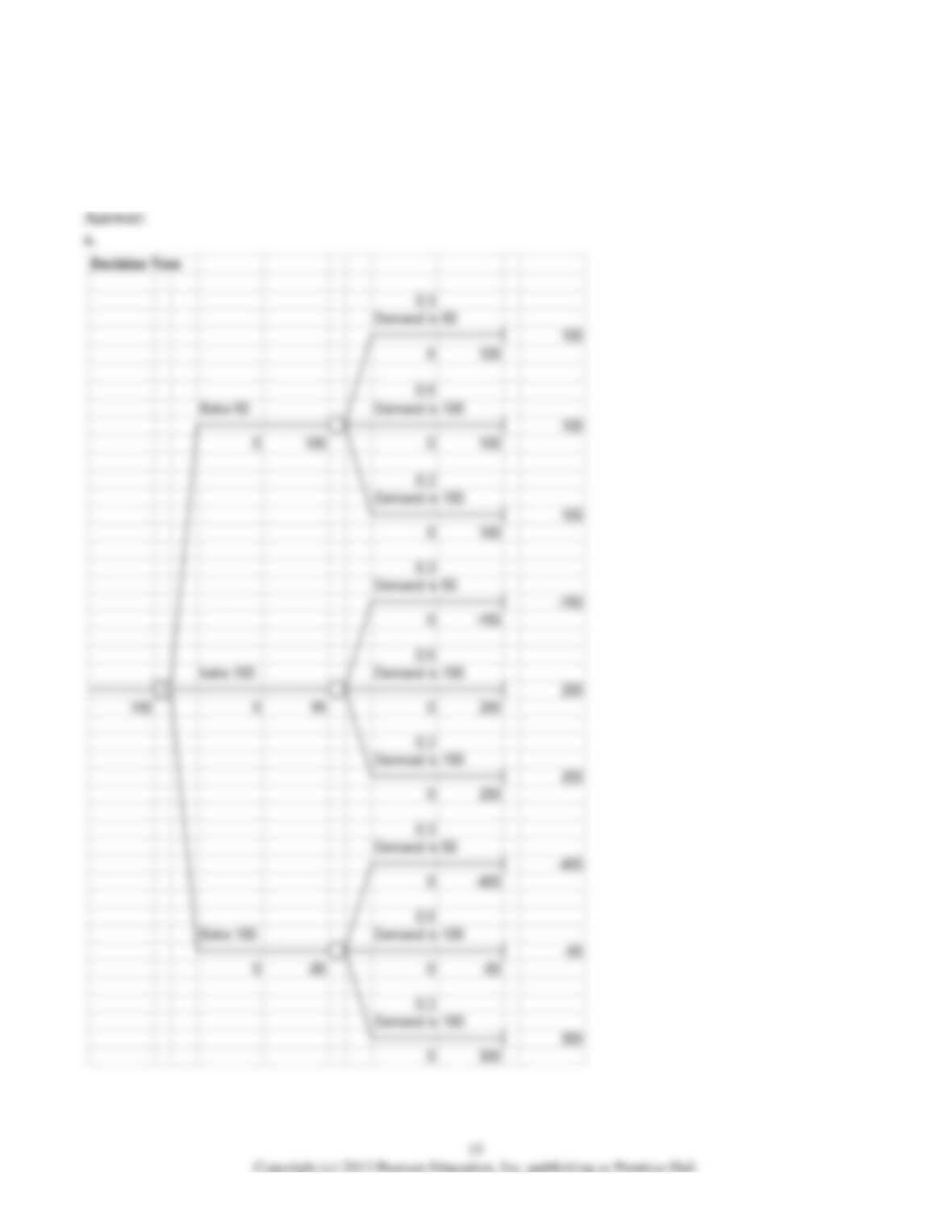
9) Refer to the information above. Assume that the bakery (see problem 7) has obtained the following
probability information regarding demand for the pies: P(50) = 0.3, P(100) = 0.5, and P(150) = 0.2.
a. Develop a decision tree for this problem.
b. Analyze the decision tree and determine which alternative should be chosen.
c. Using the expected opportunity loss (EOL) criterion, which alternative should be chosen?
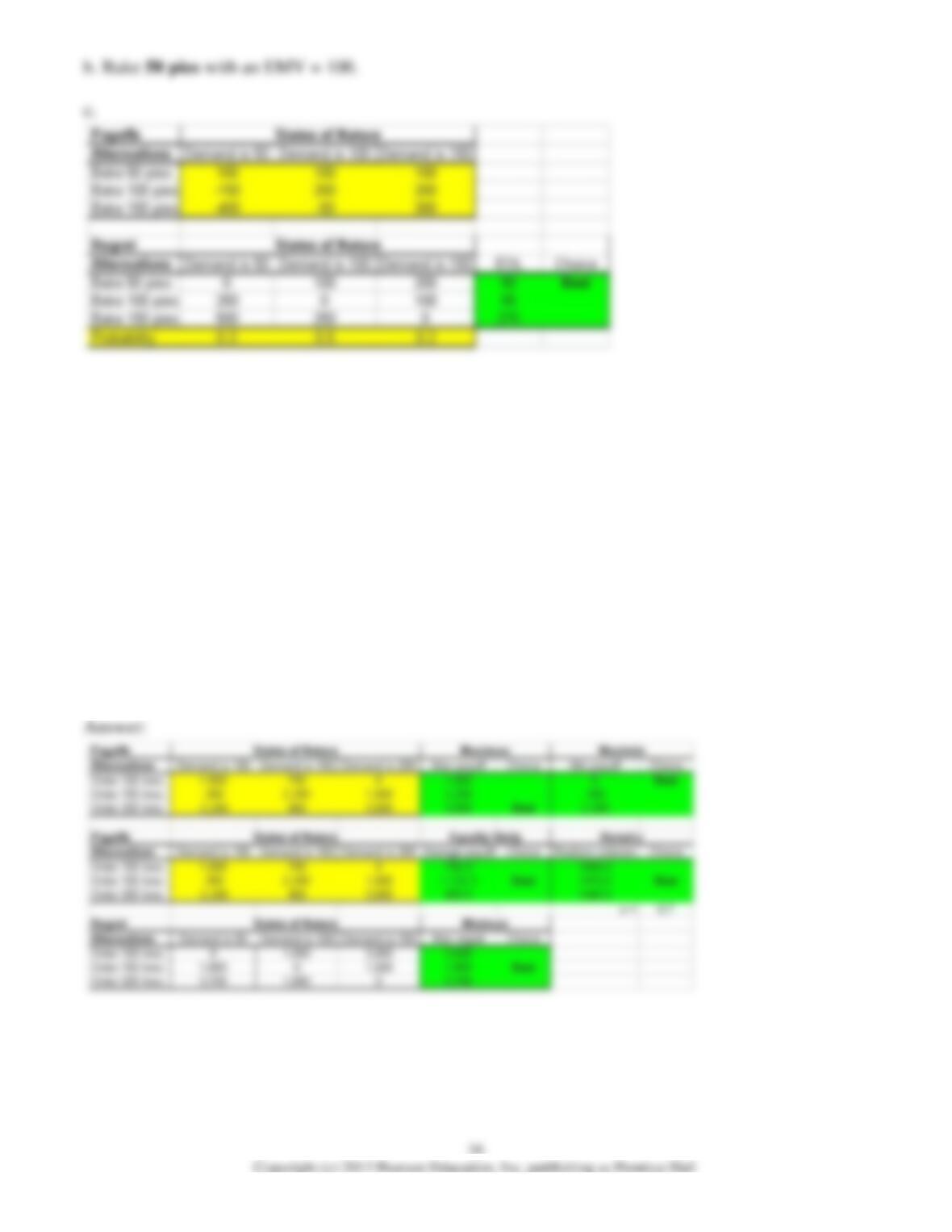
Use this information to answer the following questions.
AAA auto supply store sells snow tires which are ordered every Friday to meet next week’s demand.
The sales price for the most popular size is $50 per tire and its cost for AAA is $35. If too many tires
are ordered AAA incurs an inventory carrying cost of $2 per tire. If AAA is out of stock, it forgoes the
profits from missed sales. AAA has the option to order 100, 150, or 200 tires to meet next week’s
demand which can be either 100, 150, or 200 tires.
10) Refer to the information above.
a. Which alternative should be chosen based on the maximax criterion?
b. Which alternative should be chosen based on the maximin criterion?
c. Which alternative should be chosen based on the Lapalce criterion?
d. Which alternative should be chosen based on criterion of realism with alpha = 0.7?
e. Which alternative should be chosen based on the minimax regret criterion?
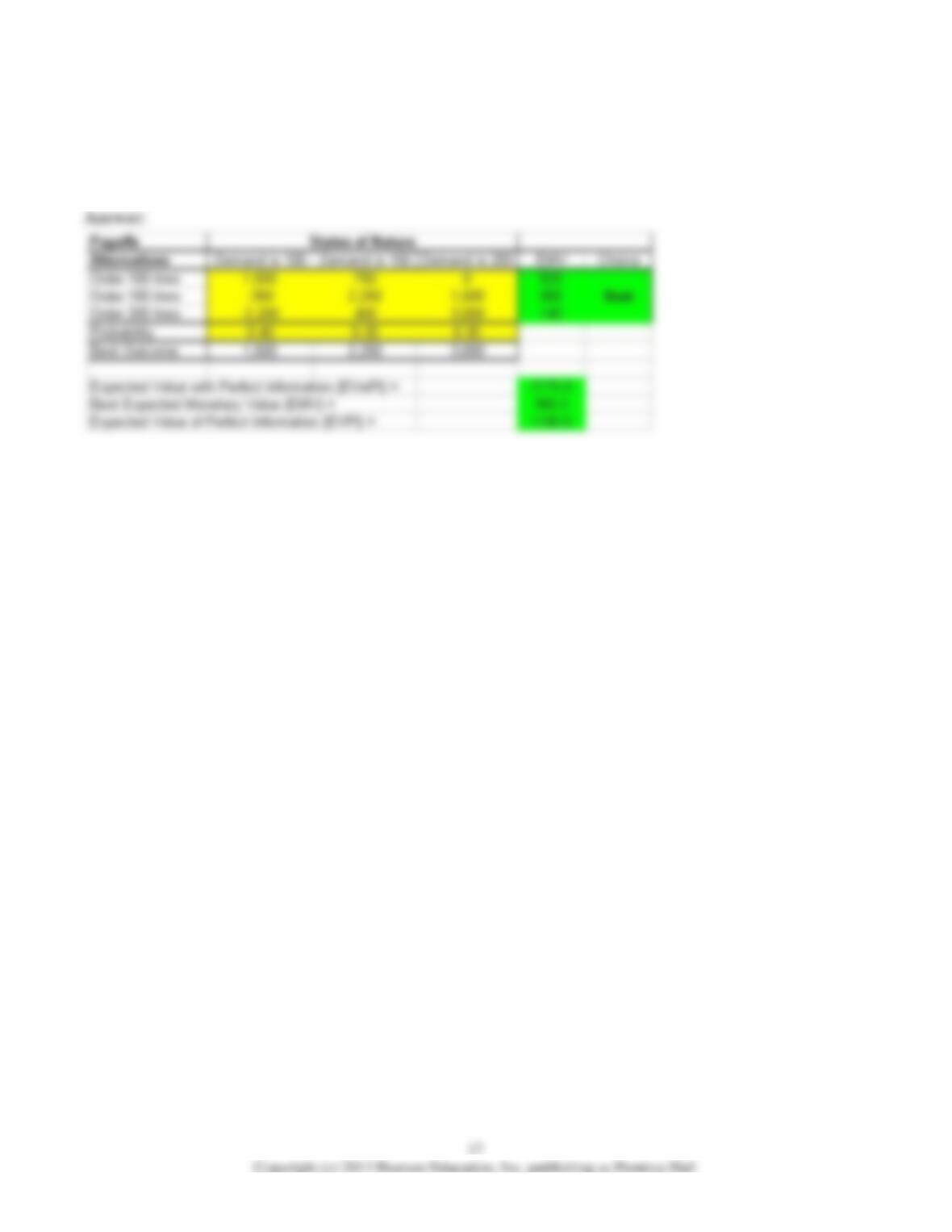
11) Refer to the information above. Based on its historical demand distribution, assume that AAA Inc.
has determined the following probability information: P(100) = 0.4, P(150) = 0.3, and P(200) = 0.3.
a. Which alternative should be chosen using the expected monetary value (EMV) criterion?
b. What is the expected value under certainty?
c. What is the expected value under perfect information (EVPI)?
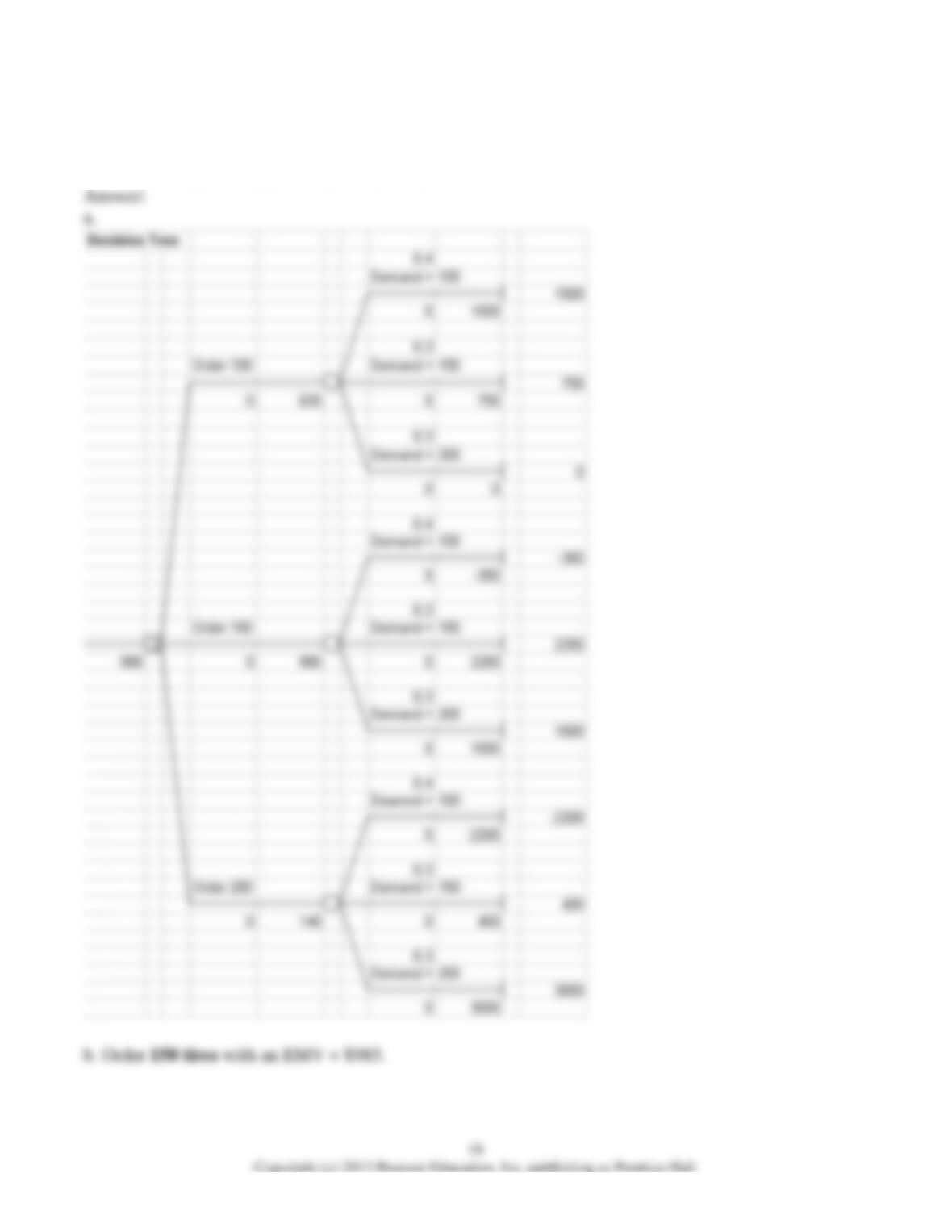
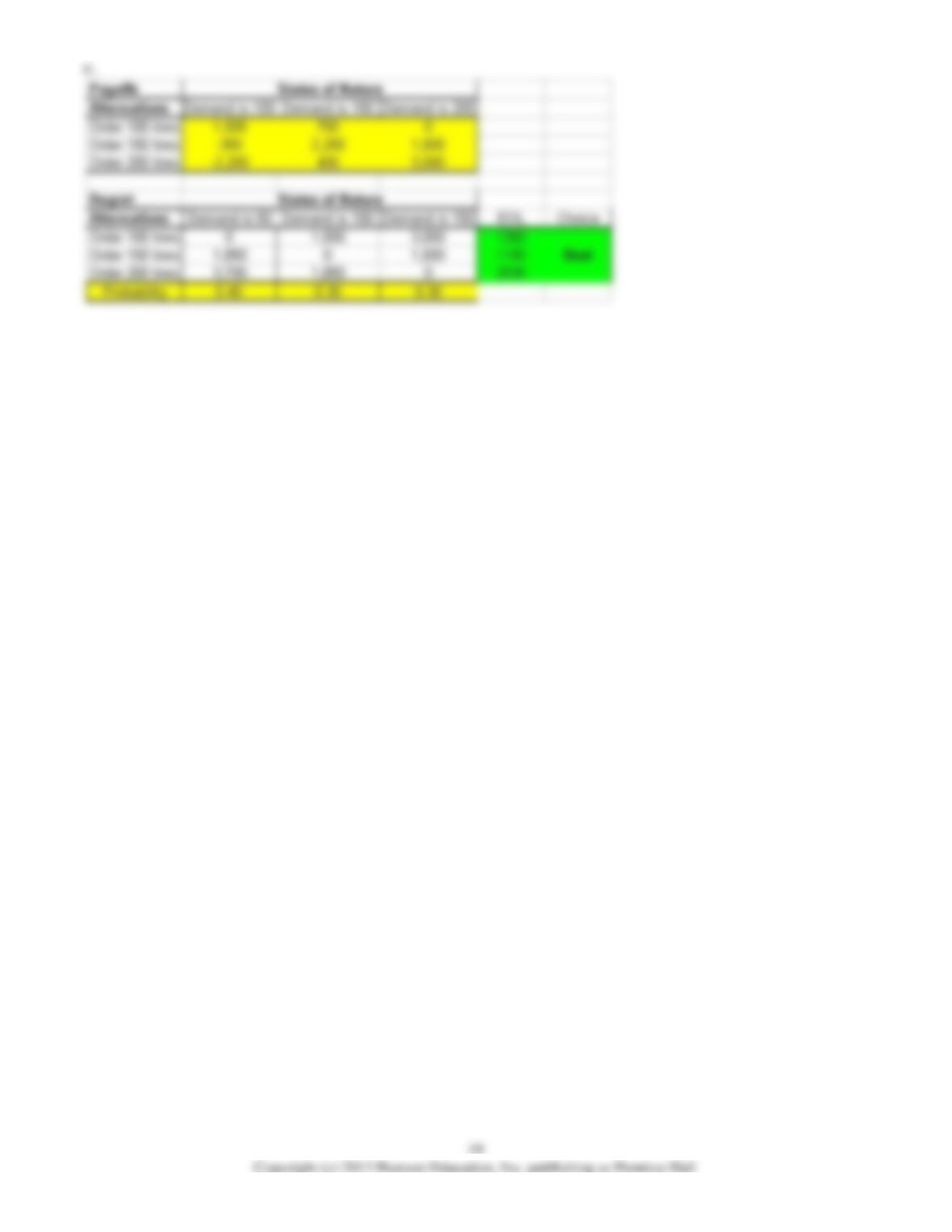
12) Refer to the information above. Based on its historical demand distribution, assume that AAA Inc.
has determined the following probability information: P(100) = 0.4, P(150) = 0.3, and P(200) = 0.3.
a. Develop a decision tree for this problem.
b. Analyze the decision tree and determine which alternative should be chosen.
c. Using the expected opportunity loss (EOL) criterion, which alternative should be chosen?
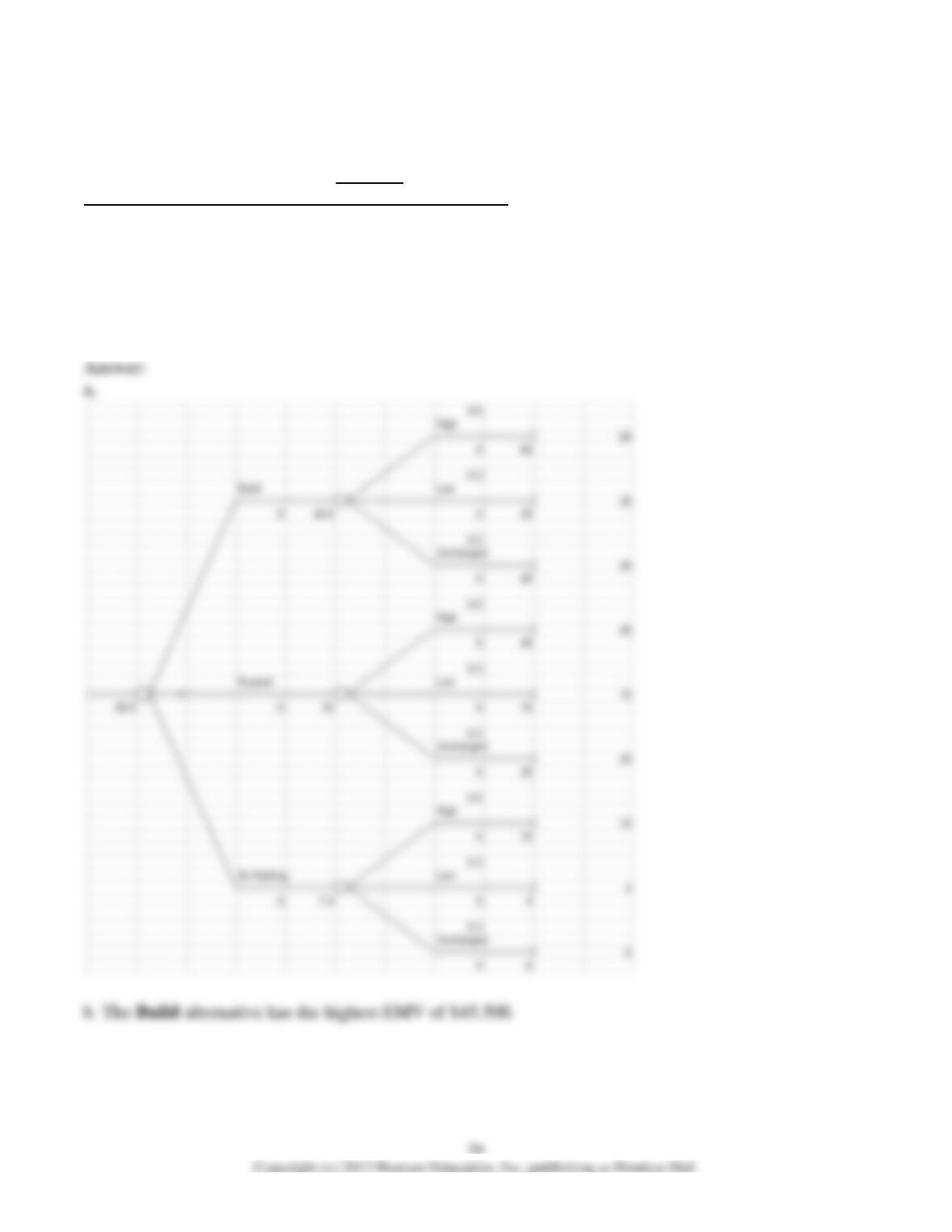
13) A toy store is considering expanding its capacity to meet a growing demand for its products. The
options faced by management are to build a new store, expand the existing store, or do nothing. A
marketing research firm has projected a 50% probability of a high demand for the toy market, a 30%
probability of a low demand, and a 20% probability of an unchanged demand. The following estimates
of annual returns (in $000’s) are as follows:
Demand
Alternative High Low Unchanged
Build new store $60 $25 $40
Expand existing store $45 $15 $25
Do nothing $10 $4 $6
a. Develop a decision tree for this problem.
b. Analyze the decision tree and determine which alternative should be chosen.
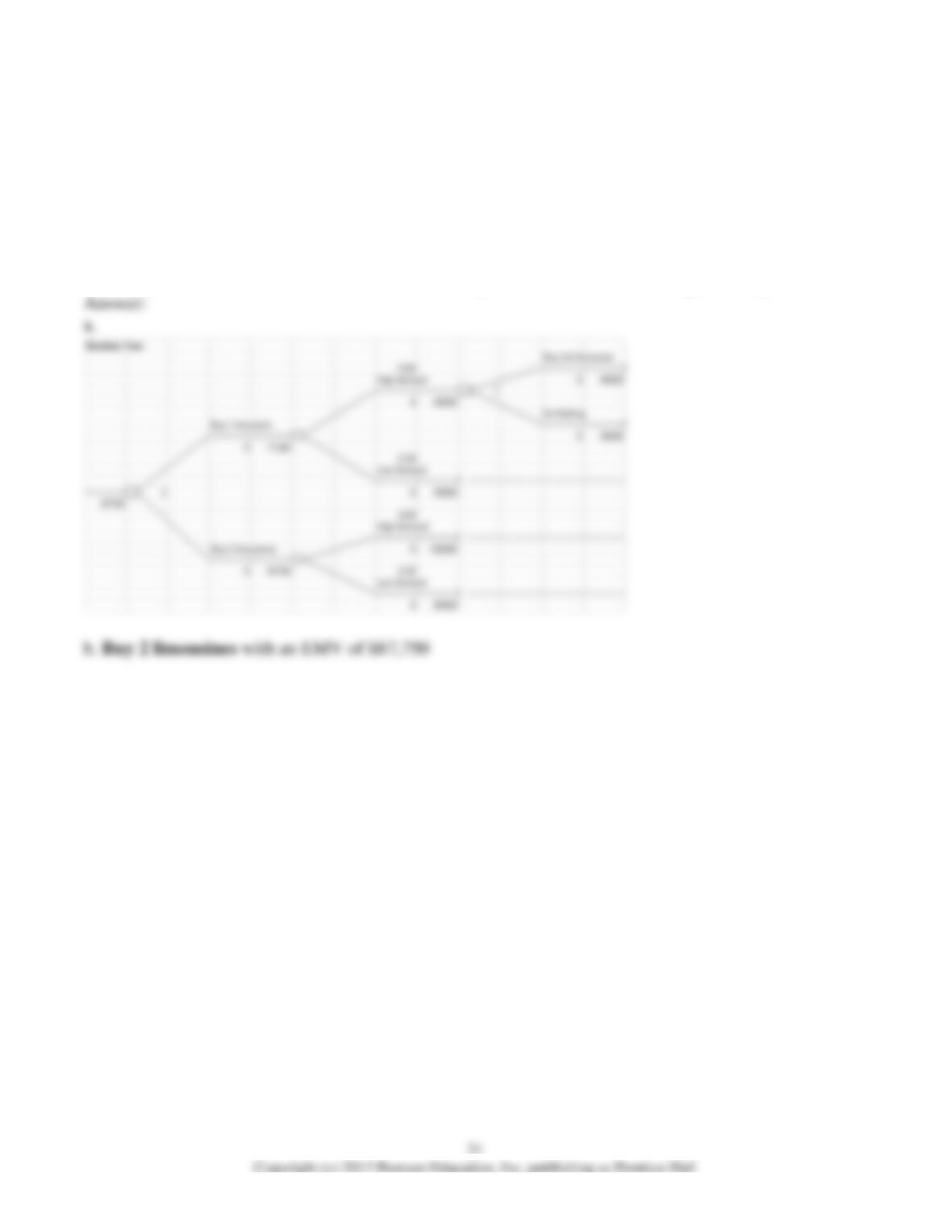
14) Limousine Inc. must decide how many new limousines to buy. The owner has narrowed down the
decision to two choices: buy one limousine or two limousines. If only one limousine is bought and
demand ridership is high, a second limousine can be bought later. The probability of high demand is
ridership 0.65, and the probability of low demand ridership is 0.35. The net present value obtained with
the purchase of two limousines is $100,000 if demand is high and $65,000 if demand is low. The net
present value for one limousine and low demand is $55,000. If demand is high, there are two options.
The first option is to buy a second limousine. This option has a net present value of $80,000. The
second option is to do nothing, which would have a net present value of $50,000.
a. Develop a decision tree for this problem.
b. Analyze the decision tree and determine how many limousines should be bought initially.
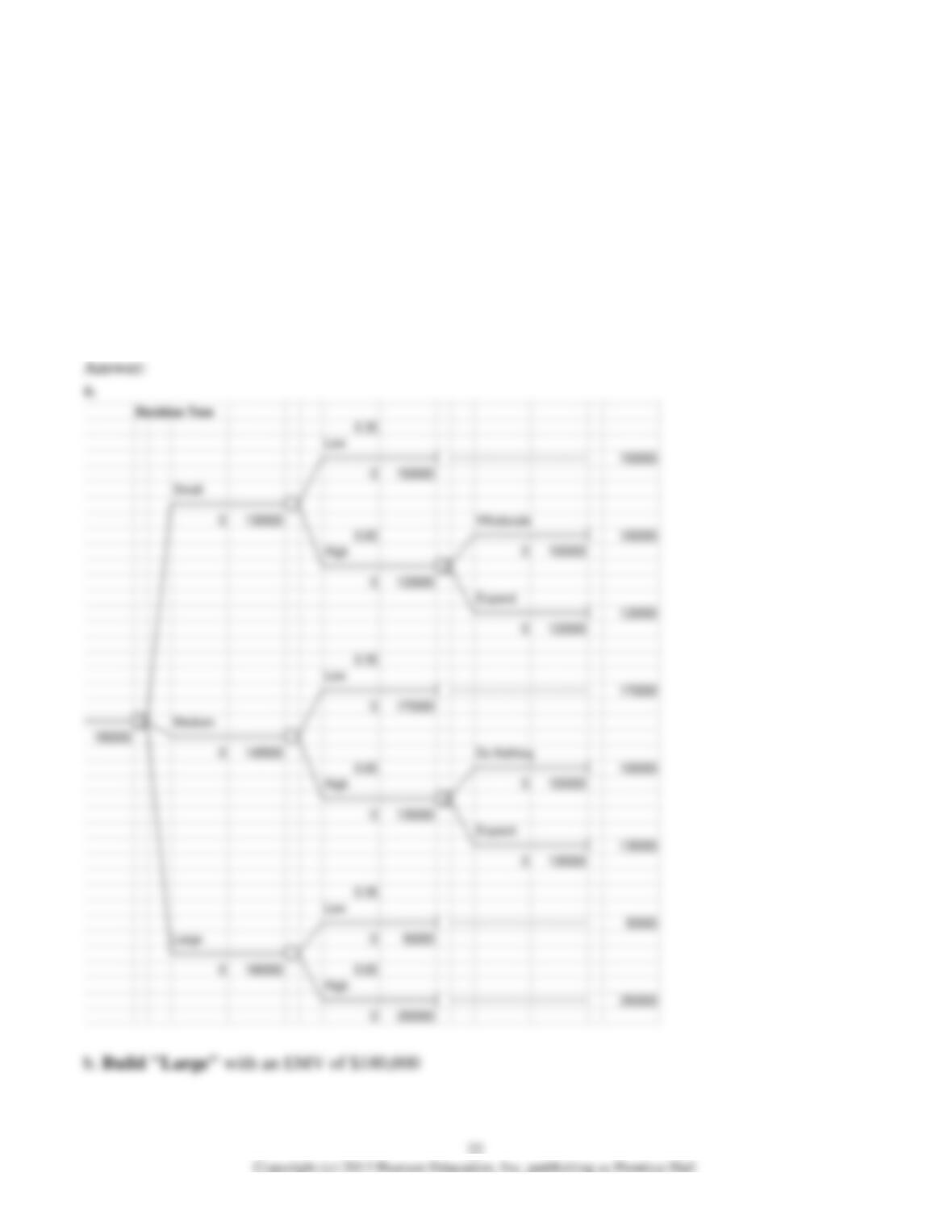
15) A company must decide whether to build a small, medium, or large grocery store. Marketing
research findings indicate a 0.35 probability that demand will be low and a 0.65 probability that demand
will be high. If the company builds a small grocery store and demand is low, the net present value will
be $150,000. If demand is high the company can buy its additional grocery needs from a wholesaler and
realize a net present value of $100,000 or expand and realize a net present value of $120,000. If the
company builds a medium grocery store and demand is low, the net present value will be $175,000; if
demand turns to be high the company could do nothing and realize a net present value of $100,000, or
expand and realize a net present value of $135,000. If the firm builds a large grocery store and demand
is low, the net present value will be $50,000; if demand turns out to be high the net present value will be
$250,000.
a. Develop a decision tree for this problem.
b. Analyze the decision tree and determine which alternative should be chosen.
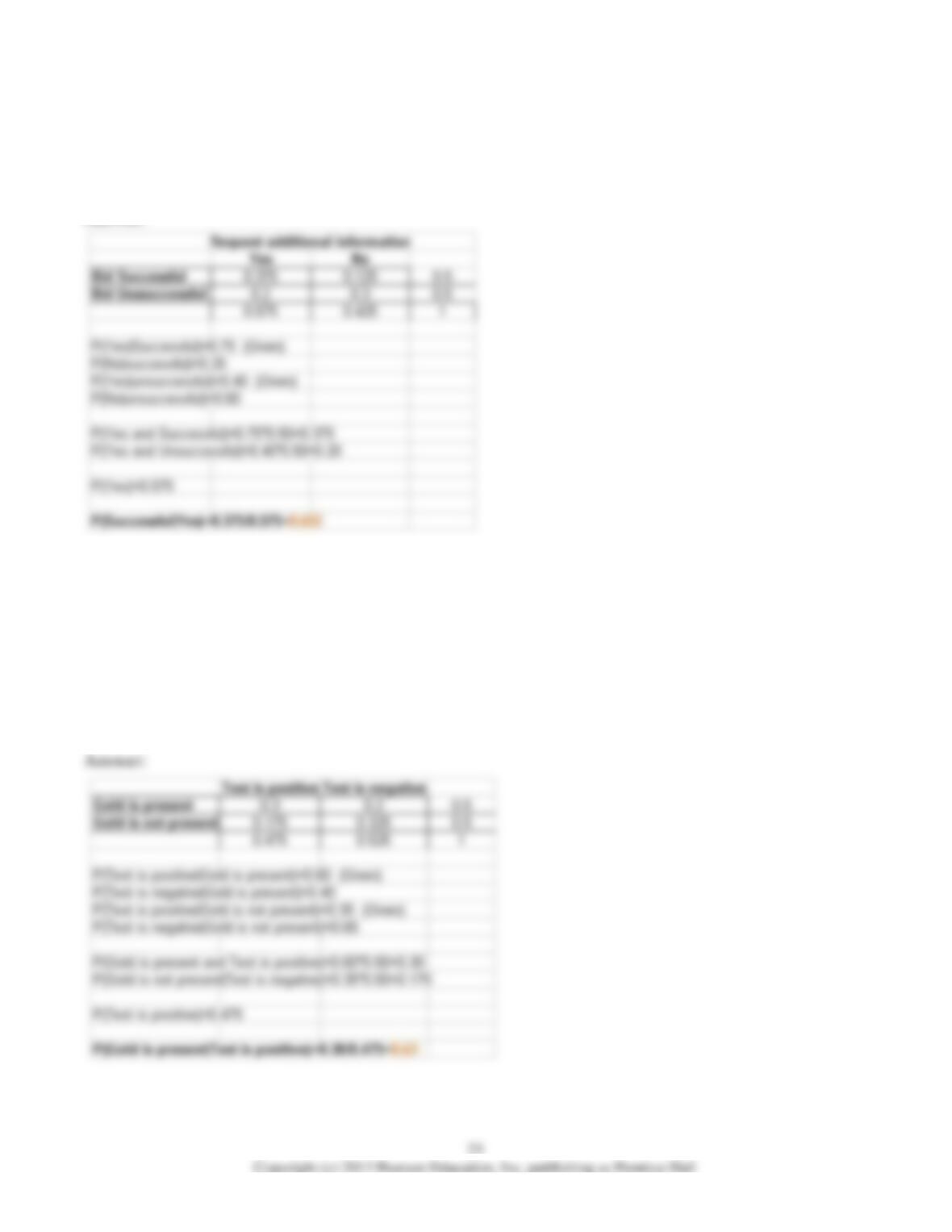
16) A defense contractor has submitted a bid to make new helmets for the army. The defense contractor
believes that the odds of winning the bid stand at 50-50 chance. Past history indicates that if the bid is
successful, there is a 0.75 probability that the contractor will hear about the status of the bid within one
week. There is also a 0.40 probability that the contractor will hear from the army within one week if the
bid is unsuccessful. What is the probability that the bid is successful if the contractor hears about the
status of the bid within one week? Use Bayes’ theorem to compute this posterior probability.
Answer:
17) Strike It Rich is a gold mining company that is attempting to decide whether to invest in a particular
site. The probability that the site has gold is 0.50. In order to obtain more information about the
potential presence of gold, the company has hired a geologist to analyze the soil. Past history indicates
that there is a 60% chance that the geologist’s test is positive given the presence of gold and a 35%
chance that the test is positive given the absence of any gold. What is the probability of the presence of
gold given that the geologist’s test yielded a positive result? Use Bayes’ theorem to compute this
posterior probability.
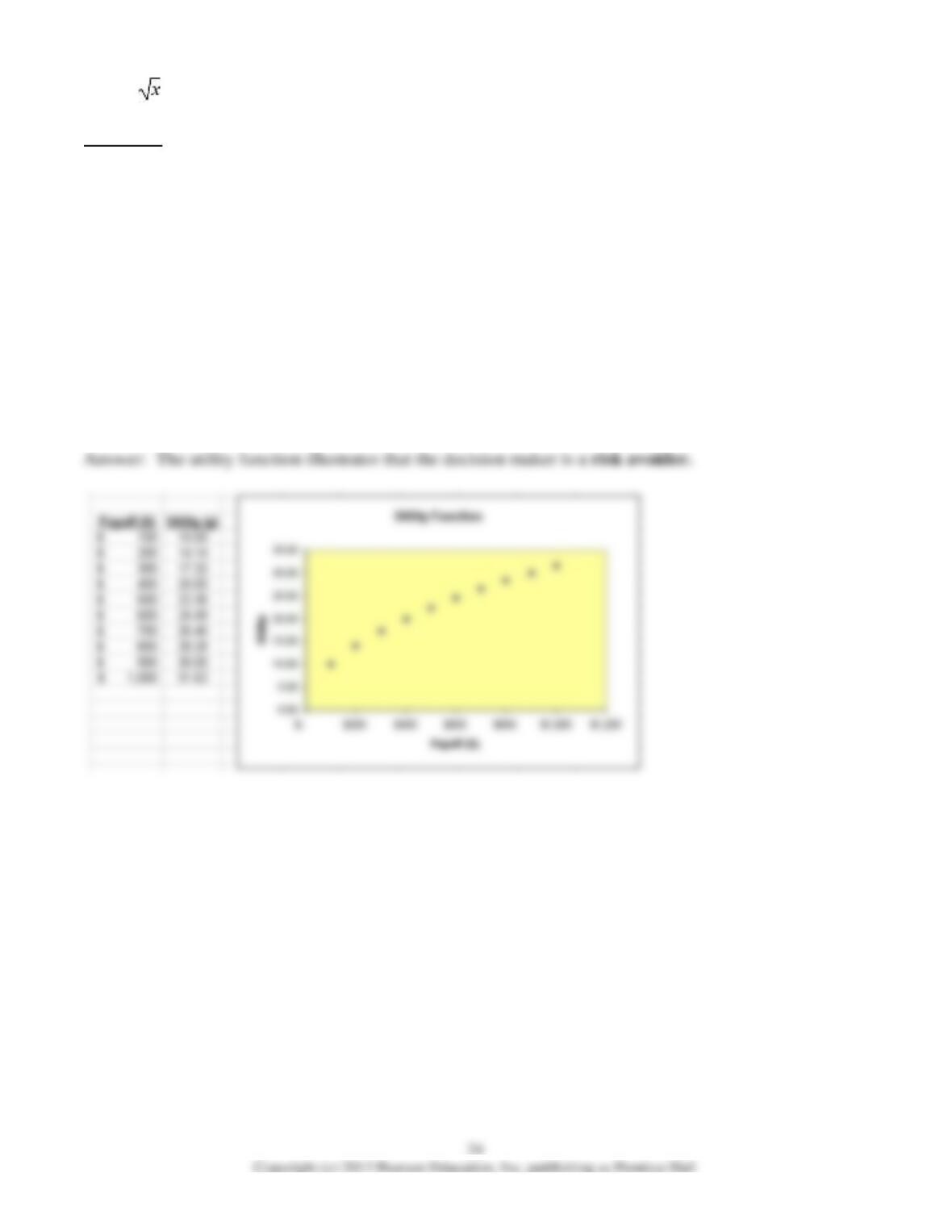
18) Suppose that the utility function for a decision maker is represented as follows:
U(x) = . The potential payoffs that are possible are illustrated below.
Payoff (x)
$100
$200
$300
$400
$500
$600
$700
$800
$900
$1000
Convert these payoffs into utility values using the above function. Plot the utility curve and determine
whether the decision maker is a risk avoider, risk indifferent, or a risk seeker.
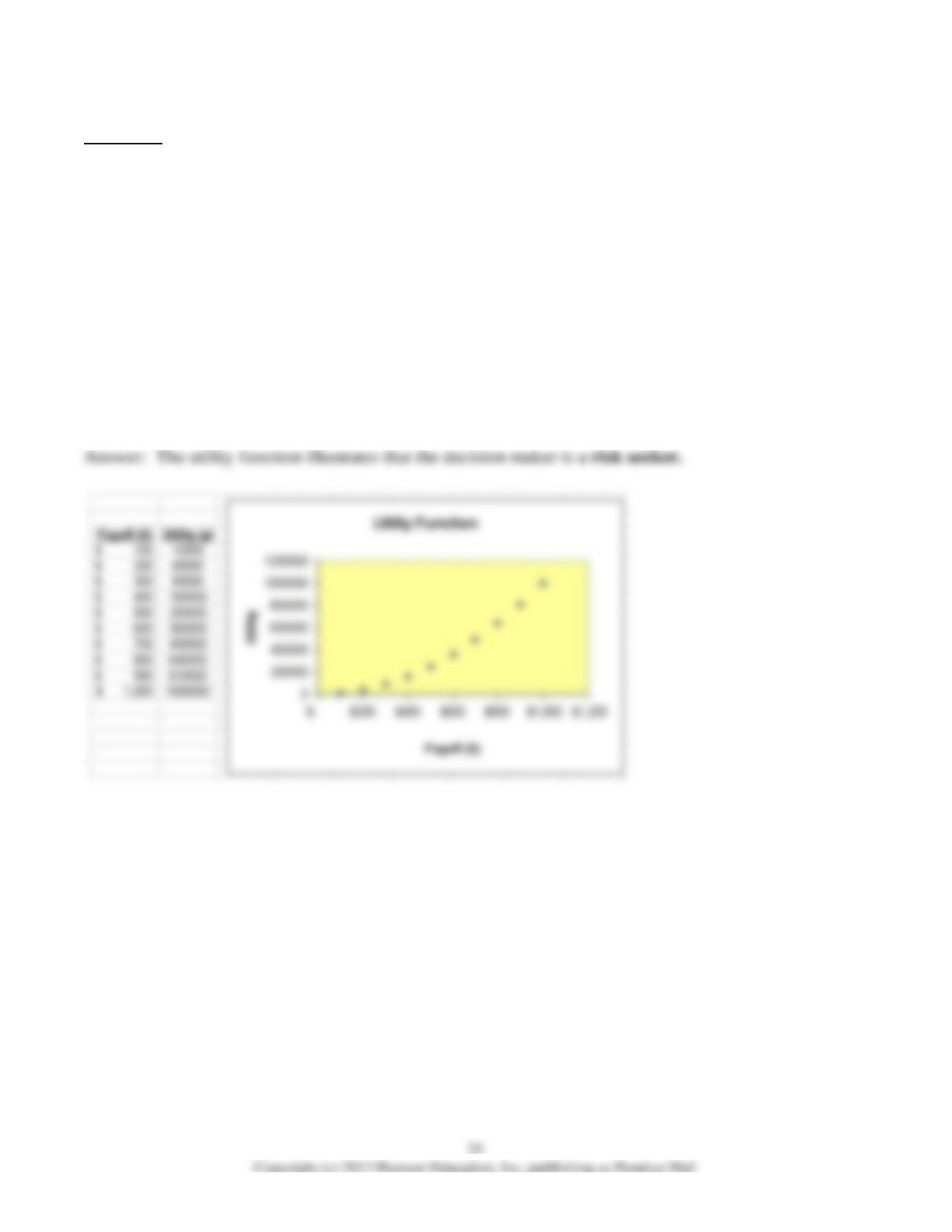
19) Suppose that the utility function for a decision maker is represented as follows:
U(x) = x2. The potential payoffs that are possible are illustrated below.
Payoff (x)
$100
$200
$300
$400
$500
$600
$700
$800
$900
$1000
Convert these payoffs into utility values using the above function. Plot the utility curve and determine
whether the decision maker is a risk avoider, risk indifferent, or a risk seeker.
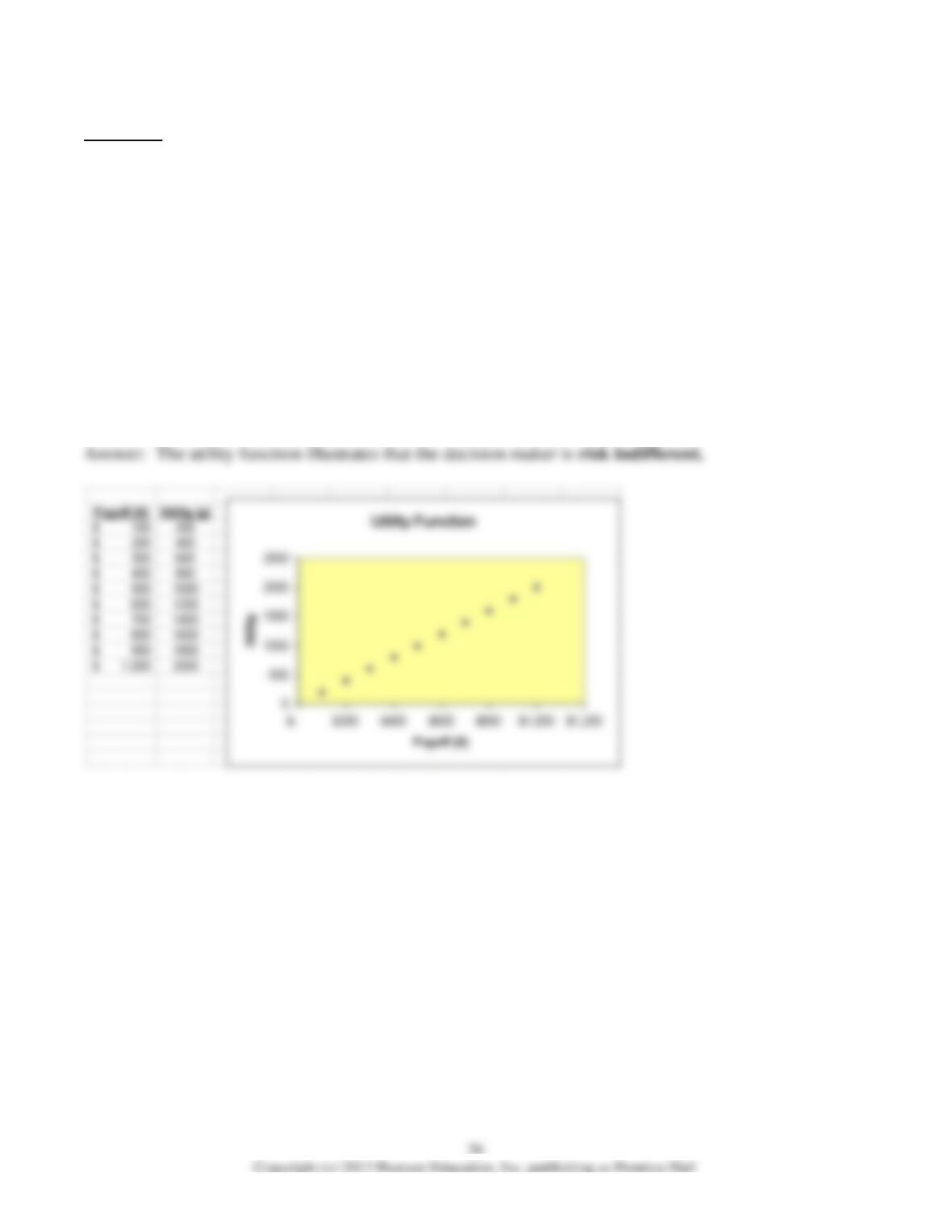
20) Suppose that the utility function for a decision maker is represented as follows:
U(x) = 2x. The potential payoffs that are possible are illustrated below.
Payoff (x)
$100
$200
$300
$400
$500
$600
$700
$800
$900
$1000
Convert these payoffs into utility values using the above function. Plot the utility curve and determine
whether the decision maker is a risk avoider, risk indifferent, or a risk seeker.
27
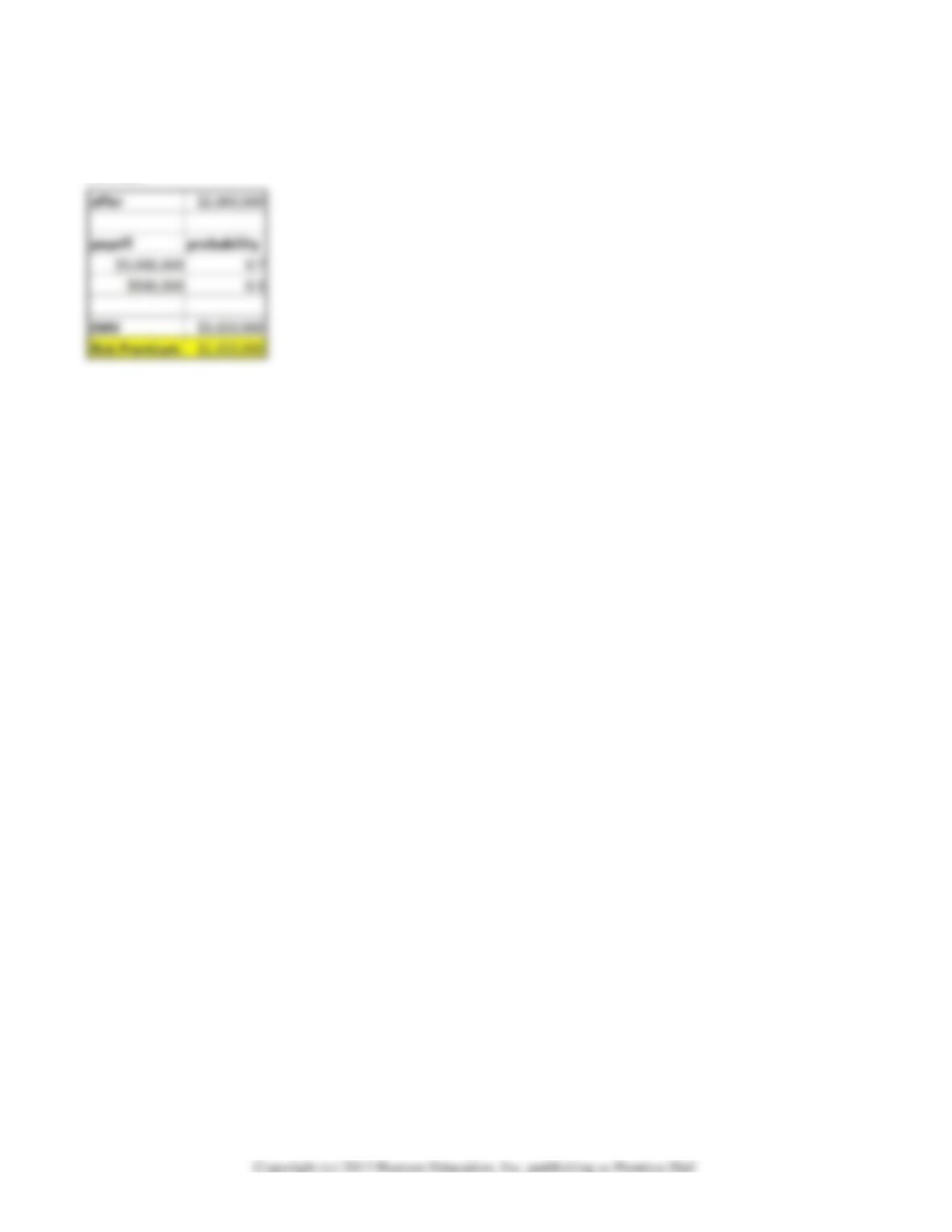
21) Dan faces the option to sell his small seafood company to an interested bidder. Assume that if he
stays in business for another year, his company will be worth $5 million with 0.7 probability, and $0.5
million with 0.3 probability. If Dan chooses to accept an offer of $2 million for his company, rather
than going with the gamble of another year with the company, then what is the risk premium?
Answer: