
Chapter 8 – Resourcing Projects
TRUE/FALSE
1. The process of estimating the types and quantities of material, human resources, equipment, or
supplies required to perform each activity is called a “project staffing analysis.”
2. Even when a project team does not identify individual activities, it will still need to determine how
many resources are needed to complete the project
3. The project resource allocation plan is a component of the human resource management plan that
describes when and how project team members will be acquired and how long they will be needed.
4. When identifying people to work on the project, it is helpful to consider their professional disciplines,
skill levels and their physical location.
5. Estimate Activity Resources focuses exclusively upon the identification of the number of human
resources required to perform each scheduled activity.
6. When constructing a responsibility matrix or “RACI” chart, it is important to ensure that only one
person has primary accountability for any activity.
7. When determining resource availability, project managers need only consider full-time, internal
resources.
8. While a “RACI” chart may be very useful for assigning activities to core team members and project
managers, the sheer number of subject matter experts on many projects renders the RACI chart
impractical for large projects.

9. RACI (Responsible, Approve, Consult, Inform) charts go beyond a communication plan in that they
identify every project activity and specify the exact involvement of each stakeholder.
10. When recruiting resources to support a project, it is helpful to bring core team members and key
subject matter experts on board as early as possible, to help plan the project and develop the project
culture.
11. When project managers include diverse perspectives in making decisions, they can often avoid major
risks that a single perspective would not uncover.
12. One approach to identify which activities contribute to work overload for a particular resource is to
compare the resource histogram to the Gantt chart schedule.
13. When resource overloads are extreme, project managers may need to consider the acquisition of
additional resources, reductions in scope or extensions to the project schedule.
14. Resource leveling is a network scheduling technique that seeks to assign nearly equivalent work units
to each member of the project team.
15. In order to avoid project delays, project managers confronted with resource overloads will naturally
seek to exploit the slack associated with non-critical activities.
16. The critical chain method is a schedule method that modifies the critical path to account for limited
resources.
17. Critical Chain Project Management (CCPM) attempts to keep the most highly demanded resource busy
on critical chain activities.

18. If a project resource is excessively overloaded, it may be necessary to reduce the project scope.
19. Crashing is a project schedule compression technique that relies extensively on overlapping activities
and a high degree of concurrency.
20. Fast Tracking is a project schedule compression technique in which activities or phases normally done
in sequence are performed in parallel for at least a portion of their duration.
21. Crashing almost always accelerates the schedule while increasing project risk, whereas fast tracking
almost always accelerates the schedule while increasing project cost.
MULTIPLE CHOICE
1. When estimating resource needs, project teams should consider all the following EXCEPT:
a.
support needs such as information systems.
b.
the time required to communicate between activities.
c.
specific knowledge or skills that are required.
d.
scoring models.
2. The staffing management plan addresses all of the following except:
a.
how to identify internal and external human resources for the project.
b.
how to create RACI charts.
c.
how to handle timing issues in building, developing, and releasing the project team.
d.
how to determine the availability of human resources for the project
3. A common tool project teams use is a responsibility assignment matrix (RAM). Typically, this chart
will depict:
a.
the date each activity will begin.
b.
the duration of each activity.
c.
the roles key members of the team will play on each activity.
d.
organizational reporting structure
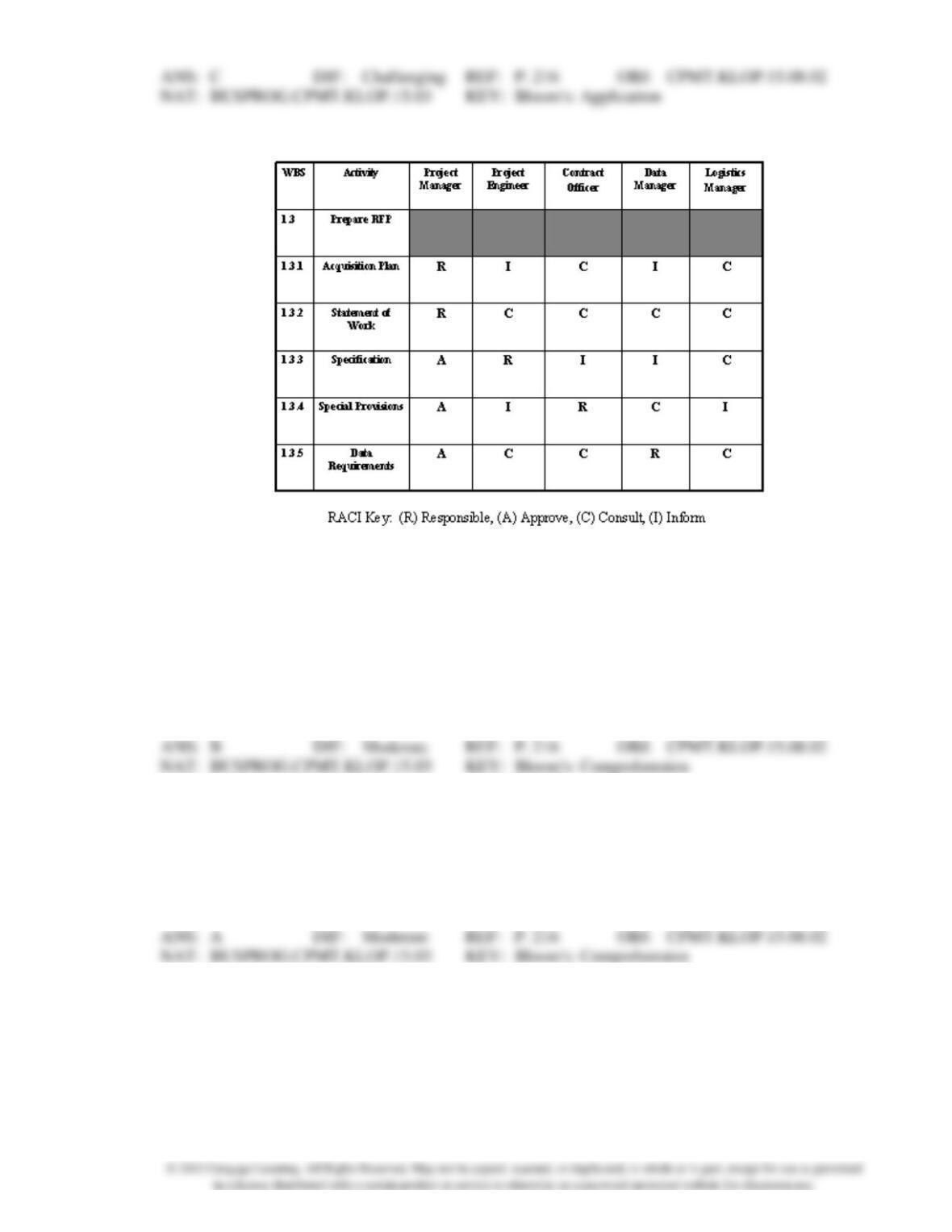
Figure 8-1 RACI Chart
4. Consider the RACI chart presented in Figure 8-1 (RACI stands for Responsible, Approve, Consult,
Inform). Who is responsible for development of the specification?
a.
the project manager
b.
the project engineer
c.
the contract officer
d.
the data manager
5. Consider the RACI chart presented in Figure 8-1. Who is accountable for the data requirements?
a.
the project manager
b.
the project engineer
c.
the contract officer
d.
the logistics manager
6. Consider the RACI chart presented in Figure 8-1. What responsibility should the contract officer
assume with respect to the statement of work?
a.
develop
b.
approve
c.
consult
d.
inform
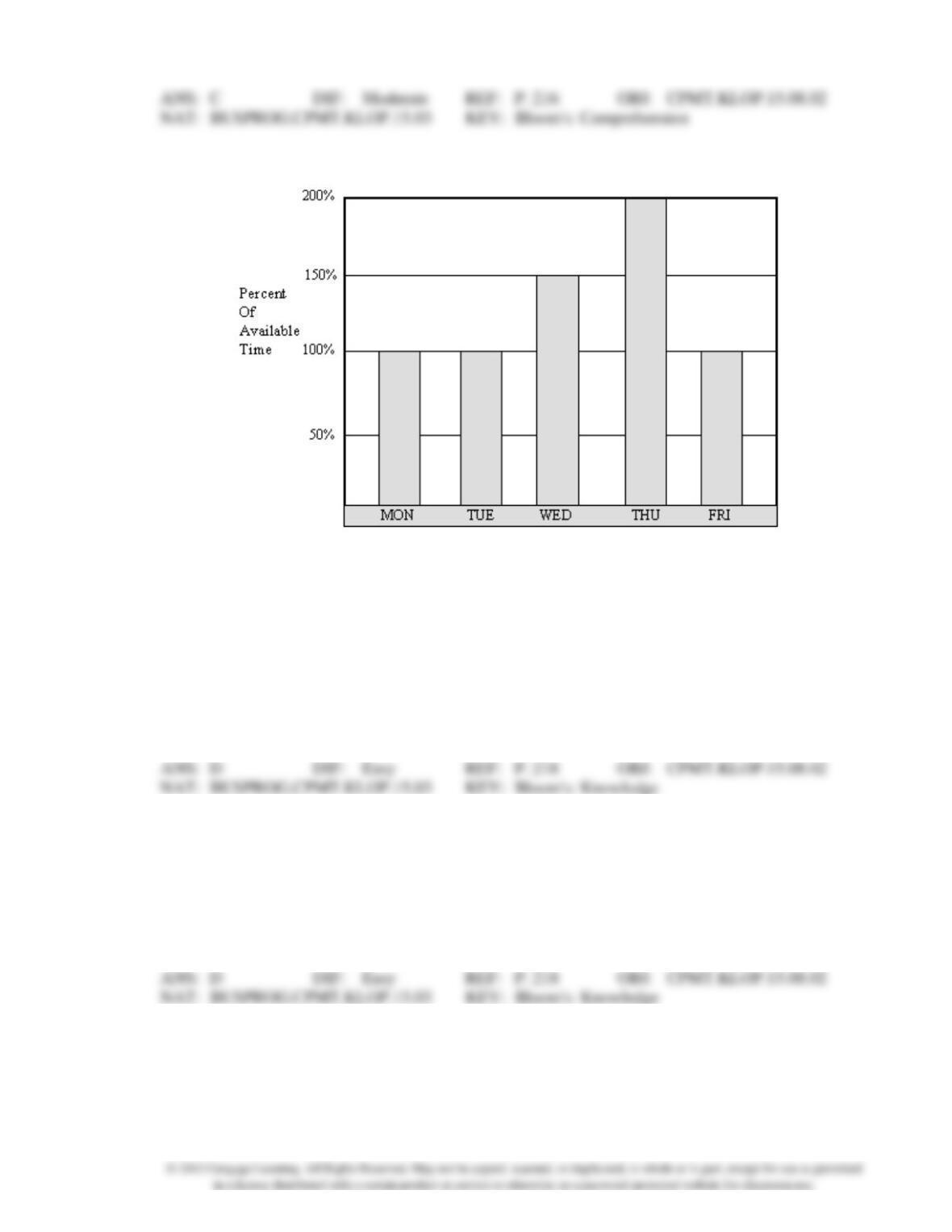
Figure 8-2 Software Programmer Loading Chart
7. Consider the software programmer loading chart presented in Figure 8-2. Which of the following
statements most accurately describes the loading of the software programmer?
a.
The programmer is never overloaded.
b.
The programmer is overloaded on Wednesday only.
c.
The programmer is overloaded on Thursday only.
d.
The programmer is overloaded on both Wednesday and Thursday.
8. Consider the software programmer loading chart presented in Figure 8-2. What percent of available
time is the software programmer assigned to work activities on Thursday?
a.
80 percent
b.
100 percent
c.
150 percent
d.
200 percent
9. Project managers often confront the challenge of reducing excessive time commitments and overloads
among project resources. All of the following methods represent a potentially viable strategy to
reduce work overloads EXCEPT:
a.
Require all project resources to work overtime
b.
Split an activity into two activities and delay the second part.
c.
Reorder activities when logically feasible.
d.
Reassign certain activities to other workers.
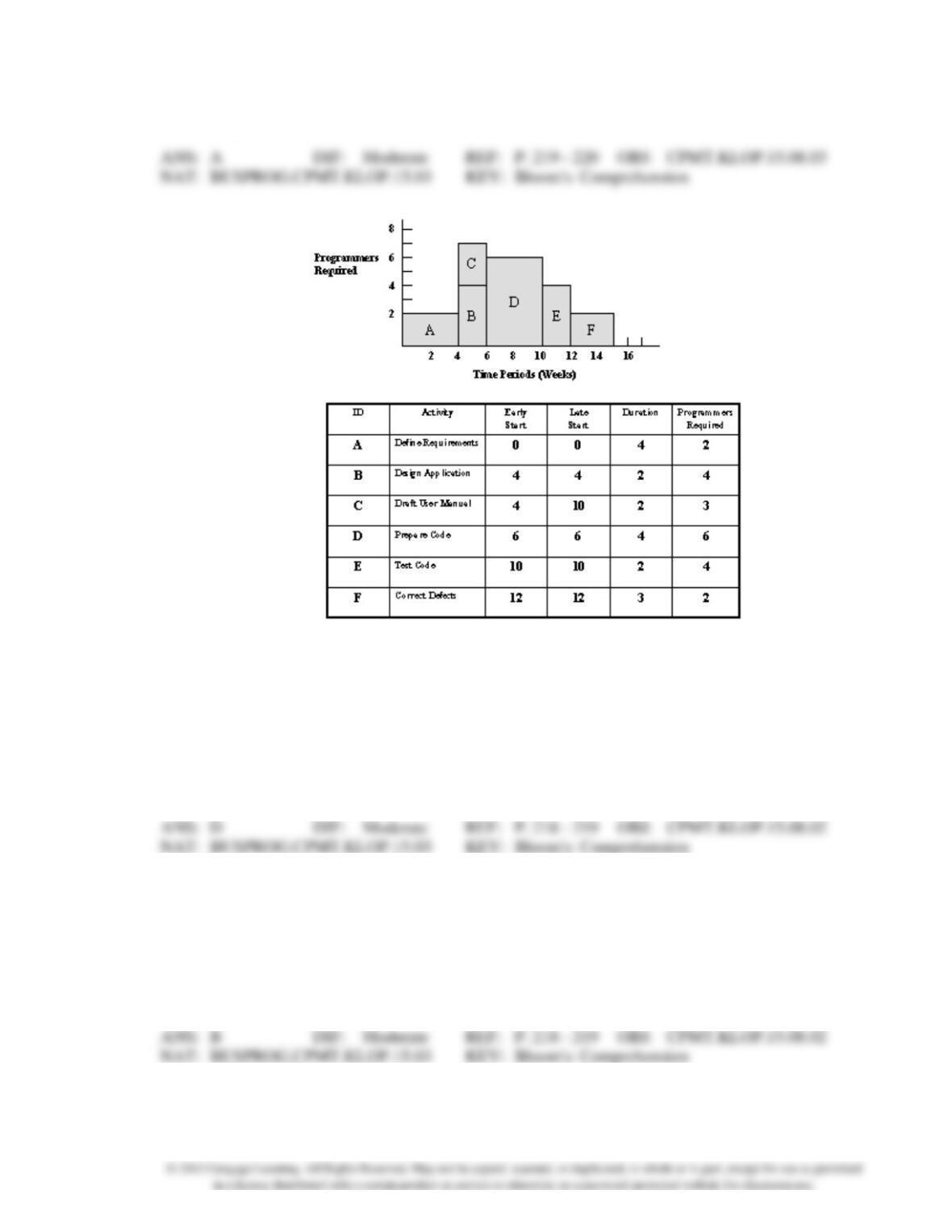
Figure 8-3 Programmers Resource Histogram
10. Consider the programmers resource histogram presented in Figure 8-3. How many programmers are
required during the fifth week of this project?
a.
2 programmers
b.
4 programmers
c.
6 programmers
d.
7 programmers
11. Consider the programmers resource histogram presented in Figure 8-3. If only six programmers are
available to support this project, which of the following conclusions is valid?
a.
The current schedule is feasible.
b.
The demand for programmers during weeks five and six exceeds the number available.
c.
The demand for programmers during weeks six through ten exceeds the number available.
d.
There is an excess capacity of programmers throughout the duration of this project.

12. Consider the programmers resource histogram presented in Figure 8-3. Which activity is an ideal
candidate to delay in order to achieve a feasible schedule?
a.
Activity A – Define Requirements
b.
Activity B – Design Application
c.
Activity C – Draft User Manual
d.
Activity F – Correct Defects
13. Critical Chain method was developed to address several problems that are common in organizations
that use traditional project scheduling. Which of the following describes a common problem
addressed by the critical chain method?
a.
Many team members render overly optimistic estimates of the time it will take them to
complete project activities.
b.
Many team members work solely on a single task until it is complete – impeding work on
other related activities.
c.
Many team members tend to use all of the time available for an activity rather than
completing it early.
d.
Many team members work best when multi-tasking
14. The components (principles) of Critical Chain Project Management include which of the following?
a.
Estimate activity durations generously
b.
Avoid multi-tasking.
c.
Adhere strictly to completion deadlines – rather than finishing early or late.
d.
Add a comfortable buffer to every activity
15. Project managers must often face the challenge of compressing the project schedule. All of the
following actions can be taken to reduce the duration of the critical path EXCEPT:
a.
Reduce the project scope and /or quality.
b.
Overlap sequential activities using finish-to-finish, start-to-start, or start-to-finish
relationships.
c.
Use the float in critical path activities
d.
Partially overlap sequential activities by using time leads.
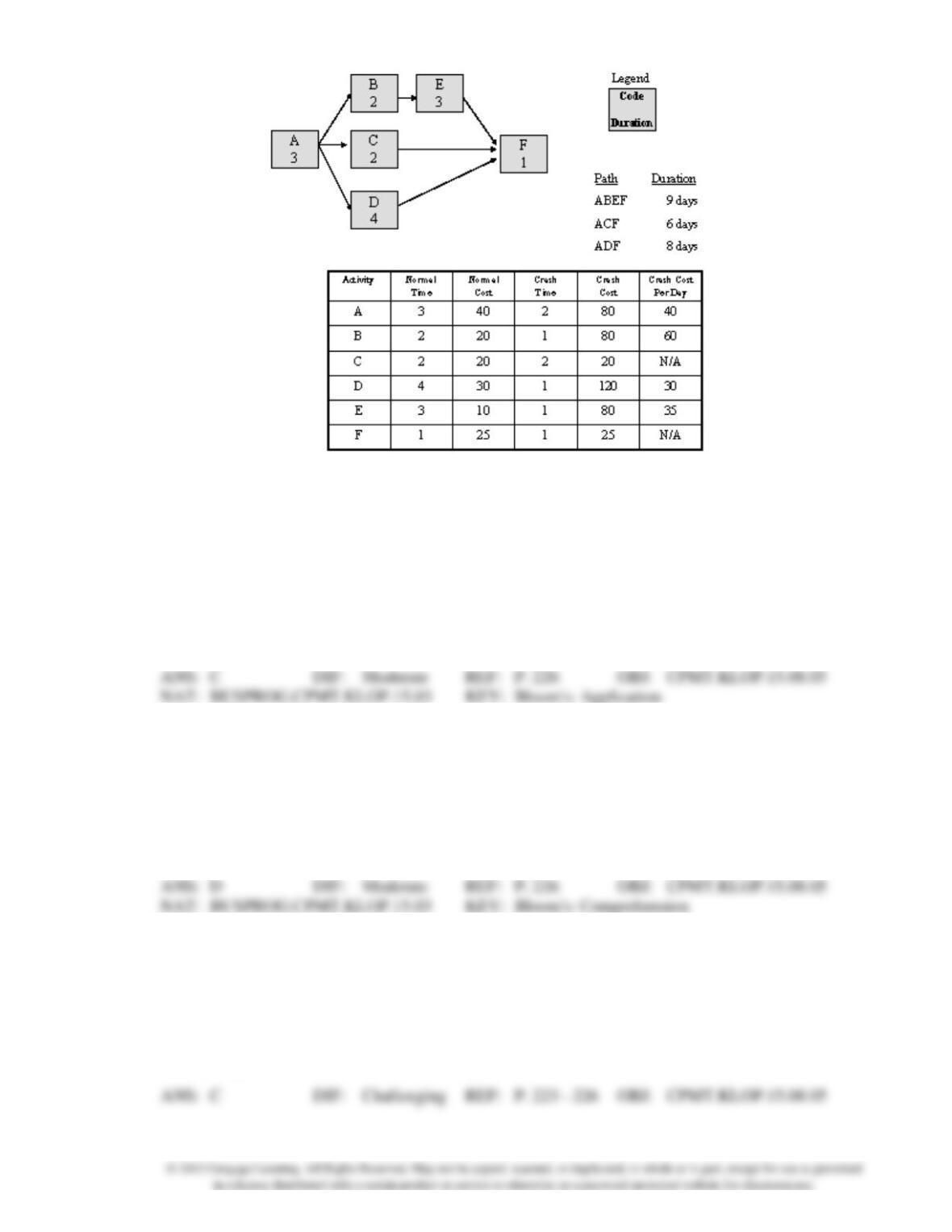
Figure 8-4 Project Crashing Information
16. Consider the project crashing information presented in Figure 8-4. What is the cost to complete this
project in the normal time?
a.
$ 40
b.
$ 120
c.
$ 145
d.
$ 405
17. Consider the project crashing information presented in Figure 8-4. What is the normal (un-crashed)
duration of this project?
a.
6 days
b.
7 days
c.
8 days
d.
9 days
18. Consider the project crashing information presented in Figure 8-4. Which activity should you crash to
reduce this project by one day with the least incremental cost?
a.
Activity A
b.
Activity C
c.
Activity E
d.
Activity F

19. Consider the project crashing information presented in Figure 8-4. What is the incremental cost to
achieve a one-day reduction in the duration of this project in the most cost efficient manner?
a.
$ 30
b.
$ 35
c.
$ 40
d.
$ 60
20. Consider the project crashing information presented in Figure 8-4. What is the total cost to complete
this project in 7 days if crashed in the most cost efficient manner?
a.
$ 180
b.
$ 220
c.
$ 240
d.
$ 270
ESSAY
1. What methods could a project manager use to resolve resource overloads?
2. Describe how crashing and fast tracking can be used to compress a project schedule. What limitations
could there be with each of these methods?

3. What should a project manager’s considerations be when resourcing projects?
4. What is a responsibility assignment matrix (RAM)? Describe how you might use a responsibility
assignment matrix to manage the resources assigned to your project.