Chapter 08 Test Bank KEY
1. Assuming workers and jobs are identical, if information is perfect and job search and migration are
costless, then
2. Assuming workers and jobs are identical, if information is perfect but job search and migration are
costly, then
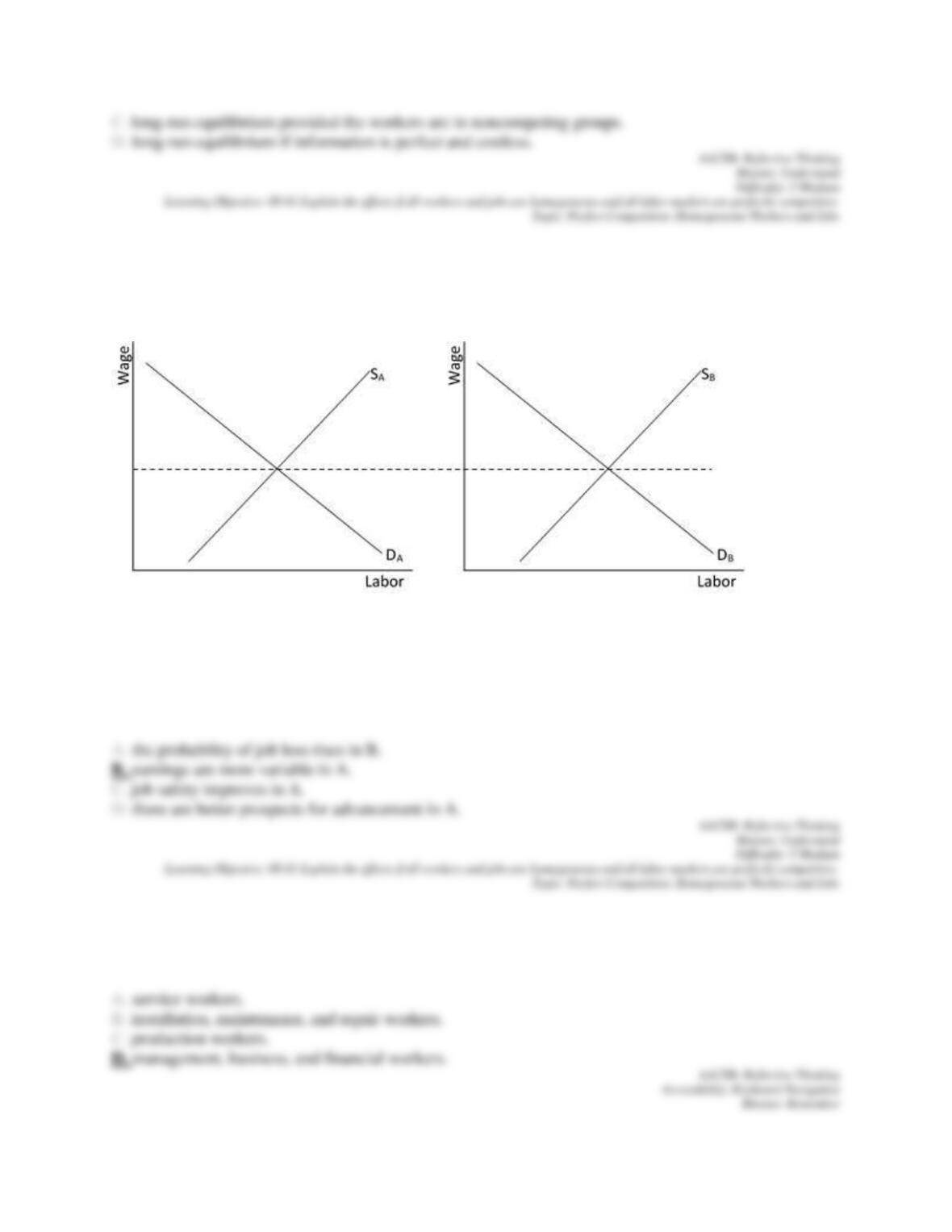
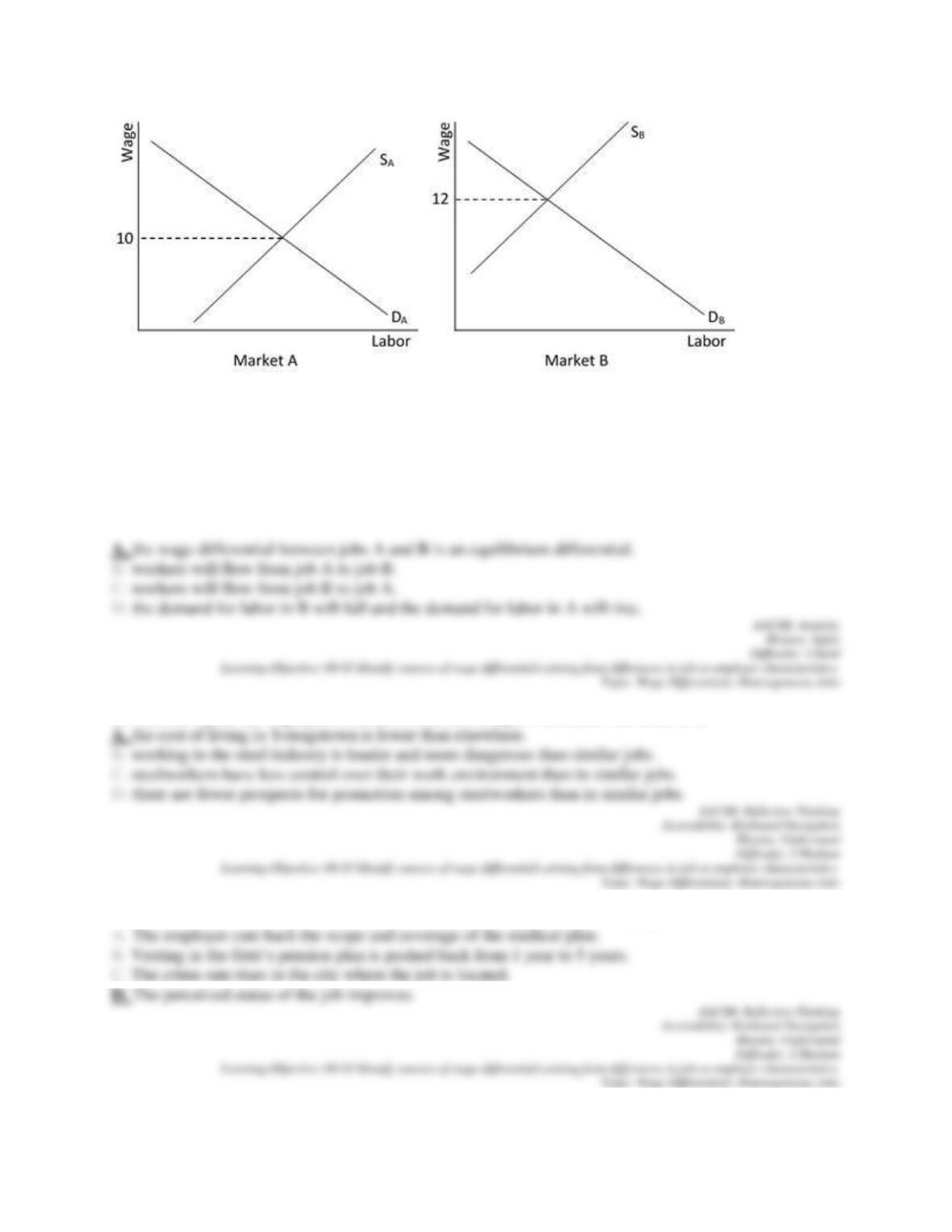
3. Refer to the following diagram.
Consider the two labor markets shown in the diagram above. The wage rates shown represent
4. Refer to the following diagram.
Suppose that all other nonwage aspects of the jobs in these two markets are identical.We would expect
labor supply in B to increase if
5. Of the following occupational groups, 2014 average hourly earnings were greatest among

6. Of the following industries, 2014 average hourly earnings were greatest in
7. In 2013, hourly pay (measured in U.S. dollars) was highest in
8. Average hourly pay for production workers in the United States in 2013 was
9. Heterogeneous jobs are those that
Topic: Wage Differentials: Heterogeneous Jobs
10. Which of the following is not a source of persistent compensating wage differentials?
11. Suppose all workers are identical but working for Ajax is more pleasant than working for Acme. In all
other non-wage respects, the two firms offer the same job characteristics. In equilibrium,
12. If job X pays more than identical job Y, then the wage rates will
13. The wage rate paid workers at Flow, Inc. will most likely exceed that at otherwise identical Stock Co.
if
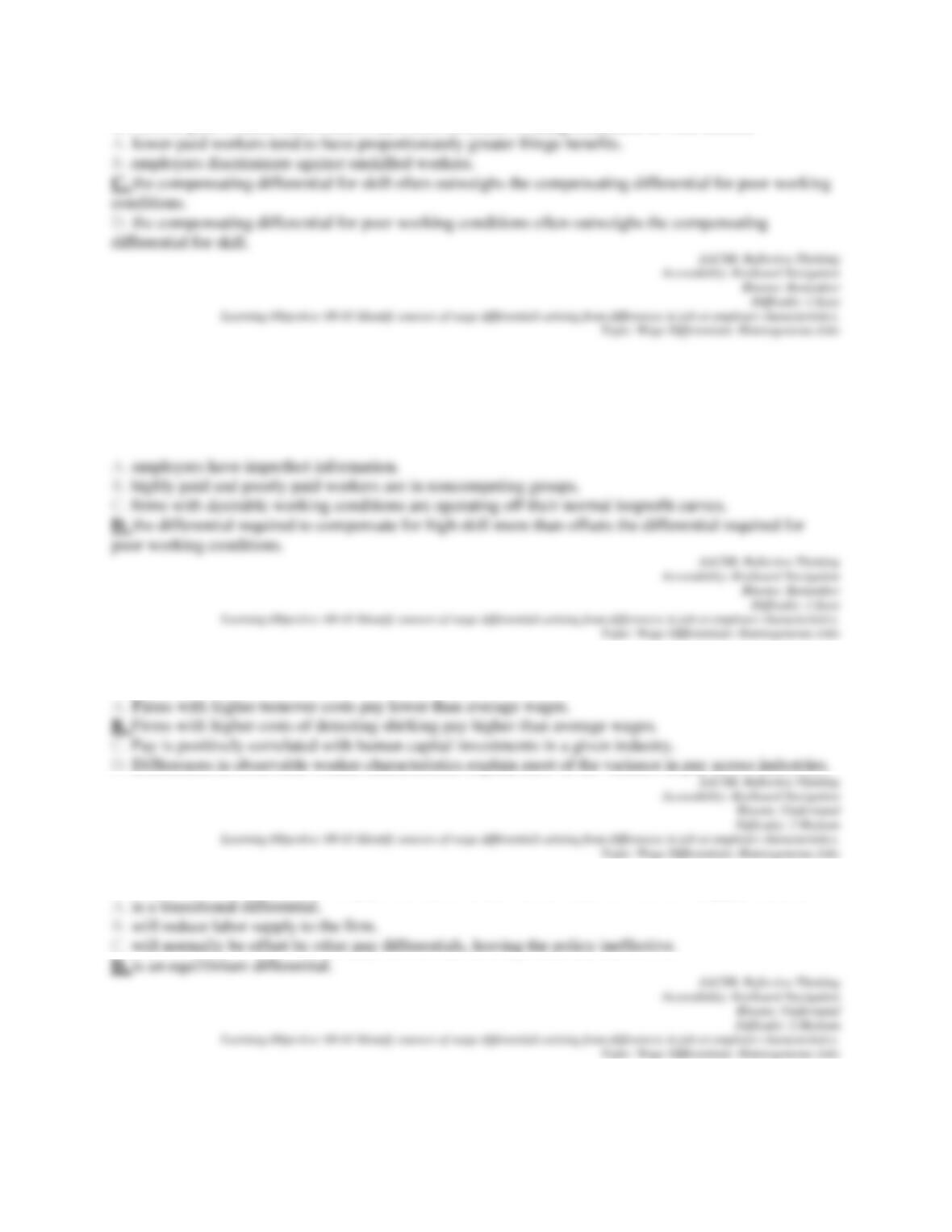
14. Refer to the diagram below, which represents a local labor market consisting of two submarkets. All
workers are assumed to be identical.
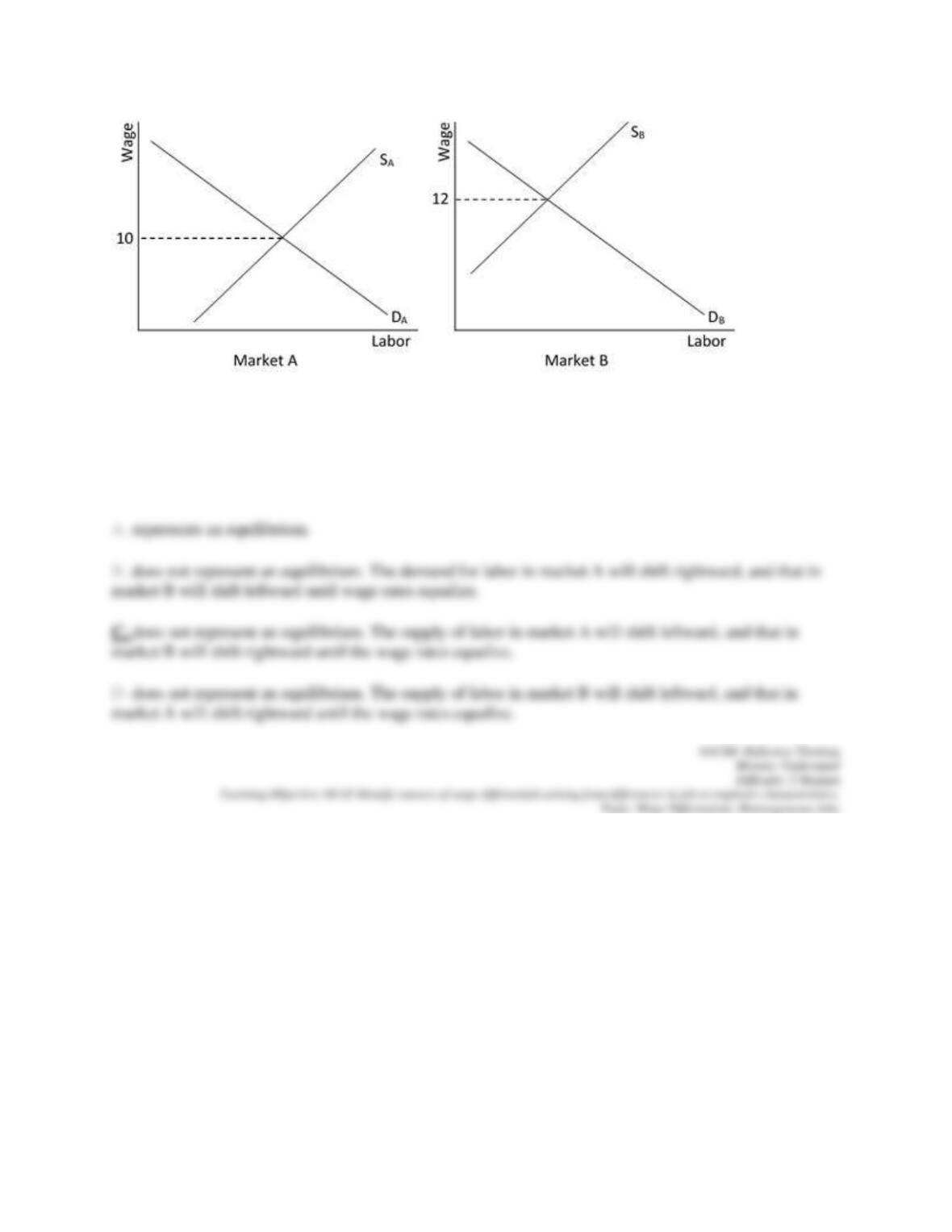
Assume that information is perfect, mobility between jobs is costless, and that all nonwage aspects of the
two are identical. The outcome shown in the diagram
15. Refer to the diagram below, which represents a local labor market consisting of two submarkets. All
workers are assumed to be identical.
Suppose that the wage in B is higher because workers perceive disutility of $2 associated with this job
relative to A. Assuming that information is perfect and mobility between jobs is costless, we can conclude
that
16. All else equal, the wage paid to steelworkers in Youngstown, Ohio, will be lower if
17. Which of the following would tend to increase labor supply to a particular job?
18. Lower-paid workers often seem to have less-desirable working conditions as well because
19. People who receive relatively high pay also tend to work in a relatively desirable work environment.
This is probably because
20. Which of the following research findings would support an efficiency wage explanation of pay
differentials?
21. Suppose a firm decides to raise pay as a way to reduce worker turnover.The resulting pay differential

22. All else equal, large firms tend to pay higher wages. This may be explained by all of the following,
except
23. The concept of noncompeting groups suggests that workers in different groups
24. Which one of the following is a true statement?
Topic: Wage Differentials: Heterogeneous Workers
25. Compared to present-oriented people, individuals who are more future-oriented tend to have _______
discount rates and consequently tend to obtain _______ education and earnings.
26. Consider a worker who faces a trade-off between wages on the vertical axis and job safety on the
horizontal axis.The less averse a worker is to risk of injury on the job, the
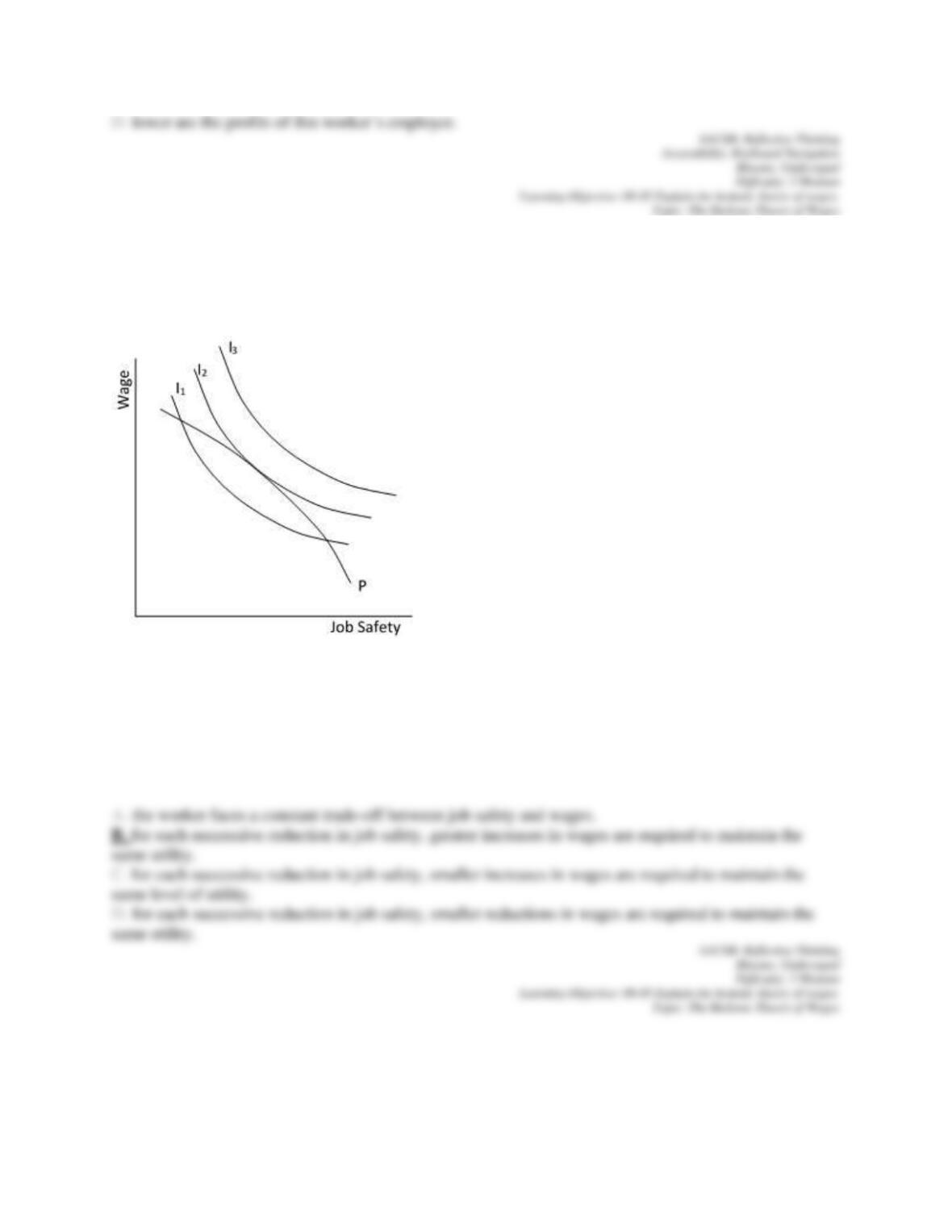
27. Refer to the following diagram.
The shape of the worker’s indifference curves—I1, I2, and I3—indicates that
28. Refer to the following diagram.
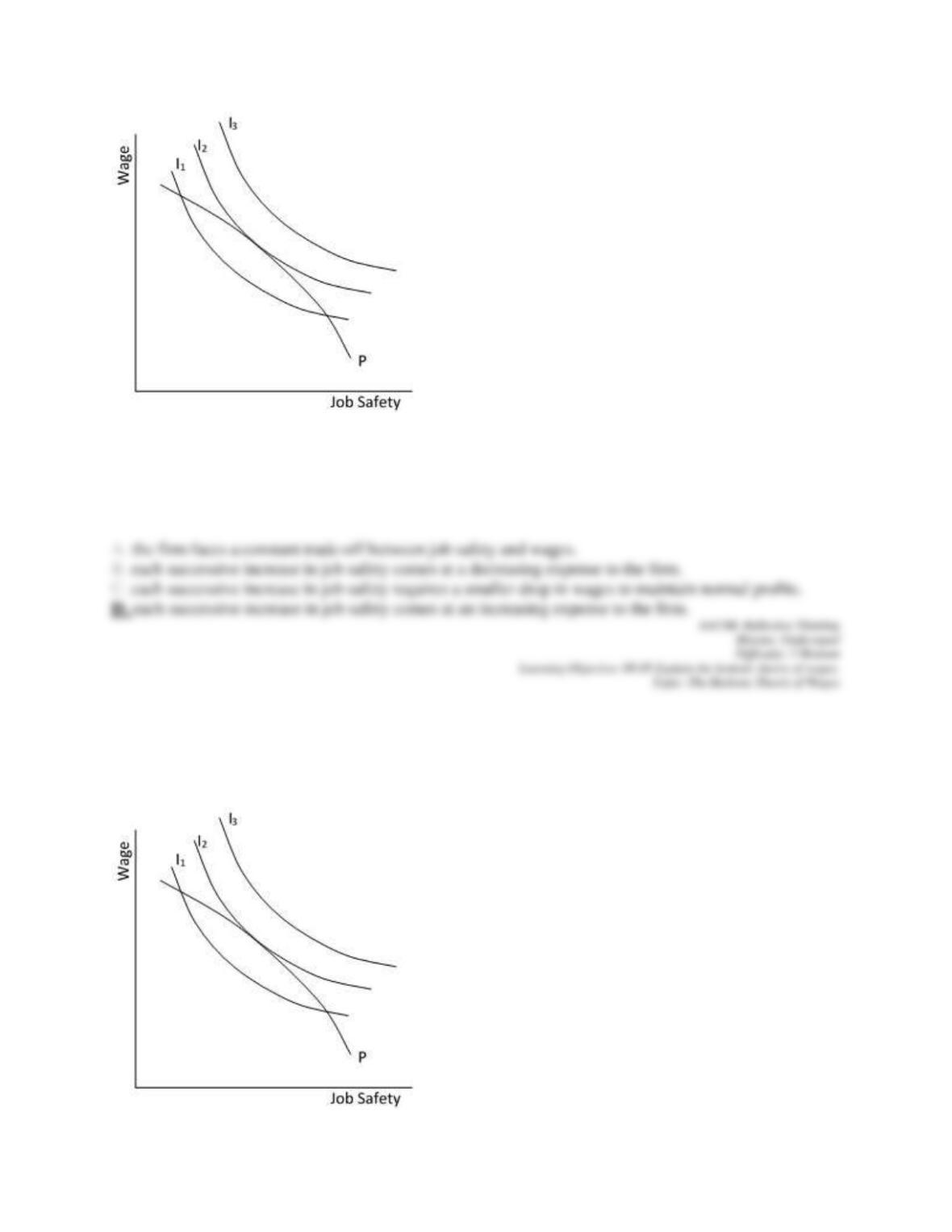
The firm’s isoprofit curve, P, is shown as concave to the origin, reflecting the assumption that
29. Refer to the following diagram.
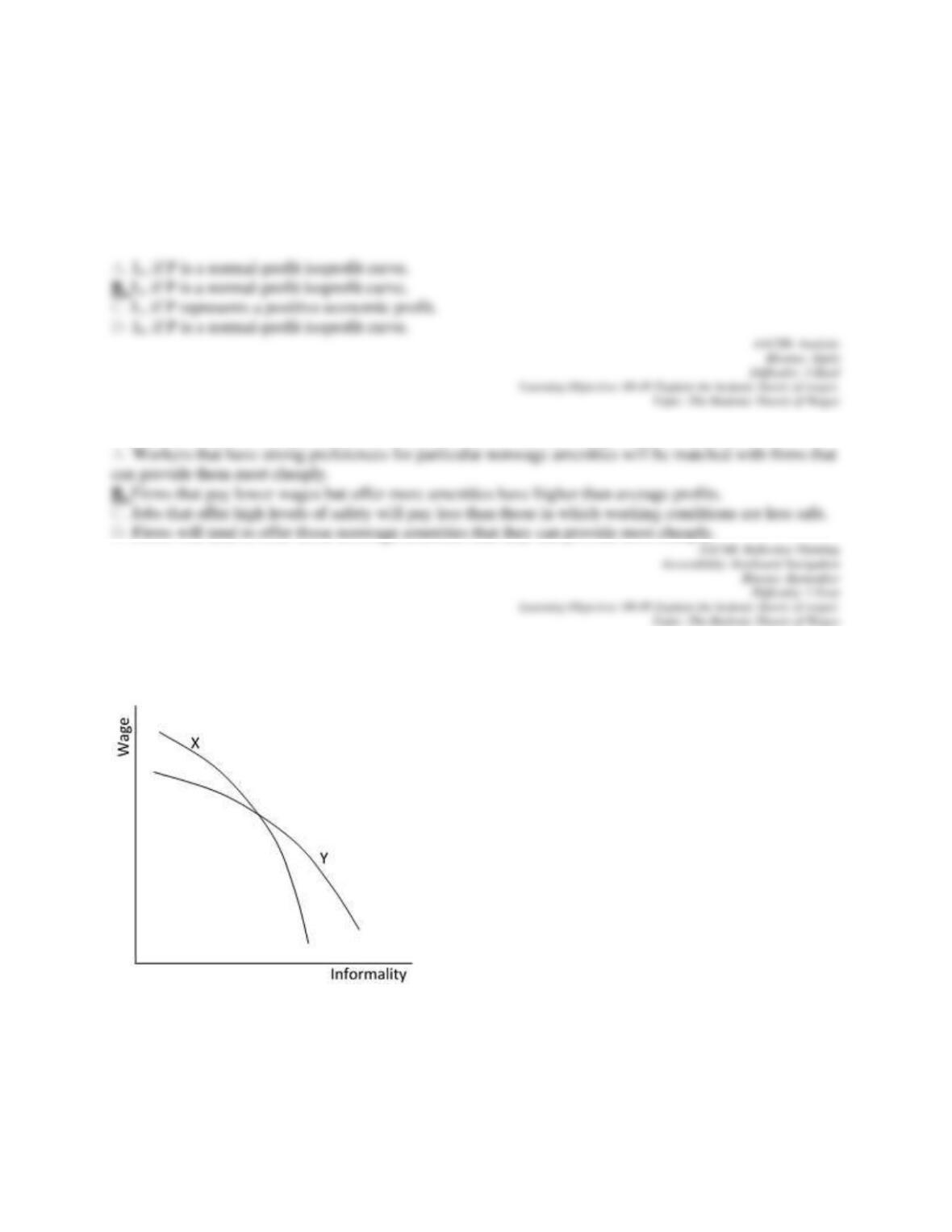
The highest level of utility the worker can possibly achieve is
30. Which of the following is not predicted by the hedonic theory of wages, all else constant?
31. Refer to the following diagram.
Consider a worker who faces a trade-off between higher wages and a more relaxed work environment as
shown in the diagram. A worker whose indifference curves are relatively steep
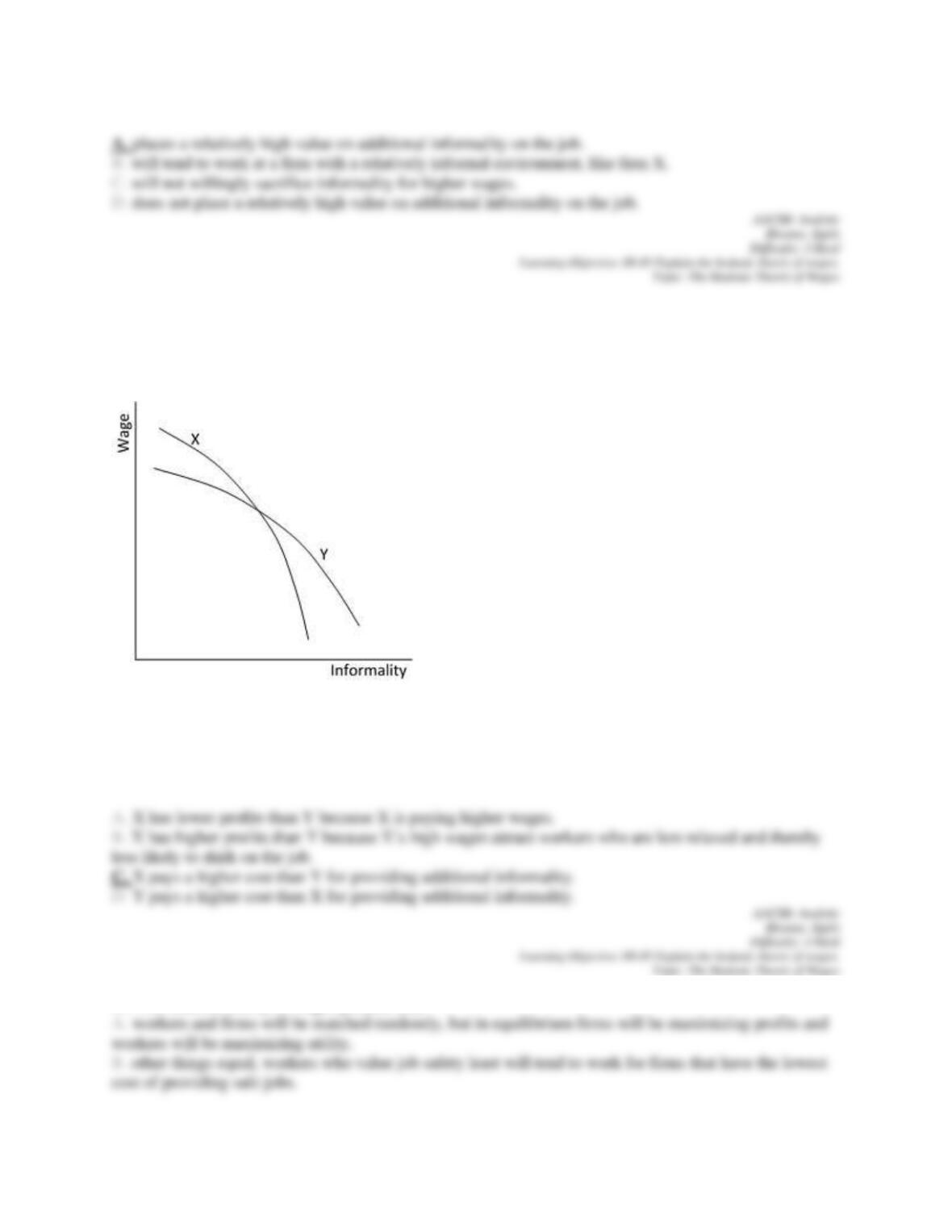
32. Refer to the following diagram.
Which one of the following best explains the differences in the isoprofit curves of the two firms?
33. The hedonic theory of wages predicts that
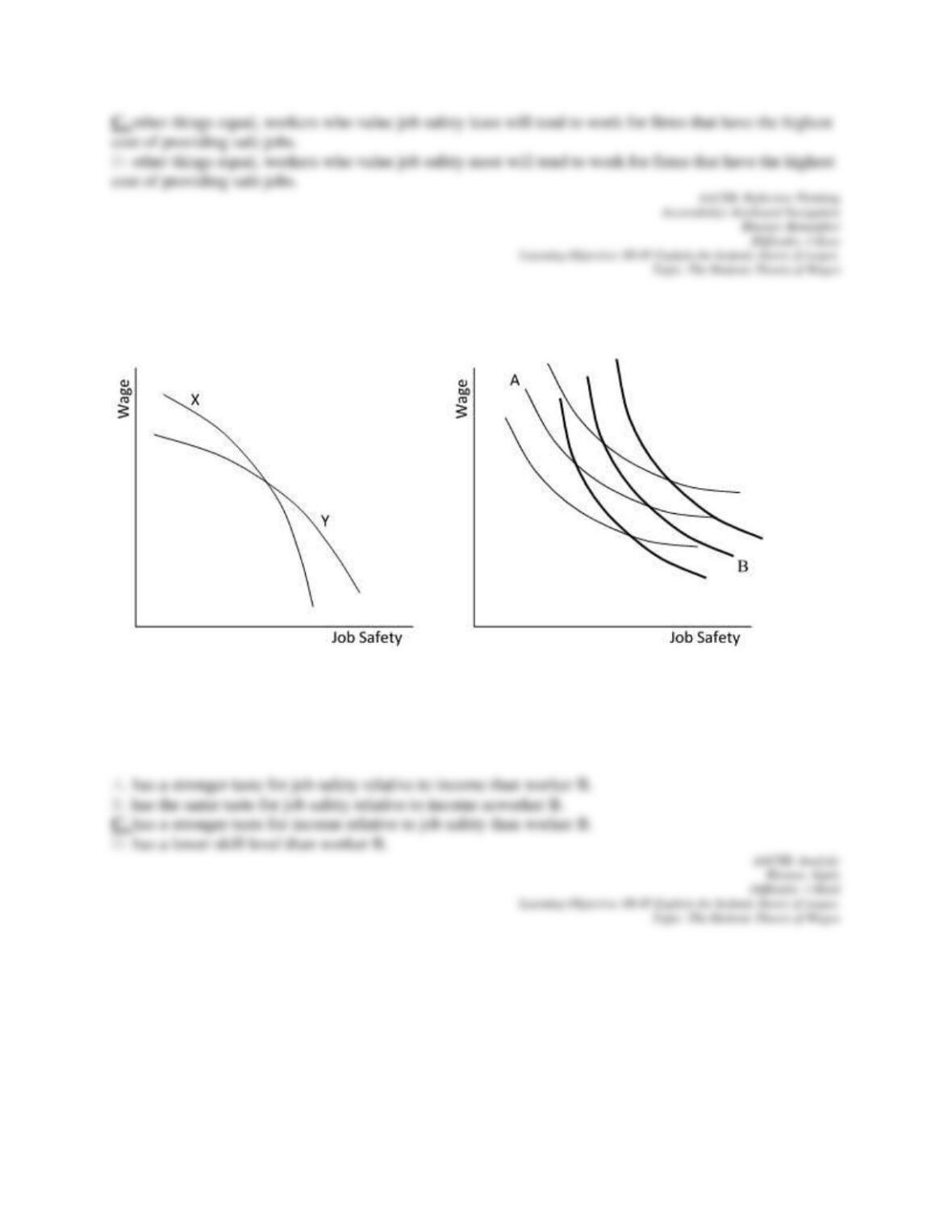
34. Refer to the following diagrams.
From the indifference curves, we can infer that worker A
35. Refer to the following diagrams.
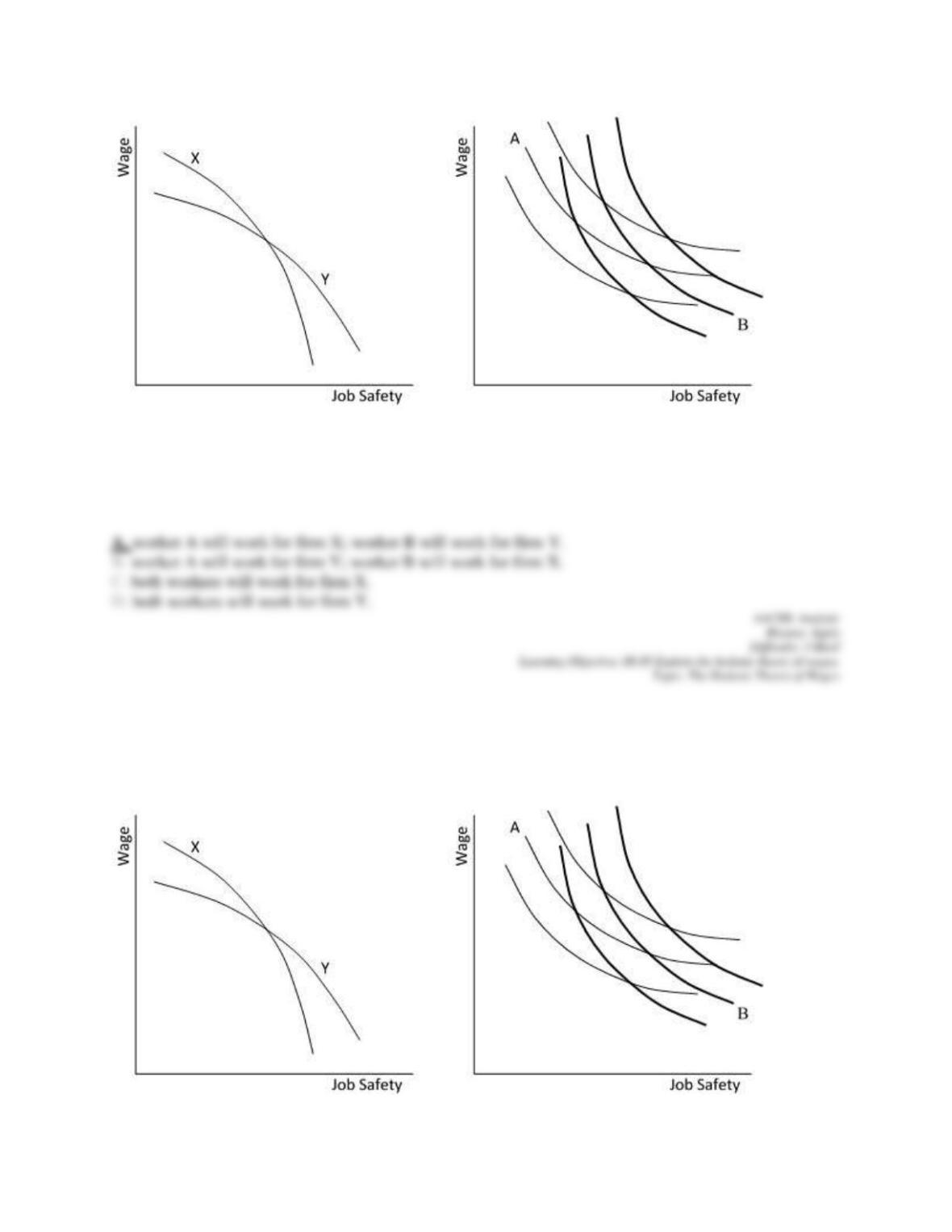
In equilibrium,
36. Refer to the following diagrams.
As a result of the matching between workers and firms, firm X will pay
37. Fringe benefit packages differ substantially from one firm to the next because
38. Imperfect and costly labor market information will likely result in
39. An example of a sociological immobility is

40. “The high psychic costs of leaving friends and family deter migration in response to wage
differentials.”This statement reflects the existence of
41. According to research by Kostiuk, “shift work“
42. The hedonic method of valuing a human life
Chapter 08 Test Bank Summary
Category
# of Questi
ons
AACSB: Analytic
7
AACSB: Reflective Thinking
35
Accessibility: Keyboard Navigation
30
Blooms: Apply
7
Blooms: Remember
20
Blooms: Understand
15
Difficulty: 1 Easy
20
Difficulty: 2 Medium
15
Difficulty: 3 Hard
7
Learning Objective: 08-
01 Explain the effects if all workers and jobs are homogeneous and all labor markets ar
e perfectly competitive.
4
Learning Objective: 08-
02 Describe patterns of wage differentials by industry, occupation, and location.
4
Learning Objective: 08-
03 Identify sources of wage differentials arising from differences in job or employer ch
aracteristics.
15
Learning Objective: 08-
04 Identify sources of wage differentials arising from differences in worker characteristi
cs.
3
Learning Objective: 08-05 Explain the hedonic theory of wages.
13
Learning Objective: 08-
06 Describe the role of labor immobilities and costly or imperfect information in observ
ed wage differentials.
3
Topic: Perfect Competition: Homogeneous Workers and Jobs
4
Topic: The Hedonic Theory of Wages
13
Topic: The Wage Structure: Overserved Differentials
4
Topic: Wage Differentials: Heterogeneous Jobs
15
Topic: Wage Differentials: Heterogeneous Workers
3
Topic: Wage Differentials: Labor Market Imperfections
3