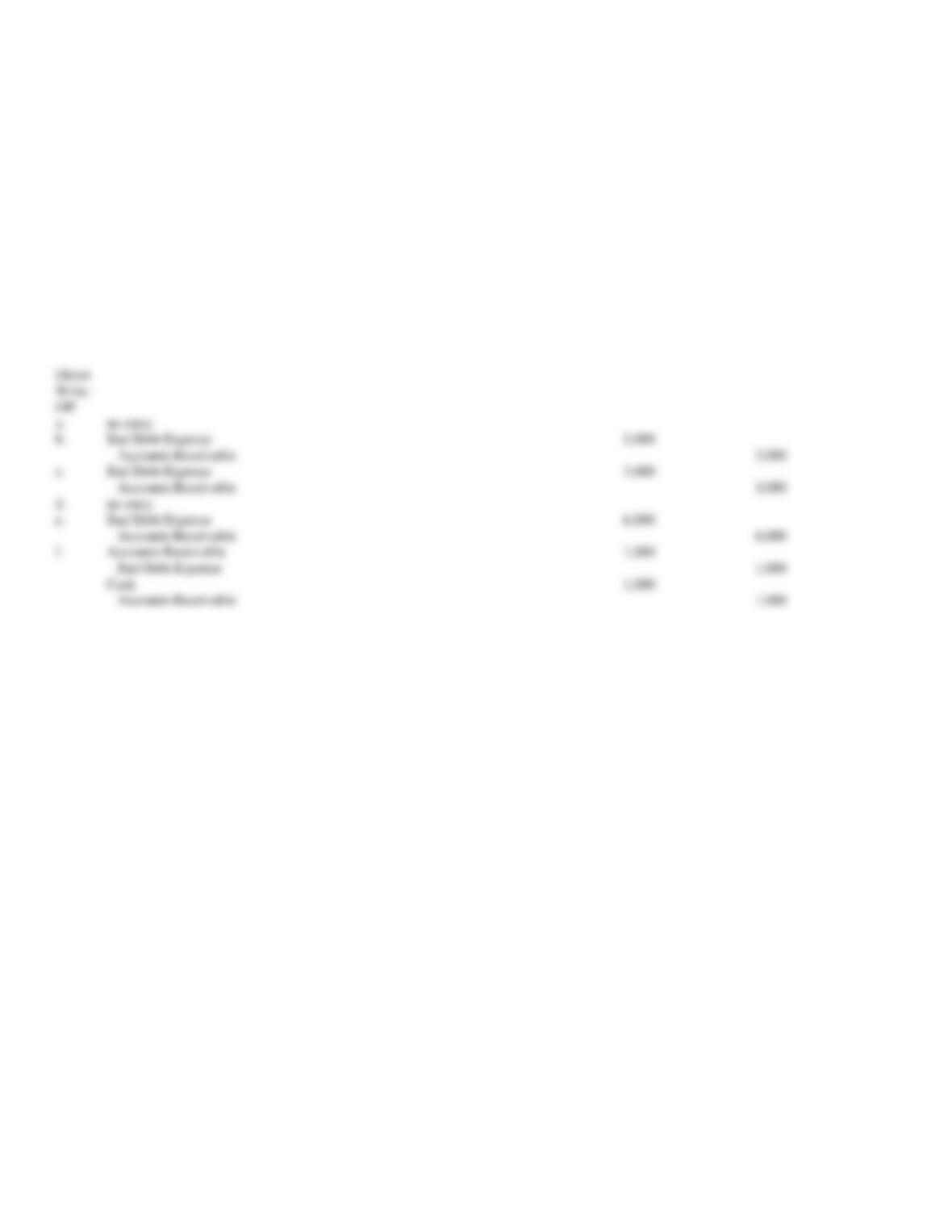
126. Prepare entries to record the following transactions using the direct write-off method for uncollectibles.
a.
The firm assumes that approximately 1% of total sales on account will prove uncollectible. Sales for Year 1 are $1,000,000. All sales are
on account.
b.
On July 7, Year 2, it is determined that an account of $2,000 will not be collected.
c.
On August 14, Year 2, it is determined that an account of $3,000 will not be collected.
d.
On December 31, Year 2, the company estimates that 2% of total credit sales of $2,000,000 will be uncollectible.
e.
On February 1, Year 3, it is determined that accounts of $6,000 will not be collected.
f.
On March 2, Year 3, $1,000 is collected on an account that had previously been written off as uncollectible in (e). It is determined that the
account was originally written off in error.
Off
no entry
b.
Bad Debt Expense
2,000
Accounts Receivable
2,000
c.
Bad Debt Expense
3,000
Accounts Receivable
3,000
d.
no entry
e.
Bad Debt Expense
6,000
Accounts Receivable
6,000
Accounts Receivable
1,000
Bad Debt Expense
1,000
Cash
1,000
Accounts Receivable
1,000
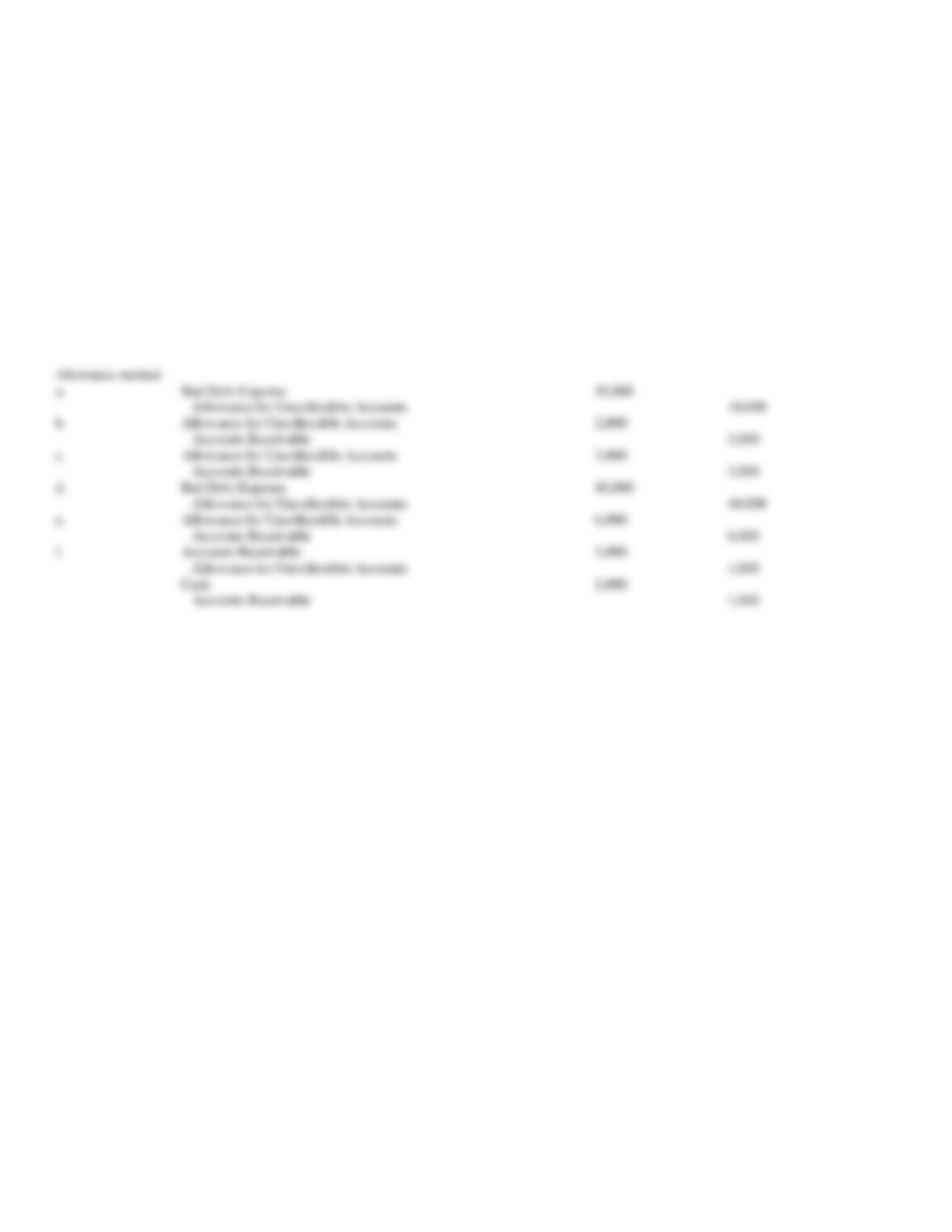
127. Prepare entries to record the following transactions using the allowance method for uncollectible accounts.
a.
The firm assumes that approximately 1% of total sales on account will prove uncollectible. Sales for Year 1 are $1,000,000. All sales
are on account.
b.
On July 7, Year 2, it is determined that an account of $2,000 will not be collected.
c.
On August 14, Year 2, it is determined that an account of $3,000 will not be collected.
d.
On December 31, Year 2, the company estimates that 2% of total credit sales of $2,000,000 will be uncollectible.
e.
On February 1, Year 3, it is determined that accounts of $6,000 will not be collected.
f.
On March 2, Year 3, $1,000 is collected on an account that had previously been written off as uncollectible in (e). It is determined that
the account was originally written off in error.
Allowance method
a.
Bad Debt Expense
10,000
Allowance for Uncollectible Accounts
10,000
b.
Allowance for Uncollectible Accounts
2,000
Accounts Receivable
2,000
c.
Allowance for Uncollectible Accounts
3,000
Accounts Receivable
3,000
d.
Bad Debt Expense
40,000
Allowance for Uncollectible Accounts
40,000
e.
Allowance for Uncollectible Accounts
6,000
Accounts Receivable
6,000
Accounts Receivable
1,000
Allowance for Uncollectible Accounts
1,000
Cash
1,000
Accounts Receivable
1,000
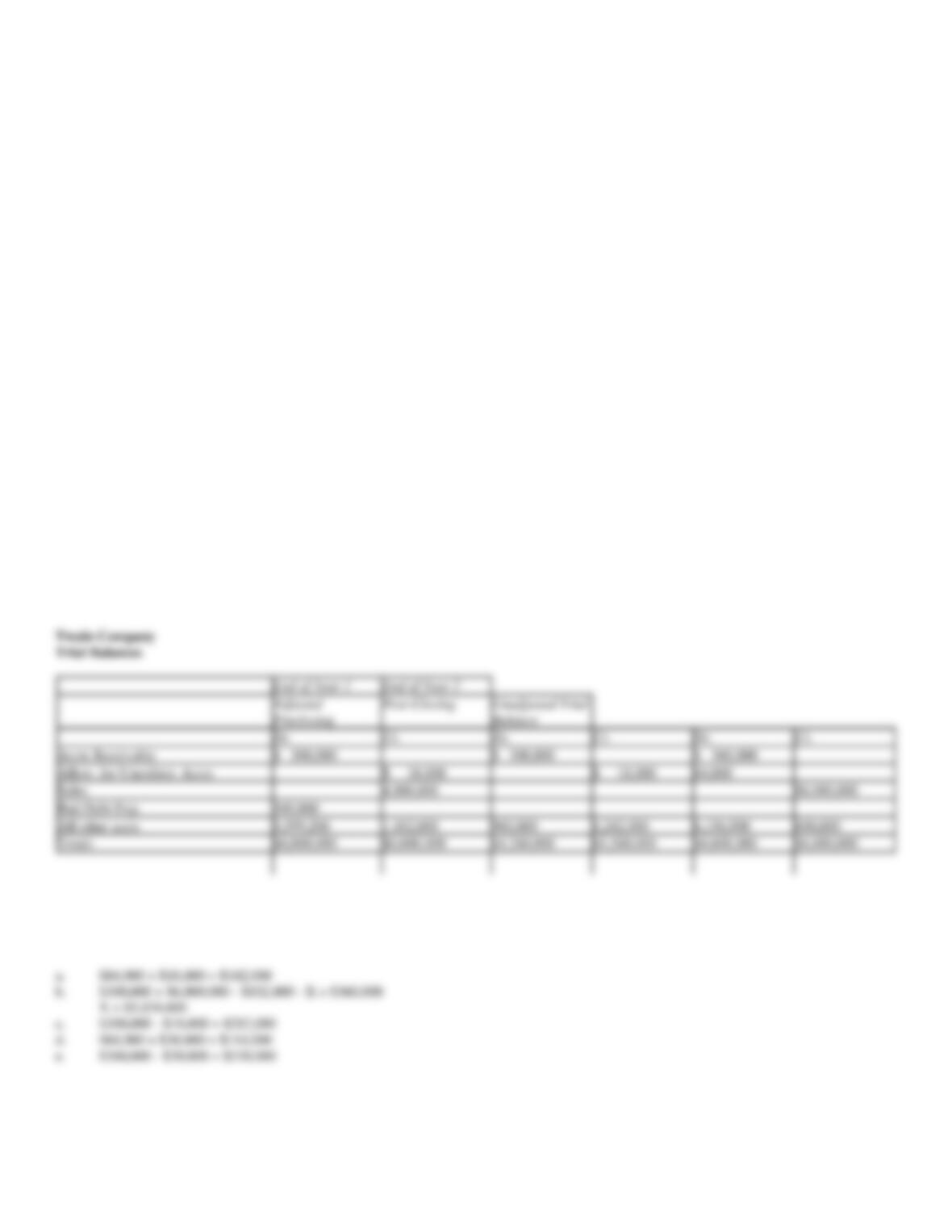
128. The schedule that follows shows trial balances for Twain Company at the end of Year 1 and Year 2. Note
that the two trial balances shown for Year 1 are the Adjusted, Preclosing Trial Balance (after making all
adjusting entries) and the final Post-Closing Trial Balance, from which the firm constructs the balance sheet.
The trial balance shown for the end of Year 2 is taken before adjusting entries of any kind, although the firm has
periodically written off specific customers’ Accounts Receivable during the year as those customers’ accounts
become obviously uncollectible.
Twain Company closes its books annually and makes all of its sales on account. At the end of Year 2, the
management of Twain Company, along with the independent auditor, analyzes the currently outstanding
Accounts Receivable. The aging schedule classifies accounts as “not yet due,” “overdue less than 30 days,”
“overdue 30 days or more.” Twain Company estimates that one-half of one percent of current accounts will
become uncollectible, 5 percent of accounts overdue less than 30 days will become uncollectible, and 40
percent of accounts overdue 30 days or more will become uncollectible. From this aging of accounts receivable,
the firm estimated that it will not collect $30,000 of the accounts. The auditor will use this information in
making adjusting entries for Year 2.
Required:
See the requirements below. If there is insufficient information for a given question, state just that.
a.
What was the dollar amount of Accounts Receivable written off during Year 2 as obviously uncollectible?
b.
What was the total amount of cash collected from customers during Year 2?
c.
What is the dollar amount of net Accounts Receivable shown on the balance sheet at the end of Year 1?
d.
What is the dollar amount of the Bad Debt Expense for Year 2?
e.
What is the dollar amount of the net Accounts Receivable shown on the balance sheet for the end of Year 2?
Accts Receivable
$ 300,000
$ 300,000
$ 360,000
Allow. for Uncollect. Accts
$ 18,000
$ 18,000
84,000
Sales
4,800,000
$6,000,000
Bad Debt Exp.
100,800
All other accts
5,599,200
1,182,000
960,000
1,242,000
6,156,000
600,000
Totals
$6,000,000
$6,000,000
$1,260,000
$1,260,000
$6,600,000
$6,600,000
$84,000 + $18,000 = $102,000
b.
$300,000 + $6,000,000 – $102,000 – X = $360,000
X = $5,838,000
c.
$300,000 – $18,000 = $282,000
d.
$84,000 + $30,000 = $114,000
e.
$360,000 – $30,000 = $330,000
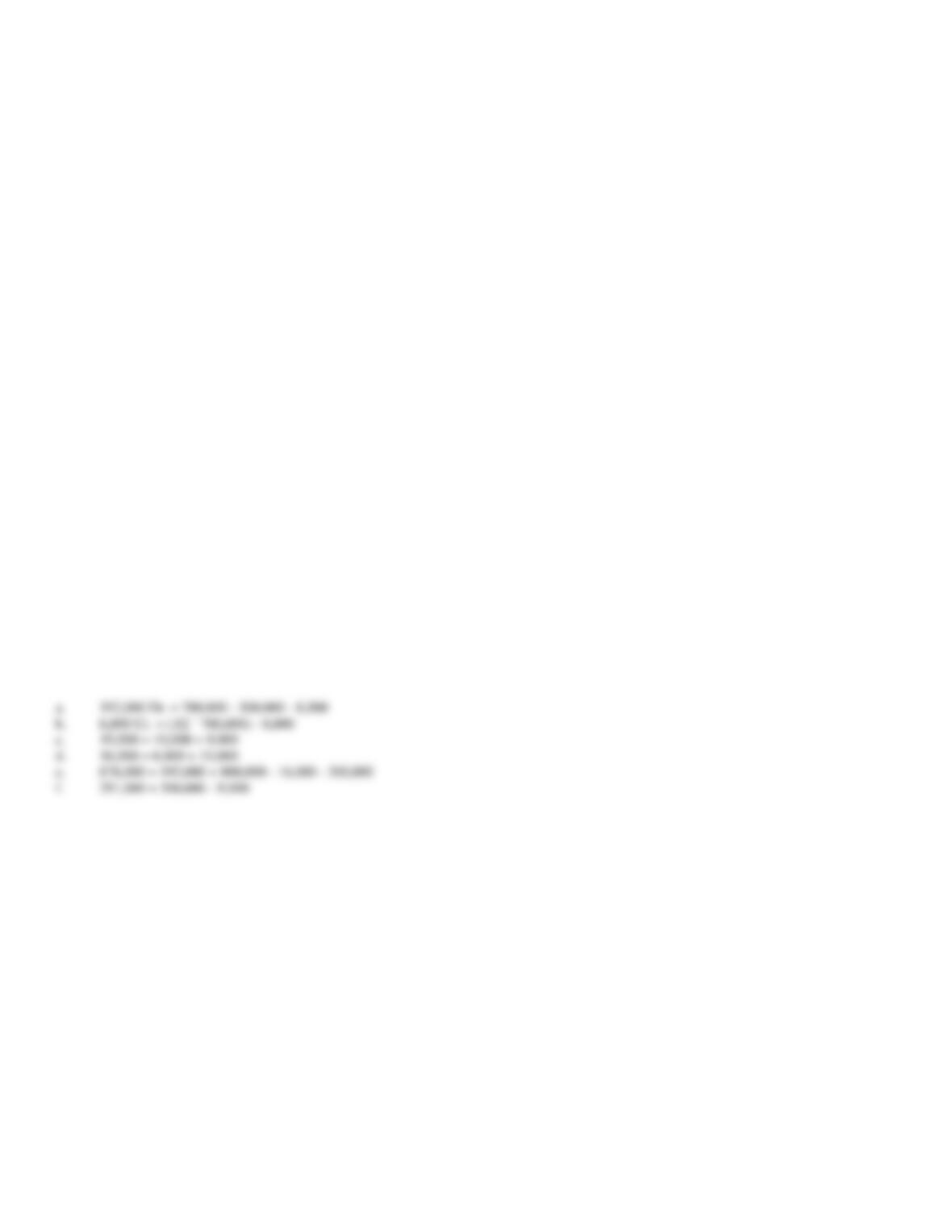
129. The sales, all on account, of Marla Company in Year 6, its first year of operations, were $700,000.
Collections totaled $500,000. On December 31, Year 6, Marla Company estimated that 2 percent of all sales
would probably be uncollectible. On that date, Marla Company wrote off specific accounts in the amount of
$8,000.
Marla Company’s unadjusted trial balance (after all nonadjusting entries were made and after all write-offs of
specific accounts receivable identified during Year 7 as being uncollectible) on December 31, Year 7, includes
the following accounts and balances:
Accounts Receivable (Dr.)
$300,000
Allowance for Uncollectible Accounts (Dr.)
10,000
Sales (Cr.)
800,000
On December 31, Year 7, Marla Company carried out an aging of its accounts receivable balances and estimated that the Year 7 ending balance of
accounts receivable contained $9,000 of probable uncollectibles. It made adjusting entries appropriate for this estimate. Some of the $800,000 sales
during Year 7 were for cash and some were on account; the omission is purposeful.
Required:
a.
What was the balance in the Accounts Receivable account at the end of Year 6? Give the amount and whether debit or credit.
b.
What was the balance in the Allowance for Uncollectible Accounts account at the end of Year 6? Give the amount and whether debit or
credit.
c.
What was bad debt expense for Year 7?
d.
What was the amount of specific accounts receivable written off as being uncollectible during Year 7?
e.
What were total cash collections in Year 7 from customers (for cash sales and collections from customers who had purchased on account
in either Year 6 or Year 7)?
f.
What was the net balance of accounts receivable included in the balance sheet asset total for December 31, Year 7?
a.
192,000 Dr. = 700,000 – 500,000 – 8,000
b.
6,000 Cr. = (.02 ´ 700,000) – 8,000
19,000 = 10,000 + 9,000
d.
16,000 = 6,000 + 10,000
e.
676,000 = 192,000 + 800,000 – 16,000 – 300,000
f.
291,000 = 300,000 – 9,000
130. The sales, all on account, of Clayton Company in Year 5, its first year of operations, were $700,000.
Collections totaled $500,000. On December 31, Year 5, Clayton Company estimated that 2 percent of all sales
would probably be uncollectible. On that date, Clayton Company wrote off specific accounts in the amount of
$6,000.
Clayton Company’s unadjusted trial balance (after all nonadjusting entries were made and after all write-offs of
specific accounts receivable identified during Year 6 as being uncollectible) on December 31, Year 6, includes
the following accounts and balances:
Accounts Receivable (Dr.)
$300,000
Allowance for Uncollectible Accounts (Dr.)
10,000
Sales (Cr.)
800,000
On December 31, Year 6, Clayton Company carried out an aging of its accounts receivable balances and estimated that the Year 6 ending balance of
accounts receivable contained $9,000 of probable uncollectibles. It made adjusting entries appropriate for this estimate. Some of the $800,000 sales
during Year 6 were for cash and some were on account; the omission of the amount is purposeful.
Required:
a.
What was the balance in the Accounts Receivable account at the end of Year 5? Give the amount and whether debit or credit.
b.
What was the balance in the Allowance for Uncollectible Accounts account at the end of Year 5? Give the amount and whether debit or
credit.
c.
What was bad debt expense [or, the amount of the Revenue Contra for Uncollectibles] for Year 6?
d.
What was the amount of specific accounts receivable written off as being uncollectible during Year 6?
e.
What were total cash collections in Year 6 from customers (for cash sales and collections from customers who had purchased on
account in either Year 5 or Year 6)?
f.
What was the net balance of accounts receivable included in the balance sheet asset total for December 31, Year 6?
g.
Consider the account, Allowance for Uncollectible Accounts. Is that account best fully labeled as an Asset account, an Asset Contra
account, an Asset Adjunct account, or an Asset Control account?
h.
Assume the following facts, independent of the assumptions in the preceding questions. Bobbin can estimate with reasonable precision
each of the following: uncollectible accounts on sales, estimated future warranty costs for product warranties offered along with its
products, and estimated returns by customers who exercise the option to return goods for a full refund. For which of the following, if
any, may Bobbin use an allowance method in measuring periodic income: uncollectible accounts, product warranties, and returns?
Indicate none, all, or the specific methods.
a.
194,000 Dr. = $700,000 – $500,000 – $6,000
b.
8,000 Cr. = (.02 ´ $700,000) – $6,000
c.
$19,000 = $10,000 + $9,000
$18,000 = $8,000 + $10,000
e.
$676,000 = $194,000 + $800,000 – $18,000 – $300,000
f.
$291,000 = $300,000 – $9,000
g.
Asset contra
All

131. The sales, all on account, of Hendricks Company in Year 1, its first year of operations, were $800,000.
Collections totaled $600,000. On December 31, Year 1, Hendricks Company estimated that 3 percent of all
sales would probably be uncollectible. On that date, specific accounts in the amount of $18,000 were written
off.
Hendricks Company’s unadjusted trial balance (after all nonadjusting entries were made and after all write-offs
of specific accounts receivable identified during Year 2 as being uncollectible) on December 31, Year 2,
includes the following accounts and balances:
Accounts Receivable
500,000
Allowance for Uncollectibles
16,000
Other Debits
1,484,000
Sales
900,000
Other Credits
1,100,000
On December 31, Year 2, Hendricks Company carried out an aging of its accounts receivable balances and estimated that the Year 2 ending balance
of accounts receivable contained $26,000 of probable uncollectibles. It made adjusting entries appropriate for this estimate. Some of the $900,000
sales during Year 2 were for cash and some were on account; these data purposefully omit the amounts.
Required:
a.
What was the balance in the Accounts Receivable account at the end of Year 1? Give the amount and whether debit or credit.
b.
What was the balance in the Allowance for Uncollectible Accounts at the end of Year 1? Give the amount and whether debit or credit.
c.
What was bad debt expense (Revenue Contra for Uncollectibles) for Year 2?
d.
What was the amount of specific accounts receivable written off as being uncollectible during Year 2?
e.
What were total cash collections in Year 2 from customers (for cash sales and collections from customers who had purchased on
account in either Year 1 or Year 2)?
f.
What was the net balance of accounts receivable included in the balance sheet asset total for December 31, Year 2?
132. Bealls Department Store reports in millions of dollars on its balance sheet for year-end Year 6 and Year 5
as follows:
Year 6
Year 5
Credit Card Receivables
$27,371
$24,932
Less: Allowance for Uncollectibles
(821)
(808)
It reports charge-offs [synonym for write-offs] of accounts receivable during Year 6 of 4.5 percent of its average gross receivables of $26,000 million
and that Bad Debt Expense is 3.5 percent of credit card sales. What were Bealls’ credit card sales for Year 6?
a.
182,000 Dr.
b.
6,000 Cr.
c.
$42,000
d.
$22,000
e.
$560,000
$474,000
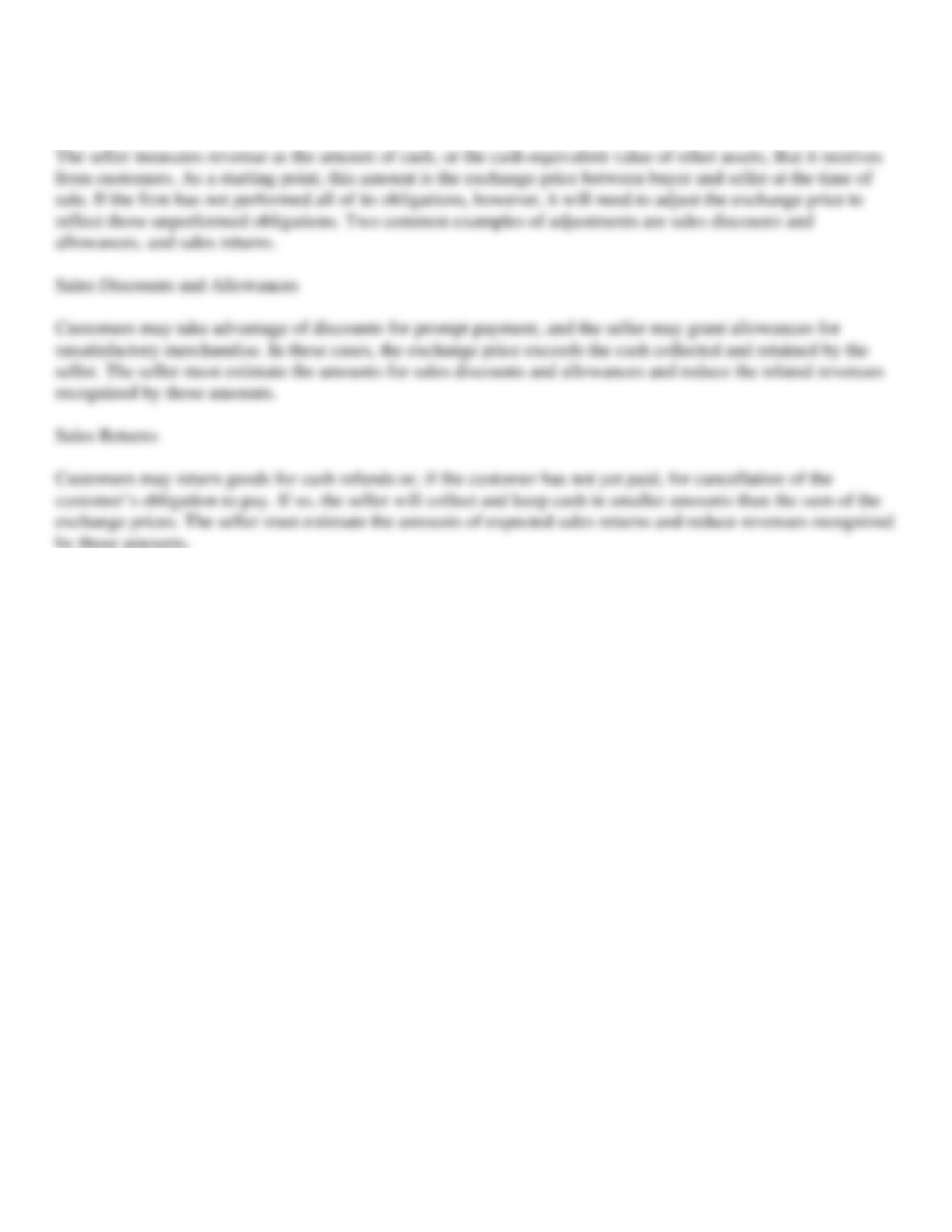
133. How do sellers measure revenue?
REVENUE MEASUREMENT
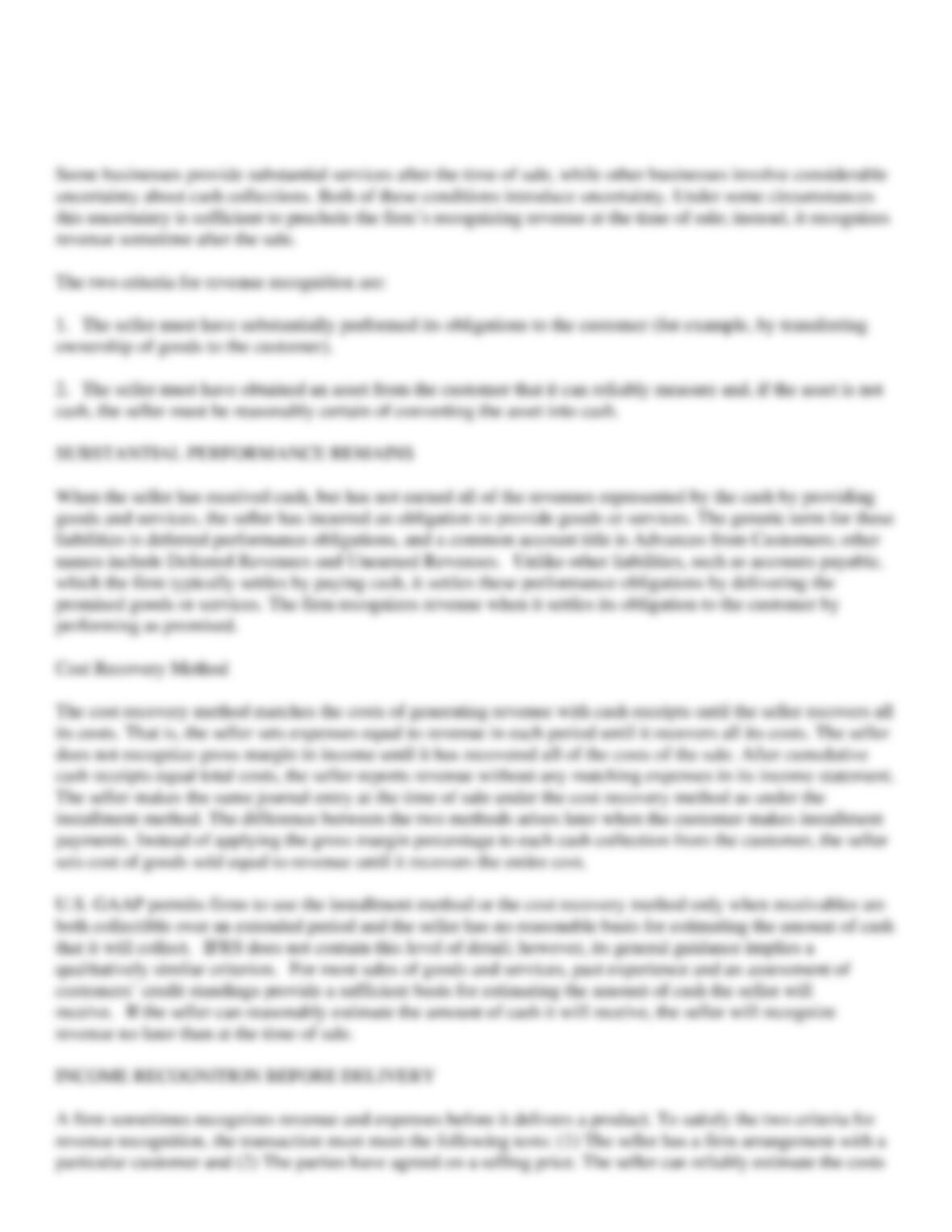
134. Describe income recognition after the sale when substantial performance remains.
INCOME RECOGNITION AFTER THE SALE
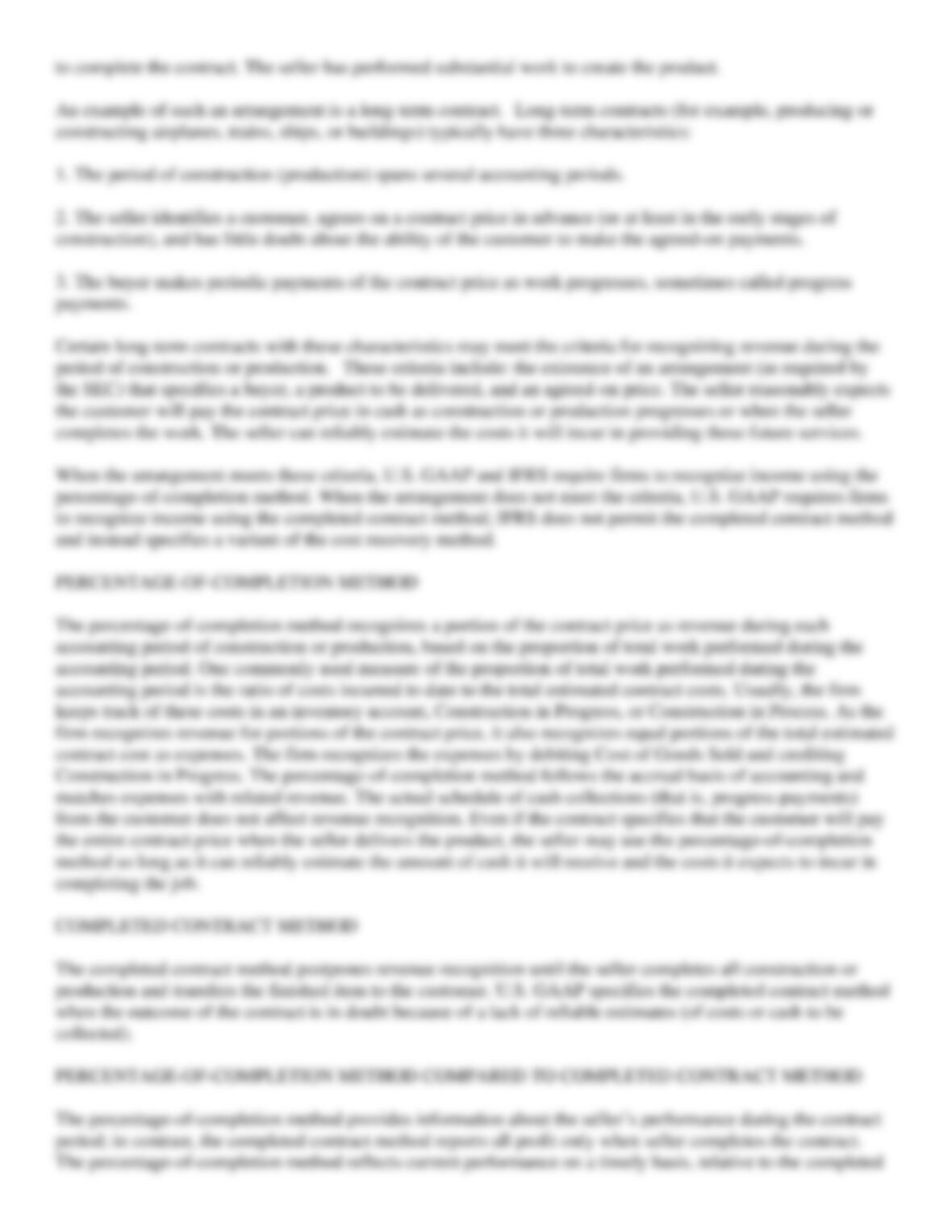
135. Describe the income recognition principles and how they are applied.
REVIEW AND APPLICATION OF INCOME RECOGNITION PRINCIPLES
136. Describe the accounts receivable recognition process.
ACCOUNTS RECEIVABLE
137. Discuss how accounts receivable can be analyzed.
ANALYZING ACCOUNTS RECEIVABLE
138. Describe the allowance method for uncollectible accounts.
ALLOWANCE METHOD FOR UNCOLLECTIBLE ACCOUNTS
139. Discuss the application of the allowance method for sales returns.
SALES RETURNS: AN APPLICATION OF THE ALLOWANCE METHOD