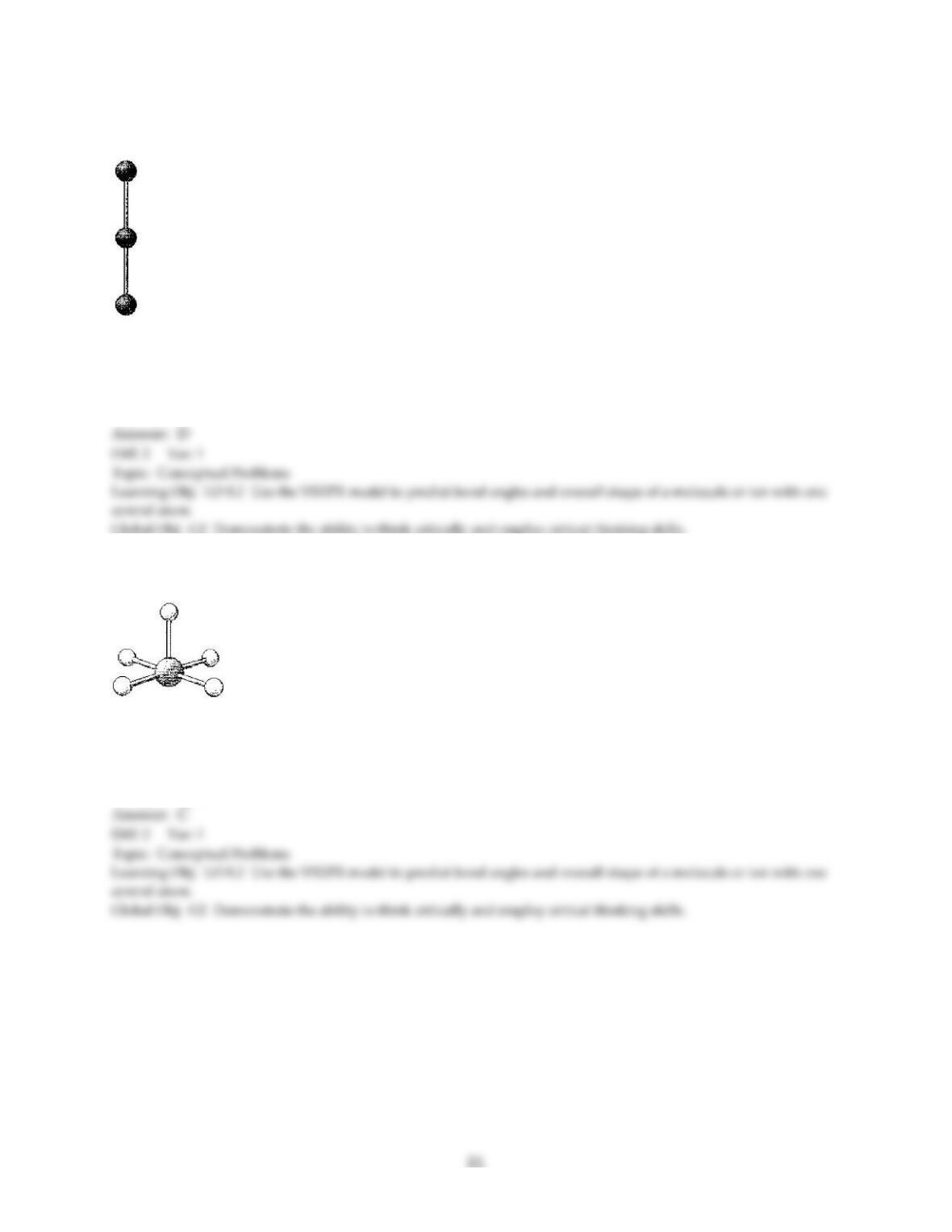
61) What is the geometry around the central atom in the following molecular model of I3–?
A) trigonal bipyramidal
B) seesaw
C) T-shaped
D) linear
62) What is the geometry around the central atom in the following molecular model of BrF5?
A) trigonal bipyramidal
B) octahedral
C) square pyramidal
D) square planar
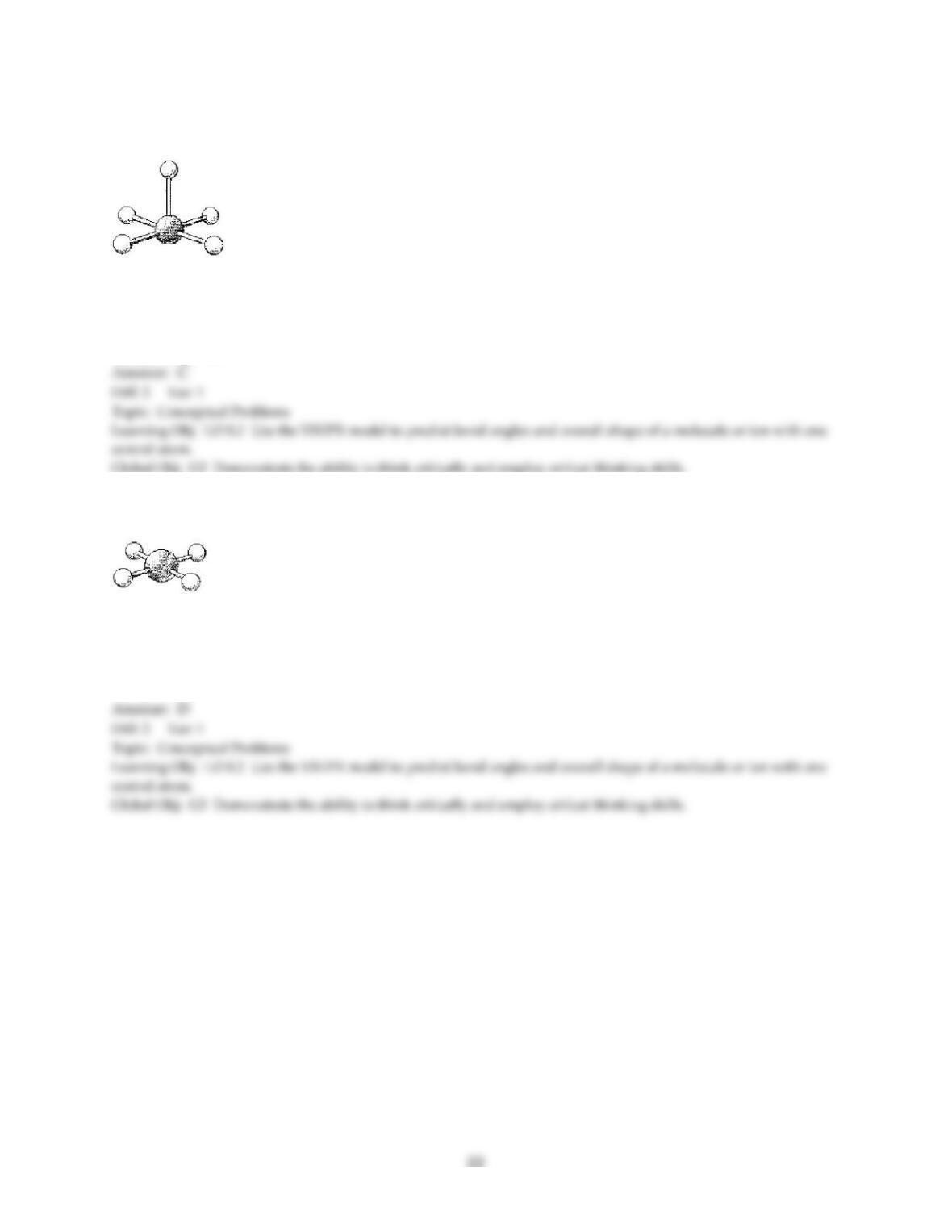
63) What is the geometry around the central atom in the following molecular model of TeF5–?
A) trigonal bipyramidal
B) octahedral
C) square pyramidal
D) square planar
64) What is the geometry around the central atom in the following molecular model of XeF4?
A) trigonal bipyramidal
B) octahedral
C) square pyramidal
D) square planar
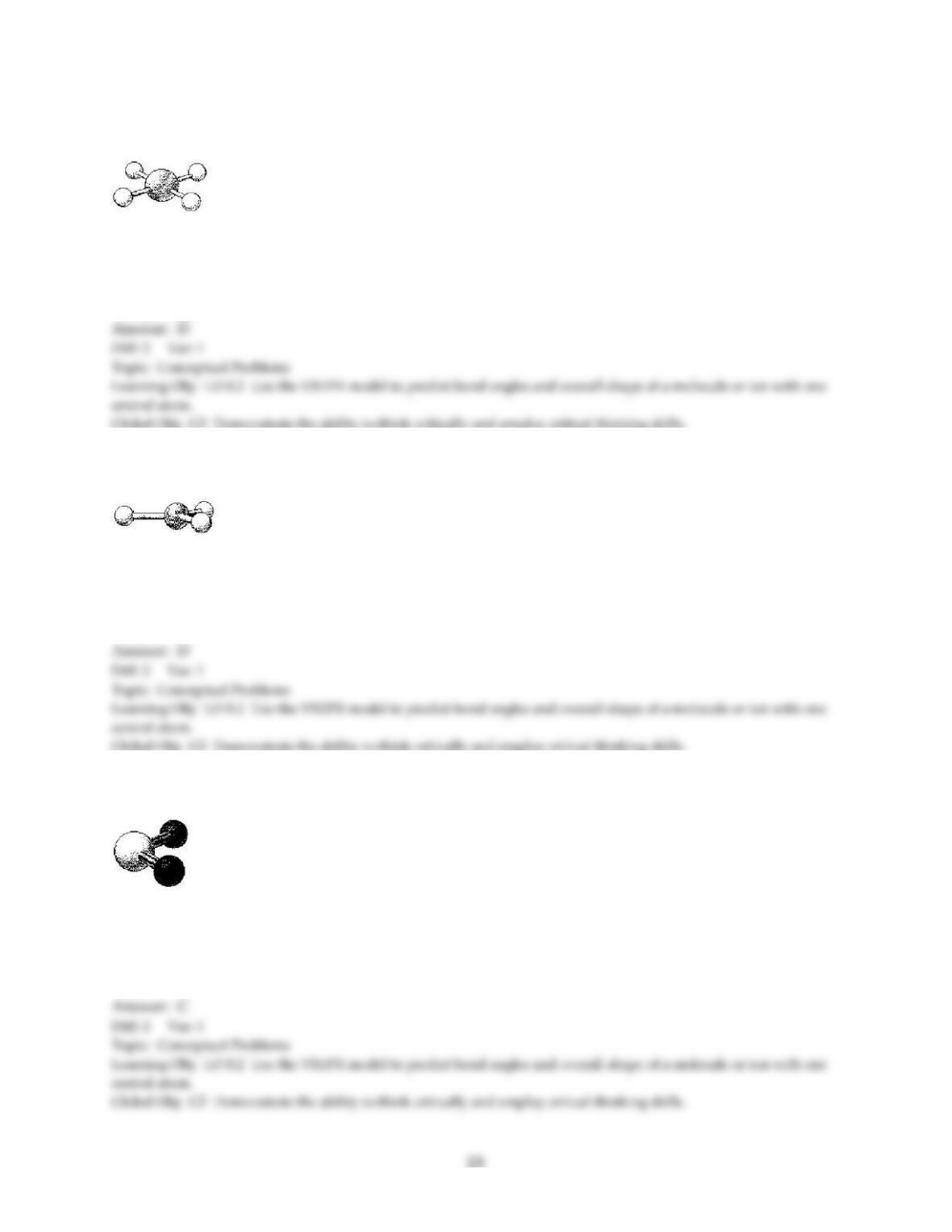
65) What is the geometry around the central atom in the following molecular model of ICl4–?
A) trigonal bipyramidal
B) octahedral
C) square pyramidal
D) square planar
66) What are the bond angles in the following molecular model of NO3–?
A) less than 109.5°
B) 109.5°
C) less than 120° but greater than 109.5°
D) 120°
67) What is the bond angle in the following molecular model of SO2?
A) less than 109.5°
B) 109.5°
C) less than 120° but greater than 109.5°
D) 120°
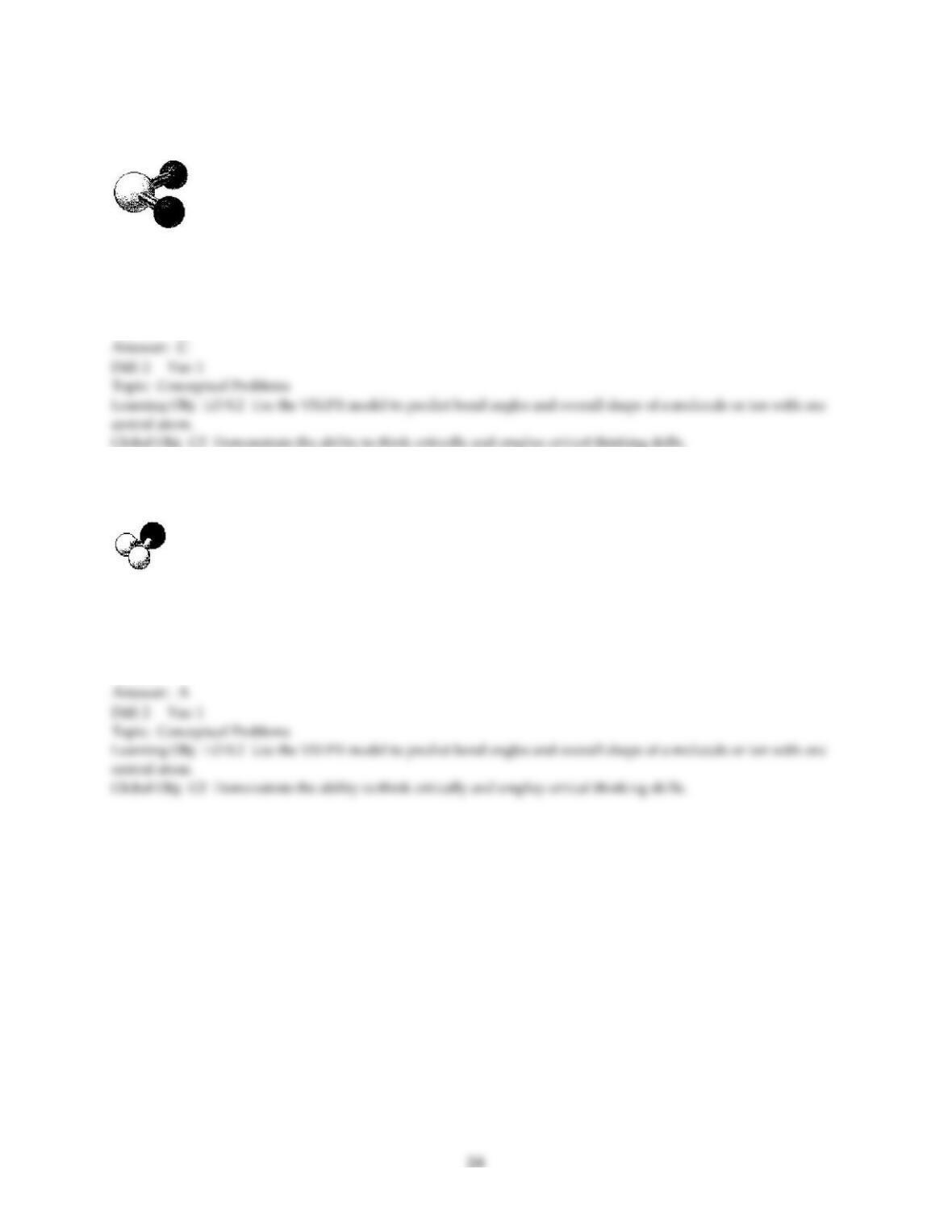
68) What is the bond angle in the following molecular model of NO2–?
A) less than 109.5°
B) 109.5°
C) less than 120° but greater than 109.5°
D) 120°
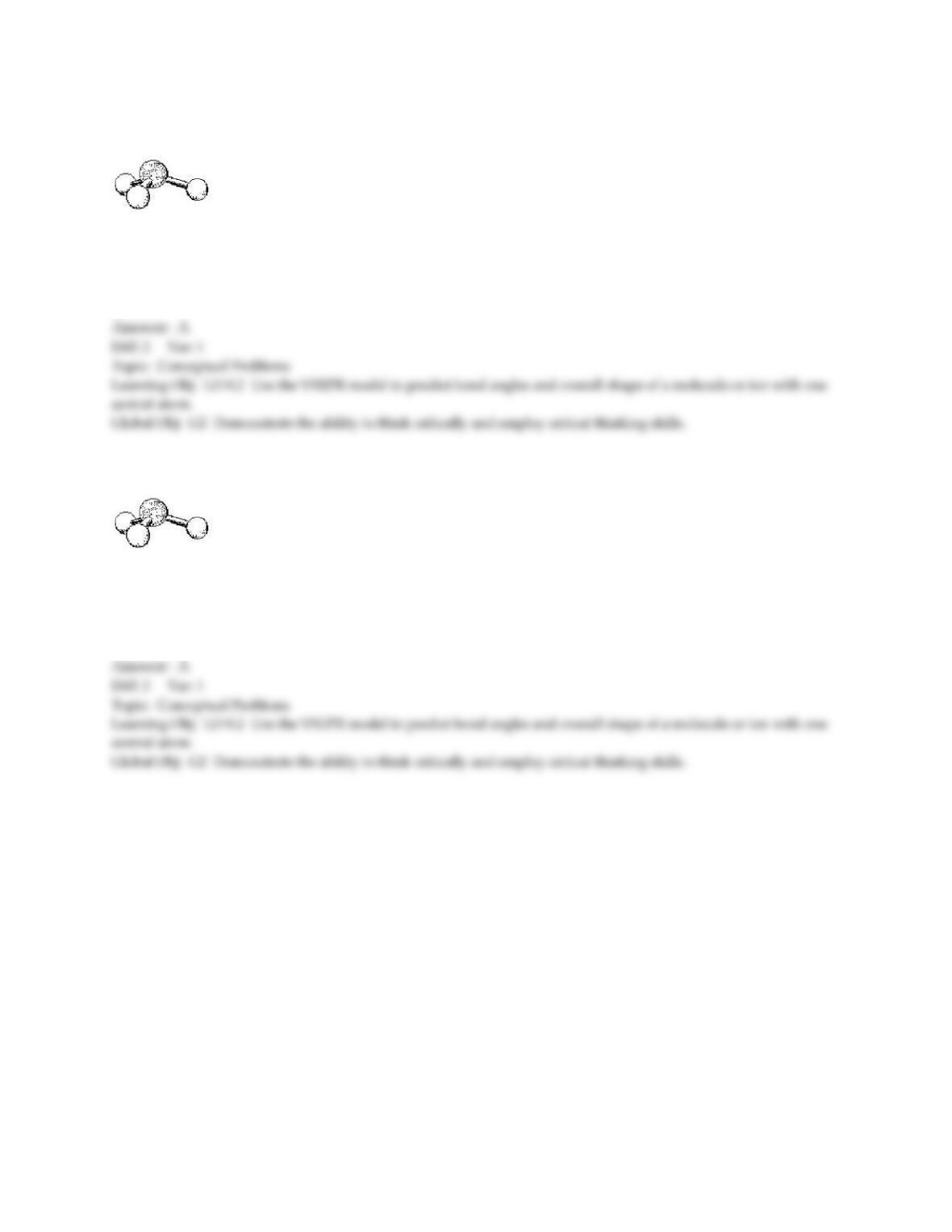
69) What is the bond angle in the following molecular model of NH2–?
A) less than 109.5°
B) 109.5°
C) less than 120° but greater than 109.5°
D) 120°
25
70) What are the bond angles in the following molecular model of SO32–?
A) less than 109.5°
B) 109.5°
C) less than 120° but greater than 109.5°
D) 120°
71) What are the bond angles in the following molecular model of H3O+?
A) less than 109.5°
B) 109.5°
C) less than 120° but greater than 109.5°
D) 120°
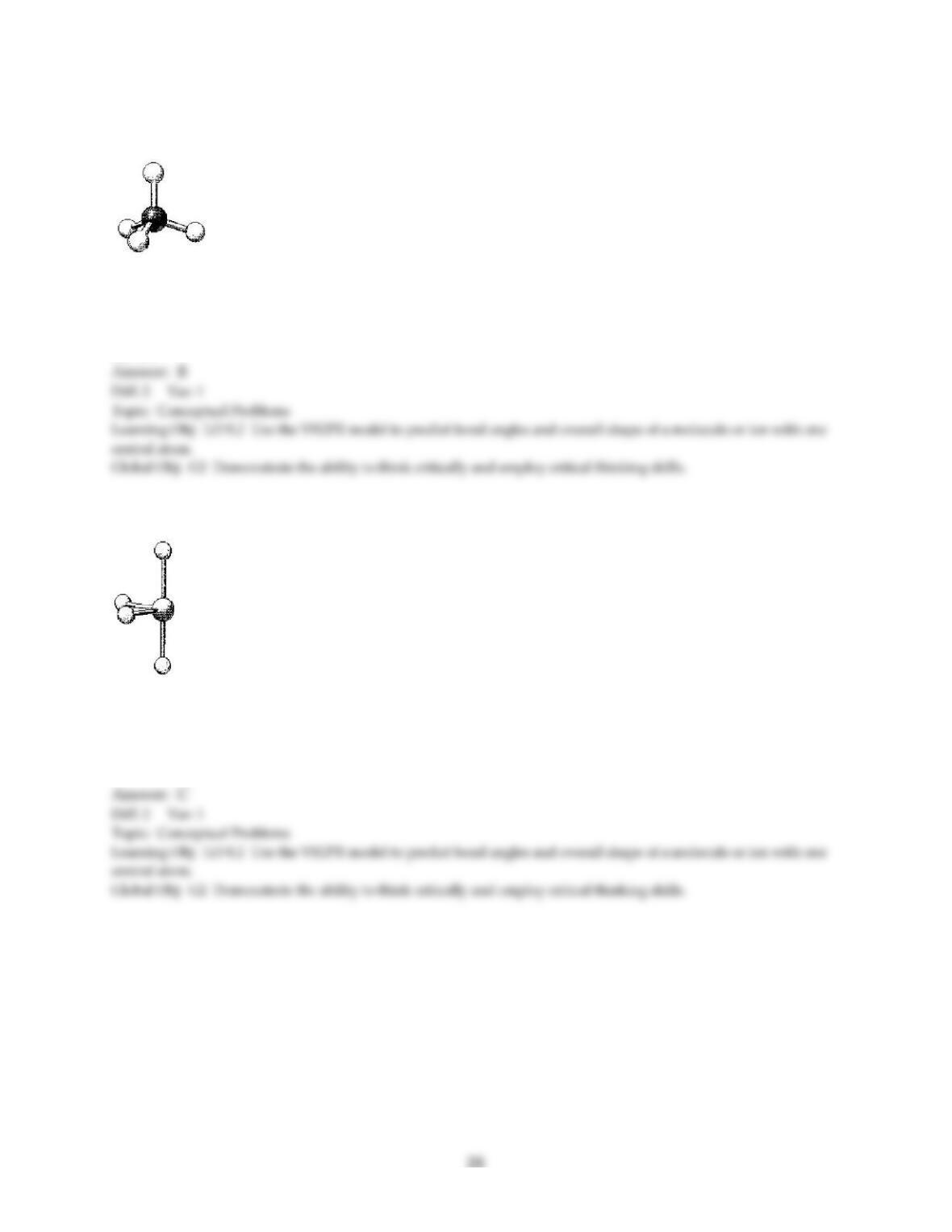
72) What are the bond angles in the following molecular model of NH4+?
A) less than 109.5°
B) 109.5°
C) less than 120° but greater than 109.5°
D) 120°
73) What are the bond angles in the following molecular model of SCl4?
A) some less than 90° and one less than 180°
B) 90° and 180°
C) some less than 90° one less than 120° but greater than 90°, and one less than 180° but greater than 120°
D) 90°, 120°, and 180°
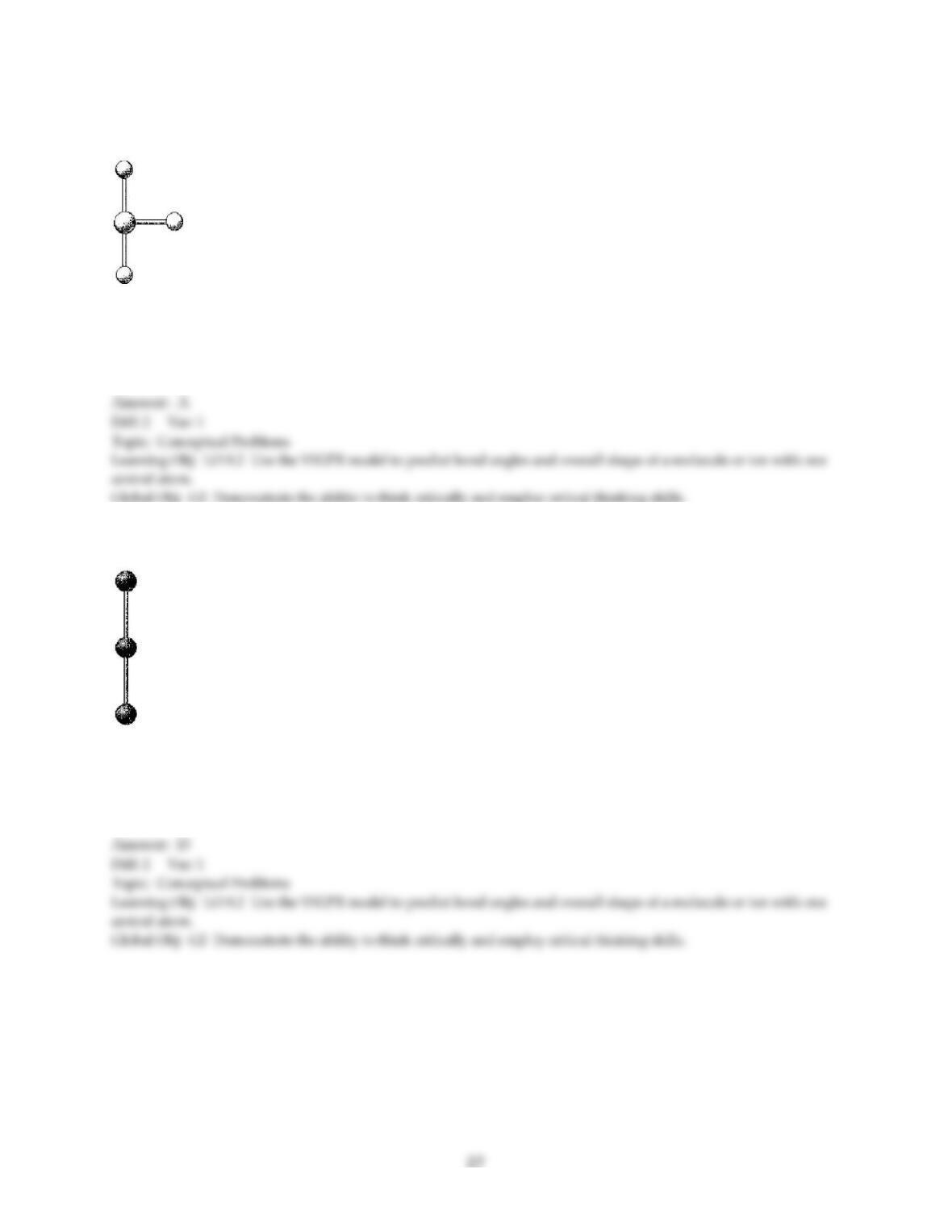
74) What are the bond angles in the following molecular model of BrF3?
A) two less than 90° and one less than 180° but greater than 90°
B) 90° and 180°
C) two less than 90° and one less than 120° but greater than 90°
D) 90° and 120°
75) What is the bond angle in the following molecular model of XeF2?
A) less than 120°
B) 120°
C) less than 180° but greater than 120°
D) 180°
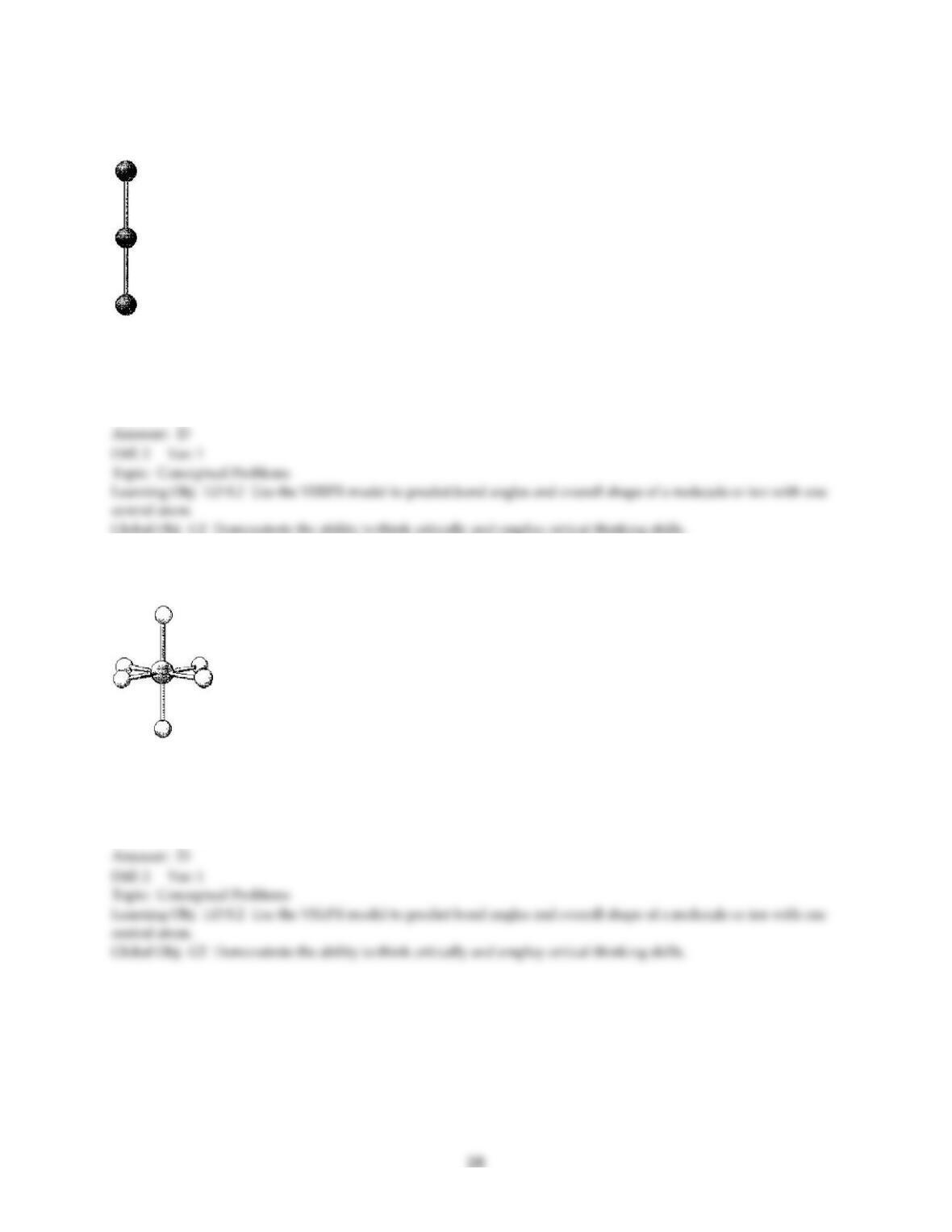
76) What is the bond angle in the following molecular model of I3–?
A) less than 120°
B) 120°
C) less than 180° but greater than 120°
D) 180°
77) What are the bond angles in the following molecular model of PF6–?
A) some less than 90° and some less than 120° but greater than 90°
B) 90° and 120°
C) some less than 90° and some less than 180° but greater than 120°
D) 90° and 180°
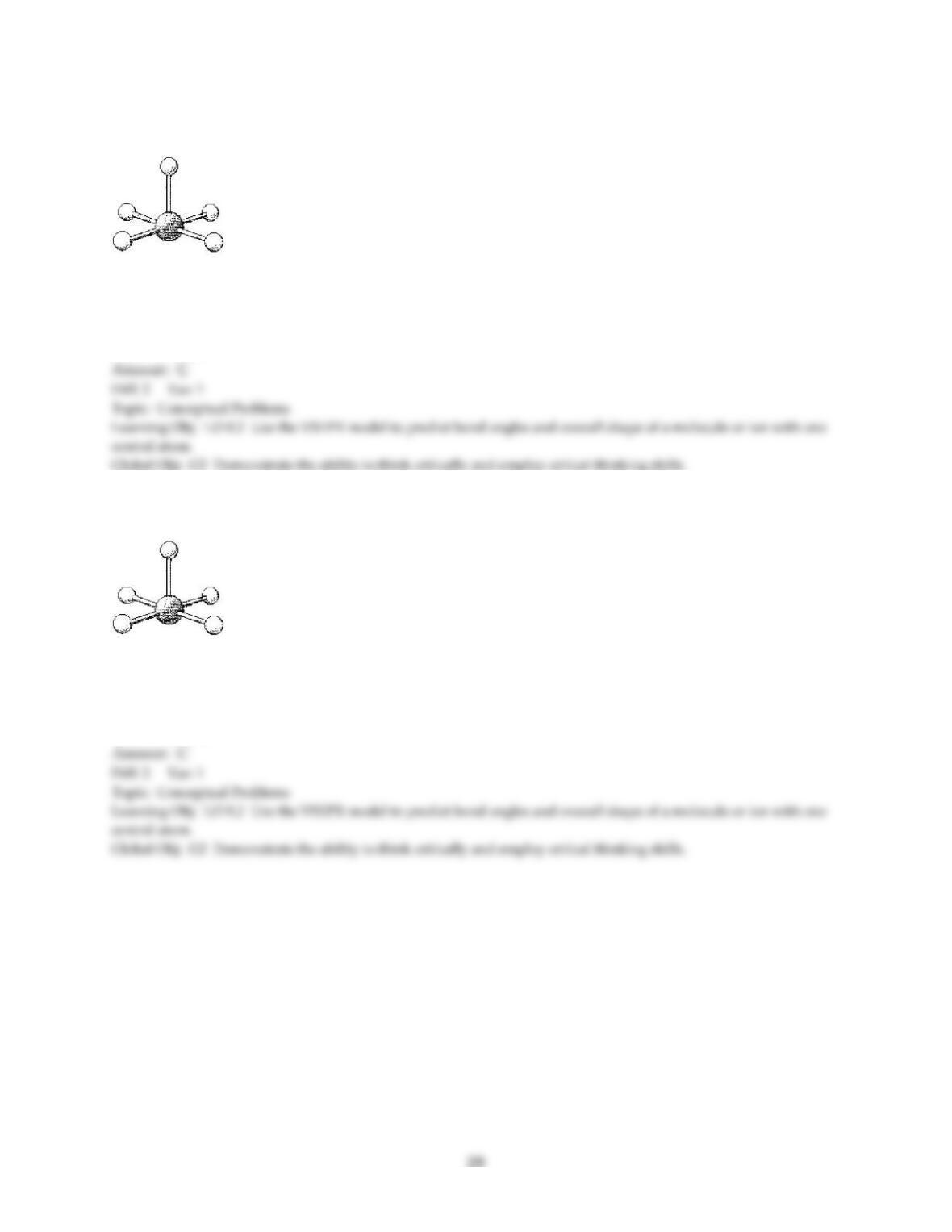
78) What are the bond angles in the following molecular model of BrF5?
A) some less than 90° and some less than 120° but greater than 90°
B) 90° and 120°
C) some less than 90° and some less than 180° but greater than 120°
D) 90° and 180°
79) What are the bond angles in the following molecular model of TeF5–?
A) some less than 90° and some less than 120° but greater than 90°
B) 90° and 120°
C) some less than 90° and some less than 180° but greater than 120°
D) 90° and 180°
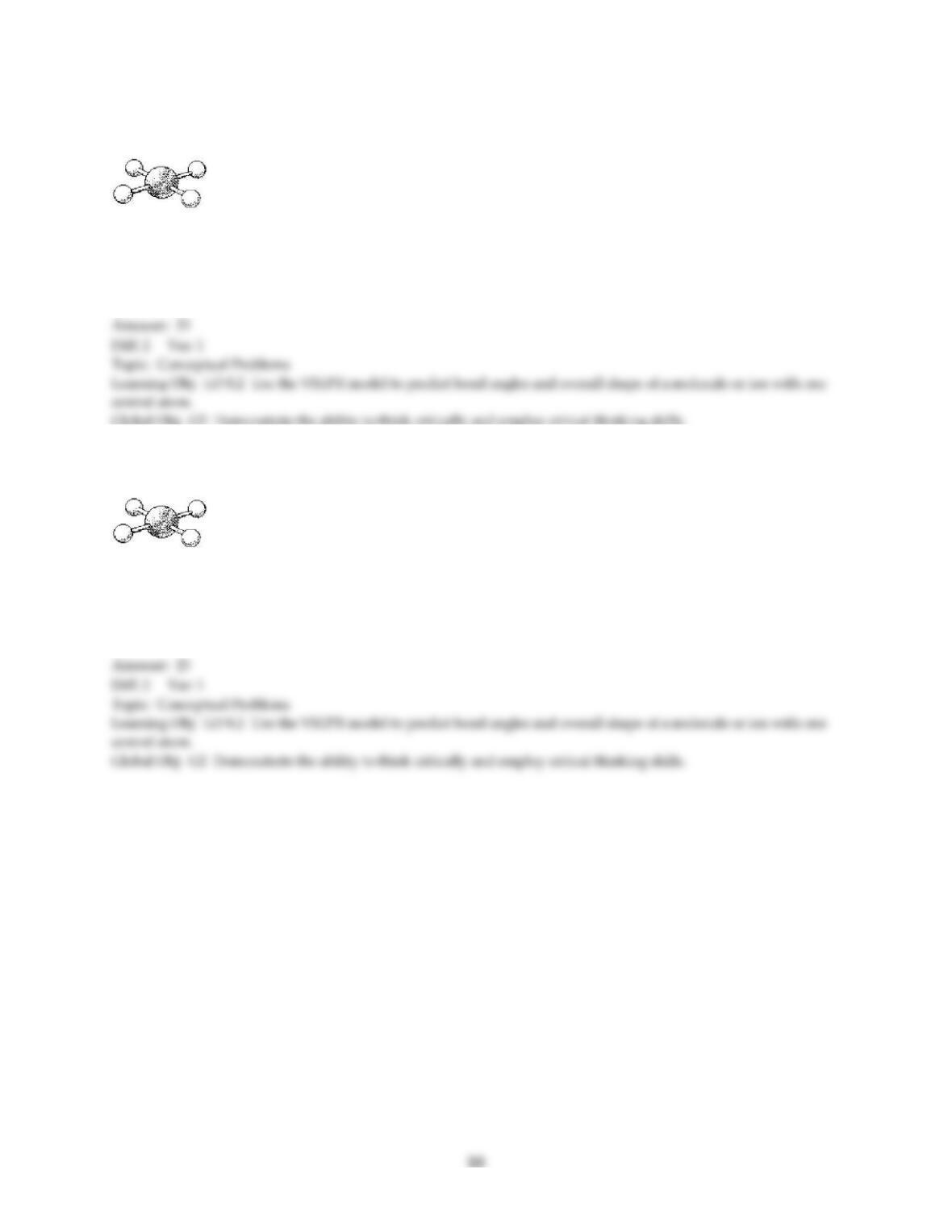
80) What are the bond angles in the following molecular model of XeF4?
A) some less than 90° and some less than 120° but greater than 90°
B) 90°
C) some less than 90° and some less than 180° but greater than 90°
D) 90° and 180°
81) What are the bond angles in the following molecular model of ICl4–?
A) some less than 90° and some less than 120° but greater than 90°
B) 90°
C) some less than 90° and some less than 180° but greater than 90°
D) 90° and 180°
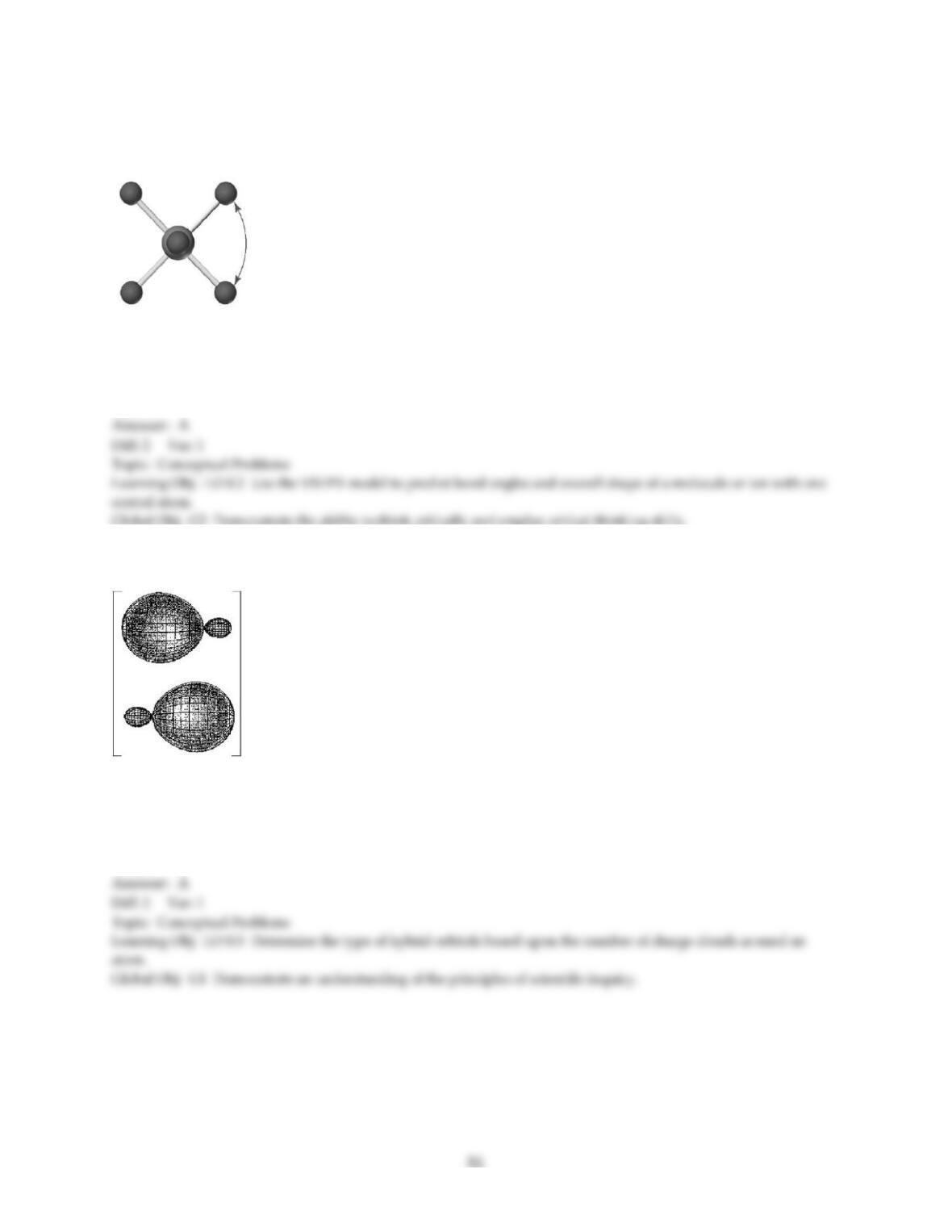
82) Shown below is a model of SF6 having an orientation in which one or more atoms are hidden from
view. What is the indicated bond angle?
A) 90°
B) less than 109.5° but greater than 90°
C) less than 120° but greater than 109.5°
D) 120°
83) Identify the set of hybrid orbitals shown below.
A) sp
B) sp2
C) sp3
D) sp4
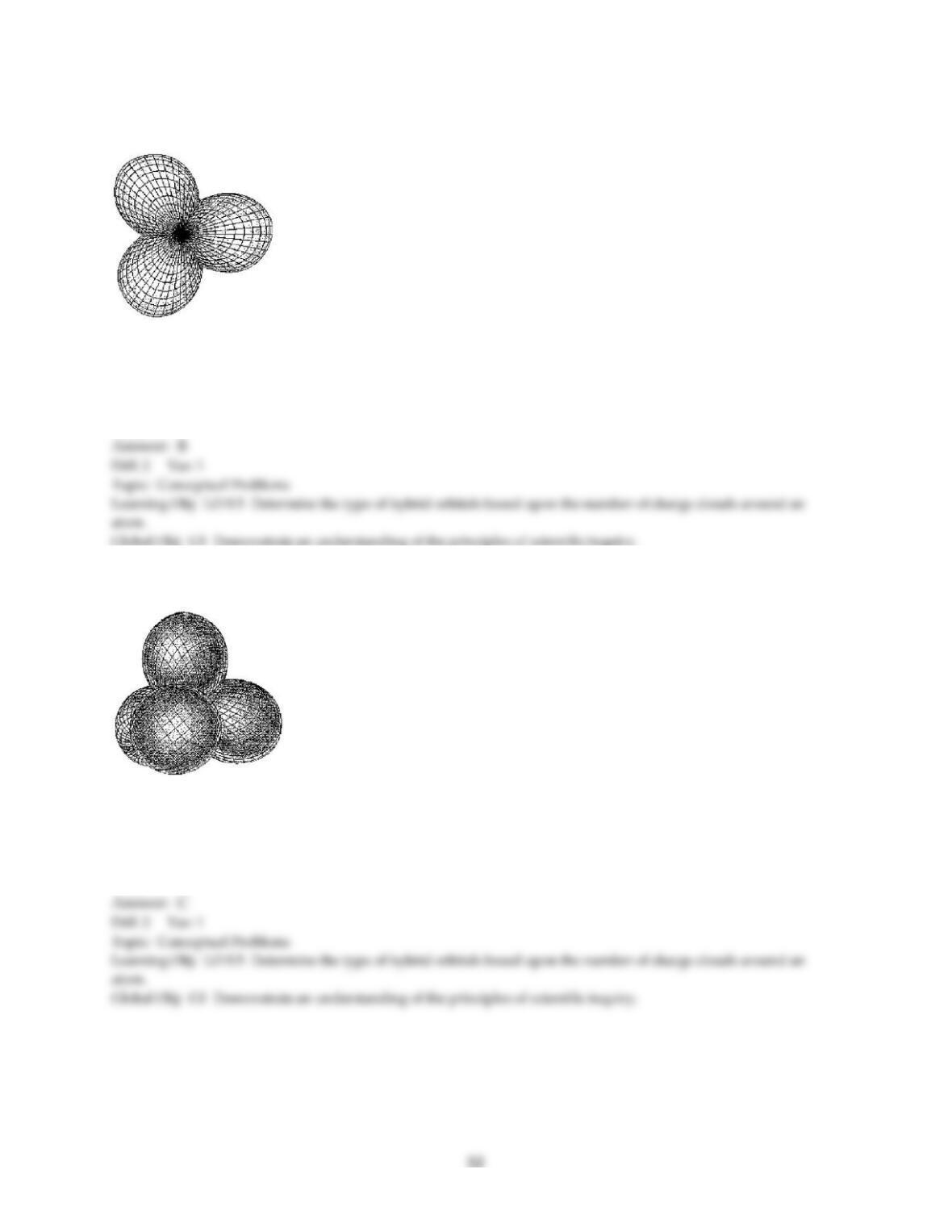
84) Identify the set of hybrid orbitals shown below.
A) sp
B) sp2
C) sp3
D) sp4
85) Identify the set of hybrid orbitals shown below.
A) sp
B) sp2
C) sp3
D) sp4
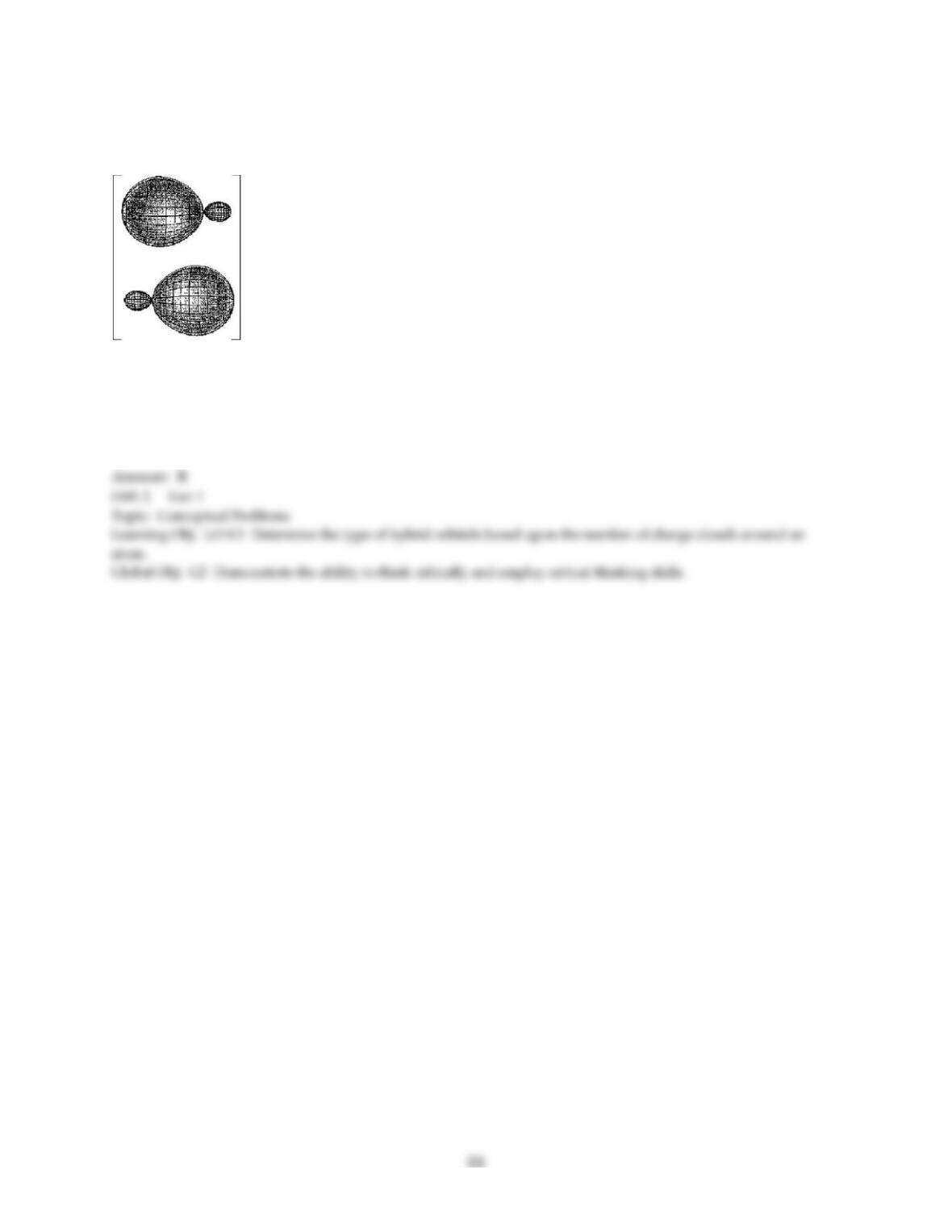
86) Which molecule has a central atom that uses the set of hybrid orbitals shown below to form bonds
with the non-central atoms?
A) H2O
B) CO2
C) NO2–
D) ICl2–
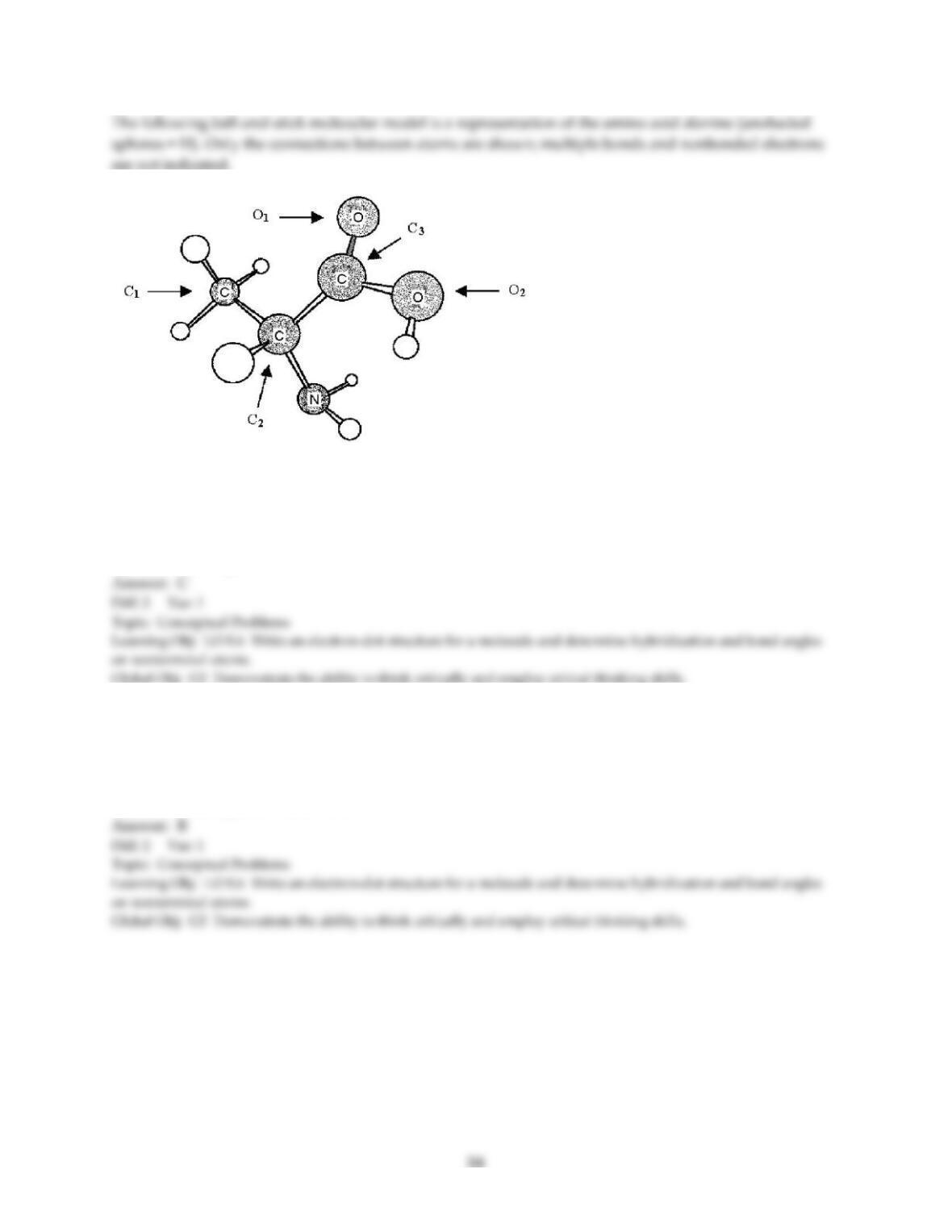
87) In order to complete an electron-dot structure of alanine, the nitrogen atom needs
A) 1 additional bond and 1 nonbonded pair of electrons.
B) 1 additional bond and 2 nonbonded pairs of electrons.
C) 1 nonbonded pair of electrons.
D) 2 nonbonded pairs of electrons.
88) In order to complete an electron-dot structure of alanine, the oxygen atom labeled O1 needs
A) 1 additional bond and 1 nonbonded pair of electrons.
B) 1 additional bond and 2 nonbonded pairs of electrons.
C) 1 nonbonded pair of electrons.
D) 2 nonbonded pairs of electrons.
35
89) In order to complete an electron-dot structure of alanine, the oxygen atom labeled O2 needs
A) 1 additional bond and 1 nonbonded pair of electrons.
B) 1 additional bond and 2 nonbonded pairs of electrons.
C) 1 nonbonded pair of electrons.
D) 2 nonbonded pairs of electrons.
90) What is the hybridization of the carbon atom labeled C1?
A) sp
B) sp2
C) sp3
D) sp4
91) What is the hybridization of the carbon atom labeled C2?
A) sp
B) sp2
C) sp3
D) sp4
92) What is the hybridization of the carbon atom labeled C3?
A) sp
B) sp2
C) sp3
D) sp4
93) What is the hybridization of the oxygen atom labeled O1?
A) sp
B) sp2
C) sp3
D) sp4
94) What is the hybridization of the oxygen atom labeled O2?
A) sp
B) sp2
C) sp3
D) sp4
95) What is the hybridization of the nitrogen atom?
A) sp
B) sp2
C) sp3
D) sp4
96) What is geometry around the carbon atom labeled C1?
A) bent
B) tetrahedral
C) trigonal planar
D) trigonal pyramidal
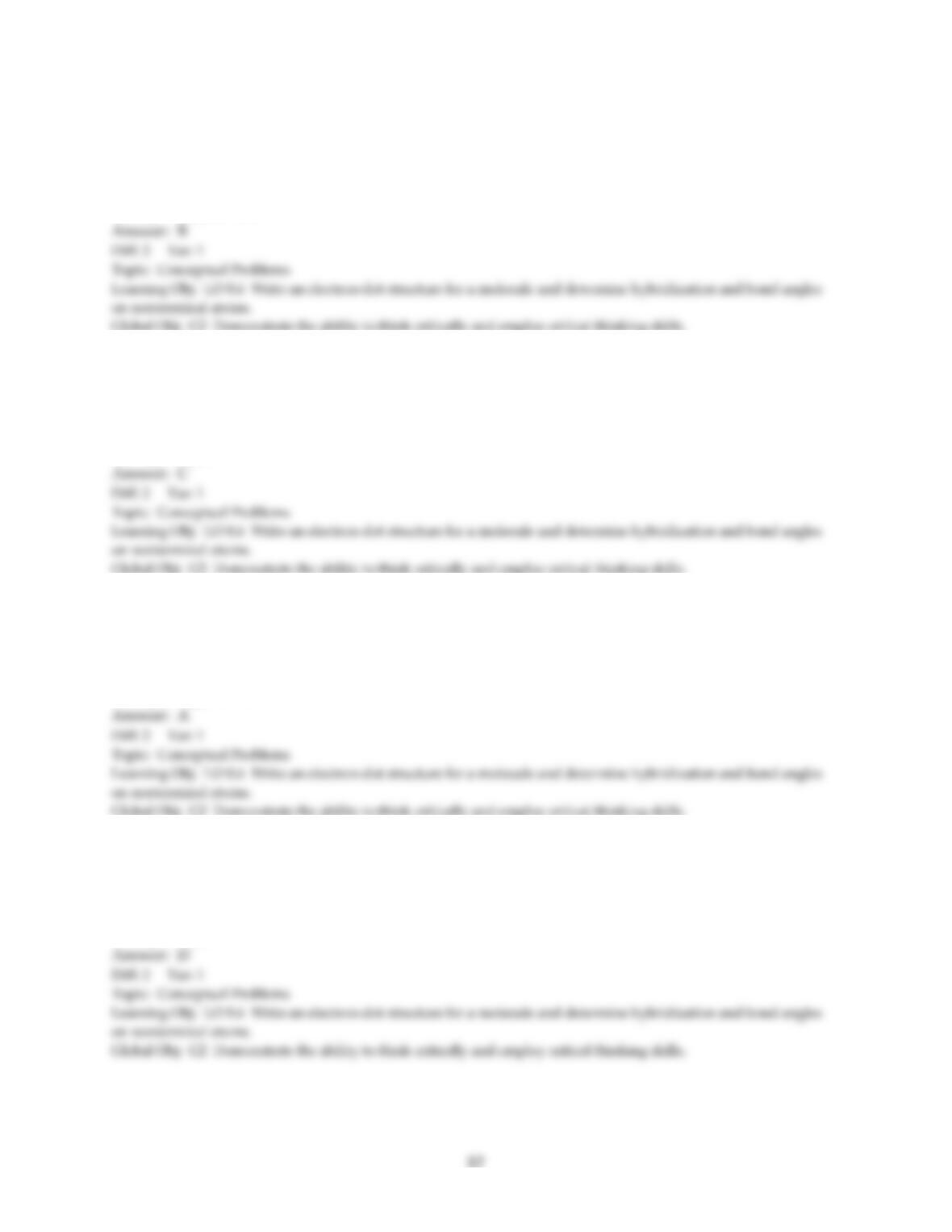
97) What is geometry around the carbon atom labeled C2?
A) bent
B) tetrahedral
C) trigonal planar
D) trigonal pyramidal
98) What is geometry around the carbon atom labeled C3?
A) bent
B) tetrahedral
C) trigonal planar
D) trigonal pyramidal
99) What is geometry around the oxygen atom labeled O2?
A) bent
B) tetrahedral
C) trigonal planar
D) trigonal pyramidal
100) What is geometry around the nitrogen atom?
A) bent
B) tetrahedral
C) trigonal planar
D) trigonal pyramidal
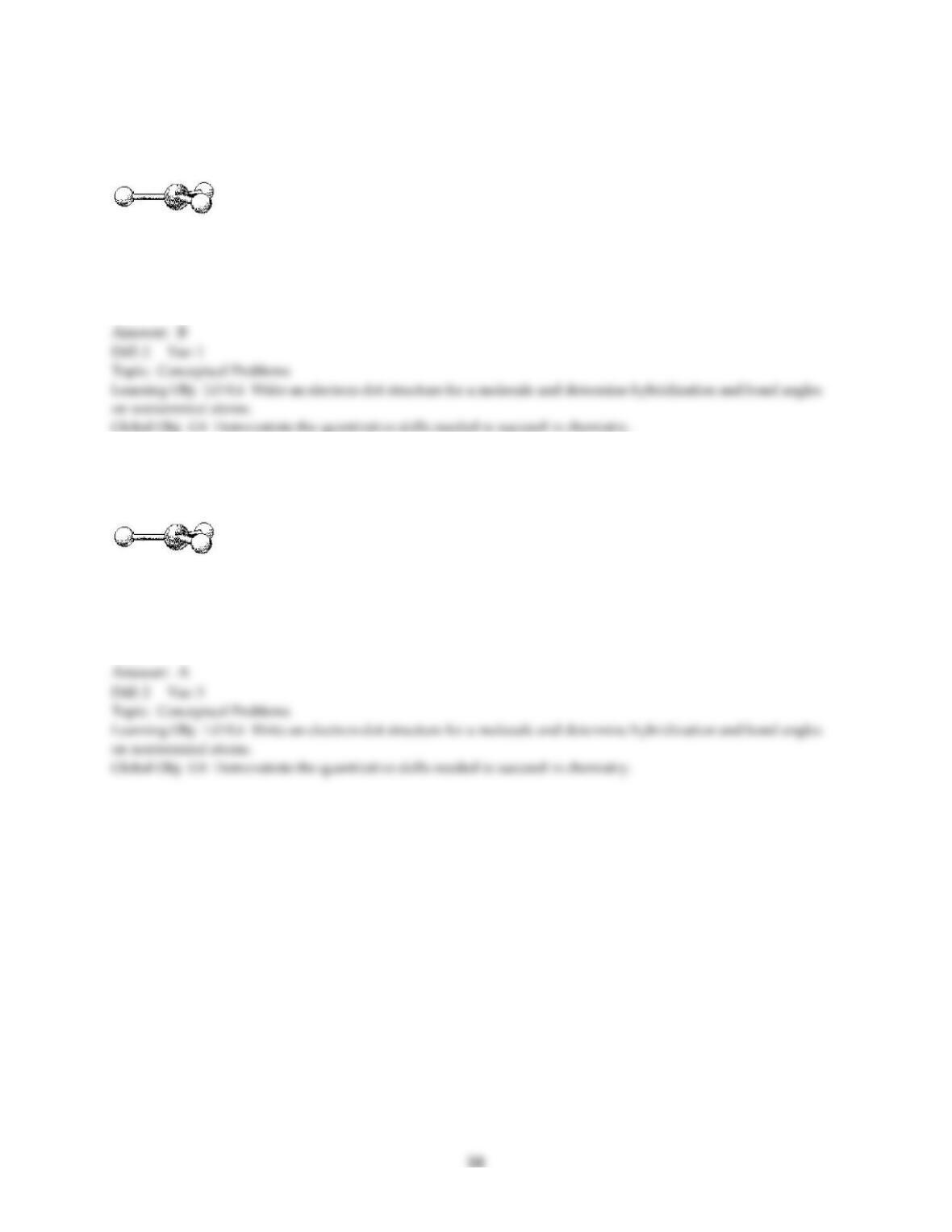
101) A molecular model of NO3– is shown below. Based on the best Lewis electron-dot structure for NO3–
and formal charge considerations, what is the predicted N—O bond order for each N—O bond?
A) 1
B) 1.33
C) 1.5
D) 2
102) A molecular model of BBr3 is shown below. Based on the best Lewis electron-dot structure for BBr3
and formal charge considerations, what is the predicted B—Br bond order for each B—Br bond?
A) 1
B) 1.33
C) 1.5
D) 2
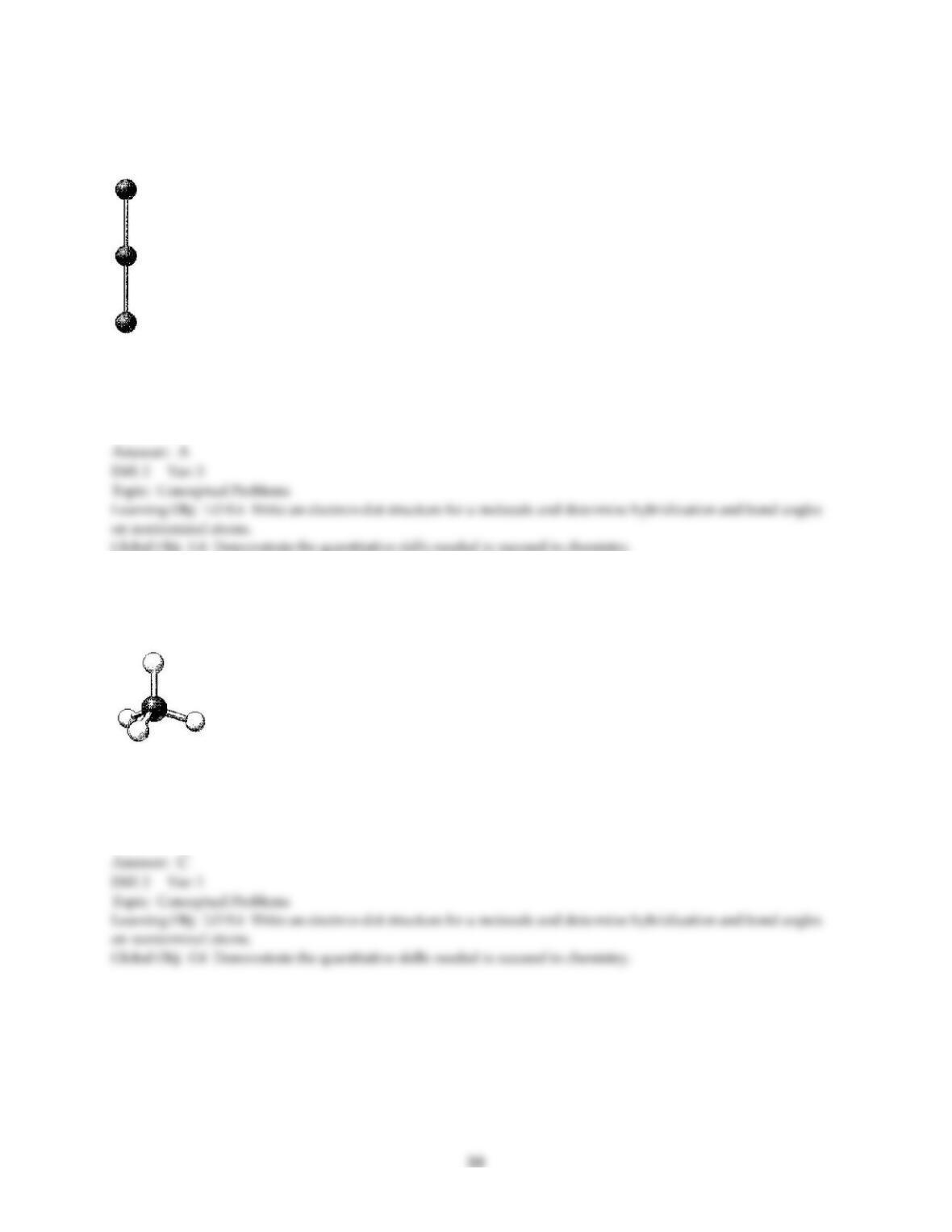
103) A molecular model of BeF2 is shown below. Based on the best Lewis electron-dot structure for BeF2
and formal charge considerations, what is the predicted Be—F bond order for each Be—F bond?
A) 1
B) 1.33
C) 1.5
D) 2
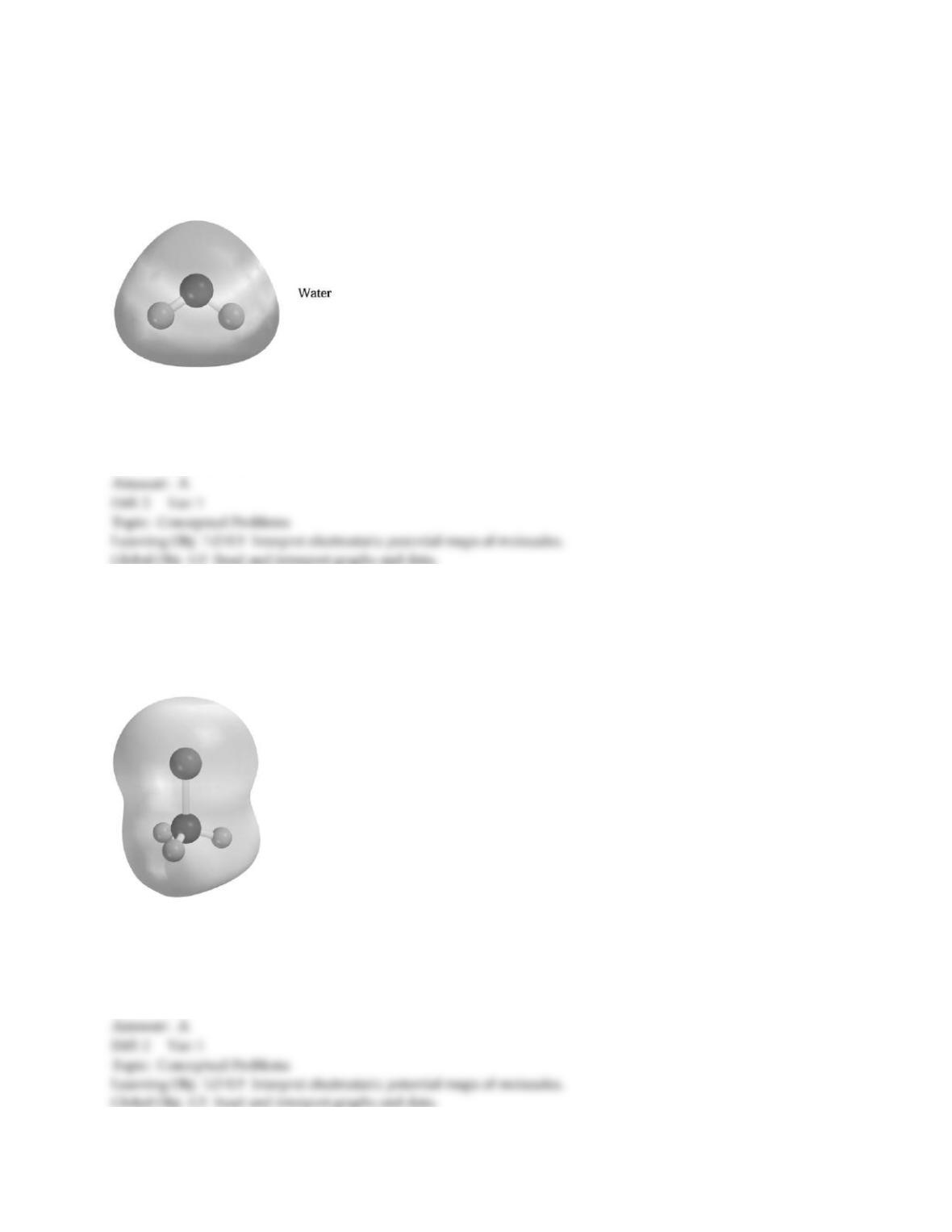
104) A molecular model of SO42– is shown below. Based on the best Lewis electron-dot structure for
SO42- and formal charge considerations, what is the predicted S—O bond order for each S—O bond?
A) 1
B) 1.33
C) 1.5
D) 2
40
105) Electrostatic potential maps use color to portray the calculated electron distribution in a molecule.
Atoms that are electron poor and carry a δ+ charge are shown in blue. Atoms that are electron rich and
carry a δ– charge are shown in red. Atoms with little or no charge are shown in green. The electrostatic
potential map of H2O below should show
A) H blue and O red.
B) H blue and O green.
C) H green and O blue.
D) H red and O blue.
106) Electrostatic potential maps use color to portray the calculated electron distribution in a molecule.
Atoms that are electron poor and carry a δ+ charge are shown in blue. Atoms that are electron rich and
carry a δ– charge are shown in red. Atoms with little or no charge are shown in green. The electrostatic
potential map of CH3Cl below should show
A) C blue and Cl red.
B) C blue and Cl green.
C) C green and Cl blue.
D) C red and Cl blue.
107) Electrostatic potential maps use color to portray the calculated electron distribution in a molecule.