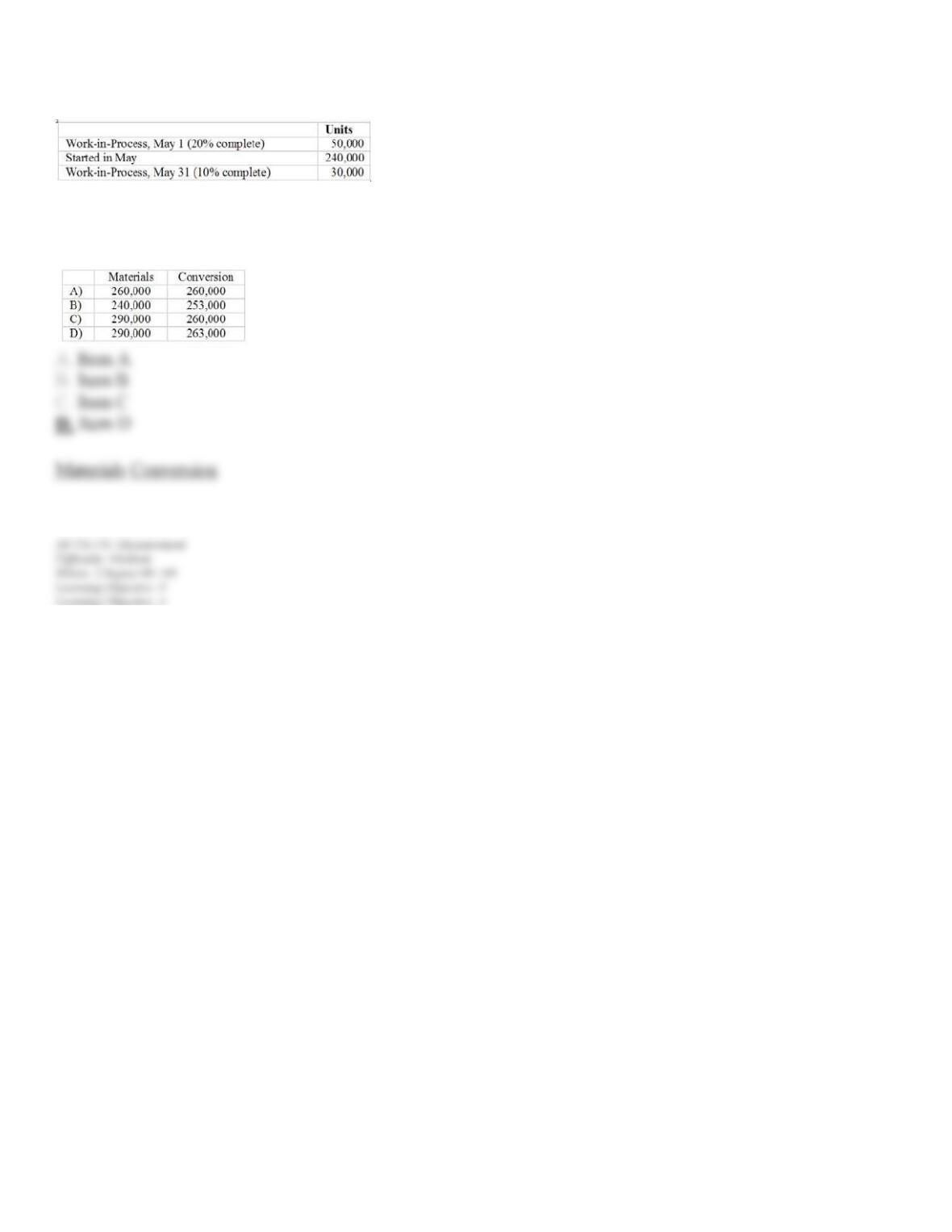
68. Richardson Corporation’s production cycle starts in Department A. The following information is available
for May:
Materials are added at the beginning of the process in Department A. What are the equivalent units of
production for materials and conversion, using the weighted-average method?
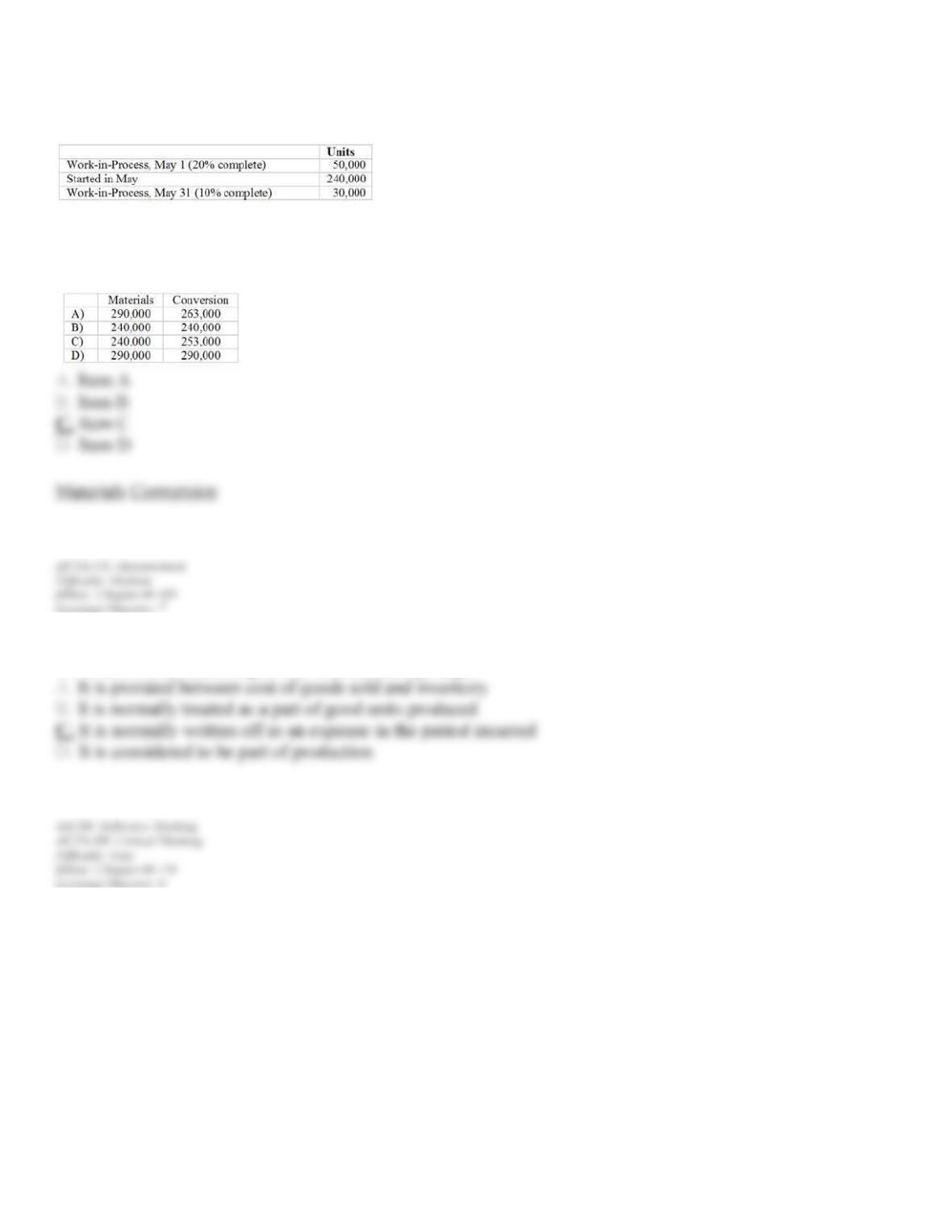
69. Riordan Corporation’s production cycle starts in Department A. The following information is available for
May:
Materials are added at the beginning of the process in Department A. What are the equivalent units of
production for materials and conversion, using the FIFO method? (Appendix A)
70. Which of the following is true of abnormal spoilage?
71. Which of the following statements is false about normal or tolerated spoilage?
Use the following to answer questions 72-78:
Winchester Salad Dressing had beginning work-in-process in July of $248,320 consisting of $101,640 of
materials and $146,680 of conversion costs. There were 16,000 units (one unit equals one case of salad
dressing) in beginning work-in-process, 40% complete as to conversion costs. Materials are added at the
beginning of the process. During November, 34,000 were transferred out; 1,000 were spoiled and 9,000
remained in ending inventory. The spoiled units were 60% complete for conversion cost. The ending
work-in-process was 70% complete for conversion cost. Costs during the period amounted to $781,200 for
direct materials and $1,009,280 for conversion. Winchester uses the weighted-average-method and identifies all
spoilage costs separately.
Hilton – Chapter 08
72. The number of units started during July was:
73. The number of finished equivalent units under weighted-average for materials is:
74. The number of finished equivalent units under weighted–average for conversions costs is:
75. The cost per finished equivalent unit for materials under weighted-average is:
76. The cost per finished equivalent unit for conversion costs under weighted-average is:
77. The total cost of units transferred out assuming spoilage is written off as an expense under weighted-average
was:
78. The total cost assigned to spoiled units under weighted–average is:
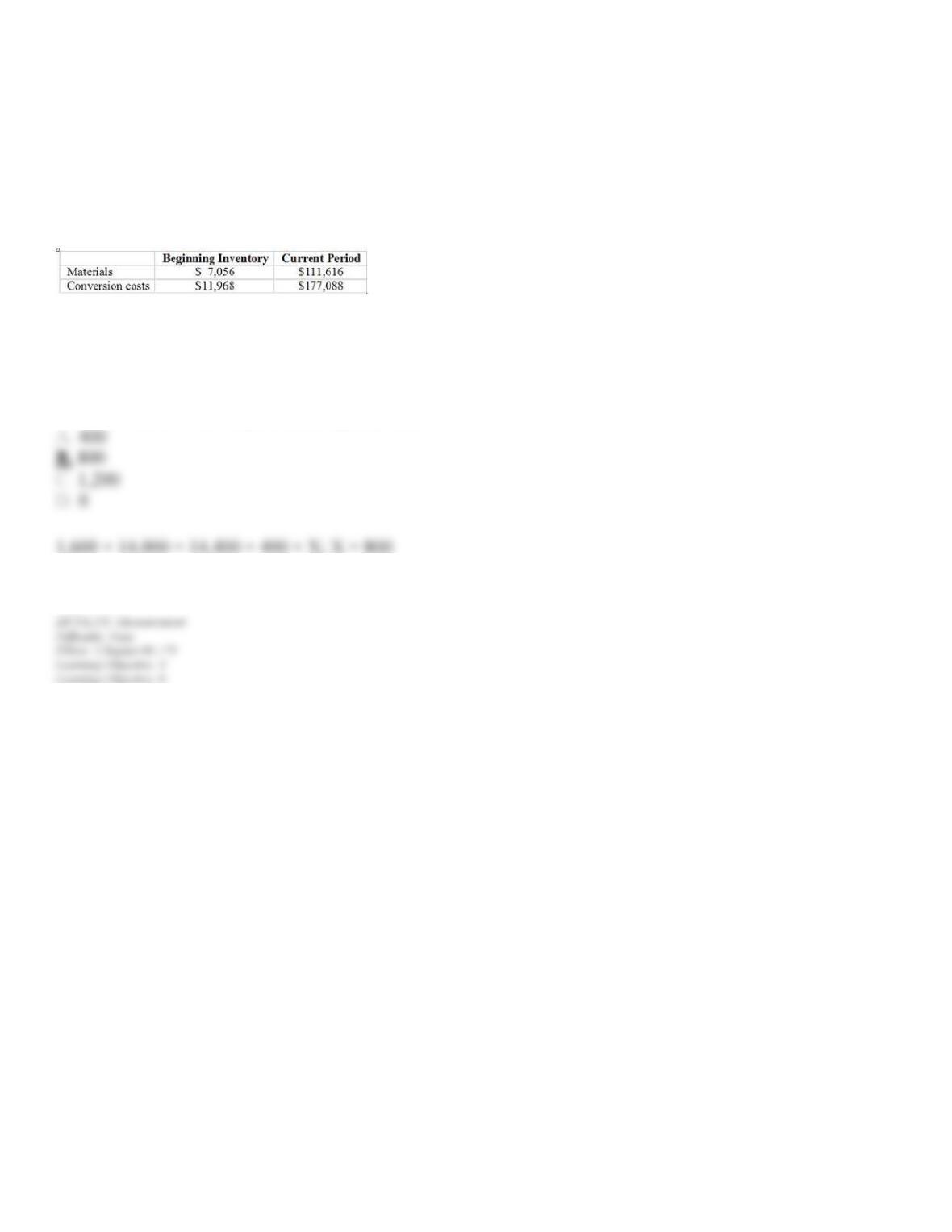
Use the following to answer questions 79-85:
Oliver Corporation’s Department 2 had 1,600 units in the beginning inventory (60% complete for conversion
costs). During July, 14,000 units were started into production; 14,400 good units were transferred to
Department 3 and 400 units were left in the ending inventory, which were 40% complete for conversion costs.
All materials are added at the end of the process in Department 2. Units are inspected at the completion of the
process, at which point spoiled units are identified and disposed of. The cost of spoiled units is written off as an
abnormal expense during the period. The following costs were assigned to Department 2 during the period:
Hilton – Chapter 08
79. The number of units spoiled during July was:
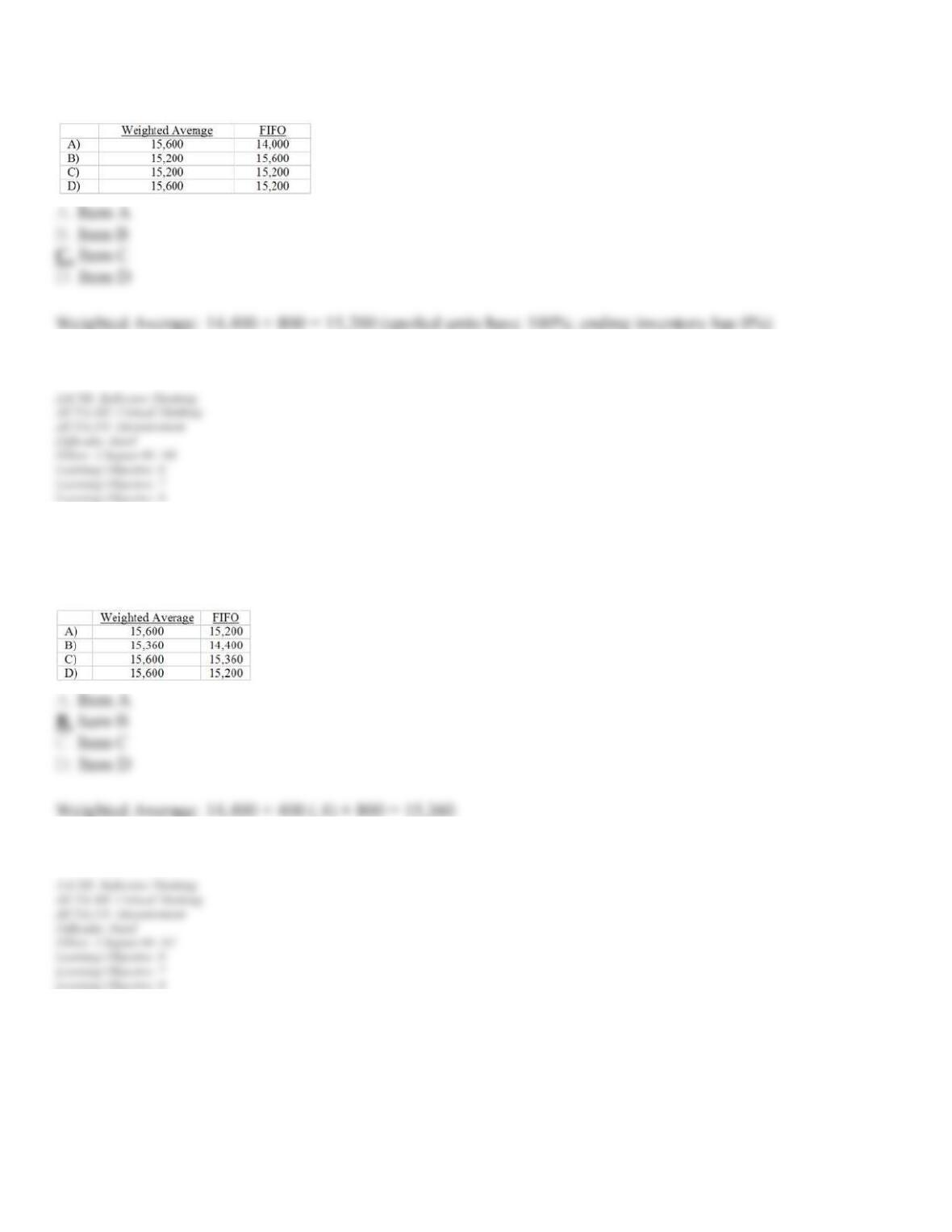
80. The number of finished equivalent units of materials under weighted–average and FIFO is:
81. The number of finished equivalent units of conversion costs under weighted–average and FIFO is:
82. If Department 2 uses FIFO costing, what is the material cost per equivalent unit during July? (Appendix A)
83. If Department 2 uses weighted-average, what is the conversion cost per equivalent unit during July?
84. If Department 2 uses FIFO costing and treats its spoilage cost as a separate cost item, what is the total cost
assigned to the spoiled units during July? (Appendix A)
85. If the spoiled units were detected at the 50% point in the process instead of at the end of the process:
86. Which of the following companies would most likely use a process costing system?
87. If the FIFO costing method is used and materials are added at the beginning of the period, the total
equivalent units for materials will equal the number of units: (Appendix A)
88. Which of the following companies is most likely to use operation costing? (Appendix B)
89. Which of the following statements regarding operation costing is true? (Appendix B)
Use the following to answer questions 90-93:
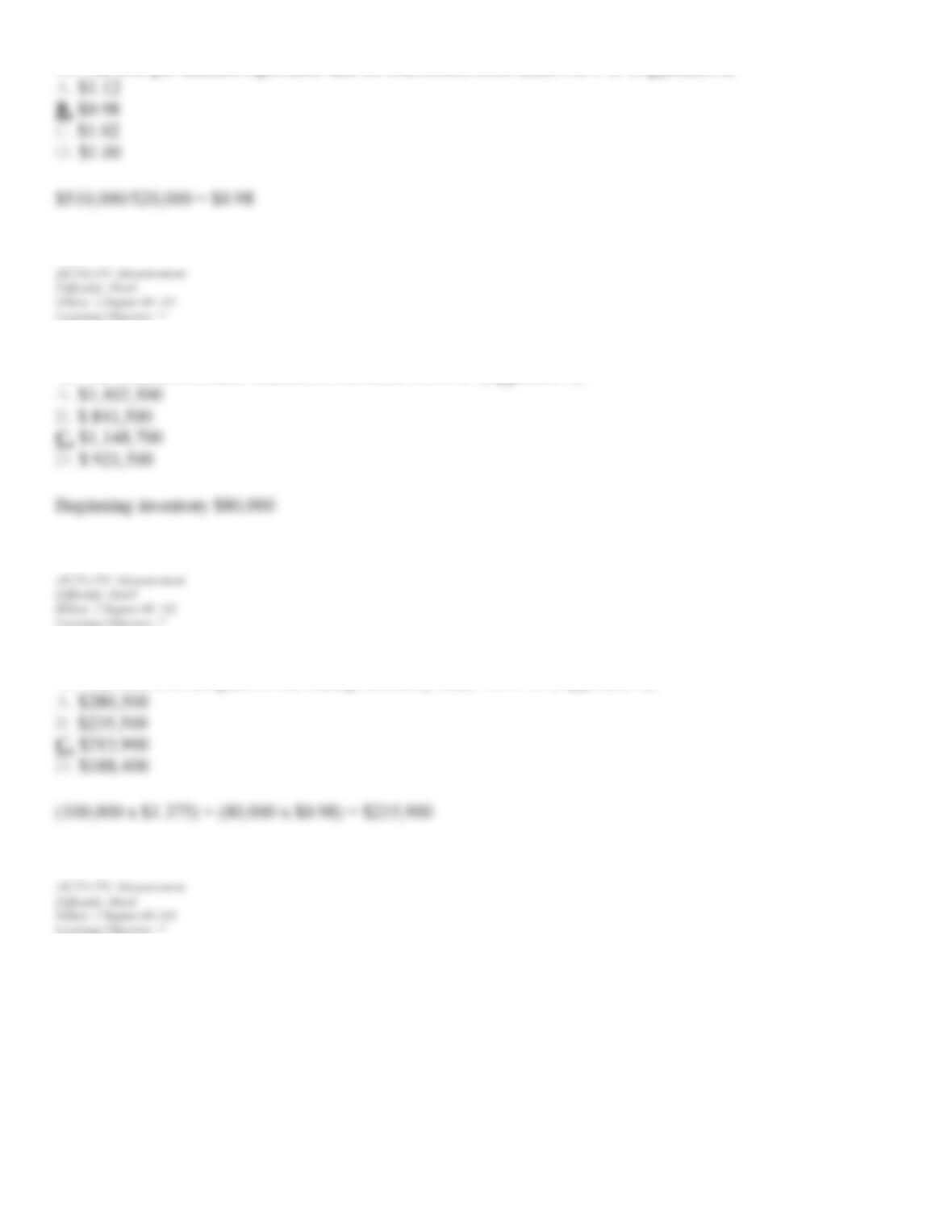
Preston Manufacturing Company has the following information available for its process costing system for the
month of May in the finishing department. The finishing department is the second of a multiple-department
manufacturing plant. Materials are added at the end of the process in finishing.
Beginning inventory is 30% complete as to conversion costs; ending inventory is 80% complete as to
conversion costs.
Hilton – Chapter 08
90. The finished equivalent units for each production category under FIFO are: (Appendix A)
91. The cost per finished equivalent unit for conversion costs under FIFO is: (Appendix A)
92. The total cost of units transferred out under FIFO is: (Appendix A)
93. The total cost assigned to the ending inventory under FIFO is: (Appendix A)
94. The following information appears in the records of the Woodrow Company: On June 1, beginning
Work-in- Process contained 100,000 units, 70% complete as to conversion costs. During June, 300,000 units
were transferred in from process 1. On June 30, 50,000 units remained in inventory, which were 40% complete.
A decorative material is added in Process 2 when units are 60% complete.
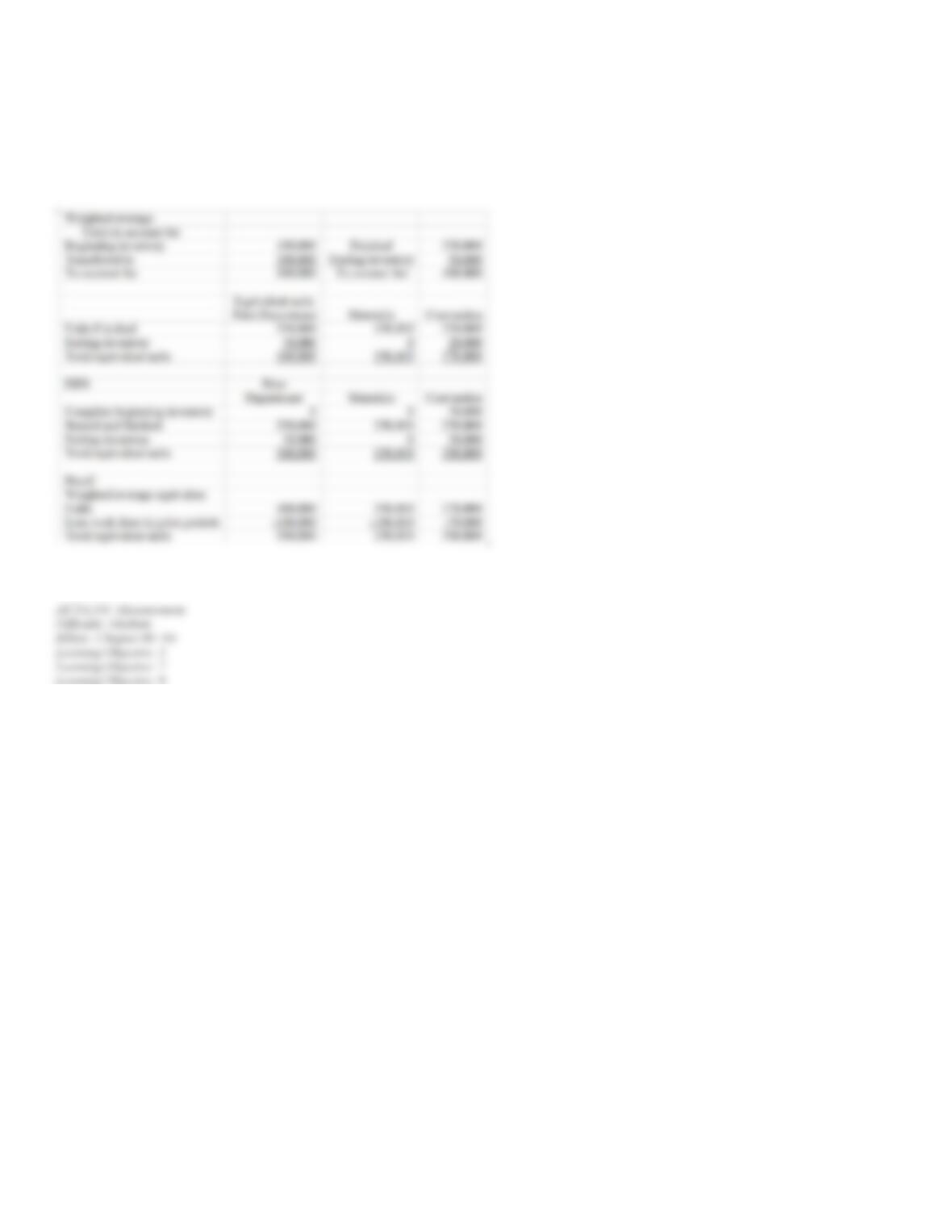
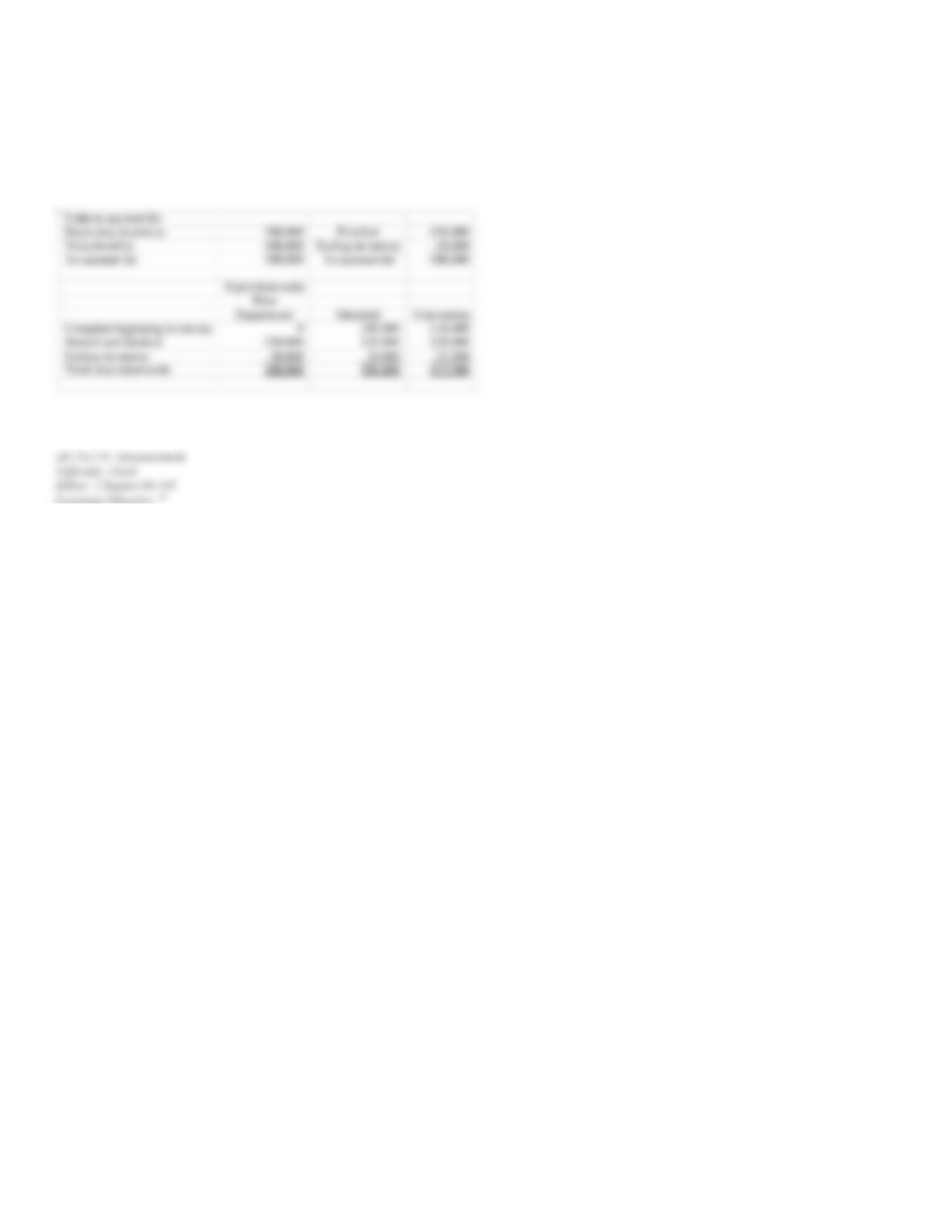
Required: Compute equivalent units produced during June for prior department, materials and conversion costs
under weighted-average and FIFO costing. (Appendix A)
95. The following information appears in the records of the Doyle Corporation: On June 1, beginning
Work-in-Process contained 200,000 units, 25% complete as to conversion costs. During June, 300,000 units
were transferred in from Process 1. On June 30, 50,000 units remained in inventory, which were 75% complete.
A decorative material is added in Process 2 when units are 60% complete.
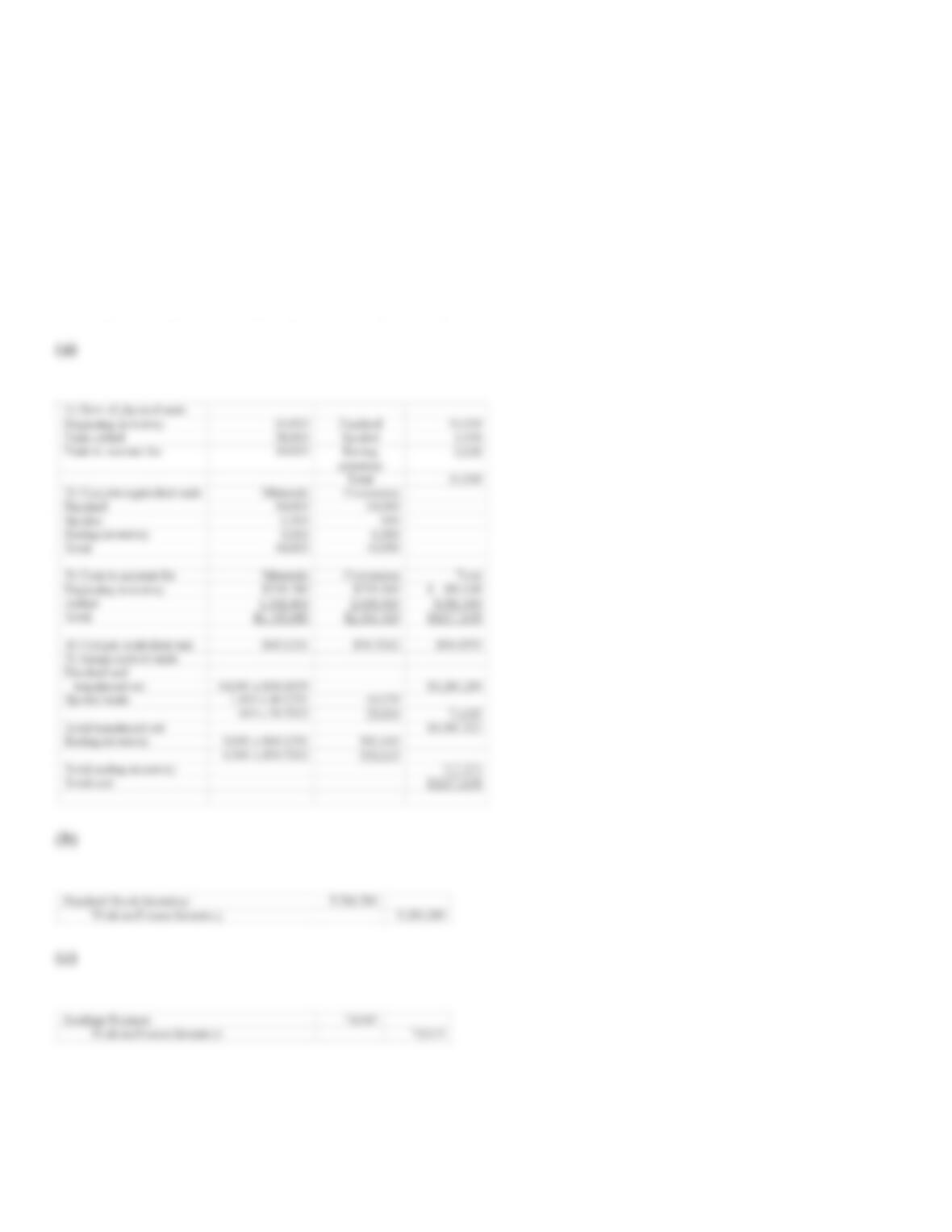
Required: Compute equivalent units produced during June for prior department, materials and conversion costs
under FIFO. (Appendix A)
96. Celia’s Salad Dressings had beginning work-in-process of $496,640 consisting of $203,280 of materials and
$293,360 of conversion costs. There were 16,000 units (one unit equals one case) in beginning inventory, 40%
complete as to conversion costs. Materials are added at the beginning of the process. During November, 34,000
units were transferred out, 1,000 were spoiled and 9,000 remained in ending inventory. The spoiled units were
60% complete for conversion costs. The ending work-in-process was 70% complete for conversion costs. Costs
during the period amounted to $1,562,400 for materials and $ 2,018,560 for conversion. Celia’s accounts for
spoiled units separately and does not spread their cost over good units produced.
Required:
(a) Prepare a process costing report for November using the weighted-average method. Use the five step costing
method to assign costs to products. Round costs to four decimal points.
(b) Prepare the journal entry required to transfer units to finished goods inventory.
(c) Prepare the journal entry required to dispose of spoiled units.
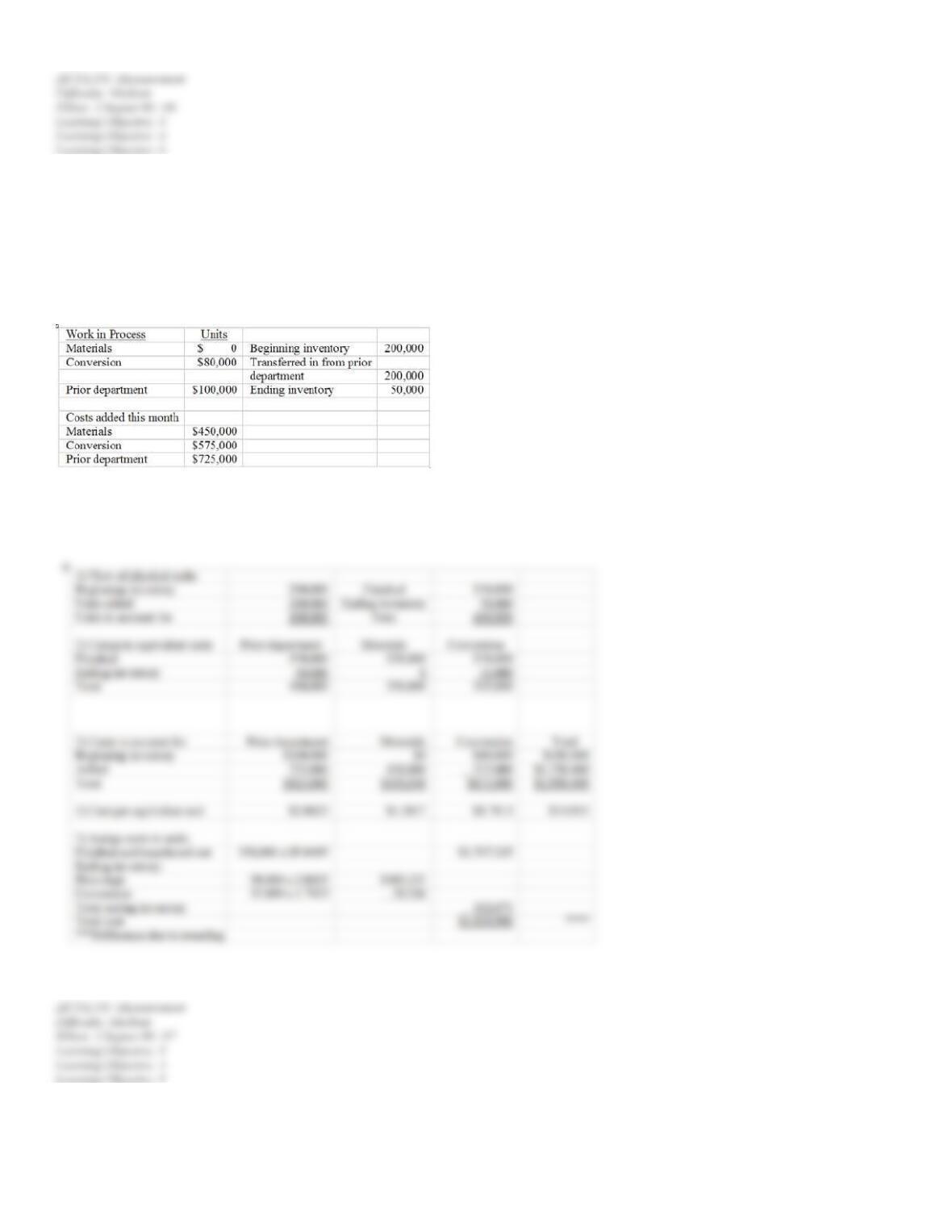
97. Zaremba Company has the following information available for its process costing system for the month of
July in the finishing department, the second of a multiple department manufacturing plant. Materials are added
at the end of the process in finishing. Beginning inventory was 20% complete for conversion cost. Ending
inventory was 70% complete for conversion costs.
Required: Calculate the cost of the units transferred out during July and the ending inventory at July 31 using
the weighted-average method. There were no spoiled units. Round equivalent-unit costs to four decimal points.