99. Figure 8-5
Aqua Company produces aquariums. During the year 150,000 aquariums were produced. Materials and labor
standards for producing the aquariums are as follows:
Direct materials (2 sheets of glass @ $2 each)
$4
Direct labor (3 hours @ $8)
24
Aqua purchased and used 310,000 sheets of glass at $1.50 each and its actual labor hours were 435,000 hours at a wage rate of $8.50.
Refer to Figure 8-5. What is Aqua’s labor rate variance?
100. Figure 8-5
Aqua Company produces aquariums. During the year 150,000 aquariums were produced. Materials and labor
standards for producing the aquariums are as follows:
Direct materials (2 sheets of glass @ $2 each)
$4
Direct labor (3 hours @ $8)
24
Aqua purchased and used 310,000 sheets of glass at $1.50 each and its actual labor hours were 435,000 hours at a wage rate of $8.50.
Refer to Figure 8-5. What is Aqua’s total labor variance?
101. Figure 8-6.
Perfect Builders constructs houses. The standard labor rate is $20 per hour and the standard number of hours is
12,000 hours per home. During the year, it constructed 10 homes using 14,000 labor hours per home and a rate
of $22 per hour.
Refer to Figure 8-6. Calculate the Perfect Builders’ labor rate variance.
102. Figure 8-6.
Perfect Builders constructs houses. The standard labor rate is $20 per hour and the standard number of hours is
12,000 hours per home. During the year, it constructed 10 homes using 14,000 labor hours per home and a rate
of $22 per hour.
Refer to Figure 8-6. Calculate the labor efficiency variance.
103. During September, a small roofing company purchased 500 bundles of a certain type of shingle at a price
of $35 per bundle, $5 less than the standard price. Its standard quantity of this type of shingles is 550 bundles.
What is the journal entry to record the purchase of materials?
104. During June, Cisco Company produced 15,000 chainsaw blades. The standard quantity of material allowed
per unit was 1.5 pounds of steel per blade at a standard cost of $5 per pound. The actual purchase price was
$6.25 per pound. Cisco determined that it had a favorable materials usage variance of $2,500 for June. What is
the journal entry to record the issuance and usage of materials?
105. Figure 8-7.
During April, a small roofing company purchased 700 bundles of a certain type of shingle at a price of $35 per
bundle, $8 more than the standard price. Its standard quantity of this type of shingles is 725 bundles.
Refer to Figure 8-7. What is the journal entry to record the issuance and usage of materials?
106. Figure 8-7.
During April, a small roofing company purchased 700 bundles of a certain type of shingle at a price of $35 per
bundle, $8 more than the standard price. Its standard quantity of this type of shingles is 725 bundles.
Refer to Figure 8-7. What is the journal entry to record the purchase of materials?
107. Figure 8-8.
The Fantastic Tool Company (Mexico Division) produced 100,000 saw blades during the year. It took 2 hours
of labor per blade at a rate of $5.50 per hour. However, its standard labor rate is $5.00. Its labor efficiency
variance was a favorable $55,000.
Refer to Figure 8-8. What is Fantastic’s standard hours allowed for a volume of 100,000 blades?
108. Figure 8-8.
The Fantastic Tool Company (Mexico Division) produced 100,000 saw blades during the year. It took 2 hours
of labor per blade at a rate of $5.50 per hour. However, its standard labor rate is $5.00. Its labor efficiency
variance was a favorable $55,000.
Refer to Figure 8-8. What is Fantastic’s labor rate variance?
109. Figure 8-8.
The Fantastic Tool Company (Mexico Division) produced 100,000 saw blades during the year. It took 2 hours
of labor per blade at a rate of $5.50 per hour. However, its standard labor rate is $5.00. Its labor efficiency
variance was a favorable $55,000.
Refer to Figure 8-8. What is the journal entry to record both labor variances?
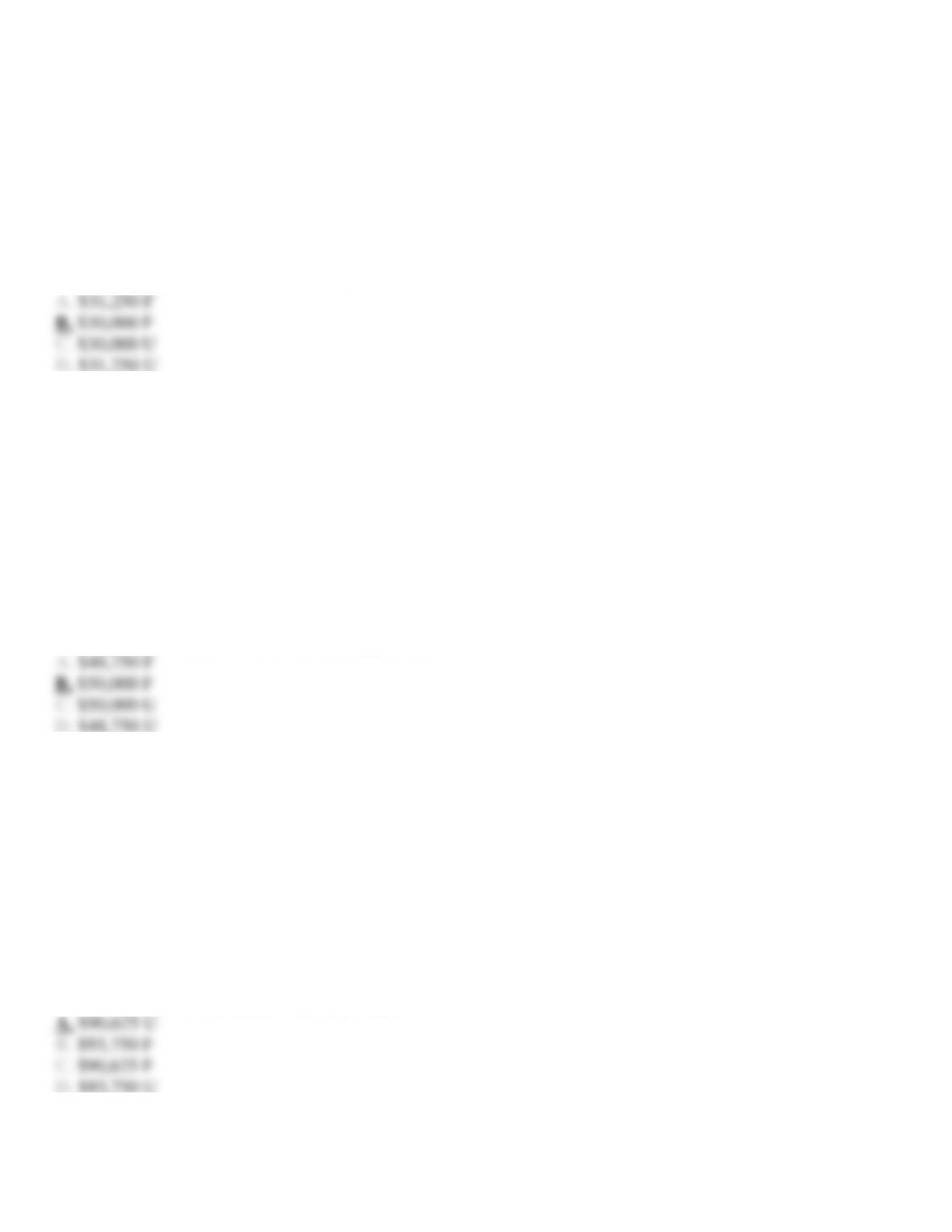
110. Figure 8-9.
Hillandale Company manufactures overalls. During the year, it manufactured 125,000 overalls, using 2.9 hours
of direct labor at a rate of $6.25 per hour. The materials and labor standards for manufacturing the overalls are
as follows:
Direct materials (5 yards of denim @ $2 per yard)
$10
Direct labor (3 hours @ $6 per hour)
18
It took Hillandale 600,000 yards at $1.95 per yard to make the 125,000 overalls.
Refer to Figure 8-9. What is Hillandale’s materials price variance?
111. Figure 8-9.
Hillandale Company manufactures overalls. During the year, it manufactured 125,000 overalls, using 2.9 hours
of direct labor at a rate of $6.25 per hour. The materials and labor standards for manufacturing the overalls are
as follows:
Direct materials (5 yards of denim @ $2 per yard)
$10
Direct labor (3 hours @ $6 per hour)
18
It took Hillandale 600,000 yards at $1.95 per yard to make the 125,000 overalls.
Refer to Figure 8-9. What is Hillandale’s materials usage variance?
112. Figure 8-9.
Hillandale Company manufactures overalls. During the year, it manufactured 125,000 overalls, using 2.9 hours
of direct labor at a rate of $6.25 per hour. The materials and labor standards for manufacturing the overalls are
as follows:
Direct materials (5 yards of denim @ $2 per yard)
$10
Direct labor (3 hours @ $6 per hour)
18
It took Hillandale 600,000 yards at $1.95 per yard to make the 125,000 overalls.
Refer to Figure 8-9. What is Hillandale’s labor rate variance?
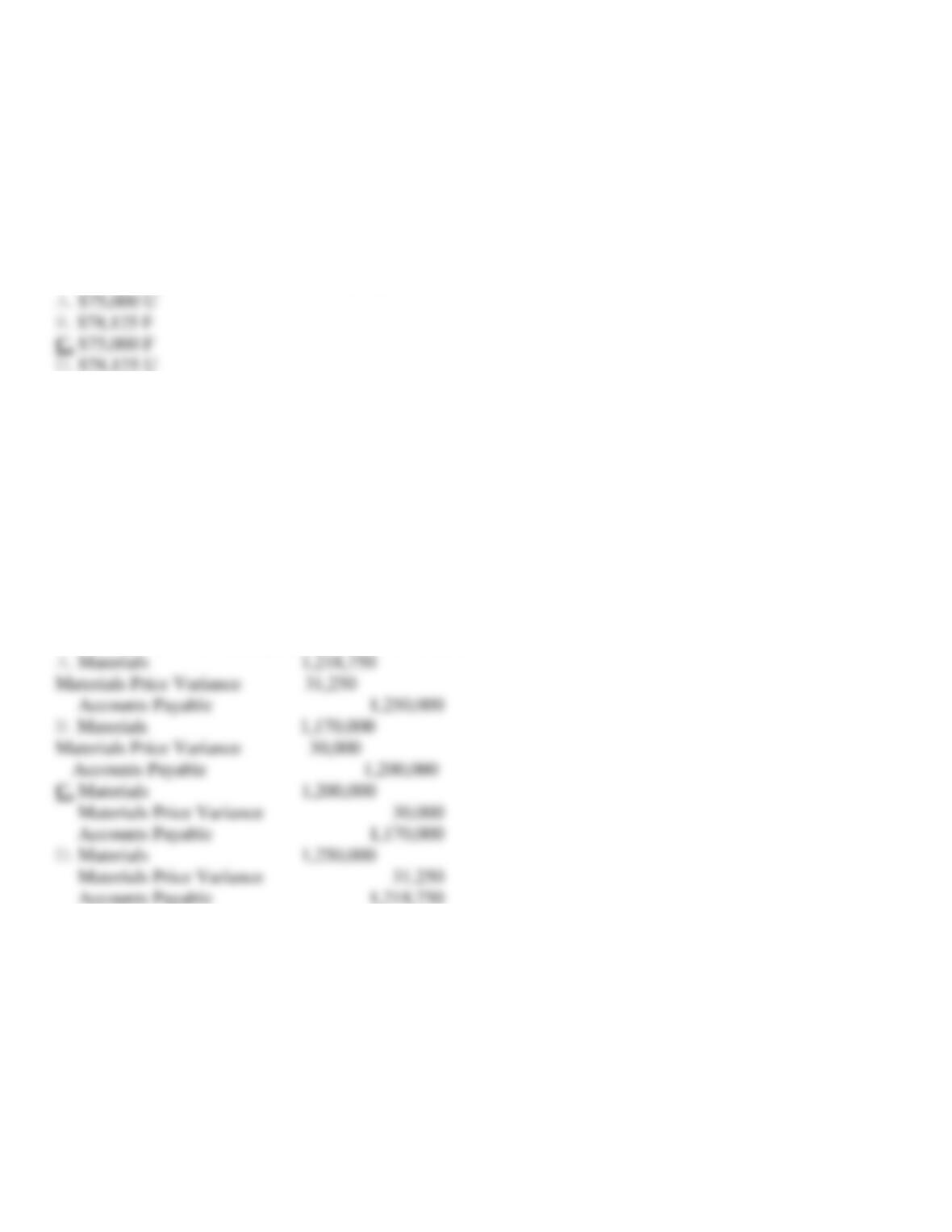
113. Figure 8-9.
Hillandale Company manufactures overalls. During the year, it manufactured 125,000 overalls, using 2.9 hours
of direct labor at a rate of $6.25 per hour. The materials and labor standards for manufacturing the overalls are
as follows:
Direct materials (5 yards of denim @ $2 per yard)
$10
Direct labor (3 hours @ $6 per hour)
18
It took Hillandale 600,000 yards at $1.95 per yard to make the 125,000 overalls.
Refer to Figure 8-9. What is Hillandale’s labor efficiency variance?
114. Figure 8-9.
Hillandale Company manufactures overalls. During the year, it manufactured 125,000 overalls, using 2.9 hours
of direct labor at a rate of $6.25 per hour. The materials and labor standards for manufacturing the overalls are
as follows:
Direct materials (5 yards of denim @ $2 per yard)
$10
Direct labor (3 hours @ $6 per hour)
18
It took Hillandale 600,000 yards at $1.95 per yard to make the 125,000 overalls.
Refer to Figure 8-9. What is the entry to record the purchase of materials?
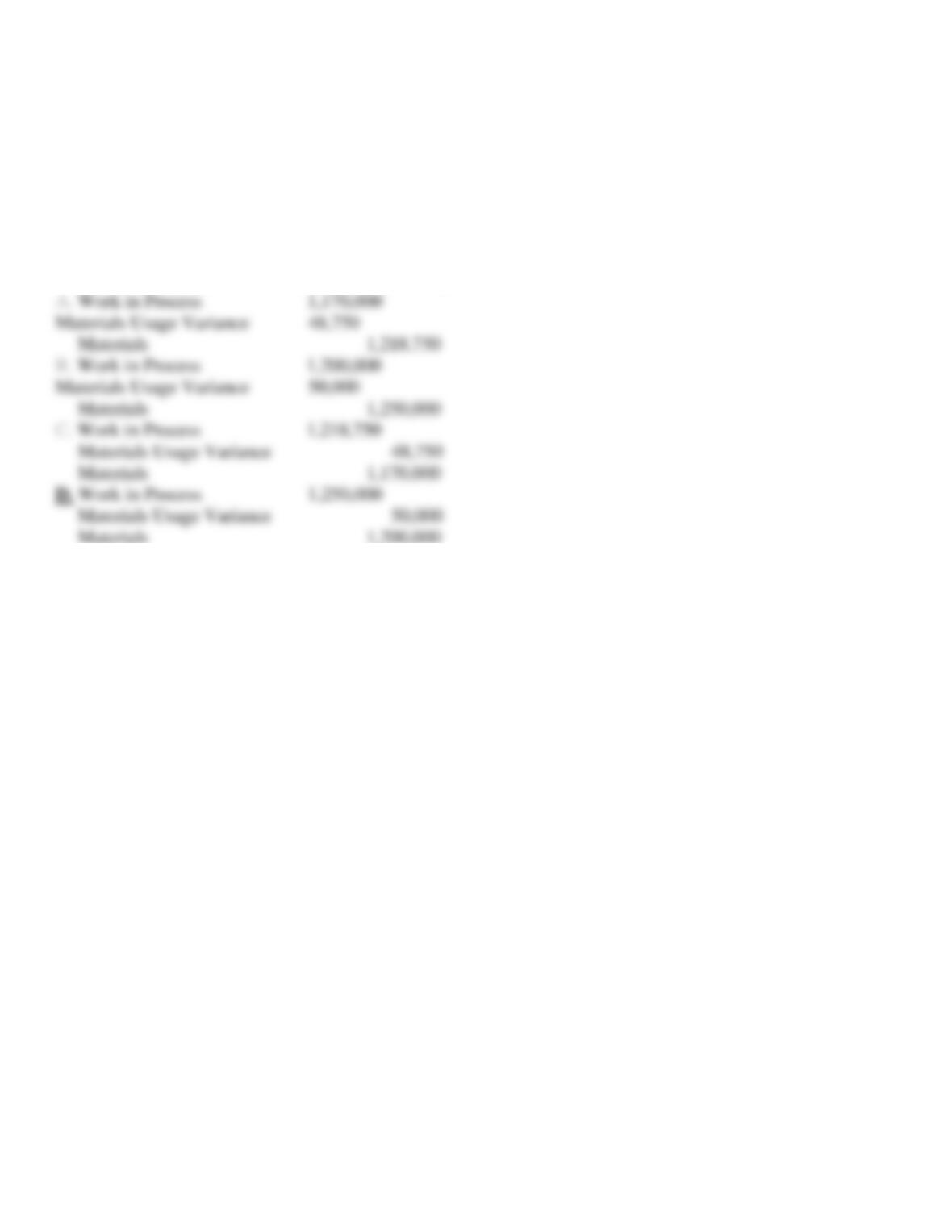
115. Figure 8-9.
Hillandale Company manufactures overalls. During the year, it manufactured 125,000 overalls, using 2.9 hours
of direct labor at a rate of $6.25 per hour. The materials and labor standards for manufacturing the overalls are
as follows:
Direct materials (5 yards of denim @ $2 per yard)
$10
Direct labor (3 hours @ $6 per hour)
18
It took Hillandale 600,000 yards at $1.95 per yard to make the 125,000 overalls.
Refer to Figure 8-9. What is the entry to record the issuance and usage of materials?
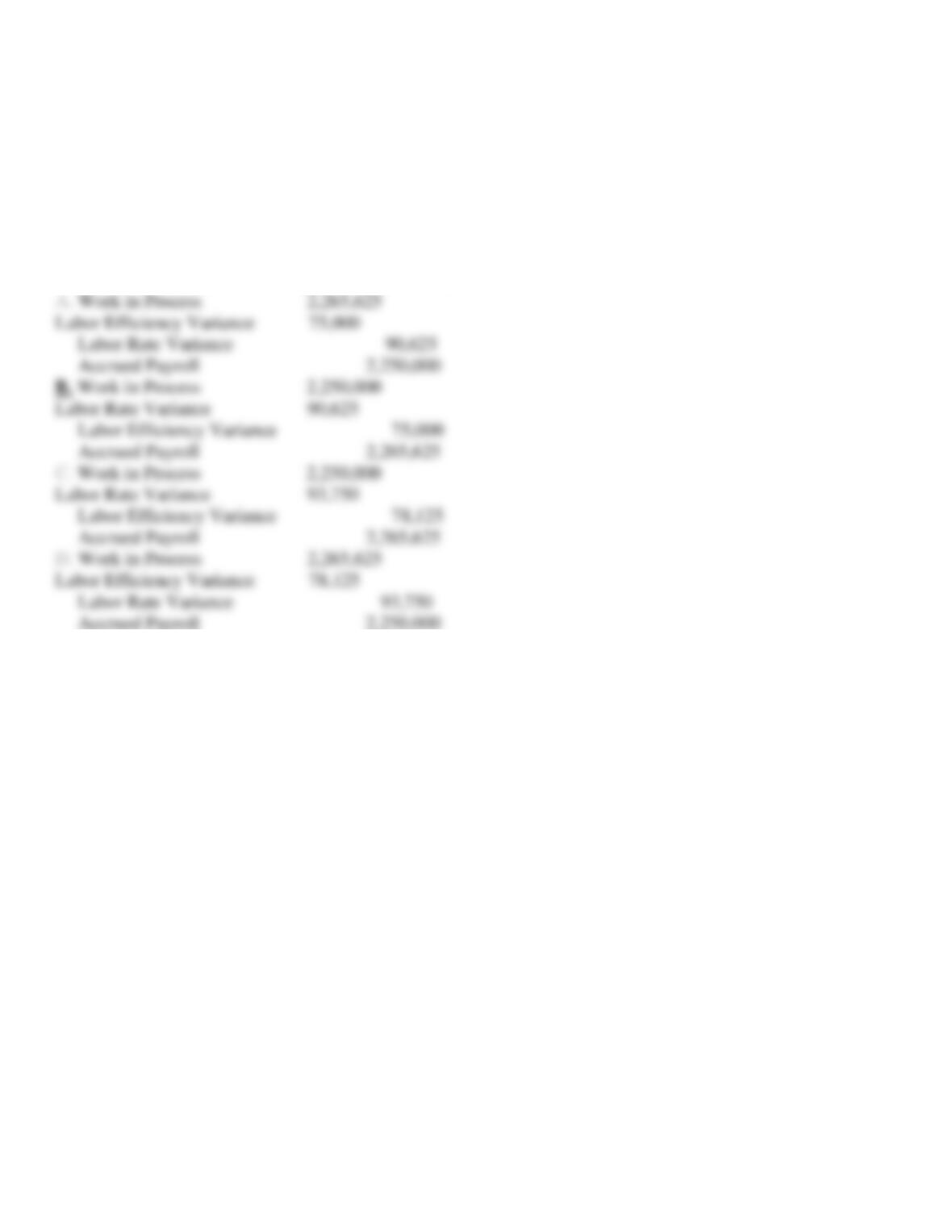
116. Figure 8-9.
Hillandale Company manufactures overalls. During the year, it manufactured 125,000 overalls, using 2.9 hours
of direct labor at a rate of $6.25 per hour. The materials and labor standards for manufacturing the overalls are
as follows:
Direct materials (5 yards of denim @ $2 per yard)
$10
Direct labor (3 hours @ $6 per hour)
18
It took Hillandale 600,000 yards at $1.95 per yard to make the 125,000 overalls.
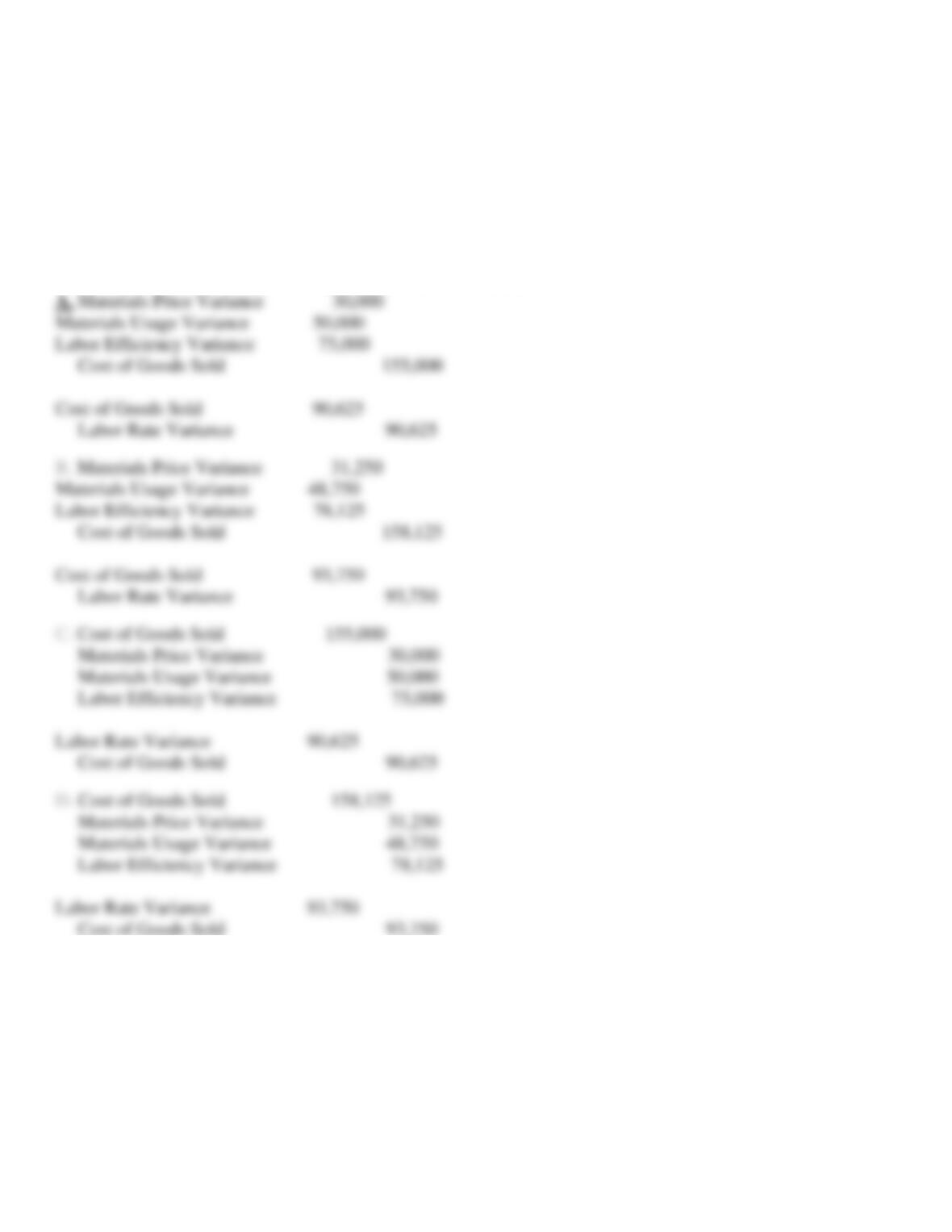
Refer to Figure 8-9. What is the entry to record the direct labor variances?
117. Figure 8-9.
Hillandale Company manufactures overalls. During the year, it manufactured 125,000 overalls, using 2.9 hours
of direct labor at a rate of $6.25 per hour. The materials and labor standards for manufacturing the overalls are
as follows:
Direct materials (5 yards of denim @ $2 per yard)
$10
Direct labor (3 hours @ $6 per hour)
18
It took Hillandale 600,000 yards at $1.95 per yard to make the 125,000 overalls.
Refer to Figure 8-9. What is the entry to close the variances of labor and materials?
118. Figure 8-10.
Lawn Professionals Corporation wants to produce a new lawnmower. he financial data is as follows:
Target price: $350
Target profit: $75
Estimated cost given current product and process designs: $300
Other information:
(1) Through reverse engineering, Lawn Professionals found a design improvement that would save $20 per unit.
(2) It also found that it could purchase a similar component of a different brand at a lower price, which would
save $10 per unit.
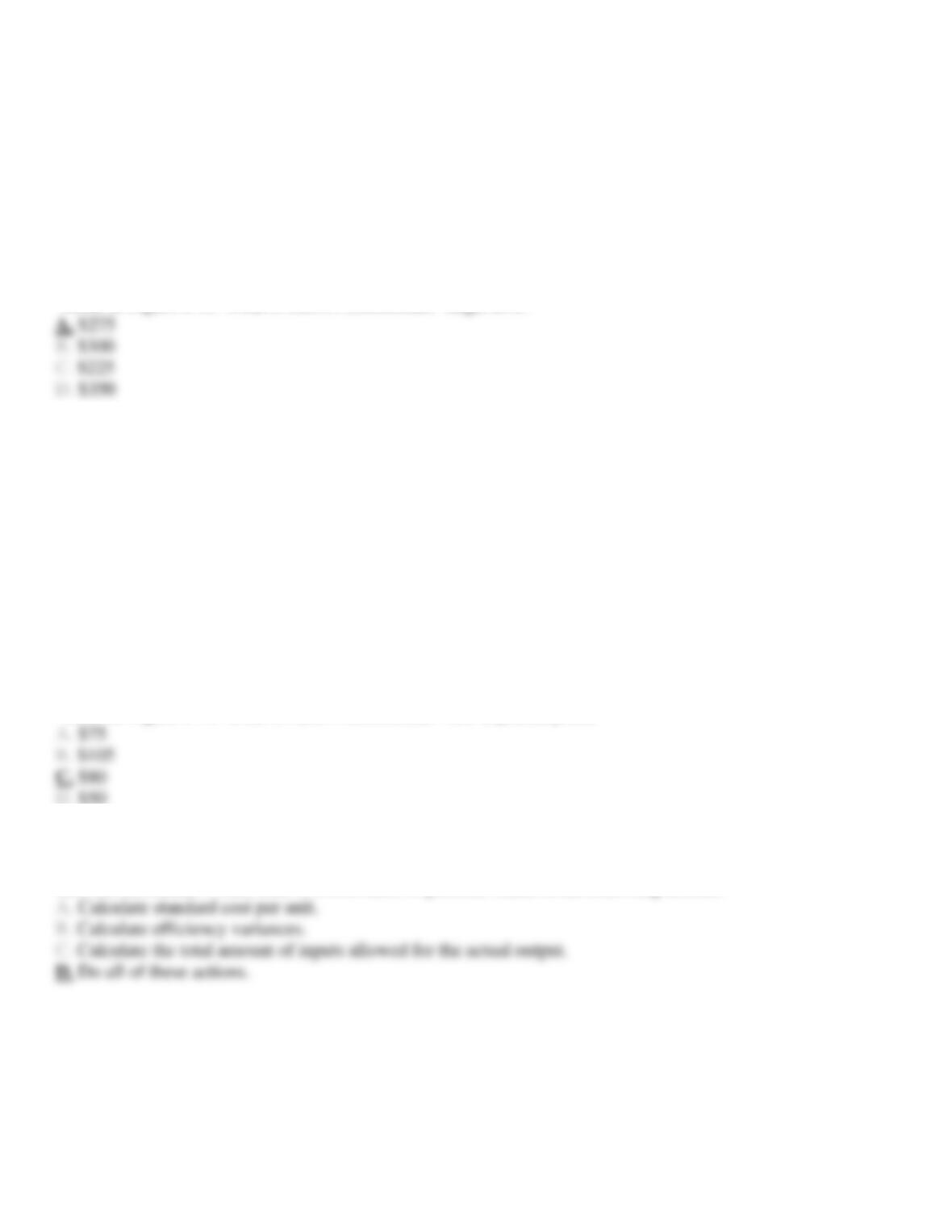
Refer to Figure 8-10. What is Lawn Professionals’ target cost?
119. Figure 8-10.
Lawn Professionals Corporation wants to produce a new lawnmower. he financial data is as follows:
Target price: $350
Target profit: $75
Estimated cost given current product and process designs: $300
Other information:
(1) Through reverse engineering, Lawn Professionals found a design improvement that would save $20 per unit.
(2) It also found that it could purchase a similar component of a different brand at a lower price, which would
save $10 per unit.
Refer to Figure 8-10. What is Lawn Professionals’ new expected profit?
D. $50
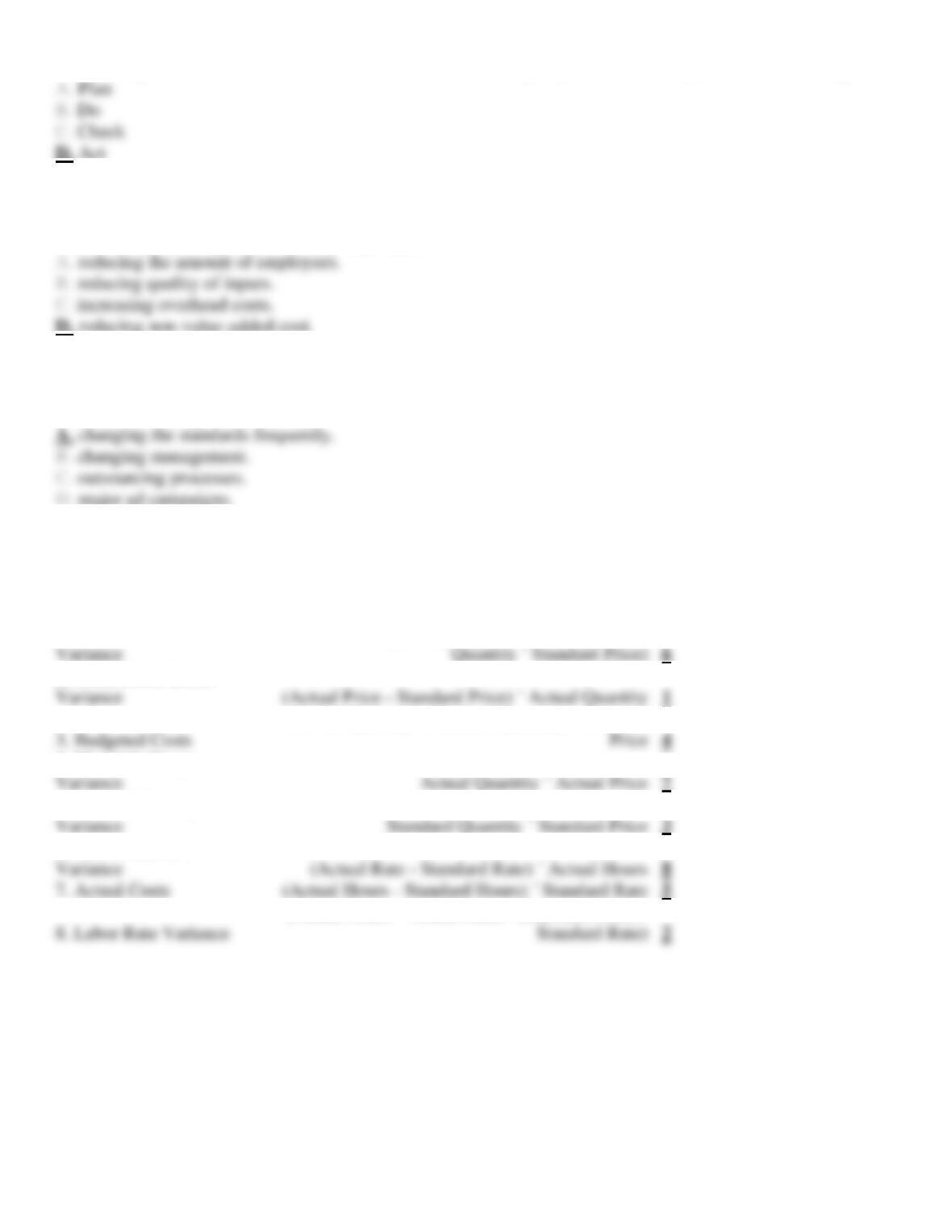
120. An accountant would refer to a cost sheet to perform which of the following actions?
121. Setting a new minimum standard is which of the following steps in the kaizen cycle of kaizen costing?
122. A company using kaizen costing emphasizes:
123. Kaisen costing involves:
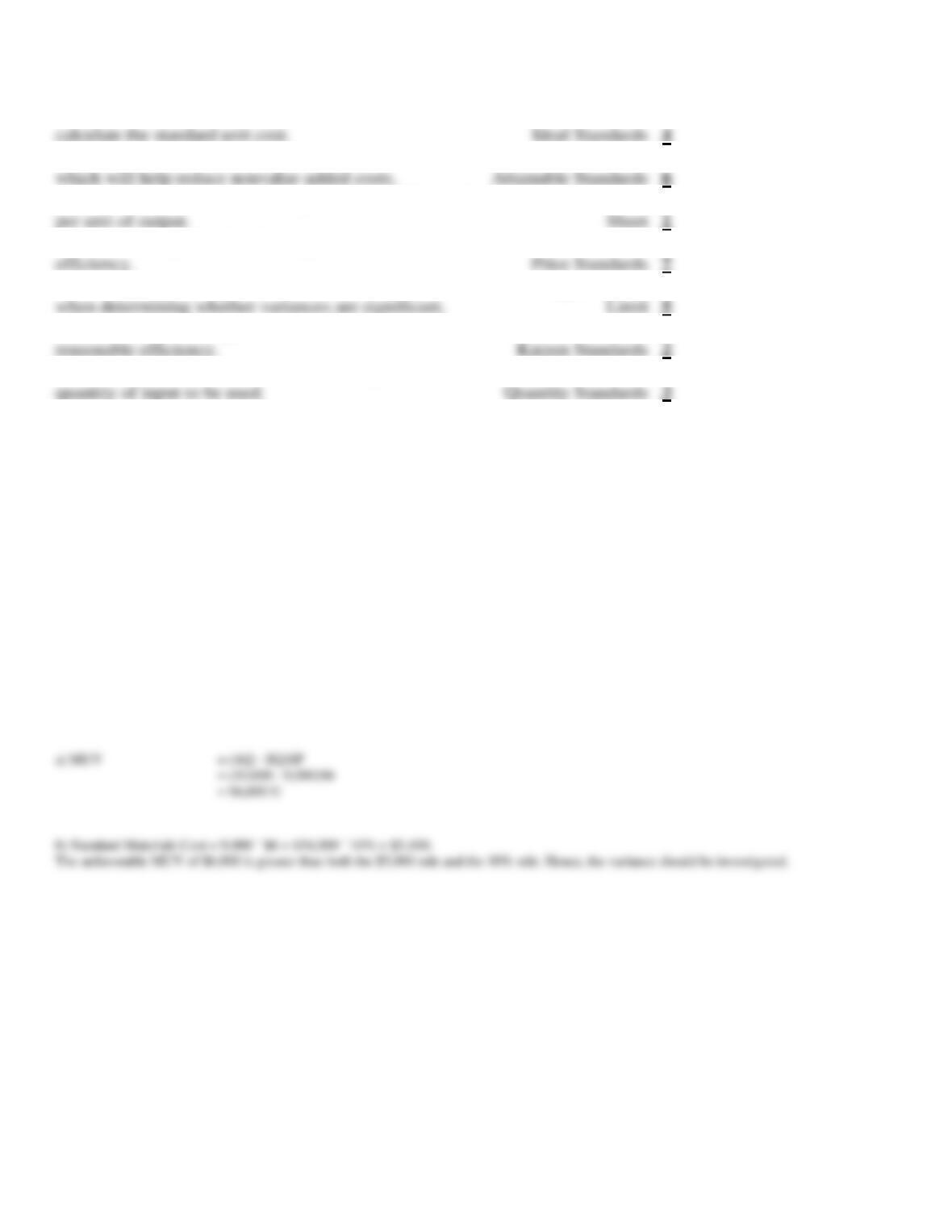
124. Match the variance with its correct calculation.
1. Materials Price
(Actual Quantity ´ Actual Price) – (Standard
2. Total Direct Labor
(Actual Quantity – Standard Quantity) ´ Standard
4. Materials Usage
5. Labor Efficiency
6. Total Materials
(Actual Hours ´ Actual Rate) – (Standard Hours ´
125. Match each item with the correct statement below.
1. A tool used to provide the production data needed to
2. This reflects the planned improvement that is set,
Currently
3. These reflect the amount of input that should be used
Standard Cost
4. Standards of perfection that require absolute
5. This is the standard plus the allowable deviation
Upper Control
6. Standards that are rigorous but achievable and reflect
7. These reflect the amount that should be paid for the
126. Acme Brick Company uses the following rule to determine whether materials usage variances should be
investigated:
A materials usage variance will be investigated when the variance is greater than either $5,000 or 10 percent of
the standard cost.
During the June, the company purchased 10,000 pounds of concrete for $5 per pound. It was able to make
20,000 bricks. Its standard quantity of materials allowed is 0.45 pound of concrete per brick at a standard price
of $6 per pound.
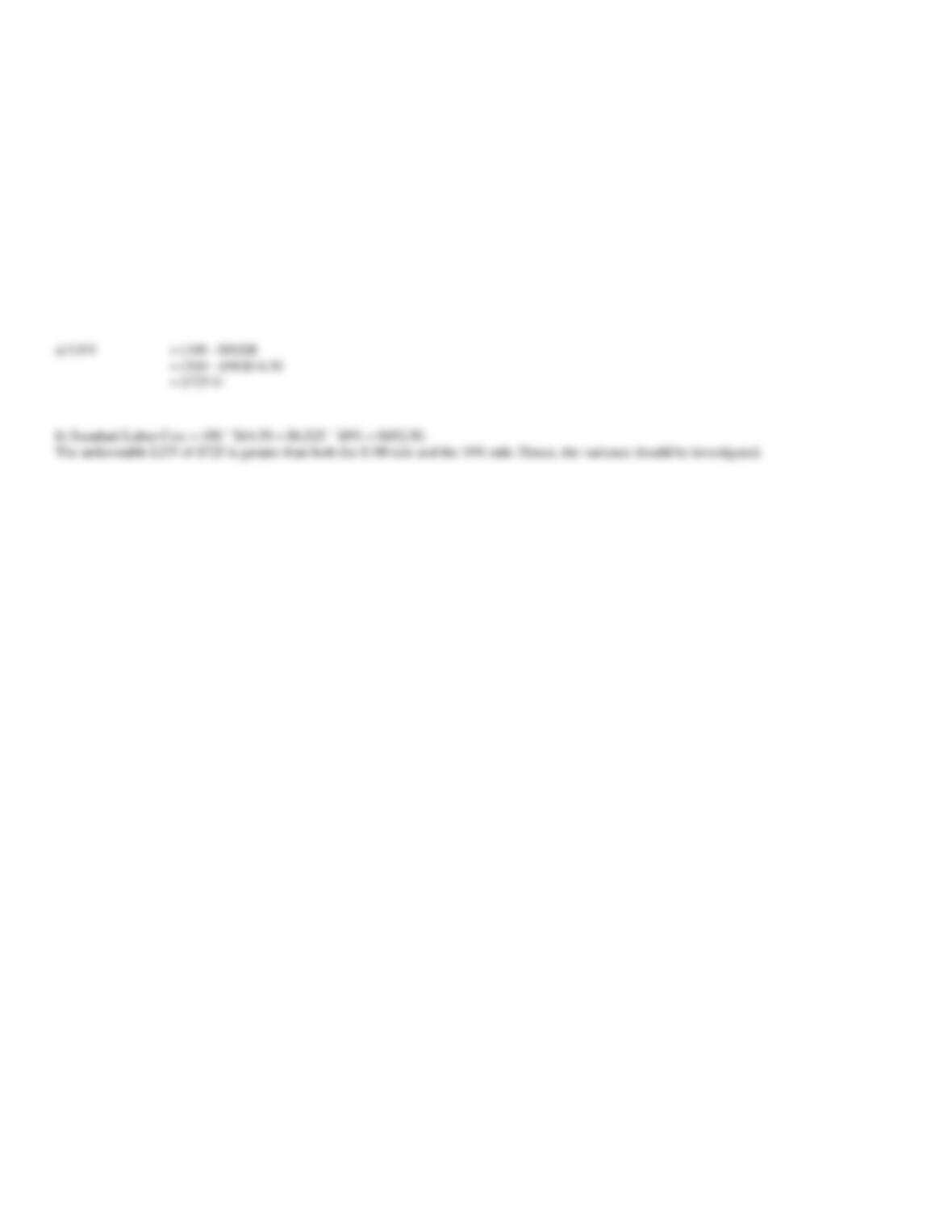
a) Determine Acme’s material usage variance and whether it is favorable or unfavorable.
b) Should the variance be investigated?
127. Leeds Company uses the following rule to determine whether labor efficiency variances should be
investigated:
A labor efficiency variance will be investigated when the variance is greater than either $100 or 10 percent of
the standard labor cost.
During the September, the company used 500 direct labor hours at a rate of $15 per hour. Its standard rate is
450 direct labor hours at a rate of $14.50 per hour.
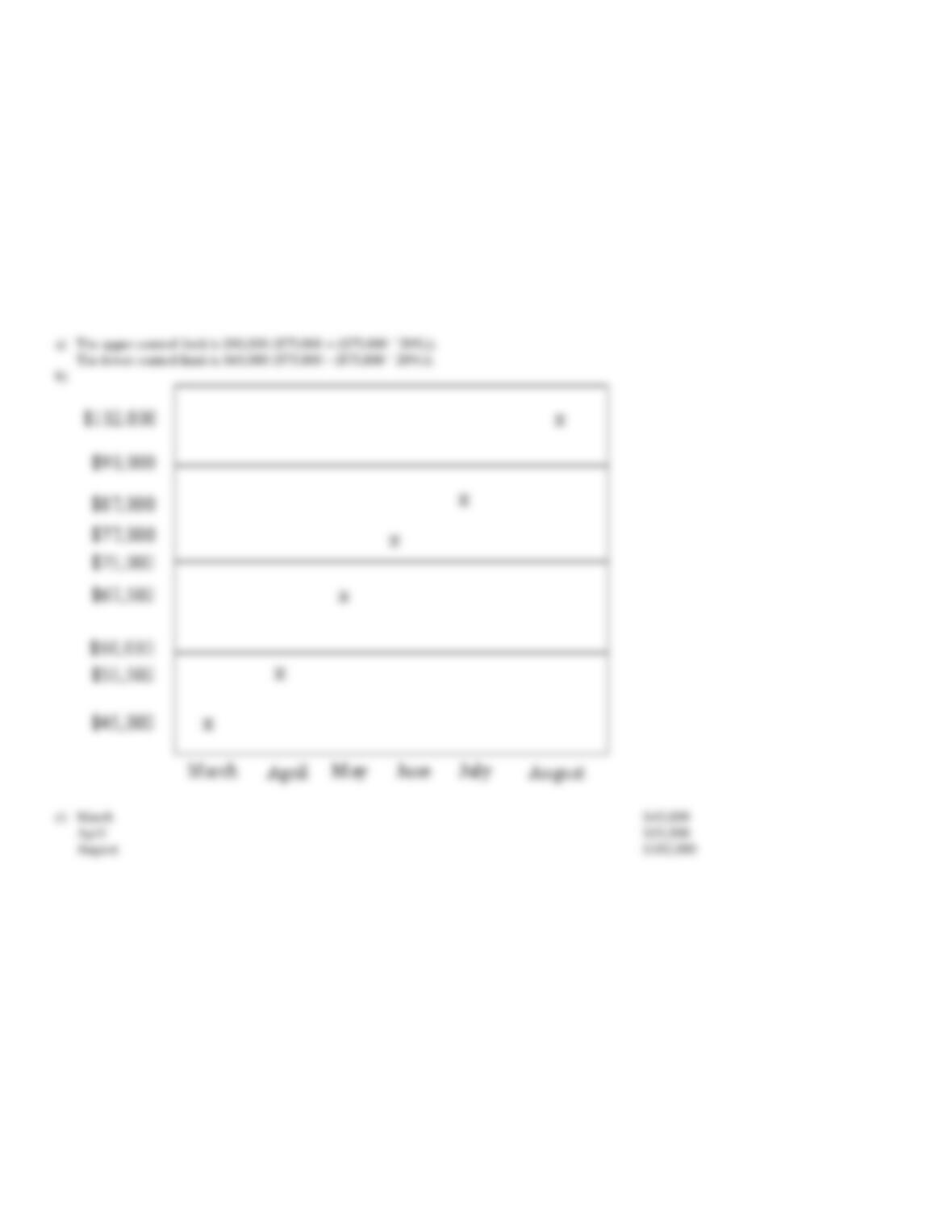
a) Determine the company’s labor efficiency variance and whether it is favorable or unfavorable.
b) Should the variance be investigated?
128. Dartmoor Company’s standard cost is $75,000. The allowable deviation is 20 percent. The actual costs
for six months are as follows:
March
$45,000
June
$77,000
April
55,500
July
87,000
May
67,500
August
102,000
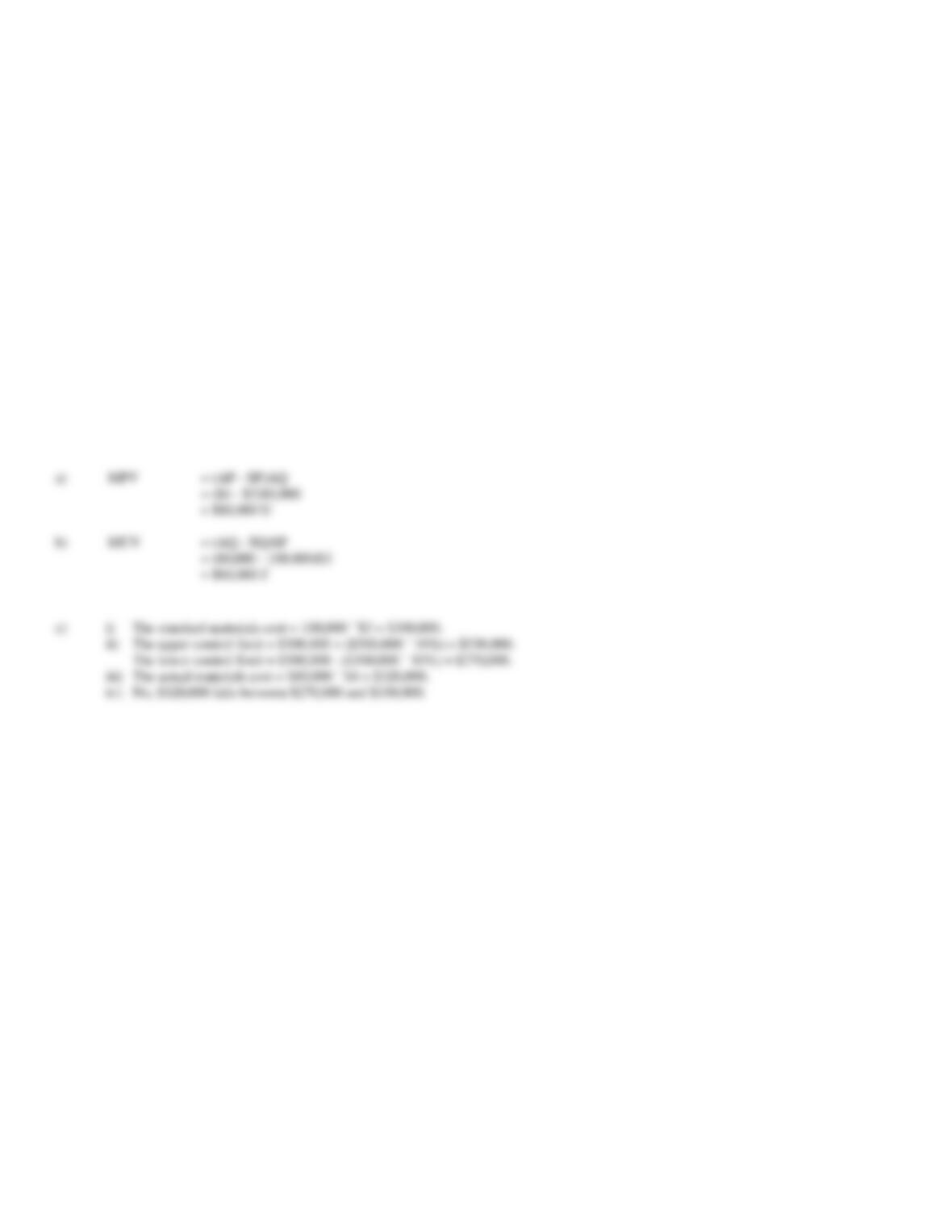
a) State what the upper and lower control limits are.
b) Plot the actual costs over time against the upper and lower control limits.
c) Based on the chart, determine which actual costs would need to be investigated.
The upper control limit is $90,000 ($75,000 + ($75,000 ´ 20%)).
The lower control limit is $60,000 ($75,000 – ($75,000 ´ 20%)).
March
$45,000
April
$55,500
August
$102,000
129. Westminster Company has the following information concerning its direct materials:
Direct Materials:
Standard Quantity
100,000
Actual Quantity
80,000
Standard Price
$3
Actual Price
$4
a)
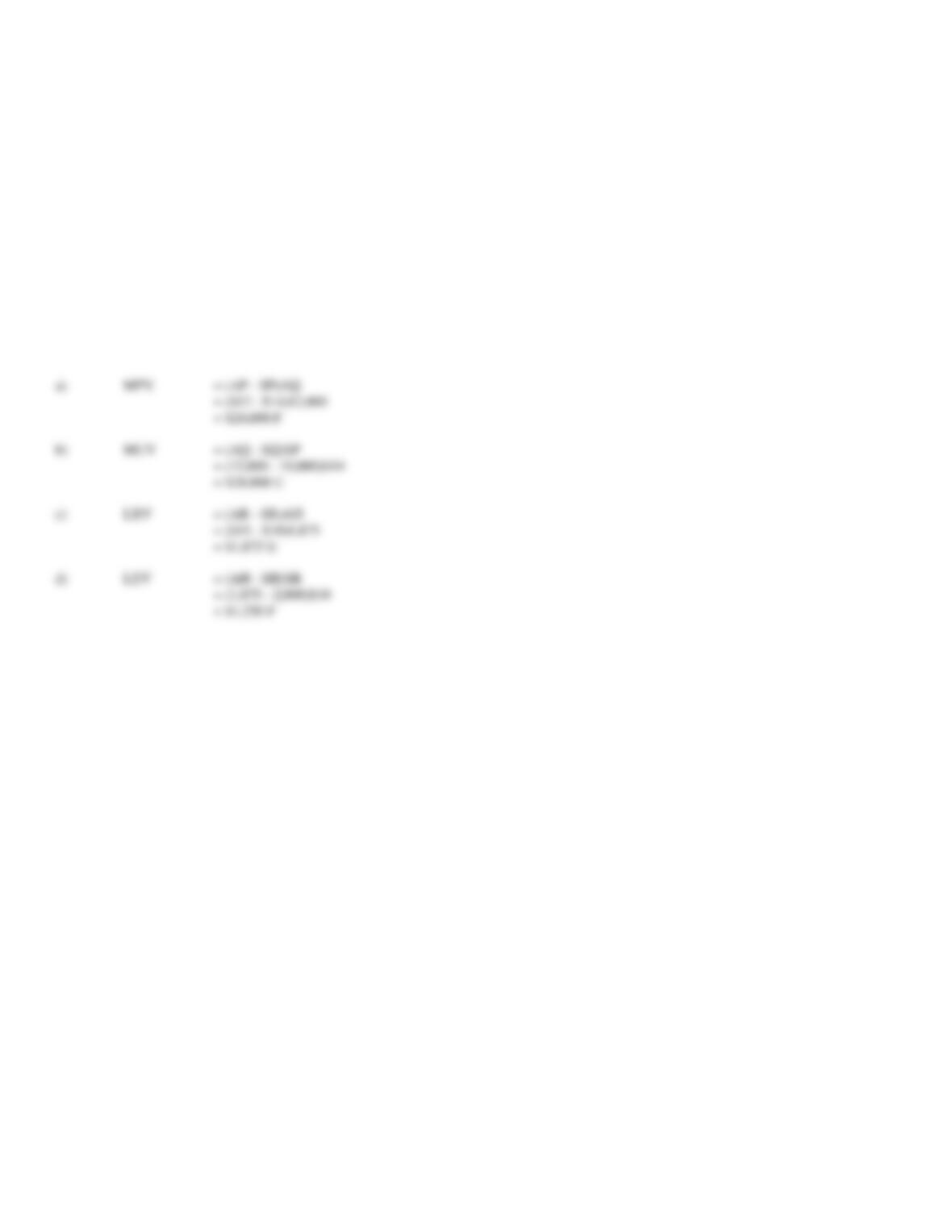
Determine the materials price variance and whether it is favorable or unfavorable.
b)
Determine the materials usage variance and whether it is favorable or unfavorable.
c)
Westminster has set control limits stating that if actual costs should be investigated if
they fall outside the acceptable range of the standard materials cost 10%.
i)
What is the standard materials cost?
ii)
What are the upper and lower control limits?
iii)
What is the actual materials cost?
iv)
Should the actual materials cost be investigated?
= (AP – SP)AQ
= ($4 – $3)80,000
= $80,000 U
b)
MUV
= (AQ – SQ)SP
= (80,000 – 100,000)$3
= $60,000 F
The standard materials cost = 100,000 ´ $3 = $300,000.
ii)
The upper control limit = $300,000 + ($300,000 ´ 10%) = $330,000.
The lower control limit = $300,000 – ($300,000 ´ 10%) = $270,000.
iii)
The actual materials cost = $80,000 ´ $4 = $320,000.
iv)
No, $320,000 falls between $270,000 and $330,000.
130. Eastminster Company has the following information:
Direct Materials:
Direct
Labor:
Standard Quantity
10,000
Standard Hours
2,000
Actual Quantity
12,000
Actual Hours
1,875
Standard Price
$14
Standard Rate
$10
Actual Price
$12
Actual Rate
$11
a) Determine the materials price variance and whether it is favorable or unfavorable
b) Determine the materials usage variance and whether it is favorable or unfavorable
c) Determine the labor rate variance and whether it is favorable or unfavorable
d) Determine the labor efficiency variance and whether it is favorable or unfavorable
= ($12 – $14)12,000
= $24,000 F
b)
MUV
= (AQ – SQ)SP
= (12,000 – 10,000)$14
= $28,000 U
LRV
= (AR – SR)AH
= ($11 – $10)1,875
= $1,875 U
d)
= (AH – SH)SR
= (1,875 – 2,000)$10
= $1,250 F
131. Dales Corporation has the following information:
Direct Materials:
Direct Labor:
Standard Quantity
1,500
Standard
Hours
500
Actual Quantity
1,400
Actual
Hours
525
Standard Price
$20
Standard
Rate
$15
Actual Price
$18
Actual
Rate
$14
a) Determine the materials price variance and whether it is favorable or unfavorable.
b) Determine the materials usage variance and whether it is favorable or unfavorable.
c) Determine the labor rate variance and whether it is favorable or unfavorable.
d) Determine the labor efficiency variance and whether it is favorable or unfavorable.
= (AP – SP)AQ
MUV
= (AQ – SQ)SP
= (1,400 – 1,500)$20
LRV
= (AR – SR)AH
= ($14 – $15)525
= (AH – SH)SR
= (525 – 500)$15