
Hall: Guyton and Hall Textbook of Medical Physiology, 12th Edition
Chapter 78: Insulin, Glucagon, and Diabetes Mellitus
Test Bank
1. A patient has uncontrolled type I diabetes. Which of the following is likely to be present?
A. Decreased plasma osmolality
B. Increased plasma volume
C. Increased plasma pH
D. Increased release of glucose from the liver
E. Decreased rate of lipolysis
2. Which of the following are incorrectly paired?
A. Glucagon: increased glycogenolysis in liver
B. Insulin: increased gluconeogenesis in liver
C. Epinephrine: increased glycogenolysis in liver
D. Epinephrine: increased glycogenolysis in muscle
E. Cortisol: decreased glucose uptake in muscle
3. A 60-year-old man comes to the physician’s office complaining of recent onset of fatigue
and the need to urinate several times each night. He is 6′ tall and weighs 300 lbs. His
blood pressure is 140/90. Laboratory data reveal a fasting blood glucose concentration of
270 mg/dL. Urinalysis reveals high urine glucose but no ketones. What is the most likely
cause of this man’s symptoms?
A. Type 1 diabetes mellitus
B. Type 2 diabetes mellitus
C. Addison’s disease
D. Cushing’s disease
E. Diabetes insipidus
4. Which of the following metabolic responses would be expected during the postprandial
period, compared to the postabsorptive state?
Lipoprotein Lipase Hormone-Sensitive Lipase Glycogen Phosphorylase
A. ↑ ↑ ↓
B. ↑ ↓ ↑
C. ↑ ↓ ↓
D. ↓ ↓ ↑
E. ↓ ↑ ↑
F. ↓ ↓ ↓

Test Bank
78-2
5. Which of the following metabolic responses would be expected during the postabsorptive
period, compared to the postprandial state?
Glucagon Secretion Hormone-Sensitive Lipase Adipocyte α-Glycerol
Phosphate
A. ↑ ↑ ↓
B. ↑ ↑ ↑
C. ↑ ↓ ↓
D. ↓ ↓ ↑
E. ↓ ↑ ↑
F. ↓ ↓ ↓
6. A large dose of insulin is administered intravenously. Which of the following sets of
hormonal changes would be expected to occur in the plasma in response to the insulin
injection?
Growth Hormone Glucagon Epinephrine
A.
B.
C.
D.
E.
7. Which of the following would most likely occur in the earliest stages of type II diabetes?
A. Increased insulin sensitivity
B. High circulating levels of C-peptide
C. Decreased hepatic glucose output
D. Metabolic acidosis
E. Hypovolemia
8. Which of the following would produce opposite directional changes in insulin and
glucagon secretion?
A. Amino acids
B. Somatostatin
C. Glucose
D. -adrenergic stimulation

9. Which of the following hormones is anabolic on muscle protein at physiological
concentrations, but is catabolic at very high levels?
A. Insulin
B. GH
C. Testosterone
D. T4
10. Which of the following conditions result in stimulation of glucagon secretion?
A. Decreased plasma amino acid concentration
B. Increased somatostatin secretion within the islets
C. Intravenous infusion of glucose
D. Intravenous infusion of insulin
11. To evaluate whether the pancreas has recovered some beta cell secretory capability in an
insulin-requiring type 2 diabetic, which of the following plasma measurements would be
most useful?
A. Insulin in a glucose tolerance test
B. C-peptide in a glucose tolerance test
C. Insulin after injecting epinephrine
D. Insulin after administration of amino acids
12. Which of the following does not play a role in the secretion of insulin from B-cells when
plasma glucose concentration increases?
A. Glucose influx into B cells via GLUT2 transporters
B. Oxidation of glucose and the generation of ATP
C. Opening of ATP-sensitive potassium channels
D. Depolarization of the cell membrane
E. Opening of voltage gated calcium channels
13. Which one of the following sets of physiological changes would be expected during the
postabsorptive state, compared to the postprandial state?
Glycogenolysis Hormone-Sensitive Lipase Muscle Glucose Uptake
A.
B.
C.
D.
E.
Test Bank
78-4
14. Which one of the following sets of hormonal changes would be expected to occur in the
plasma after a carbohydrate meal?
[Growth Hormone] [Insulin] [Glucagon]
A.
B.
C.
D.
E.
15. Which of the following are incorrectly paired?
A. Epinephrine : increased glycogenolysis in skeletal muscle
B. Glucagon : increased glycogenolysis in skeletal muscle
C. Glucagon : increased gluconeogenesis
D. Growth hormone : increased plasma glucose concentration
E. Cortisol : increased plasma glucose concentration
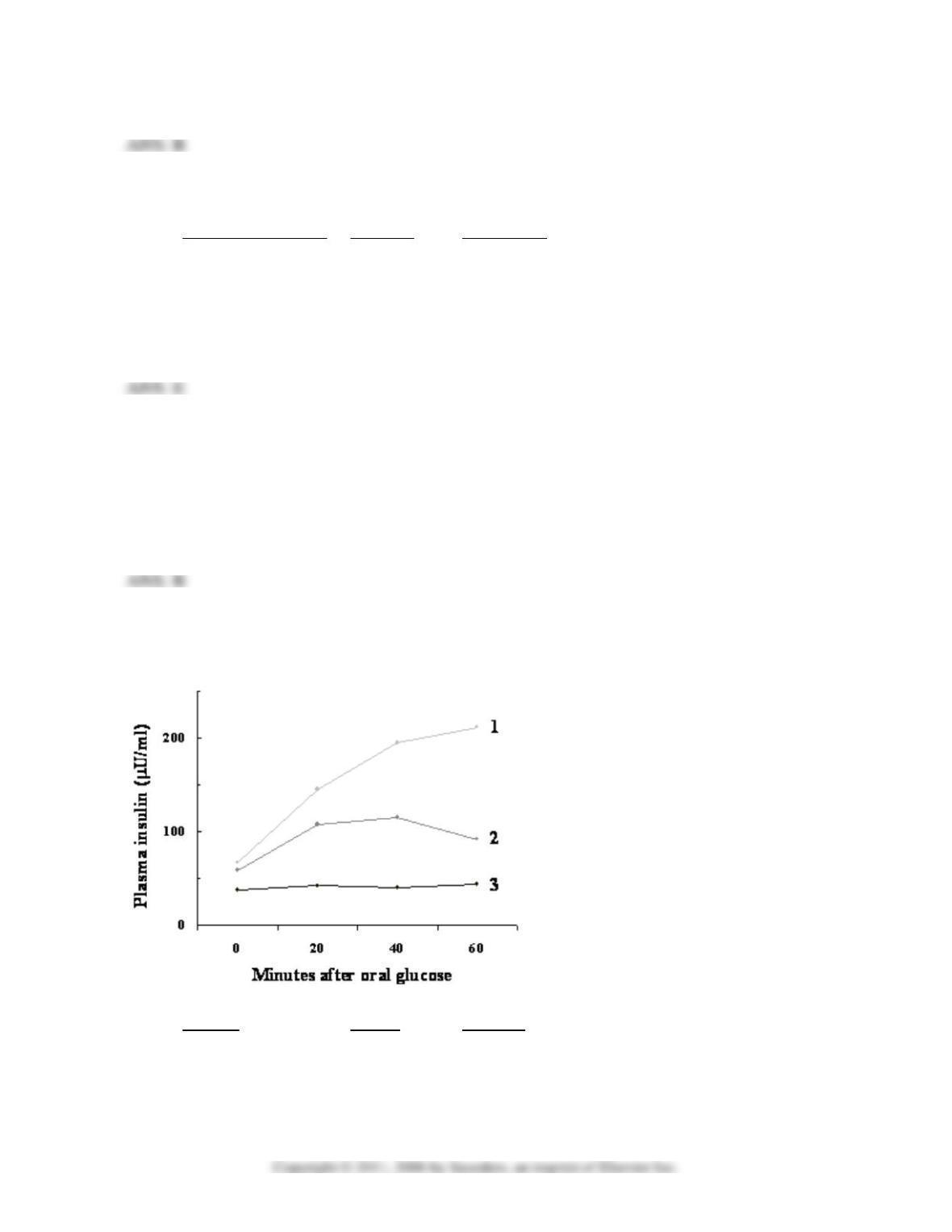
16. Which one of the following sets of curves would reflect responses in a normal individual
and in most individuals with type I (IDDM) and type II (NIDDM) diabetes?
Normal IDDM NIDDM
A. 3 2 1
B. 1 2 3
C. 1 3 2
D. 2 1 3

Test Bank
78-5
E. 2 3 1
17. Cortisol and glucagon have similar effects on which of the following?
A. Blood glucose concentration
B. Protein synthesis in muscle
C. Glycogenolysis
D. Glucose uptake in peripheral tissues
18. Which of the following increase the secretion of insulin, growth hormone, and glucagon?
A. A protein meal
B. A carbohydrate meal
C. A fat meal
D. Fasting