
Hall: Guyton and Hall Textbook of Medical Physiology, 12th Edition
Chapter 73: Body Temperature Regulation, and Fever
Test Bank
1. Which of the following mechanisms of heat loss occur in a normal person when the
environmental temperature is 105 F and the relative humidity is less than 20%?
A. Conduction
B. Convection
C. Evaporation
D. Radiation
2. A 29-year-old man sits nude in a room that has a temperature of 71 F and low humidity.
He is 6 feet 2 inches tall and weighs 205 pounds (body mass index = 26.3). The greatest
amount of body heat is most likely to be lost by which of the following mechanisms?
A. Conduction to air
B. Conduction to objects
C. Evaporation
D. Radiation
3. Which of the following occurs after a fever has “broken” and the core temperature is
falling?
A. Shivering only
B. Sweating only
C. Cutaneous vasoconstriction only
D. Cutaneous vasodilation only
E. Shivering and cutaneous vasoconstriction
F. Sweating and cutaneous vasodilation
4. Which of the following occurs during the induction phase of a fever when the core
temperature is rising?
A. Shivering only
B. Sweating only
C. Vasoconstriction only
D. Vasodilation only
E. Shivering and vasoconstriction
F. Sweating and vasodilation

5. Which of the following occurs when a fever breaks (i.e., after the crisis)?
A. Epinephrine secretion
B. Piloerection
C. Shivering
D. Sweating
E. Vasoconstriction
6. A scuba diver explores an underwater lava flow. The temperature of the water is 103 °F.
Which one of the following sets of mechanisms of heat loss is effective in this man
swimming in the 103 °F water?
Evaporation Radiation Convection Conduction
A. No No No Yes
B. No No No No
C. No Yes No Yes
D. No Yes No Yes
E. Yes Yes Yes Yes
7. The hypothalamic set-point temperature normally averages about 98.6 F. Which of the
following factors can alter the set-point level for core temperature control?
Skin Temperature Pyrogens Antipyretics Thyroxin
A. No Yes Yes No
B. No Yes Yes Yes
C. Yes Yes Yes Yes
D. Yes No No Yes
E. Yes Yes Yes No
8. A 33-year-old woman is hiking through the desert. The temperature is 102 F, and the
relative humidity is 68%. Which of the following mechanisms of heat loss is most
effective in this woman hiking in the desert?
A. Conduction to air
B. Conduction to objects
C. Evaporation
D. Radiation
9. Which of the following is decreased when the hypothalamic set-point temperature is
greater than the body temperature?
A. Piloerection
Test Bank
73-3
B. Shivering
C. Sweating
D. Vasoconstriction
10. Most heat is lost from the body of a nude person at room temperature by which
mechanism?
A. Conduction to air
B. Conduction to objects
C. Evaporation
D. Radiation
11. Which of the following is the only available method of heat transfer when the
environmental temperature is greater than the body temperature?
A. Conduction
B. Convection
C. Evaporation
D. Radiation
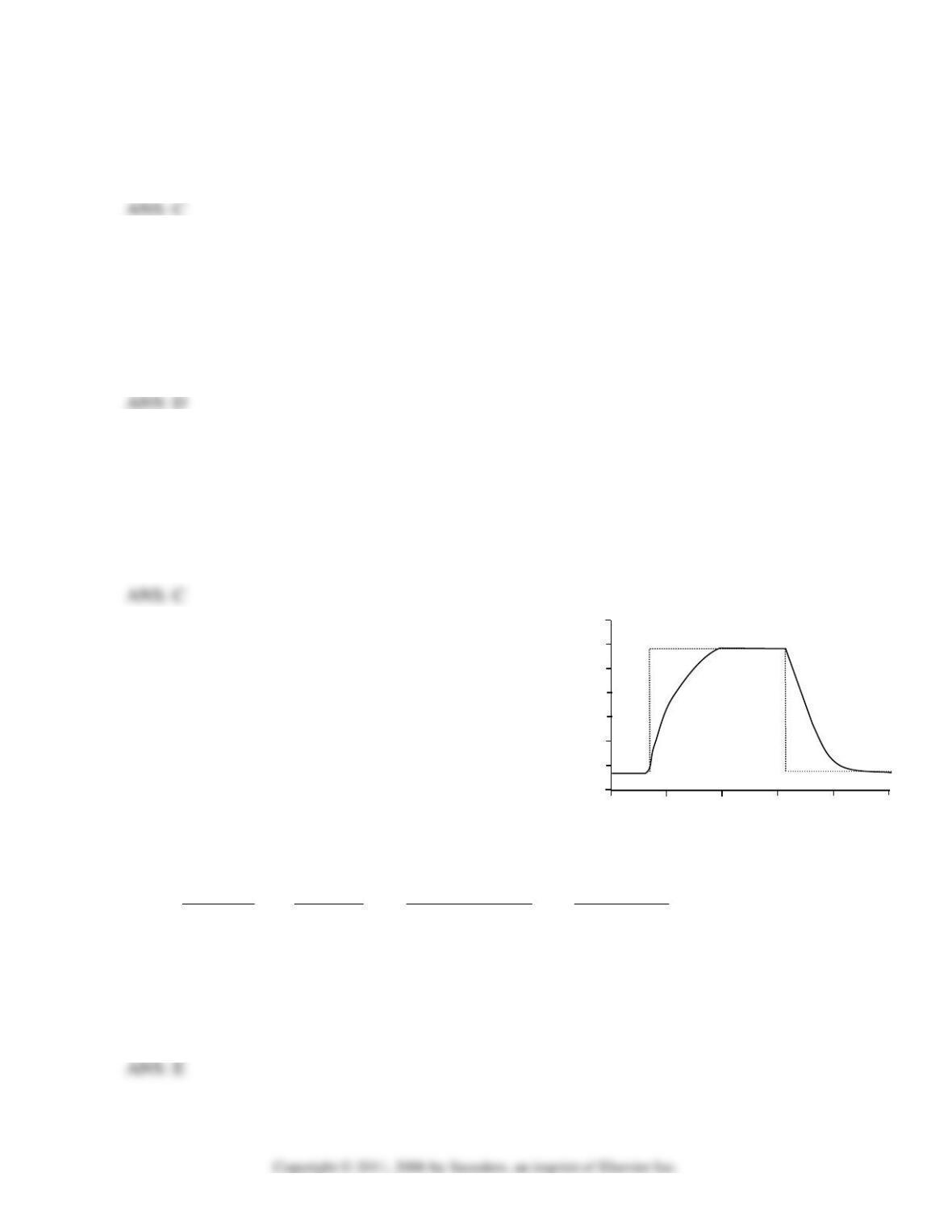
Questions 12 – 14: The diagram shows the
effects of changing the set-point of the
hypothalamic temperature controller. The
solid line is the body temperature. The
dashed line is the hypothalamic set-point
temperature. Use the diagram to answer the
next three questions.
12. Which of the following sets of changes occur at point W, compared to point V?
Shivering Sweating Vasoconstriction Vasodilation
A. No No No No
B. No Yes No Yes
C. No Yes Yes No
D. Yes No No Yes
E. Yes No Yes No
F. Yes Yes Yes Yes
105
104
103
102
101
100
99
98
0 1 2 3 4 5
W
X
Y
V
Z
Time in hours
Body
Temperature
(°F)

13. Which of the following sets of changes occur at point Y, compared to point V?
Shivering Sweating Vasoconstriction Vasodilation
A. No No No No
B. No Yes No Yes
C. No Yes Yes No
D. Yes No No Yes
E. Yes No Yes No
F. Yes Yes Yes Yes
14. Which of the following sets of changes occur at point X, compared to point V?
Shivering Sweating Vasoconstriction Vasodilation
A. No No No No
B. No Yes No Yes
C. No Yes Yes No
D. Yes No No Yes
E. Yes No Yes No
F. Yes Yes Yes Yes
15. A 74-year-old man is admitted as an emergency to University Hospital. He was found
lying in his yard near a running lawnmower on a hot summer day. His body temperature
is 106 °F, blood pressure is normal, and heart rate is 160 bpm. Which of the following
sets of changes are most likely to be present in this man?
Sweating Hyperventilation Vasodilation of skin
A. No No No
B. No Yes Yes
C. Yes Yes No
D. Yes Yes No
E. Yes No Yes
F. Yes Yes Yes