1
CHAPTER SEVEN
CONNECTED CONSUMERS ONLINE
Multiple Choice
1. According to the text, _____ percent of US consumers used the internet in 2012.
a. 50
b. 60
c. 85
d. 90
2. What is the main reason for which consumers do not use the Internet?
a. social
b. political
c. technological
d. all of the above
3. _____ is a basic marketing concept that refers to the act of obtaining a valued object from
someone by offering something in return.
a. Commerce
b. Barter
c. Exchange
d. Promotion
4. Which of the following is a tool that companies can use to send data to customers?
a. voice mail
b. fax machine
c. smartphone
d. all of the above
5. _____ is the idea that there is infinite information, but the demand for it is limited by
human capacity.
a. Attention economy
b. Bunkering
c. Time poverty
d. Multiple channel shopping
2
6. According to the text, some research shows that online shoppers tend to be more _____
oriented than ______ oriented.
a. time; experience
b. goal; experience
c. experience; time
d. experience; goal
7. Which of the following constitutes the cost of a consumer’s resources for exchange?
a. money
b. energy
c. time
d. all of the above
8. One of the alternatives to credit card payments on the internet mentioned in the text is
_____.
a. trade
b. smart card
c. phone card
9. Because time poverty is a problem for today’s consumers, they want _____.
a. bunkering
b. appropriate benefits for the time they spend online
c. more multimedia on Web sites
d. less expensive dial-up connections
10. Aside from bookmarks and browser favorites, internet consumers can use _____ to bring
them directly specific information, news reports, or promoted specials.
a. tweebs
b. tracking software
c. cookies
d. social networking widgets
3
11. Which of the following is not identified as one of the five major activities that consumers
do as they spend time online?
a. Connect
b. Create
c. Transform
d. Give
12. The text gives several reasons for the probable increase in U.S. adoption of broadband in
the near future. Which of the following is not one of the reasons given?
a. most television is now transmitted digitally
b. devices such as DVRs allow TV programs to be delivered on demand
c. broadband will be required for employees to work from home
13. According to the text, _____ of US television viewers still watch live television, thus being
exposed to commercials, while about _____ of viewers using DVRs fast-forward through
commercials.
a. 60%; 90%
b. 65%; 70%
c. 95%; 70%
d. 95%; 50%
14. High bandwidth allows consumers to enjoy which of the following services?
a. phone calls delivered over the Internet
b. delivery of music and movies over the Web
c. real-time virtual reality
15. Which of the following strategies have been implemented to deal with a mixed bandwith
audience for a web site?
a. design for the slowest user
b. design for the fastest user
c. design fast and slow versions of the site
d. all of the above

4
16. One way for marketers to watch the trends of internet users is to _____.
a. monitor RSS feeds
b. monitor search terms entered at Google, Yahoo!, and other search engines/directories
c. measure the use of chat rooms
d. all of the above
17. DSL technology is a method for _____,
a. transmitting wireless data
b. providing video on demand
c. transmitting data at high speed over phone lines
d. connecting high speed cable modems
18. Which of the following is not one of the social/cultural trends that have impacted online
exchange?
a. Information overload
b. Time poverty
c. Work at home
d. None of the above
19. Strategies to deal with users with mixed bandwidths include all the following except
_____.
a. design for the slowest user
b. use text only Websites
c. design for the fastest user
d. create fast and slow versions of the Web site
20. Online oxygen is a term coined by www.trendwatching.com which refers to _____.
a. empowering customers
b. multitasking on the internet
c. addictive nature and qualities of the internet
d. instant messaging
5
True/False
21. According to the text, at least a quarter of American consumers donate to causes via the
internet or help others in need online.
a. True
b. False
22. In order for e-marketers to create effective marketing strategies it is important to
understand only what motivates consumers to buy in the short run.
a. True
b. False
23. The Internet has moved from a utility to a novelty.
a. True
b. False
24. Most online shoppers have either a price or quality orientation.
a. True
b. False
25. Consumers apply psychic resources when Web pages are difficult to comprehend.
a. True
b. False
26. Unfortunately, over half of online shopping carts are abandoned.
a. True
b. False
27. Streaming media causes fewer consumers to have access to online entertainment.
a. True
b. False
6
28. Few Internet users currently seek information online prior to buying products, although
this segment holds huge growth potential.
a. True
b. False
29. The most dramatic increase in online trade over the past two years has been in travel
reservations.
a. True
b. False
30. Telmatics is an online translation system for converting Web sites into multiple
languages.
a. True
b. False
31. The “killer app” for the global internet is e-mail.
a. True
b. False
32. The “killer app” among all media is television.
a. True
b. False
33. According to the text, less connected groups of U.S. consumers represent the 10% of
Internet nonusers who earn low incomes and have little formal education.
a. True
34. Many consumer behavior principles that describe offline buying behavior do not apply to
online marketing.
a. True
b. False
7
Essay Questions
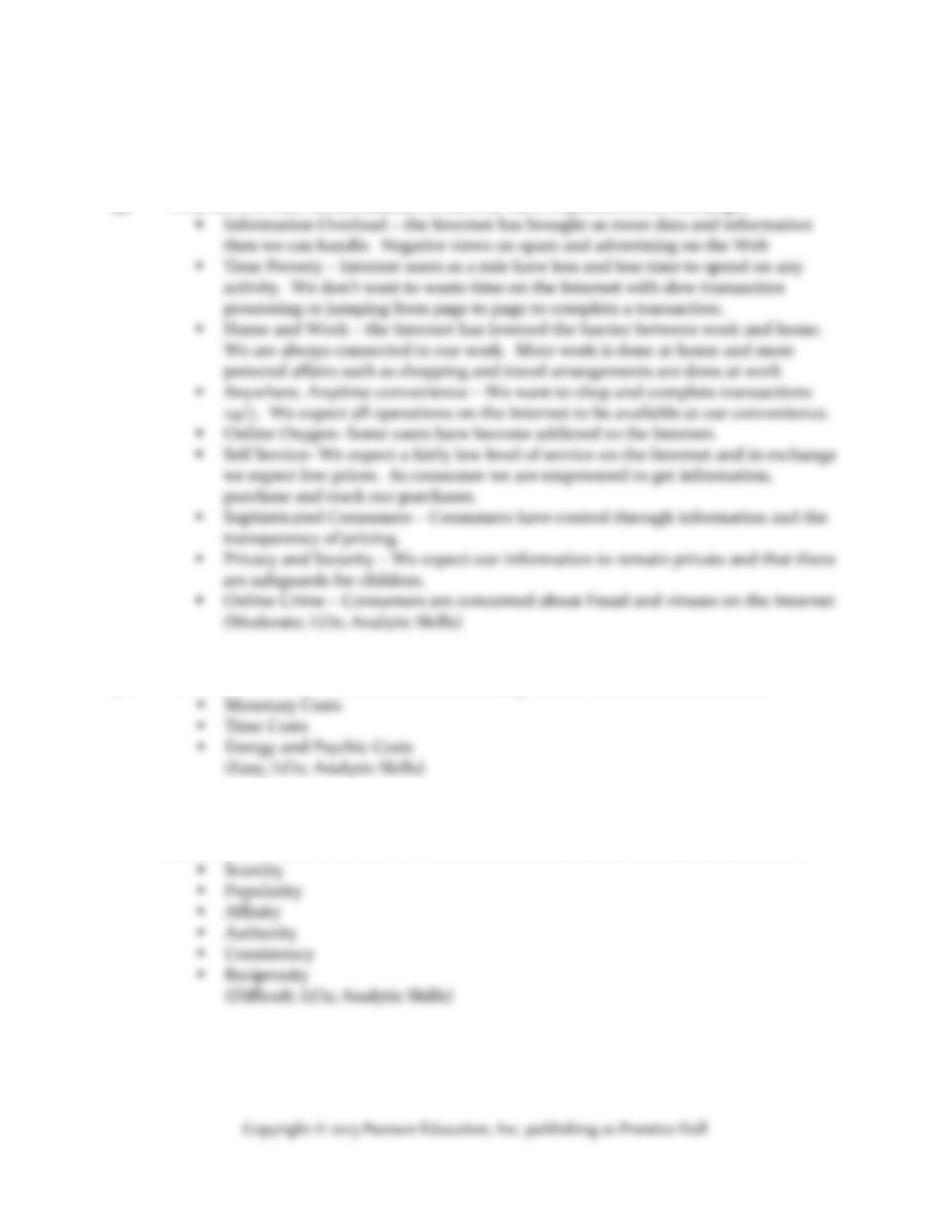
35. What are the main social/cultural trends that have impacted online exchange?
36. What resources must consumers use in exchange for the benefits of the Internet?
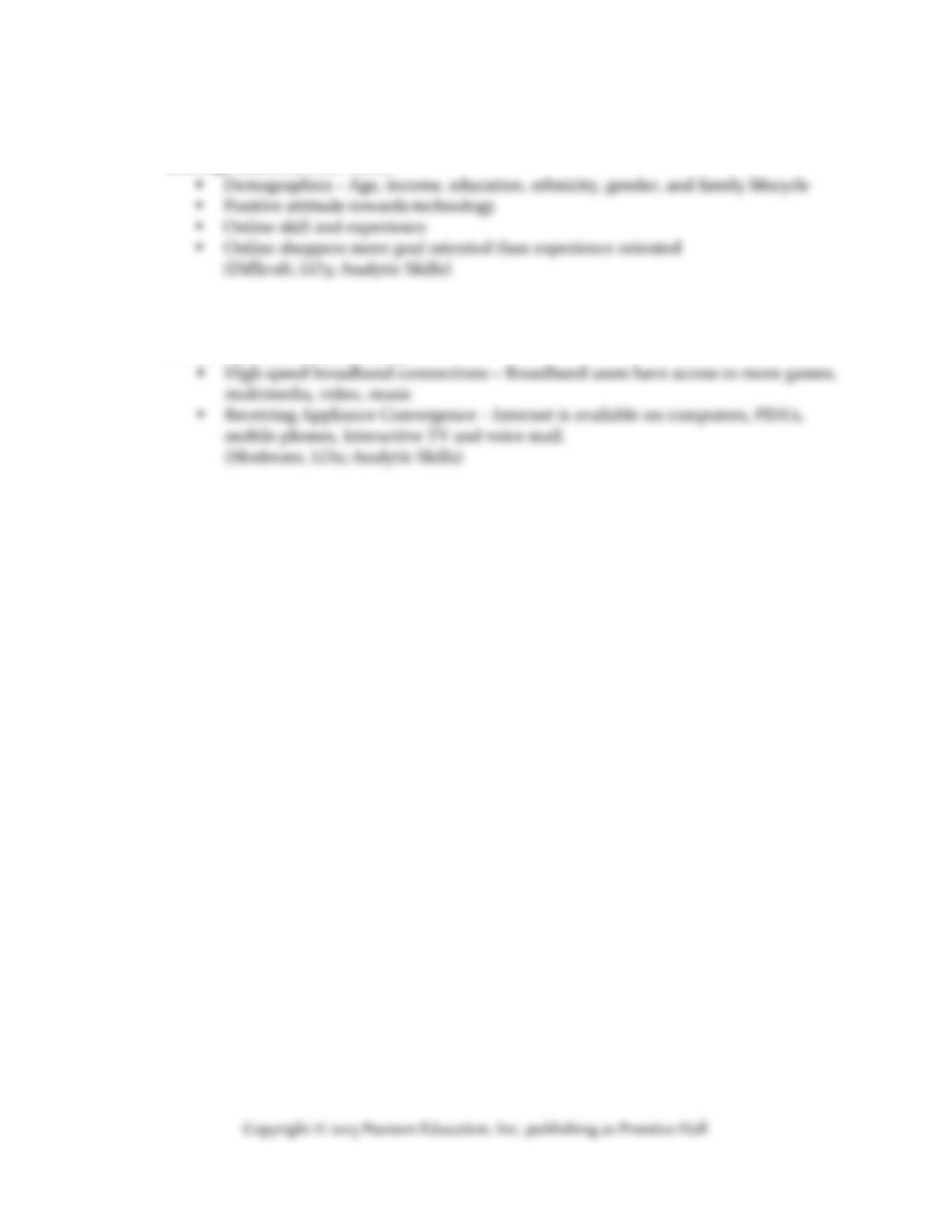
37. According to Dr. Paul Marsden, consumer online buying behavior has many additional
characteristics that differ from offline behavior. Discuss some of those characteristics.
8
38. What are the individual characteristics that differentiate Internet users from non-users
and high users from low users?
39. From the individual consumer perspective what two technological developments affect
online consumer behavior today?