Chapter 7: Receivables and Investments
170. Refer to the data for Sliders Company.
The firm estimates that bad debts could be 1% of their net sales.
A) What amount will Sliders Company recognize as bad debts expense for the year?
Once this calculation is recorded, assume that the company has a balance of Accounts
B) Receivable of $58,700, and an Allowance for Doubtful Accounts of $800. What will be the
net realizable value once the adjustment from Part A) is made?
171. Refer to the data for Sliders Company.
Assume the company estimates bad debts using an aging analysis and the aging schedule indicates that $3,600 of
the end of the year Accounts Receivable will be uncollectible.
A) What amount will Sliders Company recognize as bad debt expense for the year?
B) If the ending balance of Accounts Receivables is $38,700, what is the net realizable value of
Accounts Receivable reported on December 31, 2014?
Chapter 7: Receivables and Investments
172. Stream Media Inc. and Techtronics are competitors in the same industry.
The following information was summarized from a recent annual report of Stream Media Inc.:
(In millions)
Receivables:
December 31, 2015
$ 1,968
December 31, 2014
642
Revenue for the year ended:
December 31, 2015
46,980
December 31, 2014
40,023
The following information was summarized from a recent annual report of Techtronics:
(In millions)
Accounts and notes receivable, net
December 31, 2015
$ 246
December 31, 2014
264
Revenues for the year ended:
December 31, 2015
4,335
December 31, 2014
REQUIRED:
4,251
1. Calculate the accounts receivable turnover ratios for Stream Media and Techtronics for the most recent year.
2. Calculate the average collection period, in days, for both companies for the most recent year. Comment on the
reasonableness of the collection periods for these companies considering the nature of their business.
3. Which company appears to be performing better? What other information should you consider in determining
how these companies are performing?
Chapter 7: Receivables and Investments
173. The 2015 annual report of Ski Products, Inc. reported the following amounts (in millions of dollars):
Net sales, for the year ended May 31, 2015
$15,111.2
Receivables, May 31, 2015
989.4
Receivables, May 31, 2014
1,011.6
REQUIRED:
1. Compute Ski’s accounts receivable turnover ratio for the year ended May 31, 2015. (Assume that all sales are
on credit.)
2. What is the average collection period in days for an account receivable? Explain your answer.
3. Ski’s main products are medium to high-end skis and snow boards. Give some examples of the types of
customers you would expect Ski to have. Do you think the average collection period for sales to these customers is
reasonable? What other information do you need to fully answer that question?
Chapter 7: Receivables and Investments
174. Rafter.com received a 10%, 90–day promissory note with a face amount of $12,000 from Joyce Company, for the
sale of merchandise on November 1, 2014.
A) Identify the maturity date of the note.
B) How much interest income (to the nearest whole month) will Rafter.com earn over the term
of the note?
C) How much interest income will Rafter.com recognize during 2014?
175. Cyprus Corp. received a 7%, 6-month promissory note with a face amount of $8,000 from the Mustafa Company
for the sale of merchandise on May 1, 2014. Cyprus’ accounting year-end is December 31.
REQUIRED: Identify the maturity date of the note.
176. Cyprus Corp. received a 7%, 6-month promissory note with a face amount of $8,000 from the Mustafa Company for
the sale of merchandise on May 1, 2014. Cyprus’ accounting year-end is December 31.
REQUIRED: How much interest income will Cyprus Corp. recognize over the term of the note?
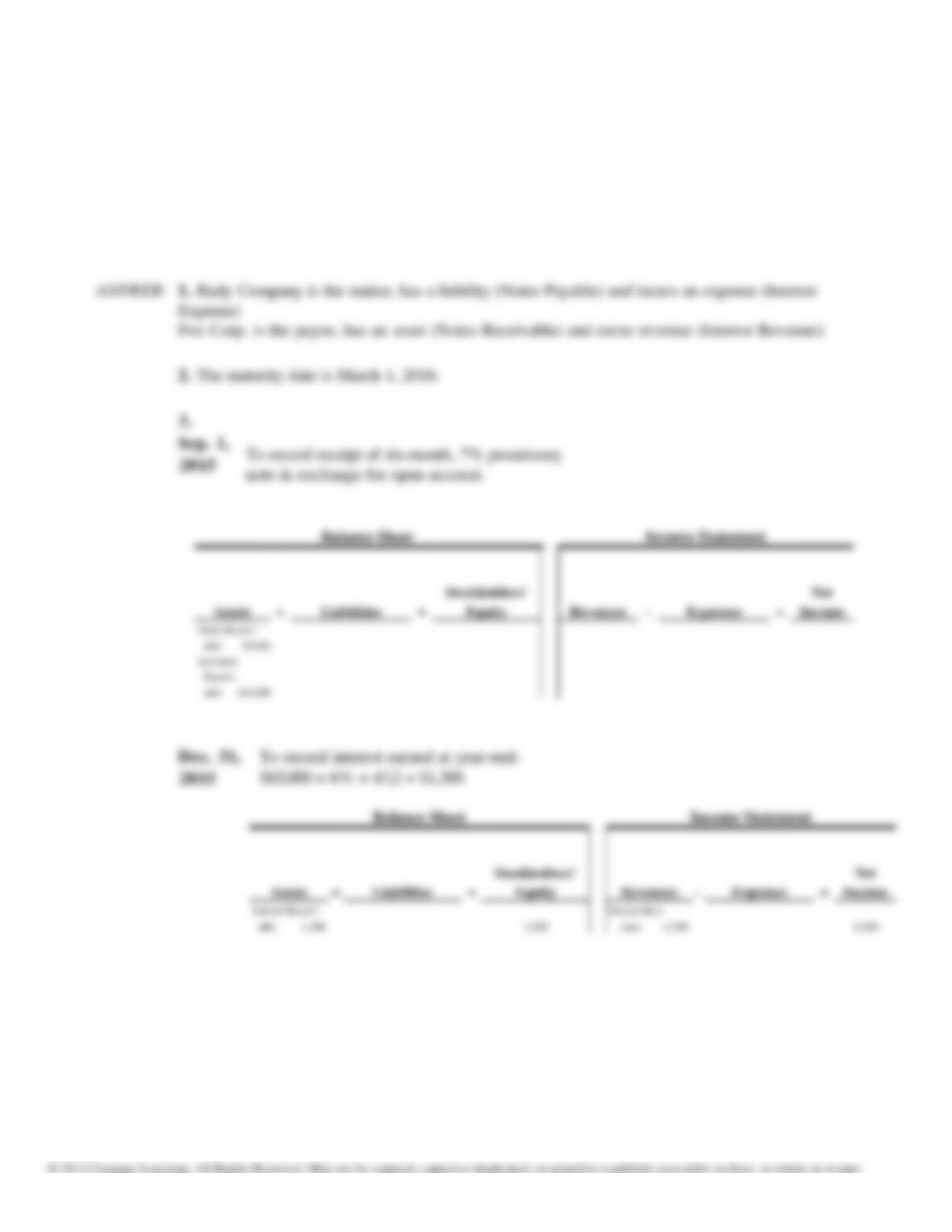
177. Hemmer Company received a 12%, 6-month promissory note with a face amount of $10,000 from Stutfeld
Company, for the sale of merchandise on December 1, 2014.
A) Which party is the maker? _______________________
B) Which party is the payee? _____________________
C) Determine the maturity value of the note.
Chapter 7: Receivables and Investments
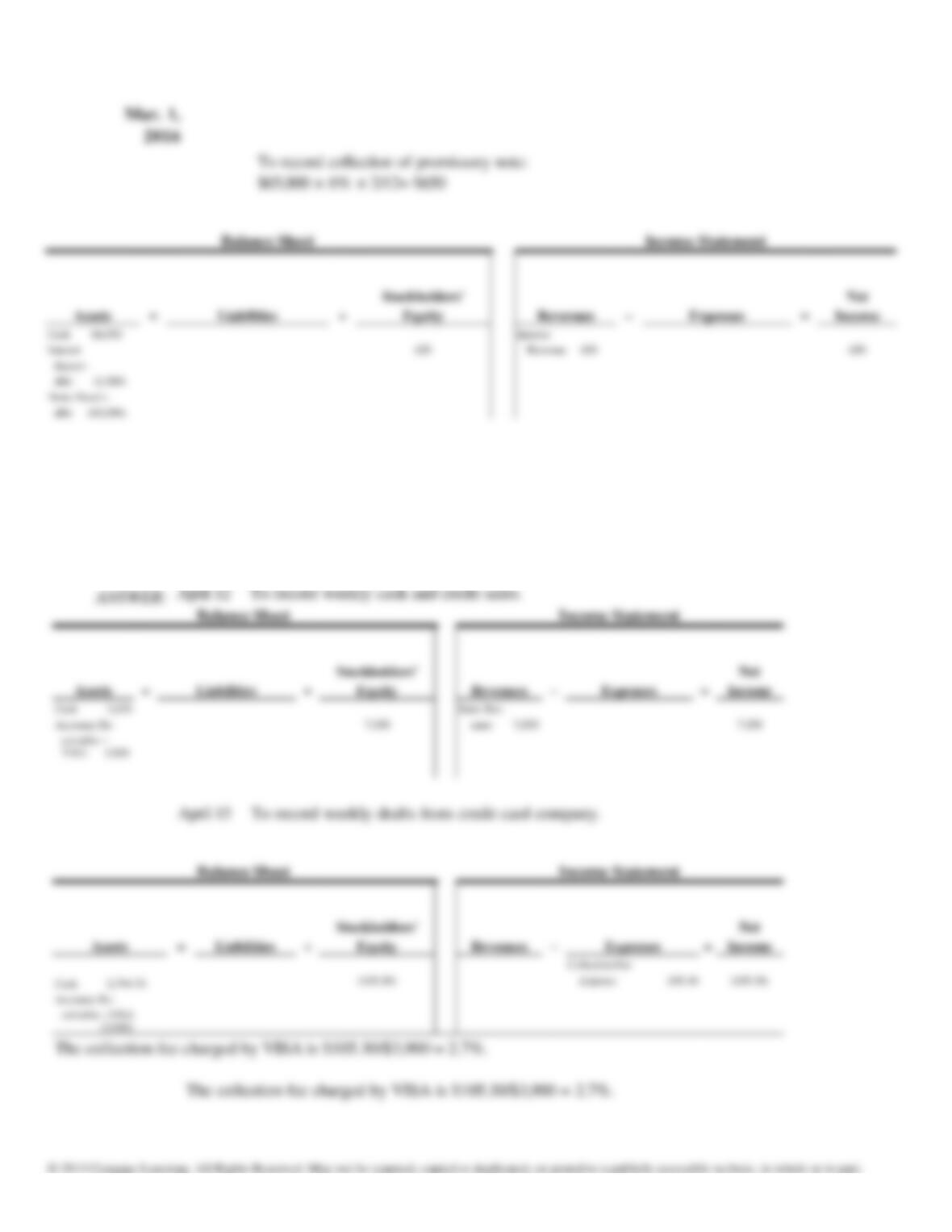
178. On September 1, 2015, Fox Corp. accepted a six-month, 6%, $65,000 interest bearing note from Rudy Company in
payment of an accounts receivable. Fox’s year-end is December 31. Rudy paid the note and interest on the due
date.
REQUIRED:
1. Who is the maker and who is the payee of the note?
2. What is the maturity date of the note?
3. Identify the effects of Fox’s transactions on the accounting equation in connection with this note.
Chapter 7: Receivables and Investments
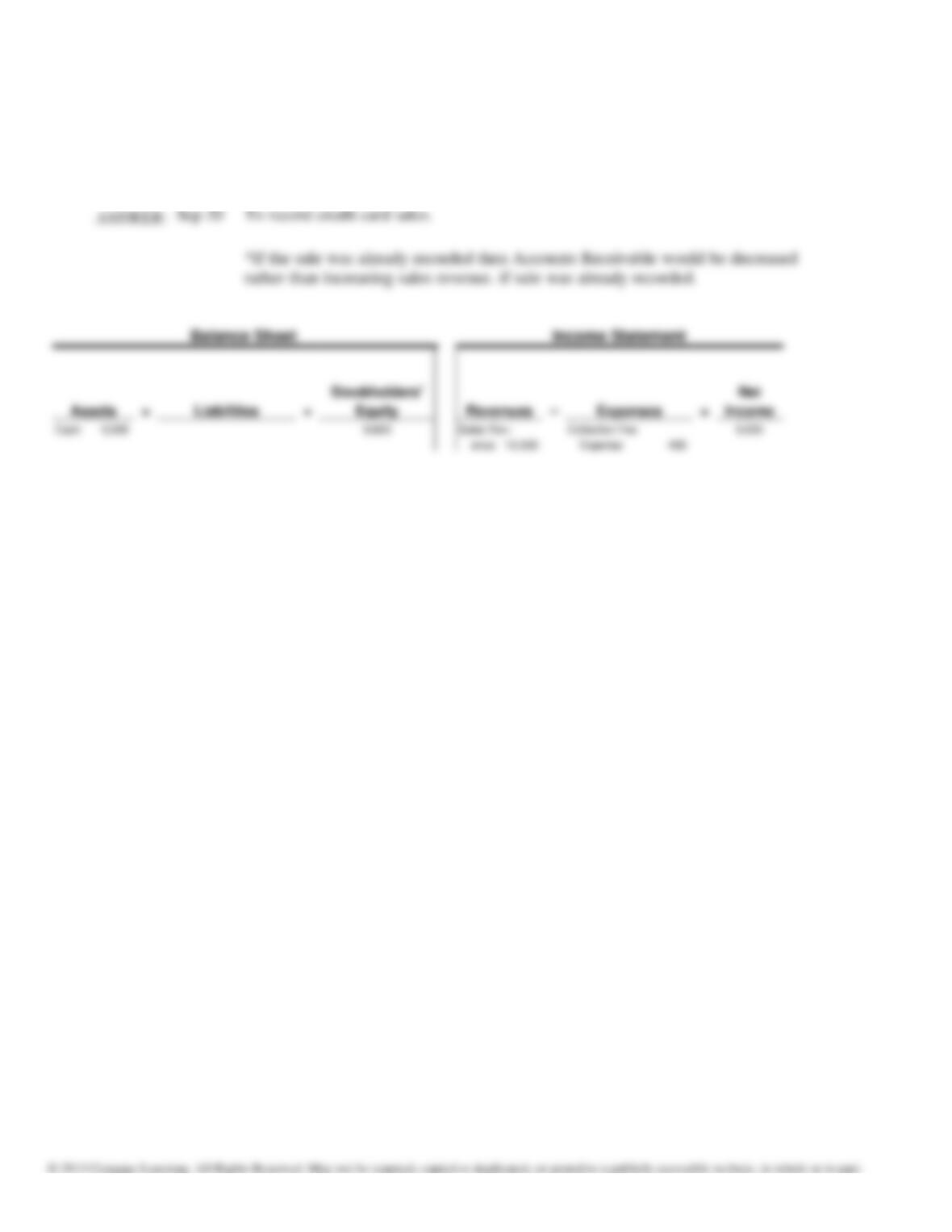
179. Speed Wear Bicycle Gear accepts VISA credit cards from its customers. Speed Wear is closed on Sundays and on
that day records the weekly sales and remits the credit card drafts to VISA. For the week ending on Sunday, April
12, cash sales totaled $3,650 and credit card sales amounted to $3,900. On April 15, Speed Wear received
$3,794.70 from VISA as payment for the credit card drafts. Identify the effects on the accounting equation for the
April 12 and April 15 transactions. As a percentage, what collection fee is VISA charging Speed Wear?
Chapter 7: Receivables and Investments
180. On September 20, Mendes Inc. presents credit card drafts to its bank in the amount of $10,000; the collection
charge is 4%.
Required: Identify the effects on the accounting equation for Mendes’ books on September 20, the date of deposit.
Chapter 7: Receivables and Investments
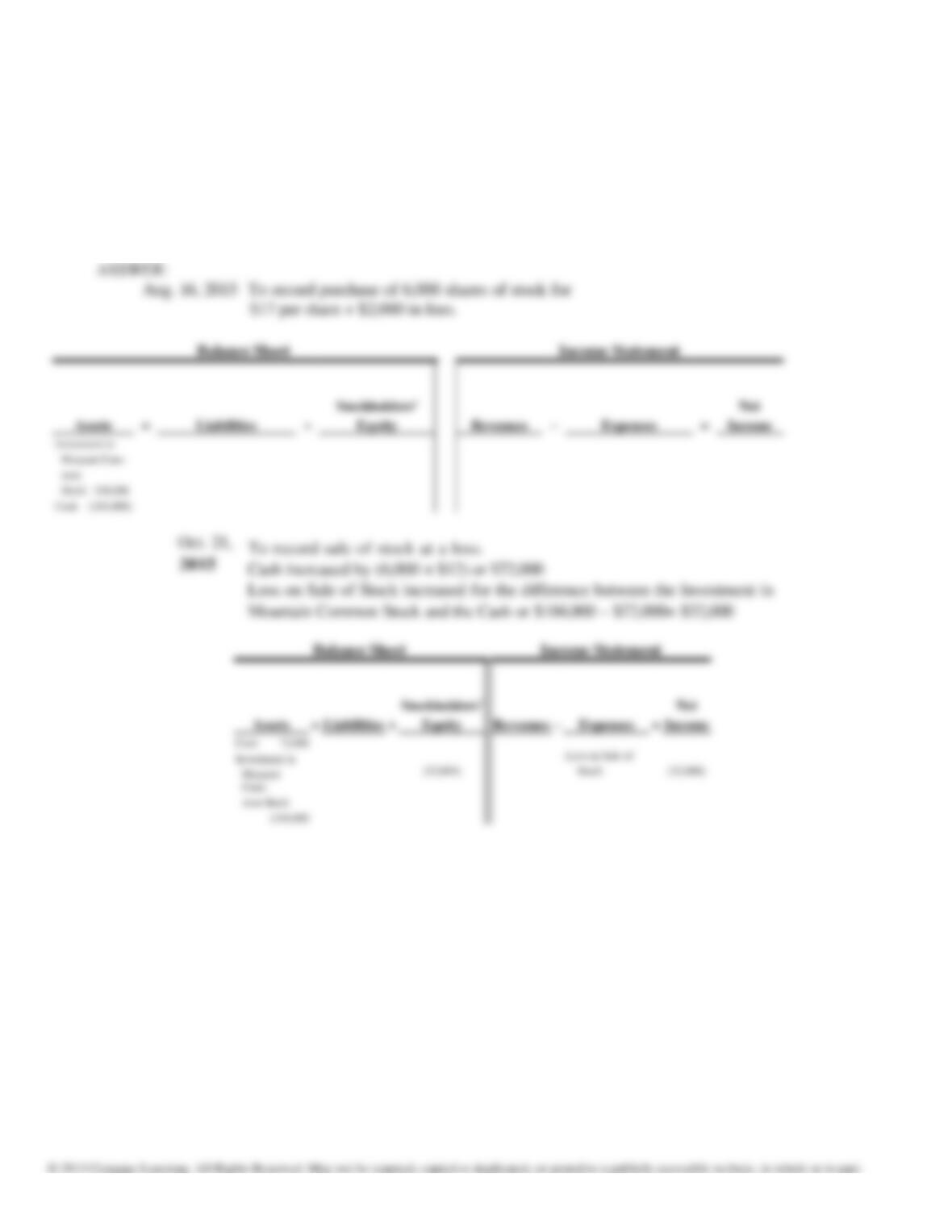
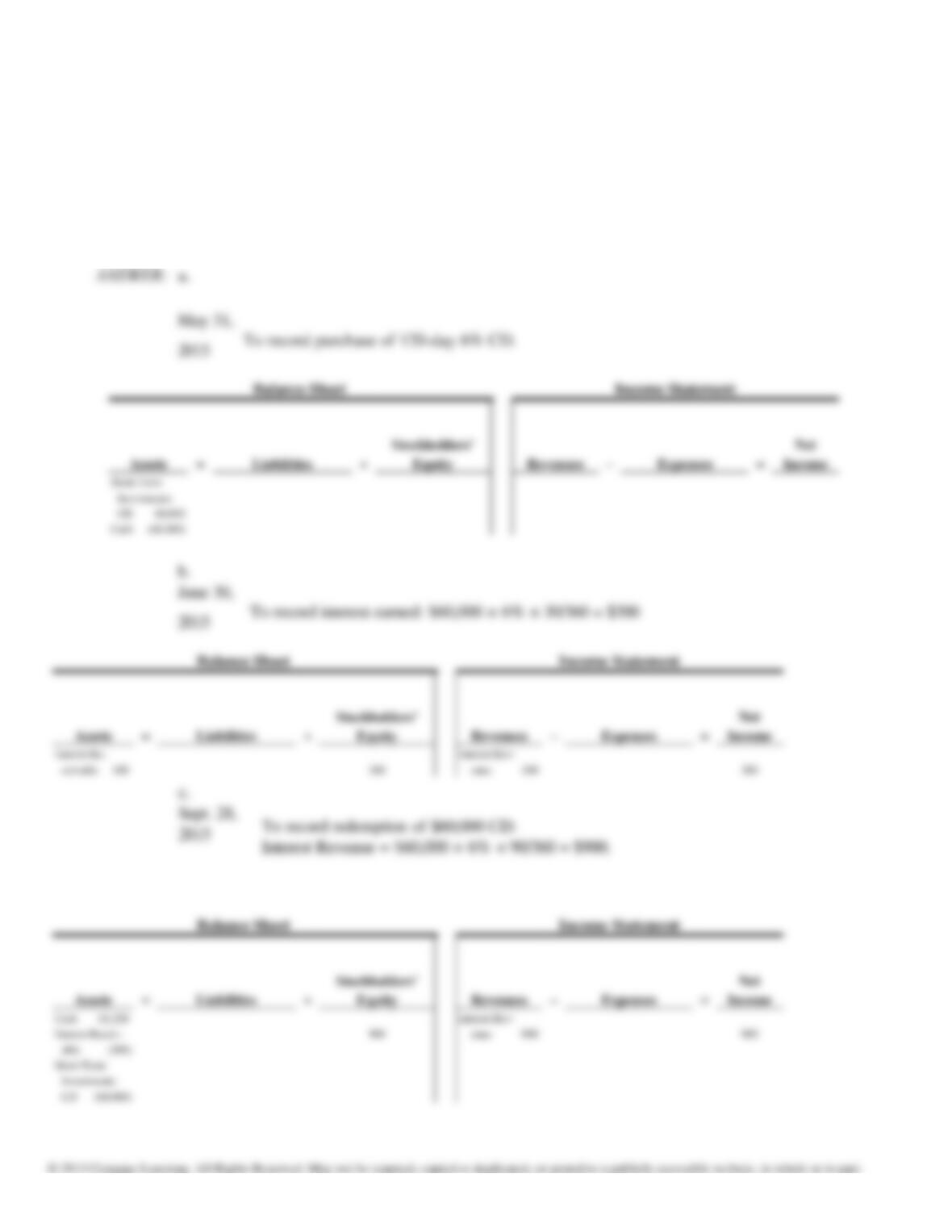
181. On August 16, 2015, Blenim Corp. purchases 6,000 shares of common stock in Mountain Inc. at a market price of
$17 per share. In addition, Blenim pays brokerage fees of $2,000. On October 21, 2015, Blenim sells the Mountain
stock for $12 per share.
REQUIRED:
Identify the effects on the accounting equation in connection with Blenim’s investment beginning with
the purchase of the common stock on August 16, 2015, and the sale on October 21, 2015.
Chapter 7: Receivables and Investments
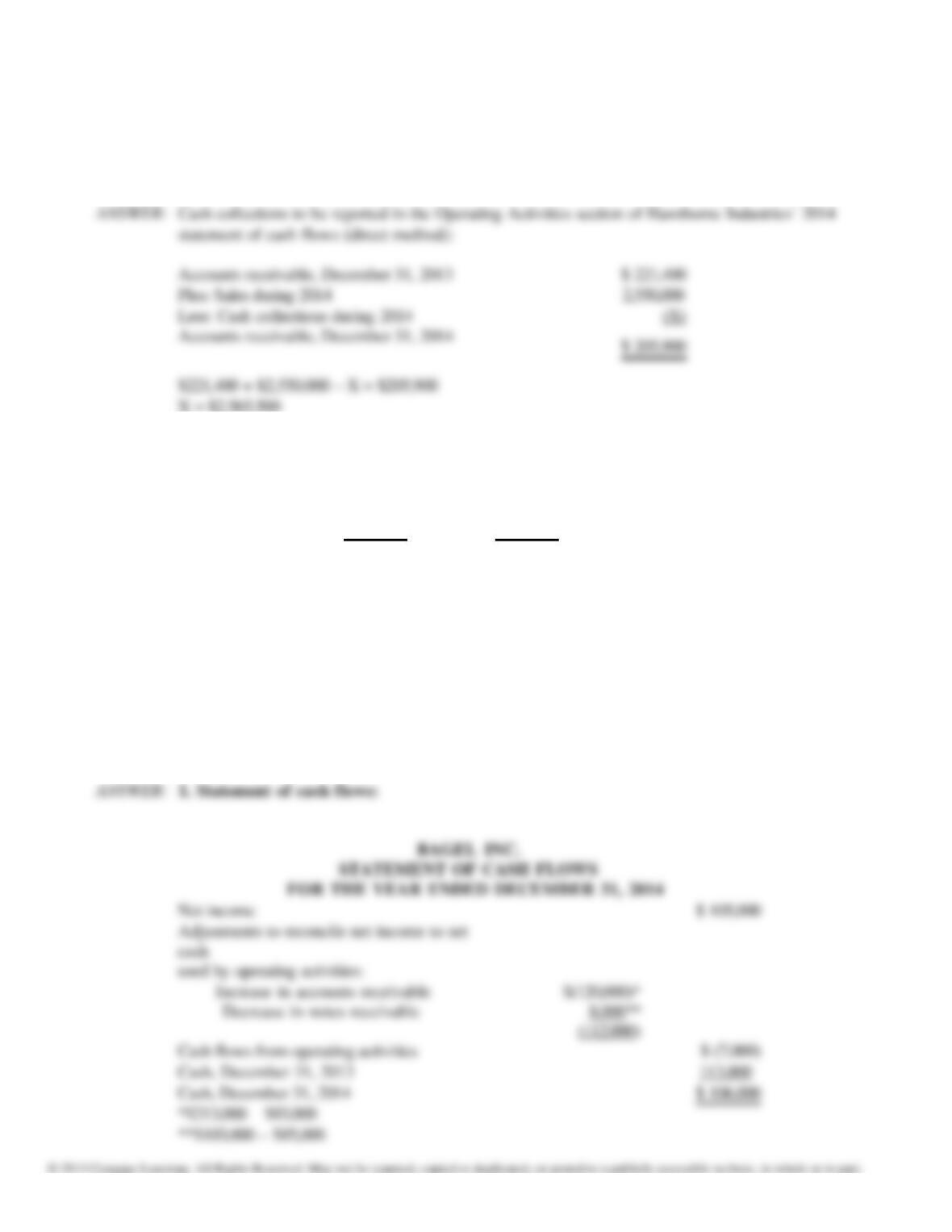
182. On May 31, 2015, Evergreen Corp. purchased a 120-day, 6% certificate of deposit for $60,000. The CD was
redeemed on September 28, 2015. Identify the effects of the following transactions on the accounting equation for
Evergreen’s books:
a. The purchase of the CD.
b. The accrual of interest adjustment for interest earned through June 30, the end of the company’s fiscal year.
c. The redemption of the CD. Assume 360 days in a year.
Chapter 7: Receivables and Investments
183. Hawthorne Industries’ comparative balance sheets included accounts receivable of $221,400 at December 31,
2013, and $205,900 at December 31, 2014. Sales reported on Hawthorne’s 2014 income statement amounted to
$2,550,000. What is the amount of cash collections that Hawthorne will report in the Operating Activities category
of its 2014 statement of cash flows assuming that the direct method is used? Show your calculations.
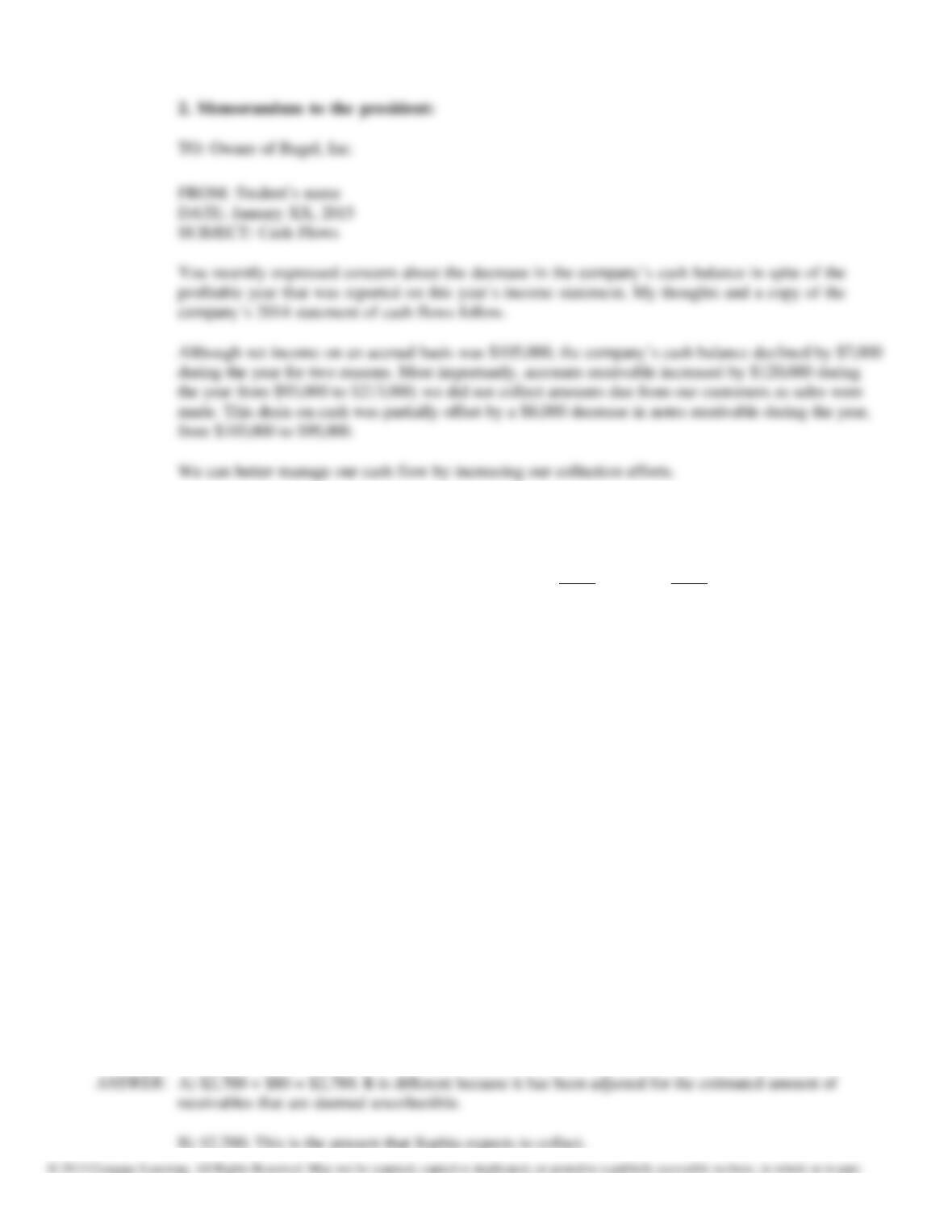
184. Bagel Inc. reported net income of $105,000 for the year ended December 31, 2014. The following items were
included on Bagel’s balance sheets at December 31, 2014 and 2013:
12/31/14
12/31/13
Cash
$106,000
$113,000
Accounts receivable
213,000
93,000
Notes receivable
95,000
103,000
Bagel uses the indirect method to prepare its statement of cash flows. Bagel does not have any other current
assets or current liabilities and did not enter into any investing or financing activities during 2014.
REQUIRED:
1. Prepare Bagel’s 2014 statement of cash flows.
2. Draft a brief memo to the owner to explain why cash decreased during a profitable year.
Chapter 7: Receivables and Investments
185. The comparative financial statements for the years ended December 31, 2014 and 2013 for Sophia Company
reported the following information.
Balance Sheet:
2014
2013
Cash and cash equivalents
Accounts receivables, less allowance for doubtful
accounts of $80 (2014) and $82 (2013)
$77,000
2,700
$81,600
2,300
Income Statement:
Net sales for the year
$9,700
$8,800
Net income for the year
950
1,070
Statement of Cash Flows:
Net cash provided by operating activities
$1,000
$1,100
Increase in accounts receivable
(460)
(280)
Answer these questions concerning Sophia Company’s receivables:
A) What is the gross amount of accounts receivable for Sophia at December 31, 2014? Why is this amount
different than the amount of receivables shown in the 2014 column of the balance sheet?
B) What is the net realizable value of accounts receivable for Sophia at December 31, 2014? What does this
amount represent?