82) Japan is a completely homogeneous nation-state.
83) Switzerland is a nation-state.
84) Ethnicities can be transformed into nationalities.
85) Nationalities can be transformed into states.
86) People were forced to migrate in South Asia during the 1940s because of linguistic disputes.
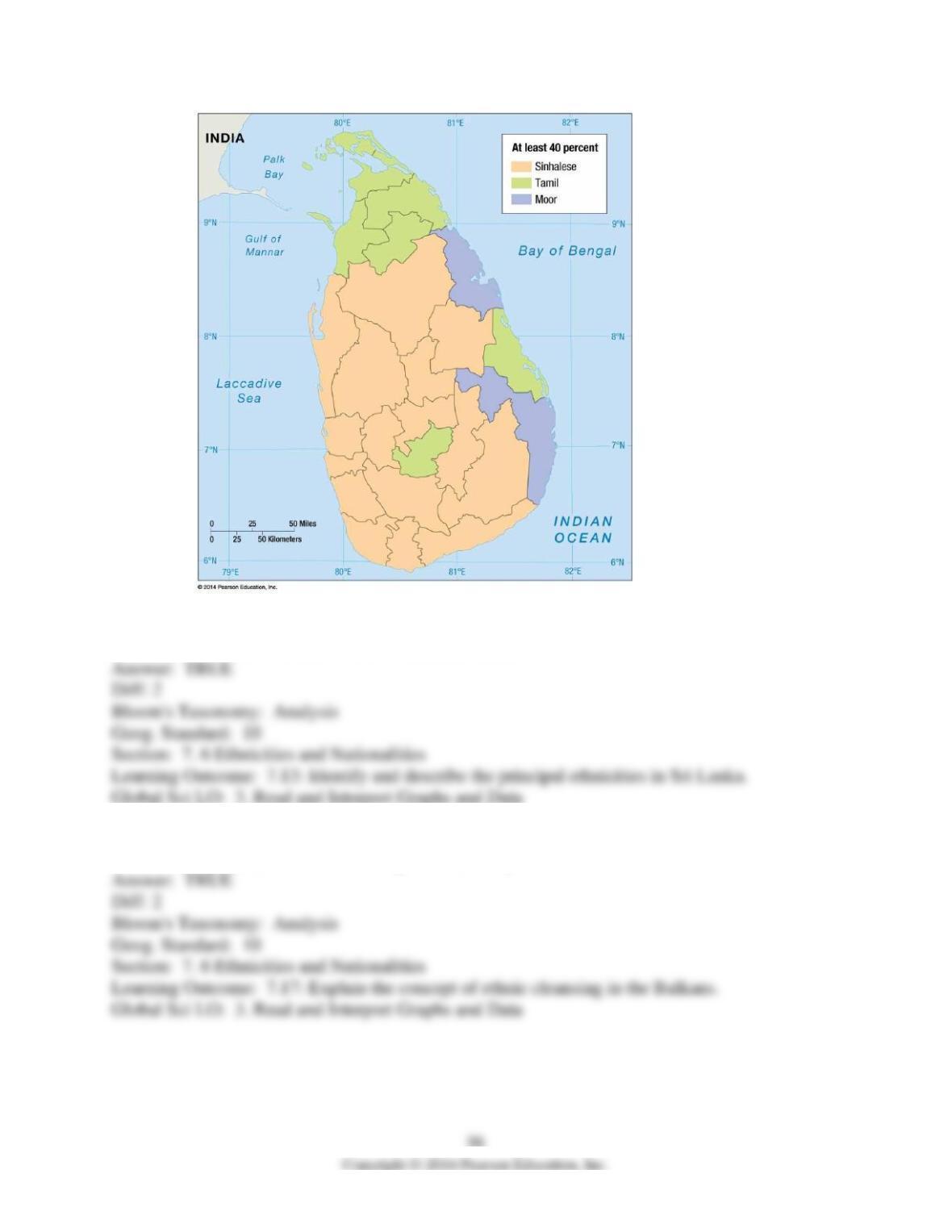
87) The maps in this chapter indicate that in Sri Lanka, the Tamil are clustered mainly in the
north, as well as in the center and on the eastern coast.
88) The maps in this chapter indicate that the former Yugoslavia was roughly divided between
Austria-Hungary and the Ottoman Empire in the early 1900s.
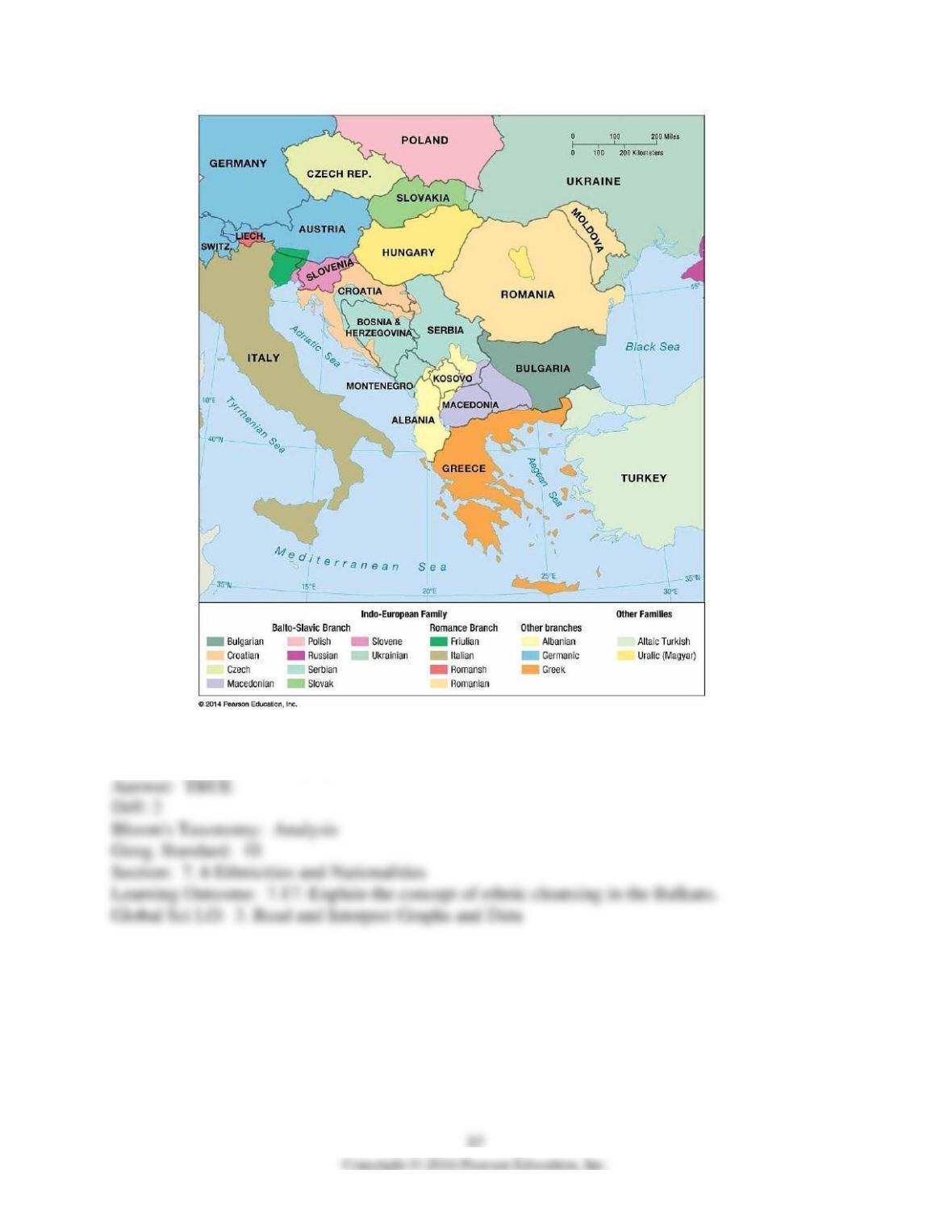
89) The maps in this chapter indicate that in the former Yugoslavia, at least five different
languages were commonly spoken.
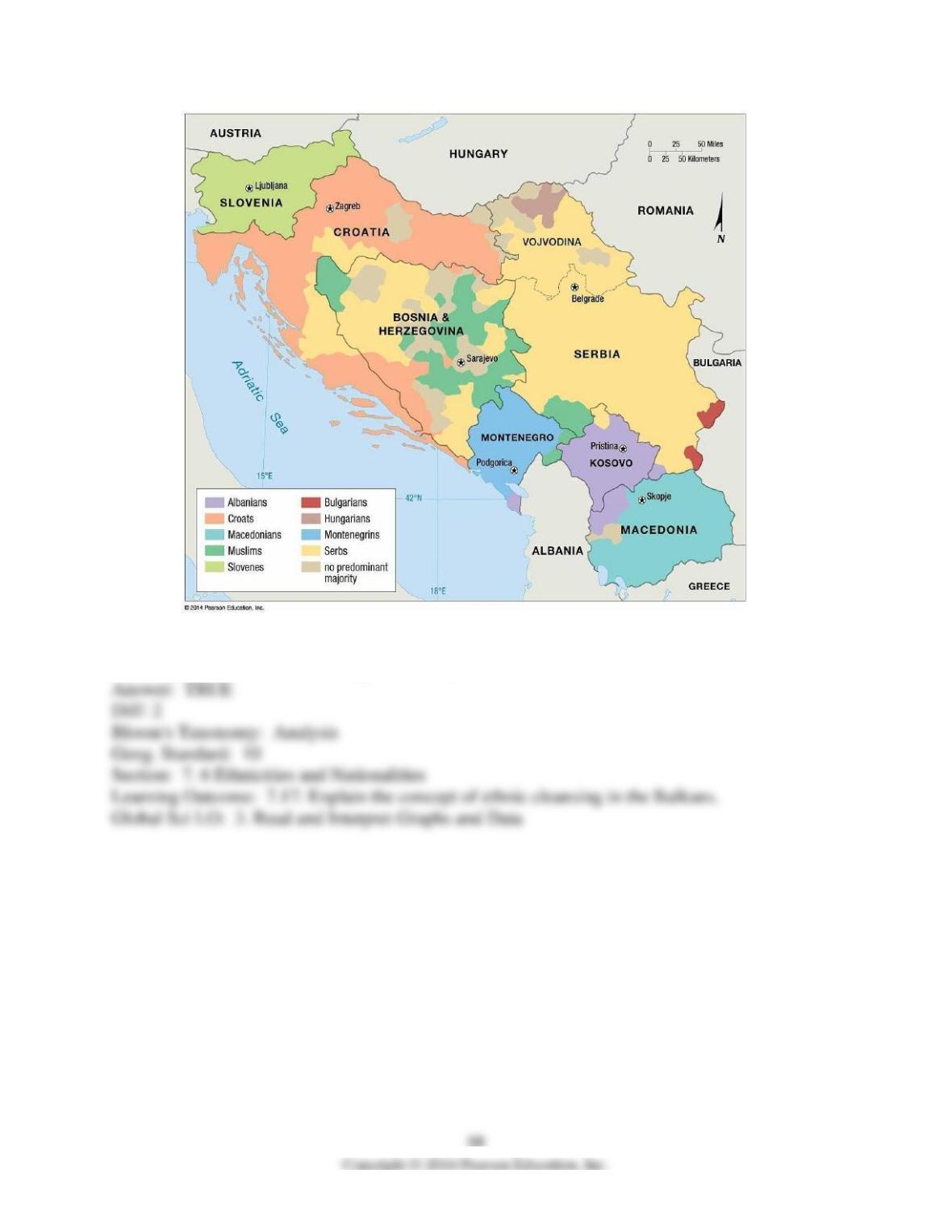
90) The maps in this chapter indicate that in the former Yugoslavia, members of the Serbian
ethnic group were clustered mainly in the center.
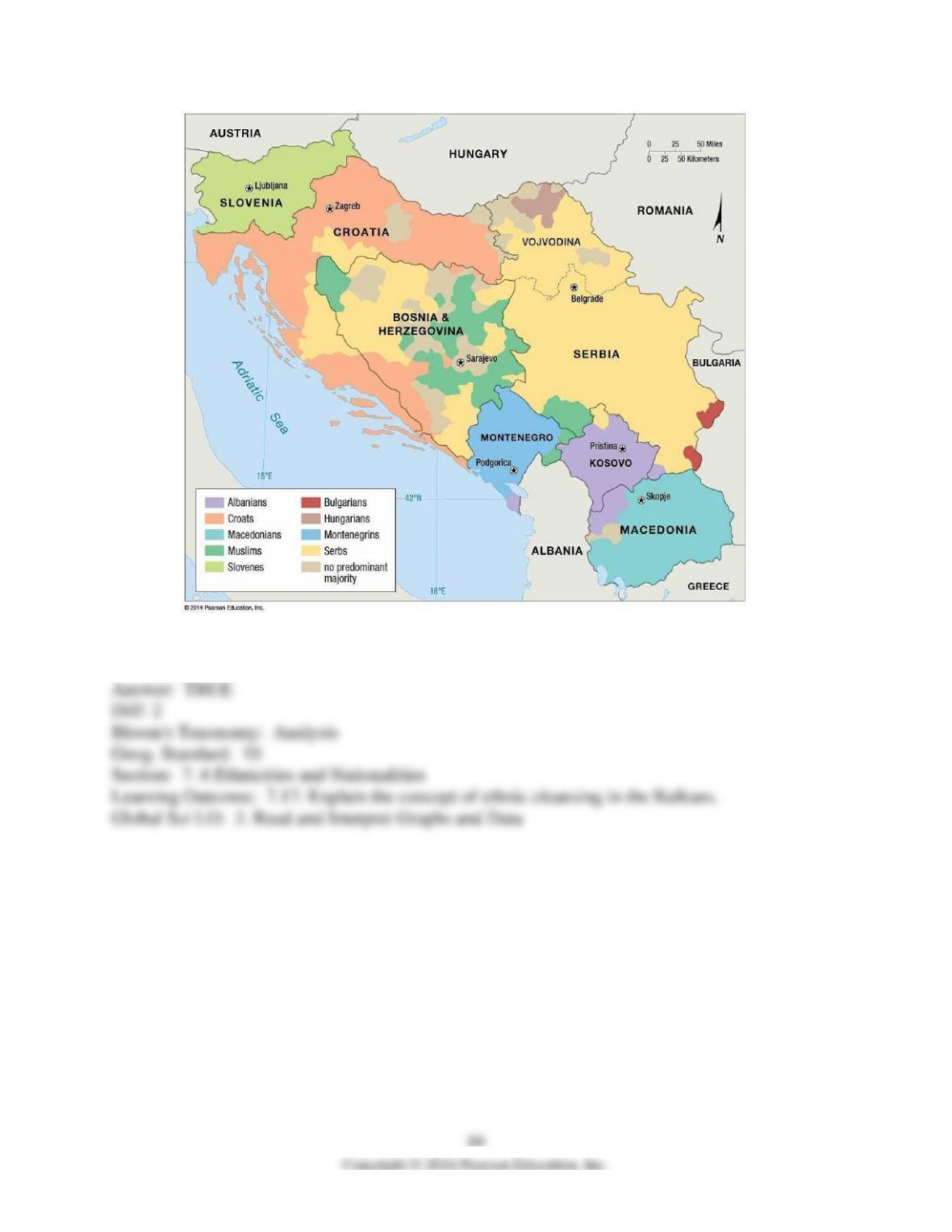
91) The maps in this chapter indicate that in the former Yugoslavia, a Bulgarian minority
occupied parts of eastern Serbia.
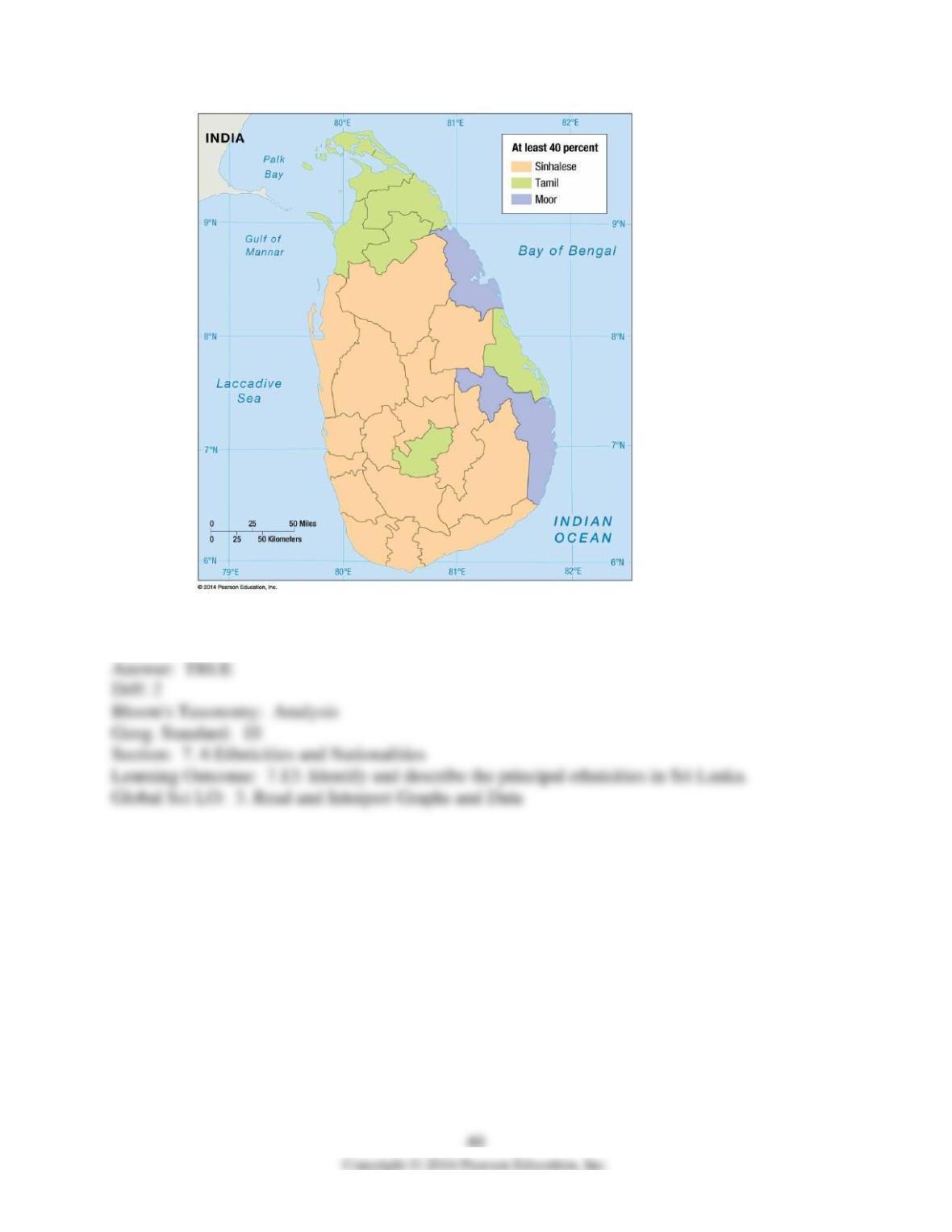
92) The maps in this chapter indicate that in Sri Lanka, the Sinhalese are clustered in the center
and south.
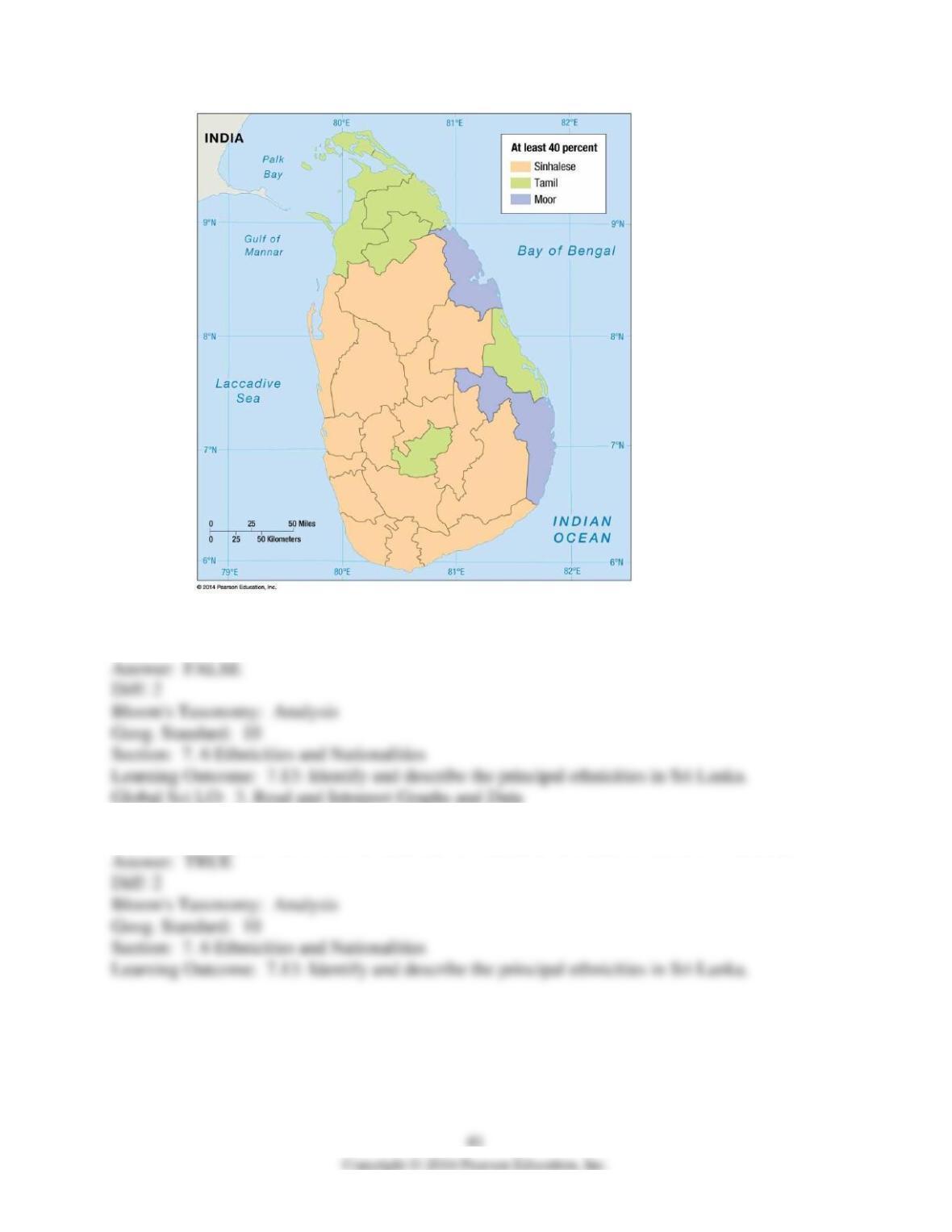
93) The maps in this chapter indicate that in Sri Lanka, the Moors are clustered mainly along the
western coast.
94) In Sri Lanka, the Moors are the ethnicity that dominate the smallest amount of territory.
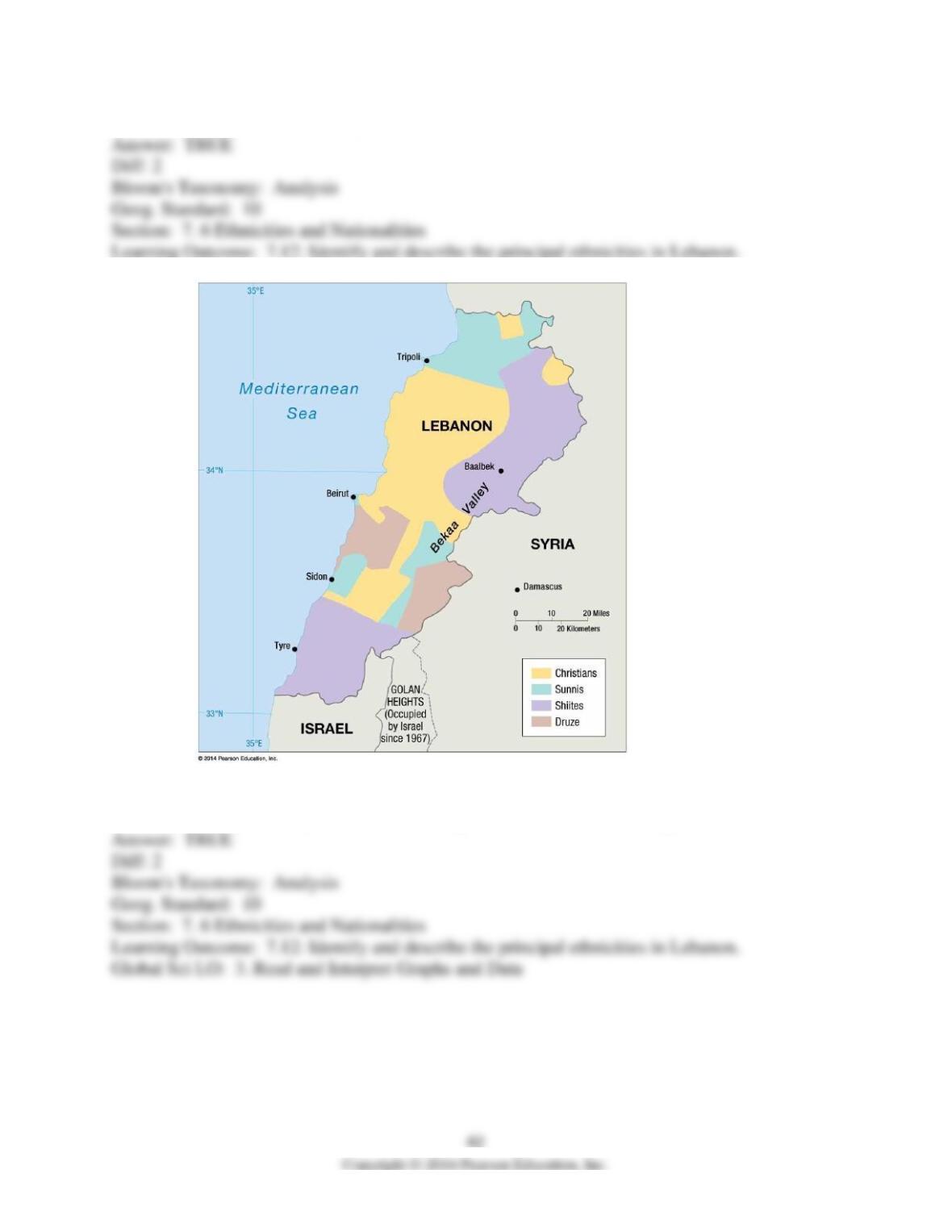
95) Most of the Muslims in Lebanon adhere to Shiite sects.
96) The maps in this chapter indicate that in Lebanon, members of the Maronite ethnic group,
who are mostly Christians, are clustered mainly in the center of the country.
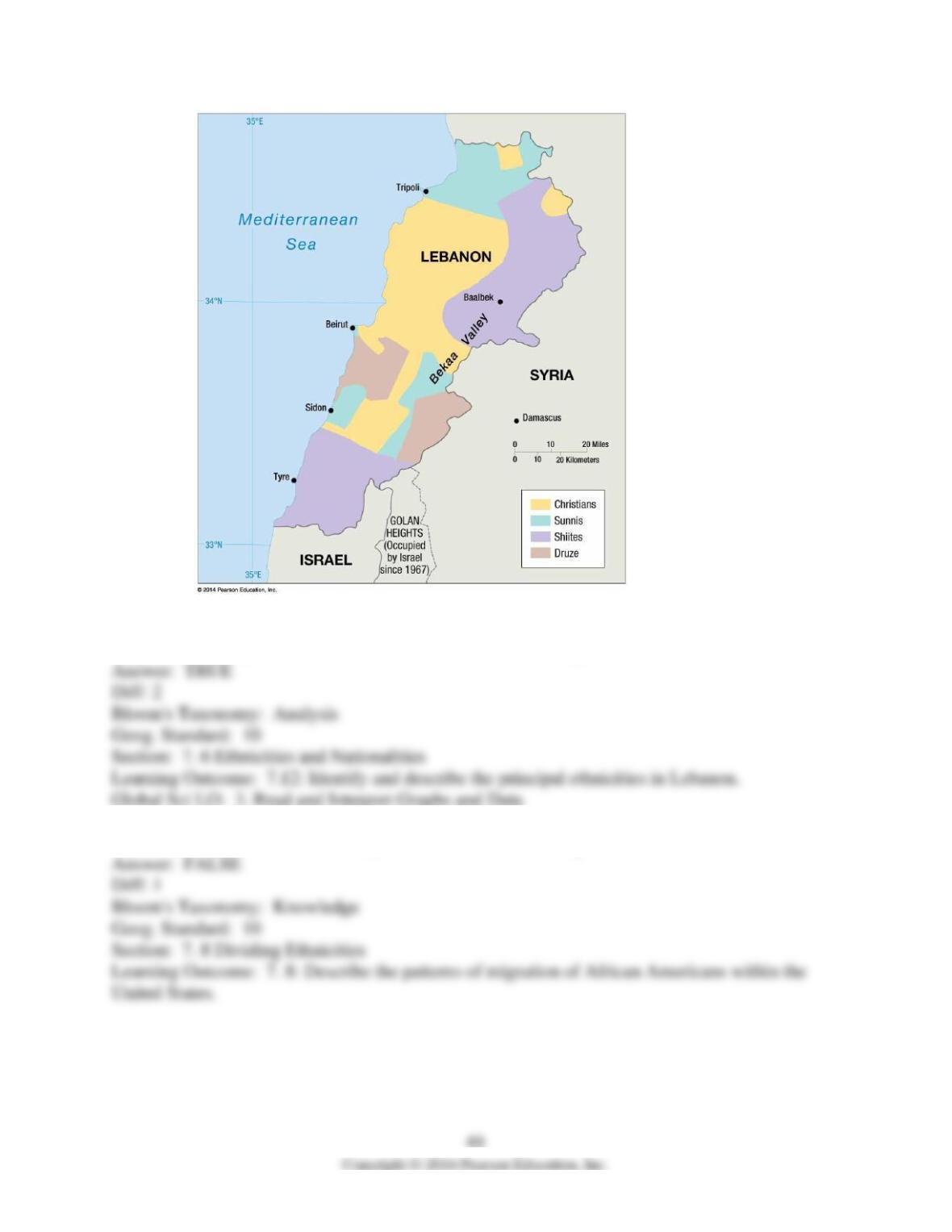
97) The maps in this chapter indicate that in Lebanon, the ethnic groups that adhere to the Druze
religion are mainly clustered in the southern half of the country.
98) The term ghettos identifies only the African American neighborhoods in the United States.
99) Asian, White, Black, Native American, Alaska Native, Native Hawaiian, and Pacific Islander
are all terms of self-identification.
100) The trans-Atlantic slave trade was a kind of ________ migration.
101) South Africa enacted legal segregation called ________. Blacks were supposed to declare
citizenship in a ________ and move there. In 1991 the legal system was changed and ________
was elected president.
102) Why are nation-states generally stable states?
103) What are the four prominent national groups included in the United Kingdom?
104) Explain why ethnicity will continue to contribute to local diversity even as other cultural
elements become globalized.
105) Discuss a family, group or other segment of an ethnicity in your town or community. With
their specific example in mind, how do they contribute to local diversity in the face of
globalizing forces?
106) Estimate the kinds of additional expenses and confusion that apartheid laws would cause for
South Africa if they were newly instituted today. (For the purposes of this essay, ignore the
outrage, international condemnation, and internal civil unrest that such a change in policy would
undoubtedly provoke.)
107) Russia fought to prevent Chechnya from gaining independence because ________.
108) Why were 17 million people forced to migrate in South Asia in the late 1940s?
109) In your opinion, is Mexico a nation or a state? What evidence exists to the contrary of your
opinion? (Consider another perspective, at odds with your own.) Give specific data to support
your answer, including a definition of the elements of a nation-state.
110) Sri Lanka had a long-running conflict between its two main groups of people. Describe the
two groups and the major concern of the losing group now that the war has ended.
111) Discuss the kinds of confusion that you or another person might encounter on filling out the
U.S. Census questions on race and ethnicity, particularly if the respondent is of mixed race or of
Latino/Hispanic heritage.
112) Describe the ethnic conflicts that came after the breakup of Yugoslavia.
113) Imagine that you had been the leader of a small contingent of United Nations soldiers in a
town in Croatia, Serbia, or another part of Yugoslavia during its civil war. Assuming that the
town you are to protect has a population of mixed ethnicities and religious backgrounds, what
strategies and tactics might you propose to keep the town safe? What would the town’s chief
threats be? Why?