ch07.doc Page 1
Chapter 7
Long-lived Assets and Investments in Marketable Securities
TRUE/FALSE (CHAPTER 7)
1. General capital assets are distinguished from the capital assets of proprietary funds and
fiduciary funds.
2. General capital assets are not reported in governmental funds because of the funds’
measurement focus (current financial resources).
3. In governmental funds, the costs of capital assets are reported as expenses when the assets are
acquired.
4. At the government-wide level, governments must depreciate inexhaustible assets, such as
land, works of art, or historical treasures.
5. Governments do not have to depreciate infrastructure assets if governments can demonstrate
they are preserving these assets at a specified condition level.
6. Unlike businesses, governments should not capitalize interest on general capital assets that
they construct themselves.
7. Most infrastructure assets are the responsibility of the federal government, not state and local
governments.
8. Prior to the issuance of GASB Statement No. 34, state and local governments provided
virtually no information as to most of their infrastructure.
9. Governments invest in marketable securities for much the same reason that businesses do—to
earn a return on cash that otherwise would be unproductive.
10. Governments are prohibited from entering into reverse repurchase agreements.
11. Governments should depreciate general capital assets, such as police cars and snow plows, in
governmental funds.
12. GASB has no authority to set standards for the investment practices of governments.
ch07.doc Page 2
MULTIPLE CHOICE (CHAPTER 7)
1. The objectives of financial reporting for capital assets should be to provide information
a) About a governmental entity’s physical resources.
b) That can be used to assess the service potential of a governmental entity’s physical
resources.
c) To help users assess a government’s long– and short-term capital needs.
d) All of the above.
2. A government may record long-term assets in which of the following funds?
a) General fund
b) Internal service funds.
c) Capital projects funds
d) Debt service funds.
3. General capital assets are not reported in governmental funds because
a) The measurement focus of governmental funds is on current financial resources.
b) They are not used to used generate revenues.
c) The basis of accounting is accrual.
d) None of the above.
4. Joshua County bought a new backhoe using general fund cash. When the asset was acquired,
what was the appropriate entry in the general fund, assuming that the entity maintains its
books and records in a manner to facilitate the preparation of fund financial statements?
a) Debit Equipment; Credit Cash.
b) Debit Equipment; Credit Investment in capital assets.
c) Debit Expenditures; Credit Cash.
d) Debit Expenditures; Credit Investment in capital assets.
5. Surfer City sold a used police car. The police car had a historical cost of $25,000, a fair value
of $18,000, and was sold for $10,000. Assuming that the city maintains its books and records
in a manner to facilitate the preparation of the fund financial statements, what is the
appropriate entry in the general fund to record this sale?
a) Debit Cash $10,000; Credit Revenue $10,000.
b) Debit Cash $10,000 and Loss on sale $8,000; Credit Automotive equipment $18,000.
c) Debit Cash $10,000; Credit Other financing sources—sale of asset $10,000.
d) Debit Cash $10,000; Credit Automotive equipment $10,000.

ch07.doc Page 3
6. Hilltop School District receives a donation of ten computers from Computer Hut, a local
computer firm. The cost to Computer Hut of each computer is $2,500. The retail value of
each computer is $3,000. Assuming that the district maintains its books and records in a
manner that facilitates the preparation of the fund financial statements, what is the
appropriate entry in the general fund to record this donation?
a) Debit Computer equipment $25,000; Credit Donation revenue $25,000.
b) Debit Computer equipment $30,000; Credit Other financing sources—donation $30,000.
c) Debit Computer equipment $30,000; Credit Donation revenue $30,000.
d) No entry. The computers are not financial resources.
7. Which of the following costs will NOT be included in the cost of capital assets on the
government-wide financial statements?
a) Purchase price (invoice amount).
b) Cost of demolishing existing structures that cannot be used.
c) Interest on self-constructed items.
d) Engineering costs.
8. Donated assets are reported in the government-wide financial statements at
a) Historical cost to the donor.
b) Book value in the hands of the donor.
c) Fair value on date of donation.
d) Zero value because they were not purchased.
[NOTE: Guidance on the calculation of gain or loss in the next two series of questions is not
covered in this chapter but is from APB Opinion 29. Students should be familiar with this
pronouncement from their intermediate accounting classes.]
Use the following information to answer questions #9 – #11
9. Mariano County traded in a used pickup for a new pickup truck with a sticker price of
$44,000. The old pickup had a fair value of $26,000, historical cost of $45,000, and
accumulated depreciation of $18,000. The dealer took the old truck and $15,000 for the new
truck. The new truck should be reported on the government-wide financial statements at
a) $15,000.
b) $42,000.
c) $44,000.
d) $41,000.
10. The amount of gain or loss that should be recognized on this transaction in the general fund
financial statements is:
a) $0.
b) $1,000 loss.
c) $4,000 gain.
d) $15,000 loss.
ch07.doc Page 4
11. The amount of gain or loss that should be recognized on this transaction in the government–
wide financial statements is
a) $0.
b) $1,000 loss.
c) $3,000 gain.
d) $12,000 loss.
Use the following information to answer questions #12 – #14
Rory City traded in a used pickup for a new pickup with a sticker price of $44,000. The old truck
had a historical cost of $40,000, accumulated depreciation of $16,000, and a fair value of
$27,000. The dealer took the old truck and $10,000 cash for the new truck.
12. At what value should the new truck be reported in the government-wide financial
statements?
a) $44,000.
b) $43,000.
c) $40,000.
d) $37,000.
13. What amount of gain/loss should be reported in the general fund financial statements?
a) $0.
b) $3,000 gain.
c) $3,000 loss.
d) $7,000 gain.
14. What amount of gain/loss should be reported in the government-wide financial statements?
a) $0.
b) $3,000 gain.
c) $3,000 loss.
d) $7,000 gain.
15. The city of Maine Creek acquired a used front-end loader from a road contractor for use at
the city landfill (which is accounted for in an enterprise fund). The loader had a fair value of
$54,000 and a historical cost of $90,000. The city paid the contractor $50,000 for the loader.
At what amount should be front-end loader be reported in the government-wide financial
statements?
a) $50,000.
b) $54,000.
c) $90,000.
d) It should not be reported in the government-wide financial statements.
ch07.doc Page 5
16. To elect not to capitalize works of art and similar assets, a government must see that the
assets meet all of the following criteria EXCEPT
a) The assets must be held for public exhibition, education, or research in furtherance of
public service, rather than for financial gain.
b) The assets must be protected, kept unencumbered, cared for, and preserved.
c) The assets must be subject to an organizational policy that requires the proceeds from
sales of the collection items be used to acquire very similar items for the collection.
d) The assets must be subject to an organizational policy that requires the proceeds from
sales of the collection items be used to acquire other items for the collection.
17. If a government elects to capitalize certain works of art and similar assets, which of the
following statements is true relative to depreciation on those assets?
a) Donated assets cannot be depreciated.
b) All of the capitalized assets must be depreciated.
c) All exhaustible works of art and similar assets must be depreciated.
d) The government may elect to omit all depreciation.
18. Which of the following are NOT infrastructure assets?
a) Roads.
b) Sidewalks.
c) Buildings.
d) Bridges.
19. If a government receives donations of works of art, the government must recognize revenue
in its government-wide financial statements
a) Only if it elects to capitalize its collection.
b) Only if it elects NOT to capitalize its collection.
c) On all donations of works of art.
d) It is not permitted to recognize revenue from donations.
20. For a government that elects NOT to capitalize its works of art and similar assets, the
appropriate entry for reporting in the government-wide financial statements when receiving a
contribution of a work of art is
a) No entry is required for contributed assets.
b) Debit Asset; Credit Revenues.
c) Debit Asset; Credit Equity.
d) Debit Expense, Credit Revenue.
21. For a government that elects to capitalize its works of art and similar assets, the appropriate
entry for reporting in the government-wide financial statements when receiving a contribution
of a work of art is
a) No entry is required for contributed assets.
b) Debit Asset; Credit Revenues.
c) Debit Asset; Credit Equity.
d) Debit Expenditures; Credit Revenues.
ch07.doc Page 6
22. Which of the following is true with regard to deferred maintenance?
a) Deferred maintenance costs are delayed repair, or upkeep, measured by the outlay
required to restore a plant or individual asset to full operating characteristics.
b) Deferred maintenance costs should be measured as the amount necessary to bring the
assets up to their expected operating condition.
c) Deferred maintenance costs may be interpreted as a potential call upon government
resources—an obligation that is being passed on to taxpayers of the future.
d) Deferred maintenance costs are not useful information to readers of financial statements
because they are not objective and verifiable and thus violate one of the basic qualitative
characteristics of accounting information.
23. GASB standards require that depreciation be reported on all capital assets except
a) Infrastructure accounted for using the standard approach.
b) Infrastructure assets accounted for using the modified approach.
c) Donated assets.
d) Capitalized works of art.
24. With regard to accounting for infrastructure, which of the following is true?
a) Unlike other capitalized assets, infrastructure assets should never be depreciated.
b) The costs of general government infrastructure assets should be recognized as
expenditures in governmental fund statements as the costs are incurred.
c) Governments that choose to apply the modified approach to accounting for infrastructure
need not capitalize infrastructure assets.
d) Under the modified approach, governments should capitalize both the initial costs of
infrastructure assets and subsequent outlays intended to preserve and extend the assets’
useful lives.
25. If a government elects the modified approach with regard to capitalization of infrastructure
a) Costs to preserve infrastructure assets are expensed as incurred with no additional
disclosure required.
b) Costs to preserve infrastructure assets are expensed as incurred and disclosure of assessed
condition is required.
c) Costs to preserve infrastructure assets are capitalized as incurred and depreciated over the
estimated useful with no additional disclosure required.
d) Costs to preserve infrastructure assets are capitalized as incurred and are not depreciated,
but disclosure of assessed condition is required.
26. Which of the following is NOT a benefit to cities of participating in their state’s investment
pool?
a) Lower trading costs.
b) Concentration on the latest innovative investment instruments.
c) Shared costs of receiving expert investment advice.
d) Greater opportunity to diversify.
ch07.doc Page 7
27. The risk that the issuer or other party to an investment will not fulfill its obligation is
a) Interest rate risk.
b) Credit risk.
c) Concentration of credit risk.
d) Foreign currency risk.
28. The risk that changes in interest rates will adversely affect the fair value of an investment is
a) Interest rate risk.
b) Credit risk.
c) Concentration of credit risk.
d) Foreign currency risk.
29. The risk that changes in currency exchange rates will adversely affect the fair value of an
investment is
a) Interest rate risk.
b) Credit risk.
c) Concentration of credit risk.
d) Foreign currency risk.
30. Which of the following are NOT examples of derivatives?
a) Stock options.
b) Interest-only strips.
c) Debt instruments backed by pools of mortgages.
d) Repurchase agreements.
31. Governments must disclose information about investment risks in which of the following
categories?
a) Credit risk.
b) Custodial credit risk.
c) Foreign currency risk.
d) All of the above.
32. Disclosures about investment risks apply
a) To investments only.
b) To deposits, investments, and derivatives.
c) To deposits and investments.
d) Only to investments held by governmental and proprietary funds.
33. For governments, a capital asset is considered impaired
a) When its service capacity has declined significantly and unexpectedly.
b) When it is reported in a governmental fund.
c) When it no longer generates any cash flows.
d) When it no longer generates the cash flows expected of it.
ch07.doc Page 8
34. The “restoration cost” approach to determining the extent of a capital asset impairment
a) First calculates the percentage decline in the number of service units caused by the
impairment.
b) First determines the current cost of an asset that would provide the current (impaired)
level of service.
c) Estimates the cost to restore the utility of an impaired asset.
d) Estimates the change in future cash flows generated by an impaired asset.
35. The government-wide financial statements report capital assets:
a) At estimated fair value
b) At depreciated historical cost, including ancillary charges
c) Only in the notes, if they are infrastructure assets
d) Only in the notes, if they are donated capital assets
36. Fair value accounting is required for investments in:
a) External investment pools
b) Open-end mutual funds
c) Bonds and other debt securities
d) All of the above
37. Concentration of credit risk is
a) The risk that an issuer or other counterparty to an investment will not fulfill its
obligations.
b) The risk of loss attributed to participating in a state investment pool.
c) The risk of loss attributed to the magnitude of a government’s investment in a single
issuer.
d) The risk that changes in exchange rates with blocs of countries that have pooled their
currencies will adversely affect the fair value of an investment.
38. Which of the following can be referred to as a derivative?
a) A reference rate, such as a prevailing interest rate.
b) A security whose value depends on (is derived from) that of some underlying asset, such
as a share of stock.
c) An index, such as the Standard & Poor’s index of stock prices.
d) All of the above.
39. How should changes in the fair value of derivatives be reported in a government’s financial
statements?
a) Gains or losses in the government-wide statement of activities.
b) Losses but not gains in general fund statements of revenues, expenditures, and changes in
fund balance.
c) Gains or losses in the government-wide statement of activities, except for derivatives that
qualify as hedges.
d) Only disclosed in the notes.
40. Changes in the fair value of derivative instruments that qualify as hedges should be reported
as
a) Gains or losses in the government-wide statement of activities.
ch07.doc Page 9
b) Deferred inflows or outflows of resources in fund and government-wide operating
statements.
c) Losses but not gains in general fund statements of revenues, expenditures, and changes in
fund balance.
d) Disclosures only.
ch07.doc Page 10
PROBLEMS (CHAPTER 7)
1. The City of Baconsville engaged in the following transactions. Assume that the city
maintains its books and records in a manner that facilitates the preparation of fund financial
statements. Prepare the appropriate journal entries in the general fund. If appropriate, write
“No entry required.”
a) The city purchased for cash three dump trucks for $80,000 each.
b) The city sold for $4,000 a police car that had been purchased four years ago at a cost of
$30,000. At the time of acquisition, the city estimated that the police car had a useful life
of five years and a salvage value of $5,000.
c) During the year, the city spent $12 million to build a third lane on both sides of the major
north-south highway through town.
d) The city traded in a pickup truck used in general government operations for a new pickup
truck, paying a difference of $18,000. The old pickup truck was purchased four years
ago at a cost of $21,000. At the time it had an estimated useful life of five years and an
estimated salvage value of $6,000. At the time of the trade the old truck had a fair value
of $10,000. The new truck has a sticker price of $29,000.
e) During the year the city began construction of a new city hall. By year-end, the city had
made progress payments to the contractor of $3 million.
f) The city received a gift of land from a citizen. The land is to be used to build a city park.
The land had been in the donor’s family since it was homesteaded. It had a fair value
when contributed of $2 million.

ch07.doc Page 11
[NOTE: Guidance on the calculation of gain or loss in the next two series of questions is not
covered in this chapter but is from APB Opinion 29. Students should be familiar with this
pronouncement from their intermediate accounting classes.]
2. The City of Baconsville engaged in the following transactions. Assume that the city
maintains its books and records in a manner that facilitates the preparation of the
government-wide financial statements. Prepare the appropriate journal entries. If
appropriate, write “No entry required.”
a) The city purchased for cash three dump trucks for $80,000 each.
b) The city sold for $4,000, a police car that had been purchased four years ago at a cost of
$30,000. At the time of acquisition, the city estimated that the police car had a useful life
of five years and a salvage value of $5,000.
c) During the year, the city spent $12 million to build a third lane on both sides of the major
north-south highway through town.
d) The city traded in a pickup truck used in general government operations for a new pickup
truck, paying a difference of $18,000. The old pickup truck was purchased four years
ago at a cost of $21,000. At the time it had an estimated useful life of five years, and an
estimated salvage value of $6,000. At the time of the trade, the old truck had a fair value
of $10,000. The new truck has a sticker price of $29,000.
e) During the year the city began construction of a new city hall. By year-end, the city had
made progress payments to the contractor of $3 million.
f) The city received a gift of land from a citizen. The land is to be used to build a city park.
The land had been in the donor’s family since it was homesteaded. It has a fair value
when contributed of $2 million.
ch07.doc Page 12
3. A drunk driver crashed into a fully loaded gasoline truck while trying to pass on a city’s Main
Avenue bridge. The truck exploded and the heat of the fire caused a portion of the structure
of the bridge to melt. The city did not use the modified approach to report the bridge.
Rather, its historical cost of $10 million was being depreciated over 20 years with no
expected salvage value. The bridge was 10 years old. Its current replacement cost is $20
million. The city’s engineers estimate that it will take $8 million to restore the bridge.
REQUIRED:
a. What is the deflated restoration cost for the bridge, calculated as using the restoration
approach?
b. If an impairment loss is calculated by dividing the deflated restoration cost by the asset’s
original historical cost and then multiplying that percentage times the carrying amount of
the bridge, what is the city’s impairment loss?
c. Assuming the city makes the $8 million of repairs, how should the city report this cost?
4. In 1991, Katie City constructed a new Fifth Avenue bridge. The city has no records of the
cost of the bridge. The city’s engineers estimate that the current replacement cost (2016) of
the bridge is $24 million. The construction price index was 150 in 1991 and is 200 in 2016.
The engineers also estimate that the bridge has a total useful life of 30 years. REQUIRED:
a. What values should the city assign to the bridge for estimated historical cost and
accumulated depreciation?
b. Suppose the city decided to use the modified approach to report its bridges. What value
would the city assign to the bridge?
c. In your opinion, would a depreciation charge for the bridge add significant information to
the city’s financial statements? Why or why not?
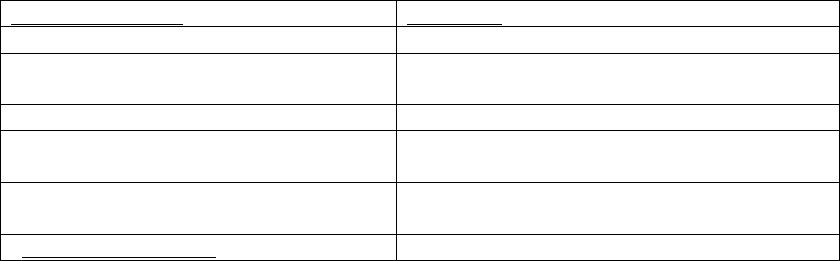
5. The table below lists the types of investments reported by the Lisbet City in its general fund.
All of the investments of the general fund will be needed to liquidate liabilities within the
next six to twelve months. What types of investment risks should the city disclose?
Type of Investment
Comments
$45 million Boeing short-term notes
The city’s agent holds the securities
$10 million 20-year Treasury bills
The federal government lists the city as owner
of the bills
$2 million in short-term junk bonds
The city’s agent holds the securities.
$1 million in overnight repurchase
agreements
The broker-dealer holds the underlying
securities.
$2 million in collateralized mortgage
obligations (CMOs)
The city is not authorized to invest in these
securities.
Total Portfolio Value: $60 million
6. The following information pertains to a city government.
ch07.doc Page 13
A. The city (1) purchased a 3-year, 7 percent U.S. Treasury note (2) used the note to enter
into a 90-day short-term loan transaction that incorporated an interest rate of 6 percent
and (3) used the proceeds from the short-term loan transaction to purchase another 3-year
7 percent U.S. Treasury note. What are the benefits and risks of the city’s investment
practices?
B. In 2015 the city constructed a new highway at a cost of $120 million. In the years
following 2015, the city did not record a depreciation charge on the highway – not even
in its government-wide statements. Can the omission of the depreciation charge be
justified under GASB standards? Explain.
ch07.doc Page 14
ESSAYS (CHAPTER 7)
1. Government accounting does not permit depreciation to be charged on the operating
statements of governmental funds. Present arguments FOR reporting depreciation and
arguments AGAINST reporting depreciation.
2. What is “deferred maintenance?” What is its possible role in government financial reporting?
3. Government investment policies have been sharply criticized because of significant losses
incurred by certain governments. What is the nature of the problem that is being criticized?
What should be the role of accounting in determining and reporting investment strategies?
4. What are the differences among the various elements of risk: market risk, credit risk,
concentrations of credit risk, and interest rate risk? Describe how each of these risks could
affect a government’s investment in a 20-year Treasury note.
5. GASB standards allow a major exception for reporting depreciation expense on certain
capital assets. What is this exception? What is the notion behind the exception?
6. What is infrastructure? Give some examples. Why should governments capitalize
infrastructure assets? What are some of the objections raised by critics of the GASB’s
standards for general government infrastructure? What is the GASB’s position on those
criticisms?

ch07.doc Page 15
ANSWERS TO TRUE/FALSE (CHAPTER 7)

ch07.doc Page 16
ANSWERS TO MULTIPLE CHOICE (CHAPTER 7)
ch07.doc Page 17
ANSWERS TO PROBLEMS (CHAPTER 7)
ch07.doc Page 18
ch07.doc Page 19
ch07.doc Page 20
ANSWERS TO ESSAYS (CHAPTER 7)
ch07.doc Page 21
ch07.doc Page 22