Chapter 6: Behaviorism and Social Cognitive Theory
CHAPTER SEVEN
COGNITIVE VIEWS OF LEARNING
Cognitive Perspectives on Learning
* 1. Statements about an area of study that are generally accepted as true are best described as:
a. propositions.
b. inferences.
c. generalizations.
d. principles.
* 2. Of the following, which statement best describes cognitive learning theories?
a. Theories that explain learning in terms of changes in observable behavior that occur as a result of
having experiences in the real world
b. Theories that explain learning in terms of people’s thinking and the processes involved in acquiring,
organizing, and using knowledge
c. Theories that explain learning in terms of people’s needs for autonomy and connectedness with
others in a social environment
d. Theories that explain learning in terms of the interaction between genetics and the environment and
the influences they have on people’s thoughts and feelings
* 3. The idea that people construct their own knowledge rather than record knowledge as recording device
might do is a:
a. learning principle.
b. instructional principle.
c. learning theory.
d. planning principle.
* 4. Which of the following is not a principle of cognitive learning theories?
a. Social interaction facilitates learning.
b. Learning and development depend on learners’ experiences.
c. Learners construct their own knowledge.
d. Learning is a change in observable behavior.
* 5. Of the following, which statement most closely relates to a principle of cognitive learning theory?
a. New learning depends upon positive reinforcement.
b. Learning is primarily a function of effective modeling.
c. Learning is primarily a process of meeting learners’ needs.
d. New learning depends on current understanding.
* 6. Which of the following least closely relates to a principle of cognitive learning theory?
a. Learners construct understanding more effectively if they are involved in social interaction.
b. Learners construct understanding based on their existing understanding.
c. Learners construct understanding based upon teachers’ knowledge.
d. Learners construct understanding that makes sense to them.
** 7. Jeremy and Bill are trying to install a ceiling fan in Jeremy’s work area, but they’re a little uncertain about
how to proceed. As they discuss what to try, Bill suggests that they ask Steve, who has installed a couple
fans in his home. The three of them look at the fan and where Jeremy wants to locate it, share some ideas,
and they soon have it installed. Of the following, the principle of cognitive learning theory that is best
illustrated by this example is:
a. to make sense of their experiences, learners construct knowledge.
b. social interaction facilitates learning.
c. learning is a change in observable behavior.

Chapter 6: Behaviorism and Social Cognitive Theory
d. learning depends on knowledge of skills and abilities.
** 8. In an effort to understand what they aren’t able to understand in any other way, all societies and cultures
throughout history have developed systems of beliefs about life, its origins, why they were here and what
happens to them after they die.
The cognitive learning principle that best explains why societies and cultures would make these efforts
is:
a. learning and development depend on experience.
b. people want their experiences to make sense.
c. knowledge people construct depends on what they already know.
d. social interaction facilitates learning.
** 9. Our students sometimes come up with “off the wall” comments or answers to questions. Of the following,
which description best explains why students come up with these comments or answers.
a. They remember these ideas, because they were reinforced for them sometime in the past.
b. Students develop a number of misconceptions because of the influence of their peers.
c. They come up with these ideas, because “off the wall” comments have been modeled for them, and
modeling is one of the most powerful influences on learning.
d. They construct these ideas on their own because the ideas make sense to them.
** 10. Christie, a second grader, is able to solve the following problem:
38
– 5
correctly getting 33 as an answer. However, when given
24
– 6
she gets 22 as an answer, reasoning that when we subtract, we subtract the smaller number from the larger
number.
The cognitive learning principle that is best illustrated in Christie’s thinking is:
a. positive reinforcers contribute to learning and development.
b. to make sense of their experiences people construct knowledge.
c. social interaction facilitates learning.
d. practice and feedback increase learning.
Items 11 and 12 are related.
** 11. Cal believes that when you drop two objects of different weights, such as a baseball and a golf ball, the
heavier one—the baseball—will fall faster. His teacher drops the two balls, and they hit the floor
simultaneously. Cal, however, retains his belief, and continues to assert that the baseball fell faster than the
golf ball.
Of the following, which cognitive learning principle best explains why Cal retains his belief in spite of
evidence to the contrary?
a. Learning and development depend on experience.
b. People want their experiences to make sense.
c. Learning depends on positive reinforcers.
d. Social interaction facilitates learning.
Chapter 6: Behaviorism and Social Cognitive Theory
** 12. In an attempt to understand Cal’s thinking, his teacher questions him and asks him why he continues to
believe that heavier objects fall faster than lighter objects. Cal responds by saying that he dropped a piece
of paper and a book and the book hit the floor before the paper did.
Using this additional information, of the following, which cognitive learning principle best explains
why Cal continues to believe that the baseball fell faster than the golf ball?
a. The knowledge learners construct depends on what they already know.
b. The knowledge learners construct depends on whether or not they’re reinforced.
c. The knowledge learners construct depends on whether or not the process has been modeled for them.
d. Social interaction facilitates learning.
** 13. Of the following, which is the best explanation for why learners construct the knowledge that they do,
whether or not it’s correct?
a. The knowledge they construct has been modeled for them.
b. They have been reinforced for constructing their own knowledge.
c. The knowledge they construct has been explained to them by their teachers.
d. The knowledge they construct makes sense to them.
* 14. Principles of cognitive learning theory most strongly emphasize which of the following?
a. Learners’ emotions
b. Teachers’ reinforcers
c. Learners’ prior knowledge
d. Teachers’ modeling
** 15. Young students periodically make surprising conclusions, such as, “Most houses in France are made out of
plaster of Paris.” Based on the principles of cognitive learning theory, which of the following is the most
likely reason students make these conclusions?
a. Teacher presentations often aren’t clear, so students develop misconceptions.
b. Teachers often fail to adequately reinforce students for the correct conclusions that they make.
c. Students create these conclusions because the conclusions make sense to the students.
d. Students create these conclusions based on seeing similar conclusions modeled by other students.
** 16 Using principles of cognitive learning theory as the basis for your conclusion, of the following, what is the
most likely reason that students’ conclusions about the topics they study vary so greatly?
a. Their working memory capacities are different, and students’ constructions depend on the capacity
of their working memories.
b. Their background knowledge varies, and their constructions of understanding depend on their
background knowledge.
c. Teachers’ explanations often aren’t clear, so students are unable to construct understanding based on
the explanations.
d. Teachers usually lecture, and students can’t construct understanding if teachers lecture.
Use the following information for items 17-19.
Chapter 6: Behaviorism and Social Cognitive Theory
Monica, age three, doesn’t touch plants because her mother, Teresa, in an effort to prevent her from pulling the
leaves off the plants in the house warns her not to touch the plants. Teresa also touches a plant and says, “Ouch,
hot!” When Monica tentatively moves to touch a plant, Teresa gently taps Monica’s fingers and says, “No, hot.”
The next day Monica walks by a plant, points, and says, “Hot,” and Teresa smiles at her and says, “Yes, hot.”
Monica also says to Teresa one day, “Girls wear glasses but boys don’t.”
“That’s an interesting idea,” Teresa smiles. “Why do you think that?”
“You have glasses, and Gramma has glasses, but Daddy doesn’t.”
“Let’s look at these pictures,” Teresa says, and she then pages through a mail order catalogue in which some of
the female models are wearing glasses but others aren’t, and some of the male models are wearing glasses but others
aren’t. “Look at him. . . . He’s wearing glasses,” Teresa says as Monica sits on her lap looking at the pictures. “And
look at her. . . . Does she look like a girl?”
“Yes,” Monica replied.
“Is she wearing glasses?”
“No.”
Monica then decides that both girls and boys wear glasses, but she also decides that girls have long hair and
boys have short hair after looking at the pictures.
Teresa smiles to herself and decides to pursue the idea of hair length at a different time.
** 17. Which of the following best illustrates the principle, “To make sense of their experiences, learners
construct knowledge?”
a. Monica’s initially concluding that girls wear glasses but boys don’t.
b. Monica’s concluding that plants are hot after Teresa touched a plant and said, “Ouch, hot!”
c. Monica’s concluding that plants are hot after Teresa taps her fingers.
d. Monica’s walking by the plant, pointing, and saying, “Hot.”
** 18. Which of the following best illustrates the influence of prior knowledge on the process of knowledge
construction?
a. Monica’s concluding that plants are hot.
b. Monica’s tentatively moving to touch the plant.
c. Teresa’s saying, “No, hot,” as Monica moved to touch the plant.
d. Monica’s concluding that girls wear glasses but boys don’t.
** 19. Which of the following best illustrates the influence of social interaction on knowledge construction?
a. Monica’s concluding that plants are hot after hearing Teresa say, “Ouch, hot!”
b. Monica’s concluding that plants are hot after Teresa says, “No, hot.”
c. Monica’s deciding that both boys and girls wear glasses.
d. Monica’s deciding that girls have long hair but boys have short hair.
Items 20 and 21 are related.
** 20. Mrs. Everett is teaching her class about adjectives and has shown students the following passage:
Chapter 6: Behaviorism and Social Cognitive Theory
Tim and Sharon went to their favorite hangout to meet their best friends, Quin and Sancha. They had fun
and listened to some new music.
Mrs. Everett helps them recognize that favorite, best, and new are adjectives, and the students see that each
of the adjectives appears in front of the noun. Mrs. Everett then gives the students the following short
vignette and asks the students to identify the adjectives:
Bill and Katie, with her brown hair blowing in the brisk wind, went in his new car to the game. The
game was incredibly exciting, and their team barely won.
Anya identifies brown, brisk and new as adjectives, but she doesn’t recognize that exciting is also an
adjective, since it follows the noun instead of appearing in front of it.
Of the following, which principle of cognitive learning best explains why Anya would fail to recognize
that exciting is an adjective?
a. Learners construct knowledge with the support of more knowledgeable peers.
b. Knowledge that is constructed depends on what learners already know.
c. Social interaction facilitates learning.
d. Learning depends on practice and feedback.
** 21. Mrs. Everett sees that several of her students fail to recognize that exciting is an adjective, so she gives the
students another passage in which some of the adjectives appear before the noun and others follow the
noun. Then, when she assesses the students, she sees that nearly all of them are able to identify adjectives
that appear before nouns as well as those that follow nouns.
Of the following, which principle of cognitive learning theory best explains why the students would
now have a better understanding of adjectives?
a. Learning and development depend on learners’ experiences.
b. Learners construct knowledge with the support of more knowledgeable peers.
c. Social interaction facilitates learning.
d. Learning depends on practice and feedback.
* 22. A theory that describes how information enters our memory system, is organized, and finally stored has
historically been described as:
a. social cognitive theory.
b. figure-ground theory.
c. learning and teaching theory.
d. information processing theory.
* 23. Which of the following best describes a model as it’s used with respect to human memory?
a. A miniature representation of something, such as globe representing the Earth
b. A representation that allows us to visualize what we can’t observe directly
c. A mental process that we use as a framework for thinking about human memory
d. A socially constructed process that we later internalize as individuals
* 24. The term model as it’s used in reference to the model of human memory most closely relates to:
a. a miniature representation of something, such as a model airplane.
b. a model of the atom, such as we see in science classes.
c. a person or process to be imitated, such as an effective “role model.”
d. a process to be followed, such as a schematic diagram used in electrical wiring.
* 25. The model of human memory is composed of three major components. They are:
a. attention stores, memory stores, and retrieval stores.
b. cognitive processes, attention stores, and metacognition.
c. memory processes, encoding processes, and metacognitive processes.
Chapter 6: Behaviorism and Social Cognitive Theory
d. memory stores, cognitive processes, and metacognition.
Essay Items
* 26. Define learning from a cognitive perspective, and explain how the definition differs from the way learning
is defined from a behaviorist perspective.
** 27. Describe and provide an example of the five principles of cognitive learning theory.
* 28. Describe each of the components in the human memory model and explain its role in learning.
* 29. Explain how the model of human memory provides us with information about each of its components.
Offer two examples to illustrate your explanation.
Memory Stores
* 30. Three of the following statements are characteristics of sensory memory. Which one is not a characteristic
of sensory memory?
a. Its capacity is virtually unlimited.
b. It holds information in unorganized form.
c. Information is quickly lost if it isn’t processed.
d. Information can be retained in it if rehearsed.
* 31. Three of the following statements are characteristics of working memory. Which one is not a characteristic
of working memory?
a. Limited capacity
b. Holds information in unorganized form
c. The conscious component of the memory stores
d. Contains a visual and verbal processor that work independently
* 32. Three of the following statements are characteristics of long-term memory. Which one is not a
characteristic of long-term memory?
a. The conscious component of the memory stores
b. Permanent information store
c. Stores information in the form of schemas and images
d. Virtually unlimited capacity
* 33. The memory store that briefly holds incoming stimuli from the environment until they can be processed is
called:
a. sensory memory.
b. working memory.
c. semantic memory.
d. long-term memory.
* 34. In the model of human memory, which of the following is not a memory store?
a. Long-term memory
b. Sensory memory
c. Schematic memory
d. Working memory
* 35. According to descriptions of the model of human memory, the information store that holds an exact copy of
stimuli for a very brief period of time is referred to as:
a. sensory memory.
b. working memory.
c. short-term memory.
Chapter 6: Behaviorism and Social Cognitive Theory
d. long-term memory.
* 36. According to research, for approximately how long does our visual sensory memory hold information?
a. 1 second
b. 5 seconds
c. 8 seconds
d. 20 seconds
* 37. According to research, for approximately how long does our auditory sensory memory hold information?
a. 1 second
b. 4 seconds
c. 8 seconds
d. 20 seconds
* 38. Which of the following statements is true of sensory memory?
a. It can hold a limited amount of information.
b. Information in it is in the form of concepts and rules.
c. Information in it has been assigned meaning.
d. It holds information for a very short period of time.
** 39. We see a flashlight whirling in a darkened room. We tend to see a “circle of light” for an instant as the
flashlight whirls around. This tendency to briefly see the “circle of light” most closely relates to:
a. sensory memory.
b. working memory.
c. long-term memory.
d. both working memory and long-term memory.
** 40. Research indicates that “multiple questioning” (asking a second question before the student can respond to
the first) is an ineffective teaching behavior. Which of the following concepts from the information
processing model best explains this finding?
a. Organization
b. Perception
c. Sensory memory
d. Meaningfulness
** 41. You’re reading a sentence. The first part of the sentence is briefly held in your memory system until you
can make sense of the total sentence. The part of your memory system that briefly holds the information is:
a. sensory memory.
b. declarative memory.
c. working memory.
d. long-term memory.
* 42. The memory store that is limited by both how long information is held and the amount of information that
can be held is:
a. attention.
b. sensory memory.
c. working memory.
d. long-term memory.
* 43. According to a description of the model of human memory, we refer to the conscious part of our memory
system as:
a. sensory memory.
Chapter 6: Behaviorism and Social Cognitive Theory
b. episodic memory.
c. long-term memory.
d. working memory.
** 44. Which of the following is least related to the other three?
a. Sensory memory
b. Working memory
c. Automaticity
d. Chunking
* 45. The process we use to combine separate items into larger and more meaningful units in working memory is
called:
a. chunking.
b. encoding.
c. activation.
d. rehearsal.
** 46. Your employer has just instituted new eleven-digit identification numbers. Your number, for instance is
65819032548. You remember the number, however, as 6581-9032-548. This strategy best illustrates the
process of:
a. rehearsal.
b. elaboration.
c. chunking.
d. attention.
** 47. Research indicates that when teaching a new skill, and particularly when teaching the skill to young
children, we should proceed in short steps followed by extensive practice. This finding most closely relates
to the capacity of:
a. sensory memory.
b. working memory.
c. episodic memory.
d. long-term memory.
** 48. You’ve read this item, and you’re sitting pondering it. The place in your information processing system
where this “pondering” takes place is:
a. sensory memory.
b. working memory.
c. long-term memory.
d. both sensory memory and working memory.
* 49. In working memory, the supervisory system that controls the flow of information to and from the other
components is called:
a. the phonological loop.
b. the visual-spatial sketchpad.
c. the central executive.
d. the sensory register.
* 50. In working memory, the short-term storage system for words and sounds is called:
a. the visual-spatial sketchpad.
b. the central executive.
c. the sensory register.
d. the phonological loop.
* 51. The process of repeating information over and over, either out loud or silently, without altering its form is
called:
a. visualization.
b. maintenance rehearsal.
Chapter 6: Behaviorism and Social Cognitive Theory
c. elaboration.
d. dual-processing.
** 52. Mrs. Amos’s students understand fractions, and she is now working with them on the addition and
subtraction of fractions. She models the process for adding fractions with like denominators, and she then
gives the students several practice examples. She follows by demonstrating what equivalent fractions are
and gives the students several examples where they determine whether the fractions are equivalent or not.
She then models the process for finding equivalent fractions and again gives them several examples to
practice on. She continues with this process for the addition of fractions with unlike denominators and
repeats the process for the subtraction of fractions. Which of the following best describes what Mrs. Amos
is attempting to accomplish with her procedure?
a. She is trying to avoid overloading the students’ sensory memories by not presenting too much
information at a time.
b. She is attempting to have the students rehearse the process for forming equivalent fractions by
modeling the process for them.
c. She is trying to avoid overloading the students’ working memories by giving them time to practice
each step before moving on to another step.
d. She is giving the students time to practice to promote their metacognition.
Use the following information for items 53 and 54.
** 53. You’re in the process of writing an essay that makes and defends an argument. The part of your working
memory system that makes the decision about what evidence to use to defend your argument is:
a. the central executive.
b. the phonological loop.
c. the visual-spatial sketchpad.
d. the rehearsal loop.
** 54. As you’re writing, you temporarily hold information in your memory system until it can be included in your
essay. The part of your working memory system that performs this function is:
a. the central executive.
b. the phonological loop.
c. the visual-spatial sketchpad.
d. the rehearsal loop.
** 55. One of your students has been diagnosed with attention-deficit/hyperactivity disorder. Of the following,
which is most likely impaired for this student?
a. The central executive in working memory
b. The phonological loop in working memory
c. The visual-spatial sketchpad in working memory
d. The rehearsal loop in working memory
* 56. Historically, the part of our memory system that temporarily holds information until it can be processed has
been called:
a. episodic memory.
b. semantic memory.
c. meaningful memory.
d. short-term memory.
* 57. The amount of mental activity imposed on working memory is described as:
a. maintenance rehearsal.
b. meaningfulness.
c. cognitive load.
d. dual-processing.
Chapter 6: Behaviorism and Social Cognitive Theory
* 58. Cognitive load is primarily a concern for which of the following memory stores?
a. Sensory memory
b. Episodic memory
c. Long-term memory
d. Working memory
* 59. Cognitive load can be reduced by all of the following except:
a. chunking.
b. automaticity.
c. rehearsal.
d. dual processing.
* 60. Learning or practicing information or operations to the point where they can be used with little mental
effort is referred to as:
a. encoding.
b. retrieval.
c. automaticity.
d. perception.
** 61. We read a convoluted statement such as, “I know that you are not unaware of my inability to speak
German.” Of the following, which statement best explains why we struggle to try to figure out exactly what
the speaker meant?
a. The statement exceeds the capacity of sensory memory.
b. The statement imposes a heavy cognitive load on working memory.
c. The statement exceeds the capacity of long-term memory.
d. The statement cannot be processed by our central executive.
** 62. Research indicates that expert teachers have their students practice routines, such as how to turn in papers,
make transitions, and line up for lunch and dismissal, to the point where they can perform the routine
essentially without thinking about it. Using the model of human memory as a basis, which of the following
is the best explanation for the effectiveness of well-established routines?
a. The routines increase the capacity of sensory memory.
b. The routines are forms of declarative knowledge that are encoded into the students’ central
executive.
c. The routines create an improved link between the teacher’s and the students’ sensory memories and
working memories.
d. The routines reduce the cognitive load on the teacher’s and the students’ working memories.
** 63. You’re driving home from class, and when you get close to home you realize that you don’t remember
making some of the turns necessary to get home. Which of the following is the best explanation for why
you can’t remember making the turns?
a. Your route home never made it into long-term memory, so you are unable to retrieve the
information.
b. Your phonological loop in working memory didn’t make the decision about making the turns.
c. You made the turns automatically, so you are unable to remember the process of turning.
d. Driving imposed too heavy a cognitive load on your working memory, so you can’t remember
making the turns.
* 64. According to the model of human memory, we encode to and retrieve information from:
a. semantic sensory memory.
b. episodic sensory memory.
c. long-term memory.
d. working memory.
Chapter 6: Behaviorism and Social Cognitive Theory
* 65. We store the information that holds our personal experiences in our:
a. sensory memory.
b. semantic memory.
c. working memory.
d. episodic memory.
* 66. The form of knowledge that includes concept names, facts, dates, and other organized bodies of
information is best described as learning:
a. declarative knowledge.
b. procedural knowledge.
c. situational knowledge.
d. conditional knowledge.
Use the following information for items 67-69.
Steve knows the rule “To make plural nouns possessive, you add an apostrophe if the noun ends in s, and you add an
apostrophe s if the noun doesn’t end in s.” As part of an essay he included the sentence, “The students’ art work was
displayed in the front hall of the art gallery, and the women’s and men’s work was displayed behind them.”
** 67. Knowing the rule required what kind of knowledge?
a. Procedural knowledge
b. Imagery knowledge
c. Declarative knowledge
d. Episodic knowledge
** 68. When Steve realized that the apostrophe should follow the s in students’ but should precede the s in
women’s and men’s, he was demonstrating:
a. episodic knowledge.
b. conditional knowledge.
c. long-term knowledge.
d. sensory knowledge.
** 69. The kind of knowledge Steve displayed when he wrote his sentence is:
a. procedural knowledge.
b. working knowledge.
c. declarative knowledge.
d. planning knowledge.
Use the following information for items 70 and 71.
Mrs. Shaw displayed the following problem on the board:
A coat originally priced for $60 is marked down 20%. After a week at the marked down price, no one has purchased
the coat, so the store marks the sale price 50% off. What is the final price of the coat?
** 70. Katilyna looks at the problem and says, “In changing a percentage to a decimal, move the decimal point left
two places.” The term that best describes the kind of knowledge Katilyna is demonstrating with her
comment is:
a. schematic knowledge.
b. procedural knowledge.
c. declarative knowledge.
d. episodic knowledge.
** 71. Katilyna then successfully solves the problem. The term that best describes the kind of knowledge that
Katilyna is demonstrating in solving the problem is:
a. mnemonic knowledge.
Chapter 6: Behaviorism and Social Cognitive Theory
b. episodic knowledge.
c. declarative knowledge.
d. procedural knowledge.
* 72. Sets of interconnected ideas, relationships, and procedures that represent the way knowledge is stored in
long-term memory are often called:
a. perceptions.
b. stimuli.
c. images.
d. schemas.
* 73. The number of relationships that a new item of information has to other items of information in long-term
memory gives us an indicator of the new information’s:
a. structure.
b. meaningfulness.
c. organization.
d. perception.
* 74. The meaningfulness of a schema describes:
a. the extent to which the schema can be visualized in sensory memory.
b. the extent to which the schema can be rehearsed in working memory.
c. the extent to which learners have conditional and procedural knowledge related to the schema.
d. the extent to which its elements are interconnected in long-term memory.
** 75. A music student misinterprets the line names of the bass clef because of his understanding of the line
names in the treble clef. According to the model of human memory, which of the following is the most
likely reason why the misconception persists?
a. The student’s sensory memory is overwhelmed.
b. The student is not motivated to learn music.
c. The misconception is embedded in an existing schema.
d. The information about the treble clef never became encoded into the learner’s long-term memory.
** 76. You want your students to understand the relationships between Marco Polo’s trip to the Far East, the
Crusades, the Portuguese exploration around the tip of Africa, and Columbus’s voyage to the new world. If,
after learning about the separate events, the students can successfully describe the relationships, the best
description of what they have learned is:
a. a meaningful schema.
b. four different types of procedural knowledge.
c. a body of rehearsed knowledge.
d. a combination of rehearsed and procedural knowledge.
** 77. Marcos, one of your history students comments, “The French and Indian War in the mid 1750s was so
costly for the British that they started imposing heavy taxes on the American colonies, which contributed to
the American Revolutionary War that started in 1775.”
Simon, another one of your students, says, “Our book says The French and Indian Wars in the
Americas lasted from about the mid 1750s to the early 1760s. The Revolutionary War started in 1775 and
went to 1783.”
Which of the following statements best describes the difference in the meaningfulness of Marcos’s and
Simon’s schemas?
a. Marcos’s schema is more meaningful than is Simon’s, since it describes relationships in information.
b. Simon’s schema is more meaningful than is Marcos’s, since it also includes the ending date of the
Revolutionary War.
c. Marcos’s schema is more meaningful than is Simon’s, since it is stored in his long-term memory.
Chapter 6: Behaviorism and Social Cognitive Theory
d. Simon’s schema is more meaningful than is Marcos’s, since he got the dates of the wars from his
textbook.
* 78. The fact that students organize the information they study in the form of schemas has important
implications for teaching. Which of the following is the most important implication of this fact?
a. Students should be presented with relationships among ideas as well as the ideas themselves.
b. Students should be allowed the discover ideas on their own.
c. Students should only be presented ideas that can be illustrated with concrete materials.
d. Students should be encouraged to rehearse items in the same form they’re presented.
* 79. We represent knowledge for events as a particular form of schemata (plural for the concept schema)
referred to as:
a. scripts.
b. plays.
c. actions.
d. episodes.
* 80. A mental, organized plan of action for a particular situation is called a:
a. propositional network.
b. metacognate.
c. script.
d. processor.
** 81. Research indicates that students should practice their grammar, spelling, and punctuation in the context of
their writing, instead of practicing on isolated sentences, and math students should develop their skills in
the context of word problems that require a variety of operations instead of practicing isolated skills. Of the
following, which statement best explains these research results?
a. Practicing skills in context helps students visualize the information they are studying, so they can
use distributed processing capabilities.
b. Practicing skills in context helps reduce the cognitive load on long-term memory.
c. Practicing skills in context helps students practice using their conditional knowledge as they apply
the skills.
d. Practicing skills in context helps students expand their declarative knowledge in sensory memory.
Essay Items
* 82. Describe the characteristics of sensory memory, working memory, and long-term memory.
* 83. Identify two of the most important ways in which we can apply an understanding of working memory’s
limitations in our teaching.
* 84. Describe the concept of cognitive load. In your answer include which memory store cognitive load is most
associated with, the two factors that contribute to cognitive load, and one way teachers can reduce load.
* 85. Explain why automaticity is so important for teachers and learners, such as questioning skills being
automatic for teachers, and knowing math facts being automatic for learners. Base your explanation on the
characteristics of working memory.
Chapter 6: Behaviorism and Social Cognitive Theory
** 86. You are attempting to explain the model of human memory and the implications it has for the way we learn
to a friend. Describe how your central executive, phonological loop, and visual-spatial sketchpad work
together to create the explanation.
** 87. Explain why meaningful learning is so important. Include the relationship between meaningful learning and
cognitive load in your explanation.
** 88. Research indicates that students write better-quality essays when they use computers than when they
handwrite the essays, but only if they are skilled at using a computer. If they aren’t skilled, the quality of
their essays is lower than when they’re handwritten. Using the human memory model as a basis, explain
specifically why the quality of the essays is lower if students aren’t skilled with using computers.
Cognitive Processes
* 89. Which of the following best describes the process of consciously focusing on a stimulus?
a. Attention
b. Perception
c. Rehearsal
d. Encoding
** 90. Research indicates that teachers are more effective if they vary the tone, loudness, and pitch of the delivery
during the course of a lesson. Using the model of human memory as a basis, the teachers’ strategy most
closely relates to:
a. attention.
b. perception.
c. elaboration.
d. organization.
** 91. Research indicates that calling on all the students in your classes equally and by name is an important
factor in their learning. Using the human memory model as a basis, this strategy most closely relates to:
a. attention.
b. organization.
c. elaboration.
d. perception.
** 92. Research indicates that teachers’ use of statements such as, “Remember the last point. It is an important
one,” has a positive effect on learning. This research most closely relates to:
a. attention.
b. rehearsal.
c. working memory.
d. interference.
** 93. You’re talking to a friend in a noisy restaurant. You have essentially “tuned out” the surroundings.
Suddenly, you turn your head at the sound of your name. Which of the following is the best explanation for
this phenomenon?
a. Stimuli from the environment enter sensory memory whether or not we attend to the stimuli.
b. Information enters working memory in the same form as it exists in the environment.
c. Our attention must be captured before information enters sensory memory.
d. Information must be meaningful before it can enter sensory memory.
** 94. While Mr. Lindsey was explaining the social studies assignment, Missy was finishing homework due for
her next class. When the class began the assignment, Missy didn’t know what to do. Based on our
understanding of the human memory model, Missy was lost because:
a. her perception of the activity was different from that of the other students.
b. she did not pay attention to the instructions that were given.
c. the instructions for the assignment were out of context.
Chapter 6: Behaviorism and Social Cognitive Theory
d. the instructions were not transferred from working to long-term memory.
** 95. Mrs. Otero wants to teach her students that snakes are smooth, dry, and clean, rather than slimy, as many
students believe. Using the model of human memory as a basis for her instruction, which of the following
would be the best way to begin her lesson?
a. Explain carefully that snakes are actually dry, smooth, and clean, and not at all slimy.
b. Review information about other vertebrates.
c. Show a movie in which snakes are seen crawling along in dry dirt.
d. Bring a snake to class, and hold it up for the children to see and feel.
Use the following information for items 96–98.
Mr. Lopez wants his students to understand percentages and the conversion of decimals to percentages.
** 96. Using the human memory model as a basis, the first thing he needs to do in his lesson is to:
a. be certain that he has the students’ attention.
b. be certain that students encode the information into long-term memory.
c. be certain that students develop the information to automaticity.
d. be certain that he doesn’t go too fast, to prevent overloading working memory.
** 97. Again using the human memory model as a basis, the second thing Mr. Lopez needs to do is to:
a. be certain that they actively process information into long-term memory.
b. be certain that the students correctly perceive what percentage means.
c. have the students rehearse common equivalents such as 5/8 = 62.5%.
d. give the students plenty of practice in converting decimals to percentages so that working memory
isn’t overloaded.
** 98. Again, in using the human memory model as a basis, ultimately Mr. Lopez will want the students to:
a. rehearse the information on decimals and percentages to help retain it in working memory.
b. accurately perceive what decimals and percentages are.
c. have a schema for converting decimals to percentages.
d. chunk information about fractions into working memory.
* 99. The process by which we first attach meaning or interpretation to our experiences is called:
a. attention.
b. perception.
c. rehearsal.
d. retrieval.
* 100. The two most important factors that impact our perception are our background experiences and our:
a. attitude.
b. expectations.
c. self-esteem.
d. rate of development.
** 101. A motion picture film is actually a series of still pictures, but we “see” the movie as continuous action.
This fact most closely relates to which of the following?
a. Rehearsal
b. Retrieval
c. Attention
d. Perception
** 102. When the sentence “Tall in the the saddle” is written on the board, we tend to read it as “Tall in the saddle.”
Of the following, our tendency to miss the second “the” in the phrase best illustrates:
a. inability to discriminate among closely related stimuli.
b. information entering the sensory memory even though we aren’t consciously aware of it.
Chapter 6: Behaviorism and Social Cognitive Theory
c. overloading working memory so some information is lost.
d. expectations affecting our perception.
Use the following information for items 103 and 104.
Mrs. Lonzo is working on the concept of static electricity in her physical science class.
“Now, let’s take a look,” she says as she steps quickly over to her file cabinet and takes out an inflated balloon
and a wool sweater. “Watch.” She then rubs the balloon vigorously with the sweater as she asks, “Who doesn’t
have hairspray in their hair?”
She steps over to Michelle, who has raised her hand, and holding the balloon over her hair says, “What do you
notice here? . . . Vicki?”
“The balloon is making Michelle’s hair stick up,” Vicki responds to the giggles of the class.
“Michelle’s hair is attracted to the balloon,” Ron adds.
** 103. In assessing the way Mrs. Lonzo began her lesson—holding the balloon over Michelle’s hair—based on
our understanding of the human memory model, we would conclude that her procedure was:
a. effective because doing what she did would be an effective attention-getter.
b. ineffective because she didn’t begin by having students rehearse their prior knowledge.
c. effective because her demonstration wouldn’t overload the students’ working memories.
d. ineffective because she didn’t determine if the stimulus was encoded in the students’ sensory
memories.
** 104. Of the following, the difference in Vicki’s and Ron’s responses most closely relates to differences in:
a. the way they perceived the demonstration.
b. the way they elaborated on the information.
c. the way they rehearsed the information.
d. the way they encoded the information.
** 105. Mr. Hall, in beginning a lesson on insects, shows the students a large colored picture of a grasshopper. He
then asks, “What do you see in this picture? Carla?” He continues by asking several students to describe
what they observe in the picture.
Based on applications of the human memory model, which of the following would be the best
explanation for why Mr. Hall would choose to ask the type of questions he did?
a. He was attempting to help students retain the information in working memory through rehearsal.
b. He was attempting to help the students retain the information in their sensory memories.
c. He was using elaboration as a strategy to promote meaningful encoding.
d. He was checking the students’ perceptions of his picture.
* 106. When we repeat information to ourselves several times without actively adding new meaning, we are
engaging in which of the following cognitive processes?
a. Perception
b. Encoding
c. Rehearsal
d. Retrieval
* 107. The process of representing information in long-term memory is called:
a. attention.
b. perception.
c. encoding.
d. retrieval.
Use the following information for items 108 and 109.
We call information to get a phone number we can’t find in the phone book. We repeat the number a few times until
we dial the number and then later forget it.
Chapter 6: Behaviorism and Social Cognitive Theory
** 108. The process of repeating the number a few times, dialing it, and then forgetting it best illustrates:
a. retaining the information in working memory through rehearsal.
b. retaining the information in sensory memory through rehearsal.
c. retrieving the information from long-term memory through proactive facilitation.
d. finding meaning in the stimulus through perception.
** 109. The next day, even though we haven’t thought about it, amazingly we remember the number. Which of the
following is the best explanation for why we remember?
a. It was retained in sensory memory.
b. It wasn’t screened out by experience or expectations.
c. It has somehow been retained in working memory.
d. It was encoded into long-term memory.
** 110. Nancy remembers the date of the signing of an international peace treaty because the date of the signing
happened to fall on her birthday. Of the following, the factor that most relates to her ability to remember
the date is:
a. organization.
b. meaningfulness.
c. activity.
d. attention.
Use the following information for items 111 and 112.
You want your students to memorize multiplication facts, and you choose to use flash cards in the process. They
have had concrete experiences with the facts, and you are now trying to make their knowledge automatic.
** 111. The primary strategy learners’ generally use when using flashcards is:
a. attention.
b. chunking.
c. rehearsal.
d. retrieval.
** 112. The primary reason we would use this strategy illustrated by use of flashcards is to facilitate:
a. perceptual processing to assist cognitive efficiency.
b. automaticity to reduce cognitive load.
c. attention to enhance encoding.
d. retrieval to facilitate effective long-term storage.
* 113. Which of the following is not a strategy for promoting meaningful encoding?
a. Imagery
b. Elaboration
c. Activity
d. Rehearsal
** 114. Joan Williams begins each of her biology classes by writing an outline on the board that identifies the
topics to be covered in the day’s lesson. As each is presented and discussed, she refers the students to the
outline and what will be discussed next. Of the following, Joan’s procedure best illustrates an attempt to
utilize which of the following encoding strategies?
a. Elaboration
b. Activity
c. Organization
d. Mnemonics
* 115. When we expand on existing schema by adding new knowledge, we are most directly engaging in which of
the following strategies for promoting meaningful encoding?
a. Imagery
Chapter 6: Behaviorism and Social Cognitive Theory
b. Elaboration
c. Activity
d. Rehearsal
Items 116-118 are related.
** 116. John meets a great girl at a party. She gives him her e-mail address. He really wants to follow up with her,
so he says the e–mail address over and over in his head. Which of the following is best illustrated by John’s
actions?
a. Rehearsal, to combat the limits of sensory memory
b. Chunking, to combat the limits of working memory
c. Rehearsal, to combat the limits of working memory
d. Elaboration, to combat the limits of working memory
** 117. Bill also meets a great girl at a party, and she gives Bill her e-mail address, which is icecream3@aol.com.
Bill imagines taking the girl with him to a Dairy Queen. Bill is illustrating ___________ to promote
________.
a. rehearsal, meaningfulness.
b. organization, encoding.
c. elaboration, metacognition.
d. elaboration, encoding.
** 118. Which one, John or Bill, is more likely to remember the e-mail address? Why?
a. John, because he rehearsed the e-mail address several times.
b. Bill, because he associated it with the Dairy Queen.
c. John, because he was attracted to the girl.
d. Bill, because he kept the e-mail address in his sensory memory.
* 119. Mnemonics promote learning because they capitalize on which of the following strategies for promoting
meaningful encoding?
a. Attention
b. Organization
c. Retrieval
d. Elaboration
* 120. Which of the following best describes the use of mnemonic devices?
a. The process of clustering information into coherent patterns in an effort to aid encoding
b. The process of repeating information over and over without altering its form
c. The process of putting the learner in the most cognitively active role possible to aid encoding
d. The process of forming associations that don’t exist naturally in the content
* 121. A strategy for promoting meaningful encoding that involves the clustering information into coherent
patterns is referred to as:
a. activity.
b. organization.
c. elaboration.
d. rehearsal.
Use the following information for items 122-127.
Jack is using several different strategies to help him improve his understanding of physics. First, he reviews topics
that have already been covered in class. Next, he creates concept maps based on his notes, and he uses mnemonics to
Chapter 6: Behaviorism and Social Cognitive Theory
remember key terms. Then, he makes up examples from his own personal experiences to help him better understand
the important concepts, and, when he can, he visualizes some of the ideas, such as balls being thrown from one
person to another, and objects being pushed across surfaces. Finally, he solves several practice problems, and then
checks the answers at the back of the book so see if his solutions are correct.
** 122. Which of the following strategies for promoting meaningful encoding is Jack most capitalizing on when he
first reviews topics already covered in class?
a. Organization
b. Imagery
c. Elaboration
d. Schema activation
** 123. Which of the following strategies for promoting meaningful encoding is Jack most capitalizing on when he
creates concept maps of the ideas he is studying?
a. Organization
b. Imagery
c. Elaboration
d. Schema activation
** 124. Which of the following strategies for promoting meaningful encoding is Jack most capitalizing on when he
makes up examples from his own experiences?
a. Organization
b. Imagery
c. Elaboration
d. Schema activation
** 125. Which of the following strategies for promoting meaningful encoding is Jack most capitalizing on when he
visualizes ideas, such as balls being thrown from one person to another?
a. Organization
b. Imagery
c. Elaboration
d. Schema activation
** 126. Which of the following strategies for promoting meaningful encoding is Jack most capitalizing on when he
uses mnemonics to help him remember important terms?
a. Organization
b. Imagery
c. Elaboration
d. Schema activation
** 127. Of the following, which best explains why first solving problems before looking at the answers in the back
of the book is important?
a. First solving the problems and then looking at the answers helps Jack retain information in sensory
memory.
b. First solving problems and then looking at the answers helps Jack rehearse the information.
c. First solving problems and then looking at the answers puts Jack in a cognitively active role.
d. First solving problems and then looking at the answers helps prevent retroactive interference.
** 128. You have a friend whose phone number is 246-1478. You easily recall the number when you want to call
her, because you remember that the last four digits of the number form an ‘L’ on the touch tone dialing
system. Of the following, this best illustrates:
a. retention of the information in working memory.
b. encoding into long-term memory through rehearsal.

Chapter 6: Behaviorism and Social Cognitive Theory
c. encoding the information into long-term memory through organization.
d. encoding the information into long-term memory through imagery.
** 129. Suppose we’re studying the topic of motivation. As we begin, we’re presented with the following:
Motivation
___________________|_______________________
| |
Intrinsic Extrinsic
_______|________ |
| | Behaviorism
Cognitive Humanistic
Motivation Motivation
Theory Theory
Of the following, using the hierarchy best illustrates which of the following encoding strategies?
a. Elaboration
b. Organization
c. Activity
d. Rehearsal
Use the following information for items 130 and 131.
Henry James is teaching his students about the eastern and western states of the United States. He prepares a chart,
which is outlined as follows:
Geography
Climate
Economy
Lifestyle
Eastern States
Western States
He assigns teams of two to gather information about each of the cells in the chart (such as the geography of the
western states). The students provide the information; Henry helps them put it in the chart.
** 130. Henry’s use of a chart in his lesson best illustrates his attempts to capitalize on which of the following
encoding strategies?
a. Schema activation
b. Organization
c. Elaboration
d. Rehearsal
** 131. Having the students gather and put the information in the chart is an effective teaching strategy. Of the
following, which statement best explains why having the students gather the information will be effective?
Chapter 6: Behaviorism and Social Cognitive Theory
a. When the students are gathering the information, they’re in cognitively active roles.
b. The process of gathering the information is an example of elaborative rehearsal.
c. When the students are gathering the information, it is retained in their sensory memories.
d. When the students are gathering the information, they are creating mnemonic devices to help them
remember it.
** 132. You are about to begin your day’s learning activity. The students are watching you and are ready to begin.
Research indicates that an effective beginning point in the learning process is review in the form of
statements such as, “OK, now describe in your own words what we did yesterday,” to serve as a
springboard for the day’s lesson. Using review in this way best illustrates an attempt to capitalize primarily
on which of the following strategies for promoting meaningful encoding?
a. Organization
b. Imagery
c. Rehearsal
d. Schema activation
** 133. After reading the chapter in the text, Marisa then writes an answer to each of the questions that are in the
margins of the book. After writing her answer, she looks at the feedback in the student supplement. Her
friend Helen also reads the text. She then reads the questions in the margins and then looks at the feedback
in the student supplement. Marisa consistently scores higher on the tests and quizzes. Of the following,
based on what we know about making information meaningful, which is the best explanation for why
Marisa scores higher than does Helen?
a. Marisa’s perception of the questions is more accurate than is Helen’s.
b. By writing the answers, Marisa puts herself in a more cognitively active role than does Helen.
c. Marisa attends to the questions better than does Helen.
d. Marisa avoids overloading working memory more effectively than does Helen.
** 134. Mrs. Chang is working with her students on the processes involved in solving simultaneous equations in
algebra. As she models solutions, she calls on as many different students as possible and asks them to
explain why each of the steps is important. Of the following, which best explains why having her students
provide explanations is more effective than simply modeling the solutions?
a. Having the students explain helps the students rehearse the information in their long-term memories.
b. Having the students explain keeps the information in their sensory memories.
c. Having the students explain helps Mrs. Chang retrieve important information for the students.
d. Having the students explain puts them in cognitively active roles.
** 135. Mr. Smith has a girl named Katherine in his class. He is very good about knowing his students’ names and
calls on all of them regularly. One weekend he was at a social event and Katherine was there as well. He
recognized her and prepared to introduce her to his wife. Much to his embarrassment he couldn’t
remember her name. Information processing theorists would suggest the best explanation would be which
of the following?
a. He never got her name encoded into long-term memory, so he was unable to retrieve it.
b. He had encoded Katherine’s name in the context of his class, and the social event was a different
context.
c. The social event caused his perception to screen out her name.
d. Her name was not meaningful to him.
** 136. You run into a person that you once knew very well, but you haven’t seen the person in a long time. You
have a casual conversation, and you go home to tell your roommate, trying for all you’re worth to
remember the person’s name but not being able to. Which of the following is the most likely reason you
can’t remember the person’s name?
Chapter 6: Behaviorism and Social Cognitive Theory
a. The name is in long-term memory, but you cannot retrieve it.
b. The name was in working memory, and you have forgotten it.
c. The name never was encoded into long-term memory, so you lost the memory trace.
d. You were not sufficiently reinforced for remembering the name, so you’ve forgotten it.
** 137. You have taught your students the rule for forming singular possessives, which states that an apostrophe s
is added to the singular noun. Later, because of their understanding of the rule for forming singular
possessives, they become confused about the rules for forming plural possessives and contractions. Of the
following, which is the best explanation for the students’ difficulties?
a. The inability to retrieve the rule has occurred.
b. Interference has occurred.
c. Retrieval failure has occurred.
d. Encoding failure has occurred.
** 138. Larry learns about operant conditioning on Monday. On Friday his instructor starts to talk about cognitive
theories. A pop quiz on the following Monday is on cognitive theories, and Larry’s understanding of
operant conditioning confuses his understanding of cognitive theories. Larry’s problem best illustrates:
a. interference.
b. a lack of attention.
c. sensory memory overload.
d. ineffective rehearsal.
** 139. Rosario has been using Word as a word processing program and has recently begun learning how to create
PowerPoint slides. However, now Rosario’s understanding of PowerPoint’s commands confuses his
understanding of some of the Word commands. Rosario’s problem best illustrates:
a. sensory memory overload.
b. interference.
c. retrieval failure.
d. encoding failure.
** 140. Research indicates that closely related concepts are often most effectively taught together, rather than
teaching one and then teaching the other. Of the following, the best rationale for using this technique is to:
a. be certain that the examples are perceived accurately.
b. prevent interference by emphasizing differences.
c. capitalize on two different types of attention–getting stimuli.
d. put the students in the most cognitively active roles possible.
** 141. As a teacher, you’re aware of the possibility of interference in your students. Of the following, which
teacher question is likely the most effective in helping prevent interference?
a. “What is another example of our idea?”
b. “What would happen if we changed the first half of our problem?”
c. “How does this example illustrate our idea?”
d. “How is this different from yesterday’s topic?”
** 142. You have a class of 28 students who come from a variety of ethnic backgrounds and whose experiences
vary widely. You want to begin teaching the students about the American Revolutionary War. Using the
human memory model and your understanding of instructional adaptations for background diversity as a
basis for your teaching, which of the following is the best way to begin the lesson?
a. Write the term Revolution in large letters on the board, and tell the students that the Revolutionary
War was one of the most significant events in American history and that it is very important that
they all understand it.
b. Write the term Revolution in large letters on the board, tell the students that they are going to begin
studying the Revolutionary War, and then tell them that the war resulted in American independence
from Great Britain.
Chapter 6: Behaviorism and Social Cognitive Theory
c. Write the word Revolution in large letters on the board, and tell the students that many countries had
revolutions, such as America, France, and many others.
d. Write the word Revolution in large letters on the board, and ask the students to tell you what the
word means to them.
** 143. You have a class of students whose backgrounds are diverse. You want them to understand that pressure is
the amount of force that is exerted on a certain area. You have assessed their understanding of the concept
pressure by asking them questions, and you have found that understanding varies widely among the
individual students. Some equate pressure with force, others can state the definition, but they seem to
merely have it memorized, and others have only vague understandings of the concept. Using the human
memory model and your understanding of the implications of background diversity for learning, which of
the following is the most effective?
a. Write the equation Pressure = force/area on the board, define force and area for the students, and
explain that force “over” area means that you divide the force by the area.
b. Stand up in front of the class on both feet and then on one foot. Have the students compare the force
you exert on the floor and the amount of area you’re standing on in both cases. Lead them to
conclude that you exert twice as much pressure on one foot as you do on two feet.
c. Explain that pressure is the amount of force on a certain area and then explain that if you exert a lot
of force on an area, such as one square inch, the pressure will be greater than if you exert a small
force on the same area—the one square inch.
d. Have the students who can give the definition of pressure explain to the rest of the class what
pressure means to them.
** 144. You have a class that is composed of 14 African Americans, 5 White Americans, 3 Japanese Americans,
and 2 immigrant students from the former South Vietnam. You are beginning a discussion of World War II
with your history students. You begin by asking the students to tell you what they think caused the war in
the Pacific theater. Kevin Davis immediately says, “The bombing of Pearl Harbor.”
“Sort of,” Kristi Sukawa responds, “but America was threatening to cut off the flow of oil from the
East Indies to Japan. That’s what really caused the war.” The factor best illustrated in Kevin’s and Kristi’s
comments is the impact diversity has on:
a. retrieval and forgetting.
b. the contents of students’ working memories.
c. students’ attention and rehearsal.
d. students’ prior knowledge.
Essay Items
** 145. A health club advertises its telephone number as 2HEALTH rather than 243-2584. Provide two reasons
explaining why the health club would advertise the number in this way using the human memory model as
a basis for your explanation.
** 146. Suppose you have taught your students about adjectives, and now you want to teach the students
comparative and superlative forms of adjectives. (A dog is a larger animal than a cat. [comparative form]
Of a mouse, cat, and dog, the dog is the largest. [superlative form]). You want to use the human memory
model as a basis for your teaching. (1) Describe specifically [use a specific example] what you would do
first in the lesson. (2) Describe specifically what you would do second in the lesson. [Again, use a specific
example or question.] (3) Describe at least one strategy you could use to promote meaningful encoding in
the lesson.
Metacognition: Knowledge and Control of Cognitive Processes
* 147. Learners’ knowledge and control over mental processes, such as attention, communication, and memory
are best described as their:
a. perception.
b. encoding.
c. learning.
d. metacognition.
Chapter 6: Behaviorism and Social Cognitive Theory
* 148. Learners’ awareness of and their ability to control the strategies they use to remember information are best
described as their:
a. metamemory.
b. cognition.
c. elaboration.
d. retrieval.
** 149. Felyce, an eighth grader, sits near the back of the room in her history class. She has found herself “drifting
off” lately, so she asks her teacher Mrs. Ruiz if she can move and sit at the front of the room, since there is
one empty desk in the front. Of the following, Felyce’s behavior best illustrates:
a. encoding strategies.
b. meta-attention.
c. a mnemonic device.
d. selective perception.
** 150. Older students recognize the need for taking notes while younger ones do not, so we see older students
taking notes but don’t see younger ones doing it. Of the following, this observation is most closely related
to which of the following concepts related to information processing?
a. Attention
b. Metamemory
c. Perception
d. Rehearsal
** 151. Gloria and David are studying together for the next day’s quiz. “What are you doing?” David asks. “I
always try to solve the sample problems before I read the solutions they give us in the book. I remember the
procedures better that way than if I just read over the solutions they give,” Gloria responds. Of the
following, Gloria’s comment and behavior best illustrate:
a. metamemory.
b. meta-attention.
c. organization.
d. elaboration.
** 152. Four students comment after they walk out of one of their college lectures. “I didn’t get a thing out of it
today,” Emma comments. “I was up half the night, and I couldn’t stay awake.”
“I moved up to the front of the room, so I could see the screen better,” Ryan responds. “He’s always
showing stuff on the document camera, and I’ve had a hard time seeing the small print in some of his
lectures.”
“I love this stuff,” Mia comments. “This is a great class, and he makes it very interesting. I like seeing
how European history has influenced our own history.”
“Yuk,” Lucas retorts. “I feel just the opposite. I’m just waiting for this class to be over. He’s a good
instructor, but I have no interest in European history.”
The student who most nearly demonstrates metacognition is:
a. Emma.
b. Ryan.
c. Mia.
d. Lucas.
Chapter 6: Behaviorism and Social Cognitive Theory
* 153. With respect to developmental differences in metacognition, which of the following statements is most
accurate?
a. Young children are not as metacognitive as their older peers, and they are generally unable to learn
metacognitive strategies until they become more mature.
b. Young children are not as metacognitive as their older peers, but with formal instruction and
practice, they can be taught metacognitive strategies.
c. Young children are typically about as metacognitive as their older peers, but they tend to not use the
strategies.
d. Young and older students tend to be similar with respect to metacognition; the primary
developmental difference between them is in their working memory capacity.
Essay Items
* 154.. Describe four important findings that have resulted from research examining metacognition.
* 155. Explain how metacognition varies with respect to gender, linguistic diversity, cultural diversity, and
learners with exceptionalities.
* 156. With respect to metacognition, identify two developmental differences that exist between older students
and those who are younger.
Educational Psychology and Teachng: Applying Information Processing and the Model of Human Memory with
Your Students
* 157. Six guidelines for applying information processing and the model of human memory with students were
offered in the chapter. Which of the following is not one of those guidelines?
a. Conduct reviews to activate schemas and check perceptions.
b. Reinforce students for insightful responses to questions.
c. Develop learners’ background knowledge with high quality-representations of content.
d. Interact with students to promote cognitive activity and reduce cognitive load.
** 158. Sophia Jenkins, an American history teacher is working with her students on our country’s expansion to the
west during the 19th century. “Okay,” she begins. “Yesterday, we talked about two important factors that
influenced the migration westward. What were they. . . Mia?”
Of the following, the guideline for applying information processing with students that Sophia is best
demonstrating when she asked her students to identify two factors that influence the migration westward is:
a. Conduct reviews to activate schemas and check perceptions.
b. Begin learning activities with attention-getting experience.
c. Develop learners’ background knowledge with high quality-representations of content.
d. Model and encourage metacognition.
Use the following vignette for items 159 and 160.
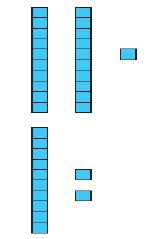
Chapter 6: Behaviorism and Social Cognitive Theory
Claribel Torres is working with her first graders on the concept of place value, such as the difference between
10’s and 1’s. She gives them interlocking cubes and has them form 21 and 12 with the
cubes, writes 21 and 12 on the board, and then directs, “Show me this two, pointing at the 2
in 21.” She watches to see that the students hold up two groups of 10 cubes, she displays
the two groups of 10 on her document camera, and she directs, “Show me this two,”
pointing to the 2 in 12. Again, she watches to see that the students hold up two separate
cubes.
“Now, tell me the difference between this two,” pointing to the 2 in 21, “and this two,”
pointing to the 2 in 12, . . . Ethan.”
“That two . . . is two groups of ten,” Ethan responds, point to the 2 in 21, “and that two is
just two cubes by themselves,” he continues, pointing to the 2 in 12.
Claribel gives the students some additional examples, in each case asking them to explain
the differences after the demonstration.
** 159. Of the following guidelines for applying information processing and the model of human memory with
students, which is Claribel best demonstrating by giving the students cubes and having them form numbers
such as 21 and 12?
a. Conduct reviews to activate schemas and check perceptions.
b. Model and encourage metacognition.
c. Develop learners’ background knowledge with high–quality representations of content.
d. Interact with students to promote cognitive activity and reduce cognitive load
** 160. Of the following guidelines for applying information processing and the model of human memory with her
students, which is Claribel best demonstrating with questions, such as asking her students to explain the
difference between the 2 in 21 and the 2 in 12?
a. Conduct reviews to activate schemas and check perceptions.
b. Begin learning activities with attention-getting experiences.
c. Develop learners’ background knowledge with high-quality representations of content.
d. Interact with students to promote cognitive activity and reduce cognitive load.
Use the following vignette for items 161-163.
Karen Haughy, an English teacher, is working with her students on verbals, verb forms that act as nouns
and adjectives. She has Jayden, one of her students get up and run back and forth across the classroom.
She then displays the following on her document camera.
Jayden was running across the classroom. Running is a very good form of exercise, and athletes, such
as running backs in football, have to be in very good physical shape.
Karen continues, “What do you notice about the two sentences we see displayed here?” She calls on several
students to make observations. She then guides them with her questions to notice differences in the way ‘running’ is
used in the sentences, eventually concluding that it is first used as a verb, then as a noun, and finally as an adjective.
** 161. Of the following guidelines for applying information processing and the model of human memory with her
students, which is Karen best demonstrating by having Jayden run back and forth across the classroom?
a. Conduct reviews to activate schemas and check perceptions.
b. Begin learning activities with attention-getting experiences.
c. Develop learners’ background knowledge with high-quality representations of content.
d. Interact with students to promote cognitive activity and reduce cognitive load.
** 162. Of the following guidelines for applying information processing and the model of human memory with her
students, which is Karen best demonstrating by displaying the two sentences showing ‘running’ being used
first as a verb, then as a noun, and finally as an adjective? (Jayden was running across the classroom.

Chapter 6: Behaviorism and Social Cognitive Theory
Running is a very good form of exercise, and athletes, such as running backs in football, have to
be in very good physical shape.)
a. Conduct reviews to activate schemas and check perceptions.
b. Begin learning activities with attention-getting experiences.
c. Develop learners’ background knowledge with high-quality representations of content.
d. Interact with students to promote cognitive activity and reduce cognitive load.
** 163. Of the following guidelines for applying information processing and the model of human memory with her
students, which is Karen best demonstrating by calling on several students to make observations and then
guiding them with her questions to identify the different ways that ‘running’ was used in the sentences?
a. Capitalize on meaningful encoding strategies.
b. Interact with students to promote cognitive activity and reduce cognitive load.
c. Develop learners’ background knowledge with high-quality representations of content.
d. Model and encourage metacognition.
** 164. Chloe Patel, a social studies teacher wants her students to understand factors leading to the American Civil
War. She prepares the following chart for her students, and then has them make observations and
comparisons of the information in the chart.
Of the following guidelines for applying information processing and the model of human memory with her
students, which is Chloe best demonstrating by preparing her chart for the students?
a. Capitalize on meaningful encoding strategies.
b. Interact with students to promote cognitive activity and reduce cognitive load.
c. Conduct reviews to activate schemas and check perceptions.
d. Model and encourage metacognition.
** 165. “The first thing I ask myself when I start a word problem,” Liam Johnson, a math teacher, comments to his
students as he displays a word problem on the board, “is ‘what is the problem asking for,’ and then, if
possible, I try to draw a diagram or picture of the problem to help me visualize the problem.”
Of the following, the guideline for applying information processing with students that Liam is best
demonstrating is:

Chapter 6: Behaviorism and Social Cognitive Theory
a. Conduct reviews to activate schemas and check perceptions.
b. Begin learning activities with attention-getting experience.
c. Interact with students to promote cognitive activity and reduce cognitive load.
d. Model and encourage metacognition.
Essay Items
** 166. Select one of the four following topics, and using information processing and the model of human memory
as a guide, describe specifically how you would teach your students this topic. (Hint: Remember the
guidelines for applying the human memory model in your teaching.)
1. Your students understand subtraction without regrouping, and now you want to teach them subtraction
with regrouping.
2. You have taught your students about force, and now you want to teach them about work.
3. You have taught your students about the skeletal system, and now you want to teach them about the
circulatory system.
4. You have taught your students about the Jamestown Colony, and now you want to teach them about the
Plymouth Colony.
** 167. Describe six guidelines that you can use as you apply the human memory model in your teaching. Provide
an example of each.
CHAPTER SEVEN ANSWERS
Cognitive Perspectives on Learning
Chapter 6: Behaviorism and Social Cognitive Theory
Memory Stores
Chapter 6: Behaviorism and Social Cognitive Theory
Chapter 6: Behaviorism and Social Cognitive Theory
Cognitive Processes
Chapter 6: Behaviorism and Social Cognitive Theory
Metacognition: Knowledge and Control of Cognitive Processes
Chapter 6: Behaviorism and Social Cognitive Theory
Educational Psychology and Teachng: Applying Information Processing and the Model of Human Memory with
Your Students