Chapter 07 – Activity-Based Costing: A Tool to Aid Decision Making
7-117
Chapter 07 – Activity-Based Costing: A Tool to Aid Decision Making
7-118
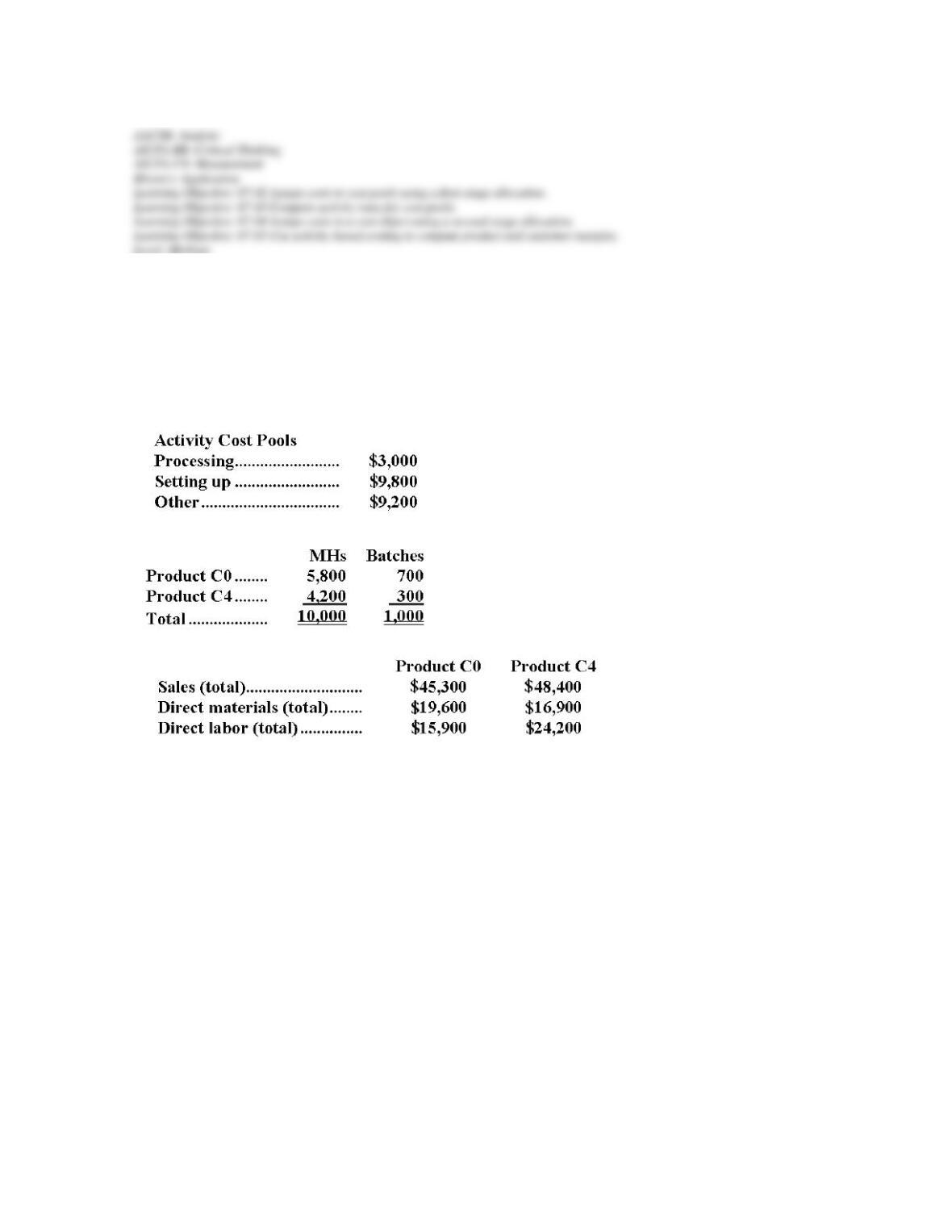
132. Spadaro Corporation has an activity-based costing system with three activity cost pools-
Processing, Setting Up, and Other. Costs in the Processing cost pool are assigned to products
based on machine-hours (MHs) and costs in the Setting Up cost pool are assigned to products
based on the number of batches. Costs in the Other cost pool are not assigned to products.
Data concerning the two products and the company’s costs and activity-based costing system
appear below:
Required:
a. Calculate activity rates for each activity cost pool using activity-based costing.
b. Determine the amount of overhead cost that would be assigned to each product using
activity-based costing.
c. Determine the product margins for each product using activity-based costing.
Chapter 07 – Activity-Based Costing: A Tool to Aid Decision Making
Chapter 07 – Activity-Based Costing: A Tool to Aid Decision Making
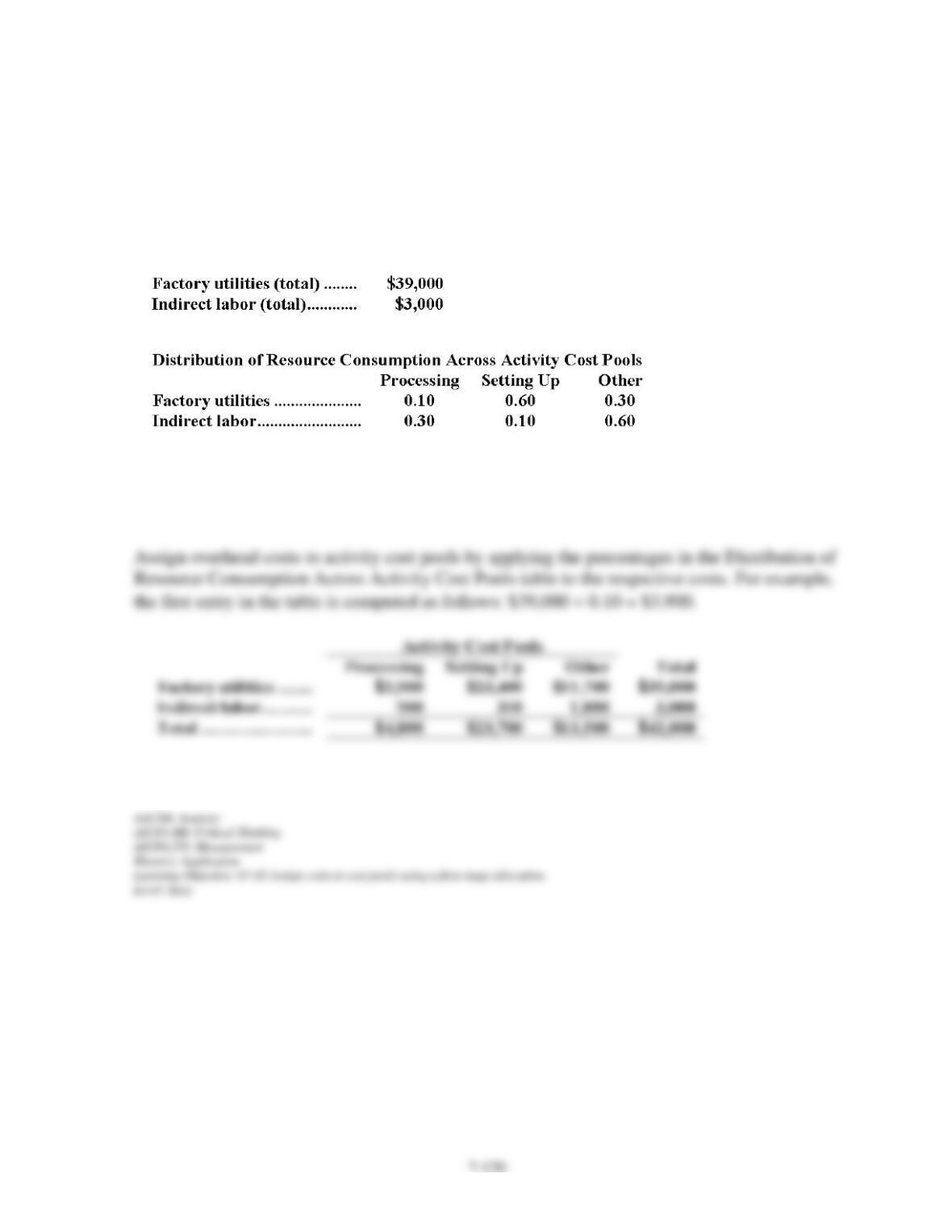
133. Day Corporation has an activity-based costing system with three activity cost pools-
Processing, Setting Up, and Other. The company’s overhead costs, which consist of factory
utilities and indirect labor, are allocated to the cost pools in proportion to the activity cost
pools’ consumption of resources. Data concerning the company’s costs and activity-based
costing system appear below:
Required:
Assign overhead costs to activity cost pools using activity-based costing.
Chapter 07 – Activity-Based Costing: A Tool to Aid Decision Making
134. Yentzer Corporation has an activity-based costing system with three activity cost pools-
Processing, Setting Up, and Other. The company’s overhead costs consist of equipment
depreciation and indirect labor and are allocated to the cost pools in proportion to the activity
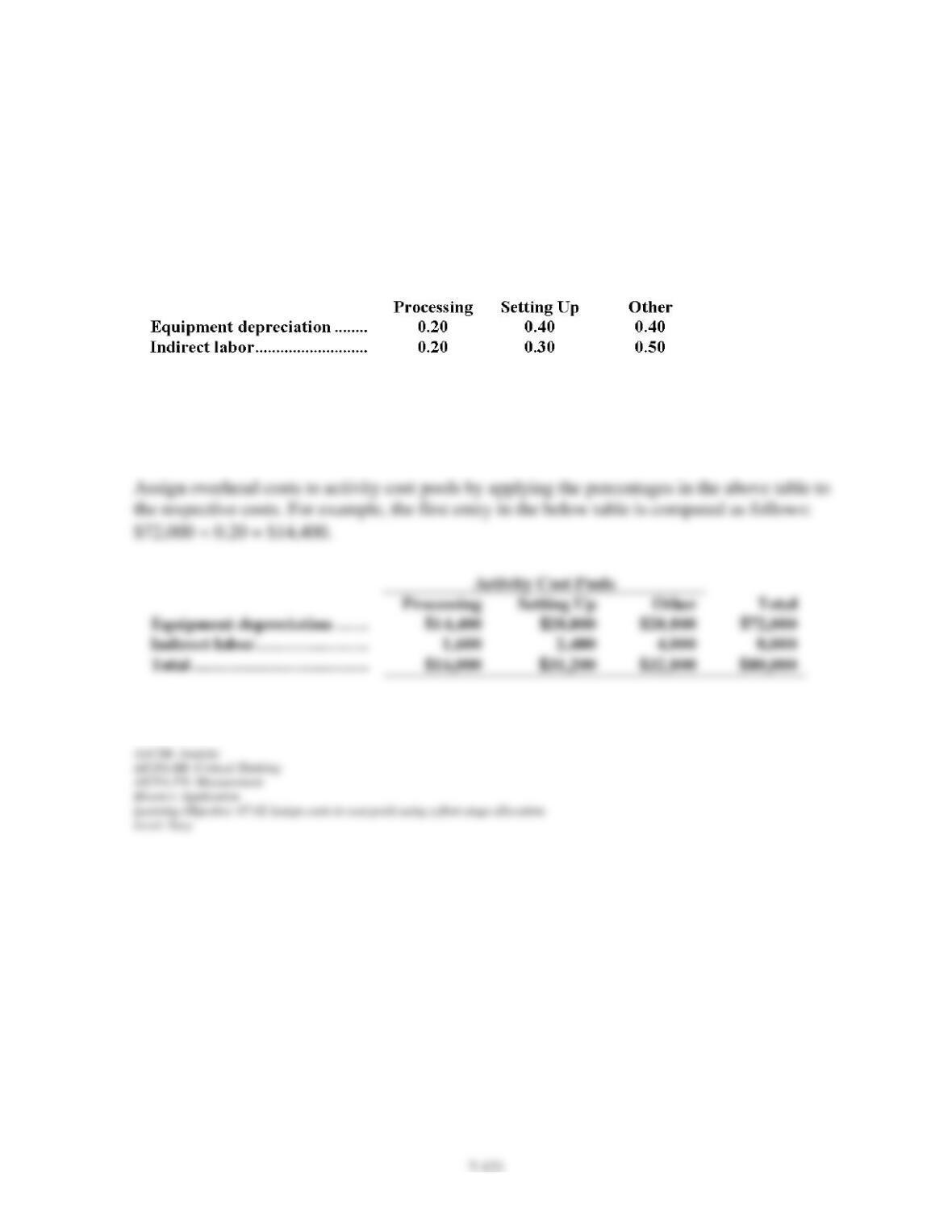
cost pools’ consumption of resources. Equipment depreciation totals $72,000 and indirect
labor totals $8,000. Data concerning the distribution of resource consumption across activity
cost pools appear below:
Required:
Assign overhead costs to activity cost pools using activity-based costing.
Chapter 07 – Activity-Based Costing: A Tool to Aid Decision Making
7-122
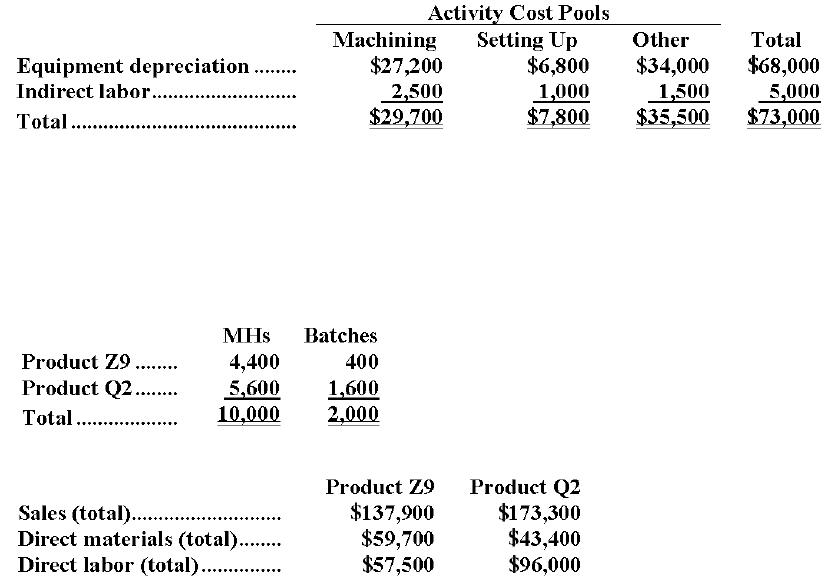
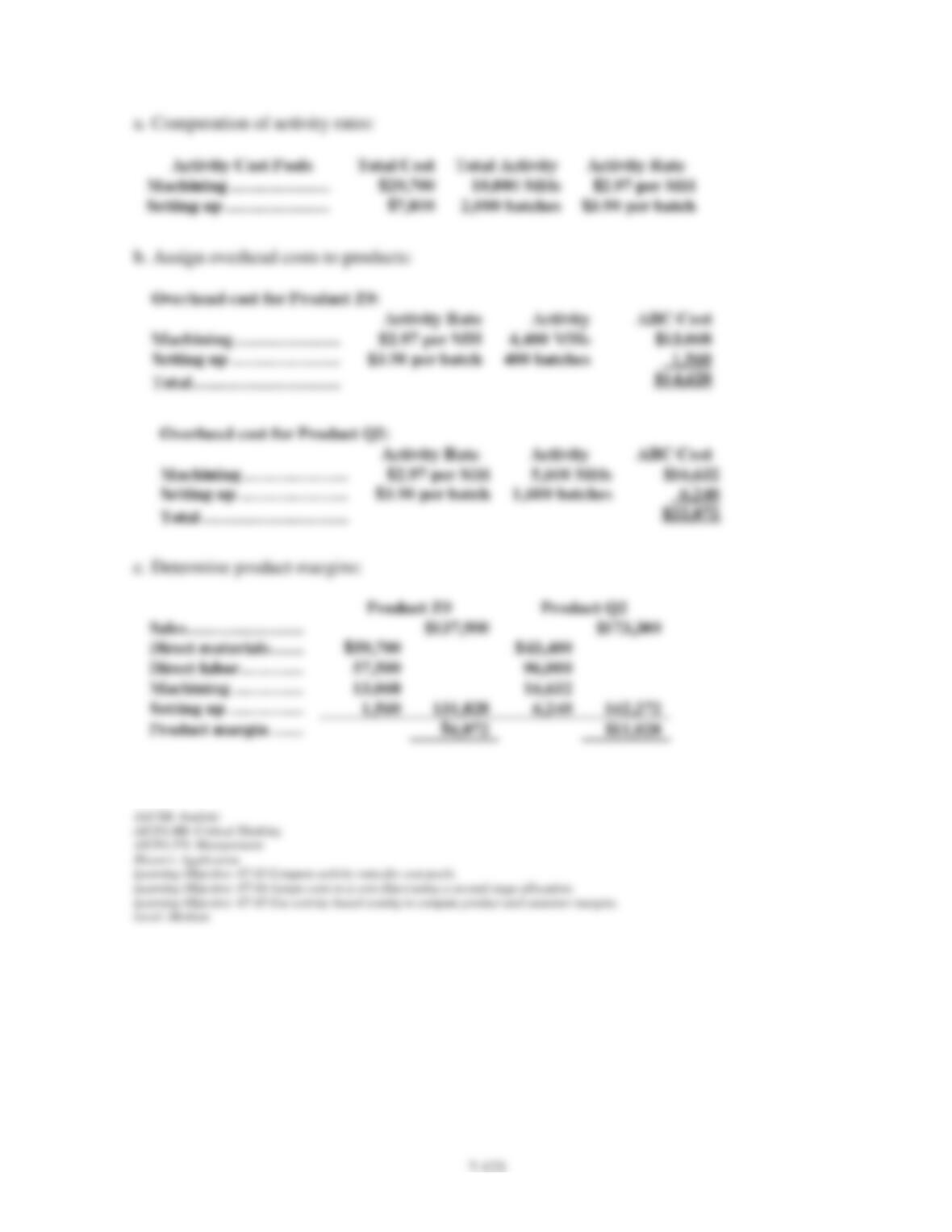
135. Narayan Corporation has an activity-based costing system with three activity cost pools-
Machining, Setting Up, and Other. The company’s overhead costs, which consist of
equipment depreciation and indirect labor, have been allocated to the cost pools already and
are provided in the table below.
Costs in the Machining cost pool are assigned to products based on machine-hours (MHs) and
costs in the Setting Up cost pool are assigned to products based on the number of batches.
Costs in the Other cost pool are not assigned to products. Data concerning the two products
and the company’s costs appear below:
Required:
a. Calculate activity rates for each activity cost pool using activity-based costing.
b. Determine the amount of overhead cost that would be assigned to each product using
activity-based costing.
c. Determine the product margins for each product using activity-based costing.
Chapter 07 – Activity-Based Costing: A Tool to Aid Decision Making
Chapter 07 – Activity-Based Costing: A Tool to Aid Decision Making
7-124
136. Mccance Corporation has an activity-based costing system with three activity cost pools-
Machining, Setting Up, and Other. The company’s overhead costs have already been allocated
to the cost pools and total $28,000 for the Machining cost pool, $13,800 for the Setting Up
cost pool, and $27,200 for the Other cost pool.
Costs in the Machining cost pool are assigned to products based on machine-hours (MHs) and
costs in the Setting Up cost pool are assigned to products based on the number of batches.
Costs in the Other cost pool are not assigned to products. Data concerning the two products
and the company’s costs appear below:
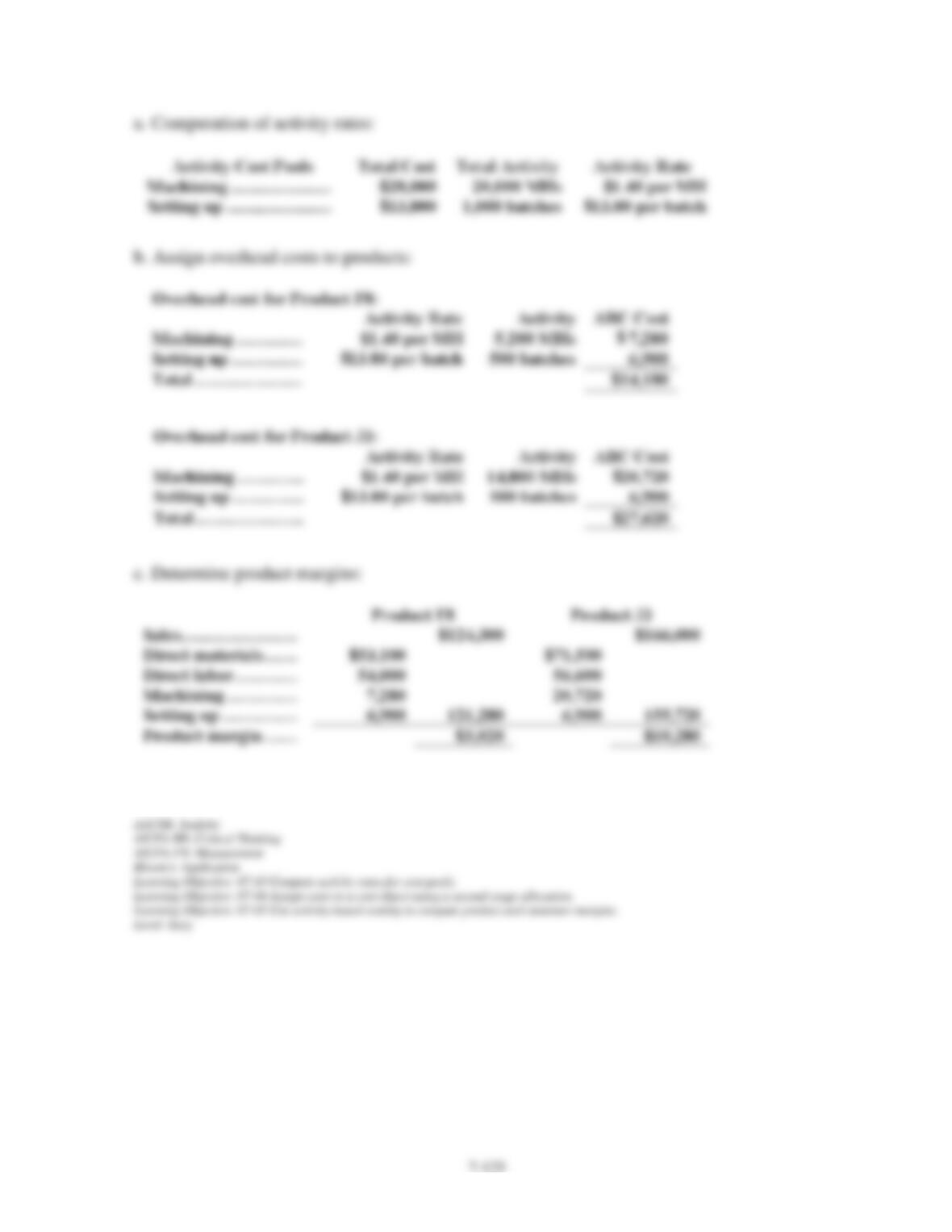
Required:
a. Calculate activity rates for each activity cost pool using activity-based costing.
b. Determine the amount of overhead cost that would be assigned to each product using
activity-based costing.
c. Determine the product margins for each product using activity-based costing.
Chapter 07 – Activity-Based Costing: A Tool to Aid Decision Making
Chapter 07 – Activity-Based Costing: A Tool to Aid Decision Making
7-126
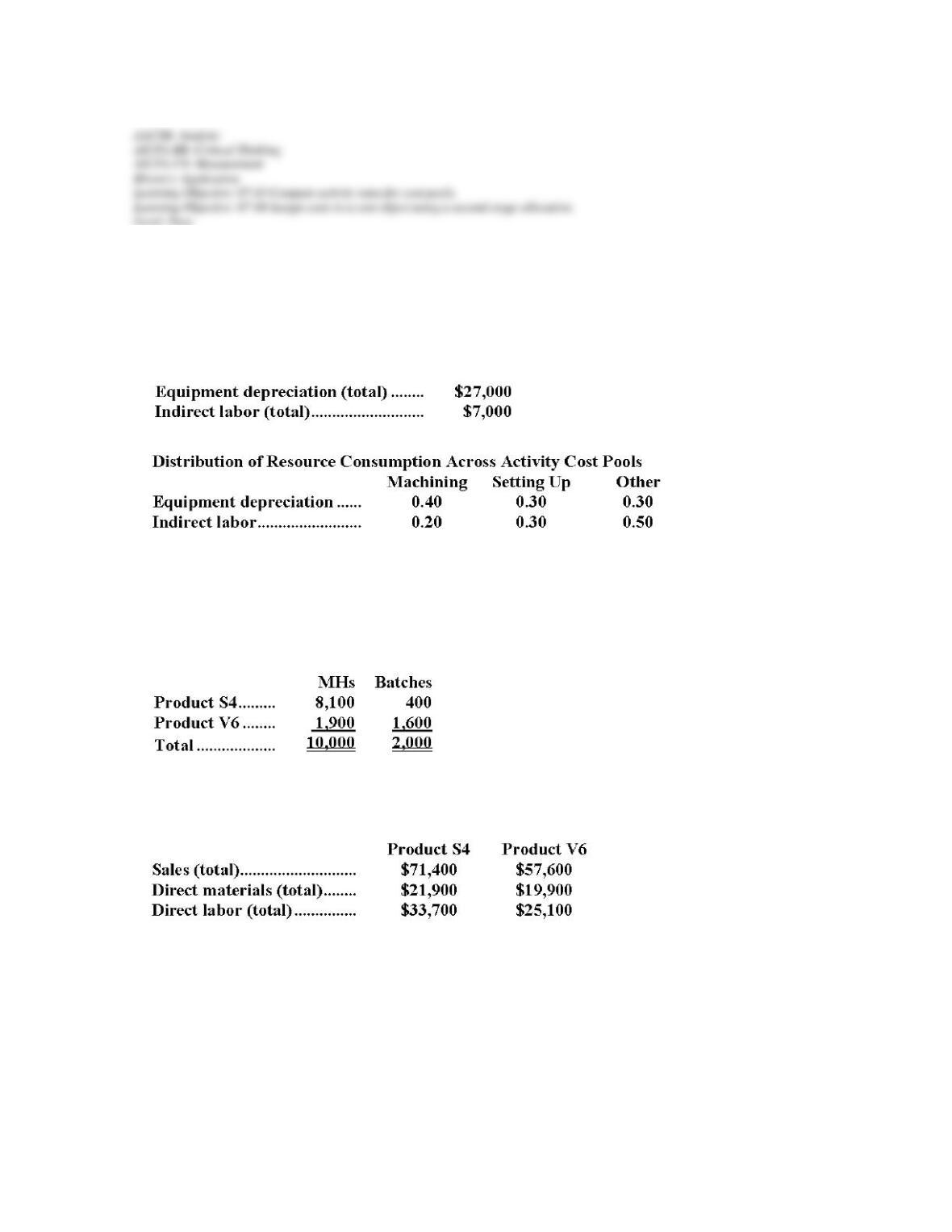
137. Irie Corporation has an activity-based costing system with three activity cost pools-
Machining, Setting Up, and Other. The company’s overhead costs have already been allocated
to the cost pools and total $18,900 for the Machining cost pool, $20,500 for the Setting Up
cost pool, and $23,600 for the Other cost pool. Costs in the Machining cost pool are assigned
to products based on machine-hours (MHs) and costs in the Setting Up cost pool are assigned
to products based on the number of batches. Costs in the Other cost pool are not assigned to
products. Data concerning the two products appear below:
Required:
a. Calculate activity rates for each activity cost pool using activity-based costing.
b. Determine the amount of overhead cost that would be assigned to each product using
activity-based costing.
Chapter 07 – Activity-Based Costing: A Tool to Aid Decision Making
7-127
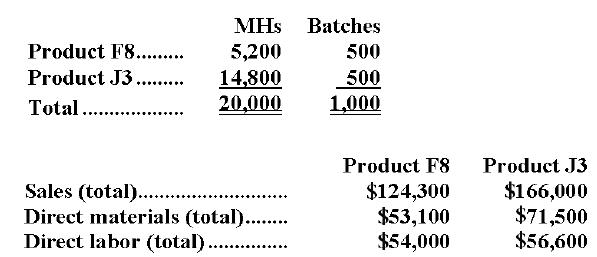
138. Pressler Corporation’s activity-based costing system has three activity cost pools-
Machining, Setting Up, and Other. The company’s overhead costs, which consist of
equipment depreciation and indirect labor, are allocated to the cost pools in proportion to the
activity cost pools’ consumption of resources.
Costs in the Machining cost pool are assigned to products based on machine-hours (MHs) and
costs in the Setting Up cost pool are assigned to products based on the number of batches.
Costs in the Other cost pool are not assigned to products.
Additional data concerning the company’s products appears below:
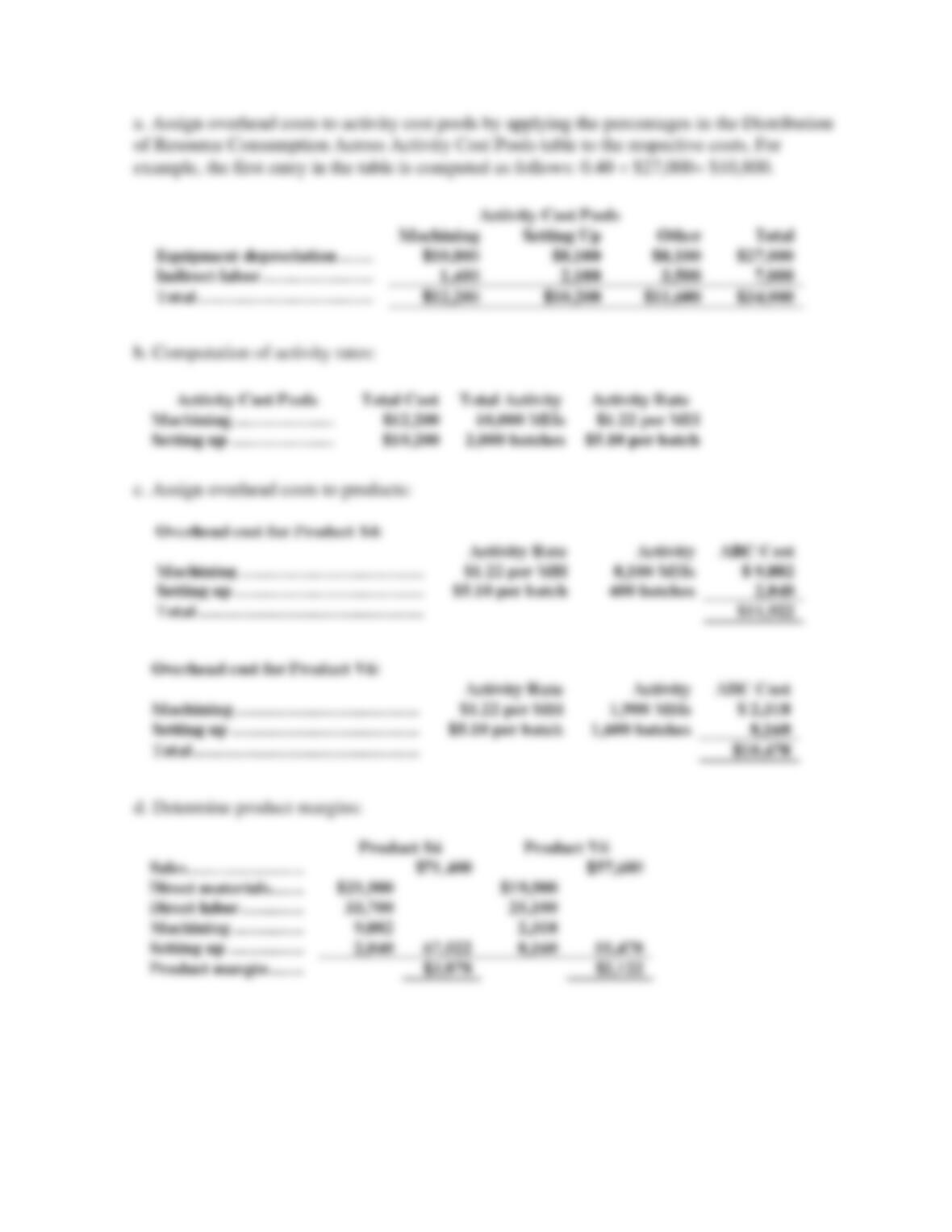
Required:
a. Assign overhead costs to activity cost pools using activity-based costing.
b. Calculate activity rates for each activity cost pool using activity-based costing.
c. Determine the amount of overhead cost that would be assigned to each product using
activity-based costing.
d. Determine the product margins for each product using activity-based costing.
Chapter 07 – Activity-Based Costing: A Tool to Aid Decision Making
7-128
Chapter 07 – Activity-Based Costing: A Tool to Aid Decision Making
7-129
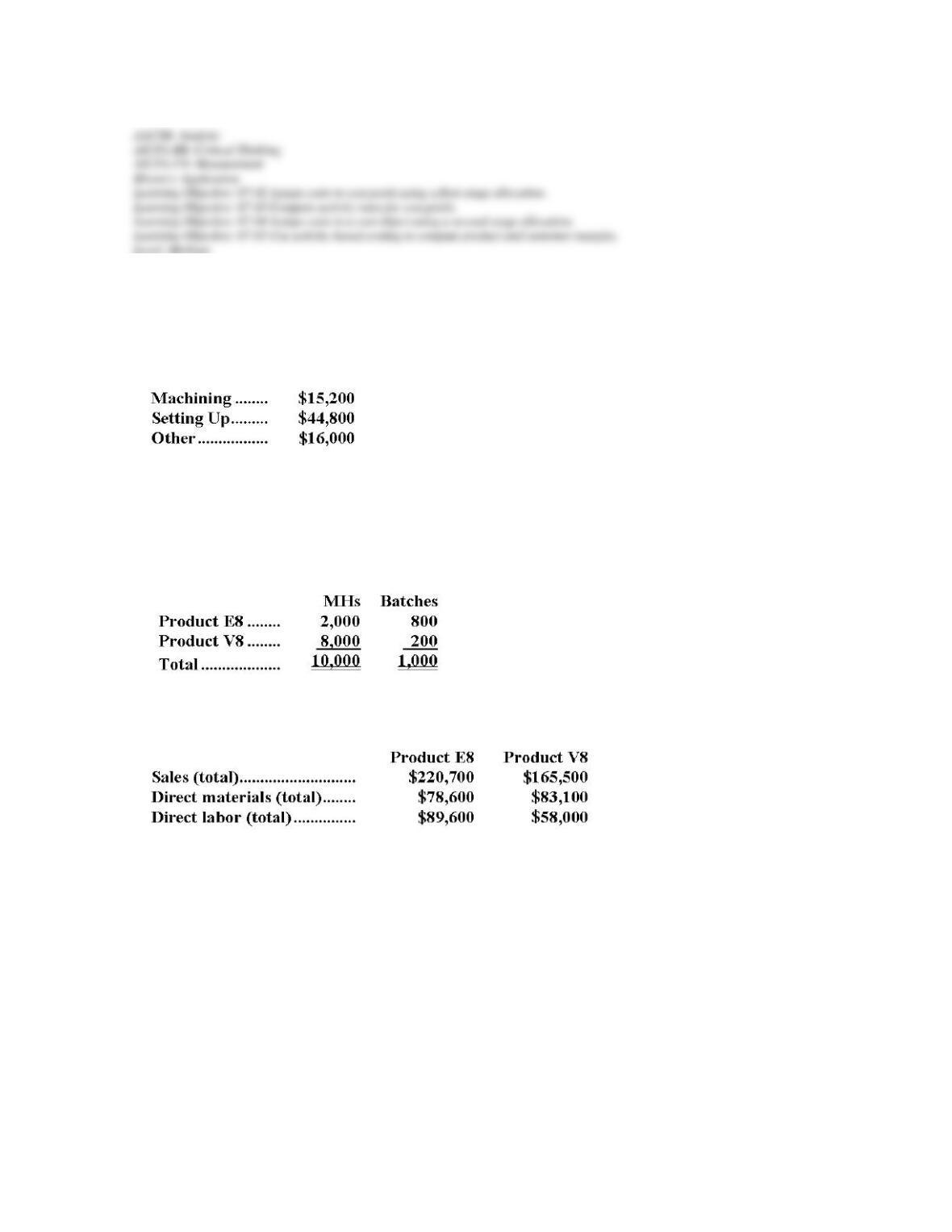
139. Hugle Corporation’s activity-based costing system has three activity cost pools-
Machining, Setting Up, and Other. The company’s overhead costs have already been allocated
to these cost pools as follows:
Costs in the Machining cost pool are assigned to products based on machine-hours (MHs) and
costs in the Setting Up cost pool are assigned to products based on the number of batches.
Costs in the Other cost pool are not assigned to products. The following table shows the
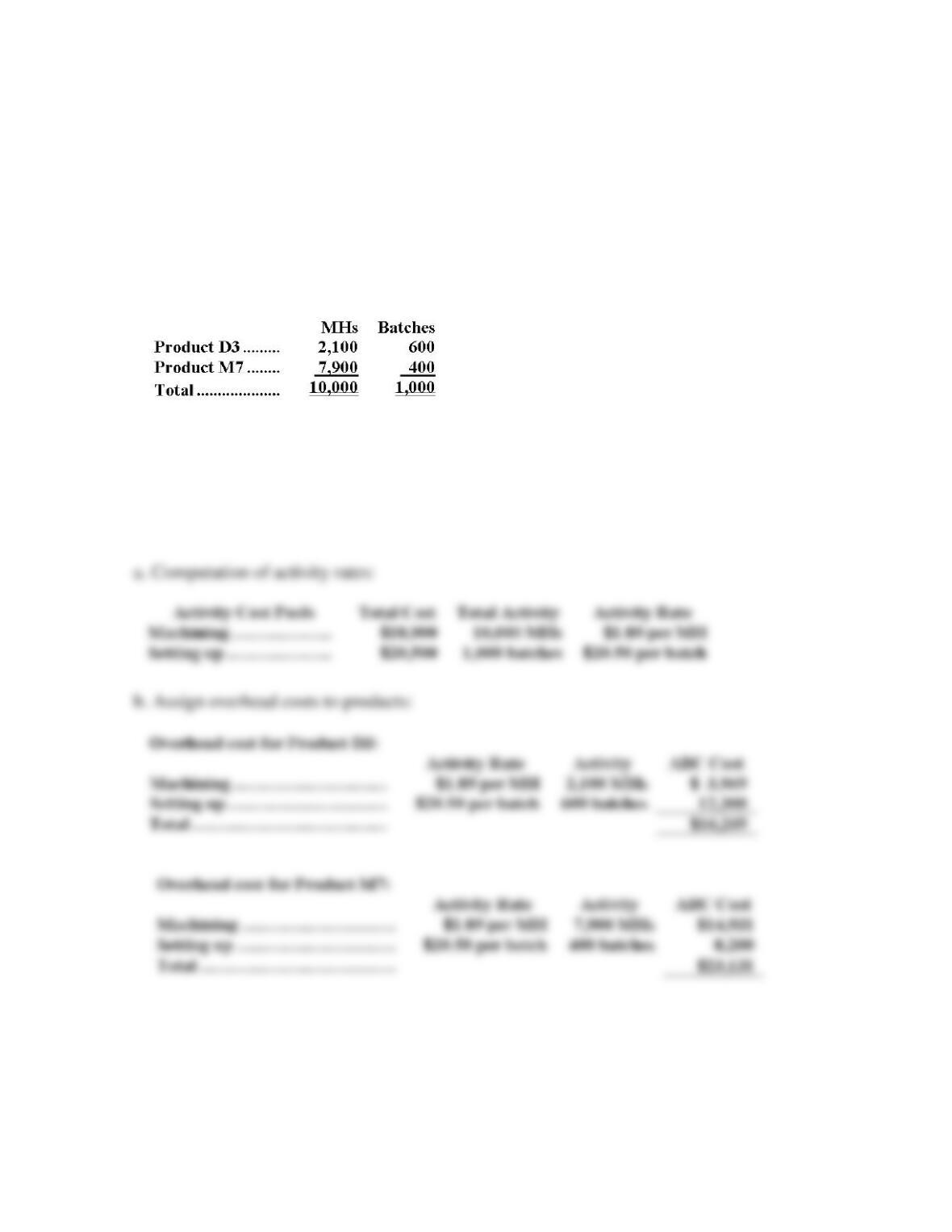
machine-hours and number of batches associated with each of the company’s two products:
Additional data concerning the company’s products appears below:
Required:
a. Calculate activity rates for each activity cost pool using activity-based costing.
b. Determine the amount of overhead cost that would be assigned to each product using
activity-based costing.
c. Determine the product margins for each product using activity-based costing.
Chapter 07 – Activity-Based Costing: A Tool to Aid Decision Making
Chapter 07 – Activity-Based Costing: A Tool to Aid Decision Making
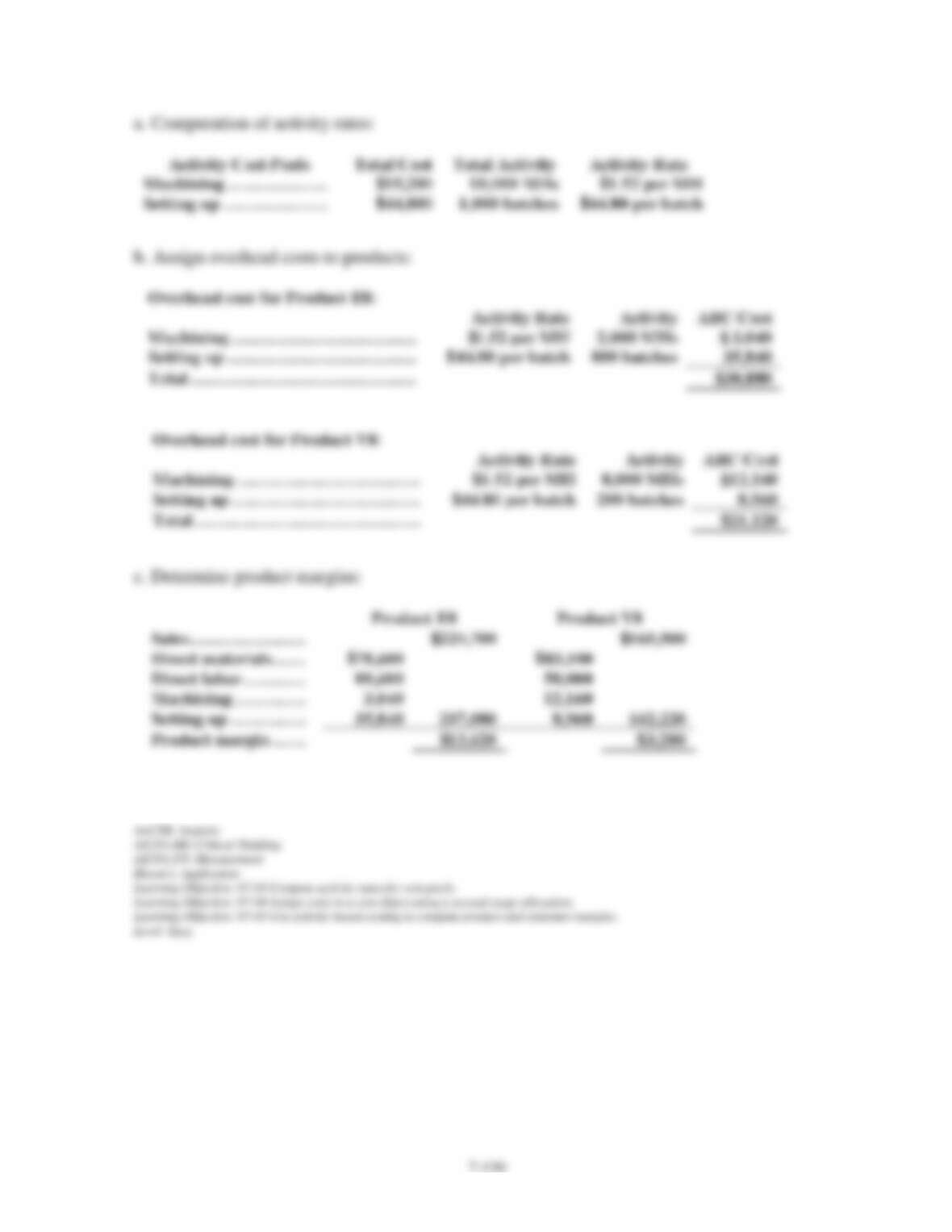
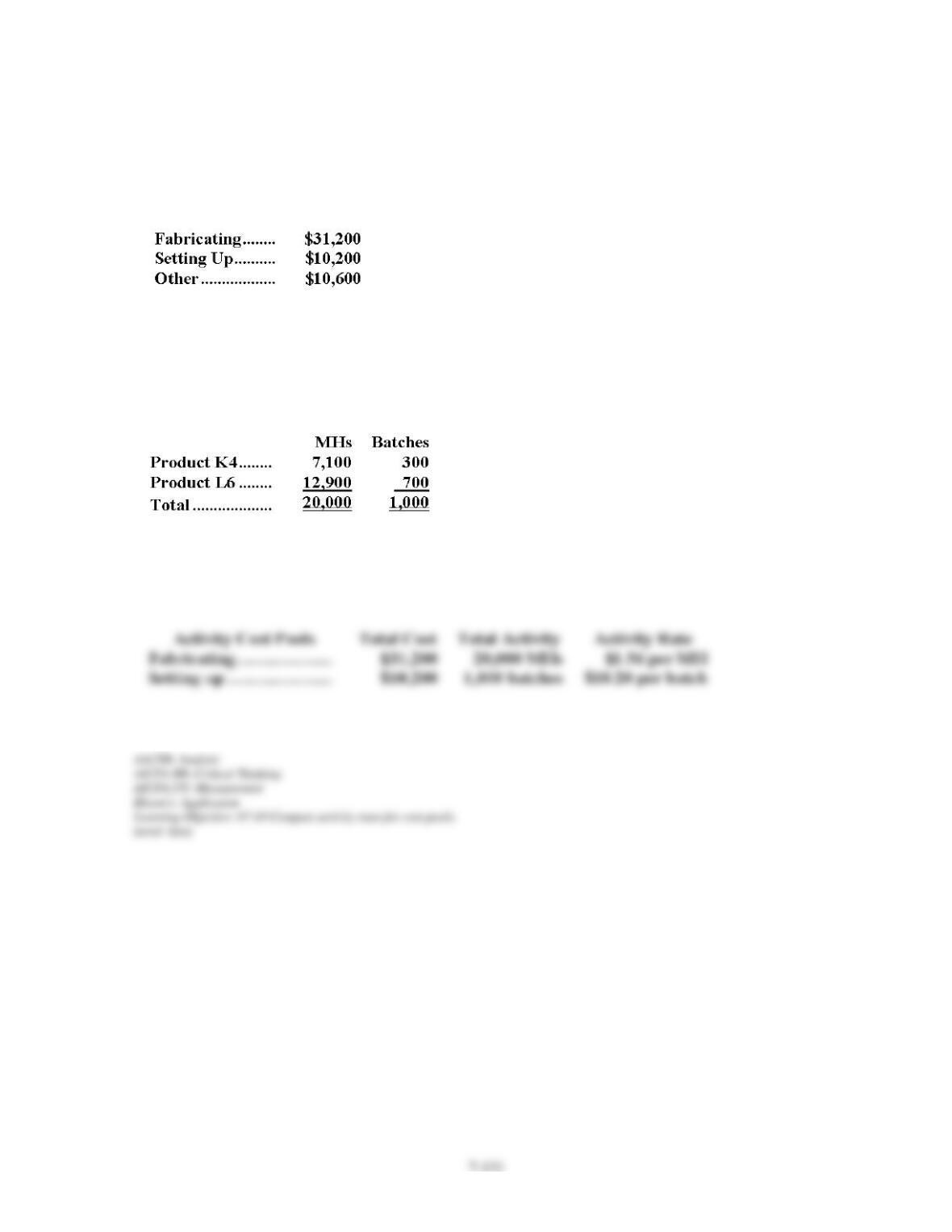
140. Demora Corporation’s activity-based costing system has three activity cost pools-
Fabricating, Setting Up, and Other. The company’s overhead costs have already been
allocated to these cost pools as follows:
Costs in the Fabricating cost pool are assigned to products based on machine-hours (MHs)
and costs in the Setting Up cost pool are assigned to products based on the number of batches.
Costs in the Other cost pool are not assigned to products. The following table shows the
machine-hours and number of batches associated with each of the company’s two products:
Required:
Calculate activity rates for each activity cost pool using activity-based costing.
Chapter 07 – Activity-Based Costing: A Tool to Aid Decision Making
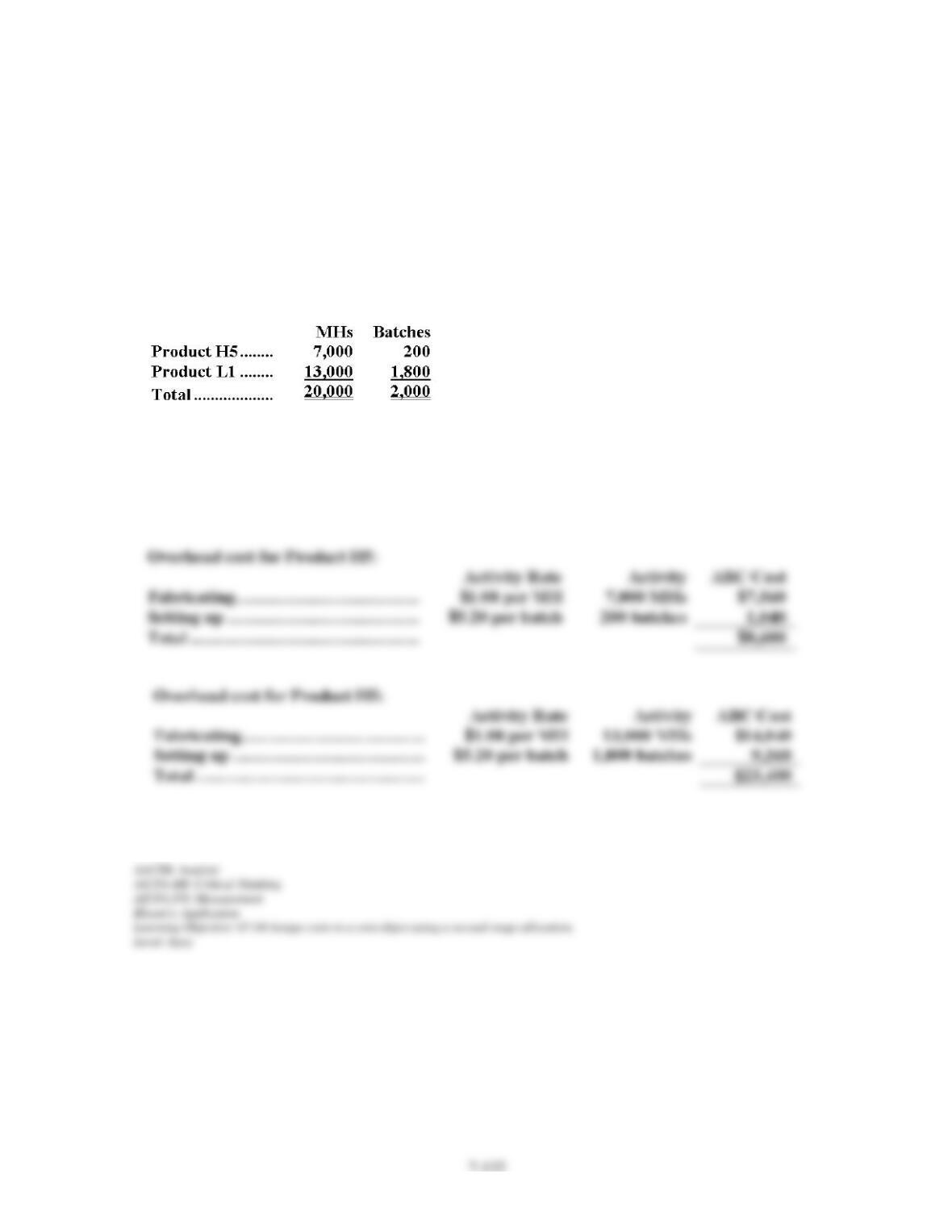
141. Matis Corporation’s activity-based costing system has three activity cost pools-
Fabricating, Setting Up, and Other. Costs in the Fabricating cost pool are assigned to products
based on machine-hours (MHs) and costs in the Setting Up cost pool are assigned to products
based on the number of batches. Costs in the Other cost pool are not assigned to products. The
activity rate for Fabricating is $1.08 per MH; the activity rate for Setting Up is $5.20 per
batch. The following table shows the machine-hours and number of batches associated with
each of the company’s two products:
Required:
Determine the amount of overhead cost that would be assigned to each product using activity-
based costing.