115.
How much were inventory purchases when cost of goods sold was $250,000, beginning
inventory was $20,000, and ending inventory was $25,000?
116.
How much was ending inventory when sales revenue was $500,000, purchases were $310,000,
beginning inventory was $22,000, and gross profit was $200,000.
117.
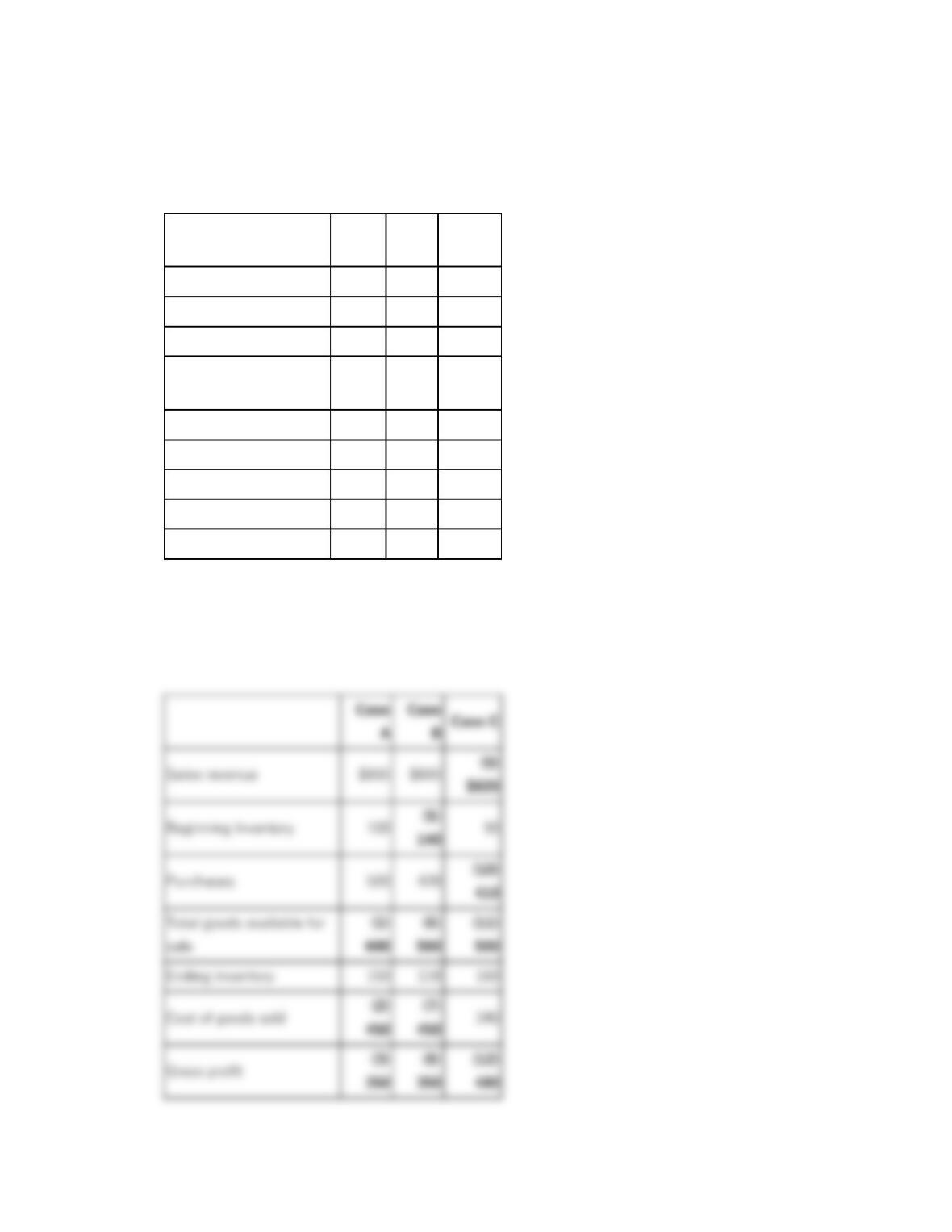
Compute the missing amounts that are numbered in parentheses for the income statement of
each independent case. (Hint: Each case need not be calculated in the numerical order of the
missing numbers.)
Case A
Case
B
Case C
Sales revenue
$800
$800
($9)
Beginning inventory
100
(5)
90
Purchases
500
420
(10)
Total goods available for
sale
(1)
(6)
(11)
Ending inventory
150
110
160
Cost of goods sold
(2)
(7)
340
Gross profit
(3)
(8)
(12)
Expenses
300
400
420
Net Income
(4)
(50)
60
A
Case
Sales revenue
Beginning inventory
sale
Ending inventory
150
Cost of goods sold
Gross profit
118.
Coulter Company uses the LIFO inventory method under the periodic inventory system. The
following data were available for the month of January, 2016:
Units
Cost per
Unit
Inventory, January 1
200
$5.00
Purchase No. 1
400
5.50
Purchase No. 2
700
6.00
Sale No. 1 (sold at $12.00 per
unit)
500
Sale No. 2 (sold at $13.00 per
unit)
500
Required:
Compute the following:
1. Beginning inventory
2. Ending inventory
3. Cost of goods available for sale
4. Cost of goods sold
5. Gross profit
119.
William Company uses the periodic inventory system and has provided the following data:
Units
Amount
Beginning inventory
6,000
$30,000
Purchases
32,000
192,000
Sales
28,000
280,000
Required:
A. Calculate the following using both: FIFO and LIFO inventory methods.
FIFO
LIFO
1. Ending inventory
$_______
$_______
2. Cost of Goods Sold
$_______
$_______
3. Gross profit
$_______
$_______
B. In times of rising unit costs, how does pretax income using FIFO compare to pretax income
using LIFO? Explain your answer.
A.
120.
Jennings Company uses the periodic inventory system and applies FIFO inventory costing. At
the end of the annual accounting period, December 31, 2016, the accounting records for the
best selling item in inventory showed the following:
Transactions
Units
Unit
Cost
Beginning inventory, Jan. 1, 2016
500
$100
1. Purchase, Feb. 1
600
105
2. Sale, March 15 (sold at $20
each)
(700)
3. Purchase, May 15
400
110
4. Sale, July 31 (sold at $25 each)
(500)
Required:
Calculate the following:
1. Goods available for sale
2. Ending inventory
3. Cost of goods sold
121.
Freeman Company uses the periodic inventory system and applied LIFO inventory costing. At
the end of the annual accounting period, December 31, 2016, the accounting records in
inventory showed:
Transactions
Units
Unit Cost
Beginning inventory, Jan. 1, 2016
300
$20
Purchase, Feb. 1
500
21
Purchase, May 15
400
22
Sale, March 15 (sold at $20 each)
(400)
Sale, July 31 (sold at $25 each)
(500)
Required:
Calculate the following:
1. Cost of goods available for sale
2. Ending inventory
3. Cost of goods sold
122.
Required:
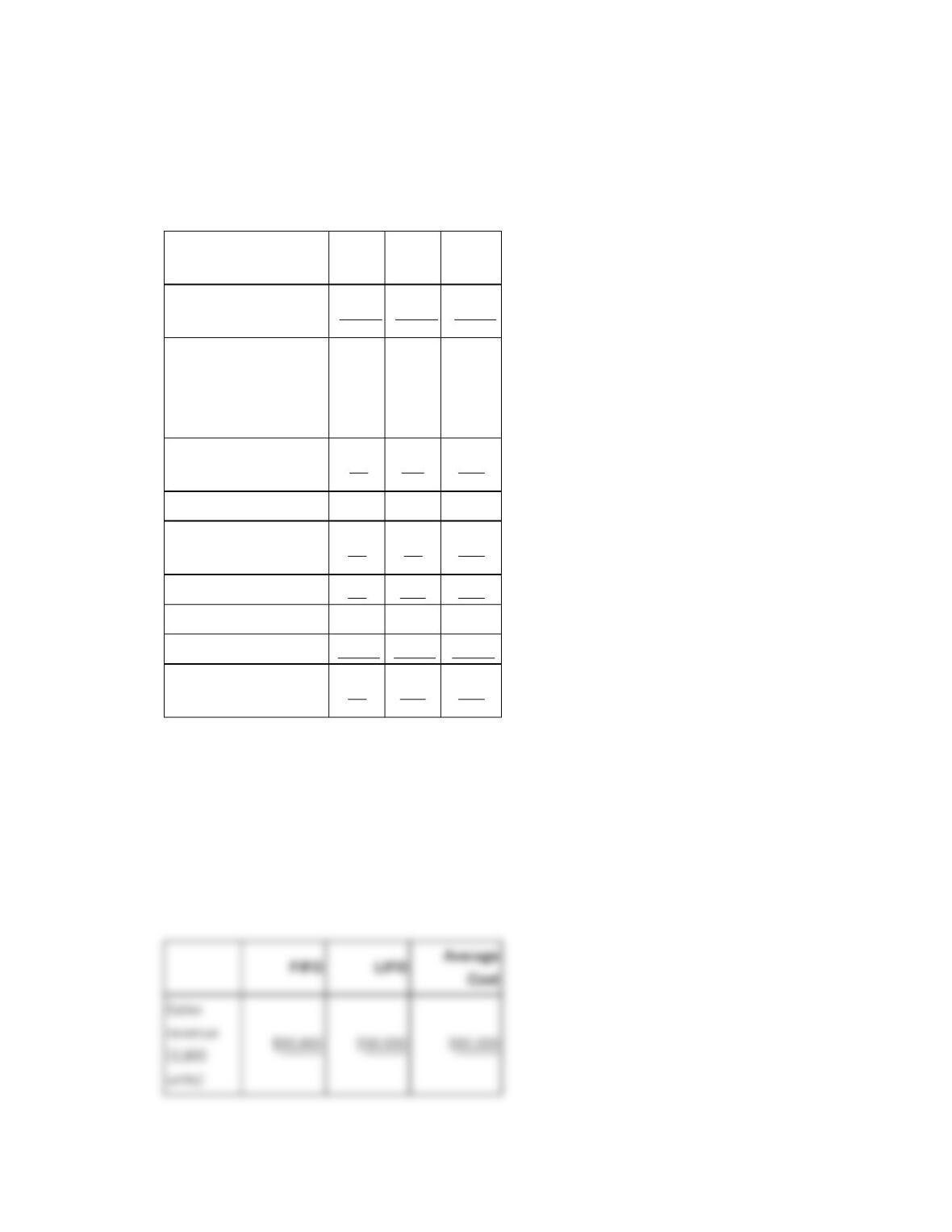
A. Compute the missing amounts in the income statement under three different inventory
costing methods: (Ignore income taxes.)
FIFO
LIFO
Average
Cost
Sales revenue (3,000
units)
$90,000
$90,000
$90,000
Cost of goods sold:
Beginning inventory
(1,000 units @ $10 per
unit)
10,000
10,000
10,000
Purchases (4,000 units
@ $12 per unit)
(1)
(7)
(13)
Goods available for sale
(2)
(8)
(14)
Ending inventory (2,000
units)
(3)
(9)
(15)
Cost of goods sold
(4)
(10)
(16)
Gross profit
(5)
(11)
(17)
Operating expenses
20,000
20,000
20,000
Net operating income
(pretax)
(6)
(12)
(18)
B. Explain the results of the weighted-average inventory costing method compared to the
FIFO and LIFO costing methods during a period of increasing unit costs.
A.

123.
Hopkins Company reported the following information related to inventory and sales:
Units
Unit Cost
Beginning inventory
1,000
$20
Purchase No. 1
7,000
22
Purchase No. 2
2,000
23
Sales—8,000 units at $35 per unit.
Required:
Compute the following amounts assuming a periodic inventory system:
Inventory
Costing
Method
Sales
Revenue
Cost of
Goods
Sold
Gross
Profit
Balance
Sheet
Inventory
Average
cost
________
________
________
________
FIFO
________
________
________
________
LIFO
________
________
________
________
Inventory
Costing
Sales
Revenue
Cost of
Profit
Ending
Inventory
Average
cost

124.
The inventory records of Martin Corporation reflected the following information for the month
of August:
Date
Transaction
Number of
Units
Unit
Cost
8/1
Beginning
inventory
400
$5
8/3
Purchase No. 1
400
$5
8/5
Sale No. 1
600
8/7
Sale No. 2
100
8/11
Purchase No. 2
1,000
$7
8/17
Sale No. 3
700
8/19
Purchase No. 3
1,000
$7
8/21
Sale No. 4
600
8/28
Sale No. 5
600
8/29
Purchase No. 4
1,200
$9
8/30
Ending inventory
Required:
A. Determine the amount of the ending inventory and cost of goods sold under each of the
following methods assuming the periodic inventory system.
Method
Ending
Inventory
Cost of Goods Sold
a.
Average cost
$
$
b.
FIFO
$
$
c.
LIFO
$
$
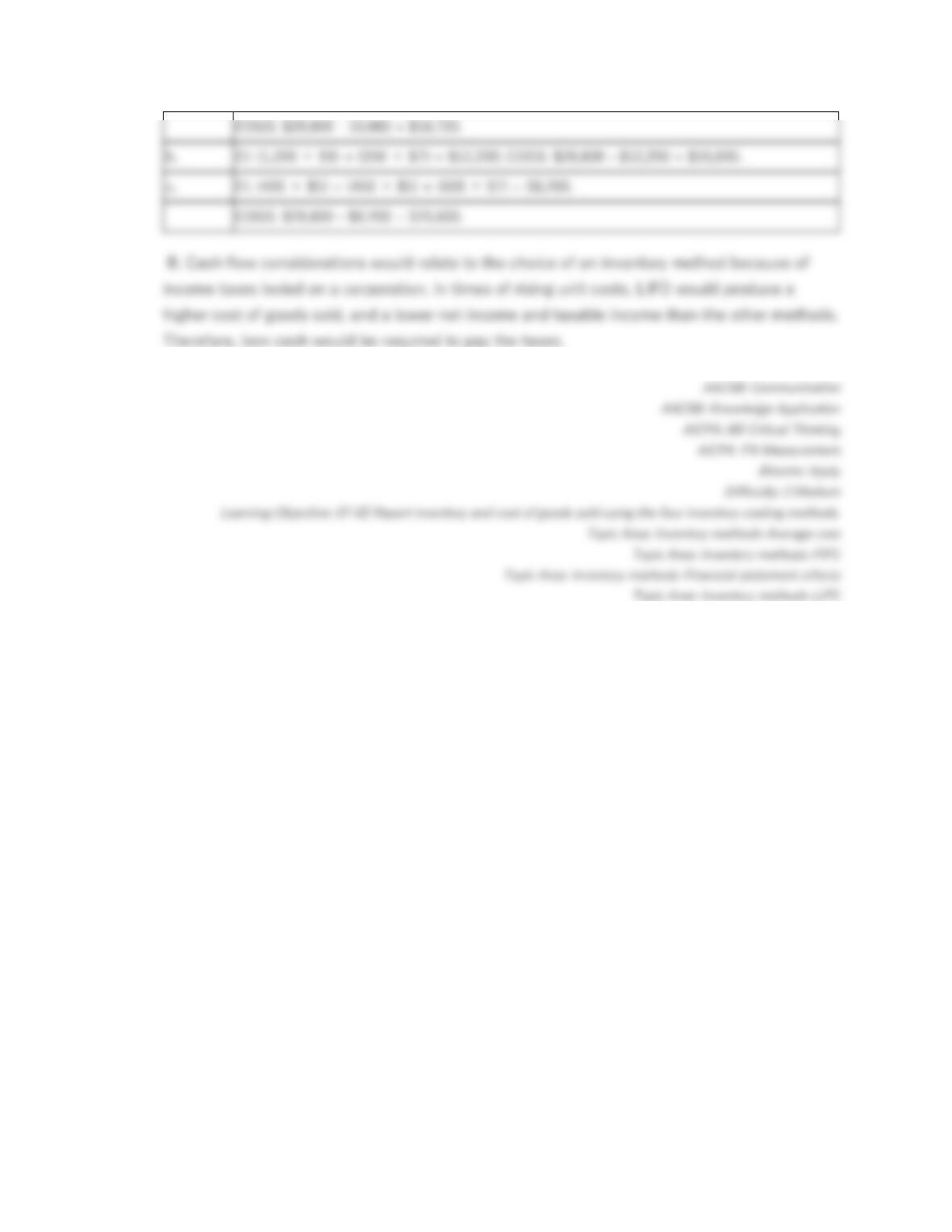
B. Why would cash flow considerations relate to the choice of an inventory method?
A.
125.
The records of Atlantis Company reflected the following for the month of February:
Date
Transaction
Number of
Units
Unit
Cost
2/1
Beginning
inventory
600
$3
2/2
Purchase No.1
500
$4
2/5
Sale No. 1
700
2/12
Purchase No. 2
600
$5
2/15
Sale No. 2
700
2/23
Purchase No. 3
900
$6
2/28
Ending inventory
?
Required:
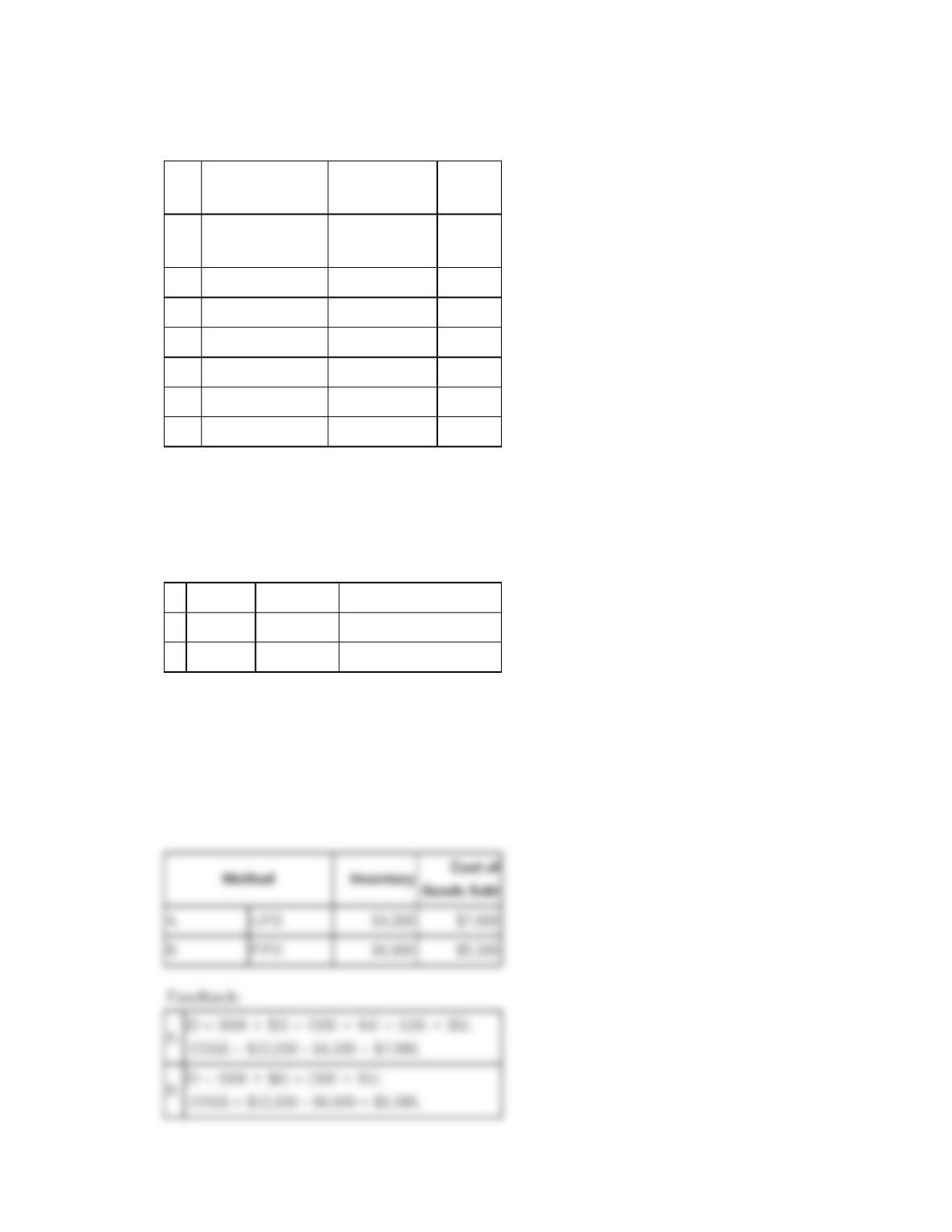
Determine the amount of ending inventory and cost of goods sold using the following periodic
system inventory costing methods:
Method
Inventory
Cost of Goods Sold
A.
LIFO
$
$
B.
FIFO
$
$
Goods available for sale: (600 × $3) + (500 × $4) + (600 × $5) + (900 × $6) = $12,200.
LIFO
FIFO