Chapter 07 – Activity-Based Costing: A Tool to Aid Decision Making
7-61
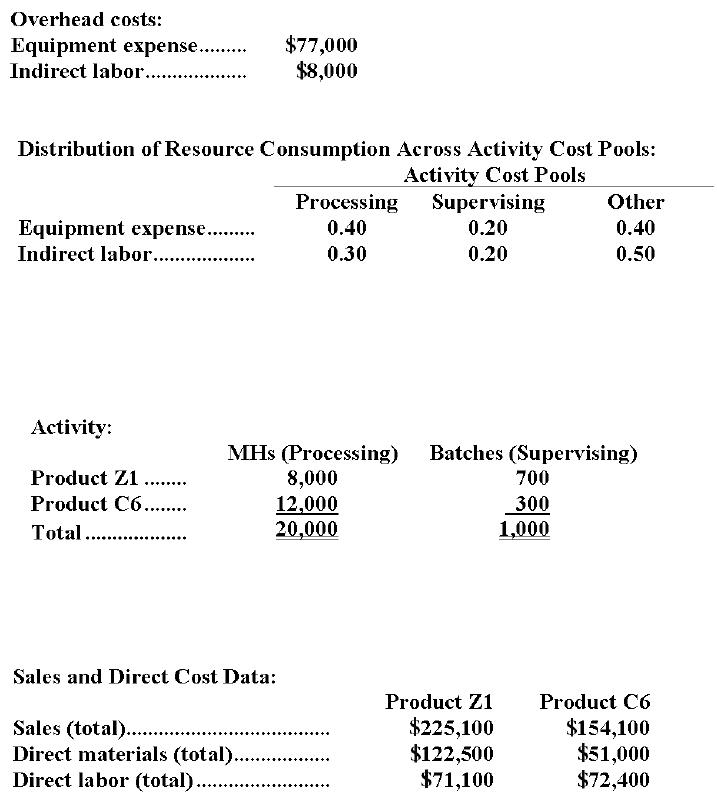
Encarnacion Corporation has an activity-based costing system with three activity cost pools-
Processing, Supervising, and Other. In the first stage allocations, costs in the two overhead
accounts, equipment expense and indirect labor, are allocated to the three activity cost pools
based on resource consumption. Data used in the first stage allocations follow:
Processing costs are assigned to products using machine-hours (MHs) and Supervising costs
are assigned to products using the number of batches. The costs in the Other activity cost pool
are not assigned to products. Activity data for the company’s two products follow:
Finally, the costs of Processing and Supervising are combined with the following sales and
direct cost data to determine product margins.
Chapter 07 – Activity-Based Costing: A Tool to Aid Decision Making
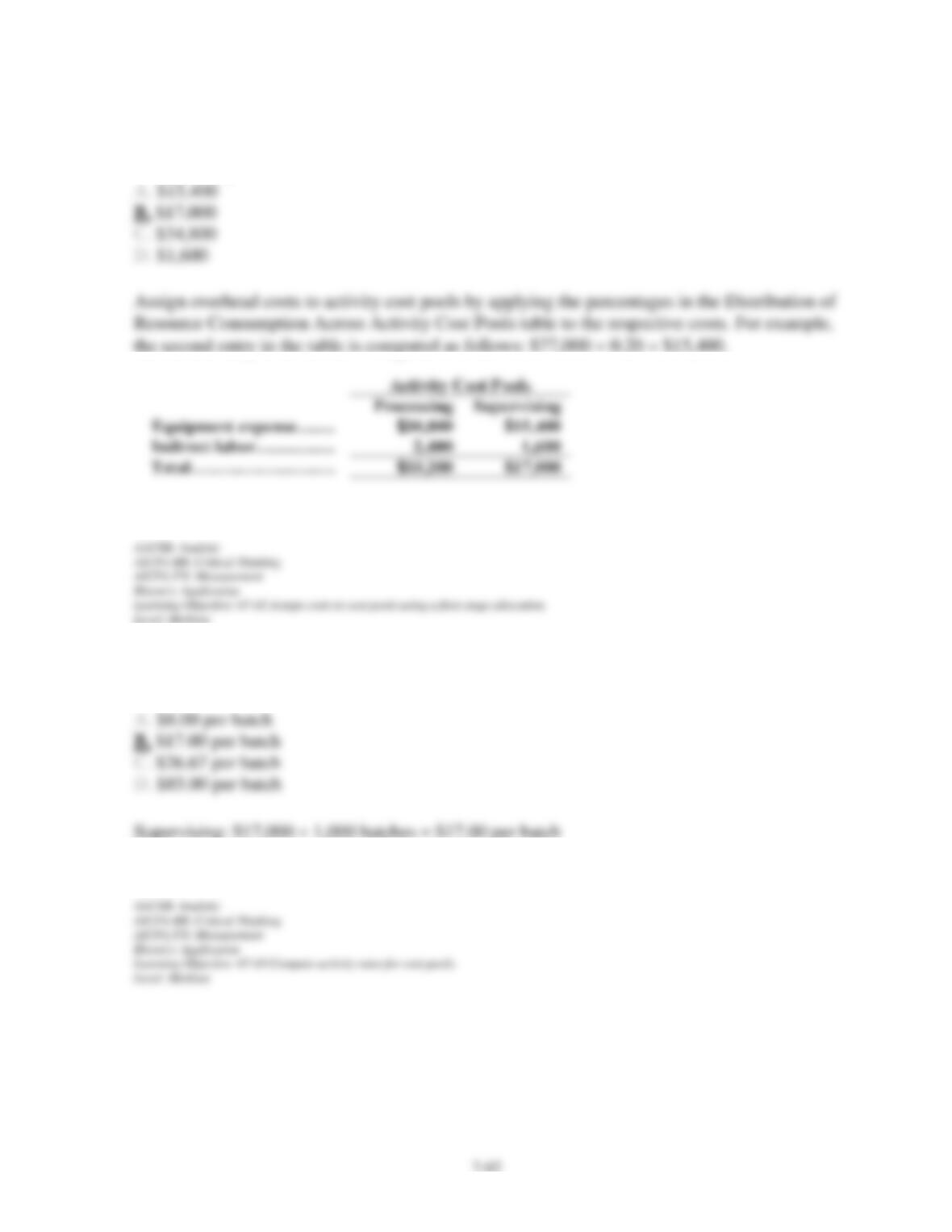
74. How much overhead cost is allocated to the Supervising activity cost pool under activity-
based costing?
75. The activity rate for the Supervising activity cost pool under activity-based costing is
closest to:
Chapter 07 – Activity-Based Costing: A Tool to Aid Decision Making
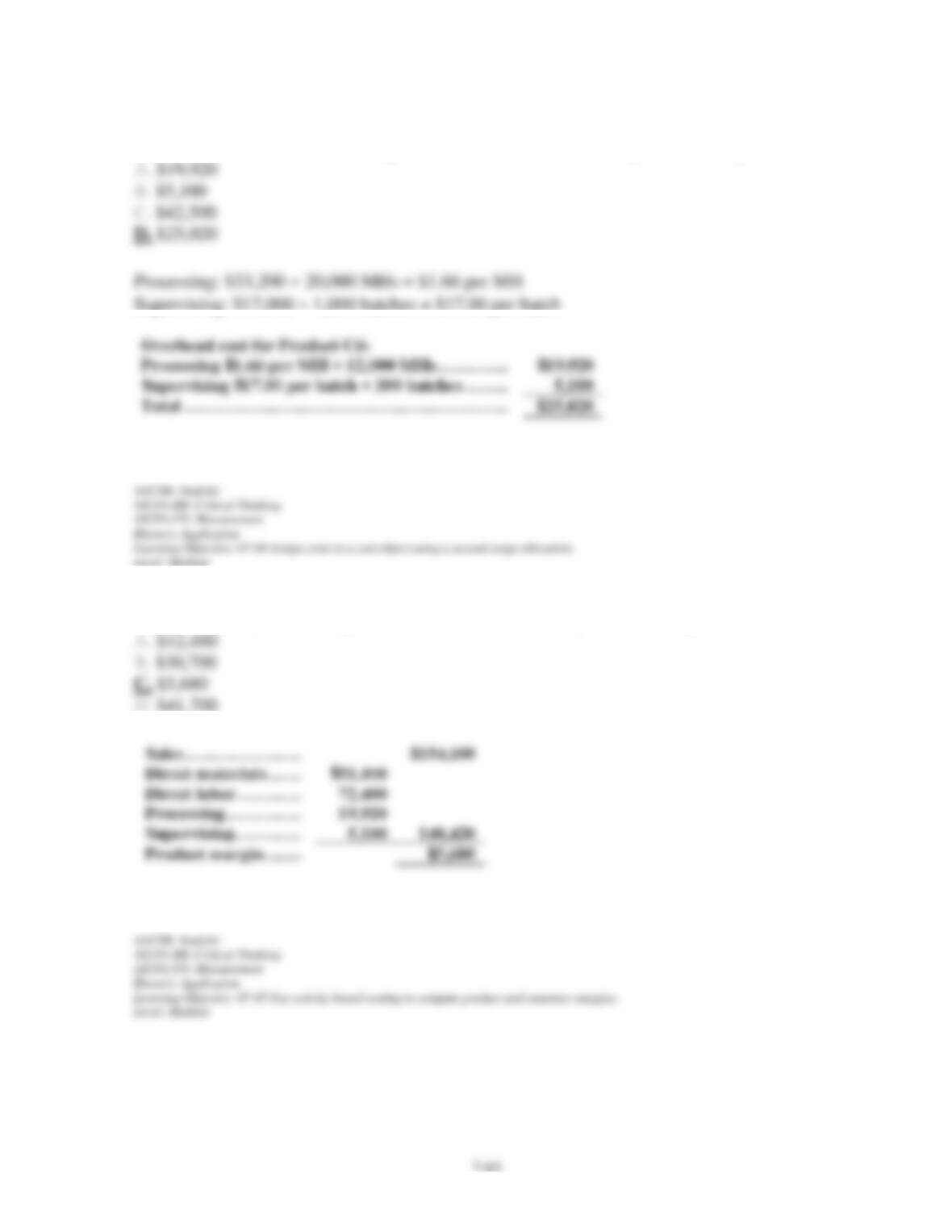
76. What is the overhead cost assigned to Product C6 under activity-based costing?
77. What is the product margin for Product C6 under activity-based costing?
Chapter 07 – Activity-Based Costing: A Tool to Aid Decision Making
7-64
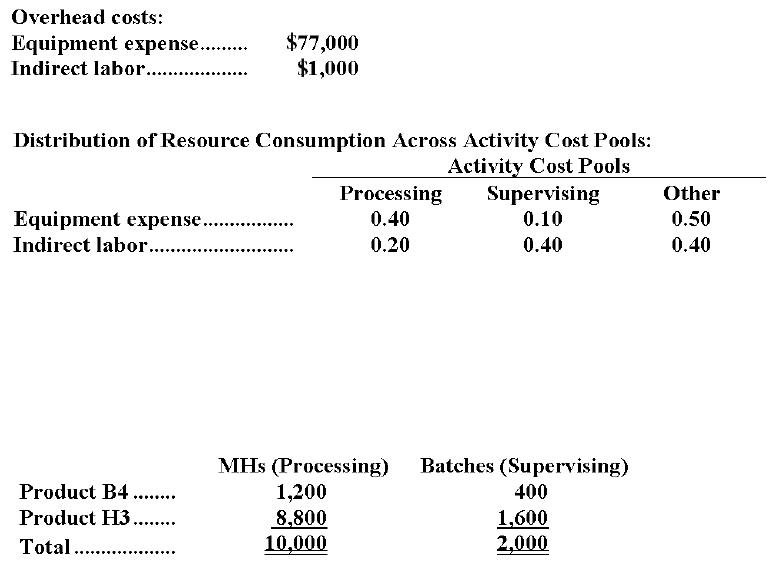
Traughber Corporation uses an activity based costing system to assign overhead costs to
products. In the first stage, two overhead costs-equipment expense and indirect labor-are
allocated to the three activity cost pools-Processing, Supervising, and Other-based on resource
consumption. Data to perform these allocations appear below:
In the second stage, Processing costs are assigned to products using machine-hours (MHs)
and Supervising costs are assigned to products using the number of batches. The costs in the
Other activity cost pool are not assigned to products. Activity data for the company’s two
products follow:
Chapter 07 – Activity-Based Costing: A Tool to Aid Decision Making
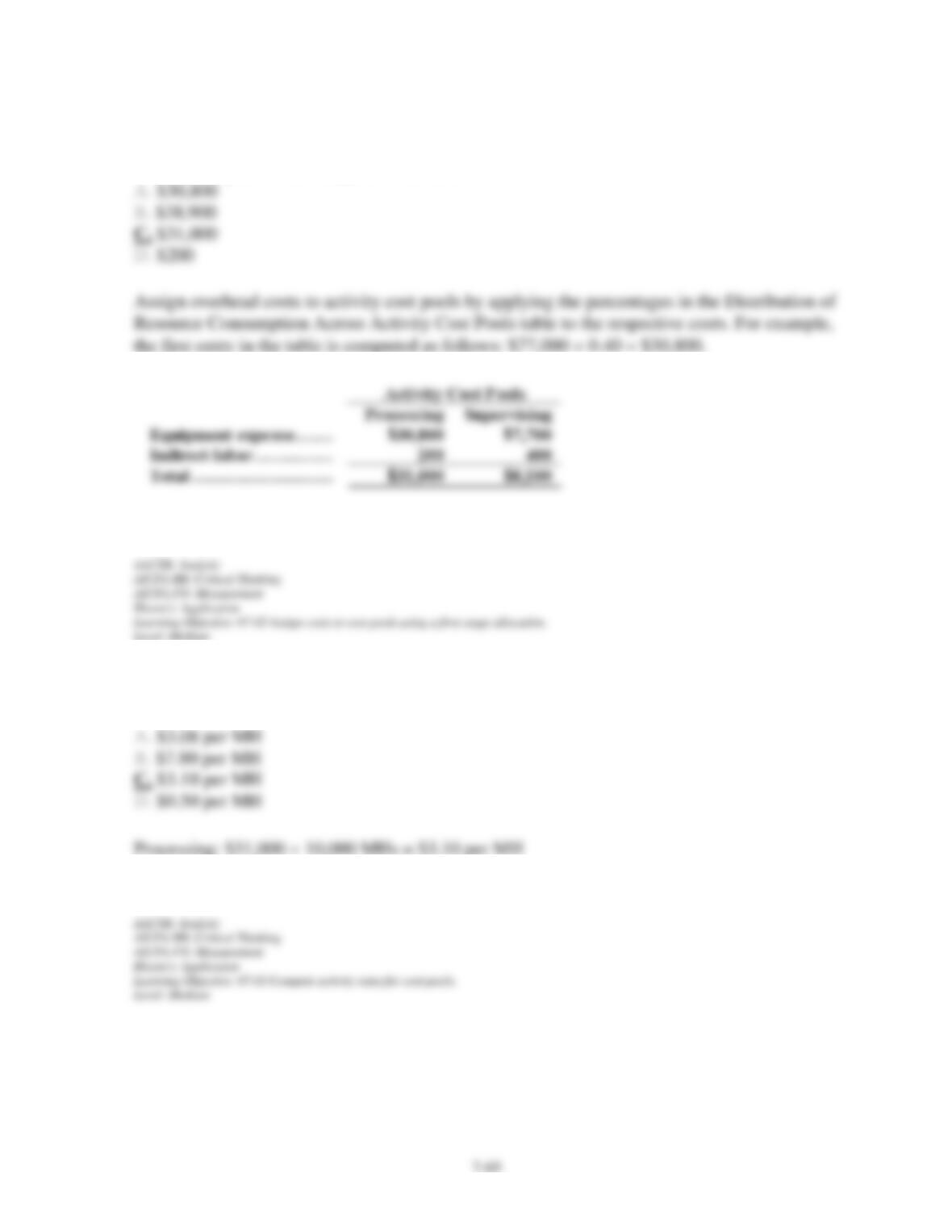
78. How much overhead cost is allocated to the Processing activity cost pool under activity-
based costing in the first stage of allocation?
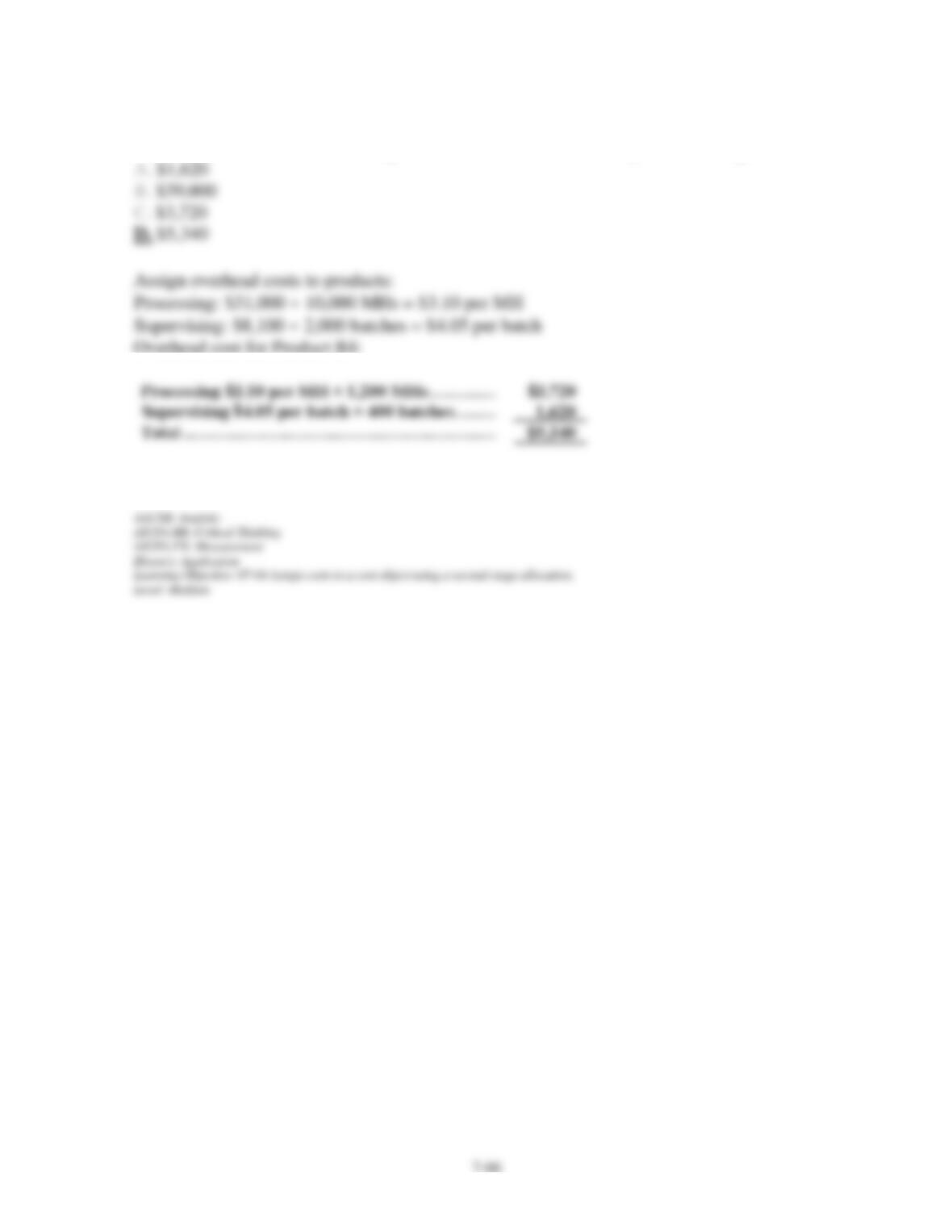
79. The activity rate for the Processing activity cost pool under activity-based costing is
closest to:
Chapter 07 – Activity-Based Costing: A Tool to Aid Decision Making
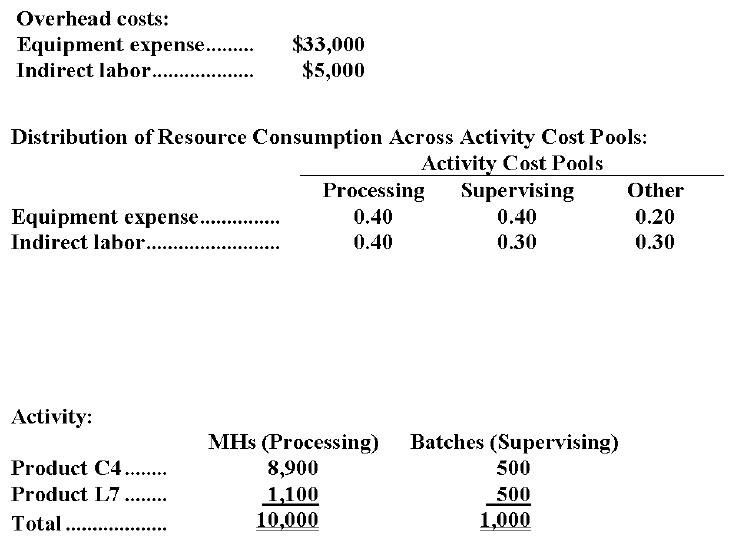
80. What is the overhead cost assigned to Product B4 under activity-based costing?
Chapter 07 – Activity-Based Costing: A Tool to Aid Decision Making
7-67
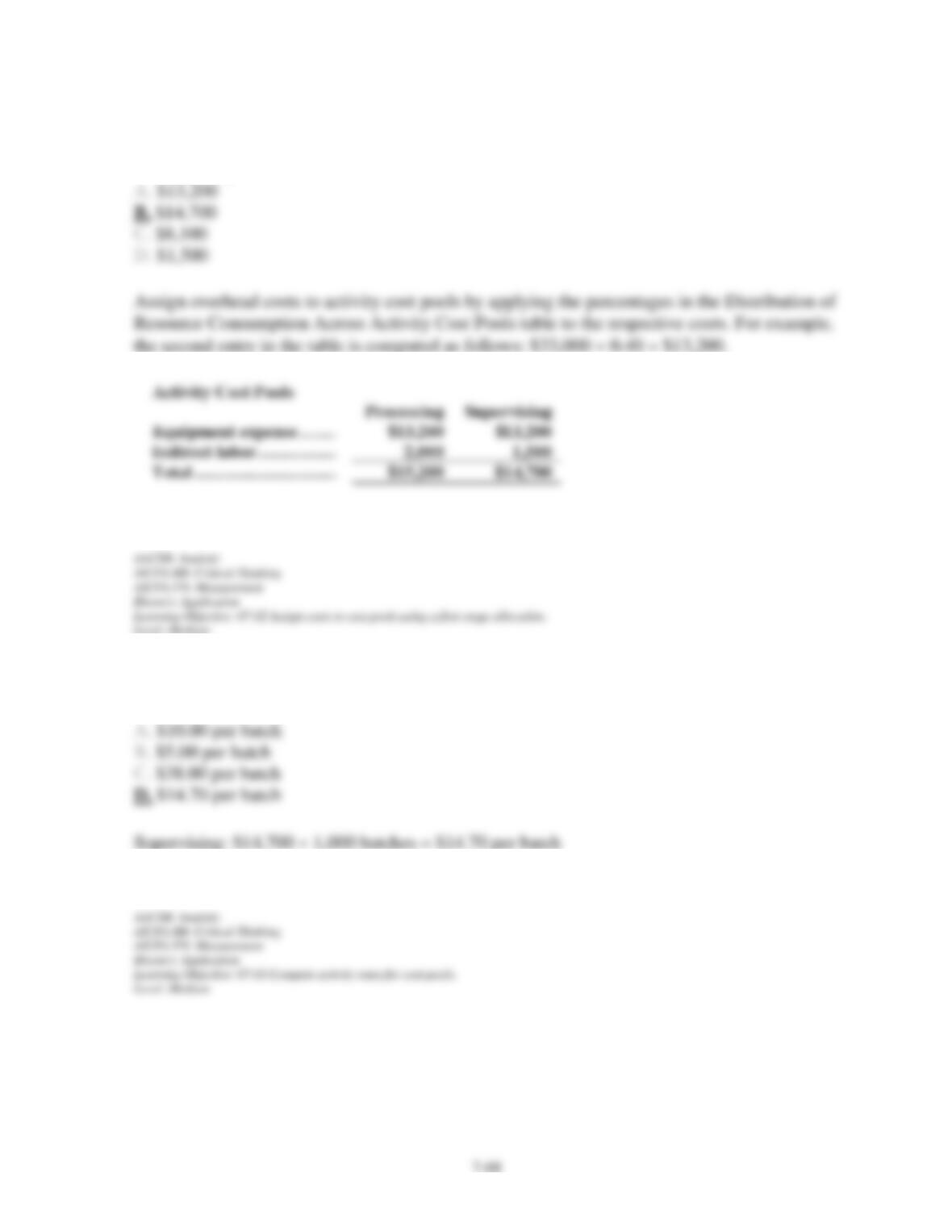
Ollivier Corporation has an activity-based costing system with three activity cost pools-
Processing, Supervising, and Other. In the first stage allocations, costs in the two overhead
accounts, equipment expense and indirect labor, are allocated to the three activity cost pools
based on resource consumption. Data used in the first stage allocations follow:
Processing costs are assigned to products using machine-hours (MHs) and Supervising costs
are assigned to products using the number of batches. The costs in the Other activity cost pool
are not assigned to products. Activity data for the company’s two products follow:
Chapter 07 – Activity-Based Costing: A Tool to Aid Decision Making
81. How much overhead cost is allocated to the Supervising activity cost pool under activity-
based costing?
82. The activity rate for the Supervising activity cost pool under activity-based costing is
closest to:
Chapter 07 – Activity-Based Costing: A Tool to Aid Decision Making
83. What is the overhead cost assigned to Product L7 under activity-based costing?
Chapter 07 – Activity-Based Costing: A Tool to Aid Decision Making
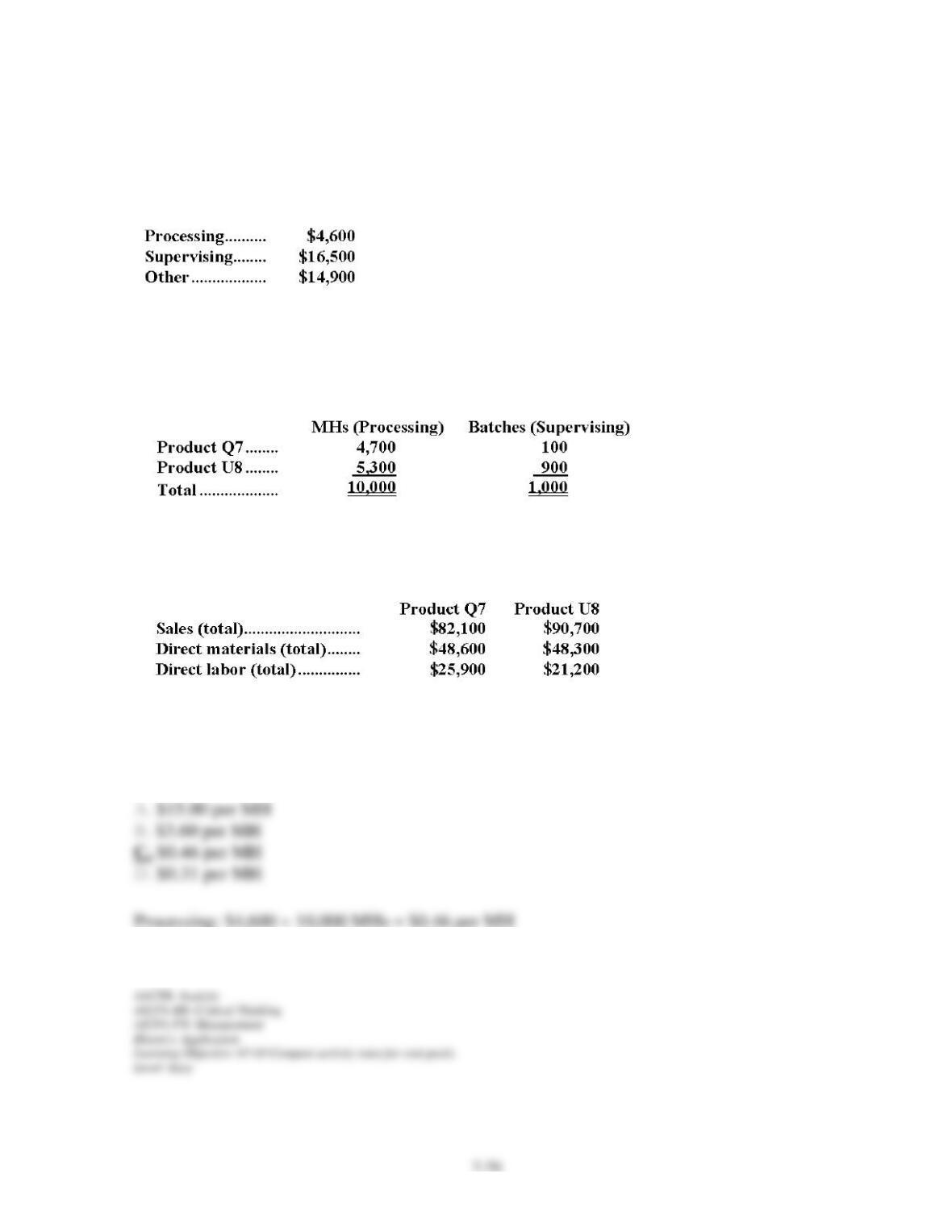
Dykema Corporation uses activity-based costing to compute product margins. Overhead
costs have already been allocated to the company’s three activity cost pools-Processing,
Supervising, and Other. The costs in those activity cost pools appear below:
Processing costs are assigned to products using machine-hours (MHs) and Supervising costs
are assigned to products using the number of batches. The costs in the Other activity cost pool
are not assigned to products. Activity data appear below:
Finally, sales and direct cost data are combined with Processing and Supervising costs to
determine product margins.
84. The activity rate for the Processing activity cost pool under activity-based costing is
closest to:
Chapter 07 – Activity-Based Costing: A Tool to Aid Decision Making
85. What is the overhead cost assigned to Product Q7 under activity-based costing?
86. What is the product margin for Product Q7 under activity-based costing?
Chapter 07 – Activity-Based Costing: A Tool to Aid Decision Making
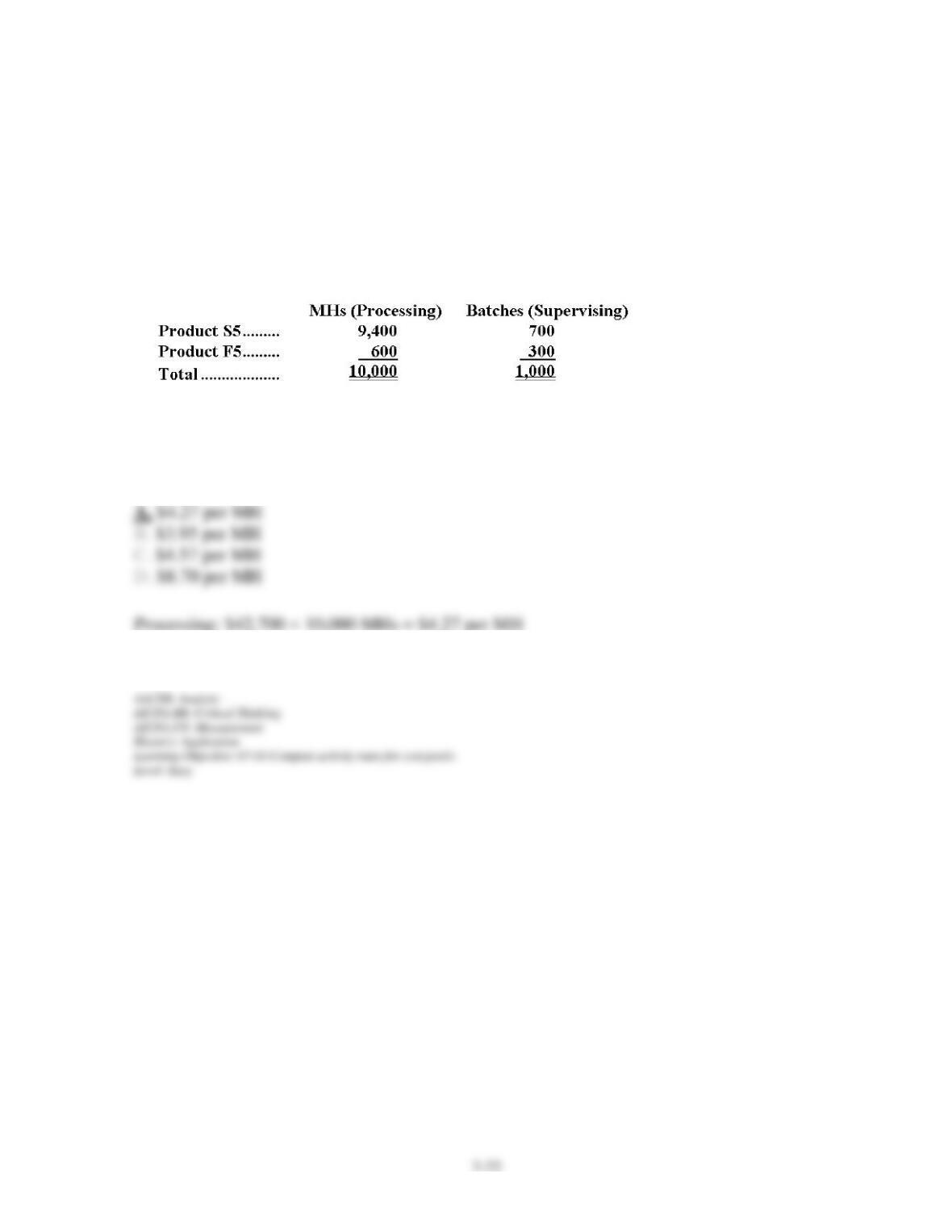
Umanzor Corporation uses activity-based costing to assign overhead costs to products.
Overhead costs have already been allocated to the company’s three activity cost pools as
follows: Processing, $42,700; Supervising, $26,900; and Other, $17,400. Processing costs are
assigned to products using machine-hours (MHs) and Supervising costs are assigned to
products using the number of batches. The costs in the Other activity cost pool are not
assigned to products. Activity data appear below:
87. The activity rate for the Processing activity cost pool under activity-based costing is
closest to:
Chapter 07 – Activity-Based Costing: A Tool to Aid Decision Making
88. What is the overhead cost assigned to Product S5 under activity-based costing?
Chapter 07 – Activity-Based Costing: A Tool to Aid Decision Making
Groch Corporation uses activity-based costing to compute product margins. Overhead costs
have already been allocated to the company’s three activity cost pools-Processing,
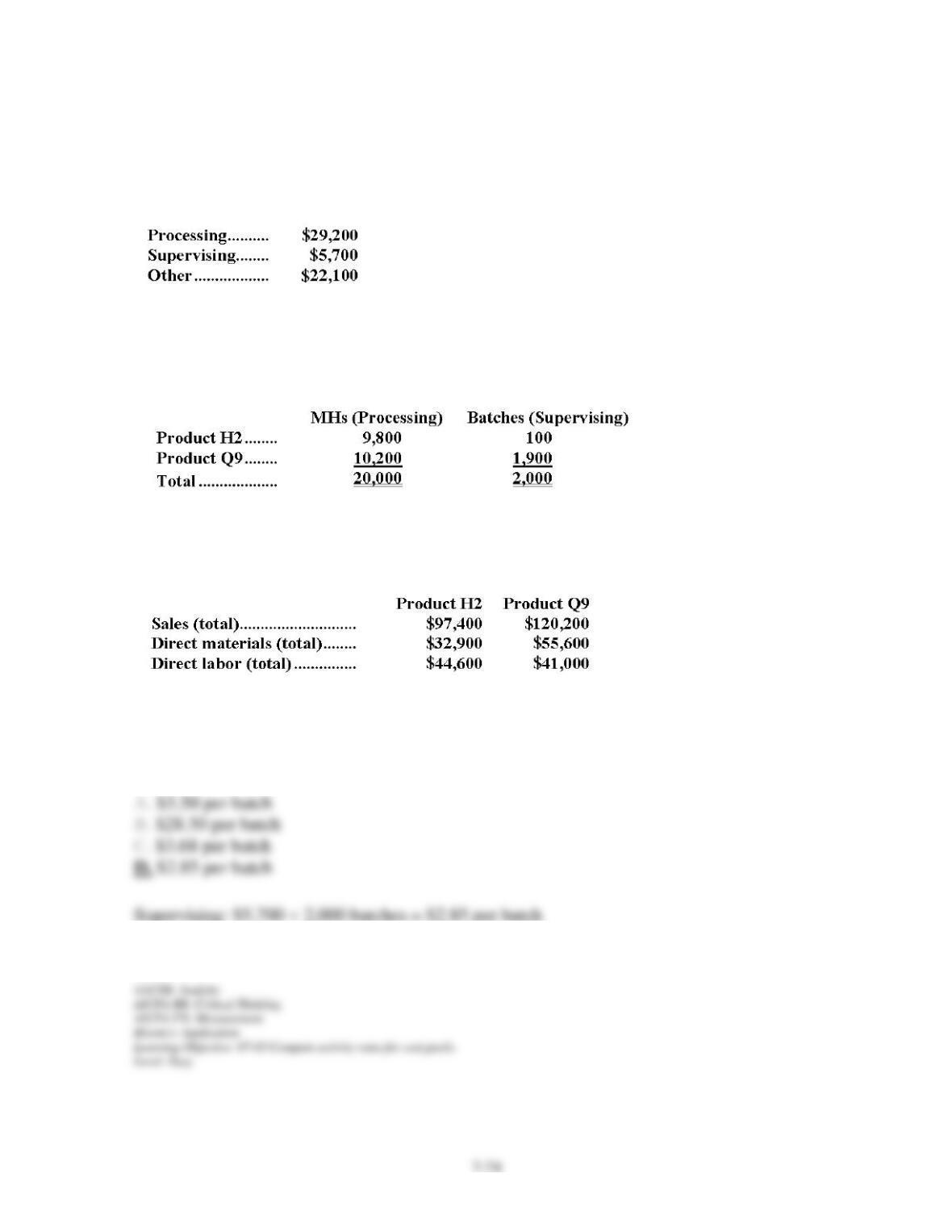
Supervising, and Other. The costs in those activity cost pools appear below:
Processing costs are assigned to products using machine-hours (MHs) and Supervising costs
are assigned to products using the number of batches. The costs in the Other activity cost pool
are not assigned to products. Activity data appear below:
Finally, sales and direct cost data are combined with Processing and Supervising costs to
determine product margins.
89. The activity rate for the Supervising activity cost pool under activity-based costing is
closest to:
Chapter 07 – Activity-Based Costing: A Tool to Aid Decision Making
90. What is the overhead cost assigned to Product Q9 under activity-based costing?
91. What is the product margin for Product Q9 under activity-based costing?
Chapter 07 – Activity-Based Costing: A Tool to Aid Decision Making
Sibble Corporation uses activity-based costing to assign overhead costs to products.
Overhead costs have already been allocated to the company’s three activity cost pools as
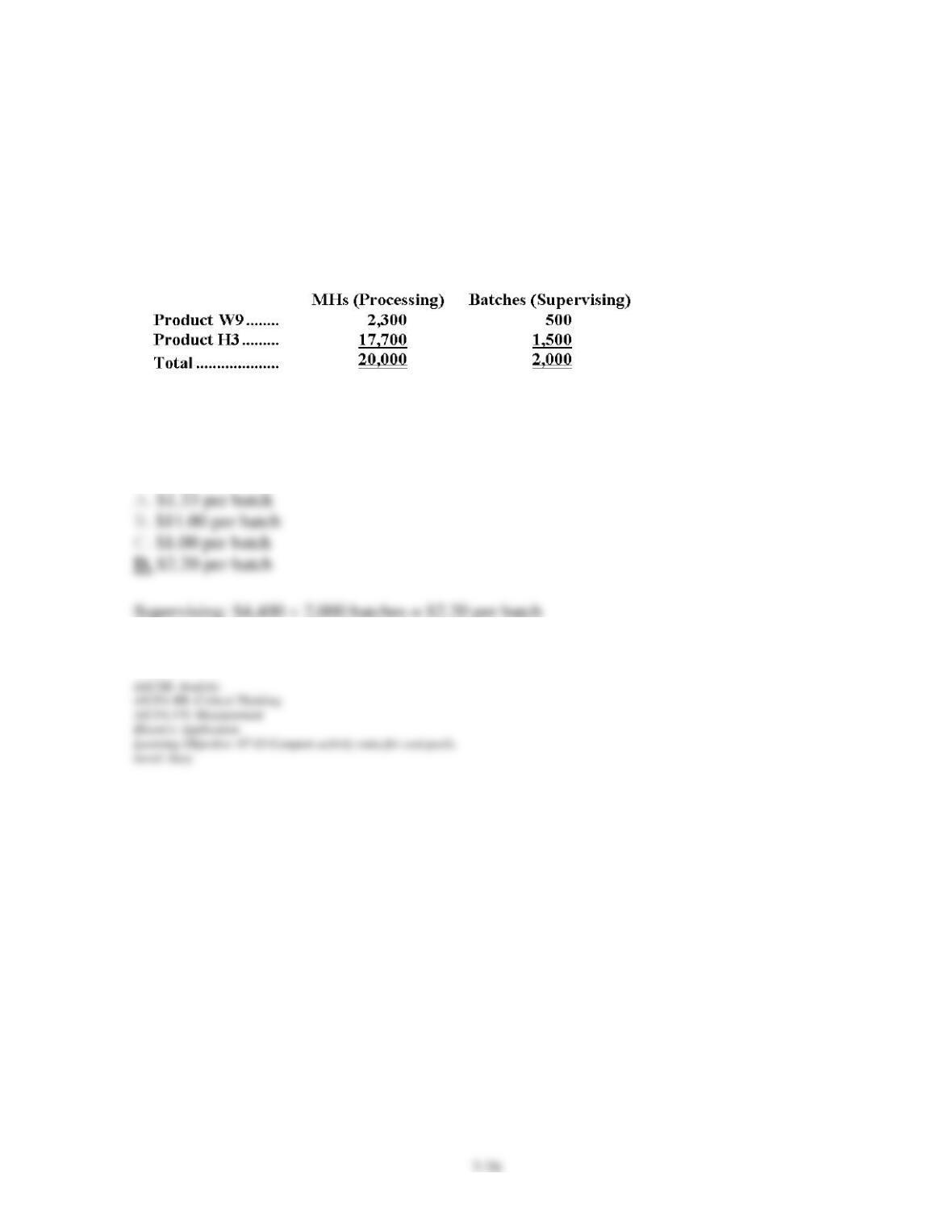
follows: Processing, $12,400; Supervising, $4,400; and Other, $5,200. Processing costs are
assigned to products using machine-hours (MHs) and Supervising costs are assigned to
products using the number of batches. The costs in the Other activity cost pool are not
assigned to products. Activity data appear below:
92. The activity rate for the Supervising activity cost pool under activity-based costing is
closest to:
Chapter 07 – Activity-Based Costing: A Tool to Aid Decision Making
93. What is the overhead cost assigned to Product H3 under activity-based costing?
Chapter 07 – Activity-Based Costing: A Tool to Aid Decision Making
7-78
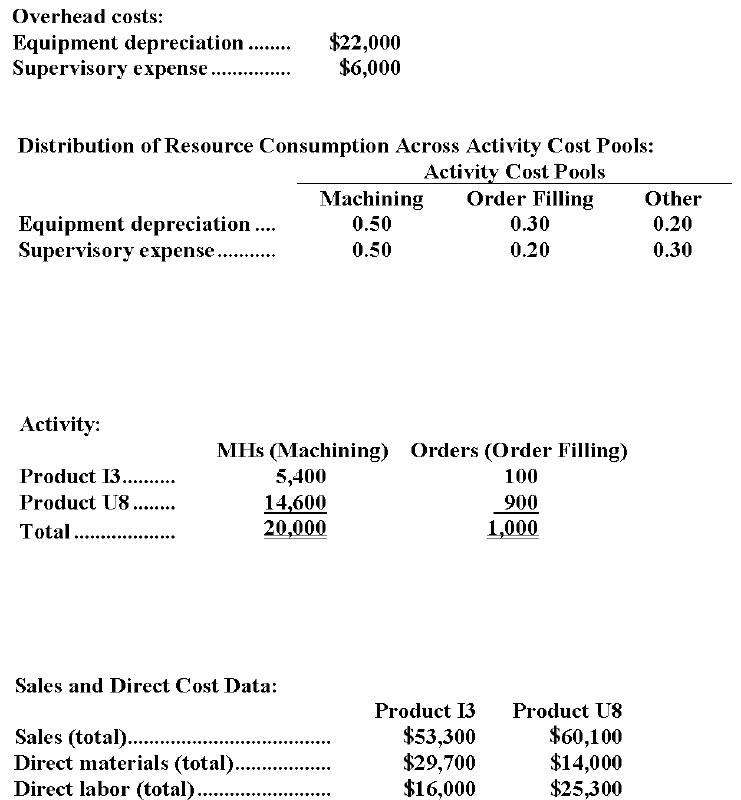
Brisky Corporation uses activity-based costing to compute product margins. In the first stage,
the activity-based costing system allocates two overhead accounts-equipment depreciation
and supervisory expense-to three activity cost pools-Machining, Order Filling, and Other-
based on resource consumption. Data to perform these allocations appear below:
In the second stage, Machining costs are assigned to products using machine-hours (MHs)
and Order Filling costs are assigned to products using the number of orders. The costs in the
Other activity cost pool are not assigned to products.
Finally, sales and direct cost data are combined with Machining and Order Filling costs to
determine product margins.
Chapter 07 – Activity-Based Costing: A Tool to Aid Decision Making
94. How much overhead cost is allocated to the Machining activity cost pool under activity-
based costing in the first stage of allocation?
95. The activity rate for the Machining activity cost pool under activity-based costing is
closest to:
Chapter 07 – Activity-Based Costing: A Tool to Aid Decision Making
96. What is the overhead cost assigned to Product I3 under activity-based costing?
97. What is the product margin for Product I3 under activity-based costing?