153. Describe the relationship between return on assets and return on common shareholders’ equity.
RELATION BETWEEN RETURN ON ASSETS AND RETURN ON COMMON SHAREHOLDERS’
EQUITY
154. What is financial leverage?
FINANCIAL LEVERAGE
155. Discuss any ethical issues raised by the following actions.
156. Discuss any ethical issues raised by the following actions.
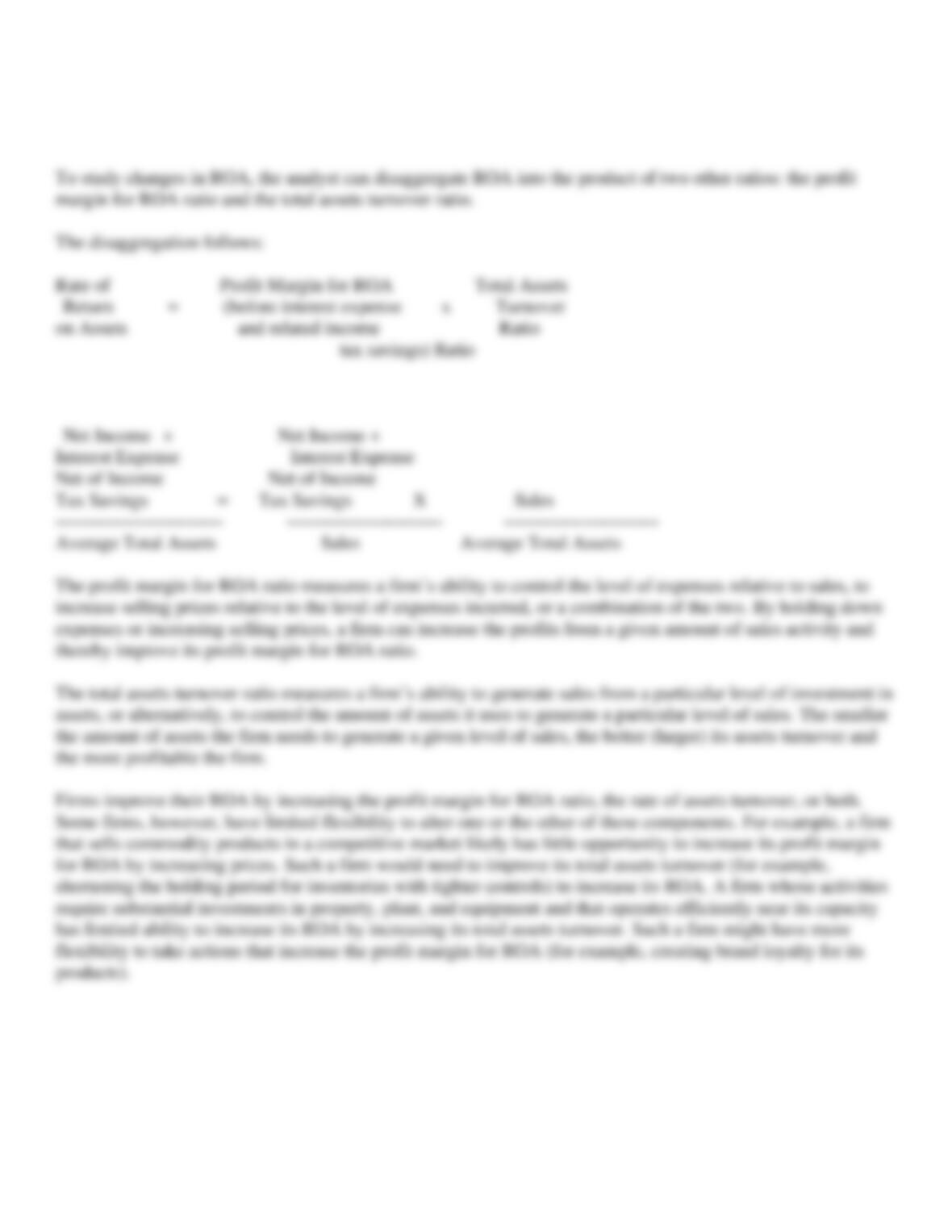
157. Discuss how the analyst can disaggregate ROA into the product of two other ratios to study changes in
ROA.
DISAGGREGATING THE RATE OF RETURN ON ASSETS
158. Discuss any ethical issues raised by the following actions.
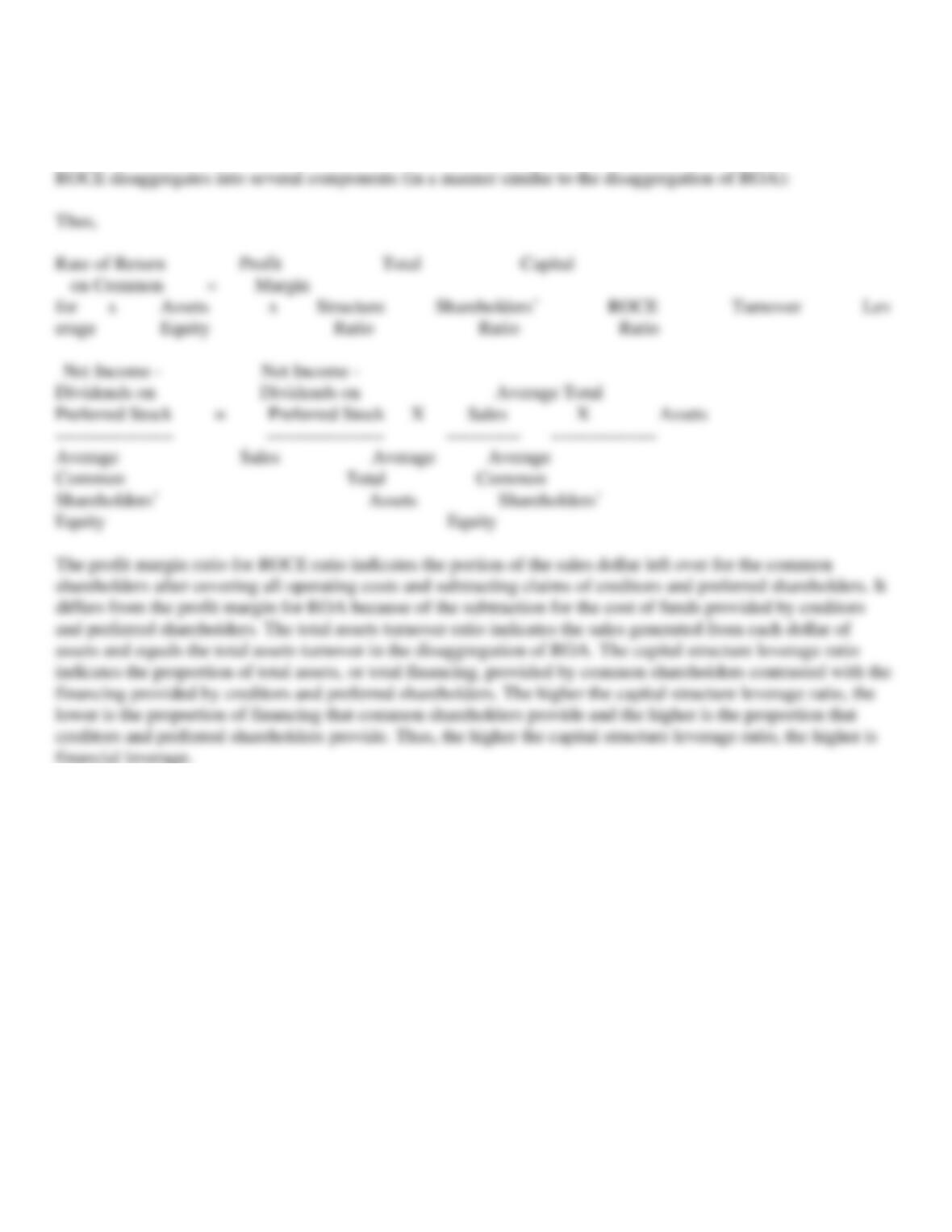
159. Describe the disaggregation of the rate of return on common shareholders’ equity.
DISAGGREGATING THE RATE OF RETURN ON COMMON SHAREHOLDERS’ EQUITY
160. Discuss the accounts receivable turnover ratio.
Accounts Receivable Turnover
161. Describe the inventory turnover ratio.
Inventory Turnover
162. Describe the fixed asset turnover ratio.
Fixed Asset Turnover
163. Discusses the four measures for assessing short-term liquidity risk.
MEASURES OF SHORT-TERM LIQUIDITY RISK
Four measures for assessing short-term liquidity risk are (1) Current ratio, (2) Quick ratio, (3) Cash flow
from operations to current liabilities ratio, and (4) Working capital turnover ratios.
Current Ratio
164. Discuss measures of long-term liquidity risk.
MEASURES OF LONG-TERM LIQUIDITY RISK
165. Explain how common-size balance sheets are used by analysts.
COMMON-SIZE BALANCE SHEET
166. What are pro forma financial statements?
167. What are the steps in preparing pro forma financial statements?
PREPARING PRO FORMA FINANCIAL STATEMENTS