65.
The inventory turnover
66.
Cranchey Company reported a LIFO ending inventory of $670,000 on its balance sheet at
December 31, 2016. Cranchey’s disclosure notes to the financial statements reported that the
LIFO Reserve at December 31, 2015 was $32,000 and the LIFO Reserve at December 31, 2016
was $40,000. Which of the following statements is correct for Cranchey Company for the
effect of the LIFO Reserve in 2016 in converting LIFO amounts to FIFO amounts?
67.
If two companies each use different inventory accounting methods, the companies can be
made comparable from information reported in the financial statements by
68.
QV-TV, Inc. provided the following items in its notes to the financial statements for the year–
end 2016: Cost of goods sold was $22 billion under FIFO costing and the inventory value
under FIFO costing was $2.1 billion. The LIFO Reserve for year-end 2015 was $0.6 billion and
at year-end 2016 it had increased to $0.8 billion.
What is the LIFO inventory value at year-end 2016?
69.
QV-TV, Inc. provided the following items in its notes to the financial statements for the year–
end 2016: Cost of goods sold was $22 billion under FIFO costing and the inventory value
under FIFO costing was $2.1 billion. The LIFO Reserve for year-end 2015 was $0.6 billion and
at year-end 2016 it had increased to $0.8 billion.
How much is the 2016 LIFO cost of goods sold?
70.
A $25,000 overstatement of the 2016 ending inventory was discovered after the financial
statements for 2016 were prepared. Which of the following describes the effect of the
inventory error on the 2016 financial statements?
71.
A $25,000 overstatement of the 2015 ending inventory was discovered after the financial
statements for 2015 were prepared. Which of the following describes the effect of the
inventory error on the 2016 financial statements?
72.
Wilmington Company reported pretax income of $25,000 during 2015 and $30,000 during 2016.
Later it was discovered that the ending inventory for 2015 was understated by $2,000 (and
not corrected in 2015). What is the correct pretax income for each year?
2015
2016
A.
$23,000
$32,000
B.
$27,000
$32,000
C.
$27,000
$28,000
D.
$23,000
$28,000
73.
At the end of 2016, a $5,000 understatement was discovered in the amount of the 2016 ending
inventory as reflected in the inventory records. What were the 2016 effects of the $5,000
inventory error (before correction)?
74.
An understatement of the ending inventory in Year 1, if not corrected, will cause which of the
following?
75.
Which of the following is correct when, in the same year, beginning inventory is understated
by $1,300 and ending inventory is understated by $700?
76.
Which of the following is correct when, in the same year, beginning inventory is overstated by
$1,300 and ending inventory is understated by $700?
77.
On December 15, 2016, Transport Company accepted delivery of merchandise that it
purchased on credit. As of December 31, 2016, the company had neither recorded the
transaction nor included the merchandise in its ending inventory amount because the seller’s
invoice had not been received. The effect of this omission on its balance sheet at December
31, 2016, (end of the accounting period) was that
78.
A company using the periodic inventory system correctly recorded a purchase of merchandise,
but the merchandise was not included in the physical inventory count at the end of the
accounting period. The error caused which of the following?
79.
Hollander Company hired some students to help count inventory during their semester break.
Unfortunately, the students added incorrectly and the 2016 ending inventory was overstated
by $5,000. What would be the effect of this error in ending inventory?
80.
During the audit of Montane Company’s 2016 financial statements, the auditors discovered
that the 2016 ending inventory had been overstated by $8,000 and that the 2016 beginning
inventory was overstated by $5,000. Before the effect of these errors, 2016 pretax income had
been computed as $100,000. What should be reported as the correct 2016 pretax income
before taxes?
81.
RJ Corporation has provided the following information about one of its inventory items:
Date
Transaction
Number of
Units
Cost per
Unit
1/1
Beginning
Inventory
400
$3,200
6/6
Purchase
800
$3,600
9/10
Purchase
1,200
$4,000
11/15
Purchase
800
$4,200
During the year, RJ sold 3,000 units.
What was ending inventory using the LIFO cost flow assumption under a periodic inventory
system?
82.
RJ Corporation has provided the following information about one of its inventory items:
Date
Transaction
Number of
Units
Cost per
Unit
1/1
Beginning
Inventory
400
$3,200
6/6
Purchase
800
$3,600
9/10
Purchase
1,200
$4,000
11/15
Purchase
800
$4,200
During the year, RJ sold 3,000 units.
What was ending inventory using the FIFO cost flow assumption under a periodic inventory
system?
83.
RJ Corporation has provided the following information about one of its inventory items:
Date
Transaction
Number of
Units
Cost per
Unit
1/1
Beginning
Inventory
400
$3,200
6/6
Purchase
800
$3,600
9/10
Purchase
1,200
$4,000
11/15
Purchase
800
$4,200
During the year, RJ sold 3,000 units.
What was ending inventory using the average cost flow assumption under a periodic
inventory system?
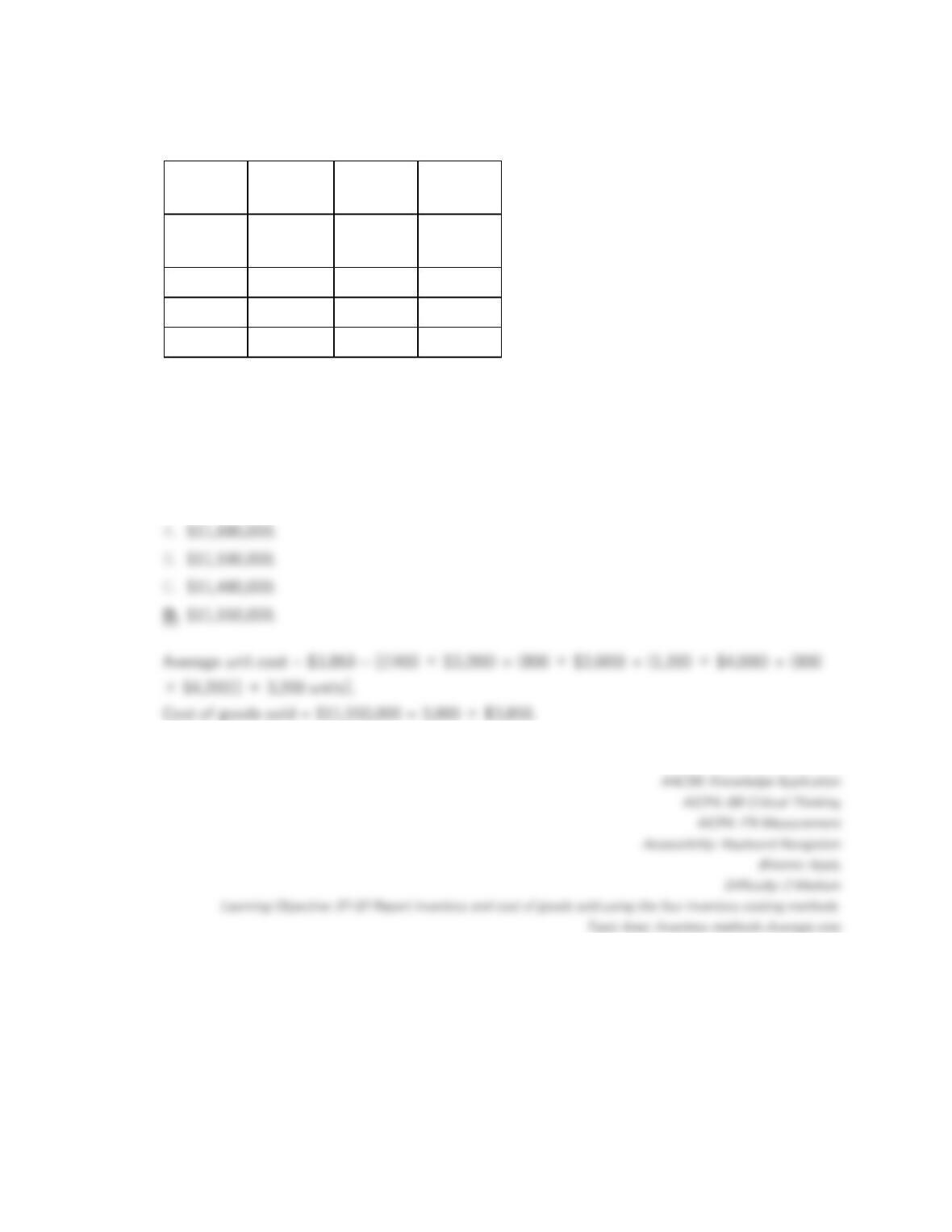
84.
RJ Corporation has provided the following information about one of its inventory items:
Date
Transaction
Number of
Units
Cost per
Unit
1/1
Beginning
Inventory
400
$3,200
6/6
Purchase
800
$3,600
9/10
Purchase
1,200
$4,000
11/15
Purchase
800
$4,200
During the year, RJ sold 3,000 units.
What was cost of goods sold using the average cost flow assumption under a periodic
inventory system?
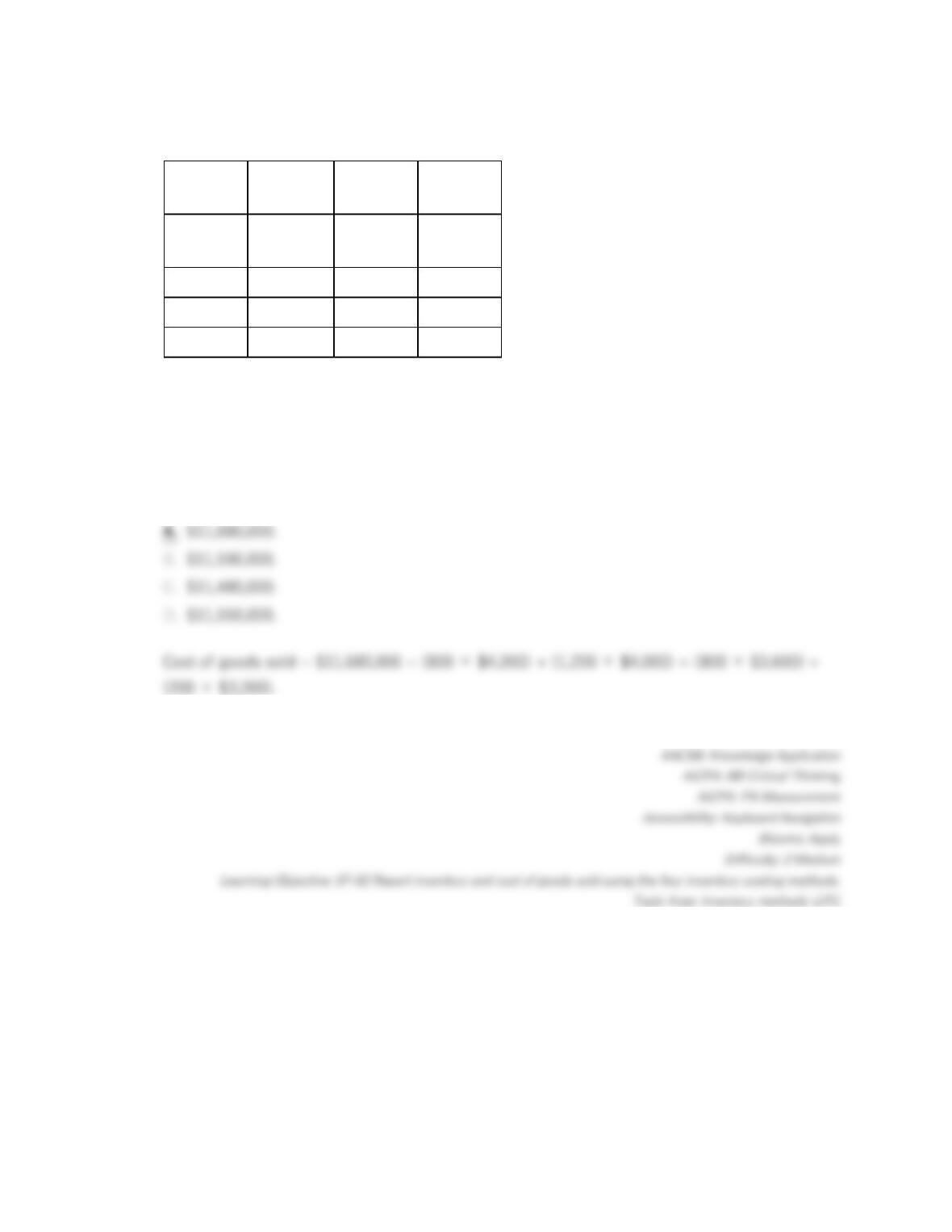
85.
RJ Corporation has provided the following information about one of its inventory items:
Date
Transaction
Number of
Units
Cost per
Unit
1/1
Beginning
Inventory
400
$3,200
6/6
Purchase
800
$3,600
9/10
Purchase
1,200
$4,000
11/15
Purchase
800
$4,200
During the year, RJ sold 3,000 units.
What was cost of goods sold using the LIFO cost flow assumption under a periodic inventory
system?
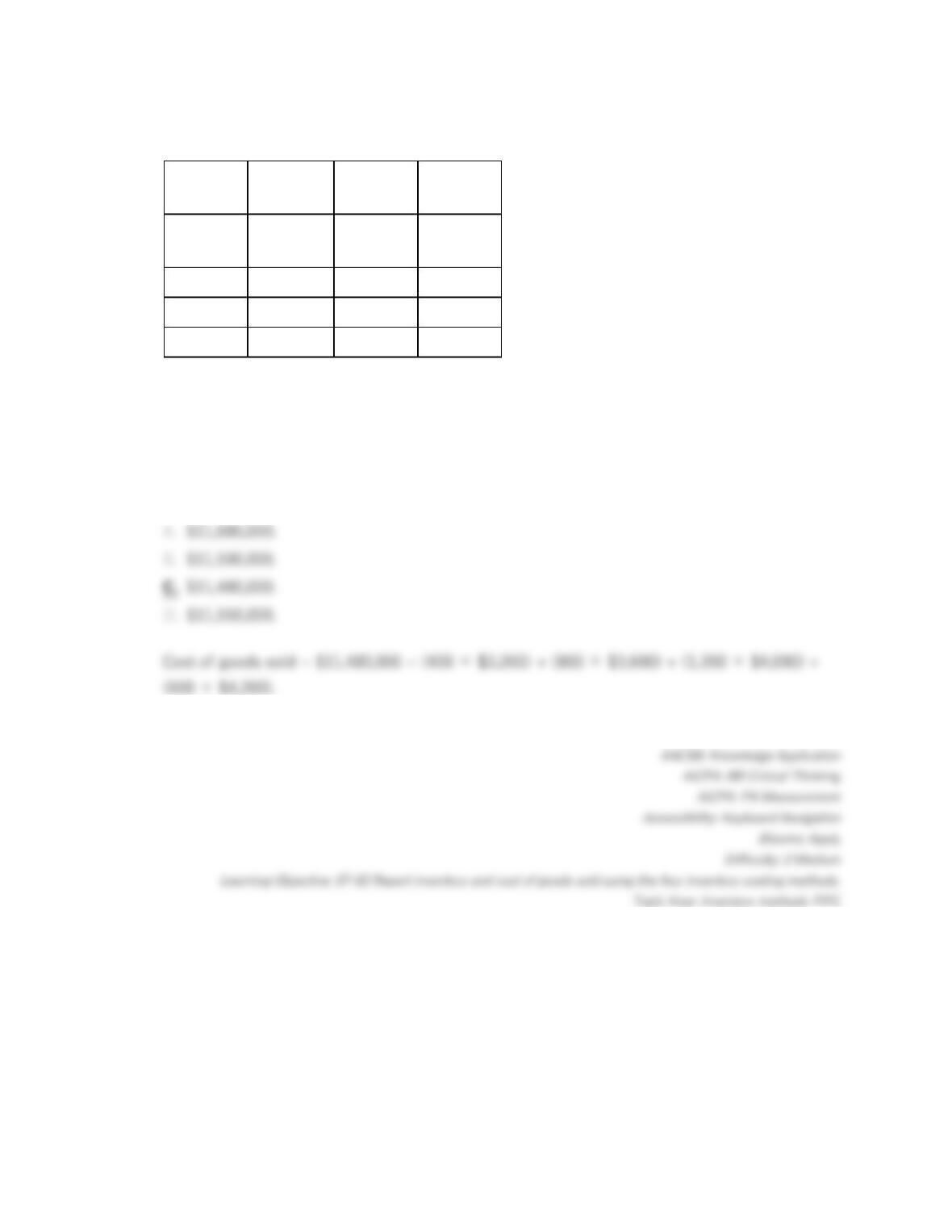
86.
RJ Corporation has provided the following information about one of its inventory items:
Date
Transaction
Number of
Units
Cost per
Unit
1/1
Beginning
Inventory
400
$3,200
6/6
Purchase
800
$3,600
9/10
Purchase
1,200
$4,000
11/15
Purchase
800
$4,200
During the year, RJ sold 3,000 units.
What was cost of goods sold using the FIFO cost flow assumption under a periodic inventory
system?
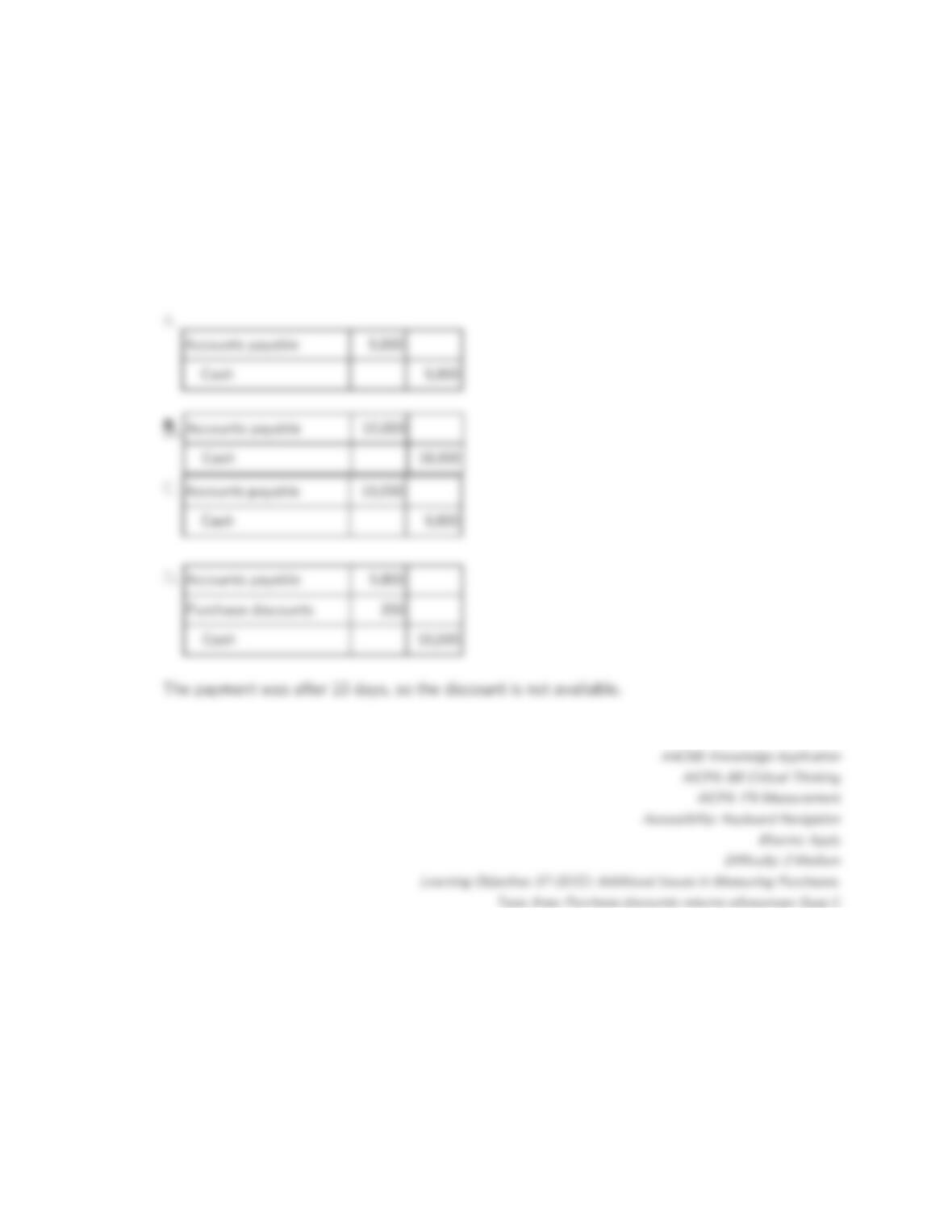
87.
On March 15, 2016, Ryan Company purchased $10,000 of merchandise on credit subject to
terms of 2/10, n/30. Ryan Company records its purchases using the gross amount. The
periodic inventory system is used.
Which of the following journal entries is correct when Ryan Company pays for these goods on
March 30, 2016?