374 ♦ Chapter 7
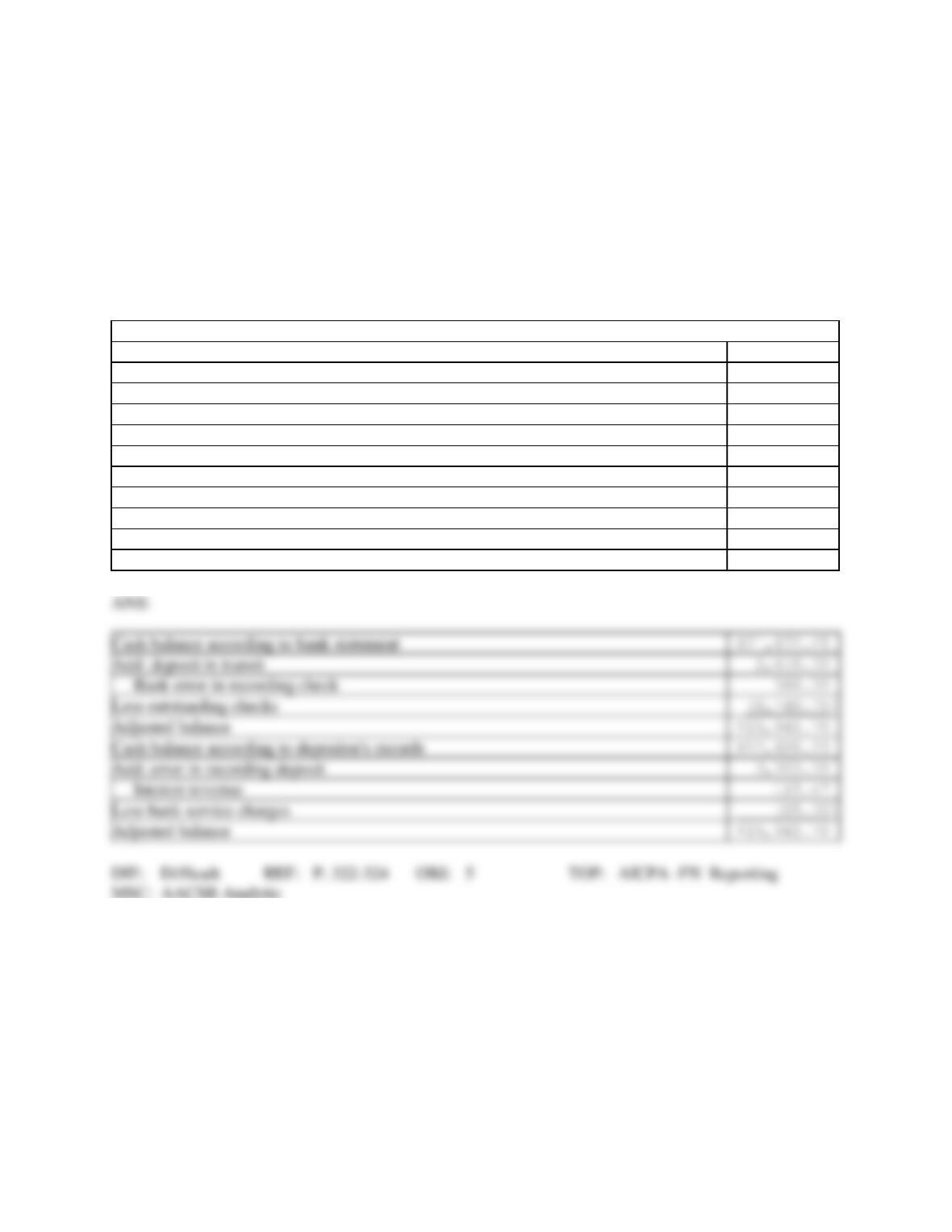
11. Prepare a bank reconciliation with the following information:
a.
Cash balance according to the depositor’s records at May 31, $12,608.23
b.
Cash balance according to the bank statement at May 31, $21,672.45
c.
A deposit for $3,670 was incorrectly recorded by the depositor at $367
d.
Deposit in transit at May 31, $2,650
e.
Interest credited to the depositor’s account according to bank statement $115.47
f.
A check for $1,370 was erroneously charged by the bank for $1,730
g.
Outstanding checks at May 31, $8,740.75
h.
Bank service charges, $85
Bank Reconciliation
Add: deposit in transit
Bank error in recording check
Less outstanding checks
Adjusted balance
Cash balance according to depositor’s records
Add: error in recording deposit
Interest revenue
Less bank service charges
Adjusted balance
Sarbanes-Oxley, Internal Control, and Cash ♦ 375
12. The following information is available for use in reconciling the bank account for June:
a.
Cash balance according to the bank statement at June 30, $16,785.19
b.
Cash balance according to the depositor’s records at June 30, $12,267.01
c.
Deposit in transit at June 30, $4,560
d.
Customers NSF check returned by the bank, $167.20
e.
Outstanding checks at June 30, $6,542.38
f.
A deposit of daily cash sales for $6,780 was incorrectly recorded by the depositor at $6,870
g.
A check for $825 was erroneously charged by the bank for $87
h.
A note for $2,000 plus interest of $55 was collected by the bank on behalf of the depositor.
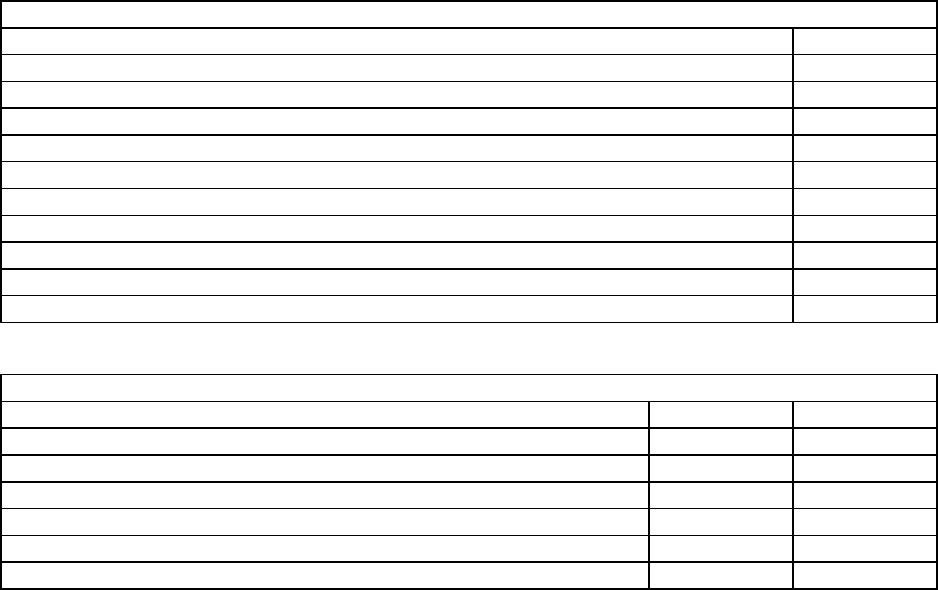
(1)
Prepare a bank reconciliation.
(2)
Prepare any necessary entries in the depositor’s records.
(3)
What is the balance in the cash account after the entries are recorded?
Bank Reconciliation
General Journal
376 ♦ Chapter 7
13. The following information is available for use in reconciling the bank account for July:
a.
Cash balance according to the depositor’s records at July 31, $10,840.82
b.
Cash balance according to the bank statement at July 30, $9,675.24
c.
Bank service charges, $34
d.
Outstanding checks at July 31, $1,452.40
e.
A deposit for $876.20 was erroneously credited to the depositor’s account by the bank for $87.62
f.
Customer’s NSF check returned by the bank, $45.20
g.
Deposit in transit at July 31, $1,840.20
h.
A check written for $230 in payment of an account payable was incorrectly recorded by the
depositor for $320
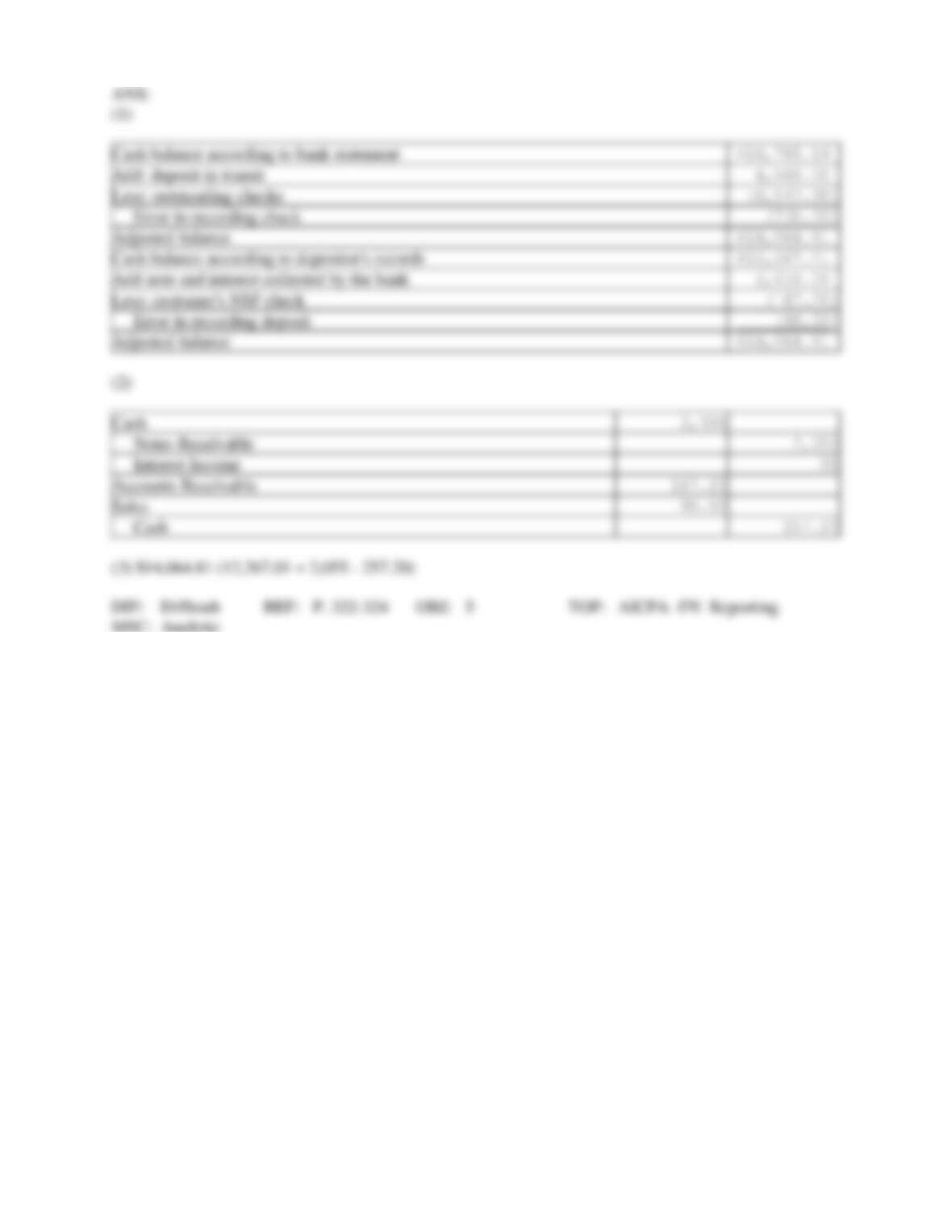
(1)
Prepare a bank reconciliation.
(2)
Prepare any necessary entries in the depositor’s records.
(3)
What is the balance in the cash account after the entries are recorded?
Cash balance according to bank statement
Add: deposit in transit
Less: outstanding checks
Error in recording check
Adjusted balance
Cash balance according to depositor’s records
Add note and interest collected by the bank
Less: customer’s NSF check
Error in recording deposit
Adjusted balance
Cash
Notes Receivable
Interest Income
Accounts Receivable
Sales
Cash
Sarbanes-Oxley, Internal Control, and Cash ♦ 377
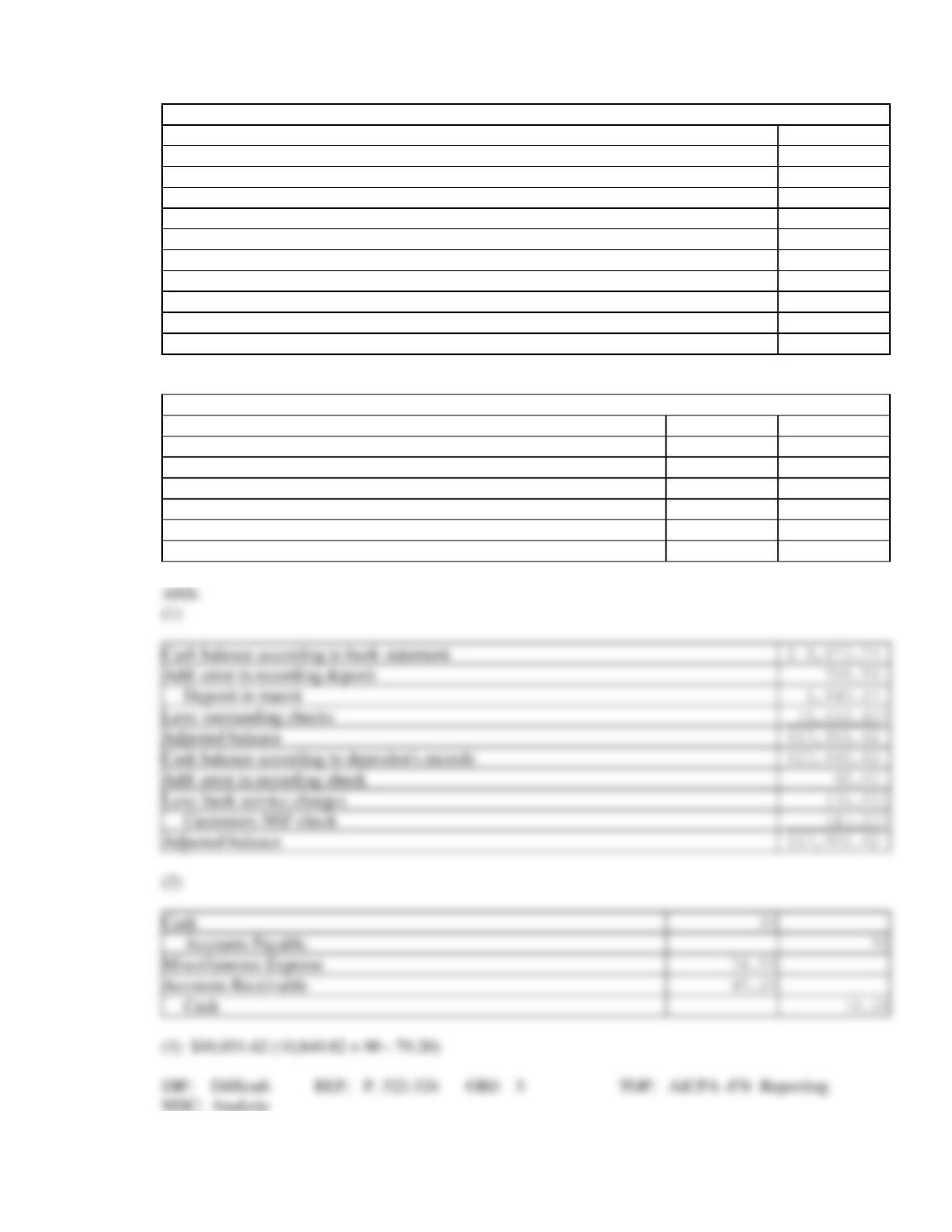
Bank Reconciliation
General Journal
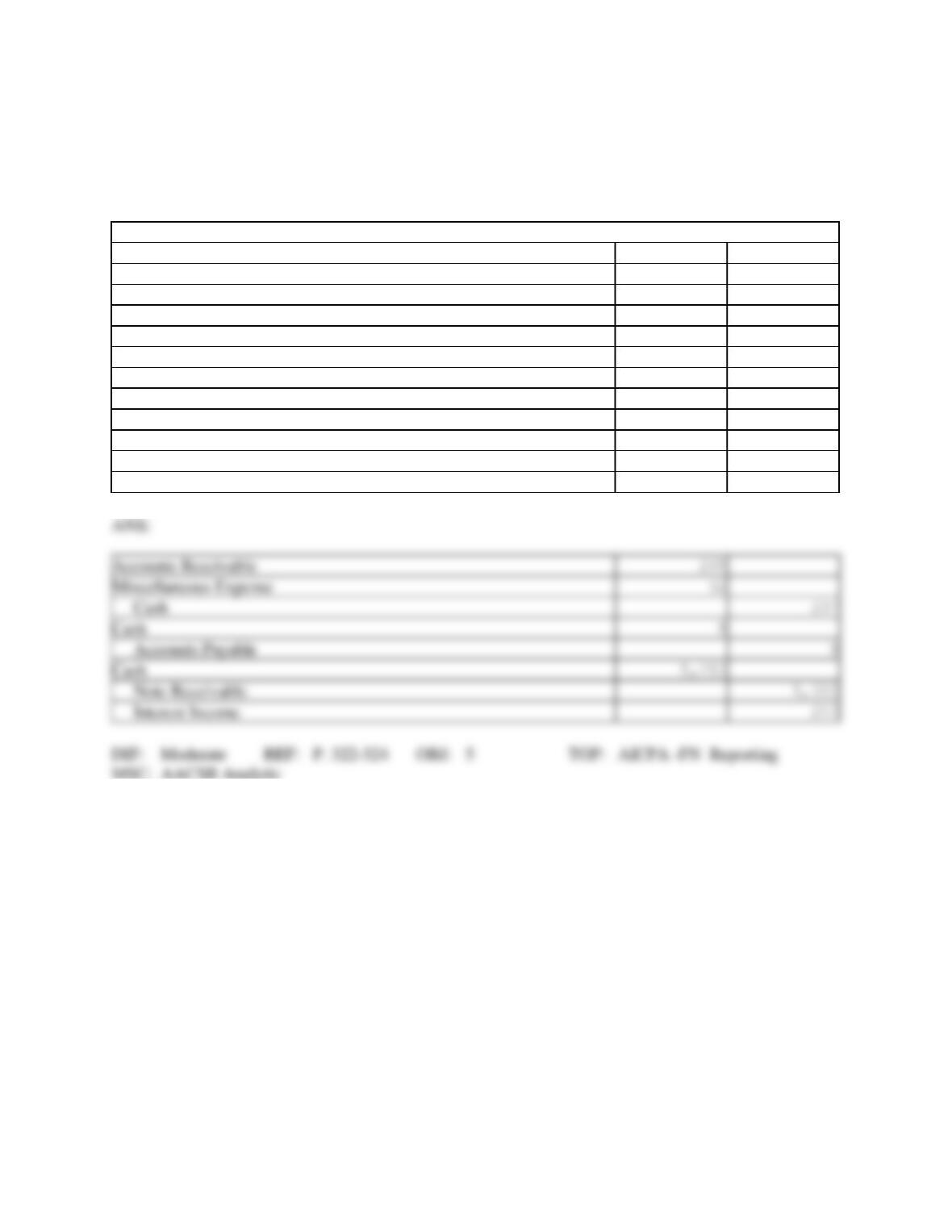
Cash balance according to bank statement
Add: error in recording deposit
Deposit in transit
Less: outstanding checks
Adjusted balance
Cash balance according to depositor’s records
Add: error in recording check
Less: bank service charges
Customers NSF check
Adjusted balance
Cash
Accounts Payable
Miscellaneous Expense
Accounts Receivable
Cash
378 ♦ Chapter 7
14. The bank statement indicates that the depositor’s account was charged $265 for a customer’s NSF
check and $32 for service charges. Also, a check written for $367 was erroneously recorded by the
depositor for $376. A credit memorandum accompanying the bank statement indicates that the
bank collected a note on the depositor’s behalf, $5,000 principal and $250 interest. Prepare any
necessary entries to update the depositor’s records.
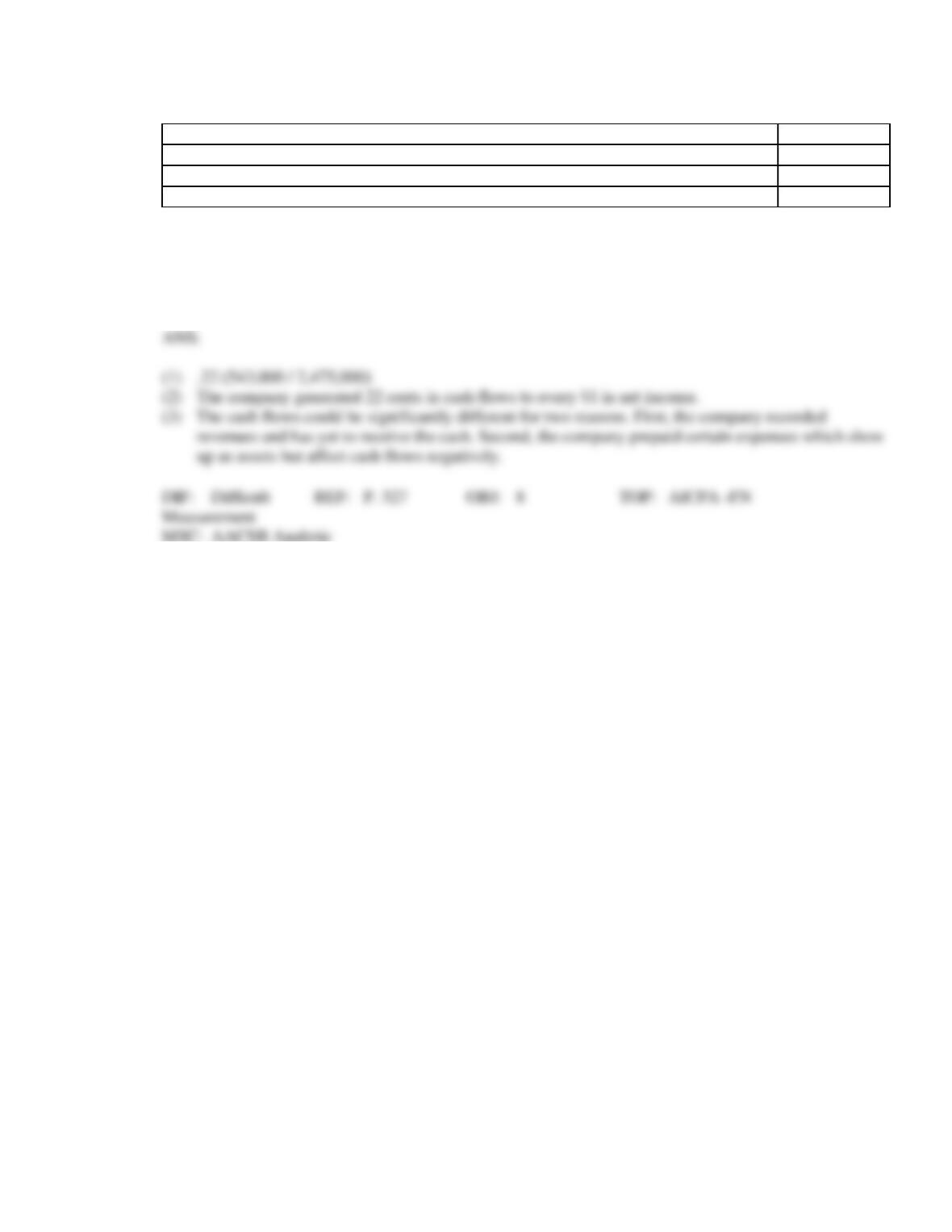
General Journal
Accounts Receivable
Miscellaneous Expense
Cash
Cash
Accounts Payable
Cash
Note Receivable
Interest Income
Sarbanes-Oxley, Internal Control, and Cash ♦ 379
15. You are provided with the following information:
Net cash flows form operations
$ 543,000
Net sales
$21,247,000
Income from operations
$ 2,652,000
Net income
$ 2,475,000
(1)
Calculate the Ratio of Cash Flow to Net Income (round to two decimal places).
(2)
Interpret the cash flow ratio.
(3)
Explain why cash flows are significantly different from net income.
(1)
.22 (543,000 / 2,475,000)
(2)
The company generated 22 cents in cash flows to every $1 in net income.
380 ♦ Chapter 7
CASE
1. Management is asking your advice on several areas of internal control. For each question or
concern, explain to management how adequate internal control procedures can be achieved.
(a)
Management is concerned about how much control the accounting department should have over
assets.
(b)
Management asks you who should order, receive and pay for supplies and inventory.
(c)
Management asks what controls can be implemented to insure that what is ordered from vendors is
legitimate and that the vendors themselves are legitimate.
(d)
Management mentions that they have heard about “monitoring” the internal control system and
wonders what this entails.
recording function. To allow the accounting department to handle cash as well as record cash is an
open invitation to steal. This also applies to other assets.
ordered was in fact received before issuing payment.
Sarbanes-Oxley, Internal Control, and Cash ♦ 381
2. You have been hired by a fast growing retailer to evaluate internal controls surrounding (a) cash
received from cash sales and (b) receipts by mail from payments on account. After making the
following observations you are to disclose any internal control weaknesses and make suggestions
to management on how to improve the internal control system.
(a)
At the end of each day the cashier counts the amount of cash in the register and records it on a
memorandum form. The cashier takes the cash drawer and the register tapes to the front office where
the supervisor immediately places the cash in the store safe and forwards the cash register tapes to
the accounting department for recording.
(b)
When customers pay their account balance by mail, most receipts are in the form of checks or money
orders. Only in a few cases did customers send cash. The employee who opens the mail prepares a
listing of all customer checks for bank deposit. All cash received in the mail is sent to the cashier’s
department where it is combined with cash sales then deposited in the bank after a bank deposit slip
is prepared. The deposit receipt is sent to the accounting department for recording.
382 ♦ Chapter 7
3. You observe the following information:
Dec. 31, 2006
Dec. 31, 2005
Net cash flows from operating activities
$865,000
$795,000
Net income
398,500
428,000
(a)
Compute the ratio of cash flow to net income for 2006 and 2005 (round decimal to two places).
(b)
Interpret your ratios from Part (a).
(c)
Compute the ratio of cash flow to net income after adjusting net income for each year for the
following items (round decimal to two places):
Dec. 31, 2006
Dec. 31, 2005
Depreciation and amortization
$141,000
$115,000
Estimated expenses that have yet to be paid
86,000
21,000
(d)
Interpret your ratios from Part (c), do they support or conflict with your conclusions from Part (b)?
(e)
What impact do depreciation and amortization have on cash flows? Explain.
instead.
(e)
Depreciation and amortization have no impact on cash flows since they are a form of accrual
accounting which simply allocate asset cost to periods benefited.
Sarbanes-Oxley, Internal Control, and Cash ♦ 383
4. The following data are available:
Dec. 31, 2006
Dec. 31, 2005
Net cash flows from operating activities
($276,000)
($678,360)
Cash, Dec. 31
127,500
147,000
(a)
Determine the ratio of cash to monthly expenses for each year (round to one decimal place).
(b)
Explain what this ratio measures.
(c)
Discuss whether the ratio improved or deteriorated.
(d)
What alternatives does the company have in generating cash?
ANS:
(b)
This ratio measures how many months the company can go on operating until it runs out of cash.
(c)
The ratio shows some improvement but the cash flows from operations are still negative.
384 ♦ Chapter 7
5. You are examining the following bank reconciliation with descriptions deleted. For each item (a)
through (g), you must provide a description of the item added or deducted. For any items marked
error, provide at least two descriptions of the type of error that could have occurred and whether
the depositor or bank added or deducted too much or too little.
Bank Reconciliation
Cash balance according to bank statement
$4,750
Add: (a)
1,890
Less error made (b)
(180)
(c)
(1,436)
Adjusted balance
$7,024
Cash balance according to depositor’s records
$6,467
Add: (d)
1,050
error made (e)
90
Less: (f)
(20)
(g)
(563)
Adjusted balance
$7,024
Deposit in transit
(b)
The bank overstated a deposit made by the depositor or understated a check written by the depositor.
(c)
Outstanding checks.
(d)
The bank collected a note on behalf of the depositor with interest.
(e)
The depositor understated a deposit made or overstated a check written.
Bank service charge.
(g)
Customer’s NSF check.