35.
TIPS Interest and Par Value A 3.75 percent TIPS has an original reference CPI of 175.8. If
the current CPI is 207.7, what is the current interest payment and par value of the TIPS?
(Assume semi-annual interest payments and $1,000 par value.)
36.
Bond Quotes Consider the following three bond quotes; a Treasury note quoted at 87:25,
and a corporate bond quoted at 102.42, and a municipal bond quoted at 101.45. If the
Treasury and corporate bonds have a par value of $1,000 and the municipal bond has a
par value of $5,000, what is the price of these three bonds in dollars?
37.
Bond Quotes Consider the following three bond quotes; a Treasury note quoted at 102:30,
and a corporate bond quoted at 99.45, and a municipal bond quoted at 102.45. If the
Treasury and corporate bonds have a par value of $1,000 and the municipal bond has a
par value of $5,000, what is the price of these three bonds in dollars?
38.
Zero Coupon Bond Price Calculate the price of a zero coupon bond that matures in 10
years if the market interest rate is 6 percent. (Assume semi-annual compounding and
$1,000 par value.)
39.
Zero Coupon Bond Price Calculate the price of a zero coupon bond that matures in five
years if the market interest rate is 7.50 percent. (Assume semi-annual compounding and
$1,000 par value.)
40.
Current Yield What’s the current yield of a 6 percent coupon corporate bond quoted at a
price of 101.70?
41.
Current Yield What’s the current yield of a 5.75 percent coupon corporate bond quoted at
a price of 103.05?
42.
Current Yield What’s the current yield of an 8.15 percent coupon corporate bond quoted
at a price of 94.30?
43.
Taxable Equivalent Yield What’s the taxable equivalent yield on a municipal bond with a
yield to maturity of 3.9 percent for an investor in the 35 percent marginal tax bracket?
44.
Taxable Equivalent Yield What is the taxable equivalent yield on a municipal bond with a
yield to maturity of 4.5 percent for an investor in the 39 percent marginal tax bracket?
45.
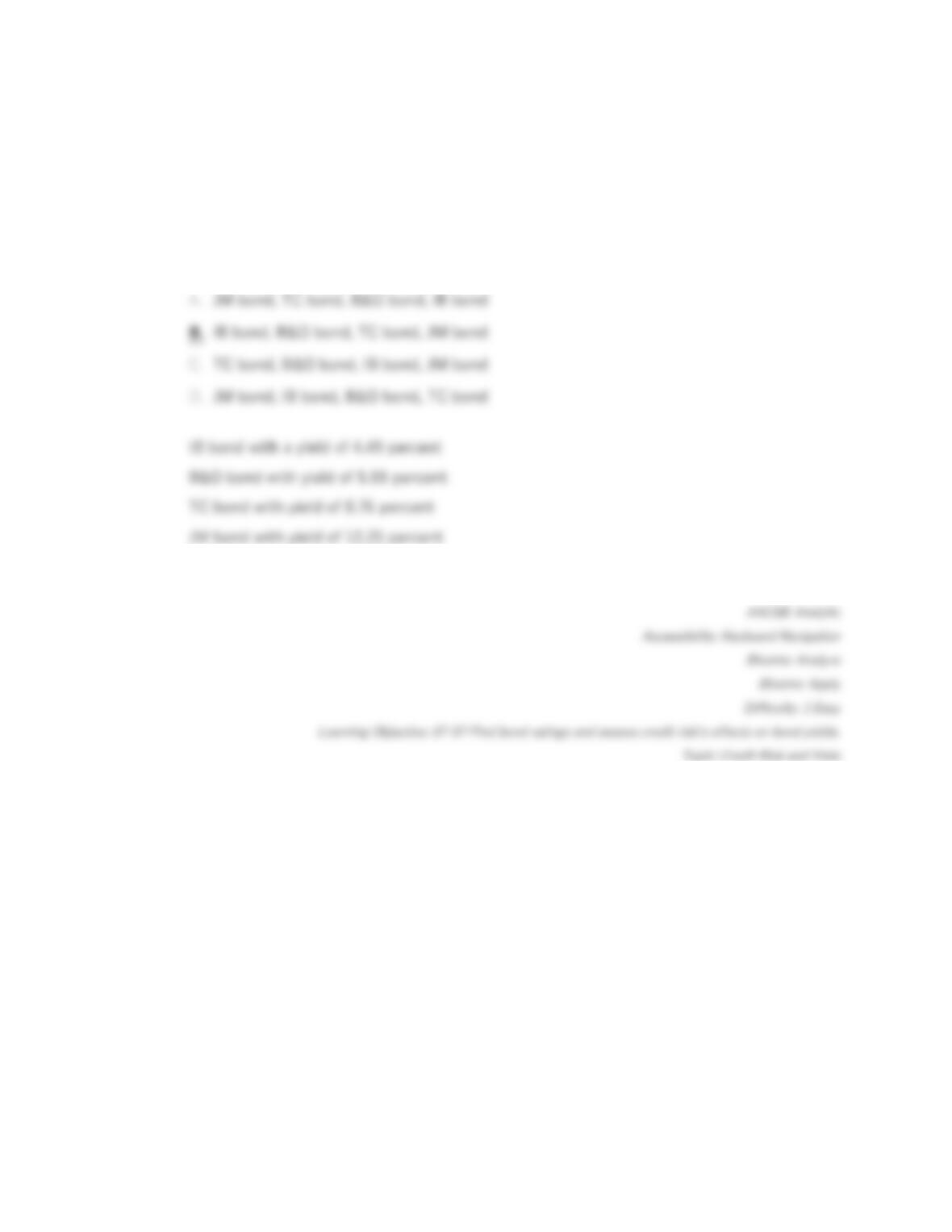
Credit Risk and Yield Rank the following bonds in order from lowest credit risk to highest
risk all with the same time to maturity, by their yield to maturity: JM Corporate bond with
yield of 12.25 percent, IB Corporate bond with yield of 4.49 percent, TC Corporate bond
with yield of 8.76 percent, and B&O Corporate bond with a yield of 5.99 percent.
46.
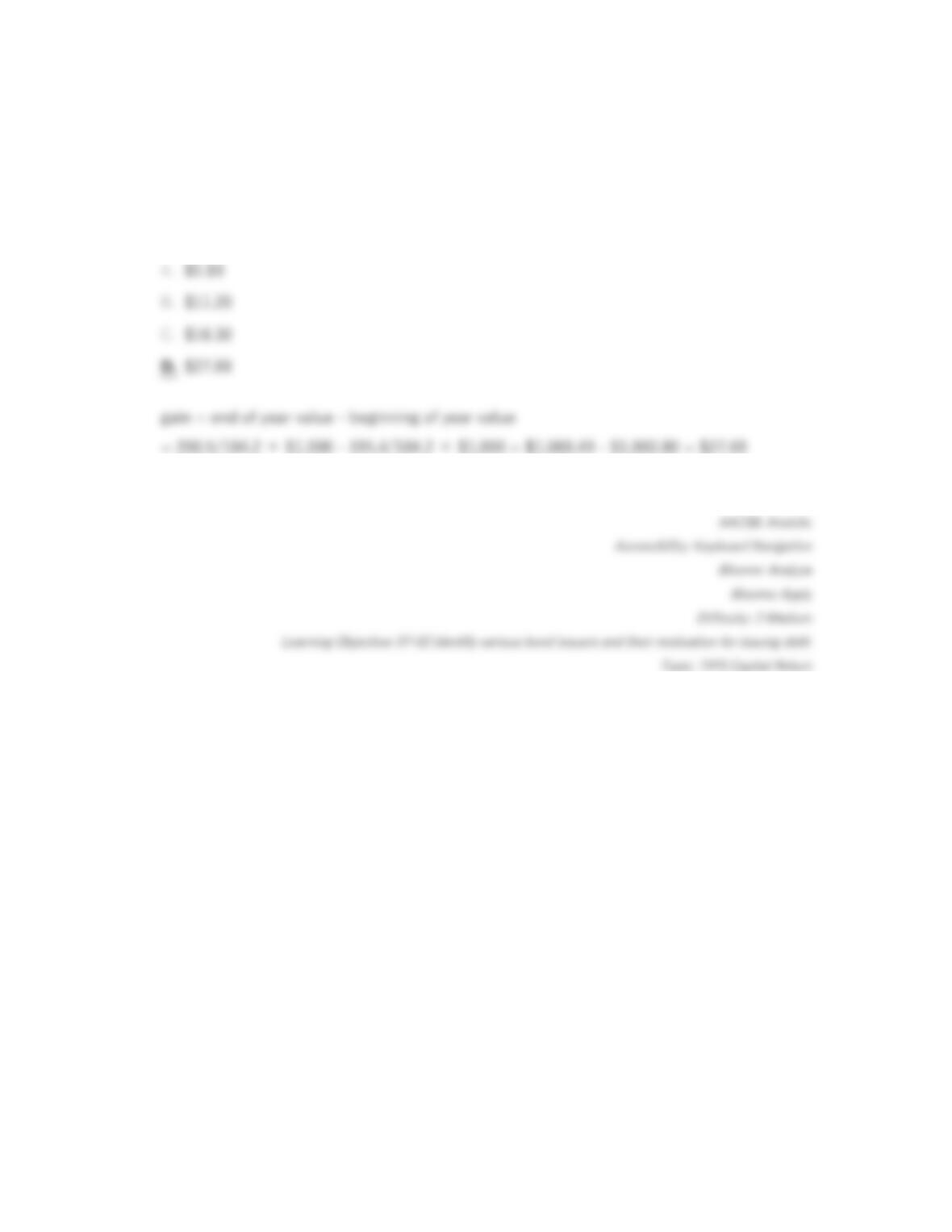
TIPS Capital Return Consider a 2.75 percent TIPS with an issue CPI reference of 184.2.
At the beginning of this year, the CPI was 195.4 and was at 200.5 at the end of the year.
What was the capital gain of the TIPS in dollars?
47.
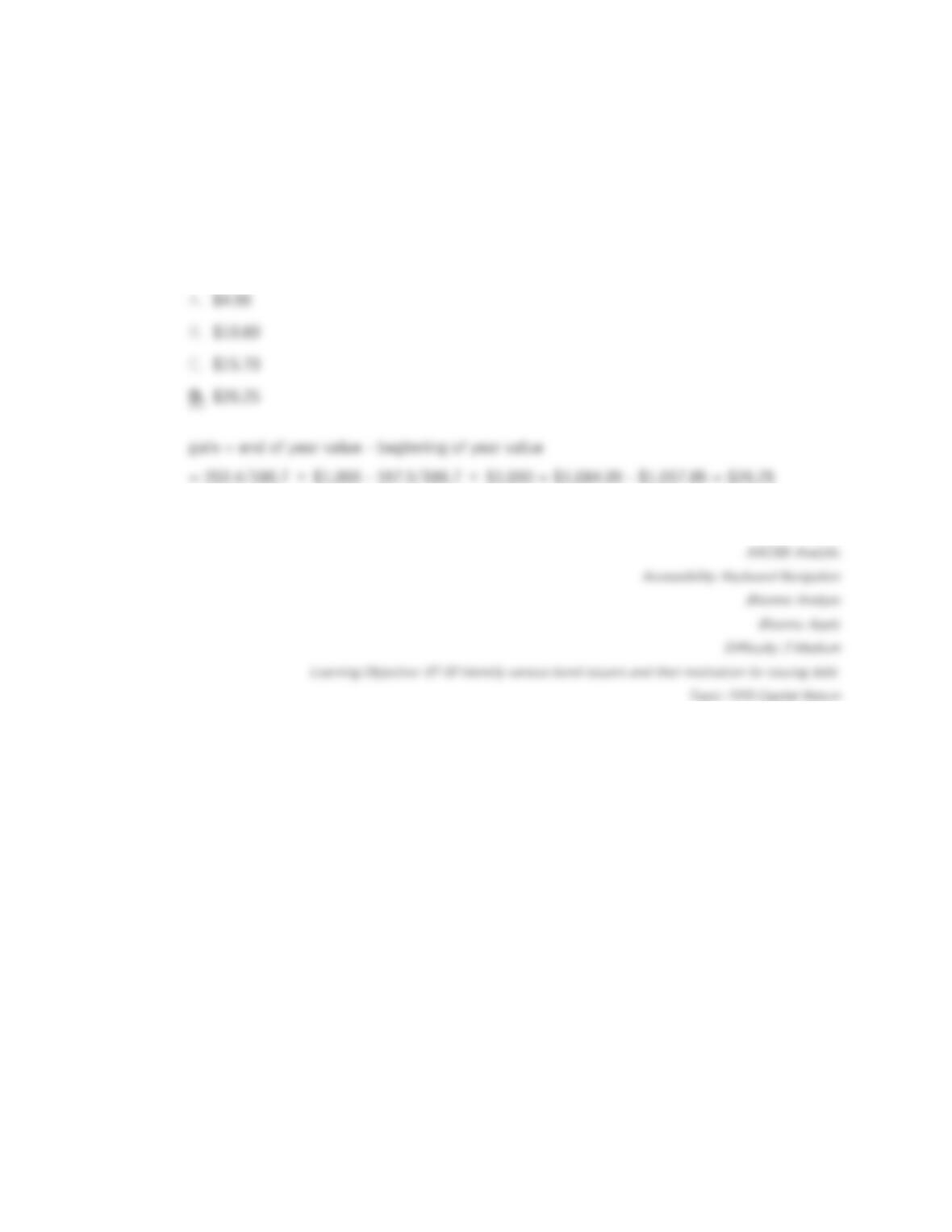
TIPS Capital Return Consider a 3.25 percent TIPS with an issue CPI reference of 186.7.
At the beginning of this year, the CPI was 197.5 and was at 202.4 at the end of the year.
What was the capital gain of the TIPS in dollars? (Assume semi-annual interest payments
and $1,000 par value.)
48.
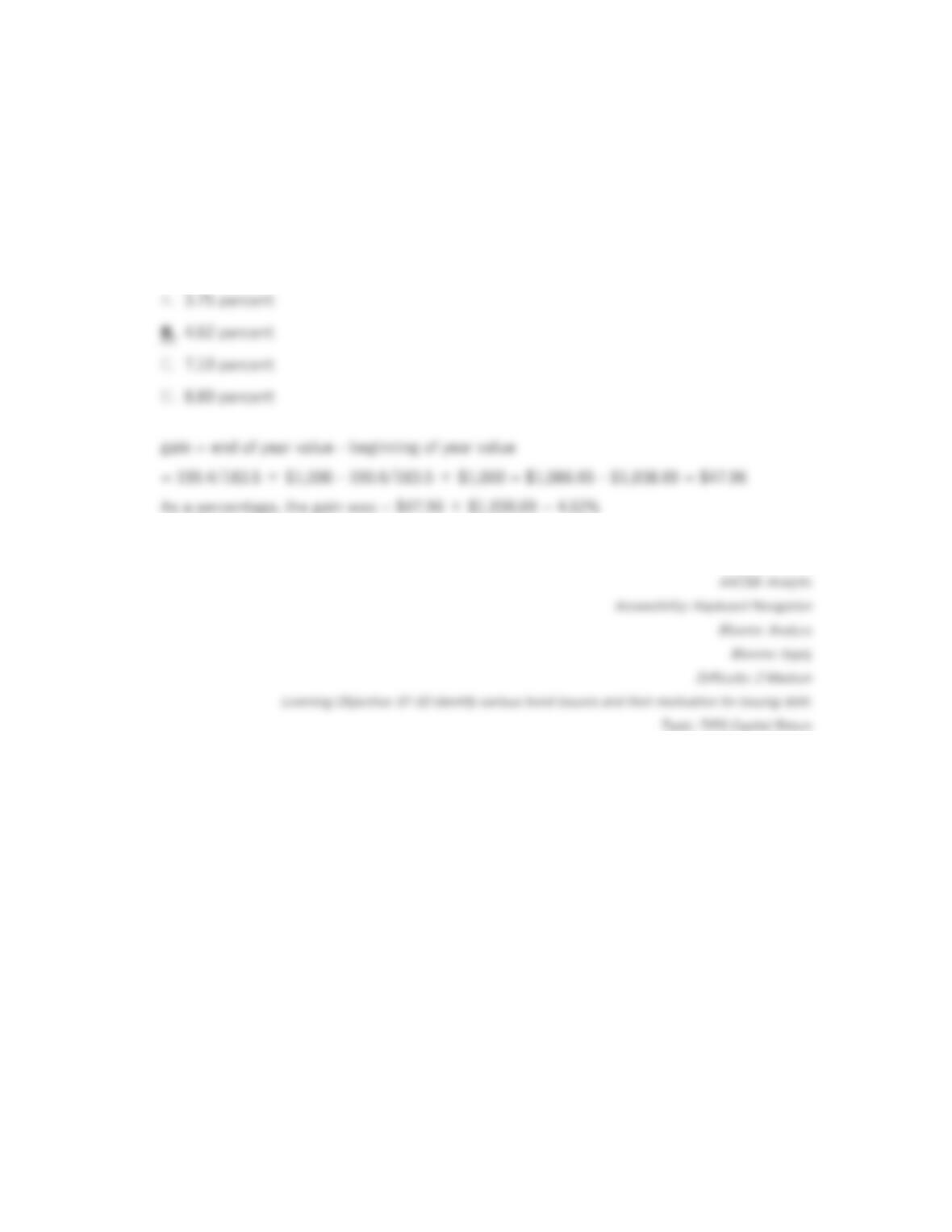
TIPS Capital Return Consider a 3.75 percent TIPS with an issue CPI reference of 183.5.
At the beginning of this year, the CPI was 190.6 and was at 199.4 at the end of the year.
What was the capital gain of the TIPS in percentage terms? (Assume semi-annual interest
payments and $1,000 par value.)
49.
Compute Bond Price Compute the price of a 4.75 percent coupon bond with 15 years left
to maturity and a market interest rate of 6.25 percent. (Assume interest payments are
semi-annual and par value is $1,000.) Is this a discount or premium bond?
50.
Compute Bond Price Compute the price of a 6 percent coupon bond with 10 years left to
maturity and a market interest rate of 8.75 percent. (Assume interest payments are semi-
annual and par value is $1,000.) Is this a discount or premium bond?
51.
Bond Prices and Interest Rate Changes A 6 percent coupon bond with 12 years left to
maturity is priced to offer a 6.5 percent yield to maturity. You believe that in one year, the
yield to maturity will be 6.25 percent. What is the change in price the bond will experience
in dollars? (Assume semi-annual interest payments and $1,000 par value.)
52.
Bond Prices and Interest Rate Changes A 5.5 percent coupon bond with 18 years left to
maturity is priced to offer a 6.25 percent yield to maturity. You believe that in one year, the
yield to maturity will be 5.75 percent. What is the change in price the bond will experience
in dollars? (Assume semi-annual interest payments and $1,000 par value.)
53.
Yield to Maturity A 5.75 percent coupon bond with 12 years left to maturity is offered for
sale at $978.83. What yield to maturity is the bond offering? (Assume interest payments
are paid semi-annually and par value is $1,000.)
54.
Yield to Maturity A 4.25 percent coupon bond with eight years left to maturity is offered
for sale at $983.36. What yield to maturity is the bond offering? (Assume interest
payments are paid semi-annually and par value is $1,000.)
55.
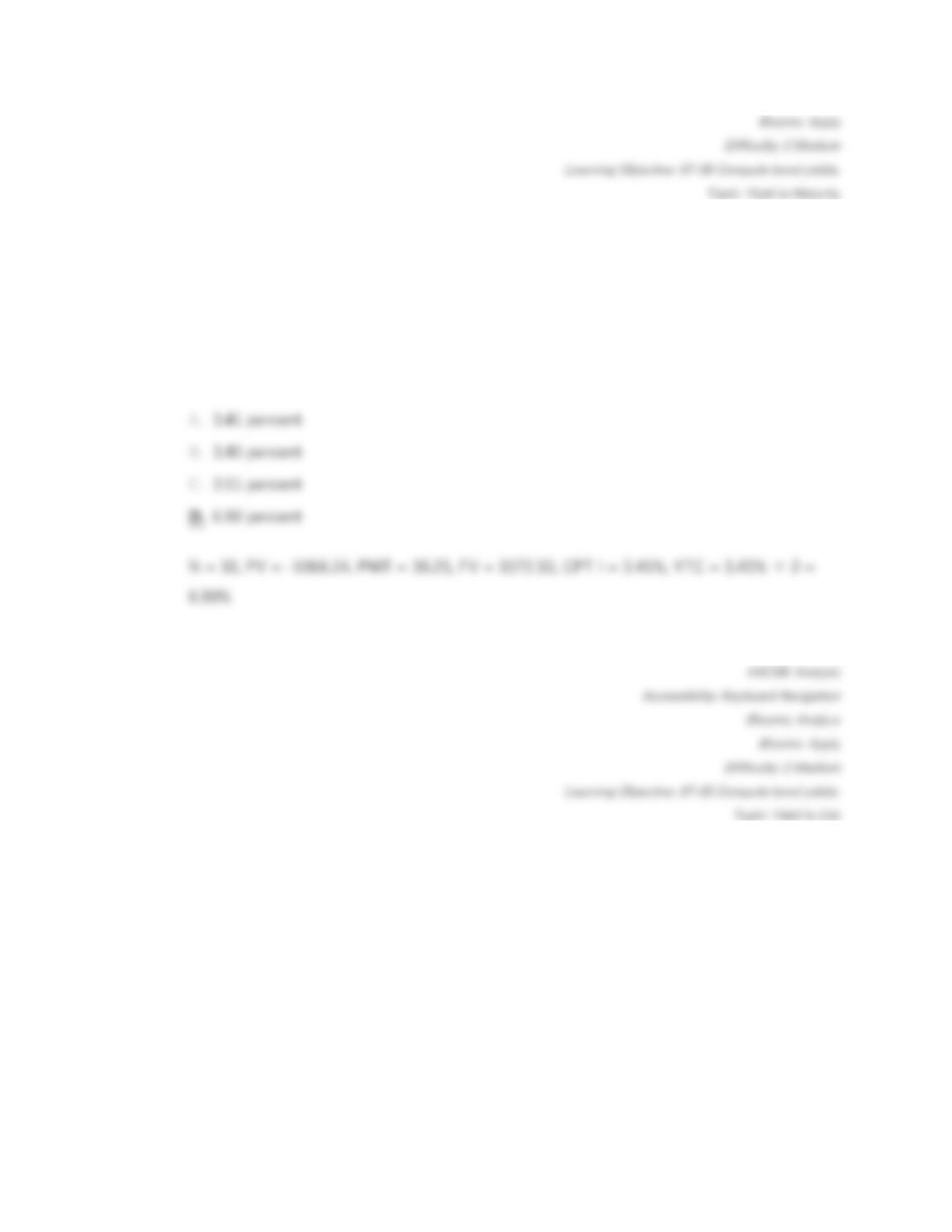
Yield to Call A 7.25 percent coupon bond with 25 years left to maturity can be called in
five years. The call premium is one year of coupon payments. It is offered for sale at
$1,066.24. What is the yield to call of the bond? (Assume that interest payments are paid
semi-annually and par value is $1,000.)
56.
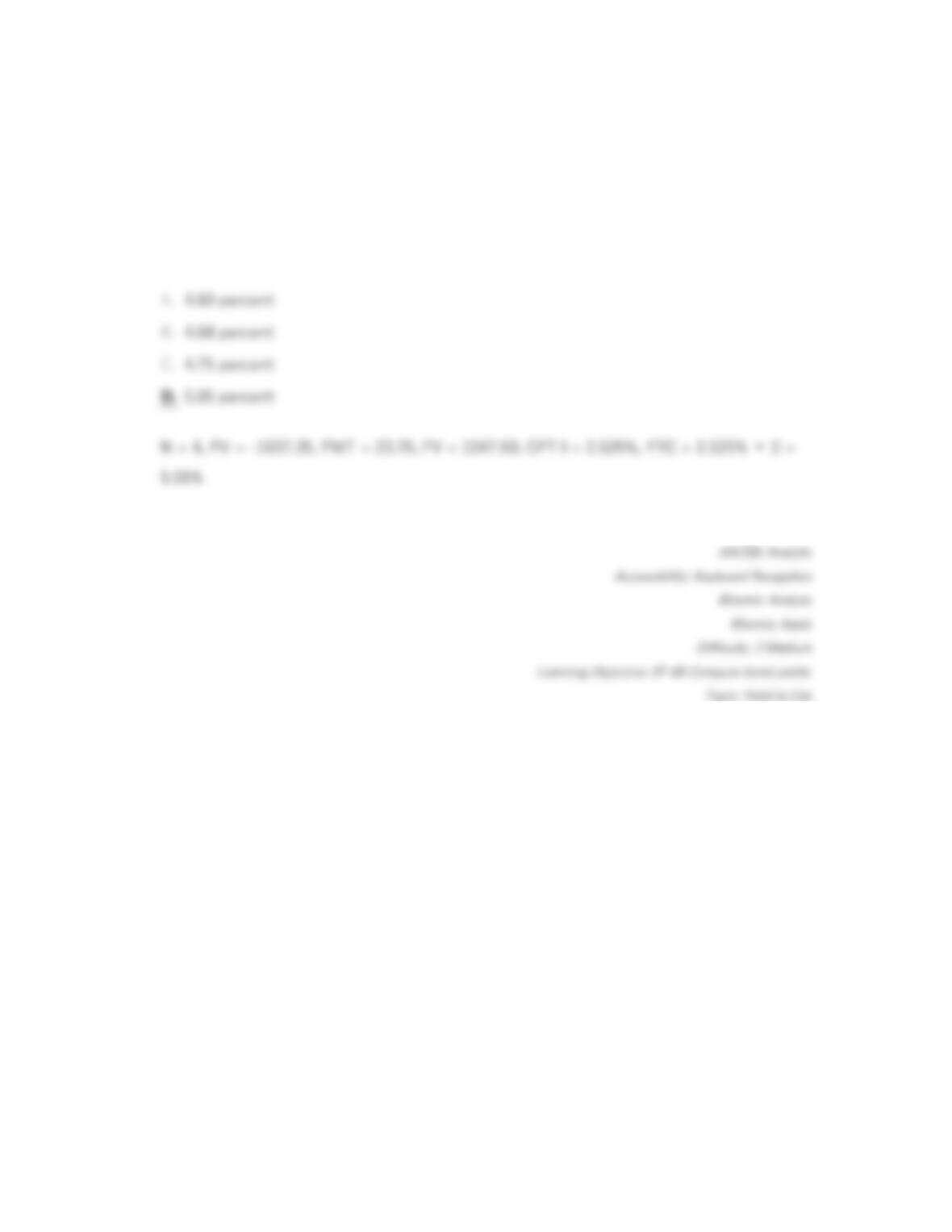
Yield to Call A 4.75 percent coupon bond with 12 years left to maturity can be called in
two years. The call premium is one year of coupon payments. It is offered for sale at
$1037.35. What is the yield to call of the bond? (Assume that interest payments are paid
semi-annually and par value is $1,000.)
57.
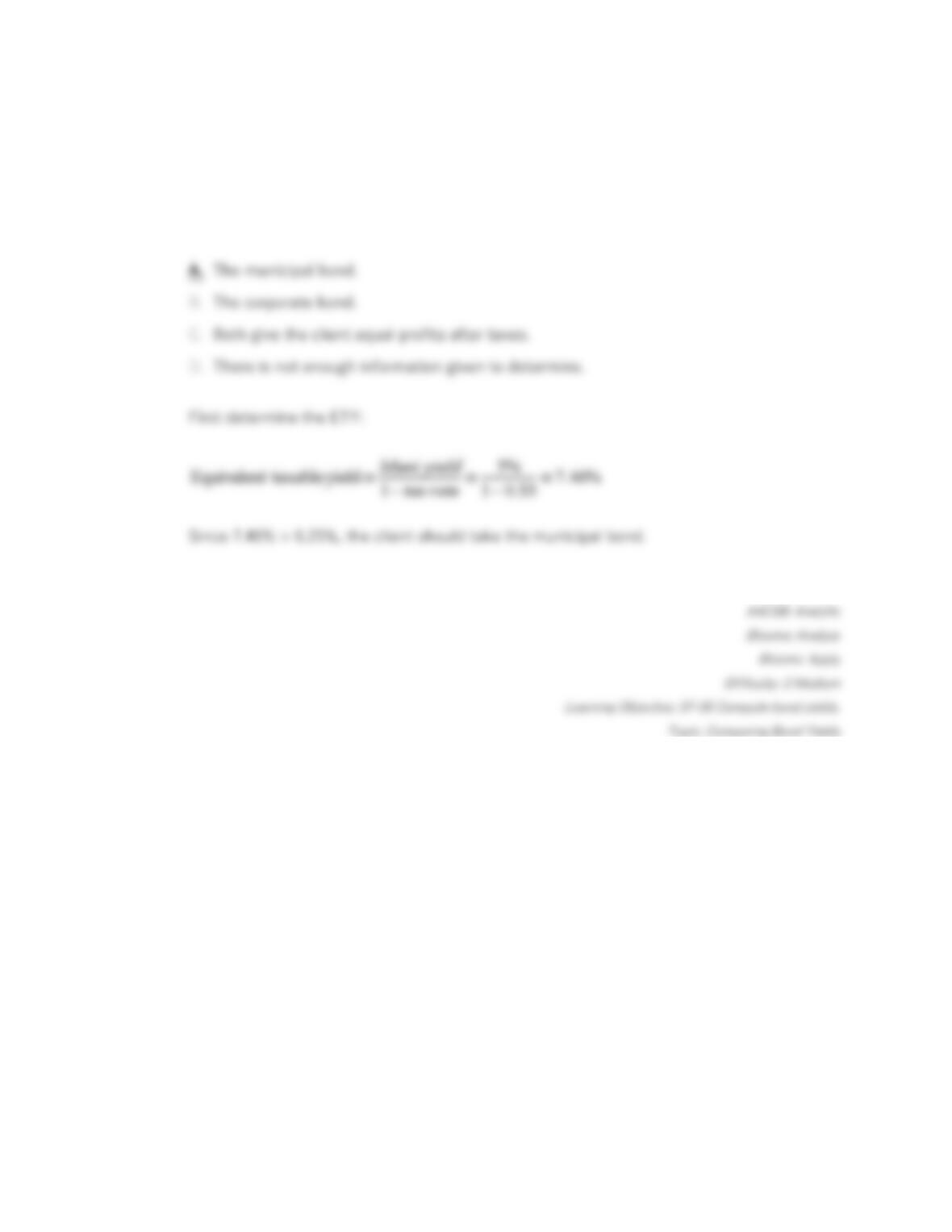
Comparing Bond Yields A client in the 33 percent marginal tax bracket is comparing a
municipal bond that offers a 5 percent yield to maturity and a similar-risk corporate bond
that offers a 6.25 percent yield. Which bond will give the client more profit after taxes?
58.
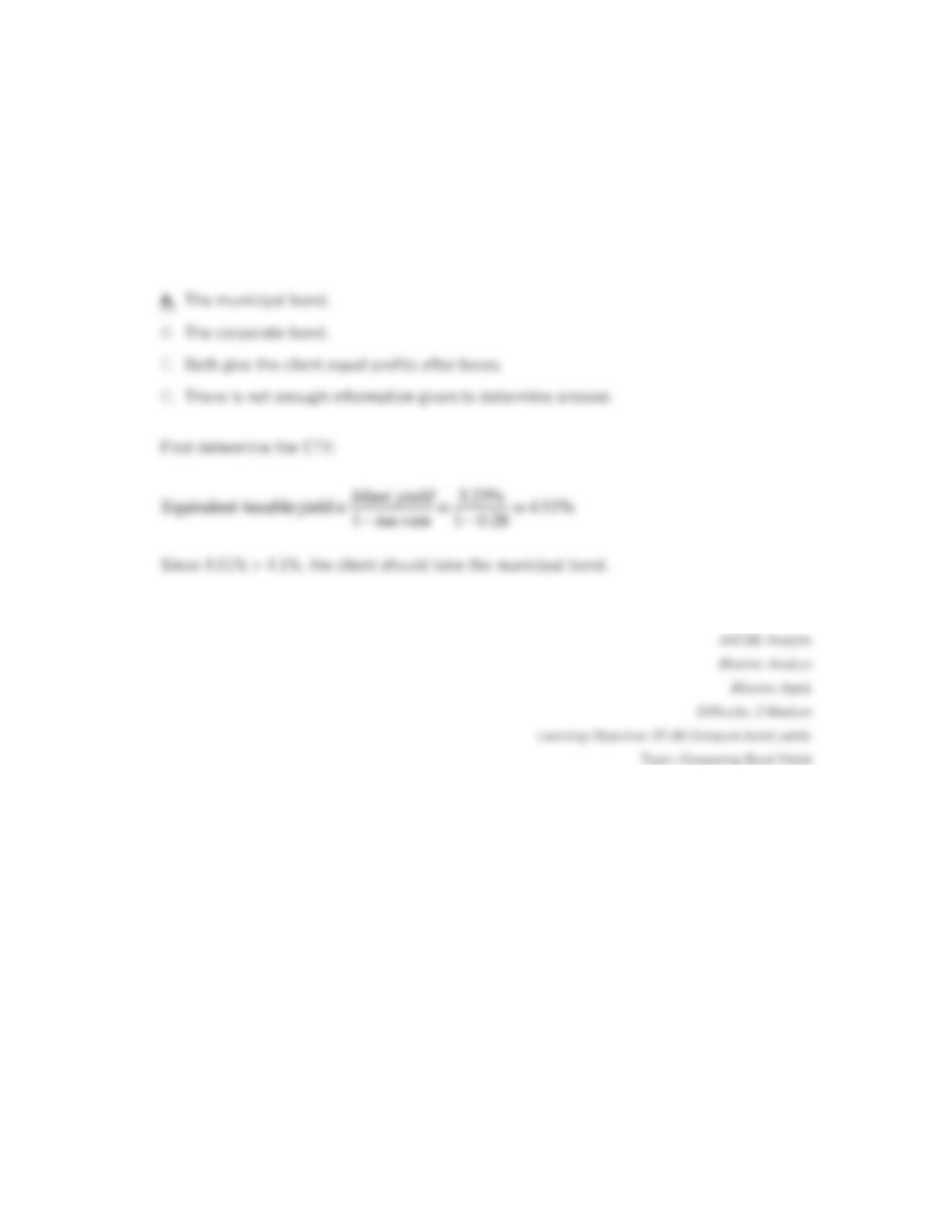
Comparing Bond Yields A client in the 28 percent marginal tax bracket is comparing a
municipal bond that offers a 3.25 percent yield to maturity and a similar-risk corporate
bond that offers a 4.10 percent yield. Which bond will give the client more profit after
taxes?