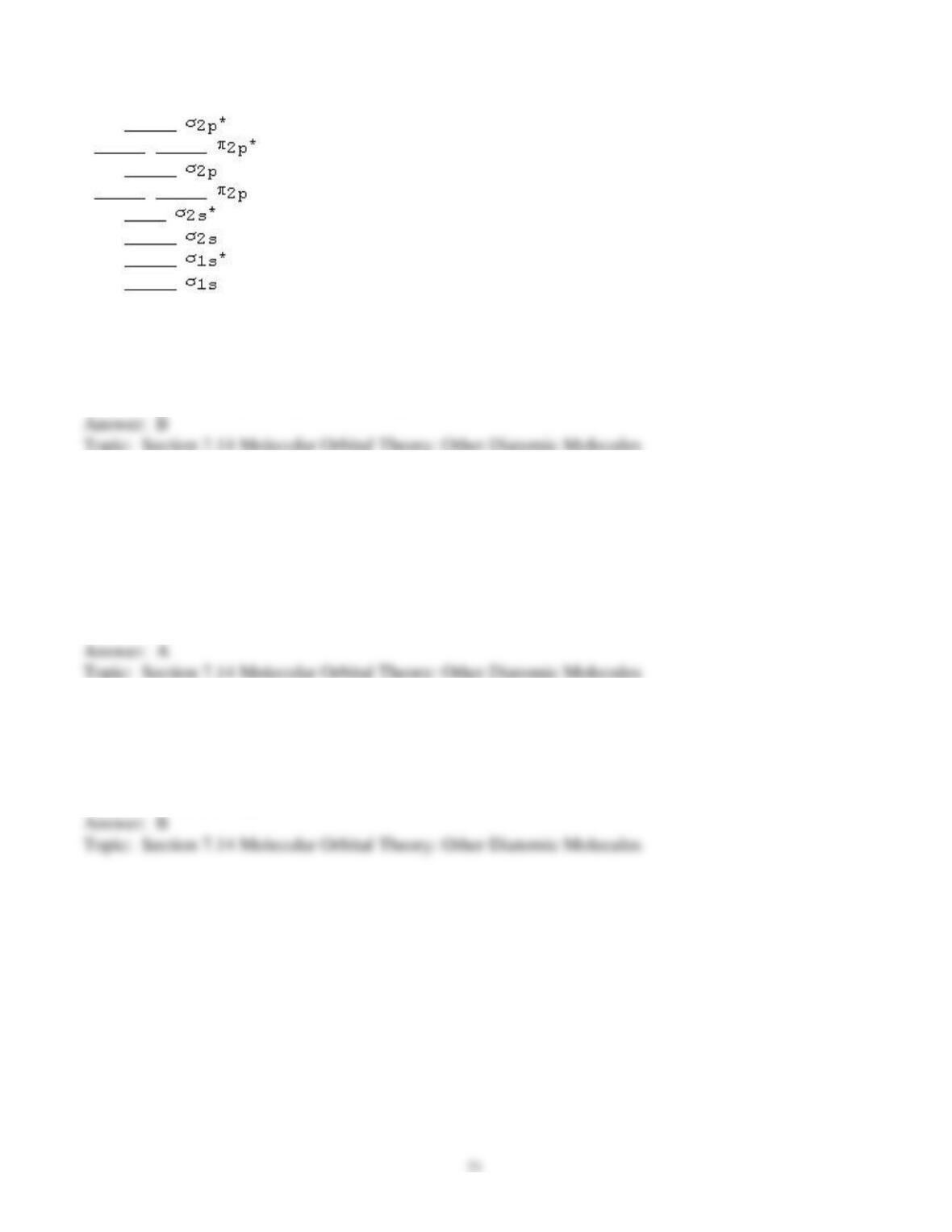
91) The following MO diagram is appropriate for Li2 and Be2. Based on this diagram,
A) both are stable and diamagnetic.
B) Li2 is stable and diamagnetic, but Be2 is unstable.
C) Be2 is stable and diamagnetic, but Li2 is unstable.
D) Be2 is stable and paramagnetic, but Li2 is unstable.
92) Given that O2 is paramagnetic and has a bond order of 2, and its highest occupied molecular orbital
is antibonding, what would be the expected bond orders for O22- and O22+?
A) 1 for O22- and 3 for O22+
B) 3/2 for O22- and 5/2 for O22+
C) 5/2 for O22- and 3/2 for O22+
D) 3 for O22- and 1 for O22+
93) The paramagnetism of O2 is explained by
A) coordinate covalent bonding.
B) molecular orbital theory.
C) resonance.
D) valence bond theory.
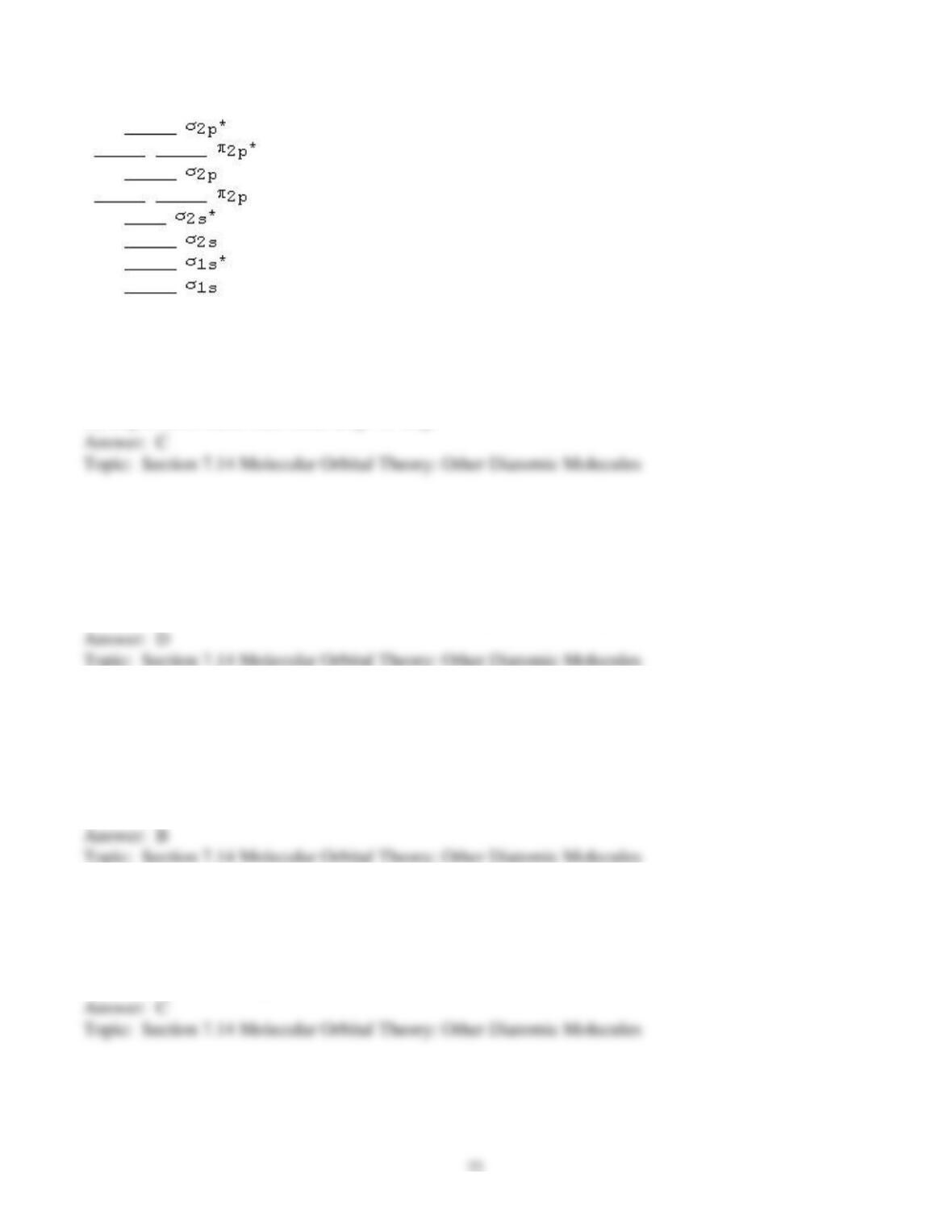
94) Use the following MO diagram for Be2, Be2+, and Be2–. Based on this diagram,
A) Be2+ is more stable than Be2, and Be2 is more stable than Be2–.
B) Be2– is more stable than Be2, and Be2 is more stable than Be2+.
C) Be2+ and Be2– are both more stable than Be2.
D) Be2 is more stable than either Be2+ or Be2–.
95) Which statement concerning any homonuclear diatomic molecule and its 1- ion must be true?
A) X2 must be more stable than X2–.
B) X2 must be less stable than X2–.
C) X2– must be paramagnetic and X2 must be diamagnetic.
D) X2– must be paramagnetic and X2 may be paramagnetic or diamagnetic.
96) Which is paramagnetic?
A) N22+
B) N22-
C) O22+
D) O22-
97) Based on molecular orbital theory, in order to weaken the N—N bond in N2, electrons should be
A) added.
B) removed.
C) either added or removed.
D) neither added nor removed.
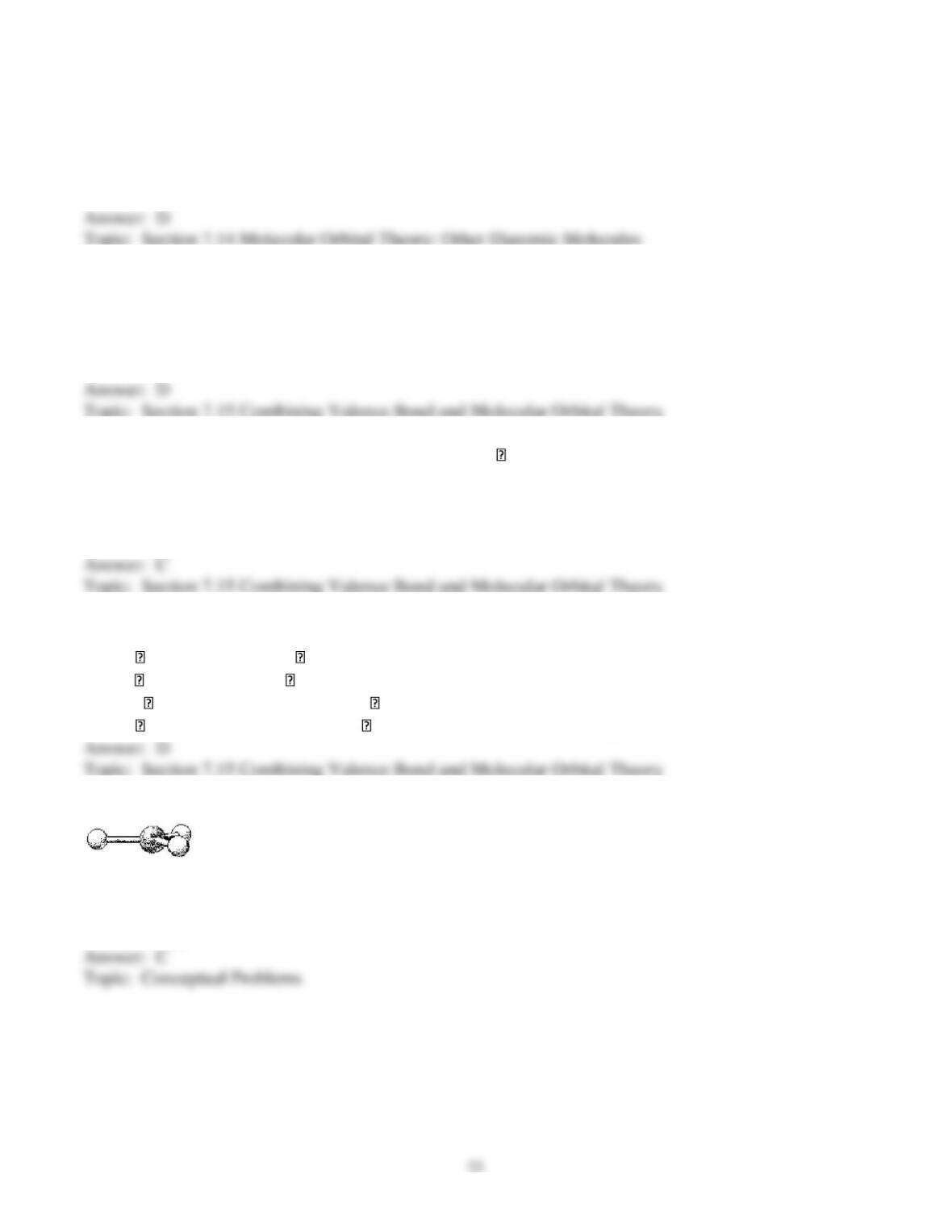
98) In which will the O—O bond be made stronger by removing an electron?
A) Only O2
B) Only O2–
C) Only O22-
D) All of these
99) Molecular orbitals extending over more than two atoms provide an explanation for
A) coordinate covalent bonding.
B) ionic bonding.
C) paramagnetism.
D) resonance.
100) The SO3 molecule can be described as having 3 S O σ bonds and π molecular orbitals containing
A) 2 electrons.
B) 4 electrons.
C) 6 electrons.
D) 8 electrons.
101) Which is the best description of the bonding in NO3–?
A) 3 N O σ bonds and no N O π bonds
B) 3 N O σ bonds and 3 N O π bonds
C) no N O σ bonds and delocalized N O π molecular orbitals extending over all four atoms
D) 3 N O σ bonds and delocalized N O π molecular orbitals extending over all four atoms
102) What is the geometry around the central atom in the following molecular model of BCl3?
A) linear
B) bent
C) trigonal planar
D) trigonal pyramidal
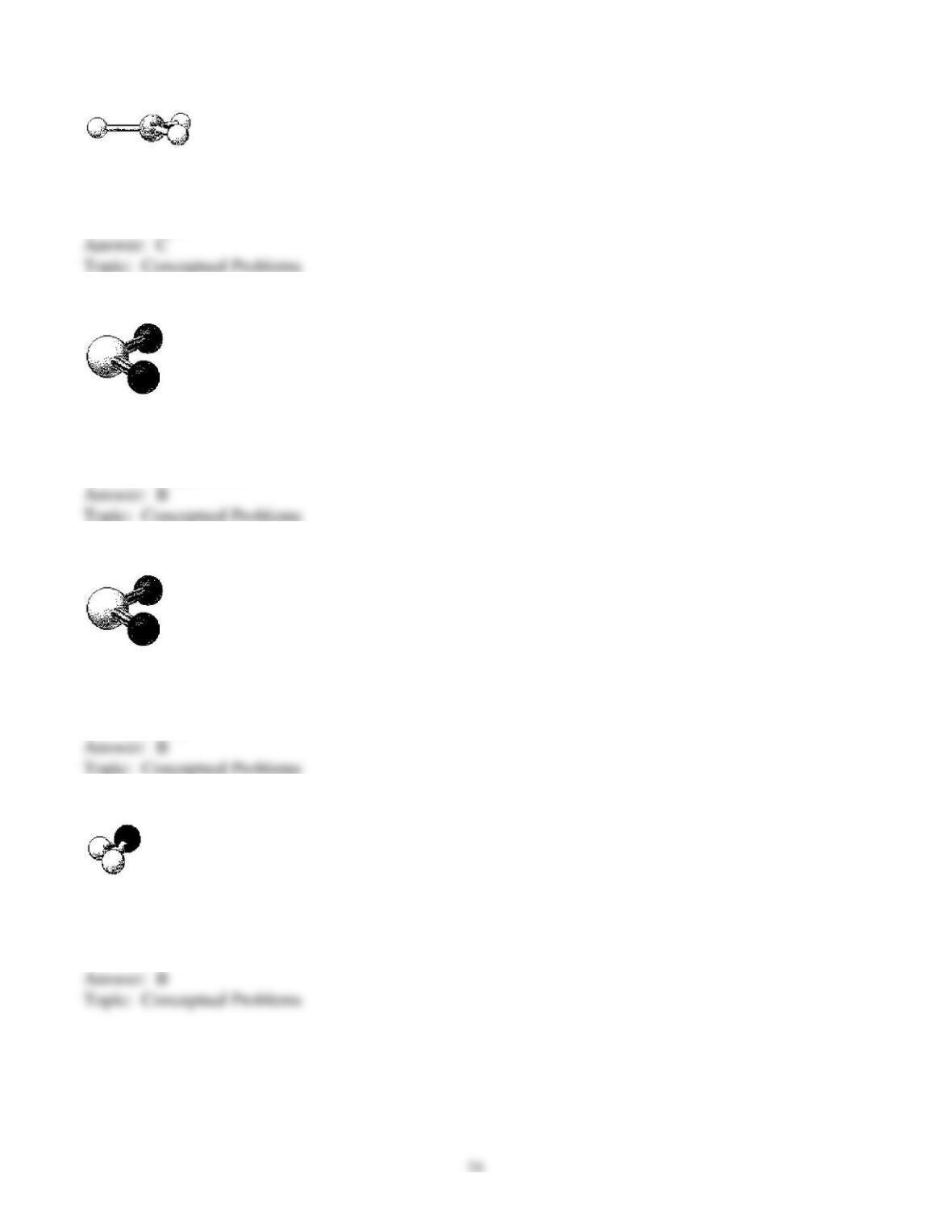
103) What is the geometry around the central atom in the following molecular model of NO3–?
A) linear
B) bent
C) trigonal planar
D) trigonal pyramidal
104) What is the geometry around the central atom in the following molecular model of SO2?
A) linear
B) bent
C) trigonal planar
D) trigonal pyramidal
105) What is the geometry around the central atom in the following molecular model of NO2–?
A) linear
B) bent
C) trigonal planar
D) trigonal pyramidal
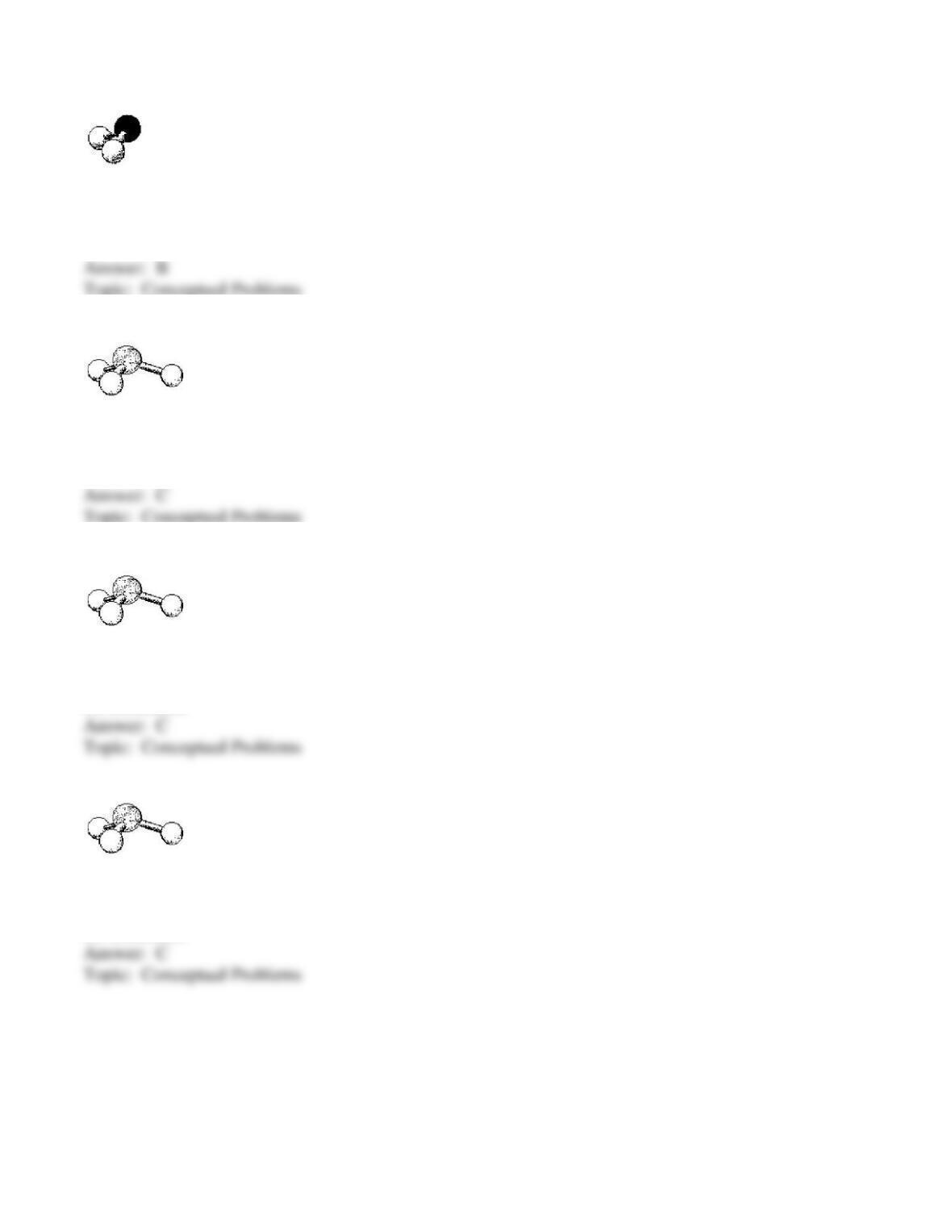
106) What is the geometry around the central atom in the following molecular model of H2S?
A) linear
B) bent
C) trigonal pyramidal
D) tetrahedral
25
107) What is the geometry around the central atom in the following molecular model of NH2–?
A) linear
B) bent
C) trigonal pyramidal
D) tetrahedral
108) What is the geometry around the central atom in the following molecular model of PH3?
A) linear
B) bent
C) trigonal pyramidal
D) tetrahedral
109) What is the geometry around the central atom in the following molecular model of SO32-?
A) linear
B) bent
C) trigonal pyramidal
D) tetrahedral
110) What is the geometry around the central atom in the following molecular model of H3O+?
A) linear
B) bent
C) trigonal pyramidal
D) tetrahedral
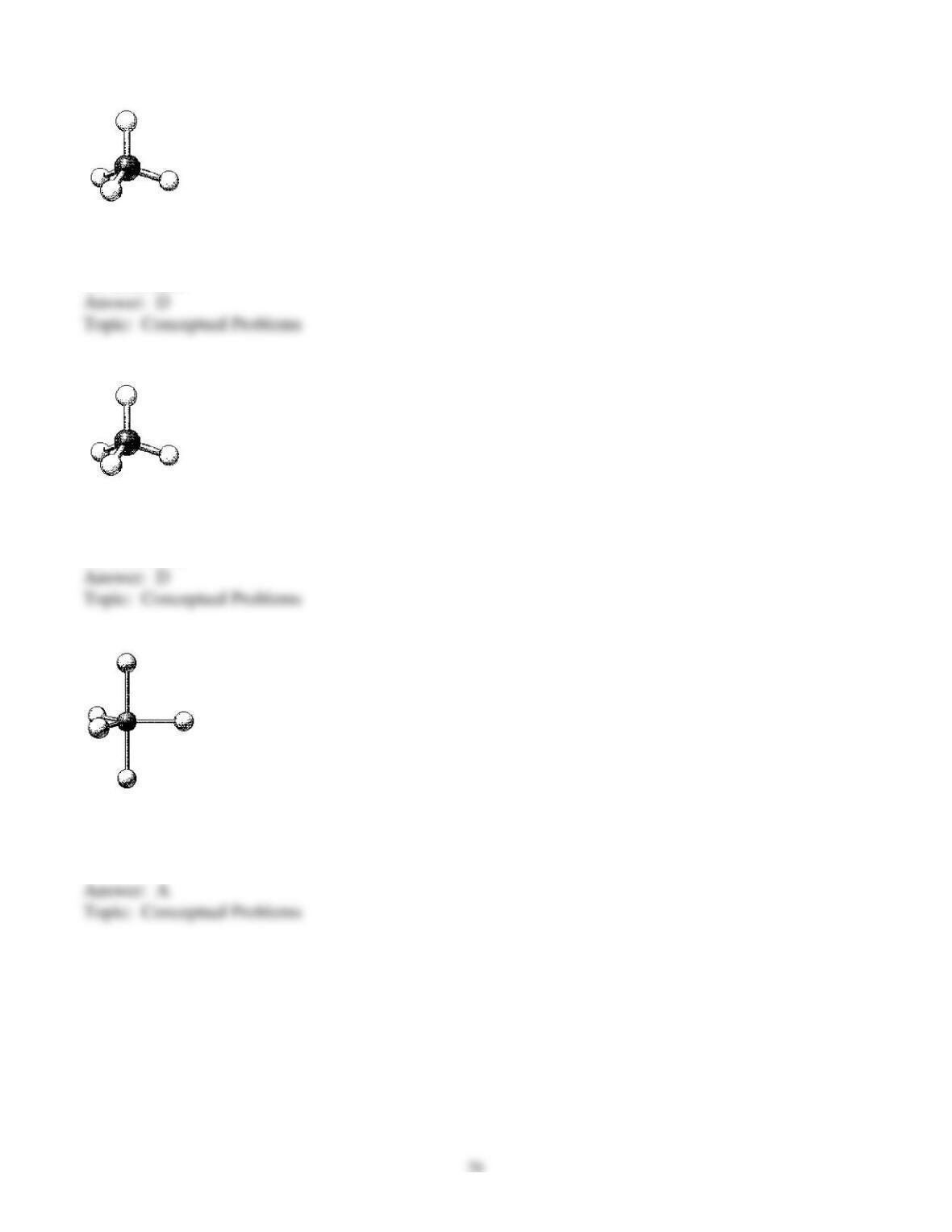
111) What is the geometry around the central atom in the following molecular model of CCl4?
A) linear
B) bent
C) trigonal pyramidal
D) tetrahedral
112) What is the geometry around the central atom in the following molecular model of NH4+?
A) linear
B) bent
C) trigonal pyramidal
D) tetrahedral
113) What is the geometry around the central atom in the following molecular model of PF5?
A) trigonal bipyramidal
B) seesaw
C) T-shaped
D) linear
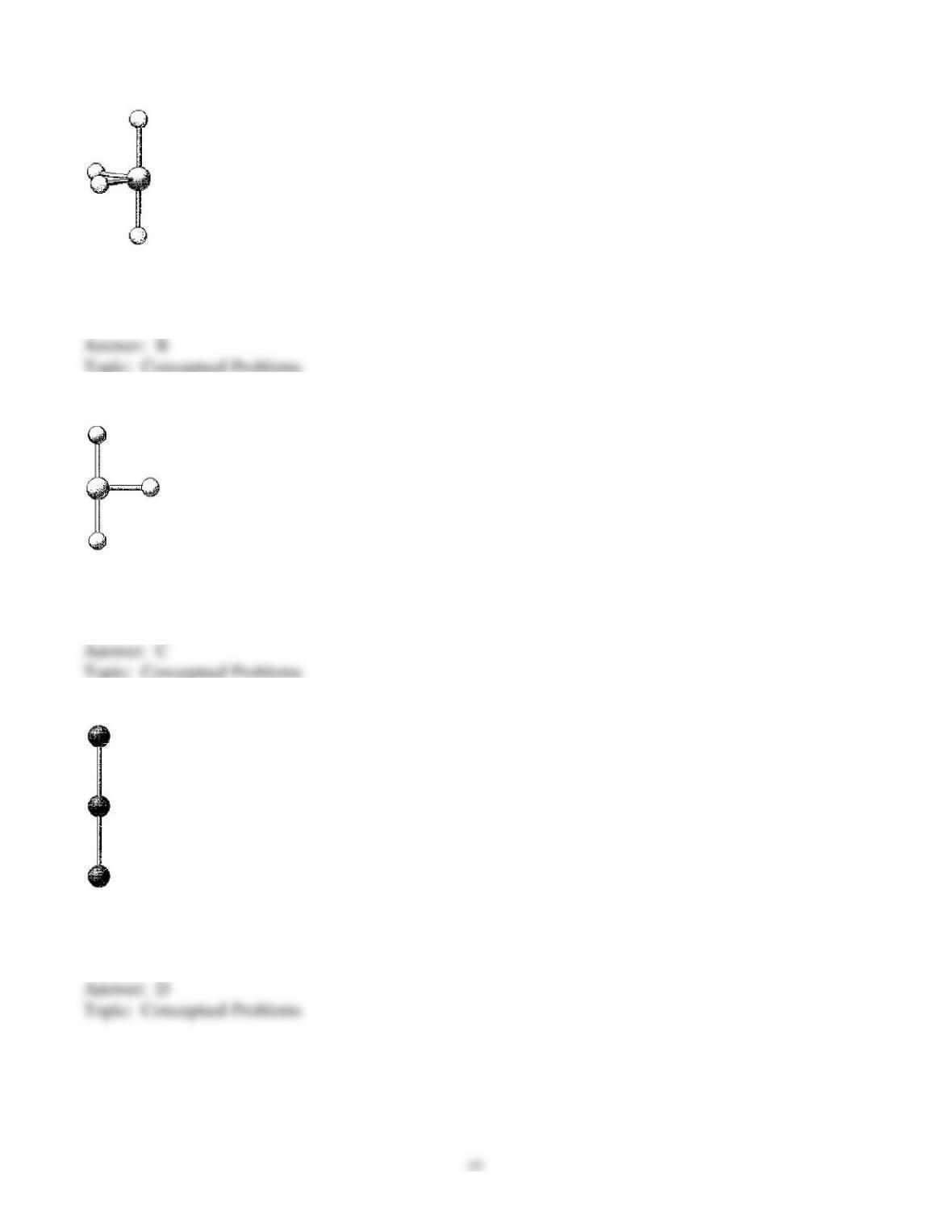
114) What is the geometry around the central atom in the following molecular model of SCl4?
A) trigonal bipyramidal
B) seesaw
C) T-shaped
D) linear
115) What is the geometry around the central atom in the following molecular model of BrF3?
A) trigonal bipyramidal
B) seesaw
C) T-shaped
D) linear
116) What is the geometry around the central atom in the following molecular model of XeF2?
A) trigonal bipyramidal
B) seesaw
C) T-shaped
D) linear
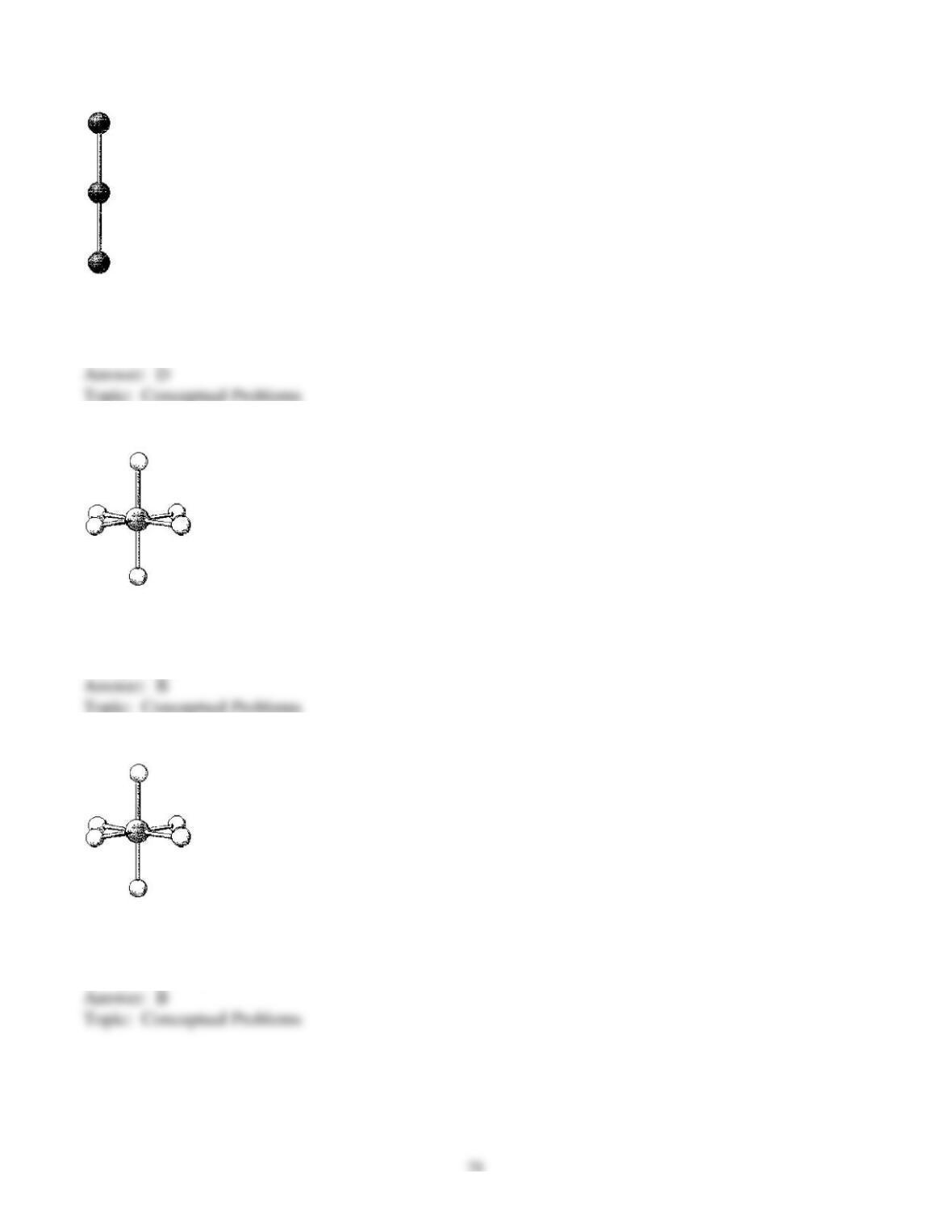
117) What is the geometry around the central atom in the following molecular model of I3–?
A) trigonal bipyramidal
B) seesaw
C) T-shaped
D) linear
118) What is the geometry around the central atom in the following molecular model of SF6?
A) trigonal bipyramidal
B) octahedral
C) square pyramidal
D) square planar
119) What is the geometry around the central atom in the following molecular model of PF6–?
A) trigonal bipyramidal
B) octahedral
C) square pyramidal
D) square planar
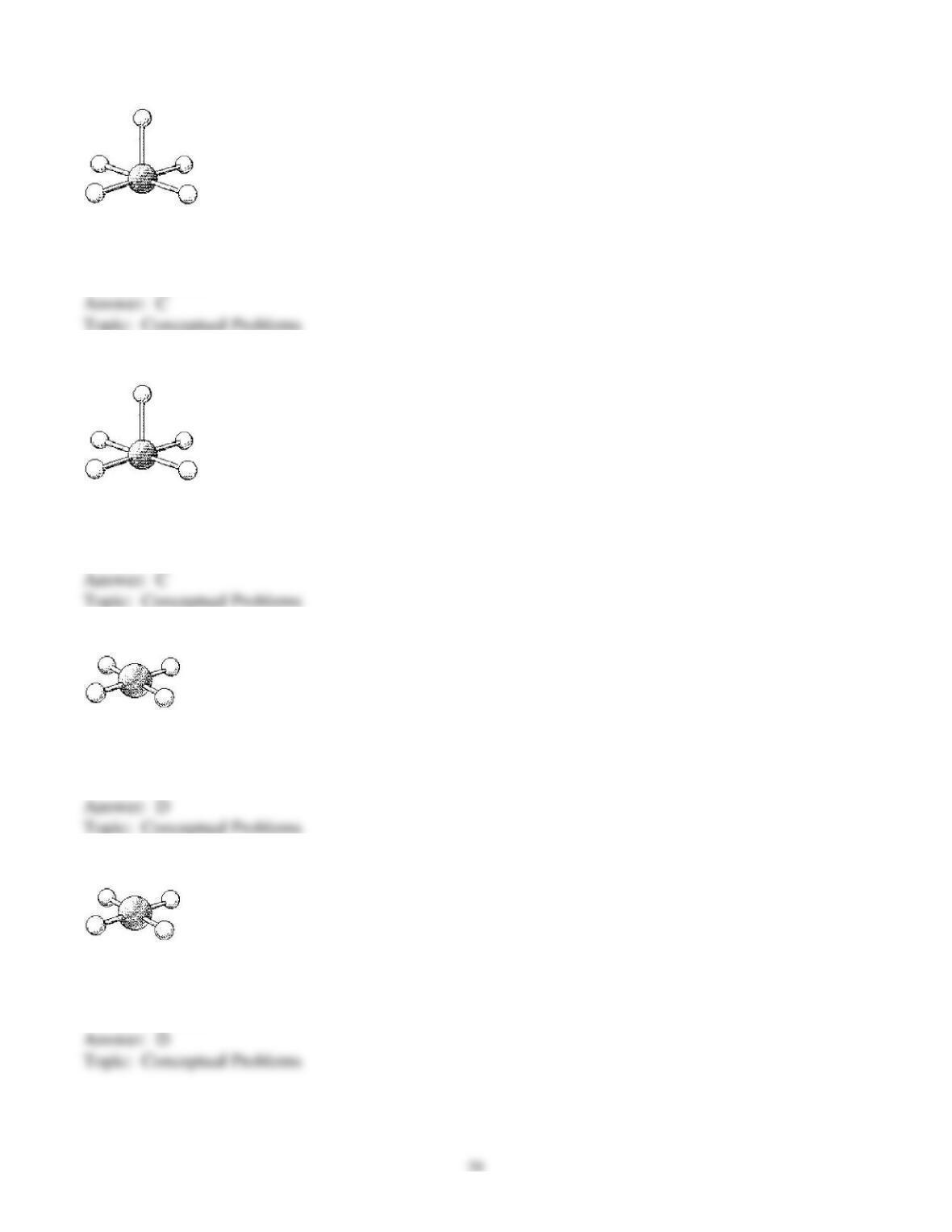
120) What is the geometry around the central atom in the following molecular model of BrF5?
A) trigonal bipyramidal
B) octahedral
C) square pyramidal
D) square planar
121) What is the geometry around the central atom in the following molecular model of TeF5–?
A) trigonal bipyramidal
B) octahedral
C) square pyramidal
D) square planar
122) What is the geometry around the central atom in the following molecular model of XeF4?
A) trigonal bipyramidal
B) octahedral
C) square pyramidal
D) square planar
123) What is the geometry around the central atom in the following molecular model of ICl4–?
A) trigonal bipyramidal
B) octahedral
C) square pyramidal
D) square planar
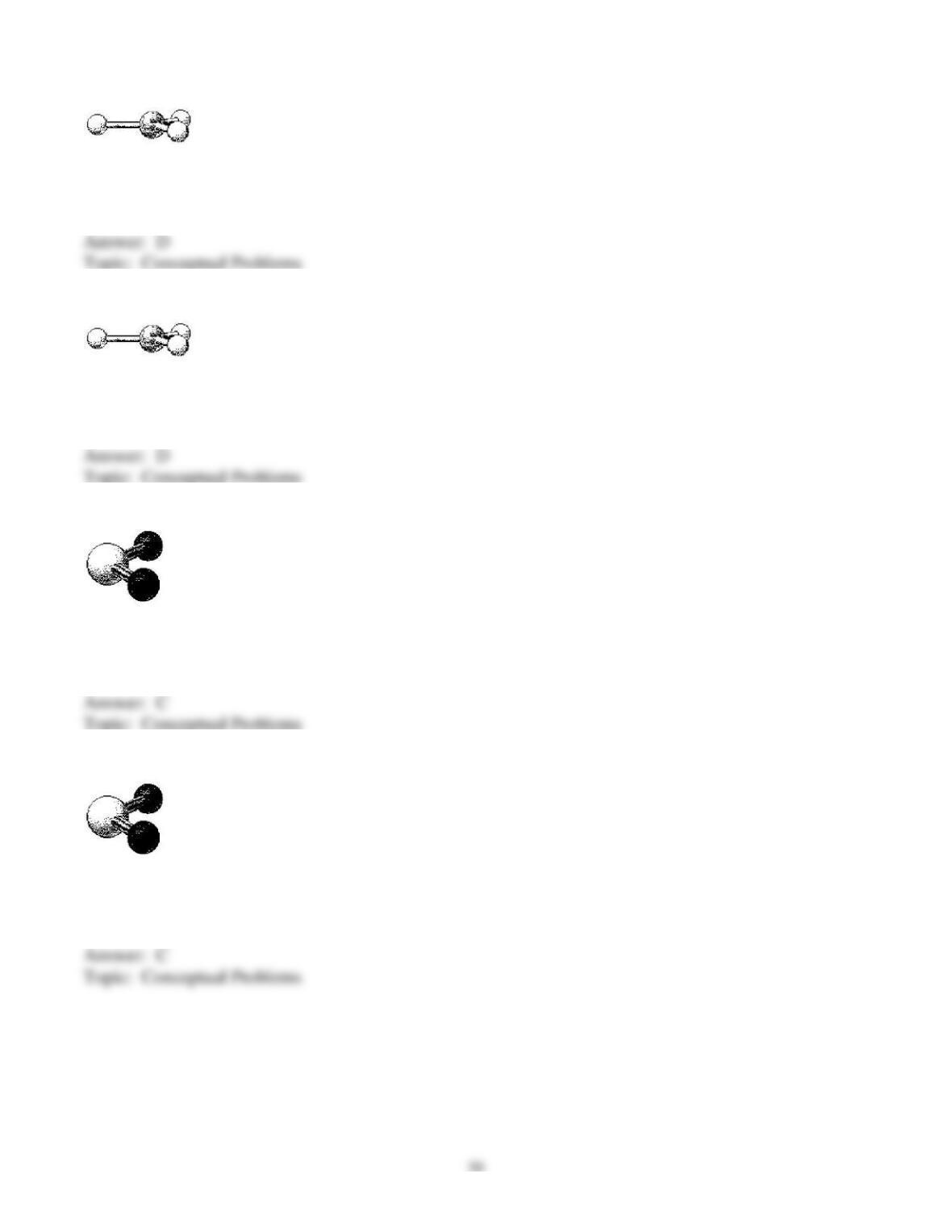
124) What are the bond angles in the following molecular model of BCl3?
A) less than 109.5°
B) 109.5°
C) less than 120° but greater than 109.5°
D) 120°
125) What are the bond angles in the following molecular model of NO3–?
A) less than 109.5°
B) 109.5°
C) less than 120° but greater than 109.5°
D) 120°
126) What is the bond angle in the following molecular model of SO2?
A) less than 109.5°
B) 109.5°
C) less than 120° but greater than 109.5°
D) 120°
127) What is the bond angle in the following molecular model of NO2–?
A) less than 109.5°
B) 109.5°
C) less than 120° but greater than 109.5°
D) 120°
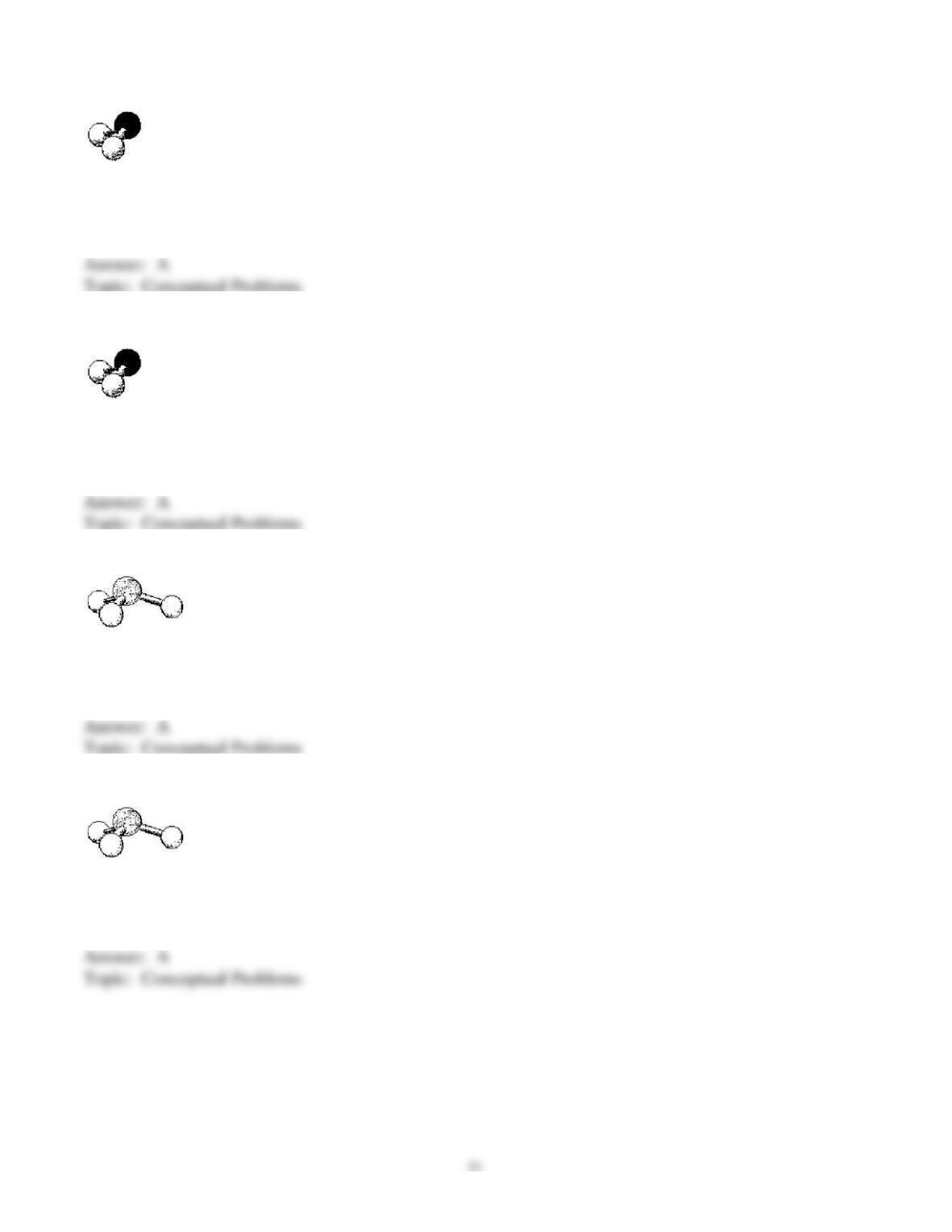
128) What is the bond angle in the following molecular model of H2S?
A) less than 109.5°
B) 109.5°
C) less than 120° but greater than 109.5°
D) 120°
129) What is the bond angle in the following molecular model of NH2–?
A) less than 109.5°
B) 109.5°
C) less than 120° but greater than 109.5°
D) 120°
130) What are the bond angles in the following molecular model of PH3?
A) less than 109.5°
B) 109.5°
C) less than 120° but greater than 109.5°
D) 120°
131) What are the bond angles in the following molecular model of SO32-?
A) less than 109.5°
B) 109.5°
C) less than 120° but greater than 109.5°
D) 120°
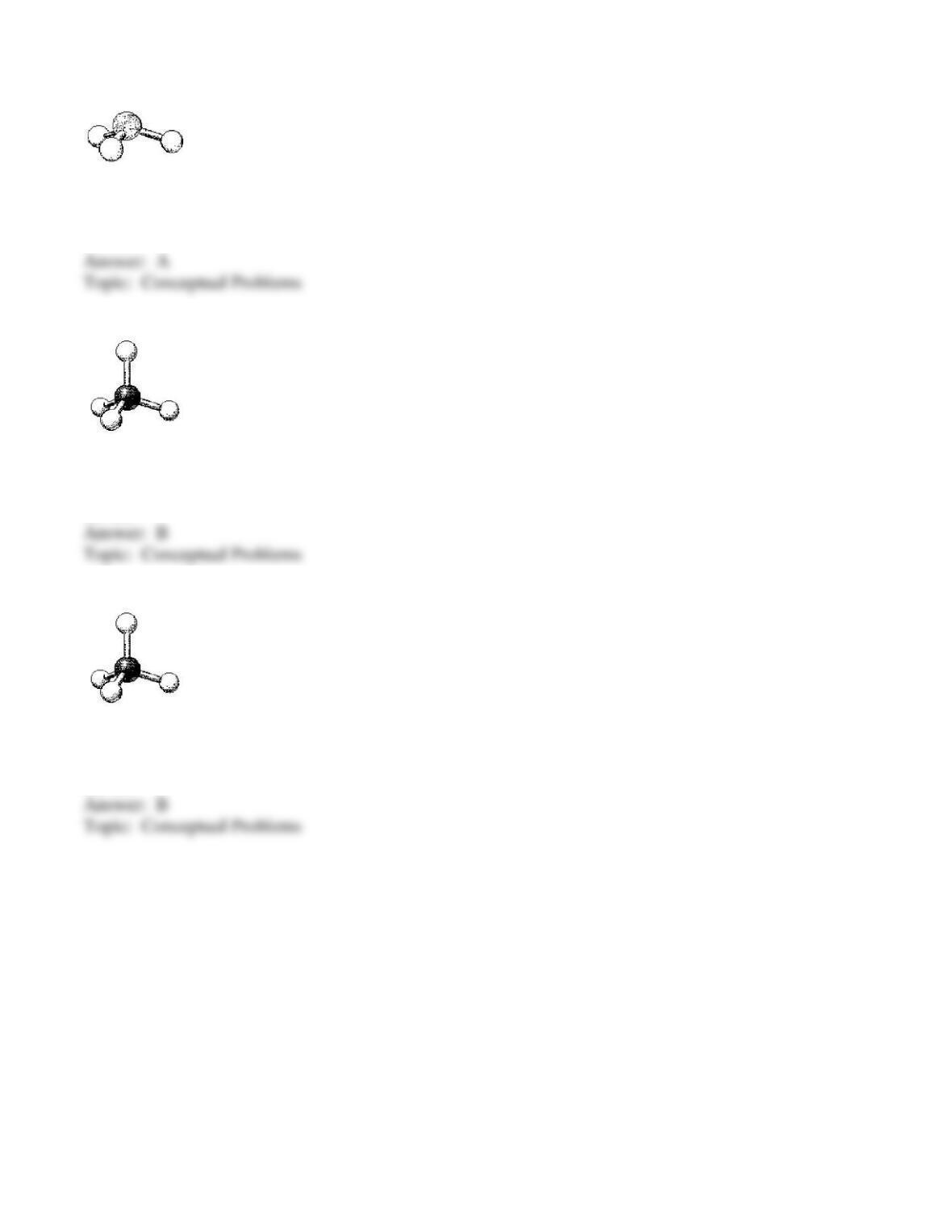
32
132) What are the bond angles in the following molecular model of H3O+?
A) less than 109.5°
B) 109.5°
C) less than 120° but greater than 109.5°
D) 120°
133) What are the bond angles in the following molecular model of CCl4?
A) less than 109.5°
B) 109.5°
C) less than 120° but greater than 109.5°
D) 120°
134) What are the bond angles in the following molecular model of NH4+?
A) less than 109.5°
B) 109.5°
C) less than 120° but greater than 109.5°
D) 120°
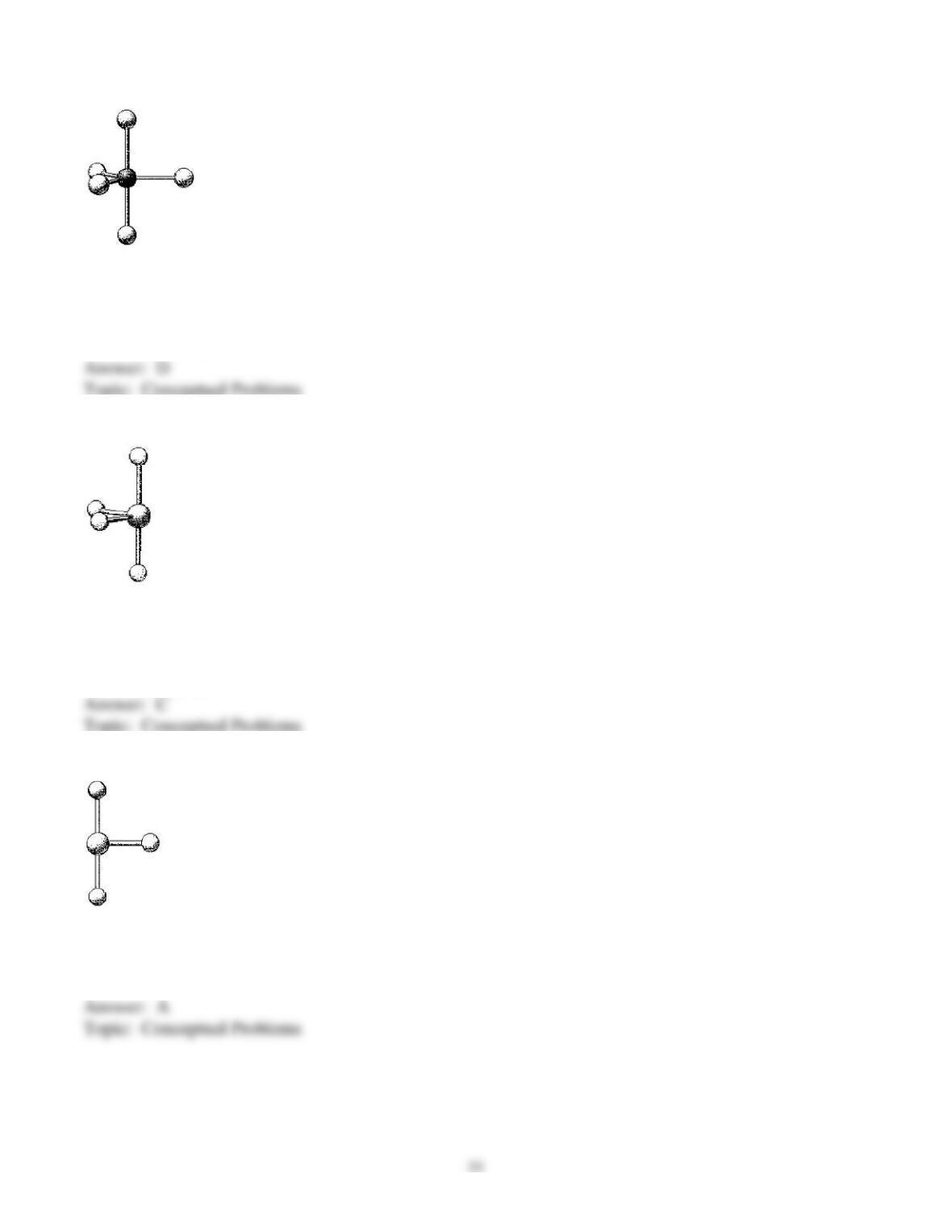
135) What are the bond angles in the following molecular model of PF5?
A) some less than 90° and one less than 180°
B) 90° and 180°
C) some less than 90° and some less than 120° but greater than 90°, and one less than 180° but greater
than 120°
D) 90°, 120°, and 180°
136) What are the bond angles in the following molecular model of SCl4?
A) some less than 90° and one less than 180°
B) 90° and 180°
C) some less than 90° one less than 120° but greater than 90°, and one less than 180° but greater than
120°
D) 90°, 120°, and 180°
137) What are the bond angles in the following molecular model of BrF3?
A) two less than 90° and one less than 180° but greater than 90°
B) 90° and 180°
C) two less than 90° and one less than 120° but greater than 90°
D) 90° and 120°
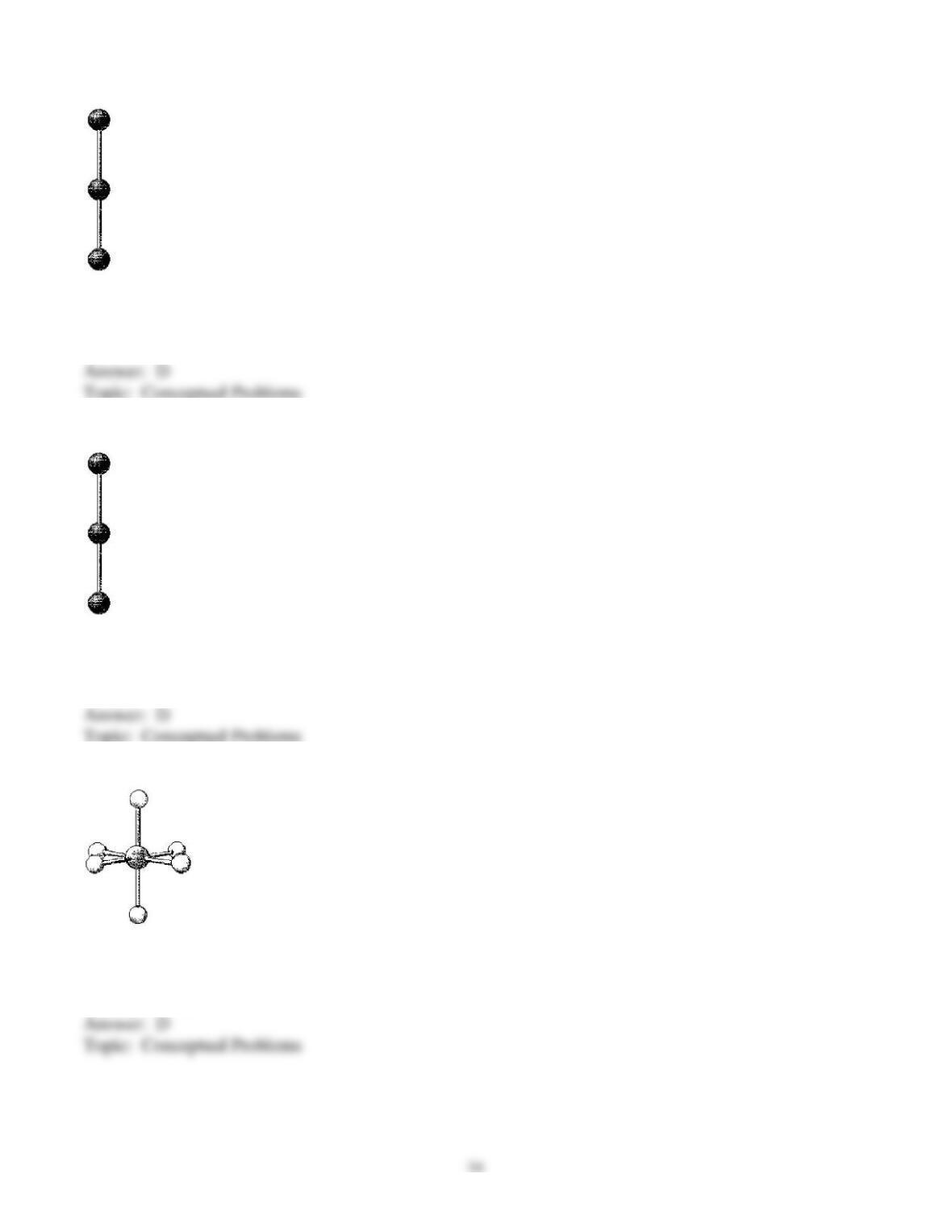
138) What is the bond angle in the following molecular model of XeF2?
A) less than 120°
B) 120°
C) less than 180° but greater than 120°
D) 180°
139) What is the bond angle in the following molecular model of I3–?
A) less than 120°
B) 120°
C) less than 180° but greater than 120°
D) 180°
140) What are the bond angles in the following molecular model of SF6?
A) some less than 90° and some less than 120° but greater than 90°
B) 90° and 120°
C) some less than 90° and some less than 180° but greater than 120°
D) 90° and 180°
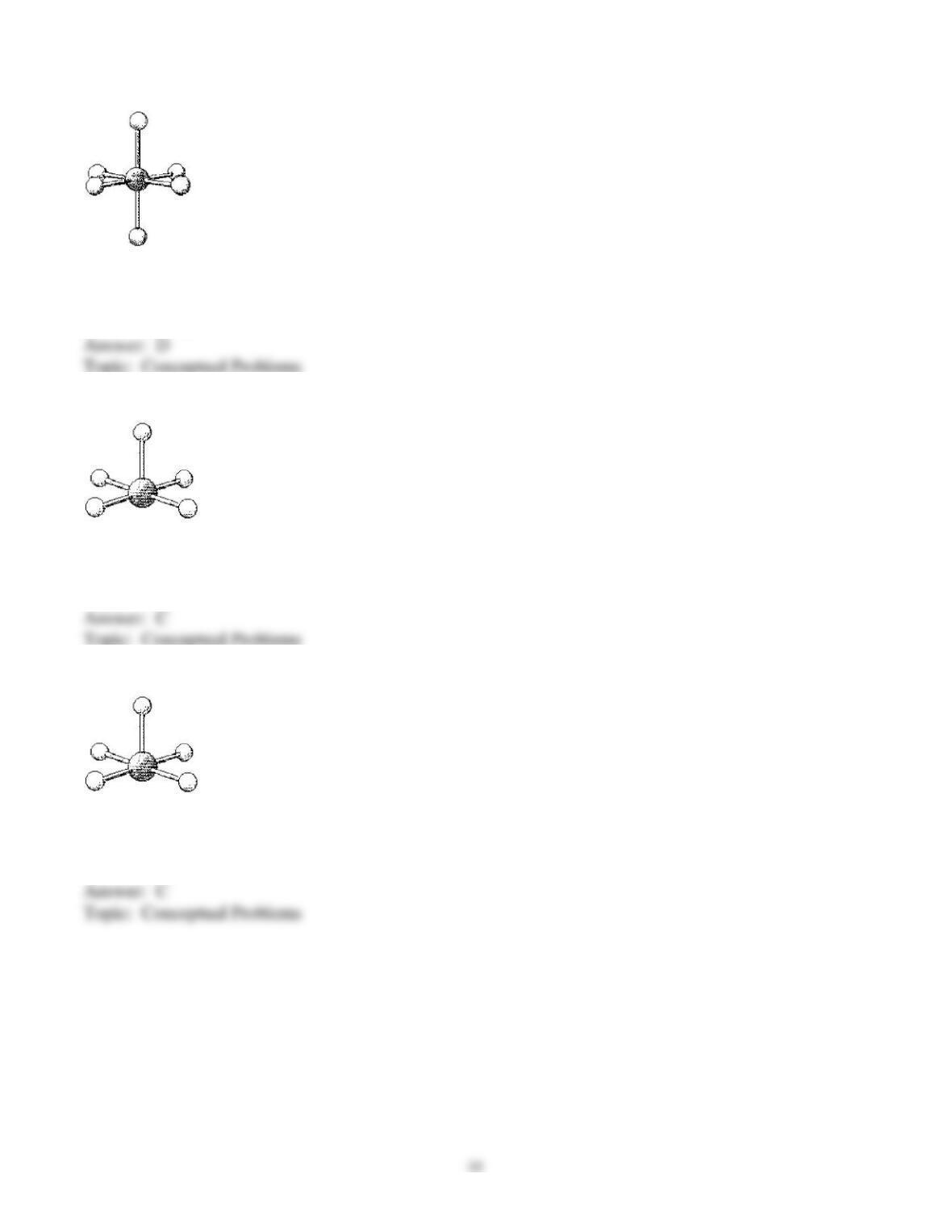
141) What are the bond angles in the following molecular model of PF6–?
A) some less than 90° and some less than 120° but greater than 90°
B) 90° and 120°
C) some less than 90° and some less than 180° but greater than 120°
D) 90° and 180°
142) What are the bond angles in the following molecular model of BrF5?
A) some less than 90° and some less than 120° but greater than 90°
B) 90° and 120°
C) some less than 90° and some less than 180° but greater than 120°
D) 90° and 180°
143) What are the bond angles in the following molecular model of TeF5–?
A) some less than 90° and some less than 120° but greater than 90°
B) 90° and 120°
C) some less than 90° and some less than 180° but greater than 120°
D) 90° and 180°
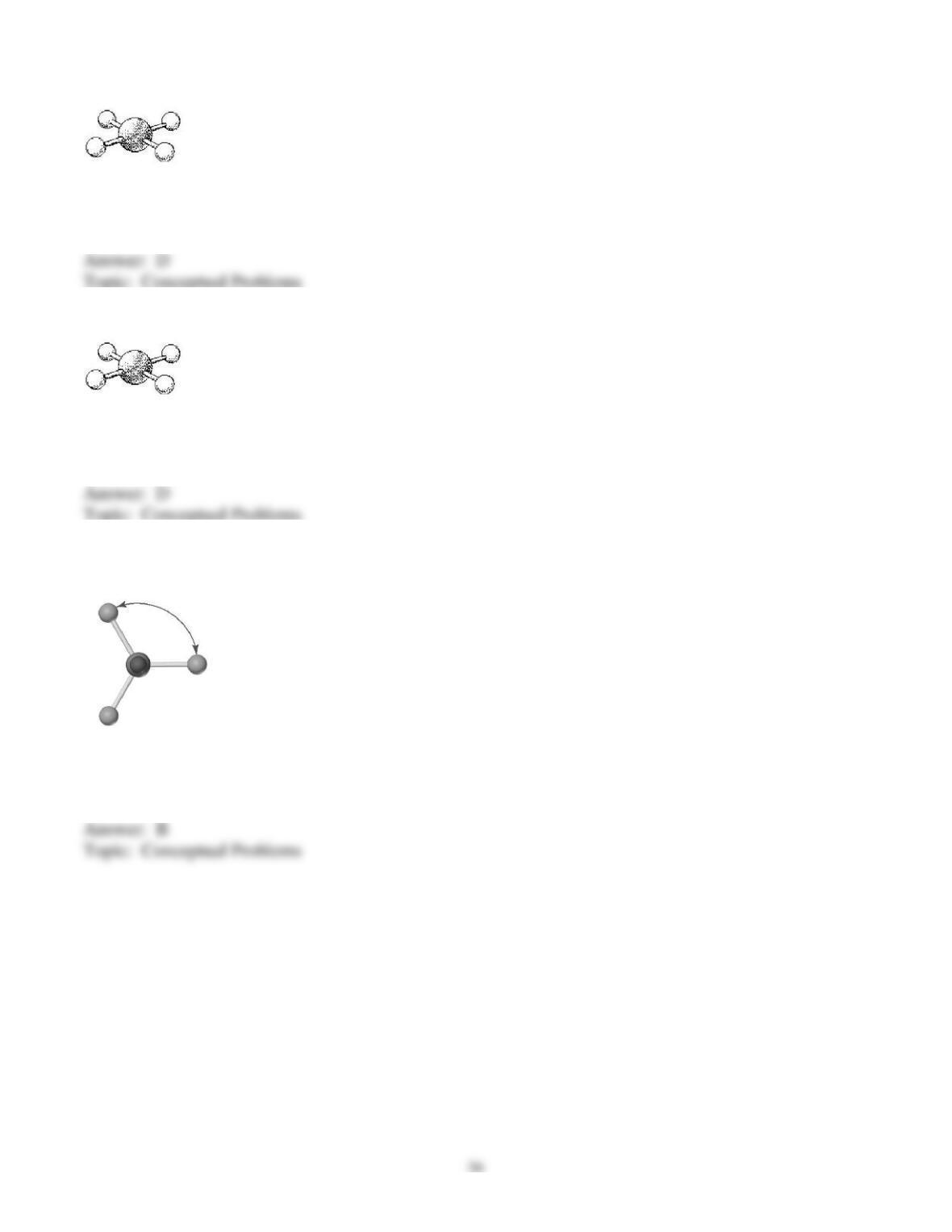
144) What are the bond angles in the following molecular model of XeF4?
A) some less than 90° and some less than 120° but greater than 90°
B) 90°
C) some less than 90° and some less than 180° but greater than 90°
D) 90° and 180°
145) What are the bond angles in the following molecular model of ICl4–?
A) some less than 90° and some less than 120° but greater than 90°
B) 90°
C) some less than 90° and some less than 180° but greater than 90°
D) 90° and 180°
146) Shown below is a model of CH4 having an orientation in which one or more atoms are hidden from
view. What is the indicated bond angle?
A) less than 109.5°
B) 109.5°
C) less than 120° but greater than 109.5°
D) 120°
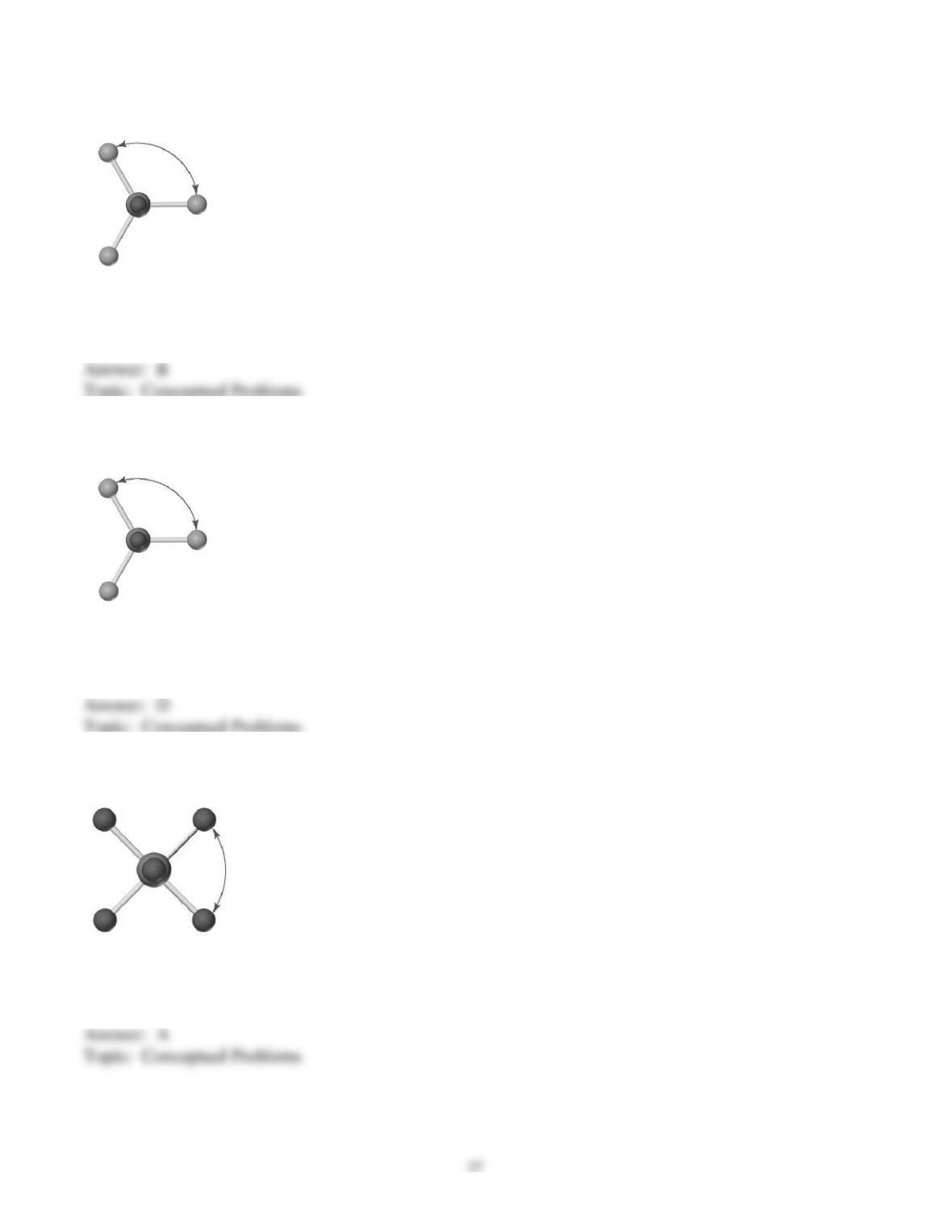
147) Shown below is a model of SiCl4 having an orientation in which one or more atoms are hidden
from view. What is the indicated bond angle?
A) less than 109.5°
B) 109.5°
C) less than 120° but greater than 109.5°
D) 120°
148) Shown below is a model of PF5 having an orientation in which one or more atoms are hidden from
view. What is the indicated bond angle?
A) less than 109.5°
B) 109.5°
C) less than 120° but greater than 109.5°
D) 120°
149) Shown below is a model of SF6 having an orientation in which one or more atoms are hidden from
view. What is the indicated bond angle?
A) 90°
B) less than 109.5° but greater than 90°
C) less than 120° but greater than 109.5°
D) 120°
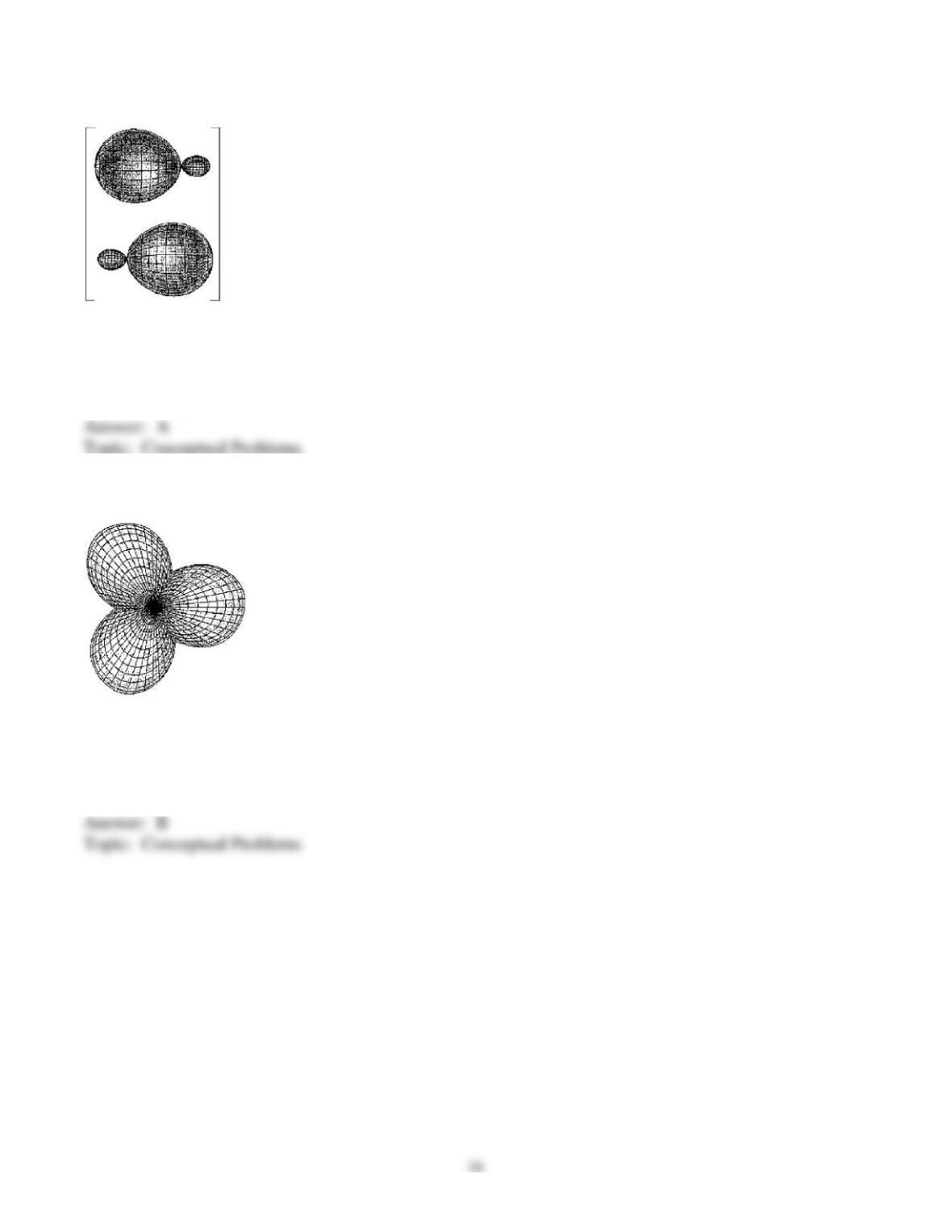
150) Identify the set of hybrid orbitals shown below.
A) sp
B) sp2
C) sp3
D) None of these
151) Identify the set of hybrid orbitals shown below.
A) sp
B) sp2
C) sp3
D) None of these