103. If a company mistakenly counts more items during a physical inventory than actually exist, how will the
error affect their bottom line?
104. If a company mistakenly counts less items during a physical inventory than actually exist, how will the
error affect the cost of merchandise sold?
105. Too much inventory on hand
106. Which of the following is used to analyze the efficiency and effectiveness of inventory management?
107. Which of the following measures the relationship between cost of merchandise sold and the amount of
inventory carried during the period?
108. Which of the following measures the length of time it takes to acquire, sell and replace inventory?
109. For the year ended December 31, 2014 Depot Max’s cost of merchandise sold was $56,900. Inventory at
the beginning of the year was $6,540. Ending inventory was $7,250. Compute Depot Max’s inventory
turnover for the year.
110. For the year ended December 31, 2014 Depot Max’s cost of merchandise sold was $56,900. Inventory at
the beginning of the year was $6,540. Ending inventory was $7,250. Depot Max’s number of days sales in
inventory is closest to
111. The method of computing inventory that uses records of the selling prices of the merchandise is called
112. On the basis of the following data, what is the estimated cost of the merchandise inventory on May 31
using the retail method?
Cost
Retail
May 1
Merchandise Inventory
$125,000
$166,667
May 1-31
Purchases (net)
235,000
313,333
May 1-31
Sales (net)
230,000
113. If the estimated rate of gross profit is 30%, what is the estimated cost of the merchandise inventory on
September 30, based on the following data?
Sep. 1
Merchandise inventory
$ 125,000
Sep. 1-30
Purchases (net)
300,000
Sep. 1-30
Sales (net)
150,000
114. All of the following are reasons to use an estimated method of costing inventory except:
115. Garrison Company uses the retail method of inventory costing. They started the year with an inventory
that had a retail cost of $45,000. During the year they purchased an inventory with a retail cost of
$300,000. After performing a physical inventory, they calculated their inventory cost at retail to be
$80,000. The mark up is 100% of cost. Determine the ending inventory at its estimated cost.
116. A company will most likely use an estimated method of determining inventory when
117. Stevens Company started the year with an inventory cost of $145,000. During the month of January they
purchased inventory that cost of $53,000. January sales totaled $140,000. Estimated gross profit is 35%. The
estimated ending inventory as of January 31 is
118. Determine the total value of the merchandise using Net Realizable Value:
Item
Quantity
Selling Price
Commission
Doll
10
$7
$2
Horse
5
9
3
119. If a company values inventory at the lower of cost or market, which of the following is the value of
merchandise inventory on the balance sheet? Apply the lower-of-cost-or-market method to inventory as a
whole.
Item
Inventory Quantity
Unit Cost Price
Unit Market Price
Product C
420
$6
$5
Product D
370
12
14
120. Safeguarding inventory from damage or theft is a primary objective for the control of inventory. If you
were running a clothing store, name three specific controls you would implement to guard inventory from theft.
121. List three different security measures taken by stores to safeguard inventory.
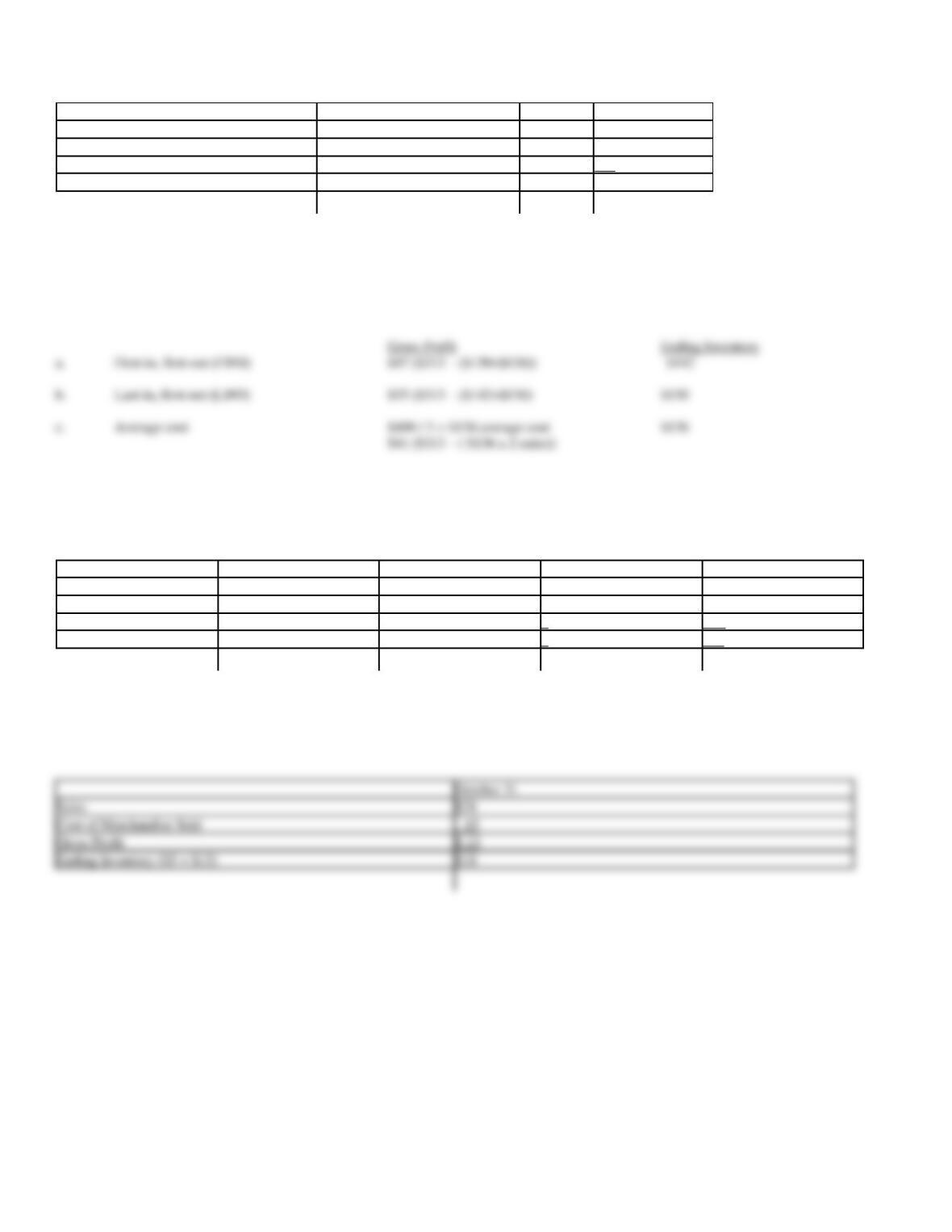
122. Three identical units of Item Steele Plate are purchased during March, as shown below.
Item Steele Plate
Units
Cost
Mar. 3
Purchase
1
$830
Mar. 10
Purchase
1
840
Mar. 19
Purchase
1
880
Total
3
$2,550
Assume that one unit is sold on March 23 for $1,125. Determine the gross profit for March and ending inventory on March 31 using (a) FIFO, (b)
LIFO, and (c) average cost methods.
Gross Profit
Ending Inventory
First-in, first-out (FIFO)
$295 ($1,125 – $830)
$1,720 ($840 + $880)
b.
Last-in, first-out (LIFO)
$245 ($1,125 – $880)
$1,670 ($830 + $840)
123. Three identical units of Item Magnesium XP are purchased during May, as shown below.
Item Magnesium XP
Units
Cost
May 3
Purchase
1
$130
May 10
Purchase
1
136
May 19
Purchase
1
142
Total
3
$408
Assume that two units are sold on May 23 for $313. Determine the gross profit for May and ending inventory on May 31 using (a) FIFO, (b) LIFO,
and (c) average cost methods.
124. Assume that three identical units of merchandise are purchased during October, as follows:
Units
Cost
October
5
Purchase
1
$ 5
12
Purchase
1
13
28
Purchase
1
15
Total
3
$33
Assume one unit is sold on October 31 for $28. Determine Cost of Merchandise Sold, Gross Profit, and Ending Inventory under the LIFO method.
October 31
Sales
$28
Cost of Merchandise Sold
15
Gross Profit
$ 13
Ending Inventory ($5 + $13)
$18
Gross Profit
Ending Inventory
First-in, first-out (FIFO)
$47 ($313 – ($130+$136))
$142
b.
Last-in, first-out (LIFO)
$35 ($313 – ($142+$136)
$130
125. Assume that three identical units of merchandise are purchased during October, as follows:
Units
Cost
October
5
Purchase
1
$5
12
Purchase
1
13
28
Purchase
1
15
Total
3
$33
Assume one unit is sold on October 31 for $28. Determine Cost of Merchandise Sold, Gross Profit, and Ending Inventory under the Average Cost
method.
126. Assume that three identical units of merchandise are purchased during October, as follows:
Units
Cost
October
5
Purchase
1
$ 5
12
Purchase
1
13
28
Purchase
1
15
Total
3
$33
Assume one unit is sold on October 31 for $28. Determine Cost of Merchandise Sold, Gross profit, and Ending Inventory under the FIFO method.
October 31
Sales
$28
Cost of Merchandise Sold
5
Gross Profit
$23
Ending Inventory ($13 + $15)
$28
October 31
Sales
$28
Cost of Merchandise Sold ($33/3)
11
Gross Profit
$ 17
Ending Inventory ($33/3=$11×2)
$22
127. The three identical units of Product Basic H are purchased during July, as shown below.
Date
Product Basic H
Units
Cost
July 3
Purchase
1
$35
July 10
Purchase
1
$36
July 24
Purchase
1
$37
Total
3
$108
Average cost per unit
$36
Assume one unit sells on July 28 for $45.
Determine the gross profit, cost of merchandise sold, and ending inventory on July 31 using (a) first in first out, (b) last in last out, (c) average cost
flow methods.
128. Beginning inventory, purchases, and sales for Product – Weld TM are as follows:
Sep. 1
Beginning Inventory
24 units
@
$15
Sep. 5
Sale
17 units
Sep. 17
Purchase
10 units
@
$20
Sep. 30
Sale
8 units
Assuming a perpetual inventory system and the first-in, first-out method, determine (a) the cost of the merchandise sold for the September 30 sale
and (b) the inventory on September 30.
a) First in first out
$45 – $35= $10
$35
($108 – $35) = $73
b) Last in first out
$45 – $37= $8
$37
($108 – $37) = $71
c) Average
$45 – $36= $9
$36
($108 – $36) = $72
129. The following units of a particular item were available for sale during the year:
Beginning inventory
150 units @ $755
Sale
120 units @ $925
First purchase
400 units @ $785
Sale
200 units @ $925
Second purchase
300 units @ $805
Sale
290 units @ $925
130. The following units of a particular item were available for sale during the year:
Beginning inventory
150 units @ $755
Sale
120 units @ $925
First purchase
400 units @ $785
Sale
200 units @ $925
Second purchase
300 units @ $805
Sale
290 units @ $925
131. Beginning inventory, purchases, and sales for Product – Weld TM are as follows:
Sep. 1
Beginning Inventory
24 units
@
$10
Sep. 5
Sale
17 units
Sep. 17
Purchase
10 units
@
$15
Sep. 30
Sale
8 units
Assuming a perpetual inventory system and the last-in, first-out method, determine (a) the cost of the merchandise sold for the September 30 sale and
(b) the inventory on September 30.
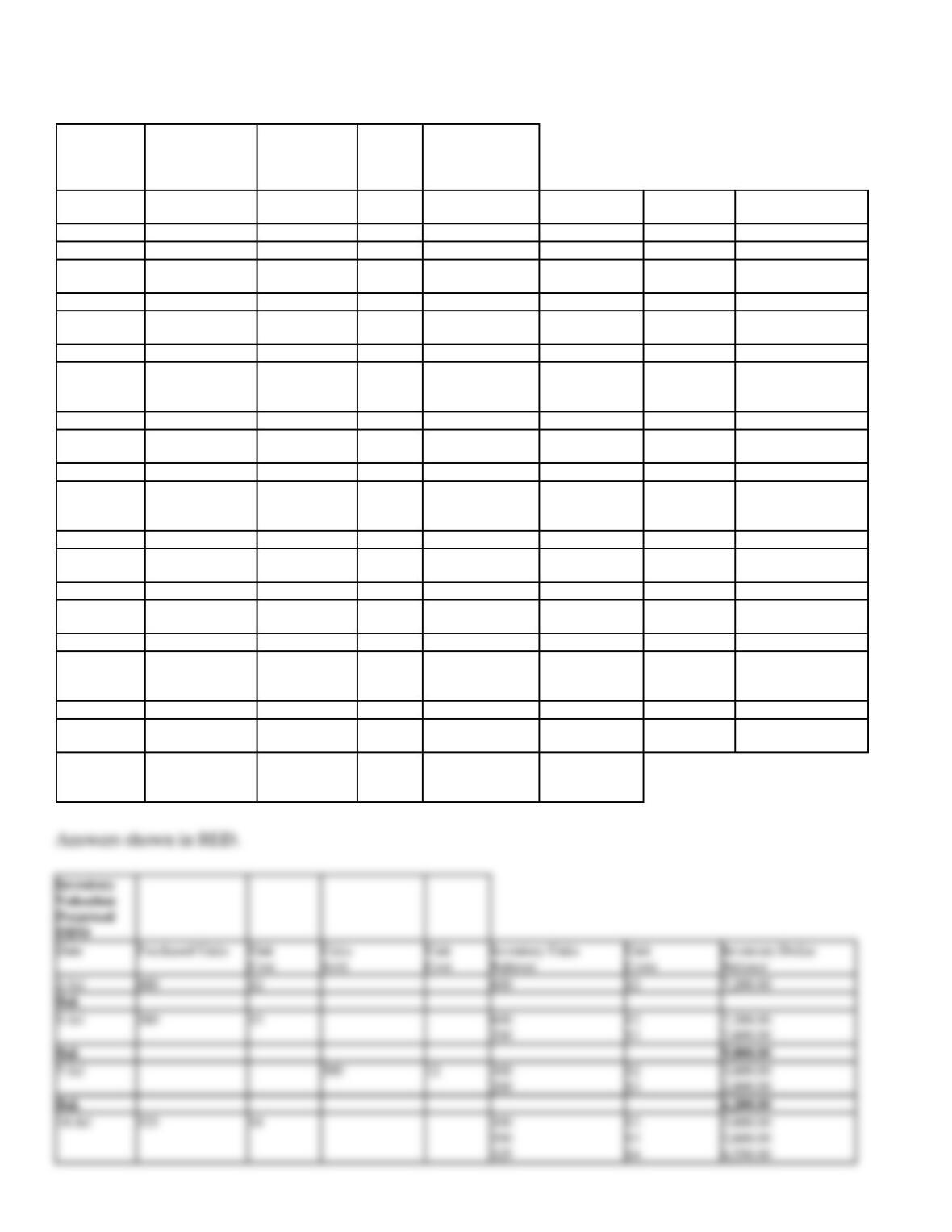
132. Using a LIFO perpetual cost flow, calculate the value of the ending inventory and the cost of goods sold
for the month of November of Beamer Company using the data below.
Nov 1 Purchased 600 units $80 each
Nov 4 Sold 200 units
Nov 11 Purchased 350 units $82 each
Nov 12 Sold 275 units
Nov 22 Purchased 175 units $84 each
Nov 23 Sold 155 units
Calculate the following:
1. Inventory valuation at the end of November
2. Calculate the Cost of Goods Sold for November
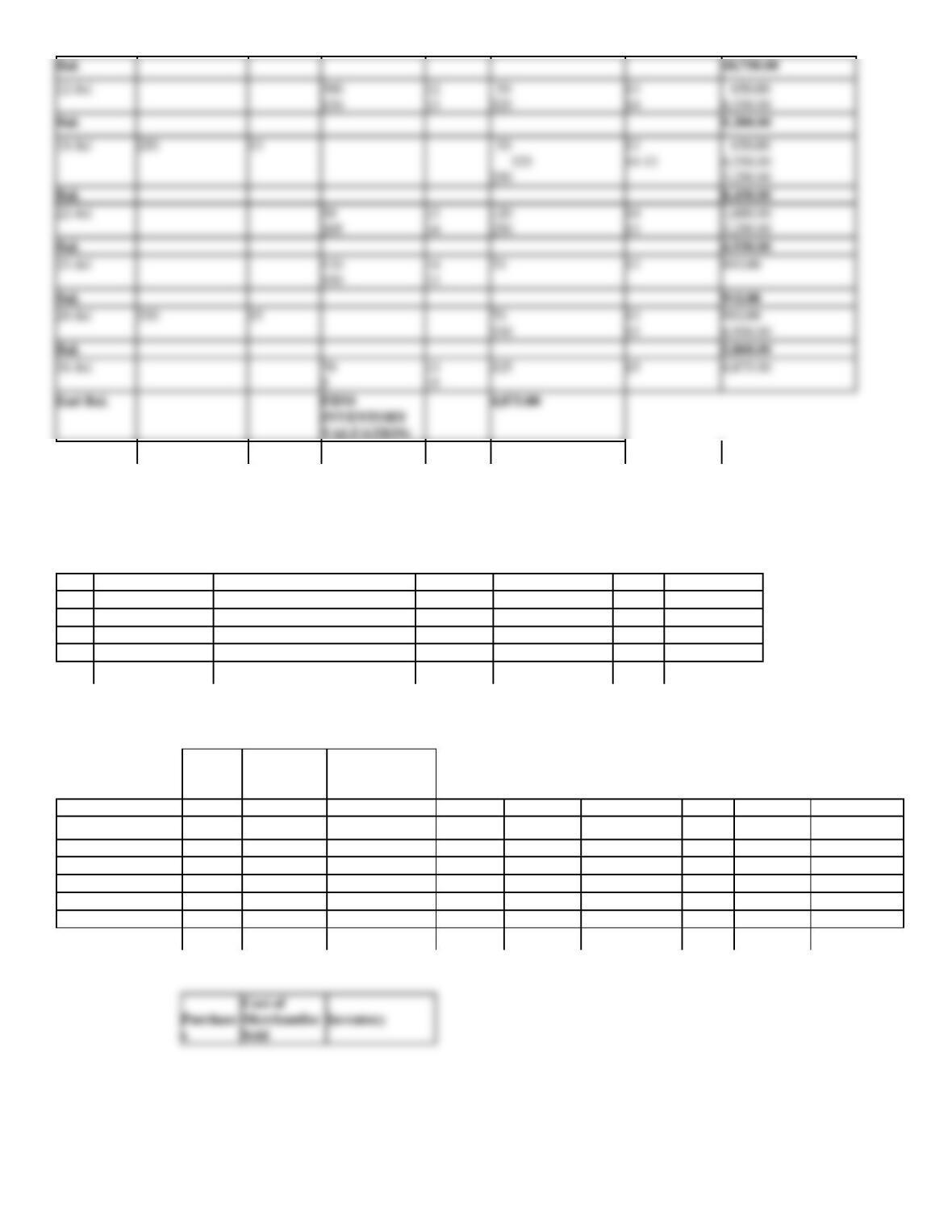
133. Complete the following table using the perpetual FIFO method of inventory flow.
Inventory
Valuation
Perpetual
FIFO
Date
Purchased Units
Unit
Cost
Units
Sold
Unit
Cost
Inventory Units
Balance
Unit
Costs
Inventory Dollar
Balance
2-Jul
600
12
Bal.
5-Jul
200
13
Bal.
7-Jul
300
Bal.
10-Jul
325
14
Bal.
12-Jul
300
150
Bal.
18-Jul
250
13
Bal.
22-Jul
50
205
Bal.
25-Jul
120
180
Bal.
28-Jul
330
15
Bal.
31-Jul
70
5
Ending
Balance
FIFO
INVENTORY
VALUATION:
FIFO
Date
Purchased Units
Unit
Units
Unit
Inventory Units
Unit
Inventory Dollar
2-Jul
7,200.00
Bal.
5-Jul
200
13
600
12
7,200.00
Bal.
9,800.00
Bal.
6,200.00
4,550.00
134. Beginning inventory, purchases and sales data for tennis rackets are as follows:
Apr 3
Inventory
12 units
@
$45
11
Purchase
13 units
@
$47
14
Sale
18 units
21
Purchase
9 units
@
$60
25
Sale
10 units
Complete the inventory cost card assuming the business maintains a perpetual inventory system and calculates the cost of merchandise sold and
ending inventory using FIFO.
Purchase
s
Cost of
Merchandise
Sold
Inventory
Date
Qty
Unit Cost
Total Cost
Qty
Unit Cost
Total Cost
Qty
Unit Cost
Total Cost
Balances
Purchase
s
Cost of
Merchandise
Sold
Inventory
Bal.
8,450.00
Bal.
4,930.00
Bal.
910.00
Bal.
5,860.00
End Bal.
FIFO
VALUATION:
4,875.00
135. Beginning inventory, purchases and sales data for tennis rackets are as follows:
Apr 3
Inventory
12 units
@
$45
11
Purchase
13 units
@
$47
14
Sale
18 units
21
Purchase
9 units
@
$60
25
Sale
10 units
Complete the inventory cost card assuming the business maintains a perpetual inventory system and calculates the cost of merchandise sold and
ending inventory using LIFO.
Purchase
s
Cost of
Merchandise
Sold
Inventory
Date
Qty
Unit Cost
Total Cost
Qty
Unit Cost
Total Cost
Qty
Unit Cost
Total Cost
Balances
Date
Qty
Unit Cost
Total Cost
Qty
Unit Cost
Total Cost
Qty
Unit Cost
Total Cost
Apr 3
12
45.00
540.00
13
47.00
611.00
Apr 3
12
45.00
540.00
136. Beginning inventory, purchases and sales data for widgets are as follows:
Apr 3
Inventory
15 units
@
$30
11
Purchase
12 units
@
$27
14
Sale
18 units
21
Purchase
7 units
@
$25
25
Sale
10 units
Complete the inventory cost card assuming the business maintains a perpetual inventory system and calculates the cost of merchandise sold and
ending inventory using LIFO.
Purchase
s
Cost of
Merchandise
Sold
Inventory
Date
Qty
Unit Cost
Total Cost
Qty
Unit Cost
Total Cost
Qty
Unit Cost
Total Cost
Balances
137. Beginning inventory, purchases and sales data for widgets are as follows:
Apr 3
Inventory
15 units
@
$30
11
Purchase
12 units
@
$27
14
Sale
18 units
21
Purchase
7 units
@
$25
25
Sale
10 units
Complete the inventory cost card assuming the business maintains a perpetual inventory system and calculates the cost of merchandise sold and
ending inventory using FIFO.
Purchase
s
Cost of
Merchandise
Sold
Inventory
Apr 3
15
30.00
450.00
Date
Qty
Unit Cost
Total Cost
Qty
Unit Cost
Total Cost
Qty
Unit Cost
Total Cost
Balances
138. The units of an item available for sale during the year were as follows:
January 10
Inventory
27 units @ $90
February 27
Purchase
54 units @ $98
July 11
Purchase
63 units @ $106
November 13
Purchase
36 units @ $115
There are 50 units of the item in the physical inventory at December 31. The periodic inventory system is used. Determine the ending inventory cost
by (a) the first-in, first-out method, (b) the last-in, first-out method, and (c) the average cost method. Show your work.
$5,624 (36 units at $115 plus 14 units at $106) = $4,140 + $1,484
$4,684 (27 units at $90 plus 23 units at $98) = $2,430 + $2,254
$5,150 (50 units at $103; $18,540/180 units = $103)
units at $90
$2,430
units at $98
5,292
units at $106
6,678
units at $115
4,140
Date
Qty
Unit Cost
Total Cost
Qty
Unit Cost
Total Cost
Qty
Unit Cost
Total Cost
Apr 3
30.00
450.00
139. The units of an item available for sale during the year were as follows:
January 11
Inventory
60 units @ $145
February 27
Purchase
90 units @ $150
November 21
Purchase
75 units @ $154
There are 48 units of the item in the physical inventory at December 31. The periodic inventory system is used. Determine the inventory cost by (a)
the first-in, first-out method, (b) the last-in, first-out method, and (c) the average cost method. Show your work.
140. The units of Manganese Plus available for sale during the year were as follows:
Mar 1
Inventory
16 units
@ $30
$ 480
June 16
Purchase
30 units
@ $35
1,050
Nov 28
Purchase
45 units
@ $39
1,755
91 units
$3,285
There are 15 units of the product in the physical inventory at November 30. The periodic inventory system is used. Determine the inventory cost by
(a) FIFO, (b) LIFO, and (c) average cost methods.
FIFO:
15 units @ $39 = $585
LIFO:
15 units @ $30 = $450
Average:
$3,285 / 91 = $36.10 per unit
Average:
15 units @ $36.10 = $541.50
First-in, first-out (FIFO) method: $7,392 = (48 units ´ $154)
Last-in, first-out (LIFO) method: $6,960 = (48 units ´ $145)
Average cost method: $7,200 (48 units ´ $150.00), where average cost = $150.00 = $33,750/225 units
units at $145
$8,700
units at $150
13,500
units at $154
11,550
units (at average cost of $150)
$33,750
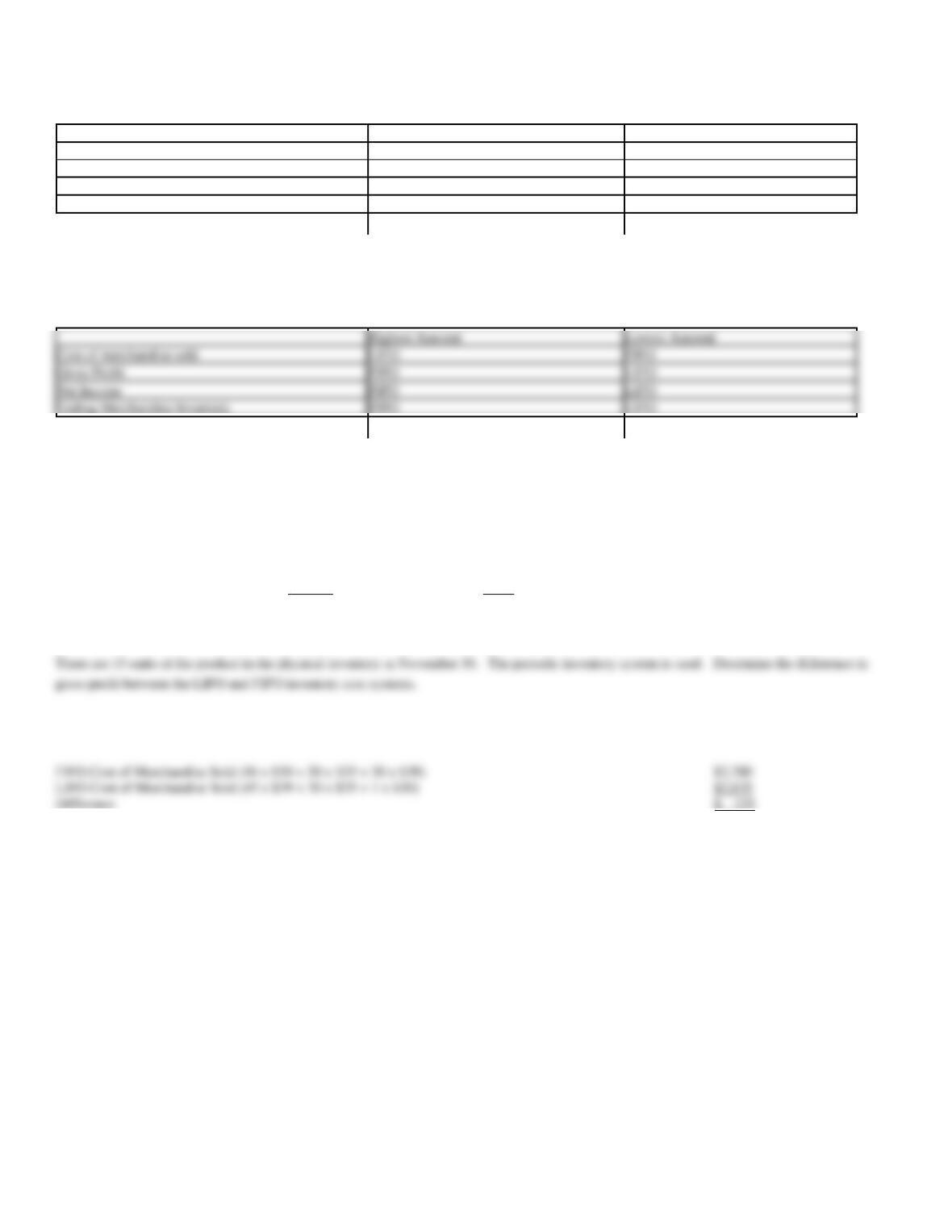
141. Complete the chart using the LIFO and FIFO costing methods, assuming a period of increasing costs:
Highest Amount
Lowest Amount
Cost of merchandise sold
Gross Profit
Net Income
Ending Merchandise Inventory
142. The units of Manganese Plus available for sale during the year were as follows:
Mar 1
Inventory
16 units
@ $30
$ 480
June 16
Purchase
30 units
@ $35
1,050
Nov 28
Purchase
45 units
@ $39
1,755
91 units
$3,285
FIFO Cost of Merchandise Sold (16 x $30 + 30 x $35 + 30 x $39)
$2,700
LIFO Cost of Merchandise Sold (45 x $39 + 30 x $35 + 1 x $30)
$2,835
Difference
$ 135
Highest Amount
Lowest Amount
Cost of merchandise sold
LIFO
FIFO
Gross Profit
FIFO
LIFO
Net Income
FIFO
LIFO
Ending Merchandise Inventory
FIFO
LIFO
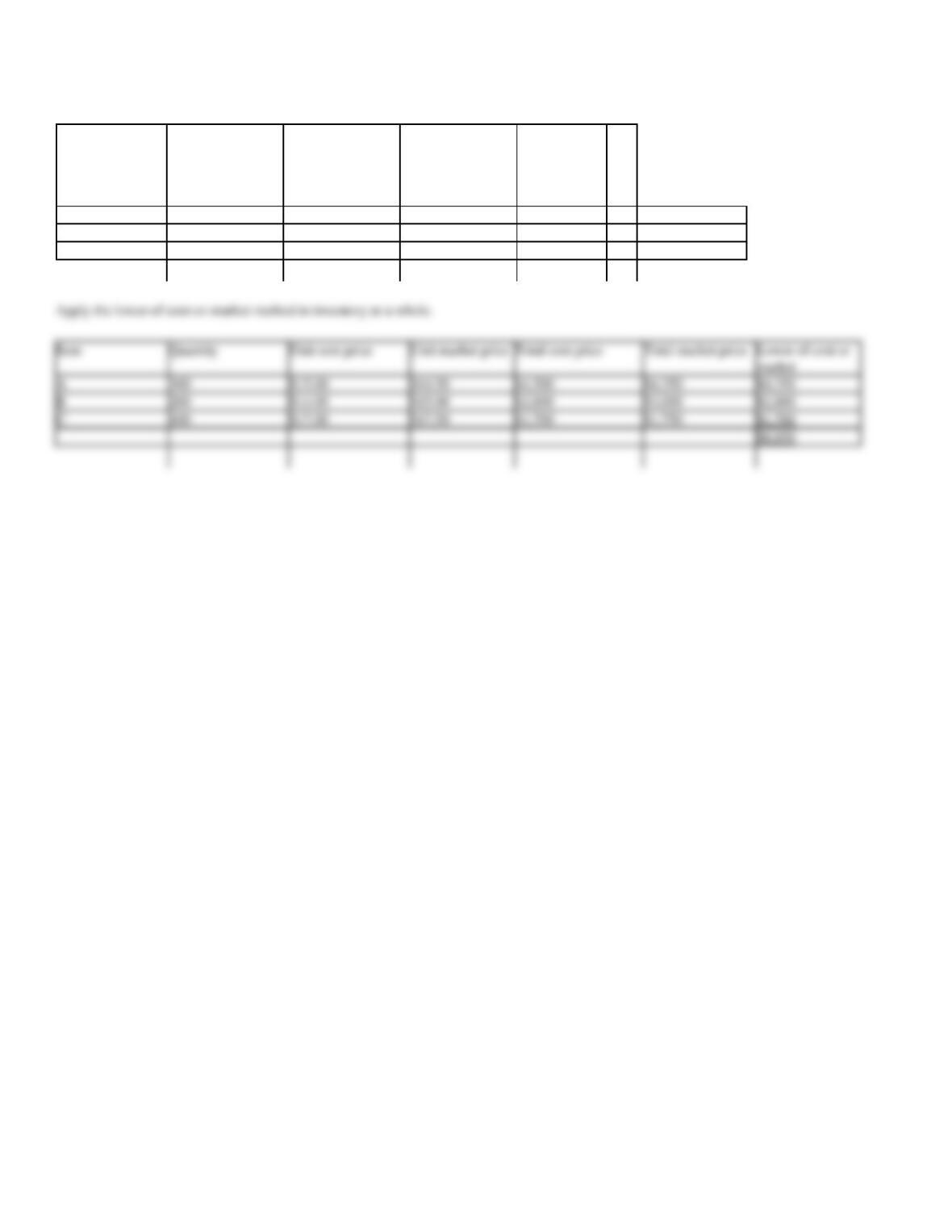
143. Using the lower of cost or market, what should the total inventory value be for the following items:
Item
Quantity
Unit cost price
Unit market price
Total cost price
Tota
l
mar
ket
price
A
300
$15.00
$14.50
$4,500
$4,350
B
200
$14.00
$15.00
$2,800
$3,000
C
100
$17.00
$17.50
$1,700
$1,750
B
200
$14.00
$15.00
$2,800
$3,000
$2,800
C
100
$17.00
$17.50
$1,700
$1,750
$1,700
$8,850
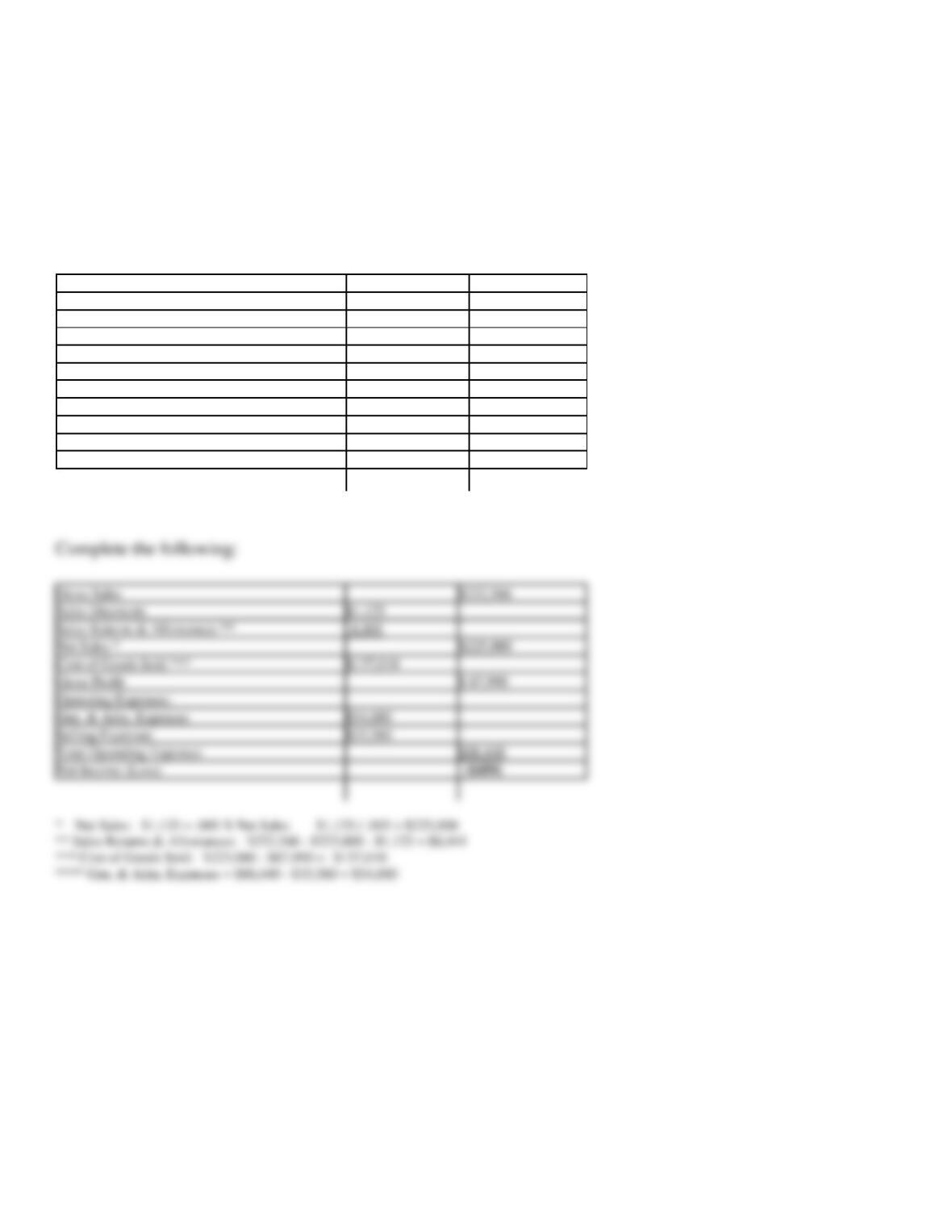
144. The following information was extracted from the Stone Company’s records.
Gross Sales $232,566
Gross Profit $87,990
Sales Discounts $1,125 (= 1/2 % of Net Sales)
Total Operating Expenses $88, 440
Selling Expenses $33, 560
Complete the following:
Gross Sales
Sales Discounts
Sales Returns & Allowances
Net Sales
Cost of Goods Sold
Gross Profit
Operating Expenses:
Gen. & Admin Expenses
Selling Expenses
Total Operating Expenses
Net Income (Loss)
Gross Sales
$232,566
Sales Discounts
$1,125
Sales Returns & Allowances **
6,441
Cost of Goods Sold ***
$137,010
Gross Profit
$ 87,990
Operating Expenses:
Gen. & Adm. Expenses
$54,880
Selling Expenses
$33,560
Total Operating Expenses
$88,440
Net Income (Loss)
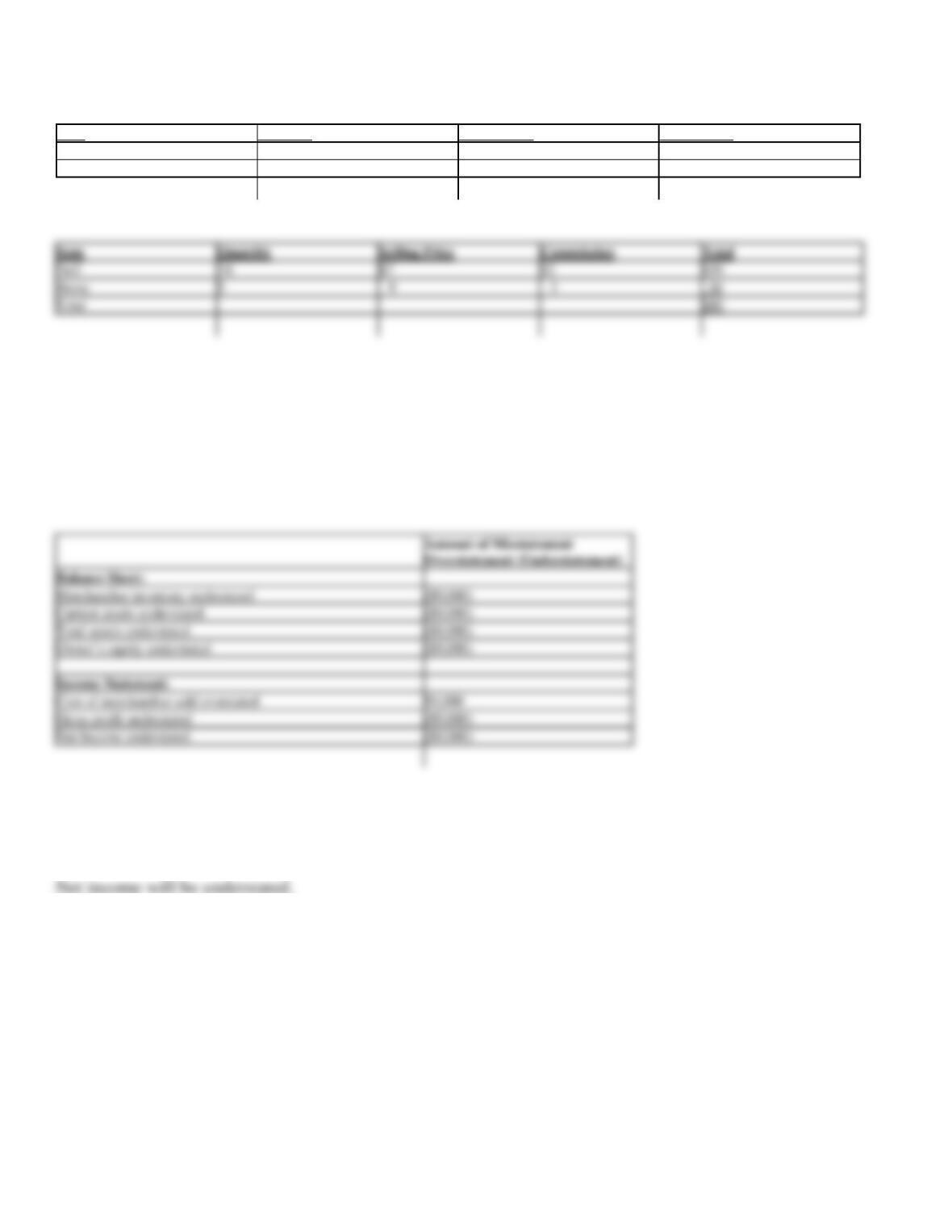
145. Determine the total value of the merchandise using Net Realizable Value:
Item
Quantity
Selling Price
Commission
Doll
10
$7
$2
Horse
5
9
3
146. During the taking of its physical inventory on December 31, 2011, Gentry Supplies Company incorrectly
counted its inventory as $245,000 instead of the correct amount of $254,000. Indicate the affect of the
misstatement on Gentry Supplies Company’s balance sheet and income statement for the year ended December
31, 2011.
Balance Sheet:
Merchandise inventory understated
($9,000)
Current assets understated
($9,000)
Total assets understated
($9,000)
Income Statement:
Cost of merchandise sold overstated
$9,000
Gross profit understated
($9,000)
Net Income understated
($9,000)
147. While taking a physical inventory, a company counts their inventory as less than the actual amount on
hand. How will this error affect the income statement?
Doll
10
$7
$2
$50
Horse
5
9
3
Total
$80