
Chapter 07 – Activity-Based Costing: A Tool to Aid Decision Making
Chapter 07 Activity-Based Costing: A Tool to Aid Decision Making Answer
Key
True / False Questions
1. Unit-level activities are performed each time a unit is produced.
2. Organization-sustaining activities are activities of the general organization that support
specific products.
3. Costs classified as batch-level costs should depend on the number of batches processed
rather than on the number of units produced, the number of units sold, or other measures of
volume.

4. Customer-level activities relate to specific customers and are not tied to any specific
products.
5. Managing and sustaining product diversity requires many more overhead resources such as
production schedulers and product design engineers than managing and sustaining a single
product. The costs of these resources can be accurately allocated to products on the basis of
direct labor-hours.
6. Activity-based costing is a costing method that is designed to provide managers with
product cost information for external financial reports.
7. Transaction drivers usually take more effort to record than duration drivers.

Chapter 07 – Activity-Based Costing: A Tool to Aid Decision Making
8. In general, duration drivers are more accurate measures of the consumption of resources
than transaction drivers.
9. Even departmental overhead rates will not correctly assign overhead costs in situations
where a company has a range of products that differ in volume, lot size, or complexity of
production.
10. In activity-based costing, some manufacturing costs may be excluded from product costs.
11. In activity-based costing, there are a number of activity cost pools, each of which is
allocated to products and other costing objects using its own unique measure of activity.

Chapter 07 – Activity-Based Costing: A Tool to Aid Decision Making
12. The practice of assigning the costs of idle capacity to products can result in unstable unit
product costs.
13. An activity-based costing system should include all of the activities carried out in an
organization because any simplification will inevitably result in inaccuracy.
14. The costs of a particular department should not be split up among activity cost pools in an
activity-based costing system.
Chapter 07 – Activity-Based Costing: A Tool to Aid Decision Making
Multiple Choice Questions
15. Personnel administration is an example of (an):
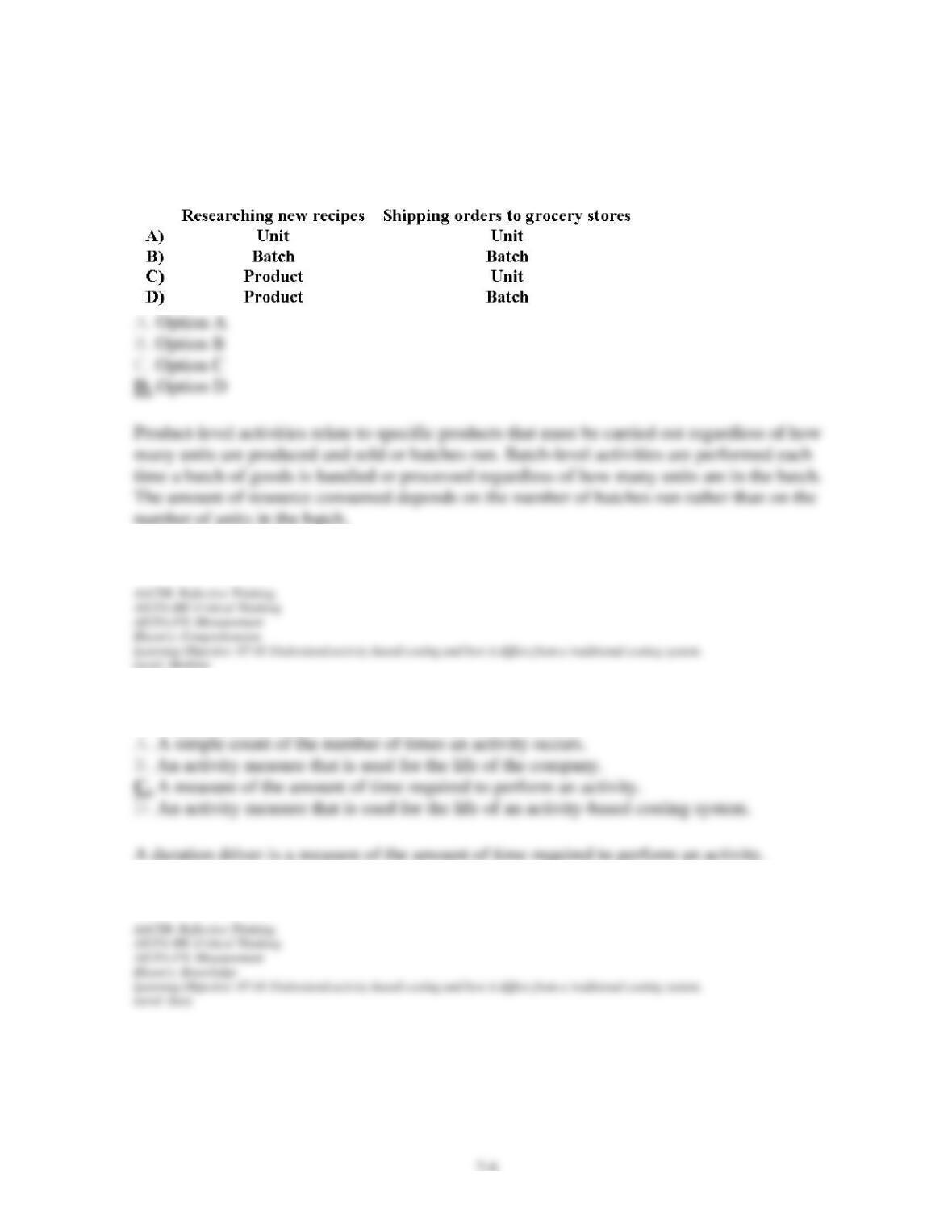
16. Which of the following activities would be classified as a batch-level activity?
Chapter 07 – Activity-Based Costing: A Tool to Aid Decision Making
17. Would the following activities at a manufacturer of canned soup be best classified as unit–
level, batch-level, product-level, or organization-sustaining activities?
18. A duration driver is:
Chapter 07 – Activity-Based Costing: A Tool to Aid Decision Making
19. A transaction driver is:
20. Which of the following is not a limitation of activity-based costing?
Chapter 07 – Activity-Based Costing: A Tool to Aid Decision Making
21. An activity-based costing system that is designed for internal decision-making will not
conform to generally accepted accounting principles because:
22. Designing a new product is an example of (an):
Chapter 07 – Activity-Based Costing: A Tool to Aid Decision Making
23. Property taxes are an example of a cost that would be considered to be:
Chapter 07 – Activity-Based Costing: A Tool to Aid Decision Making
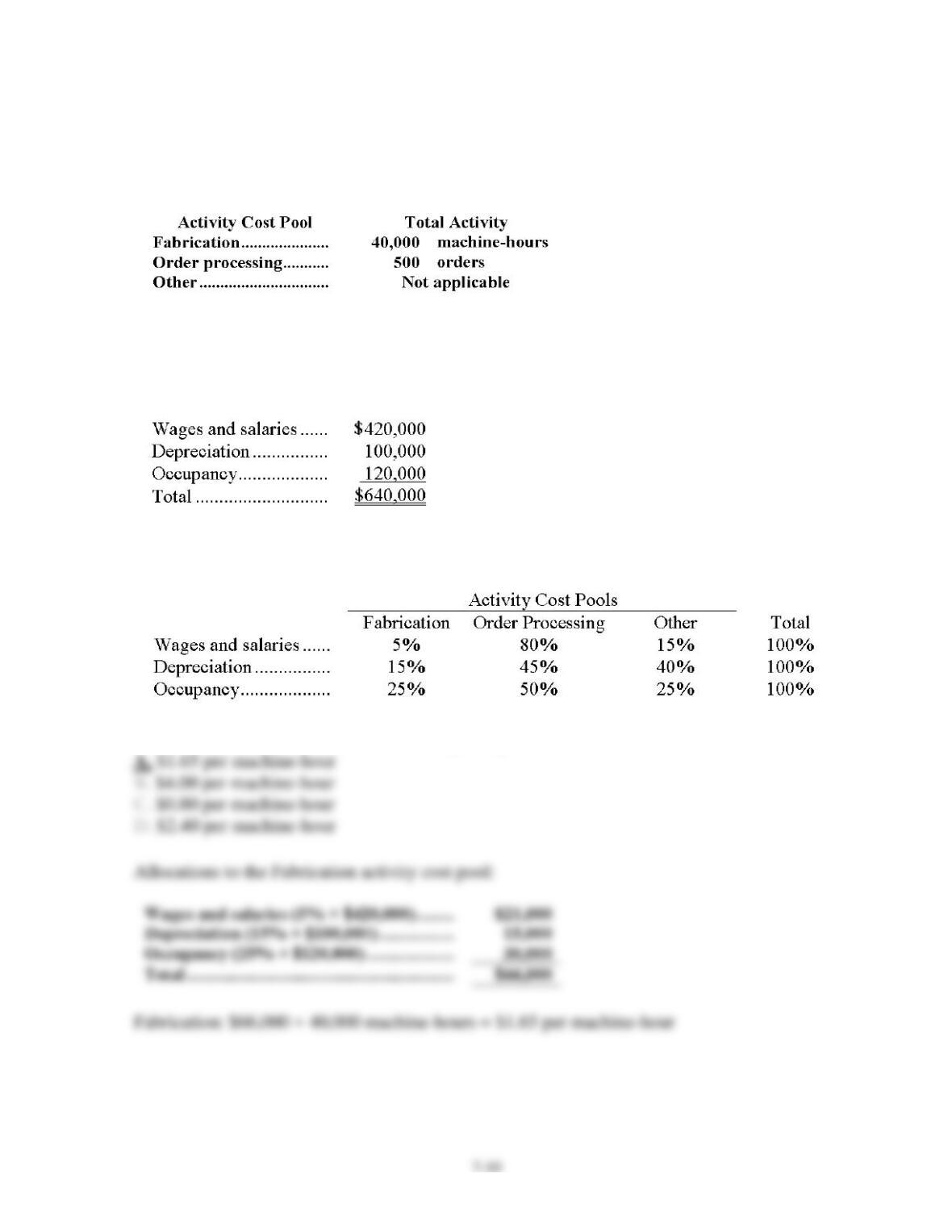
24. McCaskey Corporation uses an activity-based costing system with the following three
activity cost pools:
The Other activity cost pool is used to accumulate costs of idle capacity and organization-
sustaining costs.
The company has provided the following data concerning its costs:
The distribution of resource consumption across activity cost pools is given below:
The activity rate for the Fabrication activity cost pool is closest to:
Chapter 07 – Activity-Based Costing: A Tool to Aid Decision Making
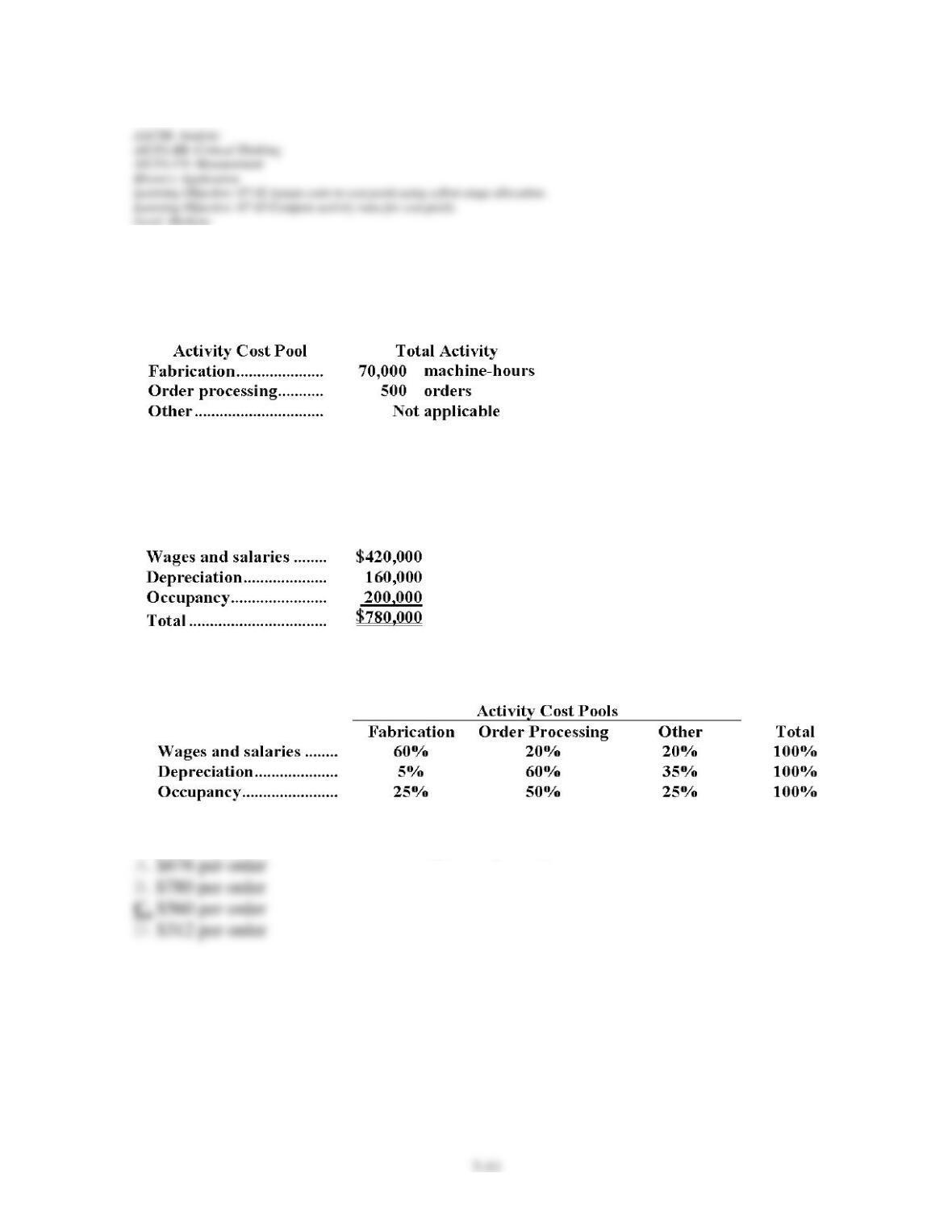
25. Christiansen Corporation uses an activity-based costing system with the following three
activity cost pools:
The Other activity cost pool is used to accumulate costs of idle capacity and organization-
sustaining costs.
The company has provided the following data concerning its costs:
The distribution of resource consumption across activity cost pools is given below:
The activity rate for the Order Processing activity cost pool is closest to:
Chapter 07 – Activity-Based Costing: A Tool to Aid Decision Making
7-12
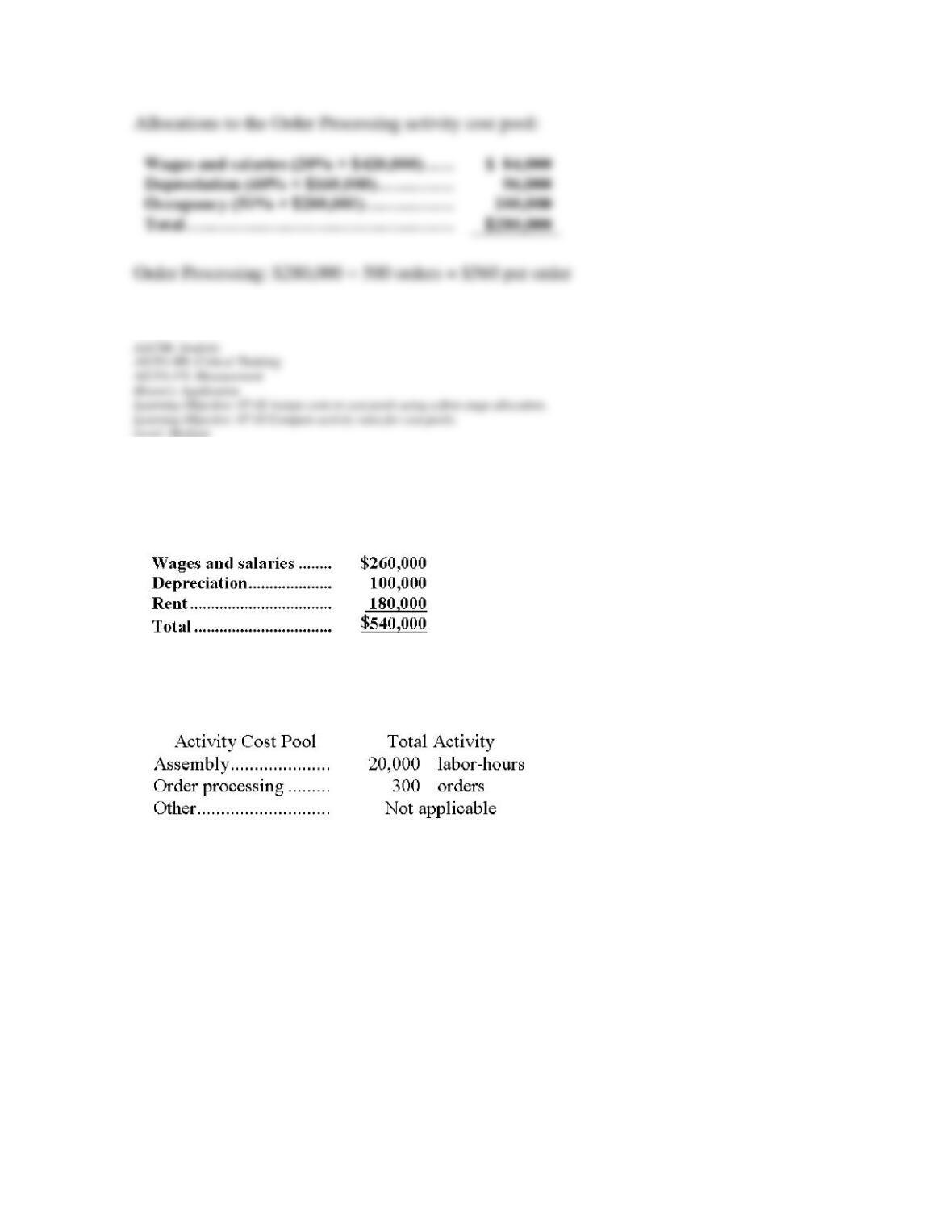
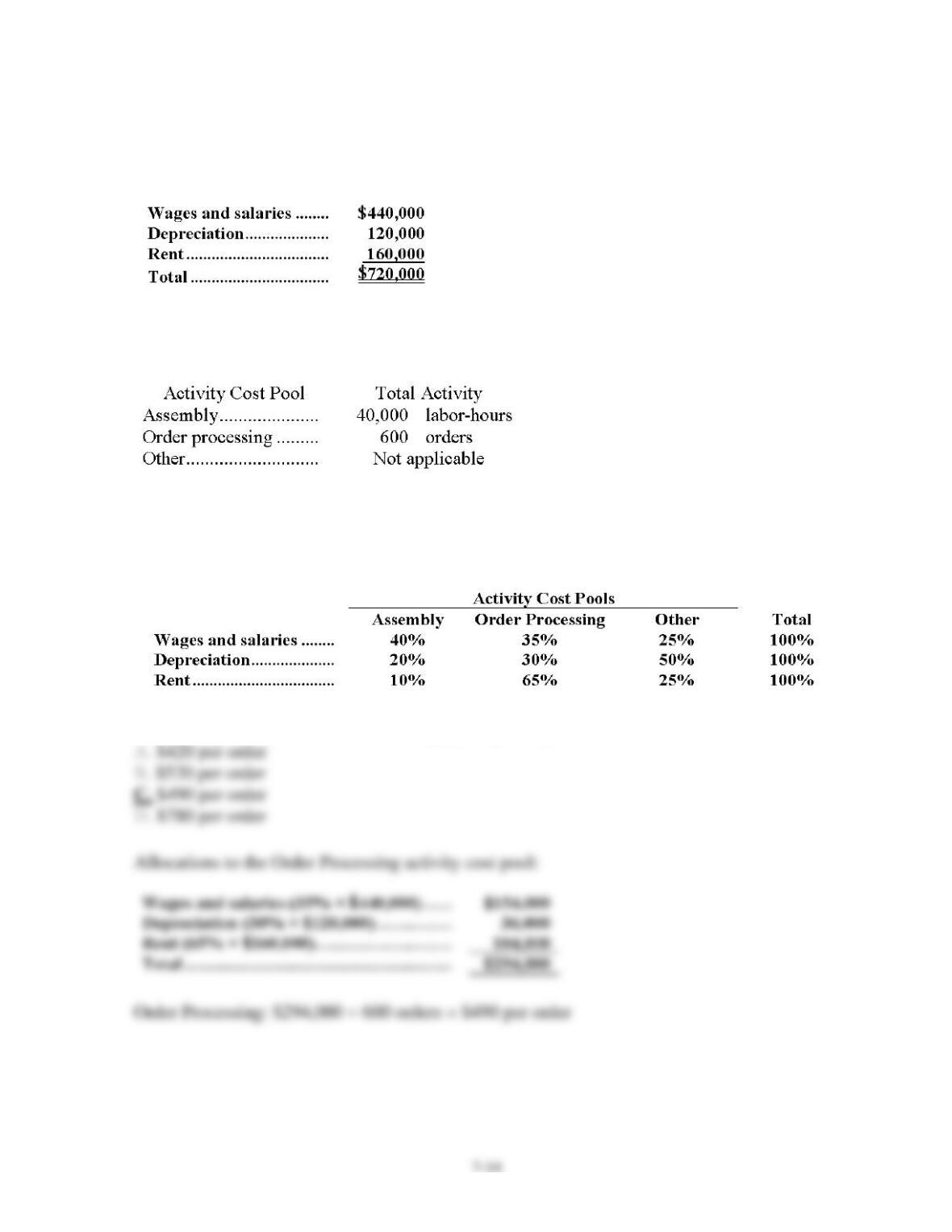
26. Zee Corporation has provided the following data concerning its overhead costs for the
coming year:
The company has an activity-based costing system with the following three activity cost pools
and estimated activity for the coming year:
Chapter 07 – Activity-Based Costing: A Tool to Aid Decision Making
The Other activity cost pool does not have a measure of activity; it is used to accumulate costs
of idle capacity and organization-sustaining costs.
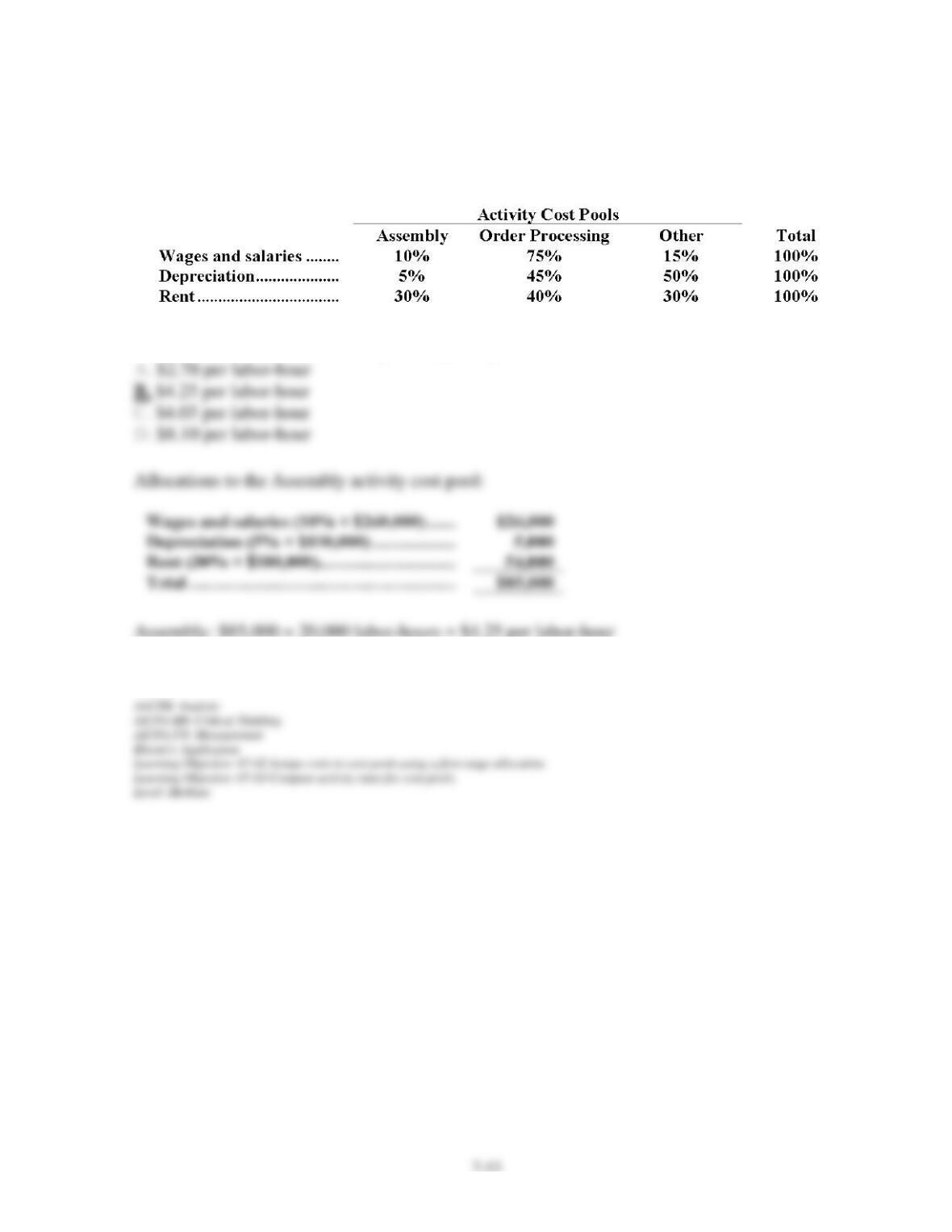
The distribution of resource consumption across activity cost pools is given below:
The activity rate for the Assembly activity cost pool is closest to:
Chapter 07 – Activity-Based Costing: A Tool to Aid Decision Making
27. Tadlock Corporation has provided the following data concerning its overhead costs for the
coming year:
The company has an activity-based costing system with the following three activity cost pools
and estimated activity for the coming year:
The Other activity cost pool does not have a measure of activity; it is used to accumulate costs
of idle capacity and organization-sustaining costs.
The distribution of resource consumption across activity cost pools is given below:
The activity rate for the Order Processing activity cost pool is closest to:
Chapter 07 – Activity-Based Costing: A Tool to Aid Decision Making
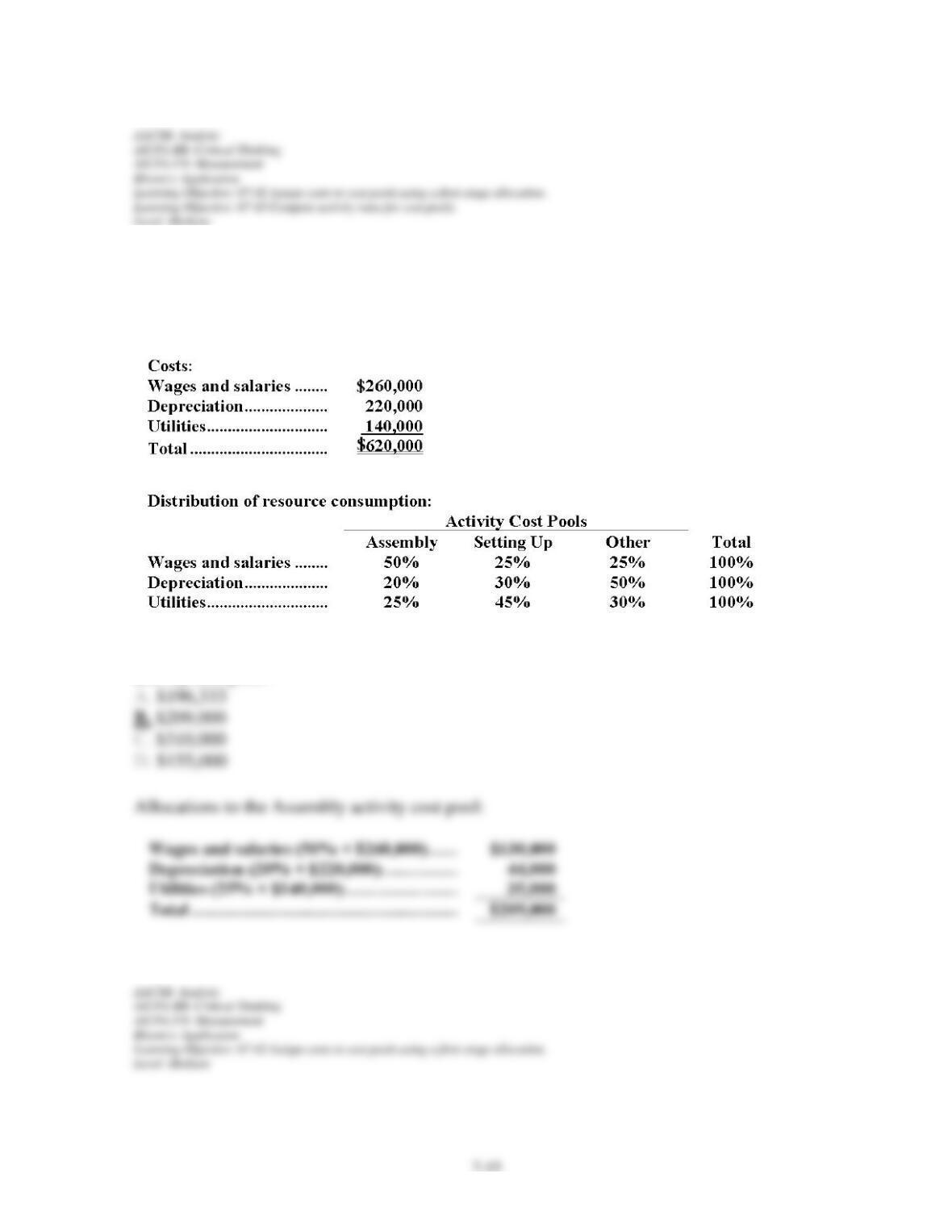
28. Bossie Corporation uses an activity-based costing system with three activity cost pools.
The company has provided the following data concerning its costs and its activity based
costing system:
How much cost, in total, would be allocated in the first-stage allocation to the Assembly
activity cost pool?
Chapter 07 – Activity-Based Costing: A Tool to Aid Decision Making
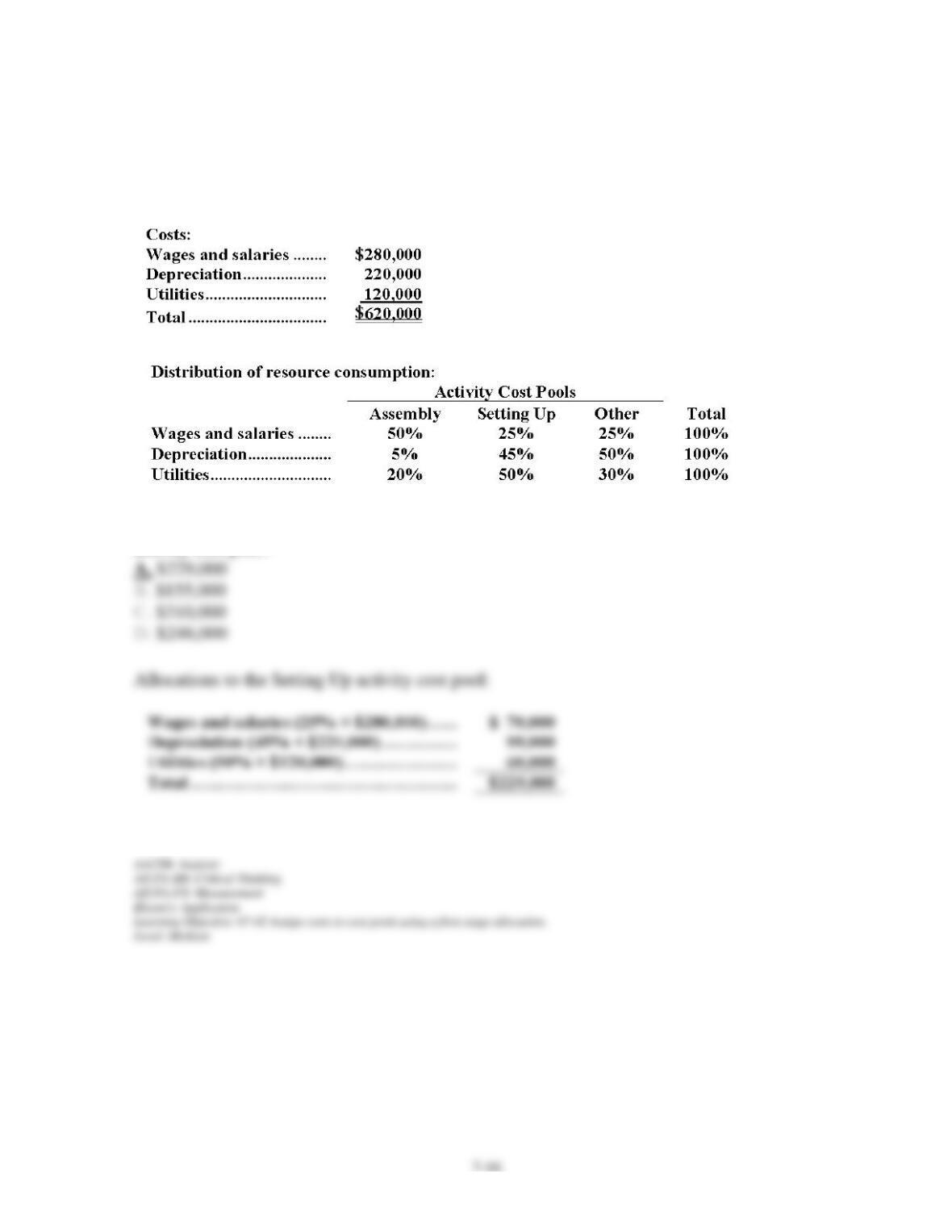
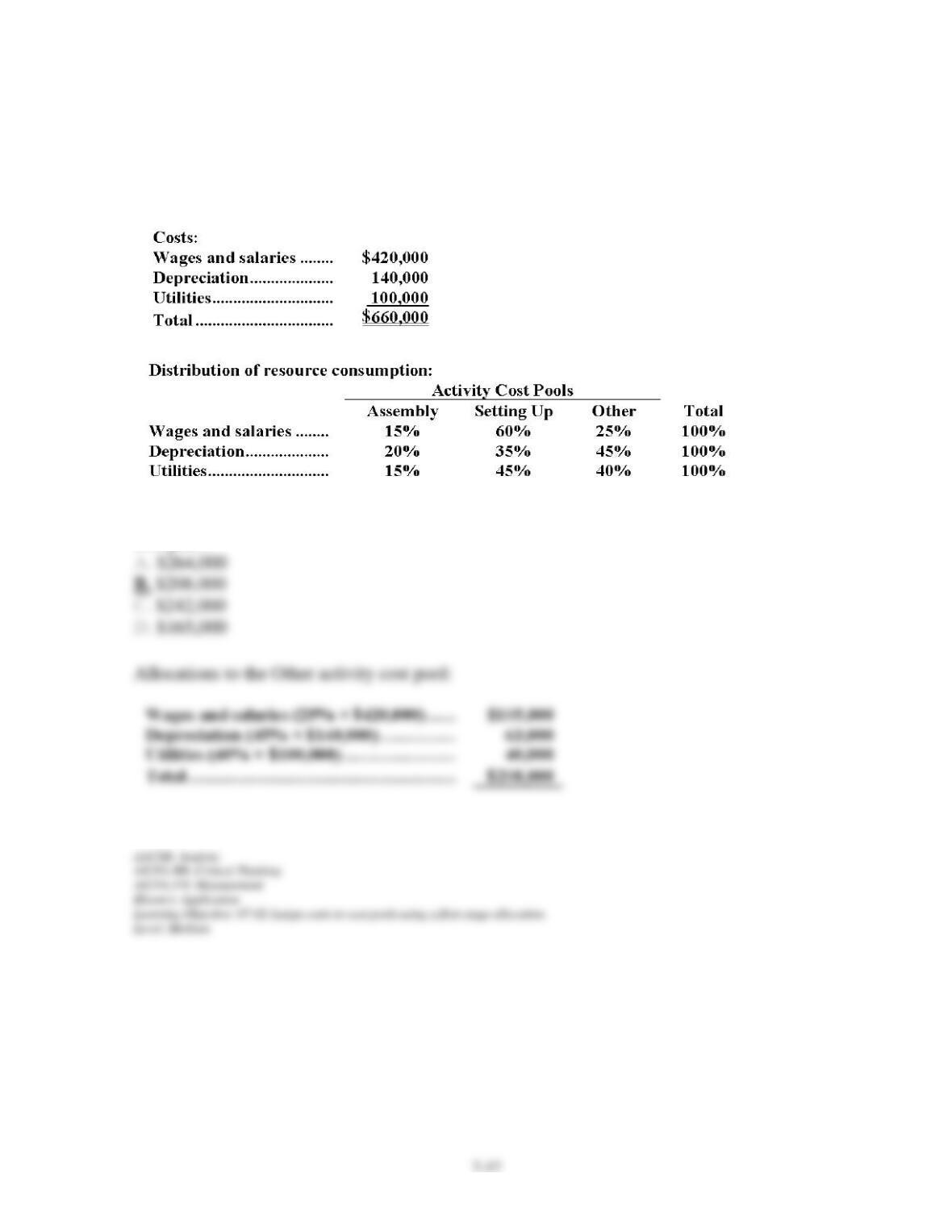
29. McKenrick Corporation uses an activity-based costing system with three activity cost
pools. The company has provided the following data concerning its costs and its activity
based costing system:
How much cost, in total, would be allocated in the first-stage allocation to the Setting Up
activity cost pool?
Chapter 07 – Activity-Based Costing: A Tool to Aid Decision Making
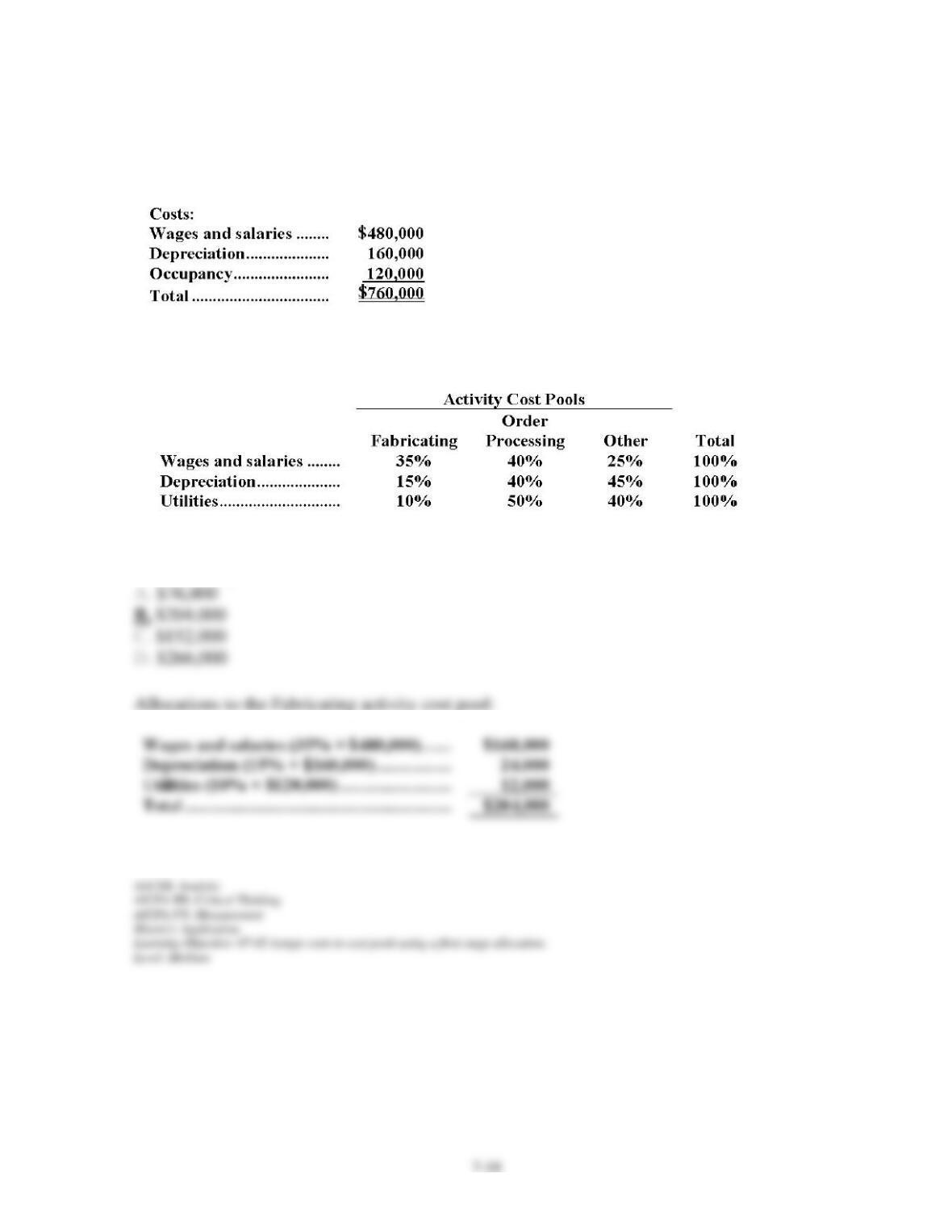
30. Youd Corporation uses an activity-based costing system with three activity cost pools.
The company has provided the following data concerning its costs and its activity based
costing system:
How much cost, in total, would be allocated in the first-stage allocation to the Other activity
cost pool?
Chapter 07 – Activity-Based Costing: A Tool to Aid Decision Making
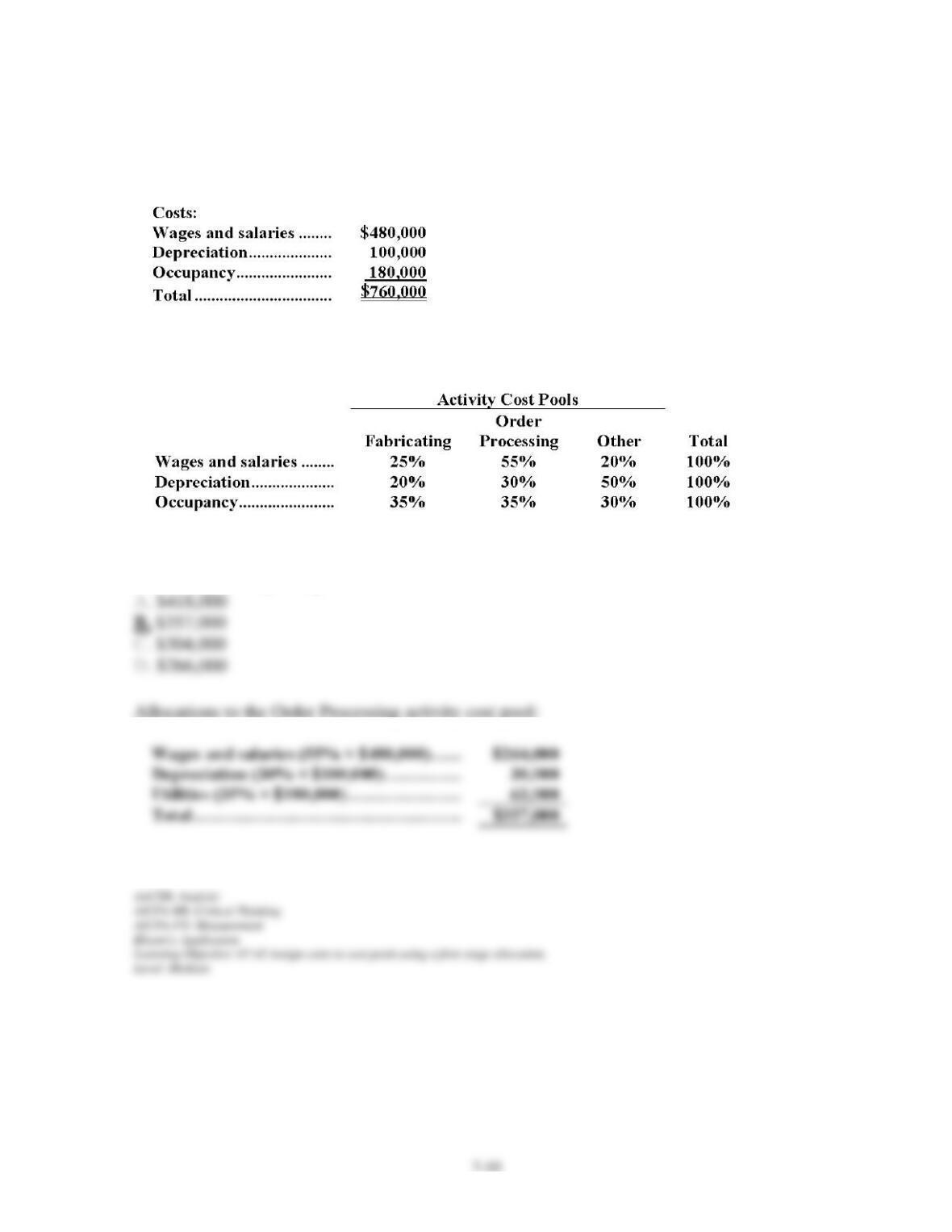
31. Higbie Corporation uses an activity-based costing system with three activity cost pools.
The company has provided the following data concerning its costs:
The distribution of resource consumption across the three activity cost pools is given below:
How much cost, in total, would be allocated in the first-stage allocation to the Fabricating
activity cost pool?
Chapter 07 – Activity-Based Costing: A Tool to Aid Decision Making
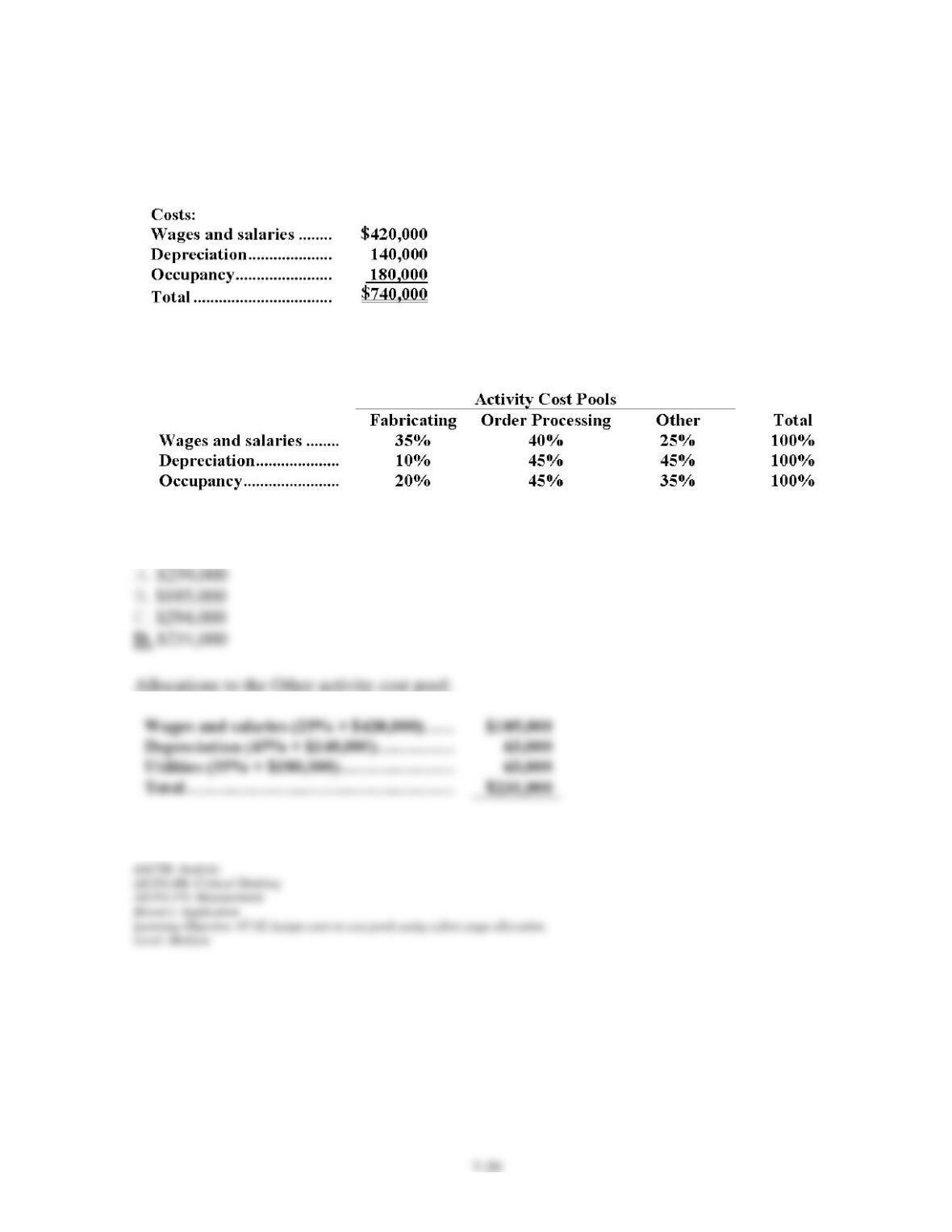
32. Madson Corporation uses an activity-based costing system with three activity cost pools.
The company has provided the following data concerning its costs:
The distribution of resource consumption across the three activity cost pools is given below:
How much cost, in total, would be allocated in the first-stage allocation to the Order
Processing activity cost pool?
Chapter 07 – Activity-Based Costing: A Tool to Aid Decision Making
33. Kach Corporation uses an activity-based costing system with three activity cost pools. The
company has provided the following data concerning its costs:
The distribution of resource consumption across the three activity cost pools is given below:
How much cost, in total, would be allocated in the first-stage allocation to the Other activity
cost pool?