Hall: Guyton and Hall Textbook of Medical Physiology, 12th Edition
Chapter 65: Digestion and Absorption in the Gastrointestinal Tract and Chapter 66:
Physiology of Gastrointestinal Disorders
Test Bank
1. A 35-year-old woman adds lots of high-fiber wheat and bran foods to her diet to reduce
her cholesterol level. She had avoided eating wheat or rye foods since she was a child
because her mother said they would make her sick. She loses 30 pounds on her new diet,
but it has a number of undesirable side effects (i.e., stomach cramps, gas, and frequent
diarrhea). She has also become weaker, finding it difficult to complete her morning
walks. Her gastroenterologist diagnosed a malabsorption syndrome called gluten
enteropathy or celiac disease (often referred to as celiac sprue). Which of the following is
most likely to be increased in this woman?
A. Blood hemoglobin concentration
B. Carbohydrate absorption
C. Protein absorption
D. Serum calcium
E. Serum prothrombin
F. Stool fat
2. What is the major form by which triglycerides are transported in lymph?
A. Apoproteins
B. Chylomicrons
C. Emulsified fat globules
D. Free triglycerides
E. Micelles
3. Which of the following substances is digested only at the brush border of the small
intestine by brush border enzymes?
A. Alanine
B. Glucose polymers
C. Lactose
D. Polypeptides
E. Triglycerides
4. Which of the following enzymes normally activates a proteolytic enzyme in the stomach?
A. Carboxypeptidase
B. Lipase
Test Bank
65 and 66-2
C. Pepsin
D. Sucrase
E. Trypsin
5. The gastrointestinal hormone, secretin has a direct action to open which type of ion
channel?
A. Calcium
B. Chloride
C. Magnesium
D. Potassium
E. Sodium
6. Which of the following best describes the type of fat most abundant in the diet?
A. 2-monoglycerides
B. Cholesterol
C. Fatty acids
D. Triglycerides
7. Which of the following best describes the mechanism by which monoglycerides and free
fatty acids are transported from the gut lumen into enterocytes?
A. Co-transport with amino acids
B. Co-transport with glucose
C. Co-transport with sodium
D. Facilitated diffusion
E. Simple diffusion
8. Which of the following enzymes initiates a cascade that activates all pancreatic proteases
in the lumen of the small intestine?
A. Enterokinase
B. Pancreatic amylase
C. Pepsinogen
D. Ptyalin
E. Trypsin
9. Which of the following is the most common cause of pancreatitis in children?
A. Alcoholism
Test Bank
65 and 66-3
B. Celiac sprue
C. Cystic fibrosis
D. Gallstones
E. Malignancy
10. Which monosaccharides are bonded together to form a molecule of lactose?
A. Glucose and galactose
B. Maltose and galactose
C. Sucrose and glucose
D. Two molecules of fructose
E. Two molecules of glucose
11. Fructose, galactose, and glucose are transported across the basolateral membrane of
enterocytes by which hexose transporter?
A. GLUT 2
B. GLUT 3
C. GLUT 4
D. GLUT 5
E. GLUT 1
12. Which cell type found in the liver removes nearly 99% of the bacteria in portal blood?
A. Blood endothelial cells
B. Hepatocytes
C. Kupffer cells
D. Lymphatic endothelial cells
E. Smooth muscle cells
13. Which of the following ions is most closely associated with fluid absorption from the
gastrointestinal tract?
A. Calcium
B. Chloride
C. Phosphate
D. Potassium
E. Sodium
Test Bank
65 and 66-4
14. Which of the following ions is most closely associated with fluid secretion into the
gastrointestinal tract?
A. Calcium
B. Chloride
C. Phosphate
D. Potassium
E. Sodium
15. The major constituent of chylomicrons is which of the following?
A. Cholesterol
B. Free fatty acids
C. Lipoproteins
D. Phospholipids
E. Triglycerides
16. Which of the following best explains the mechanism of cystic fibrosis-induced
pancreatitis?
A. Activation of enterokinase
B. Activation of trypsin inhibitor
C. Autodigestion of pancreas
D. Excessive secretion of cholecystokinin (CCK)
E. Gallstone obstruction
17. Which of the following substances can be digested in the cytoplasm of enterocytes after
its absorption from the intestinal lumen?
A. Amino acids
B. Dipeptides
C. Galactose
D. Glucose
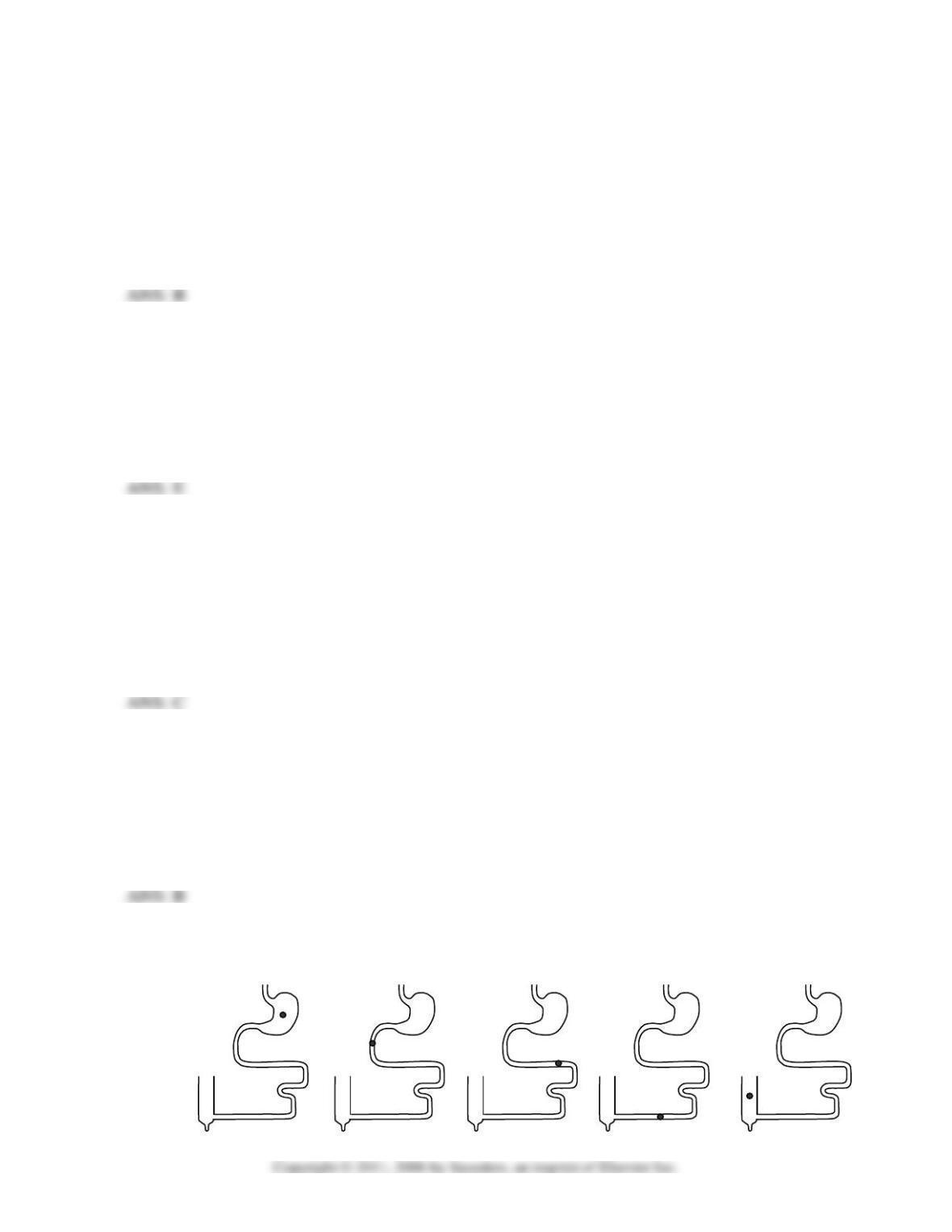
18. A 23-year-old man consumes a meal containing a large amount of fat. At which of the
following locations is bile salts most likely to be absorbed?
A.
B.
C.
D.
E.
Test Bank
65 and 66-5
19. What is the major form by which free fatty acids and 2-monoglycerides are transported in
chylomicrons?
A. 2-monoglyceride
B. Cholesterol esters
C. Free fatty acids
D. Glycerol
E. Triglycerides
20. Which of the following substances is absorbed by enterocytes from the intestinal lumen
by facilitated diffusion?
A. Free fatty acids
B. 2-monoglyceride
C. Fructose
D. Galactose
E. Glucose
F. Oligopeptides
21. Which of the following is the most abundant product of carbohydrate digestion?
A. Fructose
B. Galactose
C. Glucose
D. Lactose
E. Maltose
22. Cystic fibrosis causes a primary disruption in the transfer of which ion across cell
membranes?
A. Calcium
B. Chloride
C. Phosphate
D. Potassium
E. Sodium
Test Bank
65 and 66-6
23. By which chemical process are carbohydrates, fats, and proteins digested into small
enough components to be absorbed?
A. Deamination
B. Decarboxylation
C. Hydrolysis
D. Oxidation
E. Phosphorylation
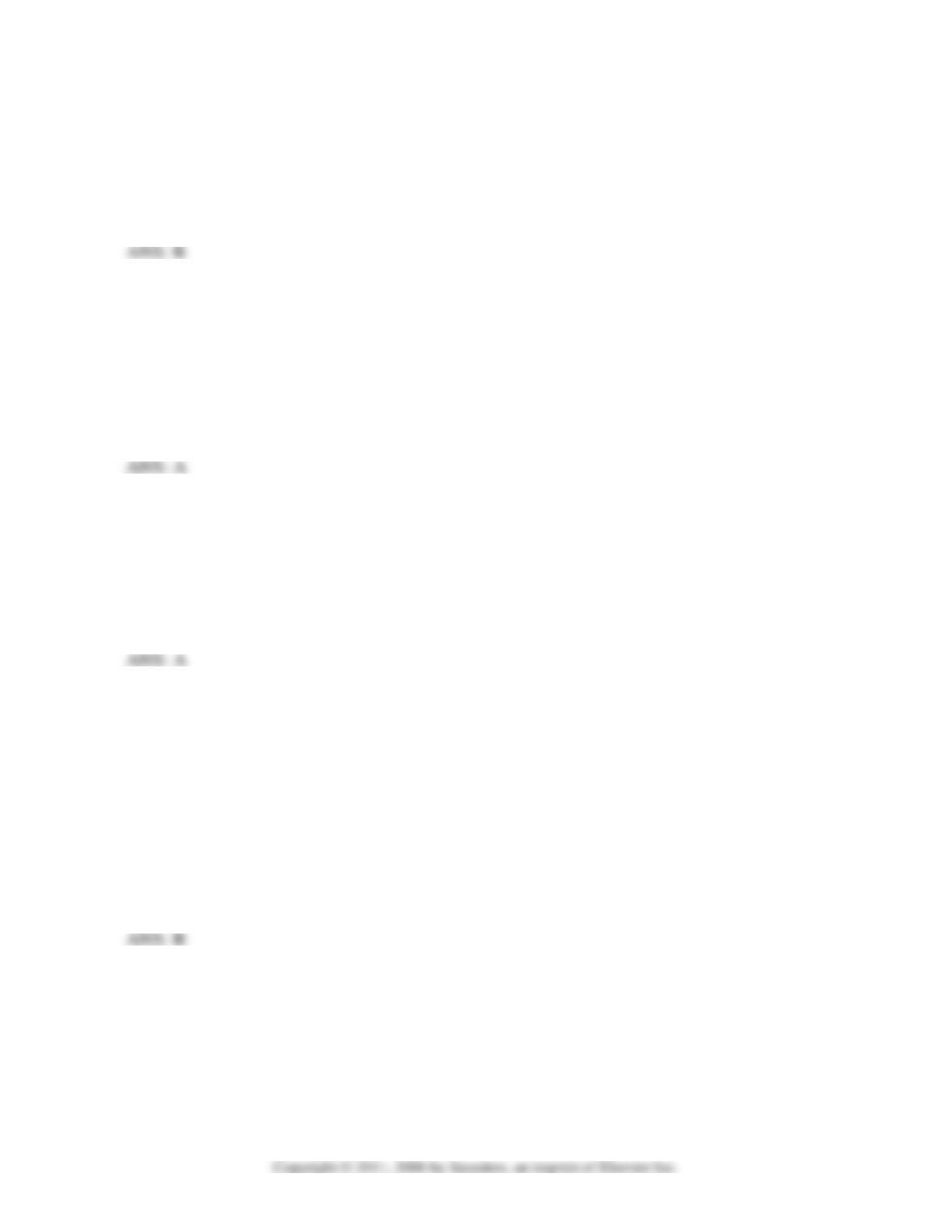
24. A 10-year-old boy is admitted to the emergency department because of severe, watery
diarrhea after consumption of polluted water. Cholera is suspected and later confirmed by
the presence of V. cholerae in the stool. The diagram shows a secretory cell in the crypt
of Lieberkühn of the small intestine. Cholera toxin exerts its effects by causing a
PRIMARY upregulation of which step (labeled A to E) in the secretory mechanism?
25. Which of the following enzymes converts procarboxypeptidase-A to carboxypeptidase-
A?
A. Amylase
B. Cholesterol esterase
C. Enterokinase
D. Lipase
E. Trypsin
26. Activation of cystic fibrosis transmembrane conductance regulator (CFTR) channels
leads to a primary increase in the secretion of which ion?
P
Na+
K+
Na+
H20
Cl –
cAMP
Cl –
Cl –
Na+
Na+
A
B
C
D
Na+
H20
E
Test Bank
65 and 66-7
A. Calcium
B. Chloride
C. Magnesium
D. Potassium
E. Sodium
27. Cholera toxin causes diarrhea by increasing intracellular levels of which of the following
substances?
A. cAMP
B. Chloride
C. Phosphodiesterase
D. Sodium
E. Water
28. The most common cause of chronic pancreatitis in adults is which of the following?
A. Alcoholism
B. Celiac sprue
C. Cystic fibrosis
D. Gallstones
E. Malignancy
29. A 44-year-old woman adds lots of high-fiber wheat and bran foods to her diet to reduce
her cholesterol level. She loses 30 pounds on her new diet, but she has a number of
undesirable side effects (stomach cramps, flatulence, and frequent diarrhea). Her
gastroenterologist diagnosed a malabsorption syndrome called gluten enteropathy or
celiac disease. Which of the following is most likely to be decreased in this woman?
A. Fecal mass
B. Microvilli
C. Stool carbohydrates
D. Stool Fat
E. Stool nitrogen
30. Cholera toxin causes severe diarrhea by increasing irreversibly the intracellular levels of
cAMP. The increase in cAMP activates channels for which of the following ions?
A. Calcium
B. Chloride
C. Magnesium
D. Potassium
Test Bank
65 and 66-8
E. Sodium
31. Various proteolytic enzymes are secreted in an inactive form into the lumen of the
gastrointestinal tract. Which one of the following sets of substances is can activate one or
more proteolytic enzymes?
Trypsin Enterokinase Pepsin
A. No No No
B. No No Yes
C. No Yes No
D. Yes Yes No
E. Yes Yes Yes
32. Which of the following is a likely consequence of ileal resection?
A. Achalasia
B. Atrophic gastritis
C. Constipation
D. Drooling
E. Pernicious anemia
33. The establishment of an electrochemical gradient for which of the following substances is
critical for absorption of nutrients from the small intestine?
A. Calcium
B. Chloride
C. Magnesium
D. Potassium
E. Sodium
34. Vibrio cholerae causes severe diarrhea by increasing irreversibly the intracellular levels
of which substance?
A. Chloride ions
B. Cyclic adenosine monophosphate (cAMP)
C. Glucose
D. Potassium ions
E. Sodium ions
Test Bank
65 and 66-9
35. Which of the following best describes the length of time required for enterocytes to
migrate from the crypt of Lieberkühn to the tip of a villus in the small intestine?
A. 1 day
B. 5 days
C. 10 days
D. 50 days
E. 120 days
36. Which of the following enzymes is attached to the plasma membrane of mature
enterocytes of the small intestinal?
A. Amylase
B. Chymotrypsin
C. Lipase
D. Pepsin
E. Sucrase
F. Trypsin
37. The assimilation of fat includes (1) absorption of fat by enterocytes, (2) secretion of
chylomicrons, (3) emulsification of fat, and (4) micelle formation. Which of the
following best describes the correct temporal order of events?
A. 4, 3, 2, 1
B. 3, 1, 4, 2
C. 3, 4, 1, 2
D. 2, 1, 4, 3
E. 4, 2, 1, 3
F. 2, 4, 1, 3
G. 1, 2, 3, 4
H. 1, 3, 2, 4
38. A 30-year-old woman visits her physician because of abdominal bloating, excessive
flatus, and diarrhea. The physician notes the absence of surgical scars during a physical
exam. The results of a 72-hour stool collection indicate excessive amounts of fat in the
stool, and 90% of the stool fat consists of triglycerides. Which of the following best
describes the nature of this patient’s problem?
A. Celiac disease
B. Crohn’s disease
C. Lactose intolerance
D. Pancreatic disease
E. Short bowel syndrome
F. Ulcerative colitis
Test Bank
65 and 66-10
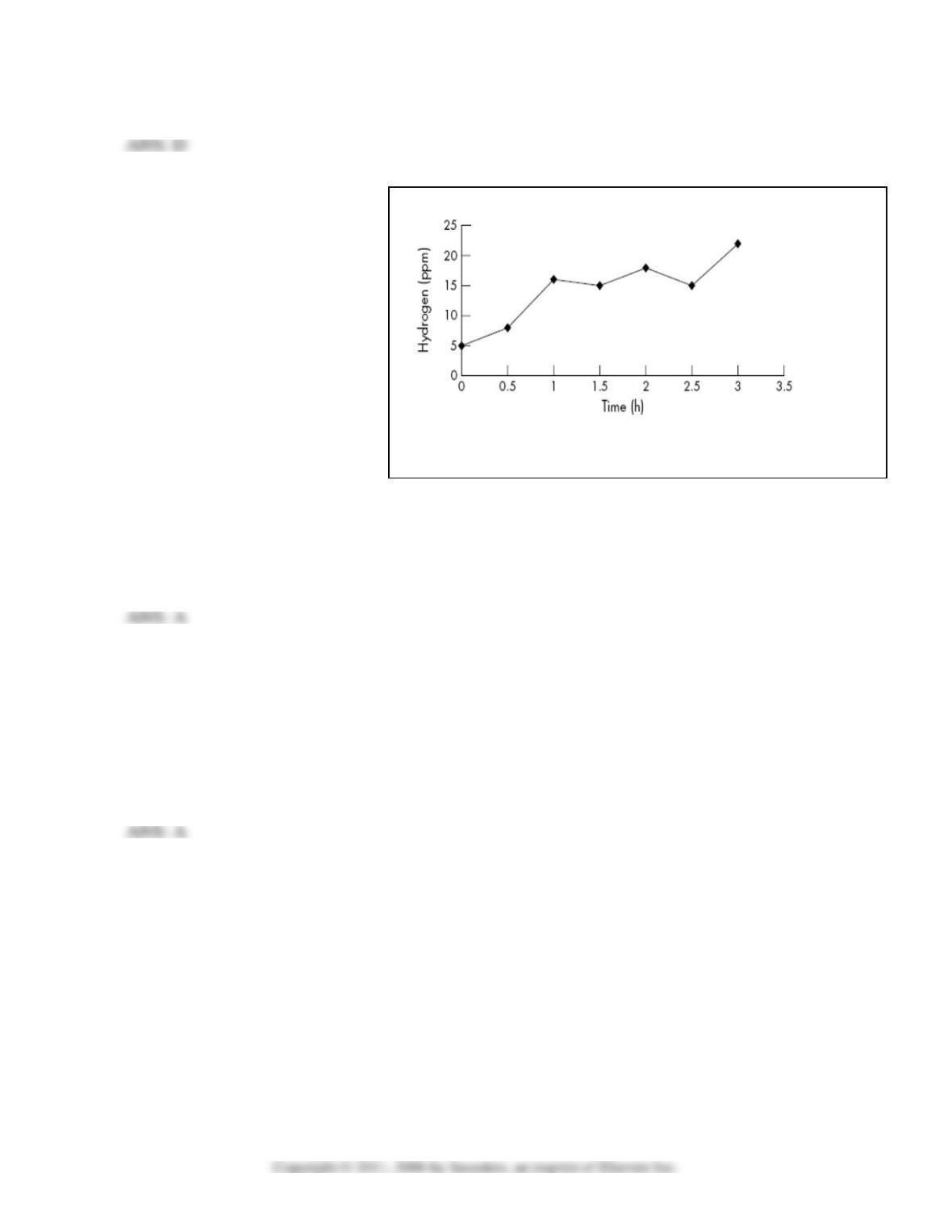
39. A 19-year-old female visits
her physician because of
nausea, diarrhea, light
headedness, and flatulence.
The physician administers 50
grams of oral lactose at time
zero, and measures breath
hydrogen every 30 minutes
for three hours using a
handheld monitor. The
results are shown. Which of
the following best describes
this patient’s condition?
A. Brush border lactase
deficiency
B. Brush border lactase excess
C. Decreased pancreatic lactase
D. Increased pancreatic lactase
E. No digestive abnormality
40. Which of the following best describes the origin of the hydrogen that is expired in the
breath of a patient with lactose intolerance?
A. Colon
B. Duodenum
C. Ileum
D. Jejunum
E. Stomach