
Hall: Guyton and Hall Textbook of Medical Physiology, 12th Edition
Chapter 63: Propulsion and Mixing of Food in the Alimentary and Chapter 66:
Physiology of Gastrointestinal Disorders
Test Bank
1. Which of the following would eliminate receptive relaxation of the lower esophageal
sphincter and fundus portion of the stomach?
A. Increased serum gastrin
B. Increased serum secretin
C. Sympathectomy
D. Sympathetic stimulation
E. Vagal stimulation
F. Vagotomy
2. Which of the following elements of the defecation process require input from higher
centers of the brain in a healthy person under normal conditions?
A. Peristaltic contractions of the sigmoid colon
B. Rectal distention
C. Rectal peristalsis
D. Relaxation of external anal sphincter
E. Relaxation of internal anal sphincter
3. Mass movements are often stimulated after a meal by distention of the stomach and
distention of the duodenum. Mass movements often lead to which of the following?
A. Bowel movements
B. Gastric movements
C. Haustrations
D. Esophageal contractions
E. Pharyngeal peristalsis
4. Achalasia is associated with which of the following at rest and during swallowing?
A. Higher than normal pressure at the lower esophageal sphincter
B. Lower than normal pressure at the lower esophageal sphincter
C. Higher than normal pressure at the upper esophageal sphincter
D. Lower than normal pressure at the upper esophageal sphincter

5. Distention of the rectum causes a reflex relaxation of which structure?
A. Abdominal muscle
B. Diaphragm
C. External anal sphincter
D. Internal anal sphincter
E. Sigmoid colon
6. Ileocecal sphincter tone decreases (relaxes) after distention of which structure?
A. Colon
B. Esophagus
C. Ileum
D. Pharynx
E. Rectum
7. Mass movements are often stimulated after a meal by which reflex?
A. Coloileal reflex
B. Enterogastric reflex
C. Gastrocolic reflex
D. Intestino-intestinal reflex
E. Rectosphincteric reflex
8. The main mixing movement of the stomach is which of the following?
A. Primary peristalsis
B. Receptive relaxation
C. Retropulsion
D. Segmentation contractions
9. A healthy 29-year-old man eats a breakfast of eggs, bacon, and toast. A decrease in
which of the following delays gastric emptying in the man after eating the breakfast?
A. Intestinal peristalsis
B. Pyloric tone
C. Segmentation contractions in small intestine
D. Tone of orad stomach
10. The swallowing center in the medulla has a critical role in totally inhibiting which of the
following when food is swallowed?
Test Bank
63 and 66-3
A. Esophageal peristalsis
B. Pharyngeal peristalsis
C. Primary peristalsis
D. Receptive relaxation
E. Respiration (breathing)
F. Secondary peristalsis
11. The primary purpose of migrating motility complexes is which of the following?
A. Move chyme through the small intestine during a meal
B. Promote gastric emptying as a meal is digested
C. Stimulation of mass movements
D. Sweep undigested residue toward the colon
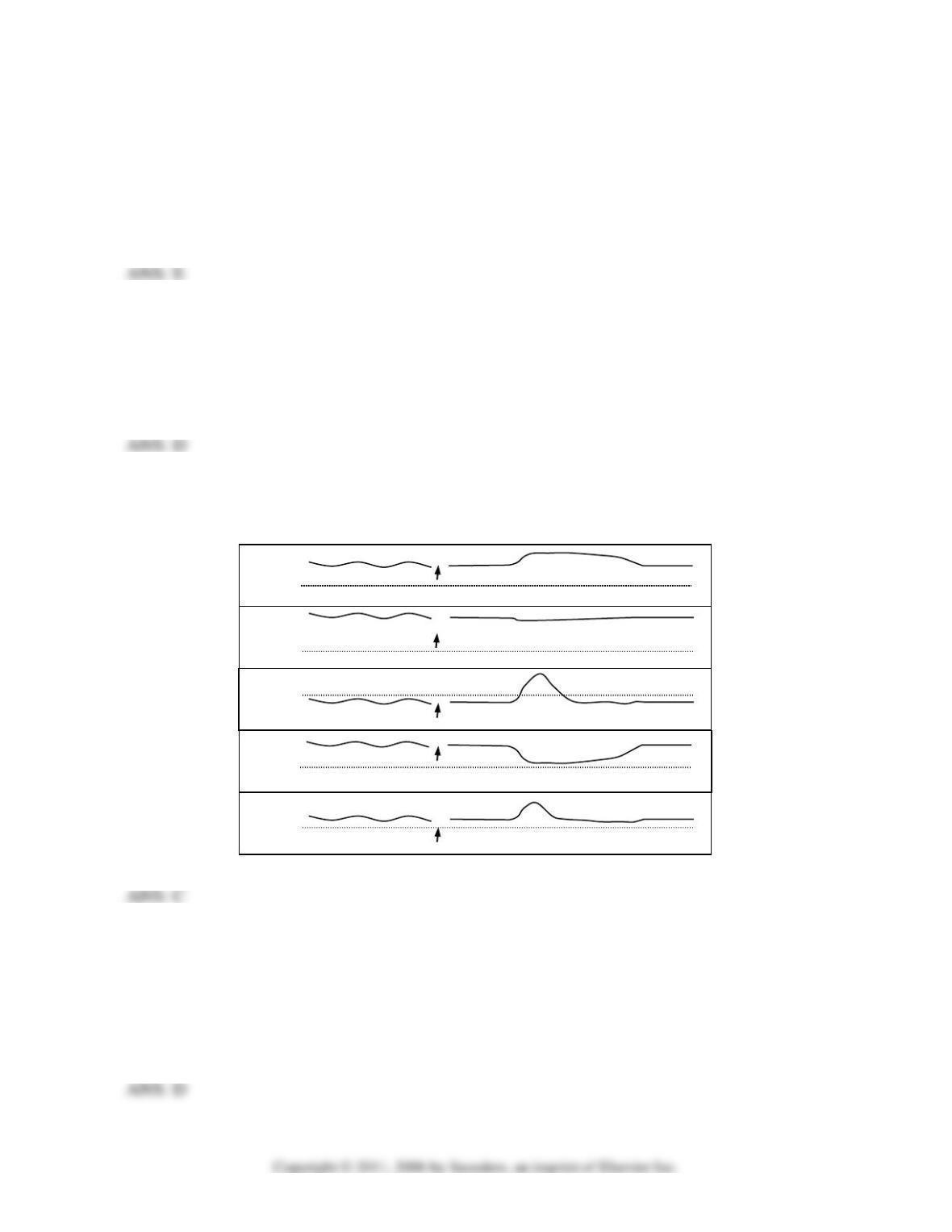
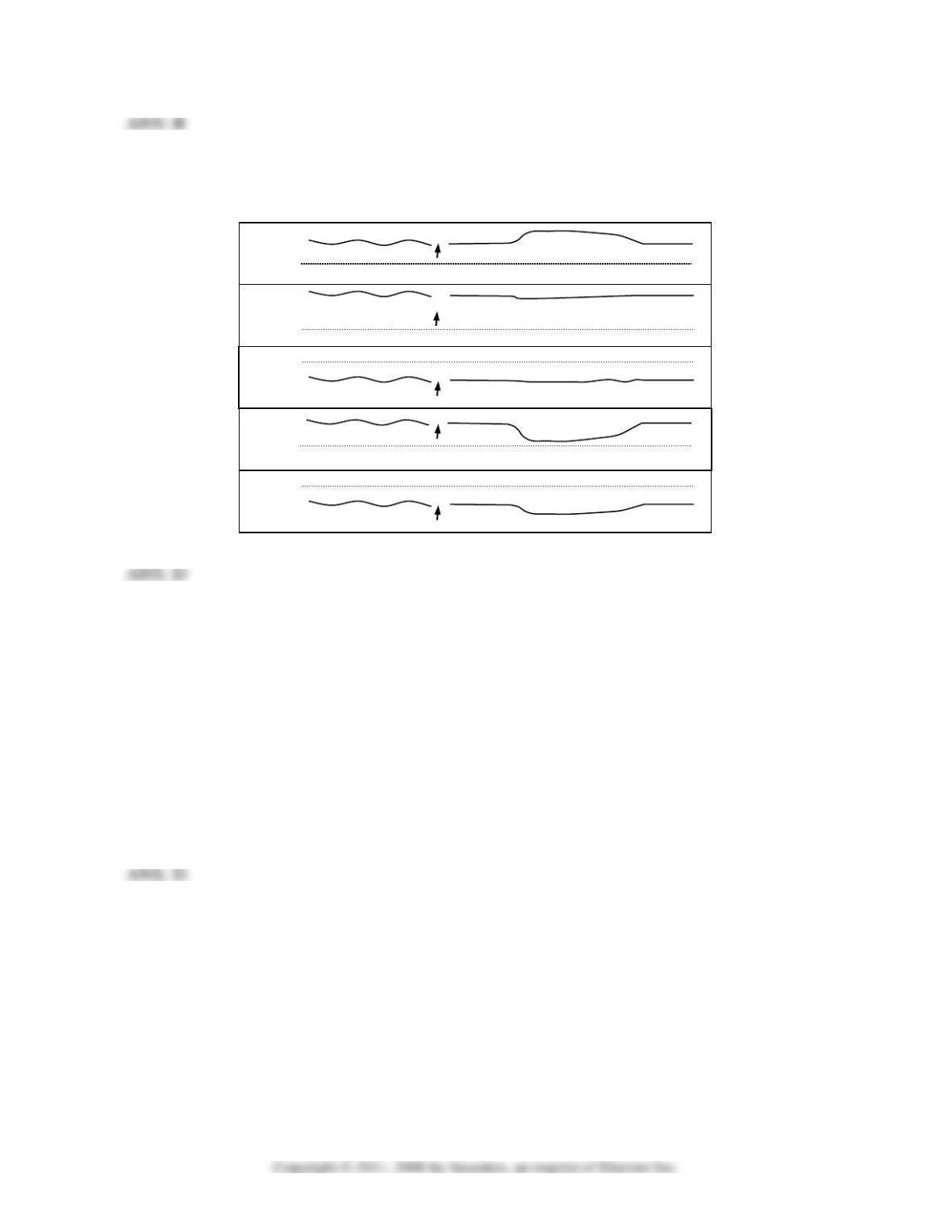
12. Which one of the following manometric recordings illustrates normal function of the
esophagus at mid-thoracic level before and after swallowing (arrow)? The dashed lines
represent a pressure of 0 mmHg.
13. Migrating motility complexes are thought to be stimulated by which of the following?
A. Cholecystokinin (CCK)
B. Gastrin
C. Mass movements
D. Motilin
E. VIP
0
0
0
0
D
A
B
E
0
C
14. Which of the following structures is critical for determining whether a bolus of food is
small enough to be swallowed?
A. Epiglottis
B. Larynx
C. Palatopharyngeal folds
D. Soft palate
E. Upper esophageal sphincter
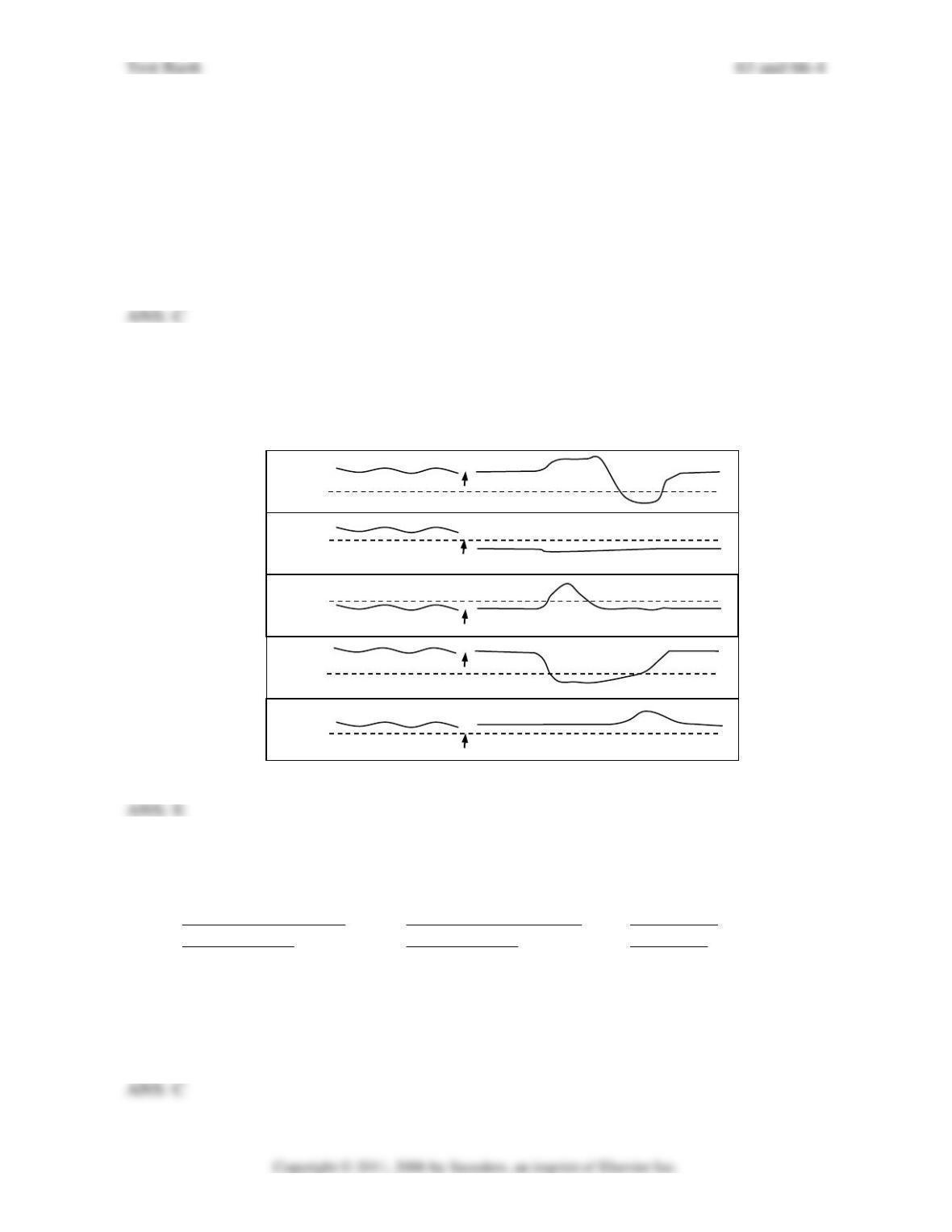
15. Which one of the following manometric recordings illustrates normal function of the
esophagus at a point below the diaphragm before and after swallowing (arrow)? The
dashed lines represent a pressure of 0 mmHg.
16. A 20-year-old man severs his spinal cord at T6 in an automobile accident. He devises a
method to distend the rectum to initiate the rectosphincteric reflex. Rectal distention
causes which of the following in this man?
Relaxation of Internal Contraction of External Contraction
Anal Sphincter Anal Sphincter of Rectum
A. No No No
B. No No Yes
C. Yes No Yes
D. Yes No No
E. Yes Yes Yes
D
A
B
E
C
17. A newborn boy does not pass meconium in the first 24 hours. His abdomen is distended,
and he begins vomiting. Various other tests lead to a diagnosis of Hirschsprung’s disease.
An obstruction is most likely to be found in which portion of the gut?
A. Ascending colon
B. Ileocecal sphincter
C. Lower esophageal sphincter
D. Pylorus
E. Sigmoid colon
18. Mass movements in the large intestine cause which of the following?
A. Contraction of internal anal sphincter
B. Duodenal peristalsis
C. Gastric retropulsion
D. Hunger sensations
E. Rectal distention
19. Which of the following occur during the act of vomiting?
Lower Esophageal Upper Esophageal Abdominal Diaphragm
Sphincter Sphincter Muscles
A. Contract Contract Contract Contract
B. Contract Contract Relax Relax
C. Relax Contract Contract Relax
D. Relax Relax Contract Contract
E. Relax Relax Relax Relax
20. Which of the following best describes the direct physiological effect of the various
hormones on gastric emptying?
Gastrin Secretin CCK GIP Motilin
A. Decrease Decrease Decrease Decrease Increase
B. Increase Decrease None Decrease Increase
C. None None Decrease Increase Increase
D. None None Decrease None None
E. None None Increase None None
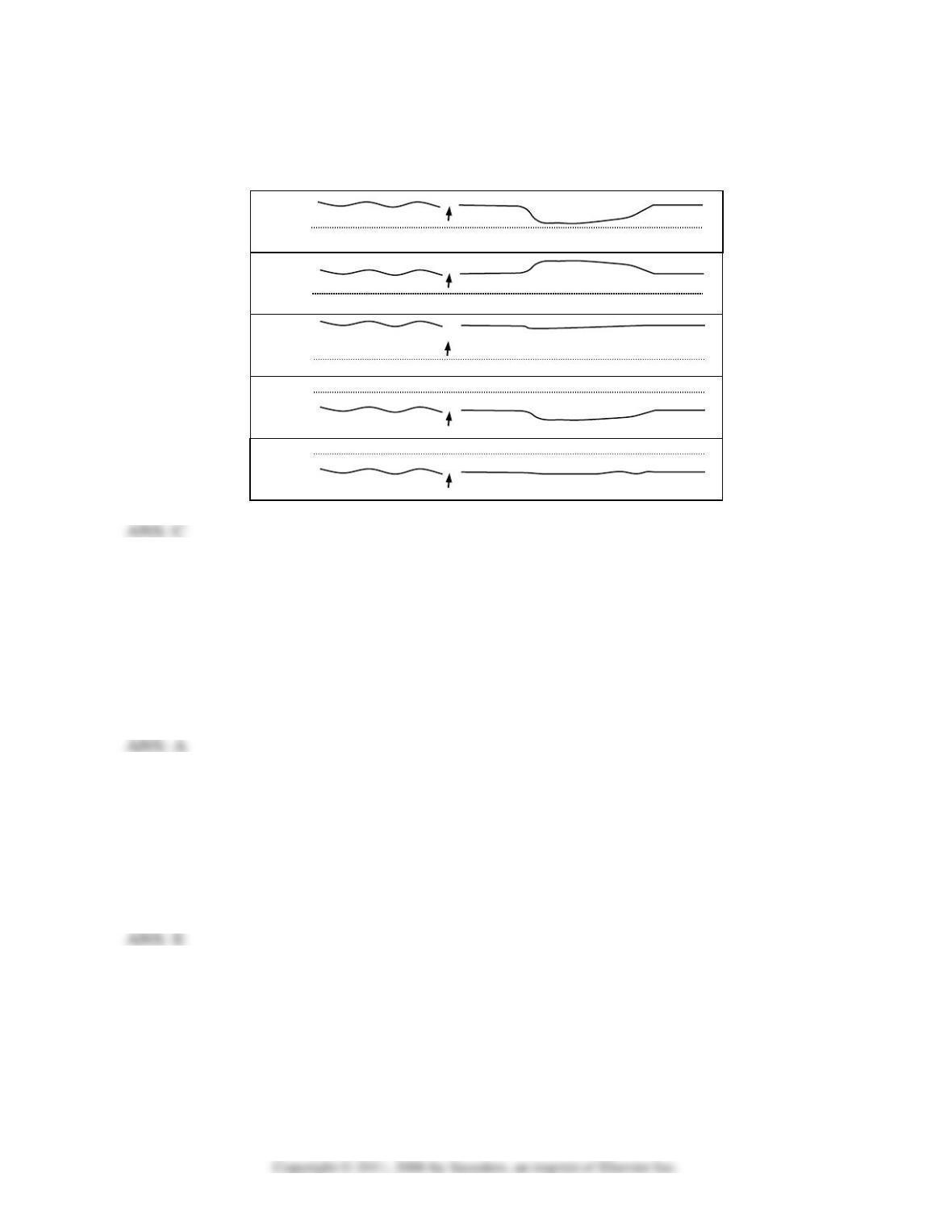
21. A 39-year-old man suffers from chest pain when he eats, especially when he eats meat.
He also belches excessively and has heartburn. His wife complains about his bad breath.
The radiograph shows a dilated esophagus, and achalasia is suspected. Esophageal
Test Bank
63 and 66-6
manometry confirms the diagnosis. Which one of the pressure tracings given below was
taken at the lower esophageal sphincter of this patient before and after swallowing
(arrow)? The dashed line represents a pressure of 0 mmHg.
22. The ileocecal junction functions as a valve and a sphincter. Ileocecal sphincter tone
increases after distention of which of the following?
A. Colon
B. Esophagus
C. Ileum
D. Rectum
E. Stomach
23. Receptive relaxation of the fundus is mediated by which substance?
A. Amino acids
B. Gastrin
C. Glucose-dependent insulinotropic peptide (GLIP)
D. Secretin
E. Vasoactive intestinal peptide (VIP)
24. Conditions that tend to increase gastric emptying include which of the following?
A. Decreased peristalsis in stomach
B. Increased tone of orad stomach
C. Increased tone of pylorus
D. Segmentation contractions in intestine
0
0
0
0
A
B
C
D
0
E
Test Bank
63 and 66-7
25. Which one of the pressure tracings given below illustrates normal function of the lower
esophageal sphincter before and after swallowing (arrow)? The dashed line represents a
pressure of 0 mmHg.
26. A 2-year-old boy swallows a penny. The boy’s mother checks his stool for several days,
but the penny does not appear. Meanwhile, the boy has lost his appetite and seems to
have difficulty eating. When a foreign object is swallowed, it often lodges at which
portion of the gut?
A. Anus
B. Duodenum
C. Ileocecal sphincter
D. Lower esophageal sphincter
E. Pharynx
F. Pyloric sphincter
G. Rectum
27. An 87-year-old man suffers a stroke that eliminates vagal nerve input to the
gastrointestinal tract and severely curtains function of the glossopharyngeal nerve. Which
of the following is operational in this man?
A. Pharyngeal phase of swallowing
B. Primary peristalsis of the esophagus
C. Receptive relaxation of the fundus
D. Receptive relaxation of the lower esophageal sphincter
E. Secondary peristalsis of the esophagus
0
0
0
0
D
A
B
E
0
C

Test Bank
63 and 66-8
28. Ileocecal sphincter tone decreases after distention of which of the following?
A. Colon
B. Esophagus
C. Ileum
D. Rectum
E. Stomach
29. A 44-year-old man severs his spinal cord at T1 in an automobile accident that leaves him
a paraplegic. Chronic constipation becomes a problem. His physician advises him to
distend the rectum digitally on a regular schedule to initiate the defecation reflex. Rectal
distention causes which of the following in this patient?
A. A deep breath
B. Closure of the glottis
C. Contraction of external anal sphincter
D. Contraction of internal anal sphincter
E. Increased abdominal pressure
F. Increased peristaltic waves
30. A 43-year-old medical student suffers severe damage to the conus medullaris in an
accident. He initiates defecation by inserting a balloon-tipped Foley catheter into his
rectum and blowing up the balloon using a 50 mL syringe. Which reflex is stimulated by
the balloon in this patient?
A. Duodenocolic reflex
B. Enterogastric reflex
C. Ileocecal reflex
D. Intrinsic defecation reflex
E. Spinal cord reflex
31. Which of the following reflexes results in the urge to defecate when the duodenum is
distended?
A. Duodenocolic reflex
B. Enterogastric reflex
C. Gastrocolic reflex
D. Ileocecal reflex
E. Intestino-intestinal reflex
32. A newborn boy does not pass meconium in the first 24 hours. His abdomen is distended,
and he begins vomiting. Hirschsprung’s disease is suspected. Which of the following is
virtually absent from the constricted segment of the colon in this patient?
A. Blood flow
B. Circular smooth muscle
C. Ganglion cells
D. Mucosa
E. Serosa
33. A 52-year-old man eats a healthy meal. Approximately 20 minutes later, the man has the
urge to defecate. Which of the following reflexes results in the urge to defecate when the
stomach is stretched?
A. Duodenocolic reflex
B. Enterogastric reflex
C. Gastrocolic reflex
D. Ileocecal reflex
E. Intestine-intestinal reflex
34. A 36-year-old woman suffers severe damage to the conus medullaris in an automobile
accident. Defecation requires the use of enemas. Which of the following does not occur
in this woman?
A. Contraction of rectum
B. Contraction of sigmoid colon
C. Contraction of external anal sphincter
D. Contraction of descending colon
E. Relaxation of internal anal
sphincter
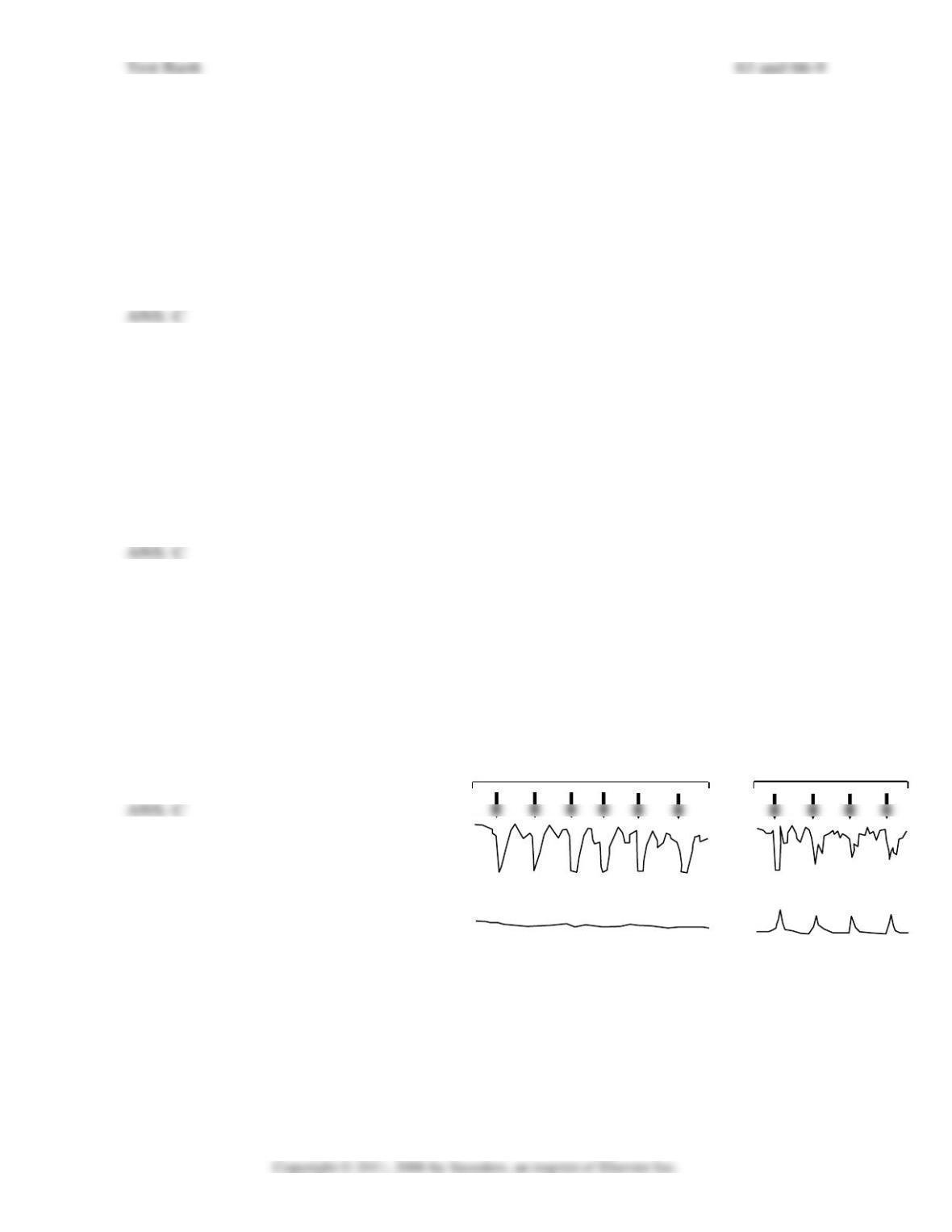
35. The diagram shows manometric
recordings from a patient before and
after pelvic floor training. A balloon
placed in the rectum was blown up
(arrows) and deflated repeatedly.
Tracing Z is a manometric recording obtained from the external anal sphincter before and
after pelvic floor training. Which of the following best describe the origin of tracing X
shown in the upper panel?
A. Distal rectum
B. Ileocecal valve
C. Internal anal sphincter
D. Lower esophageal sphincter
X
Z
Before
After
Test Bank
63 and 66-10
E. Proximal rectum
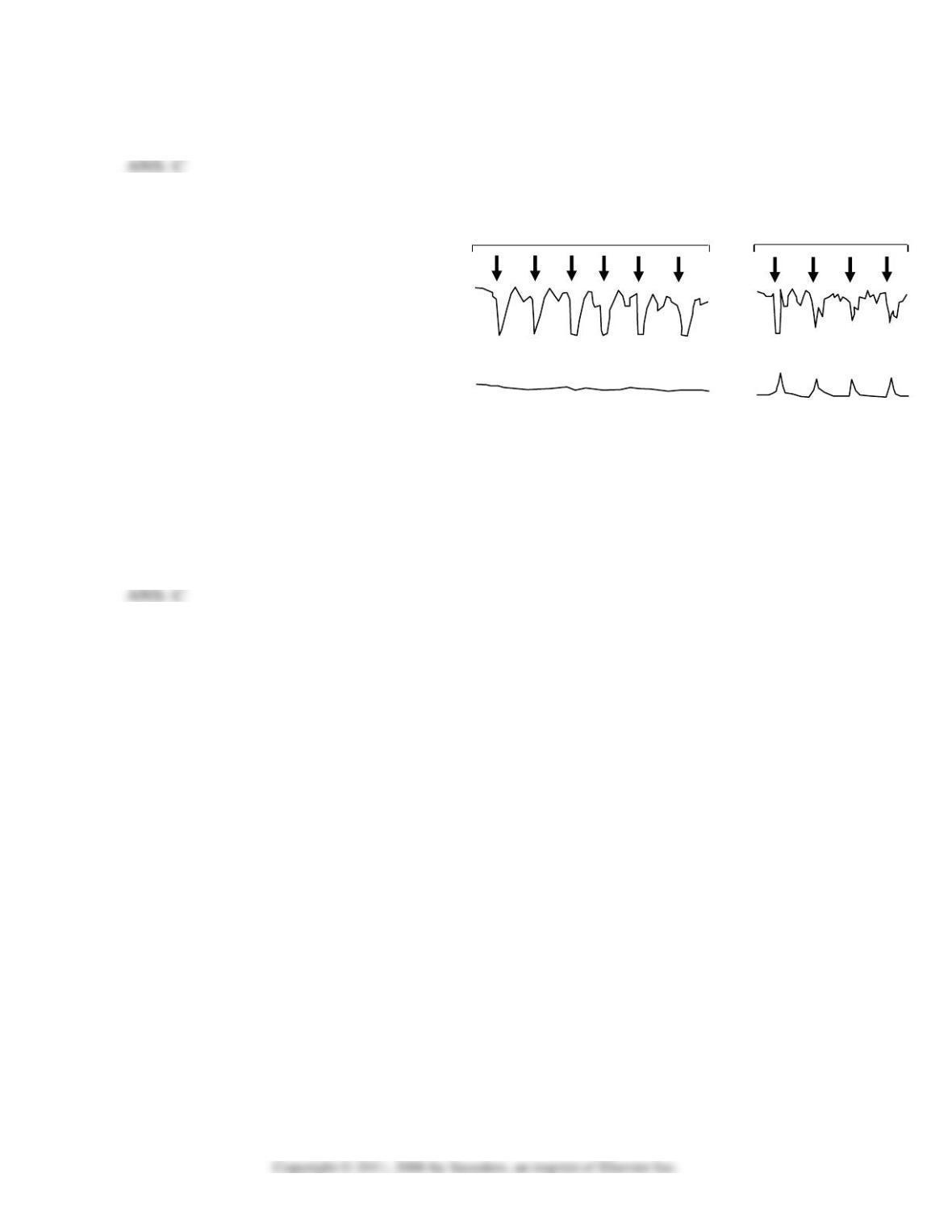
36. The diagram shows manometric
recordings from a patient before and
after pelvic floor training. A balloon
placed in the rectum was blown up
(arrows) and deflated repeatedly.
Tracing Z is a manometric recording
obtained from the external anal
sphincter before and after pelvic
floor training. Which of the
following best describes the condition for which the patient received pelvic floor
training?
A. Anal fissure (i.e., tear or superficial laceration)
B. Chronic type 7 stools
C. Fecal incontinence (i.e., no control over defecation)
D. Hemorrhoids
E. Hirschsprung’s disease
X
Z
Before
After