Chapter 06 Test Bank KEY
1. Which one of the following is generally considered a characteristic of a perfectly competitive labor
market?
2. A perfectly competitive labor market may be characterized by all of the following except
3. Which of the following best explains why the market labor supply curve is upward sloping, even
though individual supply curves are normally backward bending?
4. Market labor supply curves are generally
5. In a perfectly competitive environment, the height of the market labor supply curve at any given
number of labor hours indicates
6-2
6. A firm will obtain its profit maximizing level of employment where
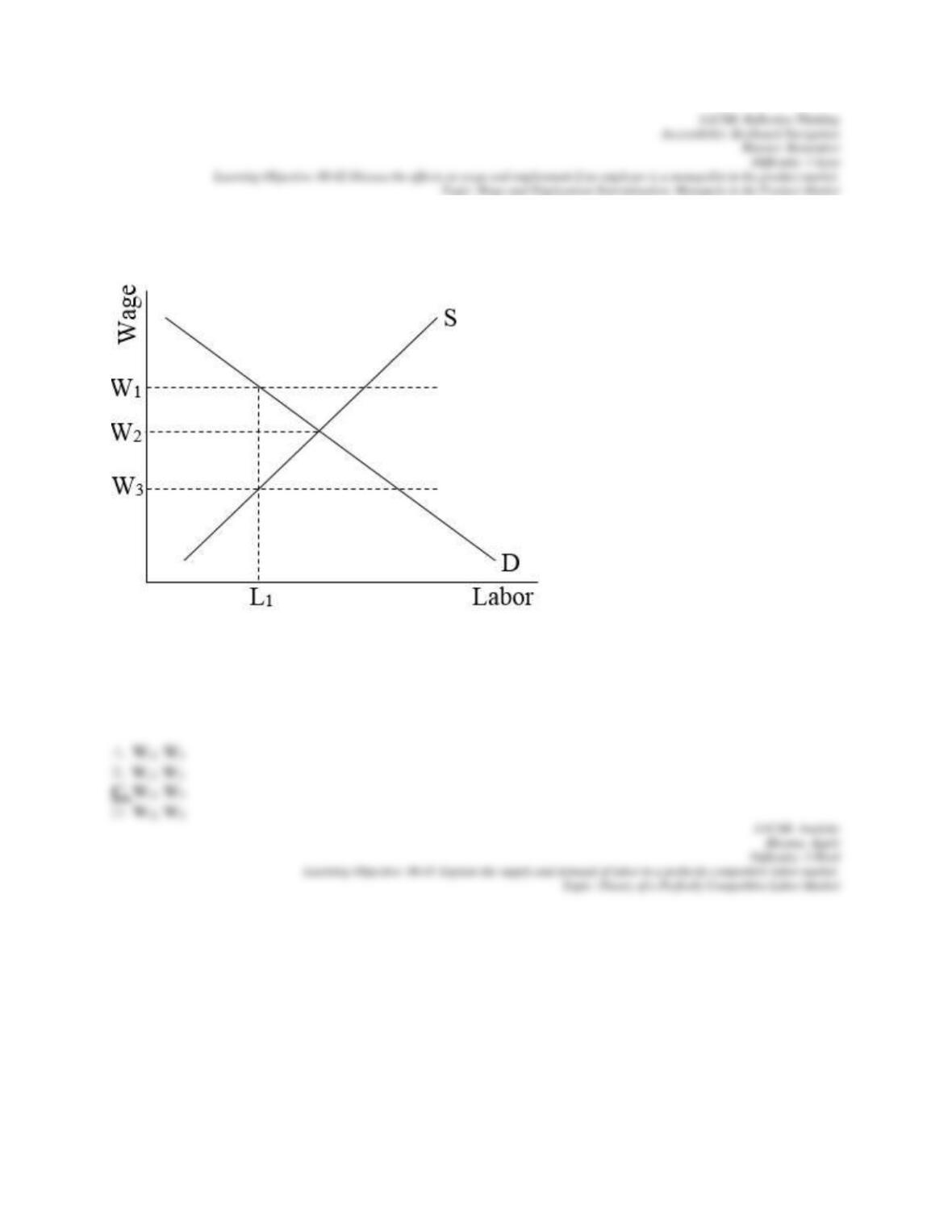
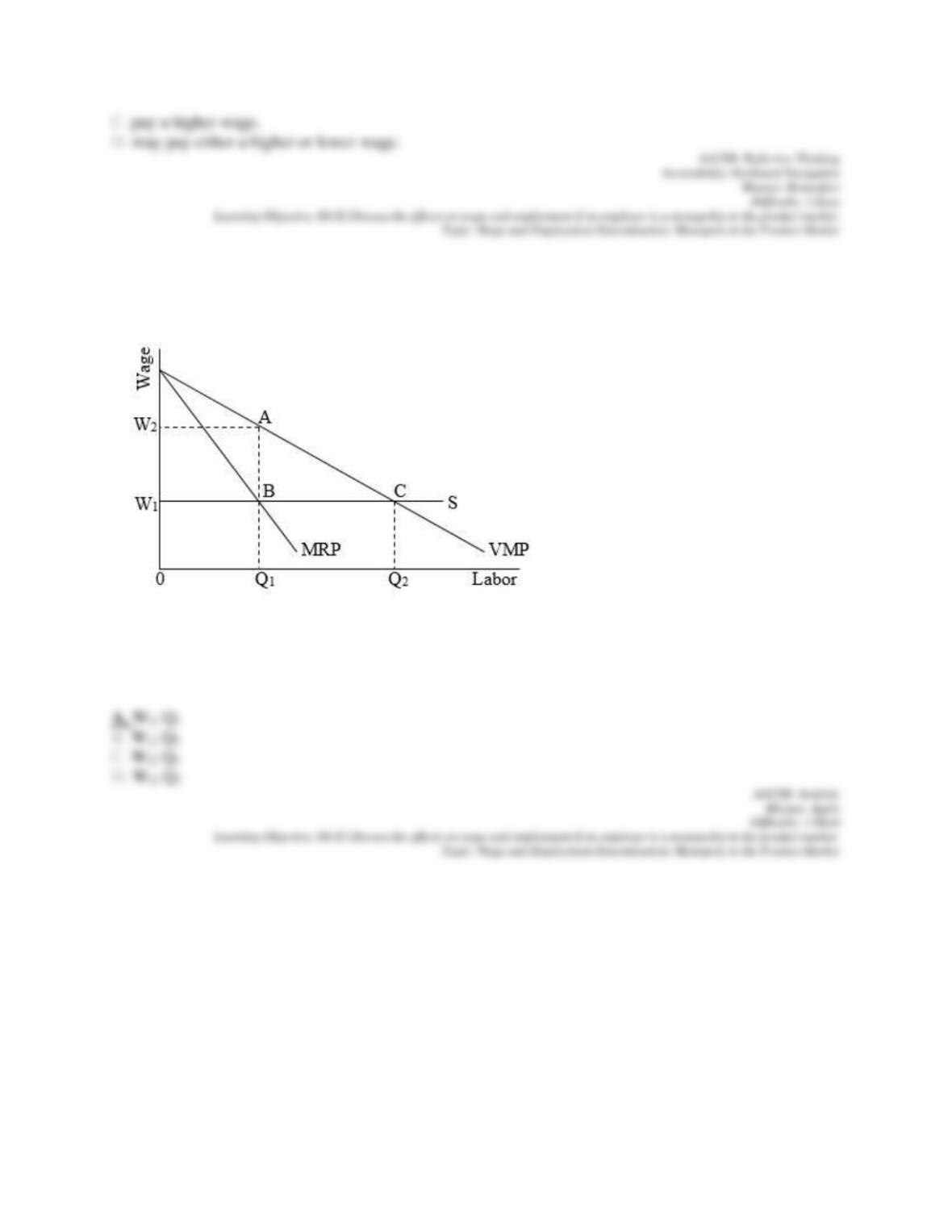
7. Refer to the following diagram of a perfectly competitive labor market.
At wage rate W1, there is an
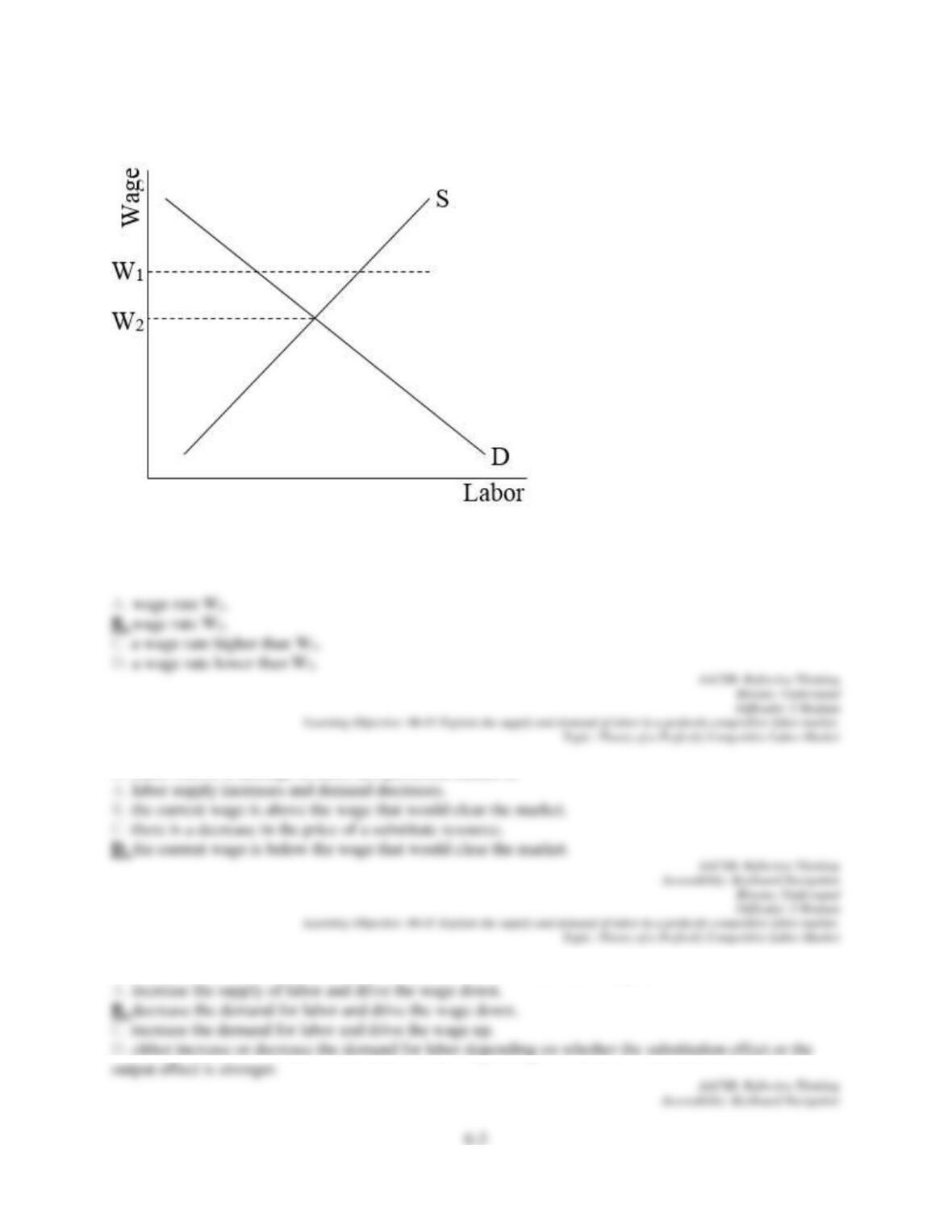
8. Refer to the following diagram of a perfectly competitive labor market.
For the supply and demand curves in the diagram, the level of employment will be highest at
9. There will be a shortage of labor in a particular market if
10. If capital and labor are gross complements, an increase in the cost of capital will
11. Suppose workers in labor market X are qualified to work in an alternative competitive labor market Y,
and vice versa. An increase in the demand for labor in market Y will
12. A net increase in people’s preferences for work relative to leisure in a particular market will
13. All else equal, which of the following will increase the demand for labor in a particular market?
14. At the profit-maximizing level of employment for a monopolist,
15. All profit-maximizing firms hire labor up to the point where
6-5
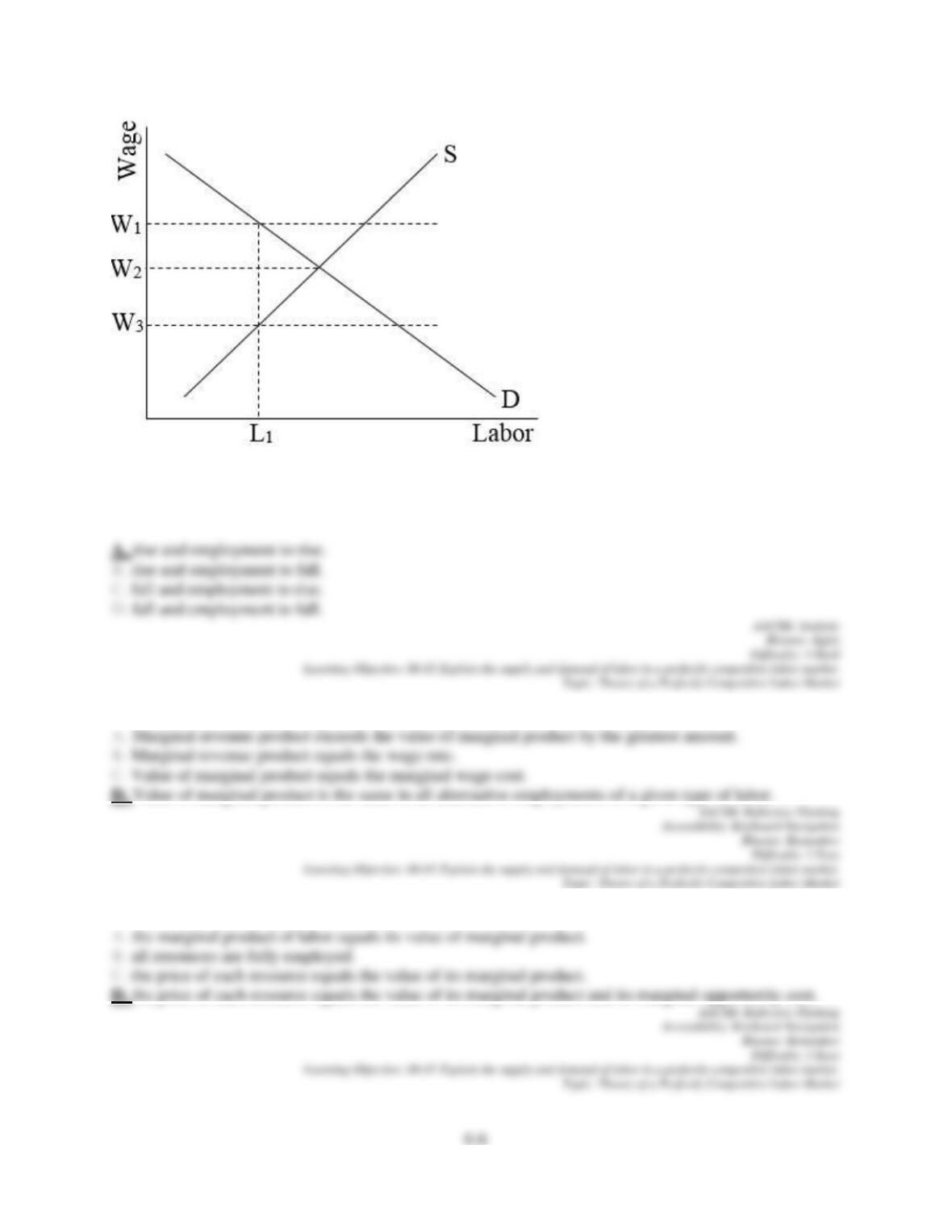
16. Refer to the following diagram of a competitive labor market.
Suppose the wage is currently W1 and L1 is the level of employment. If the firm sells its output
competitively, the value of the last worker’s additional output is _____ and the opportunity cost of the last
worker’s time is _____.
17. Refer to the following diagram of a competitive labor market.
Suppose the wage is currently W3 and L1 is the level of employment. Then we should expect the wage to
18. Which one of the following conditions is required for allocative efficiency?
19. Allocative efficiency is achieved when
6-7
20. Allocative inefficiency in a labor market may be caused by
21. Refer to the following table that shows the short-run production relationship and the product demand
schedule for a firm.
Labor
Output
Output Price
1
10
$20.00
2
15
19.00
3
19
18.00
4
22
17.00
5
24
16.00
6
25
15.00
The table indicates that
22. Refer to the following table that shows the short-run production relationship and the product demand
schedule for a firm.
Labor
Output
Output Price
1
10
$20.00
2
15
19.00
3
19
18.00
4
22
17.00
5
24
16.00
6
25
15.00
6-8
What is the marginal revenue product of the fourth worker?
23. Refer to the following table that shows the short-run production relationship and the product demand
schedule for a firm.
Labor
Output
Output Price
1
10
$20.00
2
15
19.00
3
19
18.00
4
22
17.00
5
24
16.00
6
25
15.00
What is the value of the third worker’s marginal product?
24. Refer to the following table that shows the short-run production relationship and the product demand
schedule for a firm.
Labor
Output
Output Price
1
10
$20.00
2
15
19.00
3
19
18.00
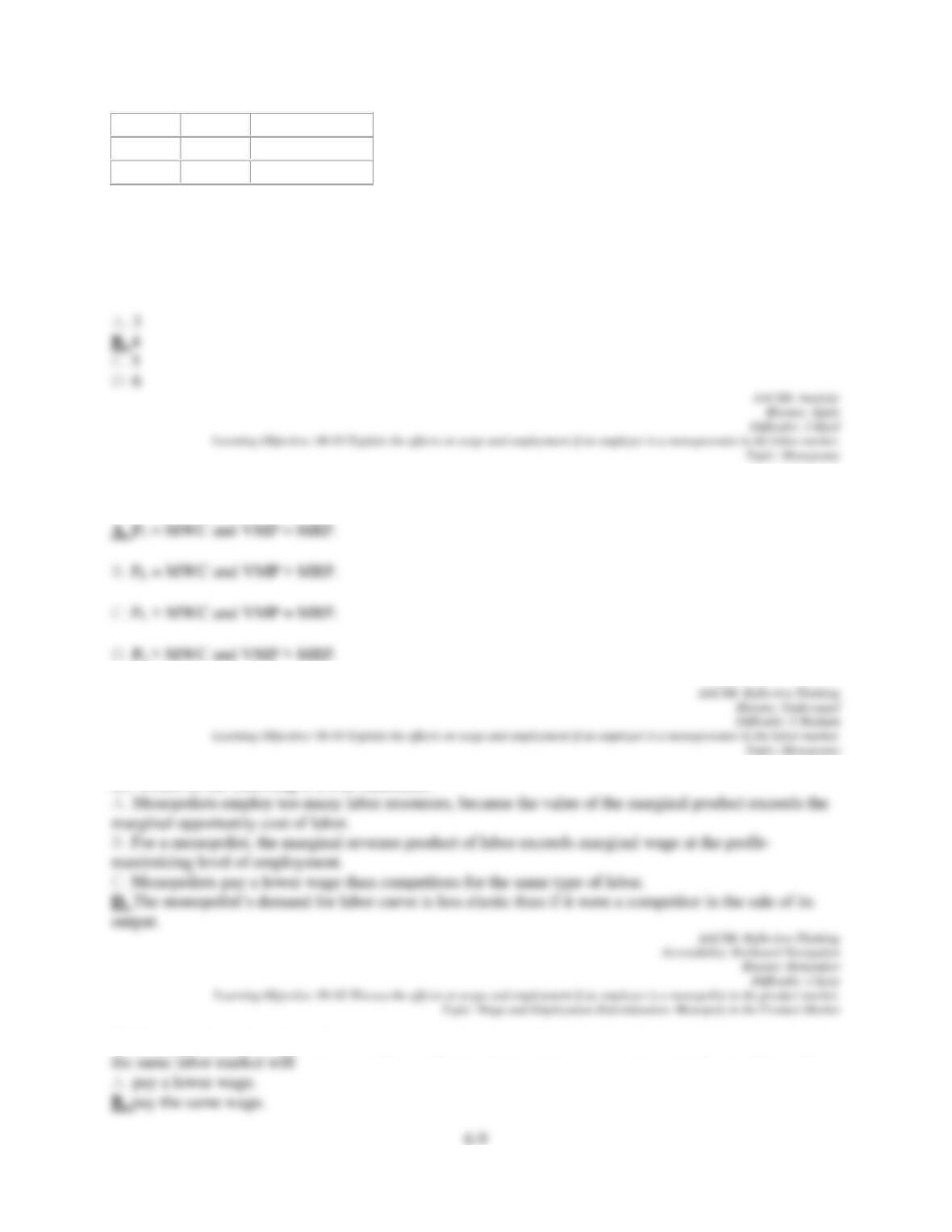
4
22
17.00
5
24
16.00
6
25
15.00
How many workers will this firm hire if the wage is $15?
25. For a firm hiring labor and selling its output in perfectly competitive markets,
26. Which of the following is a true statement?
27. Compared to a firm that sells its output competitively, an otherwise identical monopolist operating in
6-10
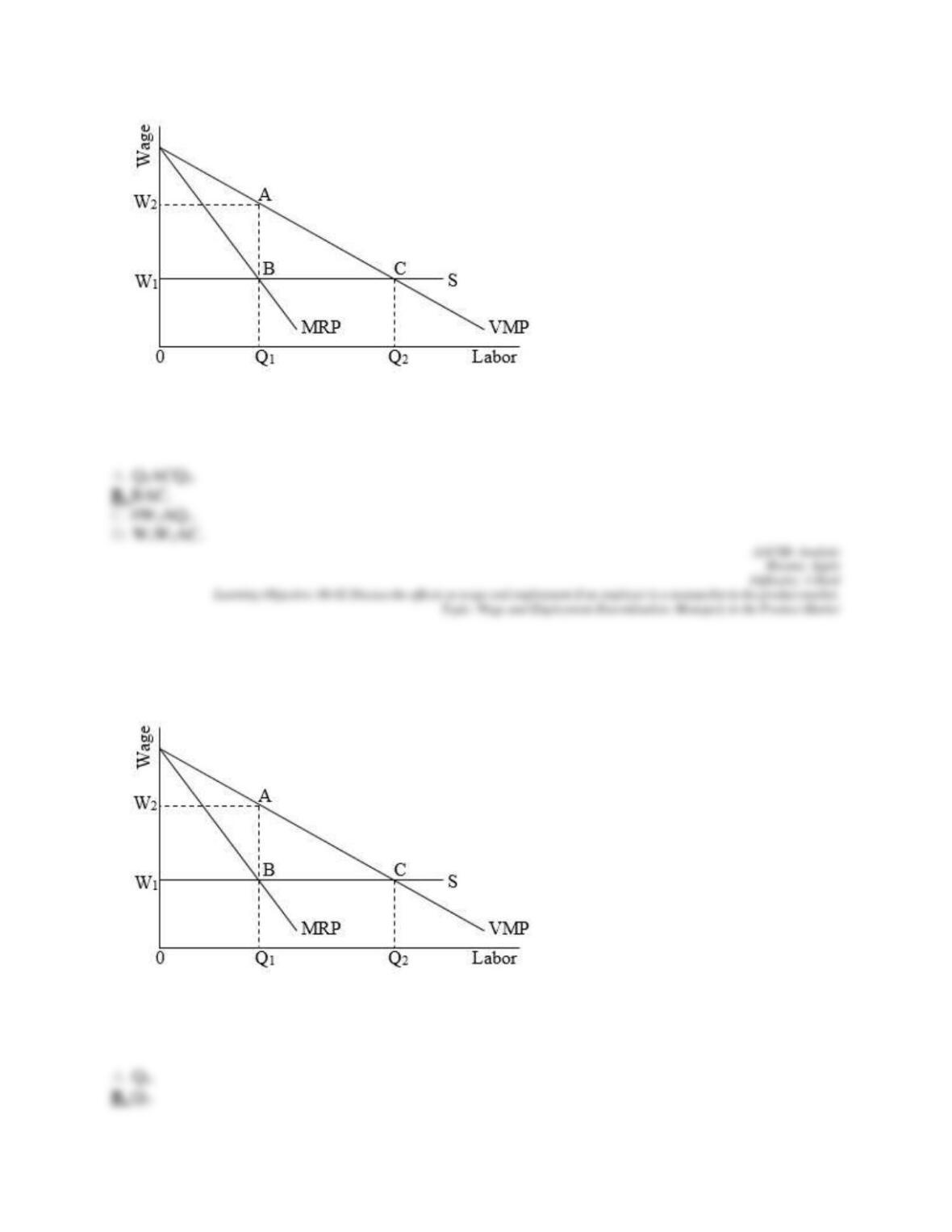
28. Refer to the following diagram that shows the labor demand for a monopolistic firm hiring labor from
a competitive labor market.
At the profit-maximizing level of employment, the wage rate is _____ and the level of employment is
_____.
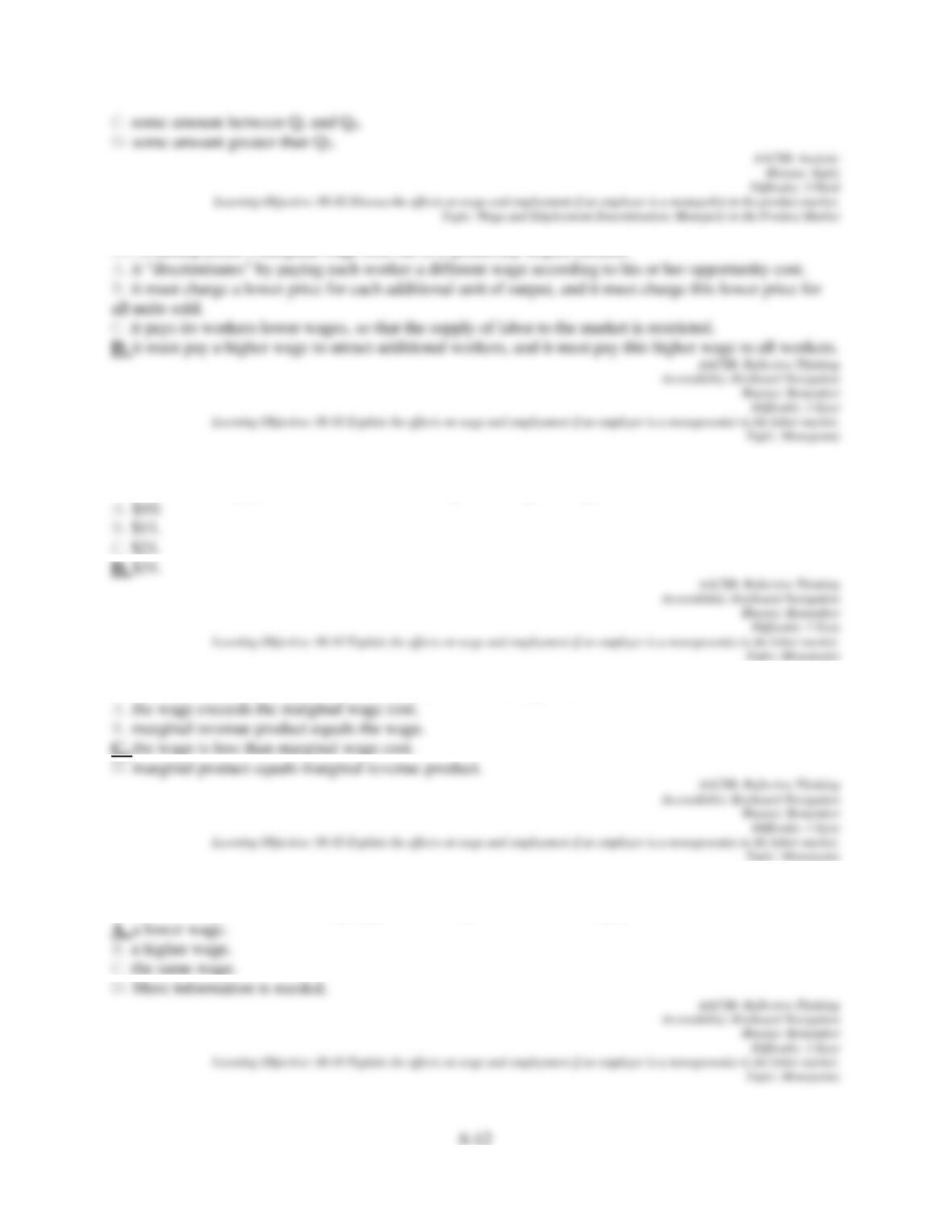
29. Refer to the following diagram that shows the labor demand for a monopolistic firm hiring labor from
a competitive labor market.
6-11
The efficiency loss associated with the profit-maximizing wage and employment level is given by area
30. Refer to the following diagram that shows the labor demand for a monopolistic firm hiring labor from
a competitive labor market.
The allocatively efficient level of employment for this firm is given by
31. A monopsonist’s marginal wage cost curve is positively sloped because
32. A firm can hire 20 workers for $10 per hour, but finds it must raise the wage to $11 to attract another
worker. If it must pay all its workers the same wage, the marginal wage cost of the 21st worker is
33. At the profit-maximizing level of employment for a monopsonist,
34. Compared to a monopsonist that sells its output in a competitive product market, an otherwise
identical monopsonist with monopoly power in the product market will pay
6-13
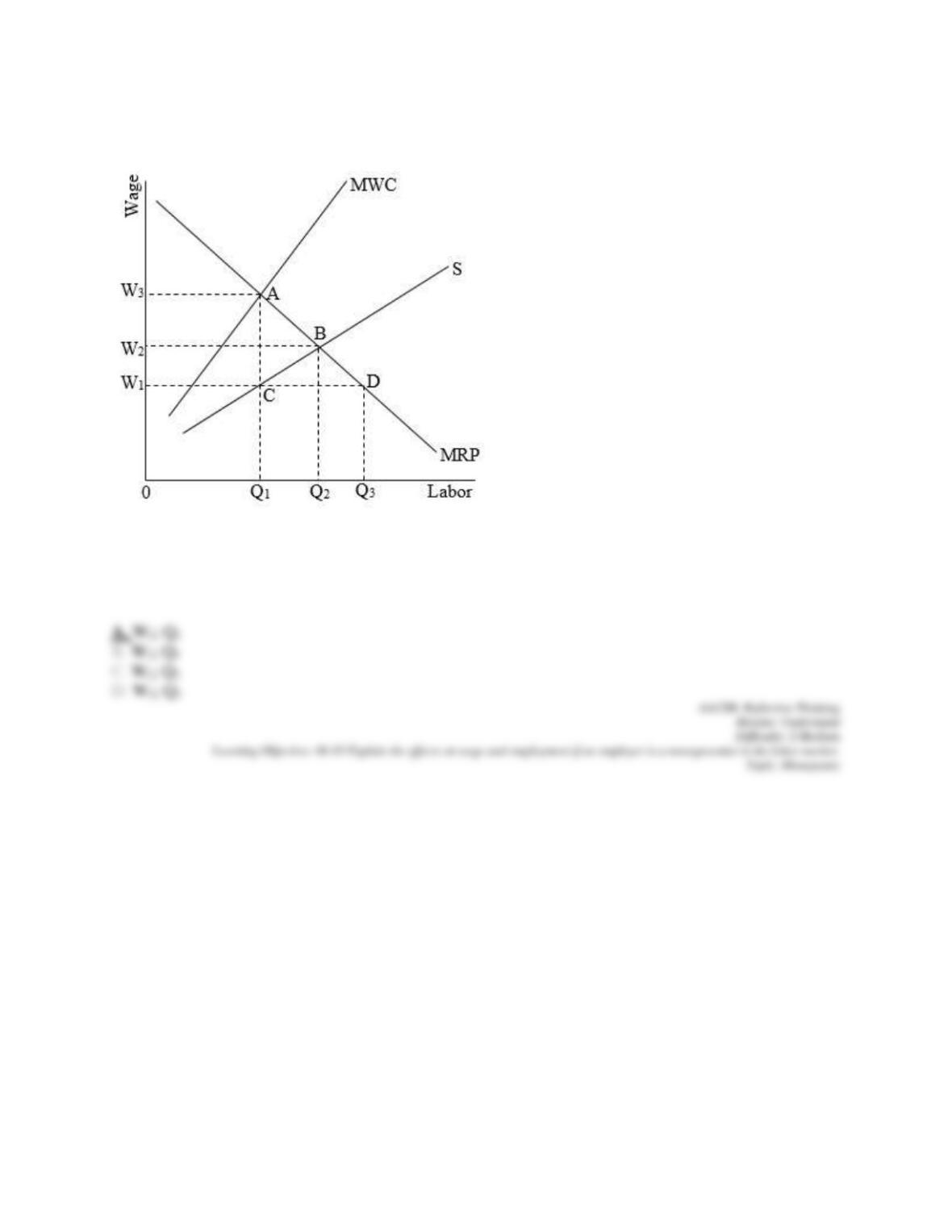
35. Refer to the following diagram of a monopsonistic labor market.
At the profit maximizing level of employment, the wage rate is _____ and the level of employment is
_____.
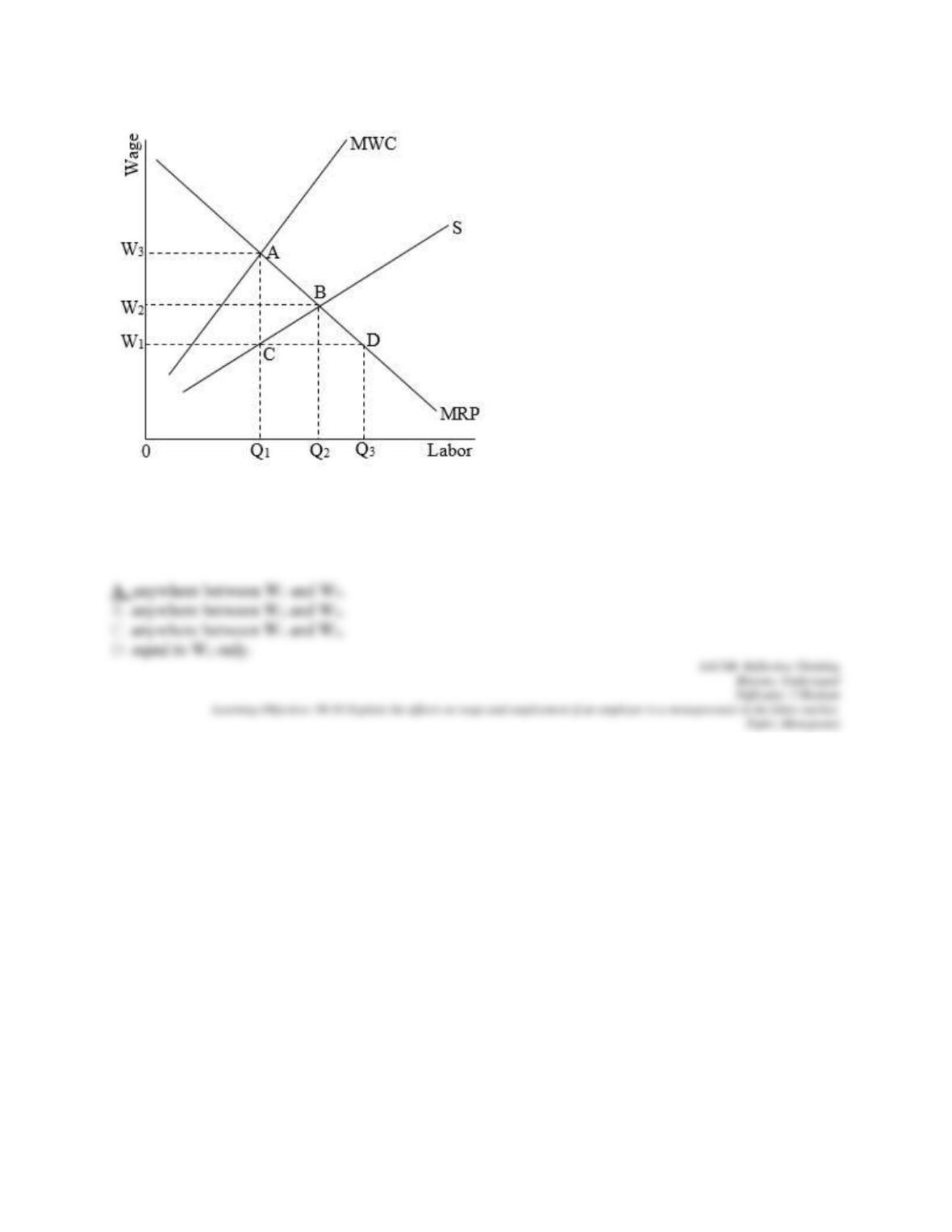
36. Refer to the following diagram of a monopsonistic labor market.
6-14
Relative to their monopsony levels, both the wage and the level of employment would increase in this
market if a wage-setting union negotiates a wage
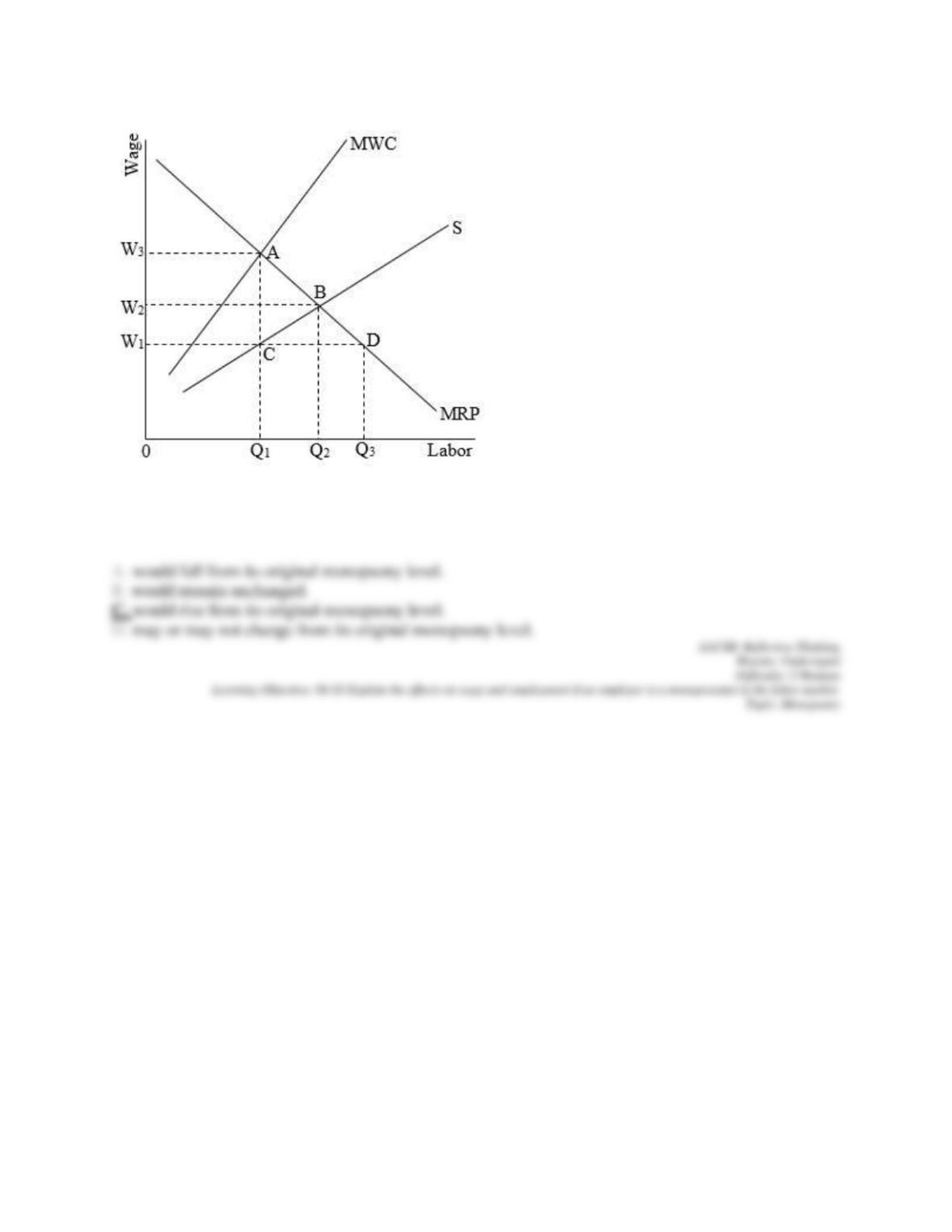
37. Refer to the following diagram of a monopsonistic labor market.
6-15
If legislation set the minimum wage at W2, then employment
38. Refer to the following diagram of a monopsonistic labor market.
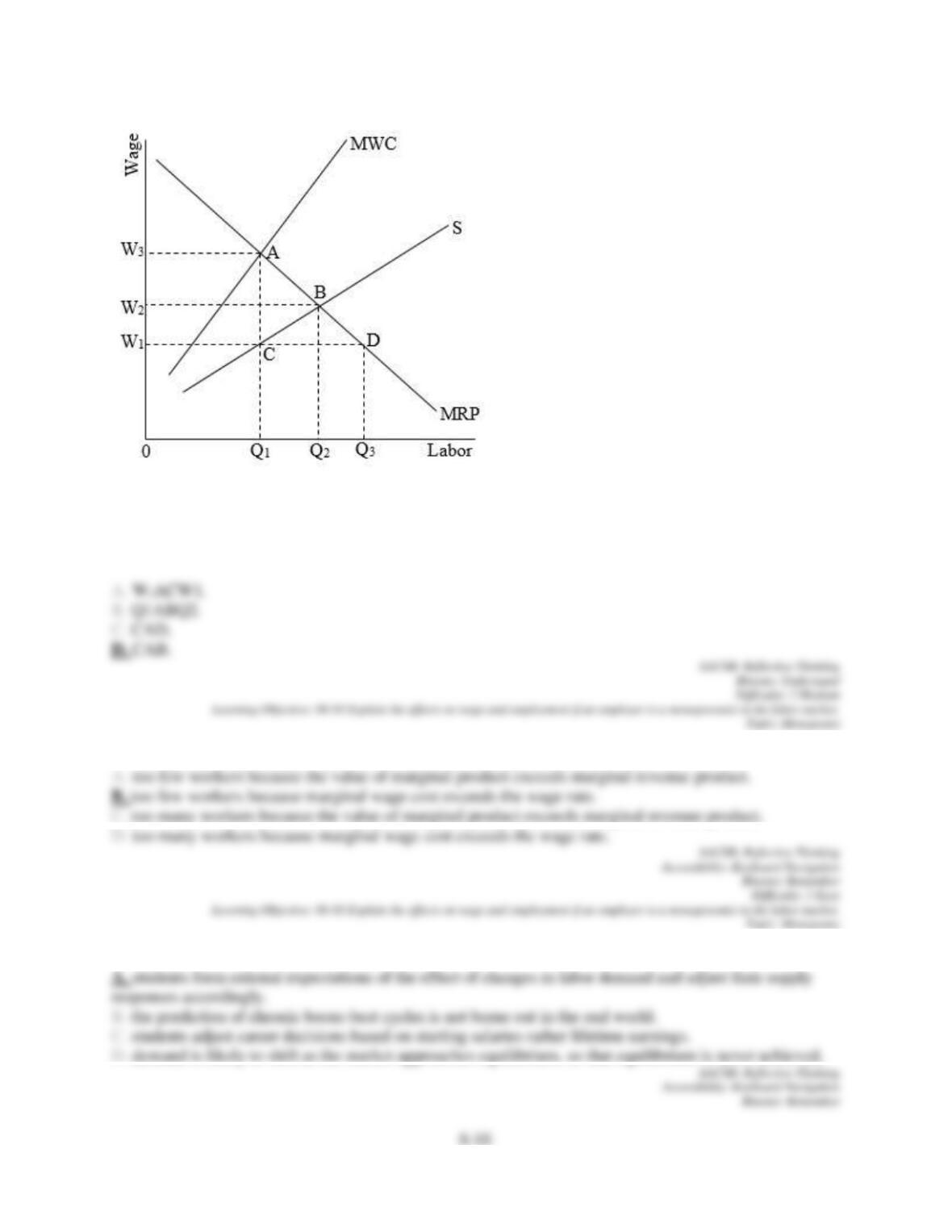
If this firm sells its output in a competitive market (so that MRP = VMP), the allocative efficiency loss in
the labor market is given by area
39. Compared to the allocatively efficient amount, a monopsonist tends to hire
40. One criticism of the cobweb model is that
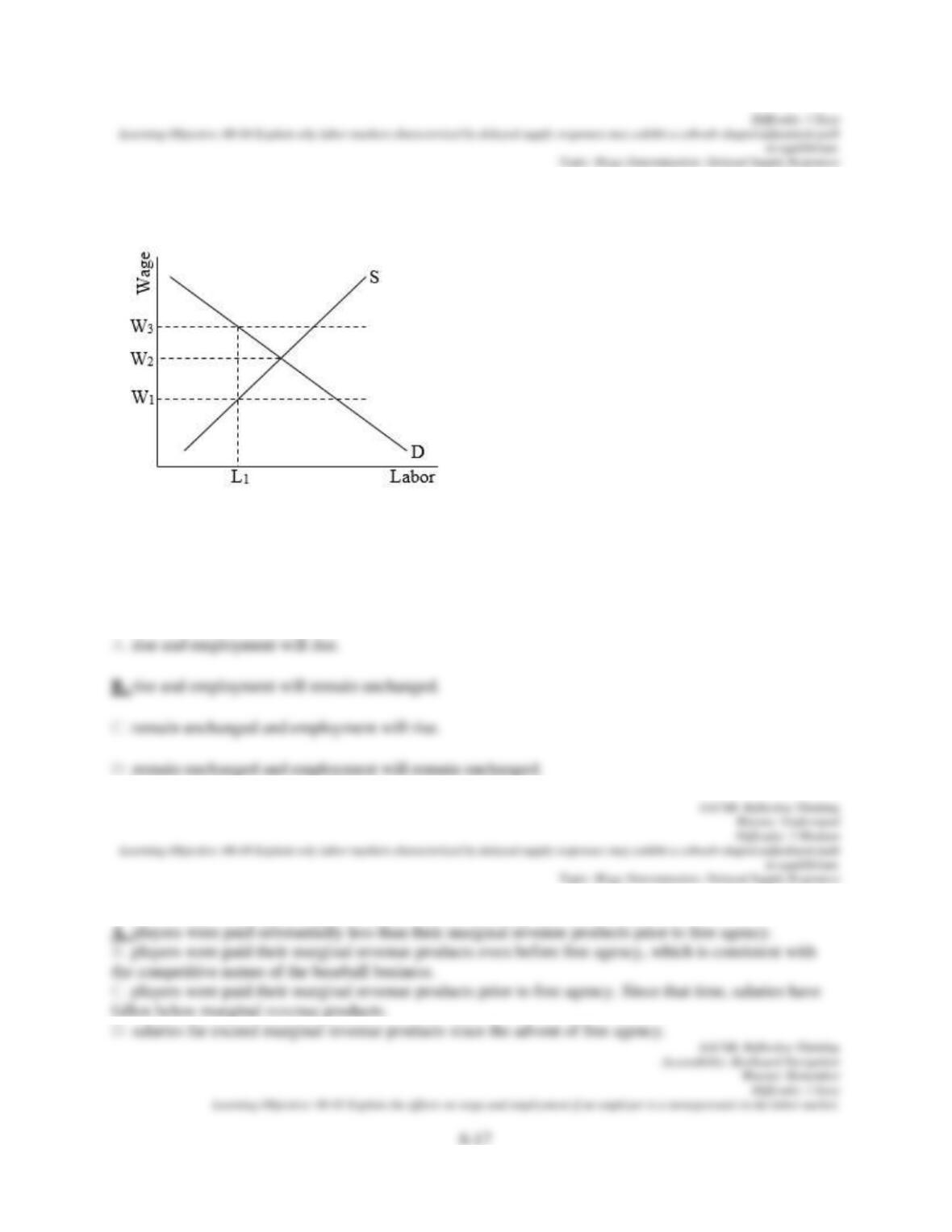
41. Refer to the following diagram.
Suppose the wage is currently W1 and L1 is the level of employment. If this market is characterized by
delayed supply responses, in the immediate period the wage will
42. With respect to Major League Baseball, studies by Scully and others found that
6-18
Topic: Monopsony
43. Since passage of NAFTA, trade between the U.S., Canada, and Mexico has
Chapter 06 Test Bank Summary
Category
# of Questio
ns
AACSB: Analytic
8
AACSB: Reflective Thinking
35
Accessibility: Keyboard Navigation
26
Blooms: Apply
8
Blooms: Remember
22
Blooms: Understand
13
Difficulty: 1 Easy
22
Difficulty: 2 Medium
13
Difficulty: 3 Hard
8
Learning Objective: 06-
01 Explain the supply and demand of labor in a perfectly competitive labor market.
17
Learning Objective: 06-
02 Discuss the effects on wage and employment if an employer is a monopolist in the p
roduct market.
8
Learning Objective: 06-
03 Explain the effects on wage and employment if an employer is a monoposonist in th
e labor market.
15
Learning Objective: 06-
04 Explain why labor markets characterized by delayed supply responses may exhibit a
cobweb-shaped adjustment path to equilibrium.
3
Topic: Monopsony
15
Topic: Theory of a Perfectly Competitive Labor Market
17
Topic: Wage and Employment Determination: Monopoly in the Product Market
8
Topic: Wage Determination: Delayed Supply Responses
3