224.
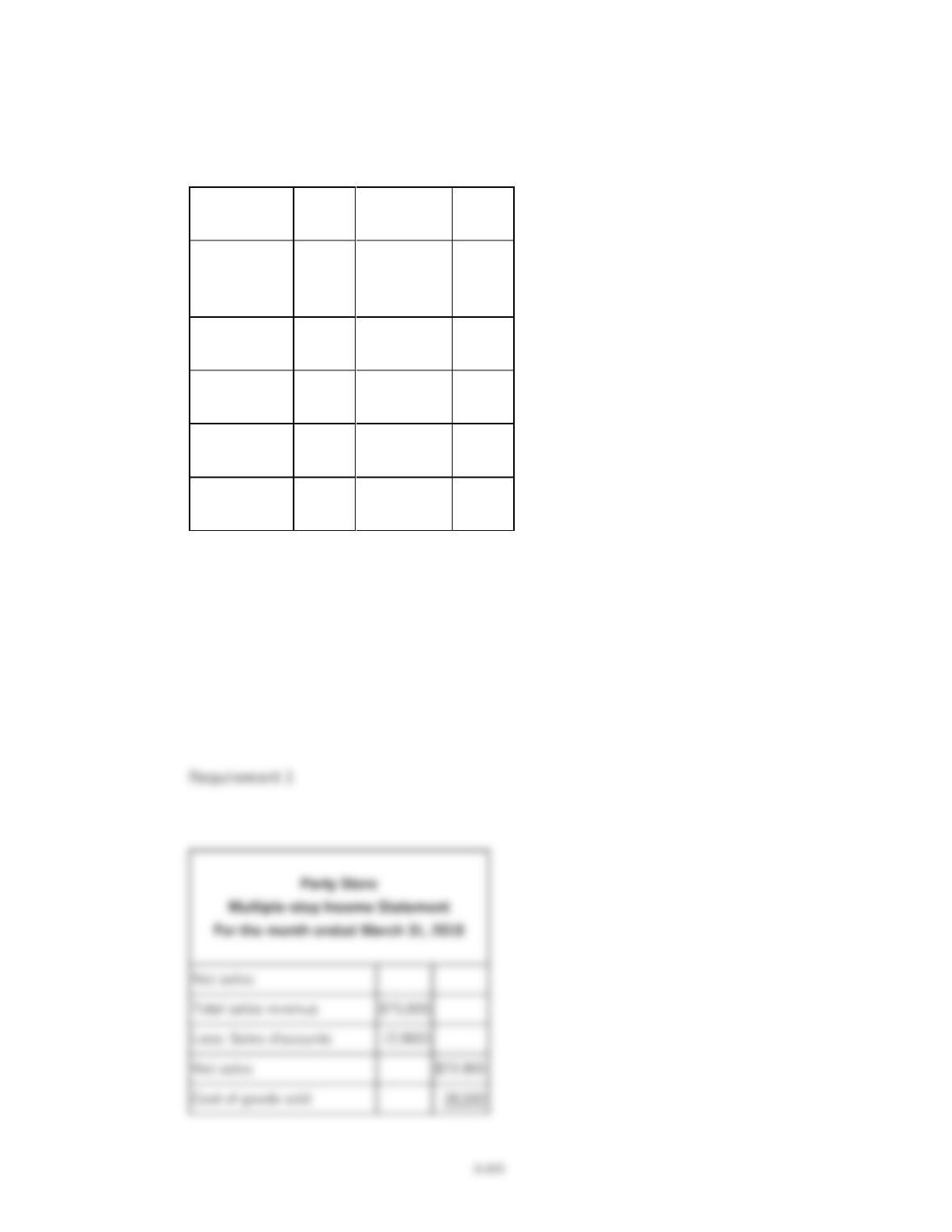
Assume Party Store has the following account balances for the month of March 2018, and
that the company uses a perpetual inventory system.
Sales revenue
$75,800
Cost of goods
sold
$38,500
Inventory
(Mar. 31,
2018)
1,800
Advertising
expense
5,200
Insurance
expense
1,700
Rent expense
3,300
Sales
discounts
2,900
Gain on sale of
building
6,900
Salaries
expense
8,200
Inventory (Mar.
1, 2018)
2,200
Income tax
expense
6,100
Required:
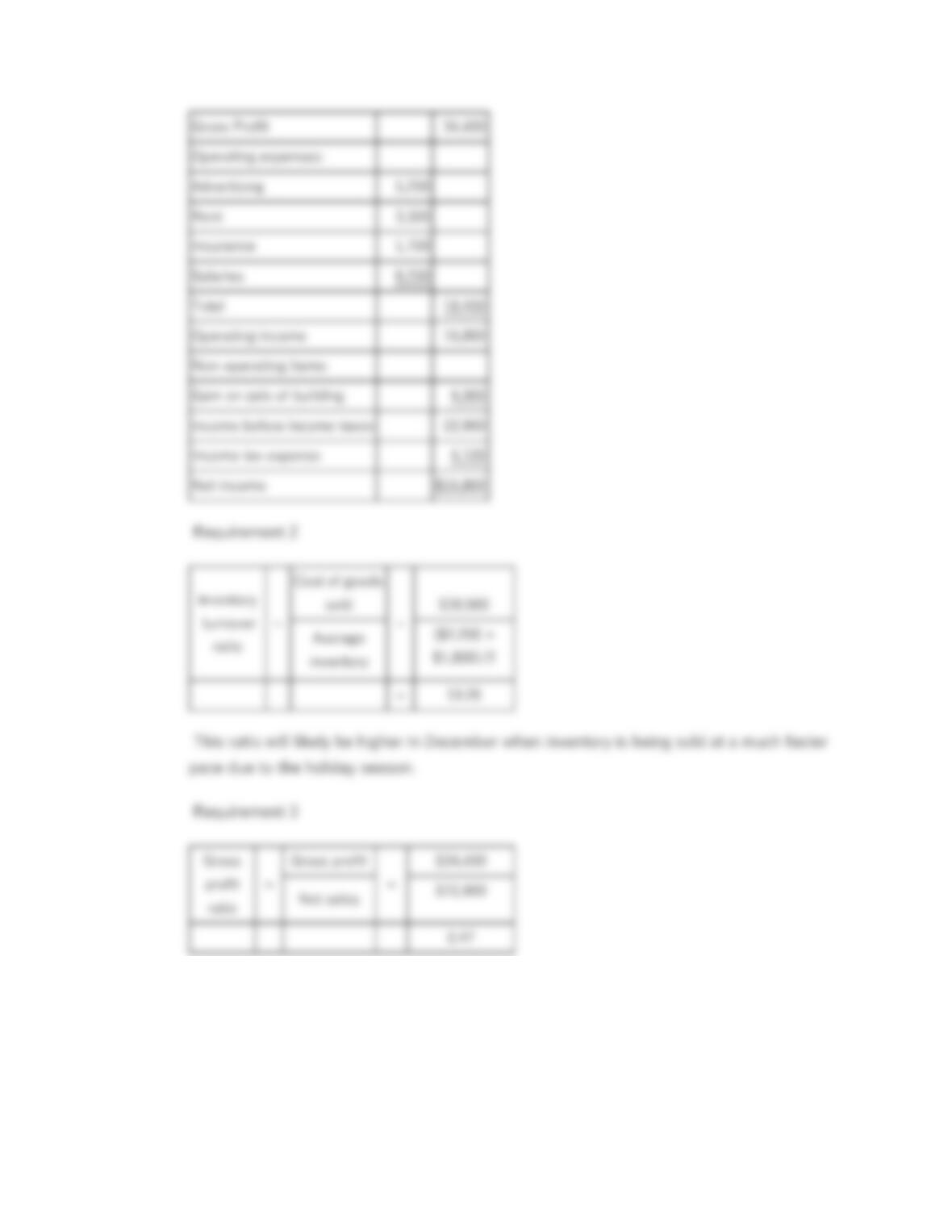
1. Prepare a multiple-step income statement for the month ended March 31, 2018.
2. Calculate the inventory turnover ratio for the month of March. Would you expect this
ratio to be higher or lower in December 2018? Explain.
3. Calculate the gross profit ratio for the month of March.
6-154
225.
Fancy Incorporated and Thrift Specialty both offer men’s formal footwear. Thrift offers
lower-to-middle priced footwear, whereas Fancy offers more specialized, higher-end
footwear. The average price for a pair of shoes in Thrift may be about $40, whereas the
average price in Fancy may be about $200. The types of shoes offered by Fancy are not
sold by many other stores.
6-155
Suppose Thrift and Fancy report the following amounts for men’s shoes in the same year
(company names are disguised):
Company 1
Company 2
Net sales
$120,000
$120,000
Cost of goods sold
46,000
80,000
Gross profit
$74,000
$40,000
Average inventory
$23,000
$20,000
Required:
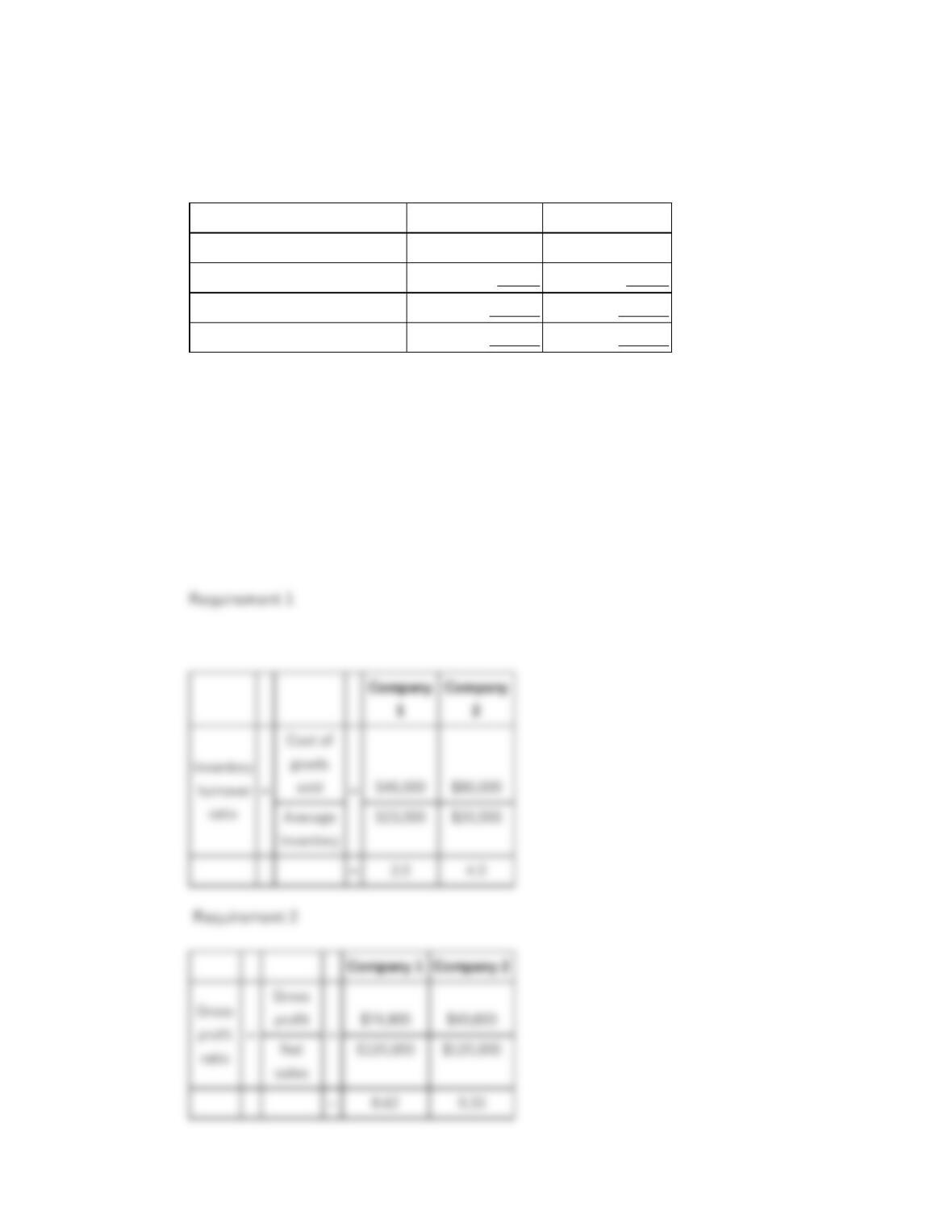
1. For Company 1 and Company 2, calculate the inventory turnover ratio.
2. For Company 1 and Company 2, calculate the gross profit ratio.
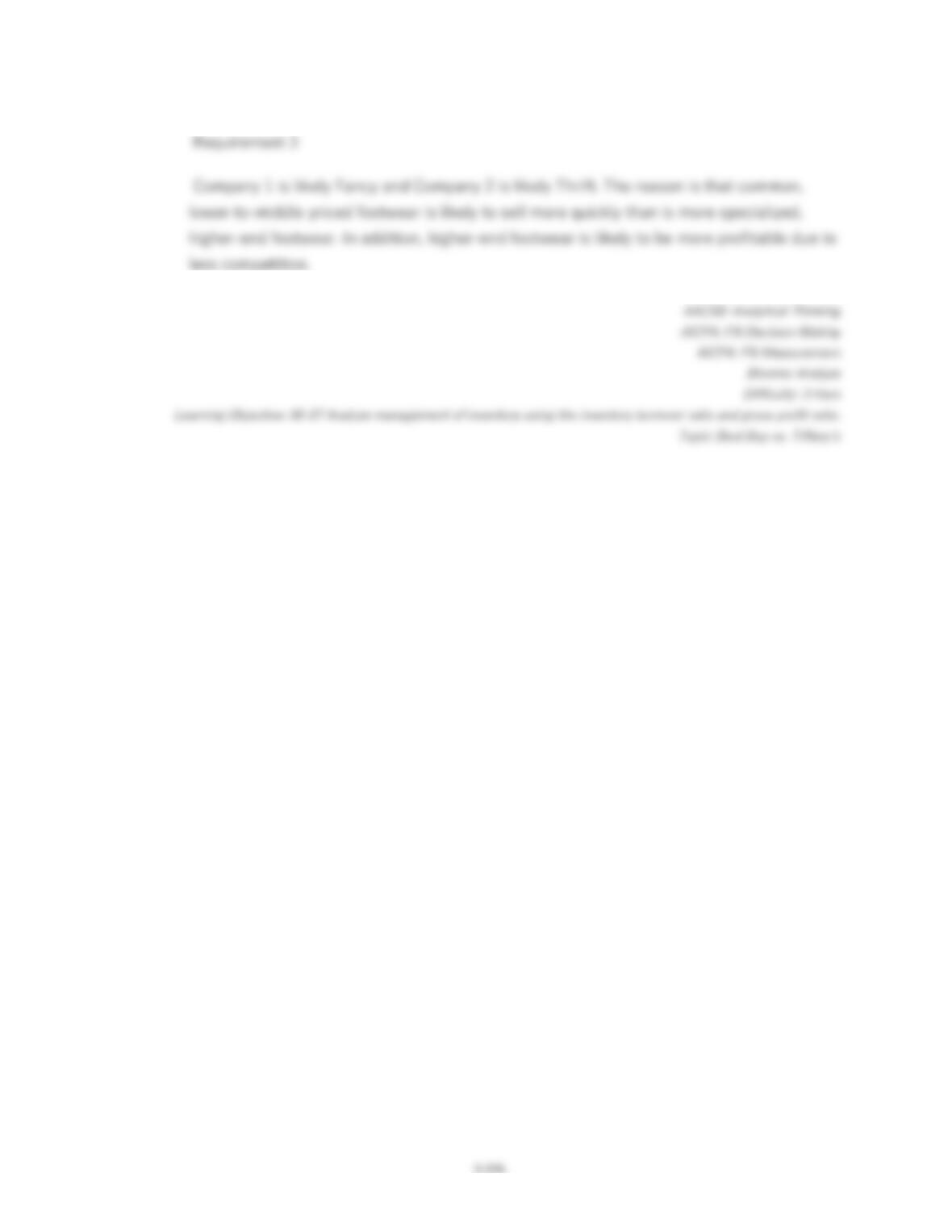
3. After comparing the inventory turnover ratios and gross profit ratios, which company do
you think is Thrift and which is Fancy? Explain.
6-157
226.
Refer to the transactions of Chow Company in P6-3C.
Required:
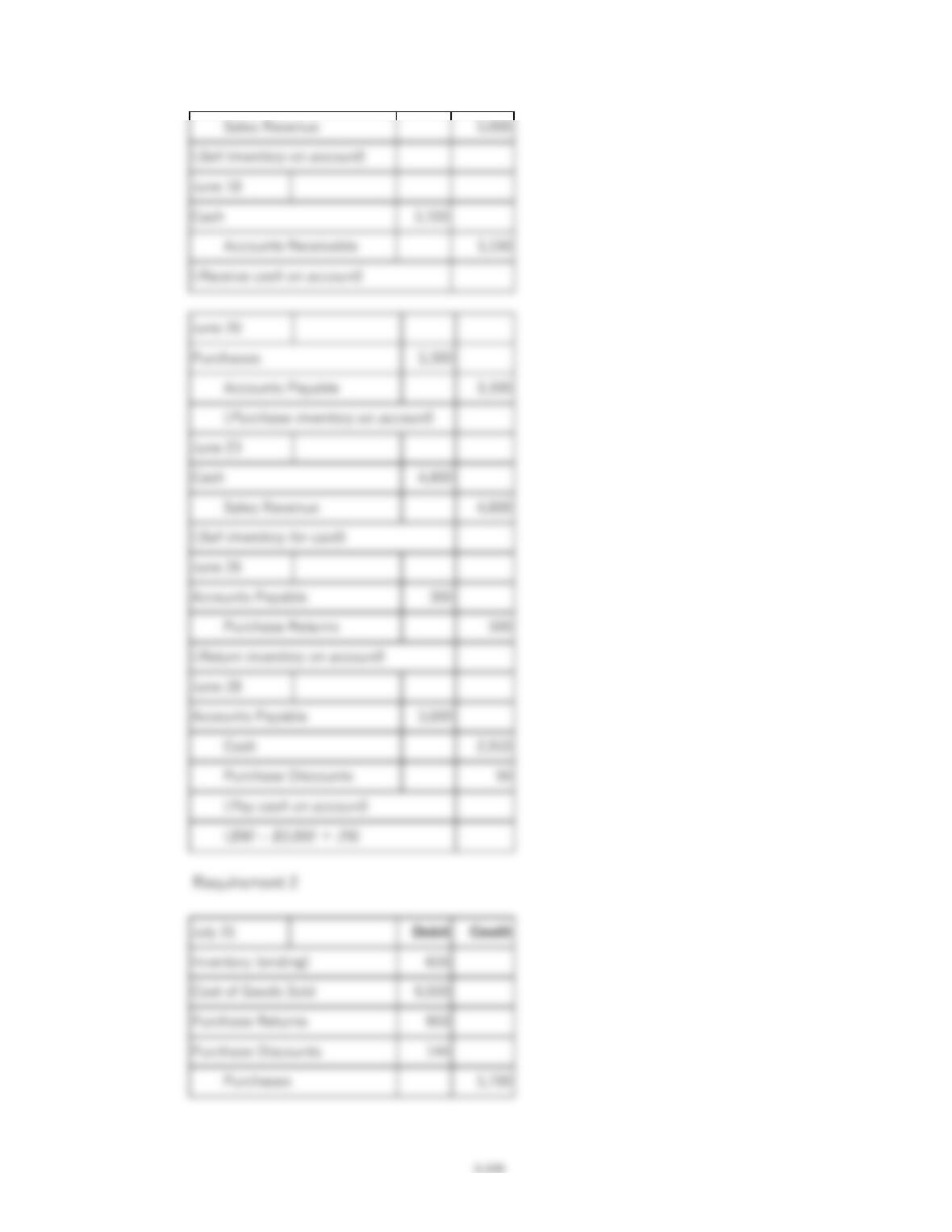
1. Assuming that Chow Company uses a periodic inventory system, record the
transactions.
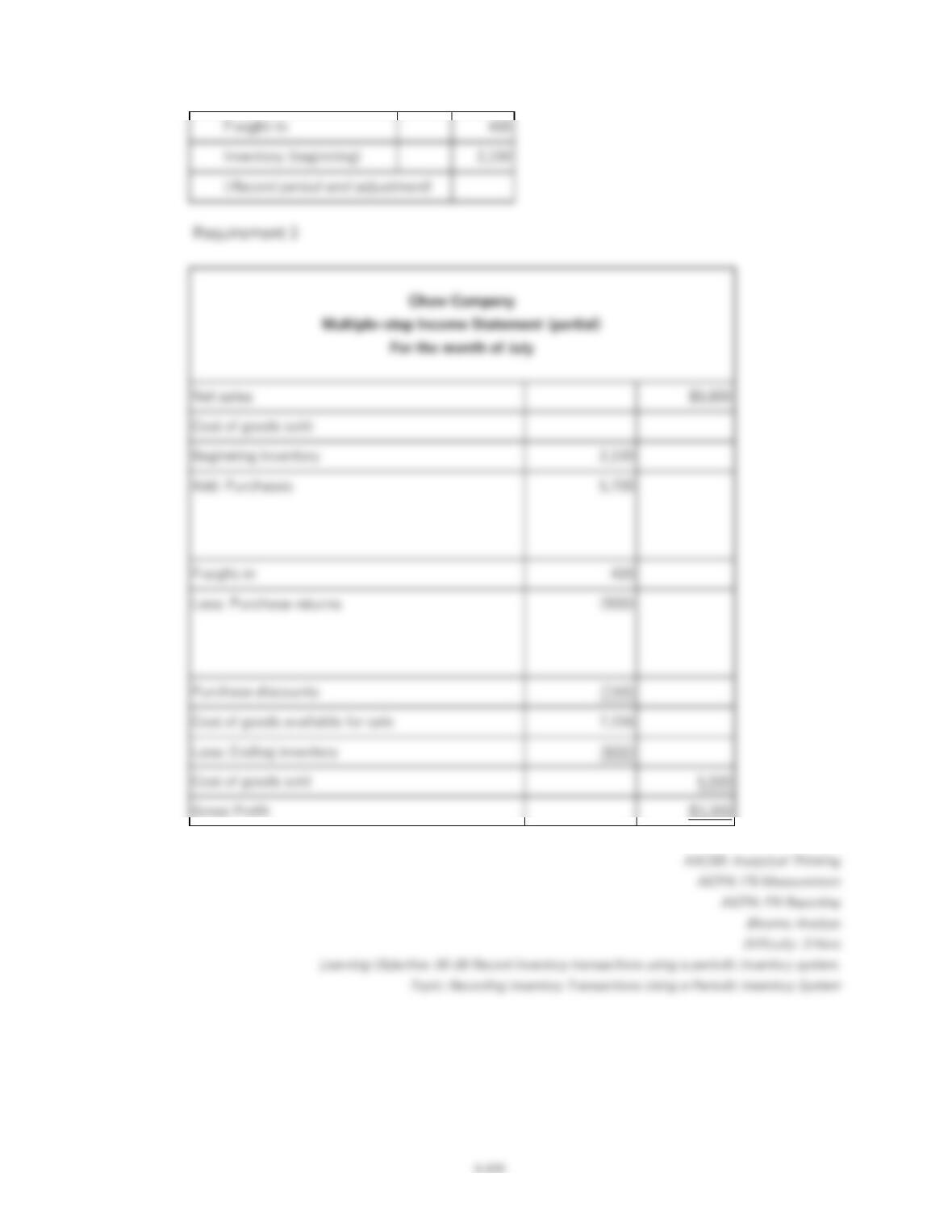
2. Record the month-end adjustment to inventory, assuming that a final count reveals
ending inventory with a cost of $656.
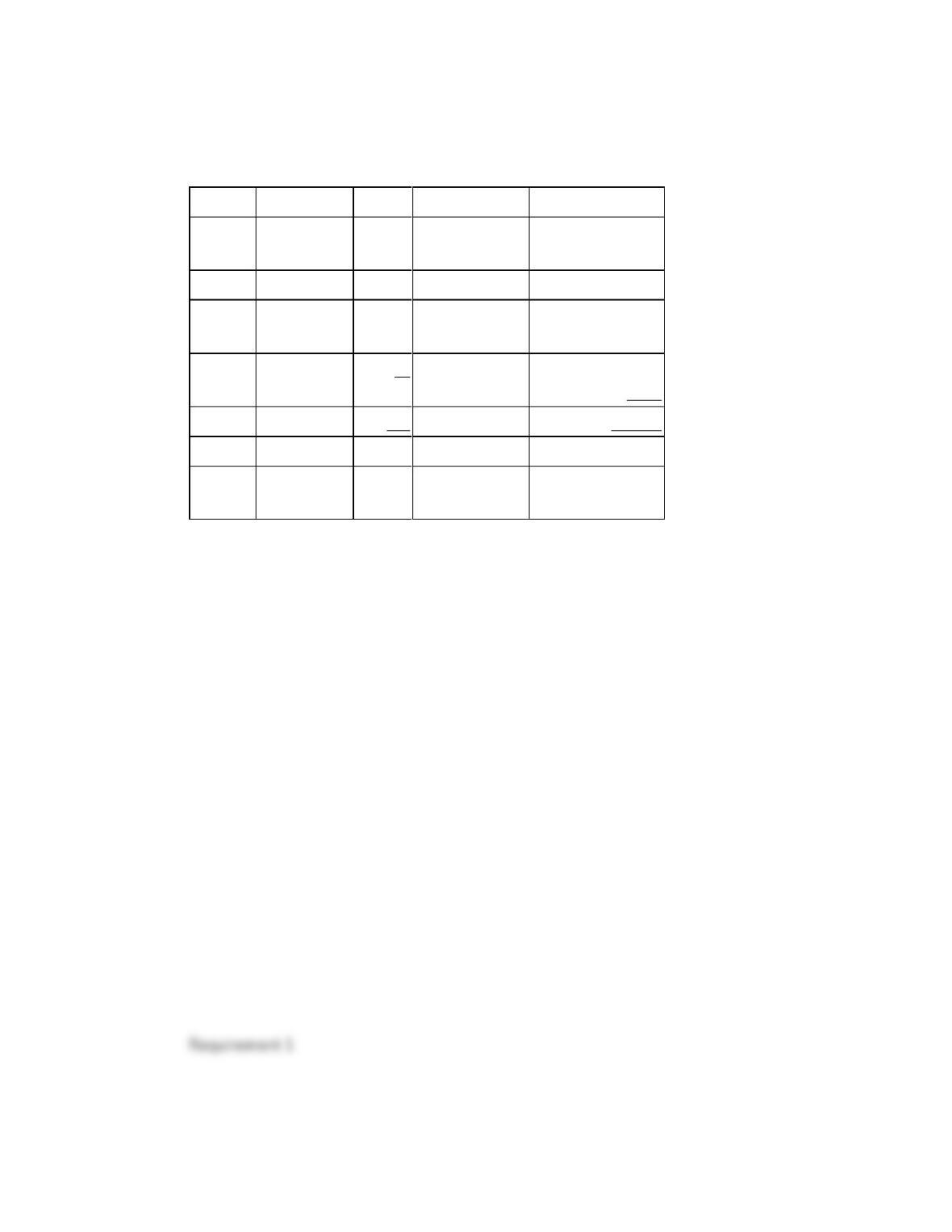
3. Prepare the top section of the multiple-step income statement through gross profit for
the month of June.
6-160
227.
Fulkerson Metals maintains accurate records of the inventory purchased from its suppliers
and sold to customers. The records show the following purchases and sales during 2018.
Date
Transactions
Units
Cost per Unit
Total Cost
January 1
Beginning
inventory
28
$33
$924
April 14
Purchase
72
35
2,520
August
22
Purchase
115
37
4,255
October
29
Purchase
90
39
3,510
305
$11,209
Jan. 1 –
Dec. 31
Sales ($60
each)
280
Fulkerson uses a periodic inventory system and believes there are 25 units of ending
inventory. However, Fulkerson neglects to make a final inventory count at the end of the
year. An employee accidentally threw out 4 units of inventory, leaving only 21 units.
Fulkerson is not aware of the lost inventory.
Required:
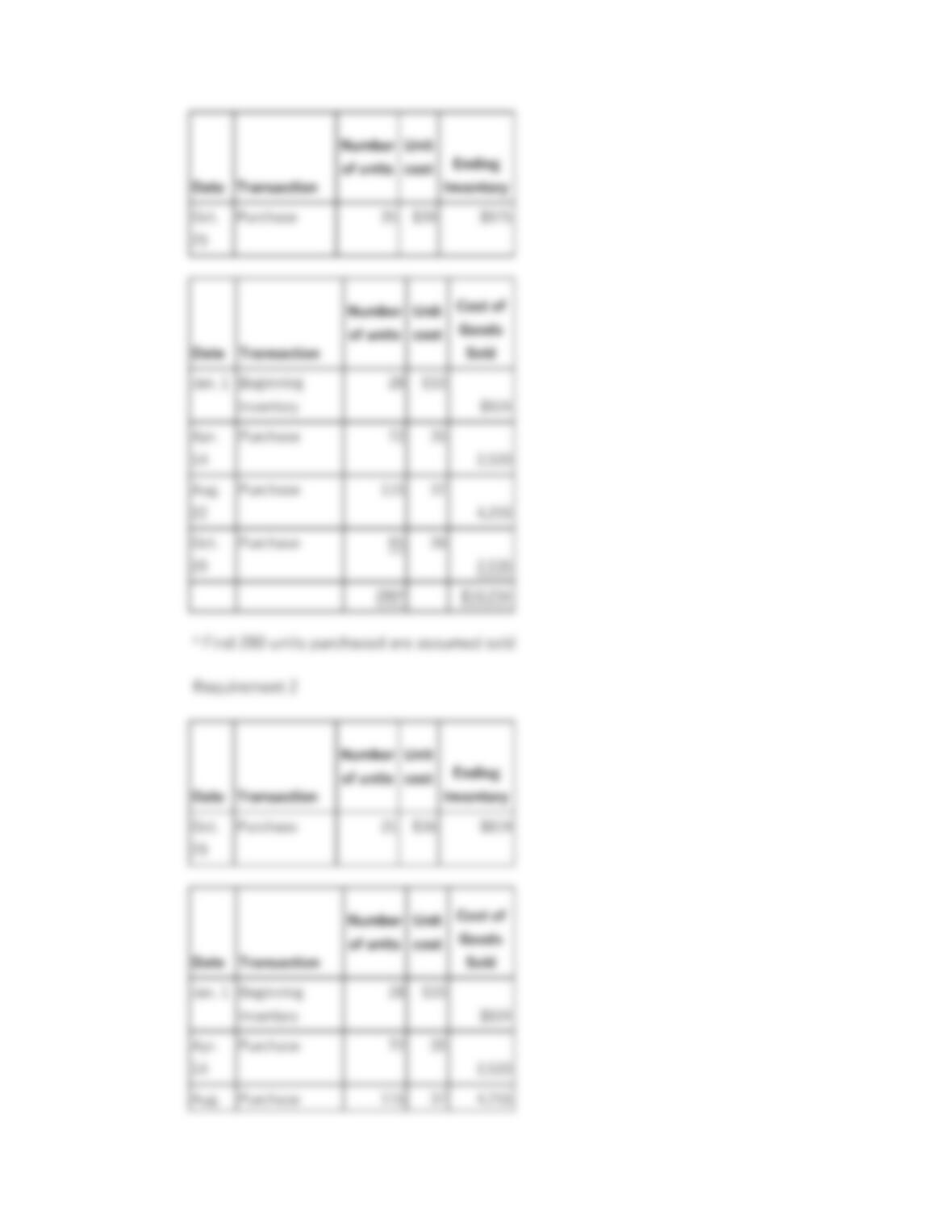
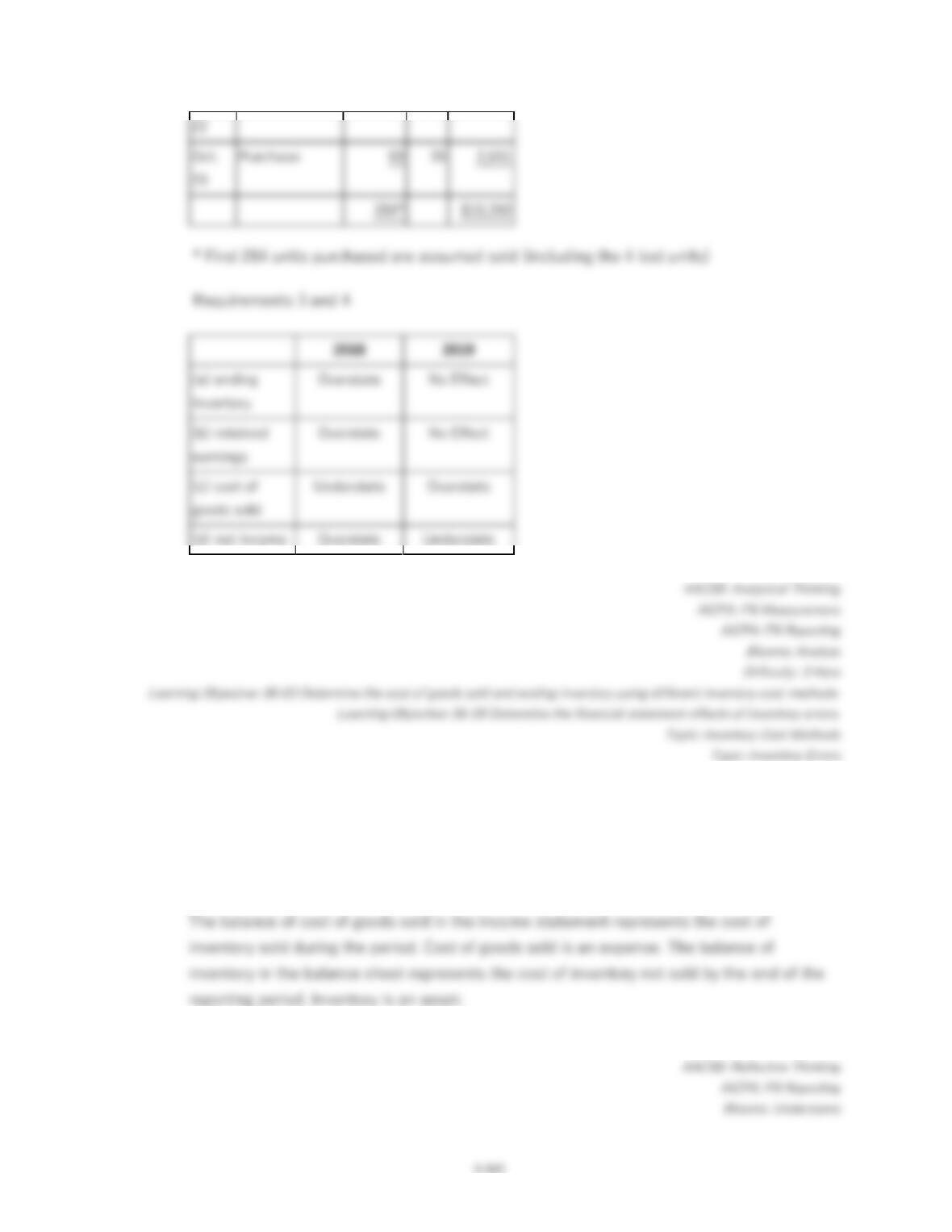
1. What amount will Fulkerson calculate for ending inventory and cost of goods sold using
FIFO, assuming it erroneously believes 25 units remain in ending inventory?
2. What amount would Fulkerson calculate for ending inventory and cost of goods sold
using FIFO if it correctly knows that only 21 units remain in ending inventory?
3. What effect will the inventory error have on reported amounts for (a) ending inventory,
(b) retained earnings, (c) cost of goods sold, and (d) net income (ignoring tax effects) in
2018?
4. Assuming that ending inventory is correctly counted at the end of 2019, what effect will
the inventory error in 2018 have on reported amounts for (a) ending inventory, (b) retained
earnings, (c) cost of goods sold, and (d) net income (ignoring tax effects) in 2019?
6-161
228.
What does the balance of cost of goods sold in the income statement represent? What
does the balance of inventory in the balance sheet represent?
229.
What is a multiple-step income statement? What information does it provide beyond
“bottom-line” net income?
230.
What are the three primary cost flow assumptions? How does the specific identification
method differ from these three primary cost flow assumptions?
231.
What does it mean that FIFO has a balance sheet focus and LIFO has an income
statement focus?
232.
What is meant by the assertion that the lower of cost and net realizable value for inventory
is an example of conservatism in accounting?