Larson_Calculus_10e ch06sec01
MULTIPLE CHOICE
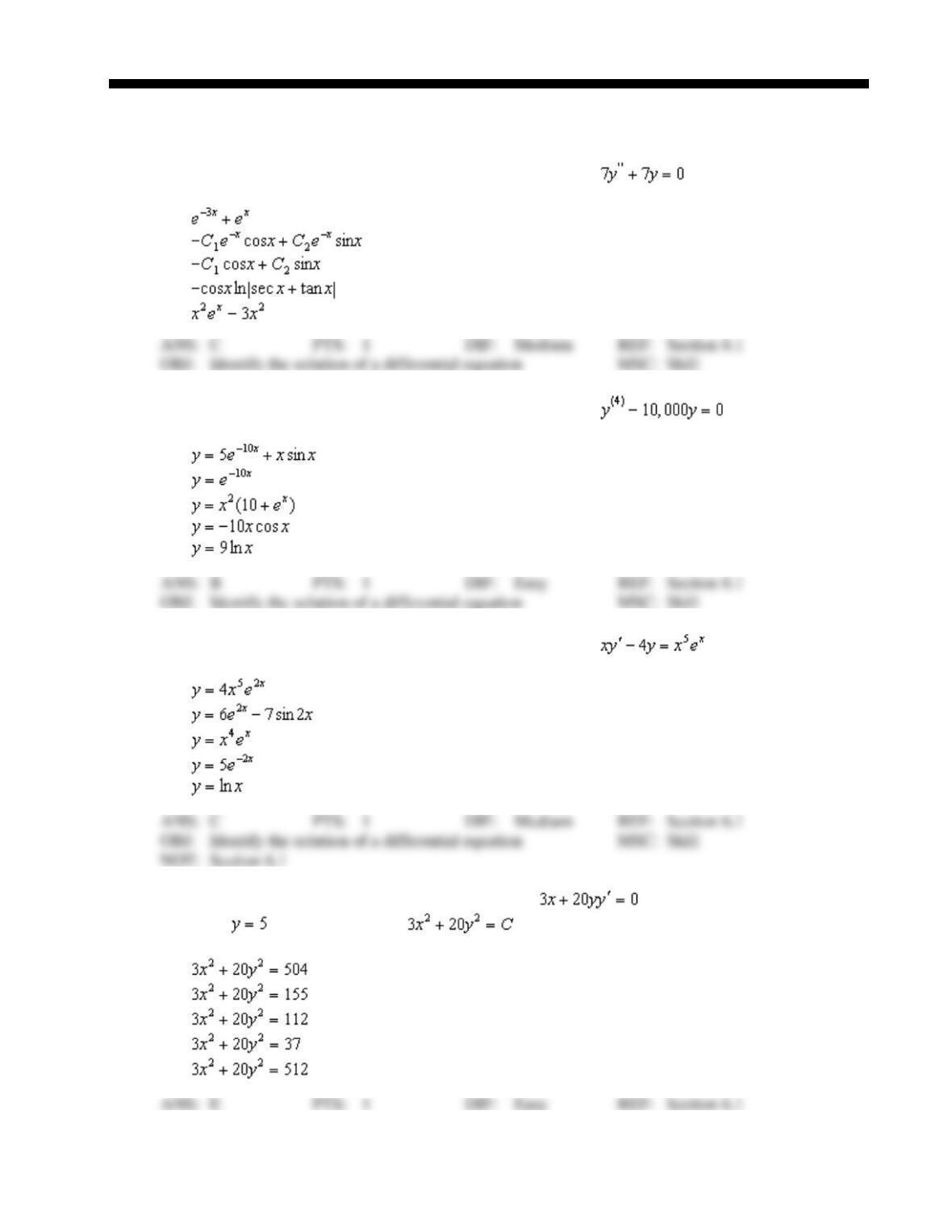
1. Which of the following is a solution of the differential equation ?
a.
b.
c.
d.
e.
2. Which of the following is a solution of the differential equation ?
a.
b.
c.
d.
e.
3. Which of the following is a solution of the differential equation ?
a.
b.
c.
d.
e.
4. Find the particular solution of the differential equation that satisfies the initial
condition when x = 2, where is the general solution.
a.
b.
c.
d.
e.
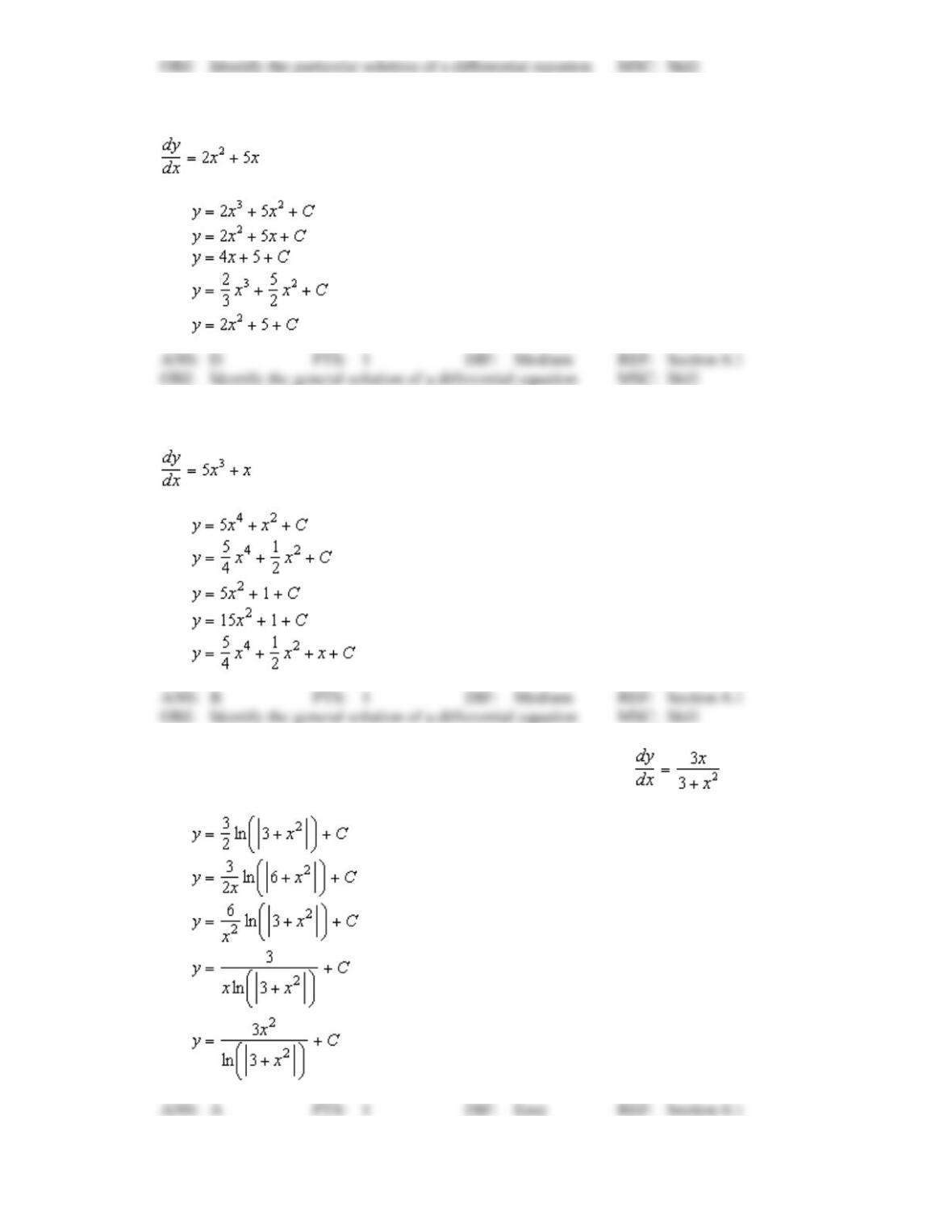
5. Use integration to find a general solution of the differential equation.
a.
b.
c.
d.
e.
6. Use integration to find a general solution of the differential equation.
a.
b.
c.
d.
e.
7. Use integration to find a general solution of the differential equation .
a.
b.
c.
d.
e.
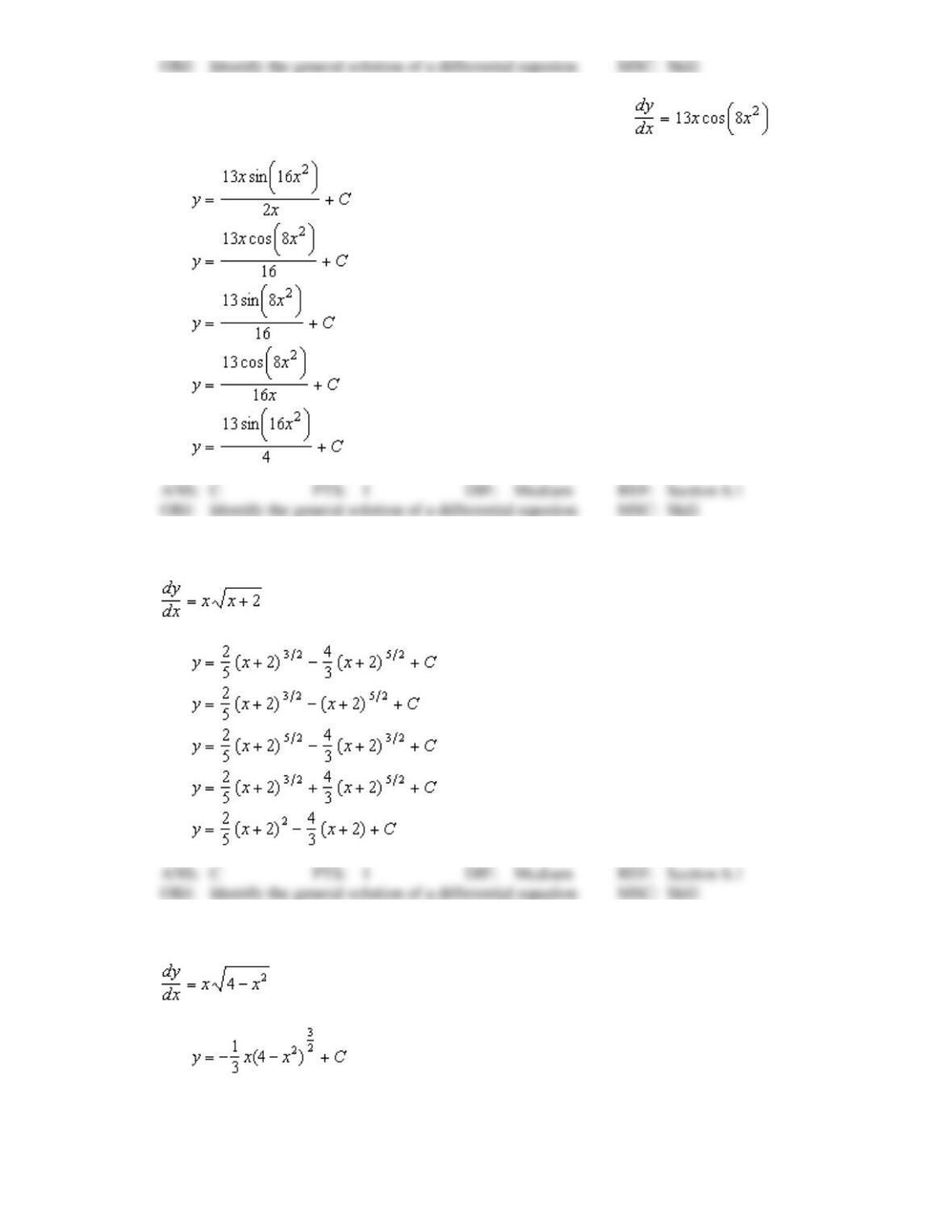
8. Use integration to find a general solution of the differential equation .
a.
b.
c.
d.
e.
9. Use integration to find a general solution of the differential equation.
a.
b.
c.
d.
e.
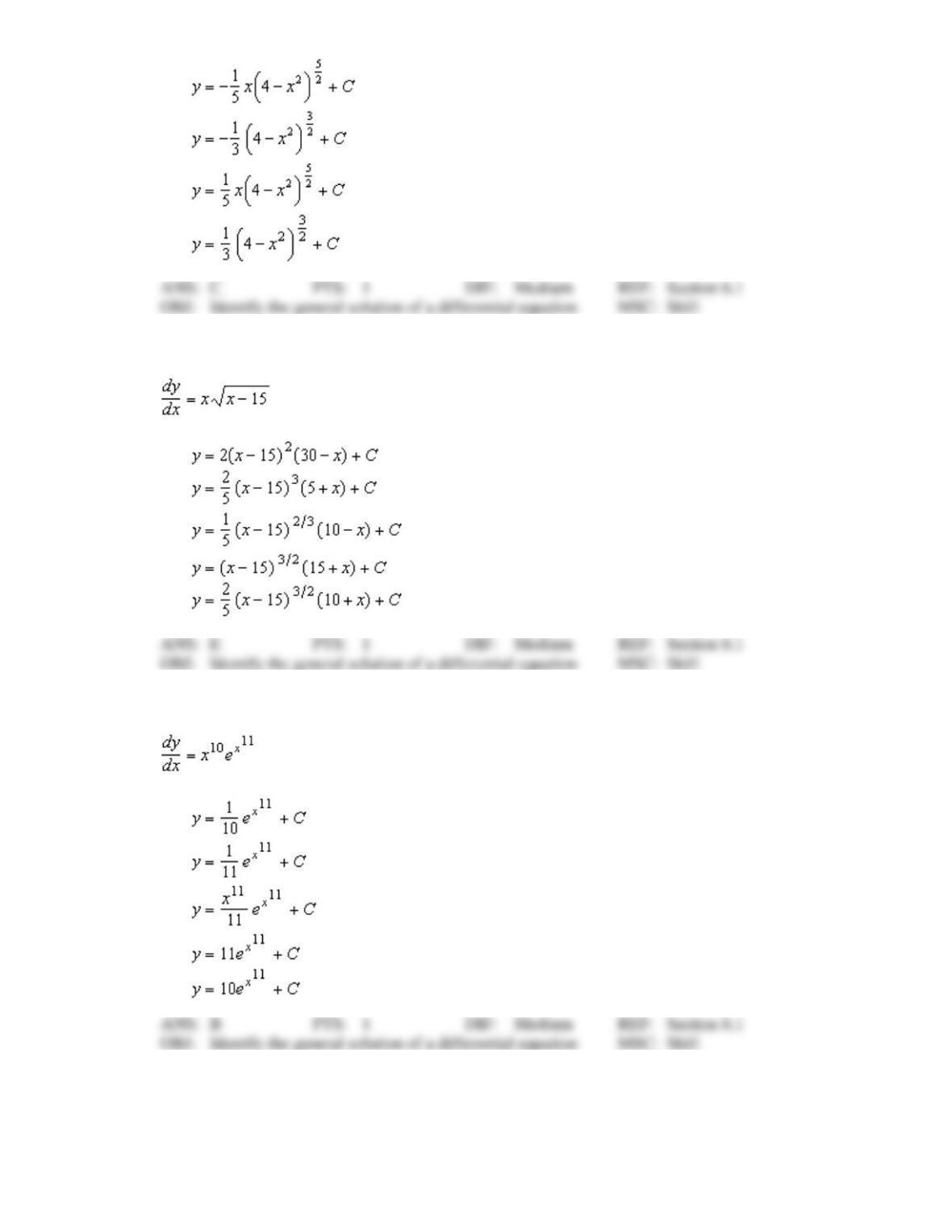
10. Use integration to find a general solution of the differential equation.
a.
b.
c.
d.
e.
11. Use integration to find a general solution of the differential equation .
a.
b.
c.
d.
e.
12. Use integration to find a general solution of the differential equation.
a.
b.
c.
d.
e.
13. Use Euler’s Method to make a table of values for the approximate solution of the following differential
equation with specified initial value. Use 5 steps of size 0.15.
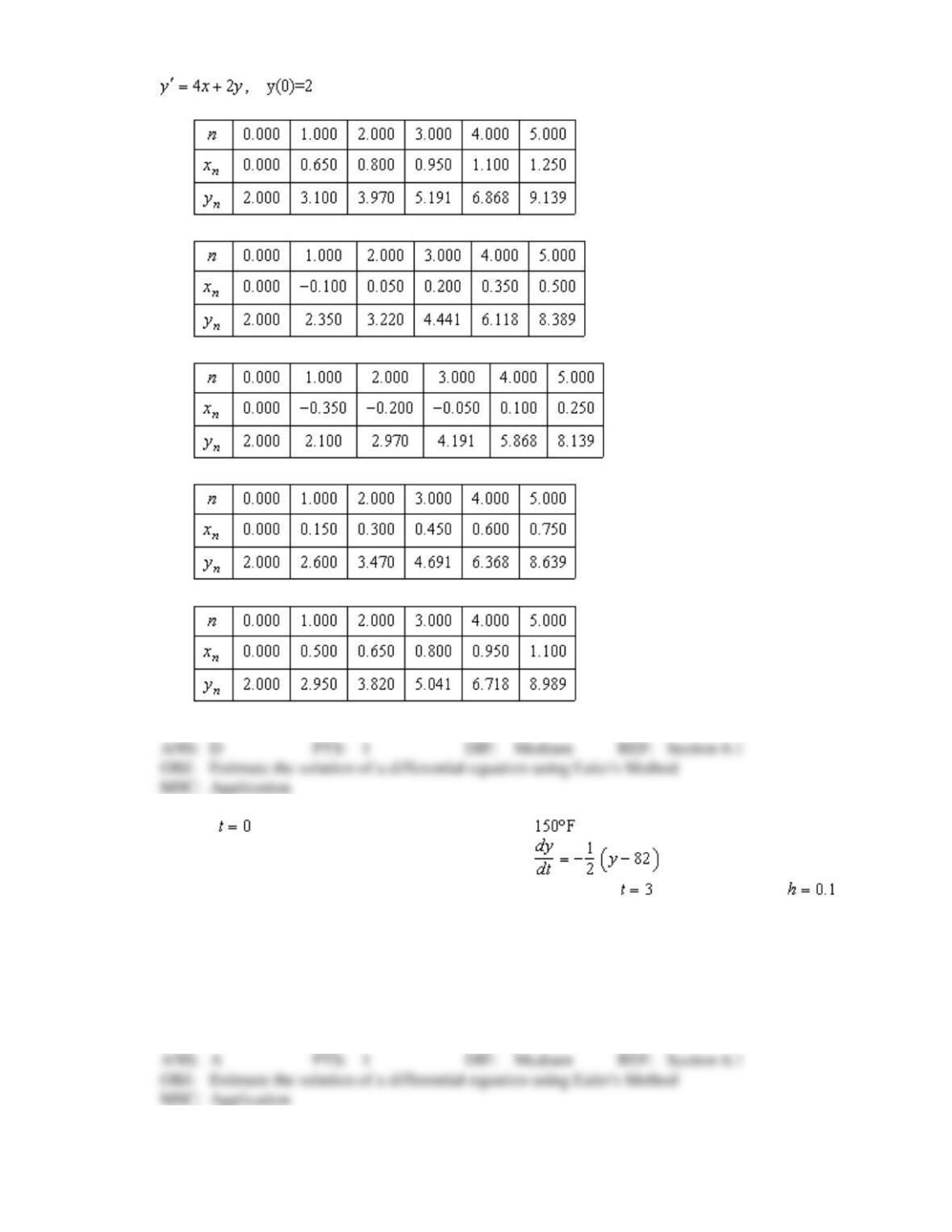
a.
b.
c.
d.
e.
14. At time minutes, the temperature of an object is . The temperature of the object is
changing at the rate given by the differential equation . Use Euler’s Method to
approximate the particular solutions of this differential equation at . Use a step size of .
Round your answer to one decimal place.
a.
96.6
b.
99.9
c.
102.9
d.
98.1
e.
97.4