
Information Technology Project Management 5e – Marchewka
22. Waiting to leave your shift until another person shows up is an example of:
a) Finish-To-Start (FS)
b) Start-To-Start (SS)
c) Finish-To-Finish (FF)
d) Start-To-Finish (SF)
e) none of these
23. Under the Precedence Diagramming Method, the least common relationship
between two activities which occurs when they must complete at the same time is
called:
a) Finish-To-Start (FS)
b) Start-To-Start (SS)
c) Finish-To-Finish (FF)
d) Start-To-Finish (SF)
e) none of these
24. Critical Chain Project Management (CCPM) is based on the idea that
a) people often inflate or add cushioning to their time estimates
b) PERT/CPM was developed in the 1950s so it is too old to be of any use
c) Precedence Diagramming only considers the critical path of a project
d) all of these
e) none of these
25. Scheduling other projects so that resources may be shared is_____
a) Critical Chain Project Management
b) Precedence Diagramming

Information Technology Project Management 5e – Marchewka
c) PERT
d) Theory of Constraints
e) Critical Path Analysis
26. Rolling wave planning is:
a) developing a large plan encompassing all project items.
b) including the highest level of detail in project plans
c) preparing a summary plan and developing incremental detailed schedules
d) all of these
e) none of these
27. The final step in determining the cost of an activity is:
a) determine necessary resources.
b) determining resource quantity
c) determining the cost of each resource
d) ensuring resources are leveled
e) none of these
28. To make a decision to attempt to build an application system based on what was
left after a previous attempt ended in failure primarily because of the large
investment the company made in the failed project most likely was made by a
manager who did not fully understand:
a) Direct Costs
b) Indirect Costs
c) Sunk Costs
d) Learning Curve Costs
e) Reserves Costs

Information Technology Project Management 5e – Marchewka
29. Rent, utilities, insurance and administrative costs are examples of:
a) Direct Costs
b) Indirect Costs
c) Sunk Costs
d) Learning Curve Costs
e) Reserves Costs
30. Costs incurred prior to the current project are _____
a) Direct Costs
b) Indirect Costs
c) Sunk Costs
d) Learning Curve Costs
e) Reserves Costs
31. Time and effort needed to gather experience on a technology or process are _____
a) Direct Costs
b) Indirect Costs
c) Sunk Costs
d) Learning Curve Costs
e) Reserves Costs
32. Funds allocated for unexpected expenses are _____

Information Technology Project Management 5e – Marchewka
a) Direct Costs
b) Indirect Costs
c) Sunk Costs
d) Learning Curve Costs
e) Reserves Costs
33. The cost of labor for using a resource are _____
a) Direct Costs
b) Indirect Costs
c) Sunk Costs
d) Learning Curve Costs
e) Reserves Costs
34. The idea that there is a cost associated with using a resource is _____
a) Prorated Costs
b) Indirect Costs
c) Sunk Costs
d) Learning Curve Costs
e) Reserves Costs
35. _____is ensuring that project resources are not overallocated.
a) Resource leveling
b) Resource constraining
c) Resource starving
d) Resource management
e) Resource addition

Information Technology Project Management 5e – Marchewka
36. Once the project schedule and project budget are approved they become the
_____
a) derivative plan
b) actual plan
c) baseline plan
d) project plan
e) schedule plan
37. Many organizations have a kick-off meeting because
a) It brings closure to the planning phase of the project
b) It signals the initiation of the next phase of the IT project methodology
c) It communicates to everyone what the project is about
d) It can energize the stakeholders and get everyone excited about working on
the project
e) All of these

Information Technology Project Management 5e – Marchewka
Short Answer Questions
1. Define predecessor, successor, and parallel activities. Give a real world example
of each.
2. How can parallel activities help shorten the project schedule? Are there any
trade-offs?
3. What is meant by slack (or float)?
4. What is the difference between crashing and fast tracking a project’s schedule?
5. Define the following and give a real world example of each (other than the ones
described in this book): Finish-to-Start; Start-to-Start; Finish-to-Finish; Start-
to-Finish.
Information Technology Project Management 5e – Marchewka
6. Why do many people inflate their estimates?
7. In the context of critical chain project management, what is resource
contention?
Information Technology Project Management 5e – Marchewka
8. What is the critical chain? How is it different from the concept of a critical
path?
9. Describe the steps necessary for estimating the cost of a particular activity or
task that has an estimated duration.
10. What does prorating the cost of a resource mean?
11. Why should the project manager ensure that the project resources are leveled?
12. Why should assumptions used in estimating be documented?

Information Technology Project Management 5e – Marchewka
13. What is a baseline plan?
14. When does the project manager or team have the authority to begin executing
the project plan?
15. What is a kick-off meeting? What purpose does it serve?
Information Technology Project Management 5e – Marchewka
Essay Questions
1. How does the work breakdown structure (WBS) link the project’s scope to the
schedule and budget?
2. What are the benefits and disadvantages of using Gantt charts as a project
management tool?
3. In what ways are project network diagrams similar to Gantt charts and what
additional strengths do they have?
4. Construct an Activity on the Node (AON) network diagram with at least 5 tasks that
illustrate predecessors, successors and parallel activities. Label the nodes
appropriately and assuming your tasks show estimated durations in days, state the
estimated time for completing your project.
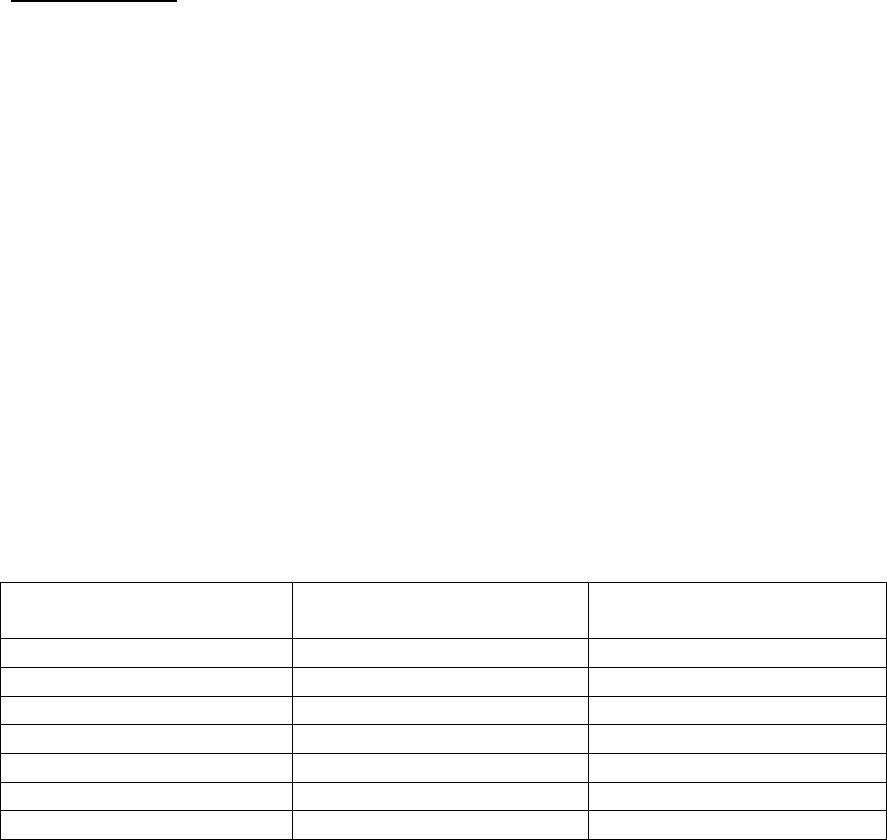
5. Assume the following activities for a project along with their estimated durations
and predecessors. Describe how critical path analysis would be applied to this
project, and calculate the critical path. Define the concepts: slack/float,
expedite/crash, and fast tracking and explain what their implications are for this
project?
Activity
Estimated Duration in
Days
Predecessor
A
2
None
B
4
A
C
3
A
D
1
C,B
E
1
C,D
F
3
D,E
G
2
F
6. Three team members are given the task of estimating activity durations. Mr.
Optimist estimates the activity to take 2 days to complete. Ms. Pessimist estimates
the activity to take 5 days. Mrs. Realist claims that the most likely estimate is 4
days. What should their PERT analysis assign as an expected duration for the
activity and what are the benefits and implications of deploying this tool?
7. Describe the Precedence Diagramming Method along with the four fundamental
relationships that they are based on.
8. Describe the five steps that comprise the process of estimating the cost of a
particular activity. Illustrate the steps with a hypothetical example.
Information Technology Project Management 5e – Marchewka
9. Discuss the nature and relevance of direct, indirect, sunk, and learning curve costs
as well as the notion of contingency reserves.
10. What are the potential benefits of a kickoff meeting?