Chapter 6 Test Questions
Usually, tests will combine concepts from Chapters 6 and 7. Therefore, refer to questions for
Chapter 7 that include concepts from Chapter 6.We list here a few questions that exclusively
rely on concepts in Chapter 6.
[1] Complete Computer (CC) is a retailer of computer equipment in Minneapolis with four
retail outlets. Currently each outlet manages its ordering independently. Demand at each
retail outlet averages 4,000 units per week. Each unit costs $200 and CC has a holding cost
of 20%. The fixed cost of each order (administrative + transportation) is $900. Assume 50
weeks in a year.
(a) Given that each outlet orders independently and gets its own delivery, the optimal
order size at each outlet is (5 points) [SHOW WORK]
(i) 424
(ii) 3,000; EOQ = sqrt (2RS/H) = sqrt (2*4000*50*900/40) = 3000
(iii) 6,000
(iv) 42,426
(v) None of the above
(b) CC is thinking of centralizing purchasing (for all four outlets). In this setting, CC will
place a single order (for all outlets) with the supplier. The supplier will deliver the
order on a common truck to a transit point. Since individual requirements are
identical across outlets, the total order is split equally and shipped to the retailers
from this transit point. This entire operation has increased the fixed cost of placing an
order to $1,800. If CC manages ordering optimally in the new setting, average
inventory in the CC system (across all four outlets) can be expected to (5 points)
(i) Increase
(ii) Decrease
(iii) Remain unchanged
Give arguments for your answer:
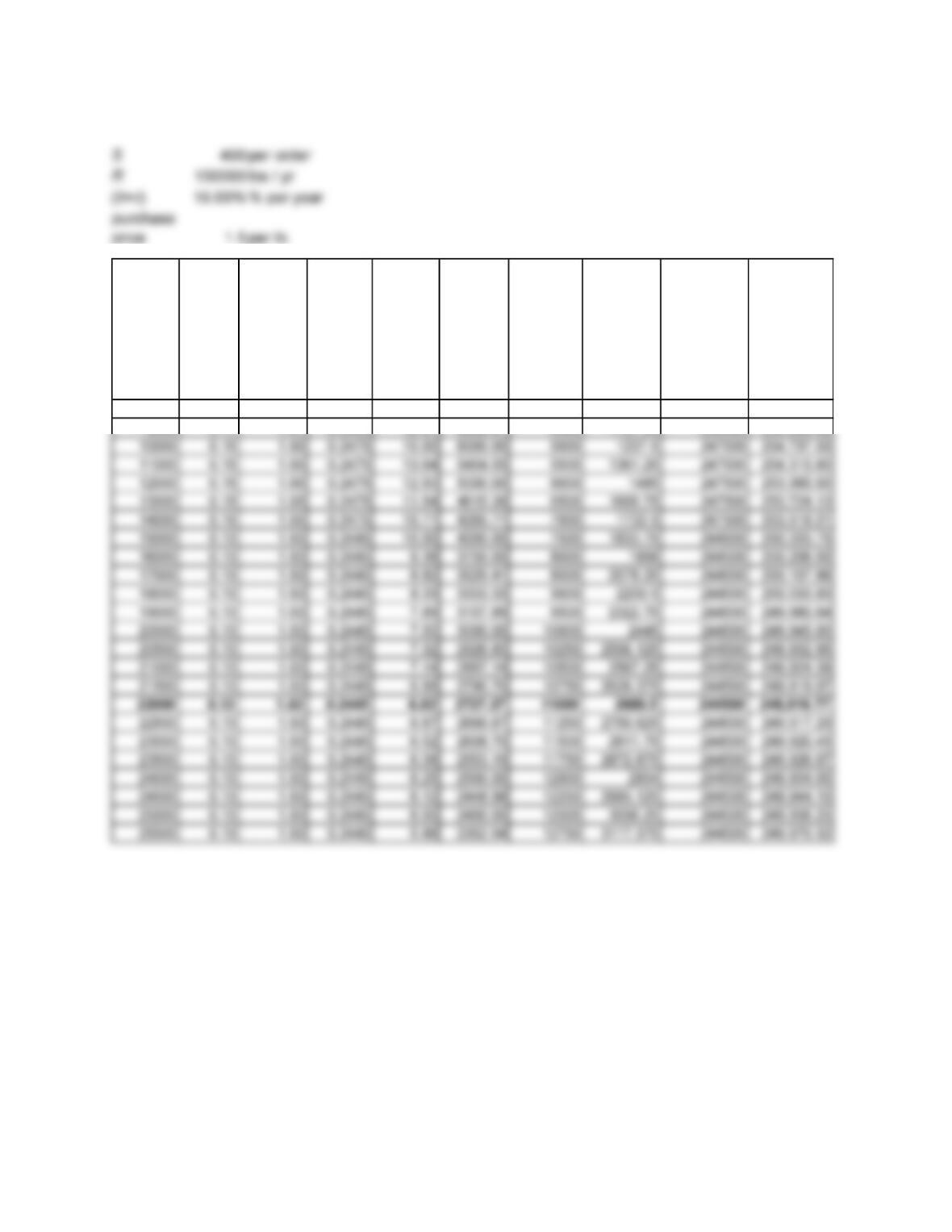
Table TN 6.1: Problem 6.7 (with use of rental forklift)
Order
size (Q)
Shipping
cost per
pound
Total
variable
cost =
purchase
cost +
shipping
(C)
holding
cost
pound
per year
(H)
Number
of orders
(R/Q )
Annual
order
cost
(S×R/Q )
Average
Cycle
Inventory
(Q/2 )
Annual
holding
cost
(H×Q/2 )
Annual
procurement
cost
(C×R)
Total
Annual
costs TC
8000 0.17 1.67 0.2505 18.75 7500.00 4000 1002 250500 259,002.00
9000 0.17 1.67 0.2505 16.67 6666.67 4500 1127.25 250500 258,293.92
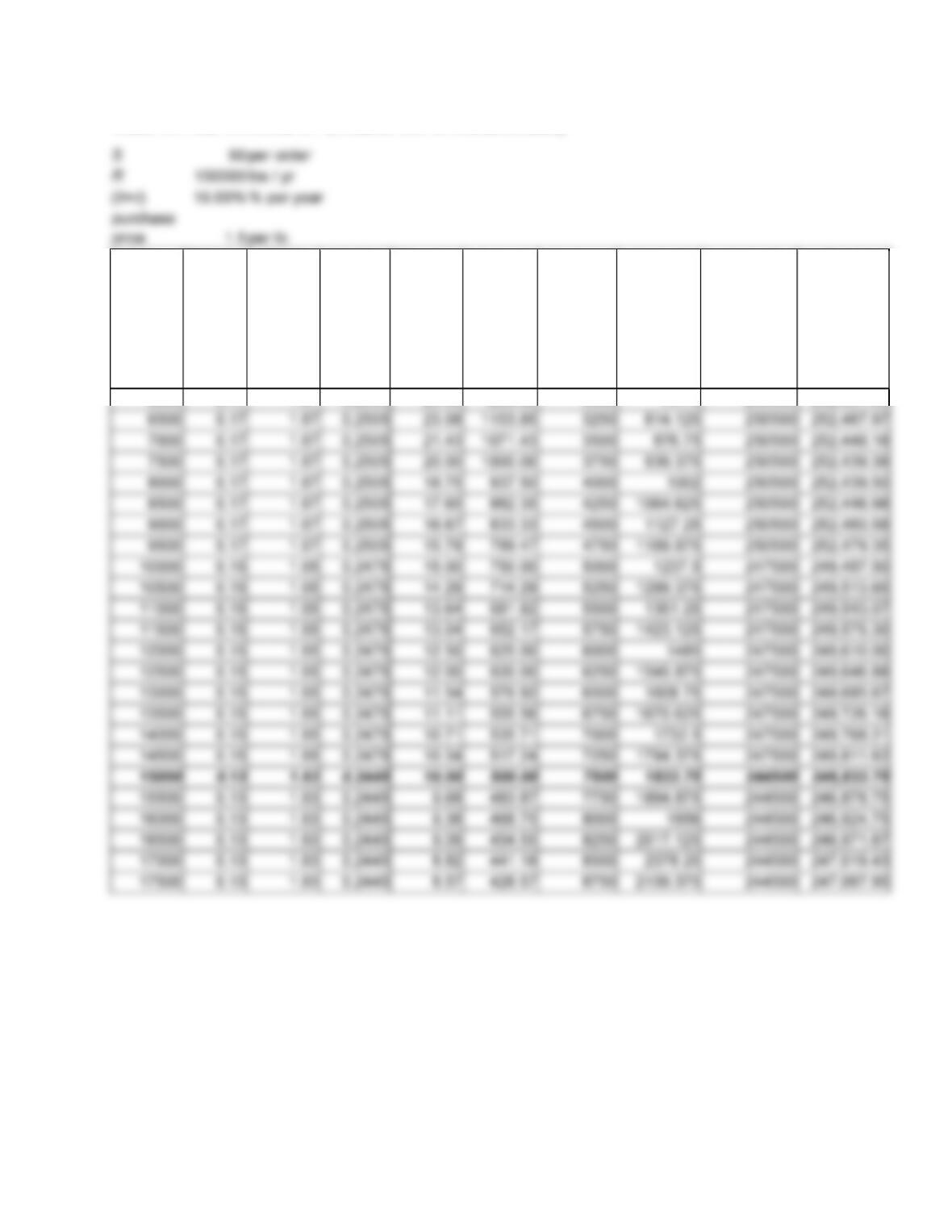
Table TN 6.2: Problem 6.7 (without use of rental forklift)
Order
size (Q)
Shipping
cost per
pound
Total
variable
cost =
purchase
cost +
shipping
(C)
holding
cost
pound
per year
(H)
Number
of orders
(R/Q)
Annual
order
cost
(SxR/Q)
Average
Cycle
Inventory
(Q/2)
Annual
holding
cost
(HxQ/2)
Annual
procurement
cost
(CxR)
Total
Annual
costs TC
6000
0.17
1.67
0.2505
25.00
1250.00
3000
751.5
250500
252,501.50
purchase