6
Multiple Choice
Identify the choice that best completes the statement or answers the question.
____ 1. The Venus of Willendorf is a statue of ____.
a.
Venus de Milo
b.
an anonymous fertile woman
c.
a pregnant Venus
d.
the goddess of love
____ 2. The Idol from Amorgos is a statue of ____.
a.
a Polynesian god and his two sons
b.
a feminine reclining figure
c.
an Egyptian fertility figure
d.
a Venus fertility statue
____ 3. Figure of a Deity: A’a Rurutu from the Austral Islands in central Polynesia was an ancestor
deity and represented a ____.
a.
shape-shifting shaman
b.
marriage ceremony
c.
religious prophet
d.
creator in the act of creating human beings
____ 4. The Bamana fertility figure from Mali contains ____.
a.
geometric forms
b.
curving and natural lines
c.
linen and twine
d.
gold
____ 5. The paintings in the Villa of Mysteries were done by the ____.
a.
Nigerians
b.
Greeks
c.
Romans
d.
Bamana
____ 6. The Primordial Couple of the Dogon represents ____.
a.
Adam and Eve
b.
Venus and Mars
c.
Dionysos and Ariadne
d.
the father and mother of all
____ 7. There are many symbols in Jan van Eyck’s The Wedding, including ____.
a.
a church and priest
b.
an empty chandelier
c.
oranges
d.
cats and a bird
____ 8. The Japanese shunga prints are translated as ____.
a.
floating world
b.
ukiyo-e
c.
spring pictures
d.
golden age
____ 9. An odalisque was a member of ____.
a.
Parliament
b.
a harem
c.
a church
d.
a family
____ 10. Georgia O’Keeffe’s works are often extreme close ups of ____.
a.
flowers
b.
trees
c.
fruits
d.
faces
____ 11. In prehistoric times fertility was ____.
a.
taken for granted
b.
discouraged
c.
encouraged
d.
an important concern
____ 12. The Moche, the Maya, and Alice Neel did versions of ____.
a.
love between a man and woman
b.
pregnant women
c.
male torsos
d.
marriage
____ 13. Brancusi’s Torso of a Young Man is ____.
a.
extremely realistic
b.
done in an African style
c.
very abstract
d.
similar to O’Keefe’s works
____ 14. Louise Bourgeois’ Blind Man’s Bluff is a sculpture of ____.
a.
blind men playing a game
b.
a male torso
c.
a pregnant woman
d.
bulbous forms
____ 15. The ancient cities required ____ in order to function.
a.
many houses and streets
b.
high walls
c.
major rivers
d.
protective mountains
____ 16. In Mesopotamia, ____ symbols developed into the first writing.
a.
hieroglyphic
b.
rebus
c.
arabesque
d.
cuneiform
____ 17. Early cities in the New Stone Age fostered the
a.
equality of the sexes
b.
development of hunting and gathering
c.
division of labor
d.
suspicion of religion
____ 18. In Mesopotamia, the early city states were between the Tigris and the
a.
Mississippi
b.
Nile
c.
Lagash
d.
Euphrates
____ 19. In 3000 BCE, Native American artisans settled around Lake ____.
a.
Superior
b.
Erie
c.
Ontario
d.
Michigan
____ 20. The Indus River Valley is in present day ____.
a.
India
b.
China
c.
Afghanistan
d.
Pakistan
____ 21. Moche pottery is characterized by ____.
a.
stylized images of ideal beauty
b.
highly structured geometric patterns
c.
naturalistic imagery of everyday life
d.
elaborate decorative ornamentation
____ 22. Historically in India, images of ideal erotic sexuality were ____.
a.
common in temples and miniature paintings
b.
rare due to the morality of the culture
c.
controversial and kept hidden in people’s homes
d.
banned by various controlling rulers
____ 23. In nineteenth-century Europe, ____ paintings were an acceptable way to present images of nude women.
a.
miniature
b.
abstract
c.
cloudy
d.
mythological
____ 24. When an artist paints thickly and directly onto the canvas, the work is called a(n) ____ painting.
a.
contrappasto
b.
alla prima
c.
plein aire
d.
chiaroscuro
____ 25. Many critics have associated Georgia O’Keeffe’s imagery with ____.
a.
the female body
b.
Aboriginal contour paintings
c.
early fertility figures
d.
Japanese shunga prints
____ 26. Stiff, angular female marble figures from the Cycladic Islands, often called ____, were found in burial sites.
a.
plank idols
b.
odalisques
c.
Potawatomi
d.
akua’ba dolls
____ 27. Oceanic sculptures such as God Te Ronga and His Three Sons were carved for religious rituals
by specialists called Ta’unga, which is also the word for ____.
a.
god
b.
blessing
c.
nirvana
d.
priest
____ 28. Potawatomi figure-like carvings were used as “medicine” to ____.
a.
aid women in childbirth
b.
control human behaviors and health
c.
alleviate menstrual pain
d.
cure infections
____ 29. A(n) ____ is associated with creation myths and is the mother and father of all humankind.
a.
odalisque
b.
primordial couple
c.
Aztec couple
d.
Shunga
____ 30. A(n) ____ is a member of a Turkish harem.
a.
pilegesh
b.
kippumjo
c.
odalisque
d.
seraglio
____ 31. Near the confluence of the Mississippi and Illinois rivers, the ____ built large, truncated pyramid mounds
topped with temples.
a.
Texans
b.
Iowans
c.
Illinoisans
d.
Mississippians
Essay
32. How did the growth of cities change people’s lives in the New Stone Age?
33. What factors influenced the growth of cities?
34. Why did so many ancient cultures show pregnant or nursing women?
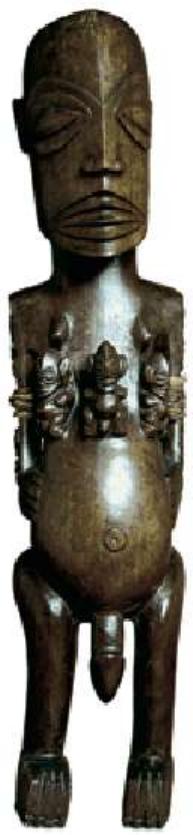
35.
What type of sculpture is this? How was it made? What is its history?
36. Describe the significance of the Villa of Mysteries from Pompeii.
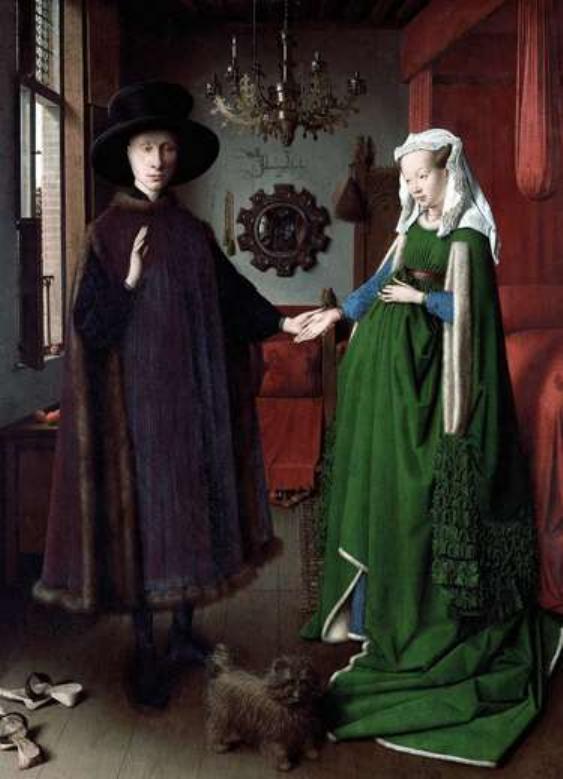
37.
Discuss the hidden symbolism in this wedding portrait.
True/False
Indicate whether the statement is true or false.
____ 38. Some of the earliest artifacts believed to relate to human fertility come from the Paleolithic and Neolithic
periods of history.
____ 39. The Venus of Willendorf is a monumental, Paleolithic sculpture found near the village of Willendorf, Austria.
____ 40. Regardless of time period or culture, fertility figures are universally female.
____ 41. Many of the fertility figures from Oceanic cultures illustrate the significance of family lineage.
____ 42. Polynesian fertility figures were used by everyone in the culture, regardless of rank or power.
____ 43. Aztec marriage ceremonies took place in the groom’s home in front of the hearth.
____ 44. The Mississippians built large truncated pyramid mounds topped with temples.
6
Answer Section
MULTIPLE CHOICE
ESSAY
TRUE/FALSE