6-121
6-122
205.
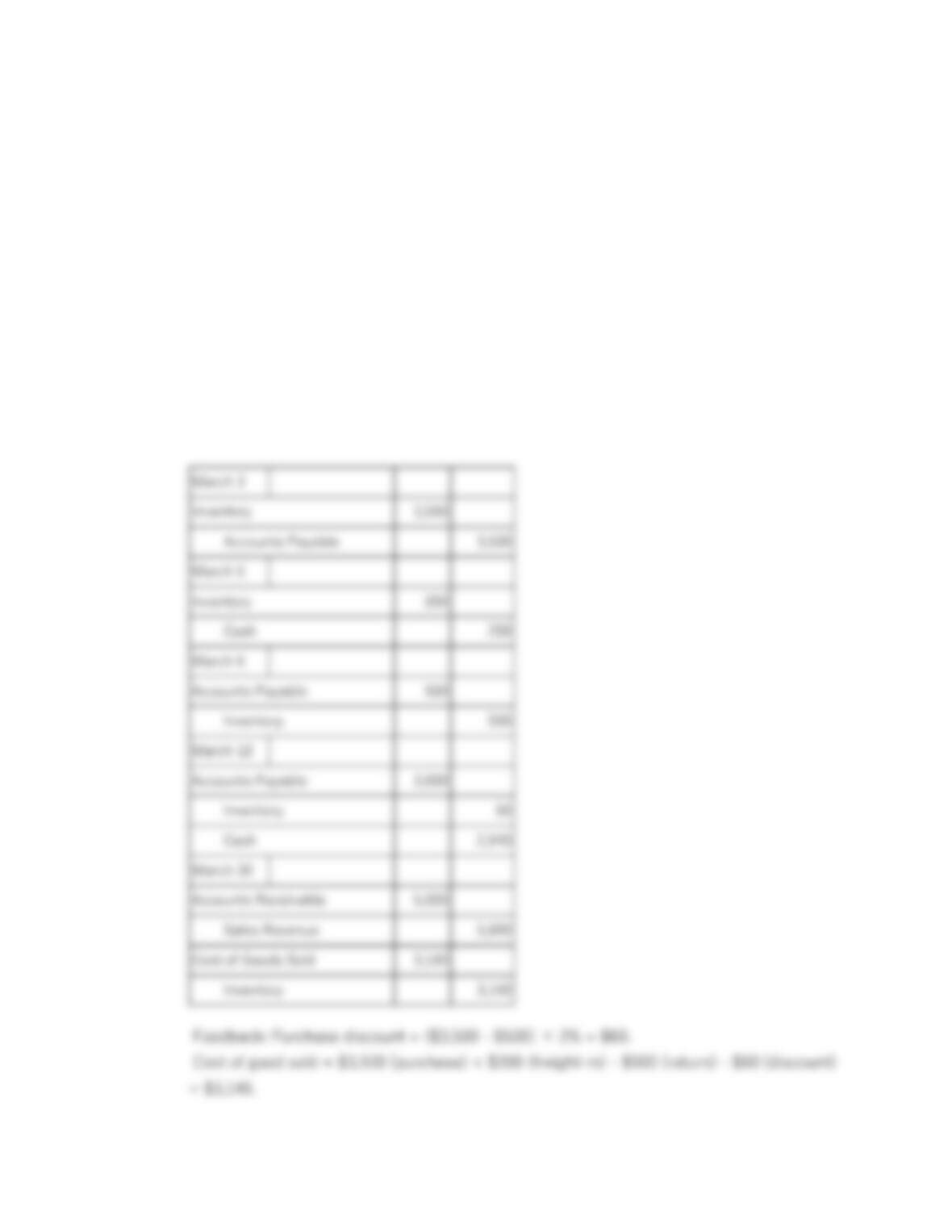
A company has the following transactions during March:
March 3 Purchases inventory on account for $3,500, terms 2/10, n/30.
March 5 Pays freight costs of $200 on inventory purchased on March 3.
March 6 Returns inventory with a cost of $500.
March 12 Pays the full amount due on March 3 purchase.
March 29 Sells all inventory purchased on March 3 (less those returned on March 6) for
$5,000 on account.
Record all transactions, assuming the company uses a perpetual inventory system.
206.
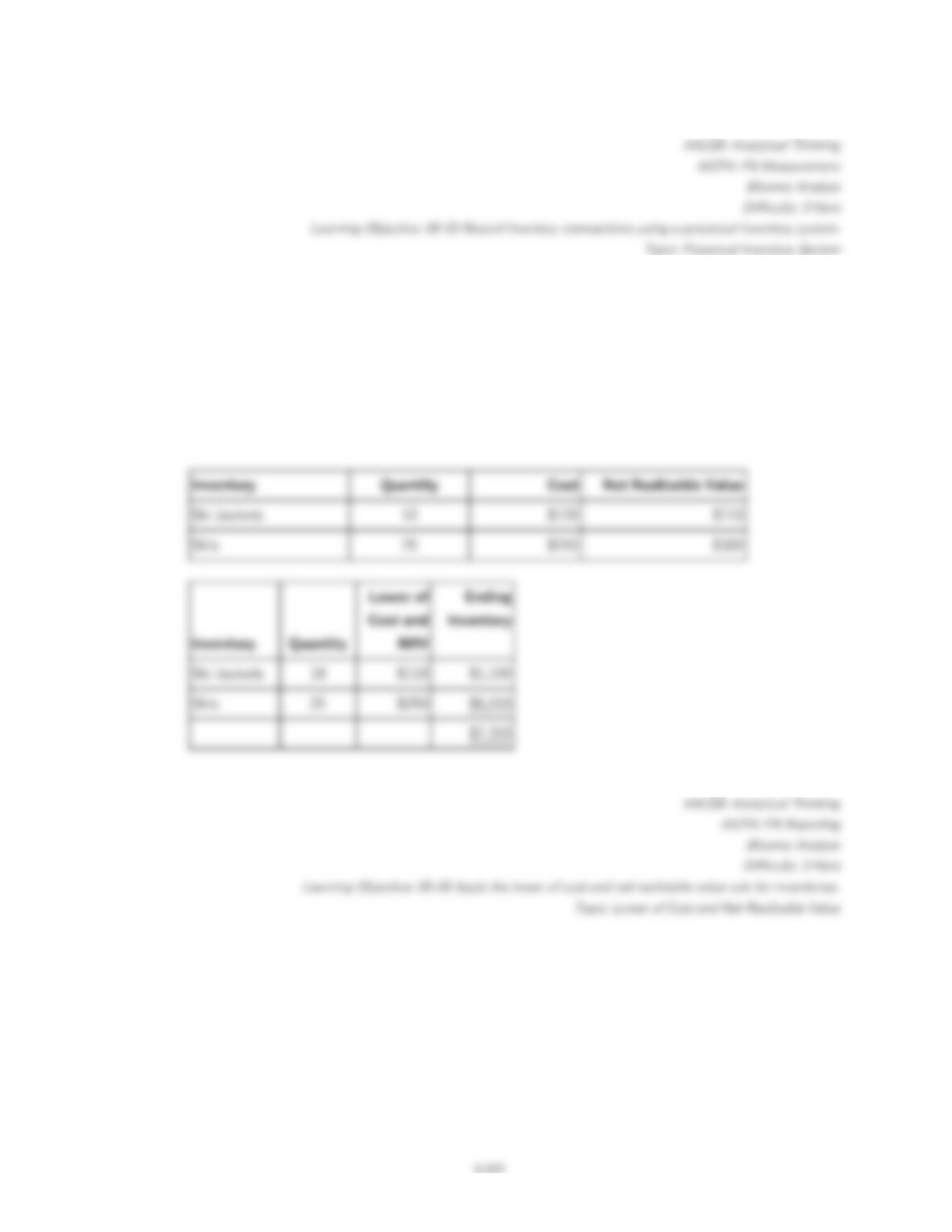
A company reports inventory using the lower of cost and net realizable value (NRV). Below
is information related to its year-end inventory. Calculate the amount to be reported for
ending inventory.
207.
A company reports inventory using the lower of cost and net realizable value. Below is
information related to its year-end inventory:
Inventory
Quantity
Cost
Market
Item A
100
$25
$30
Item B
50
30
20
Cost of Goods Sold
Inventory
Calculate ending inventory under the lower of cost and net realizable value and record any
necessary adjustment to inventory.
208.
A company reports inventory using the lower of cost and net realizable value. Below is
information related to its year-end inventory:
Inventory
Quantity
Cost
Market
Unit A
10
$30
$32
Unit B
18
43
40
Unit C
12
23
27
Unit D
15
18
17
Calculate ending inventory under the lower of cost and net realizable value and record any
necessary adjustment to inventory.
209.
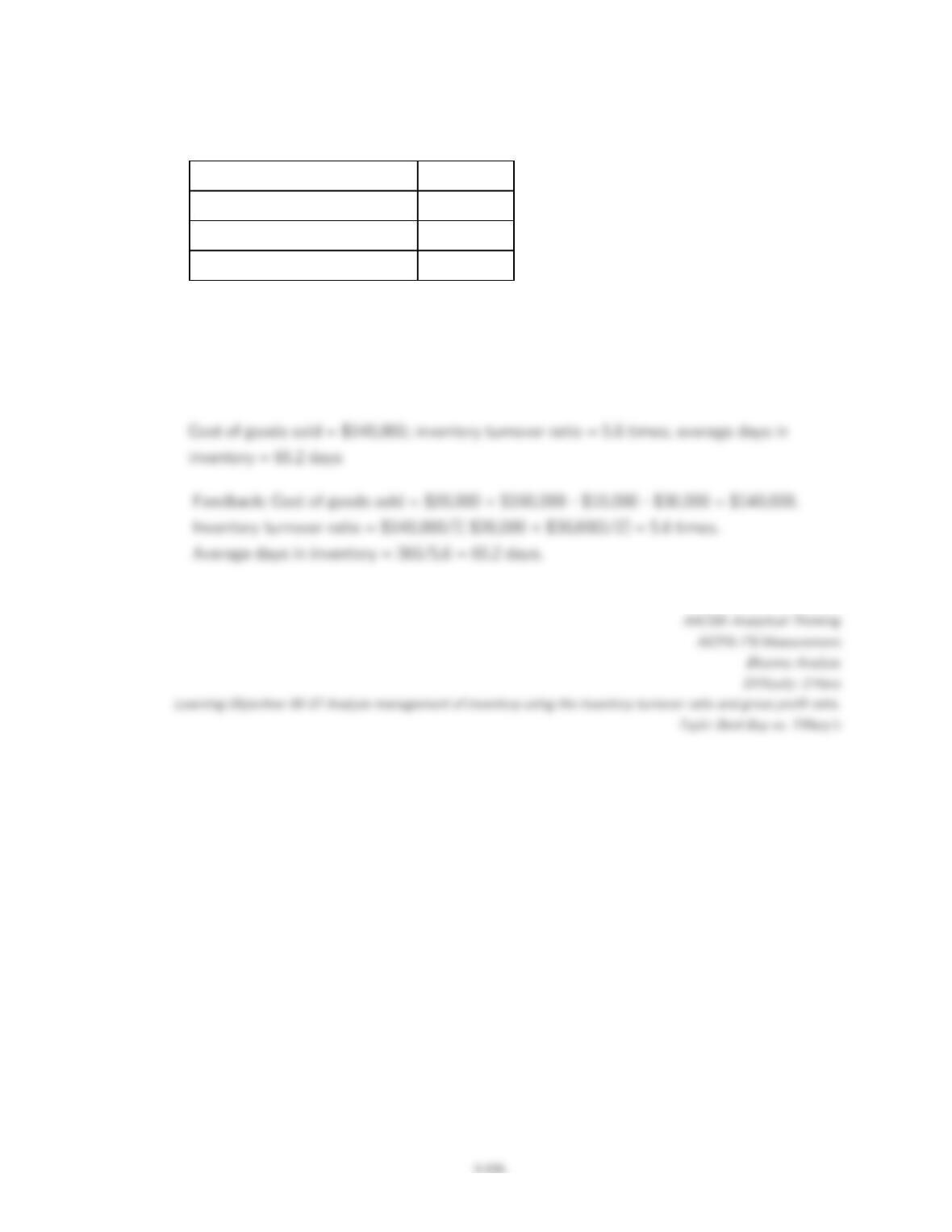
A company reports the following amounts for 2018:
Inventory (beginning)
$20,000
Inventory (ending)
30,000
Purchases
160,000
Purchase returns
10,000
Calculate cost of goods sold, the inventory turnover ratio, and the average days in
inventory for 2018.
210.
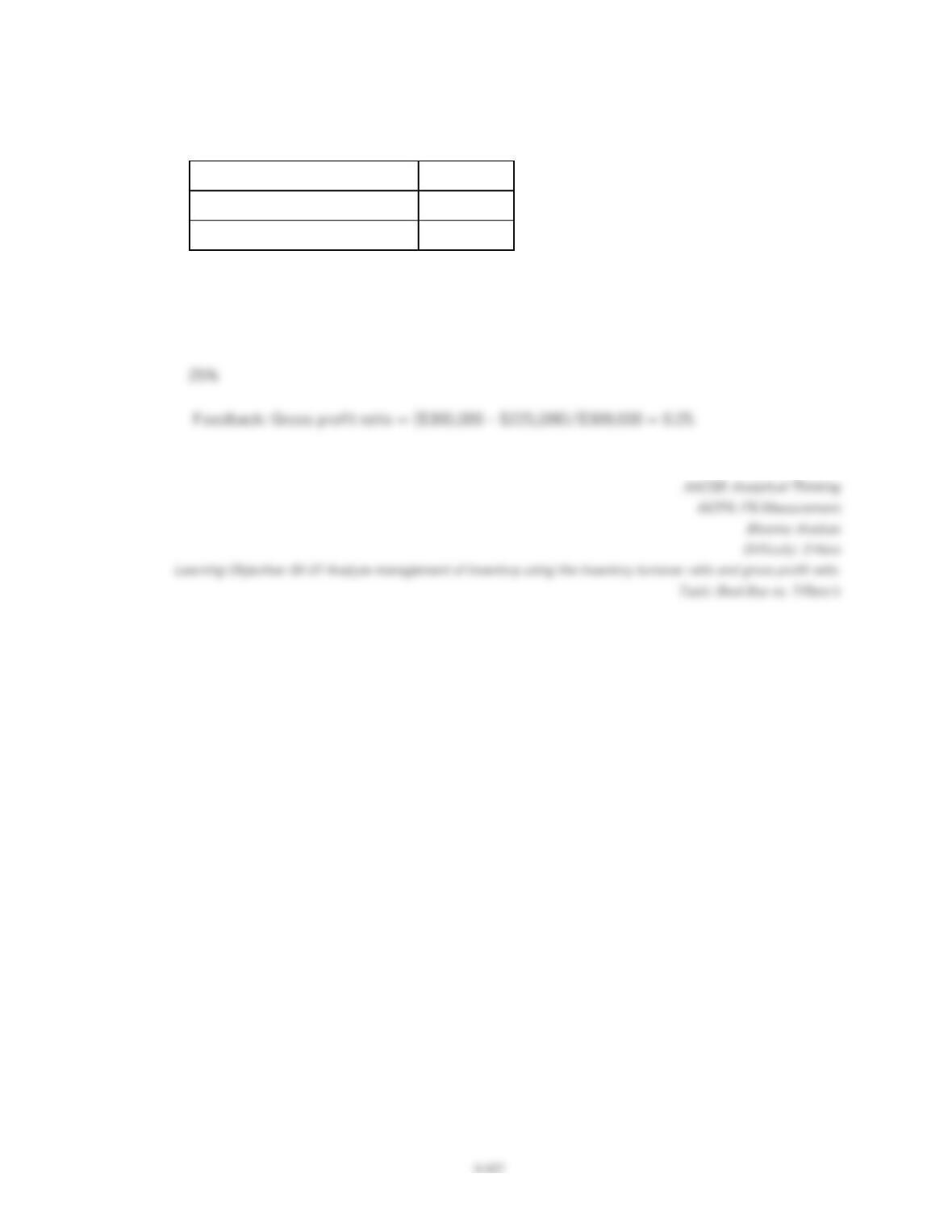
A company reports the following amounts at the end of the year:
Sales revenue
$300,000
Cost of goods sold
225,000
Net income
50,000
Compute the company’s gross profit ratio.
211.
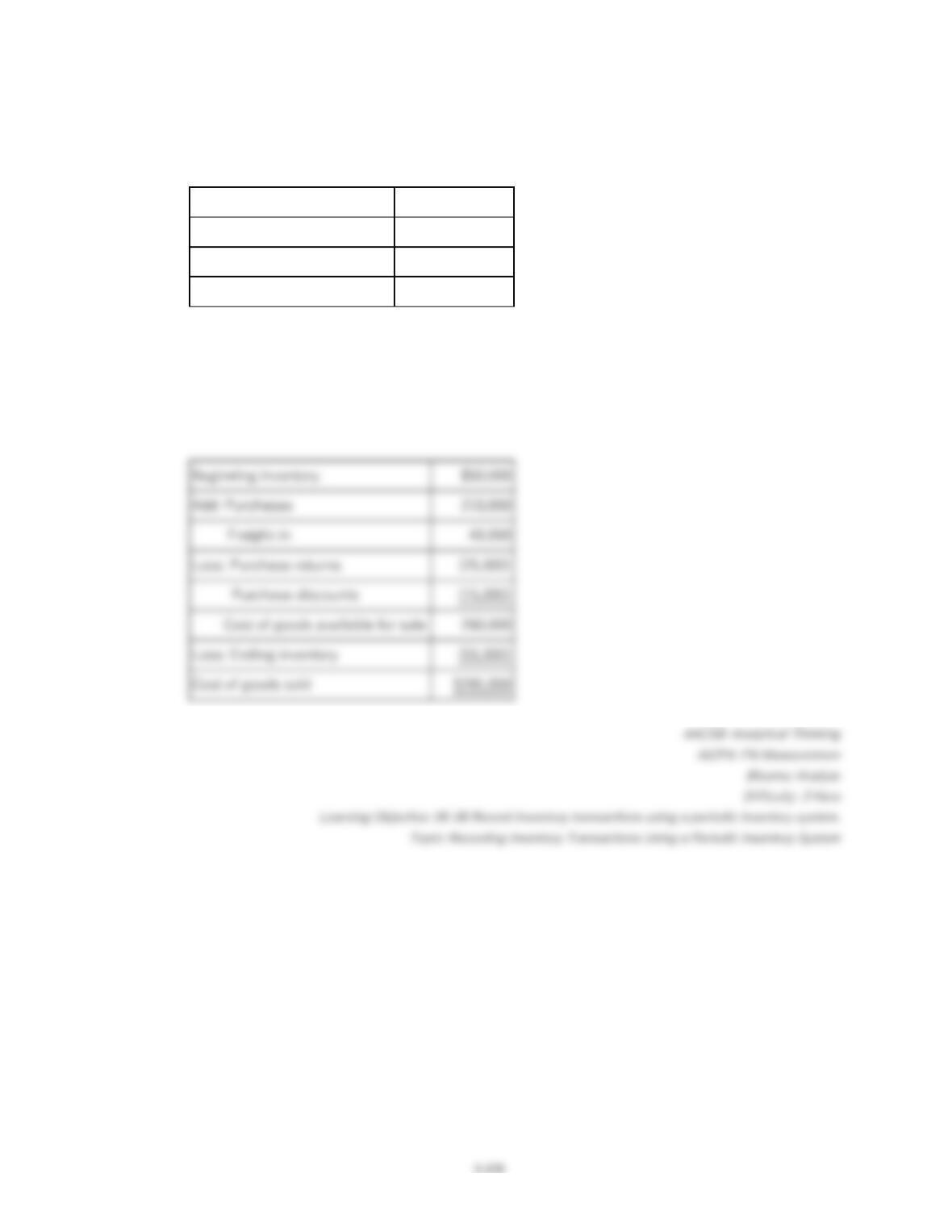
A company begins the year with inventory of $50,000 and ends the year with inventory of
$55,000. During the year, the following amounts are recorded:
Purchases
$210,000
Purchase returns
25,000
Purchase discounts
15,000
Freight-in
40,000
Cost of goods available for sale
Less: Ending inventory
Cost of goods sold
Calculate cost of goods sold for the year.
212.
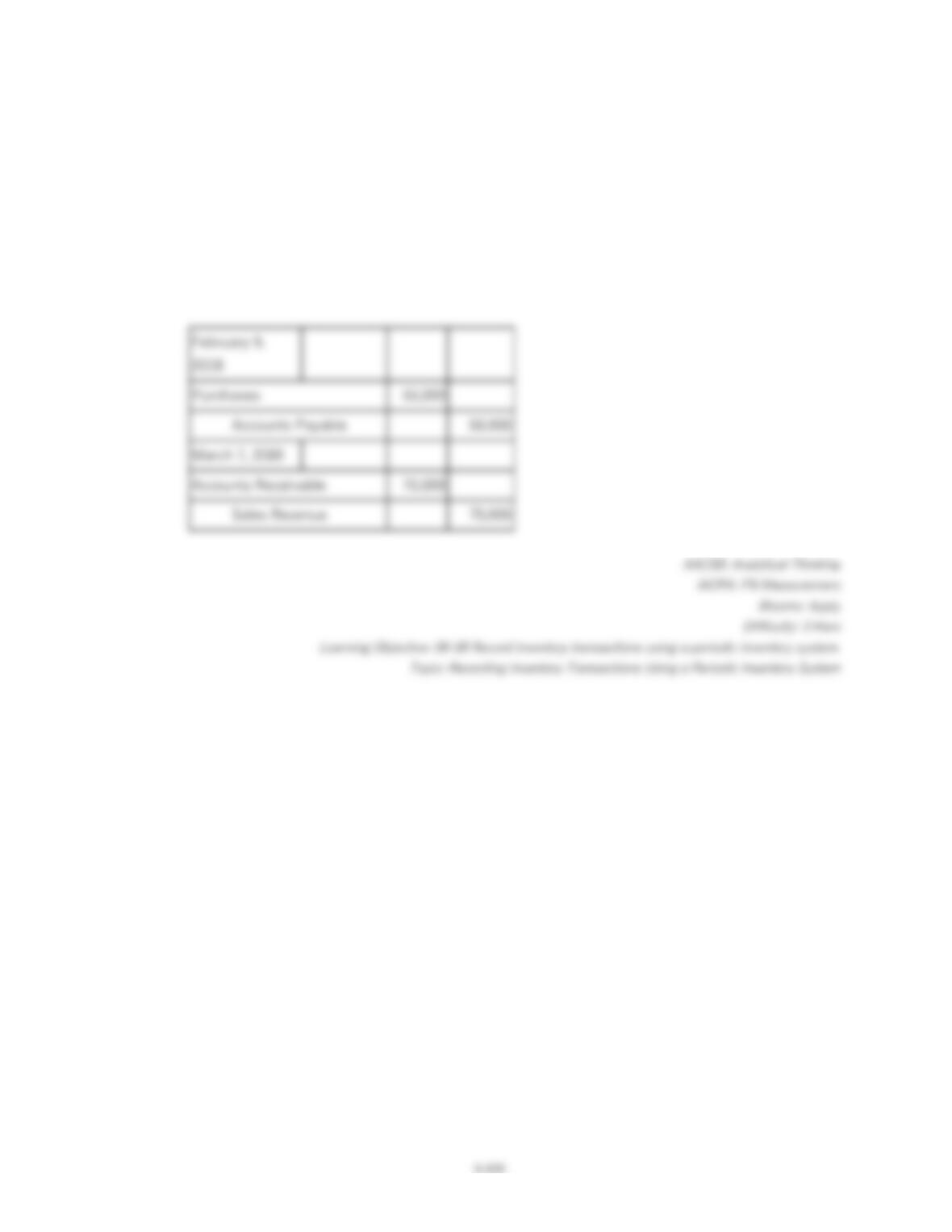
A company uses a periodic system to record inventory transactions. The company
purchases inventory on account on February 9, 2018, for $50,000 and then sells this
inventory on account on March 7, 2018, for $70,000. Record the transactions for the
purchase and sale of the inventory.
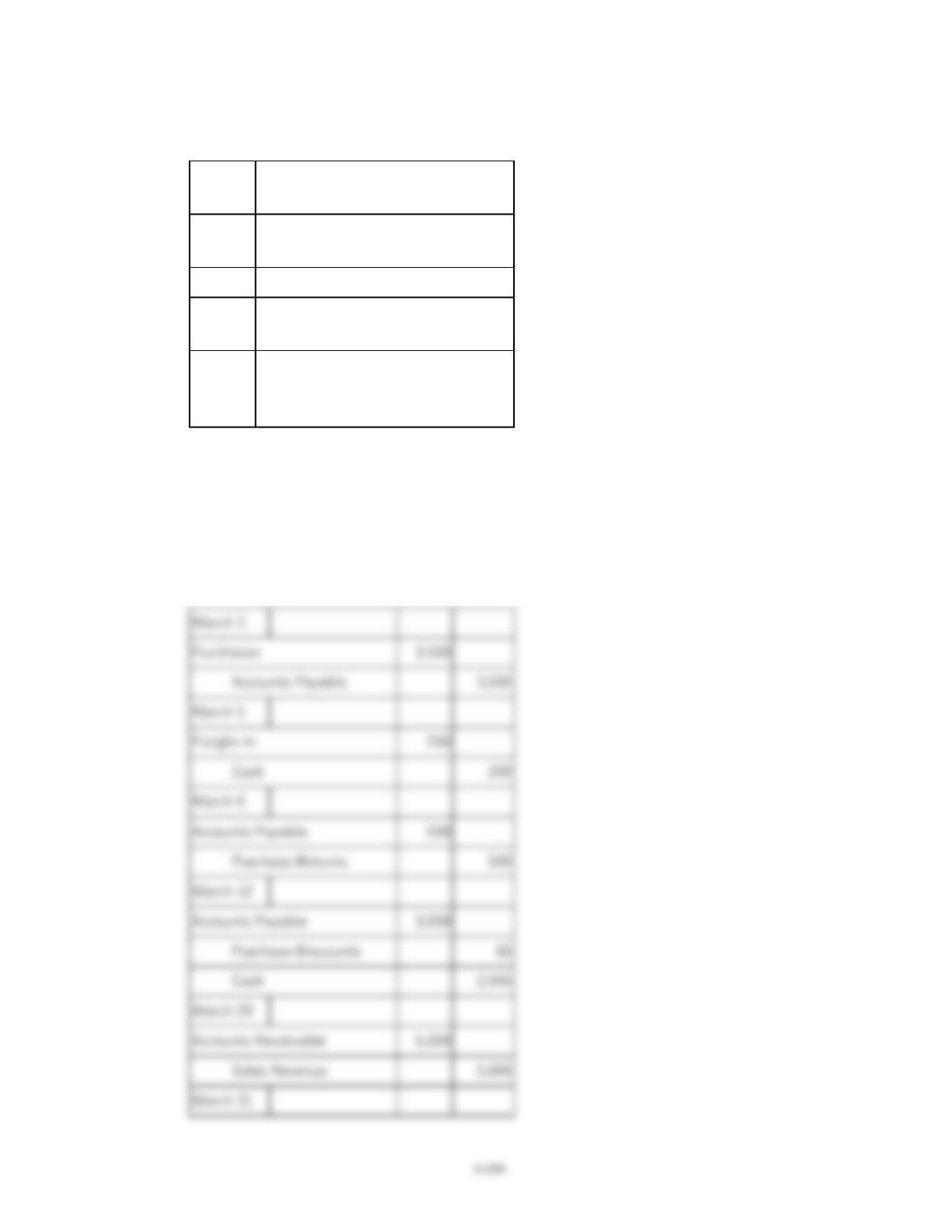
213.
A company has the following transactions during March:
March 3
Purchases inventory on account for
$3,500, terms 2/10, n/30.
March 5
Pays freight costs of $200 on inventory
purchased on March 3.
March 6
Returns inventory with a cost of $500.
March 12
Pays the full amount due on March 3
purchase.
March 29
Sells all inventory purchased on March
3 (less those returned on March 6) for
$5,000 on account.
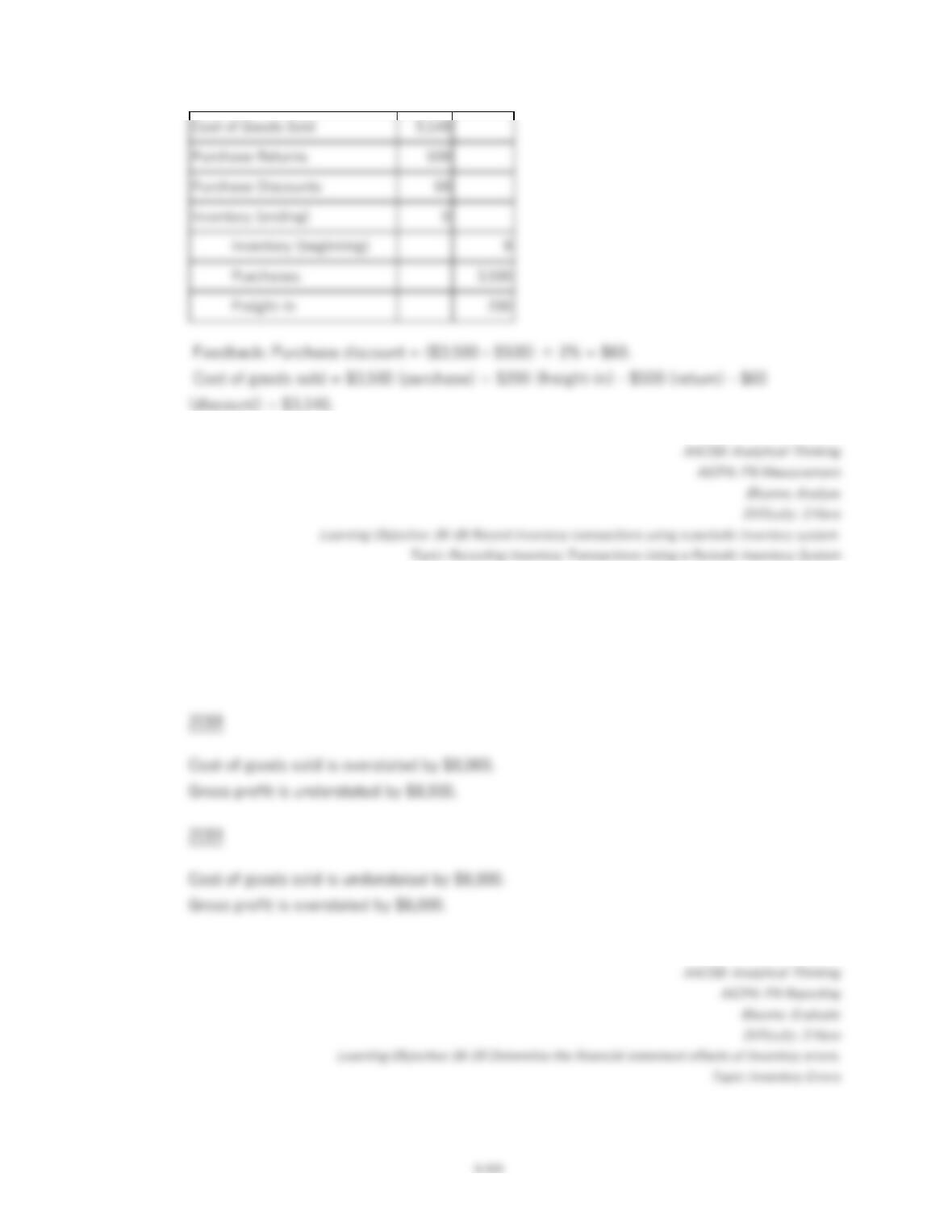
Record all transactions, including the month-end adjustment to cost of goods sold,
assuming the company uses a periodic inventory system and has no beginning inventory.
March 3
Purchases
Accounts Payable
March 5
Freight-In
Cash
March 6
Accounts Payable
Purchase Returns
March 12
Accounts Payable
Purchase Discounts
Cash
March 29
Accounts Receivable
214.
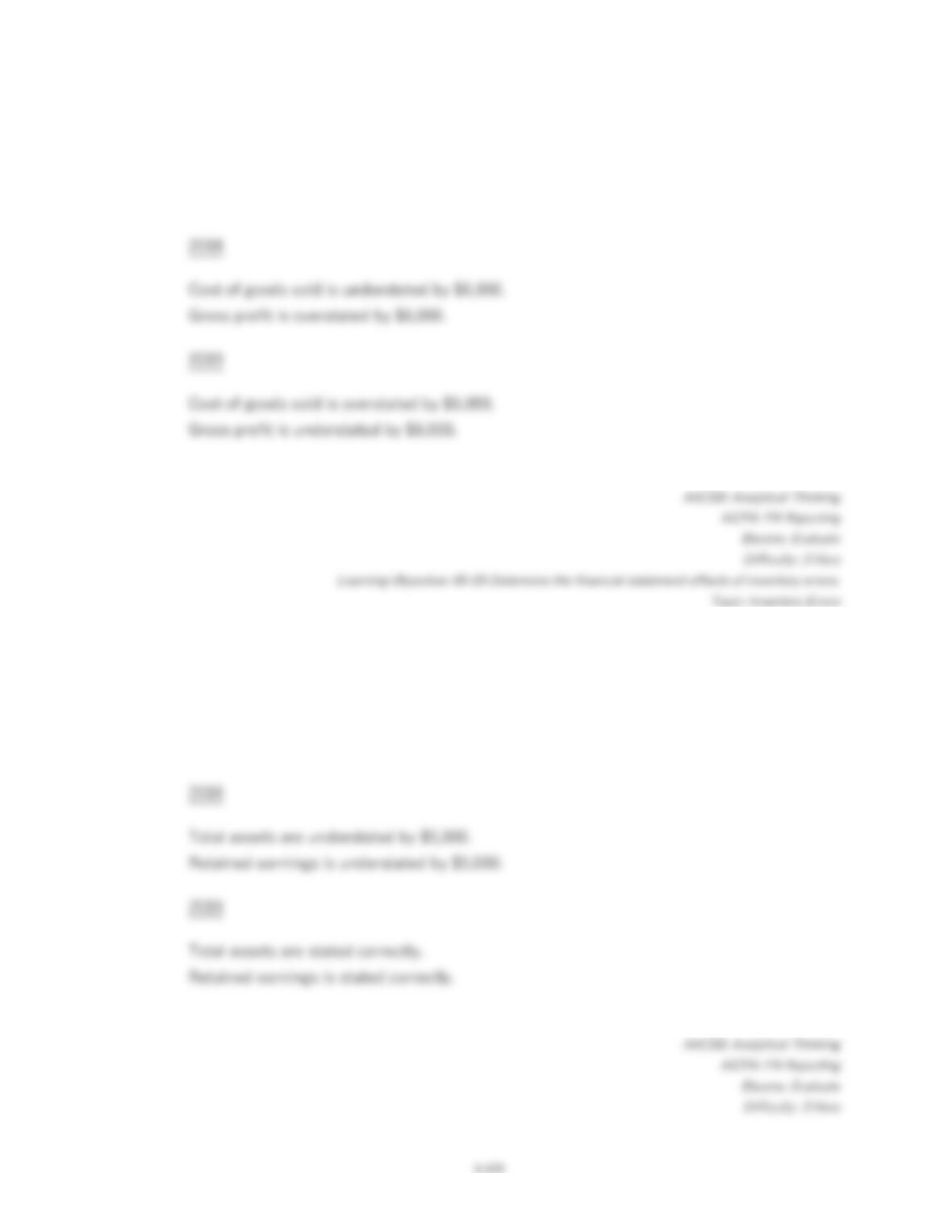
A company understated its ending inventory balance by $8,000 in 2018. What impact will
this error have on cost of goods sold and gross profit in 2018 and 2019?
215.
A company overstated its ending inventory balance by $6,000 in 2018. What impact will
this error have on cost of goods sold and gross profit in 2018 and 2019?
216.
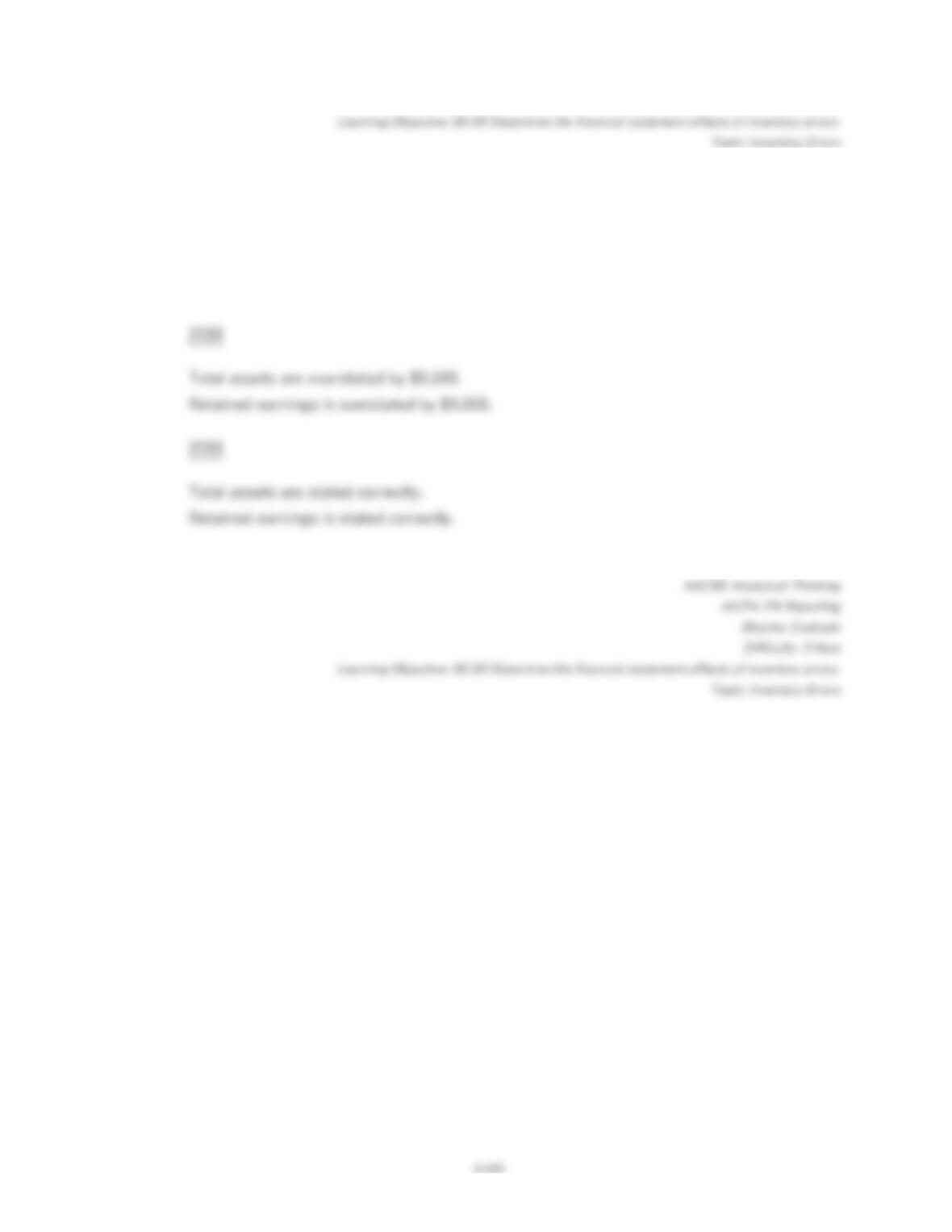
A company understated its ending inventory balance by $5,000 in 2018. What impact will
this error have on total assets and retained earnings in 2018 and 2019 (ignoring tax
effects)?
217.
A company overstated its ending inventory balance by $9,000 in 2018. What impact will
this error have on total assets and retained earnings in 2018 and 2019 (ignoring tax
effects)?
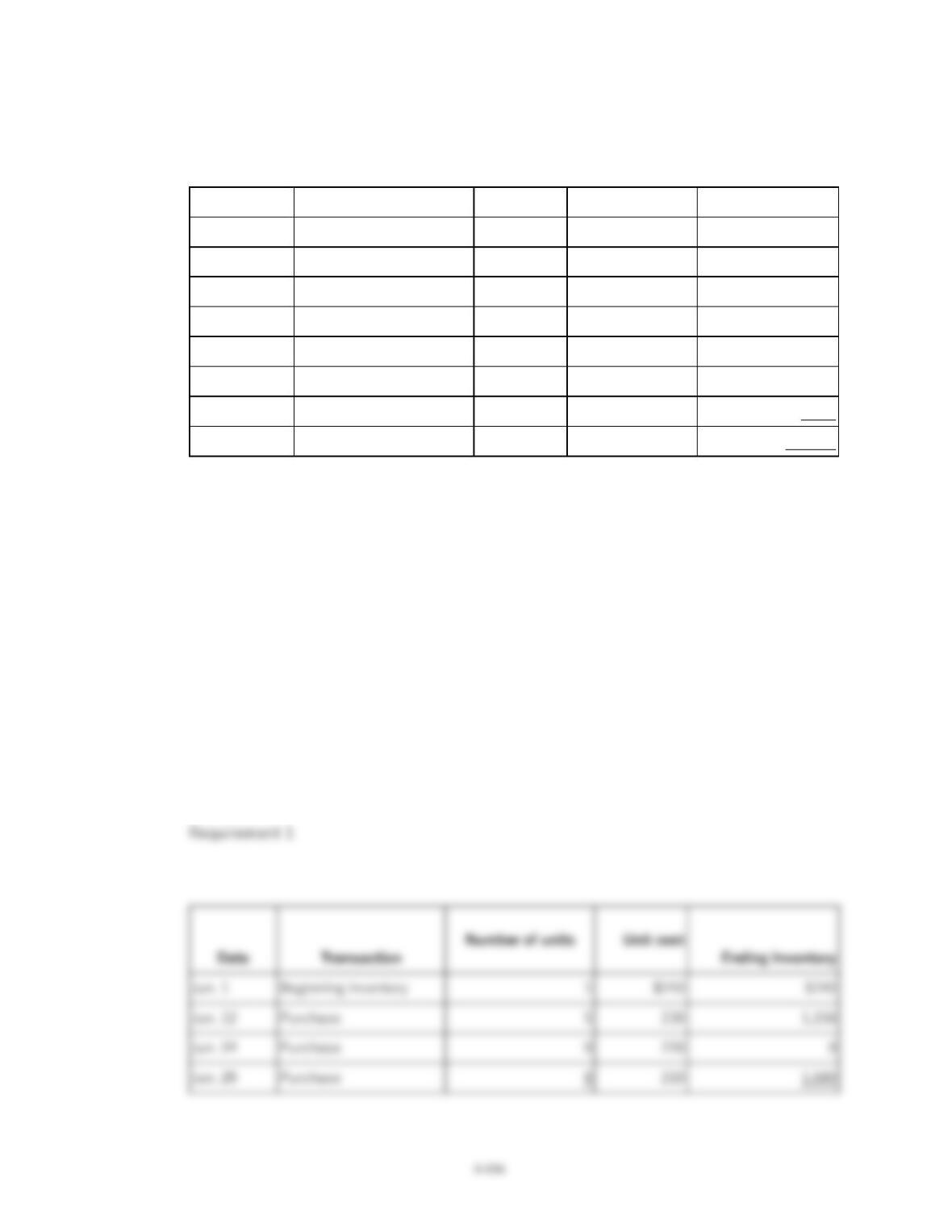
218.
Giles Manufacturing uses a periodic inventory system and has the following transactions
for the month of June 2018:
Date
Transactions
Units
Cost per Unit
Total Cost
June 1
Beginning inventory
17
$240
$4,080
June 7
Sale
12
June 12
Purchase
13
230
2,990
June 15
Sale
11
June 24
Purchase
14
220
3,080
June 27
Sale
15
June 29
Purchase
8
210
1,680
$11,830
Required:
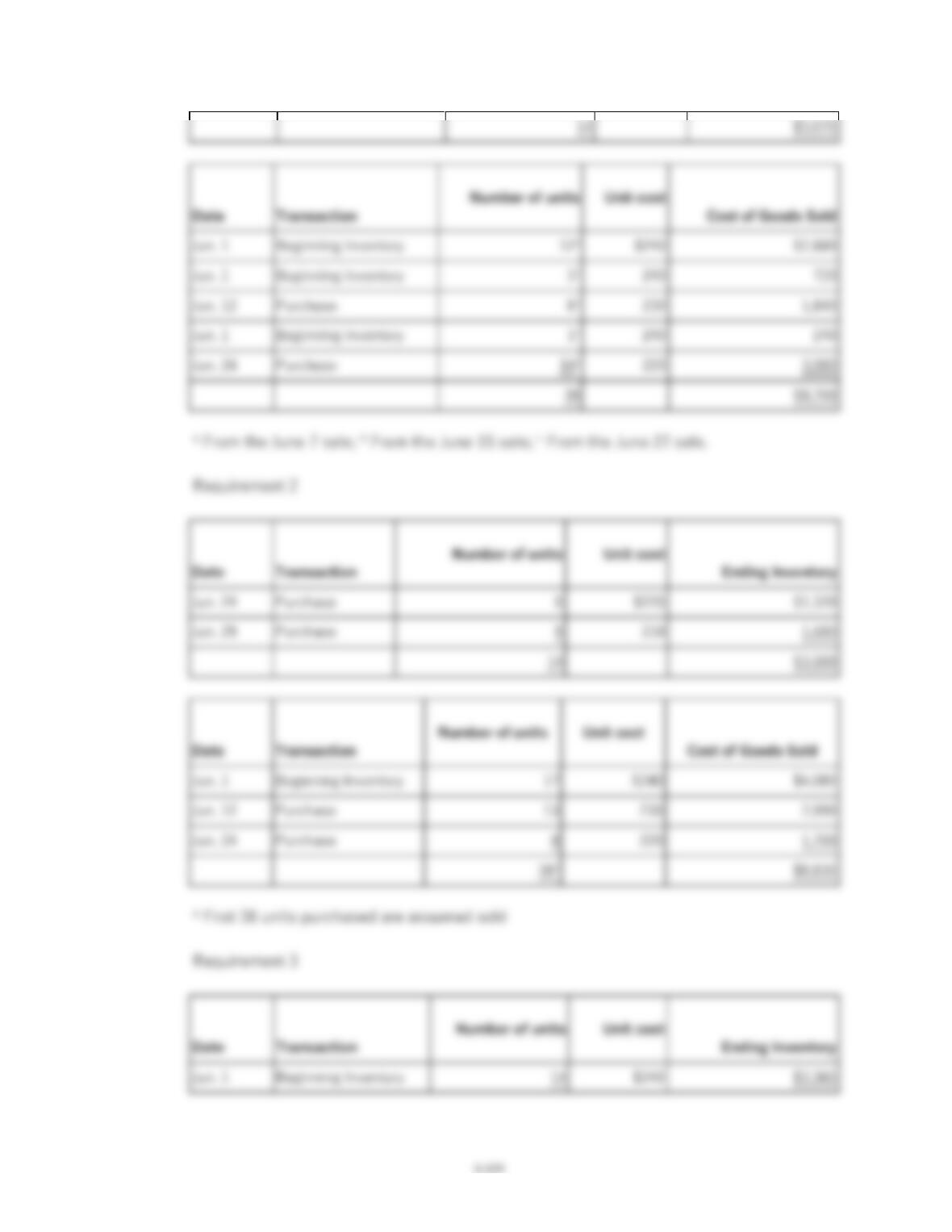
1. Calculate ending inventory and cost of goods sold at June 30, 2018, using the specific
identification method. The June 7 sale consists of beginning inventory, the June 15 sale
consists of three units from beginning inventory and eight from the June 12 purchase, and
the June 27 sale consists of one unit from beginning inventory and fourteen units from the
June 24 purchase.
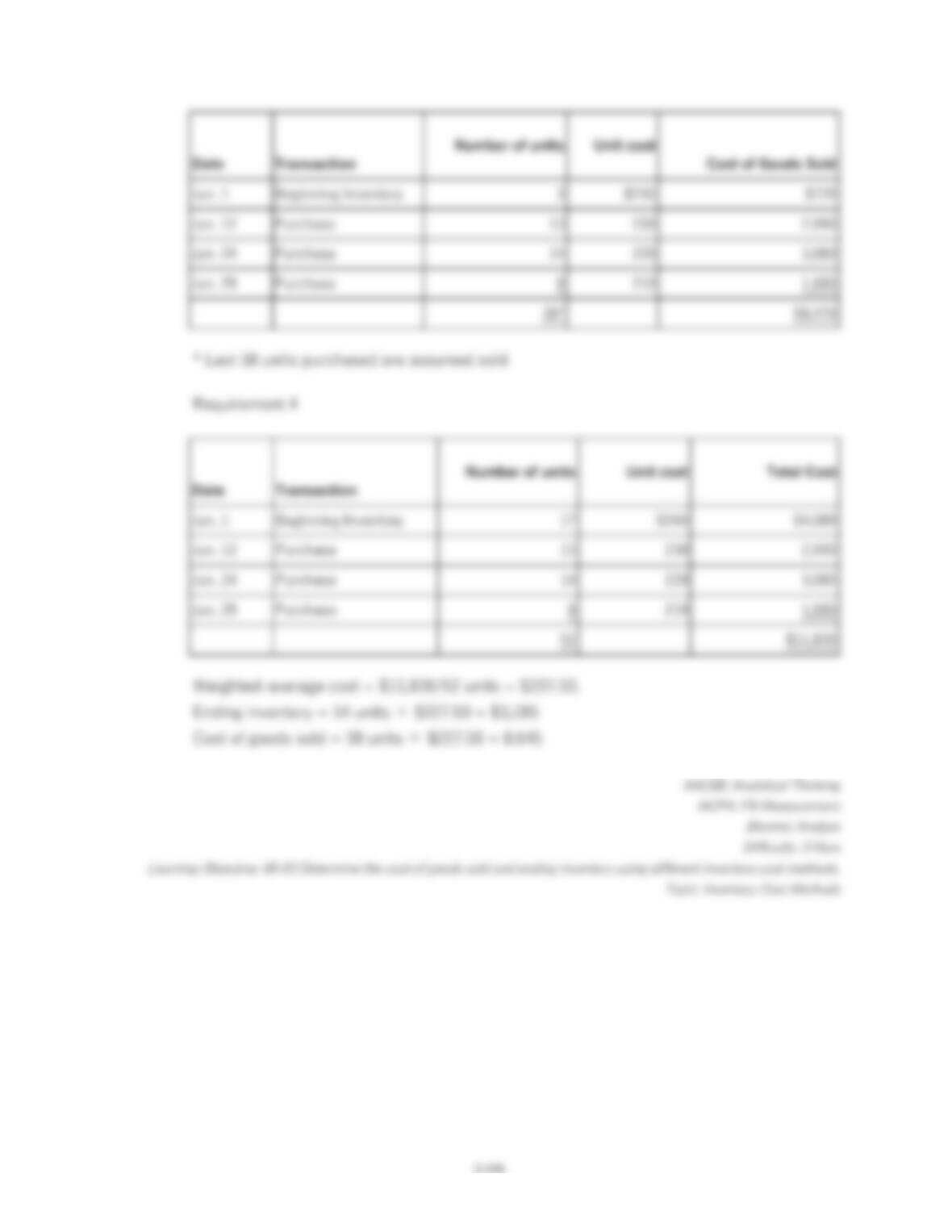
2. Using FIFO, calculate ending inventory and cost of goods sold at June 30, 2018.
3. Using LIFO, calculate ending inventory and cost of goods sold at June 30, 2018.
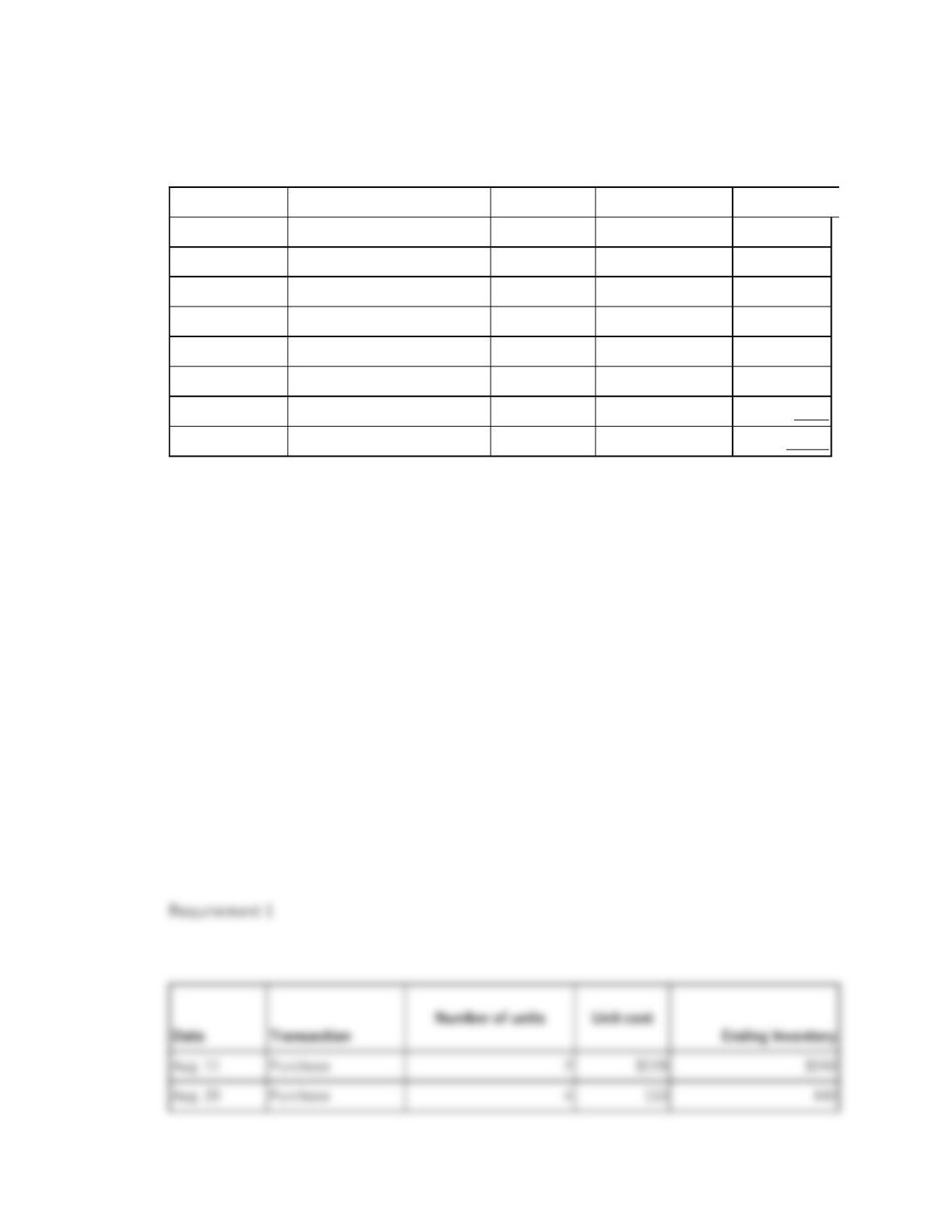
4. Using weighted-average cost, calculate ending inventory and cost of goods sold at June
30, 2018.
Jun. 1
Beginning Inventory
Jun. 12
Purchase
Jun. 24
Purchase
6-137
219
.
Nadal Athletic uses a periodic inventory system and has the following transaction related to
its inventory for the month of August 2018:
Date
Transactions
Units
Cost per Unit
Total Co
August 1
Beginning inventory
7
$130
$910
August 4
Sale ($150 each)
5
August 11
Purchase
9
120
1,080
August 13
Sale ($160 each)
7
August 20
Purchase
12
110
1,320
August 26
Sale ($170 each)
10
August 29
Purchase
12
100
1,200
$4,510
Required:
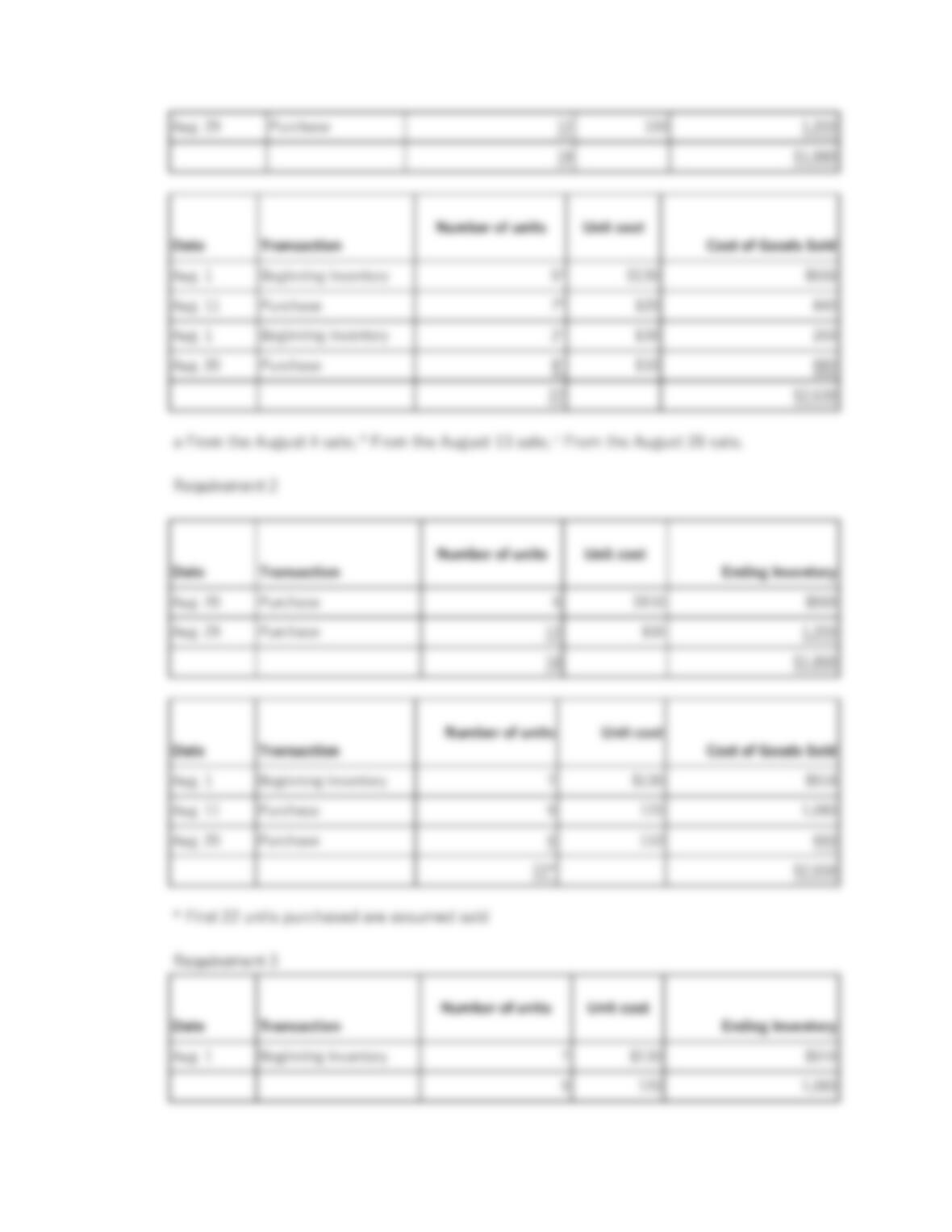
1. Calculate ending inventory and cost of goods sold at August 31, 2018, using the specific
identification method. The August 4 sale consists of units from beginning inventory, the
August 13 sale consists of units from the August 11 purchase, and the August 26 sale
consists of two units from beginning inventory and eights units from the August 20 purchase.
2. Using FIFO, calculate ending inventory and cost of goods sold at August 31, 2018.
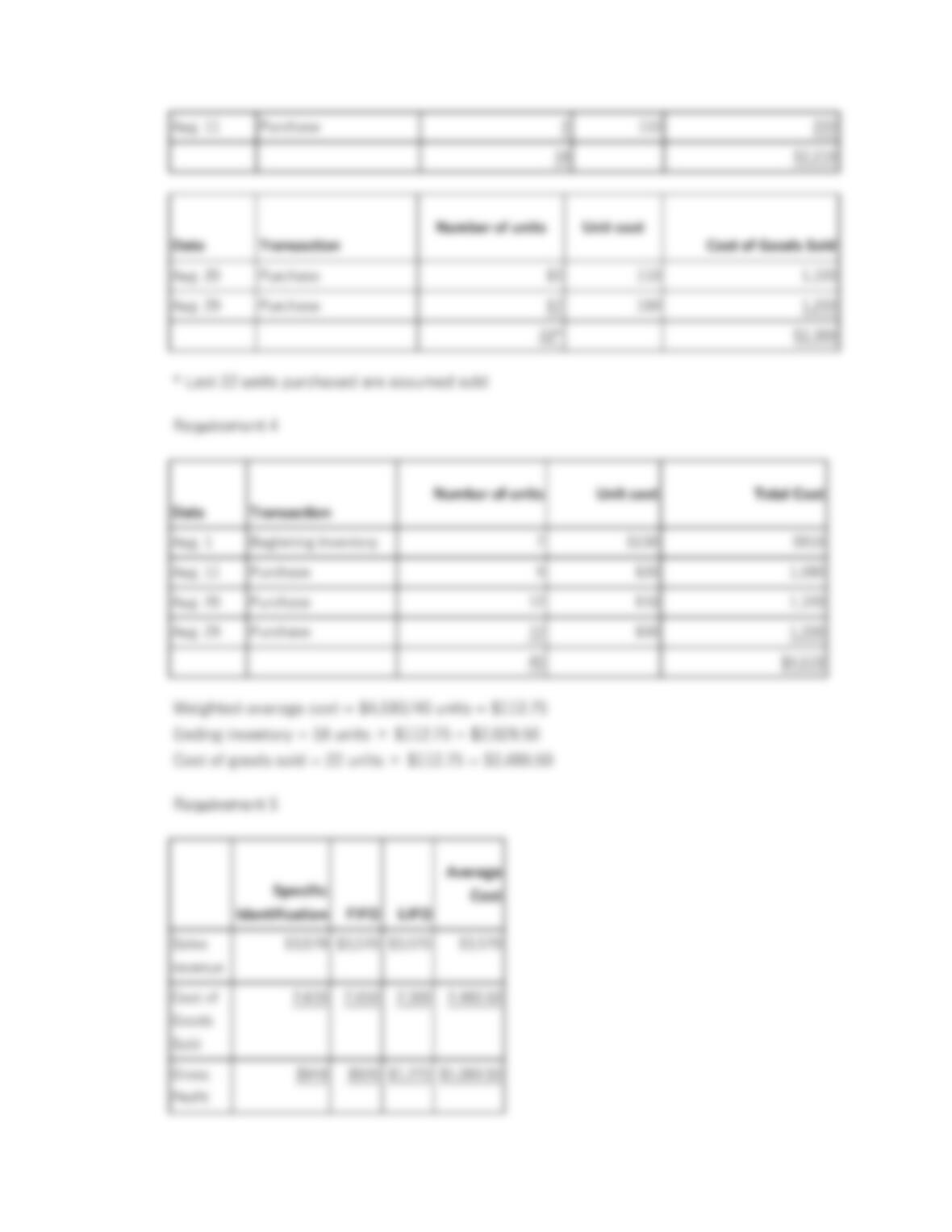
3. Using LIFO, calculate ending inventory and cost of goods sold at August 31, 2018.
4. Using weighted-average cost, calculate ending inventory and cost of goods sold at August
31, 2018.
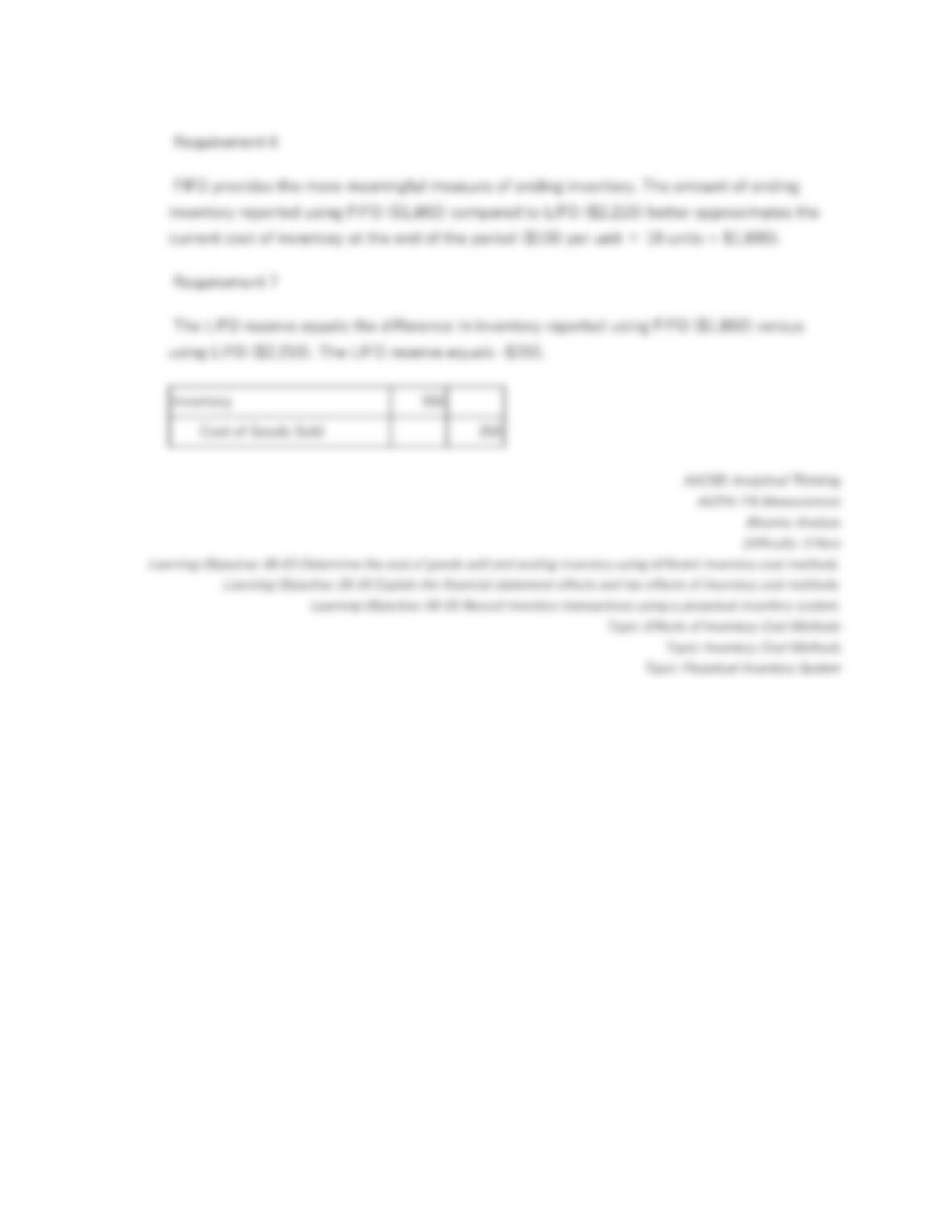
5. Calculate sales revenue and gross profit under each of the four methods.
6. Comparing FIFO and LIFO, which one provides the more meaningful measure of ending
inventory? Explain.
7. If Pete’s chooses to report inventory using LIFO, record the LIFO adjustment.
Date
Transaction
6-138
6-139
6-140