21) Communication technologies are increasing the number of speakers of “small” languages.
22) Despite China’s severe restrictions on religious customs and practice, acts of hostility by
private individuals, organizations and groups in society are relatively low.
23) Most human communication is non-verbal.
24) Despite its great size, the United States has no dialects.
25) The most linguistically diverse city in the world is New York City.
26) Language trees represent the relationships of words in a language to each other.
27) Language hearths are the source regions of languages.
28) It is believed by most scholars that the Indo-European language family had its origins in
southern India.
29) Islam has more adherents than any other religion.
30) Islamists place the rights of the individual above the common good.
31) French is France’s lingua franca.
32) The name of your home town is a toponym.
33) Veiling in Islam does not necessarily require women to cover their faces.
34) Modern communication and social media have contributed to the propagation of religious
fundamentalism.
35) Hindu is plural for Hindi.

36) Muslims and Christians both believe in God.
37) The United States is relatively low on the social hostilities index because we have a high
amount of governmental restrictions on religion.
38) Fashion veiling is a legal requirement in most Muslim countries.
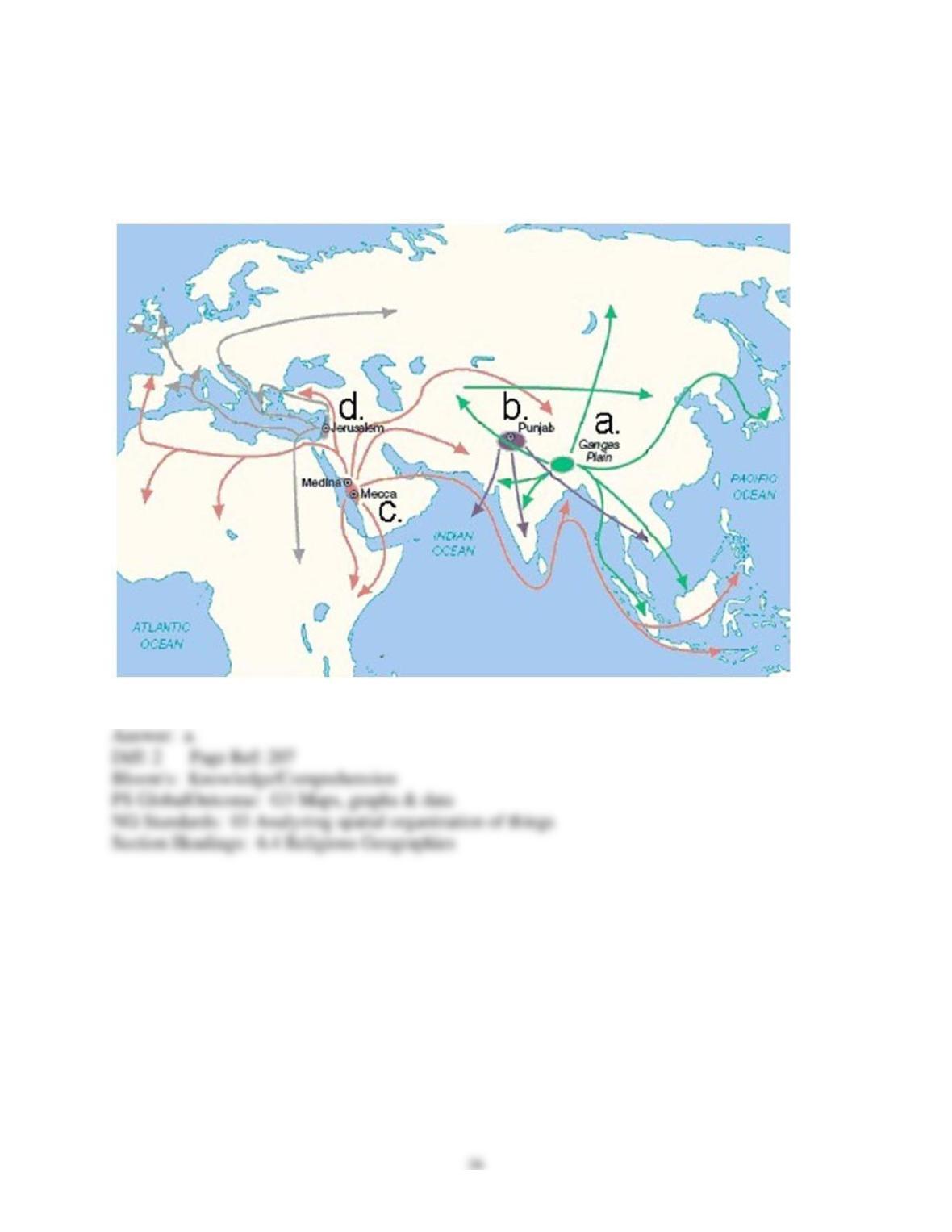
6.3 Questions with Images
ORIGIN AREAS OF MAJOR RELIGIONS: Match the letter of the region to the religion that
originated there.
1) Buddhism
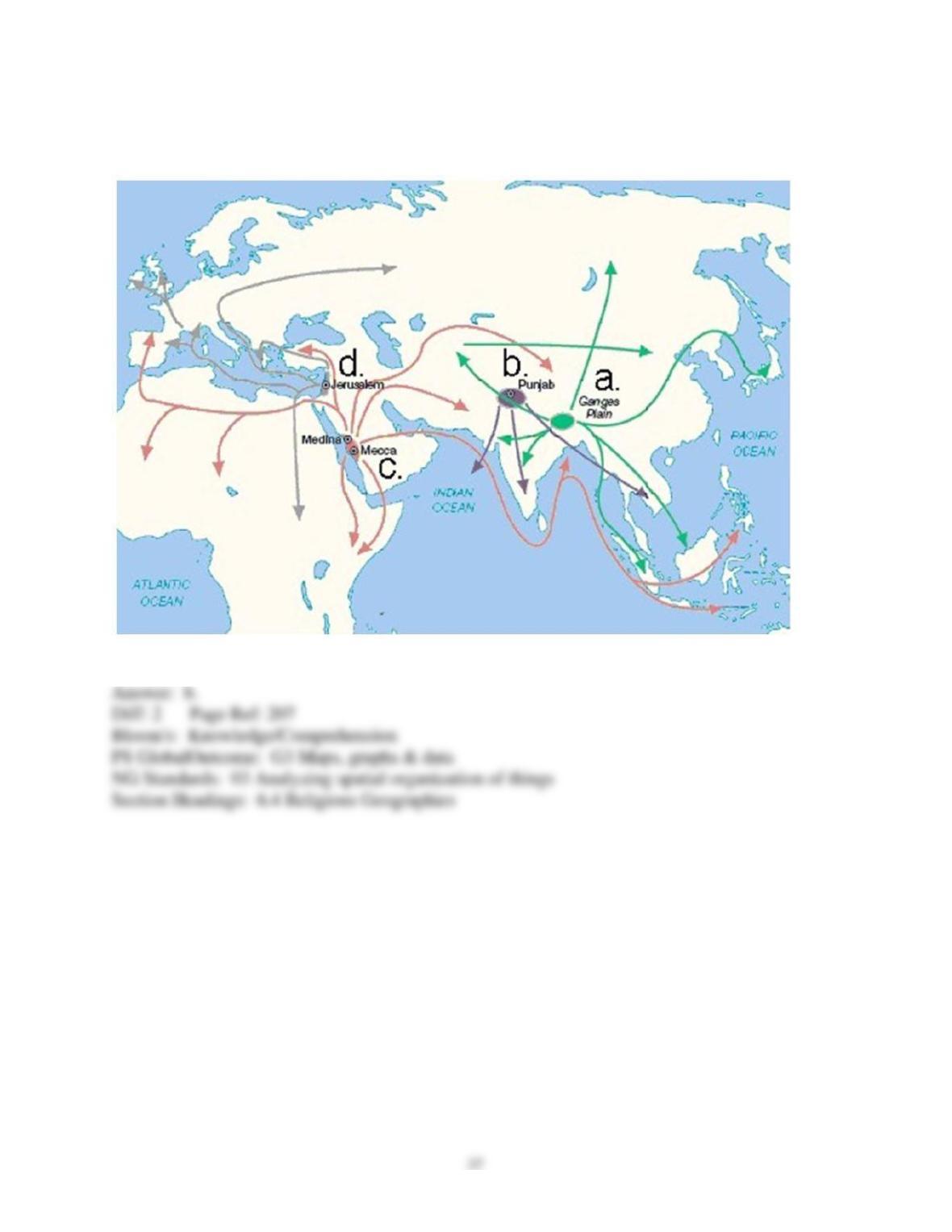
ORIGIN AREAS OF MAJOR RELIGIONS: Match the letter of the region to the religion that
originated there.
2) Hinduism
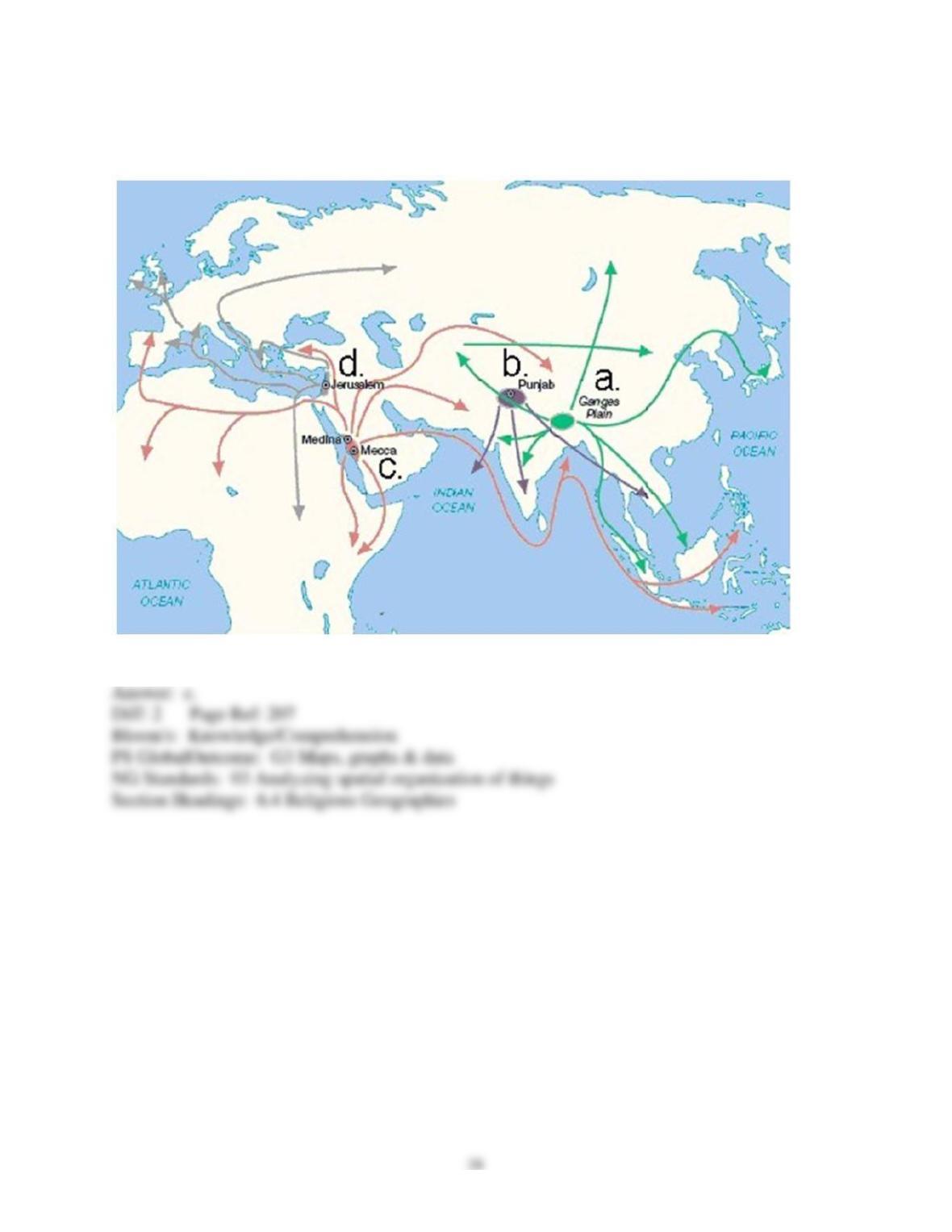
ORIGIN AREAS OF MAJOR RELIGIONS: Match the letter of the region to the religion that
originated there.
3) Islam
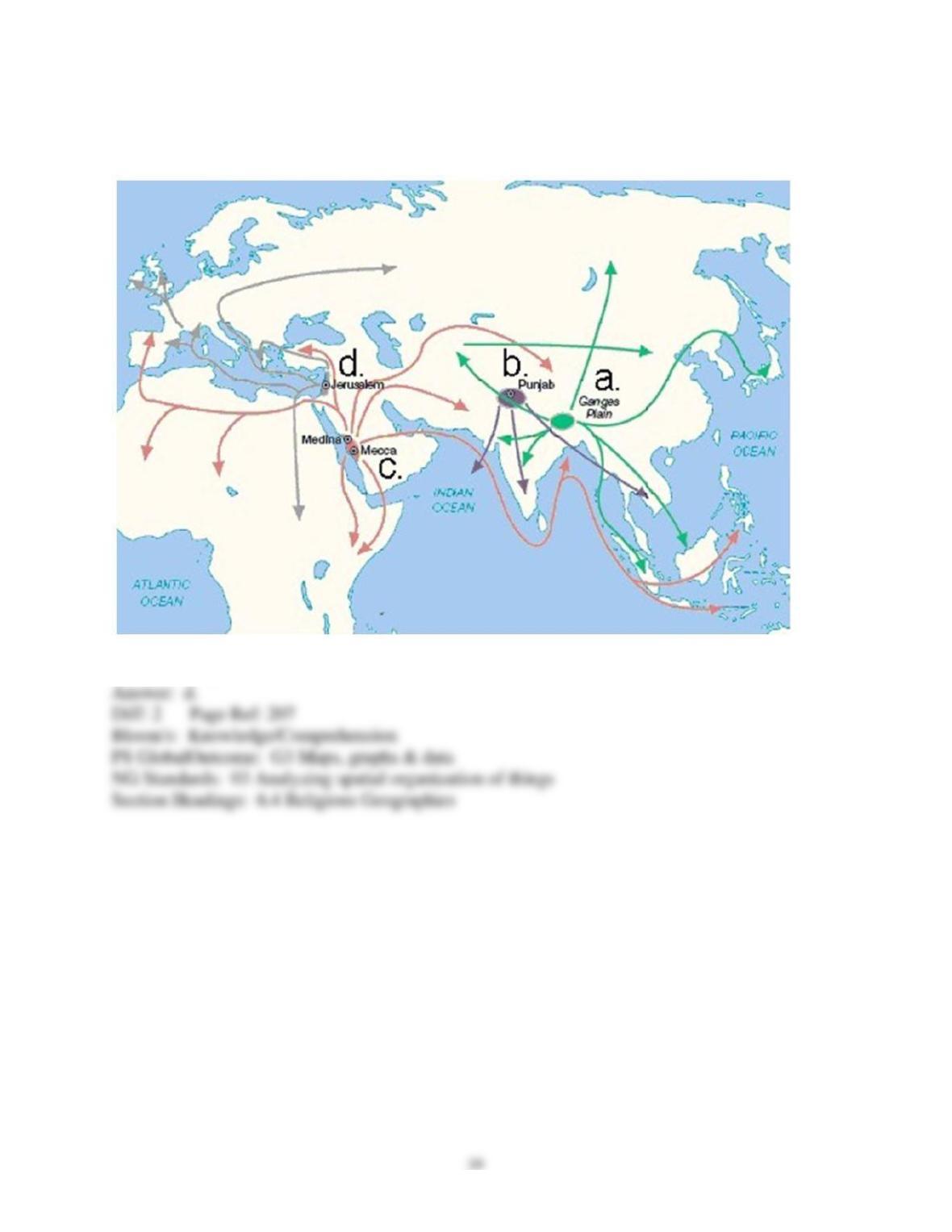
ORIGIN AREAS OF MAJOR RELIGIONS: Match the letter of the region to the religion that
originated there.
4) Christianity
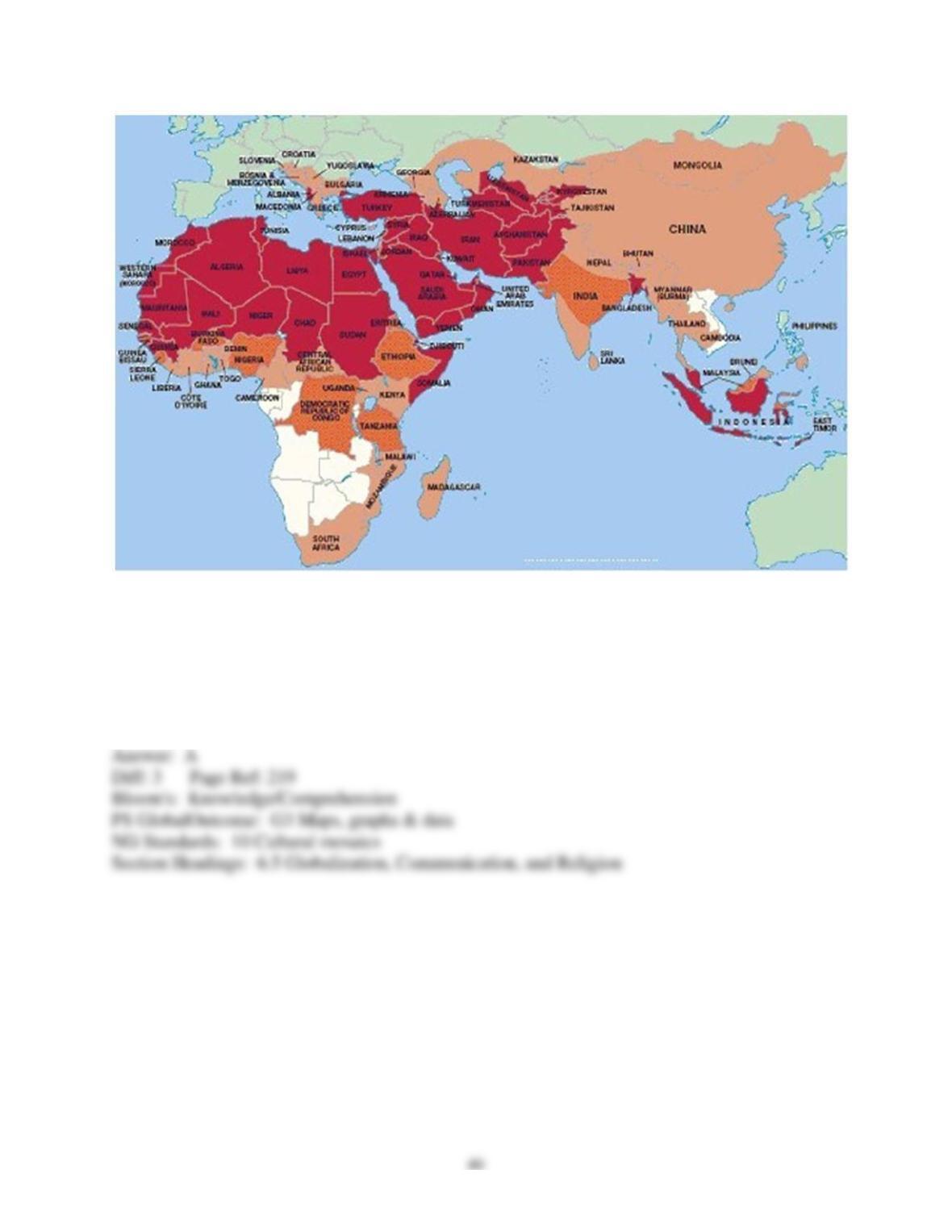
5) In the above map, the darkest shadings indicate countries where the population of ________ is
over 50%.
A) Muslims
B) Buddhists
C) Sikhs
D) Jews
E) Hindus
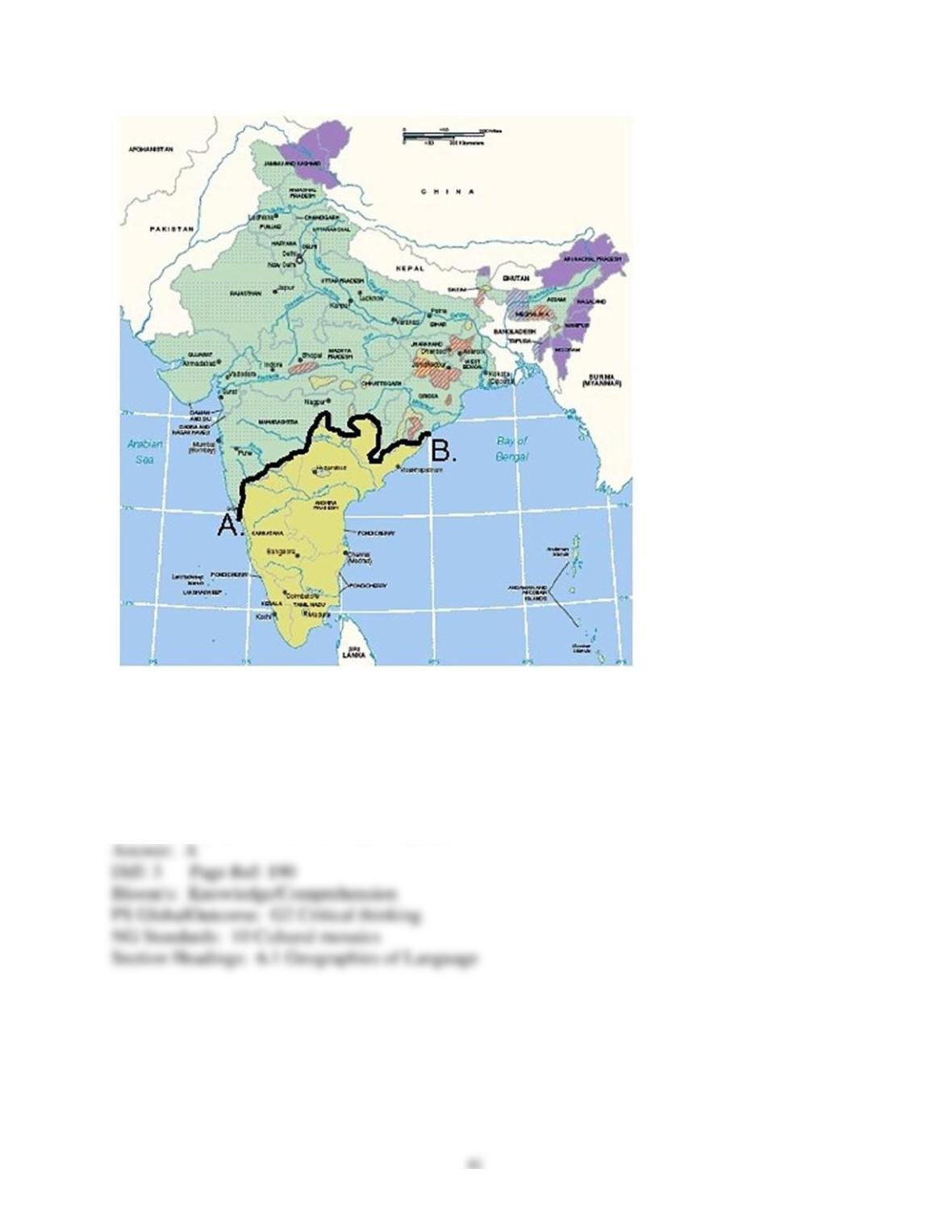
6) The line that stretches from A to B in the above map separates which of the following two
general groups?
A) Indo-European language speakers from Dravidian language speakers
B) Desert dwellers from mountain peoples
C) Muslims from Hindus
D) Christians from Muslims
E) English speakers from non-English speakers