Exam
Name___________________________________
MULTIPLE CHOICE. Choose the one alternative that best completes the statement or answers the question.
1)
The source of nutrients in nutrient agar is
1)
A)
agar.
B)
nutrient.
C)
peptone and beef extract.
D)
peptone and NaCl.
E)
agar and NaCl.
2)
A culture medium on which only gram–positive organisms grow and a yellow halo surrounds
Staphylococcus aureus colonies is called a(n)
2)
A)
enrichment culture.
B)
differential medium.
C)
selective medium.
D)
selective and differential medium.
E)
differential and enrichment culture.
3)
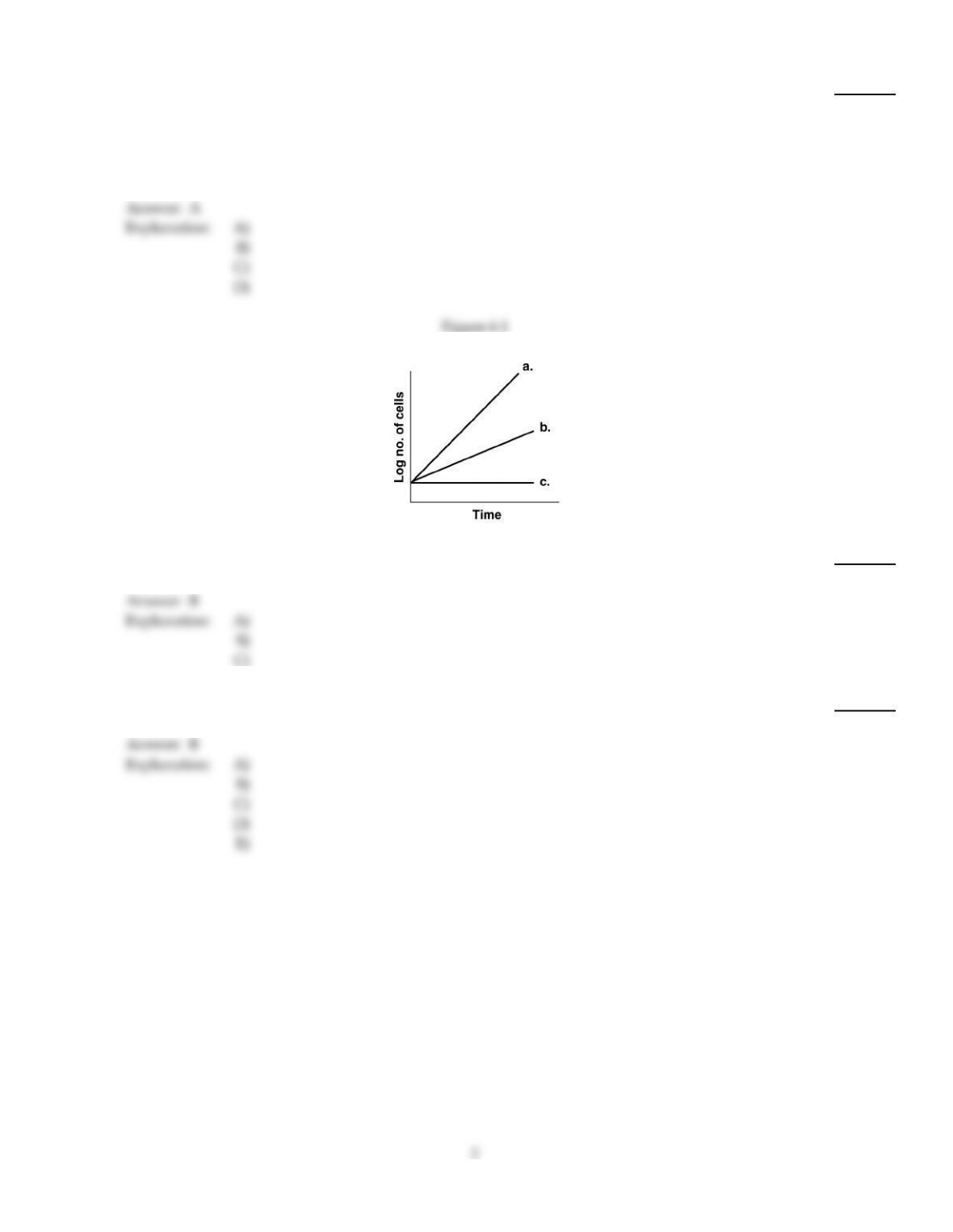
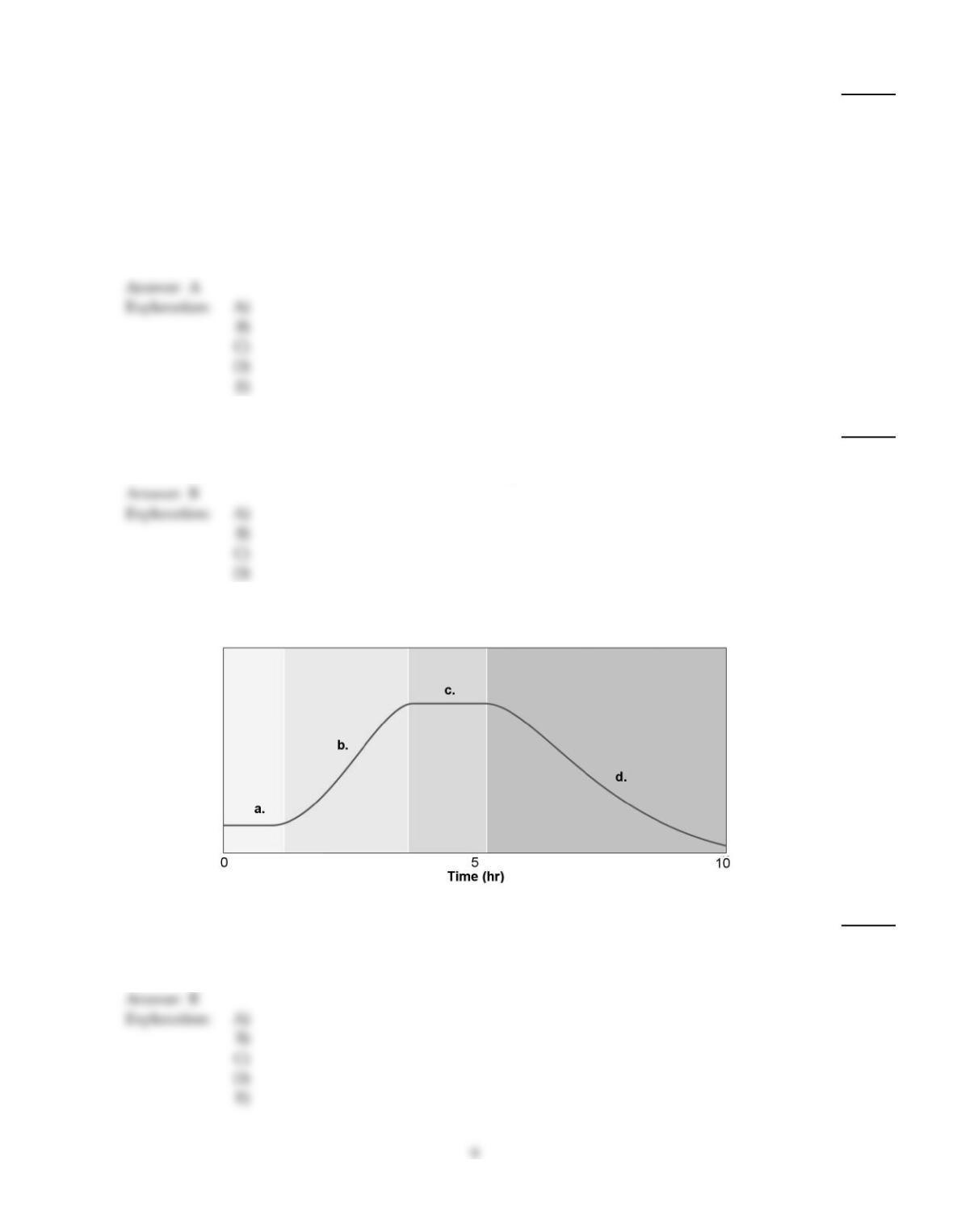
In Figure 6.1, which line best depicts a psychrotroph incubated at 0°C?
3)
A)
a
B)
b
C)
c
4)
Assume you inoculated 100 cells into 100 ml of nutrient broth. You then inoculated 100 cells of the
same species into 200 ml of nutrient broth. After incubation for 24 hours, you should have
4)
A)
the same number of cells in both.
B)
more cells in the 100 ml.
C)
more cells in the 200 ml.
D)
The answer cannot be determined based on the information provided.
5)
In Figure 6.1, which line best depicts a facultative anaerobe in the absence of O2?
5)
A)
a
B)
b
C)
c
B
6)
Most fungi grow best at pH
6)
A)
1.
B)
5.
C)
7.
D)
9.
E)
14.
B
A
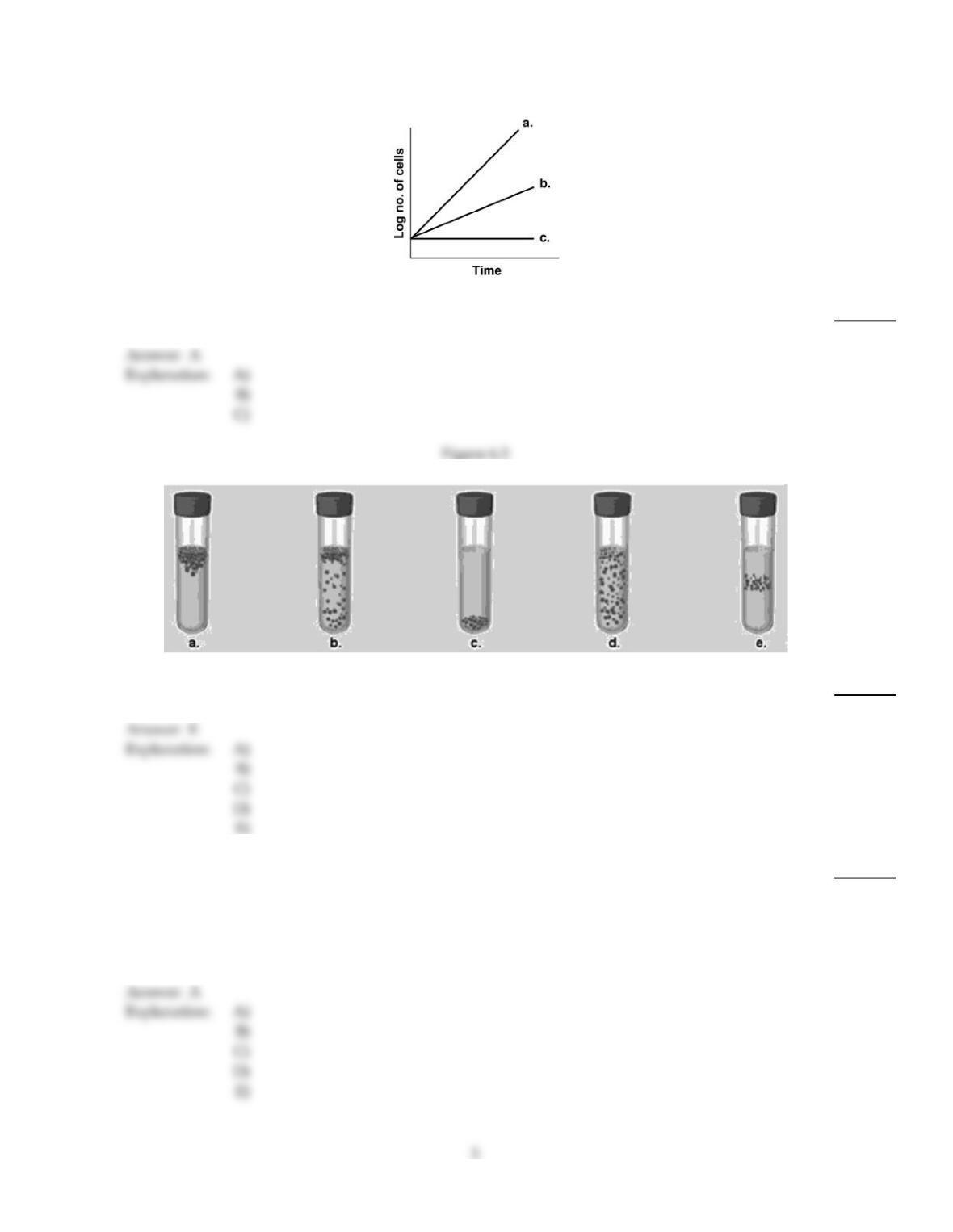
Figure 6.1
7)
In Figure 6.1, which line best illustrates the growth of a facultative anaerobe incubated aerobically?
7)
A)
a
B)
b
C)
c
8)
In Figure 6.3, which tube shows the expected growth pattern for a microaerophile?
8)
A)
a
B)
b
C)
c
D)
d
E)
e
E
9)
Pathogenic bacteria isolated from the respiratory or intestinal tracts of humans are
9)
A)
capnophiles that grow best in carbon dioxide incubators.
B)
capnophiles that prefer highly oxygenated growth conditions.
C)
strict aerobes that grow best in candle jars.
D)
facultative anaerobes that require reducing media for growth.
E)
strict aerobes that grow best in reducing media.
A
A

Figure 6.1
10)
In Figure 6.1 ,which line best depicts an obligate anaerobe in the presence of O2?
10)
A)
a
B)
b
C)
c
Table 6.1
Three different culture media are shown below.
Medium A Medium B Medium C
Na2HPO4Tide detergent Glucose
KH2PO4Na2HPO4Peptone
MgSO4KH2PO4(NH4)2SO4
CaCl2MgSO4KH2PO2
NaHCO3(NH4)2SO4Na2HPO4
11)
For the three types of media in Table 6.1, which medium (or media) is/are chemically defined?
11)
A)
A
B)
B
C)
C
D)
A and B
E)
A and C

Figure 6.1
12)
In Figure 6.1, which line shows the growth of an obligate aerobe incubated anaerobically?
12)
A)
a
B)
b
C)
c
13)
Which group of microorganisms is most likely to spoil a freshwater trout preserved with salt?
13)
A)
facultative halophiles
B)
anaerobes
C)
hyperthermophiles
D)
psychrophiles
E)
thermophiles
14)
Which of the following elements is NOT correctly matched with its cellular function?
14)
A)
phosphorus — incorporated into nucleic acids
B)
magnesium and potassium — required as cofactors for enzymes
C)
nitrogen — needed for amino acid synthesis
D)
sulfur — used for synthesis of thiamin and biotin
E)
None of the answers is correct; all of the elements are correctly matched.

15)
Which of the following is an advantage of the direct microscopic count?
15)
A)
sample volume is unknown
B)
requires a large number of cells
C)
requires no incubation time
D)
can easily distinguish live from dead cells
E)
can readily count organisms that are motile
16)
Which enzyme catalyzes the reaction: O2– + O2– + 2H+
H2O2+ O2?
16)
A)
oxidase
B)
peroxidase
C)
superoxide dismutase
D)
catalase
17)
The term aerotolerant anaerobe refers to an organism that
17)
A)
requires less oxygen than is present in air.
B)
is killed by oxygen.
C)
requires more oxygen than is present in air.
D)
uses oxygen or grows without oxygen.
E)
does not use oxygen but tolerates it.
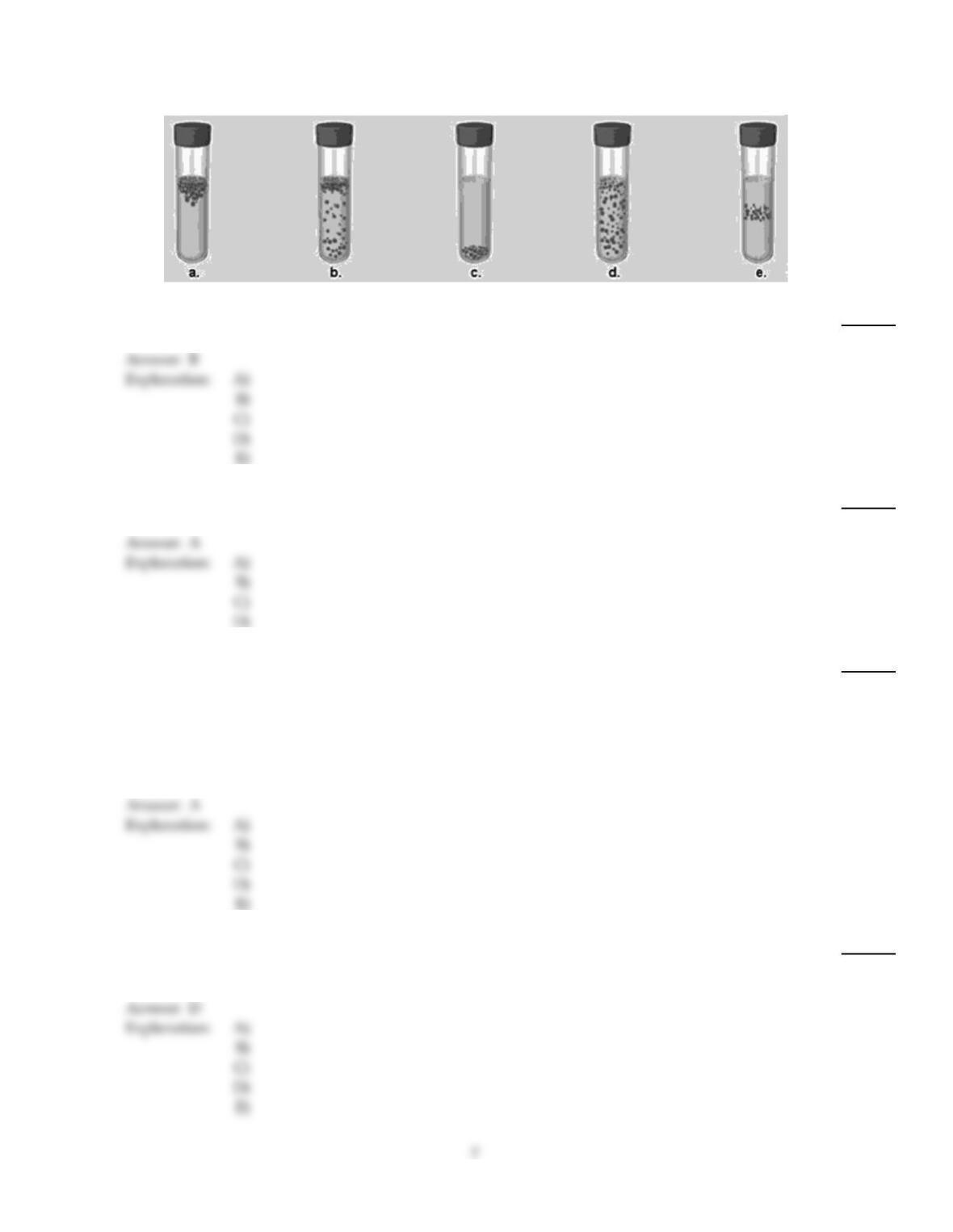
Figure 6.3
18)
In Figure 6.3, which tube shows the expected growth pattern for a facultative anaerobe?
18)
A)
a
B)
b
C)
c
D)
d
E)
e
19)
The biosafety level (BSL) for most introductory microbiology laboratories is
19)
A)
BSL–1.
B)
BSL–2.
C)
BSL–3.
D)
BSL–4.
20)
Which of the following is an example of a metabolic activity that could be used to measure
microbial growth?
20)
A)
glucose consumption
B)
turbidity
C)
MPN
D)
standard plate count
E)
direct microscopic count
21)
An experiment began with 4 cells and ended with 128 cells. How many generations did the
cells go through?
21)
A)
64
B)
32
C)
6
D)
5
E)
4

22)
Which of the following is NOT a direct method to measure microbial growth?
22)
A)
metabolic activity
B)
filtration
C)
standard plate count
D)
most probable number (MPN)
E)
direct microscopic count
23)
Which of the following is the best definition of generation time?
23)
A)
the length of time needed for lag phase
B)
the duration of log phase
C)
the minimum rate of doubling
D)
the time needed for nuclear division
E)
the length of time needed for a cell to divide
24)
Most bacteria grow best at pH
24)
A)
1.
B)
5.
C)
7.
D)
9.
E)
14.
25)
Thirty–six colonies grew in nutrient agar from 1.0 ml of undiluted sample in a standard plate
count. How many cells were in the original sample?
25)
A)
4
B)
9
C)
18
D)
36
E)
72
26)
In one hospital, Pseudomonas aeruginosa serotype 10 infected the biliary tract of 10 percent of 1300
patients who underwent gastrointestinal endoscopic procedures. After each use, endoscopes were
washed with an automatic reprocessor that flushed detergent and glutaraldehyde through the
endoscopes, followed by a tap water rinse. P. aeruginosa 10 was not isolated from the detergent,
glutaraldehyde, or tap water. What was the source of the infections?
26)
A)
a biofilm in the reprocessor
B)
fecal contamination of the bile ducts
C)
contaminated disinfectant
D)
bacterial cell walls in the water
E)
None of the answers is correct.
27)
Which enzyme catalyzes the reaction: 2H2O2
2H2O + O2?
27)
A)
superoxide dismutase
B)
catalase
C)
oxidase
D)
peroxidase
Figure 6.2
28)
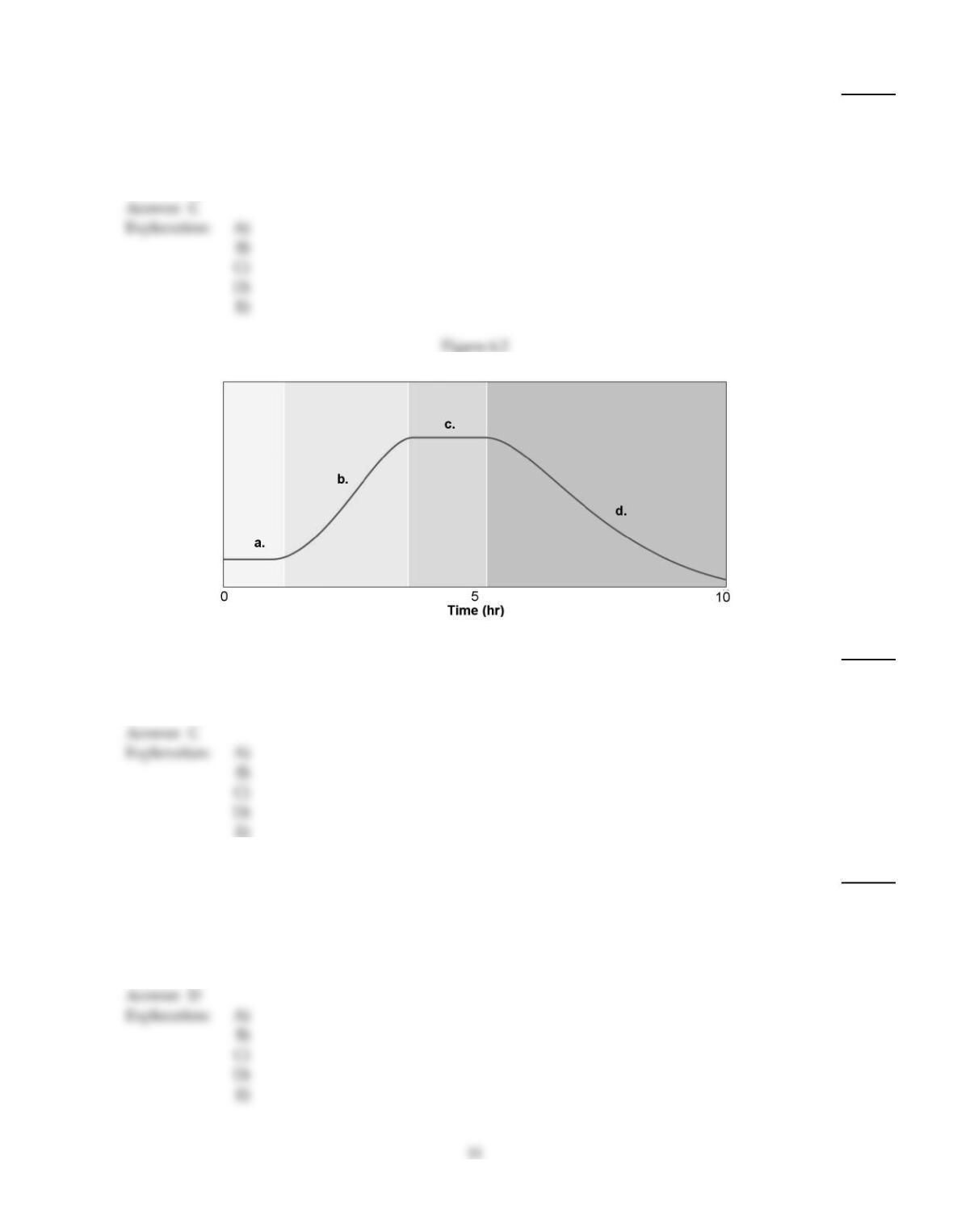
Figure 6.2 shows a typical bacterial growth curve with the x–axis indicating the log of the number
of bacteria and the y–axis indicating time in culture. In the figure, which sections of the graph
illustrate a logarithmic change in cell numbers?
28)
A)
a and c
B)
b and d
C)
a and b
D)
c and d
E)
a and d

29)
The addition of which of the following to a culture medium will neutralize acids?
29)
A)
buffers
B)
heat
C)
sugars
D)
carbon
E)
pH
30)
Which of the following is an advantage of the standard plate count?
30)
A)
provides immediate results
B)
determines the number of viable cells
C)
can be used to count heat–sensitive bacteria
D)
can be performed on very dilute samples, such as lake water
E)
can readily count cells that form aggregates
Answer:
31)
Which enzyme catalyzes the reaction: H2O2+ 2H+
2H2O?
31)
A)
superoxide dismutase
B)
peroxidase
C)
catalase
D)
oxidase
Answer:
32)
A sample of milk is tested for its bacterial content in a plate count assay. A one–milliliter sample of
the milk is diluted in a 1:10 dilution series. One milliliter of the third dilution tube is plated in a
pour plate. After incubation, the plate has 54 colonies, indicating that the original milk sample
contained
32)
A)
54 cells.
B)
540 cells.
C)
5400 cells.
D)
54,000 cells.
E)
540,000 cells.
Answer:
Answer:
33)
Patients with indwelling catheters are susceptible to infections because
33)
A)
infections can be transmitted from other people.
B)
bacteria cause infections.
C)
biofilms develop on catheters.
D)
injected solutions are contaminated.
E)
their immune systems are weakened.
34)
Figure 6.2 shows a typical bacterial growth curve with the x–axis indicating the log of the number
of bacteria and the y–axis indicating time in culture. In the figure, which section (or sections) shows
a growth phase where the number of cells dying equals the number of cells dividing?
34)
A)
a
B)
b
C)
c
D)
d
E)
a and c
C
35)
Most bacteria reproduce by
35)
A)
budding.
B)
aerial hyphae.
C)
mitosis.
D)
binary fission.
E)
fragmentation.
D
C

36)
If cells are grown in media containing amino acids labeled with radioactive nitrogen (15N), most of
radioactivity will be found in the cells’
36)
A)
DNA.
B)
proteins.
C)
phospholipids.
D)
DNA and proteins.
E)
DNA and phospholipids.
37)
Salts and sugars work to preserve foods by creating a
37)
A)
hypotonic environment.
B)
hypertonic environment.
C)
lower osmotic pressure.
D)
depletion of nutrients.
E)
lower pH.
38)
During which growth phase will gram–positive bacteria be most susceptible to penicillin?
38)
A)
death phase
B)
log phase
C)
lag phase
D)
stationary phase
E)
The culture is equally susceptible during all phases.

39)
Which of the following is an organic growth factor?
39)
A)
H2O
B)
glucose
C)
vitamin B1
D)
NH4H2PO4
E)
peptone
40)
Which of the following pairs is mismatched?
40)
A)
mesophile — growth at 25°C
B)
thermophile — growth at 37°C
C)
psychrophile — growth at 15°C
D)
hyperthermophiles — growth at 85°C
E)
psychrotroph — growth at 0°C
Explanation:
41)
The biosafety level (BSL) for a clinical microbiology laboratory working with potentially airborne
pathogens, such as tuberculosis bacteria, is
41)
A)
BSL–1.
B)
BSL–2.
C)
BSL–3.
D)
BSL–4.
Explanation:
Explanation:

Table 6.2
The following data show growth of two bacteria on different media.
42)
The data in Table 6.2 indicate that S. aureus is a(n)
42)
A)
facultative halophile.
B)
aerobe.
C)
facultative anaerobe.
D)
halophile.
E)
mesophile.
Table 6.1
Three different culture media are shown below.
Medium A Medium B Medium C
Na2HPO4Tide detergent Glucose
KH2PO4Na2HPO4Peptone
MgSO4KH2PO4(NH4)2SO4
CaCl2MgSO4KH2PO2
NaHCO3(NH4)2SO4Na2HPO4
43)
In Table, 6.1, in which medium (or media) would an autotroph grow?
43)
A)
A
B)
B
C)
C
D)
A and B
E)
A and C

44)
Three cells with generation times of 60 minutes are inoculated into a culture medium. How many
cells are there after 5 hours?
44)
A)
900
B)
180
C)
96
D)
32
E)
15
45)
A culture medium consisting of agar, peptone, and beef heart is a
45)
A)
chemically defined medium.
B)
reducing medium.
C)
selective medium.
D)
complex medium.
E)
differential medium.
TRUE/FALSE. Write ‘T’ if the statement is true and ‘F’ if the statement is false.
46)
An isolated colony on a streak plate contains millions or billions of identical cells.
46)
47)
Laboratory cultivation of obligate anaerobes requires reducing media or special growth chambers
filled with inert gases.
47)
48)
Turbidity is an indirect measurement of bacterial growth that can be measured using a
spectrophotometer.
48)
49)
Filtration methods are used to count bacteria present in very low concentrations, such as in lakes
and streams.
49)
50)
Pure cultures can easily be obtained on streak plates, even if the desired bacteria are present in very
low concentrations.
50)
51)
Nitrogen–fixing bacteria, such as cyanobacteria, can use atmospheric nitrogen (N2) for their
nitrogen source.
51)
52)
Bacterial growth refers to an increase in the numbers of cells in a bacterial culture.
52)
Answer:
53)
Most pathogenic bacteria are thermophiles.
53)
Answer:
54)
In performing a ten–fold dilutions series from a sample containing 10,000 bacteria per milliliter, the
fourth tube in the dilution series will have 10 cells per milliliter.
54)
Answer:
55)
Agar is used as a solidifying agent in microbiological media since few bacteria can degrade it.
55)
Answer:
ESSAY. Write your answer in the space provided or on a separate sheet of paper.
56)
A patient with a heart pacemaker received antibiotic therapy for streptococcal bacteremia (bacteria in the
blood). One month later, he was treated for recurrence of the bacteremia. When he returned six weeks later,
again with bacteremia, the physician recommended replacing the pacemaker. Why did this cure his condition?
Answer:
57)
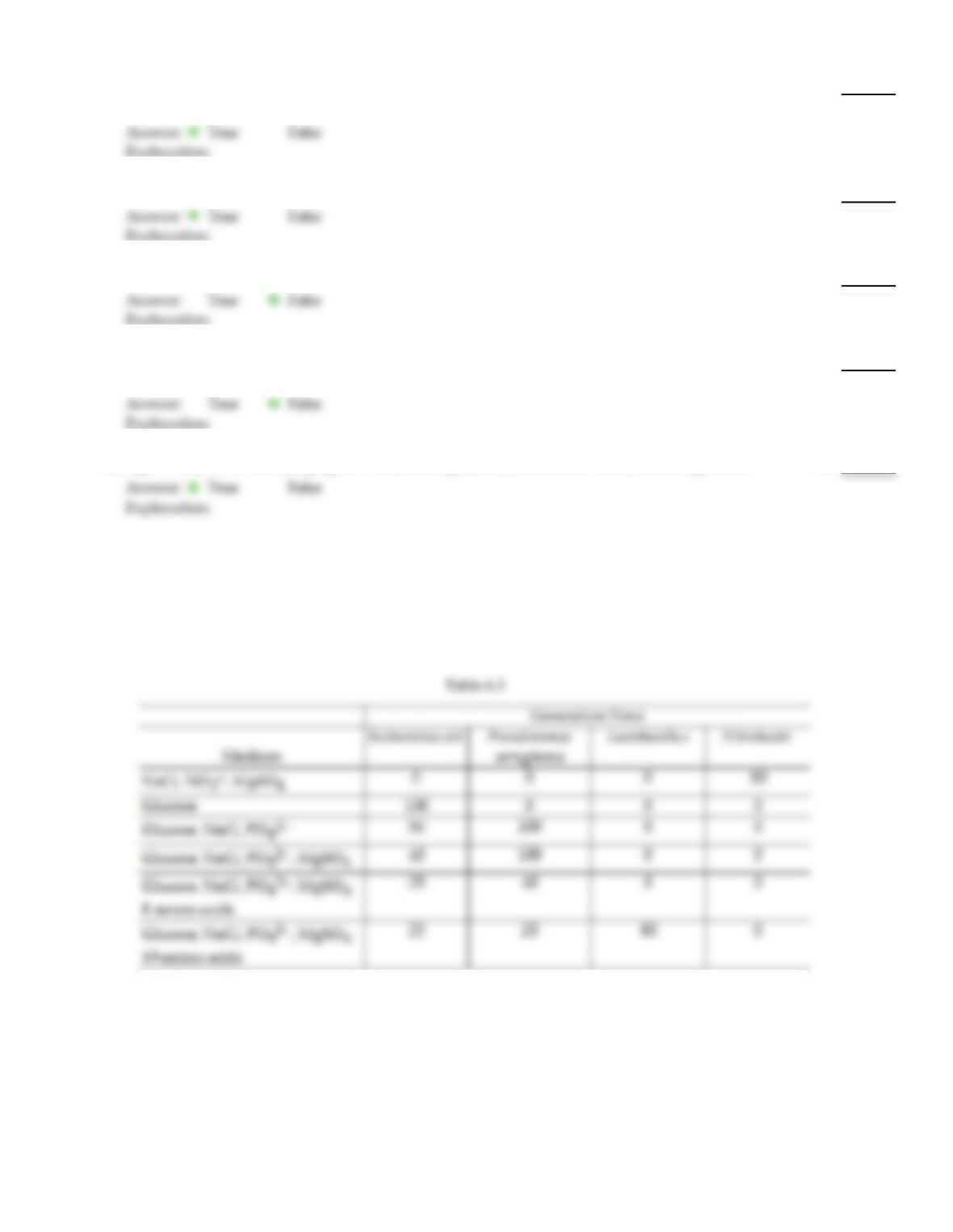
Bacterial generation times for four different bacterial species were calculated in the media listed in Table 6.3. All
media were prepared with tap water and incubated aerobically in the light. Compare and contrast the growth
requirements of the four bacteria listed above. Which of the media, if any, are chemically defined?
Answer:
16
Answer:
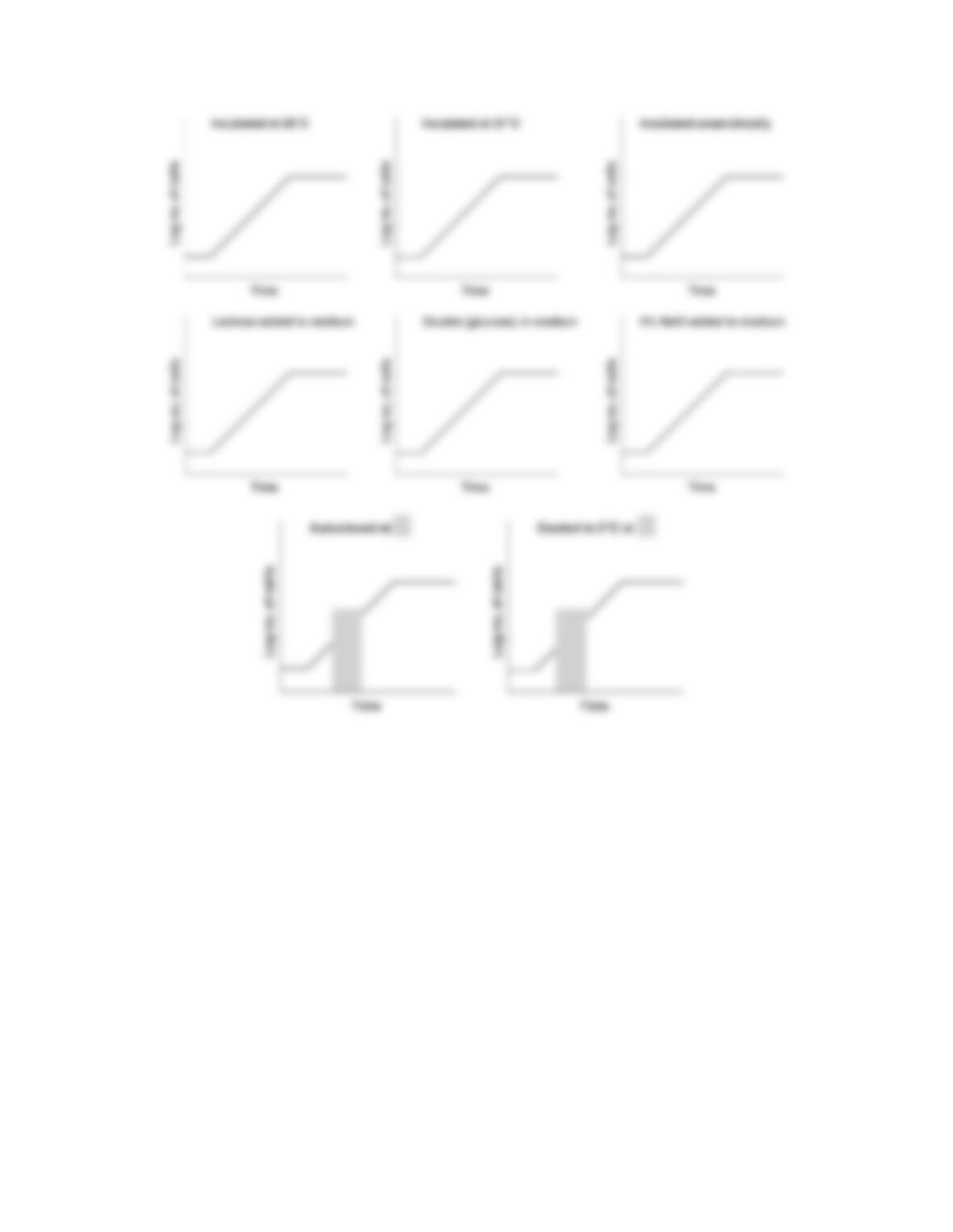
Figure 6.4
58)
In each graph in Figure 6.4, the culture was incubated at 30°C in glucose–minimal salts broth, aerobically. The
bacterium is a facultative anaerobe with an optimum temperature of 37°C and can metabolize glucose and
lactose. Indicate how each growth curve would change under the conditions indicated in each graph. Draw the
new graphs, or write “no change.”
Answer:
17

Answer Key
Testname: C6
18

Answer Key
Testname: C6