389 Chapter 6: Differential Equations
6.3 Differential Equations: Separation of Variables
Multiple Choice
Identify the choice that best completes the statement or answers the question.
____
1.
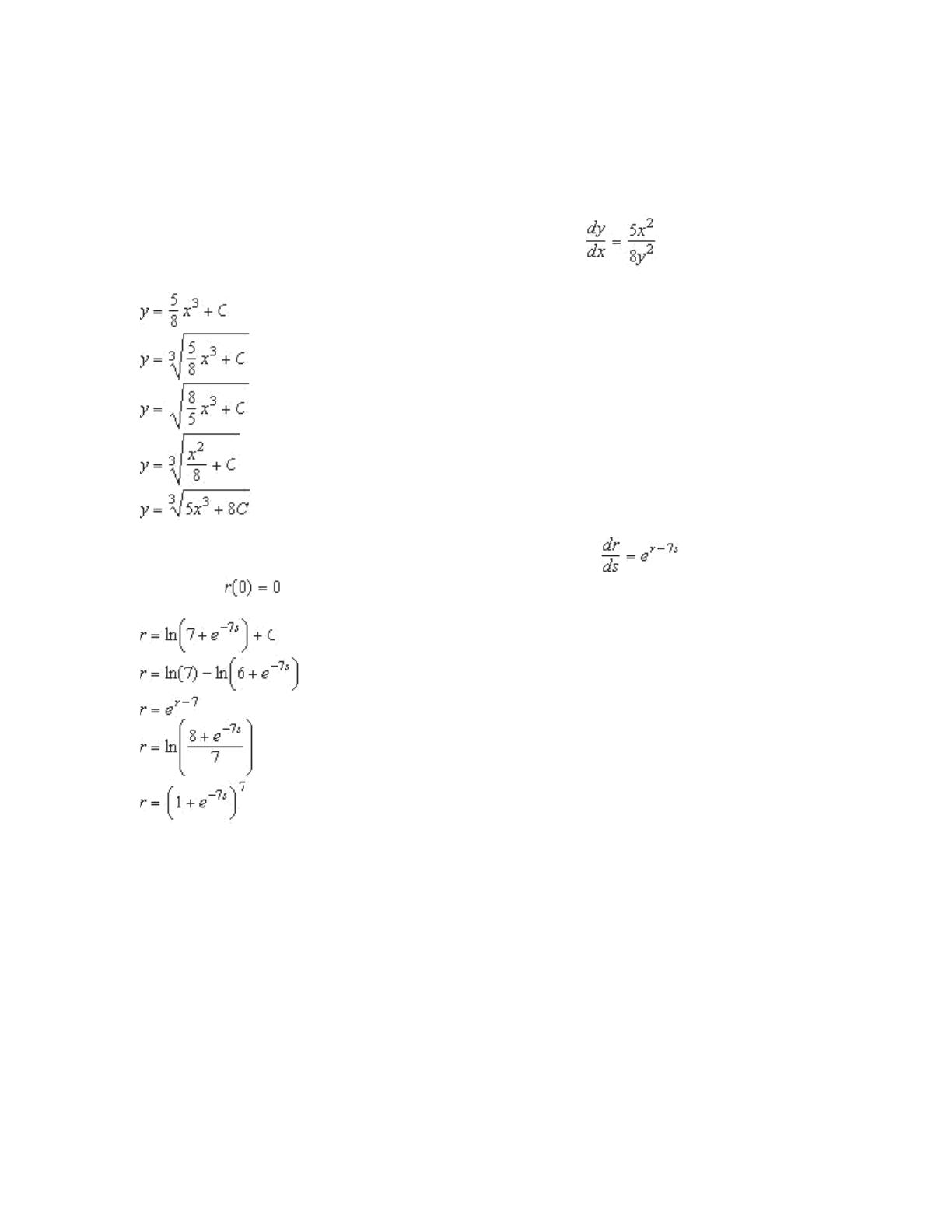
Find the general solution of the differential equation
.
a.
b.
c.
d.
e.
____
2.
Find the particular solution of the differential equation
that satisfies the
initial condition
.
a.
b.
c.
d.
e.
6.3 Differential Equations: Separation of Variables 390
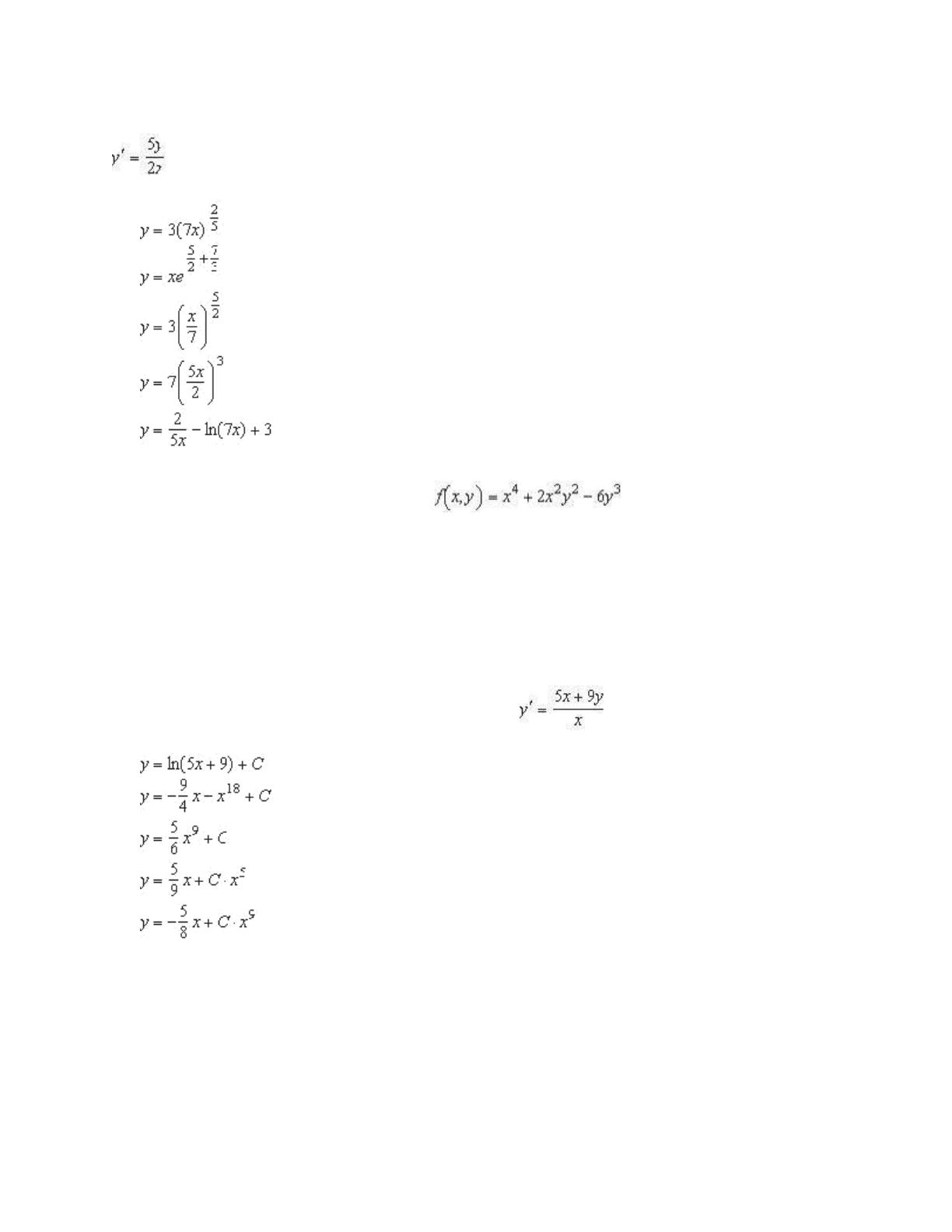
____ 3. Find an equation of the graph that passes through the point (7, 3) and has the slope
.
a.
b.
c.
d.
e.
____ 4. Determine whether the function is homogeneous and
determine its degree if it is.
homogeneous, the degree is 4
homogeneous, the degree is 5
not homogeneous
homogeneous, the degree is 3
homogeneous, the degree is 2
____ 5. Solve the homogeneous differential equation .
a.
b.
c.
d.
e.
391 Chapter 6: Differential Equations
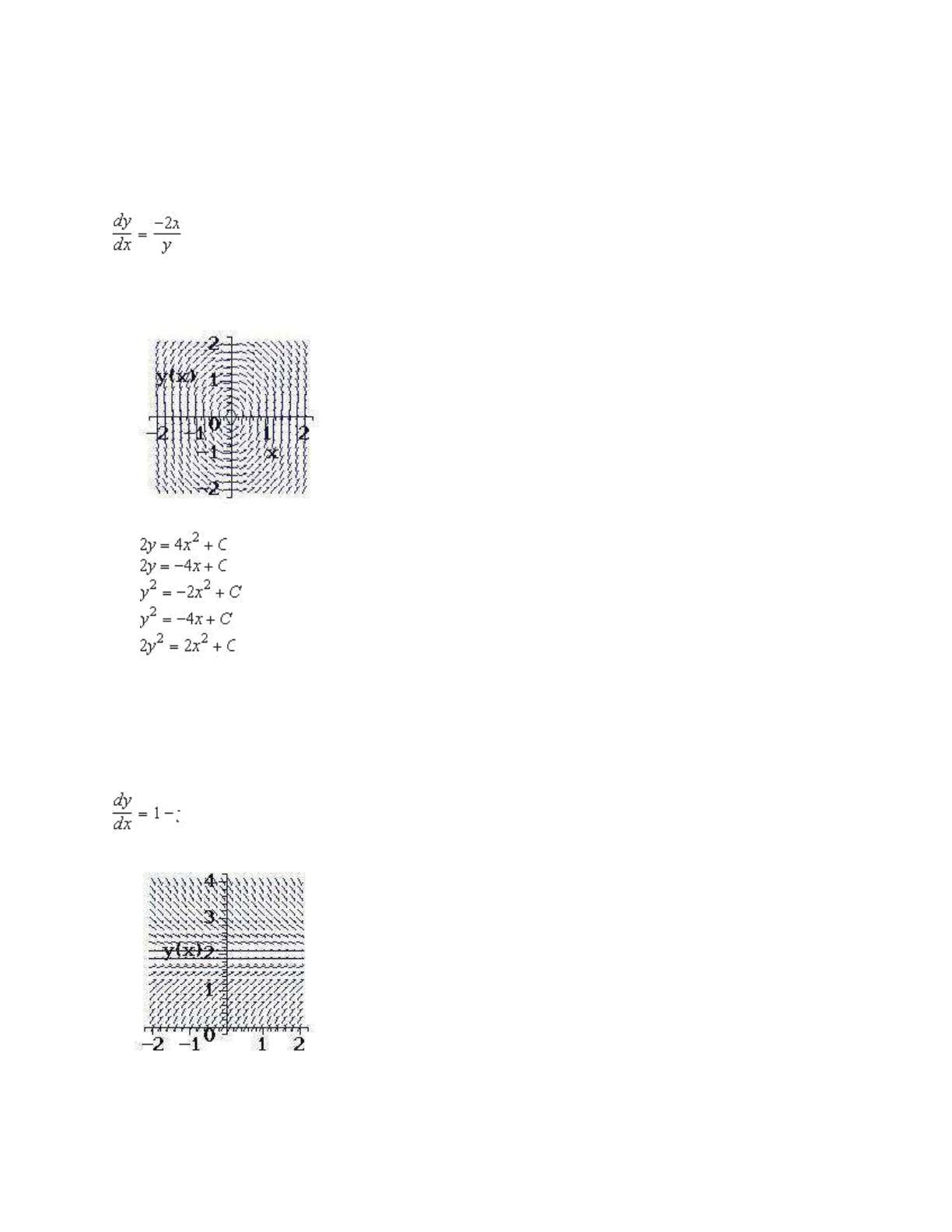
____ 6. Sketch a few solutions of the differential equation on the slope field and then find the general
solution analytically.
a.
b.
c.
d.
e.
____ 7. Sketch a few solutions of the differential equation on the slope field and then find the general
solution analytically.
6.3 Differential Equations: Separation of Variables 392
a.
b.
c.
d.
e.
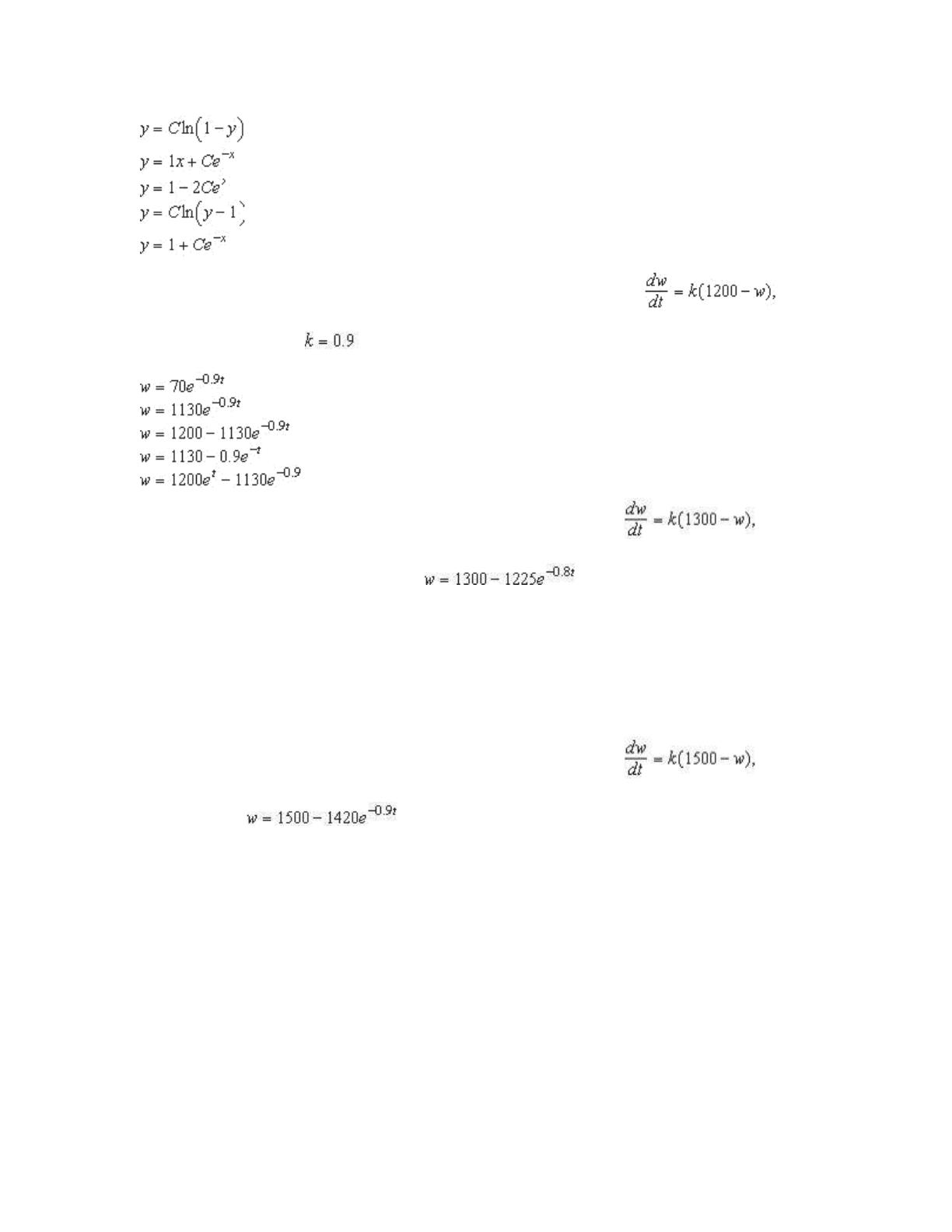
____ 8. A calf that weighs 70 pounds at birth gains weight at the rate
where w is weight in pounds and t is time in years. Use a computer algebra system to solve
the differential equation for
a.
b.
c.
d.
e.
____ 9. A calf that weighs 75 pounds at birth gains weight at the rate
where w is weight in pounds and t is time in years. If the animal is sold when its weight reaches 750
pounds, find the time of sale using the model . Round your answer to two
decimal places.
8.17 years
2.88 years
0.92 year
1 year
0.32 year
____ 10. A calf that weighs 80 pounds at birth gains weight at the rate
where w is weight in pounds and t is time in years. What is the maximum weight of the animal if
one uses the model ?
1500 lb
880 lb
1420 lb
1580 lb
2300 lb
393 Chapter 6: Differential Equations
____
11.
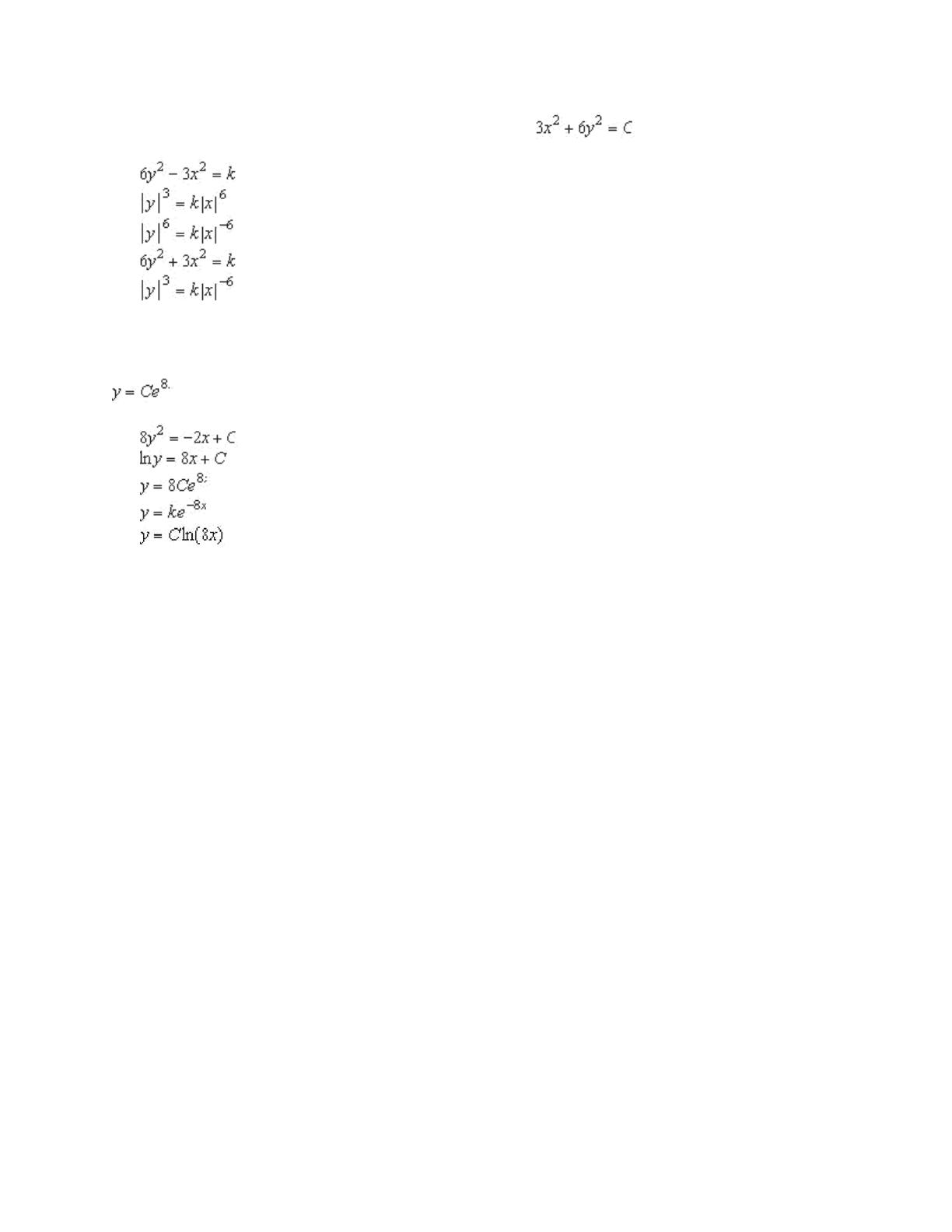
Find the orthogonal trajectories of the family
.
a.
b.
c.
d.
e.
____
12.
Find the orthogonal trajectories of the family
.
a.
b.
c.
d.
e.
6.3 Differential Equations: Separation of Variables 394
6.3 Differential Equations: Separation of Variables
Answer Section
395 Chapter 6: Differential Equations
6.4 The Logistic Equation
Multiple Choice
Identify the choice that best completes the statement or answers the question.
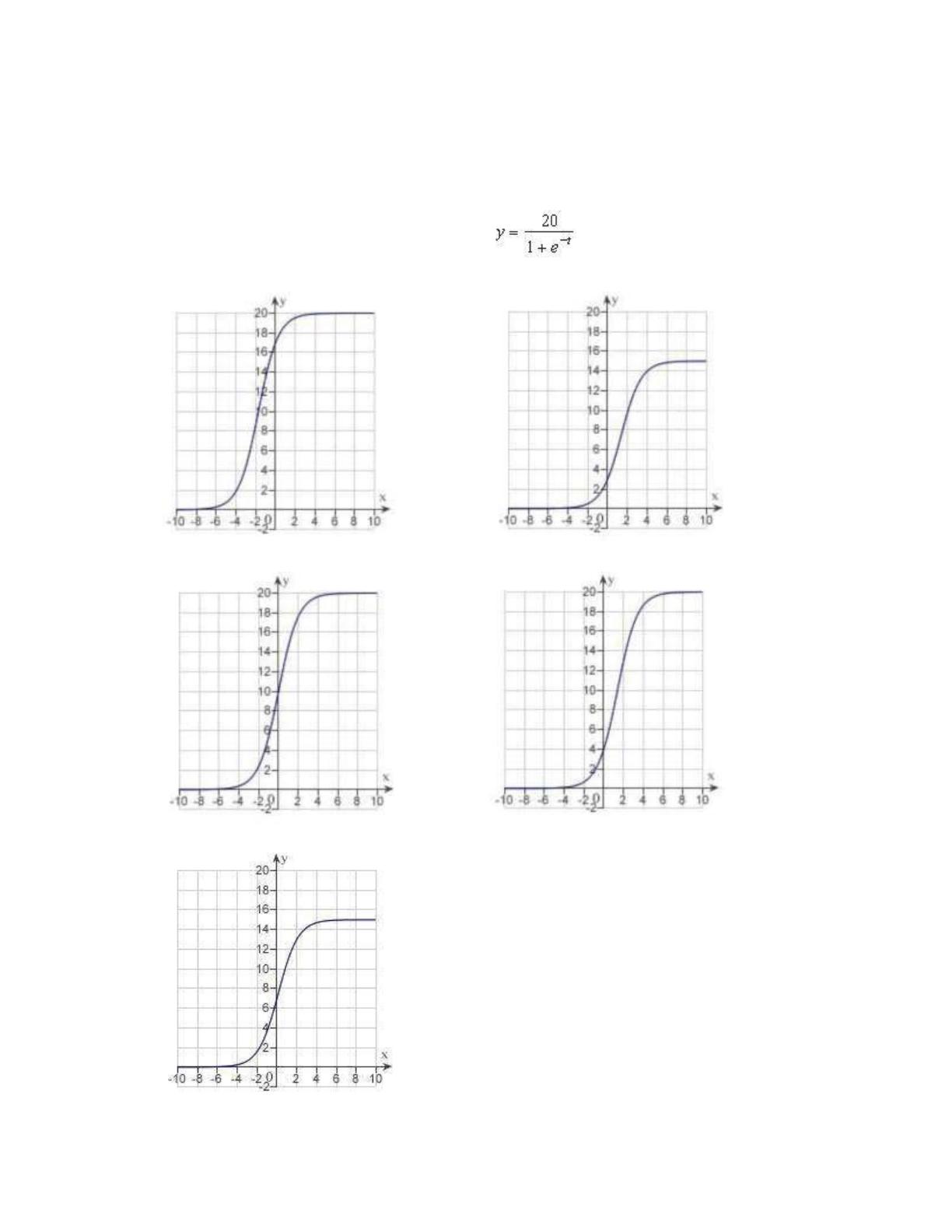
____ 1. Identify the graph of the logistic function .
a. d.
b. e.
c.
6.4 The Logistic Equation
396
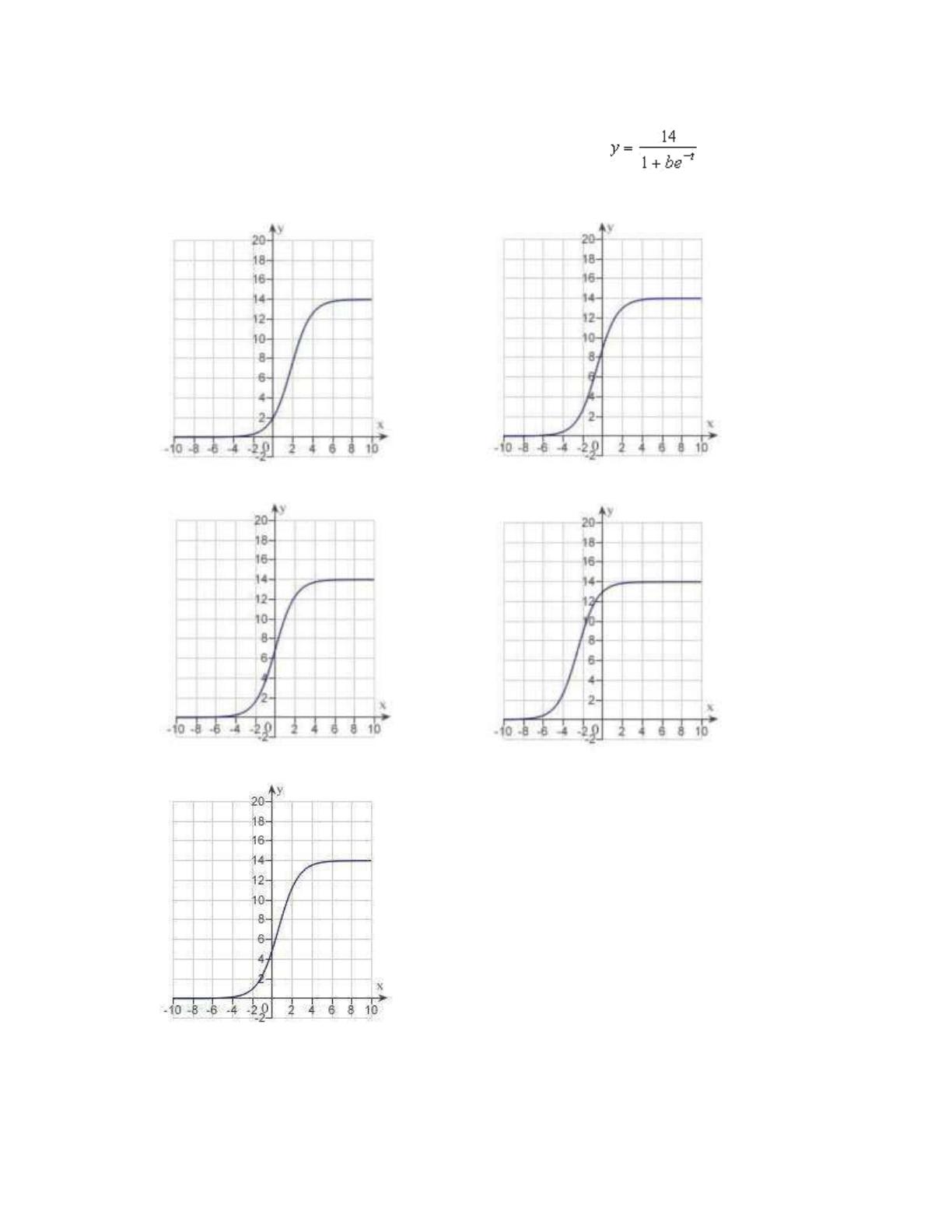
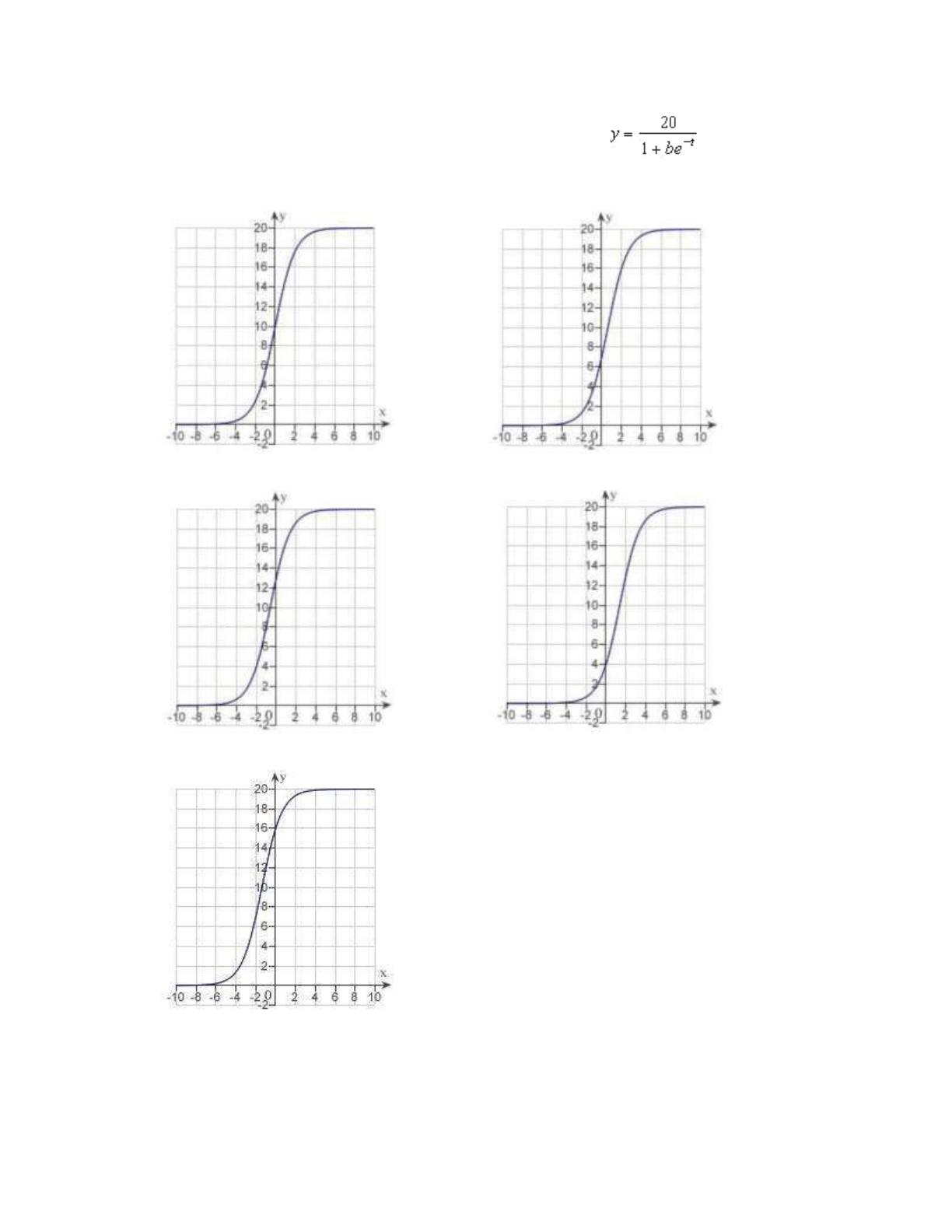
____ 2.
Each of the following graphs is from a logistic function
. Which one has
the smallest value of b?
a.
d.
b. e.
c.
397
Chapter 6: Differential Equations
____
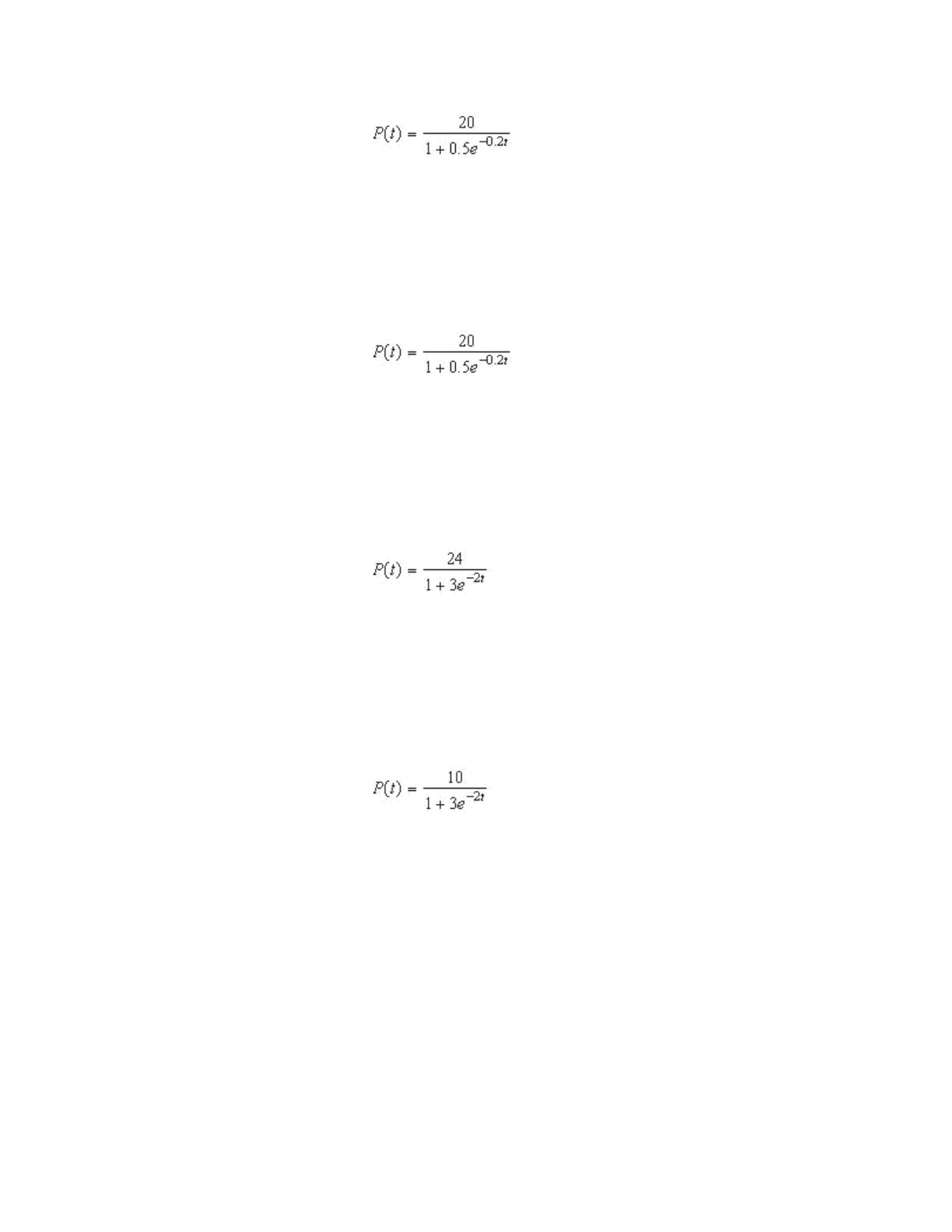
3.
Each of the following graphs is from a logistic function
. Which one has
the largest value of b?
a.
d.
b. e.
c.
6.4 The Logistic Equation
398
____ 4.
The logistic function
models the growth of a population.
Identify the value of k.
a.
1.7
b.
2.2
c.
0.2
d.
20
e.
0.5
____ 5. The logistic function models the growth of a population.
Identify the maximum carrying capacity.
20
1.7
0.5
0.2
2.2
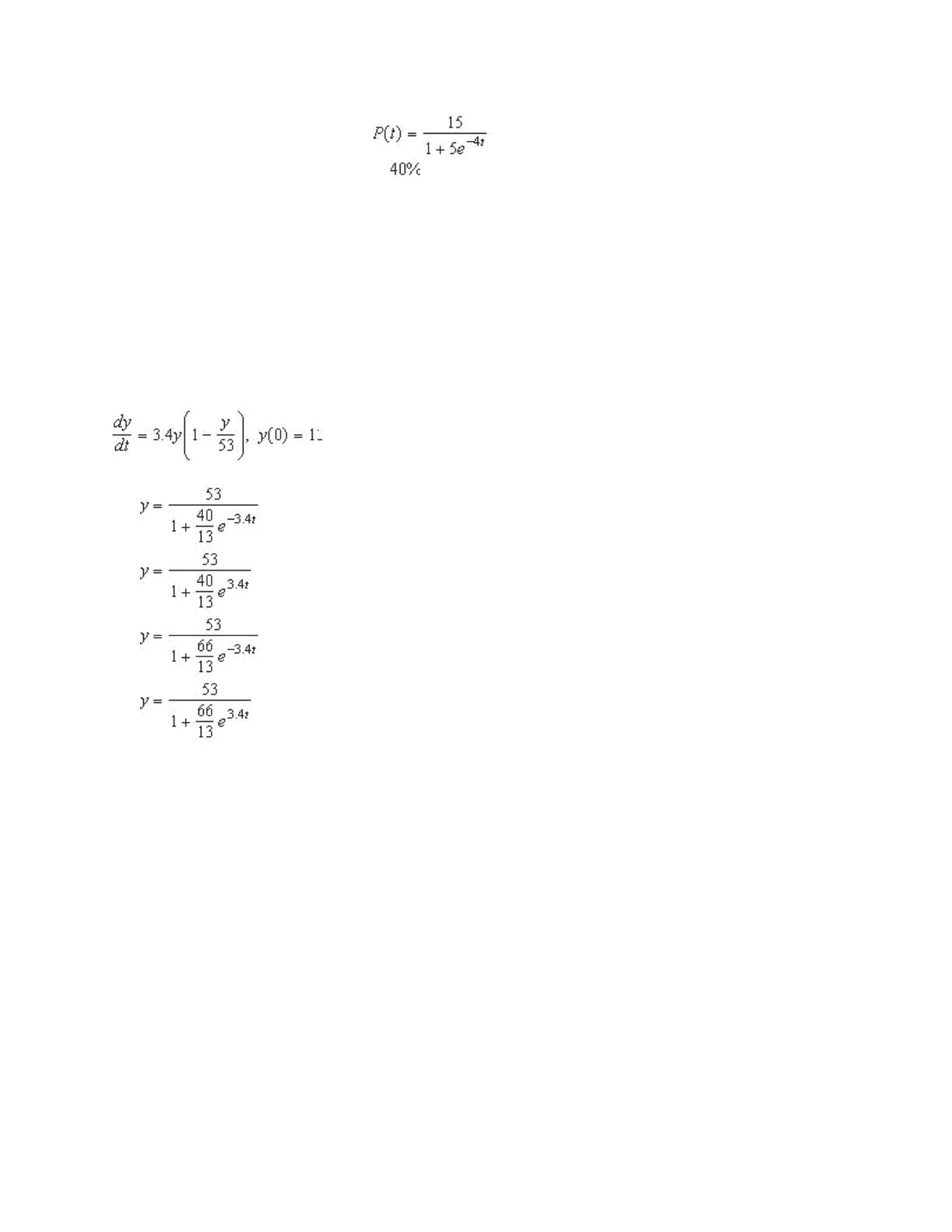
____ 6.
The logistic function
models the growth of a population. Identify
the initial population.
a.
6
b.
8
c.
3
d.
24
e.
2
____ 7. The logistic function models the growth of a population.
Determine when the population reaches one-half of the maximum carrying capacity. Round
your answer to three decimal places.
0.549
3.333
1.151
5.000
1.000
399
Chapter 6: Differential Equations
____
8.
The logistic function
models the growth of a population.
Determine when the population reaches
of the maximum carrying capacity. Round your answer
to three decimal places.
4.317
3.000
0.474
0.677
0.301
____ 9. Find the logistic equation that satisfies the following differential equation and initial
condition.
a.
b.
c.
d.
e. none of the above
6.4 The Logistic Equation
400
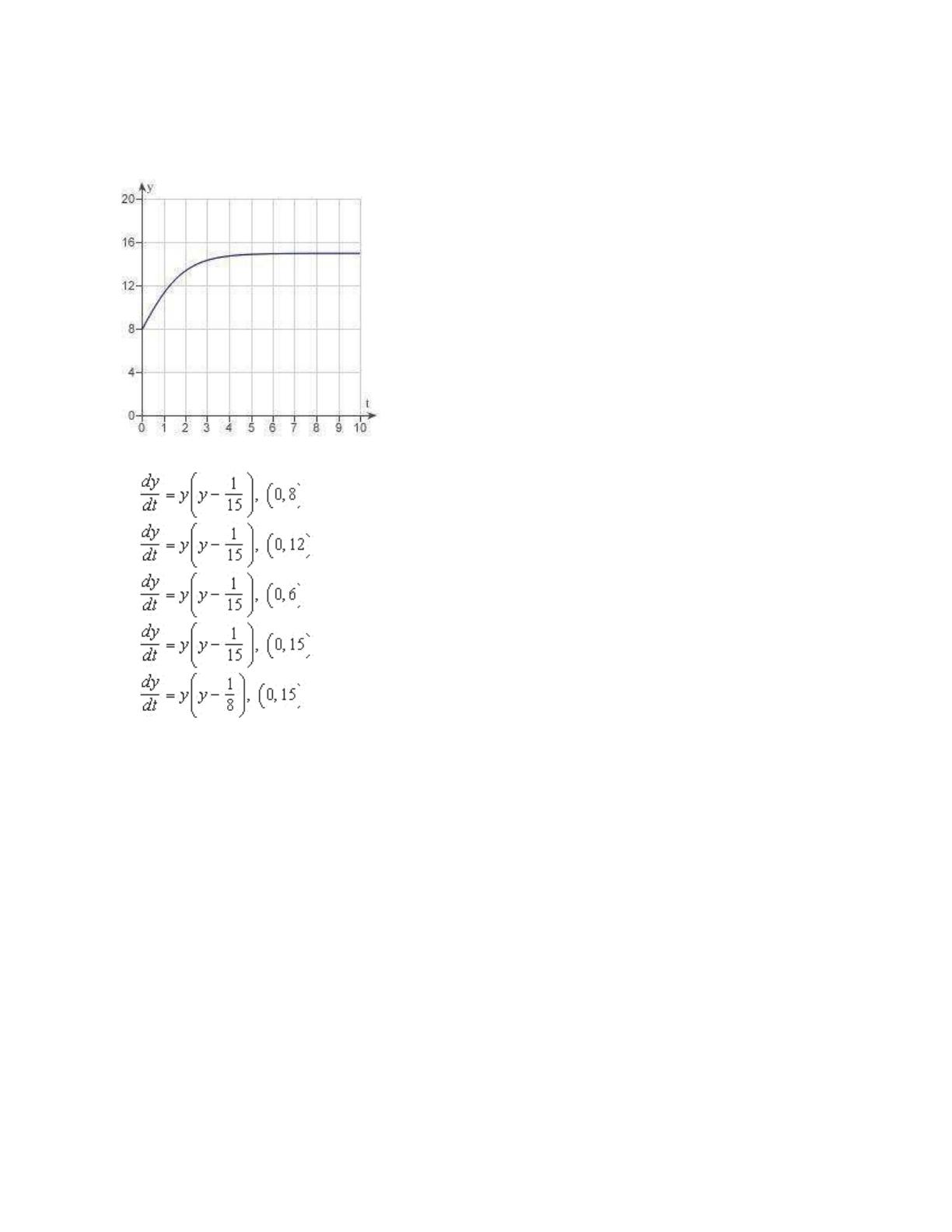
____ 10.
Match the logistic differential equation and initial condition with the graph of its
solution shown below.
a.
b.
c.
d.
e.