Chapter 6 – Inventories
154. A business using the retail method of inventory costing determines that inventory at retail is $2,300,000. If the ratio
of cost to retail price is 55%, what is the amount of inventory to be reported on the financial statements?
155. Based upon the following data, estimate the cost of ending inventory using the gross profit method.
Sales
$250,000
Estimated gross profit rate
25%
Beginning inventory
$ 9,000
Purchases (net)
211,000
Merchandise available for sale
$220,000
Merchandise available for sale
Sales
Estimated cost of goods sold
Estimated ending inventory
Chapter 6 – Inventories
156. Fill in the missing amounts from the chart below regarding the calculation of Bean Corporation’s estimated inventory
using the retail method of estimation.
Cost
Retail
Inventory, October 1
$13,687
$19,553
Purchases for October (net)
?
98,344
Merchandise available for sale
$82,528
$ ?
Ratio of cost to retail price: ?
Sales for October
?
Merchandise at retail, October 31
$25,340
Merchandise at cost, October 31
$ ?
Inventory, October 1
Purchases for October (net)
Merchandise available for sale
Sales for October
Merchandise at retail, October 31
157. List the internal control objectives illustrated by the following:
(a)
keeping the inventory storeroom locked
(b)
counting the inventory at the end of the accounting period and comparing it with the
inventory ledger clerk’s records
(c)
using subsidiary ledgers and a perpetual inventory system
(a)
safeguarding the inventory from damage or theft
(b)
safeguarding the inventory from damage or theft and reporting inventory in the
financial statements
Chapter 6 – Inventories
158. Describe three inventory cost flow assumptions and how they impact the financial statements.
159. The following data regarding purchases and sales of a commodity were taken from the related perpetual inventory
account:
June 1
Balance
25 units at $60
6
Sale
20 units
8
Purchase
20 units at $61
16
Sale
10 units
20
Purchase
20 units at $62
23
Sale
25 units
30
Purchase
15 units at $63
Calculate the cost of the ending inventory at June 30, using (a) the first-in, first–out (FIFO)
method and (b) the last-in, first-out (LIFO) method. Identify the quantity, unit price, and
total cost of each lot in the inventory.
(a)
June 20
10 units at $62
30
15 units at $63
(b)
June 1
5 units at $60
8
5 units at $61
30
15 units at $63
Total
Chapter 6 – Inventories
160. Beginning inventory, purchases, and sales data for hammers are as follows:
Mar. 3
Inventory
12 units
@
$15
11
Purchase
13 units
@
$17
14
Sale
18 units
21
Purchase
9 units
@
$20
25
Sale
10 units
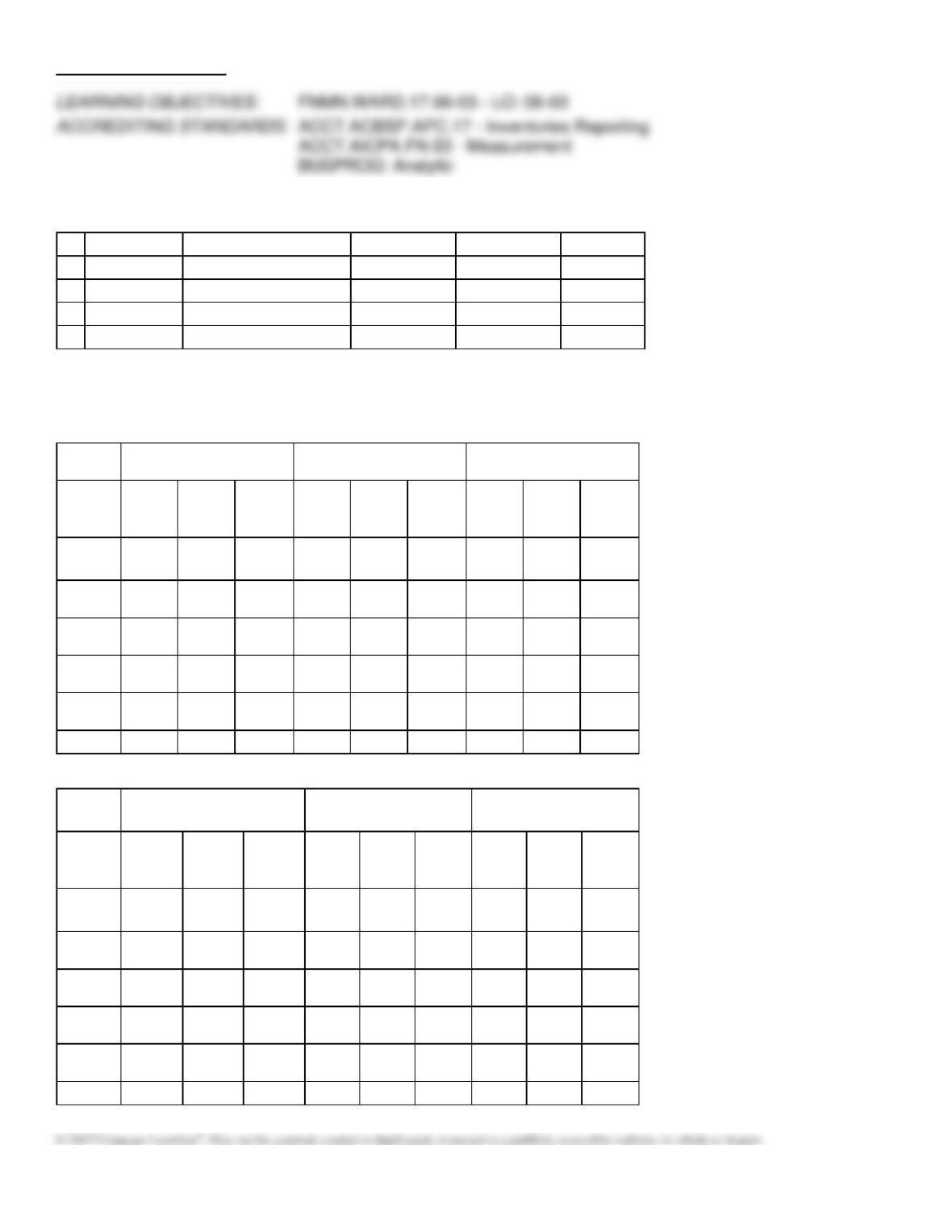
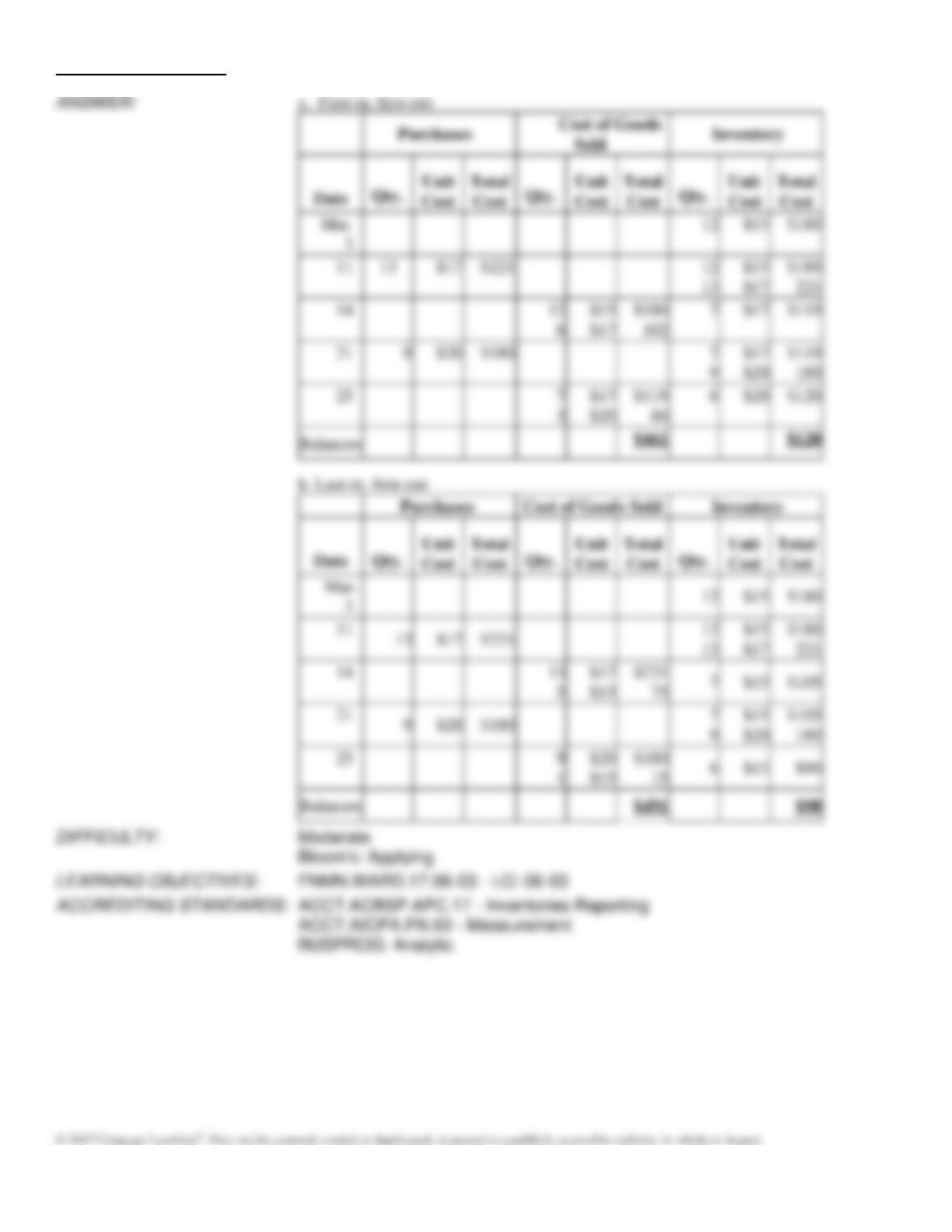
Assuming the business maintains a perpetual inventory system, complete the inventory cards and calculate the cost of
goods sold and ending inventory under the following assumptions:
(a) First-in, first-out
Purchases
Cost of Goods Sold
Inventory
Date
Qty.
Unit
Cost
Total
Cost
Qty.
Unit
Cost
Total
Cost
Qty.
Unit
Cost
Total
Cost
Mar.
3
11
14
21
25
Balances
(b) Last-in, first-out
Purchases
Cost of Goods Sold
Inventory
Date
Qty.
Unit
Cost
Total
Cost
Qty.
Unit
Cost
Total
Cost
Qty.
Unit
Cost
Total
Cost
Mar.
3
11
14
21
25
Balances
Chapter 6 – Inventories
Chapter 6 – Inventories
161. The units of an item available for sale during the year were as follows:
Jan. 1
Inventory
25 units at $45
Mar. 4
Purchase
15 units at $50
June 7
Purchase
35 units at $58
Nov. 15
Purchase
20 units at $65
There are 30 units of the item in the physical inventory at December 31. The periodic inventory system is
used. Determine the ending inventory cost using FIFO.
$1,880 (20 units at $65 and 10 units at $58)
LEARNING OBJECTIVES:
162. The units of an item available for sale during the year were as follows:
Jan. 1
Inventory
10 units at $25
Apr. 4
Purchase
15 units at $24
May. 20
Purchase
20 units at $28
Oct. 30
Purchase
18 units at $30
There are 19 units of the item in the physical inventory at December 31. The periodic inventory system is
used. Determine the ending inventory cost using LIFO.
$466 (10 units at $25 and 9 units at $24)
LEARNING OBJECTIVES:
163. The beginning inventory and purchases of an item for the period were as follows:
Beginning inventory
6 units at $70 each
First purchase
10 units at $75 each
Second purchase
18 units at $80 each
Third purchase
10 units at $90 each
The company uses the periodic system, and there were 15 units in the inventory at the end of the
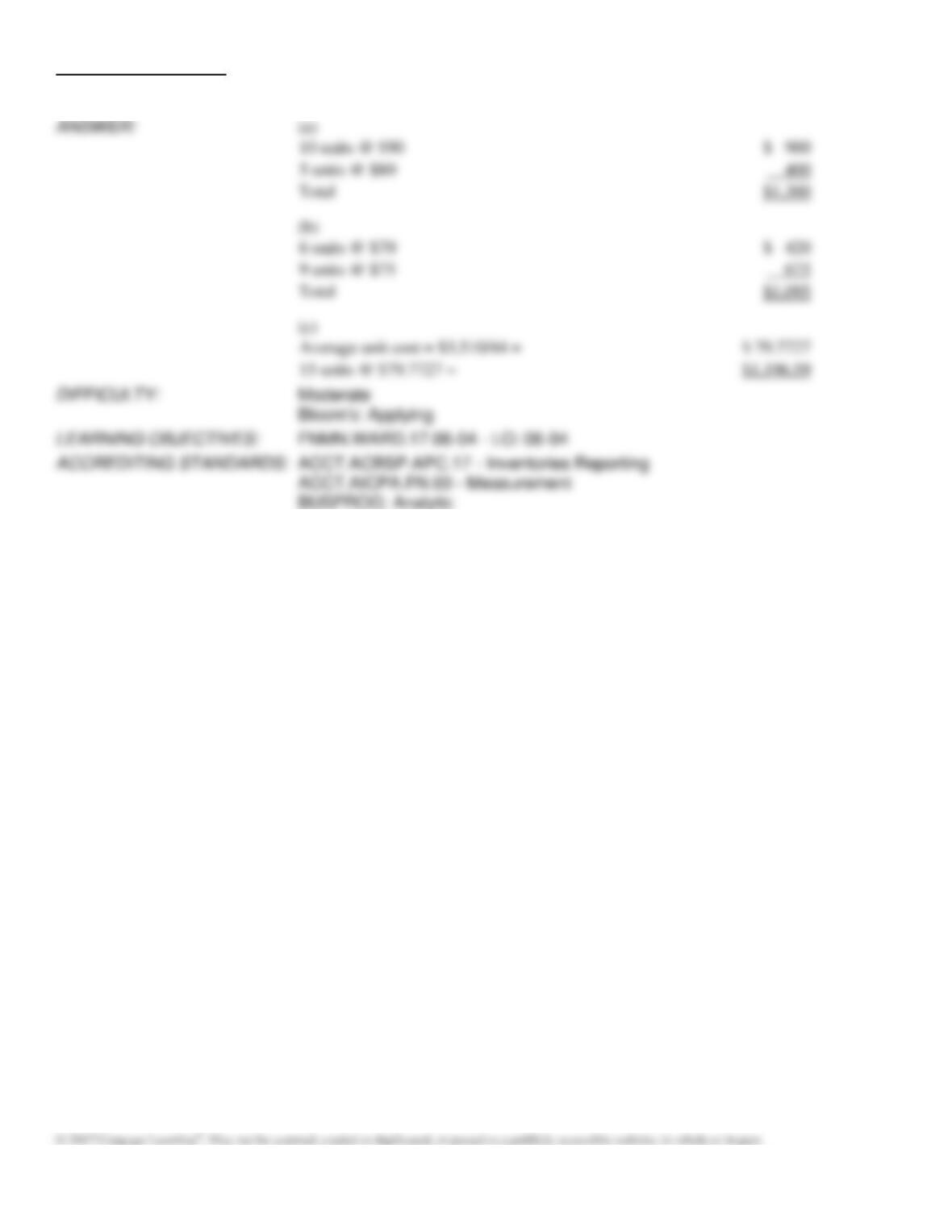
period. Determine the cost of the 15 units in the inventory by each of the following methods, presenting details
of your computations: (a) first-in, first-out; (b) last-in, first-out; (c) average cost. Do not round your
intermediate calculations. Round your final answer to two decimal places.
Chapter 6 – Inventories
10 units @ $90
Total
Total
15 units @ $79.7727 =
LEARNING OBJECTIVES:
164. Beginning inventory, purchases and sales data for T-shirts are as follows:
April 3
Inventory
24 units
@
$10
11
Purchase
26 units
@
$12
14
Sale
36 units
21
Purchase
18 units
@
$15
25
Sale
20 units
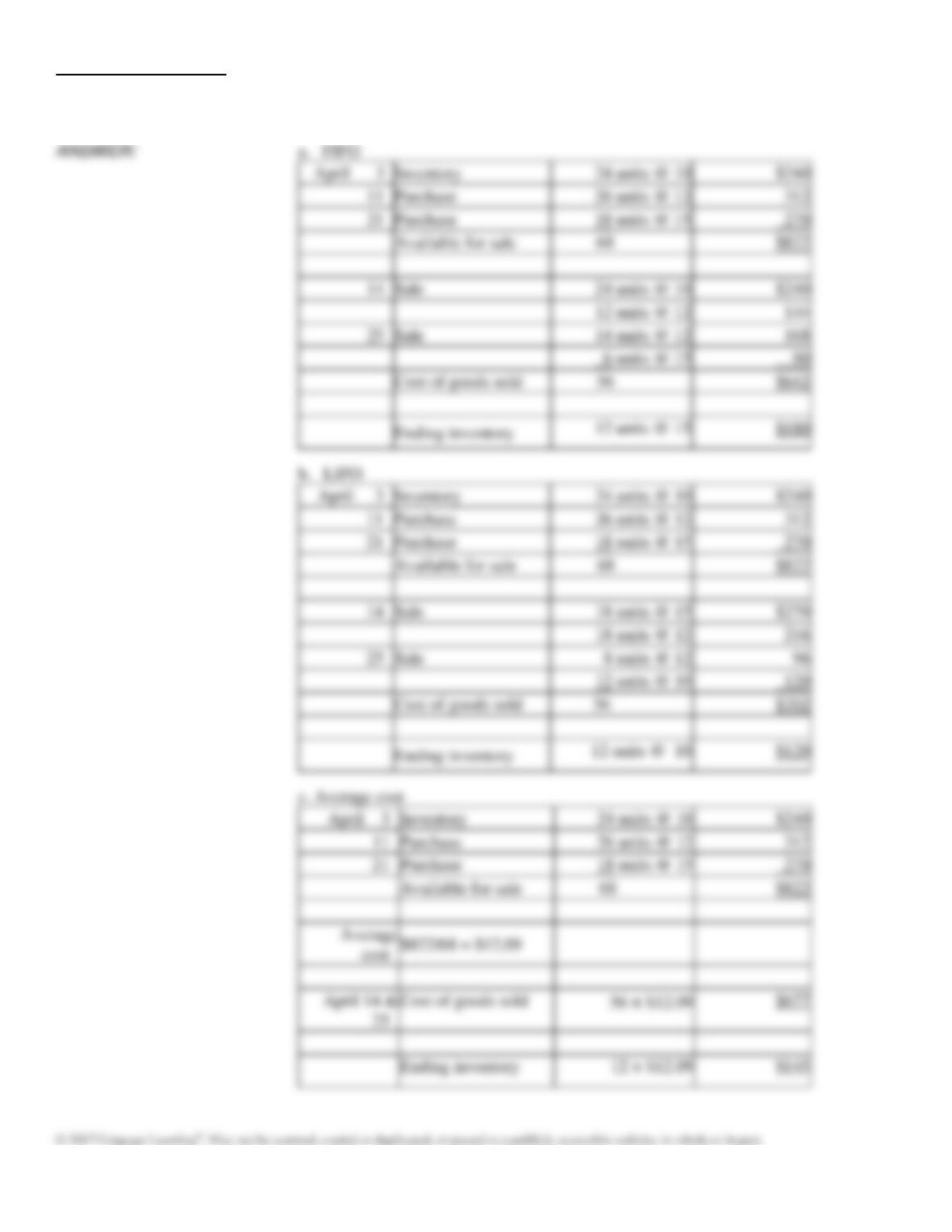
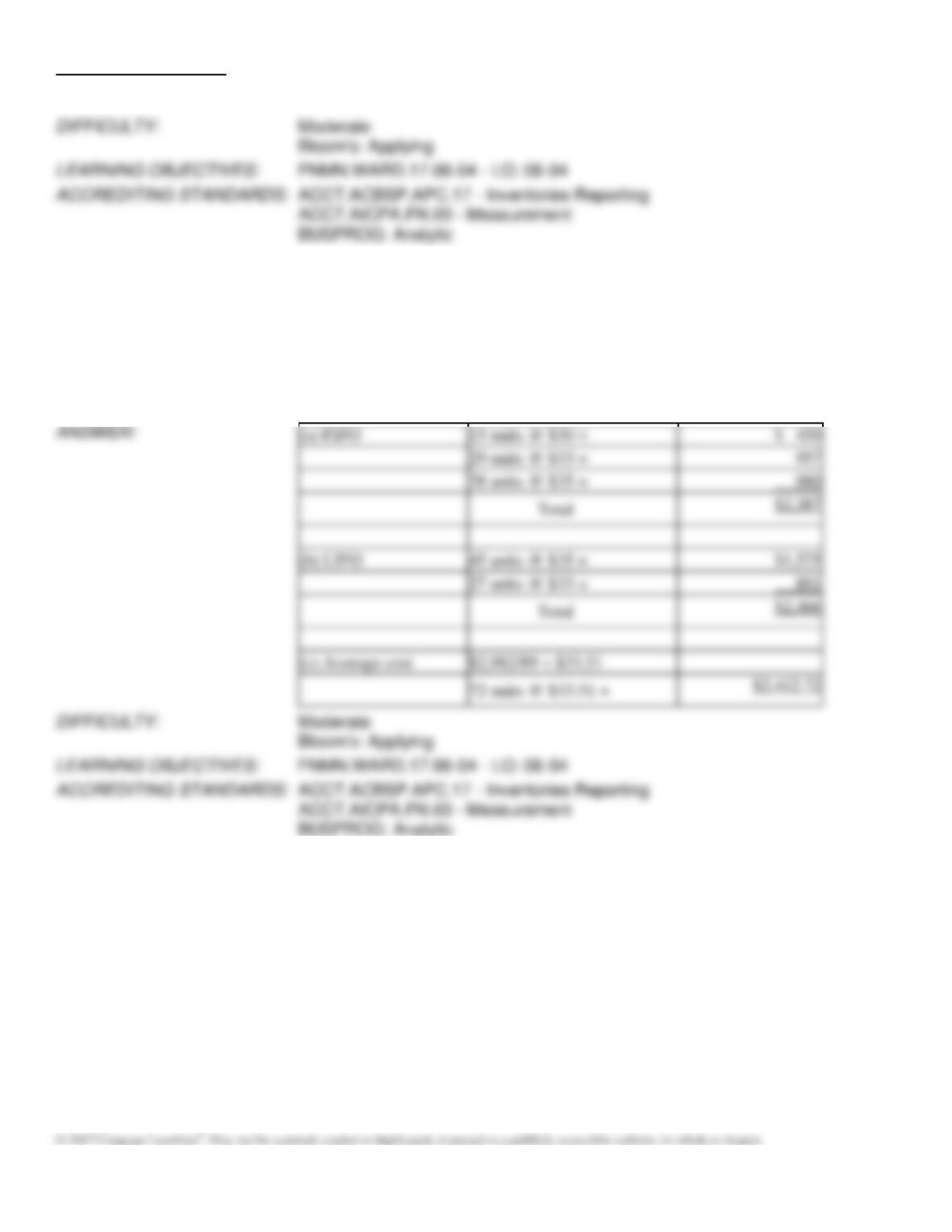
Assuming the business maintains a periodic inventory system, calculate the cost of goods sold and ending
inventory under the following assumptions:
a. FIFO
b. LIFO
c. Average cost (round cost of goods sold and ending inventory to the nearest dollar)
Chapter 6 – Inventories
Available for sale
Cost of goods sold
Available for sale
Cost of goods sold
Available for sale
Chapter 6 – Inventories
LEARNING OBJECTIVES:
165. The units of Product Green-2 available for sale during the year were as follows:
April 1
Inventory
15 units
@
$30
June 16
Purchase
29 units
@
$33
Sep. 28
Purchase
45 units
@
$35
There are 17 units of the product in the physical inventory at September 30. The periodic inventory system is
used. Determine the cost of goods sold by (a) FIFO, (b) LIFO, and (c) average cost methods.
LEARNING OBJECTIVES:
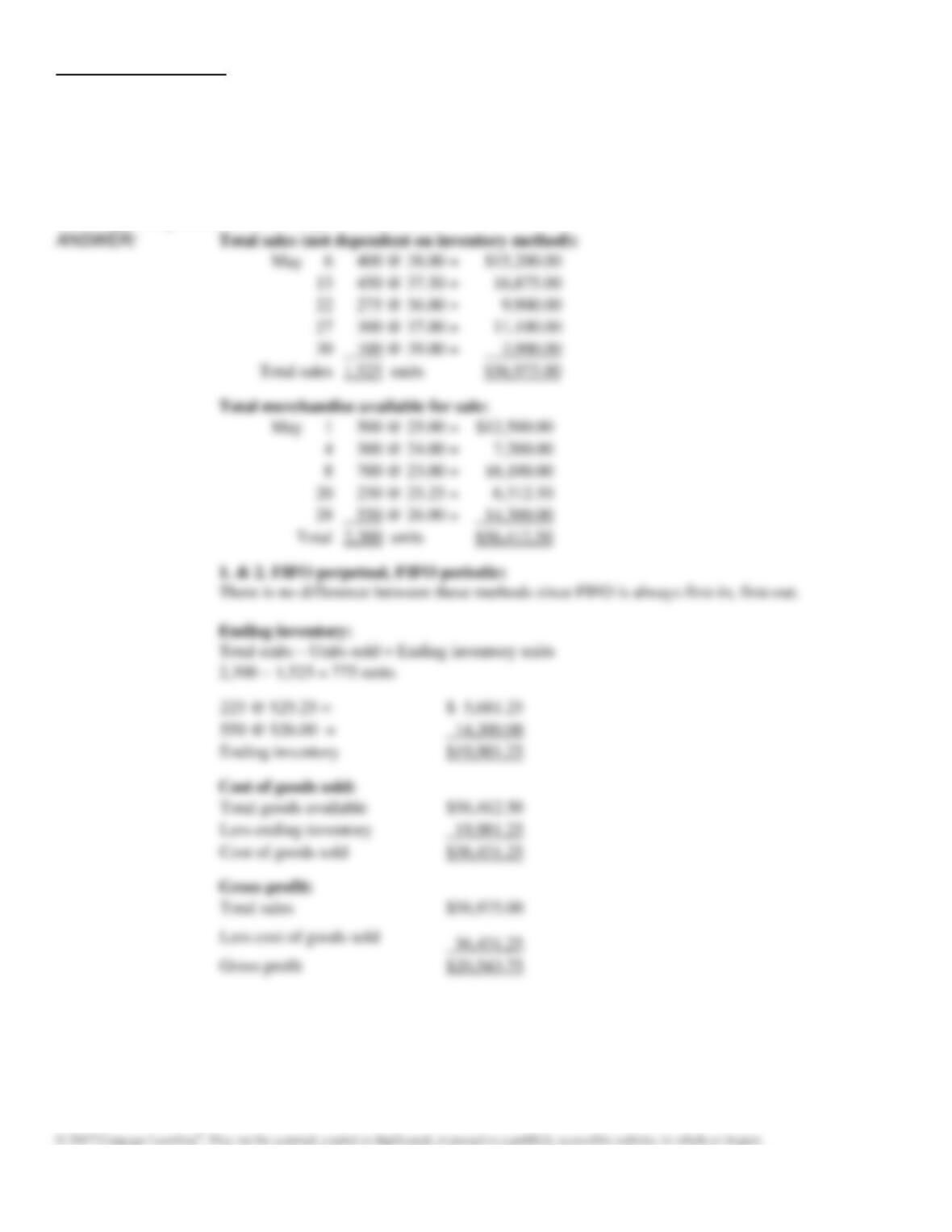
166. Brutus Corporation, a newly formed corporation, has the following transactions during May, its first month of
operations.
May 1 Purchased 500 units @ $25.00 each
4 Purchased 300 units @ $24.00 each
6 Sold 400 units @ $38.00 each
8 Purchased 700 units @ $23.00 each
13 Sold 450 units @ $37.50 each
20 Purchased 250 units @ $25.25 each
22 Sold 275 units @ $36.00 each
27 Sold 300 units @ $37.00 each
28 Purchased 550 units @ $26.00 each
30 Sold 100 units @ $39.00 each
Chapter 6 – Inventories
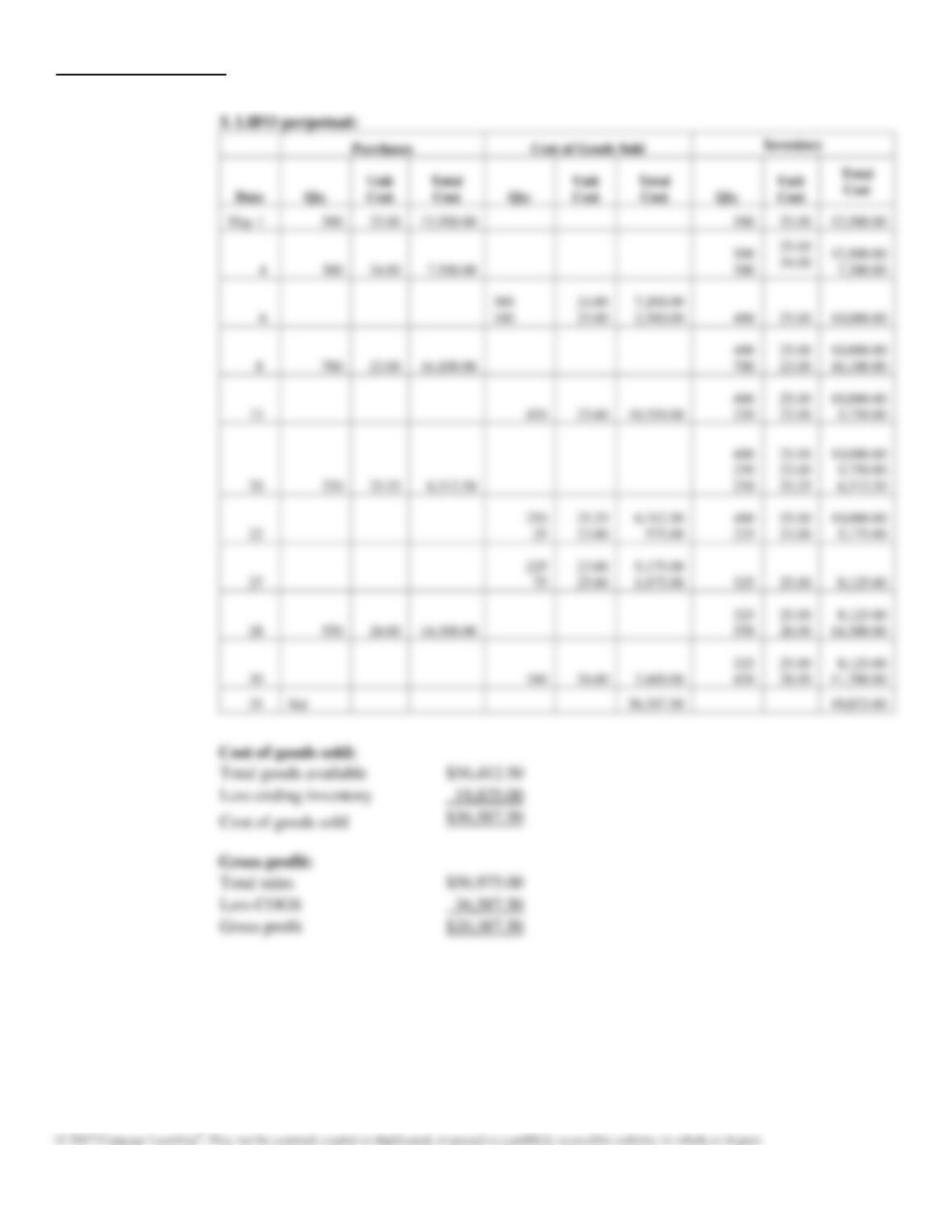
Calculate total sales, cost of goods sold, gross profit, and ending inventory using each of the following inventory methods:
1. FIFO perpetual
2. FIFO periodic
3. LIFO perpetual
4. LIFO periodic
5. Average cost periodic (round average to nearest cent)
Chapter 6 – Inventories